

Plenty of people will tell you to “do SEO.” Almost none of them show you what it looks like when it’s actually working.
That’s the problem with most SEO advice. It stays abstract. You hear “optimise your pages” or “build authority,” but you never get to see a real business doing it.
So here are ten of them. Real New Zealand businesses, national brands, and a few projects I’ve built myself, all winning at SEO right now.
For each one you’ll see who they are, what they’re doing well, and exactly what you can copy for your own site.
First, What Does Good SEO Actually Look Like?
SEO is the process of getting your website to show up when people search for what you sell.
Someone in Napier types “emergency plumber Napier” into Google at 9pm with a burst pipe. The plumber who shows up first gets the call.

Being that result is what SEO actually is when it’s working. Everyone below them misses out — the top three organic results take 68.7% of all clicks, with the number one spot alone pulling around 27.6%.

Every example below is a real business earning that visibility. Some do it through structure, some through content, some by owning local search. Here’s what each one gets right.
1. Dental Artistry
Dental Artistry is a dental clinic with practices in Auckland and New Plymouth, and the lesson is in how their site is built.
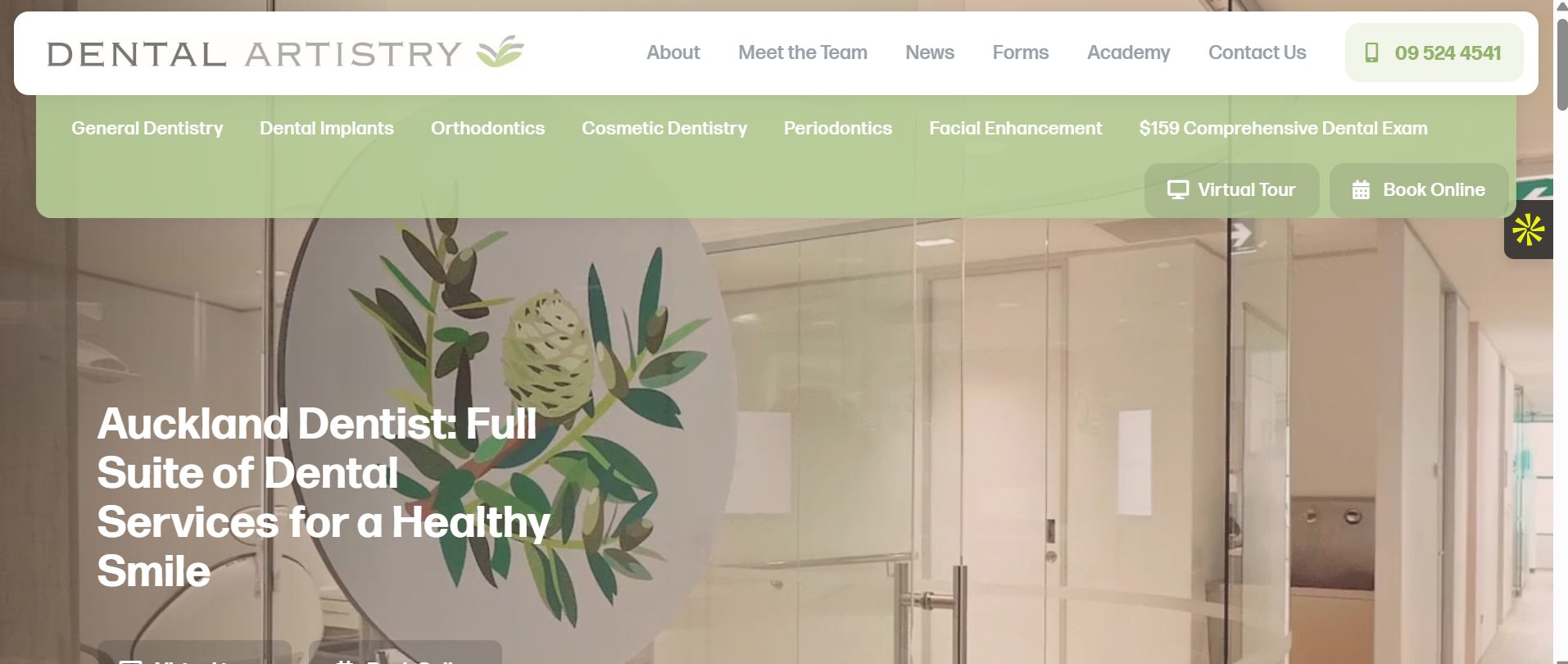
Every treatment has its own dedicated page.
Take dental implants: rather than one page, there’s a parent page with separate pages beneath it for tooth replacement, bone grafting, all-on-six implants, sedation, and even “cost of dental implants.”
Cosmetic dentistry, orthodontics, and periodontics are structured the same way.
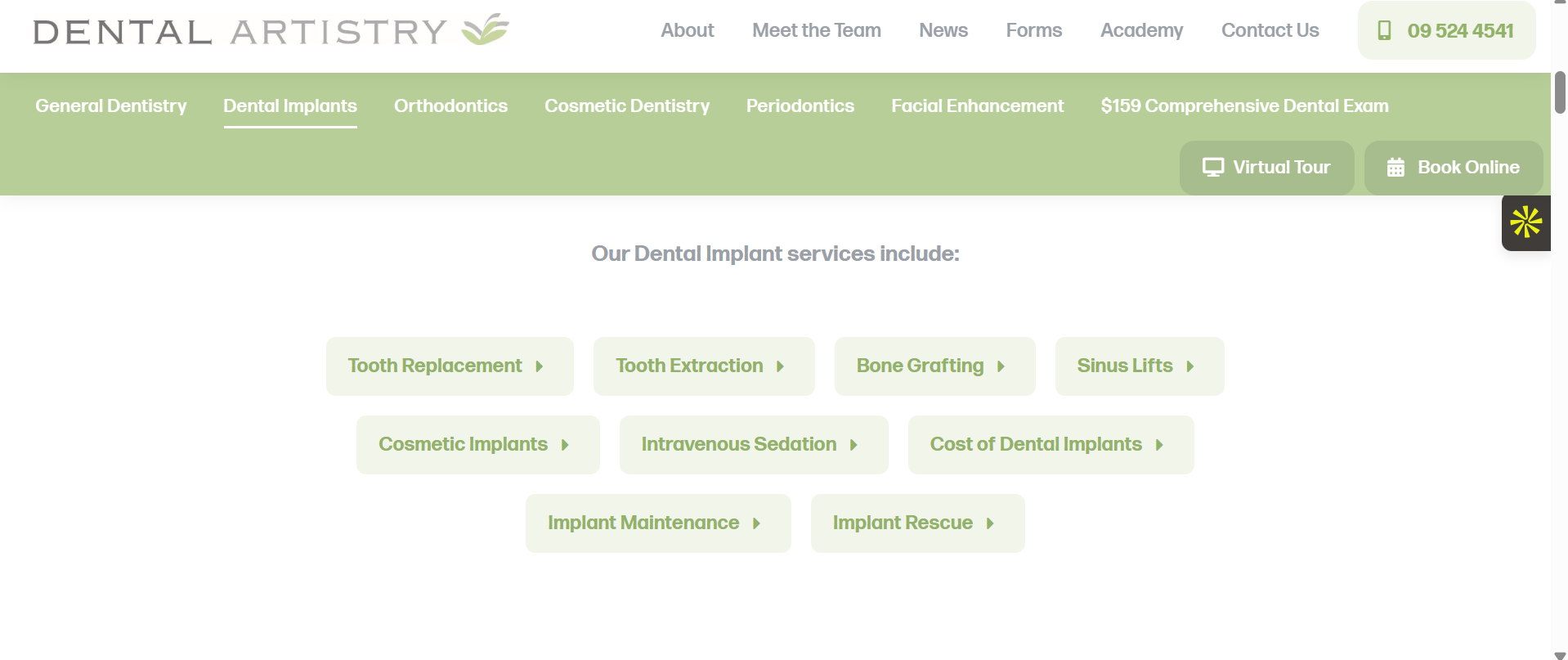
Why it works: each page can target one specific search.
Someone Googling “cost of dental implants” lands on a page about exactly that, instead of a generic “Services” page that mentions everything and ranks for nothing. It also gives Google a clean structure it can easily understand.
How to copy it: list every service and sub-service you offer, then give each one its own page built around the term people actually search. One page, one focus.
2. McCabe Family Law
McCabe Family Law is an Auckland family law firm, and they do two things really well.

First, local targeting. “Family lawyer Auckland” runs naturally through their headings and copy, so Google knows exactly who they serve and where. That matters when around 46% of all Google searches have local intent.
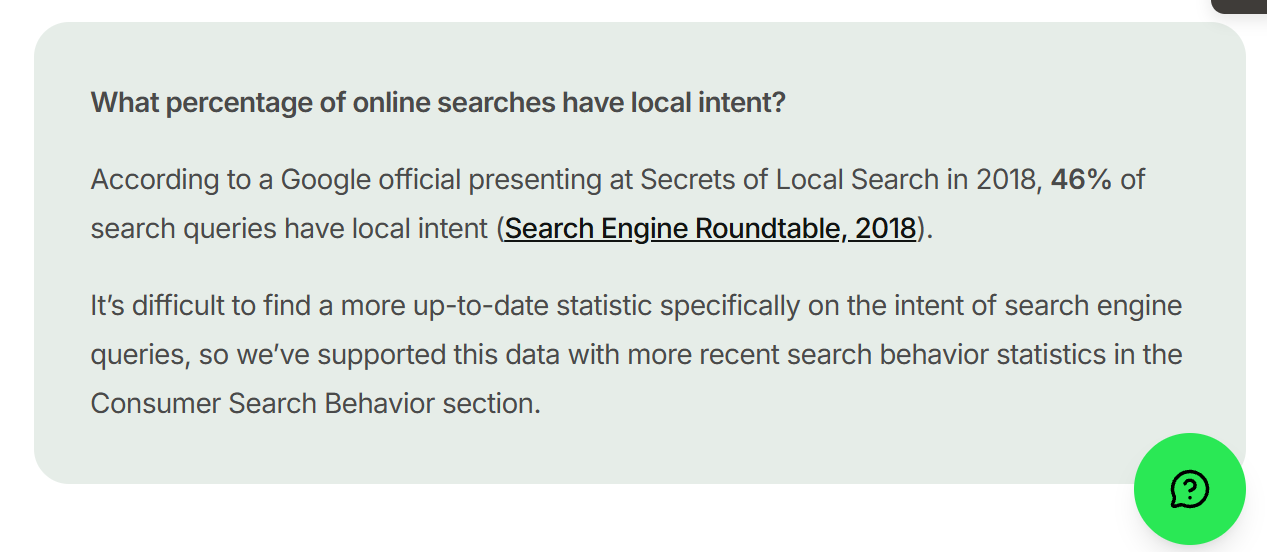
Second — and this is the part most service businesses skip — they answer real questions right on the page: “What does a family lawyer do?”, “How do I choose a family lawyer in Auckland?”, “Can a family lawyer represent both parties?”
Each answer leads with a clear one-line response, then expands.
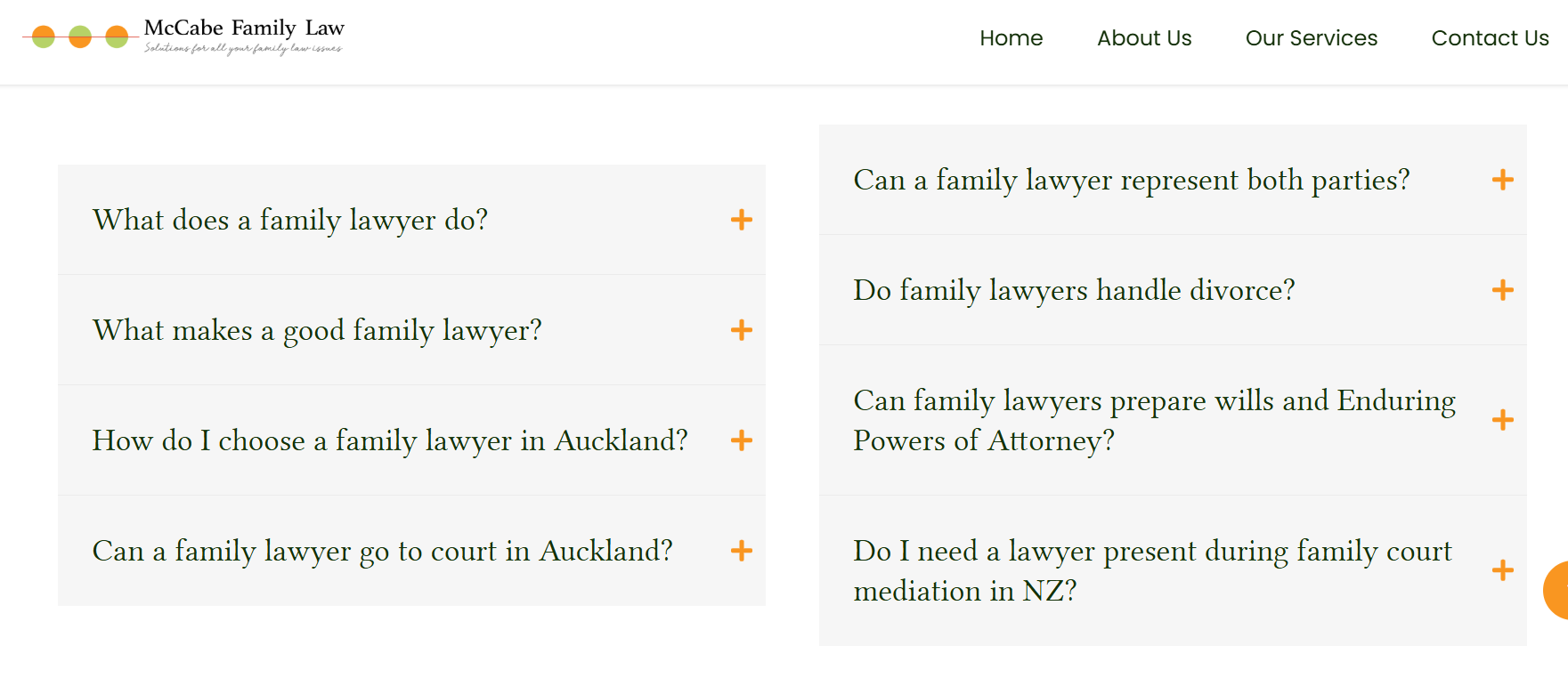
Why it works: that question-and-answer format is exactly what Google pulls into featured snippets and what AI tools quote in their answers.
The local angle pays off fast too — 76% of “near me” mobile searches lead to a store visit within 24 hours. Strong local SEO plus direct answers means you match how people actually search.

How to copy it: write down the ten questions customers ask before they buy, then answer each one on your site — clear answer first, detail after.
3. Mighty Ape
Mighty Ape is a New Zealand online retailer selling games, toys, books, and electronics.

The lesson is in what it ranks for. Beyond its own brand name, it pulls organic traffic from product and category searches like “pokemon tcg” — terms with serious search volume that have nothing to do with the brand.
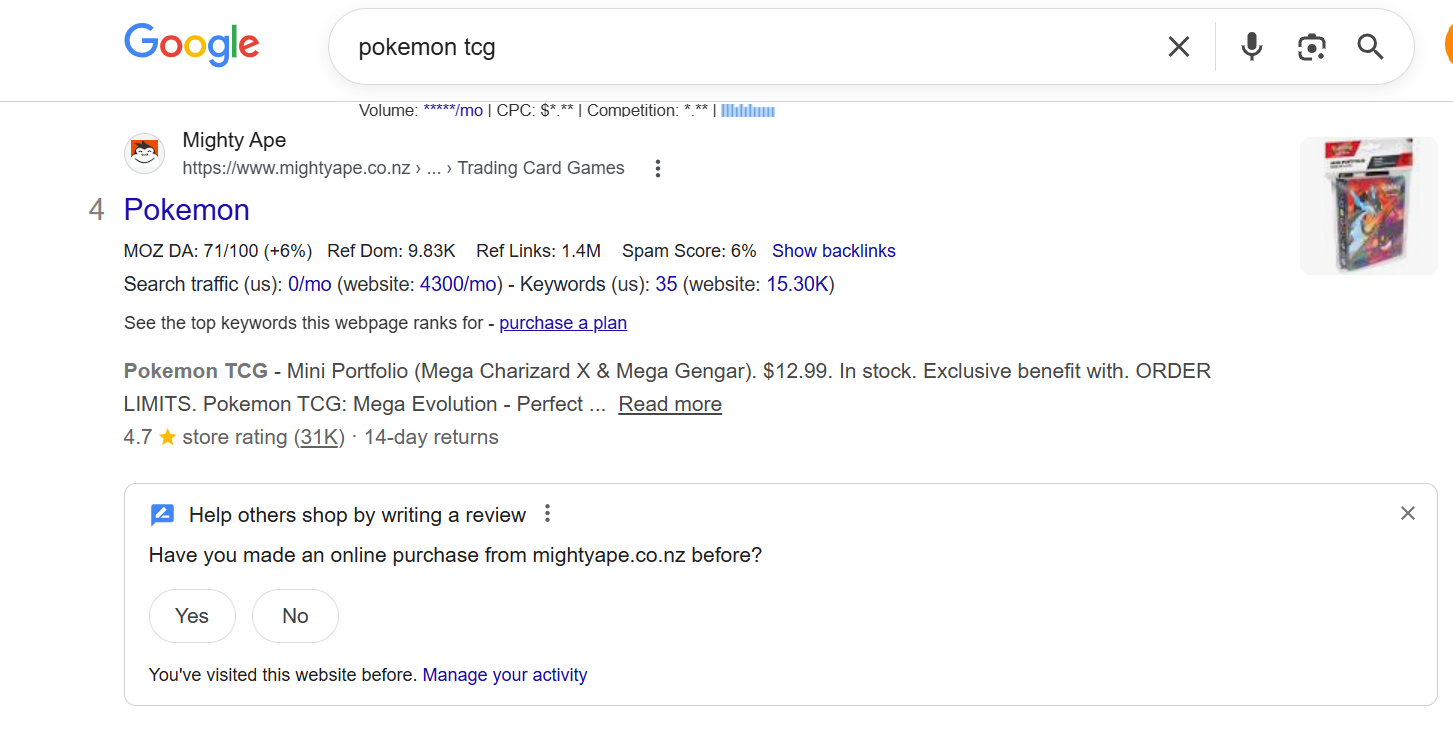
Why it works: a well-built category page is a magnet for everyone searching for that type of product, not just people who already know the store.
That’s how an online shop grows past its existing customers.
How to copy it: build a proper page for each product category you sell, optimised for what people search (“running shoes,” not just “shop”), with a clear heading, a useful description, and the products underneath.
This is the heart of ecommerce SEO.
4. PB Tech
PB Tech is New Zealand’s largest tech retailer, and it goes head to head in search with global names like JB Hi-Fi and Harvey Norman.

It holds its ground with a deep structure of category and product pages and a brand strong enough to own its branded searches.
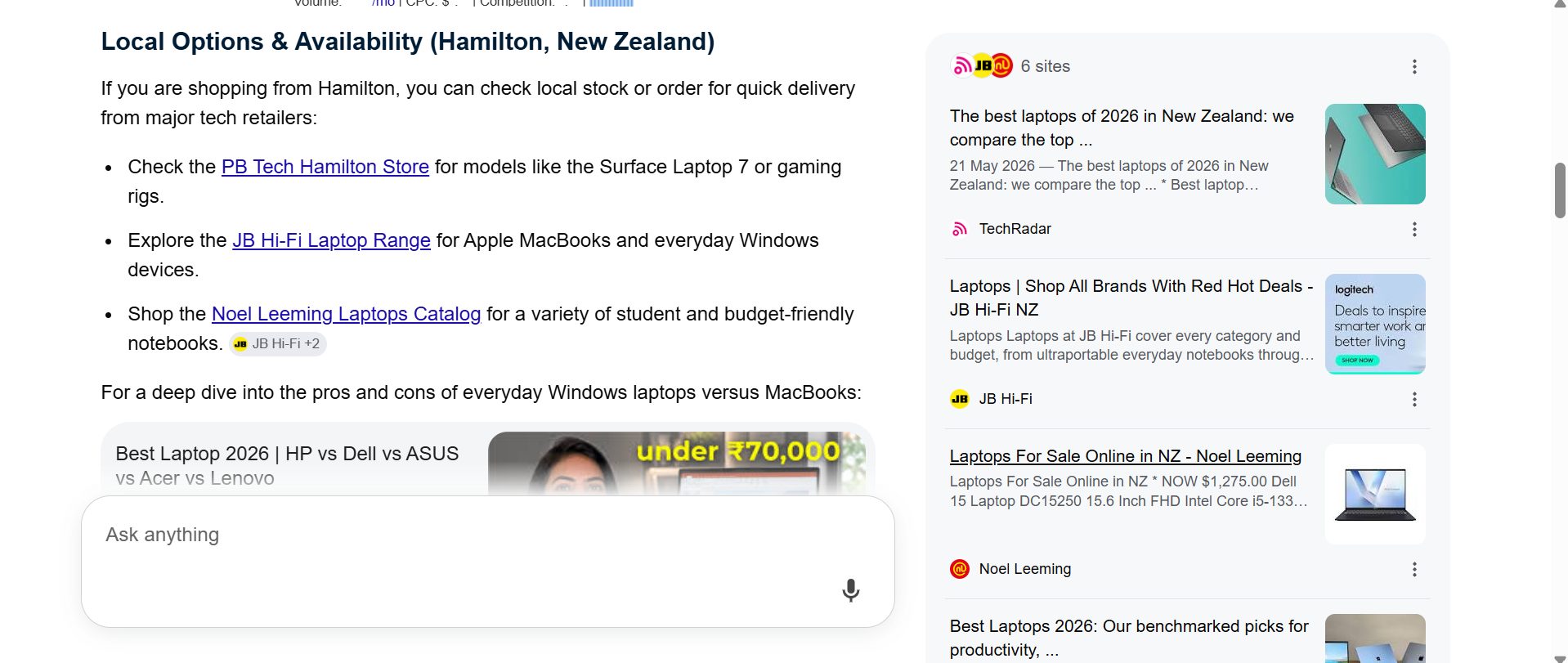
Why it works: it proves a New Zealand business can out-rank far bigger international competitors on home turf by being more locally relevant and better organised.
That same edge is available to smaller NZ businesses against global content.
How to copy it: don’t be scared off because a huge international brand ranks for your keyword. Local relevance and a well-structured site beat raw size, especially for NZ-specific searches.
5. Trade Me
Trade Me is the closest thing New Zealand has to its own Amazon, and it’s a lesson in scale and seriousness.
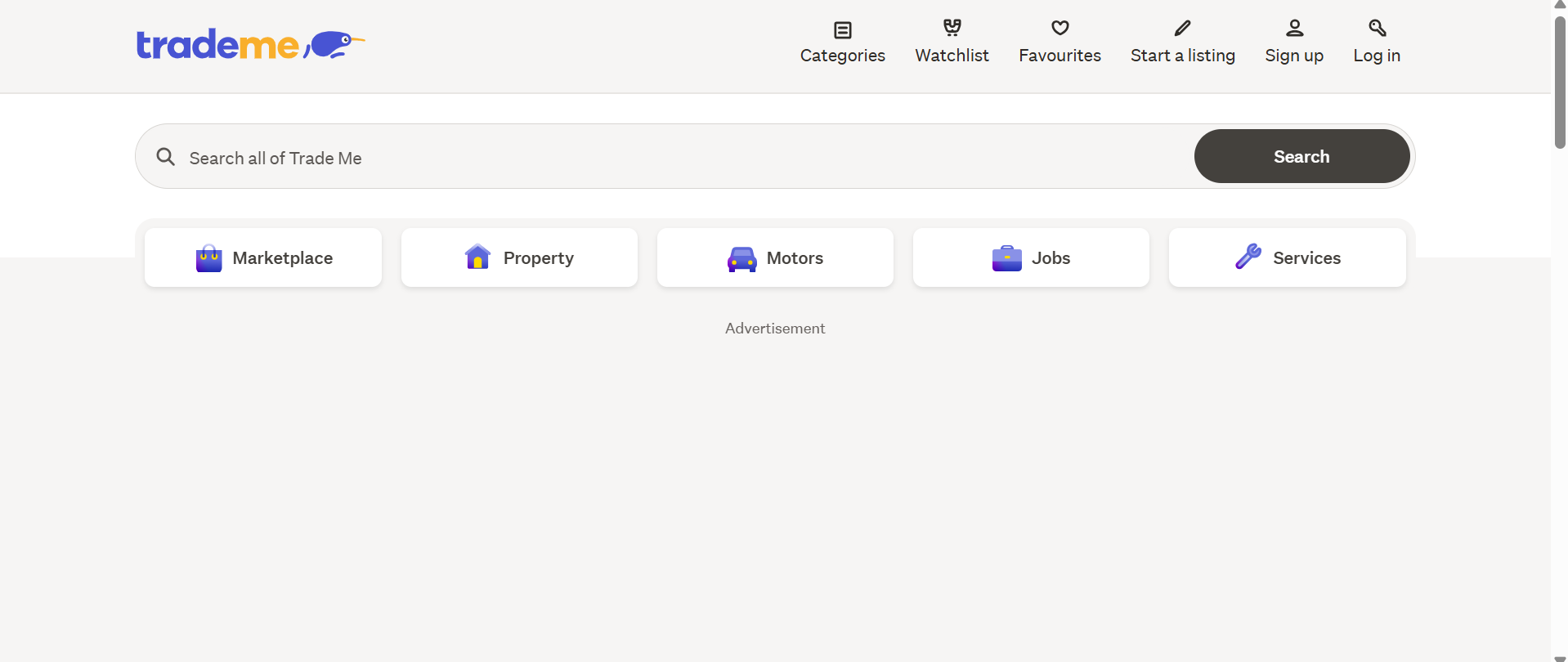
The site is split into separately optimised sections — Marketplace, Motors, Property, and Jobs — each structured to rank for its own world of searches.
Trade Me also resources SEO properly, hiring dedicated SEO specialists to keep growing organic search across all four.
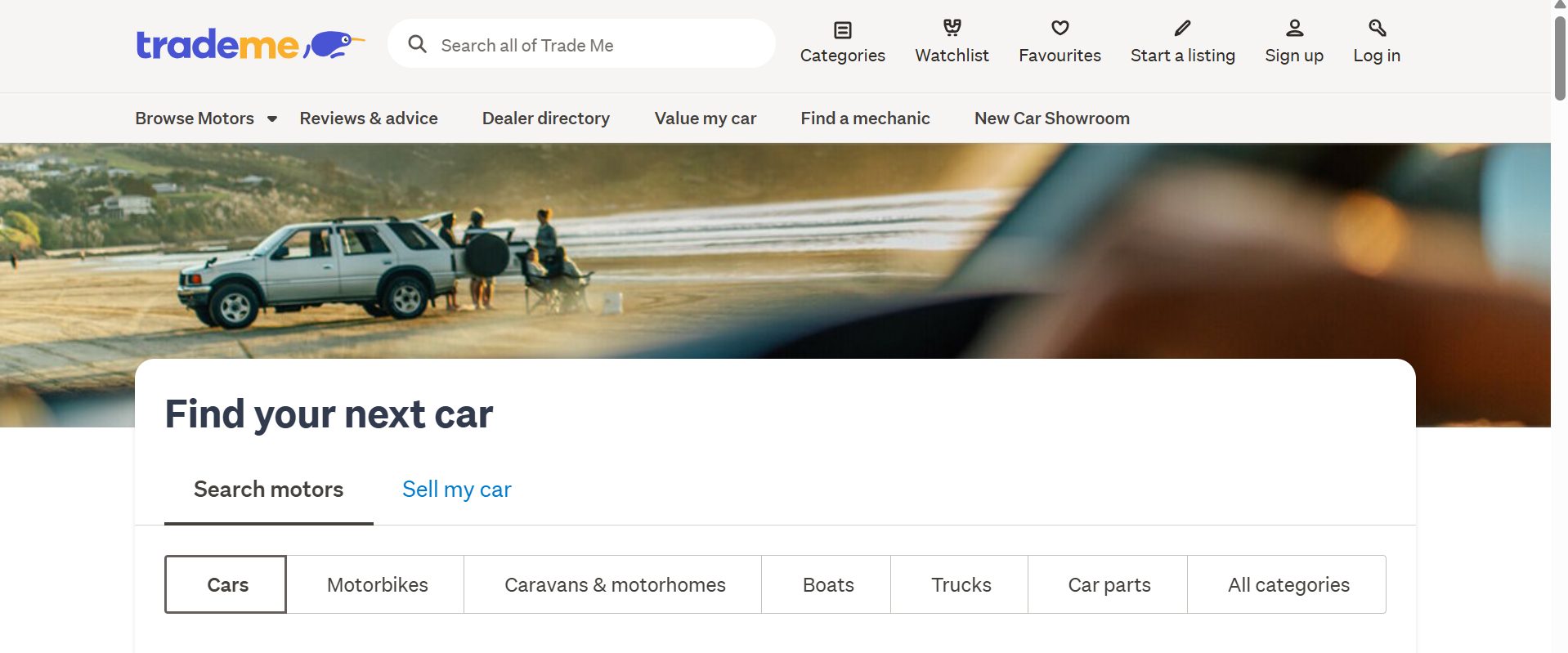
Why it works: a clear structure helps Google make sense of a massive site, and treating SEO as an ongoing function rather than a one-off task is how Trade Me keeps its dominant position.
How to copy it: if your business has distinct service lines, give each its own properly built section instead of cramming everything together. And treat SEO as something you work on continuously, not once.
6. MoneyHub
MoneyHub is a New Zealand personal finance site, and it’s one of the best local examples of winning through content alone.
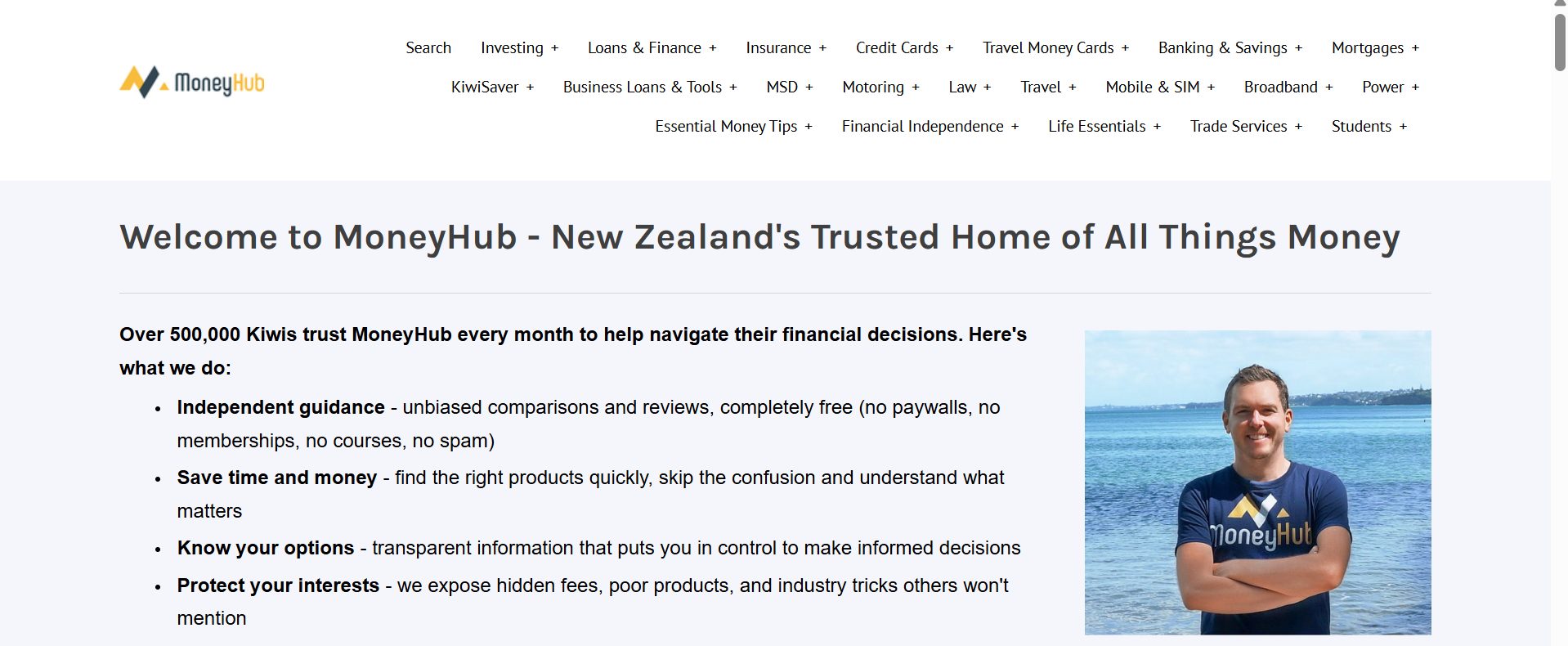
Organic search is its biggest traffic source by far, and it ranks across a huge spread of money topics — KiwiSaver, insurance, power companies, banks, budgeting.
It got there by doing one thing relentlessly: answering nearly every financial question a New Zealander could type into Google, in more depth than anyone else.

Why it works: when you cover a topic that completely, Google starts treating your site as the authority on it, and that lifts everything you publish.
This is topical authority in action, and it’s exactly what a strong content marketing approach builds.
How to copy it: pick your niche and map out every question and subtopic in it. Work through them one piece at a time, linking related articles together. Depth compounds.
7. StoppingScams
A few years back I helped scale a site called StoppingScams in the make money online niche — one of SEO’s most competitive markets.

It was a joint project with my mentor and business partner, Ian Pribyl, who’d laid the groundwork before I joined. My role was on content and scaling.
The play was simple: honest, in-depth reviews of products people were already searching for. Around 90% of those products were poor quality, and we said so plainly. That honesty is why people trusted the site.

The result: 5,000+ daily visitors as a baseline, peaks over 10,000 a day, roughly 11,000 keywords ranked, and over $10,000 a month in affiliate revenue, all from organic search.

Why it works: it’s MoneyHub’s lesson with the numbers showing. Cover a topic completely and the authority compounds across the whole site.
How to copy it: the same SEO content play — pick high-demand topics, answer them better than anyone, and build out the cluster over time.
8. My YouTube Channel
Using a search-led approach, I grew a YouTube channel from zero to over 3 million views and 30,000+ subscribers, with nearly 296,000 hours of total watch time.

It wasn’t driven by trends, viral luck, or paid promotion — every video targeted a keyword people were already typing into YouTube, the same way you’d target a Google search.

Why it works: YouTube is the second-biggest search engine in the world. Treat it like one — find the demand, create the best answer, optimise for discovery — and YouTube SEO pays off the same way Google does.
How to copy it: before you make a video, check what people actually search for on YouTube and build the video around that query.
9. HealthVI
Real SEO results build over months, not days. The clearest example I can give is a health site I built called HealthVI, which I grew from zero to over 1,000 daily visitors in under a year using this exact approach.
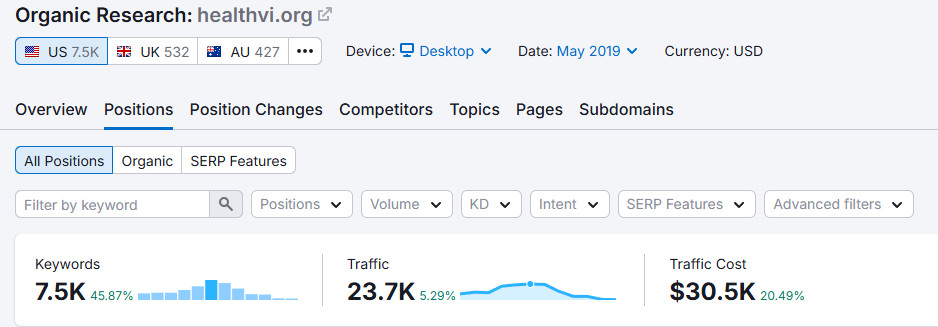
The early months looked quiet, then the content compounded and traffic climbed steadily.
Why it works: every page, link, and improvement stacks on the last one.
If you want a realistic picture of how long SEO takes, expect a few months for early traction and six to twelve months for solid results.
How to copy it: commit to a consistent process and judge it over months. Early on, watch impressions rather than clicks — rising impressions mean Google is starting to show you more, and clicks follow.
10. Expert SEO
The last example is our own SEO company. The site is under a year old, yet it’s already being cited in Google AI Overviews and pulled into ChatGPT answers while competing against businesses that have been around for ten years.
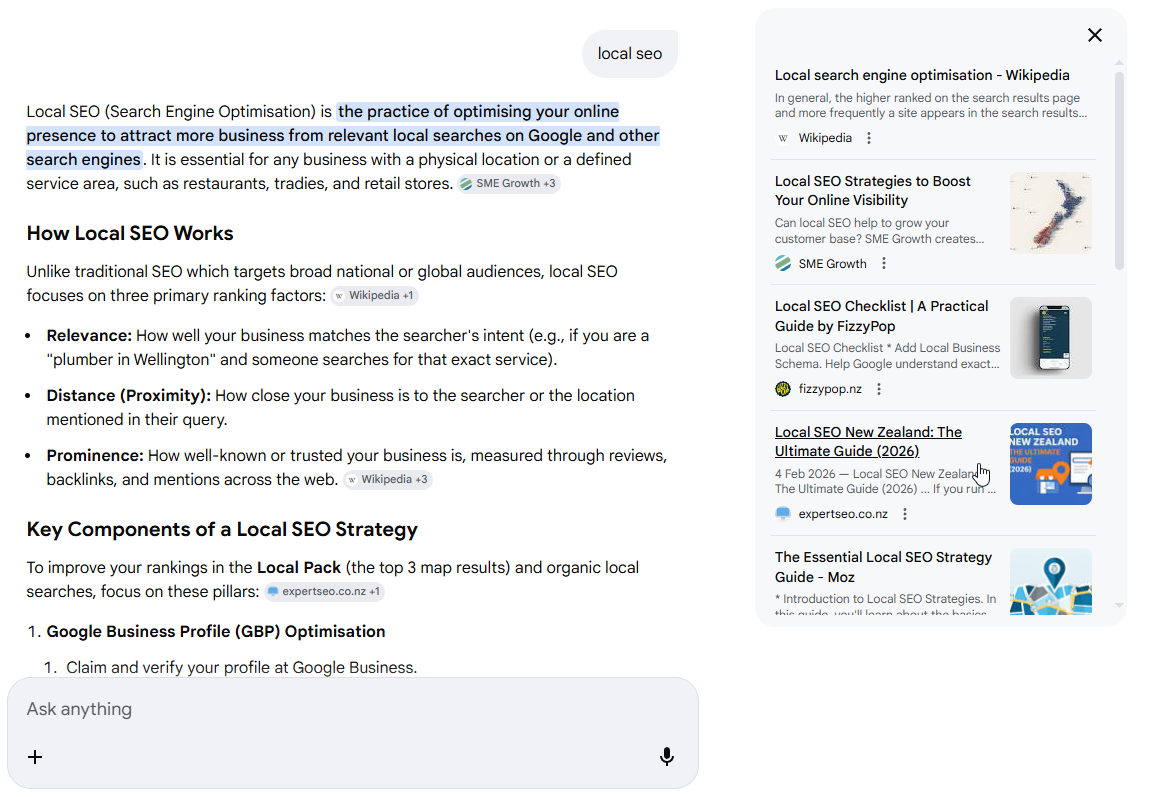
That comes from showing up in AI search on purpose: writing content that answers a clear question in the first line, then expanding underneath, so AI tools can lift and cite it.
The visibility is worth chasing — Google’s AI Overviews now reach over 2 billion users every month, and brands cited in those overviews earn around 120% more organic clicks per impression than brands that aren’t.

Why it works: relevance and clarity beat domain age. A newer, sharper, more focused site can out-perform an older one that’s gone stale.
How to copy it: for your key pages, put the direct answer in the first sentence under each heading, then expand. Clear question, clear answer, then detail.
Good SEO vs Bad SEO Examples
Not every SEO example is worth copying. Some will actively hurt you.
Good examples (do these):
- A clear title and heading that match the search
- A genuinely useful page that answers the question better than anyone else
- A few relevant, high-quality backlinks
- Honest reviews and real customer proof
Bad examples (avoid these):
- Keyword stuffing — repeating “dentist Auckland” twenty times until the page reads like a robot wrote it
- Buying cheap bulk backlinks from spammy sites
- Spinning up ten near-identical location pages with only the suburb name swapped
- Hiding text or trying to trick the crawler
These tactics might have worked a decade ago. Now they get you ignored or penalised. Google’s whole job is to reward the most useful result, so anything built to game the system instead of helping the reader works against you eventually.
How to Copy These Examples for Your Own Business
You don’t need to do all of this at once. Pick the example that matches your goal and run that play first.
- Match your situation to an example. Local service business? Start with Dental Artistry’s structure and McCabe’s question-answering. Online store? Follow Mighty Ape. Building long-term traffic? Follow MoneyHub.
- Find the keyword. Work out exactly what your customers type into Google. Finding the keywords your customers actually search is the foundation everything else sits on.
- Build the page. Give it a clear title, heading, and a direct answer up top.
- Publish and support it. Add internal links to related pages and a few relevant backlinks.
- Measure and repeat. Track it in Google Search Console and do more of what works.
If your site already has pages that aren’t ranking, start with a site audit to find what’s holding them back before you build anything new.
And if you want the complete walkthrough rather than the summary, the full step-by-step process covers every stage from keyword to ranking.
When to Do It Yourself vs Hire an Expert
You’ve now seen ten real examples of SEO working. From here you’ve got two paths.
Do it yourself. Copy these examples, put in the time, and you’ll get results. Just expect a learning curve and a fair bit of trial and error.
Or bring in help. If you want faster, more predictable results without figuring it all out yourself, that’s where done-for-you SEO comes in. You get the strategy and the execution handled for you.
We work with businesses across New Zealand, including:
If you’d rather talk it through first, you can work with an SEO consultant to map out a plan built around your business. Whether you DIY or get help, the examples above are the same moves that actually move the needle.