

The Numbers at a Glance
- A product review site in one of the most cut-throat niches online: internet marketing products
- Peak organic search of 26,098 visitors a month (December 2017) — straight from Google, no ads
- 10,960 keywords ranked on Google — 620 of them in the top 3
- Registered 9 July 2014 — a 12-year-old domain, publishing the whole way through
- Won on one thing above all else: honest, genuinely helpful content
- My role: I learned the craft on this site and worked it alongside my SEO mentor, who owned it
Every number below is a real screenshot. No rounding up, no spin.
This one’s personal, because it’s where I actually learned to do SEO.
The site wasn’t mine to begin with. It belonged to my SEO mentor. By the time I came in, he’d already built it into something with real weight — the authority was rolling, and it had genuine credibility in the niche. He’d done the hard early years.
Then he did the thing good mentors do. He handed me the skillset. And I worked the site alongside him from there.
So this isn’t a story about me riding in and saving the day. It’s a story about learning how big sites actually get built — from someone who’d already built one — and watching the method work in front of me.
Here’s what the site was, and why it worked when almost nothing in its niche did.
What the Site Actually Was
It was a product review site. The niche was internet marketing products — courses, software, “systems,” the whole world of stuff people sell online promising to make you money.
The model was simple.
Someone’s about to buy one of these products. Before they hand over their money, they Google it. They want to know: is this thing real, or is it junk? Our review was the page they landed on.
From there, one of two things happened.
Sometimes the product was actually good, and they’d buy it. That was the small slice — because most of these products weren’t good.
Far more often, the review told them the truth: don’t buy this one. And instead of leaving empty-handed, they’d join the email list — where we could point them toward things that were actually worth their money.
That’s the engine. Honest reviews pull in the exact person who’s about to spend. You either help them buy the good thing, or you save them from the bad thing and earn the right to keep talking to them.
But none of it works without the traffic. And the traffic came from doing three things the rest of the niche wouldn’t.
Reason One: We Told the Truth
This is the part that made the whole thing possible.
Walk into the internet marketing review niche and you’ll find the same con everywhere. “Reviews” that gush over every single product. Five stars across the board. Buy this, buy that, buy the next thing too.
It’s not reviewing. It’s an affiliate commission dressed up as an opinion. Every product is “the best I’ve ever seen” because every product pays out.
We did the opposite. If a product was bad, we said so — plainly. A lot of our reviews came down to don’t buy this.
That sounds like a terrible business move. It’s the opposite.
Because the moment a reader realises you’ll actually tell them not to buy something, you become the one voice in the niche they trust. Everyone else is cheerleading. You’re the person telling them the truth. So when you do say a product is worth it, that recommendation carries real weight — it’s worth more than a hundred fake five-star reviews.
Trust was the whole product. The honesty built it off the bat. Everything else fed off it.
Reason Two: The Domain Was Old — And Never Stopped Publishing
Age matters in SEO. Not on its own, but combined with consistency it’s a genuine advantage.
This domain was registered on 9 July 2014. That makes it twelve years old today. And it didn’t just sit there — it published useful content, consistently, the whole way along.
Here’s why that combination is so hard to beat.
When Google has watched a site publish genuinely helpful content in the same niche, year after year, it stops treating that site as a stranger. It starts treating it as an established authority. New competitors can’t shortcut that. They can copy your articles, but they can’t copy a decade of track record.
That’s the quiet moat under a lot of big sites. Not a trick. Just years of showing up and doing it properly — which almost nobody has the patience for.
Reason Three, the Big One: Content, Done Properly, at Scale
If you pushed my mentor to name the single thing that mattered most, he’d say it without hesitating: high-quality content. He drilled it into me constantly. Everything else is downstream of it.
Here’s the method, and it’s simpler than the industry wants you to believe.
We mapped every topic in the niche worth covering. Some were big — keywords pulling thousands of searches a month. Some were tiny — questions barely anyone was searching. We went after both.
Then, for each one, we published the best piece of content on the internet for that topic. Not a thin post. Not something spun to hit a word count. The most complete, most genuinely useful answer to that exact question that anyone had put online.
This is exactly what Google says it rewards — what it calls helpful, reliable, people-first content. Write for the person, not the algorithm, and the rankings follow.
Do that across enough topics and something powerful happens. Google stops seeing a collection of pages and starts seeing an authority on the whole subject.
That’s topical authority — and it’s what separates sites that rank for a few lucky keywords from sites that dominate an entire niche.
Once you’ve earned it, the hard keywords stop being hard. Terms you’d never rank for as a newcomer start climbing on their own, because Google already trusts you on the topic. The authority you built on the easy stuff carries the difficult stuff up with it.
That’s how a review site quietly ended up ranking for nearly eleven thousand keywords.
The Proof It Worked
Talk is cheap in SEO. Here’s what the method actually produced.
Organic traffic climbed to a peak of 26,098 visitors a month — every one of them a real person landing from a Google search, not a cent spent on ads.
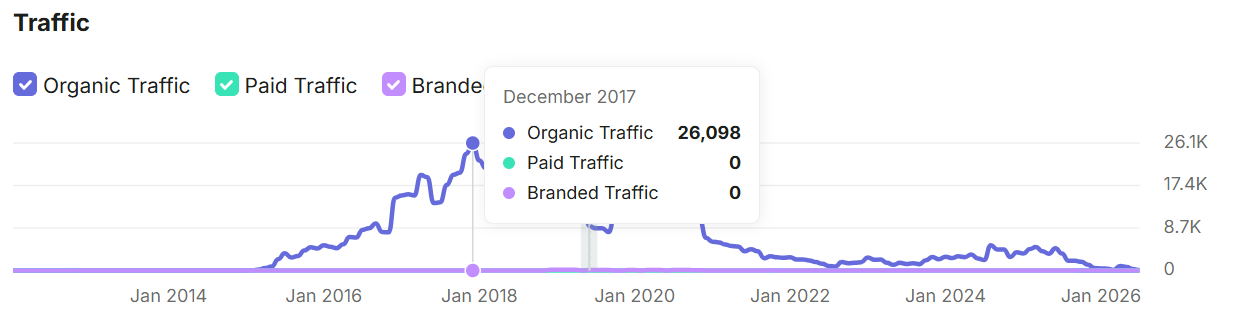
Under that traffic sits the engine: 10,960 keywords ranked on Google, with 620 of them in the top 3 positions — the spots that actually get clicked.
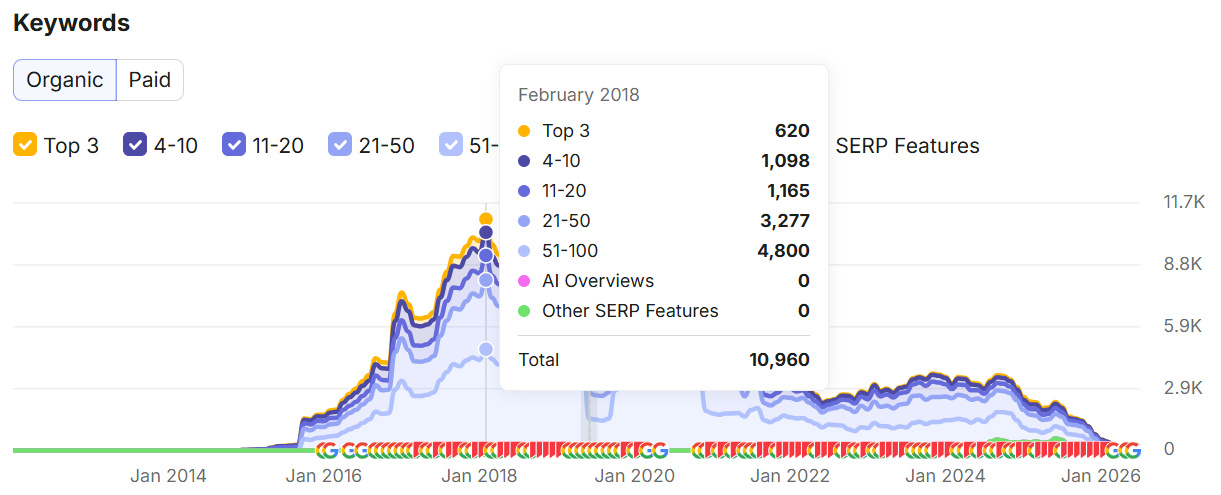
Ranking for one keyword is luck. Ranking for nearly eleven thousand is a system — a site that genuinely covers its niche end to end, so there’s barely a question a reader could ask that it doesn’t answer.
And here’s what that footprint looked like up close — the actual terms bringing people in:
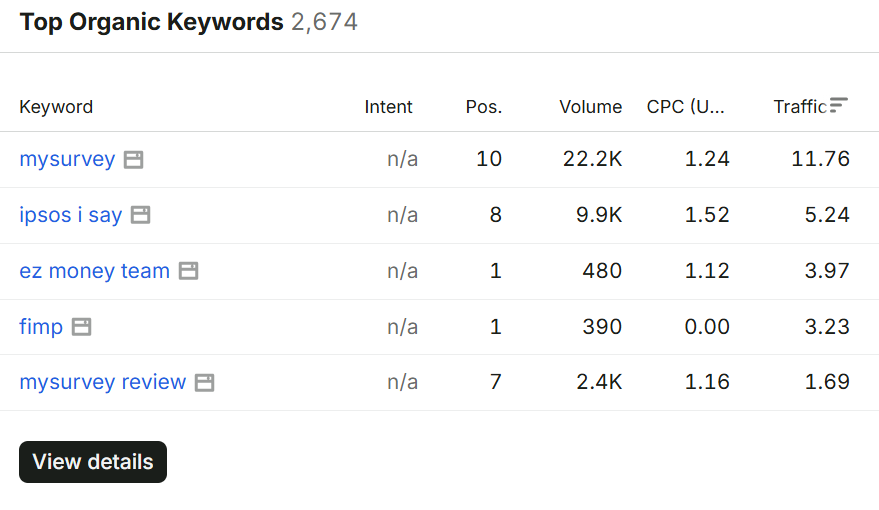
Every one of those keywords is another door into the site. Another person, mid-decision, searching a real question — and finding an honest answer instead of a sales pitch.
That’s what topical authority buys you. Not one ranking. Thousands of them, compounding.
Why This Matters for Your Business
You’re probably not running a product review site in a global niche. Doesn’t matter. The method doesn’t change with the business — it changes with how well it’s executed.
Whether you’re a tradie in Hamilton or a clinic in Auckland, the same three things win:
Tell the truth. Be the most genuinely helpful voice in your space, even when that means saying something your competitors won’t.
Cover your topic properly — every question your customer asks on the way to buying, answered better than anyone local bothers to. And keep showing up, because authority compounds and patience is the part almost nobody has.
Do that, and Google stops treating you as one of many. It starts treating you as the answer.
That’s the difference between paying for every customer forever and building an asset that brings them in while you sleep. If you’d rather hand that build to someone who learned it on sites like this one, that’s the SEO work I do.
Final Thoughts
The lesson from this site isn’t a tactic. It’s a mindset.
Everyone else in that niche chased the short-term win — cheerlead every product, grab the commission, burn the reader’s trust. It worked for exactly as long as it took the reader to notice.
We did the slow, honest, unglamorous version. Truthful content, published properly, for years. And it built something none of the loud competitors could touch — a site people actually trusted, ranking for thousands of keywords, still standing long after the shortcuts stopped working.
That’s the whole thing. Be honest. Be the most useful answer out there. Do it consistently. Build it once, and it keeps paying you back long after the work is done.