

Search “seo content” from your desk in Auckland and watch what loads.
Every guide on the first page is American. Written by a software company. Using a bakery in Ohio as the worked example.
The advice isn’t wrong. It’s just written for a market a thousand times bigger than ours, by people selling you a tool at the end of it, and it goes completely quiet on the one thing that changed the game in 2026: AI now decides what to quote.
I run Expert SEO, an SEO company in New Zealand that’s under a year old. It already outranks agencies that have been at this for a decade — and gets pulled into Google’s AI answers and named by ChatGPT while it’s at it.
So this is the version nobody else is writing: what SEO content actually is, how you create it when your entire national market searches a term 30 times a month, and how you make it the thing AI cites back. Plain English. Real numbers. No bakery.
Key Takeaways
- What it is: SEO content is any content — a blog post, product page, landing page, or video — built to rank in search engines and pull in unpaid, relevant traffic.
- It’s not the same as content marketing. SEO content is the ranking-focused slice; content marketing is the wider game around it.
- In New Zealand, you don’t win by chasing search volume (there barely is any). You win by owning a whole topic and becoming the source Google and AI trust.
- The process is six steps: pick a proven topic, match search intent, cover it completely, add something nobody else has, nail the on-page basics, make it easy to read.
- The 2026 shift: ranking in blue links isn’t the finish line anymore — getting quoted in AI Overviews and ChatGPT is, and you can write for it.
- AI can draft your content. Publishing raw AI output is one of the fastest ways to not rank.
- Content takes three to six months to gain real traction here. Consistency and depth beat volume every time.
What Is SEO Content?
SEO content is any content — a blog post, product page, landing page, or video — created to rank in search engines and bring in unpaid, relevant traffic.
Break the phrase in half and it explains itself. “SEO” is search engine optimisation: making a page easy for Google to find, understand, and rank. “Content” is anything that lives on a page and answers something. Put them together and you get content built, on purpose, around what people are searching for.
Here’s the part the ranking guides gloss over: SEO content is not the same thing as content marketing. People use them like synonyms and they aren’t. Content marketing is the whole game — brand, email, social, the lot. SEO content is the specific slice built to rank in search. Every piece of SEO content is content marketing; not every piece of content marketing is trying to rank.
A quick example. A plumber writes a page called “How to Fix a Leaking Tap.” That’s SEO content — real people search that, and the page is built to catch them. The same plumber’s “About Us” page? That’s just content. Nobody’s Googling their story.
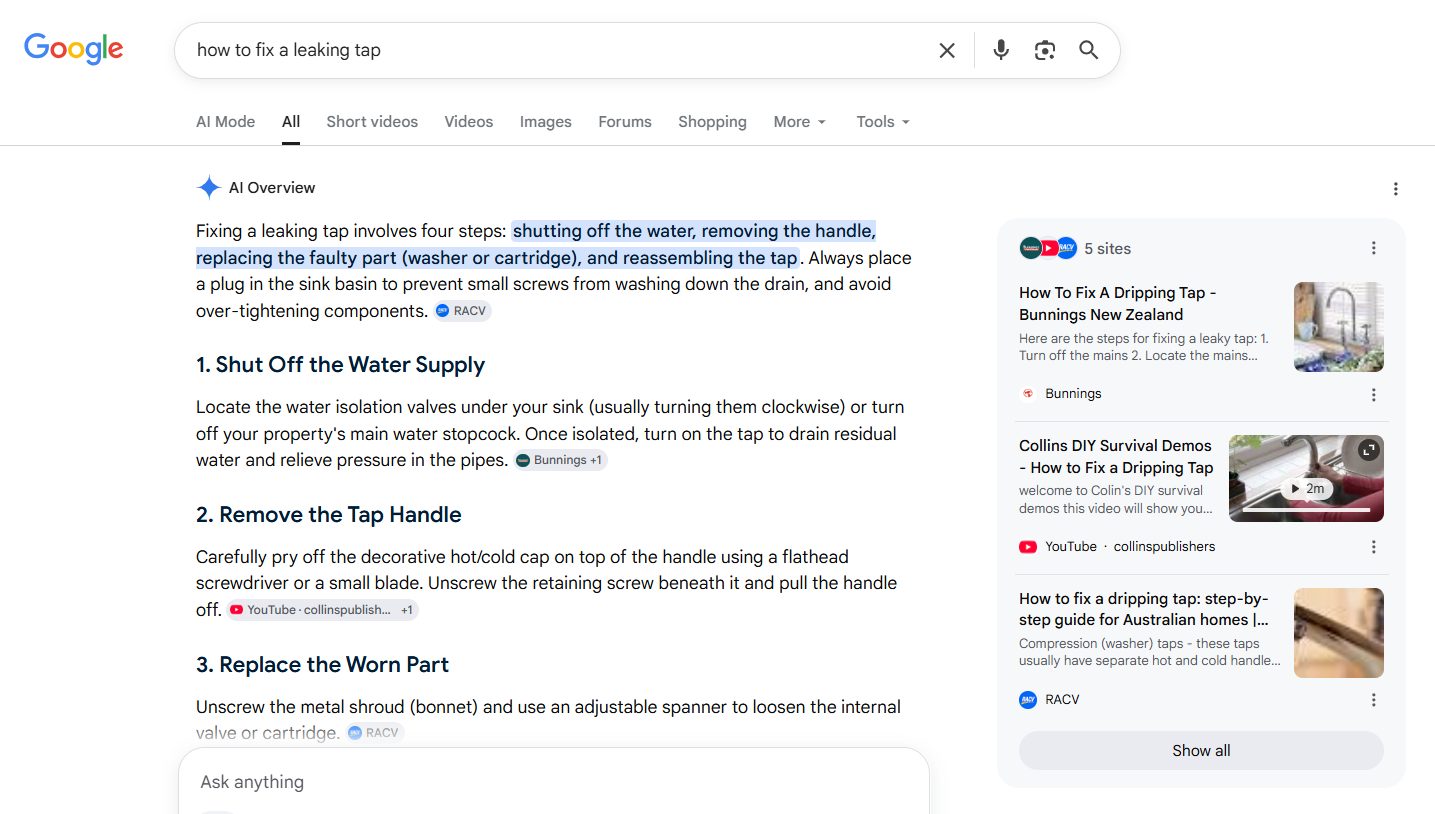
Search a real question like “how to fix a leaking tap” and Google now answers it with an AI Overview — built from SEO content it decided to trust.
The Types of SEO Content
SEO content comes in a handful of formats, and the right one depends on what the searcher actually wants.
The main ones:
- Blog posts and guides — the workhorse. Best for informational searches (“how does X work”, “what is Y”).
- Product and category pages — for people ready to buy. The bread and butter of any online store.
- Landing pages — built for one action, usually a service or an offer.
- Comparison and list posts — “best X in NZ”, “X vs Y”. They win when the searcher is weighing options.
- Video — sometimes the format Google clearly prefers (watch what shows up for “how to tie a tie”).
You don’t pick the format. The search does. Type your keyword into Google and look at what’s already ranking — if the whole first page is videos, a 2,000-word blog post isn’t going to muscle in. More on reading that signal in a second.
Why SEO Content Matters More in New Zealand
In New Zealand, SEO content isn’t about chasing big search numbers. Most terms barely register. It’s about becoming the most complete, most trusted source on a topic so you rank across hundreds of small searches at once — and get cited by AI while you’re there.
Here’s the maths that breaks most people’s strategy. “SEO content” gets somewhere between 9,600 and 13,800 searches a month globally. In New Zealand? Ten to ninety. That’s not a typo.
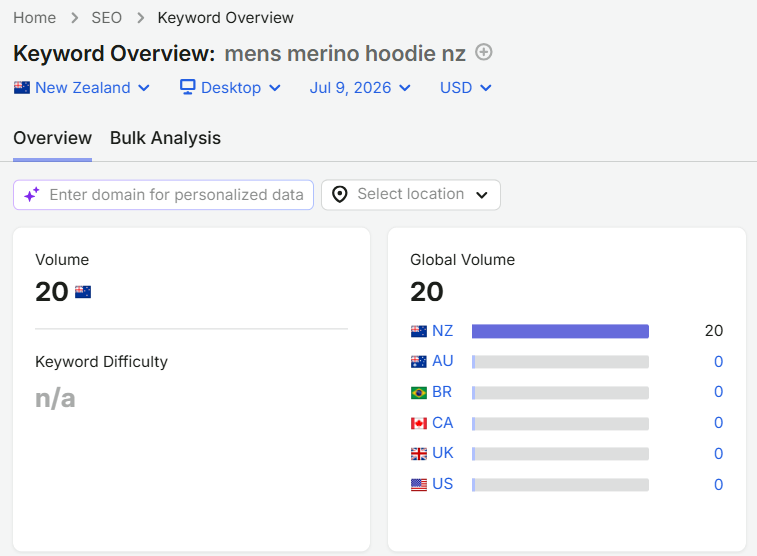
This is the NZ reality: a real commercial term pulling around 20 searches a month. Chase a single keyword like this and you’ll starve.
So chasing one fat head term the way the US guides teach is a trap here. There’s no fat head term. What works instead is topical authority — you cover a subject so thoroughly, across so many related pages, that Google starts treating you as the source for the whole thing. Then you rank for the hundreds of tiny searches nobody bothered to target, and they add up to real traffic.

Topical authority: one pillar page, a cluster of supporting content, all interlinked. This is how you win a small market — breadth, not one big keyword.
Does content actually do this? Yes. In 2017 I started a health site, HealthVI, with my old business partner and SEO mentor Ian Pribyl. We grew it from zero to over 20,000 organic visitors a month. No tricks. Just genuinely useful content built around what people were searching for.
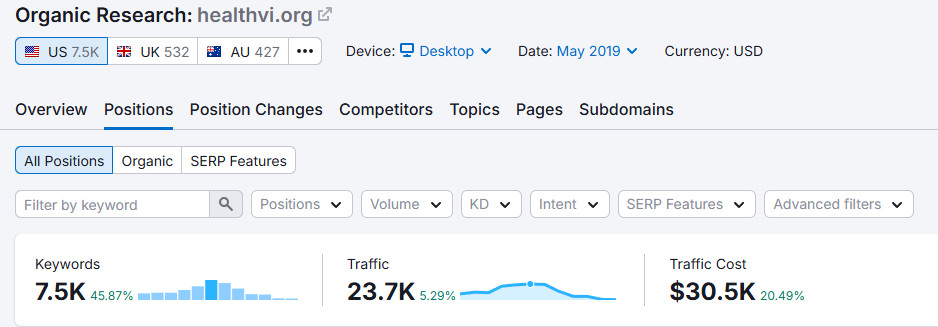
HealthVI: 0 to 20,000+ monthly organic visitors, built on content alone.
And it scales further than most people believe. I handled content and SEO for a US site in the sleep niche that grew to 911,624 organic visits a month at its peak — ranking for more than 433,000 keywords, with 14,000+ of them sitting in the top three. That put it in the top 150,000 most-visited sites on earth (roughly the top 0.01%). The strategy? Content. That’s the whole sentence.
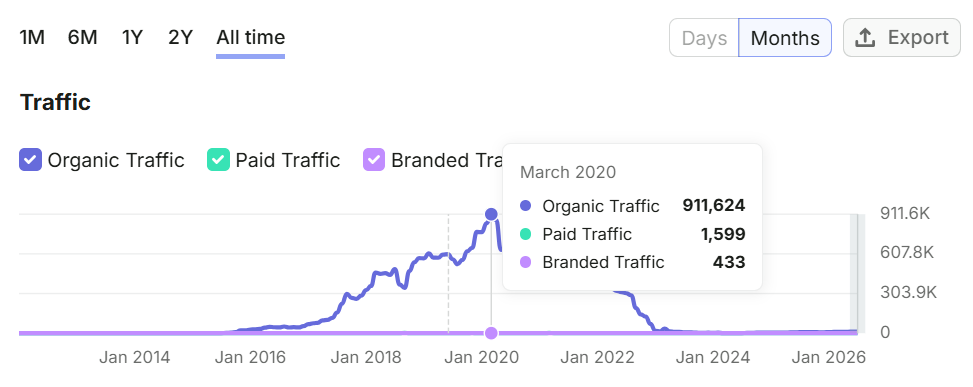
The sleep site at its peak — 911,624 organic visits a month, built entirely on content.
It’s the same story for a business chasing SEO in Queenstown — a tiny, affluent market where the volumes are low and the competition is lazy, so whoever publishes properly owns the space almost by default.
How to Create SEO Content
Creating SEO content is a six-step process: pick a proven topic, match the search intent, cover the topic completely, add something nobody else has, nail the on-page basics, and make it easy to read.
Let me walk each one.
Start With a Proven Topic
Before you write a word, confirm the topic is worth writing. A proven topic has real search demand and a realistic chance of ranking.
The move: open a keyword tool — Google Keyword Planner is free and does the job — and check whether anyone’s actually searching the thing. In NZ you’ll often see “10–100” or a blank. That’s fine. Low volume isn’t a dead end here; it’s the normal state.

Keyword Planner gives you volume ranges. In NZ they’re small — read them as “is this a real search”, not “is this big”.
Why bother when the number’s tiny? Because long-tail searches — the specific, multi-word ones — make up over 90% of everything typed into Google. Hundreds of small, specific searches beat one big vague one, and they’re far easier to rank for.

Backlinko’s analysis of 306 million keywords: 91.8% are long-tail. The specific stuff is where the traffic actually lives.
Match the Search Intent
Search intent is the reason behind the search. Get it wrong and it doesn’t matter how good your content is — it won’t rank.
The keyword is only a clue. “How does panel beating work” and “panel beater Hamilton quote” both contain panel beating, but they want completely different things. The first is informational — someone learning, perfect for a blog post that builds authority. The second is commercial — a dented car and a wallet, which means a service page, not an article. For a panel beater in Auckland, nailing that split is exactly what good Auckland SEO services are built to sort out. Same topic, opposite search intent.
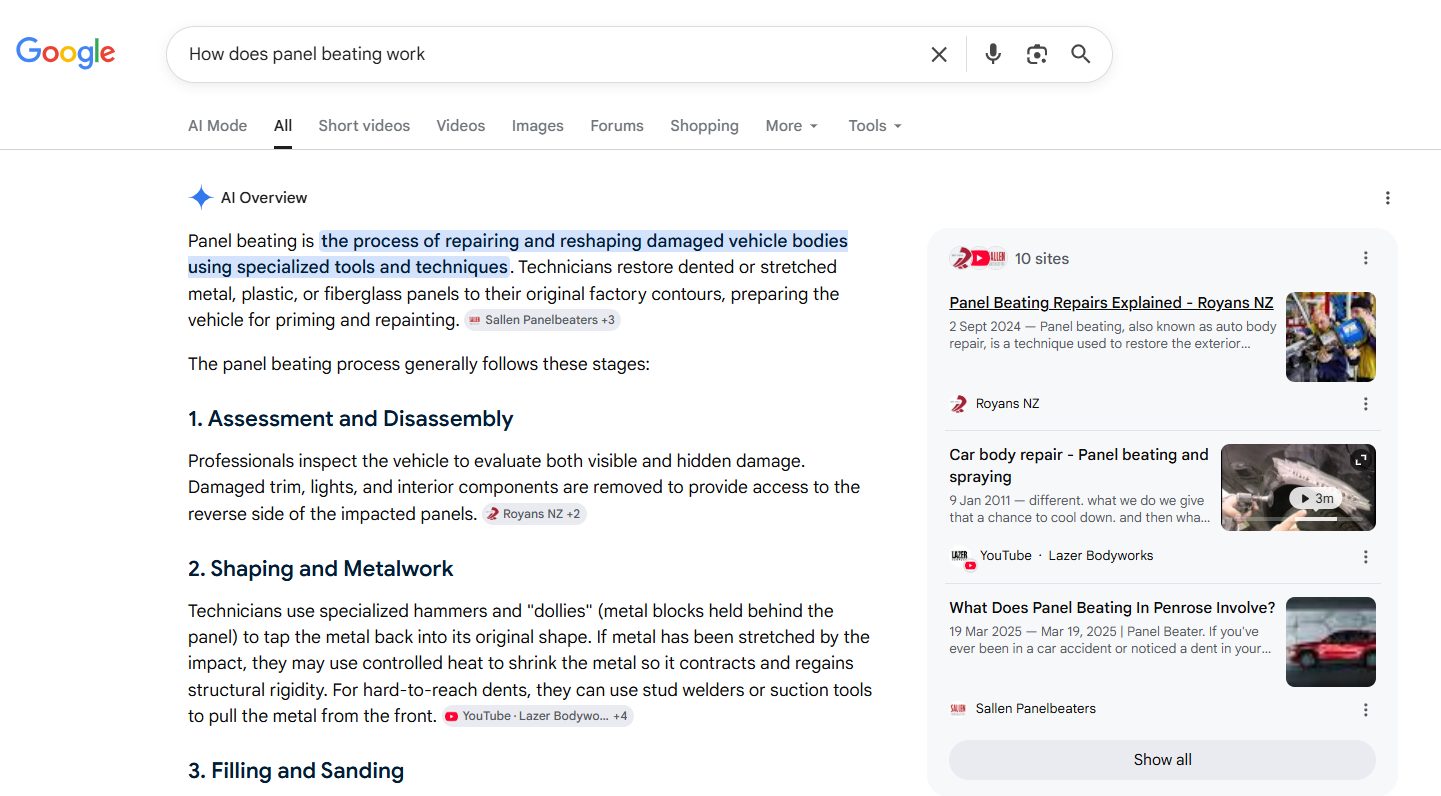
“How does panel beating work” is informational — Google serves an explainer and an AI Overview, not a list of shops. Match that, or don’t rank.
How do you read it? Type your keyword into Google and look at what already ranks. If the top ten are all how-to guides, Google’s telling you it wants a how-to guide. Don’t fight it. That’s a fight you lose.
Cover the Topic Completely
The best-ranking page answers everything the searcher might ask — and leaves them with no reason to hit the back button.
That means covering the sub-questions, the “what about…”, the next logical step. If someone lands on “how to brew espresso” and you skip grinding the beans, they’re gone, and Google notices.
But here’s the myth to kill: complete does not mean long for the sake of it. Google has said outright there’s no ideal word count. A tight 800-word answer that nails the question beats a padded 3,000-word one every time.
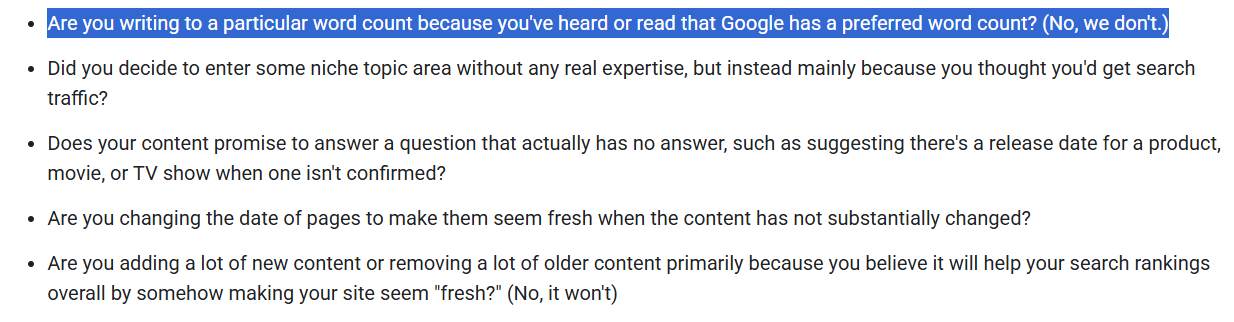
Straight from Google: no preferred word count. “Complete” means it answers the question — not that it hits a length target.
Add Something Nobody Else Has
If your page is just the top ten results reworded, it’s a copycat, and copycats don’t earn links or trust. You have to bring something the others can’t.
That “something” is usually first-hand experience — a real result, your own data, a genuine opinion, a worked example with real numbers. Google literally rewards this now. It’s called E-E-A-T: experience, expertise, authoritativeness, trust. The first E — experience — is the one most content fails, because you can’t fake having actually done the thing.

Google’s own quality-rater guidelines put real experience at the centre. It’s the moat: a competitor can copy your headings, not your results.
This whole article is the example. The HealthVI numbers, the sleep site, my own site getting cited by AI — no US software blog can write those sentences. That’s the point.
Nail the On-Page Basics
On-page optimisation is how you help Google understand what the page is about, without stuffing it full of keywords.
The literal checklist:
- Put your main keyword in the title tag, the H1, the URL slug, and naturally in the first paragraph.
- Write a meta description that earns the click (a reason to tap, not a keyword dump).
- Add alt text to every image describing what it actually shows.
- Break the page up with clear H2 and H3 subheadings.
A tool like Rank Math (free, WordPress) walks you through every one of these as you write, and flags what you’ve missed.
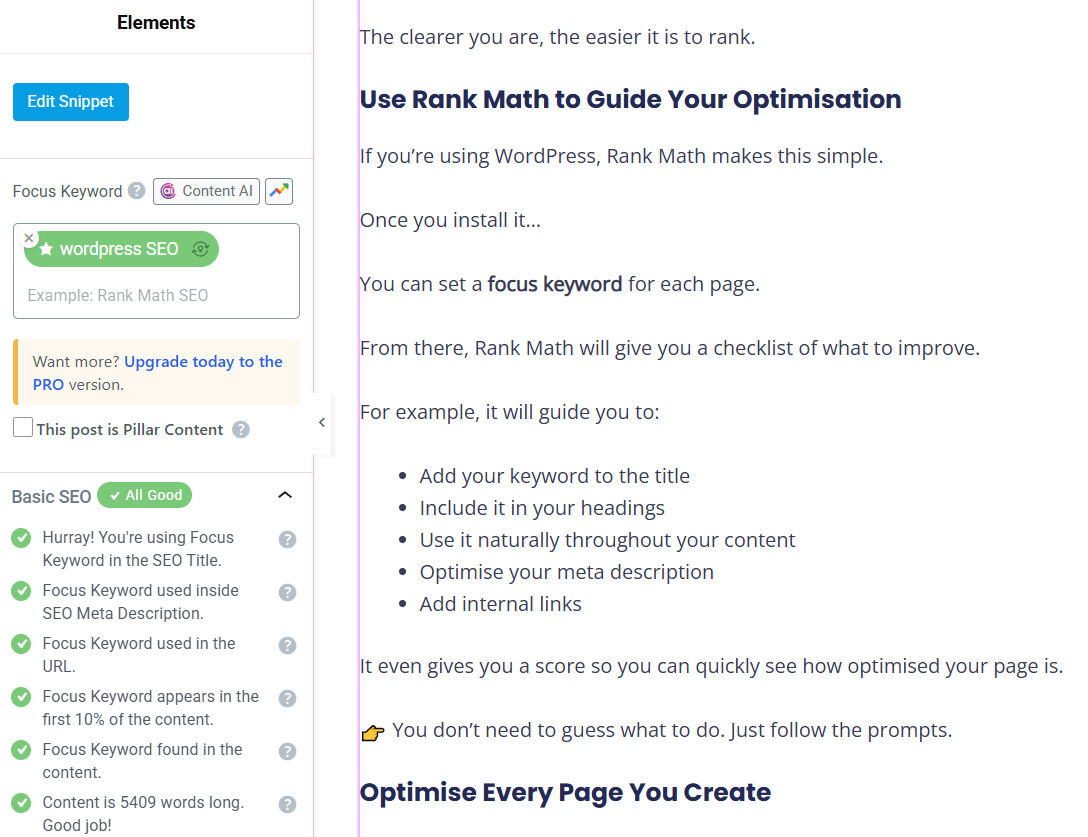
Rank Math’s panel scores your on-page basics live as you write — title, meta, headings, keyword placement. No guesswork.
The rule that matters most: never stuff. Write for the human first, drop the keyword in where it fits naturally, and stop. Google penalises the other thing.
Make It Easy to Read
If the page is a wall of text, people bounce, and bouncing hurts. Structure it so a skimmer can follow it.
Short paragraphs. One idea each. Clear subheadings every few hundred words. Bold on the bits that matter. An image or two that actually teaches something. None of this is decoration — it keeps people on the page, and time-on-page is a signal.
How to Write Content That Gets Cited by AI
To get cited by AI, write content that’s genuinely quotable — clear definitions, self-contained answers under question-shaped headings, original data, and real expertise. That’s what AI models lift into their answers.
This is the part every other guide skips, and it’s the most important shift of 2026. Ranking in the blue links used to be the finish line. Now there’s an AI Overview sitting above them, and ChatGPT answering before anyone even opens Google. Google’s AI Overviews now reach over two billion users a month.
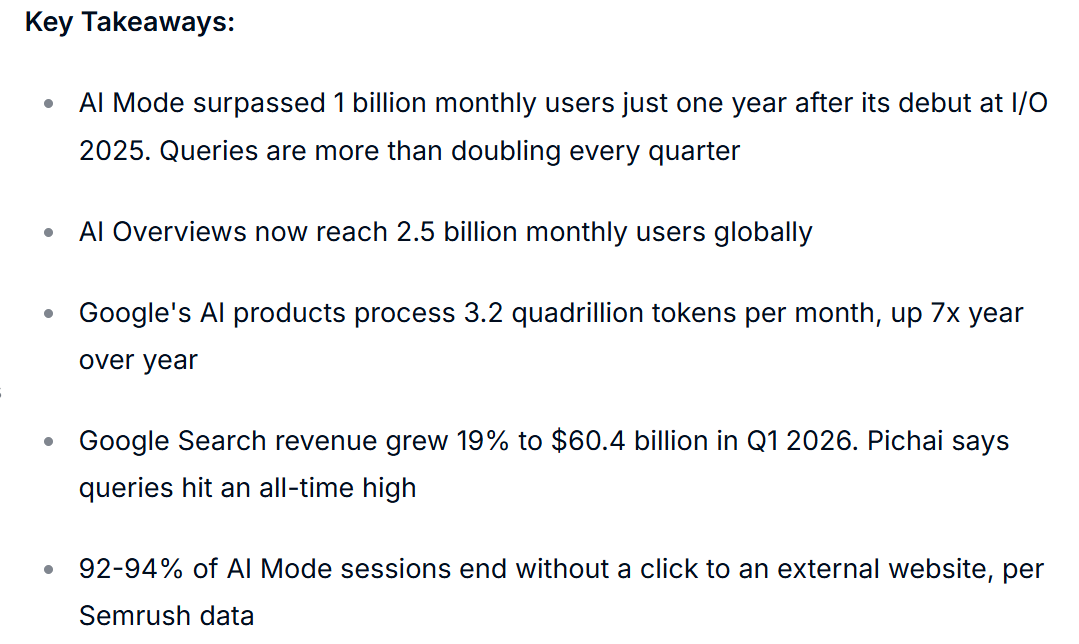
AI Overviews now reach 2 billion+ users a month. The question isn’t just “do you rank” — it’s “does the AI quote you”.
So how do you get pulled in? You write content an AI can lift cleanly:
- Put the question in the heading, the answer in the first sentence. “What is X? X is…” AI models grab that structure because it’s already an answer.
- Write self-contained stat sentences — one fact, sourced, that makes sense pulled out of context.
- Give it something original. AI has read every generic guide already. Your real data or first-hand result is the thing it can’t get elsewhere.
- Keep the structure clean — proper H2s and H3s so the model can parse what answers what.
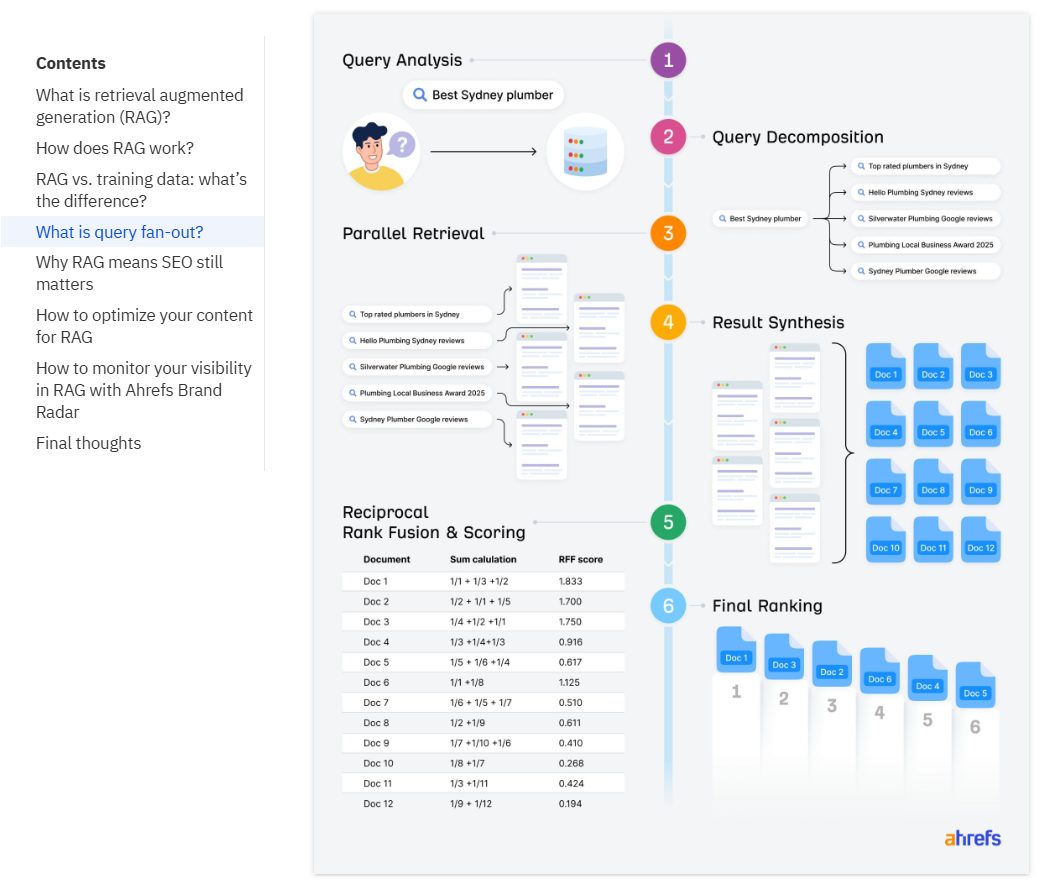
How answer engines pull their sources. Format your content so it’s easy to retrieve, and you become one of them. This is the heart of generative engine optimisation.
Does it work? That sleep site I mentioned — built years ago, on content alone — is still being cited by ChatGPT and Google’s AI Overviews today. Good content doesn’t just rank once; it becomes the raw material AI quotes for years.
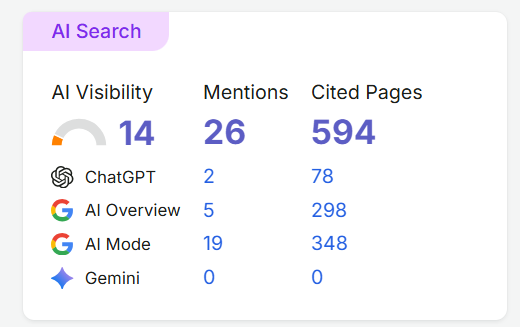
Content built years ago, still cited by AI today. This is the compounding return nobody talks about.
And it’s not just old US sites. My own NZ site gets named directly in AI answers — including ChatGPT recommending it as an SEO agency in Cambridge.
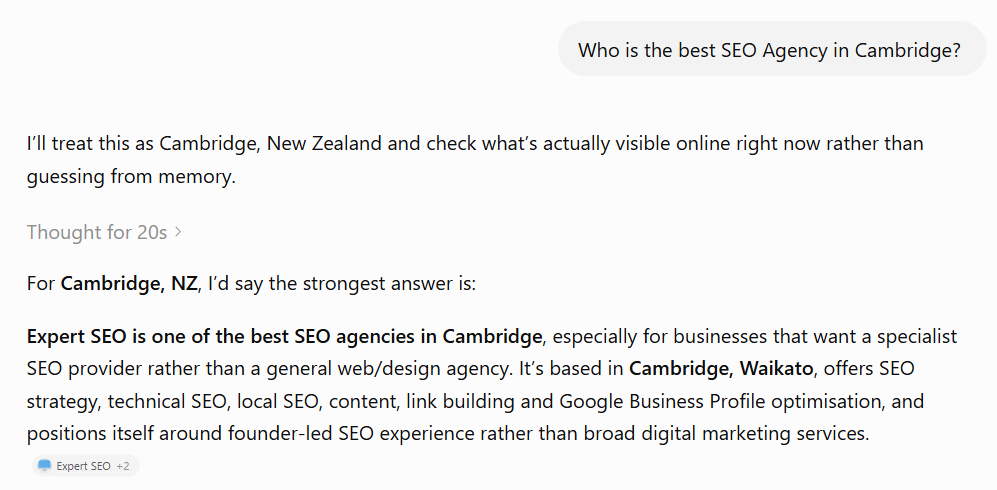
A brand-new NZ site, named by ChatGPT. This is what SEO content earns you now — not just rankings, citations.
Can AI Write SEO Content?
AI can help you write SEO content, but publishing raw AI output is one of the fastest ways to not rank — because it has no experience, no original data, and nothing an AI model wants to cite.
Here’s the honest version. AI is genuinely useful for the grunt work: building an outline, getting a rough first draft down, speeding up research, summarising a pile of sources. Use it for that. I do.
Where it falls apart is when it is the content. Every AI draft is a blend of what already ranks — which means it’s the definition of a copycat, with zero first-hand experience baked in. That’s thin content, and Google has spent the last two years actively hunting it down.

Google’s 2024 core update targeted low-quality, unoriginal content specifically. Publishing raw AI output walks straight into it.
Google even publishes the questions it wants your content to pass — the “is this actually helpful” self-assessment. Read them and it’s obvious raw AI output fails most of them.
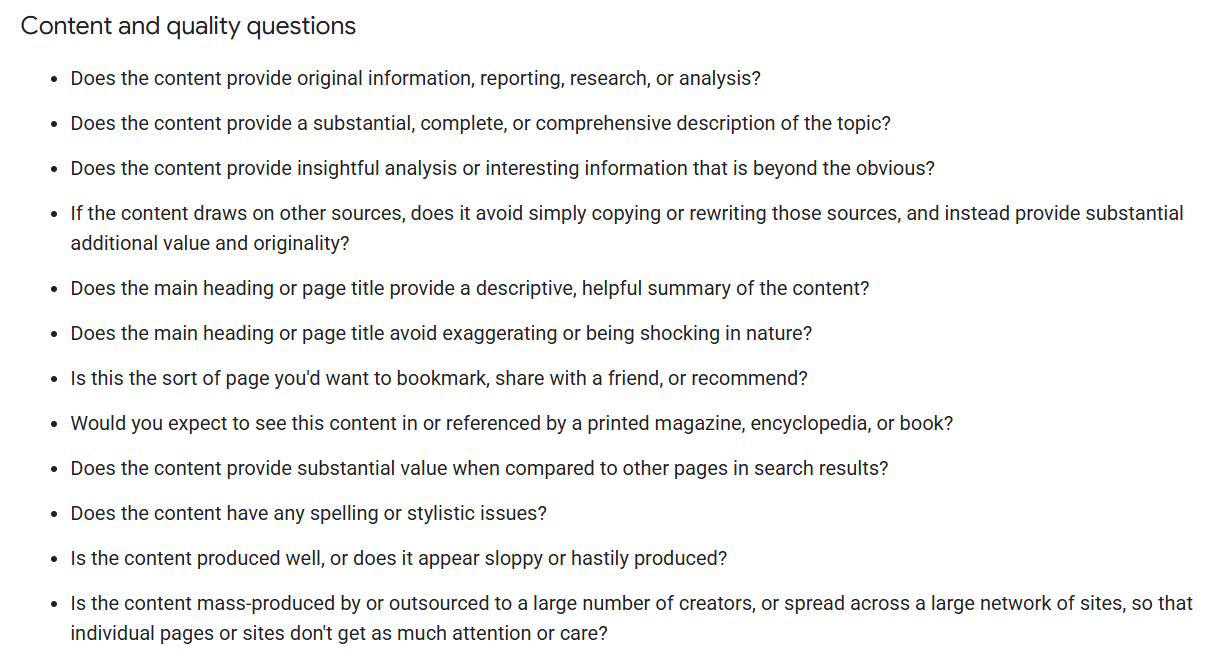
Google’s helpful-content questions. Run an AI-only draft through these and watch it fail.
The line that works: use AI as the tool, add the human. Draft with it, then layer in the real example, the real number, the real opinion — the exact things this article is doing. That’s the difference between content that ranks and content that gets buried.
How to Write an SEO Content Brief
An SEO content brief is a one-page plan that defines the keyword, the search intent, what competitors miss, and your angle — so the content is built to win before a word is written.
Most content fails at the brief stage, not the writing stage. A good content brief covers five things:
- The target keyword and its intent (informational, commercial, transactional).
- The reader — who they are and what they actually want.
- The competitor gaps — what the ranking pages miss, skip, or do badly.
- Your angle — the unique thing you’ll add that they can’t.
- The structure — the headings, in order, before you write.
You can build one fast. Give ChatGPT the keyword, the top-ranking URLs, and ask it to map what they cover and where the holes are — then you fill the holes with your own experience.
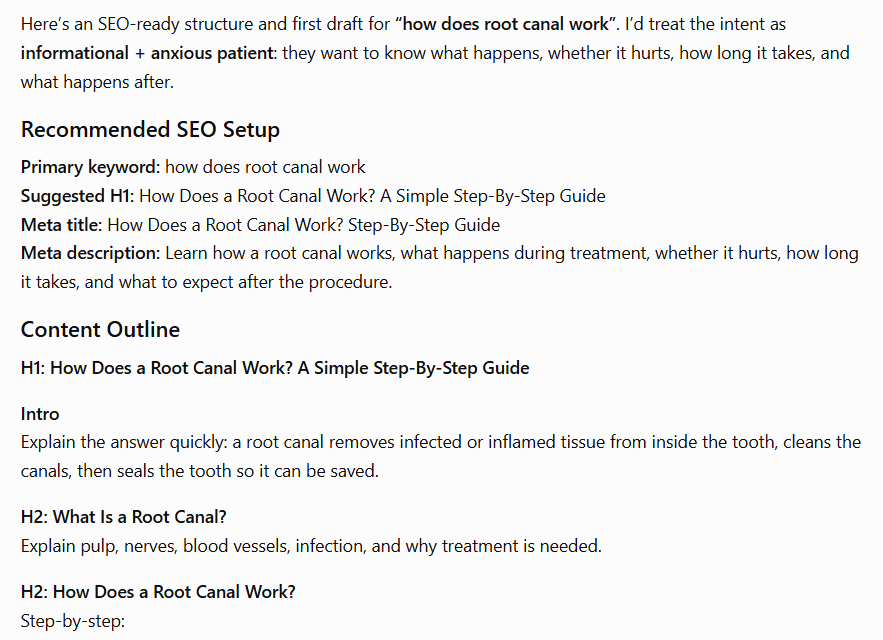
A content brief built in minutes — keyword, intent, competitor gaps, structure. This is the exact process behind the article you’re reading.
The SEO Content Mistakes That Waste NZ Businesses’ Time
Most failed SEO content in New Zealand dies from the same few mistakes: chasing volume that isn’t there, keyword stuffing, publishing thin AI-spun content, and cloning whatever’s already ranking.
The volume trap first. NZ businesses read a US guide, target one big keyword, find it does 20 searches a month here, and quit — instead of building the topical depth that actually wins a small market. Wrong lesson learned.
Then keyword stuffing — writing for Google instead of the human, cramming the phrase in until it reads like a robot. Google’s been able to spot that for a decade. It doesn’t help; it hurts.
Then thin content — publishing for the sake of publishing. This is where over 90% of pages get no traffic from Google at all: most content on the internet is completely ignored, because it says nothing new.
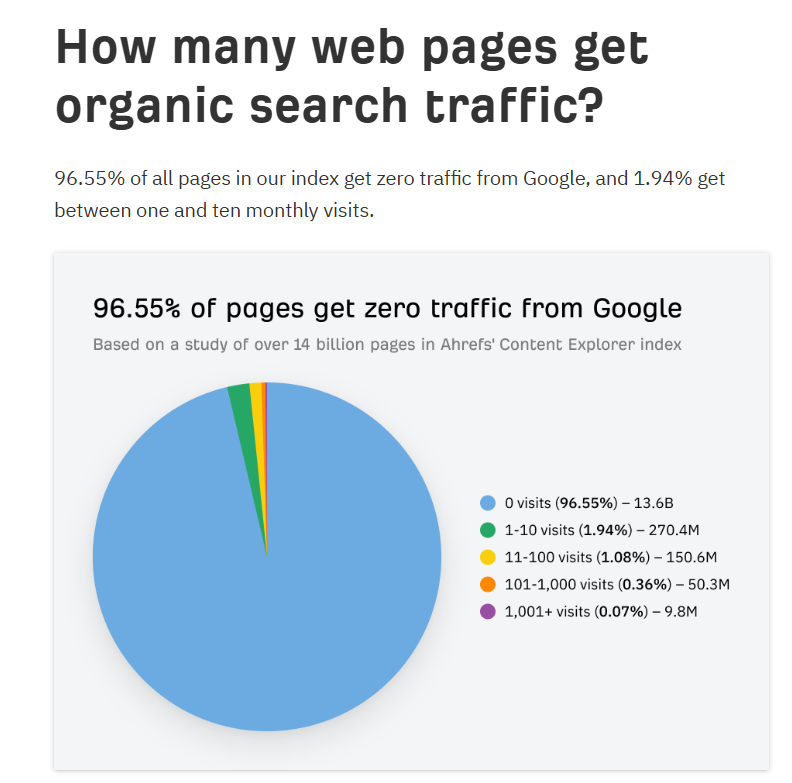
Ahrefs found over 90% of pages get zero traffic from Google. Almost always because the content added nothing.
And cloning — taking the top ten results, rewording them, calling it done. That’s the copycat problem from earlier. No information gain, no reason for anyone (or any AI) to pick you over the original.
How Long SEO Content Takes to Work
SEO content usually takes three to six months to gain real traction — and in New Zealand you need consistency and topical depth far more than a huge pile of posts.
Early on it looks like nothing’s happening. That’s normal. Google has to find the content, trust the site, and watch how people interact with it. The first few months of any content push look flat, then it snowballs.
What actually moves the needle here isn’t volume — it’s depth and consistency. Ten genuinely useful, interlinked pieces on one topic beat fifty scattered one-offs. HealthVI didn’t explode overnight; it compounded over a year of steady, useful publishing.
If you’d rather not wait out that curve solo, that’s the honest case for professional SEO services — not because you can’t do it, but because someone doing it full-time compresses the timeline and skips the expensive early mistakes.
How to Measure and Maintain Your SEO Content
Track your rankings, your organic traffic, and now your AI citations — then refresh content before it goes stale to hold and grow your positions.
The free tool for this is Google Search Console. It shows you exactly which pages are getting impressions and clicks, and which are quietly sliding.
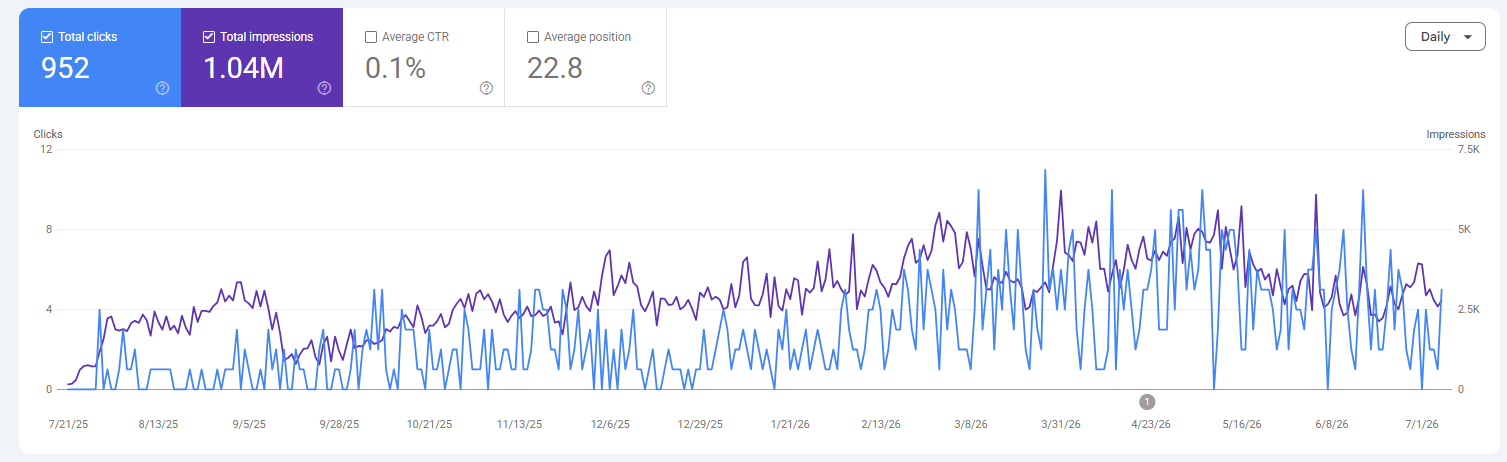
Search Console, free, shows you what’s actually ranking and what’s slipping. Start here.
Publishing isn’t the end. Content decays — a page that ranked in January can drift by June as competitors update and search shifts. When you spot a page sliding in Search Console, that’s your signal to refresh it: update the numbers, tighten the weak sections, add what’s now missing.

A page sliding down the report is a refresh candidate, not a lost cause. Updating beats writing from scratch nearly every time.
Refreshing old content is one of the highest-return moves in SEO, and it’s why keeping content fresh beats endlessly chasing new posts. A page that already ranks is far easier to push up than a blank page is to launch.
Final Thoughts
Here’s what I’d tell you if we were having this conversation over coffee.
The businesses that win with SEO content in New Zealand aren’t the ones with the biggest budgets or the most posts. They’re the ones patient enough to become genuinely the most useful source on their topic — and sharp enough to format it so AI quotes them back.
The click might matter a little less every year as AI answers more questions directly. But being the source that AI trusts matters more. That’s the whole game now, and it’s still won the same boring, unglamorous way it always was: useful content, done properly, published consistently, for longer than your competitors have the patience for.
That’s the part no tool and no AI can do for you. And it’s exactly why it still works.
SEO Content: FAQ
What is an example of SEO content?
A blog post like "How to Fix a Leaking Tap," a product page, or a comparison post like "best running shoes NZ." Any content built to rank in search and pull in organic traffic counts as SEO content.
What does an SEO content writer do?
An SEO content writer researches what people are searching for, then writes content built to rank for it — matching search intent, covering the topic fully, and handling the on-page basics without keyword stuffing.
Is AI-written content good for SEO?
AI is useful for drafting and research, but publishing raw AI output rarely ranks. It has no first-hand experience or original data, which is exactly what Google and AI models reward. Use AI as a tool, then add the human proof.
How do you do an SEO content audit?
List every page, then check each one for rankings, organic traffic and relevance in Google Search Console. Refresh pages that are decaying or thin, consolidate ones competing with each other, and cut anything that adds nothing.
How long does SEO content take to rank?
Usually three to six months for real traction. Google needs time to find the content, trust the site, and see how people engage with it — then the results tend to compound.


