
The numbers at a glance
- 0 to 27,530 organic visitors a month at its peak (May 2019) — built from nothing.
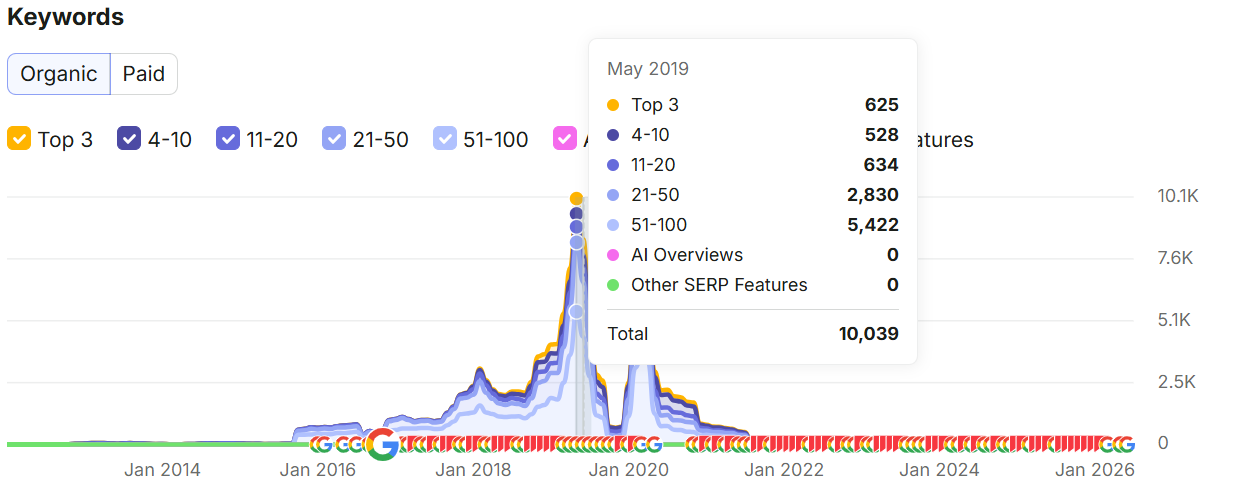
- 10,039 keywords ranked on Google, 625 of them in the top 3.
- Ranked #1 for product-review terms pulling thousands of searches a month.
- Ranked #2 in the entire United States for “fat loss” — a keyword doing around 15,000 searches a month.
- Healthline — a health publisher doing 50 million+ visits a month — reached out to me directly.
- The real engine wasn’t the traffic. It was the email list that traffic fed.
This one was mine.
Not a client site. Not something I consulted on for a few months and walked away from. HealthVI was my own project — a health and fitness product review site I built and grew from zero.
At its peak it pulled 27,530 organic visitors a month from Google. No ads. No social media grind. Just people searching for answers and landing on pages I built to give them the honest truth.
Along the way it ranked #1 for product reviews worth thousands of searches a month, ranked #2 in the whole United States for “fat loss,” and got a health editor at Healthline emailing me to collaborate. But none of that was the point. The point was the email list — and I’ll get to why.
This is how it worked, and why it’s the clearest proof of how I actually think about SEO.
The model: honest reviews, then own the relationship
The whole site ran on one idea — write genuinely honest reviews of the products people were already searching for, then capture the people those reviews would have lost.
The health and fitness space is full of products people research obsessively before they buy. Supplements, workout programs, fat-loss plans — a huge chunk of it sold through ClickBank, one of the biggest digital marketplaces around.
So the plan was simple. Take the most popular products people were already Googling, and write honest reviews of them.
Not fluffed-up affiliate reviews that call everything a game changer. Honest ones. If a product was good, I said so. If it was junk, I said that too.
That honesty is what made the SEO content work. Google rewards content that actually helps the person searching — and nothing helps a buyer more than an honest review that saves them from wasting money.
Here’s the clever part, and it’s the bit most affiliate sites miss.
When someone found one of my reviews and the product was bad, I didn’t just say “don’t buy this” and lose them forever. I steered them onto my email list instead.
Think about what that does. Someone searching “[popular product] review” has their wallet half-open. They’re ready to spend money to solve a problem. If I just said “this one’s rubbish,” they’d leave and go buy something else, somewhere else.
Instead, I captured the email. Then from the list I could build a real relationship, earn their trust, and point them toward products that actually worked.
Search brought the right people in. Honesty earned their trust. The email list turned that trust into revenue. That was the machine.
From zero to 27,530 visitors a month
I started this site with nothing — no traffic, no audience, no shortcuts — and grew it to 27,530 organic visitors a month in one of the most competitive niches online.
Here’s the Semrush chart:
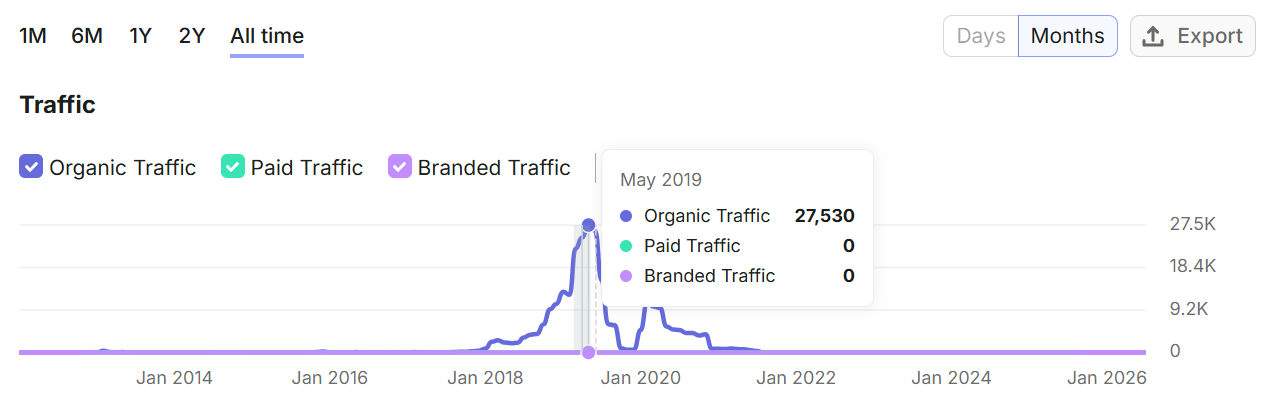
Let me ground that number. Most New Zealand businesses would be over the moon with a few thousand organic visitors a month. A solid local site might do 5,000 to 10,000.
This one did nearly 28,000 — in the health and fitness niche, up against huge American brands with far bigger budgets than mine.
And the shape of that line is the part that matters. It didn’t spike and crash. It built and held, because it was made of content people were genuinely searching for — not tricks that get wiped out the next time Google updates.
10,039 keywords — and #1 for the products that mattered
At its peak the site ranked for 10,039 keywords, 625 of them in Google’s top 3 — including the #1 spot for product-review terms doing thousands of searches a month.
Traffic is the headline. Keywords are the engine underneath it.
Ranking for one keyword is luck. Ranking for ten thousand is a system.
And it wasn’t ranking for scraps. It held #1 for the exact product reviews the business ran on — terms like “lean belly breakthrough” pulling thousands of searches a month, all on their own.
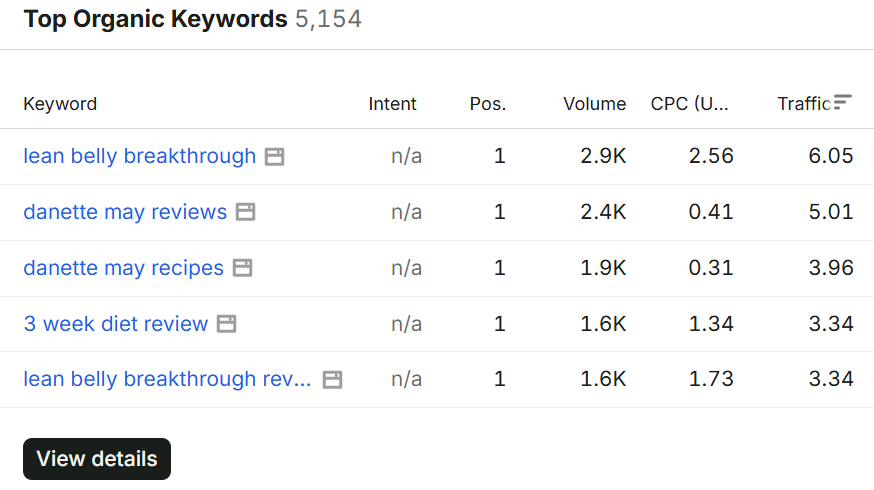
Those are the keywords that pay. When someone searches a specific product by name, they’re not browsing — they’re deciding whether to buy. Ranking #1 for those searches meant I was the voice in their ear at the exact moment the decision got made. That’s where the buying intent lives.
Ranked #2 in the entire United States for “fat loss”
The site didn’t just rank for narrow product terms. It ranked #2 in the whole United States for “fat loss” — one of the most competitive keywords in the niche, at roughly 15,000 searches a month.
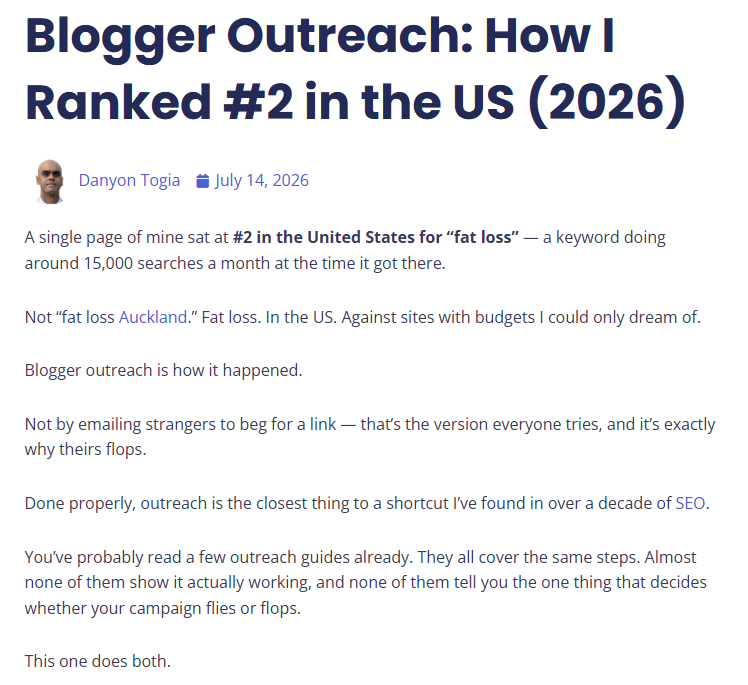
Sit with that for a second. Not #2 in New Zealand. Not #2 in a tiny sub-niche. Number two in America — the single most competitive search market on the planet — for a term every supplement company and fitness brand on earth is fighting over.
That’s the value of a broad topic like “fat loss.” It doesn’t sell anything on its own, but it pulls in a flood of exactly the right people — folks actively trying to solve a problem you have products for. Rank at the top for the big informational terms, and you fill the top of the funnel for free.
Then Healthline came knocking
Rankings are one kind of proof. Getting the biggest publisher in your niche to reach out to you is another — and Healthline, a site doing over 50 million visits a month, did exactly that.
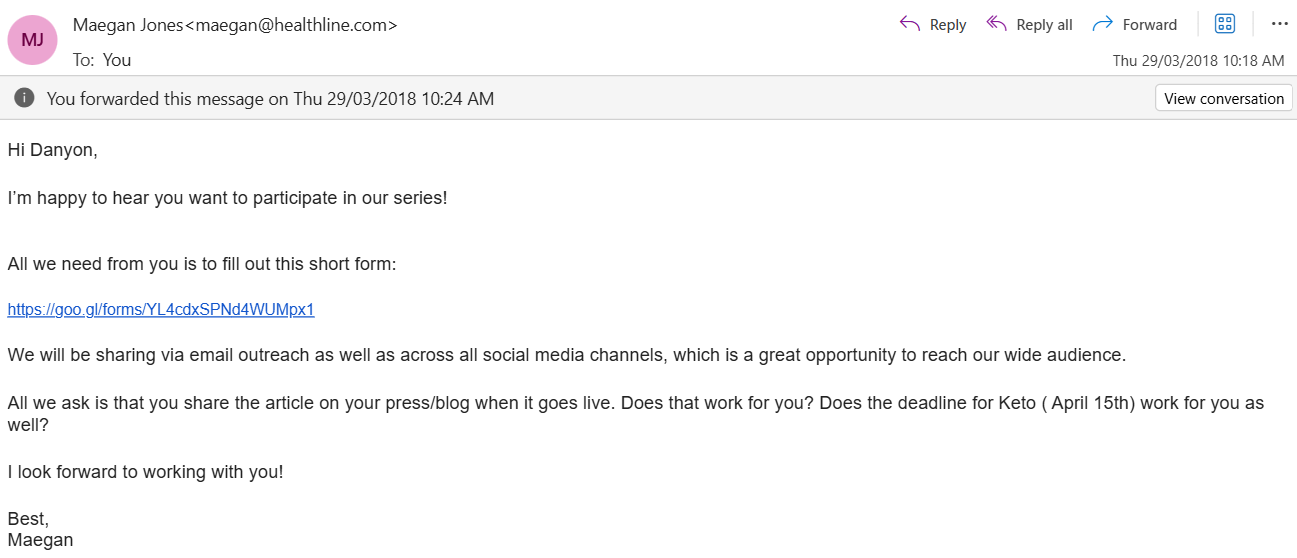
A health editor at Healthline emailed me directly, inviting me to collaborate on their content. You can’t buy that. A publisher at that scale only reaches out to sources it already sees as credible.
That’s what deep, honest content does over time. It doesn’t just rank — it gets you noticed by the people who set the standard in your space. Exactly the kind of authority signal that Google’s E-E-A-T is built to reward.
Where the money actually came from
The traffic was never the goal. The email list was — because a searcher you capture is worth far more than a searcher who reads one page and leaves.
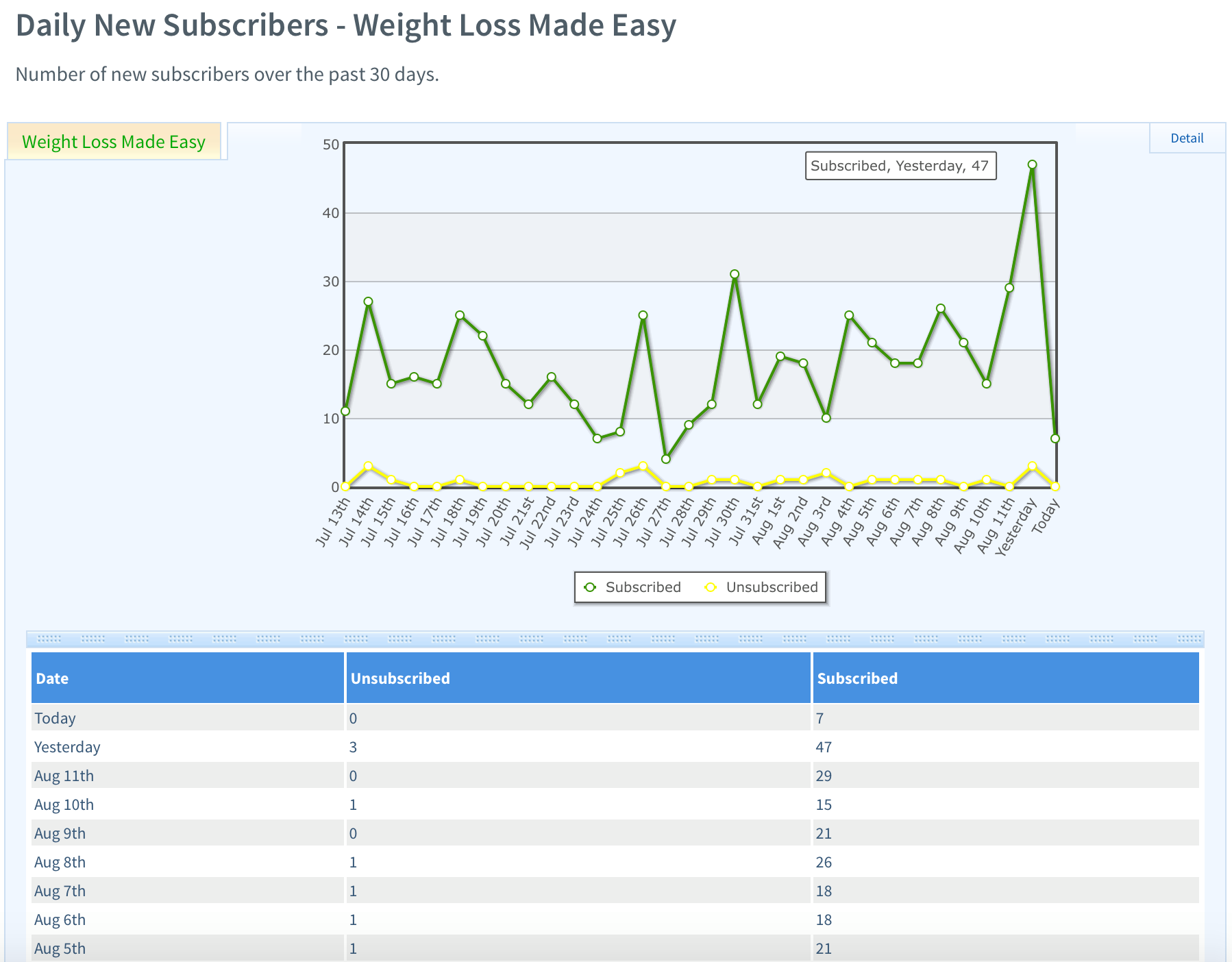
SEO’s job was to bring in the right people — searchers actively looking to spend on health and fitness products. Every day, that search traffic fed new signups onto the list.
Once someone was on the list, everything changed. I could talk to them directly, build trust over time, and recommend products that genuinely helped — instead of hoping to catch them on a single visit.
That’s the lesson most sites never learn. Traffic that leaves and never comes back is close to worthless. Traffic you turn into a relationship is an asset that pays you again and again. SEO filled the top of that funnel for free, every single day. That’s the leverage.
Why this matters for your business
You don’t need 27,000 visitors a month — but the method that built them is the same one that ranks a New Zealand business and turns clicks into customers.
Most of that traffic would be irrelevant to a local NZ business anyway. But the method doesn’t change: work out exactly what your customers search, build content that answers it more honestly and completely than anyone else, earn Google’s trust, then capture those visitors — an email, a call, a booking — so a single search becomes a customer, not just a pageview.
Most SEO people have never actually built and grown a site of their own. I have — from zero, in one of the most brutal niches on the internet.
If you’d rather hand that off to someone who’s built it from scratch himself, that’s what my SEO agency is for.
Final Thoughts
SEO isn’t about chasing traffic for the sake of it. It’s about bringing in the right people, earning their trust, and turning that trust into revenue.
HealthVI did that by being honest when everyone else was hyping — and by never letting a good visitor walk away without capturing them first.
That’s the whole game. Rank for what people are searching. Be the most useful, most honest result. Then own the relationship instead of renting the click.
Do that consistently and you don’t just get traffic. You get a business.
HealthVI SEO Case Study: FAQ
What was HealthVI?
HealthVI was my own health and fitness product review site. The model was simple: write genuinely honest reviews of the most popular products people were searching for, then capture those readers onto an email list and build a real relationship with them. Organic search brought the right people in; the email list turned them into revenue.
How did it grow from zero to 27,530 visitors a month?
Content and SEO, nothing else. I found the products and questions people were actively searching, then published the most honest, useful answer online for each one. That stacked up into 10,039 ranked keywords and, at its peak in May 2019, 27,530 organic visitors a month — with no ad spend.
Was this really your own project?
Yes. HealthVI wasn’t a client job — I built it and grew it myself, from nothing, in one of the most competitive niches on the internet. It’s the clearest proof of how I actually approach SEO, because there was no one else’s brief to follow.
How does a review site actually make money?
Not from the reviews directly. The reviews earn trust and traffic; the email list is where the money is made. When a product turned out to be bad, instead of losing that ready-to-buy visitor, I steered them onto the list — then recommended products that genuinely worked. The traffic feeds the list, and the list is the asset.
Did it really rank #2 in the US for “fat loss”?
Yes — #2 in the United States for “fat loss,” a keyword doing around 15,000 searches a month. That’s the most competitive search market on earth, for a term every supplement and fitness brand fights over. Broad terms like that don’t sell anything on their own, but they pull in a flood of exactly the right people.
Can this work for a small New Zealand business?
Yes. You don’t need 27,000 visitors — most of that traffic would be irrelevant to a local business. But the method is identical: understand what your customers search, answer it better and more honestly than anyone else, earn Google’s trust, then capture those visitors so a single search becomes a customer. In a smaller market like NZ, it’s an easier fight.