
Is SEO Worth It? The Honest Answer for NZ Businesses (2026)

Do you actually need SEO? Or is it a money pit dressed up in marketing jargon?
If you’ve been burned by a bad agency, seen the “SEO is dead” headlines, or just can’t figure out whether it’s worth the investment, you’re asking the right question.
I’ve used SEO to grow four different businesses.
Not theory, not “potential,” but actual traffic, actual revenue, and actual results.
I also run an SEO company in New Zealand, so I see what works and what doesn’t every single day.
This guide gives you the honest answer backed by real numbers, a clear framework to decide if SEO is right for your business, and what to expect if you go ahead with it.
Is SEO Worth It?
SEO is worth it if potential customers are using Google to search for your services, your products, or solutions to problems you help solve.
That’s the test. And for most businesses, the answer is yes.
SEO is the process of getting your website to rank higher in search results so more people find you.
Unlike Google Ads, where you pay for every single click, SEO builds an asset that generates traffic month after month without ongoing click costs.
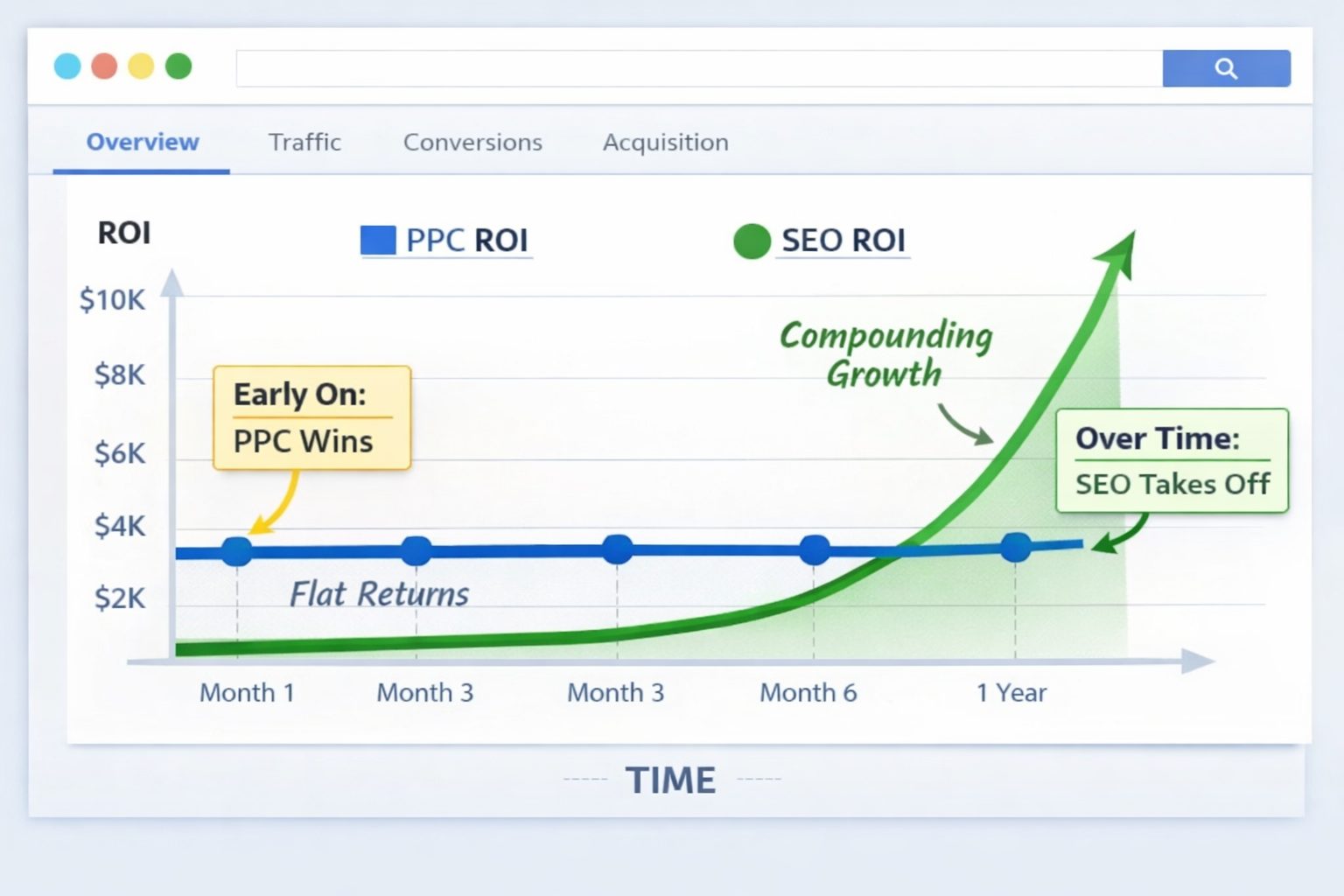
Think of it like renting vs owning.
Google Ads is rent. You pay, you get traffic. You stop paying, traffic disappears.
SEO is ownership. You invest upfront, and the returns keep coming.
But I don’t expect you to take my word for it. Here’s what SEO has actually done across businesses I’ve personally worked on.
What SEO Actually Delivers (And What It’s Worth)
SEO isn’t just about rankings. It’s about what those rankings do for a business.
HealthVI — From Zero to 20,000 Monthly Visitors
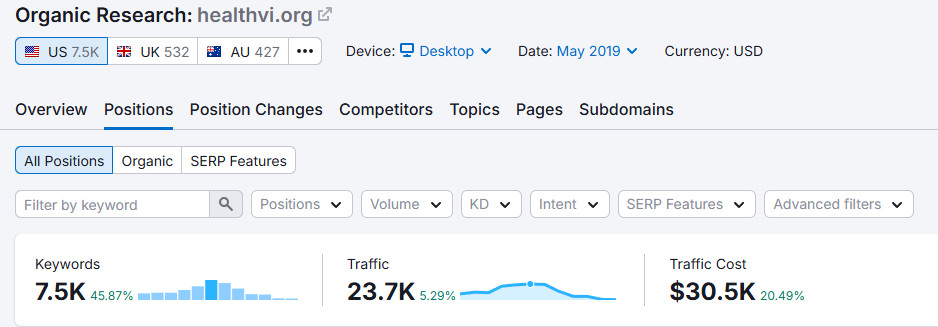
I grew a health website called HealthVI from nothing to over 20,000 monthly organic visitors.
The traffic value of that site — meaning what it would cost to buy the same traffic through Google Ads — was over $30,000 per month.
StoryChief — 43,000 Visits in a Single Month
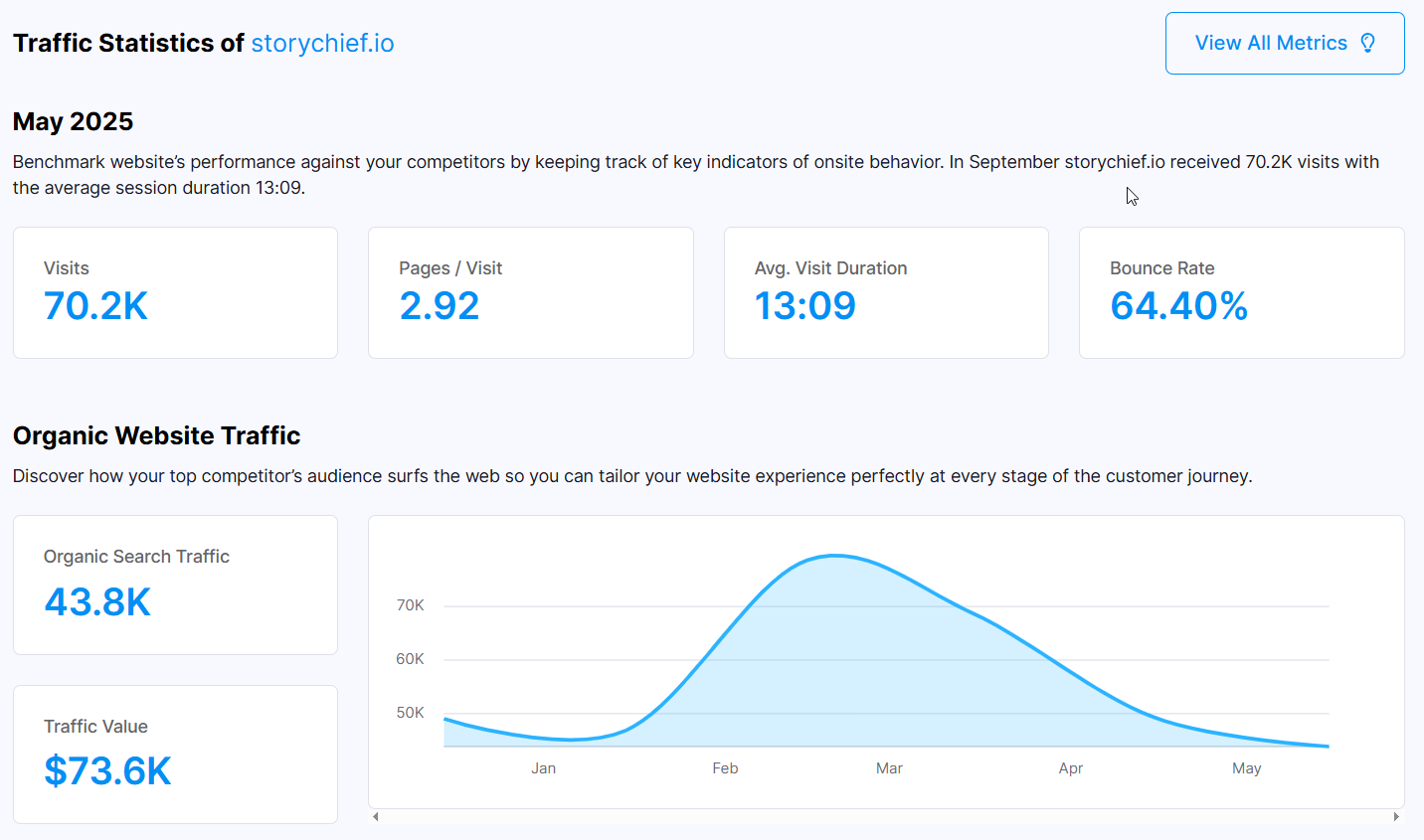
I’ve created content for StoryChief who got 43,000 visits in May 2025 alone, with a traffic value of $73,000.
That content keeps working. It doesn’t expire after a campaign ends and doesn’t need a bigger budget next month to maintain results.
My YouTube Channel — 3 Million Views and $6,000 Weeks
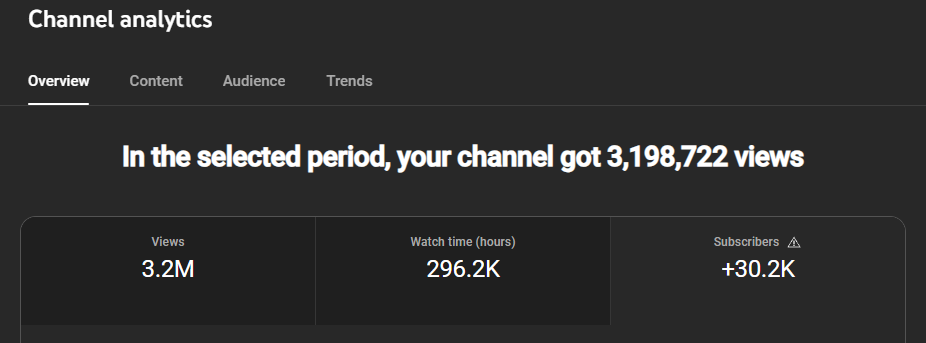
SEO doesn’t just work on Google. I applied the same principles to my YouTube channel and grew it to over 3 million views.
When I opened up coaching spots,
I’d see $6,000 weeks from people who found me through search. On top of that, ad revenue came in passively without any extra work on my end.
Stopping Scams — 5,000+ Daily Visitors

Another site I built around scam prevention was hitting over 5,000 visitors on some days, all from organic search and SEO fundamentals done properly.
Expert SEO — Ranking #1 in 8 Months Against 10-Year Competitors
Probably the most relevant example for NZ business owners.
My SEO agency, Expert SEO, is only eight months old. It’s competing against businesses that have had established websites for over 10 years.

Despite that, it’s already ranking number one for some of the most competitive SEO keywords in New Zealand. It’s appearing in Google AI Overviews. It’s being cited in ChatGPT responses. And the site’s traffic value is already over $3,000 per month.
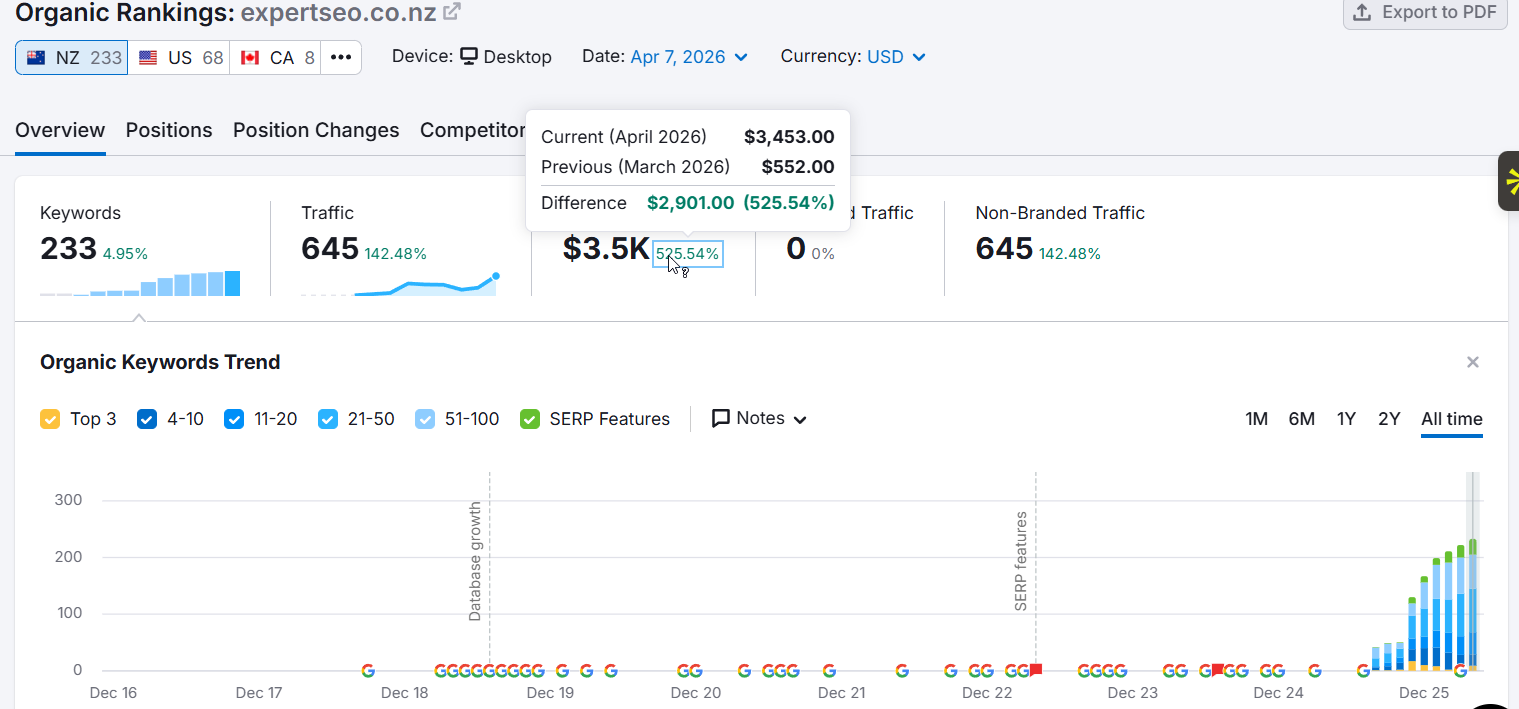
The site still isn’t even fully optimised, which means there’s significantly more growth to come just from continuing to execute the same strategy.
The ROI Numbers Behind All of This
These aren’t isolated success stories. The data backs up what SEO delivers at scale.
Industry research shows that SEO produces a median ROI of around 748% — roughly $7.48 returned for every $1 invested.
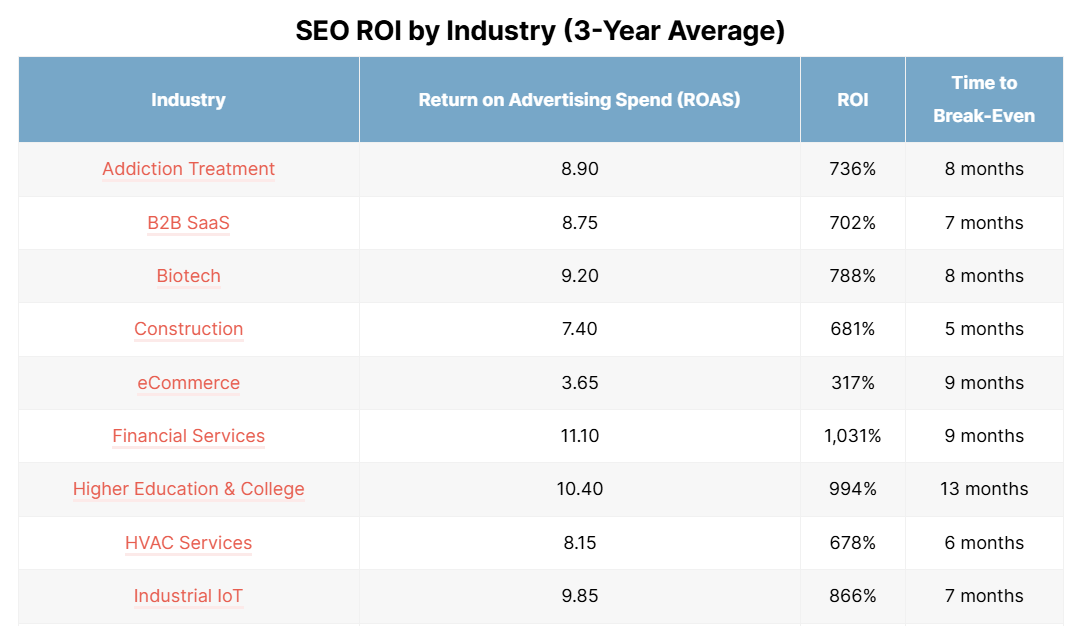
Some industries see even higher returns, with financial services reaching over 1,000% ROI.
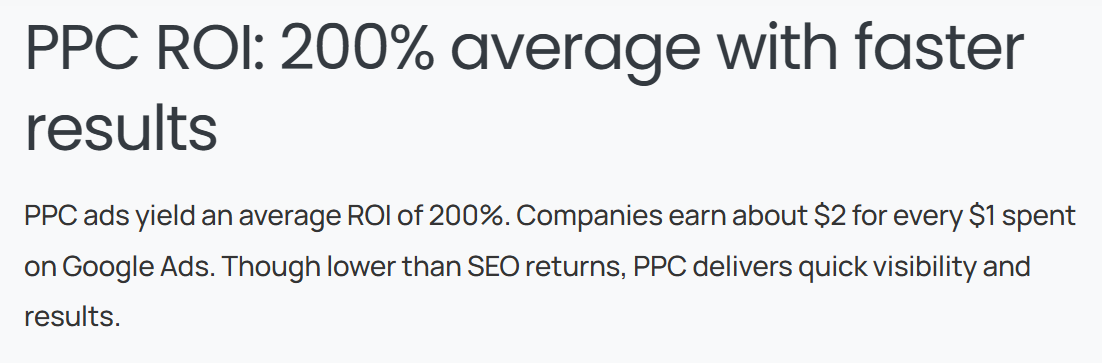
Compare that to paid advertising, which typically returns around $2 for every $1 spent.
SEO leads also close at a significantly higher rate. SEO leads close at 14.6% compared to outbound leads at just 1.7%.
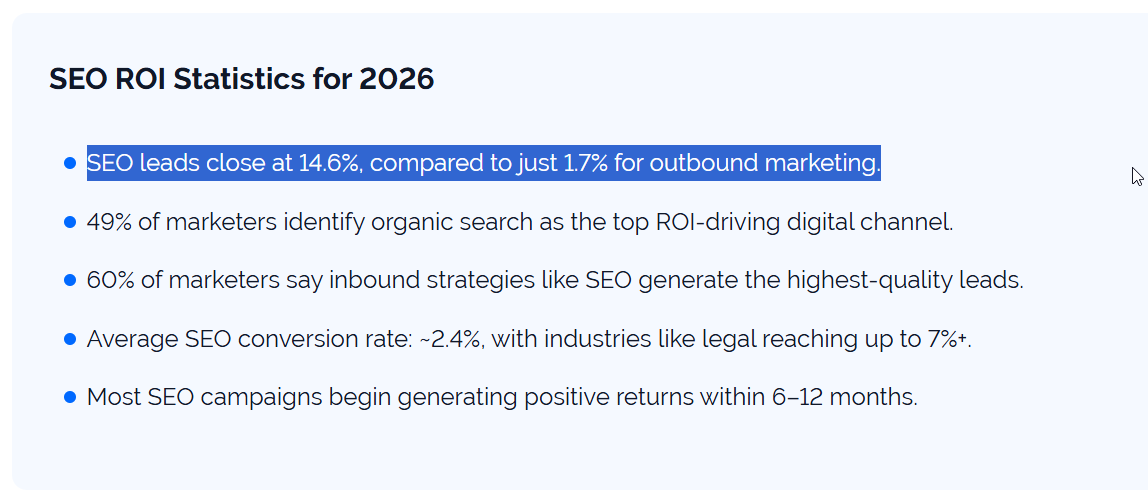
That’s because people coming through organic search are actively looking for what you offer. They’re not being interrupted — they’re searching with intent.
And the cost per lead tells the same story. Organic SEO leads cost roughly $31 each, while PPC leads cost around $181.

That’s nearly six times cheaper.
The most important thing to understand about SEO’s ROI is that it improves over time.
Month one is expensive relative to what you get back. By month twelve, the same investment is delivering far more traffic and leads than it did in the beginning, because everything you’ve built compounds on itself.
Is SEO Worth It for Small Businesses in NZ?
For small businesses in New Zealand, SEO is one of the most cost-effective ways to compete with bigger players.
Why? Because most of your competitors aren’t doing it properly.
The NZ market is smaller than the US, UK, or Australia, which means less competition for most keywords, faster results, and the ability for a small business that executes well to outrank established competitors in months rather than years.
Expert SEO is proof of this.
An eight-month-old website is ranking number one for competitive keywords, ahead of businesses with a decade-long head start. That’s not because those businesses are bad — it’s because they’re not doing SEO services with a proper strategy.

The 80/20 of SEO for Small NZ Businesses
You don’t need to do everything. Focus on the 20% of SEO that drives 80% of results.
For most small businesses, that means getting your Google Business Profile set up and optimised, creating strong service pages targeting your core keywords, publishing a handful of genuinely useful blog posts that answer the questions your customers are actually asking, and building a review system so you’re collecting Google reviews consistently.
A plumber in Hamilton doing these four things properly will outperform a competitor who’s been online for years but never bothered with SEO.
Is Local SEO Worth It?
If you serve a specific geographic area, local SEO is one of the highest-value things you can invest in.
Local searches like “dentist Auckland” or “plumber near me” have massive commercial intent.
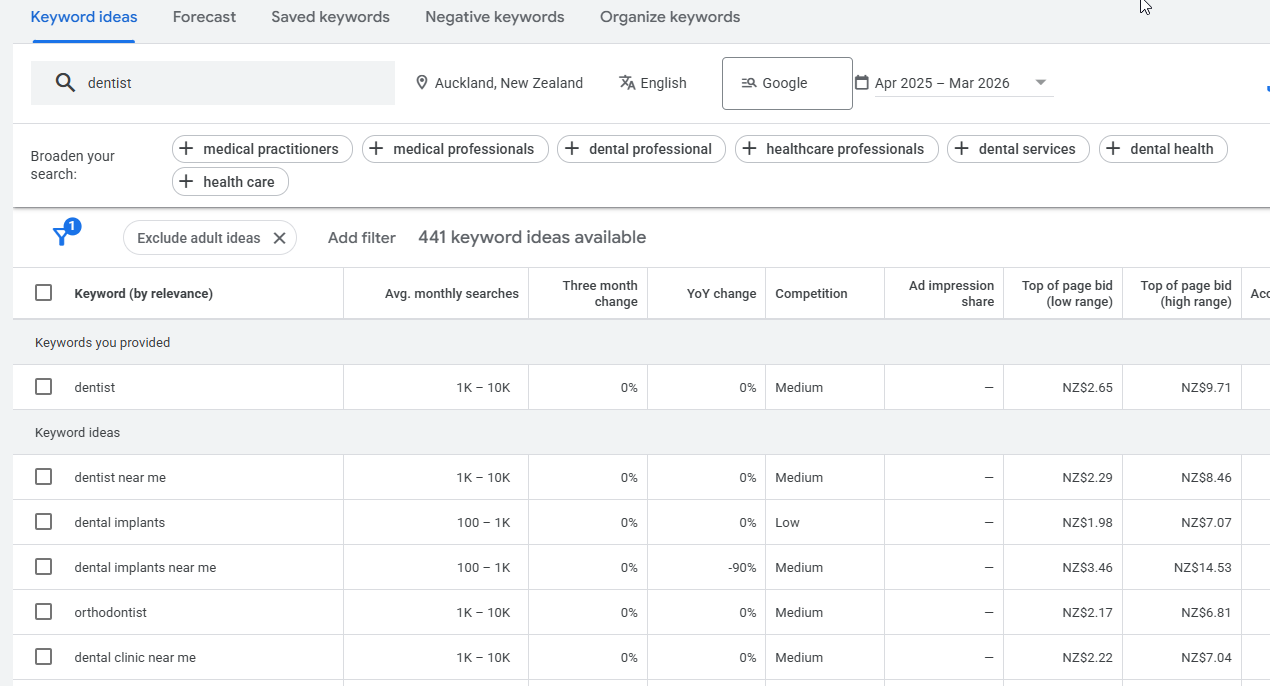
The people searching these terms aren’t browsing. They’re ready to book, call, or visit.
Getting into Google’s map pack for your area can send a steady stream of qualified leads to your business every single month.
SEO vs Google Ads: Which Is Actually Worth More?
SEO and Google Ads serve different purposes, and the best choice depends on your timeline and budget.
| SEO | Google Ads | |
|---|---|---|
| Cost structure | Fixed monthly investment. No per-click cost. | Pay per click. Costs increase with competition. |
| Speed | 3–6 months for traction. | Immediate traffic. |
| Longevity | Traffic continues for months or years after investment. | Traffic stops the moment you stop paying. |
| Cost over time | Gets cheaper as the asset compounds. | Gets more expensive as CPCs rise. |
| Trust | Organic results are trusted more by users. | Some users skip ads entirely. |
The NZ Cost Reality
The average cost per click in New Zealand is around $3.24 across industries.
But in competitive industries, it’s much higher. Legal services can exceed $6–8 per click. Trades and home services often sit around $5–10 per click for high-intent terms.
Let’s say you’re a plumber in Auckland and your average CPC is $8.
If you need 100 clicks per month to generate leads, that’s $800 per month on Google Ads just to get those visitors. And the moment you stop paying, the traffic stops.
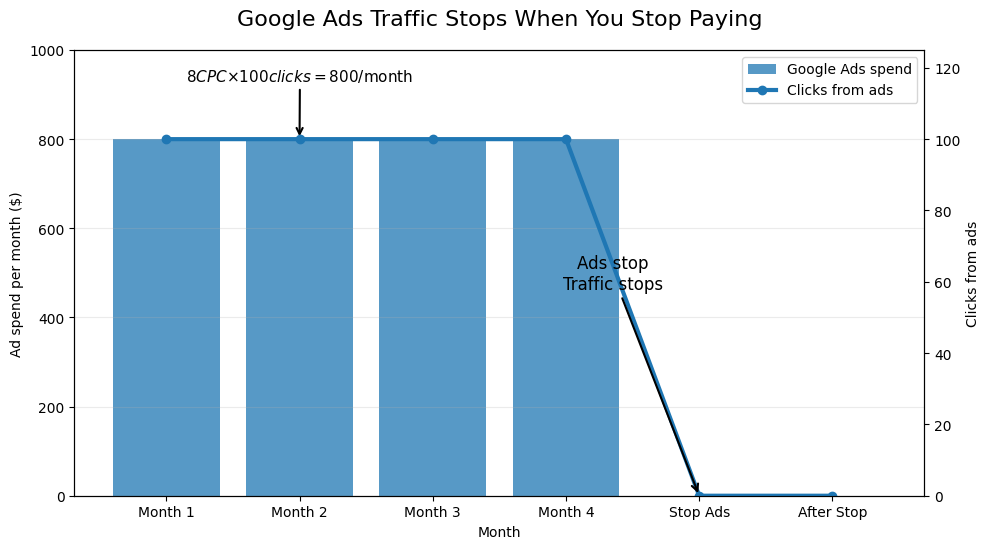
With SEO, the same $800–$2,000 monthly investment builds pages that rank and attract visitors indefinitely.
After six months, those pages are generating traffic on their own. After 12 months, your cost per visitor drops significantly because the content keeps working without proportional extra spend.
When Google Ads Makes More Sense
Google Ads makes more sense when you need leads immediately and can’t wait for SEO to build, when you’re testing a new offer or service and want fast data, or when you’re running seasonal promotions.
When SEO Makes More Sense
SEO makes more sense when you want long-term, sustainable growth, when you want to reduce your dependence on paid traffic, and when you want to build authority and trust in your market.
The best approach for most businesses is to use both.
Run Google Ads for immediate results while building SEO as a long-term asset. Over time, your SEO traffic grows and your reliance on ads shrinks.
Is SEO Still Worth It in the AI Era?
AI hasn’t killed SEO. If anything, AI SEO has made good SEO more valuable because the same content that ranks well on Google is the content AI systems choose to cite.
What’s Actually Changed
AI systems like ChatGPT and Google AI Overviews are now summarising content and delivering answers directly in search results. That means some searches end without a click to any website.
Around 60% of Google searches now result in zero clicks.

That sounds alarming until you understand what’s really happening.
What Hasn’t Changed
People still search. Google still processes over 8.5 billion searches per day. And both Google and AI platforms need content to pull from — sources to cite and websites to reference.
Strong SEO fundamentals — clear content, topical authority, trust signals — are exactly what gets your website picked up in AI-generated answers.
Expert SEO’s Own Proof
The Expert SEO results I mentioned earlier prove this point. An eight-month-old website is being cited in Google AI Overviews and ChatGPT responses.
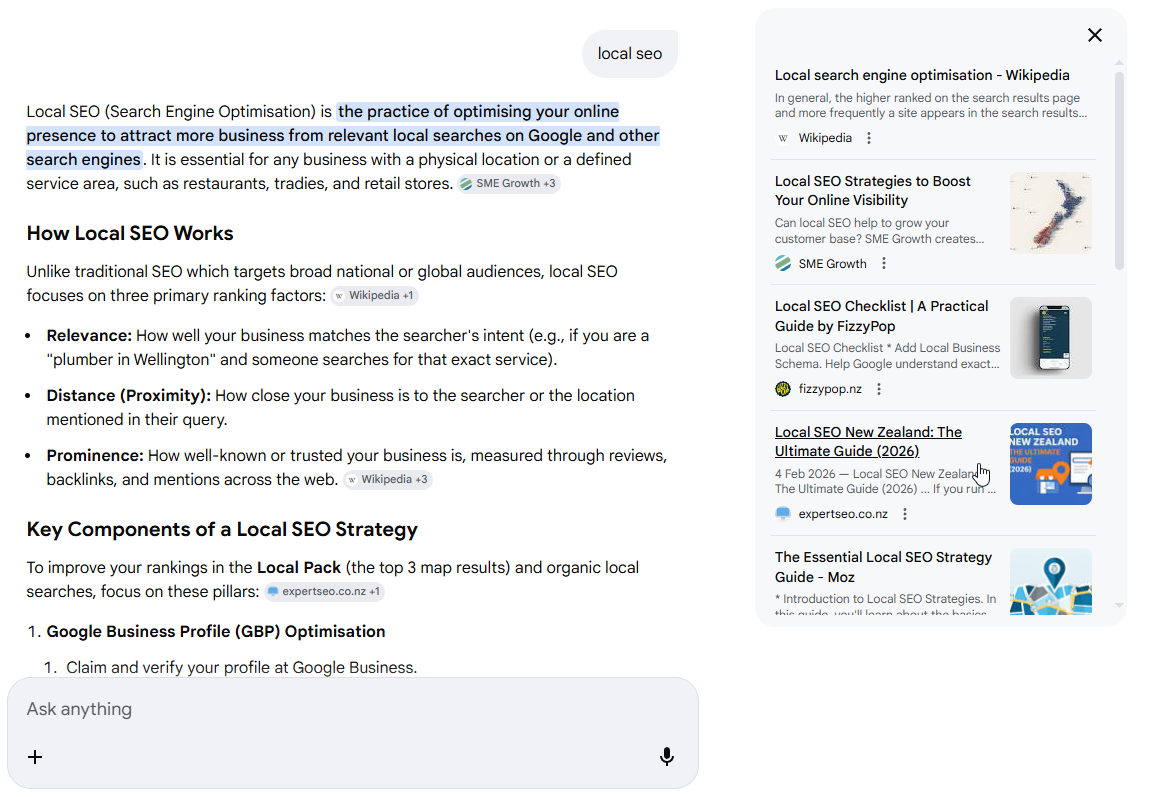
That didn’t happen because of some secret AI strategy. It happened because of strong SEO fundamentals: clear content, proper structure, topical authority, and real proof.
The real risk isn’t that SEO doesn’t work in the AI era. The real risk is doing nothing. If you’re not creating content, you won’t rank in Google AND you won’t get cited by AI. You’ll be invisible everywhere.
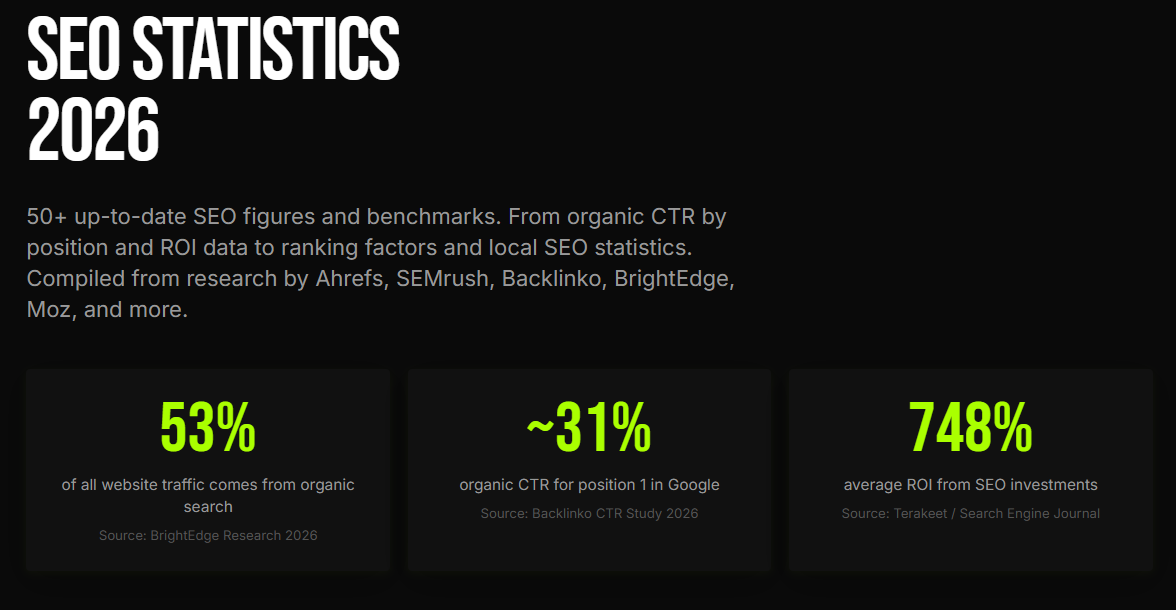
That number hasn’t collapsed. It’s shifted slightly, but organic remains the single largest source of website visitors by a wide margin.
When SEO Isn’t Worth It (And How to Avoid Wasting Money)
I’m not going to pretend SEO is the right move for every business in every situation. Here’s when you should think twice.
When SEO Isn’t the Right Move
You need leads tomorrow. SEO takes three to six months minimum before you see real traction. If you need customers this week, run Google Ads or focus on outreach. SEO is a long-term play.
Nobody is searching for what you sell. If you’ve invented a completely new product category that nobody knows about yet, there’s no search demand to capture. Build awareness first through other channels, then use SEO to capture the demand once it exists.
You’re not willing to commit for at least six months. SEO rewards consistency. Investing for two months and then stopping is like going to the gym three times and wondering why you’re not fit. The compounding effect only kicks in if you stay with it.
You have a fundamentally broken website. If your website is slow, looks like it was built in 2008, and breaks on mobile, SEO alone won’t save you. Fix the foundation first.
These aren’t reasons to never do SEO. They’re reasons to address the underlying issue first or pair SEO with another channel in the short term.
How to Avoid Wasting Money on SEO
The biggest reason people say “SEO doesn’t work” is because they hired someone who did bad SEO. Bad SEO is worse than no SEO.
Here’s what to watch out for.
Red flags in an SEO provider: They guarantee specific rankings (nobody can guarantee this). They won’t explain what they’re actually doing. They buy cheap backlinks from spammy websites. They have no case studies or results to show. They charge $200 per month (you get what you pay for).
What a good SEO provider looks like: They have a clear strategy and can explain it. They show you real results from real clients. They provide transparent reporting so you can see what’s happening. They’re focused on outcomes (traffic, leads, revenue) not vanity metrics.
The biggest mistake I see is business owners hiring someone cheap, getting poor results, and then concluding that SEO doesn’t work. SEO works. Bad SEO doesn’t.
How Much Does SEO Cost in NZ?
SEO in New Zealand typically costs between $500 and $5,000+ per month depending on whether you do it yourself, hire a freelancer, or work with an agency. Here’s how each option breaks down.
DIY SEO
Cost: Your time plus tools. Roughly $0–$200 per month.
Best for: Early-stage businesses with more time than money. People who are willing to learn.
Trade-off: Steep learning curve. Slower execution. Easy to make mistakes that waste time.
If you go this route, start with our SEO checklist and work through it step by step. It’s free and it covers everything.
Freelancer
Cost: Typically $500–$2,000 per month in NZ.
Best for: Small businesses that want some professional help but don’t need full-service.
Trade-off: Quality varies wildly. Some freelancers are excellent. Some are reselling cheap services from overseas.
SEO Agency
Cost: Typically $1,500–$5,000+ per month in NZ.
Best for: Businesses that want strategy, execution, and accountability without having to figure everything out themselves.
Trade-off: Higher cost, but faster and more predictable results. You’re paying for expertise, systems, and a team working on your SEO consistently.
The Real Question
The real question isn’t “how much does SEO cost?” It’s “what does it cost you to NOT do SEO?”
If your competitors are ranking for the keywords your customers are searching, those customers are going to them instead of you. Every month you delay is another month of leads going to someone else.
What the First 12 Months of SEO Actually Look Like
Expect three to six months for early traction and six to twelve months for strong, consistent results.
Most businesses that give up on SEO do so because of unrealistic expectations, so here’s what each phase actually looks like for a New Zealand business.
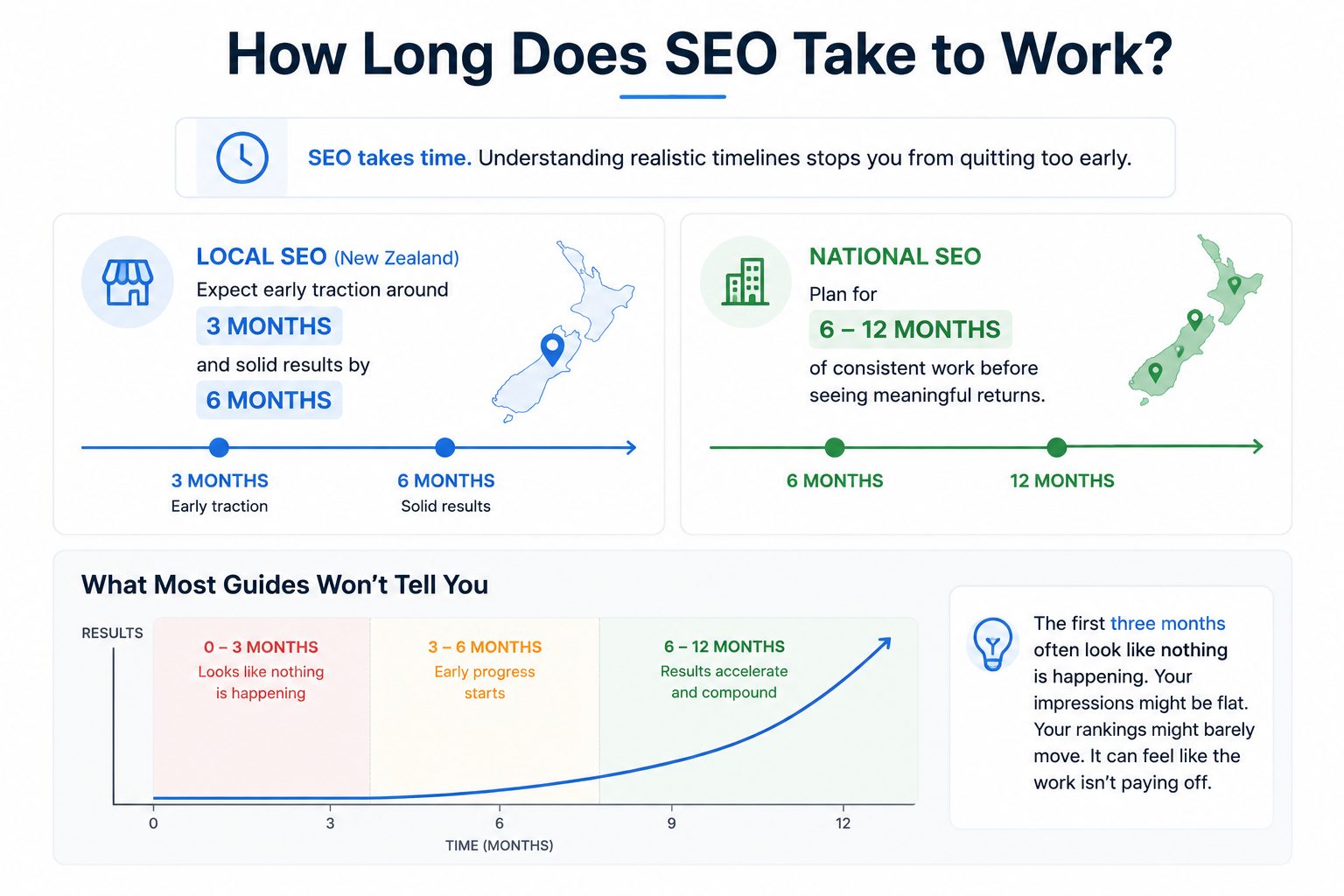
Months 1–3: Foundation
This is setup. Keyword research, technical fixes, content strategy, and the first pieces of content getting published. You’ll start seeing your pages appear in Google Search Console with impressions, but don’t expect meaningful traffic yet.
This phase feels like nothing is happening. That’s normal.
Months 3–6: Traction
Pages start getting indexed and ranking. First clicks come through. You’ll see movement in Search Console — impressions growing, average positions improving.
For local SEO, you may start appearing in the map pack during this phase. Leads might trickle in.
Months 6–12: Momentum
This is where it gets exciting. Rankings strengthen. Traffic compounds. Content you published months ago starts paying off. You’re now getting consistent traffic and leads from organic search.
Expert SEO hit this phase at around the eight-month mark — ranking number one for competitive terms, appearing in AI Overviews, and seeing $3,000+ per month in traffic value. And the site still isn’t fully optimised, which means there’s more growth ahead.
12+ Months: Compounding
SEO becomes seriously powerful after the twelve-month mark. Every new piece of content, every link, every improvement builds on everything before it. Your cost per lead drops. Your traffic grows without proportional extra spend.
The businesses that win at SEO are the ones that stay consistent past this point. The ones that lose are the ones that quit at month three because they didn’t see instant results.
When to Do It Yourself vs Hire an SEO Expert
You’ve got two clear paths from here.
Option 1: Do it yourself. Follow our step-by-step SEO guide, put in the time, and you can get results. Expect a learning curve, consistent effort, and some trial and error along the way.
Option 2: Work with an SEO expert. If you want faster, more predictable results without having to figure everything out yourself, that’s where a professional comes in. You get strategy, execution, and ongoing optimisation handled for you.
We help businesses across New Zealand with their SEO, including:
- SEO Services Auckland
- SEO Services Hamilton
- SEO Services Tauranga
- SEO Services Christchurch
- SEO Services Wellington
- SEO Services Queenstown
If you’re ready to stop guessing and start getting real results from organic search, that’s what we do.
Is SEO Worth It? FAQ
Is it worth paying someone to do SEO?
Yes, if they’re good. A skilled SEO provider will save you months of trial and error and deliver results faster than you could on your own. The key is finding someone with real results to show, a clear strategy, and transparent reporting. Bad SEO is worse than no SEO, so vet your provider carefully.
Is SEO dead in 2026?
No. SEO is evolving, not dying. AI systems like ChatGPT and Google AI Overviews still rely on website content to generate answers. The businesses that do SEO well are the ones AI cites and recommends. Organic search still drives over 53% of all website traffic.
What is the 80/20 rule for SEO?
Focus on the 20% of SEO activities that drive 80% of results. For most businesses, that means keyword research, creating strong core pages, setting up your Google Business Profile, publishing useful content, and building links. You don’t need to master every technical detail to get significant results.
Will SEO be replaced by AI?
No. AI needs content to reference and cite. SEO is how you create that content and make it findable. The relationship is complementary — good SEO makes your content more likely to be surfaced by both traditional search engines and AI platforms.
How long does SEO take to work?
Expect three to six months for early traction and six to twelve months for strong, consistent results. Local SEO in less competitive NZ markets can show results faster. SEO compounds over time, so the longer you invest, the stronger the returns.
Is SEO worth it for ecommerce?
Yes. Ecommerce businesses benefit from SEO through product category pages that rank for buying keywords and informational content that attracts customers earlier in their research process. The organic traffic reduces your dependence on paid advertising for every sale.
Is learning SEO worth it?
Yes, even if you plan to hire someone. Understanding the basics helps you evaluate whether your provider is actually doing good work, ask the right questions, and make better decisions about your marketing budget.