

You find a keyword you want. You drop it into a tool. Up flashes a number — “Difficulty: 55. Hard” — and your gut says skip it.
That gut reaction is quietly costing you customers.
Here’s the truth I’ve learned over a decade of doing this: keyword difficulty is real, but it’s not the wall that little number makes it look like.
Especially not in New Zealand.
In this guide I’ll break down what keyword difficulty actually is, how the tools work it out, what counts as a “good” score, and how to tell whether you can rank — not the average website, you.
And I’ll show you why, with the right strategy, that scary number barely matters.
I’m not speaking from theory. My SEO agency, Expert SEO, ranked #1 in New Zealand for local SEO — a keyword every tool calls hard — on a domain less than two years old.
Years back I ranked #2 globally for fat loss, fighting brands with budgets the size of a small country’s GDP.
So when I say don’t be scared of the number, I mean it.
What Is Keyword Difficulty
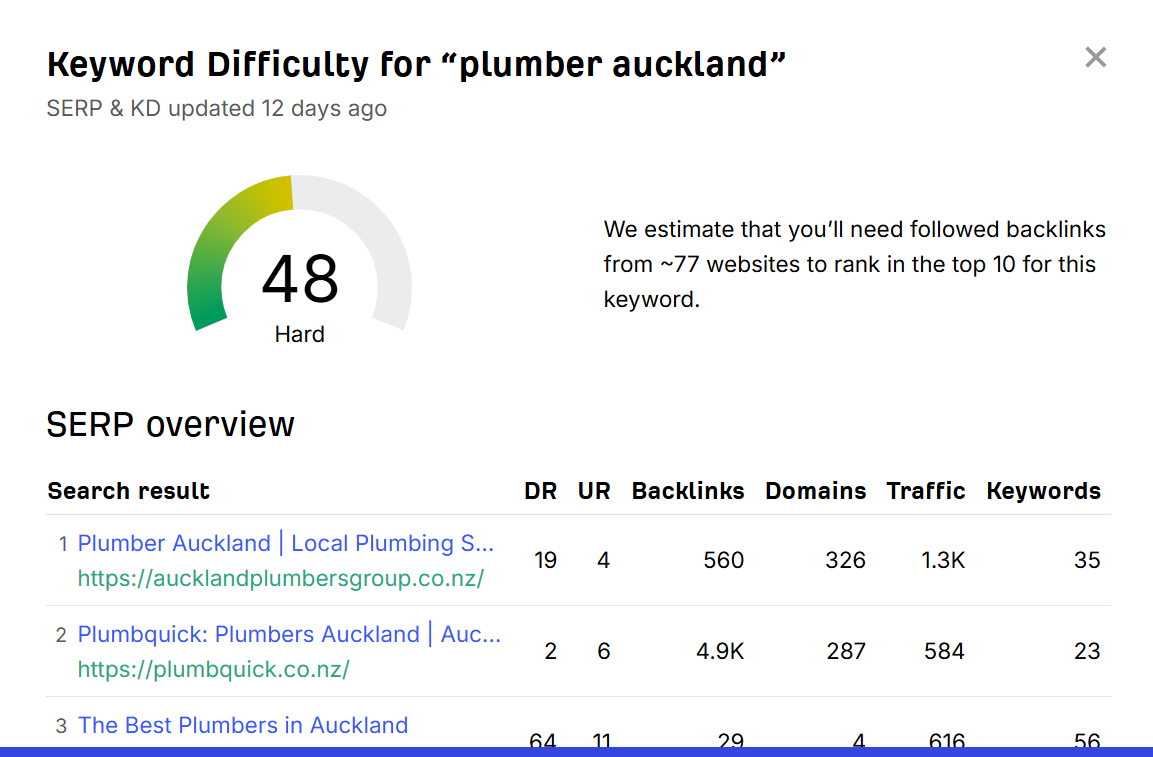
Keyword difficulty is an SEO metric, scored from 0 to 100, that estimates how hard it’ll be to rank on Google’s first page for a given keyword. The higher the number, the harder the climb.
It’s really just a shortcut — a way to glance at a keyword and get a rough feel for whether you’re looking at a gentle hill or a mountain.
The key word there is estimate. Google has never published exactly how it ranks pages, so no tool can tell you the real difficulty. They’re all making an educated guess based on what they can measure.
Think of it like a weather forecast. It’s useful. It’s usually in the right ballpark. But you’d be foolish to plan your whole week around it without looking out the window yourself.
Keyword Difficulty vs Keyword Competition
These two get mixed up constantly, so let’s clear it up: they measure different things.
Keyword difficulty is about organic rankings — the free blue links. Keyword competition (the “Competition” column you see in Google Keyword Planner) is about paid ads — how many advertisers are bidding on that term.
A keyword can have low ad competition and brutal organic difficulty, or the other way round.
Ahrefs makes this exact point on their keyword difficulty page: “Competition” refers to paid search results, while difficulty applies to organic ones. Don’t let one fool you about the other.
How Keyword Difficulty Is Calculated
Every major tool builds its difficulty score mostly on one thing: the backlink strength of the pages already ranking in the top 10.
But each one does the maths differently, which is why the same keyword gets different scores depending on where you look.
Here’s how the big three do it:
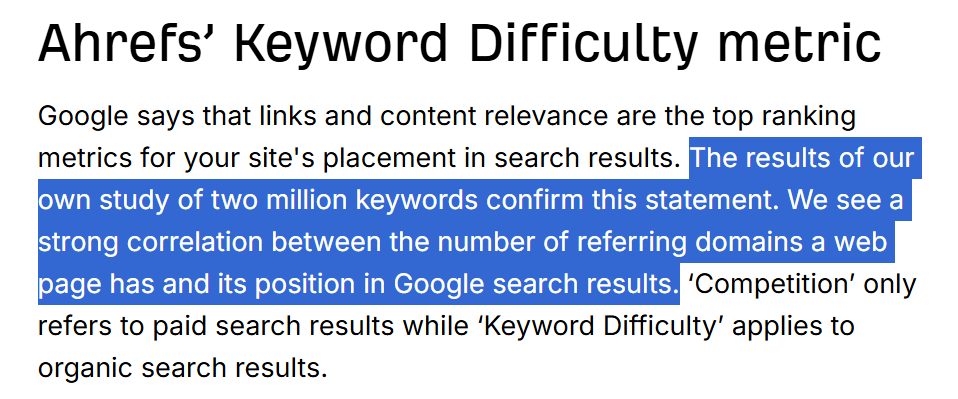
Ahrefs counts the number of referring domains (unique websites) pointing at the current top 10 pages.
That’s basically the whole formula. Their keyword difficulty metric comes from a study of two million keywords that found a strong link between referring domains and ranking position. Simple and honest — they’ll tell you themselves it ignores on-page factors entirely.
SEMrush casts a wider net. Backlinks still make up roughly two-thirds of the score, but their difficulty calculation also folds in search volume and the SERP features cluttering the page — snippets, local packs, ads, all the stuff that can steal your clicks.
Moz leans on their own Page Authority and Domain Authority metrics, plus a projected click-through rate, to score how tough the top-ranking pages are to beat.
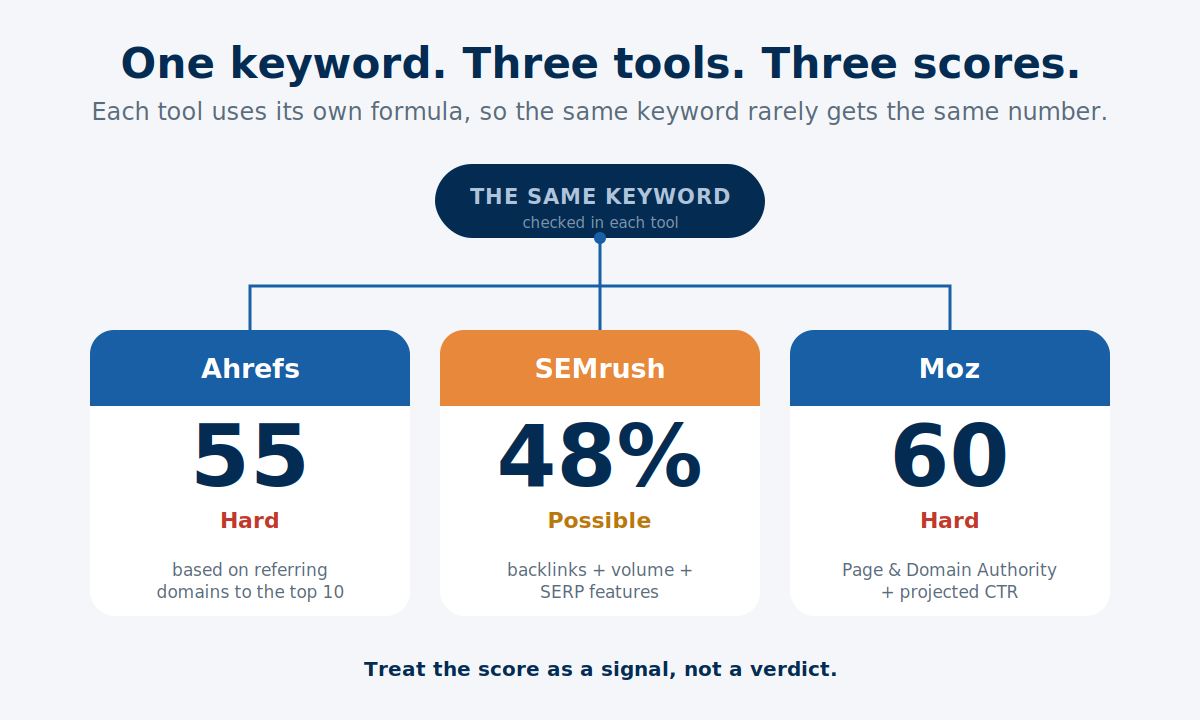
So why do they disagree? Because they’re three different chefs working from three different recipes. Ahrefs might say 55, SEMrush 48%, Moz 60 — for the exact same keyword. This is the thing that trips people up on forums constantly.
The lesson: treat the score as a signal, not a verdict. Cross-check two tools if you can, and never bet the farm on a single number.
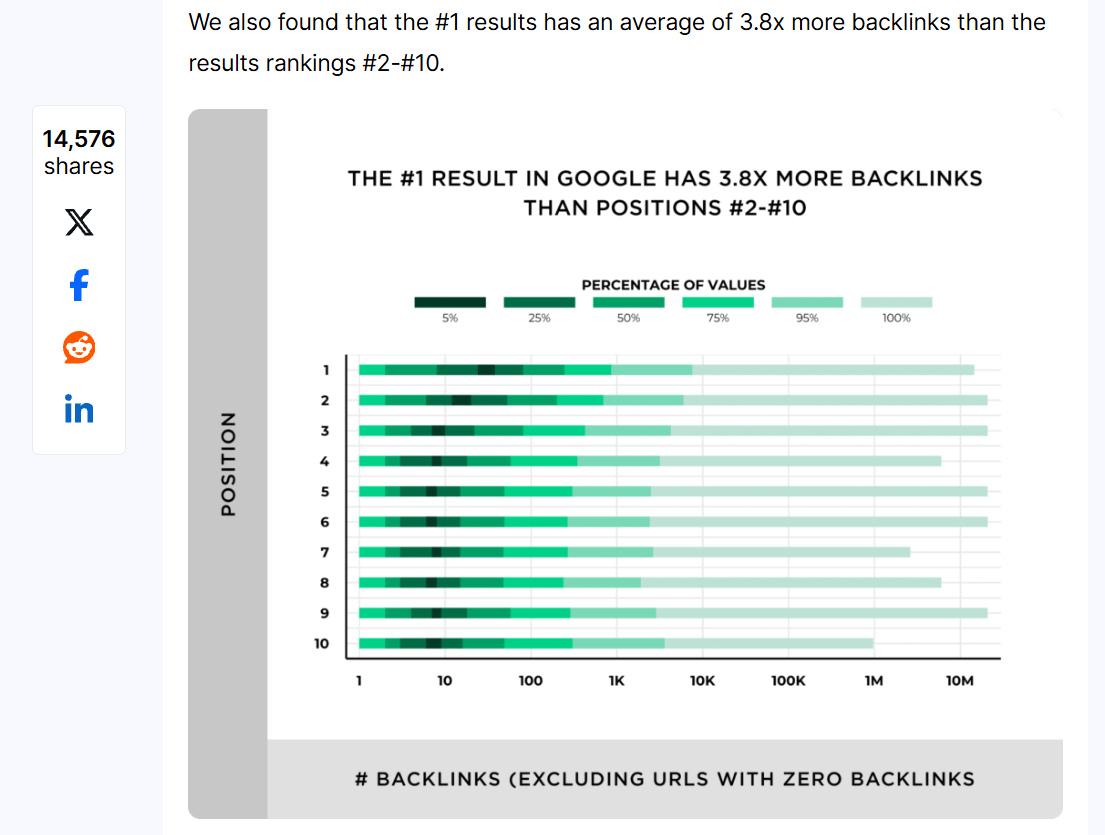
There’s good reason the tools lean so heavily on backlinks: they track rankings closely.
Backlinko found that pages in Google’s top 10 have, on average, 3.8x more backlinks than the pages ranking below them. That’s why “how many sites link to the current top 10” is the backbone of nearly every difficulty score.
Why Keyword Difficulty Matters
Keyword difficulty matters because it stops you pouring months into terms you can’t win yet — and because a smart plan uses easy and hard keywords on purpose, for completely different reasons.
Most people treat difficulty as a simple filter: low good, high bad. That’s a mistake. Both ends of the scale earn their place.
Low-difficulty keywords are your quick wins. They’re easier to rank for, so they bring traffic faster.
When you’re starting out, these build momentum and get the ball rolling while your authority is still young.
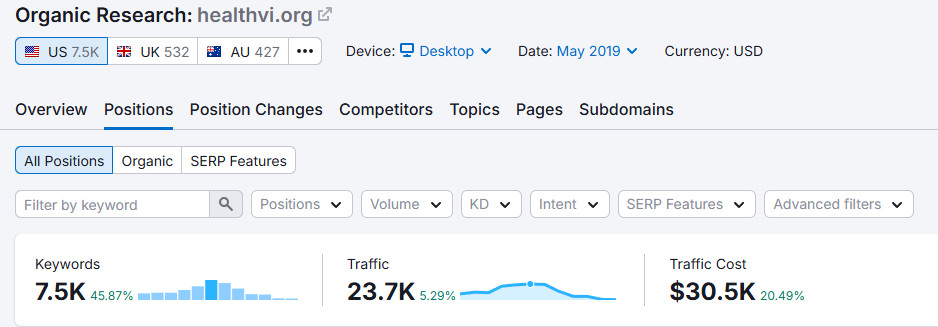
I grew a health website, HealthVI, from zero to over 20,000 organic visitors a month partly by stacking up easier long-tail keywords early — small wins that compound.
High-difficulty keywords are the prize — and something more. They usually carry the most traffic, and the top spot takes the lion’s share of it: Backlinko found the #1 organic result earns 27.6% of all clicks. So they’re worth chasing.

But there’s a second payoff most people miss: when you rank for a hard keyword in your niche, you’re sending Google a signal that your business has real authority on that topic.
And once Google trusts you on the hard stuff, it becomes far easier to rank for everything related.
It’s a leapfrog. You land one big, difficult keyword, and you use that authority to vault over your competitors on the next ten.
This is how topical authority compounds — one pillar of proof holds up everything around it.

There’s a trade-off, of course: the higher the difficulty, the longer it tends to take. Easy keywords can move in weeks; a genuinely hard one can take many months and a lot of patience. That’s the deal you’re signing up for.
What’s a Good Keyword Difficulty Score
There’s no universal “good” score — it depends entirely on your website’s authority. A number that’s suicidal for a brand-new site is a gentle warm-up for an established one.
As a rough industry guide, most tools bucket difficulty like this:
- 0–30: easy — realistic for new sites
- 31–60: medium — doable once you’ve built some authority
- 61–100: hard — established sites with strong backlink profiles
But read those bands through the lens of your own site. If you launched three months ago, chasing a 65 out of the gate is like entering a V8 race in a ride-on mower.
If you’ve got years of authority behind you, a 65 is Tuesday.
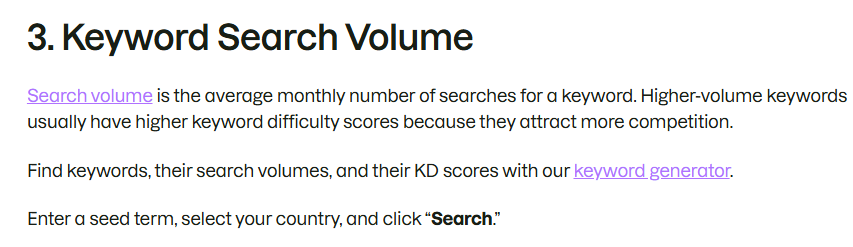
Is lower difficulty always better? Not really. Low difficulty often comes hand in hand with low search volume, which means low reward. The sweet spot is a keyword that’s winnable for you and still worth winning.
Which brings us to the part almost every guide skips: that difficulty score isn’t measuring you at all. It’s measuring the average website. Your real difficulty — your personal difficulty — depends on the vehicle you’re driving.
Why the Difficulty Score Lies — and Why New Zealand Changes Everything
The keyword difficulty score reads a global, average-site SERP. But in a small market like New Zealand, the pages you’re actually up against are far weaker than that number implies — so “hard” keywords are often very winnable.
This is the bit I want you to really take on board, because it’s where most people leave money on the table.
New Zealand is not the United States. In the States you’re often knife-fighting billion-dollar brands with backlink profiles built over 20 years and marketing budgets bigger than some countries.
Over here? The competition on most commercial keywords is a handful of local businesses whose websites haven’t been touched since 2019.
The difficulty score doesn’t know that. It reads a blended, worldwide picture. So when a term shows “Hard,” open the actual New Zealand results and you’ll often find low-authority local sites sitting there, ripe for the taking.
I’m not guessing. Here’s the proof stack:
#2 globally for fat loss — one of the sharkiest, most competitive niches there is, against brands with enormous budgets.

#1 in New Zealand for local SEO — a keyword every tool rates hard — on a domain less than two years old, above the likes of Ahrefs and Semrush.

#2 in New Zealand for SEO Hamilton — a competitive local commercial term.

If keyword difficulty stopped anyone with a plan, not one of those happens.
Here’s a cleaner way to see it. There’s an SEO guide sitting on the University of Otago’s website.
Their domain rating is around 81 — enormous, the kind of authority most companies would kill for. And yet the guide itself is so thin and generic I wouldn’t touch it with a ten-metre pole.
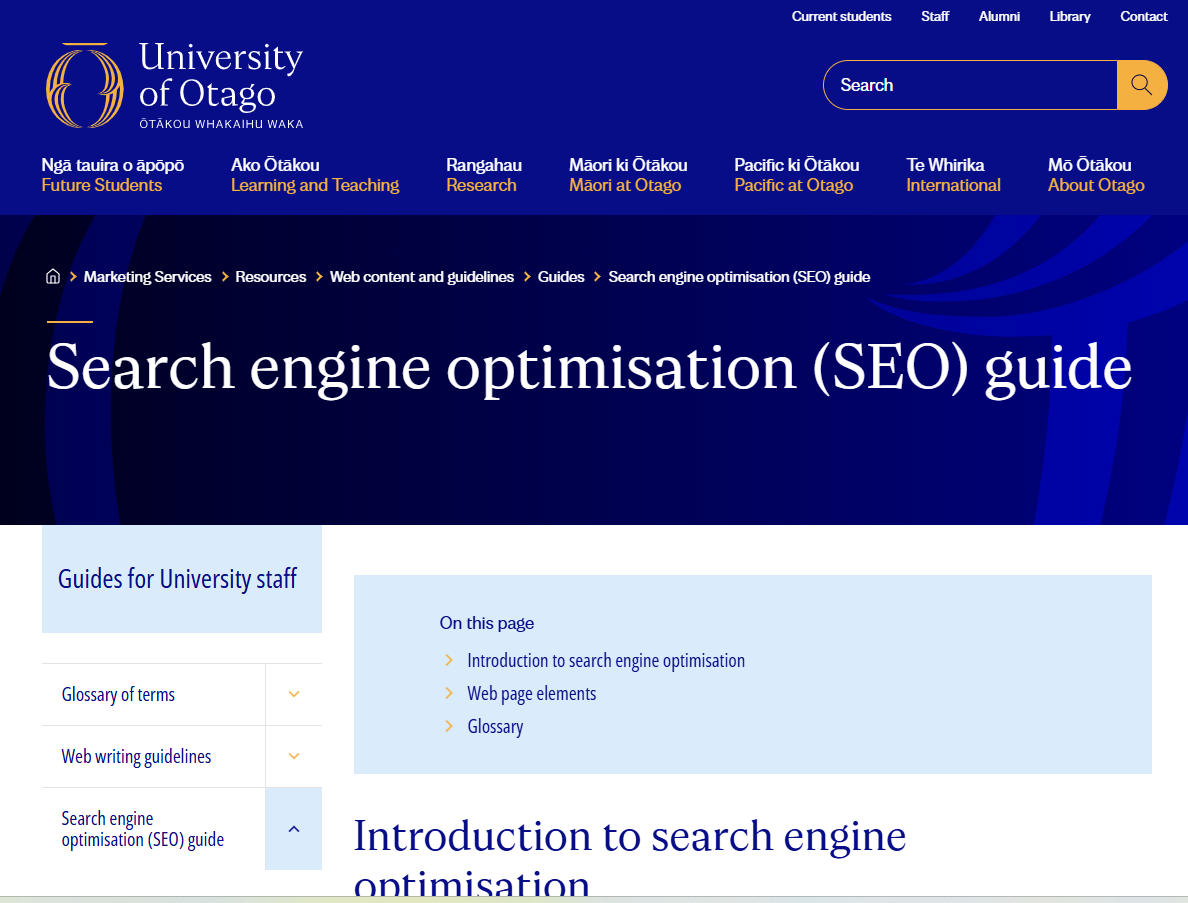
That’s the whole point in one example: authority without quality doesn’t hold.
If you’re willing to create genuinely better content than what’s ranking — and back it with real links and reviews — you can outrank a DR 81 page. With time, easily.
So with the right strategy, keyword difficulty is rarely what stops you in New Zealand. Weak strategy is.
How to Check Keyword Difficulty
The fastest way to check keyword difficulty is a tool — but the real read comes from opening the live SERP and judging it against your own site. The number gets you in the door; the SERP tells you whether you belong in the room.
Here’s the process I use.
Step 1 — Get the score from a tool
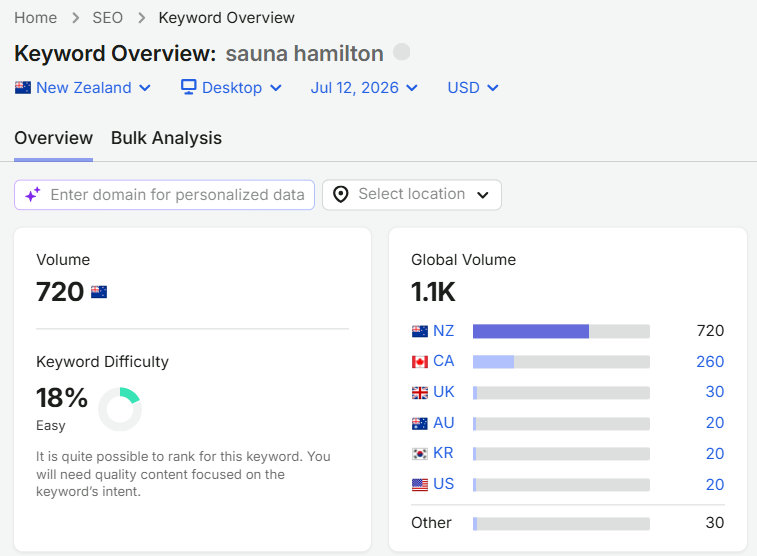
Start with a rough number. Enter your keyword into Ahrefs’ Keywords Explorer or SEMrush’s Keyword Overview, set the country to New Zealand, and read the difficulty score.
If you’re not paying for a tool, the free Ahrefs and SEMrush checkers will give you a ballpark, and even Google Keyword Planner‘s competition column is a loose signal.
This is your first filter — nothing more. It tells you which keywords are worth a closer look.
Step 2 — Read the actual SERP
This is where the real answer lives. Type your keyword into Google (in an incognito window, set to New Zealand) and look at who’s actually ranking.
Are the top 10 dominated by big national brands and DR 90 sites? Or is it a scatter of small local businesses with basic websites?
The number might say “Hard,” but if the page one lineup is beatable, the number is lying to you.
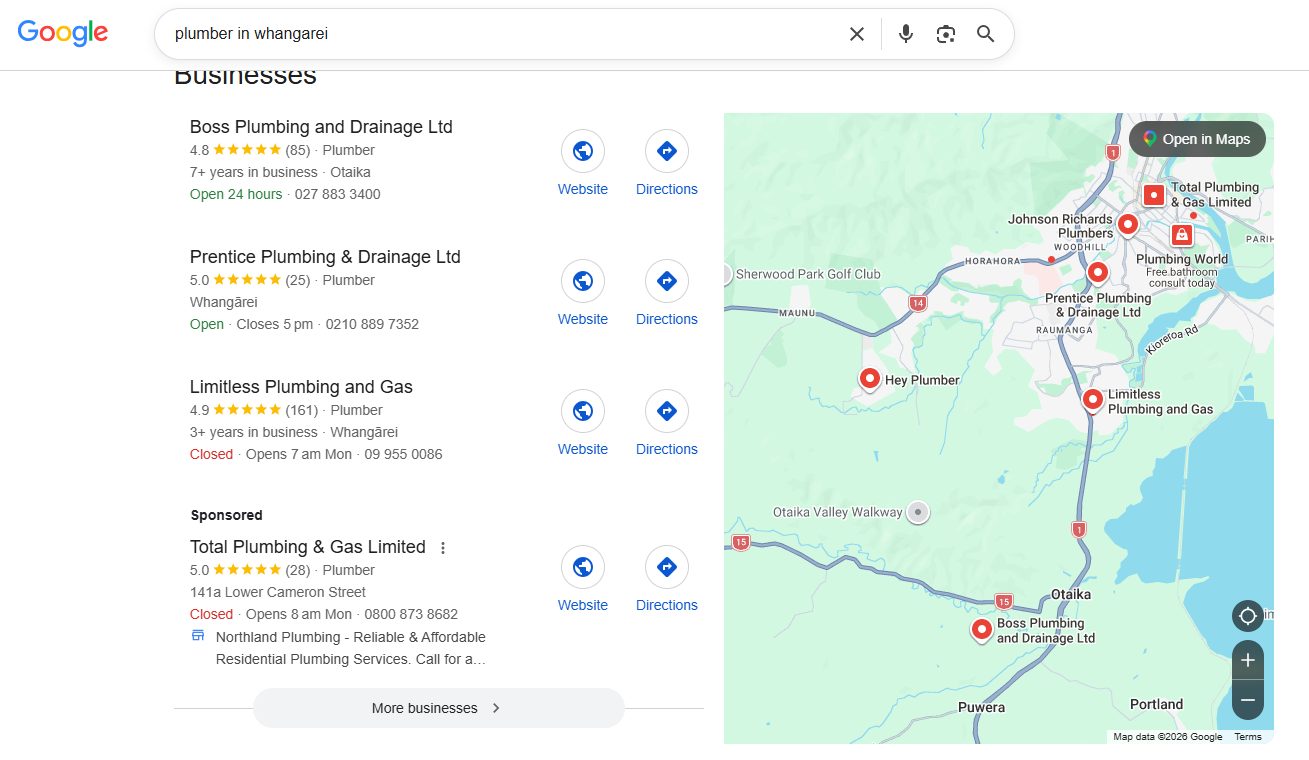
Say you run a café and you’re eyeing café Wellington.
Open that result, and if the top ten is a row of dated local sites, a scary difficulty score means very little for actually getting found in Wellington.
Step 3 — Weigh it against your own site
Now be honest about your vehicle. Your personal difficulty is your site’s authority plus how topically relevant you are to the keyword.
Take an Auckland plumber’s site trying to rank for a term it’s genuinely relevant to — it has a real shot at ranking in Auckland even against higher-authority pages, because relevance counts.
Weigh those competing pages against your own site, and you’ll know if it’s a fair fight.
Step 4 — Judge intent and whether you can go deeper
Finally, look at what the ranking pages actually give the reader, and ask the only question that really matters: can you make the best page on the internet for this keyword?
If the top results are thin, outdated, or missing the New Zealand angle, that’s your opening. If they’re genuinely excellent, you’ll need to bring more — more depth, more proof, more usefulness.
How to Build a Keyword Plan With the Right Difficulty Mix
A strong keyword plan isn’t all easy keywords or all hard ones — it’s a deliberate mix that wins traffic fast while building long-term authority. Think of it like an investment portfolio, not a lottery ticket.
Here’s the shape I aim for:
Quick wins (low difficulty): a base of easier, long-tail keywords to bring in traffic early and get momentum going. These pay off fast.
Authority builders (medium difficulty): as your site strengthens, you start winning the middle ground — terms that were out of reach at launch but are fair game now.
The big plays (high difficulty): a handful of aspirational, high-traffic money keywords. These are the leapfrog terms — the ones that, once you land them, tell Google you’re a serious authority and make everything else easier.
One warning: a plan made up only of low-difficulty keywords is a red flag.
It can look like you’re building content purely to game search engines rather than to genuinely serve people — and Google has got very good at spotting that. A healthy mix looks natural, because it is.
When to Chase a High-Difficulty Keyword
Go after a high-difficulty keyword when it sits at the heart of your revenue and you’re willing to commit to it properly. Not every hard keyword is worth the fight — but the right ones are worth years.
The decision comes down to two questions: is this term core to what my business actually sells, and am I prepared to invest in earning it? If yes to both, chase it.
Just go in with clear eyes. Even Ahrefs admits that for many of the high-difficulty keywords they now rank for, it took several rewrites and years of patience to get there.
That’s normal. A genuinely competitive keyword is a campaign, not a quick post.
And remember the premise this whole guide is built on: the difficulty number was never really the obstacle.
If you create the highest-quality content on the topic, build a solid backlink profile, and stack up genuine reviews — which matter more than ever as search shifts into the AI era — then you can compete for almost anything you want.
Strategy beats difficulty, every single time.
Doing It Yourself vs Getting Help
You can absolutely do all of this yourself — the process above is the same one I use.
But the number was never the hard part. The strategy is: the content, the links, the reviews, and the patience to see it through.
If you’d rather have it handled, that’s what our done-for-you SEO services are for.
And if you just want expert eyes on your strategy, that’s where one-on-one SEO consulting comes in. Either way, stop letting a scary little number decide what your business is allowed to rank for.
Keyword Difficulty: FAQ
What is a good keyword difficulty score?
There's no universal "good" score — it depends on your site's authority. As a rough guide, 0–30 is easy, 31–60 is medium and 61–100 is hard, but a brand-new New Zealand site should read those bands far more conservatively than an established one.
Is lower keyword difficulty better?
Not always. Low-difficulty keywords are easier to rank for, but they often come with low search volume and less reward. The best target is one that's winnable for your site and still worth the traffic.
What is personal keyword difficulty?
Personal keyword difficulty is how hard a keyword is for your specific website to rank for, rather than for the average site. It factors in your own authority and topical relevance, so a keyword rated hard overall can be easy for a site closely related to it.
Why do Ahrefs, SEMrush and Moz give different scores for the same keyword?
Because each tool uses its own formula. Ahrefs bases difficulty on referring domains, SEMrush blends backlinks with volume and SERP features, and Moz uses its Page and Domain Authority — so the same keyword returns different numbers. Treat the score as a signal and cross-check two tools.
How do I check keyword difficulty for free?
Use the free keyword difficulty checkers from Ahrefs or SEMrush — enter your keyword, set the country to New Zealand, and read the score. Google Keyword Planner's competition column is a loose free signal too, though it measures paid competition, not organic difficulty.
Is keyword difficulty the same as keyword competition?
No. Keyword difficulty estimates how hard it is to rank in the organic (unpaid) results, while keyword competition — the term Google Keyword Planner uses — refers to how many advertisers are bidding on paid ads. A keyword can be cheap to advertise on but hard to rank for organically.
Recommended Reading
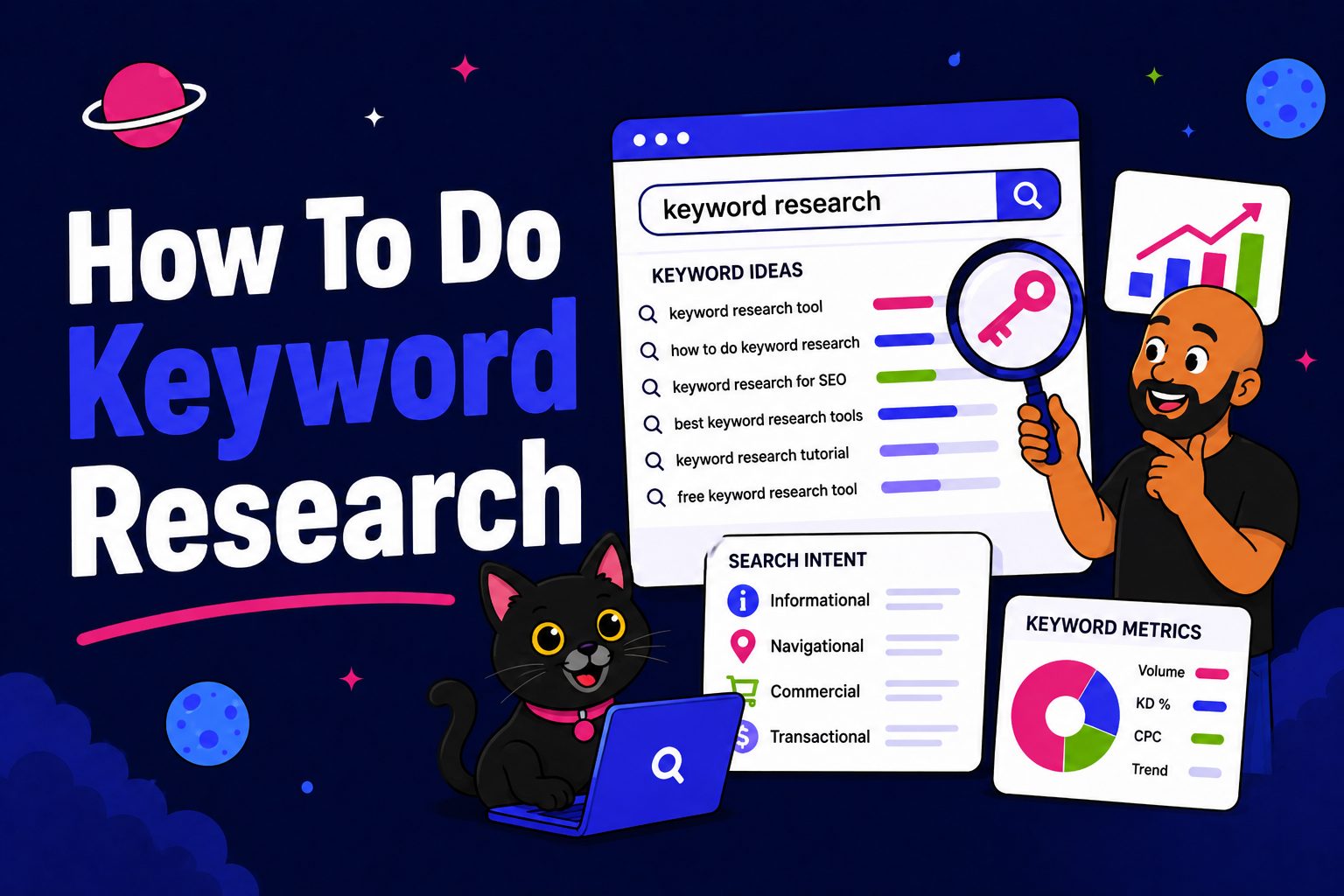 How to Do Keyword Research
The full process for finding the keywords actually worth targeting in New Zealand.
 Link Building for SEO
How to earn the backlinks that shrink your effective keyword difficulty over time.
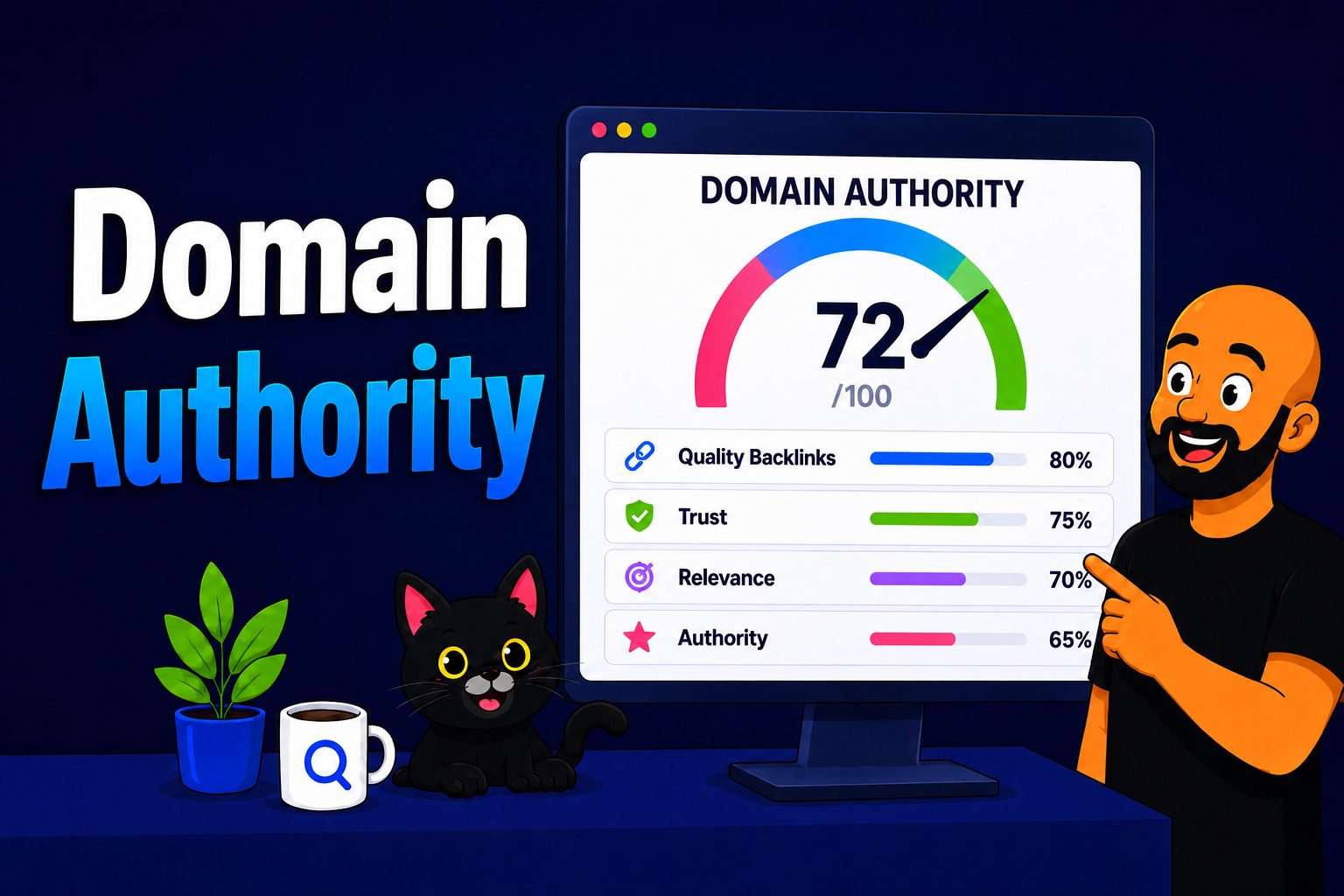 How to Improve Domain Authority
Raise your site's authority so hard keywords steadily become winnable.