
Most guides on keyword strategy aren’t built for New Zealand.
They’re written for the US, where a good keyword pulls thousands of searches a month — so they tell you to ignore anything smaller.
How do I know? Because I’ve done it myself — I’ve taken keywords with thousands of searches a month all the way to number one.
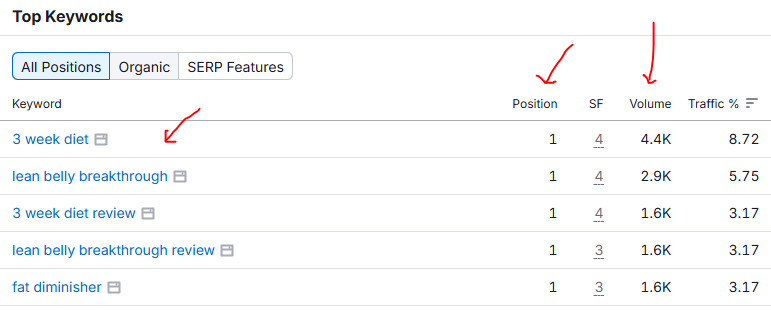
But here, a keyword that gets twenty searches a month can be one of the most valuable terms your business could ever rank for. Follow the American advice and you’d skip it completely.
In this guide, I’ll show you how to build a keyword strategy that actually works in the New Zealand market.
It’s the same system I used to grow a health site from zero to over 20,000 visitors a month — and to rank my own year-old SEO company above giants like Ahrefs and Semrush right here in New Zealand.
It comes down to four moves: find every keyword, sort them, map them, then link them so the authority flows to the pages that make you money.
Let’s break it down.
What Is a Keyword Strategy?
A keyword strategy is your plan for choosing which search terms your website targets, mapping each one to a specific page, and linking those pages so authority flows to the ones that make you money.
That’s it. Everything else is detail.
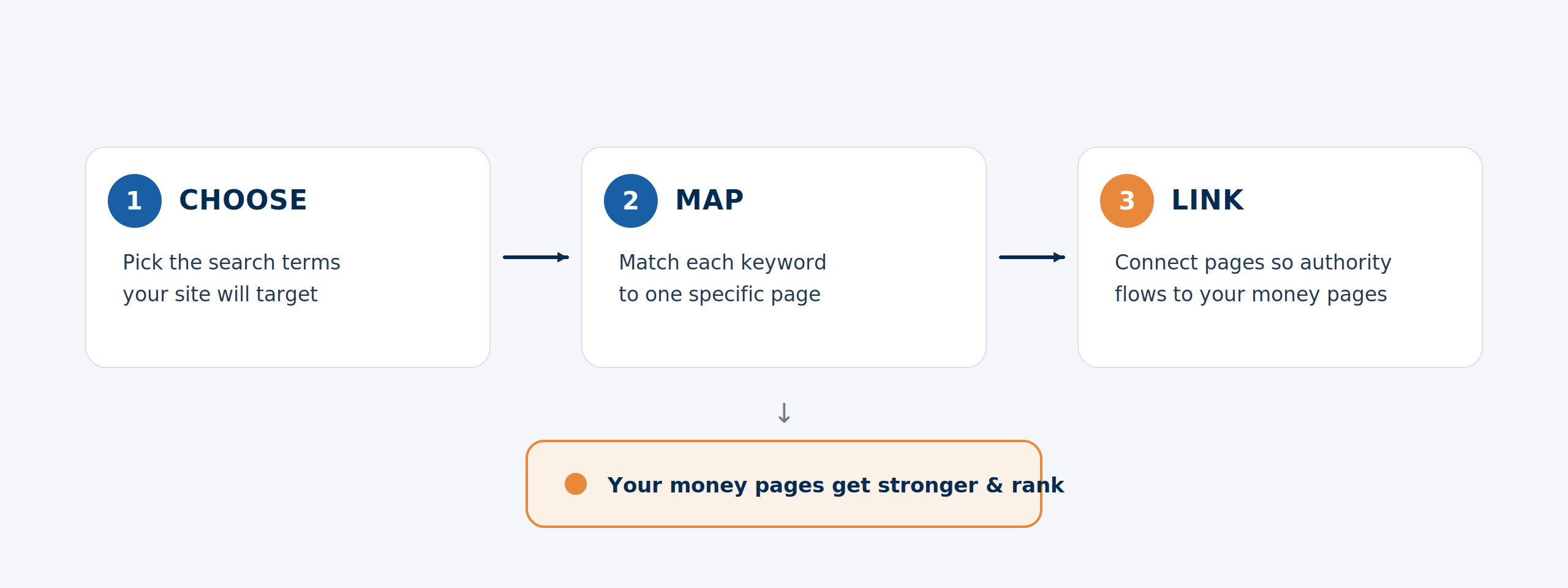
The keywords are the raw material. The strategy is what you decide to do with them: which page each one lives on, which ones you chase first, and how you connect them so your whole site gets stronger instead of a scatter of random blog posts.
Think of it like a rugby team. Keyword research hands you a squad of players. A keyword strategy is the game plan — who plays where, who you build around, and how they pass to each other so you actually score.

Without the plan, you’ve just got a paddock full of talent running in different directions.
Keyword Strategy vs Keyword Research
Keyword research is finding the terms people search. Keyword strategy is the plan for what you actually do with them.
People blur these two together constantly, and it costs them.
Keyword research is the collecting part: you pull a list of everything your audience types into Google. Search volumes, difficulty scores, related terms — a big pile of raw data.
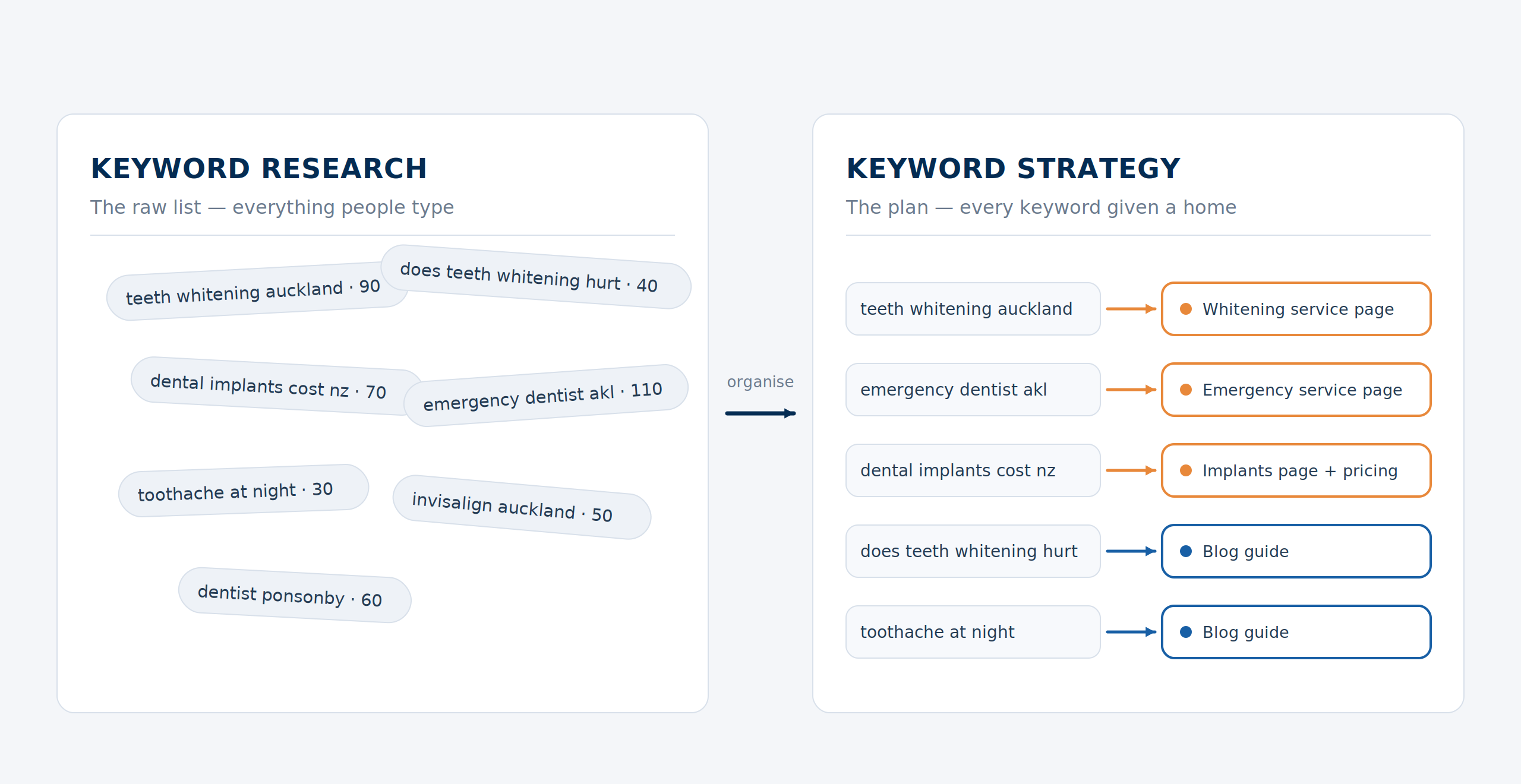
Keyword strategy is what turns that pile into a plan. It answers the questions research never does: which keyword goes on which page, what order you attack them in, and how the pages feed each other.
Research without strategy is a shopping list with no recipe. You’ve got the ingredients; you’ve got no idea what you’re cooking.
If you want the full process for the research half, I’ve covered that separately in my guide on keyword research. This article is about the half nobody explains properly — the strategy.
Why Is a Keyword Strategy Important in New Zealand?
In New Zealand, most valuable keywords have tiny search volumes — so you don’t win by chasing big numbers, you win by targeting the right terms and pointing all their authority at your money pages.
This is where the imported advice falls apart, and it’s worth understanding why.
Most of the internet’s SEO writing comes out of the US, where a decent local keyword pulls thousands of searches a month.
So the standard rule of thumb became “don’t bother with anything under a thousand.” Fair enough — over there.
But here’s the thing the volume-chasers miss: low volume was never the exception. It’s the norm.
Backlinko studied 306 million keywords and found that 91.8% of all keywords are long-tail — three words or longer, with small individual search numbers. Ahrefs went further and found that 95% of all search queries get fewer than ten searches a month.

So the “low volume” keywords everyone’s told to ignore? They’re the overwhelming majority of how people actually search. New Zealand just feels it harder, because our whole market sits down the tail end.
It’s not just an Auckland problem, either.
The same maths runs through every New Zealand market — a Wellington law firm, a Christchurch builder, a Queenstown tour operator all live or die on the same small, specific, local keywords.
And low volume does not mean low value. Long-tail phrases convert around 11 times better than broad single-word terms, because someone typing “emergency dentist Auckland open now” is a lot closer to their wallet than someone typing “dentist”.

Picture two Auckland dentists.
One spends a year trying to rank for “dentist” — huge, vague, and every practice in the city is fighting for it. On paper, no chance.
The other quietly targets “emergency dentist Auckland”, “teeth whitening Ponsonby”, “dental implants cost Auckland”, and forty other small, specific terms. Each one gets a handful of searches. Together they pull in dozens of people a week who are ready to book.
Guess who fills their appointment book?
In a small market, strategy beats volume every single time.
That’s not a consolation prize for little countries — it’s the actual advantage, because the big US-sized players never bother to fight where the real intent is.
The Types of Keywords You Need to Know
Forget rigid categories. Every keyword sits on a simple scale, from commercial “money” keywords on one end to informational keywords on the other.
Most guides hand you four or five keyword “types” to memorise. I’ve been doing this for over a decade, and I’ve never once needed them. Here’s what I use instead.
Imagine a straight line.
On the far left: money keywords (also called commercial or transactional). These are people ready to spend. “Teeth whitening Auckland.” “Emergency dentist near me.” “Book dental checkup Ponsonby.” They’re not browsing — they’ve got their card half out.
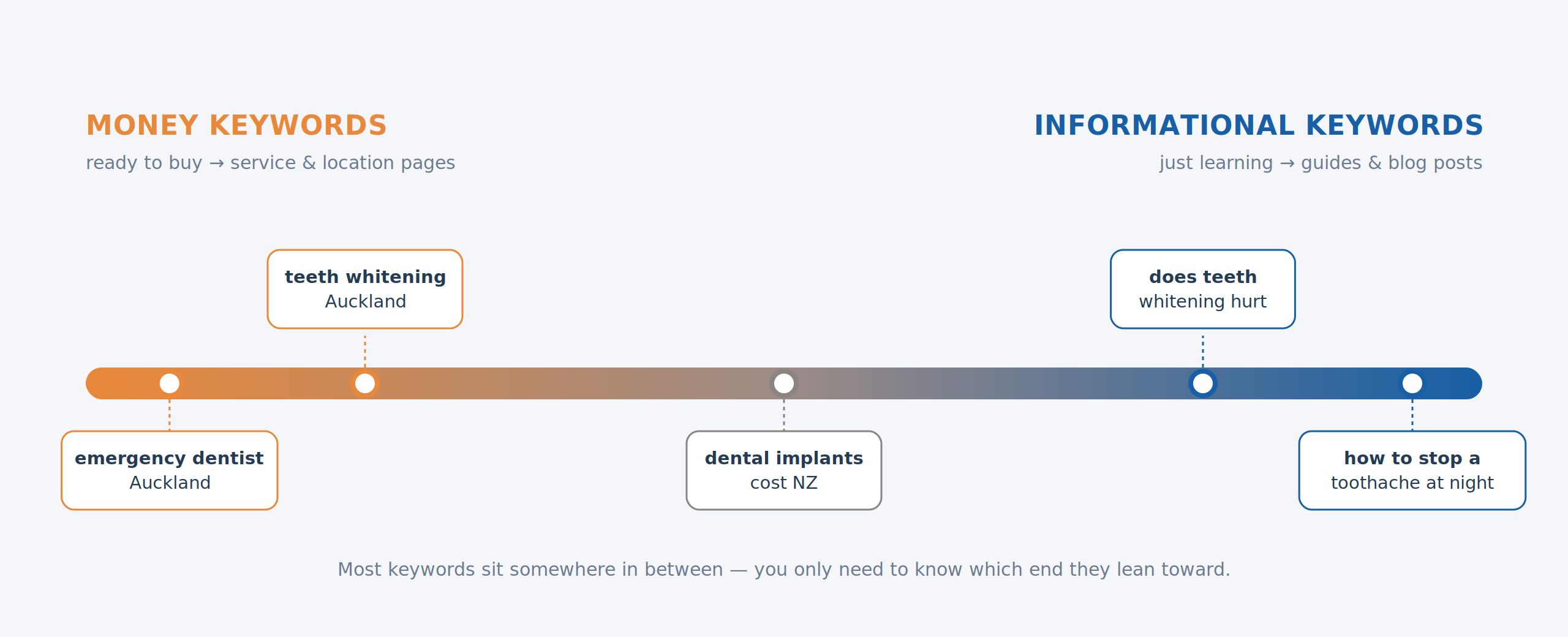
On the far right: informational keywords. These are people learning, not buying. “Does teeth whitening hurt.” “How to stop a toothache at night.” “Are dental implants worth it.” No money changing hands yet — just questions.
And the whole point of a scale, rather than a box: it’s not one or the other.
“Dental implants cost NZ” sits somewhere in the middle. The person’s not ready to book, but they’re pricing it up — they’re closer to buying than someone asking “what are dental implants”. Most keywords live in these in-between spots, and that’s fine. You don’t need the exact label. You just need to know which end it leans toward.
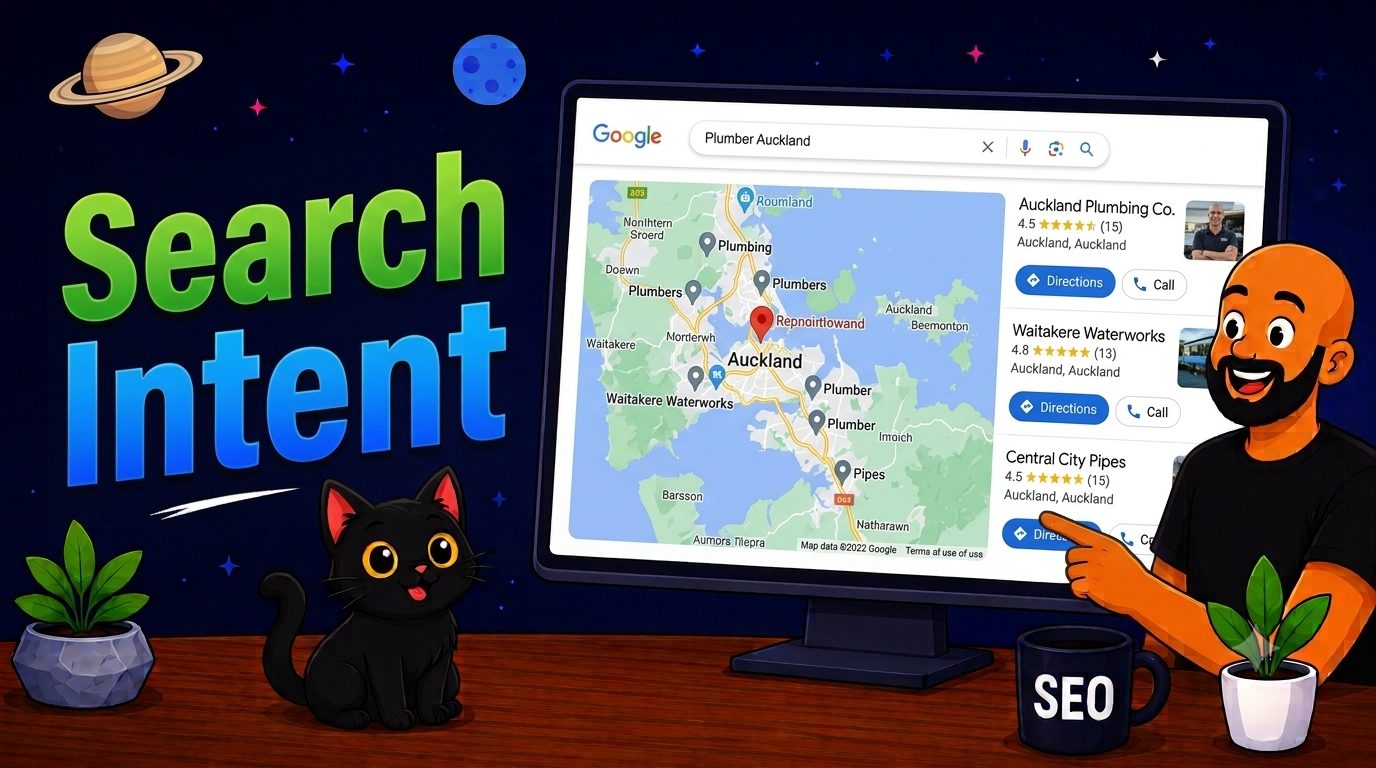
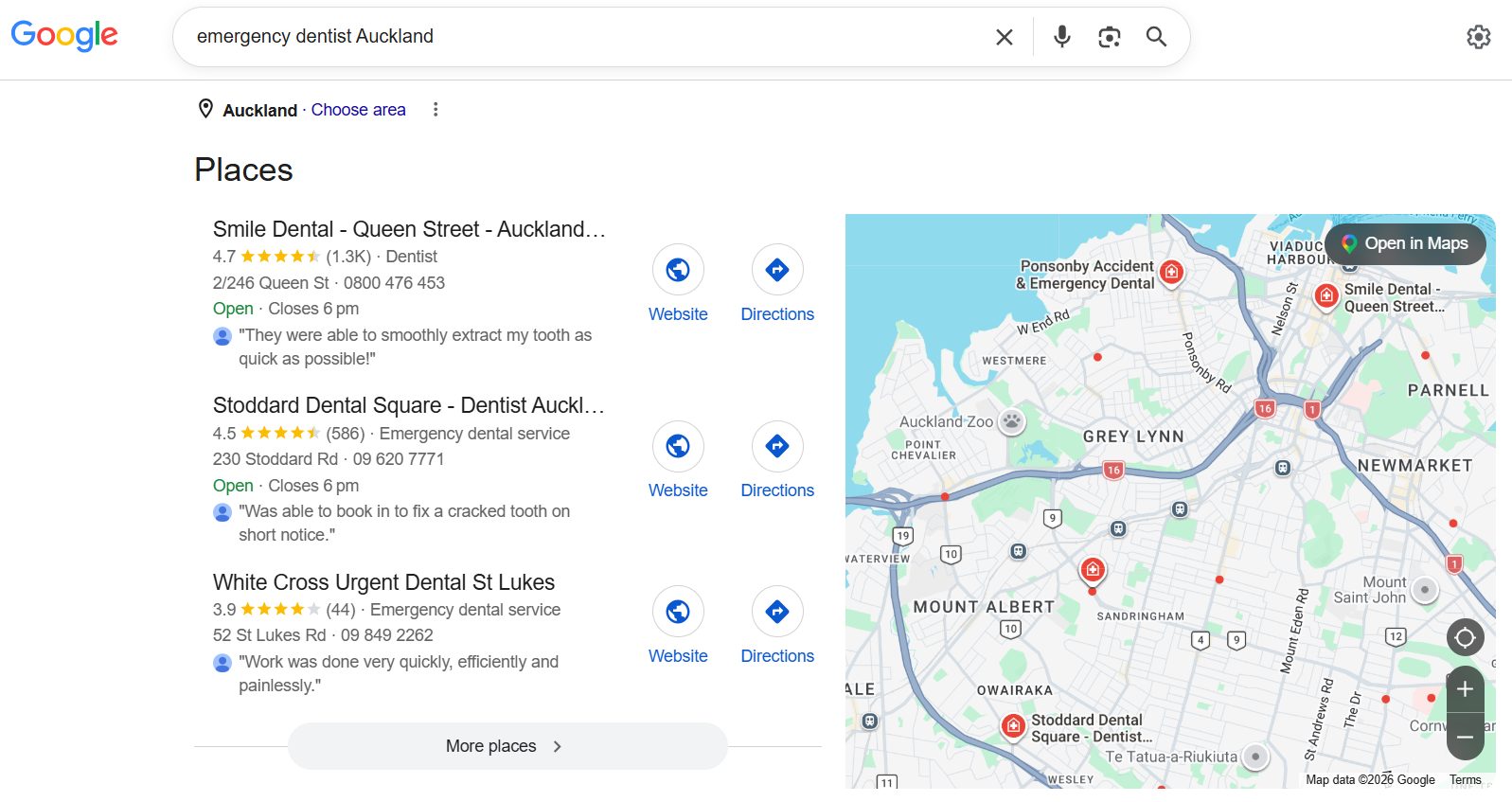
You can see the money end in action any time you search a commercial term. Type “emergency dentist Auckland” and Google hands you a map pack of practices fighting over ready-to-book patients — that’s a money keyword doing its job.
Because that lean decides one thing: what kind of page it belongs on.
Money keywords earn you money now. Informational keywords earn you authority — which you then funnel to the money keywords.
Get that straight and the rest of the strategy builds itself.
How to Build a Keyword Strategy
Right — this is the part you actually do. Four steps, plus tracking. I’ll run an Auckland dentist through all of it so you can see it work on a real business.
Step 1: Find Every Keyword Your Business Could Rank For
Start by listing every single term someone might type before they end up needing what you sell — every service, every location, every question.
The goal here is completeness, not cleverness. You’re casting a wide net first; you’ll sort the catch later.
Here’s the literal process for our dentist:
First, list every service. Teeth whitening, dental implants, checkups, emergency care, Invisalign, root canals, extractions.
Then multiply each one by every location you serve. “Teeth whitening Auckland”, “teeth whitening Ponsonby”, “teeth whitening North Shore.” Suddenly seven services becomes forty terms.
Then add every question a patient asks before they book. “Does teeth whitening hurt”, “how much are dental implants in NZ”, “how often should I get a checkup”, “why does my tooth hurt at night.”
You don’t need a paid tool for any of this. The free stack does the job:
- Google Keyword Planner — Google’s own free tool. Type in a seed term like “teeth whitening” and it hands you real search terms and rough volumes, straight from the source. I’ll show you the full workflow in my Google Keyword Planner guide.
- Google Autocomplete — start typing “dentist Auckland” into Google and don’t press enter. Every suggestion in that dropdown is a real thing people search. Run it through the alphabet: “dentist Auckland a”, “dentist Auckland b”, and so on.
- People Also Ask — search any term and Google shows you the exact questions people ask around it. Pure gold for the informational end.
- ChatGPT — brilliant for brainstorming the long tail. Ask it to list every question a nervous patient might have before booking dental implants, and you’ll get thirty you’d never have thought of.

By the end of this step you should have a messy, oversized list of everything your business could conceivably rank for. Messy is good. We tidy it next.
Step 2: Sort Your Keywords on the Money-to-Informational Scale
Run every keyword you found through the scale — money on one end, informational on the other — and mark where each one lands.
This is the sorting pass, and it takes about twenty minutes for a list of a hundred keywords.
Go down your list and ask one question of each term: is this person closer to buying, or closer to just learning?
“Emergency dentist Auckland” — buying. Money end. “Does teeth whitening hurt” — learning. Informational end. “Dental implants cost Auckland” — pricing it up. Leaning toward money, but not quite there.
You’re not being scientific about it. You’re just clustering your keywords by intent, because intent is what decides the next step — which page each one goes on. A buyer and a browser need completely different pages, and if you send a browser to a “book now” page, they bounce.
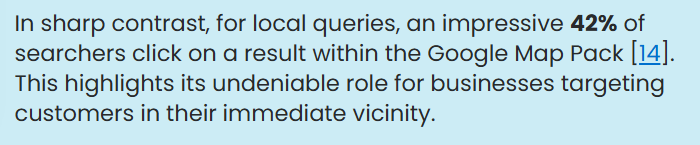
Why does this matter so much? Because local searches convert hard when the intent is right — around 42% of people searching a local query click a result straight in the Google Map Pack. Match the page to the intent and you catch them at the exact moment they’re ready.
Step 3: Map Each Keyword to a Specific Page
Keyword mapping is the heart of the whole strategy: every keyword points to one specific page on your site, and no two pages ever fight over the same term.
This is where most people fall over. They find keywords, they even sort them — then they just sprinkle them randomly across whatever pages already exist. That’s like posting letters with no addresses.
Mapping fixes it. You take each keyword and assign it a home.
The rule follows straight from the scale:
- Money keywords → service and location pages. “Teeth whitening Auckland” maps to the teeth whitening service page. “Emergency dentist Auckland” maps to the emergency page. These pages exist to convert.
- Informational keywords → guides and blog posts. “Does teeth whitening hurt” maps to a blog post answering exactly that. “How much do dental implants cost in NZ” gets its own guide.
Here’s what a mapped keyword list looks like for our dentist:
| Keyword | Where it sits on the scale | Page it maps to |
|---|---|---|
| Teeth whitening Auckland | Money | Teeth whitening service page |
| Emergency dentist Auckland | Money | Emergency dentist page |
| Dental implants cost NZ | Middle (pricing up) | Implants service page (with pricing) |
| Does teeth whitening hurt | Informational | Blog guide |
| How to stop a toothache at night | Informational | Blog guide |
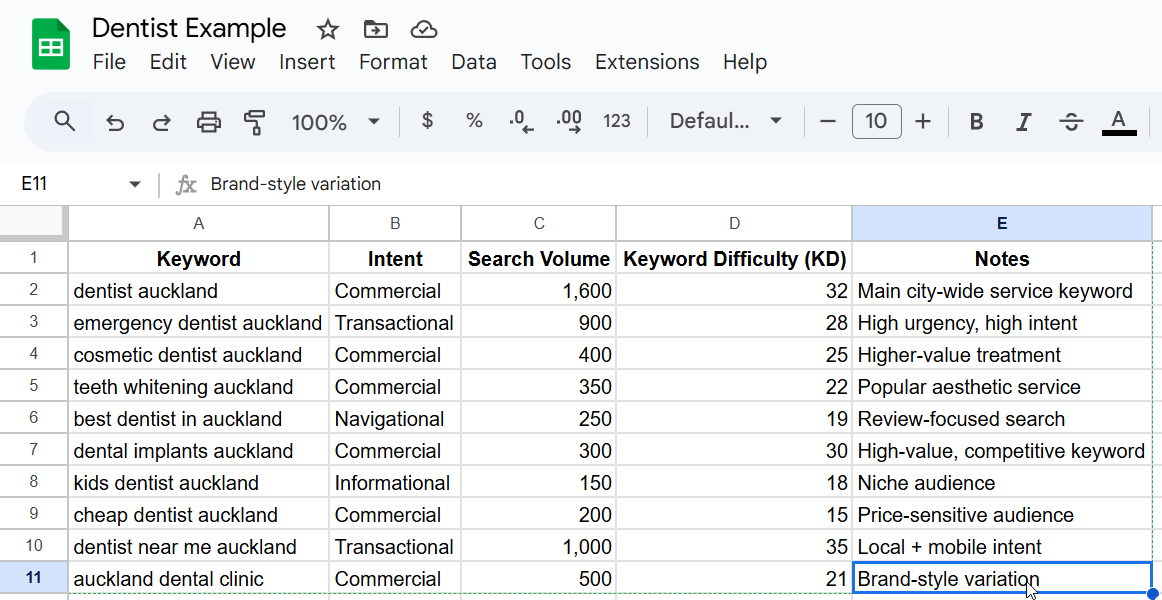
One keyword, one home. The moment you let two pages target “teeth whitening Auckland”, they compete with each other in Google — and you end up beating yourself. This is called keyword cannibalisation, and mapping is how you avoid it before it starts.
That table, by the way, is your keyword strategy. Not a 40-page document — a simple map of what goes where.
Step 4: Link Your Guides to Your Money Pages
This is the move that ties it all together: internal links pass authority from your informational guides to your money pages, so the pages that earn get all the strength.
Here’s the bit that separates a real strategy from a pile of blog posts, so stay with me.
Every page on your site builds a little authority in Google’s eyes as it earns links and traffic. On its own, a “does teeth whitening hurt” blog post is nice — it answers a question, maybe pulls a few readers. But it doesn’t make the dentist a cent directly.
Internal links let you move that authority where it counts.
When your “does teeth whitening hurt” guide includes a natural link to your teeth whitening service page, you’re doing two things at once: helping the reader take the next step, and passing a chunk of that guide’s authority straight to the page that actually books appointments.
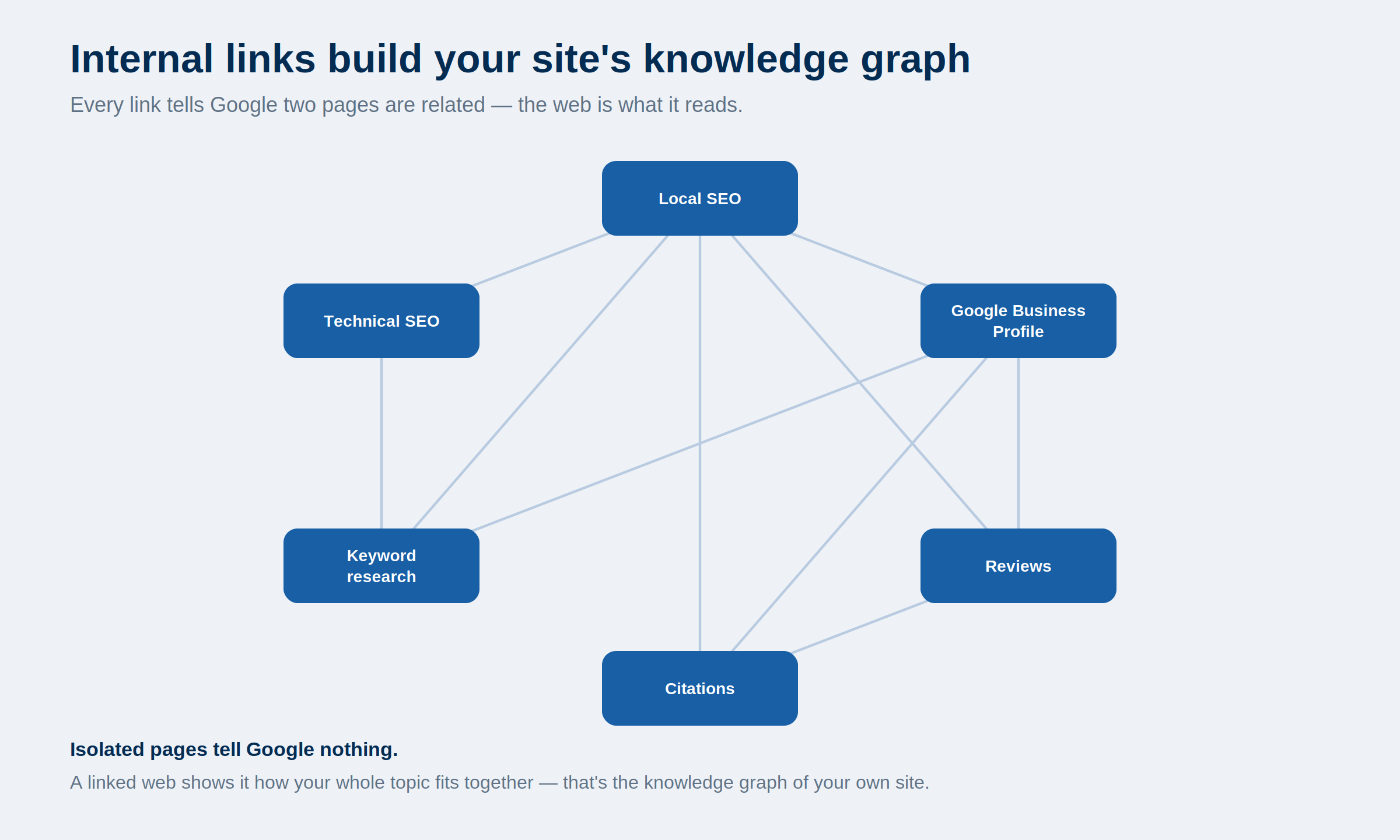
Do this across your whole site and the effect snowballs. Ten informational guides, each answering a real question, each passing authority to the relevant service page. Your money pages get stronger and stronger without you building a single external backlink.
Two rules keep it clean:
Link on the natural phrase, never a bolted-on “click here”. If the sentence already mentions teeth whitening, link that. If you had to add a whole sentence just to fit the link in, don’t — it reads like spam and Google knows it.
And point deliberately at your money pages. Guides can link to other guides where it genuinely helps the reader, but the priority is always your service and location pages — because at the end of the day, those are the ones paying the bills. This is the core idea behind smart internal linking, and it’s the most underrated lever in SEO.
Step 5: Track Your Results and Refine
Set up Google Search Console, watch which keywords start ranking, and adjust the map as pages climb or stall.
A keyword strategy isn’t a set-and-forget. It’s a garden — you plant it, then you keep an eye on what’s growing.
Google Search Console is free and shows you the truth: which keywords your pages are actually ranking for, where they sit, and how many clicks they pull. I check it constantly.
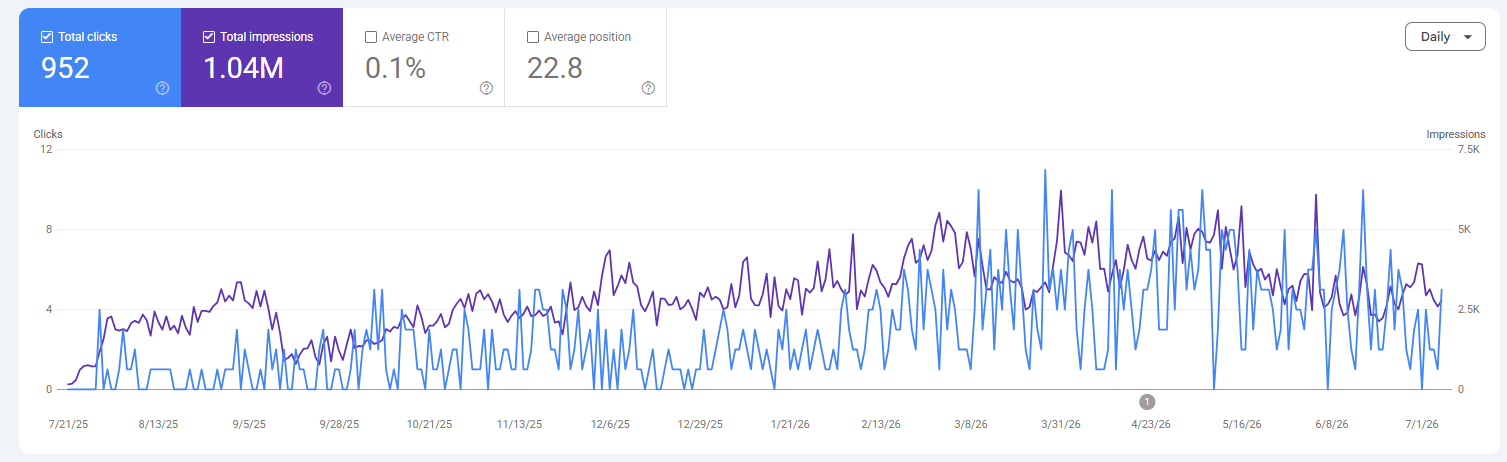
When a guide starts ranking, that’s your cue to strengthen its link to the money page. When a term stalls, you dig into why — usually the page doesn’t match intent, or a stronger competitor owns it. You adjust, and you keep going. The map is never finished; it just gets sharper.
A Real Keyword Strategy That Worked
Here’s the exact system on my own sites — a set of money pages, a cluster of informational guides, and internal links pointing all the authority at the pages that bring in clients.
I don’t just teach this. I’ve built my whole business on it.
Take Expert SEO, my own SEO agency.
My money pages are the ones that earn: my SEO services page, my location pages like Auckland SEO, my consultancy page, my industry pages like SEO for dentists, and my homepage. Those are the pages I need ranking.
Around them sits a cluster of informational guides — pieces exactly like the one you’re reading. Every guide targets a real question people ask about SEO. And every guide links, deliberately and naturally, back to those money pages.
The result: a domain barely a year old that ranked number one in New Zealand for “local SEO” — above Ahrefs and Semrush, two companies worth billions, on the exact term they’d love to own.

This isn’t a fluke I got lucky with once. It’s the same playbook I’ve run before.
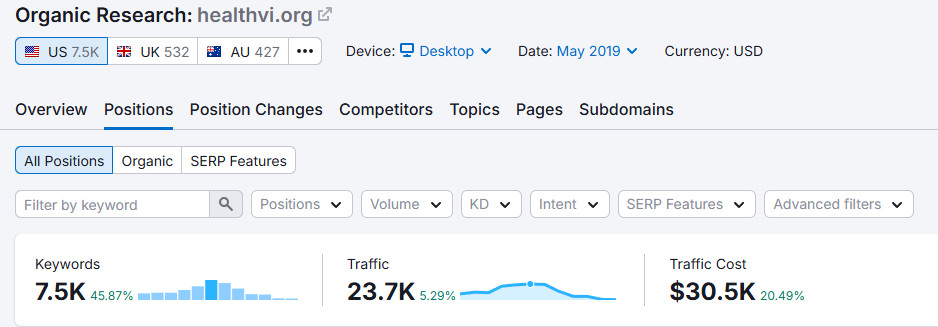
Back in 2017 I started a health site called HealthVI with my former business partner and SEO mentor, Ian Pribyl. Same strategy — money pages fed by a cluster of informational content, all wired together with internal links. We grew it from zero to over 20,000 organic visitors a month.
Then again with StoppingScams — a site I built up to over 5,000 visitors a day using the identical approach: answer the questions people are searching, then funnel that authority to the pages that matter.

Three different sites, three different industries, one strategy. Find the keywords, sort them by intent, map them to pages, link the authority where it counts. It’s not complicated. It just works.
How to Adapt Your Keyword Strategy for AI Search
Search now includes AI answers, so your keyword strategy has to target the questions people ask AI — and the way you win is a clean answer AI can lift straight off your page.
The scale still runs the show here. Nothing you’ve learned gets thrown out. But there’s a new layer, and it’s moving fast.
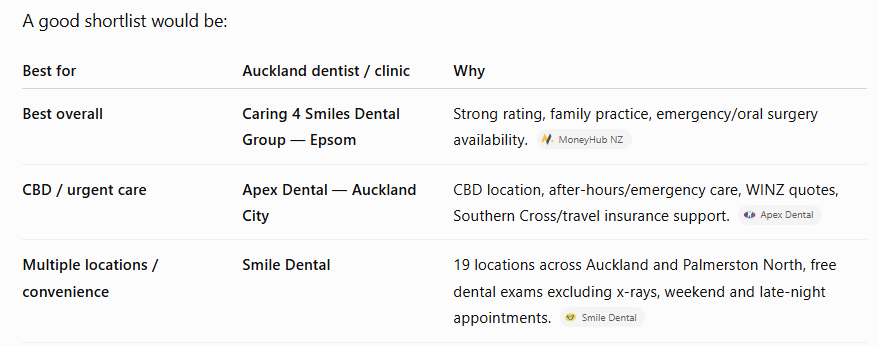
More and more searches now return an AI answer at the top — Google’s AI Overviews, ChatGPT, Perplexity. And they’re already naming names: ask ChatGPT for the best dentist in Auckland and it hands back a shortlist, no blue links required.
Google’s AI Overviews alone now reach 2.5 billion people a month. This isn’t a someday thing. It’s already how a huge slice of people get their answers.
And here’s the part that ties straight back to the NZ low-volume point: those AI answers show up most on exactly the small, specific, informational queries we’ve been talking about. For searches under a thousand a month, an AI Overview appears around 82% of the time.

So your informational keywords — the right end of the scale — are now doing double duty. They answer the reader, and they’re your ticket into the AI answer box.
The way you win a citation is the way you should’ve been writing anyway: answer the question directly, in one clean sentence, right up top. AI systems lift clear, self-contained answers. Waffle for three paragraphs before getting to the point and you get skipped.
The best part for a smaller player: you don’t need to be number one to get cited. Over half of AI Overviews don’t even link the top organic result — they pull from further down the page. A young site with a genuinely clear answer can leapfrog the big names in the AI box.
I know this works because it’s happening to me. Expert SEO gets cited in Google’s AI Mode and in ChatGPT answers — a company barely a year old, quoted by the AI over sites a hundred times its size.
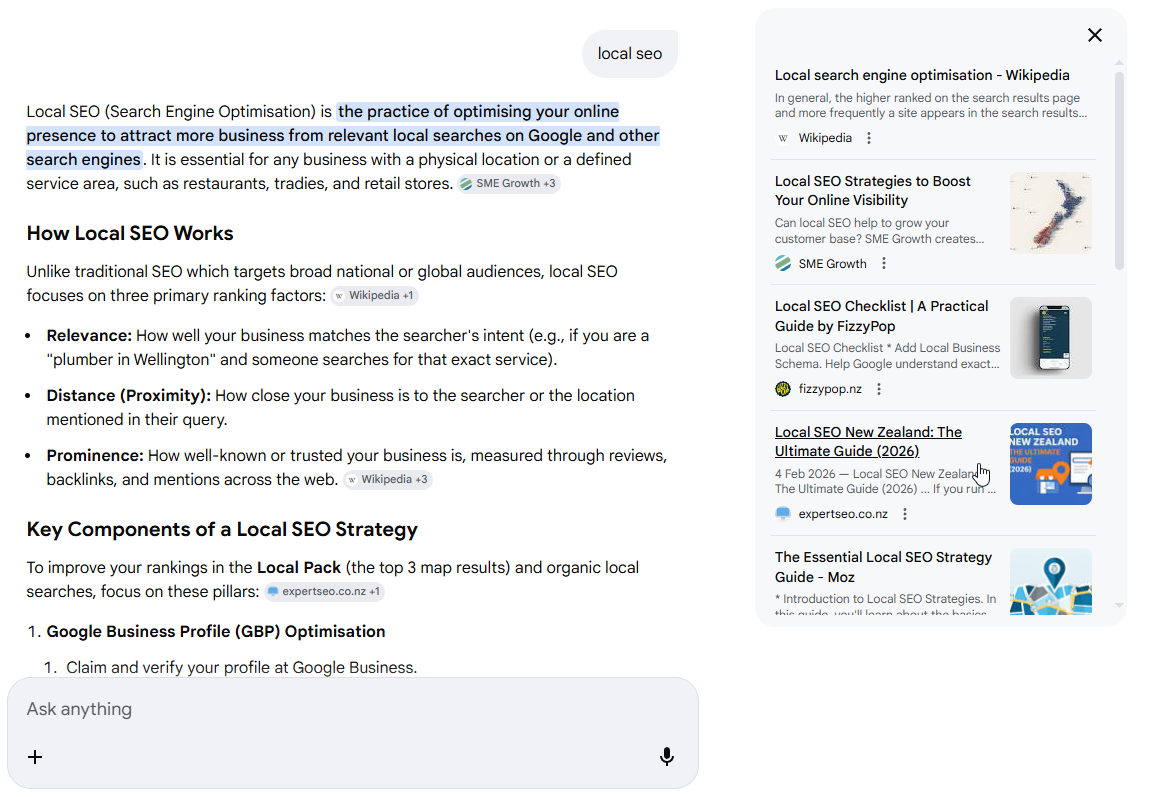
If you want the full breakdown of ranking in AI search, I’ve written a separate guide on AI SEO. But the short version: map your informational keywords, answer them cleanly, and the same content that builds your authority now earns your citations too.
When to Do It Yourself vs Hire an Expert
Everything above is yours to run. The free tools, the scale, the mapping, the linking — you can absolutely build this strategy yourself, and plenty of people do.
Pairing it with proper professional help just makes it move faster. If you’d rather have it done for you, we can help — either through our professional SEO services or one-on-one SEO consultancy.
Either way, now you know how a real keyword strategy is built. Go map your keywords.
Keyword Strategy: FAQ
What is a good keyword strategy?
A good keyword strategy targets the right keywords rather than just the highest-volume ones, maps each keyword to a specific page, and uses internal links to funnel authority to the pages that make you money. In a small market like New Zealand, it prioritises buyer intent over raw search volume.
What is an example of a keyword strategy?
A dentist lists every keyword their business could rank for (services × locations × questions), sorts them from commercial “money” keywords like “teeth whitening Auckland” to informational ones like “does teeth whitening hurt”, maps each to the right page, then links the informational guides to the service pages so authority flows to them.
What are the 4 types of keywords?
Keywords are usually grouped into four intent types: informational (learning something), navigational (finding a specific site), commercial (comparing options before buying) and transactional (ready to buy). In practice they sit on a scale from money to informational rather than in four rigid boxes.
What is the 80/20 rule in SEO?
The 80/20 rule in SEO is the idea that roughly 80% of your results come from about 20% of your effort — usually a small set of high-intent keywords and pages. Find those first and focus your energy there instead of spreading yourself thin across every keyword.
Is SEO dead in 2026?
No. SEO is very much alive in 2026 — search has just expanded to include AI answers like Google’s AI Overviews and ChatGPT. The same fundamentals (a solid keyword strategy, quality content and authority) now also decide whether an AI cites you as the answer.
What are the 4 pillars of SEO?
The four pillars of SEO are on-page SEO, off-page SEO, technical SEO and content. Your keyword strategy sits underneath all of them — it decides what each page targets and how those pages connect to each other.