

You check your domain authority, see a 14, then look up a competitor sitting on a 60 and quietly decide you’ve already lost.
That assumption costs New Zealand businesses rankings every day. And it’s wrong.
Domain authority is the most misunderstood number in SEO. Some people ignore it completely. Others treat it like a credit score they have to max out. Both miss what it actually does.
This guide breaks down what domain authority is, what it isn’t, the score you realistically need to rank in New Zealand, and how to build it the right way.
What Is Domain Authority?
Domain authority is a score from 0 to 100 that predicts how likely your website is to rank in search, compared to other sites.
It was developed by Moz, and it’s a prediction — not a grade handed down by Google.
Think of it as a strength rating for your whole domain. The higher the number, the more likely it is that your site can rank for competitive terms. New sites start at 1 and climb as they earn links and build a track record.
The key word is compared. Domain authority only means something next to someone else’s. A DA of 25 sounds low until you find out the sites you’re competing with sit at 18. Then it’s an advantage.
Quick example. Say two Hamilton cafés both want to rank for “best brunch Hamilton.” One has a DA of 22, the other a DA of 9.

On that signal alone, the first café has the stronger domain and a better shot at ranking, assuming the page itself is good. That’s all the number is really telling you: who’s carrying more weight into the fight.
Is Domain Authority Actually a Google Ranking Factor?
No. Google does not use domain authority. It’s a Moz metric, built by a third party, and Google has said repeatedly that it isn’t something the algorithm looks at.
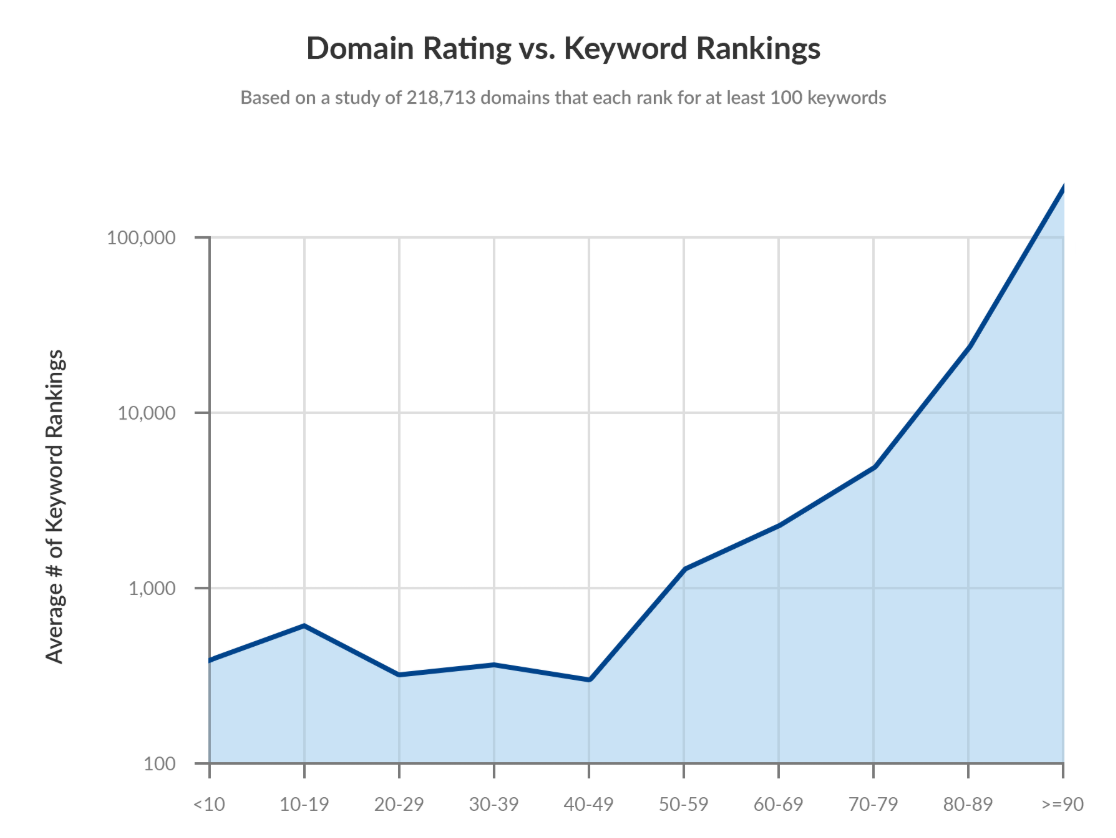
It seems to matter because it correlates with ranking. The things that push your DA up — quality links, a trustworthy backlink profile — are the same things Google rewards.
When Ahrefs studied the link between domain rating and rankings across 218,713 domains, the two lined up well.
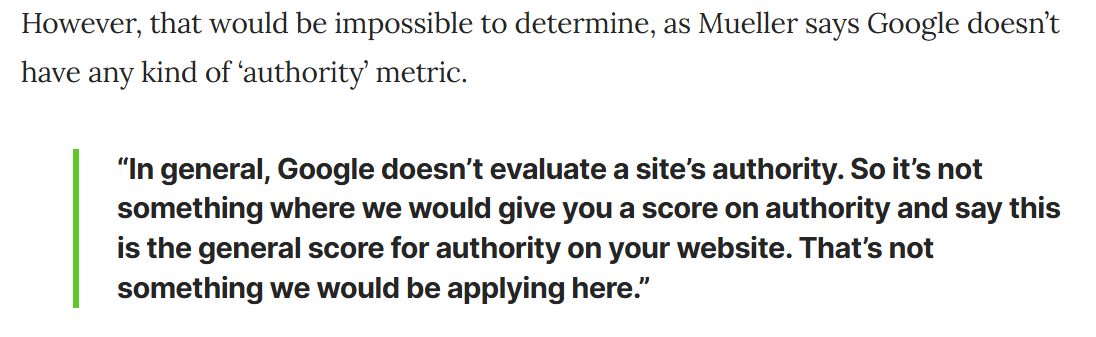
Google’s own John Mueller has acknowledged Google uses a site-wide signal that maps to similar things, just not Moz’s DA specifically.
(Domain rating is simply Ahrefs’ version of the same idea.)
This changes how you should use the number.
Don’t optimise for domain authority. Optimise for the things that cause it.
Chase the score directly and you’ll waste time gaming a metric. Build real authority and the score follows on its own.
DA vs DR vs Authority Score: Which Number Do You Trust?
Domain Authority, Domain Rating, and Authority Score are three different brands of the same idea.
Moz calls it DA. Ahrefs calls it Domain Rating (DR). Semrush calls it Authority Score.
None is “correct” — they’re each one company’s estimate of how strong your site is.
| Tool | Metric name | What it mainly measures |
|---|---|---|
| Moz | Domain Authority (DA) | Quality and quantity of backlinks |
| Ahrefs | Domain Rating (DR) | Strength of your backlink profile (referring domains) |
| Semrush | Authority Score | Backlinks, organic traffic, and behaviour signals |
The one rule that matters: never compare across tools. A Moz DA of 40 is not the same as an Ahrefs DR of 40.
Pick one tool, track your trend in that tool, and compare yourself to competitors using the same tool. Mixing them is how people end up confused about whether they’re winning or losing.
What’s a “Good” Domain Authority — and What You Actually Need in NZ
There’s no universal good score. A good domain authority is simply higher than the sites you’re trying to outrank, and in plenty of NZ niches that bar sits lower than you’d expect.
You’ll see the usual bands quoted everywhere:
- 1–30: new or small sites still building
- 30–50: established sites actively working on SEO
- 50–60: strong, reputable sites
- 60–100: major brands, news outlets, global players
Useful as a rough map. Useless as a target, because authority is relative by design — a score that wins in one industry loses in another.
So stop asking “what’s a good DA?” and start asking “what DA do I need to beat the people ranking for my keywords?” Here’s how to find that number:
- List your priority keywords — the searches that actually bring in revenue.
- Google each one and see who keeps showing up. The same two or three competitors usually dominate.
- Take those top three repeat competitors and check their domain authority.
- That’s your target. You don’t need to beat the whole internet. You need to beat them.
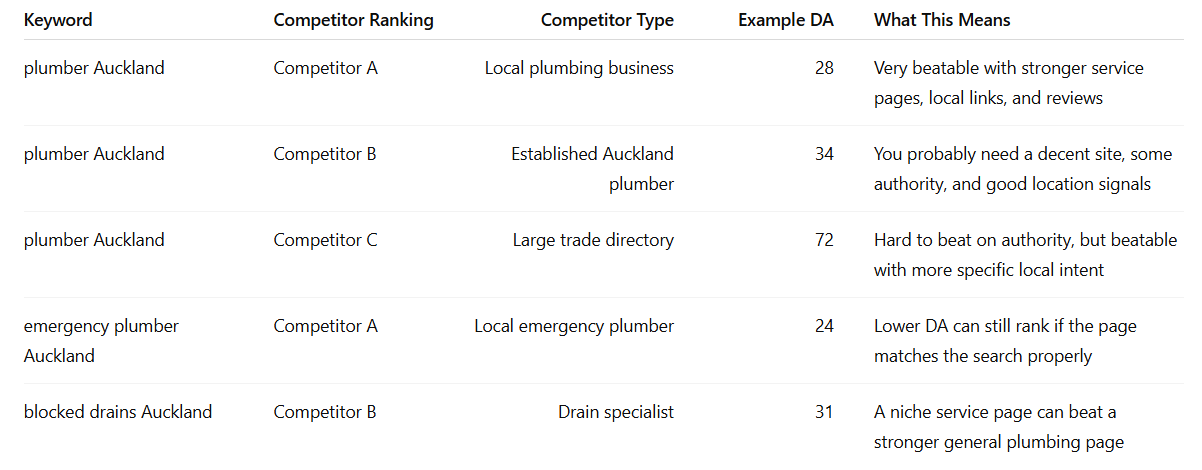
For a lot of New Zealand businesses, that target is surprisingly reachable. A local plumber or dentist isn’t competing with Moz.
They’re competing with three other local firms, and those sites often sit in the 10–25 range. You don’t need a 50 to win there. You need a 20 and a better page.
How Domain Authority Is Calculated
Domain authority is driven mostly by your backlink profile — how many quality websites link to you, and how trustworthy those sites are.
Backlinks are the engine. Almost everything else is secondary.
A few things matter more than people realise:
- Referring domains beat raw link count. Fifty links from fifty different sites are worth far more than 500 links from one. Ahrefs found the number of referring domains is the strongest backlink factor correlating with rankings, studied across roughly 920 million pages.
- Quality beats quantity. One link from a government site, a university, or a major NZ news outlet outweighs a hundred from junk directories.
- The scale is logarithmic. Moving from 10 to 20 is reasonably quick. Moving from 70 to 80 is brutal. The higher you climb, the harder each point gets.
Content, technical health, and internal linking play supporting roles. They help you earn and hold links, but the links do the heavy lifting.
Why You Can Beat Sites With Higher Domain Authority
A higher domain authority doesn’t mean a site has already won. Google ranks the most relevant result for a specific searcher, and a focused NZ site can outrank a global giant with triple the authority.
I’ve done exactly this.
Our local SEO guide ranked number one in New Zealand, above the equivalent guides from Semrush and Ahrefs — two of the most authoritative SEO sites on the planet, with domain ratings up in the 90s while ours sits far lower.

Two reasons, and they’re both about relevance, not raw strength.
First, the guide is written specifically for New Zealand. NZ examples, NZ context, NZ businesses.
When someone in Auckland or Christchurch searches, Google sees a result built for them, not a generic global page.
Second, the domain itself is a .co.nz. That country-code domain signals to Google that the site is relevant to New Zealand searchers, which helps it rank higher for NZ-based searches.
Put those together and a smaller, sharper, country-specific site can beat a global brand for local queries, even though that brand would crush it on a worldwide search.
The giant is more authoritative. Our page is more relevant to the New Zealander doing the searching.
The lesson for your business: don’t be intimidated by a competitor’s domain authority.
Check whether they’re actually relevant to your specific NZ audience. Often they’re not, and that gap is your opening. It’s the same angle our SEO agency uses to compete above its weight.
How to Check Your Domain Authority (Free)
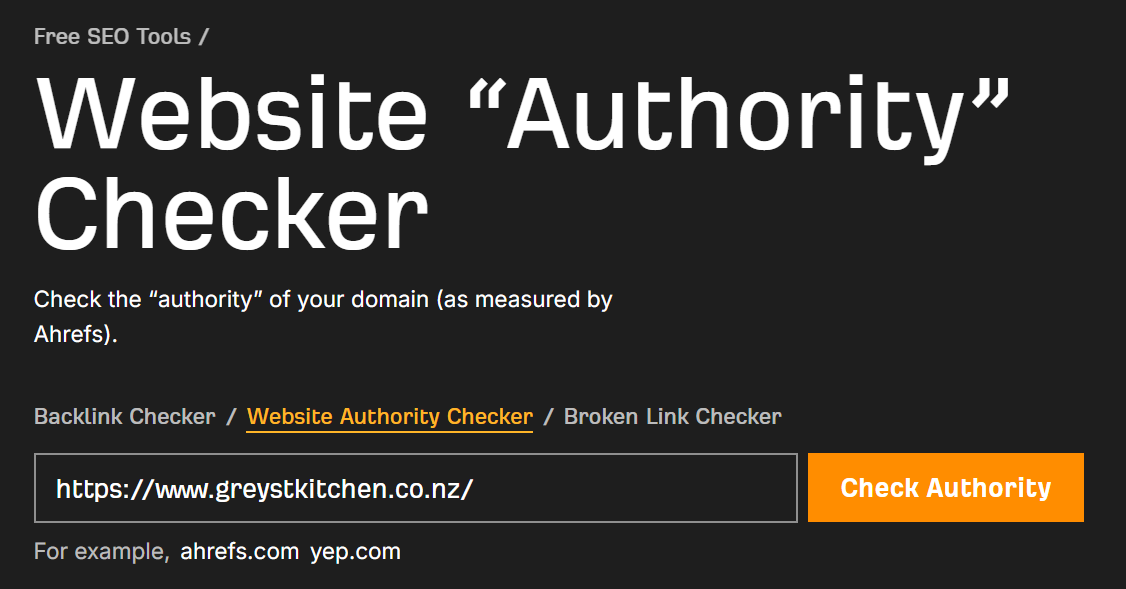
You can check your domain authority free in under a minute. The tool worth starting with is the Ahrefs Website Authority Checker — it’s free, it doesn’t need an account, and it gives you a clear domain rating for any site.
- Go to the Ahrefs Website Authority Checker.
- Enter your domain.
- Read your score, then enter your top competitors and compare.
Moz’s free Domain Analysis tool and Semrush’s free Authority Score checker do the same job if you prefer their numbers.
Whichever you pick, two rules apply: look at your trend over time rather than a single snapshot, and always compare yourself to competitors using the same tool.
If you want the full picture of what’s limiting your authority, an SEO audit digs into the link and technical issues sitting behind the score. And don’t check daily and panic when the number wobbles, which brings us to why it moves.
How to Increase Your Domain Authority
You raise domain authority by earning links from quality, relevant sites, and the only reliable way to do that is to deserve them.
There’s no button, no package, no shortcut that lasts. Here’s what actually works.
Create content worth linking to. Original data, genuinely useful guides, local resources people reference. A “cost of [service] in NZ” breakdown or a regional data study earns links because it gives other sites something real to point at.

This is the passive engine: strong content that ranks pulls in links over time without you asking.
Do active outreach and guest posting. Find relevant NZ sites and pitch them. Guest posting on a respected industry site gets you a quality link and exposure at once.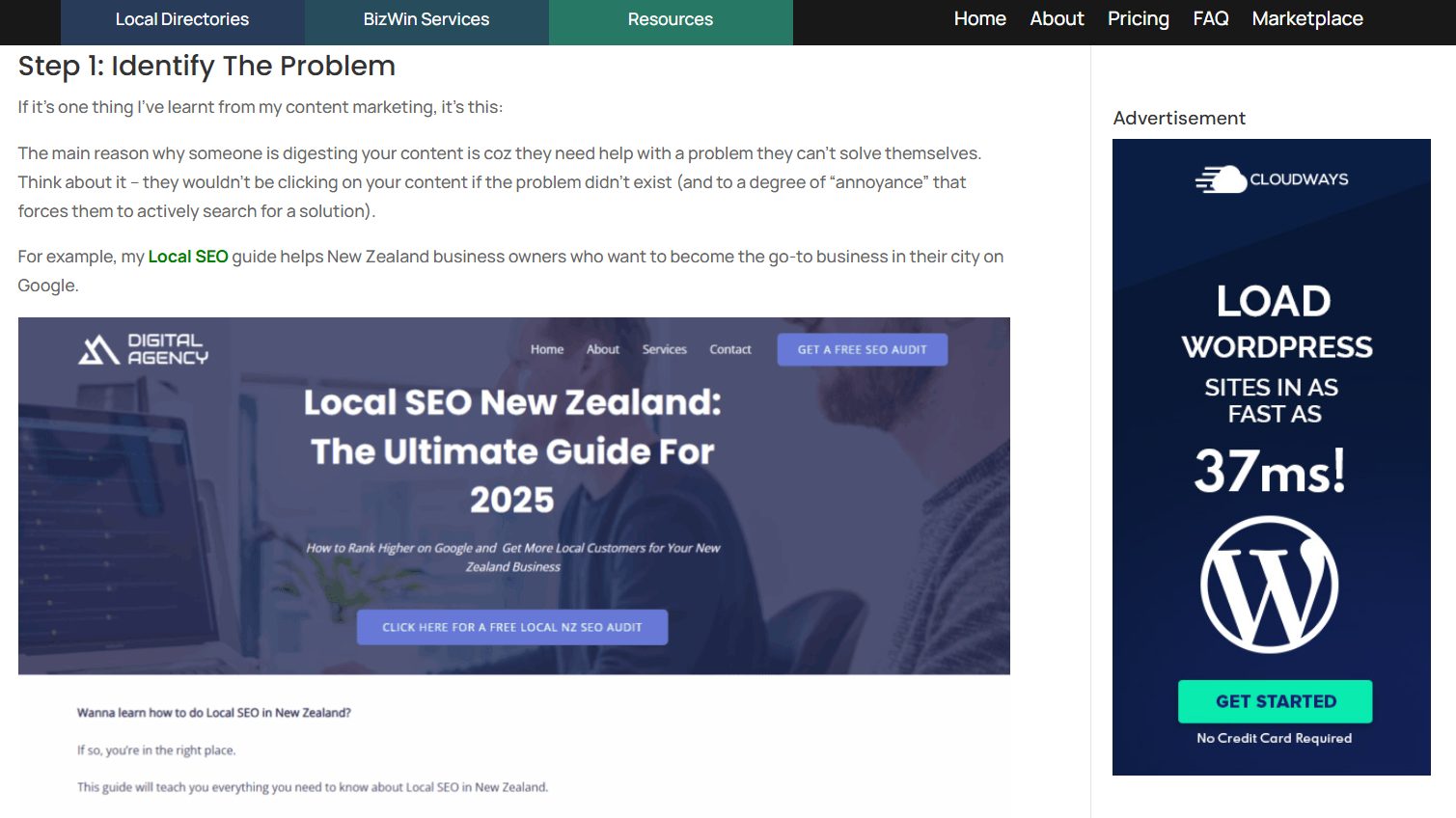
Relevance is everything — a link from a NZ business blog in your space is worth more than a random high-DA site with nothing to do with you. Putting real effort into building links like this is where most real DA growth comes from.
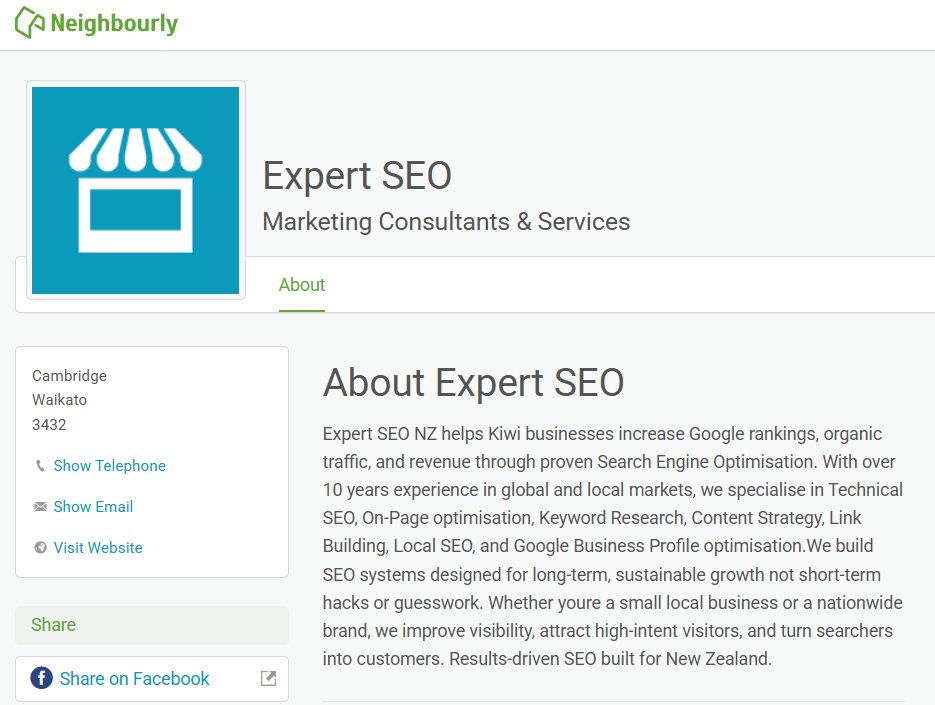
Get listed where it counts. Relevant NZ directories, industry associations, local partnerships, sponsorships. None of these move the needle alone, but together they build a base of legitimate links and local trust.
Clean up toxic links. A pile of spammy backlinks can drag you down. Audit your profile, and where bad links are clearly hurting you, disavow them carefully. It’s a tool that can backfire if you’re careless, so go slow.
Shore up the foundations. Links convert better when the site behind them is solid. Sort out the technical side of SEO so pages load and crawl cleanly, keep your content deep, and link your own pages together sensibly. None of this raises DA on its own, but it helps every link you earn do more work.
The honest truth is that this is a long game.
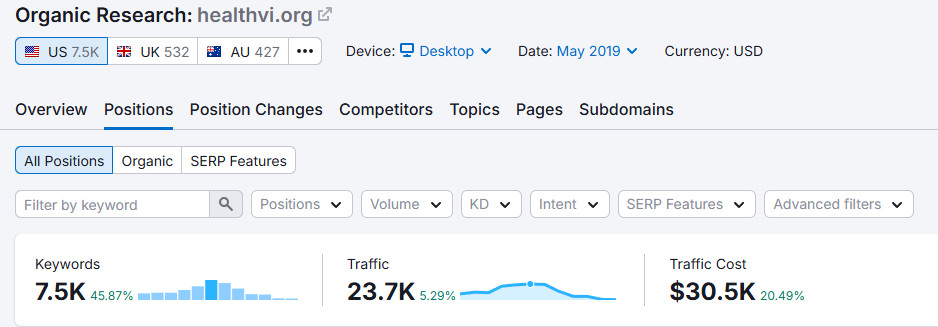
I grew a health website, HealthVI, from zero to over 20,000 monthly visitors in under a year using this exact process — earning authority through real work, not a number I went chasing.
The authority was the by-product. The traffic and leads were the point.
How Long It Takes (and Why It Sometimes Drops)
Moving domain authority takes months, not weeks. For most NZ businesses doing consistent link building, expect early movement around the three to six month mark, with bigger gains compounding after that.
That timeline tracks with SEO in general — authority and rankings both build slowly, then accelerate, as we cover in our guide on how long SEO takes.
And if your score drops, don’t panic. DA falls for normal reasons:
- The tool recalibrates its algorithm, which happens periodically and hits everyone at once
- Competitors gain links faster than you do
- You lose links when other sites remove or change their pages
A dip usually means the metric is adjusting or the field is shifting, not that your site is broken. Treat the number as a checkpoint you glance at occasionally, not a dashboard you stare at.
The Domain Authority Traps That Waste Your Time and Money
The biggest mistake with domain authority is treating the number as the goal. The second biggest is buying “high-DA backlinks” to inflate it. Both cost you.
The vanity trap. It’s easy to get hooked on watching the score climb and forget it doesn’t pay the bills. Rankings, traffic, and leads pay the bills. A higher DA that doesn’t come with more customers is just a nicer-looking number. Optimise for revenue and let the score be a side effect.
The “high-DA backlink” scam. You’ll see services selling packages of links from high-authority sites for cheap. Avoid them.
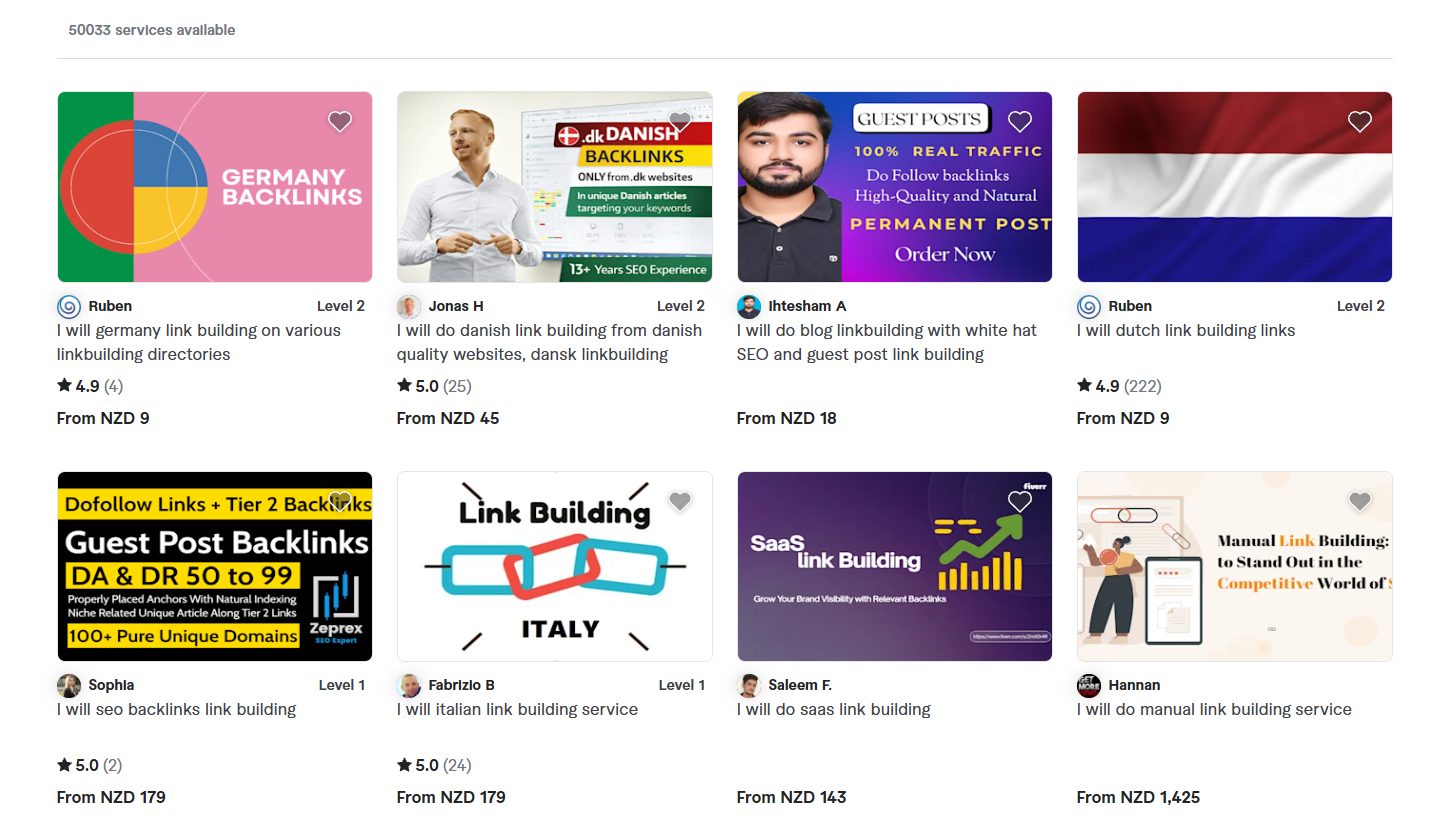
These usually come from link networks and manipulative schemes that Google actively penalises, and a run of cheap, irrelevant links can do real damage.
Building off-page SEO properly is slower, but it’s the only version that doesn’t blow up in your face.
What to do instead: focus on relevance and revenue, earn links the real way, and let domain authority follow.
Does Domain Authority Matter for AI Search?
AI tools like ChatGPT and Google’s AI Overviews don’t use Moz’s domain authority, but they lean on the same kind of trust signals, so the work that builds DA also helps you get cited.
AI systems favour sources that look credible: well-linked sites, real mentions, a solid reputation.
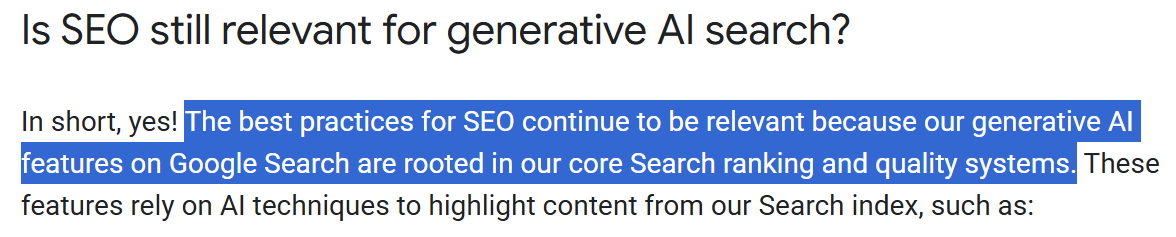
Domain authority is a proxy for that underlying strength. It’s not the metric these systems read, but a site that’s earned a healthy authority score has usually earned the trust signals AI does pay attention to.
Build authority the right way — quality links, depth, genuine usefulness — and you’re covering traditional rankings and ranking in AI search at the same time.
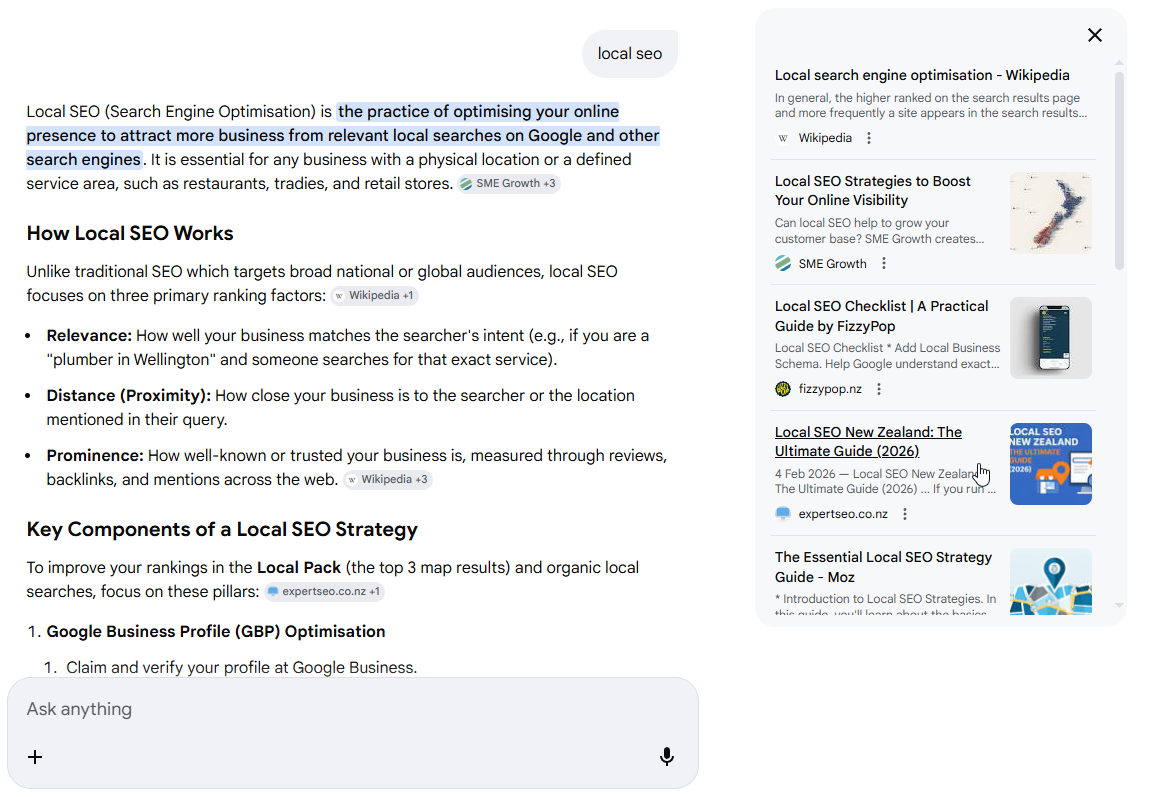
Our own site gets cited in AI Overviews and ChatGPT responses despite a modest domain authority, for the same reason the local SEO guide outranks the giants: relevance and trust beat raw size.
DIY vs Hire an Expert
You’ve got two paths from here.
Do it yourself. Follow this process, stay consistent, and you can absolutely build authority on your own. Expect a learning curve and a fair bit of patience while the links, and the score, catch up.
Bring in help. If you’d rather move faster and skip the traps, you can hand it off. You get strategy, execution, and someone who’s done this before steering the link building and content.
Our done-for-you SEO covers exactly that, and if you want a second opinion before committing, an SEO consultant can map out the fastest path for your situation.
We help businesses across New Zealand grow their search visibility, including:
If you’re happy to DIY, work through this guide and give it time. If you want it done properly and faster, that’s where we come in.