
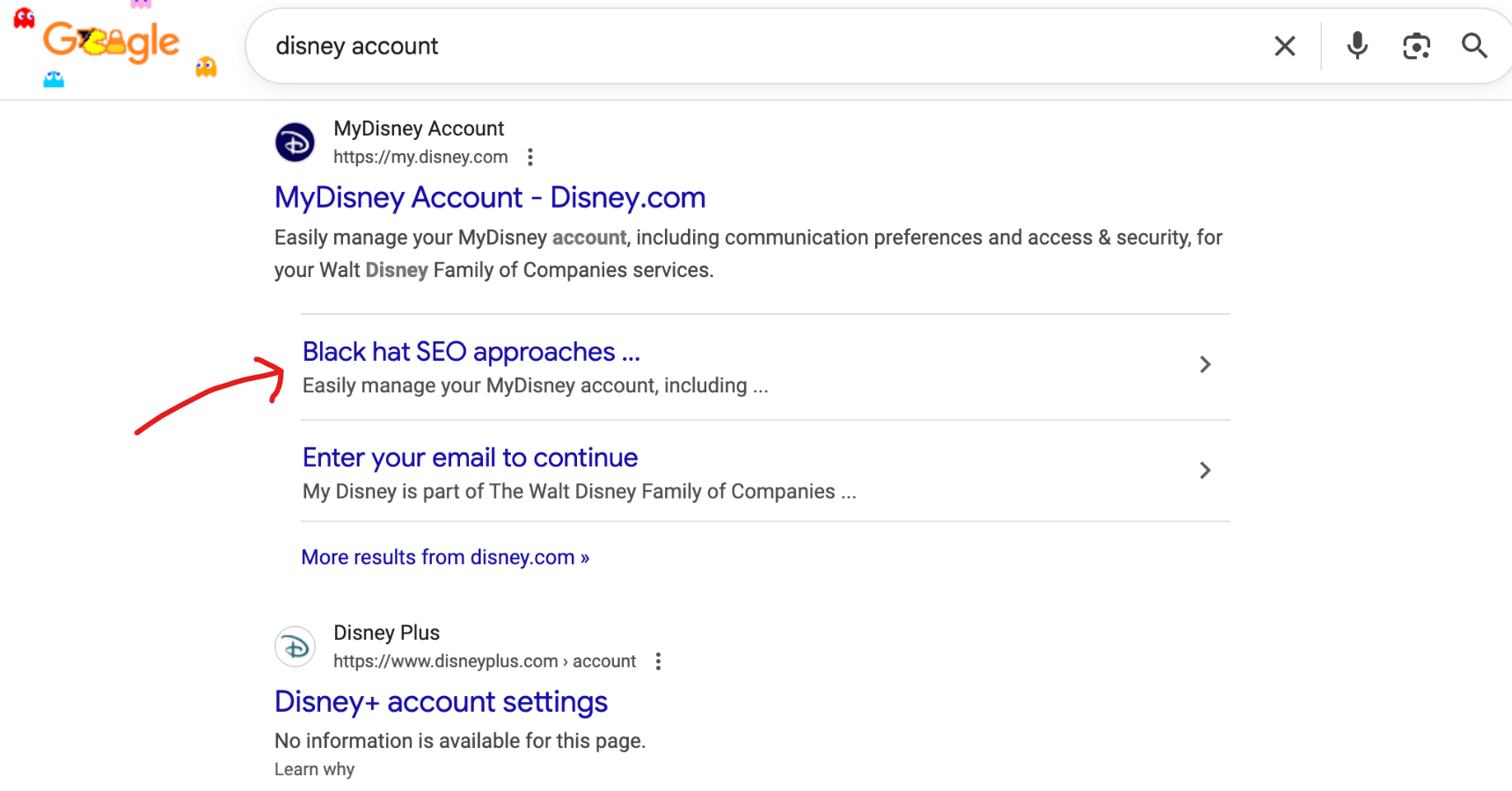
In late October 2025, people Googling “My Disney” saw something strange. Disney’s own login page showed up in the results titled “Buy Black Hat SEO Packages.”
A few days later it changed to “Black hat SEO approaches.” Screenshots flew around the internet. Had Disney been hacked? Were they secretly selling dodgy SEO services?
Neither. Disney didn’t do anything wrong. They’d been attacked.
That incident is the perfect way into this topic, because it shows the thing most articles get wrong.
Black hat SEO is something you can choose to do, but it’s also something that can be done to you. Either way, it can wreck a website.
This guide breaks down exactly what black hat SEO is, every major technique with real examples, whether it’s ever worth the risk, how to tell if your own site (or the agency you hired) is using it, how it plays out in AI search, and what to do if you’ve already been hit.
What Is Black Hat SEO?
Black hat SEO is any tactic that breaks search engine guidelines to manipulate rankings. Instead of earning a position by being genuinely useful, you trick the algorithm into thinking you deserve it.
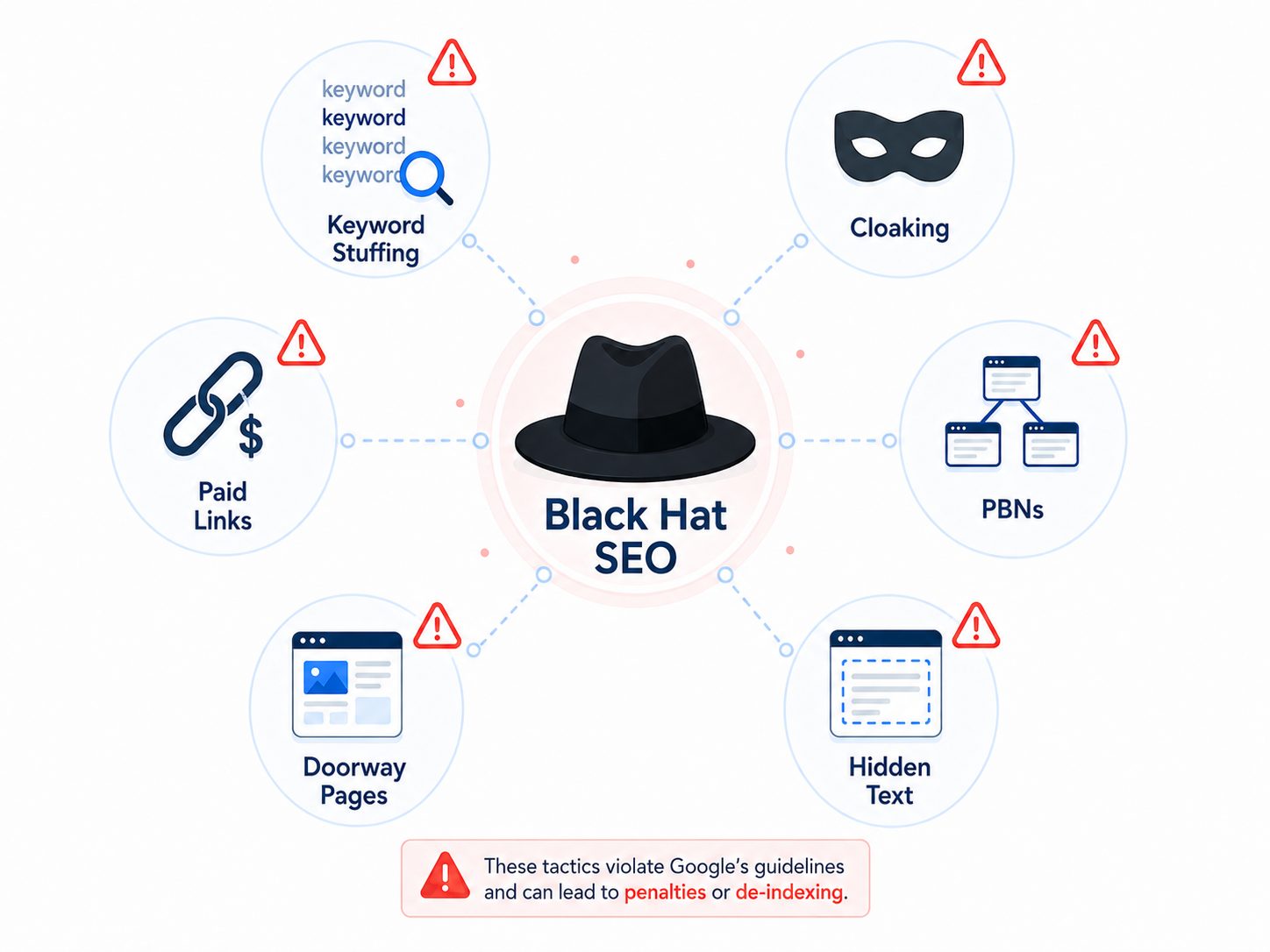
The name comes from old western films, where the villains wore black hats and the heroes wore white.
In SEO, white hat means playing by Google’s rules. Black hat means breaking them.
The appeal is obvious. Black hat tactics can produce a fast jump in rankings. The problem is what comes after.
Google catches up, the rankings collapse, and you’re often worse off than when you started. It’s a short-term spike paid for with long-term damage.
If you’re still getting your head around the fundamentals, it helps to first understand what SEO actually is and how legitimate ranking works. Black hat makes a lot more sense once you can see what it’s trying to shortcut.
Black Hat vs White Hat vs Grey Hat SEO
There are three broad approaches to SEO, sitting on a spectrum from fully compliant to fully manipulative.
| Approach | What it is | Risk | Example |
|---|---|---|---|
| White hat | Follows search engine guidelines. Earns rankings by being useful. | Low | Writing genuinely helpful content and earning links naturally |
| Grey hat | Bends the rules without clearly breaking them. The murky middle. | Medium | Buying expired domains, aggressive guest posting, mass AI content |
| Black hat | Directly violates guidelines to manipulate rankings. | High | Keyword stuffing, cloaking, buying links, hidden text |
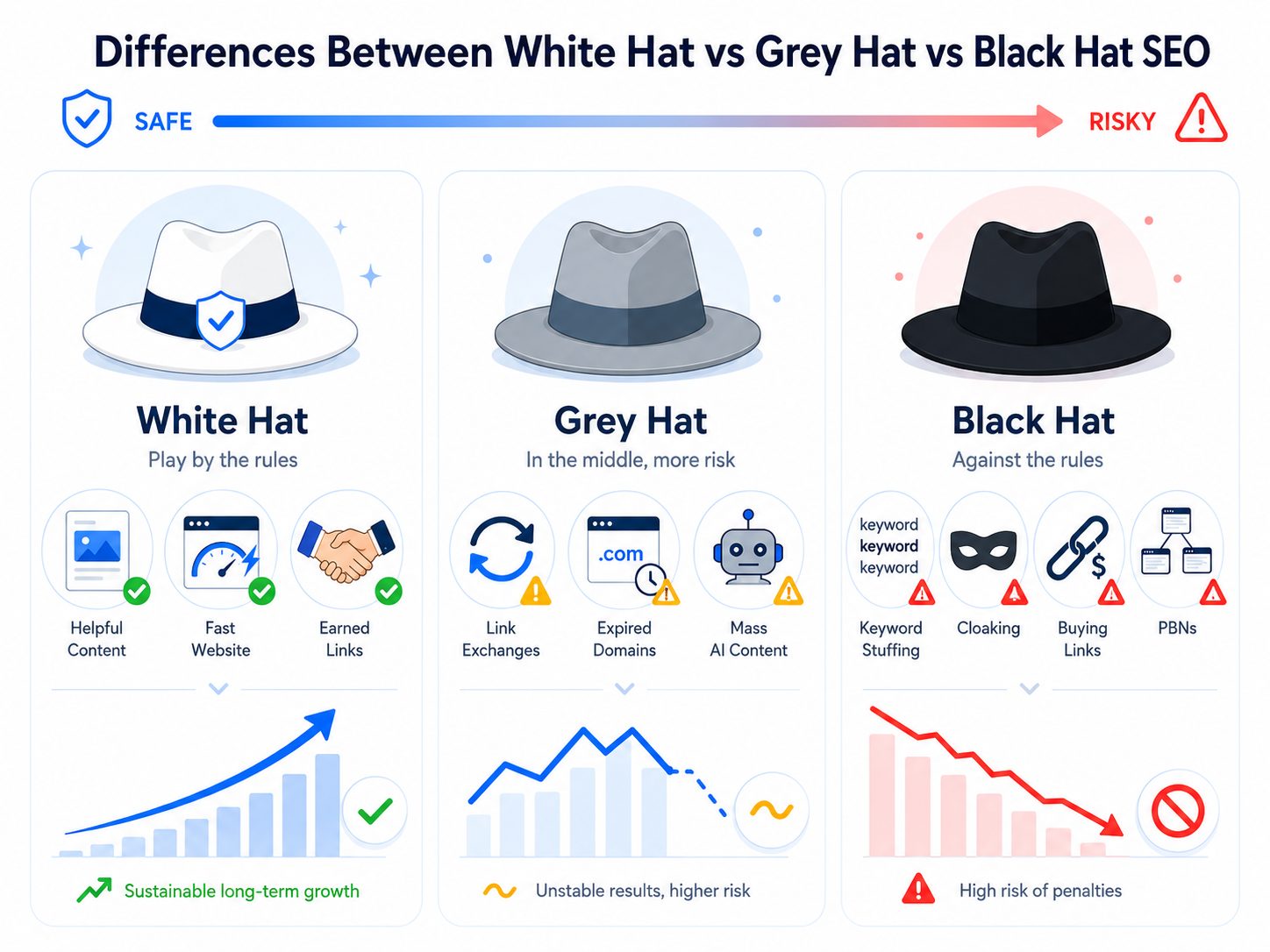
White hat is slower but safe. It compounds, and doing SEO the right way is what builds an asset that keeps paying off.
Grey hat is where it gets blurry. Buying an expired domain to redirect its authority to your site, paying for guest posts on sites that exist mostly to sell links, or pumping out hundreds of thin AI articles all sit in this zone. None of it is a clear-cut violation.
All of it can tip into black hat fast, and Google’s recent spam updates have been steadily reclassifying grey tactics as black. The line keeps moving in one direction.
The Main Black Hat SEO Techniques (With Examples)
Most black hat SEO comes down to a handful of repeat offenders. Here’s each one, what it looks like in the real world, and why it eventually fails.
Keyword Stuffing
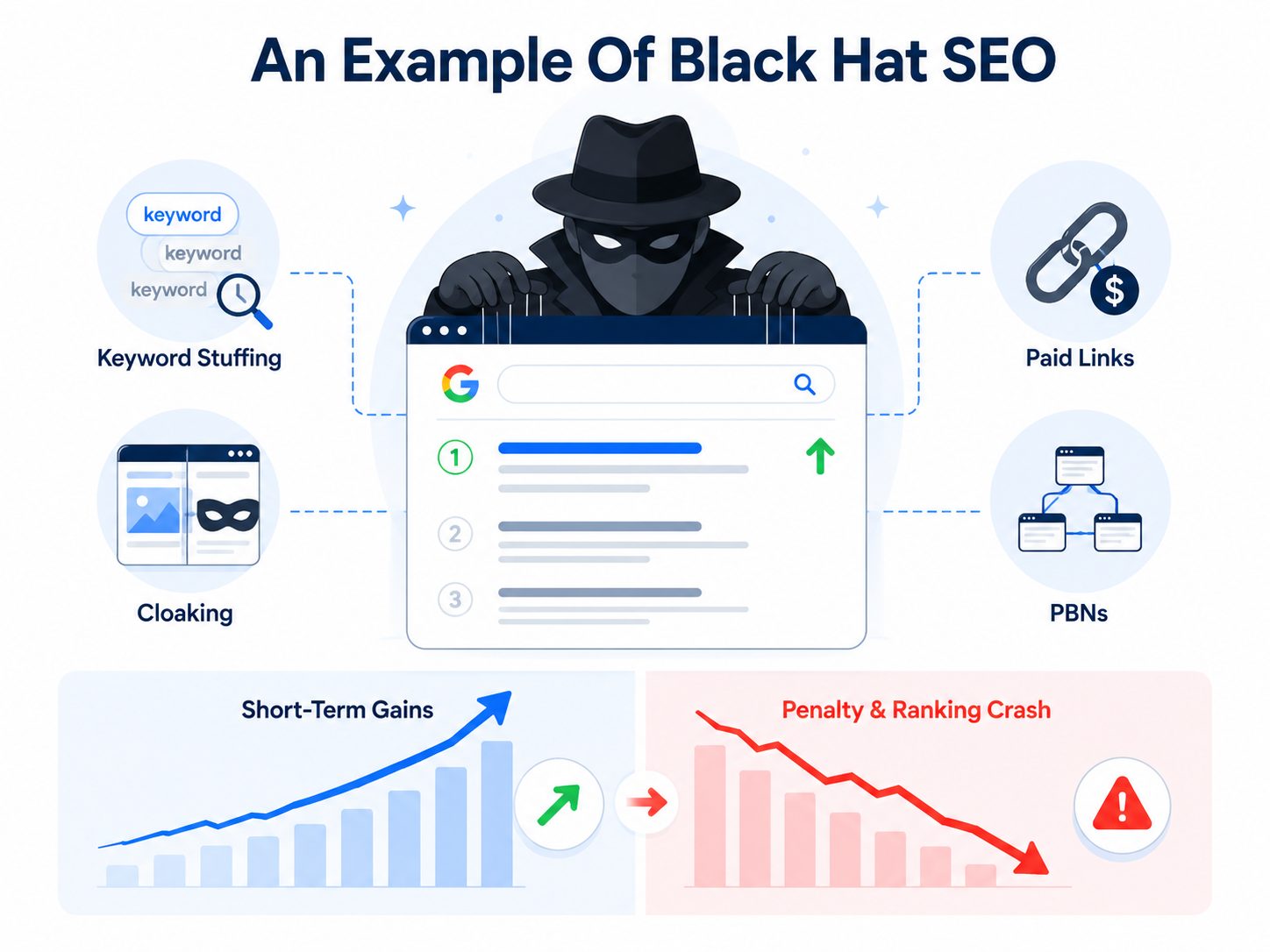
Keyword stuffing means cramming a page with the same keyword over and over to seem more relevant. It’s one of the oldest black hat tricks, and Google has been catching it for well over a decade.
Picture an Auckland dentist with a dental implant page that reads like below:

It’s painful to read, and Google treats it as spam.
The fix is the opposite of stuffing. Use your keyword naturally, then cover the topic properly. That’s what real keyword research is actually for: finding what people search so you can answer it, not repeating a phrase until it loses meaning.
Cloaking
Cloaking means showing one version of a page to Google and a different one to actual visitors. The search engine sees keyword-rich, relevant content. The human sees something else entirely, often spam or an unrelated offer.
Google considers this one of the clearest violations there is, because it’s deliberately deceptive. If you’re caught cloaking, the penalty is usually severe.
Hidden Text and Links
This is the classic trick of stuffing keywords or links onto a page in white text on a white background, or shrinking them to a one-pixel font, or pushing them off-screen with CSS. Crawlers read them. Humans never see them.
It looks clever for about five minutes. Google’s crawlers render pages the way a browser does, so hidden content is easy to detect, and it’s a known red flag.
This is one reason proper on-page SEO keeps everything visible and honest — what the bot reads is exactly what the user reads.
Sneaky Redirects and Doorway Pages
A doorway page is a thin page built only to rank for a keyword, which then funnels the visitor somewhere else. Sneaky redirects do the same thing: the user clicks a result expecting one thing and gets bounced to another.
This one trips up legitimate NZ businesses by accident.
Say a Hamilton plumber spins up twenty near-identical “plumber in [suburb]” pages, each one a copy with the suburb name swapped, all pushing visitors to a single contact form.
That’s doorway behaviour, and Google’s spam systems now target it directly. Genuinely useful location pages with unique, area-specific content are fine. Duplicated suburb pages are not.
Private Blog Networks and Paid Links
A private blog network (PBN) is a stable of low-quality sites built for one purpose: to link back to a main site and fake authority. Buying links does the same thing more directly.
This is the trap most NZ small businesses fall into without realising it. A tradie gets an email offering “50 backlinks for $99,” pays it, and feels like they’re getting ahead.
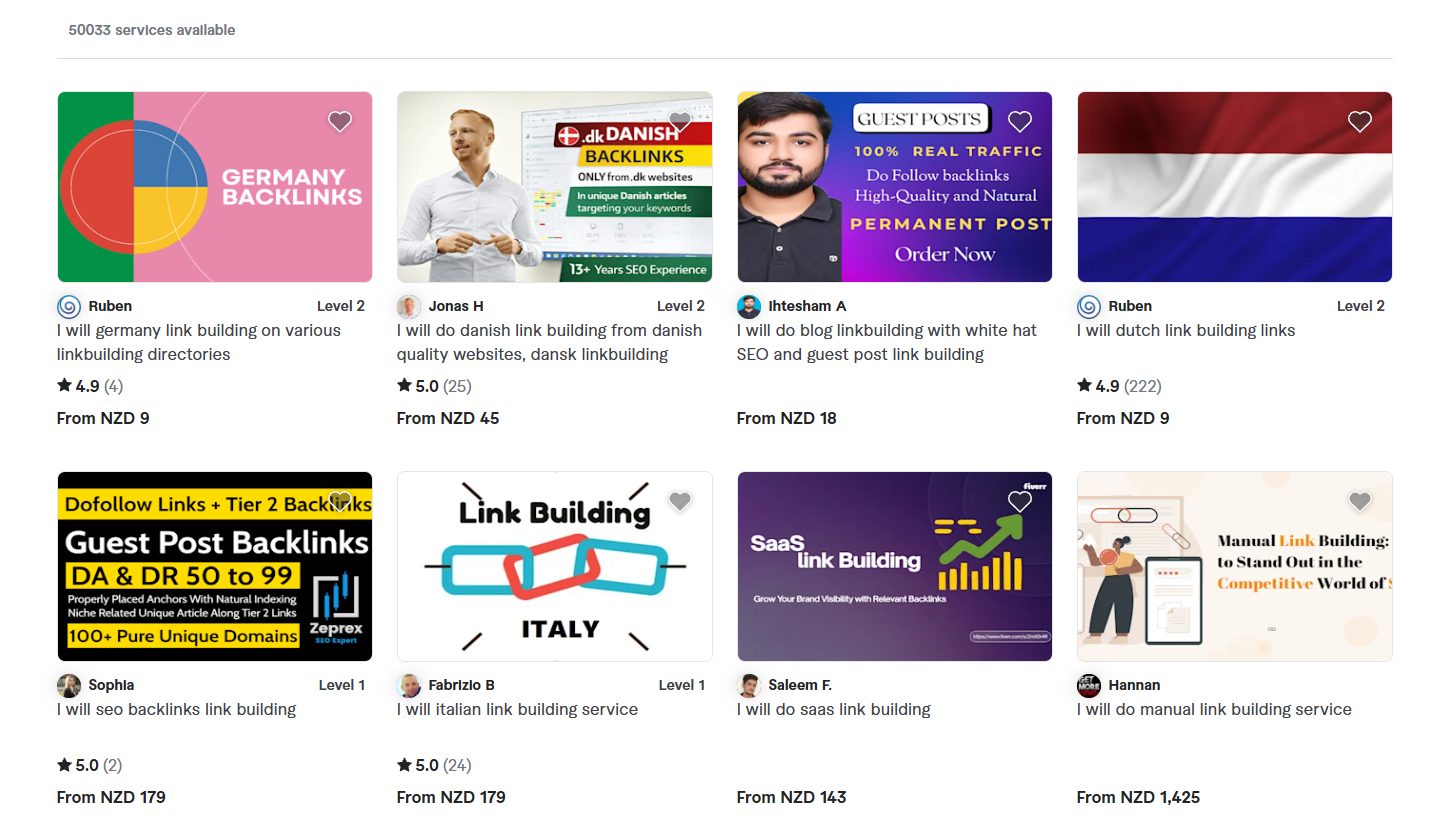
What they’ve actually bought is a pile of backlinks from a PBN that Google either ignores or penalises. Links are meant to be earned because your content is worth referencing, not purchased in bulk.
Spun and Duplicate Content
Content spinning means taking an existing article and rewriting it, usually with software, into a lower-quality near-copy. Duplicate content is just publishing the same or barely-changed text across pages or lifting it from another site.
Both bring nothing new to a reader, and Google’s whole job is to surface useful, original content. Mass AI-generated articles with no real insight fall into the same bucket now, which is exactly what the recent spam updates have been hammering.
Comment Spam and Misleading Schema
Comment spam is dropping links to your site in blog comments and forums across the web.
Misleading schema means feeding Google false structured data, like fake review stars or event markup that doesn’t match the page, to grab attention in the results.
Both are low-effort manipulation, and both are easy for Google to detect and discount.
Negative SEO: When Black Hat Is Done to You
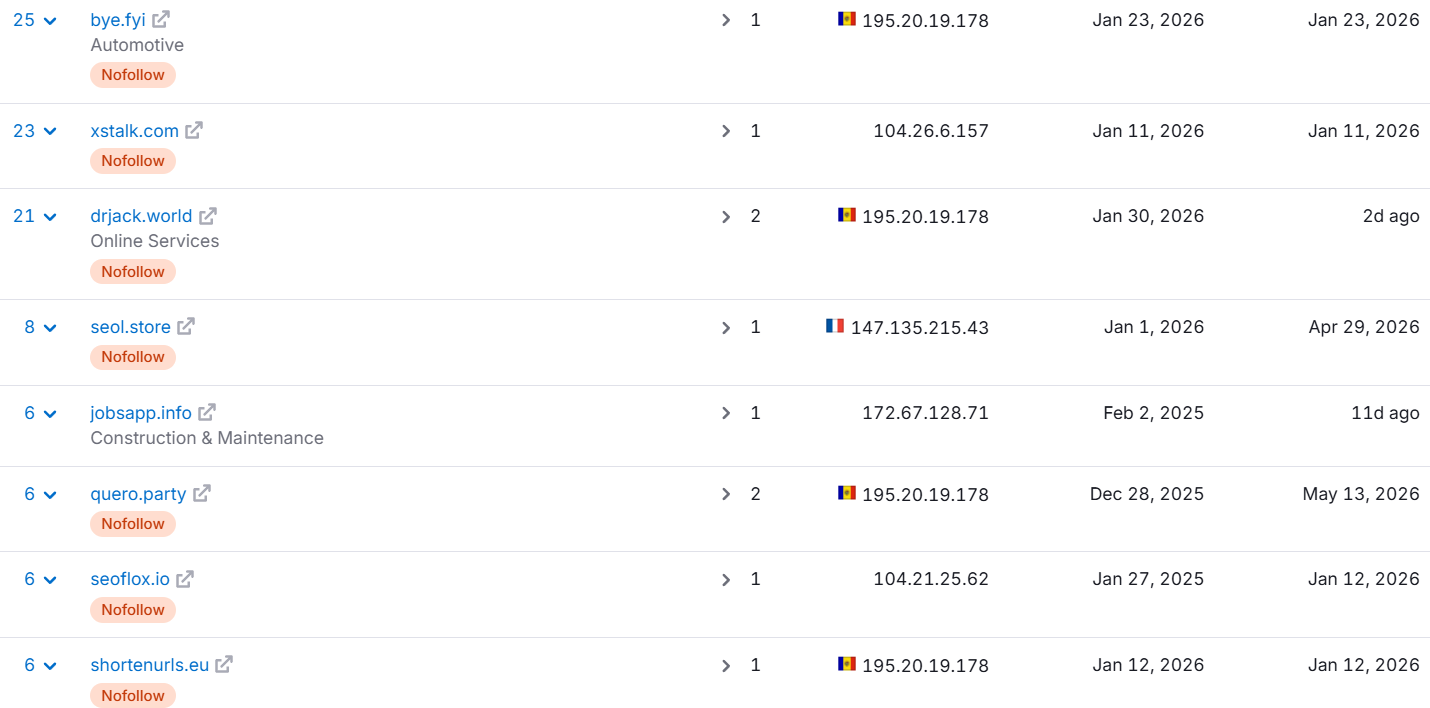
Here’s the part almost every other guide skips. You can get hit by black hat SEO without ever touching it yourself.
This is called negative SEO, and the Disney story is the textbook case.
Disney wasn’t selling black hat SEO packages. Spammers pointed a flood of low-quality links at Disney’s login URL, all using anchor text like “black hat SEO packages.”
Google’s systems sometimes rewrite a page’s displayed title based on signals from across the web, including the words people use to link to it.
With enough spammy links screaming the same phrase, Google got tricked into rewriting Disney’s title to match. It was an anchor-text poisoning attack, and even a brand with Disney’s resources got caught out.
Negative SEO takes a few forms:
Blasting a competitor’s site with thousands of toxic links, scraping and republishing their content to trigger duplicate-content problems, or planting fake reviews.
The good news is that Google has gotten much better at ignoring obvious link attacks rather than penalising the victim.
The smart move is to watch for it. Keep an eye on your backlink profile, and run a site audit periodically so you spot a sudden flood of garbage links or scraped copies before they cause trouble.
Does Black Hat SEO Still Work? And Does It Work in AI Search?
Black hat SEO can still produce a short-term spike, but Google catches most of it fast, and the version aimed at AI search is the new frontier of the same losing game.
Google’s spam detection now runs on machine learning (a system it calls SpamBrain) that studies patterns across billions of pages.
Its 2024 core update alone was built to cut low-quality, unhelpful content in results by around 40%, and the 2026 spam updates have been brutal on manipulative tactics:
Traffic drops of 40 to 60% were common among sites running scaled, spammy content operations, and entire blog catalogues vanished overnight.
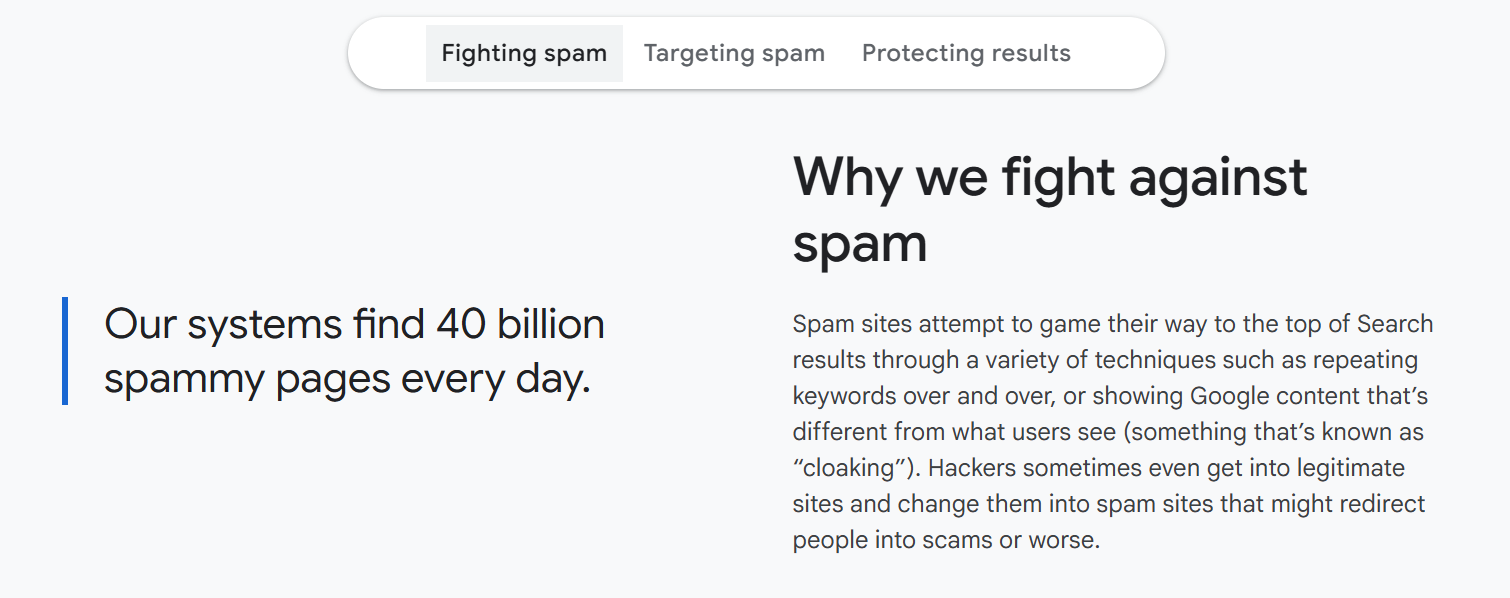
Tactics that slipped through five years ago now get flagged in days.
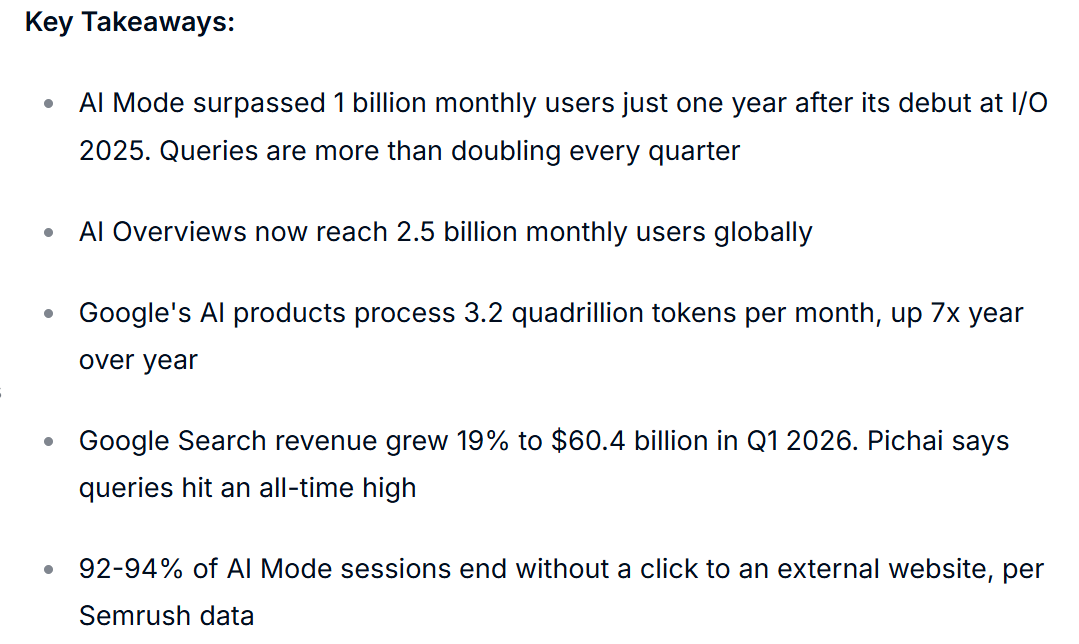
The newer angle is AI search. With AI Overviews now reaching over 2 billion users a month, a fresh wave of black hat is aimed at gaming AI answers rather than blue links:
Manufactured citations, self-referential “best of” roundups designed to get an AI to recommend your own product, and spammy content built purely to look like a clean source to a language model.
It’s the same manipulation wearing a new hat.
It also misses the point.
Brands cited in AI Overviews earn around 120% more organic clicks per impression than uncited ones, and the way to earn those citations is the same as it’s always been: clear, genuinely useful, trustworthy content.

If you want to be cited by AI search engines, gaming them is the slowest possible route. They’re built to detect exactly the patterns black hat creates.
Is Black Hat SEO Illegal? Is It Worth It?
Black hat SEO isn’t illegal. It breaks Google’s guidelines, not the law. You won’t get arrested for keyword stuffing.
But “not illegal” is a long way from “worth it.” The risk-to-reward maths almost never works out, and it’s worst for the businesses most tempted by it: new or small NZ sites that can’t afford to start over.
If you’re a one-person trade business or a small online store, a penalty that wipes out your rankings can take months to recover from, and that’s months with no organic leads coming in.
The honest answer to “is it worth it” is no. Black hat trades a real long-term asset for a gamble on a short-term spike.
White hat SEO is slower, but it takes time precisely because it compounds into something durable. One path builds equity. The other rents a ranking you’ll eventually lose.
The Real Consequences of Getting Caught
When Google catches black hat SEO, the penalties range from a quiet ranking slide to total removal from search, and the recovery is slow.
There are two ways it happens.
An algorithmic penalty is automatic: a spam update rolls out and your rankings drop without warning.
A manual action is a human reviewer at Google flagging your site, which shows up in Google Search Console. Both hurt. The worst case is de-indexing, where your site is removed from Google entirely.
The scale is real. One analysis of a major Google update found around 1.7% of monitored sites were deindexed, with tens of millions of monthly visits lost across that group.

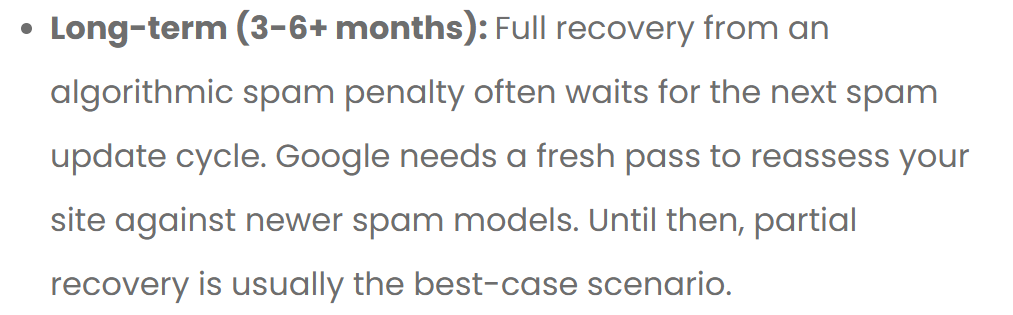
And recovery isn’t quick. Google says re-evaluation takes weeks to months, and in practice some sites hit by a spam update don’t fully recover until the next one, which can be the better part of a year later.
Then there’s the damage you can’t measure in rankings. If a customer sees your brand pulling shady tricks, trust evaporates, and that bleeds into how AI systems treat your site too.
How to Tell If Your Site (or Your SEO Agency) Is Using Black Hat
Plenty of NZ businesses are running black hat SEO without knowing it, because they hired someone cheap who is. If you’ve outsourced your SEO, this is the most useful section in the guide.
Watch for these red flags in an agency or freelancer:
- Guaranteed rankings. Nobody can guarantee a #1 ranking. Anyone who does is either lying or planning to cheat.
- “50 backlinks for $99” style offers. Cheap bulk links are almost always from PBNs or link farms.
- Vagueness about methods. A legitimate provider will happily explain exactly what they’re doing. Secrecy is a warning sign.
- Overnight results. Real SEO builds over months. A sudden, dramatic jump often means something risky is propping it up.
To check your own site, look at your backlink profile for sudden spikes of low-quality links, scan your pages for thin or duplicated content, and ask your provider straight out how they build links and create content.
If the answers make you uneasy, get a second opinion. A reputable SEO consultant will audit what’s been done and tell you honestly whether it’s safe.
How to Recover If You’ve Been Hit
If you’ve been penalised, recovery is possible, but it’s methodical, not magic. Here’s the path.
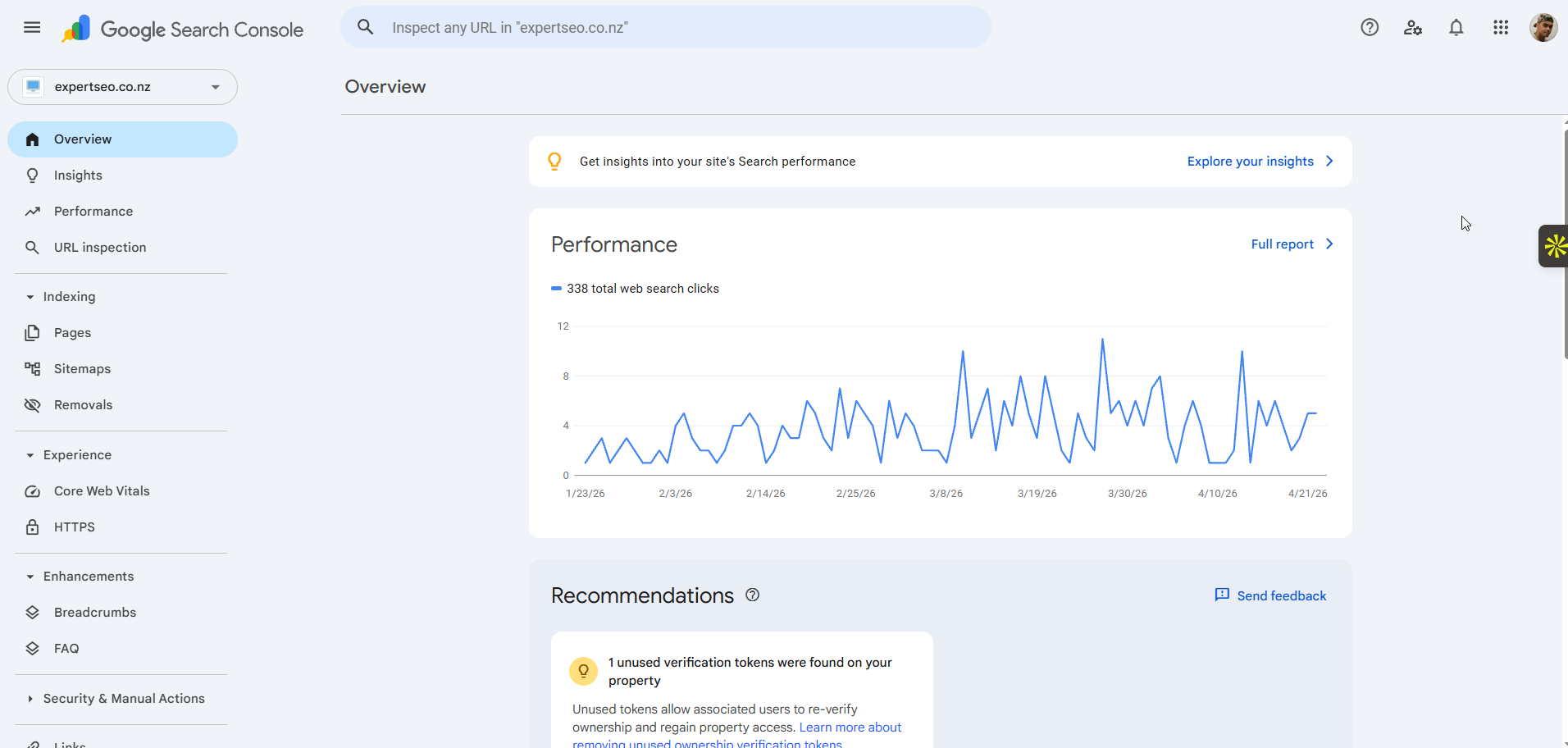
- Check for a manual action. Open Google Search Console and go to the Manual Actions report. If there’s a penalty listed, it’ll tell you what triggered it. No manual action means the drop is algorithmic, and the playbook is slightly different.
- Find and clean up toxic links. Audit your backlink profile, identify the spammy or paid links, and remove what you can. For anything you can’t get removed, use Google’s disavow tool, carefully, only on genuinely toxic domains.
- Fix the on-page offences. Strip out keyword stuffing, hidden text, cloaking, and doorway pages. Thin and spun pages should be rewritten properly or removed from the index entirely.
- File a reconsideration request. If you had a manual action, once you’ve cleaned everything up, submit a reconsideration request explaining what you fixed. For algorithmic hits, there’s nothing to file — you wait for Google to re-crawl and re-evaluate.
- Be patient. Re-evaluation takes weeks to months. Document your changes, then leave them alone and measure rather than tinkering daily.
The rebuild should lean on white hat work from here: clean, useful content and earning backlinks the proper way. That’s also where the technical side of SEO matters, since a clean, crawlable site recovers faster.
What to Do Instead (And Why White Hat Is Actually Faster)
The honest shortcut is white hat done well. It compounds, it’s safe, and it’s faster than most people assume, even for a brand new site.
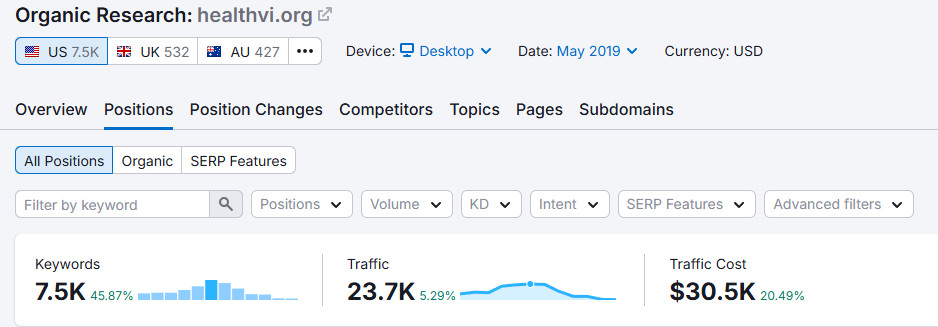
We see this constantly. A health site we grew (HealthVI) went from zero to over 20,000 monthly visitors in under a year using nothing but white hat fundamentals.
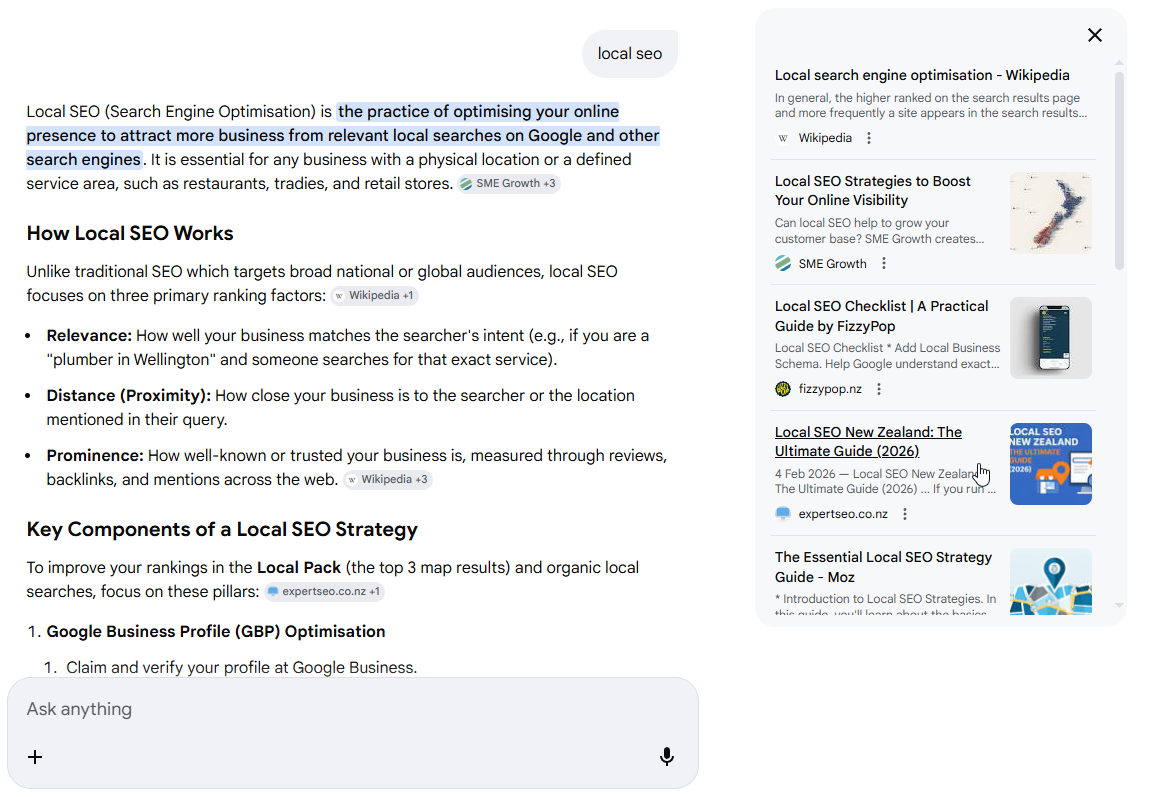
Our own site, Expert SEO, started earning AI Overview and ChatGPT citations within about six months of launch, while competing against agencies with a decade’s head start.
None of that needed a single black hat trick. It needed useful content, a clean site, and earning links the proper way.
That’s the real answer to “but black hat is faster.” It’s faster to break, slower to recover, and it caps how far you can ever go.
From here you’ve got two paths. You can learn the fundamentals and do it yourself, which works if you’ve got the time and patience.
Or you can hand it to someone who does this every day. If you’d rather have it done right, our done-for-you SEO services gets businesses ranking without the risk, with help across New Zealand:
- SEO Services Auckland
- SEO Services Hamilton
- SEO Services Tauranga
- SEO Services Wellington
- SEO Services Christchurch
- SEO Services Queenstown
Either way, the message is the same. Skip the shortcuts. They’re not worth what they cost.