

SEO is one of the highest-ROI marketing methods there is. It’s also one of the most complicated — a lot of moving parts that all have to work together, and it takes time to get them there.
If you’re trying to do DIY SEO in Australia, this guide will save you thousands of dollars a month in agency fees. It’s the stuff our SEO agency does for clients and charges for — openly and transparently.
But even though we do this for a living, I’m going to give you the plan to do it yourself and get real results for free. All it costs is your time and a bit of sweat equity.
And I know it works, because I’ve done it on my own sites. Without an SEO agency, I’ve grown websites like HealthVI to over 1,500 visitors in a single day — using the exact steps I’m about to walk you through.
No theory. This is the process, in order, with the free tools and the parts where DIY usually goes wrong.
Key Takeaways
- DIY SEO means doing your own search optimisation instead of paying an agency — and most of what moves the needle, you can do yourself for free.
- You can absolutely do it. I’ve used this exact process to grow my own sites, including HealthVI, to over 1,500 visitors in a single day.
- The order matters: keyword research → content → on-page → technical → links → tracking → consistency → local.
- Free tools do 90% of the job: Google Keyword Planner, Search Console, Analytics, and ChatGPT’s deep research.
- The hard part isn’t the tactics. It’s doing them consistently for six to twelve months without quitting.
What Is DIY SEO?
DIY SEO is doing your own search engine optimisation instead of paying someone else to do it. You handle the keyword research, the content, the on-page and technical work, the links, and the tracking yourself — mostly with free tools.
SEO is the practice of getting your website to rank higher on Google so more of the right people find you. “DIY” just means you’re the one doing the work.
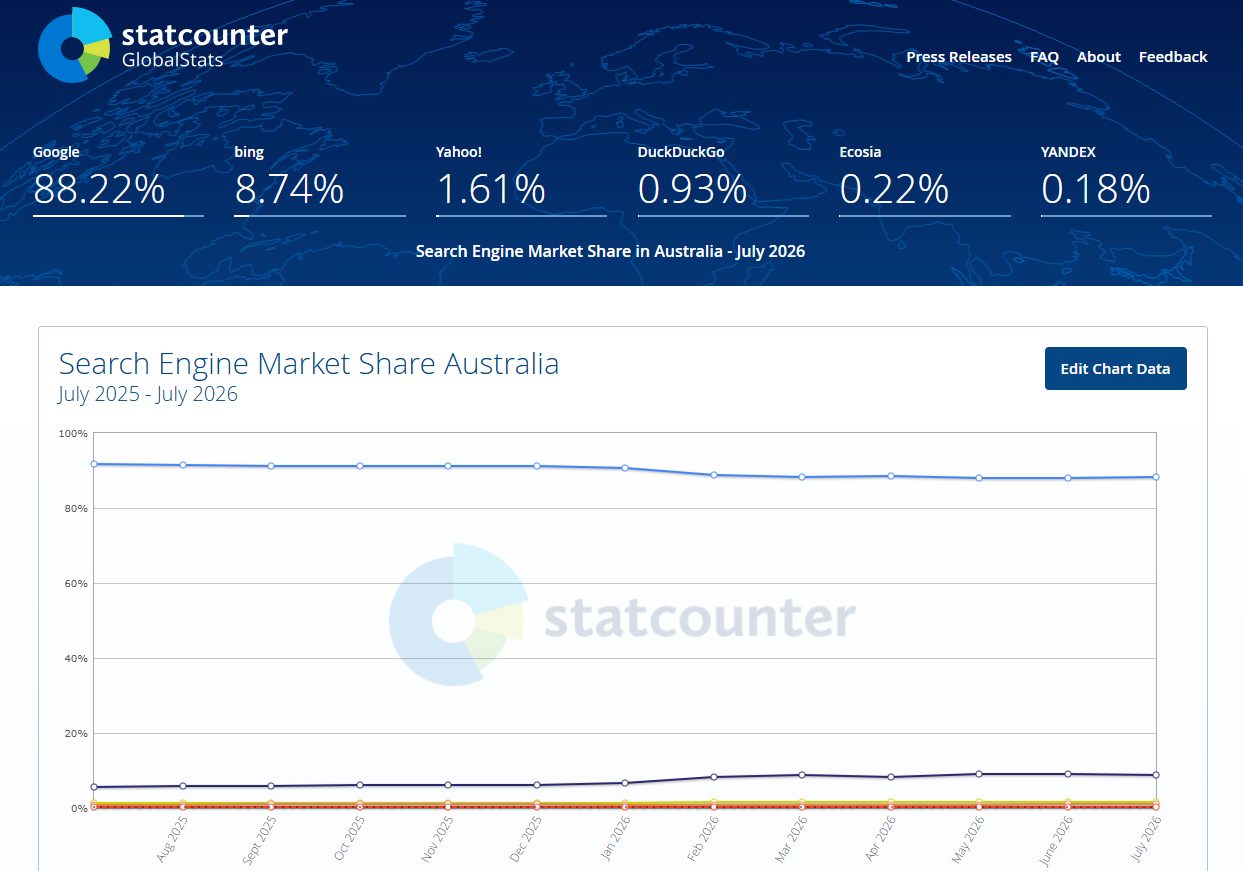
And in Australia, that work matters more than most owners realise. Google holds around 88% of the search market here, and 26 million Australians are online.
When someone wants a plumber, a dentist, or a lawyer, they Google it. If you’re not showing up, you don’t exist to them.
If you want the full breakdown of how search works before you start, read what SEO is and how it works. Otherwise, keep reading — you’ll pick it up as we go.
Is It Possible to DIY SEO?
Yes. The fundamentals aren’t technical genius — they’re learnable, and most business owners can do them.
I’ll be straight with you, because Google literally ranks a Reddit thread saying you can’t do your own SEO.
The truth sits in the middle. You can do the 80% that drives most of the results. What’s harder to do alone is the competitive link building, the big technical fixes, and honestly judging your own work. We’ll cover where that ceiling is later.
But “can it be done?” I know it can, because I’ve done it — not on client sites, on my own. HealthVI is one of mine.
I built it with this process and grew it past 1,500 visitors in a single day. I’ve done the same on other sites in completely different niches. Same steps every time.
When someone tells you SEO is too hard to do yourself, take it with a grain of salt. The people who say that are usually selling something.
You won’t rank #1 for the most competitive keyword in the country next month. But you can build real, steady traffic to your business. Let me show you exactly how I did it.
DIY SEO Example: HealthVI
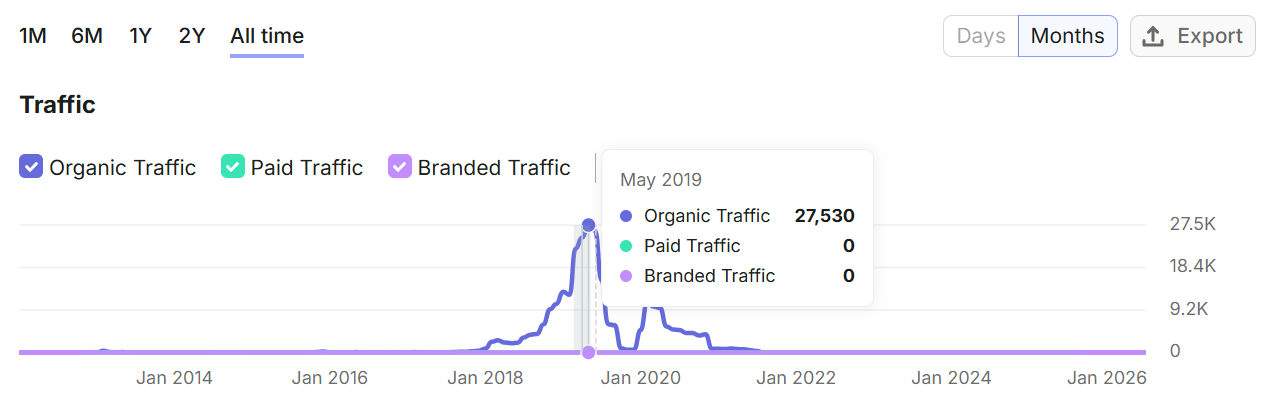
HealthVI is one of my own sites, and it’s the clearest proof I’ve got that this works. I grew it from zero to over 20,000 visitors a month — and at its peak, more than 1,500 a day. No agency, no budget. Here’s the exact process.
First, I found products people were already searching for. I went to the ClickBank marketplace and sorted the Health & Fitness products by gravity — most popular first.
If a product is selling, people are searching for it. That’s the keyword research done for me: I wasn’t guessing what to write about, I was targeting demand that already existed.

Then I created honest content around them. For each product, I wrote a genuine review — and I mean honest. About 95% of these products are rubbish, so I said so. That honesty is what built trust, and trust is what makes people act. Every review followed the same structure:
- Introduction — the review at a glance. Exactly what the product is, and my quick verdict up front.
- Body — three points. Always three clear reasons why I did or didn’t recommend it.
- Call to action. If the product was actually good — which was rare — I recommended they buy it. If it wasn’t, I invited them to join my email list, where I gave them more free tips and pointed them to things that would genuinely help.
That email list turned into its own engine. Tens of people joined every single day, which gave me a way to keep helping them — and selling to them — long after they’d left the page.
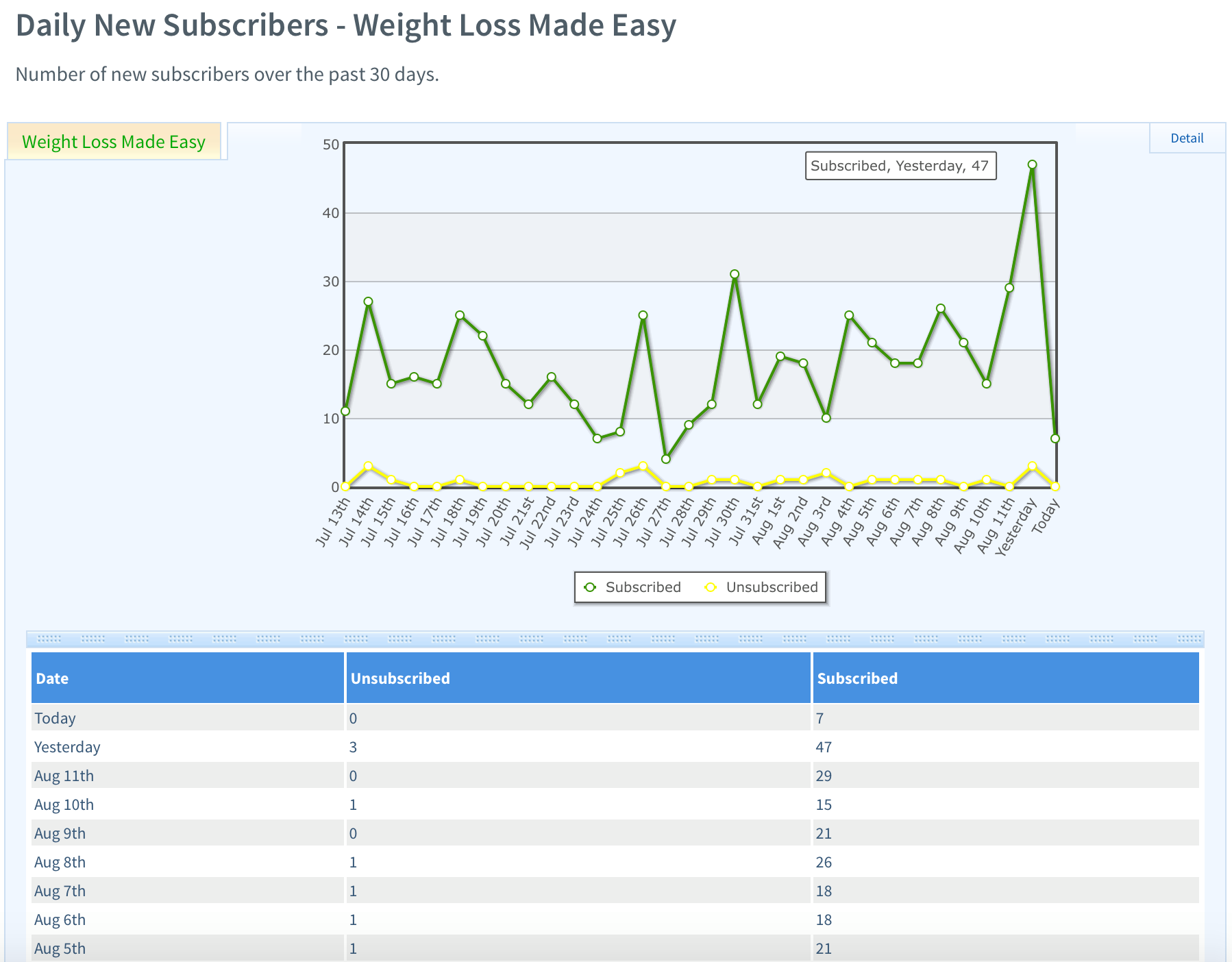
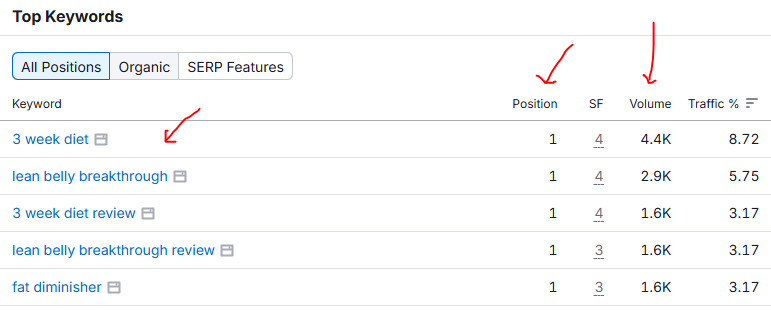
Do that consistently, across enough products, and it compounds. The reviews started ranking for keywords with thousands of searches a month.
And the traffic climbed to over 27,000 organic visits a month at its peak.
That’s the same process I’m about to break down for you — keyword research, content, consistency. Now let’s get into how you do it yourself.
Step 1: Keyword Research
Keyword research is figuring out what your customers type into Google — in their words, not yours. Get this wrong and everything downstream is wasted effort. Get it right and the rest of SEO is just execution.
You don’t need paid tools to start. Here are the two methods I’d use.
Method 1: Google Keyword Planner. It’s free with a Google Ads account. Enter a few terms related to what you sell, set the location to Australia, and it shows you real search volumes and related keywords you hadn’t thought of.
Start with your services and your locations — “emergency plumber Sydney,” “invisalign Brisbane,” that kind of thing. Google’s own autocomplete and the “People also ask” boxes are a goldmine too. Type your service into Google and see what it suggests.

Method 2: ChatGPT‘s deep research. This is the part almost no one teaches, and it’s a genuine shortcut. Ask ChatGPT (use the deep research function if you have it) to act as an SEO strategist and build a keyword map for your business — money keywords, informational keywords, and the questions your customers ask.
Give it your business type and location and let it work. It won’t replace real search data, but it surfaces angles and long-tail terms fast.
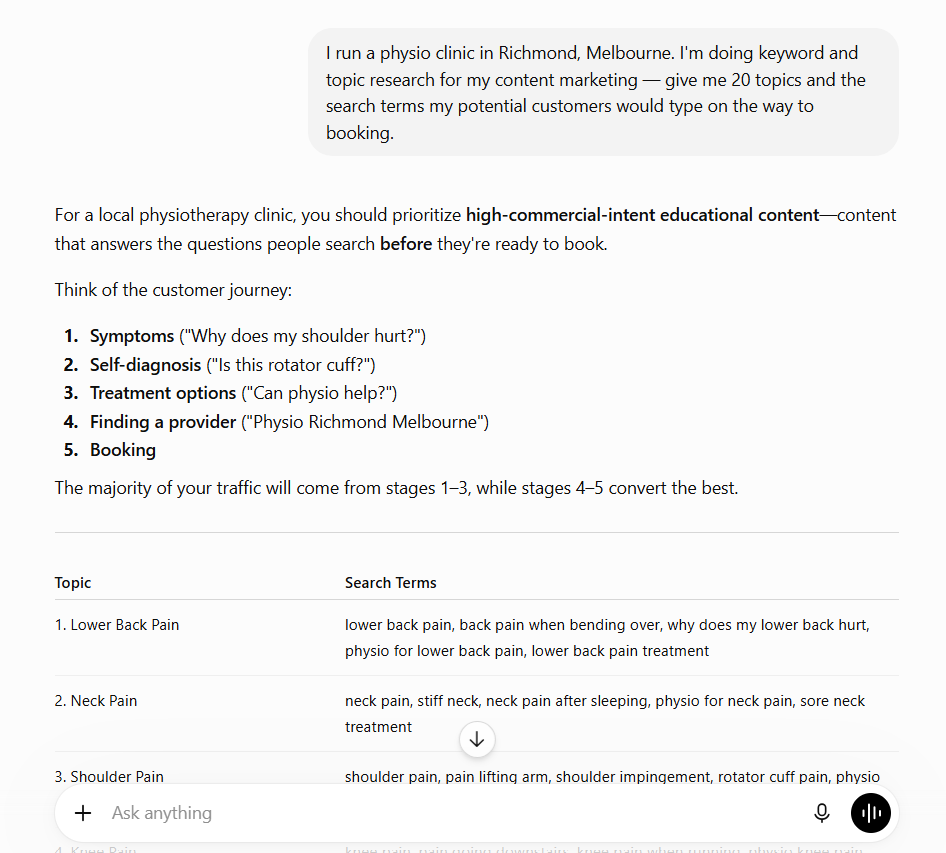
Whichever method you use, sort your keywords by intent. A “money” keyword like “dentist Brisbane” means someone’s ready to book.
An informational keyword like “how much do dental implants cost” means they’re researching. You want both — money keywords for your service pages, informational ones for your content.
Then be honest about difficulty. Don’t chase the biggest keyword in your industry on day one. Pick terms you can realistically win, build authority, and work up.
Step 2: Content Marketing
Rankings follow useful content. Once you know your keywords, you create the pages and posts that answer them — better than whatever’s ranking now.
This is where most of my own traffic has come from. Not clever tricks. Content that genuinely helps the person searching.
Think about it from the customer’s side. Someone Googling “how much does invisalign cost in Australia” isn’t ready to book yet — they’re weighing it up.
If your page answers that question clearly and honestly, you’ve earned their trust before you’ve said a word about your service. When they are ready, guess who they call.

Two types of content to build. Money pages target your money keywords — your core services, written to convert. Informational content targets the questions around your service — the blog posts, guides, and cost pages that pull people in while they’re still researching.
A few tips that make a real difference:
- One primary keyword per page. Every page or post should target one core keyword. Don’t try to rank a single page for ten different things — build a page for each and let them each do their job.
- Run a competitor analysis before you write. Take the top-ranking pages for the keyword you’re going after, paste the URLs into ChatGPT, and tell it to run a competitor analysis — what they cover, what they miss, and how to make yours better. Now you’re not guessing. You’re writing to beat what’s already there.
- Target your core keywords first. The pages that make you money come before the nice-to-have blog posts. Build the revenue pages, then expand outward into the informational content.
You can use AI to speed up drafting, but don’t publish raw AI output. It’s generic, it sometimes makes things up, and Google can tell. Use it as a starting point, then add your real expertise, your examples, your Australian context.
Publish consistently. One genuinely helpful article a week beats ten thin ones. Cover a topic properly and you’ll rank for dozens of related searches you never even targeted.
Step 3: On-Page SEO
On-page SEO is making each page clearly about one thing, so Google knows exactly what to rank it for. It’s the most controllable part of SEO — you’re just optimising what’s already on your page.
The basics, and they matter more than people think:
- Put your main keyword in the page title, the URL, and the H1 (the big heading at the top).
- Use one clear H1, then descriptive H2 and H3 subheadings to break the page up.
- Work the keyword and its variations naturally through the copy — never stuff it in.
- Write a compelling meta description. It won’t rank you directly, but it gets people to click.
- Add descriptive alt text to your images so Google understands them.
- Link between your own pages so Google can crawl your site and understand how it fits together.
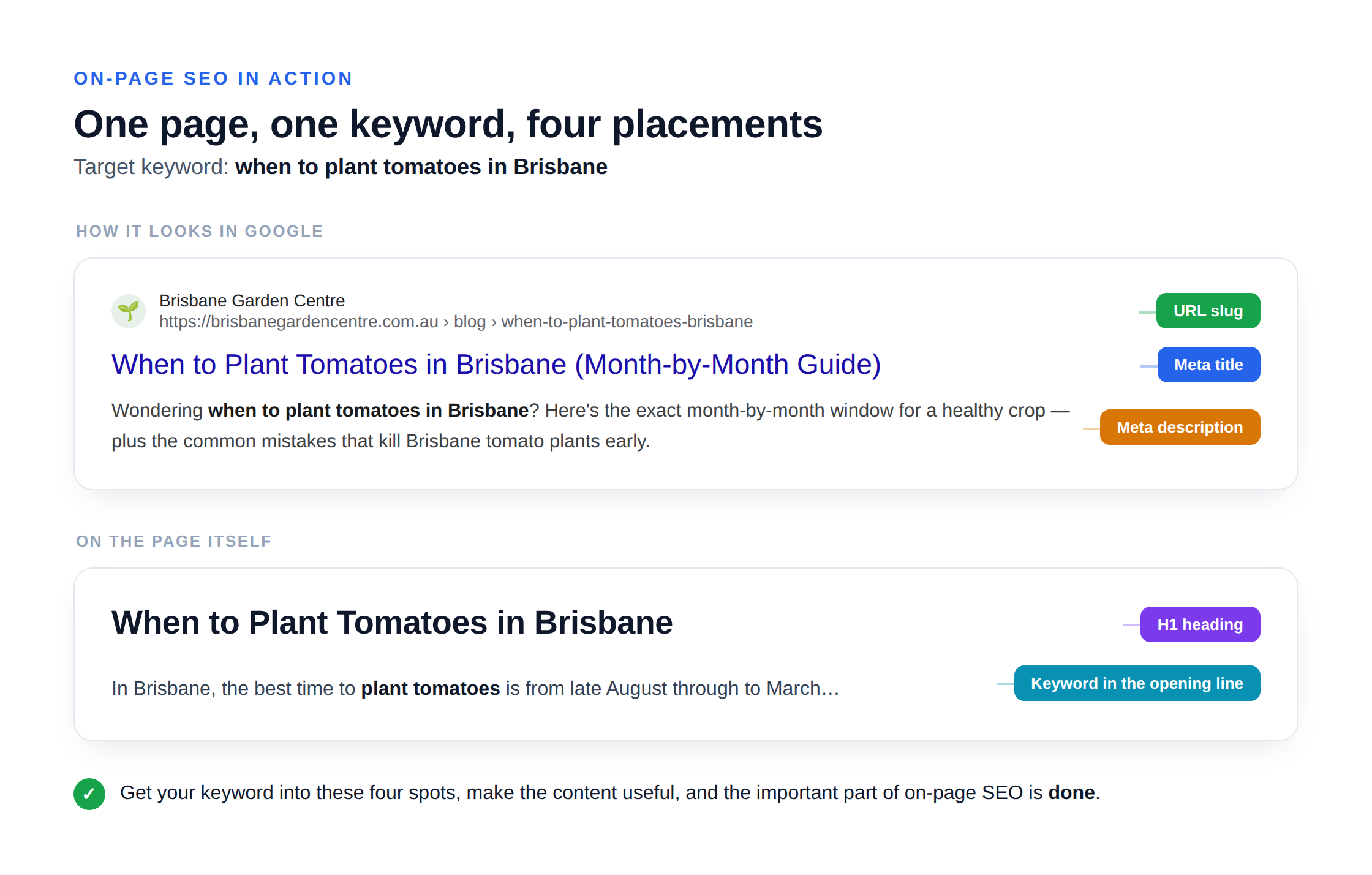
If you’re on WordPress, a plugin like Yoast or Rank Math makes this simple — it gives you fields for your title and meta description and flags anything you’ve missed. There’s a full walkthrough in our guide to on-page SEO if you want to go deeper.
The goal isn’t to trick Google. It’s to make it obvious — to a search engine and a human — what your page is about and why it’s the best answer.
Step 4: Technical SEO
Technical SEO is making sure Google can crawl, understand, and load your site without tripping over anything. You don’t need to be a developer to cover the basics.
The easiest way to find your technical problems is to run a site audit. Semrush’s Site Audit crawls your whole site and hands you a prioritised list of what’s broken and how to fix it — it’s the fastest way to see everything at once.
If you’d rather not pay, Screaming Frog has a free version that crawls up to 500 URLs and surfaces most of the same issues. Run one of those and you’ll have your to-do list in minutes.
Here’s what to check and fix:
- Speed, especially on mobile. Most Australians search on their phones. Run your site through Google’s free PageSpeed Insights and fix what it flags. Aim to pass Core Web Vitals.
- HTTPS. Your site needs the padlock. If it still says “not secure,” sort that first.
- Broken links and dead pages. Fix or redirect them. They waste Google’s time and yours.
- Indexing. Submit your sitemap in Google Search Console so Google knows every page exists.
- No duplicate pages. Don’t make Google guess which version to rank.
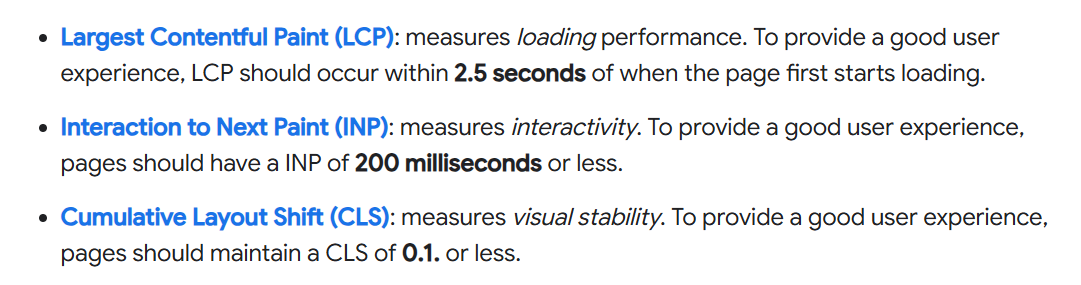
This is also where DIY hits its first real ceiling. Basic checks, anyone can do.
But if the audit turns up a deeper problem — messy site architecture, crawl errors you can’t diagnose, a slow site you can’t speed up — that’s the point where a professional earns their fee. Know your limit. Our technical SEO guide covers the fixable stuff step by step.
Step 5: Link Building
Links from other websites are votes of confidence. When a trusted site links to yours, Google reads it as a signal that you’re worth trusting too. You don’t need hundreds — you need a handful of relevant, real ones.
Forget buying cheap bulk links. That’s the fastest way to tank your rankings, and I mean it. Google’s very good at spotting bought links, and the penalty isn’t worth the shortcut.
For me, the easiest way to build links is guest posting — writing an article for a relevant site in exchange for a link back to yours. Here’s how to do it yourself:
- Find the opportunities. Drop one of these into Google, swapping in your industry:
"your niche" + "write for us","your niche" + "guest post", orintitle:"write for us" your niche. You’ll get a list of sites that openly accept guest posts. - Pitch them properly. Don’t send a lazy template. Reach out with a genuine, specific pitch — a topic idea that fits their site, a line on why you’re worth publishing, and a link to something you’ve written. A good pitch gets a yes far more often than a generic one.
- Write something genuinely useful. The link is only worth having if the article is worth reading.

Beyond guest posts, get listed in reputable Australian directories with consistent business details, and chase links from suppliers, partners, and industry associations. Quality beats quantity every single time.
One link from a respected Australian site is worth more than fifty from link farms.
Step 6: Track Your Results
DIY SEO is pointless if you can’t tell whether it’s working. Track a few things that matter, in tools that are free, and ignore the vanity metrics.
Set up these three:
- Google Search Console shows you what you rank for, how many clicks you get, and any problems Google finds. This is your single most important free tool — our Google Search Console guide walks you through it.
- Google Analytics (GA4) shows how people behave once they land, and which channels bring them.
- Your Google Business Profile insights show calls, direction requests, and clicks if you’re a local business.
Before you change anything, screenshot where you stand today — your rankings, your traffic. That’s your baseline, so in three months you can prove you’ve moved.
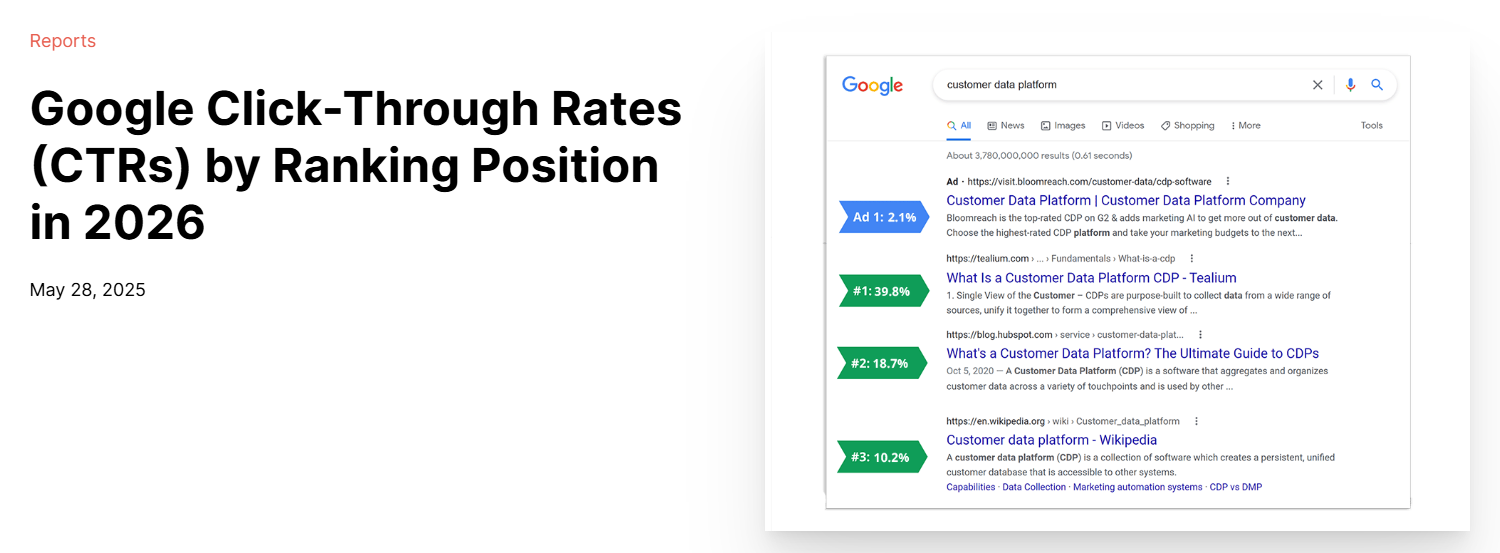
Watch the right things: rankings for your money keywords, organic traffic, and real enquiries. Not “impressions went up.”
Leads and rankings. And don’t panic in month one — which brings us to the most important step of all.
Step 7: Stay Consistent
This is the step that separates the businesses that win from the ones that give up. SEO compounds. It’s slow at the start and then it snowballs — but only if you keep going.
Here’s the honest timeline for Australia. Expect to see the first movement in three to six months. Solid results usually land somewhere between six and twelve. That feels slow when you’re used to ads that switch on instantly.
But once you rank, the leads keep coming without you paying per click — and that’s the whole point.
The businesses that lose are the ones that do a burst of work, see nothing in month two, and quit. The ones that win put in a few hours every week — a new article, a few more reviews, a couple of links, fixing what Search Console flags — and let it compound.
That’s exactly how HealthVI got to 1,500+ visitors a day. Not one heroic month. Consistent work, week after week, while the results built on themselves. Judge SEO over a year, not a fortnight.
Step 8: How to Do Local SEO
If you serve a local area, this is where DIY SEO pays off fastest. Local SEO is how you show up when someone searches “dentist near me” or “electrician Brisbane” — in the map pack at the top of the results, above the regular listings.
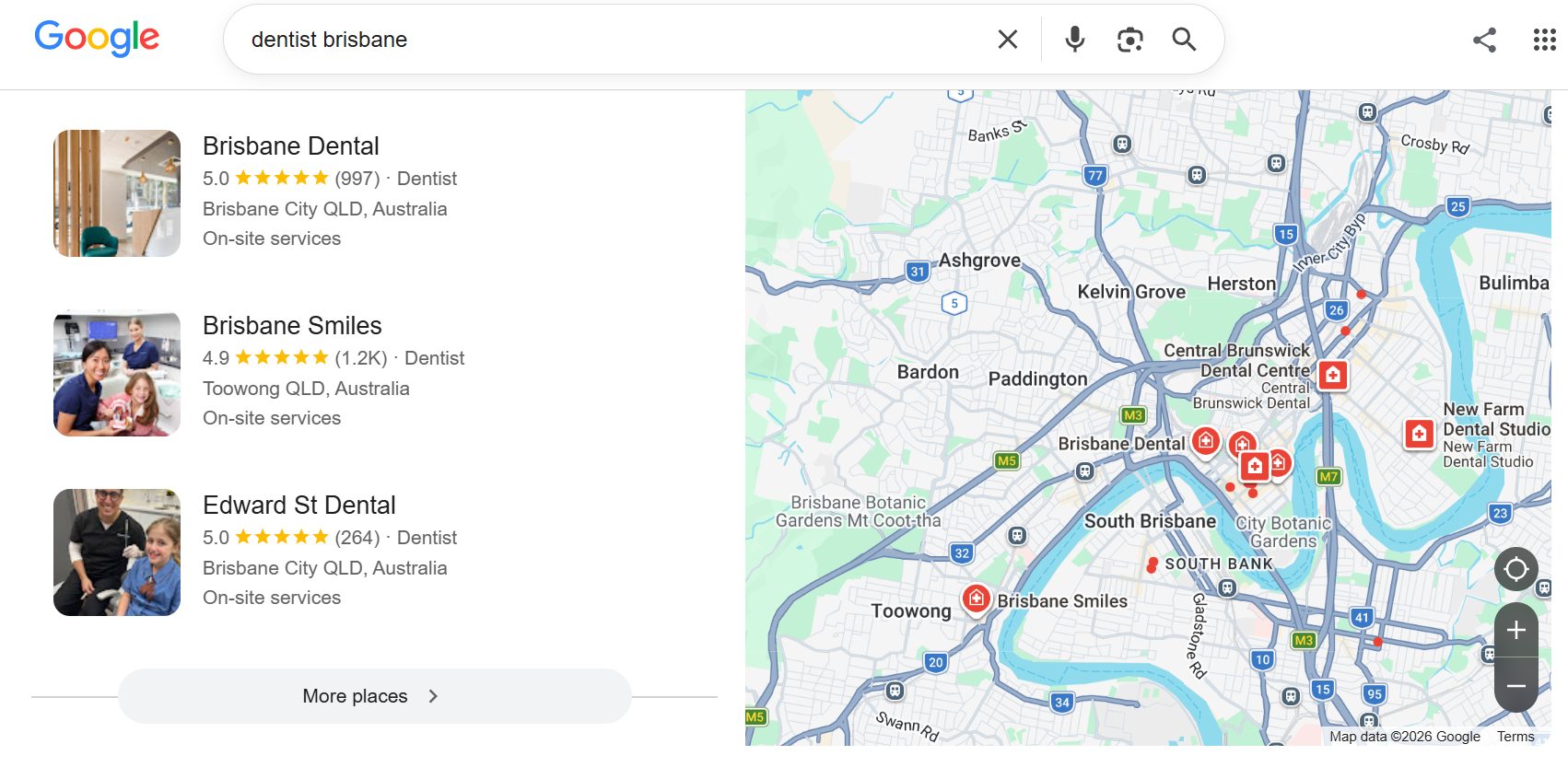
These steps aren’t theory. I’ve got a client — a plastic surgeon — whose local SEO I’m running right now. In under 24 hours, their spot in the local map pack jumped from position eight to position three.
This is the exact plan I used to get them there, and the one I’m using to push them to number one. Here it is.
1. Optimise your Google Business Profile. This is the single biggest local lever, so get every part of it right:
- Write a strong business description that naturally covers what you do and where you do it.
- Fill out your services completely — every single one you offer.
- Get your business details spot on — name, address, phone, and hours, exactly consistent.
- Select the correct primary category. This matters far more than people realise. It tells Google what you actually are.
Our Google Business Profile guide walks through the whole thing.
2. Run a local citation campaign. Citations are mentions of your business name, address, and phone number across other websites and directories.
Use a tool like BrightLocal‘s citation builder and build as many as you can, with consistent details everywhere. It does the heavy lifting for you, and it’s one of the most effective local moves there is.
3. Stack reviews, and put them on autopilot. Reviews are one of the strongest local ranking signals there is. Ask happy customers, make it dead easy, and never fake them — the ACCC takes fake reviews seriously.
The real win is building review requests into your process so they go out automatically after every job. Here’s how to get more Google reviews.
Local is huge for service businesses — dentists, cosmetic clinics, trades, and lawyers. If you run a business in Brisbane, Melbourne, or Sydney, this is often the highest-return work you can do.
Why Most DIY SEO Fails
Most DIY SEO doesn’t fail because the tactics are wrong. It fails for two reasons, and knowing them is how you avoid being another abandoned website.
First, the gap between knowing and doing. Reading this guide takes twenty minutes. Doing the work takes months. Most people read, feel informed, do a bit, then drift off when it doesn’t pay off immediately. SEO punishes that.
Second, you can’t easily judge your own work. When you’re too close to your own site, it’s hard to see what’s actually holding it back.
That’s the honest case for a second set of eyes — even just running your site through Search Console and being brutal about what it tells you.
Then there are the self-inflicted mistakes that quietly kill rankings:
- Keyword stuffing — cramming the keyword in until it reads like a robot wrote it. Google’s onto it.
- Buying cheap links — covered above, worth repeating. It backfires.
- Thin content — ten short posts that help no one, instead of a few that do.
- Ignoring mobile and speed — a slow site loses rankings and customers.
- Chasing keywords you can’t win yet — start where you can compete.
- Quitting at month two — the single most common one.
- Measuring rankings instead of leads — a #1 ranking that brings no enquiries is a vanity metric.
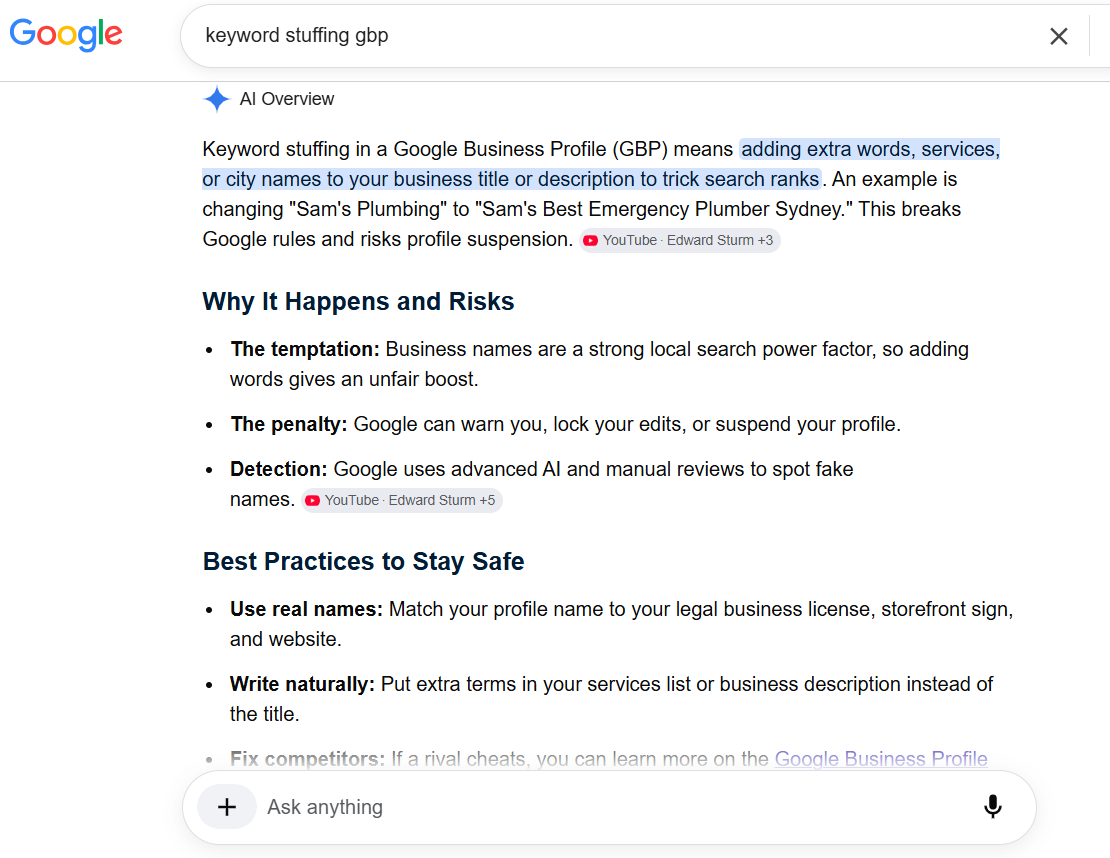
Avoid these and you’re already ahead of most DIY-ers. And if you hit the point where you’ve done the fundamentals and want to go further faster, that’s a fair time to bring in a professional.
Can ChatGPT Do Your SEO?
Short answer: it can help with a lot of it, but it can’t run the whole thing. Treat AI as a brilliant assistant, not an autopilot.
What ChatGPT is genuinely good for: keyword and topic research (as in Step 1), competitor analysis, outlining articles, drafting first versions, writing meta descriptions, and brainstorming content ideas. It’ll save you hours.
Where it burns you: it writes generic content that sounds like everyone else, it sometimes states things that aren’t true, and it has no idea what your business’s strategy should be.
Publish raw AI content and you’ll blend into the noise — the opposite of what SEO needs.
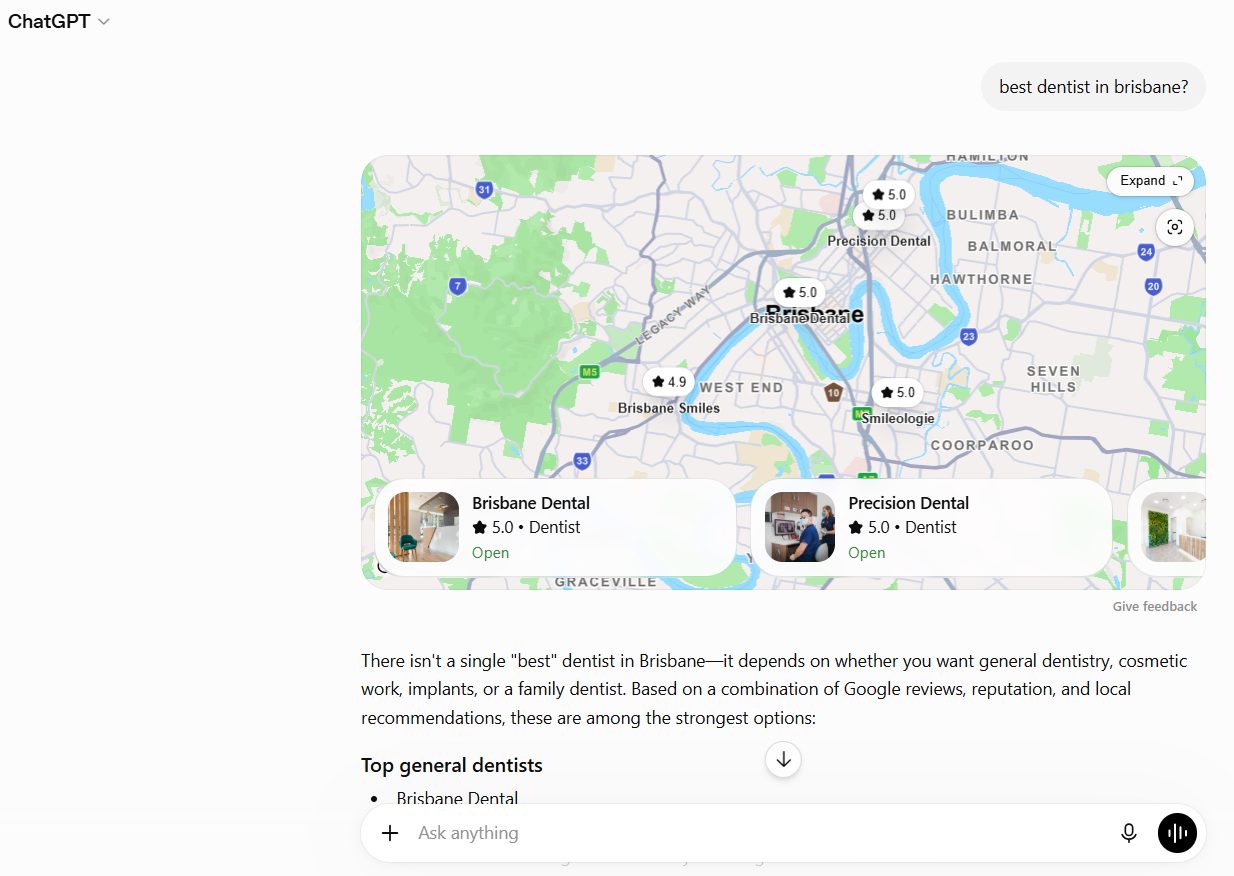
Use AI to work faster, not to skip the thinking. The businesses winning with AI are the ones using it to do more of the real work — not to avoid it.
Final Thoughts
Most of SEO is genuinely DIY-able, and every business owner should learn the fundamentals — because they never stop mattering, no matter who ends up doing the work. I built real traffic on my own sites doing exactly what’s in this guide. You can too.
Here’s my honest take. Do the work yourself as far as it takes you. Learn it, run it, get results.
The day it plateaus, or the day your time is genuinely worth more spent running your business, that’s when a real SEO team earns their fee.
The risk was never the channel. The risk is quitting at month three, or handing your SEO to someone cheap who talks about rankings and never mentions leads.
If you’d rather hand it to a team that does this every day and measures itself on customers, not vanity metrics — that’s what our SEO services are for. Either way, now you know the process. Go use it.