

Type “family lawyer Sydney” into Google.
Whoever sits in those top few spots is getting the calls. Everyone below is fighting over scraps.
That’s small business SEO in one line: it decides who gets found when a ready-to-buy customer goes looking — and most small businesses aren’t even in the race.
This guide gets you in it — the handful of moves that actually bring in leads, what to skip, what it costs, how long it takes, and whether AI has killed the whole game (it hasn’t). All run on a real Sydney business, so you can see it work, not just read about it.
I’m not writing this from theory.
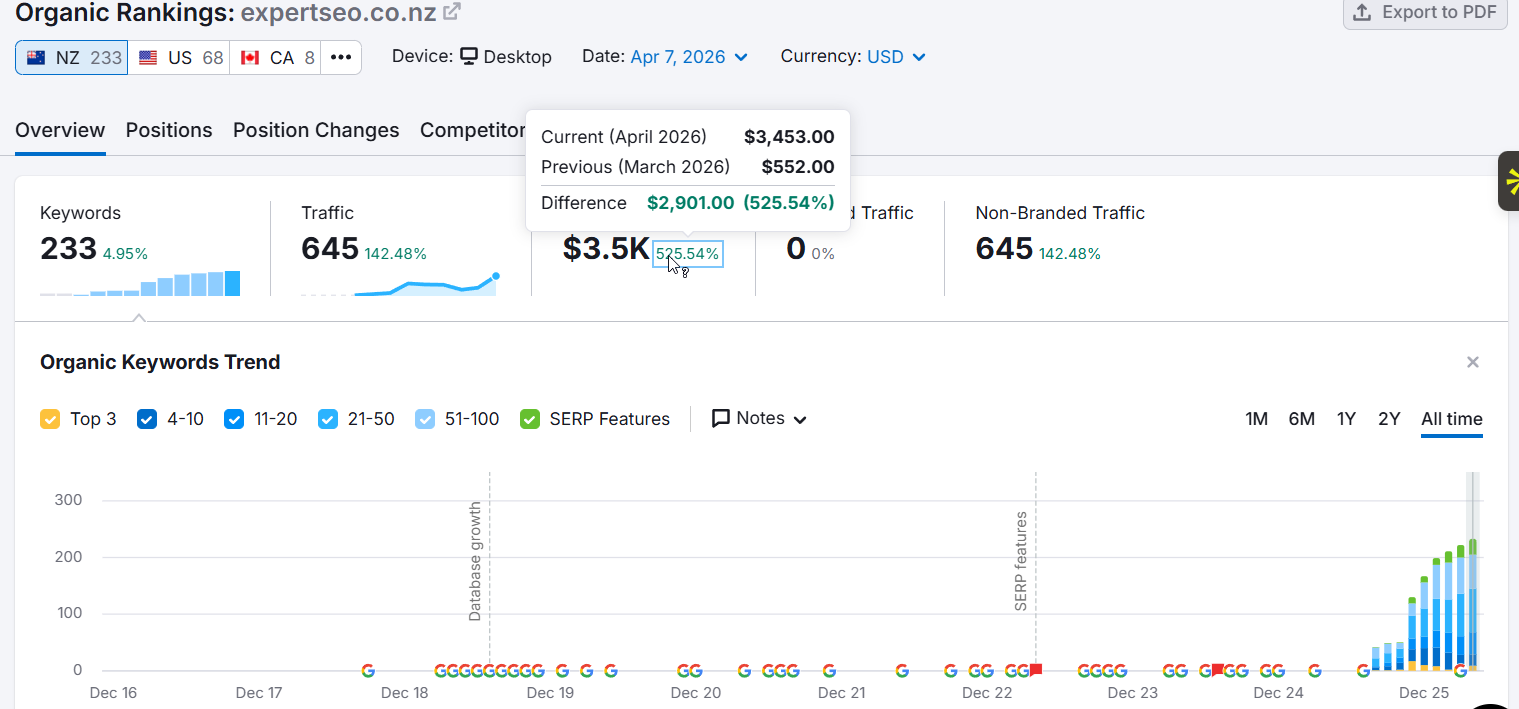
My own SEO site is barely eight months old and already ranks for 233 keywords worth around $3,500 a month in traffic — and gets quoted inside Google’s AI answers. Same method I’m about to hand you.
Key Takeaways
- What it is: Small business SEO is getting your website and Google Business Profile to show up when nearby customers search for what you sell — without paying for ads every click.
- You don’t need to do everything. Roughly 20% of the work — your Google Business Profile, reviews, and a few solid pages — drives about 80% of the results.
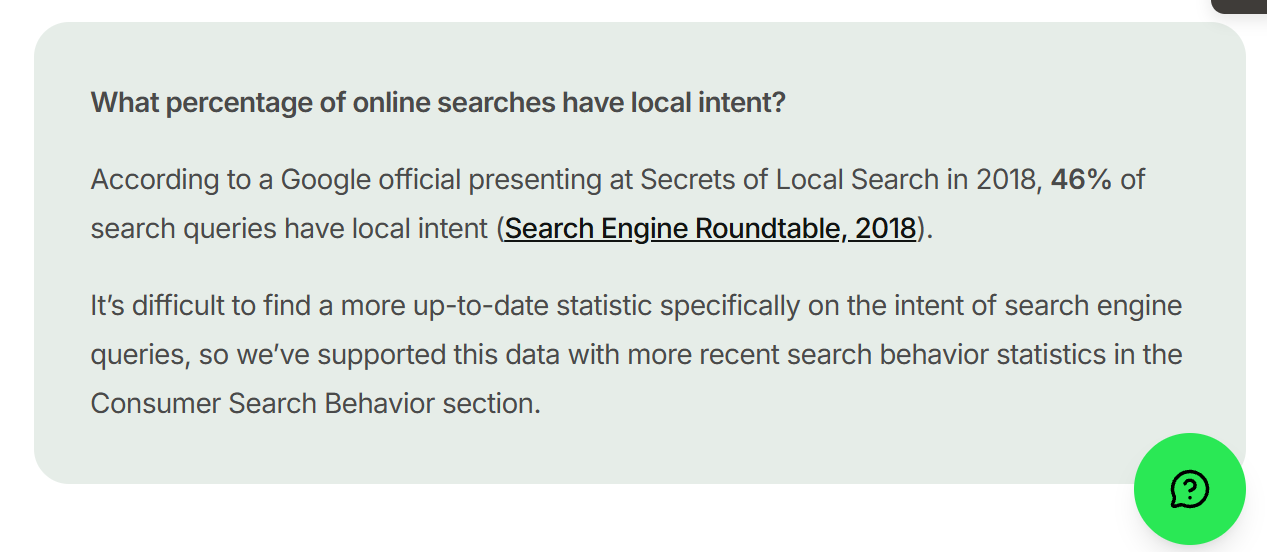
- Local buyer intent is the whole prize. Around 46% of Google searches have local intent, and those people are ready to act.
- Start with your Google Business Profile and a real review system. For a local business, nothing else comes close.
- SEO isn’t dead in the AI era. AI answers lean on reviews, your profile, and clear pages — the exact things a focused local business controls.
- Expect 3–6 months for real traction, not weeks. It’s a compounding asset, not an ad you switch on.
- Measure leads, calls and bookings — not rankings. Rankings are a means; enquiries are the point.
What Is Small Business SEO?
Small business SEO is the work of getting your website and Google Business Profile to rank when local customers search for what you sell — so you pull in leads from Google without paying for every click.
It’s the same search engine optimisation the big brands do, just pointed at your local market instead of the whole country.
Big-business SEO is a different sport.
National brands fight over broad, brutal keywords with huge budgets and teams. You’re not doing that. You’re trying to own your city, your suburb, your service area — a much smaller, much more winnable fight.
And that’s good news. It means focus beats budget. You don’t need to outspend a national chain. You need to be the obvious choice when someone nearby searches for exactly what you do.
Small business SEO vs local SEO
People mix these up, so let’s clear it up fast.
Local SEO is the map-pack slice — ranking in that little box of three businesses with the map, plus “near me” searches. It’s driven mostly by your Google Business Profile.
Small business SEO is the whole picture: local SEO plus your website ranking in the normal blue-link results, your service pages, your content, the lot.
For most small businesses, local SEO is the biggest piece of the pie — but it’s not the only piece. This guide covers all of it.
Why Small Business SEO Matters for Australian Businesses
SEO matters because the person searching “electrician Parramatta” or “family lawyer near me” has their wallet out. You’re not interrupting them. You’re showing up exactly when they’ve decided to buy.
That’s the difference between SEO and almost every other kind of marketing. A Facebook ad interrupts someone scrolling. A billboard hopes the right person drives past. Search catches people at the precise moment they’re looking for you.
And the numbers back it up. Around 46% of all Google searches are local — someone looking for a business, service or place near them.
Even better for you: those searches convert fast. Roughly 76% of people who run a “near me” search visit a business within a day. They’re not browsing. They’re buying.

Then there’s the part that makes SEO different from ads: it compounds.
The day you stop paying for Google Ads, your traffic drops to zero. SEO is the opposite. Do the work once, keep it maintained, and the rankings keep sending you leads month after month — for years. It’s an asset, not a rental.
Here’s the one mindset shift that matters, though. Stop measuring rankings. Start measuring leads.
Rankings are a means to an end. A number-one spot that sends you zero calls is worthless. Track the calls, the form enquiries, the bookings. That’s the scoreboard. Everything in this guide points at that.
Is it worth it? For a business with a real local market and the capacity to take on customers — yes, almost always.
If people search for what you do, and you’re not there, you’re handing that work to your competitors.
That’s why I do this. My own site is proof it works — a brand-new domain ranking and pulling traffic value inside a year, built by our Australian SEO team on the exact process below.
How to Do Small Business SEO
Here’s how to do SEO for your small Australian business, in order of importance. Roughly 20% of the work drives 80% of the results, so do the high-impact things first — your Google Business Profile, reviews, keywords and pages — before you touch anything advanced.
To make it real, we’ll run it on one business: a family law firm in Sydney. Two partners, a couple of paralegals, twenty years of experience — but invisible on Google, living off referrals. Here’s exactly what I’d do for them.
Step 1: Google Business Profile and Reviews
Your Google Business Profile is the single biggest lever a local business has. Get it right before anything else.
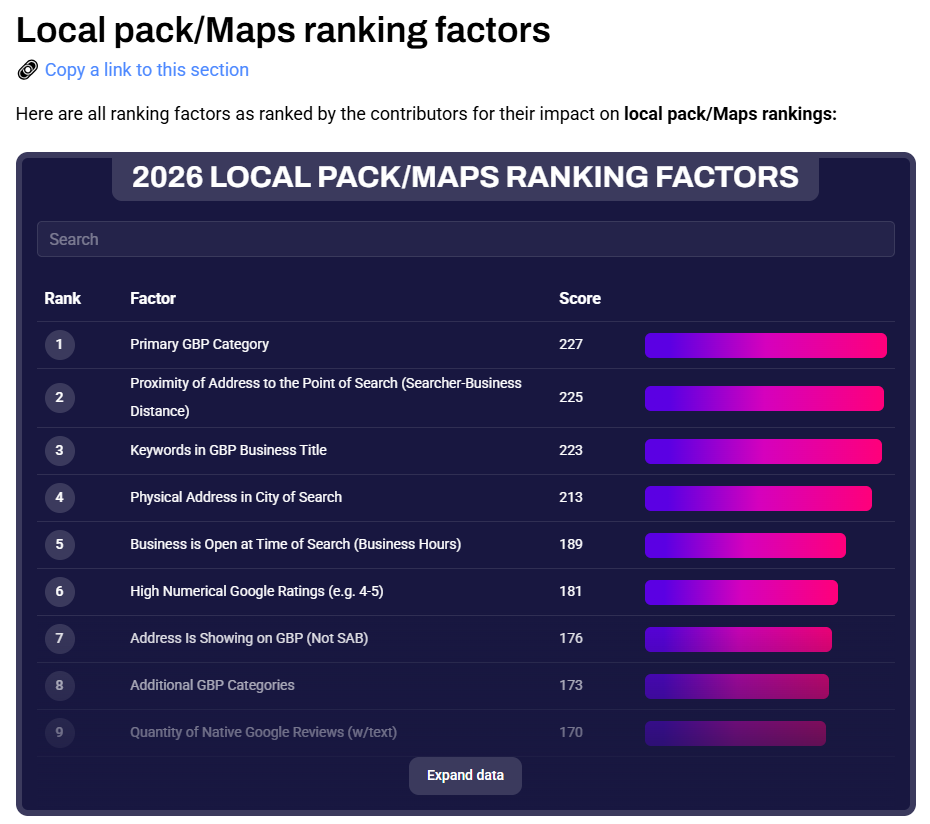
Why? Because it’s what feeds the map pack — that box of three businesses at the top of local searches — and profile factors carry the biggest weight in map-pack rankings of anything you control.
Here’s how to actually do it.
Claim and complete the profile. Search your business name on Google, claim the listing, and fill in every field. Business name, address, phone, website, hours, service areas. Half-finished profiles get beaten by complete ones.
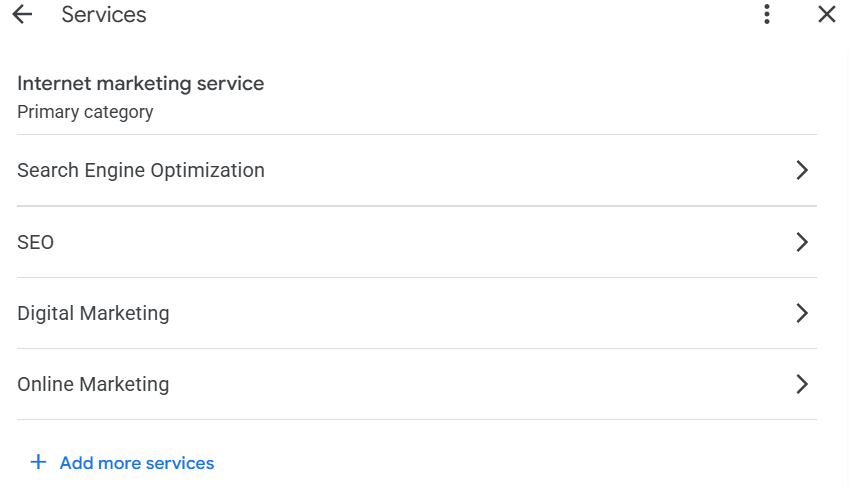
Set the right categories. In your profile, go to Edit profile → Business category. Pick the most accurate primary category (for our firm, “Family law attorney”), then add relevant secondary ones. This is how Google understands what you actually do — get it wrong and you won’t show up for the right searches.
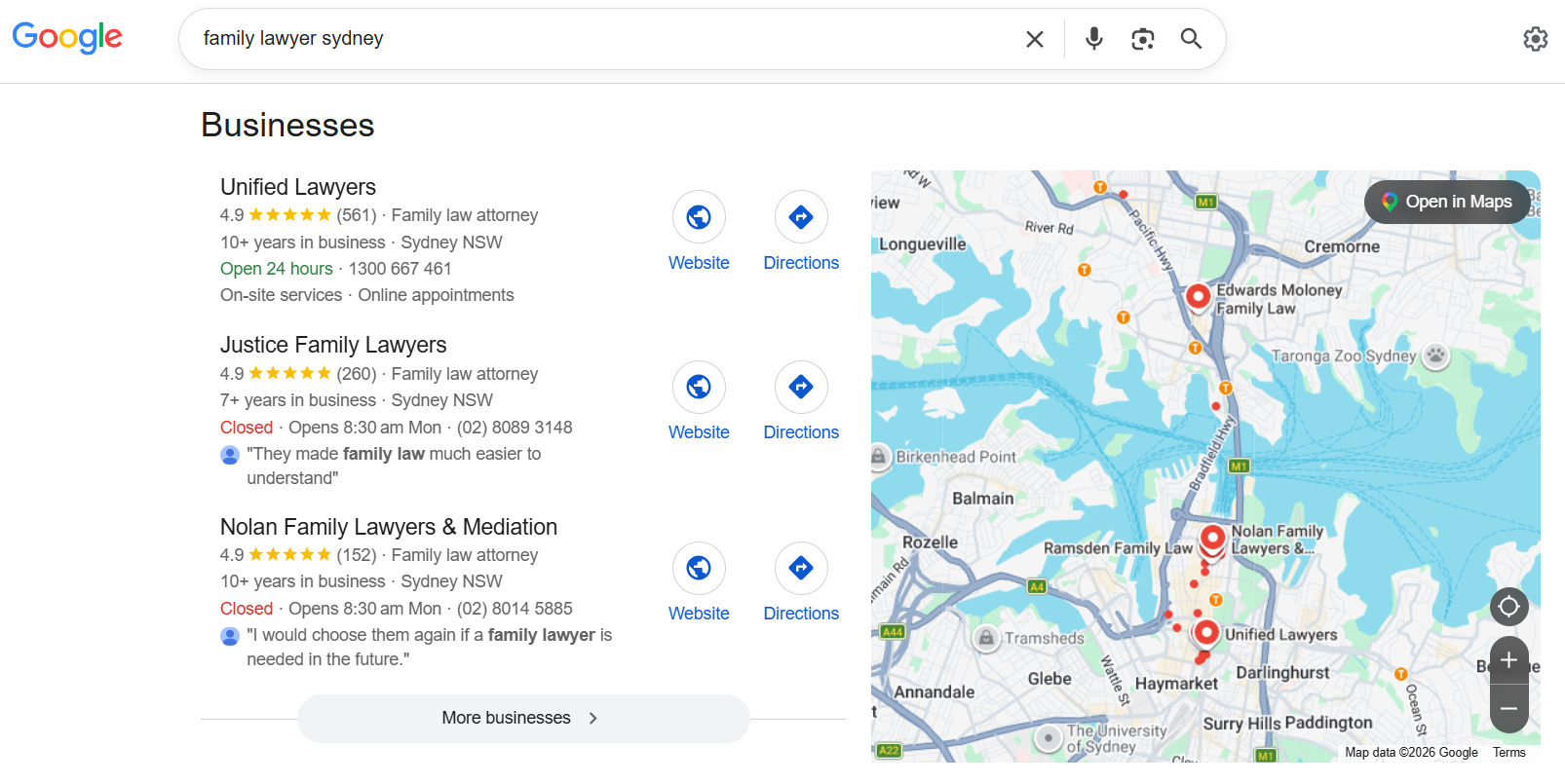
Do a competitor check before you set your targets. Search your main term — “family lawyer Sydney” — and look at the three businesses already in the map pack.
When I check it, Unified Lawyers sits on top with 561 reviews at 4.9 stars, Justice Family Lawyers has 260, and Nolan Family Lawyers 152.
That’s the bar. Note their review counts, star ratings and categories, and you know exactly what it takes to compete for ranking in Sydney — you can’t beat what you haven’t measured.
Build a review system — not a one-off ask. Google reviews are enormous. About 67% of people read reviews after a local search, and 54% click through based on what they see.

The mistake is blasting old clients once and stopping. Build a system instead. Grab your Google review link from the profile, turn it into a short link or QR code, and send it the moment a matter wraps up and the client’s happy.
One text or email, one polite follow-up, done. For our law firm, that’s a review request the day a case settles well.
Reply to every review — good and bad. Around 89% of consumers expect a business to respond to reviews. It’s a trust signal to customers and an activity signal to Google. Thank the good ones, handle the bad ones calmly.

Fix your citations. A citation is any online mention of your business name, address and phone number — directories like Yellow Pages, True Local, industry listings.
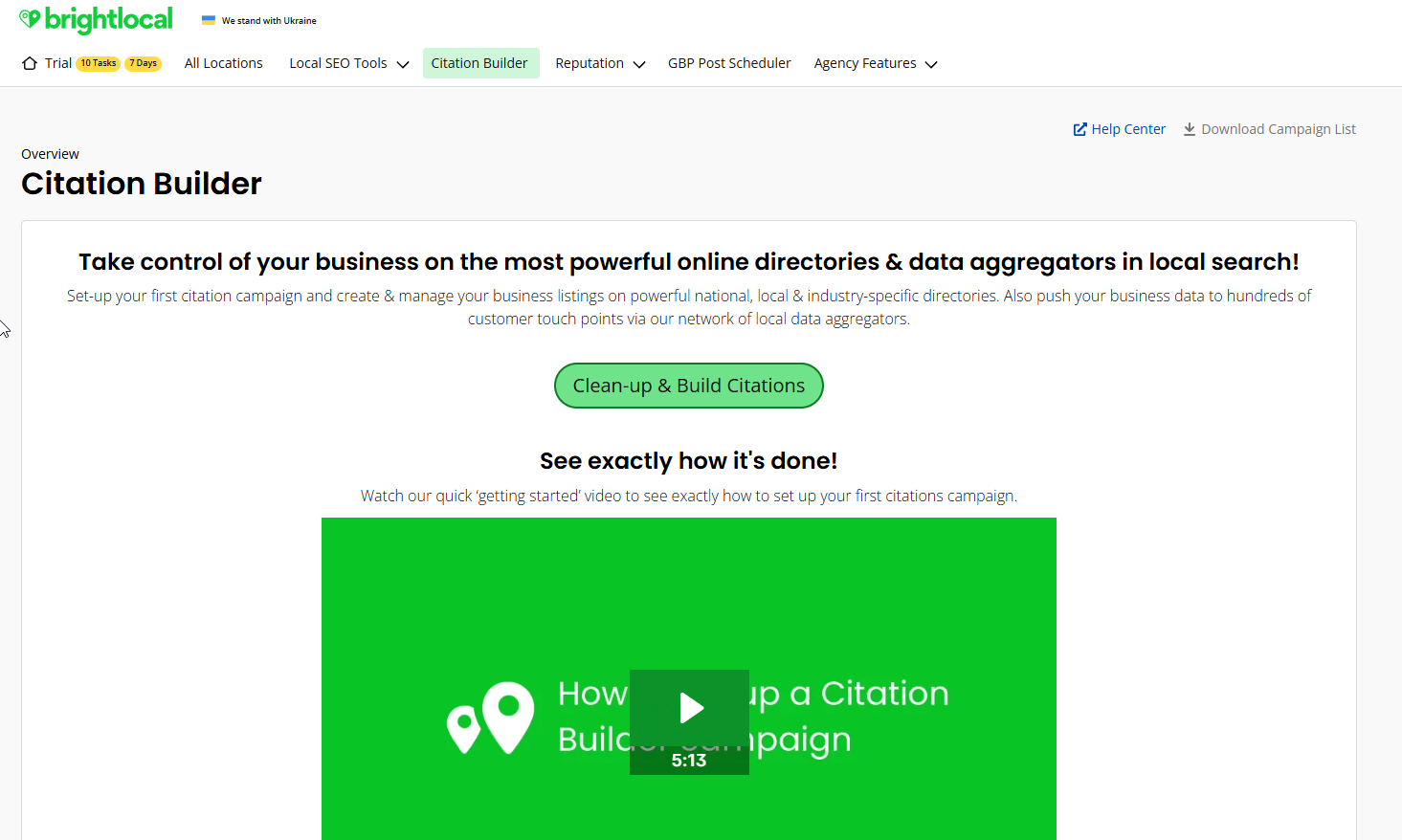
Google cross-checks them, so they need to be consistent everywhere. The fastest way to do this is BrightLocal — sign up, open the Citation Builder, enter your details once, and it pushes a consistent listing out across the main Australian directories for you.
Get this step right and, for a lot of local businesses, you’ll see more calls before you’ve touched your website. This is the 80/20 in action.
Step 2: Keyword Research
Keyword research is finding the exact words your customers type into Google, so you can build pages that match what they’re already searching for.
There are two types, and understanding the difference is where most people go wrong.
Money keywords are ready-to-hire searches: “family lawyer Sydney,” “divorce lawyer Parramatta,” “child custody lawyer near me.” High intent. These are the terms that put money in the bank.
Informational keywords are questions: “how is property divided in a divorce in NSW,” “how long does a custody case take.” Lower intent — they’re researching, not hiring yet.
Here’s the bit nobody explains. You don’t pick one. You use both, and you connect them.
The informational content builds your authority and trust with Google. Then you funnel that authority — through internal links — into your money pages.
The blog post about property division links to your divorce services page. Google sees a site that genuinely knows family law, and your money pages climb.
Informational keywords build the authority. Money keywords bank the revenue. Link the first into the second, and both rank.
Now, how to actually find them.
Brainstorm first. List every service you offer and every area you serve. Services × locations = your starting money-keyword list. Family law, divorce, custody, property settlement — crossed with Sydney and the suburbs you cover.
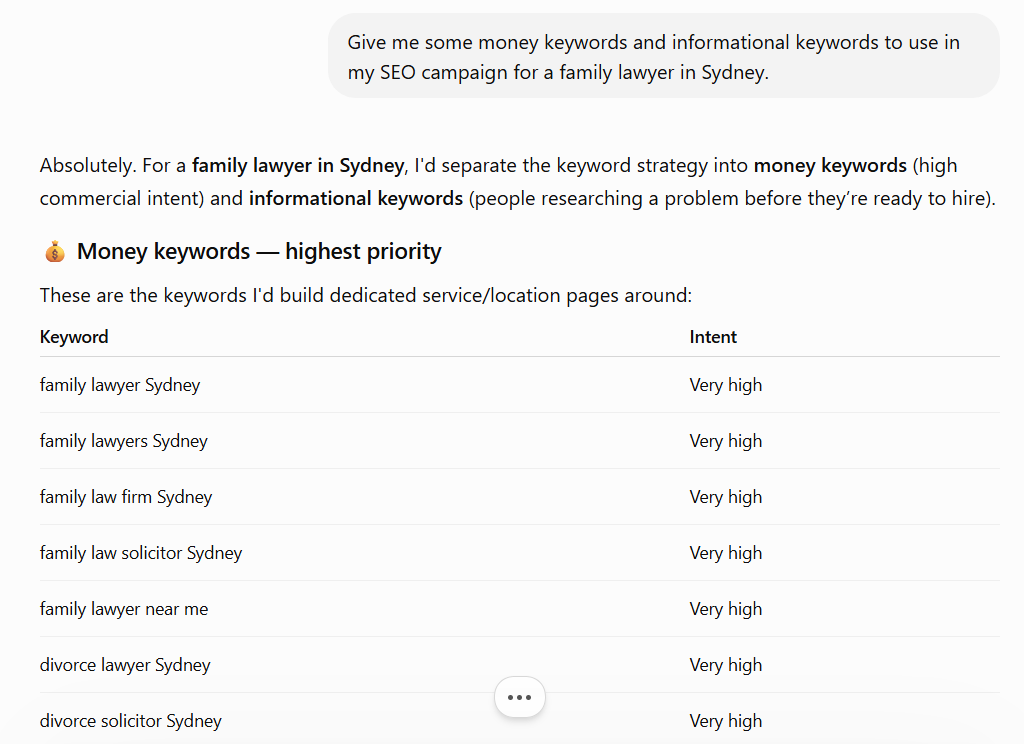
Expand with ChatGPT. Ask it something like: “Give me money and informational keywords for a family lawyer in Sydney.” You’ll get a stack of both in seconds — it’s not perfect, but it’s a fast way to surface angles you’d miss.
Check the numbers in Google Keyword Planner. It’s free. Open Google Ads → Tools → Planning → Keyword Planner. You don’t need to be running ads to use it.

Use “Discover new keywords,” type in your seed terms, set the location to Australia, and it hands you related searches with rough monthly volumes.
Keep the keywords that match what you sell.
Ditch the ones that don’t. Don’t chase big volumes for terms that won’t bring buyers — a term doing 90 searches a month from ready-to-hire locals beats one doing 2,000 from people who’ll never call.
Step 3: On-Page SEO
On-page SEO is setting each page up so Google understands exactly what it’s about and who it’s for.
For a small business, the structure is simple: one clear page per core service, and a genuine page per area you actually serve.
Our Sydney firm needs a Family Law page, a Divorce page, a Child Custody page — each targeting its money keyword.
Then, if they genuinely service Parramatta and the Inner West, a real page for each. Not a thin template with the suburb name swapped out — Google spots those instantly and ignores them. A real page, with real information about serving that area.
On each page, the basics:
- Put the main keyword in the page title, the H1, and naturally through the copy.
- Write a title tag and meta description that make someone want to click.
- Use clear headings so both readers and Google can follow the page.
One decision people agonise over: one big service page or separate suburb pages? Simple rule — only build a suburb page if you genuinely serve that suburb and have something real to say about it. Otherwise, one strong service page beats five thin ones.
If this is where it starts feeling like too much, that’s the honest point where a lot of owners bring in Australian SEO services — the pages are the foundation, and they need to be right.
Step 4: Content Marketing
Content is where you turn those informational keywords into pages that pull people in and feed your money pages.
Remember the funnel from Step 2? This is where you build it.
Take one real question your customers ask, and answer it properly — better than anything else ranking. For our firm: “How is property divided in a divorce in NSW?” Write the genuinely useful version. Plain English, real detail, no fluff.
Then link it to the money page. That property-division article links to the Divorce Lawyer service page, using natural anchor text. The article catches people researching; the internal link funnels them — and Google’s trust — toward the page that books the consult.
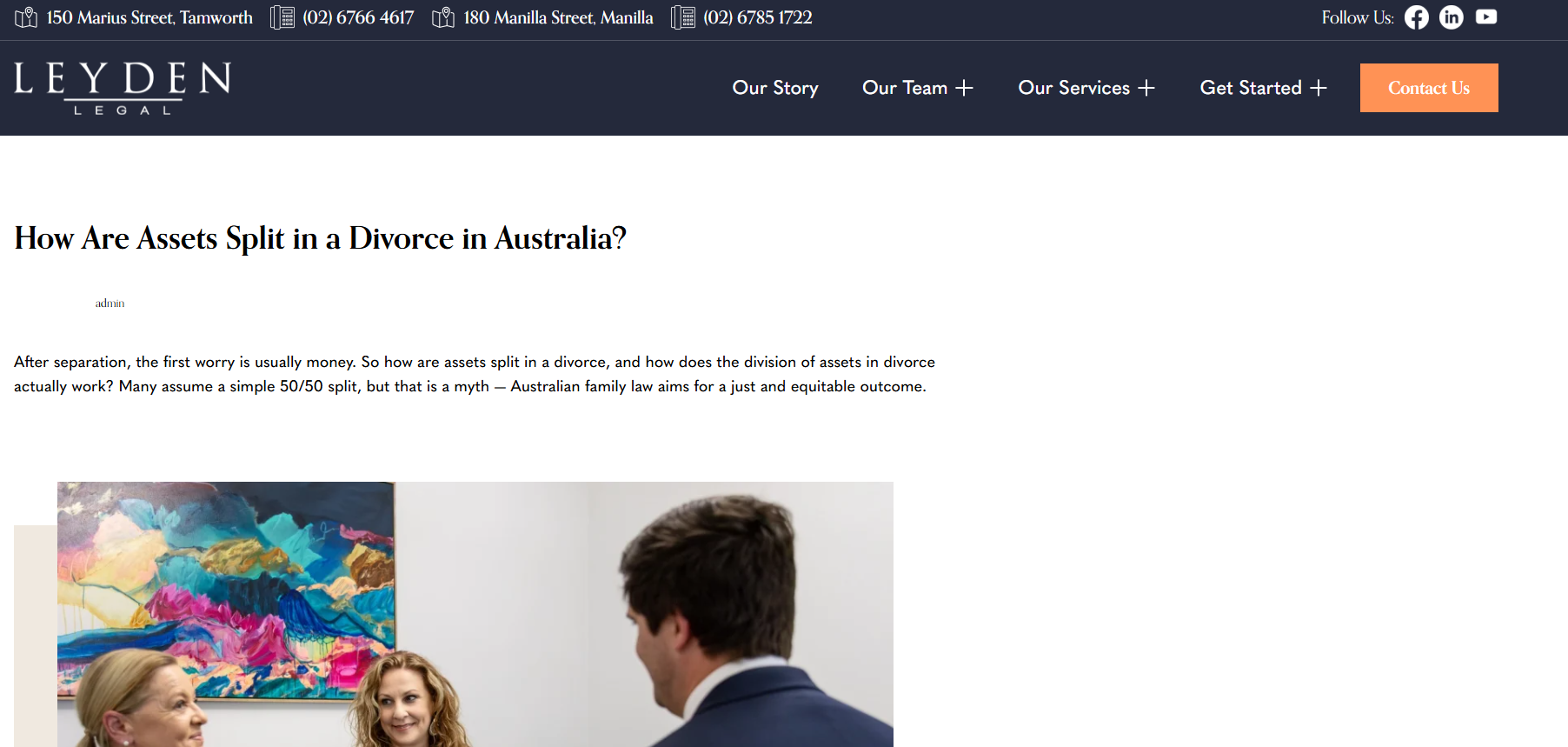
Here’s a real one: a family law firm publishing a plain-English guide on how assets are split in a divorce in Australia — exactly the question a client Googles before they’re ready to hire.
How to create it without it eating your life:
- Answer one question per page. Don’t cram five topics in.
- Write from real experience — you know this stuff better than any writer.
- Use ChatGPT to draft or outline if you want, but make it real and local. Generic AI content that says nothing gets you nowhere.
- Publish consistently, not frantically. One genuinely good page a month beats ten thin ones.
Quality over volume, every time. Google doesn’t reward how much you publish. It rewards how well you answer the question.
It works especially well in law — good SEO for personal injury lawyers runs on exactly this: answer the real client questions, then funnel that authority into the pages that convert.
Step 5: Link Building
A backlink is another website linking to yours. Google treats them like votes of trust — the more good ones you have, the more credible you look.
A handful of quality, relevant links beats a hundred cheap ones. Buying cheap bulk links can actively tank you.
Stronger sites do tend to have more links — businesses in the local map pack average around 993 backlinks — but that’s built over years, not bought in a week.

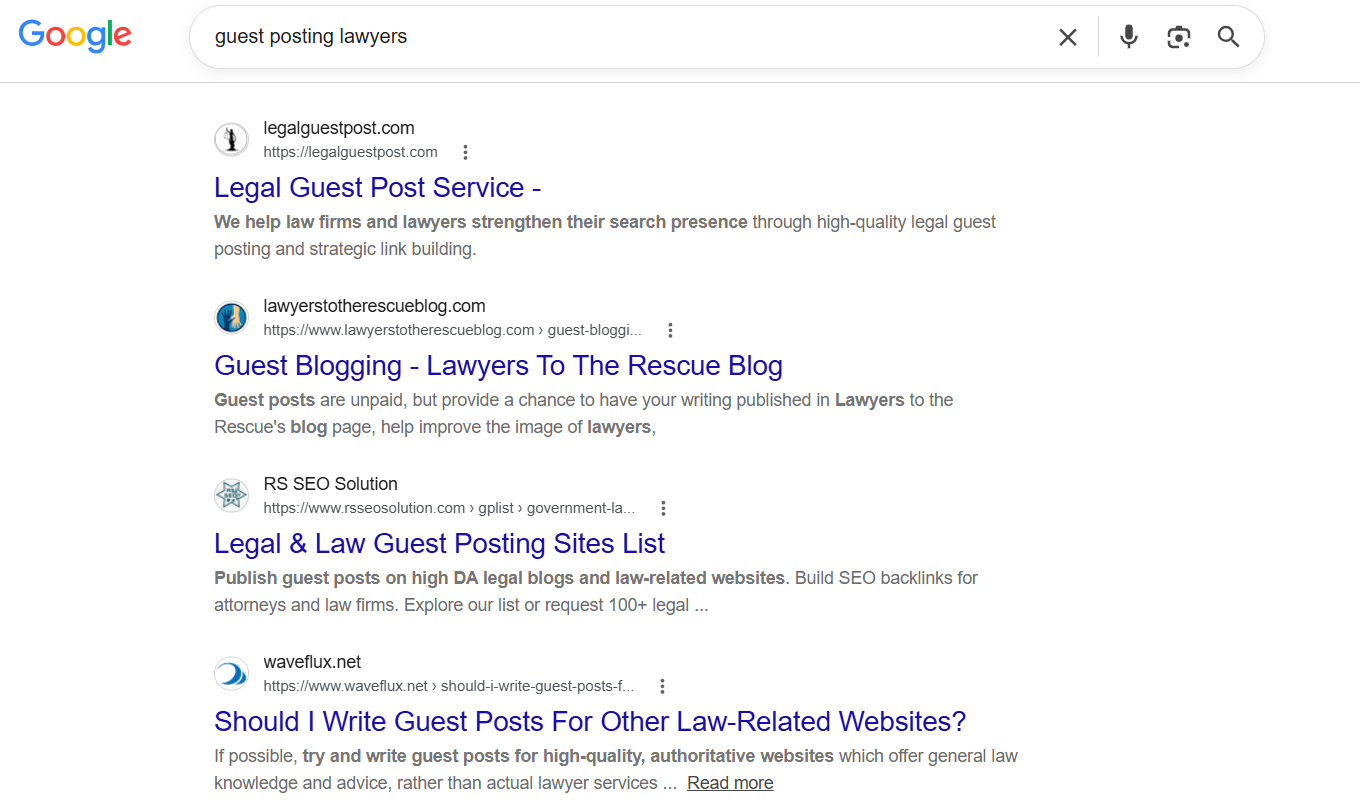
My favourite way to build links is guest posting — you write a genuinely useful article for another site in your industry, and it links back to yours. To find opportunities, search Google for your niche plus a footprint like “write for us”, “guest post” or “contribute” — a search like guest posting lawyers surfaces sites that openly accept law-related guest posts. Then pitch them a real article and place a natural link back to a relevant page.

Beyond that, keep it simple: local press, industry associations, sponsoring a local club or event, being listed by suppliers and partners. Real links from real Australian businesses that know you. That’s what moves the needle.
Step 6: Technical SEO
Technical SEO is making sure Google can crawl, read and load your site properly. Think of it like checking under the hood — the car might run with problems, but not well.
You don’t need to obsess here, but you do need to catch the big issues — and the easiest way is to run a Semrush site audit.
Point it at your site and it flags the technical and on-page errors hurting you: pages loading too slow, missing or duplicate header tags, broken links, and more. You get a prioritised list instead of guessing.

Couple that with a Screaming Frog crawl. It makes it dead easy to spot pages that aren’t getting indexed, plus a stack of other errors. Between the two, you’ll find just about everything worth fixing.
Then clear the floor: mobile-friendly, fast-loading, indexable, and on HTTPS (the padlock). Get these right and move on — it’s not a full-time job.
One honest note on doing it yourself: the profile, the reviews, the basic pages — you can absolutely do these yourself, and you should.
The technical side and serious link building are usually where owners run out of road and bring someone in. There’s no shame in either call; just know where the line is for you.
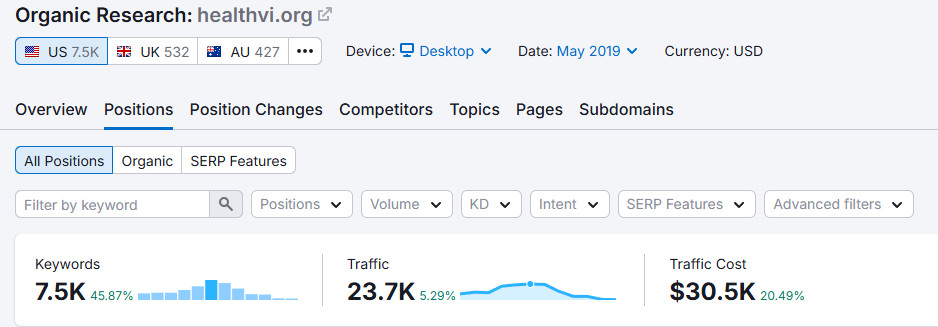
And here’s the thing that keeps me confident it’s worth doing: I grew a health site, HealthVI, from zero to over 20,000 organic visitors a month on exactly this approach. Same fundamentals, done consistently, left to compound.
A Real Example: Beating the Top Family Lawyer in Melbourne
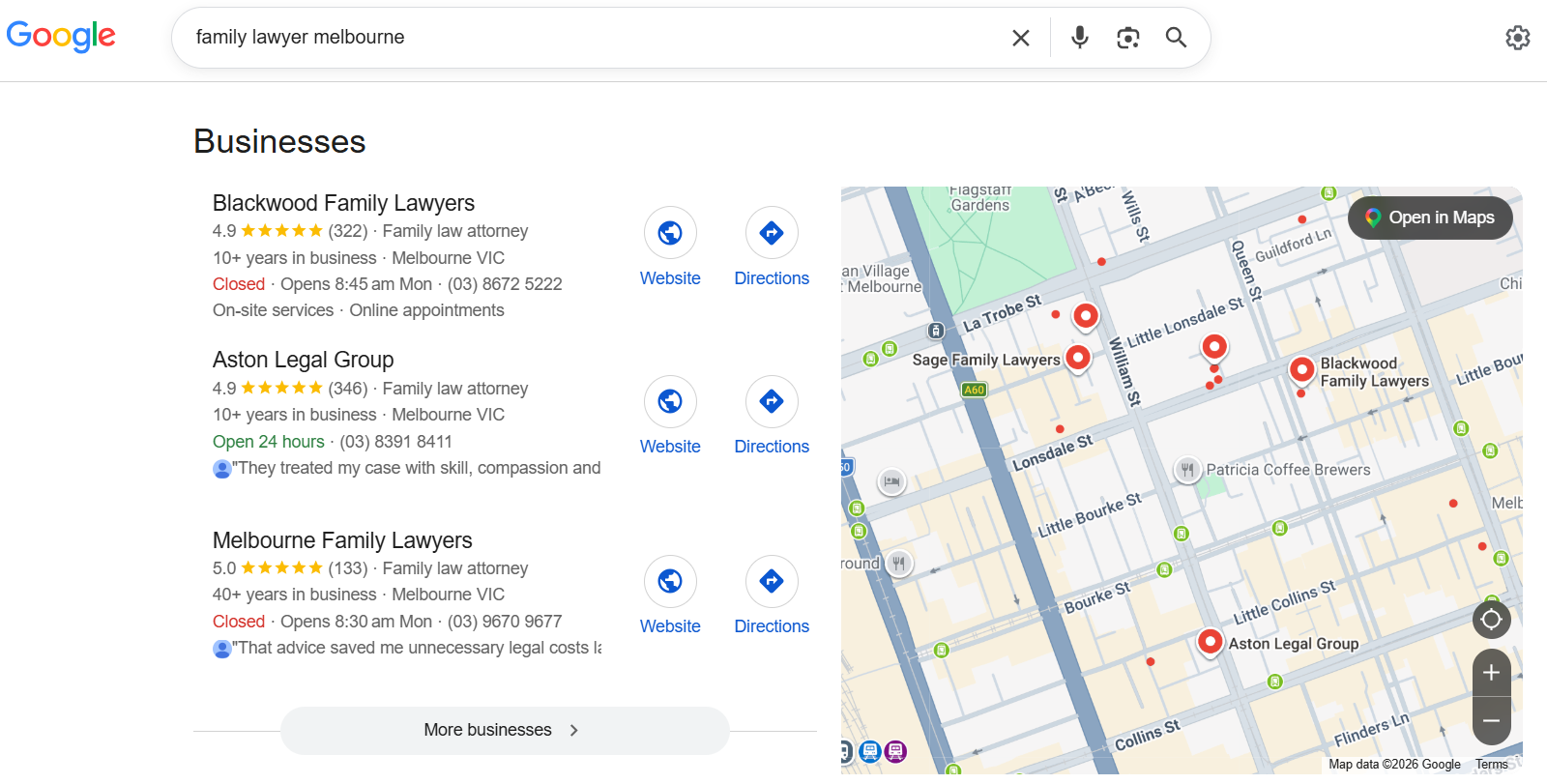
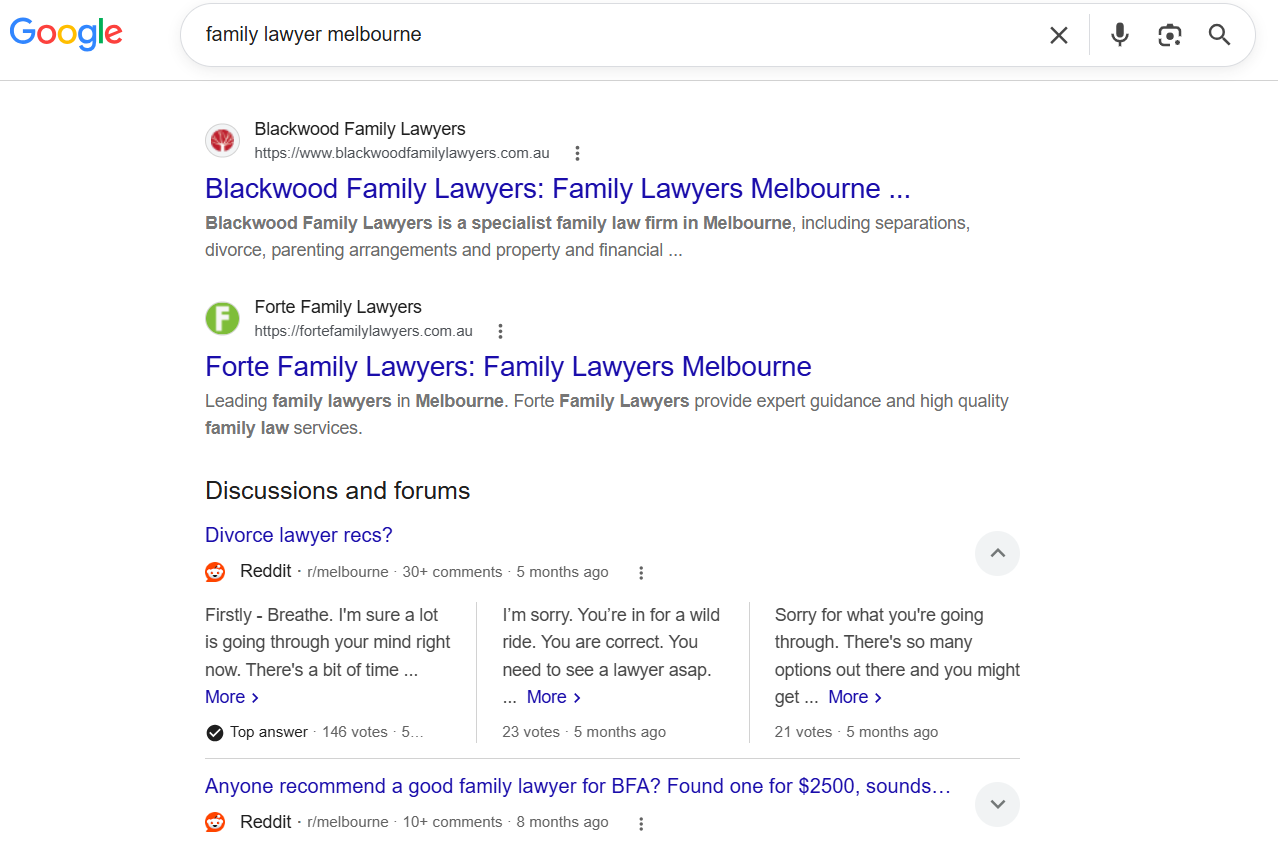
Let’s do a real teardown. Search “family lawyer Melbourne” and one firm owns it: Blackwood Family Lawyers ranks first in the map pack and first in the organic results. Here’s exactly how you’d beat them.
First, win the map pack. Three moves:
- Set up and optimise your Google Business Profile. The right primary category (family law attorney), every service filled in, correct opening hours, and real photos of your practice.
- Build citations with a BrightLocal Citation Builder campaign. It gets your business listed consistently and mentioned across the directories that matter. Think of it as link building, but for local SEO.
- Beat their reviews. Blackwood sits on 322 reviews. From scratch, that’s the long game — at three to five reviews a week (realistic only if you build a review-gathering system into your process), you’re looking at one to two years to match them. This is the part that decides how fast you climb. And notice Aston Legal Group just below them has more reviews — 346 — yet still ranks second. The map pack is the whole package, not a review count alone.
Then, win the organic listings. Build the website out properly:
- A strong homepage and a services page.
- A dedicated page for every sub-service — divorce, custody, property settlement, and so on.
- A content marketing campaign targeting informational keywords, so you’ve got a page for everything someone could search about family law in Melbourne. That’s how you build topical authority in the niche.
Then run a link-building campaign — and here’s the opening. Blackwood only has a domain rating of 18 on Ahrefs, which is small.
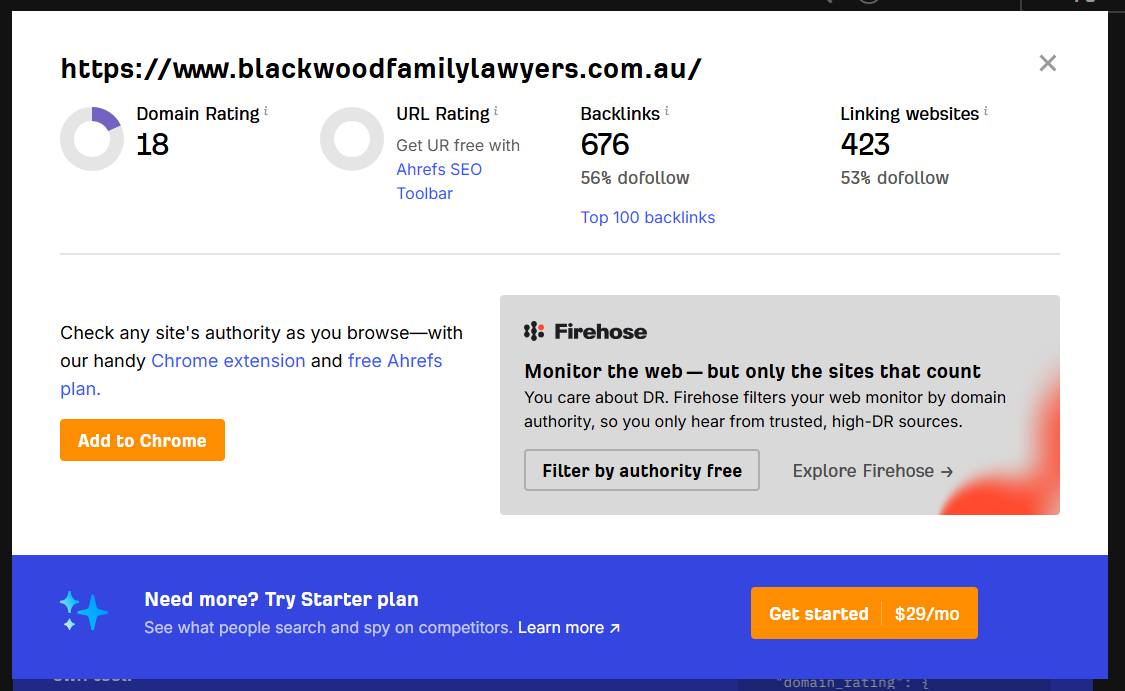
For context, I built my own site to a domain rating of 36 in a single year — double theirs. So with a proper campaign, ranking a Melbourne business at the top is realistic inside one to two years.
The website side is the faster win; the reviews are the long pole — so start a real review-gathering strategy early, and the rest follows.
(Blackwood Family Lawyers is a real, publicly-ranking business used purely as a competitive example — not a client.)
Small Business SEO Tools (Free and Paid)
You can do most of your small business SEO with free tools. Paid tools only earn their keep once you’re publishing regularly and need competitor and difficulty data at scale.
Don’t let anyone shame you into a subscription you won’t use. Here’s the honest rundown.
Free — this is genuinely all most small businesses need to start:
- Google Business Profile — your most important asset, and it’s free.
- Google Keyword Planner — real search volumes straight from Google.
- Google Search Console — shows what you already rank for and any issues Google finds. Set it up early so you stop guessing.
- Screaming Frog — crawls your site to find broken links, missing tags and pages that aren’t indexed (free up to 500 URLs).
- Google autocomplete and “People also ask” — free keyword and question ideas, straight from the search bar.
- ChatGPT — fast for brainstorming keywords and drafting content (just keep it real and local).
Paid — worth it once SEO is a core channel:
- BrightLocal — builds and cleans your citations, and tracks your map-pack rankings across suburbs. The one paid tool I’d get first for a local business.
- Ahrefs or Semrush — the heavy hitters. Every keyword a competitor ranks for, difficulty scores, backlink data, rank tracking. Real value — but only if you’re using it weekly.
The honest threshold: doing a page a month? Free is plenty. SEO as a serious channel? A paid tool pays for itself. Start free, upgrade when the free tools start slowing you down — not before.
Has AI Changed Small Business SEO?
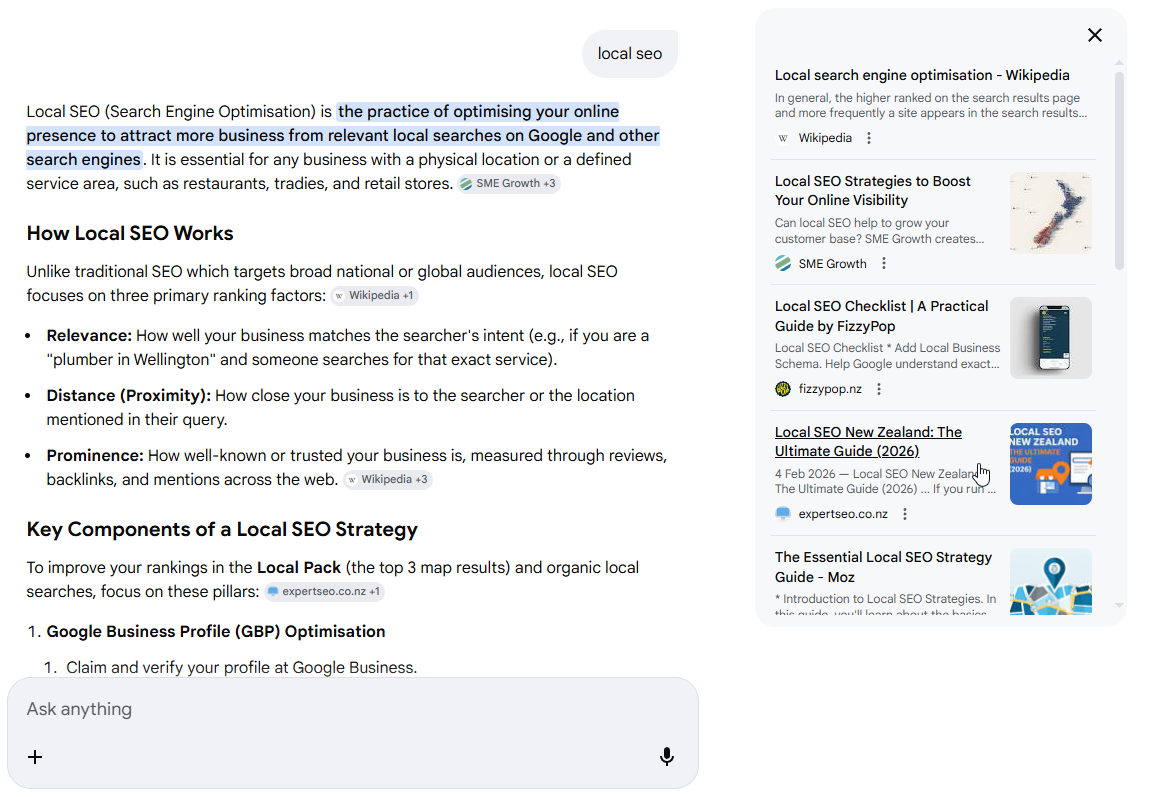
SEO isn’t dead. AI search still leans on the exact things a small local business controls — reviews, an accurate Google Business Profile, and clear, trustworthy pages — so done right, you can get recommended by the AI, not just ranked.
This is the question I get most in 2026. “Isn’t SEO dead now that everyone asks ChatGPT?”
No. Someone still has to be the source the AI pulls from. The prize just changed shape.
Here’s what’s actually happening. AI Overviews and tools like ChatGPT now answer a lot of questions directly, so some searches get fewer clicks.
But when someone asks an AI “who’s a good family lawyer in Sydney,” it has to recommend someone — and it picks based on reviews, profile accuracy, and clear, credible content. The exact stuff in this guide.
And people are absolutely asking. Use of AI tools to find local businesses jumped to around 45% in a single year, now one of the most popular ways people look.

The counter-intuitive part: this actually favours focused local businesses. A well-reviewed, clearly-described local business with consistent information is exactly what AI wants to recommend. You don’t need a national brand’s budget to win here.
You need to be the obvious, trustworthy local answer.
Can ChatGPT do your SEO for you? It’s great for drafting and ideas. It’s dangerous for facts and generic pages — it’ll happily invent things and write bland content that ranks for nothing. Use it as an assistant, not a strategist.
I’m not guessing at any of this. My own site — under a year old — already gets cited as a source inside Google’s AI Mode. That’s the new game, and it’s winnable.
What Small Business SEO Costs
Realistically, small business SEO in Australia runs from doing it yourself (free, but it costs time) up to a few thousand a month for done-for-you.
Rough guide to what you’ll pay:
- DIY: $0 in cash, but real time. Very doable for the profile, reviews and basic pages.
- Freelancer or junior help: roughly $500–$1,500 a month. Fine for filling gaps.
- Established agency or consultant: roughly $1,500–$4,000+ a month for a proper, managed campaign.
A quick warning on the cheap end. If someone’s offering “SEO” for $300 a month, it’s almost always automated junk or spammy links that do nothing — or worse, get you penalised. Cheap SEO is usually the most expensive kind, because you pay for it twice.
If you want the full pricing breakdown by business type, that’s worth its own look, but this is the shape of it.
How Long Small Business SEO Takes
Expect 3–6 months for real traction, not weeks. It’s a compounding asset, not an ad you switch on.
The first couple of months often look like nothing’s happening. That’s normal — SEO compounds, so the early work is laying the foundations that pay off later. Watch the leads trickling in, not the rankings jumping.
That same compounding curve is why my health site went from nothing to 20,000+ visitors a month — slow start, then it snowballs.
Common Small Business SEO Mistakes to Avoid
Most failed small business SEO isn’t bad luck. It’s the same few avoidable mistakes, over and over.
- Chasing rankings instead of leads. A number-one ranking that sends no calls is a vanity metric. Track enquiries.
- Thin, duplicate suburb pages. Ten near-identical pages with the town name swapped out. Google ignores them and it can drag your whole site down. A café getting found in Brisbane doesn’t need a page for every suburb it delivers to — one genuinely good local page beats ten thin ones.
- Ignoring reviews. No system, no responses, a stale profile. You’re leaving your biggest lever untouched — and 73% of people only trust reviews from the last month, so old reviews stop counting.
- Set-and-forget. SEO isn’t a one-off. Profiles go stale, competitors catch up, content dates. Keep it fed.
- Buying cheap bulk links. The fastest way to waste money or get penalised. Quality over quantity, always.
Avoid these five and you’re already ahead of most of your competition.
Final Thoughts
Small business SEO is one of the highest-return moves you can make — if you stay focused on leads and do the few things that matter, consistently.
The businesses that win at this aren’t the biggest or the ones with the fanciest websites. They’re the ones that nailed the boring fundamentals — profile, reviews, a few solid pages — and kept at it while everyone else chased shiny tactics.
Here’s what I’d do if it were my money: get the Google Business Profile and reviews right first, this week. Then build out your service pages. Ignore everything advanced until those are done. That order alone puts you ahead of most small businesses in the country.
Do it scattergun, or hand it to the cheapest agency you can find, and it’s wasted money. Do it properly, and you build an asset that brings in customers for years.