

Right now, someone within a few kilometres of your business is typing “[your service] near me” into Google — or asking ChatGPT the same thing. Local SEO decides whether they find you or your competitor.
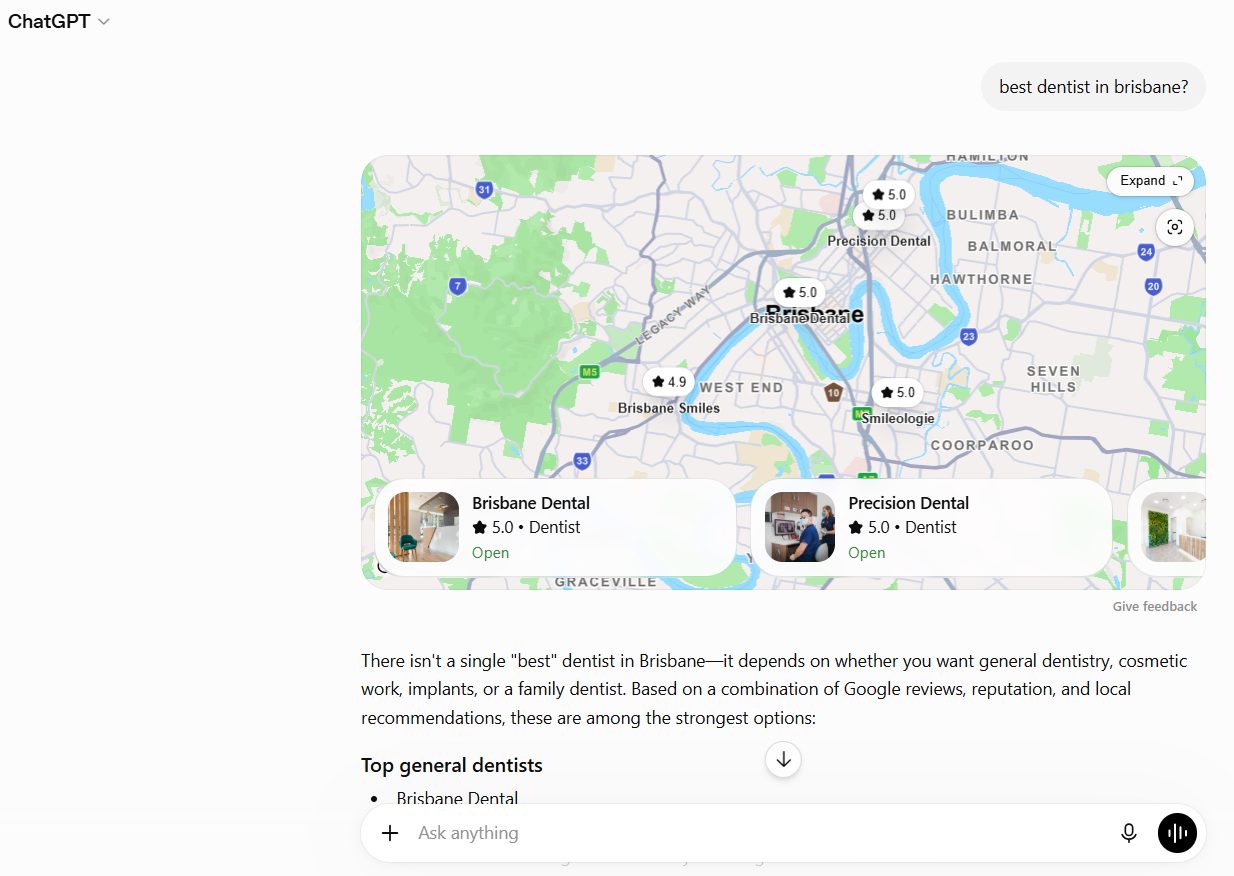
That’s the whole game. And in Australia, it’s a big one: nearly everyone here is online, and almost all of them search on Google. If you sell to people in a city or a suburb, that’s where they’re deciding who to call.
Most business owners have heard “local SEO” thrown around but never had it explained in plain English. The guides that rank are either US textbooks with no relevance to an Aussie business, or thinly veiled sales pitches. So let’s fix that.
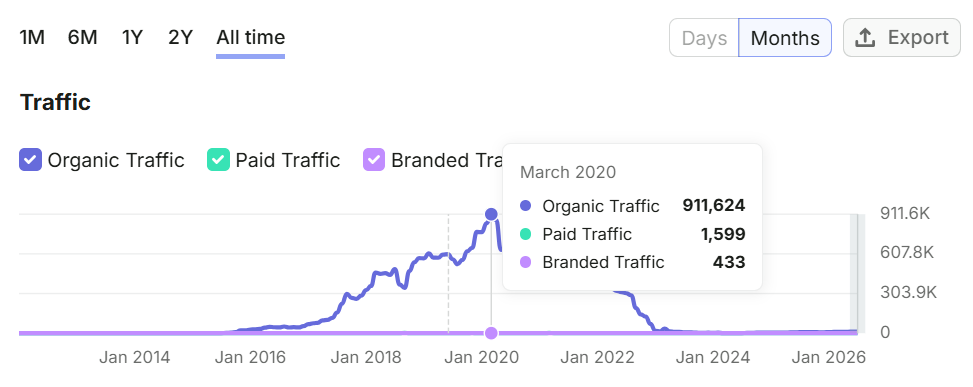
I don’t just teach this — I do it. I’ve ranked sites in some of the most brutal markets on earth, including one grown to over 900,000 organic visits a month. I run Expert SEO, so this is the plain-English version from someone who actually ranks businesses, not theory.
By the end, you’ll know exactly what local SEO is, why it matters for a business like yours, how it actually works, what’s involved in doing it, how long it takes, and whether to do it yourself.
Key Takeaways
- What it is: Local SEO is how you get your business found by nearby customers on Google — in the map pack (the map with three businesses) and the local results underneath.
- Why it matters: Local searchers are ready to buy. When someone searches “electrician near me,” they’ve got their wallet out. That intent is the most valuable attention in marketing.
- How it works: Google ranks local results on three things — proximity, relevance and authority. You can’t control the first, you partly control the second, and you control most of the third. That’s where the work goes.
- What’s involved: Your Google Business Profile, consistent listings across the web, reviews, a solid website, and a few local links. Front-loaded work, then a light monthly touch.
- The two games: The map pack and the normal blue-link results are ranked differently. You can win one and be invisible in the other — so you play both.
- How long: Movement in 3–6 months, solid results in 6–12. It compounds — unlike ads, the leads keep coming after you stop paying per click.
- DIY or hire: You can absolutely learn the basics yourself. Just know it’s ongoing work, not set-and-forget.
What Is Local SEO?
Local SEO is the process of getting your business to show up when nearby people search for what you do — like “plumber near me” or “dentist Brisbane.” It’s how you land in Google’s map pack (the little map with three businesses under it) and the local results, so customers in your area find you first.
That’s it. No jargon needed. If you run a business that serves a city, a suburb, or a region, local SEO is how you get in front of the people already searching for you there.
Here’s a real example. Someone in Melbourne pulls out their phone and searches “physio Melbourne” or “physio near me.” Google shows a map with three clinics, their star ratings and their hours — then a list of websites below it.
Local SEO is the work that decides whether your clinic is one of those three, or buried on page two where nobody looks.

There are two places you’re trying to appear, and they matter equally: the map pack (your Google Business Profile, shown on the map) and the local organic results (your website pages, shown in the normal blue links).
Keep those two in mind — they come back later, because they’re actually two different games.
Local SEO vs Regular SEO
The difference is simple: regular SEO chases a topic, local SEO chases a place.
Regular SEO is about ranking for something anywhere in the country — like an article on “how much do dental implants cost in Australia.” Anyone, anywhere, could read it.
Local SEO is about ranking for a location — like “dentist Brisbane” or “dentist near me.” Same business, two completely different jobs.

Take a Brisbane dental clinic. Regular SEO might get their implant-cost article in front of readers all over Australia.
Local SEO gets the clinic itself in front of someone in Brisbane searching “dentist near me” with a toothache right now. One pulls readers from everywhere. The other pulls buyers from down the road.
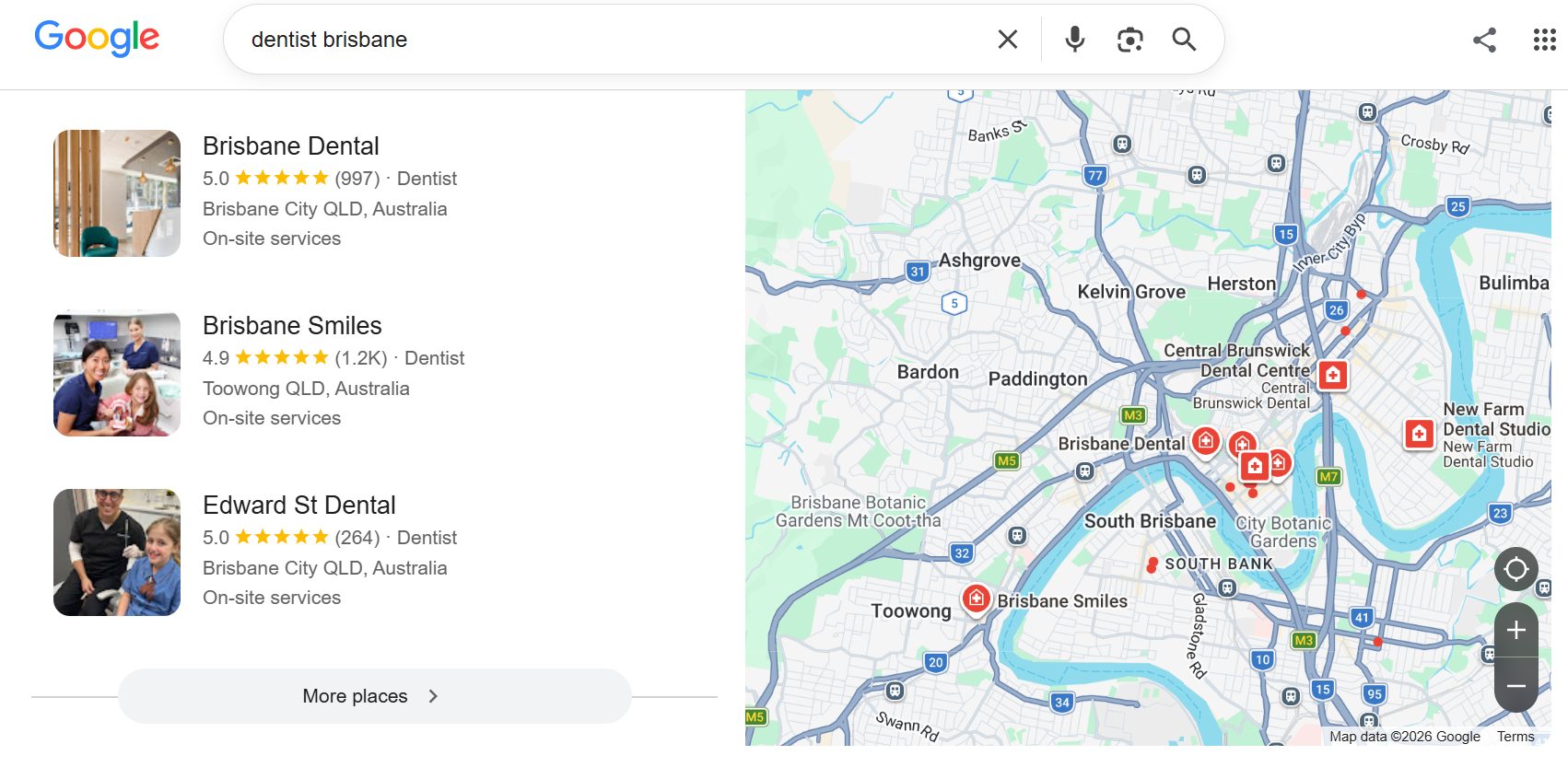
For most local businesses, the second one is where the money is. The person searching “dentist Brisbane” isn’t researching — they’re ready to book. Winning those down-the-road searches is exactly what SEO in Brisbane is about.
That’s why, if you serve a local area, most of your effort should go into local SEO. The two do overlap (good local content helps both), but don’t confuse ranking an article nationally with getting found by the customer around the corner.
Why Local SEO Matters for Australian Businesses
Local SEO has some of the best returns in all of marketing, and it comes down to one word: intent.
When someone searches “emergency plumber near me” or “best café in Fitzroy,” they’re not browsing. They’re not killing time. They’ve got a need and a credit card, and they’re looking for someone to solve it right now. You’re not interrupting them like a billboard or a scroll-past social ad. You’re showing up at the exact moment they’ve decided to spend.
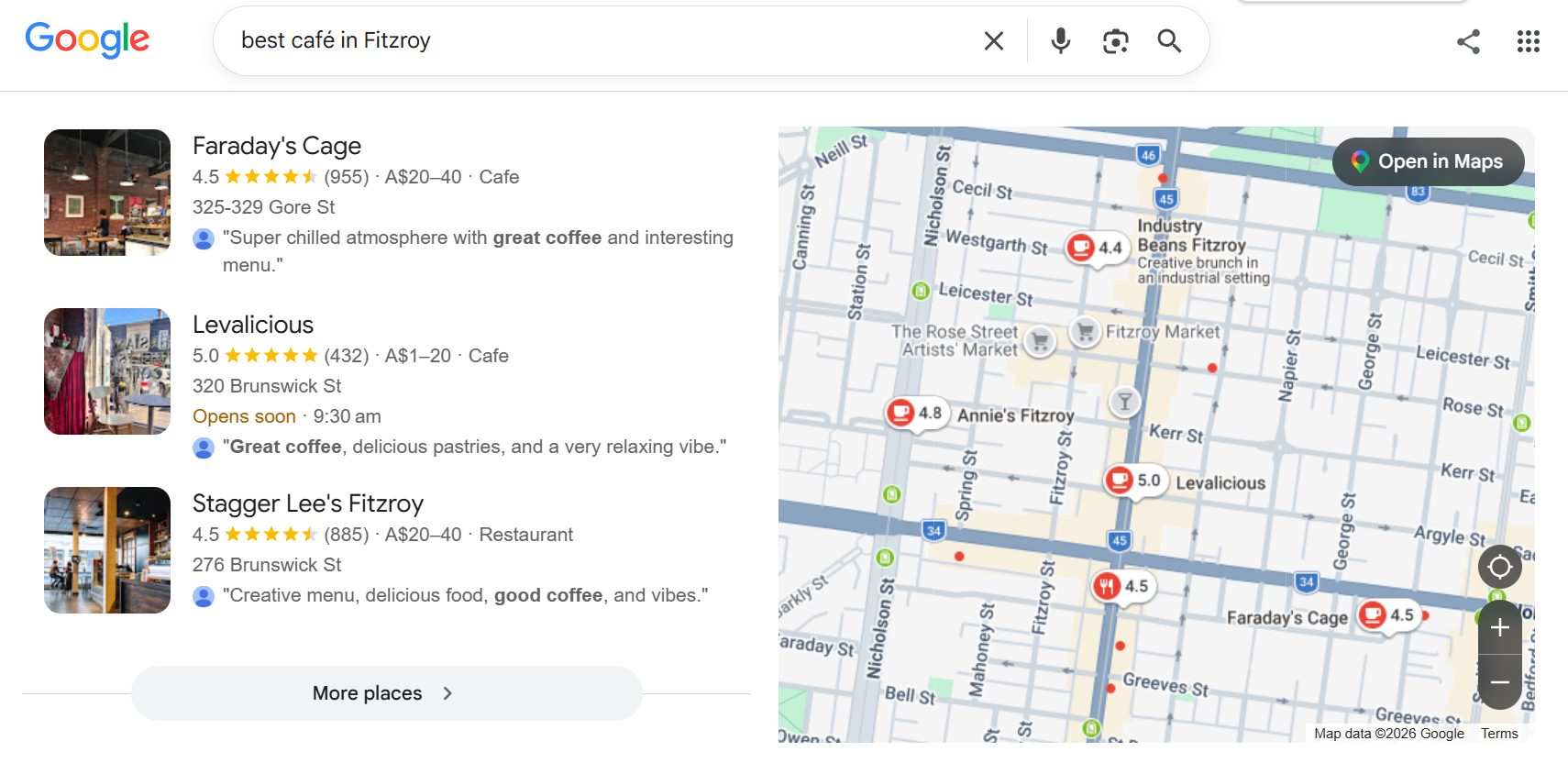
That’s the difference between local search and almost every other channel. Everywhere else, you pay to catch attention that wasn’t there. With local search, the demand already exists — you’re just meeting it.
The numbers back it up. 76% of people who search for something “near me” visit a business within a day, and 88% of people who run a local search on their phone call or visit within 24 hours. That’s not idle curiosity — that’s someone about to walk through a door.

Now here’s where it gets serious: intent multiplied by value. One ready-to-buy searcher is worth a little to a business selling $30 products, but a fortune to a cosmetic clinic selling a $6,000 procedure.
That single searcher can be worth more than a month of any other marketing you run. High intent times high value is the whole game — and local SEO is where it lives.
It matters most for any business that serves a local area: trades, dentists and clinics, cafés and restaurants, law and accounting firms, beauty and cosmetic, real estate. If your customers search by location, this is your channel.
And that audience is basically everyone. 26.2 million Australians are online — 97% of the country.
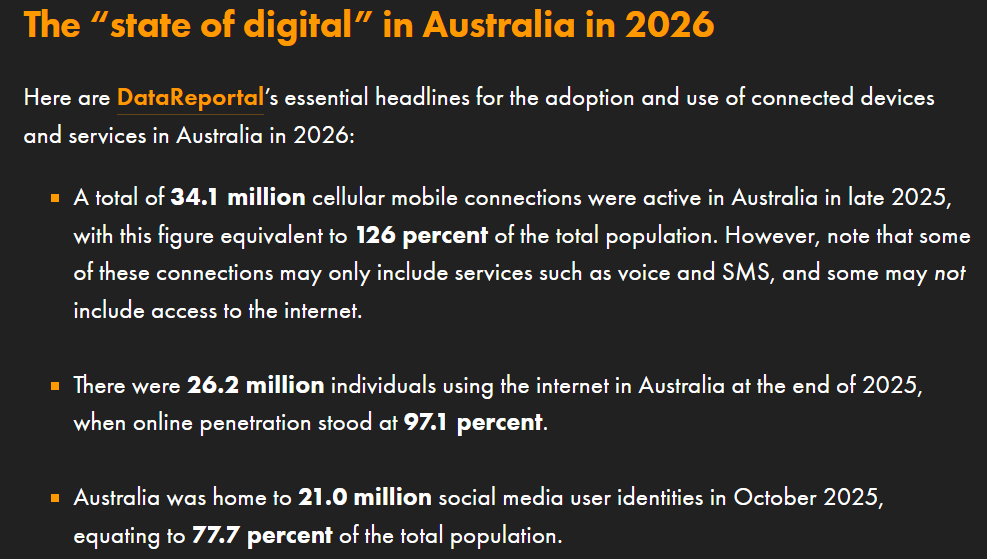
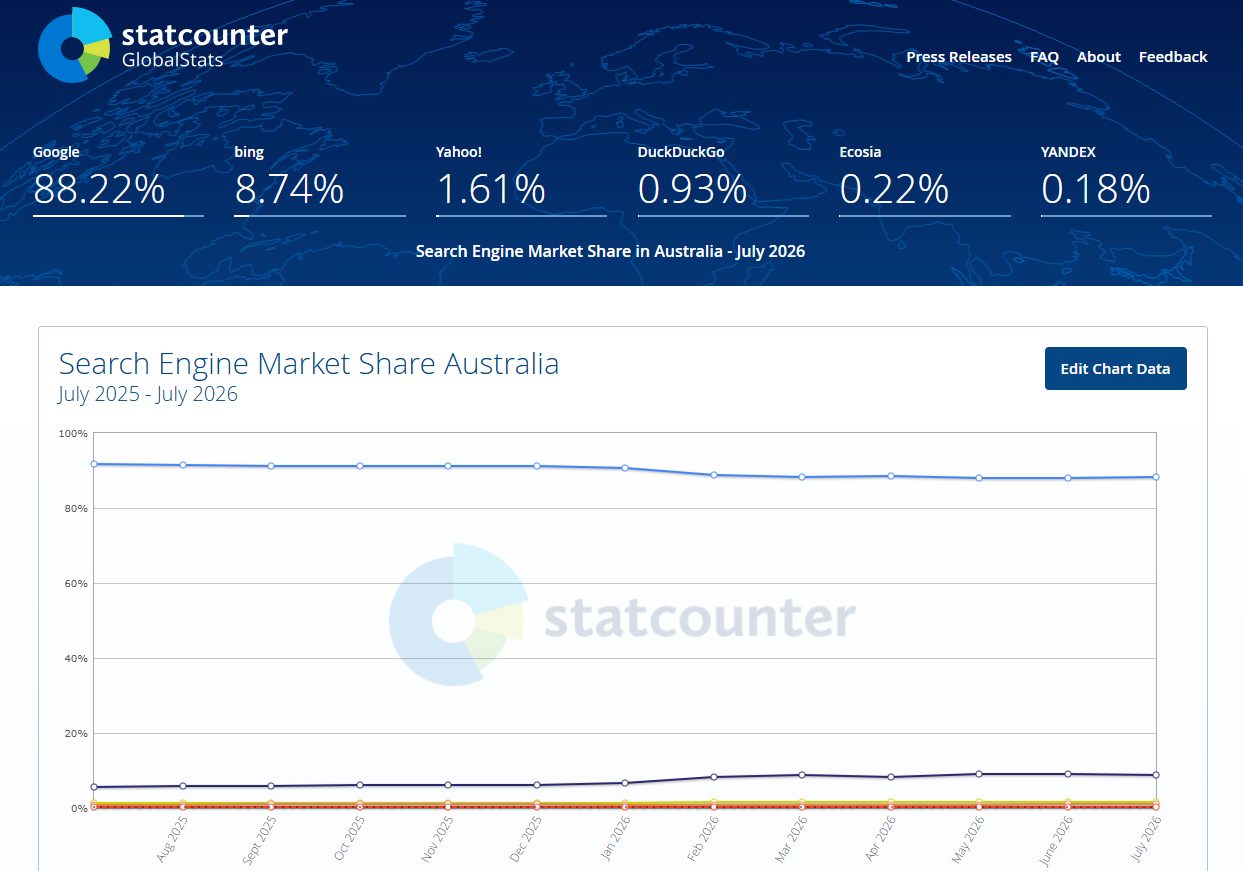
And they nearly all search in the same place. Google handles around 88% of every search in Australia, so when someone goes looking for a local business, this is the shopfront they see first.
And unlike ads, it compounds. With Google Ads you stop paying, the leads stop that afternoon. With local SEO you build the ranking once and the leads keep arriving — often for years. That’s the part most owners underestimate.
How Local SEO Actually Works
Google decides local rankings on three factors. Understand these and everything else clicks into place.
- Proximity — how close you are to the person searching. Someone searching “barber near me” in Bondi gets different results than someone in Parramatta.
- Relevance — how well your business matches what they’re searching for. This is your Google Business Profile categories, your services, and what’s on your website.
- Authority (Google calls it prominence) — how well-known and trusted you look. Reviews, mentions across the web, links to your site, your overall reputation.
Here’s the insight most guides miss: you have wildly different control over each of these — so spend your effort where you have the most leverage.
You can’t control proximity. You are where you are. Don’t waste a second worrying about it.
You partly control relevance. You can’t change what people search, but you can make sure your profile and website clearly match it — the right primary category, the right services listed, the right words on your pages.
You control most of your authority. Reviews, citations, links, reputation — this is the work that actually moves you up, and it’s almost entirely in your hands. So this is where the effort goes.
That’s the mental model: ignore what you can’t control, tidy up what you partly control, and pour your energy into authority, where you have the most leverage.
Now the part almost nobody explains clearly. The map pack and the local blue-link results are two separate games. They’re ranked differently.
You can rank #1 in the normal results and be nowhere in the map pack — or dominate the map and be invisible in the organic list.
The map pack leans hard on your Google Business Profile, proximity and reviews. The organic results lean on your website and links. Winning locally means playing both, not assuming one gets you the other.
How to Do Local SEO
Doing local SEO comes down to five things, roughly in order of impact. Most of the work is front-loaded — heavy at the start, then a light revisit every few months. It’s not set-and-forget, but it’s not a full-time job either.
Google Business Profile
This is the single biggest lever for the map pack. Claim your profile, verify it, and fill in everything — correct categories, services, hours, photos, and regular posts. Your primary category matters more than almost anything else here, so choose it carefully (a “cosmetic dentist,” not just “dentist,” if that’s what you are).
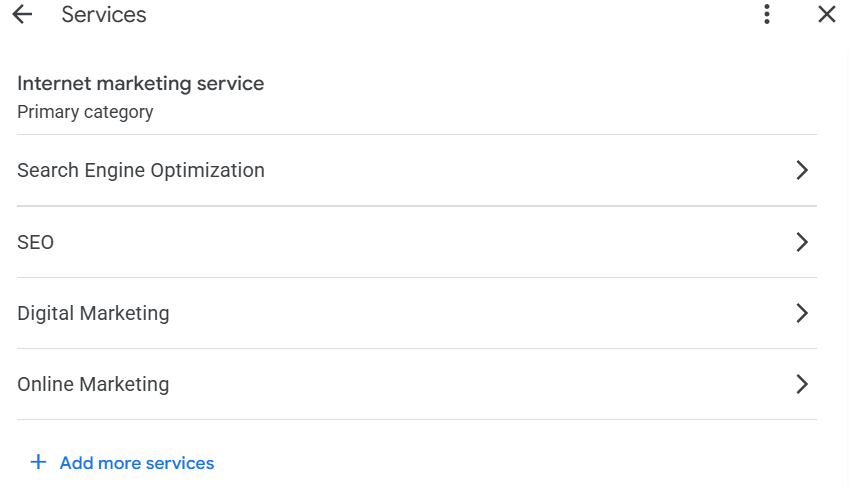
A complete profile gets far more action than a bare one — Google rewards the businesses that give it the most to work with. It’s the biggest single lever you’ve got, so it’s worth doing properly: here’s the full guide to optimising your Google Business Profile.
Consistent listings and citations
Your Name, Address and Phone number (NAP) need to be identical everywhere they appear online. Same format, same everything.
Then get listed in the directories that matter in Australia: True Local, Yellow Pages, Hotfrog, Localsearch, Yelp, and your industry’s own directories. Include your ABN where directories ask for it. If doing this by hand sounds tedious, tools like BrightLocal build and manage the listings for you.
Consistency is the point. If your address says “St” in one place and “Street” in another, Google gets less confident it’s the same business — and confidence is what you’re building.
Reviews
Reviews are the most important ongoing lever you have. They sell — most people trust a business with 200 reviews at 4.8 stars over one with three reviews — and they’re a signal Google (and now AI search) weighs heavily.
You need a simple system to ask every happy customer and to reply to every review, good or bad. If you want a repeatable one, here’s how to get more Google reviews.

Don’t set up a profile and forget it. A steady trickle of fresh reviews beats a burst once a year — most people only trust reviews from the last month or two.
Your website
Your Google Business Profile gets you in the map; your website does the rest.
Build proper pages for your services and the areas you cover, use the words your customers actually search (suburb and city names included), and make sure the site is fast and works on a phone — where most local searches happen.
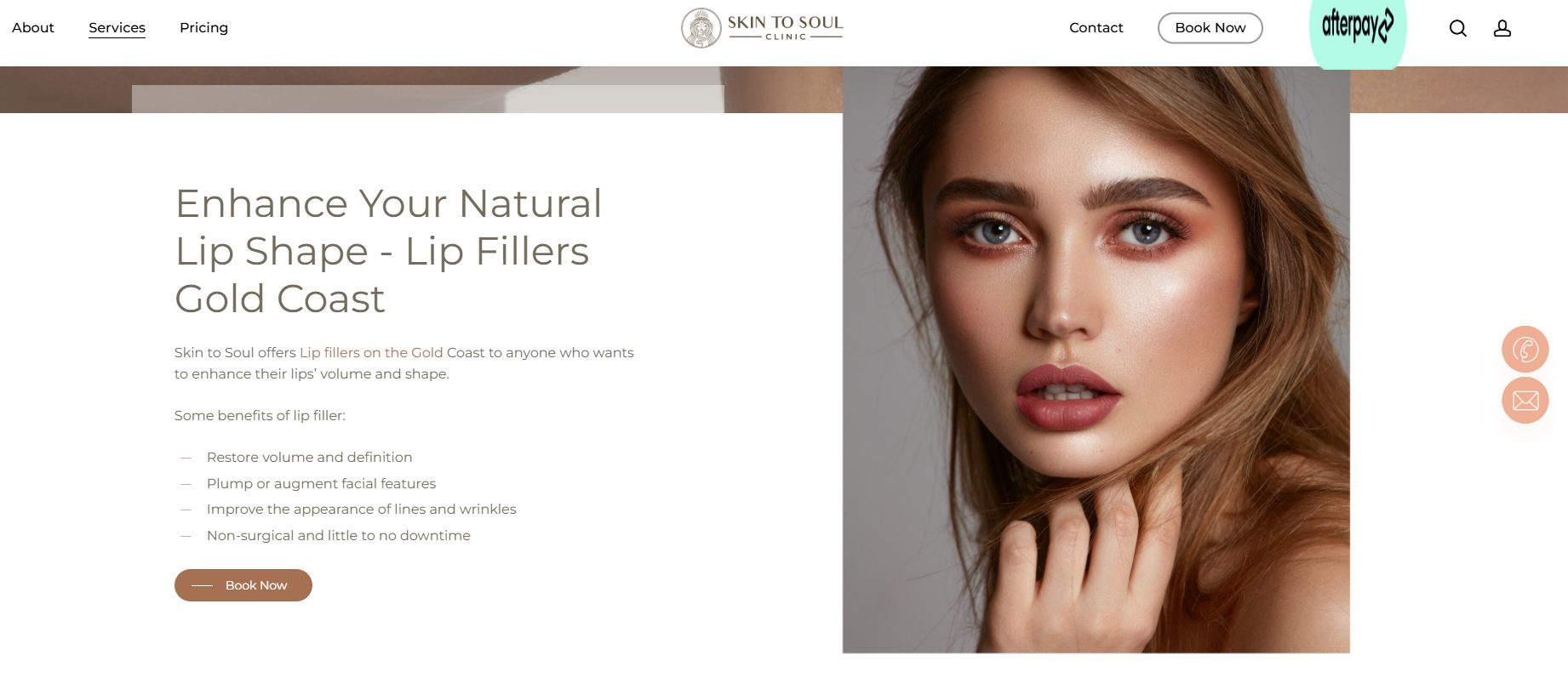
This is also where you write the content Google rewards. Google’s own guidance is to create helpful, people-first content — pages that genuinely answer what your customer is asking, not thin filler.
One common case: what if you don’t have a shopfront? A Perth electrician who serves ten suburbs from a van doesn’t need a physical address on show.
You set up as a service-area business on your Google Business Profile, hide the address, and build pages for the suburbs you actually serve — the bread and butter of local SEO for a Perth business. Just don’t spin up dozens of empty “SEO for [suburb]” pages with no real content — Google sees straight through that.
Local links
A handful of relevant, local backlinks tell Google you’re a real, established part of your community. Sponsor a local club, get listed by your suppliers or industry association, earn a mention in local press or an industry publication.
Links still carry real weight — pages in Google’s top 10 tend to have far more of them than the pages below. I earn them the same way I tell clients to: by being worth linking to. Here’s one I picked up from an Australian marketing publication.

Do these five things properly and revisit every few months, and you’ll be ahead of most of your local competitors — because most of them have done half of one.
Common Local SEO Mistakes to Avoid
Most “local SEO didn’t work for me” stories come down to a few avoidable mistakes. Steer clear of these.
- Inconsistent NAP. Different addresses or phone numbers across the web quietly kill your rankings. Fix it everywhere.
- Lazy or wrong Google Business Profile categories. Your primary category is one of the strongest signals you’ve got — a plumber listed as a “handyman” is fighting uphill.
- Keyword-stuffing your business name. Renaming your profile “Best Cheap Emergency Plumber Sydney” is against Google’s rules and a fast way to get suspended. Use your real business name.
- Ignoring reviews. No system to collect them, no replies to the ones you get. This is the biggest missed opportunity in local SEO.
- Set-and-forget. Treating it as a one-off setup. Rankings drift, competitors move, reviews go stale. It needs a light, regular touch.
- Thin, fake location pages. A dozen near-identical “[service] [suburb]” pages with no real content. Google spots it and it can hurt more than help.
Will AI Search Kill Local SEO?
Short answer: no. And it’s worth explaining why, because it’s the question every owner is asking.
People still search for local businesses every single day — Google’s search volume actually grew over 21% in 2024, even with AI Overviews everywhere.
And when someone asks ChatGPT, Gemini or Google’s AI Overview “who’s the best physio in Newtown,” those tools pull from the exact same local signals you’re already building: your Google Business Profile, your reviews, your citations, your website.

So doing local SEO well doesn’t just rank you on Google — it makes you the business AI recommends. That’s not theory for me: my own site is already cited as a source inside Google’s AI, off the back of the exact same work.
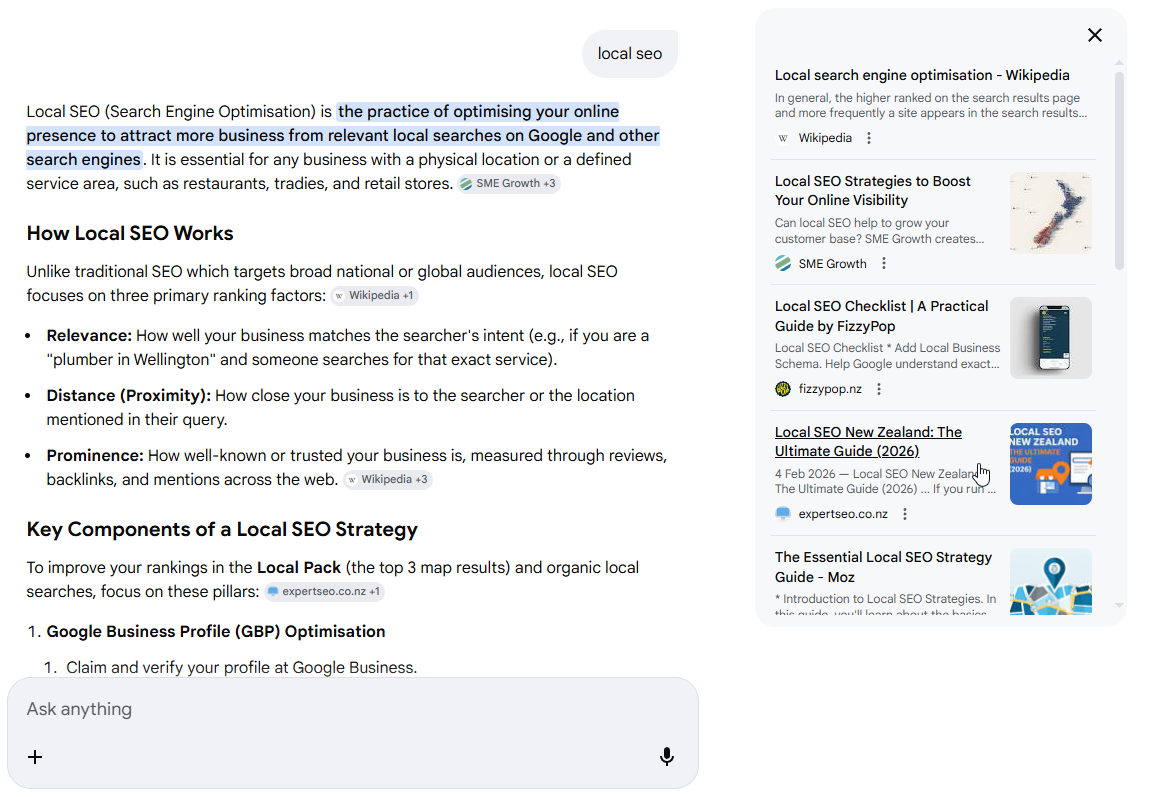
If anything, AI search makes reviews and consistent, trustworthy information more important, not less. The fundamentals didn’t change. There are just more places they pay off now.
How Long Does Local SEO Take?
Local SEO isn’t instant. Here’s the honest timeline: expect early movement in 3–6 months, and solid, compounding results from 6–12. Faster in a quiet suburb, slower in a competitive capital-city market. Anyone promising you a flood of leads in week two is selling something.
Why the wait? Because the cost comes first and the results lag. You’re building authority, earning reviews, and getting Google to trust you — and that takes a bit of time.
But once it kicks in, the leads keep arriving at almost no extra cost. That’s the opposite of ads, where the leads stop the moment you stop paying.
I’ve watched this curve play out over and over. I grew a health site from zero to more than 20,000 organic visitors a month — slow at first, then a steep climb once it compounded.
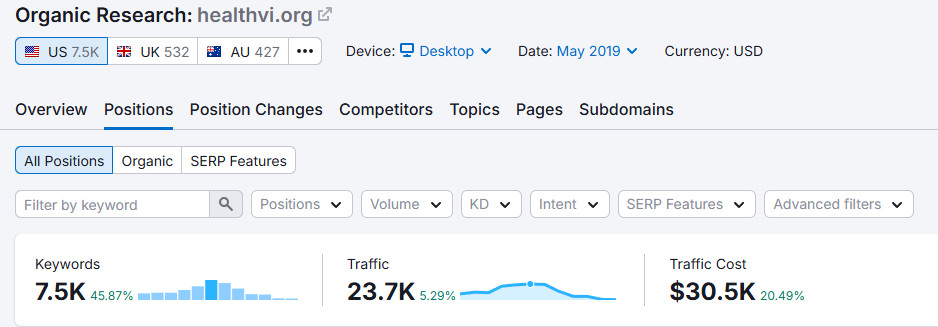
Is it worth it? For almost any business whose customers search locally, yes — the buyer intent is high and the return compounds. What it costs depends on your market and how competitive it is — a whole topic on its own. Our guide on how much SEO costs in Australia breaks it down by business size.
How to Track Your Local SEO Results
You don’t need a fancy dashboard. Track the handful of things that tell you whether it’s actually working.
- Google Business Profile insights — calls, direction requests and website clicks straight from your listing. The purest local signal you’ve got.
- Map-pack rankings — where you show up on the map across your area, not just from your own desk. A grid tool like Local Falcon shows you the real picture suburb by suburb.
- Calls and form leads — with call tracking so you know which calls came from Google, and form tracking on your website.
- Google Search Console — which local searches you’re showing up for, and where.
The number that matters is at the bottom of that list: leads, calls and bookings. Not rankings for their own sake, not raw traffic. Review it monthly, tie the leads back to real jobs, and you’ll know your return better than any tool can tell you.
Final Thoughts
Local SEO is one of the highest-return things an Australian business can do. When someone’s searching for what you sell, in your town, ready to buy — being the business they find is worth more than almost any ad you could run. The intent is as hot as it gets, and the leads compound.
Can you do it yourself? Absolutely. The basics — your Google Business Profile, consistent listings, reviews, a solid website — are learnable, and most of it is free.
Just go in knowing it’s ongoing work, not set-and-forget, and the businesses that win are the ones that stay consistent while their competitors don’t.
The worst move is to ignore it while someone down the road quietly takes the map pack. If you’d rather hand it to someone who ranks businesses for a living, that’s the other path — take a look at our SEO services. Either way, now you know what local SEO is and what doing it actually takes.