

A few months ago, one of our guides started outranking Ahrefs and Semrush in New Zealand.
Same page is now getting quoted inside Google’s AI answers. A website less than a year old, sitting above tools worth billions.

That didn’t happen because we published it and walked away.
It happened because we kept optimising it.
That’s what this guide is about. Not the textbook version — the actual process I’ve used for over a decade to take pages from invisible to ranking, here in NZ, with no expensive tools required.
By the end you’ll be able to take a page you’ve already published, or one you’re about to write, and optimise it so Google ranks it and AI tools cite it.
Let’s get into it.
What Is Content Optimisation?
Content optimisation is the process of improving a page so it ranks higher in search engines and gets picked up by AI tools — by matching what people are searching for, covering it properly, and making it easy to read and trust.
Say you’ve got a page about plumbing in Tauranga. Optimising it means making sure the page actually answers what someone searching “plumber Tauranga” wants, that it’s structured so Google understands it, and that it reads well enough for a human to stick around and call you.

The key word is improving. You can optimise a brand-new page as you write it. You can also optimise an old page that’s been sitting there doing nothing for two years. Same process either way.
Most people think content is a “write it once” job. It isn’t. The best pages on the internet get worked on again and again — more on that shortly.
Content Optimisation vs SEO: What’s the Difference?
SEO is the whole game. Content optimisation is the part you do on the page itself.
SEO covers everything that helps you rank — your technical setup, your backlinks, your local signals, the lot. Content optimisation is one slice of that: the words on the page, how they’re structured, and the signals that tell Google and AI what the page is about.
So when someone says “you need to optimise your content,” they’re talking about on-page SEO — sharpening the page itself. It’s one of the highest-leverage things you can do, because it’s the part you fully control.
Optimisation Is Continuous, Not One-and-Done
The biggest thing nobody tells you: the page ranking #1 didn’t get optimised once and left alone.
It got built, watched, and improved — over and over.
I’ll show you with a real one. Back in 2017 I started a health website, HealthVI, with my former business partner and SEO mentor Ian Pribyl (we got along so well even peanut-butter and jam sandwiches would’ve been jealous). We grew it from zero to over 20,000 monthly visitors.
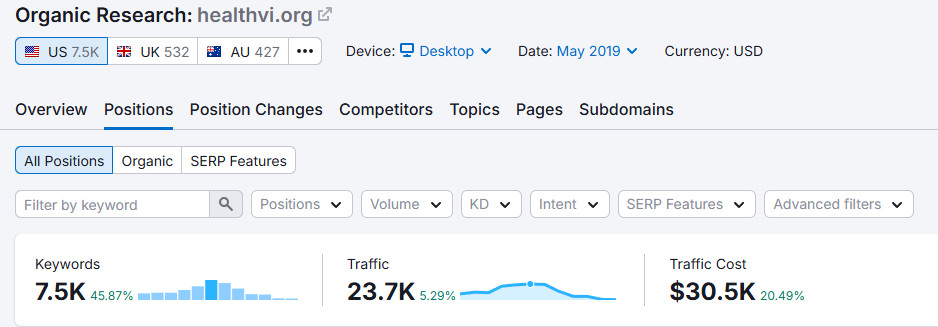
That wasn’t one perfect article. That was years of going back into pages, finding what was thin, and making it better. A page would rank on page two, we’d dig into why, fix the gap, and watch it climb.
Our own local SEO guide is the same story. It didn’t land at #1 in NZ on day one. It got there because we kept refining it — tightening the answers, adding what was missing, sharpening the structure — until it beat the big tools at their own keyword.
There’s a real reason this matters more than ever now. Search engines and AI both reward fresh, current content.
A Seer Interactive study found that almost 90% of AI bot activity focused on content published within the past three years, with the strongest preference for pages updated between 2023 and 2025.

So an old page you never touch isn’t just stale to readers. It’s getting passed over by the systems deciding what to show.
Optimisation isn’t a task you finish. It’s a habit you keep.
The Content Optimisation Process, Step by Step
Here’s the actual process. Six moves, in order, that take a page from buried to ranking.
Before you start, one decision worth making: are you optimising an existing page that’s underperforming, or writing a new one? If you’ve already got a page sitting on page two of Google, fix that first — it’s faster to push an existing page up than to start from scratch. The steps are the same either way.
Step 1: Match the Search Intent
Search intent is the reason behind the search. Match it, or nothing else you do matters.
Before you write or change a word, go to Google and type in your keyword. See what’s already ranking. Google has already decided what kind of page wins for that search — your job is to match it, then beat it.
Let me show you. Say a dentist wants to rank for “teeth whitening Hamilton.” Type it in. The top results are service pages — short, commercial, with prices and a booking button. That’s the intent. A 2,000-word blog post explaining the history of teeth whitening would lose, because it’s the wrong format for what people want.
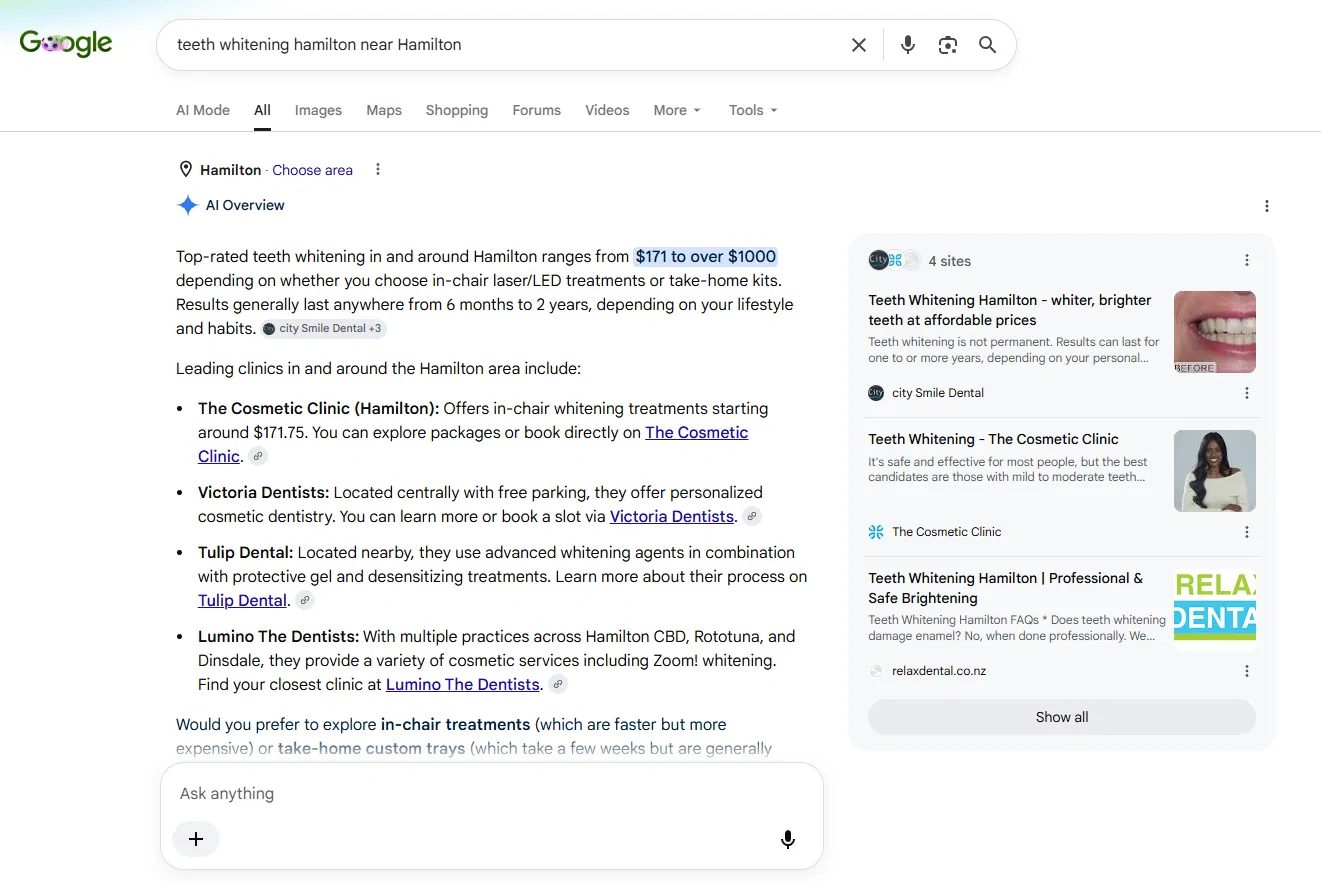
Now compare that to “how does teeth whitening work.” Totally different intent. That one’s informational — a blog post, not a service page. Same topic, opposite formats.
This is why keyword optimisation starts with intent, not the keyword itself. The keyword is just a clue. The intent is the answer.
For a dentist’s page, that’s where SEO for dentists lives or dies — match the format the buyer wants, or get skipped.
Step 2: Cover the Topic Completely
Once you know the intent, your page has to answer everything that searcher expects. Gaps are where you lose.
You don’t need a paid tool for this. The free method:
- Open the top five results for your keyword.
- Read them properly — don’t skim.
- Note every subtopic they cover.
- Then note the questions they don’t answer well.
That last list is gold. It’s where you win.
If every competitor explains what teeth whitening costs but none of them say how long it lasts, you cover both — and now your page is more complete than theirs. Do that across a few gaps and you’ve built a better page without guessing.
Stuck for what else to include? Ask ChatGPT. Give it a prompt like: “I’m writing a piece of content on [topic] — tell me everything I should cover.” It’ll surface subtopics and angles you might’ve missed. Then sanity-check those against what’s actually ranking, so you’re adding what readers want, not just padding.
This is how you build topical authority: by being the page that actually answers the whole question, not 70% of it. Google sees a page that fully satisfies the search, and it rewards it.
The test is simple. Could someone read your page and not need to open another tab? If yes, you’ve covered the topic. If they’d have to go back to Google for one more thing, you’ve got a gap to fill.
Step 3: Nail the On-Page Elements
Now the technical bits that tell Google and AI what the page is about. None of these are hard. All of them matter.
Here’s what to get right:
- Title tag. The clickable headline in search results. Put your main keyword near the front, keep it under 60 characters, and make someone actually want to click it.
- Meta description. The grey text under the title. It doesn’t directly rank you, but a good one gets more clicks — and clicks help. Keep it under 160 characters and lead with the benefit.
- Headings. Use a clear H1, then H2s and H3s in a logical order. This is how both readers and AI scan your page. Messy headings, messy understanding.
- Internal links. Link to your other relevant pages. It keeps readers moving and shows Google how your site fits together.
- Image alt text. Describe each image in plain language. Getting your image alt text right helps with accessibility, image search, and giving Google more context on the page.
- Schema. Adding schema markup — like FAQ or Article schema — helps search engines understand your content and can win you extra real estate in the results.
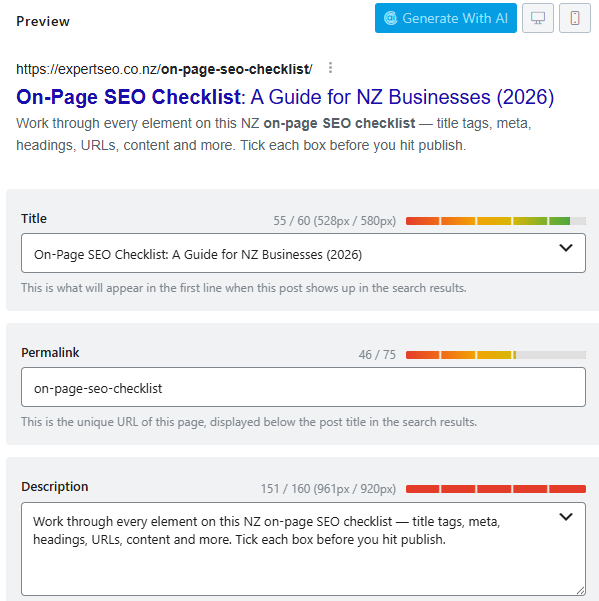
Get these six right and you’ve handed Google a clear, labelled page. That alone moves a lot of pages up.
Step 4: Make It Readable for Humans and AI
Here’s the part most people miss: writing for humans and writing for AI is the same job.
Both want clear answers, fast.
Break your text into short blocks. Put the direct answer at the top of each section, then explain. Use headings a skimmer can follow. Cut the waffle.
This doubles as AI optimisation because AI tools pull short, clear, self-contained answers to quote. A wall of text buries the answer. A tight paragraph that says “X costs around $300 to $800 in New Zealand” is exactly what gets lifted into an AI summary.
This is what good SEO copywriting does — it serves the reader and the algorithm at the same time, with no trade-off.
A page that’s easy to read is a page that’s easy to rank.
Step 5: Optimise for Conversions
Ranking is only half the job. The page still has to turn a reader into an enquiry.
You can rank #1 and still make no money if the page doesn’t ask for the sale.
Start by deciding the single most important action you want that visitor to take — booking a consult, calling, requesting a quote. Once you know it, everything on the page should quietly steer toward that one action.
Then build it in naturally, a few times as the reader moves down the page — not one buried button at the bottom.
Take that teeth whitening page. The main action is booking. So you’d offer a free whitening consultation a few times through the page — after the pricing, after the FAQ, at the end. Same offer, placed wherever someone’s most likely to act on it.
A reader who got the answer and then saw a clear next step is a lead. A reader who got the answer and saw nothing is a bounce.
Step 6: Earn the Authority the Page Needs
Sometimes the content’s perfect and the page still won’t rank. Usually that means the page needs more authority behind it.
Two ways to fix it.
First, internal links. Point a few of your other relevant pages at this one. That passes authority and tells Google the page matters.
Second, link building — getting other websites to link to yours. A handful of quality links from real, relevant sites can be the difference between page two and page one, especially in a competitive niche.
Here’s what that looks like done right. I earned a link to my local SEO guide from a New Zealand business site called BizWin, run by Leo Zeldenrust. No buying placements, no spammy outreach — I contributed a genuinely useful article to their site, and it made sense to reference my own guide as a supporting resource. That’s where the link came from.
That’s the whole move: be useful enough that the link is the natural result. You don’t need hundreds of them. You need the right few. Quality beats volume every single time.
Optimising Your Content For AI SEO
Let me save you some money.
You don’t need a secret “AI optimisation” playbook.
Most of what gets sold as GEO is repackaged SEO with a scary new acronym.
Here’s the honest version:
The stuff that gets you cited by AI is the stuff that already works: clear answers, real expertise, original information, and being genuinely useful.
AI tools are trained to surface trustworthy, well-structured content — which is exactly what good content optimisation produces.
And being cited matters more than it sounds. Google’s AI Overviews now reach 2.5 billion monthly users.
When one appears, a Pew Research study found only 8% of searches end in a click, down from 15% without one. The visibility is moving into the AI answer itself.
So you want to be in the answer. And pages cited inside AI Overviews earn around 120% more clicks than pages that aren’t. Getting quoted is the new top spot.
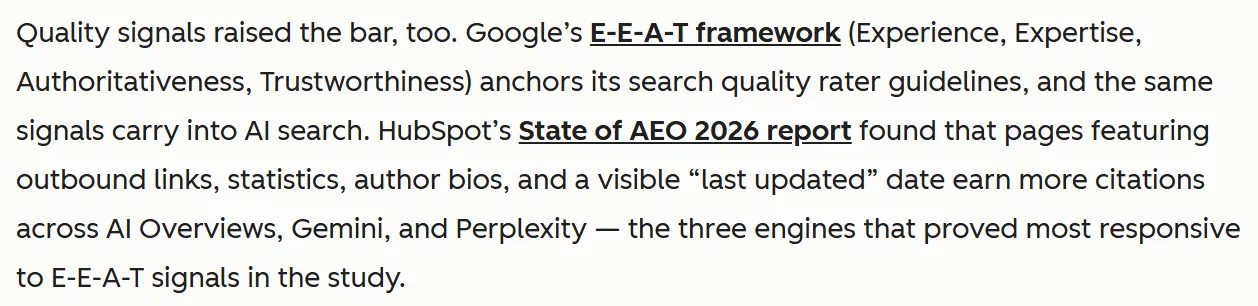
The good news: we’ve proven this works at Expert SEO, without any gimmicks. Our local SEO guide doesn’t just rank — it gets cited inside Google’s AI Mode.
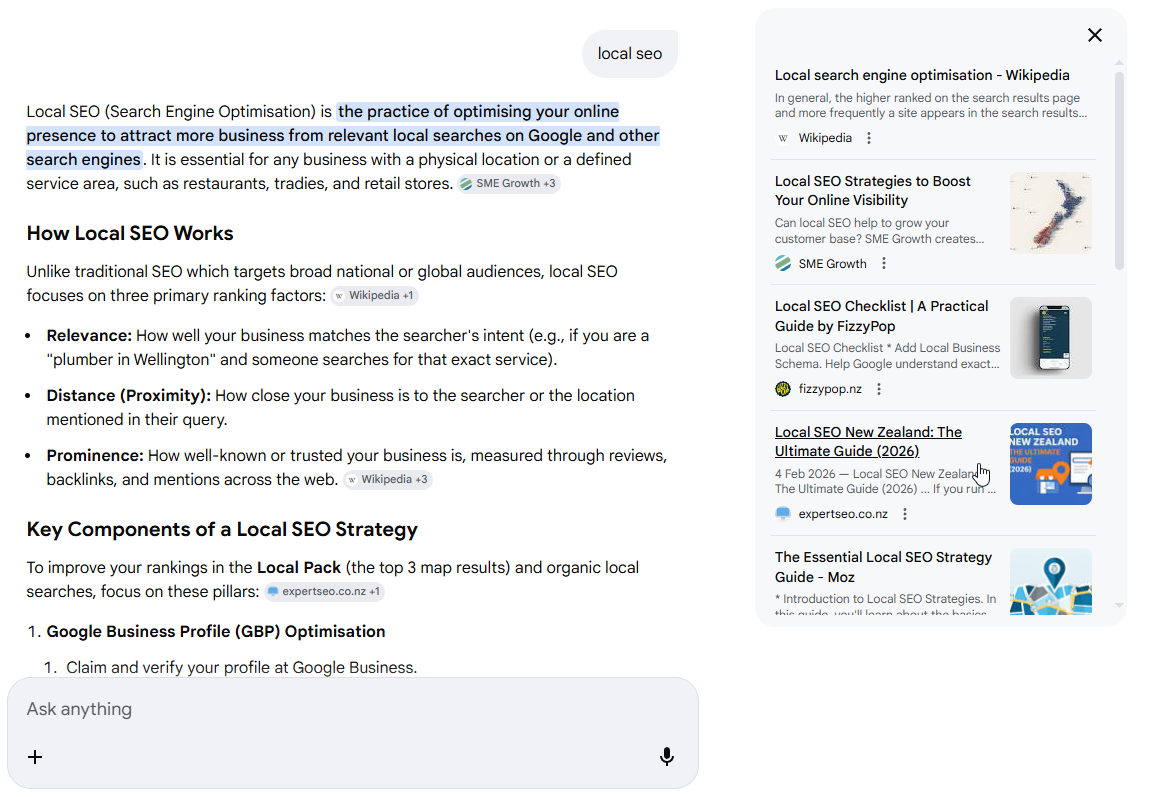
We got there by doing the boring, real things well.
Studies on how AI picks its sources keep landing on the same answer — original data, clear expertise, and natural writing get cited. No tricks, no handstands.
Do good content optimisation, and AI visibility follows. That’s the whole secret.
A Real Example: Optimising a Website Design Page End to End
Theory’s fine. Here’s what it actually looks like on a real page.
Let’s take a Hamilton business with a website design service page that isn’t ranking. We’ll walk every step.
Most guides only ever optimise blog posts. But a service page is where the money is, and it needs the same process — just pointed at commercial intent instead of informational. So this is the version nobody shows you.
Step 1 — Intent. We search “website designer Hamilton.”
The top results are service pages with portfolios, local proof, and a clear “get a quote.” That’s the intent. So our page needs to sell, not lecture.
Step 2 — Cover it completely. We look at what’s ranking and find the gaps.
Most competitors show a portfolio but skip pricing signals and local trust. So we add a rough price range, real local examples, and proof we build for Hamilton businesses specifically.
Step 3 — On-page. Title tag becomes “Website Design Hamilton | [Business Name]” with the keyword up front.
Meta description leads with the benefit. Headings get reordered so the page reads top to bottom: what we do, our work, why local, get a quote.
Step 4 — Readability. We cut the fluff, break the page into scannable blocks, and put the key answer — what you get and roughly what it costs — high up where both buyers and AI can grab it.
Step 5 — Conversions. We add a clear “get a free quote” near the top and again at the bottom. No reader should have to hunt for how to hire us.
Step 6 — Authority. We point a few internal links at the page, including from related local content, so it’s not sitting there alone.
Same six steps. Different intent. That’s the entire game — and it’s exactly how we build pages across the website design in Hamilton silo so they’re built to rank from day one.
Common Content Optimisation Mistakes
A few errors waste all the effort. Avoid these.
- Keyword stuffing. Cramming your keyword in 30 times doesn’t help — it reads badly and Google sees through it. Write naturally and mention related terms instead.
- Padding for length. Long isn’t the goal; complete is. A tight 1,200-word page that answers everything beats a bloated 3,000-word one full of filler.
- Chasing a tool score. Tools like Surfer give you a number to hit. That number isn’t the point — satisfying the search is. Don’t add a paragraph just because a tool told you to.
- Optimising pages nobody searches for. Check there’s real search demand before you pour hours into a page. No demand, no traffic, no matter how well it’s optimised.
- Optimise once and forget. We covered this up top — it’s the most common one of all. Set a reminder to revisit your important pages.
Content Optimisation Tools (Both Free + Paid)
The tools make optimisation faster. None of them are required — but these are the SEO tools I lean on most once you’re optimising at volume.
Surfer SEO
Analyses the top-ranking pages for your keyword and hands you a checklist of terms and topics to include. Good for making sure you haven’t missed anything competitors cover.
Clearscope
A content-grading tool. Paste your draft in and it scores how well you’ve covered the topic against what’s ranking. Handy for tightening a page before it goes live.
Frase
Builds content briefs straight from the live search results and helps you outline fast. Useful at the research stage — it pulls the questions and subtopics into one place.
Ahrefs
Best known for backlinks, but its keyword and SERP data is gold for optimisation. You can see what’s ranking, how hard it’ll be to beat, and what each page covers.
Semrush
A do-everything SEO platform — keyword research, competitor analysis, content scoring. Powerful if you’ll use it properly, overkill if you just need to fix a page or two.
But here’s the free method that does 80% of the job: open the top five results, read them, list what they cover, and find the gaps. That’s manual SERP analysis — exactly what the paid tools automate. You can do it with nothing but a browser.
The tool is a shortcut. The thinking is free.
When to Do It Yourself vs Hire an Expert
You can do everything in this guide yourself. The process is laid out — match intent, cover the topic, fix the on-page elements, write clearly, sharpen the CTA, build authority. For one or two pages, that’s a weekend.
It’s worth bringing in help when the volume gets real, or the niche gets competitive, or you’d simply rather spend that time running your business. Optimising fifty pages properly, or clawing into a competitive market, is a different job than fixing one.
That’s the call our done-for-you SEO handles for NZ businesses — and if you’d rather get strategic guidance and do the work yourself, that’s what an SEO consultant is for.
Either way, the process is the same one above. The only question is who runs it.
When you’d rather it just got done right, that’s where we come in.
Content Optimisation: FAQ
What is content optimisation?
Content optimisation is the process of improving a page so it ranks higher in search engines and gets cited by AI tools — by matching search intent, covering the topic fully, and making it clear to read.
What is an example of content optimisation?
Taking a service page that's stuck on page two, rewriting the title tag to lead with the keyword, filling the gaps competitors miss, and adding a clear call to action — then watching it climb.
How do you optimise content for SEO?
Match the search intent, cover the topic completely, fix your on-page elements (title, meta, headings, links, alt text, schema), write for readability, sharpen your calls to action, and earn a few quality links.
Is content optimisation the same as SEO?
No. SEO is everything you do to rank — technical, backlinks, local signals, the lot. Content optimisation is the on-page slice of it: the words and structure on the page itself.
Is SEO dead in 2026, or will AI replace it?
Neither. AI search rewards the same things good SEO always has — clear, expert, genuinely useful content — and pages cited inside AI answers earn more clicks, not fewer. The work shifts toward being the source the answer is built from.
How long does content optimisation take to move rankings?
Usually a few weeks to a few months. Optimising an existing page that already has some authority is faster than ranking a brand-new one, and Google often re-crawls updated pages within days.
Recommended Reading
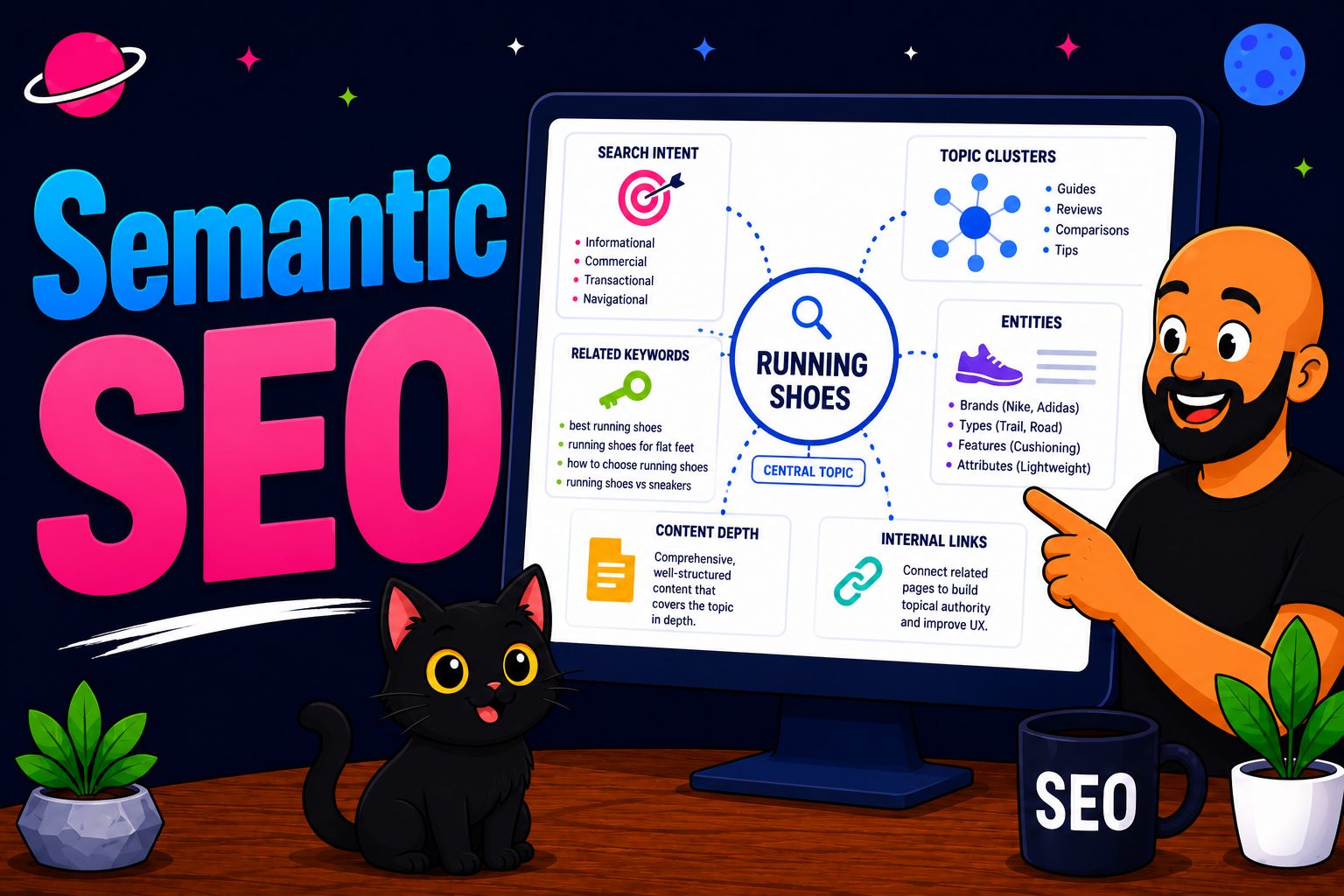
Semantic SEO
Ranking for whole topics, not just keywords — the deeper layer behind covering a topic completely.
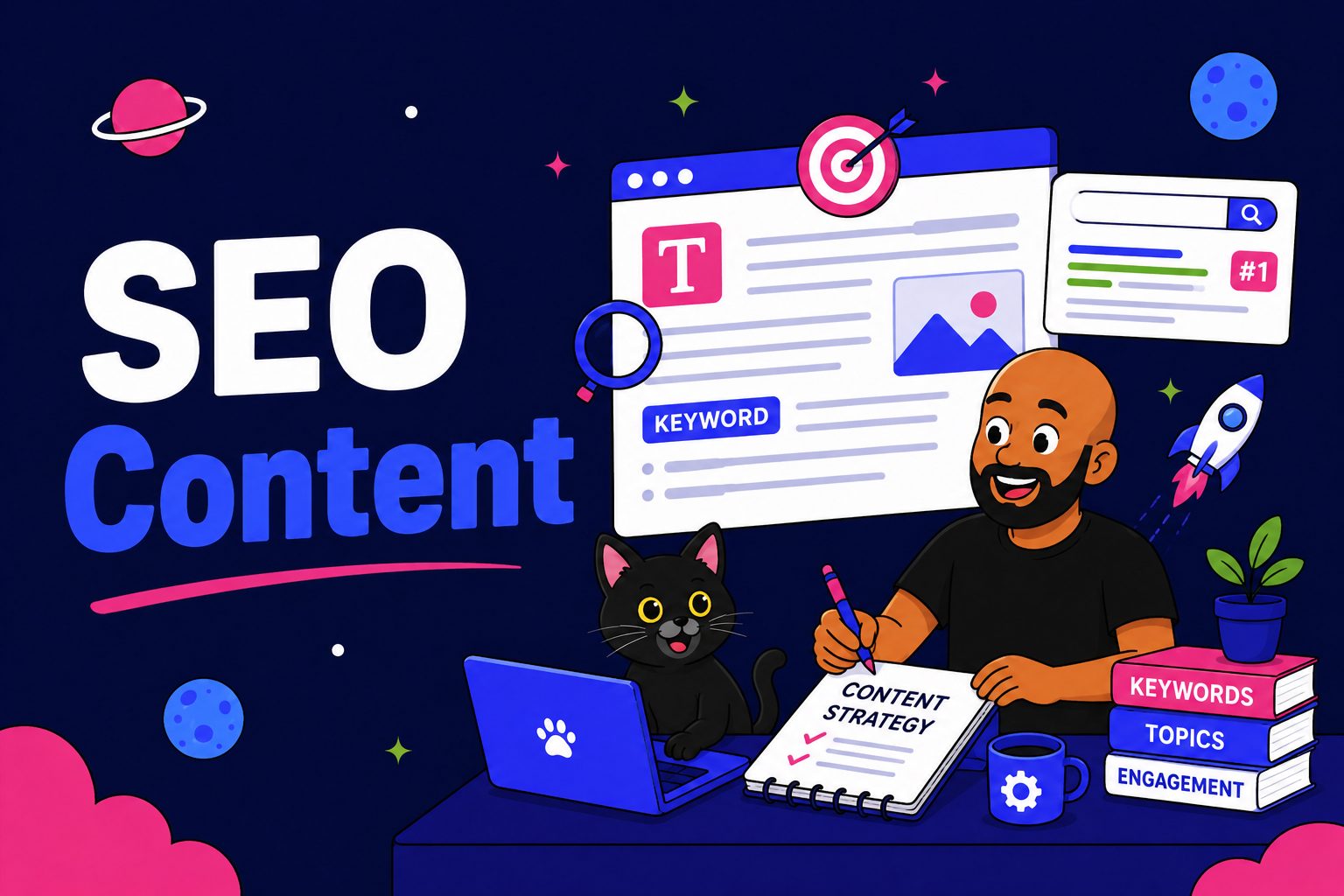
SEO Content
How to write content that ranks, in the depth Google and AI actually reward.
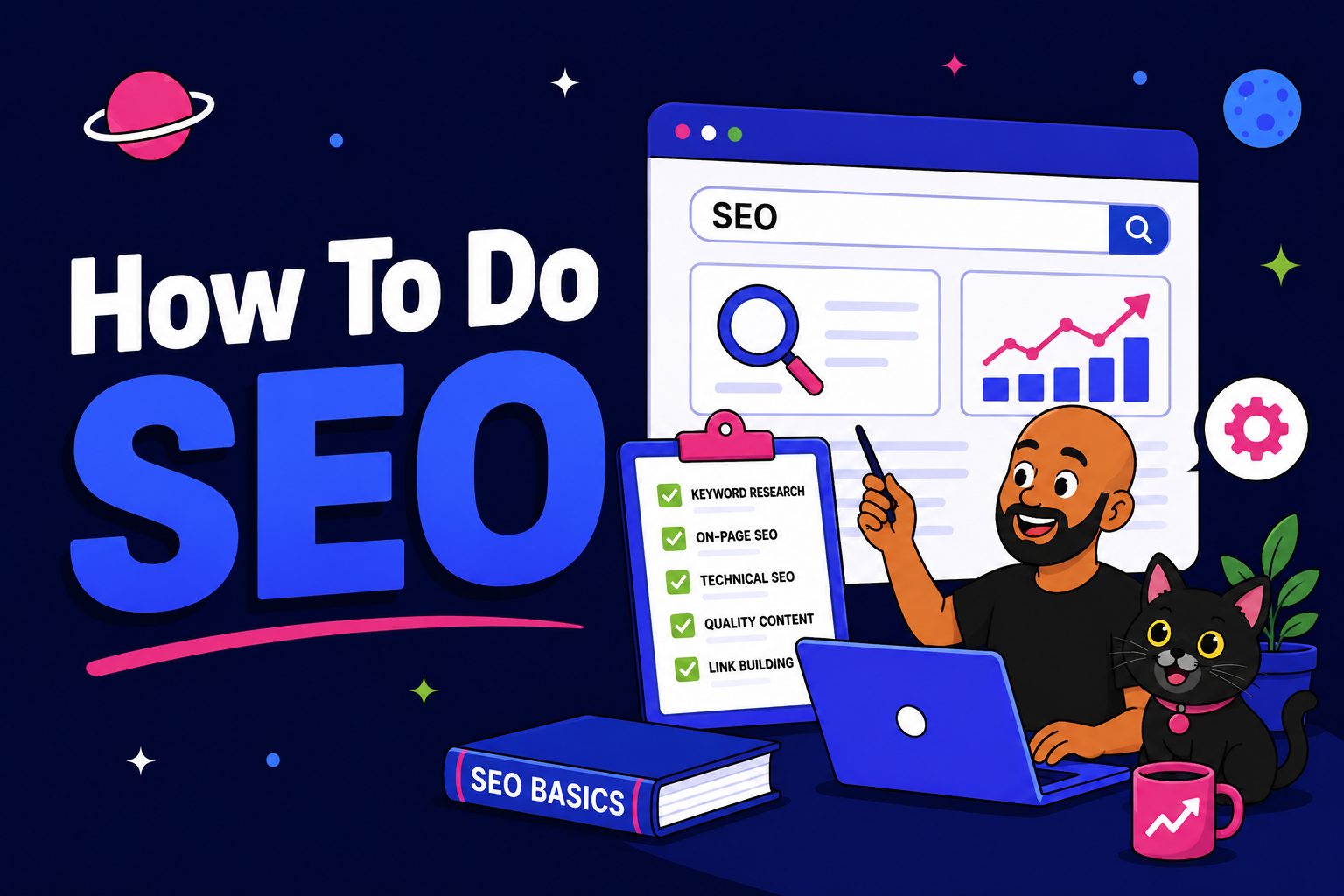
How to Do SEO
The full process from keyword to ranking — where content optimisation fits into the bigger picture.