
A while back I read a thread on Reddit where a full-time copywriter admitted something most people won’t.
He could write. Emails, landing pages, the lot. But the second he sat down to write a page that had to rank, he said, he sounded “like a bumbling idiot” and couldn’t “craft words that convert.”
That’s the honest version of the SEO copywriting problem. The writing usually isn’t the issue — plenty of people write fine. What trips them up is that nobody’s shown them how writing for a search engine differs from writing for a human, or how you do both at once without wrecking either.
So here’s a straight answer, from someone whose own words are doing the job right now. My SEO company is under a year old, competing against NZ agencies with a decade’s head start — and it already ranks for hundreds of keywords, gets cited in Google’s AI answers, and pulls in leads while I sleep.

This is the whole game, done on the pages you actually have, at the search volumes we actually get in New Zealand. No fluff. Just what works.
Key Takeaways
- SEO copywriting is writing web content that ranks in search and persuades a real person to act — buy, book, or enquire. It’s copywriting with a structure search engines (and now AI) can read.
- Pasting keywords into a page does nothing on its own. Google reads meaning, not word-matches, so relevance beats repetition every time.
- The biggest gap in most advice: it only teaches blog posts. Your service pages and homepage — the pages that make money — need a different approach.
- In 2026 your copy has a second job: getting quoted by AI Overviews and ChatGPT. The good news is the same clear, useful writing that ranks is what gets cited.
- Low NZ search volume isn’t a reason to skip it. A term with 110 searches and real buying intent can be worth more than one with 1,600 you’ll never rank for.
- Skip the outdated stuff — keyword stuffing, “LSI keywords,” writing to hit a word count. Google ditched those years ago; some guides still haven’t.
- In NZ, expect to pay roughly $350–$395+GST a page from a freelancer, $150–$250 an hour at an agency, or from about $1,995/month bundled into an SEO programme.
What Is SEO Copywriting
SEO copywriting is the craft of writing web content that ranks in Google and gets a real person to take action.
That’s it. Two jobs in one piece of writing: get found, then get the reader to do something once they’ve found you.
Break it into the parts that actually matter and you get five:
- Search intent — writing the thing the searcher was actually after, not the thing you feel like writing.
- Keywords, used naturally — your main term and its relatives worked into the copy, headings and meta, without stuffing.
- Scannability — short paragraphs, clear headers, bullet points. Easy for a human to skim, easy for a crawler to parse.
- Persuasion — hooks, benefits, and a clear call to action, so the traffic turns into enquiries instead of just numbers in a dashboard.
- Formats built for how people search now — structured so AI Overviews and answer engines can lift and cite your page.
Notice those five aren’t mine. That’s almost word-for-word how Google’s own AI Overview breaks the topic down when you search “seo copywriting.” Which is handy — it means we already know the shape of the answer Google rewards.

So what does an SEO copywriter actually do? They take a business’s page, work out the exact term a customer would search, and write copy that answers that search better than anyone else — while quietly nudging the reader toward booking a job.
Part writer, part strategist. The search engine optimisation bit is the structure; the copywriting bit is the persuasion.
SEO Copywriting vs Regular Copywriting
Regular copywriting persuades a reader. SEO copywriting persuades a reader and is built so a search engine can tell what the page is about — which is exactly why pasting keywords at the bottom of a page does nothing.
Here’s the difference you can actually see. Same product, two ways of writing the opening line of a page:
Regular copy: “Tired of shoes that fall apart after one season? We’ve got you covered.”
SEO copy: “Looking for durable trail running shoes in NZ? Ours are built to survive a full season on Kiwi tracks.”
The second one still sells. It just also tells Google — in plain words a human would use anyway — that this page is about trail running shoes in NZ.
Nobody had to sacrifice the persuasion to get the relevance. That’s the whole trick, and most guides make it sound harder than it is.
Now, the question every copywriter secretly asks. One guy on Reddit put it perfectly:
“Whats to stop me from finding the top 10 keywords using Semrush and pasting them at the bottom of my sales or blog to get those rankings?”

Fair question. The answer is how Google actually reads a page now.
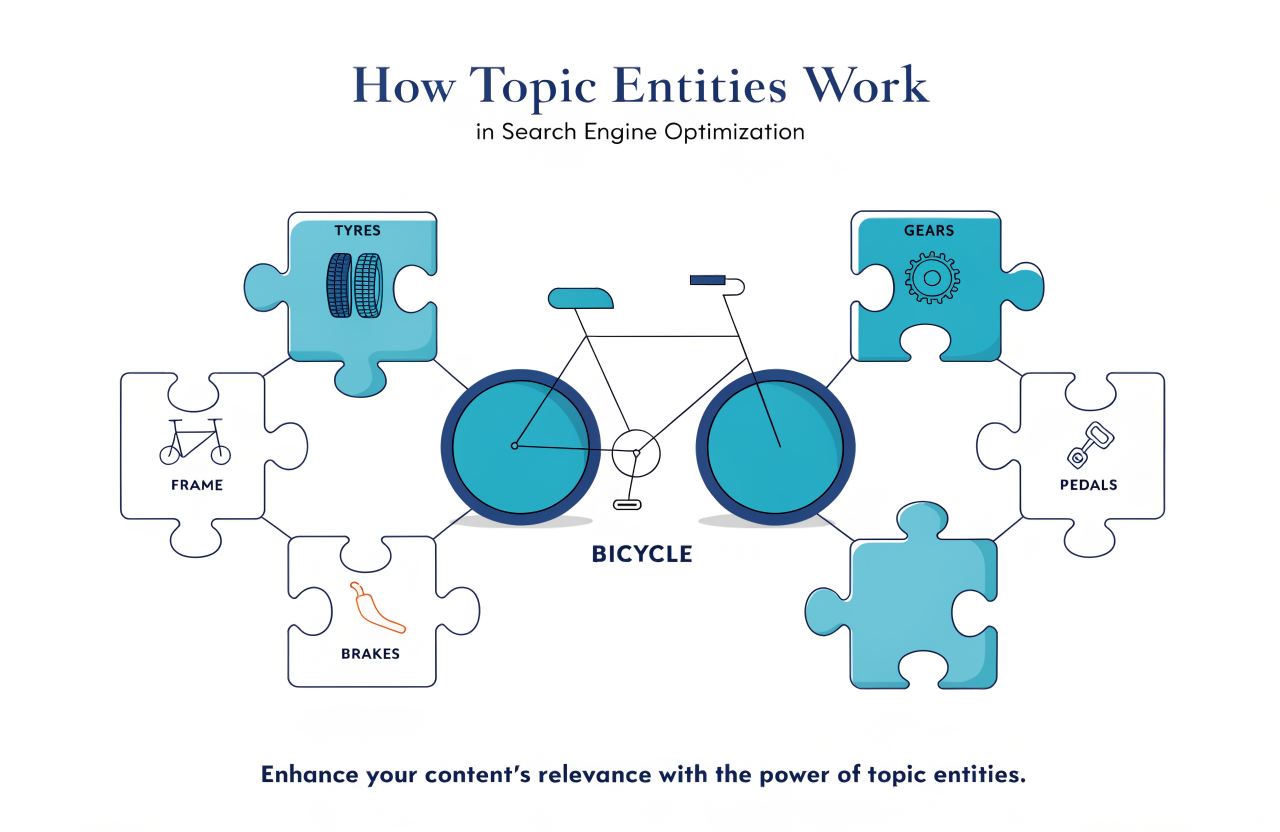
Years ago, search really did work a bit like keyword-matching — count the words, rank the page. So people stuffed. Google shut that down a long time ago. Today it reads the page more like a person does: it looks at the words around each word, works out the topic and the entities involved, and decides what the page is genuinely about.
Think of it like meaning, not strings. A page about “apple” that also talks about orchards, cider and harvests is clearly about the fruit. One that talks about iPhones and chargers is clearly about the company. Google gets that from context — so a bare list of keywords with no supporting content reads as exactly what it is: noise.
So the honest resolution to that old “robots vs humans” argument: it’s neither, and it’s both. You write for the human, and you structure for the machine. When the keyword-driven layout and the persuasive flow pull in different directions — and sometimes they do — the reader wins, every time. A page that ranks but doesn’t convince is just an expensive way to bounce people back to Google.
Why Is SEO Copywriting Important
Because good SEO copy is an asset that keeps paying. Write one page properly and it can pull in traffic and leads for years — long after an ad campaign would’ve stopped the moment you stopped funding it.
I’d rather show you than tell you.
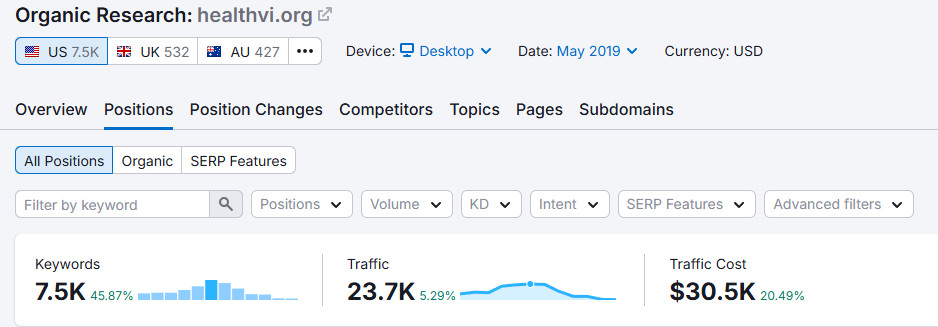
In 2017 I started a health website, HealthVI, with my old business partner and SEO mentor Ian Pribyl. We took it from zero to over 20,000 organic visitors a month — all off content built around what people were actually searching.
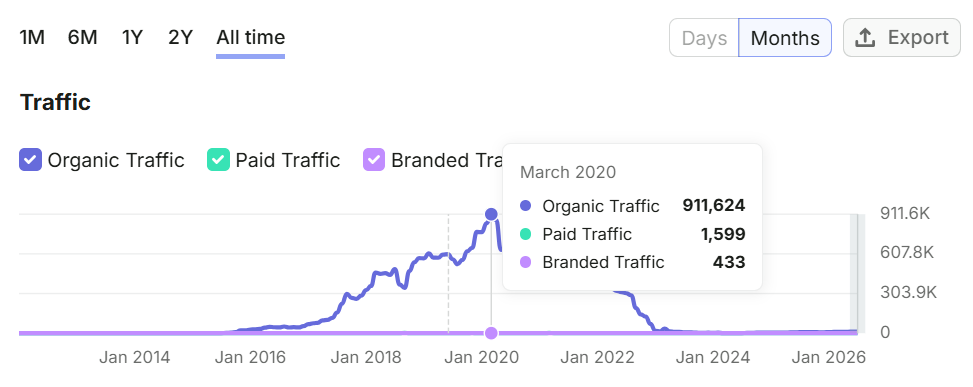
That’s not a one-off. I once handled the content and SEO for a site in the sleep niche that, at its peak, pulled 911,624 organic visits a month and ranked for over 433,000 keywords — 14,000-odd of them sitting in Google’s top three. That put it in the top 0.01% of websites on the internet. How? Content. Genuinely useful pages, written for real searches, done at scale.
And it still works in the AI era — the bit everyone assumes is dead. Expert SEO, my own site, is under a year old on a brand-new domain, and it already ranks for 233 keywords carrying around $3,500 a month in traffic value.
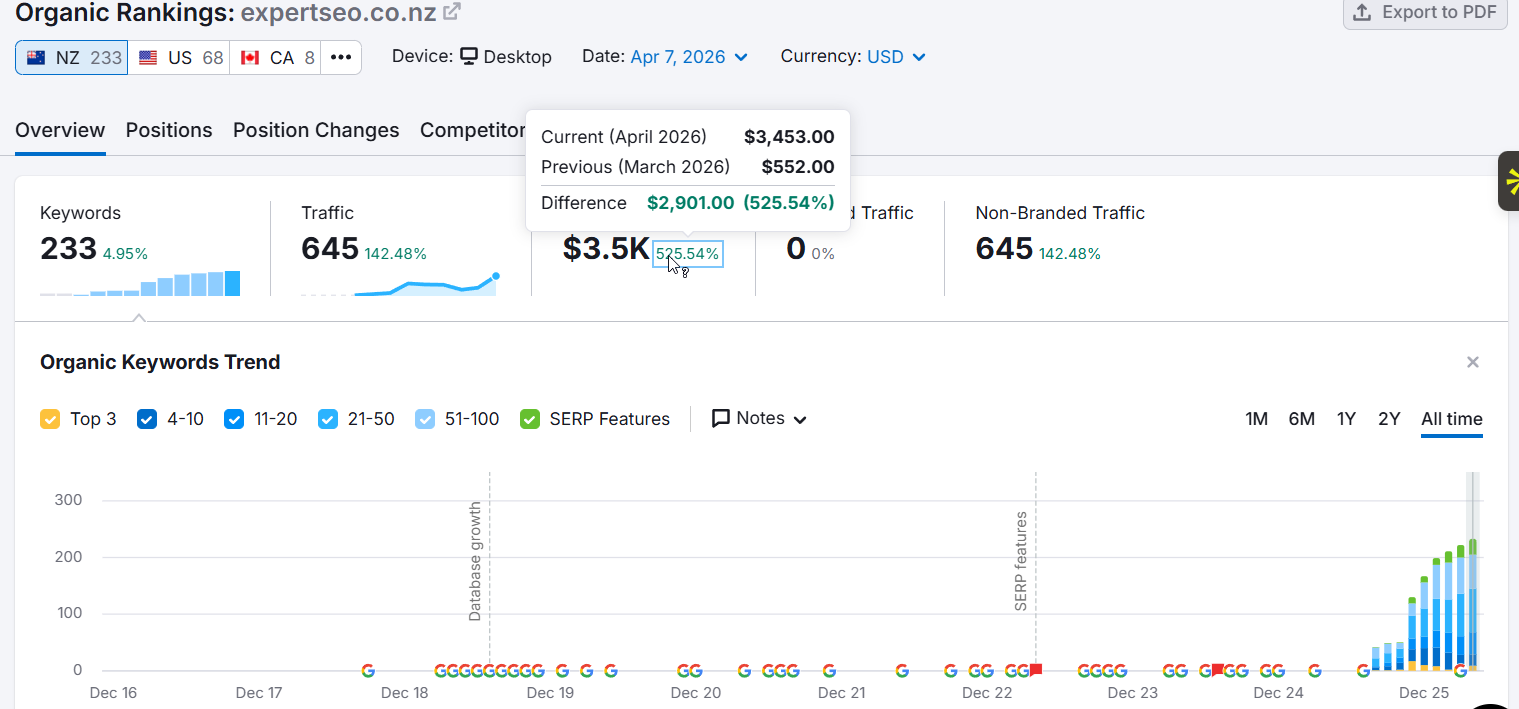
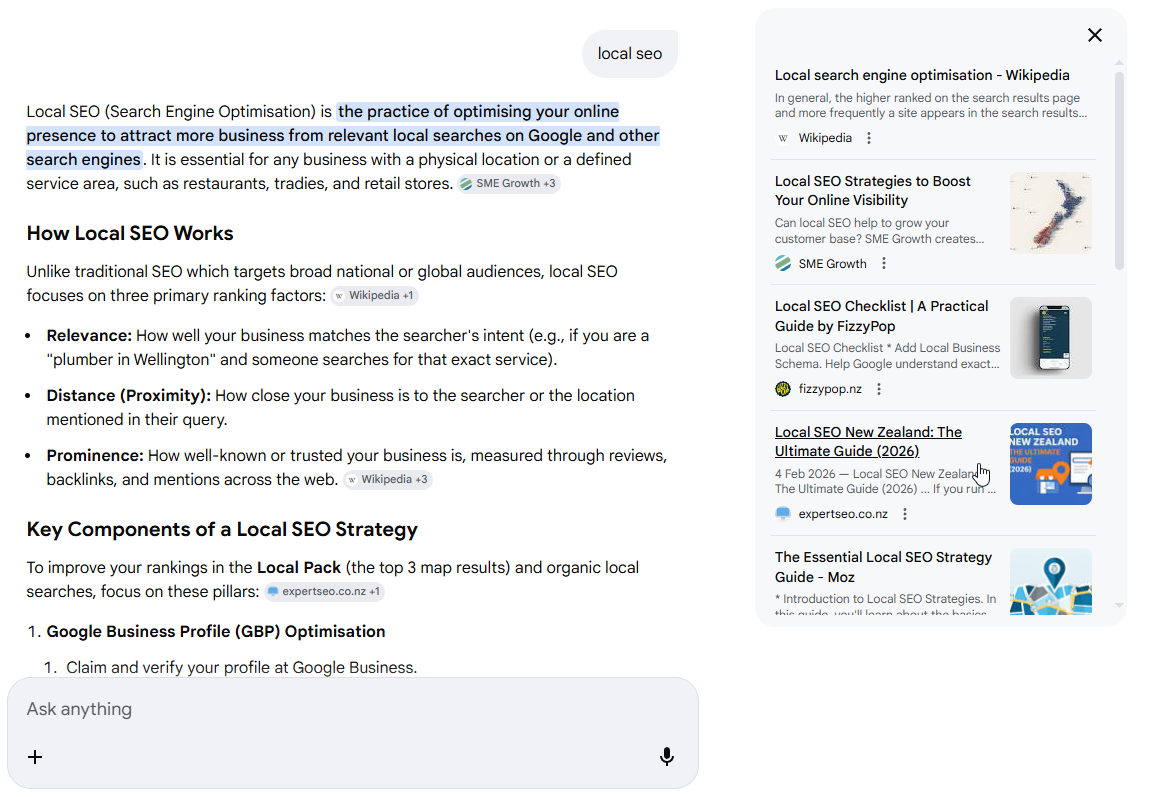
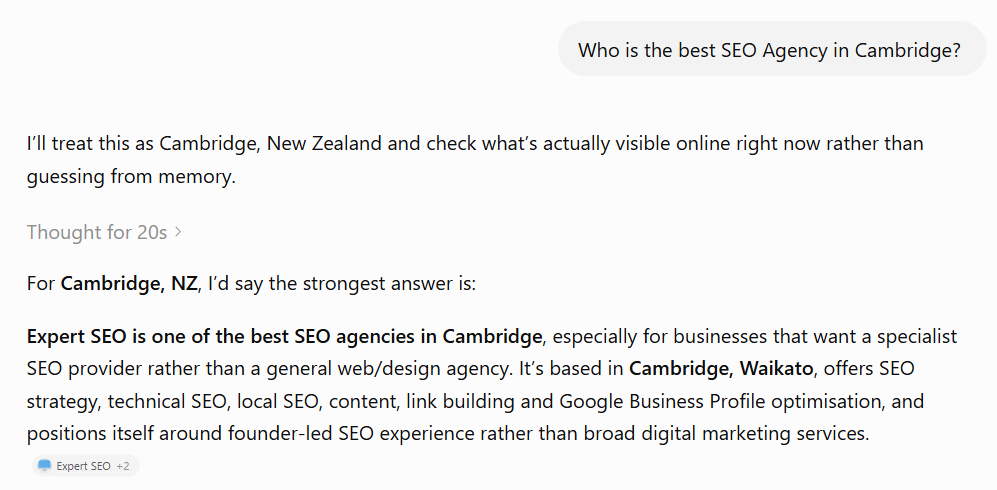
It even gets named by name in Google’s AI Mode and in ChatGPT answers — on a domain most agencies would’ve written off as too new to matter.
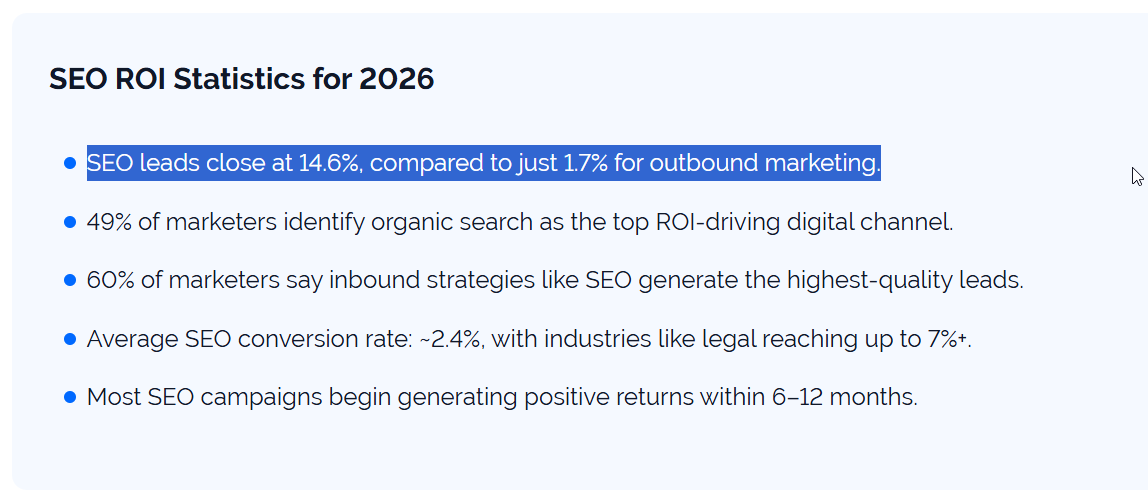
Here’s why that matters for the numbers side of things: SEO leads close at about 14.6% versus 1.7% for outbound. A visitor who found you by searching for exactly what you sell is already halfway to buying. Ads rent that attention. Copy that ranks owns it.
“But NZ search volume is tiny.” True. And it doesn’t matter as much as you’d think.
Yes, “seo copywriting” gets around 110 searches a month here versus 14,000 globally. But long-tail terms convert far better than broad ones — up to 11x better — because the person searching them knows exactly what they want. A term with 110 searches and real buying intent, that you can actually rank for, beats a 1,600-volume term you’ll never crack. You’re not chasing traffic. You’re chasing the right traffic.

How to Write SEO Copy
Writing SEO copy is a process, not a knack. Find the right term, check you can win it, match the page to what the searcher wants, structure it, write it, then nail the on-page details.
Let me walk it through with one real example the whole way down — SEO for an Auckland business, specifically a mortgage broker who wants their service page to actually bring in enquiries.
Step 1 — Find the right keyword (at NZ volumes)
Keyword research is finding the exact words your customers type into Google, so you can build a page that matches.
Start with a seed. For our broker, that’s “mortgage broker Auckland.” Drop it into a tool — SEMrush’s Keyword Overview, Ahrefs’ Keywords Explorer, or the free Google Keyword Planner — set the country to New Zealand, and read what comes back: the main term, its variations, the questions people ask, and the rough monthly volume.
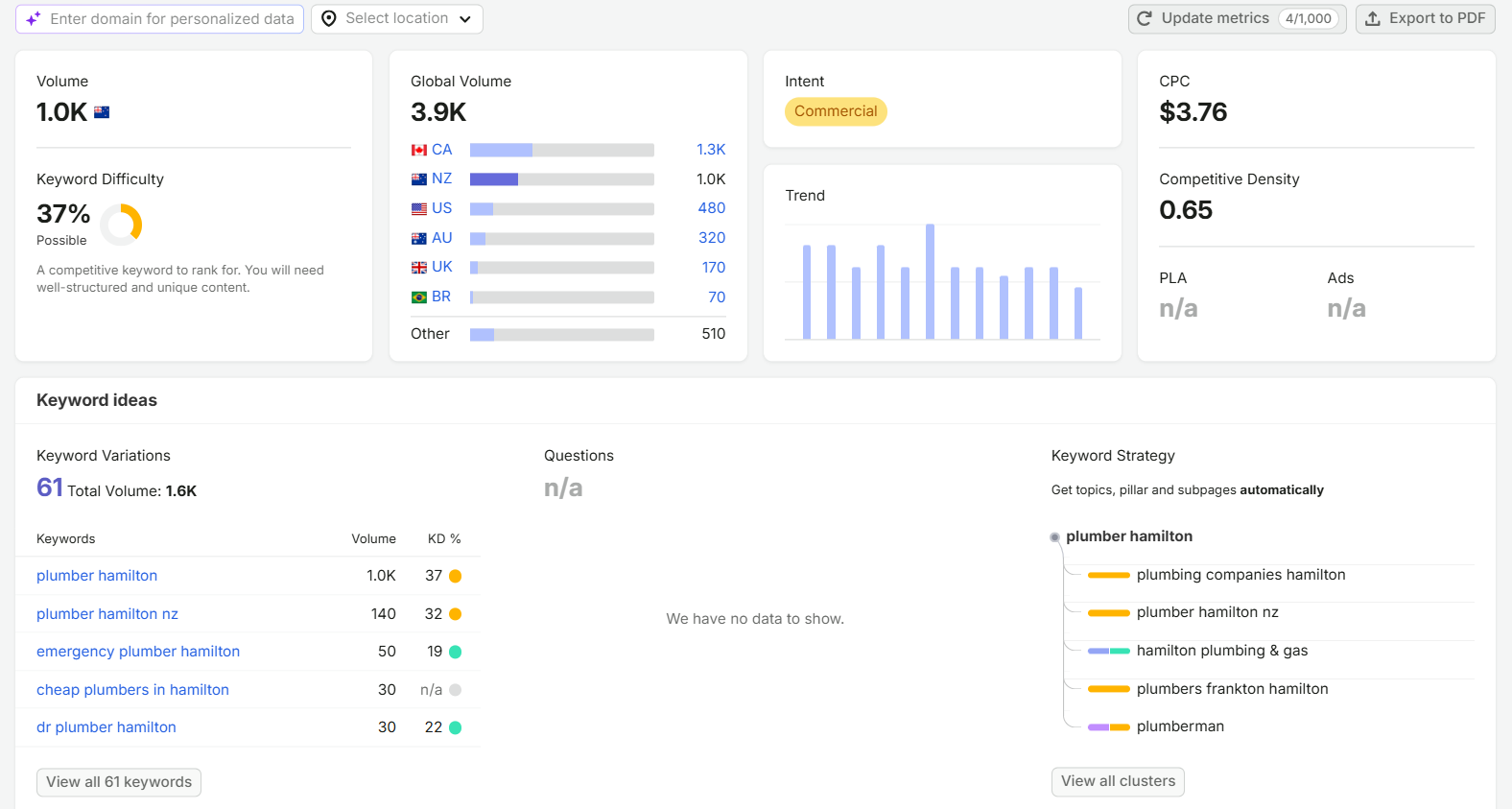
Two NZ-specific warnings here.
First, the volumes will look depressingly small. That’s normal — this is a market of five million people, not the United States. Don’t bin a keyword because it says 20 searches a month. Twenty people looking for a mortgage broker in your city are twenty potential clients, not twenty blog readers.
Second, don’t fully trust Google Keyword Planner’s numbers. Ahrefs studied 72,635 keywords and found Keyword Planner overestimates volume 91.45% of the time, often bundling loosely-related terms together. Use it for ideas; sanity-check the volume in a second tool.

Step 2 — Check you can actually win it
Before you write a word, look at who’s already ranking. This is the step almost every guide skips, and it’s the one that saves you from writing a page that never sees daylight.
Type your keyword into Google and look at the top few results. Are they massive national brands, or other small NZ businesses? Then check their strength — pop the top URLs into Ahrefs or SEMrush and look at referring domains (how many other sites link to them). Keyword difficulty largely comes down to links: if the pages ahead of you have a handful of referring domains, that’s a beatable SERP.
And take the difficulty scores with a grain of salt — they’re relative, not gospel. The same keyword can read as “hard” in one tool and “possible” in another.
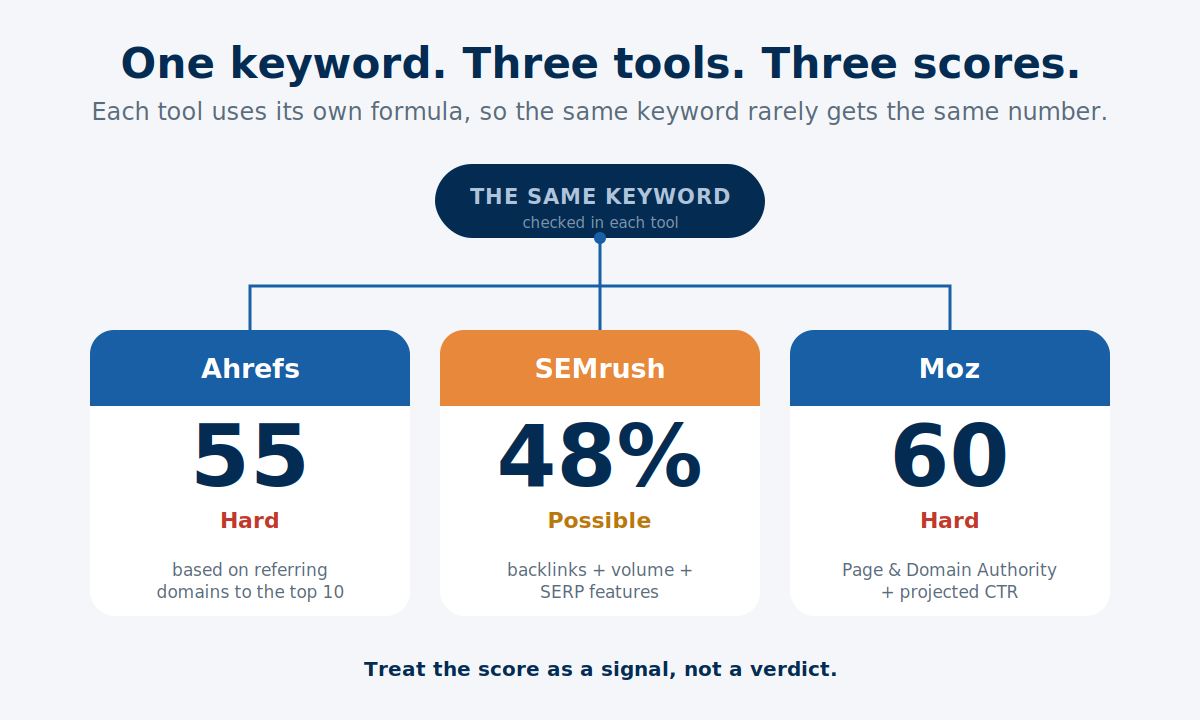
For our Auckland broker, “mortgage broker Auckland” is competitive. But “first home buyer mortgage broker Auckland” — lower volume, far less competition, and a much readier-to-talk searcher — is a page you can genuinely win. That’s the trade you’re always making: volume versus winnability. Nine times out of ten, pick winnability.
Step 3 — Match the page to search intent
Search intent is the reason behind the search. The keyword is just the clue. Get this wrong and nothing else matters, because you’ll build the wrong type of page.
Roughly half of all searches are informational — people learning, not buying. About 14% are commercial — comparing, getting close to a decision. A small slice are transactional — ready to act now.
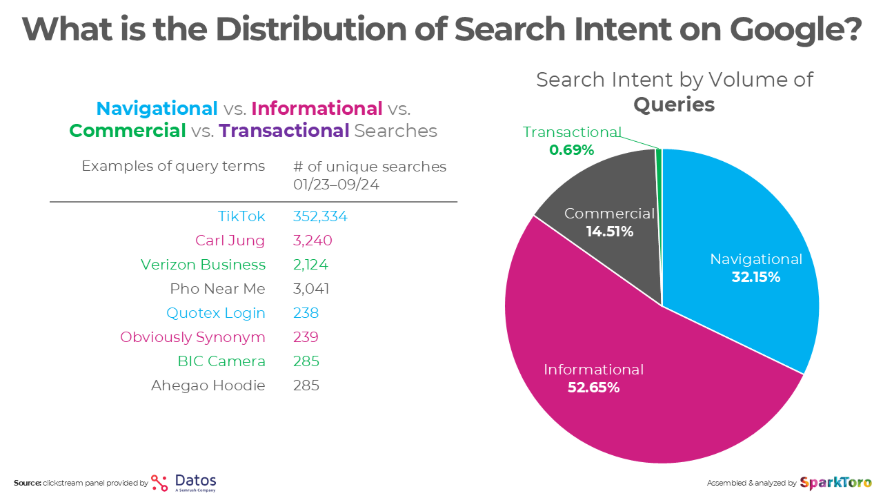
The move is to match each keyword to the right page:
| Keyword | Intent | What to write |
|---|---|---|
| “how does a mortgage broker work” | Informational | A blog post |
| “best mortgage broker Auckland” | Commercial | A comparison or a strong service page |
| “first home buyer mortgage broker Auckland” | Commercial/transactional | Your service page |
| “book mortgage consultation Auckland” | Transactional | A booking/contact page |
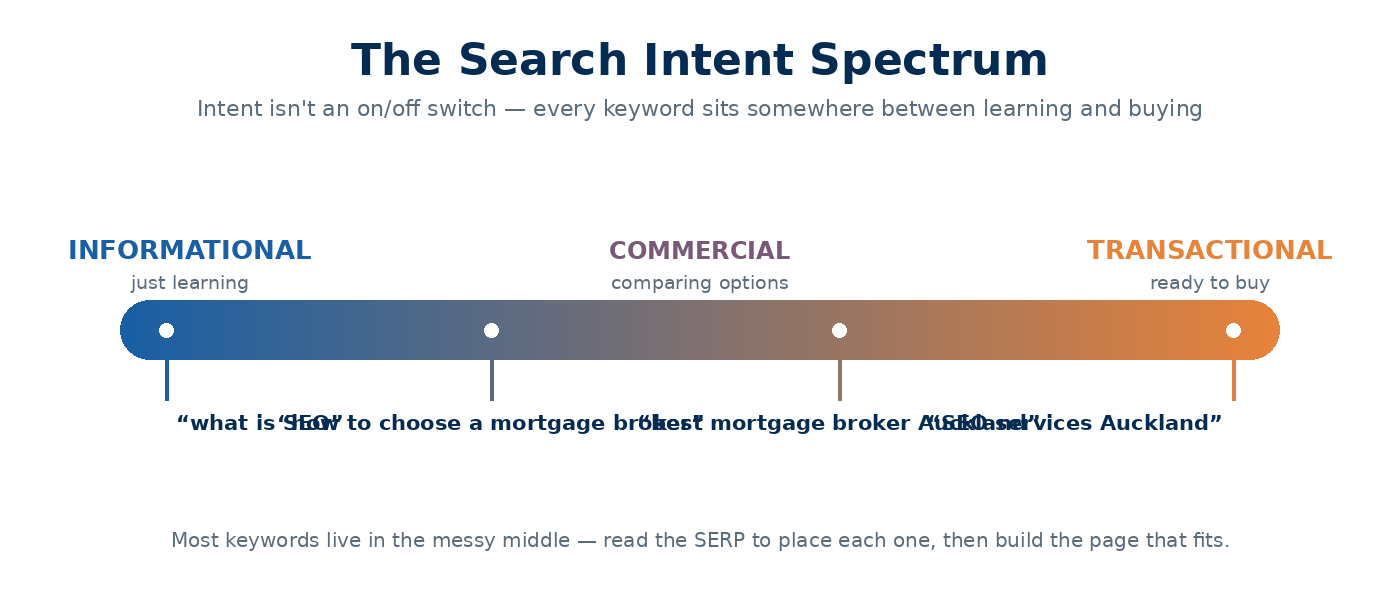
Our broker’s money page targets the commercial term. The informational ones become blog posts that feed the money page links and trust. Different jobs, different pages — never one page trying to do all four.
Step 4 — Structure the page before you write
Give the reader the answer first, then the detail. This is the inverted pyramid, and it’s how both humans and AI prefer to read.
Open every section with the point (the “BLUF” — bottom line up front), then expand. Use headings that say what the section delivers. Keep paragraphs to a line or two. A wall of text is where readers — and crawlers — check out.
For the broker’s service page, the structure writes itself once intent is clear: the promise up top (“Auckland mortgage brokers who get first-home buyers approved”), then how it works, then proof, then the objections a nervous buyer has, then the call to action.
Step 5 — Write for the human, structure for the machine
Now actually write it — and write it like a person talks, not like a brochure.
A framework that works for service pages is PAS: Problem, Agitate, Solve. Name the reader’s problem (“banks keep saying no”), press on why it stings (“and every week you wait, prices climb”), then solve it (“we know which lenders say yes to first-home buyers”). Persuasion and keywords living in the same sentence.
Whatever you do, don’t write to hit a word count. More on that below — it’s one of the biggest myths going.
Step 6 — Nail the on-page details
Last, the mechanics that tell Google what the page is:
- Title tag — your keyword near the front, written to earn the click. Worth knowing Google rewrites titles about a third of the time when yours is weak, so make it genuinely good.
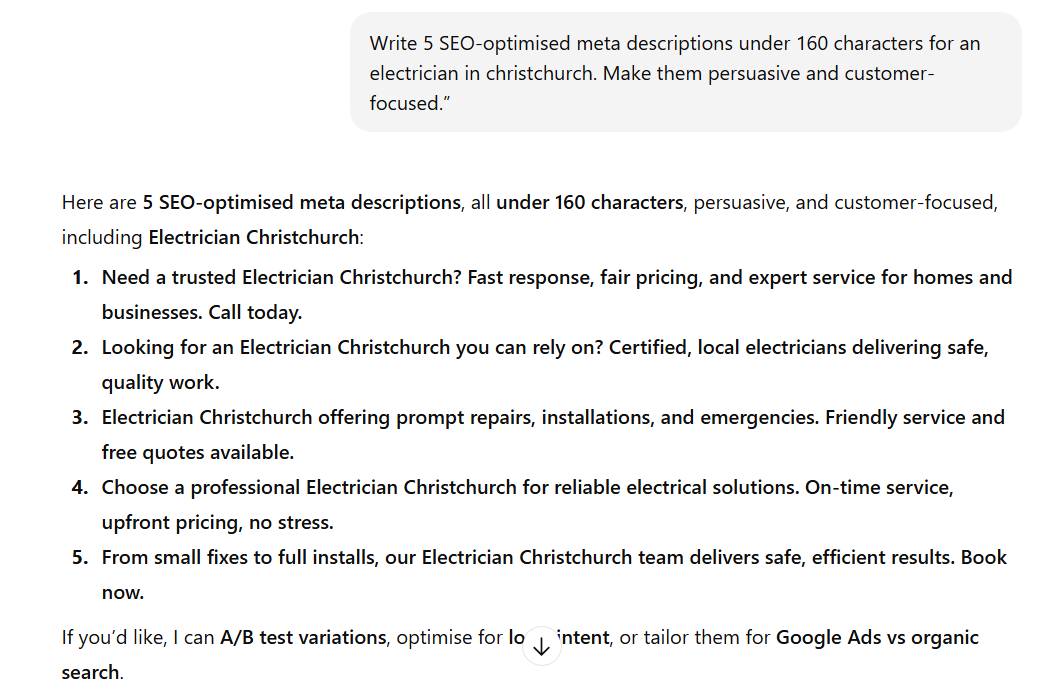
- Meta description — not a ranking factor, but it’s your ad in the results. Sell the click.
- Headings — one H1, then H2s and H3s that map the page logically. This is core on-page SEO, and it takes minutes.
- URL — short, readable, with the keyword.
/mortgage-broker-auckland/, not/page?id=228. - Alt text — describe every image plainly; it helps accessibility and image search.

Stuck on titles and metas? This is one spot where AI genuinely helps — ChatGPT will spin out ten solid options in seconds for you to pick and sharpen.
How to Write SEO Copy for Service Pages and Homepages
A blog post and a service page are not the same job — and confusing the two is exactly why that Reddit copywriter froze at his own homepage.
A blog post teaches. It has room to breathe, a curious reader, and a soft goal. A service page has to rank for a commercial term and close a ready-to-buy visitor in one scroll. Higher stakes, less space, and a reader who’ll bounce the second they smell fluff.
Here’s how a service page earns its ranking and its enquiry:
- Lead with the commercial keyword and the promise. “Auckland mortgage brokers for first-home buyers” tells Google what the page is and tells the visitor they’re in the right place. One line, both jobs.
- Put proof above the fold. Reviews, results, a recognisable client, a number. The nervous buyer needs a reason to keep reading before they’ll trust a word.
- Handle the objection. Every service has one — price, risk, “will this actually work for me.” Name it and answer it on the page, or they’ll leave to go find the answer.
- One clear call to action. Book a call. Get a quote. Not five competing buttons — one obvious next step.
The homepage is a slightly different animal: it has to carry the brand, the primary service term, and trust all at once, then funnel people to the right service page. But the principle holds — every line either builds trust or moves the reader forward. If it does neither, cut it.
This is the part I’d genuinely hand to someone if it’s not your strength. Getting a service page to rank and convert is where done-for-you SEO earns its keep — it’s a different skill from writing a nice blog. It’s the same story behind a lot of SEO for Hamilton businesses: the service page ranks, but it never rings the phone — and the copy is almost always why.
And if you sell products rather than services, the same logic runs through your category and product pages — that’s ecommerce SEO, and the buyer intent is even sharper.
SEO Copywriting for AI Search
In 2026 your copy has a second job: getting quoted by AI. And the good news is you don’t need a separate playbook — the same clear, useful, well-structured writing that ranks in Google is what gets pulled into an AI answer.
This is the thing nobody in the search results will tell you, because most of those guides were written before AI search mattered and never updated.
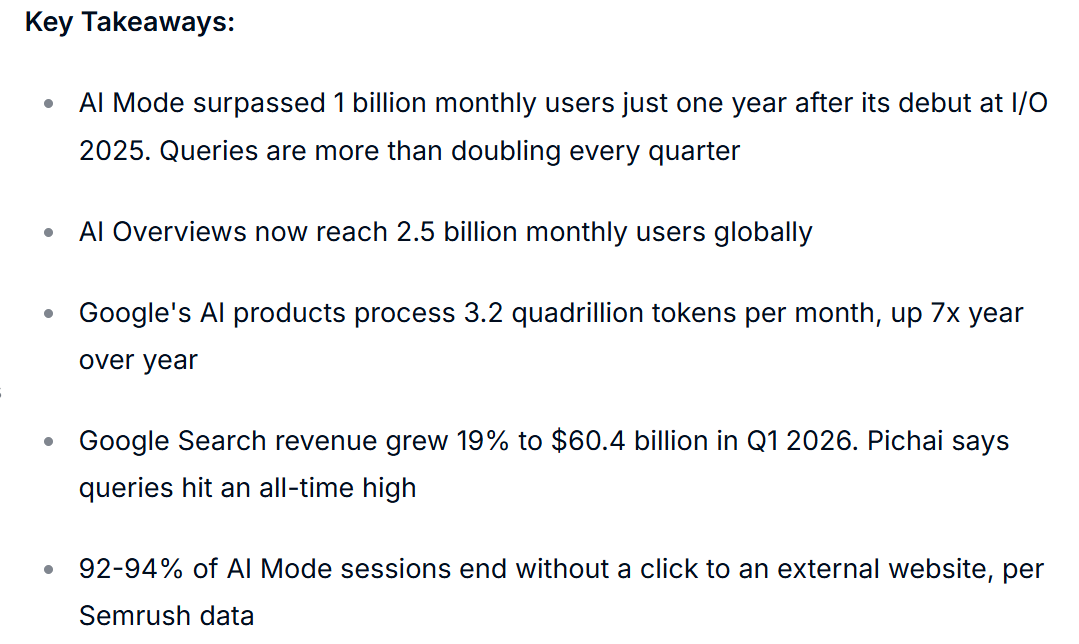
Start with the scale of it. Google’s AI Overviews now reach over 2 billion people a month. When someone searches, there’s a growing chance they read an AI summary and never scroll to the blue links at all. If your page isn’t in that summary, for a lot of searches you may as well not exist.
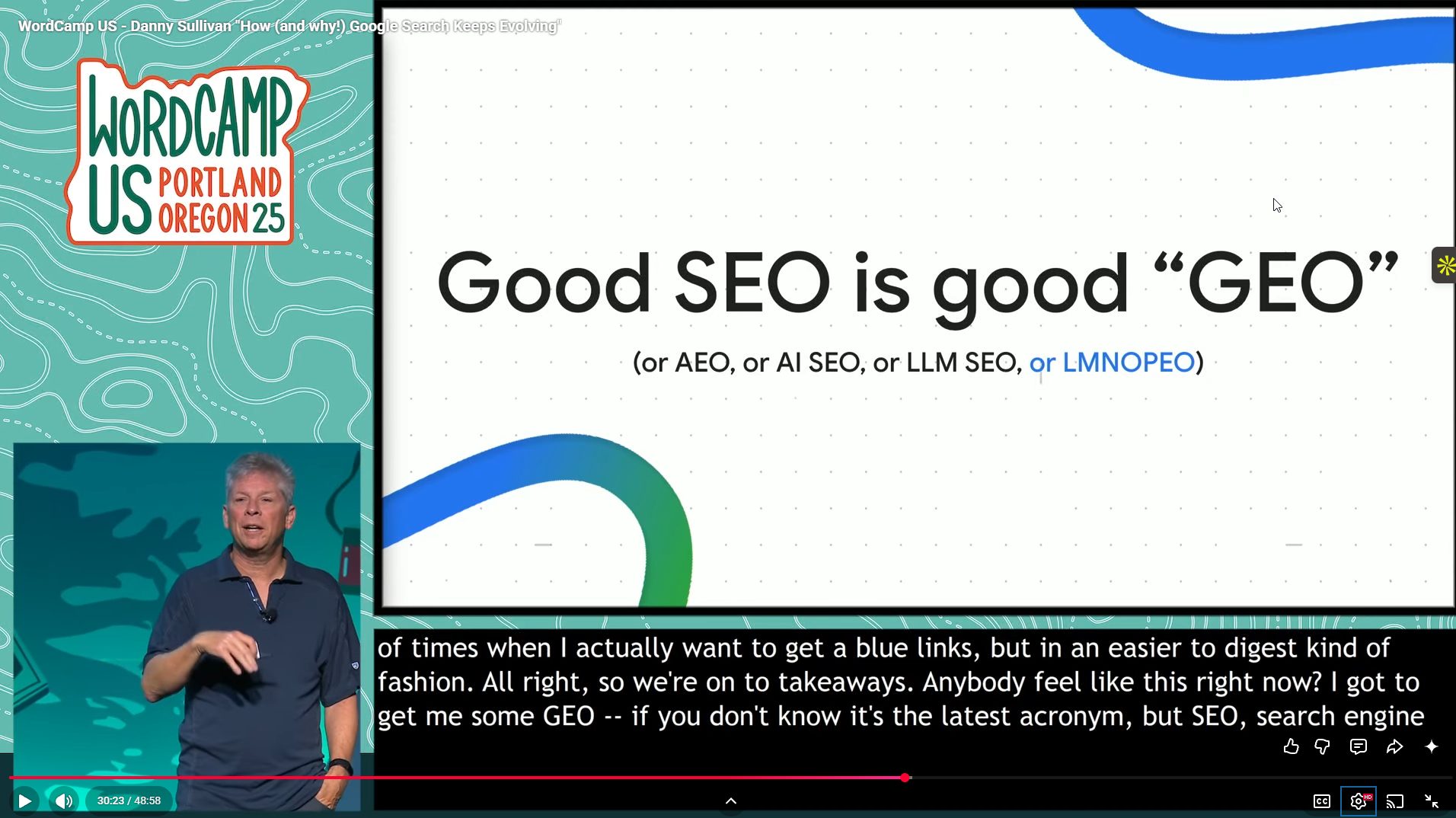
So “is SEO dead?” No. It moved. Google’s own Danny Sullivan put it plainly: good SEO is good GEO — optimising for AI answers runs on the same fundamentals as always, just aimed at a new surface.
What actually gets pulled into an AI answer? A few specific things:
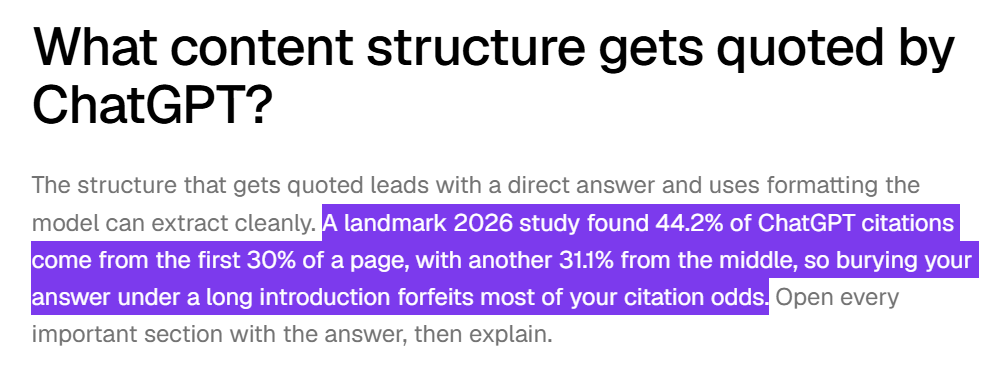
- A clean, direct answer near the top. One study found 44% of ChatGPT’s citations come from the first third of a page. Answer the question fast, then expand. Burying the answer buries your citation.
- Labelled structure — clear headings, short definitions, lists. Easy for a model to lift a clean chunk out of.
- Real expertise — E-E-A-T. First-hand experience, a named author, genuine proof. AI answers lean on sources that look trustworthy.
One more, and it’s a quiet winner: schema markup — the structured data that spells out to an engine exactly what your page is. Pages ChatGPT cites carry it far more often than the ones it skips.

Does AI replace the copywriter? Not a chance — and here’s the twist: the persuasion half matters more now, not less. When an AI can spit out a generic answer to any question, the only thing that stands out is genuine, useful, human writing with a point of view. That’s exactly why Expert SEO gets named in these answers while bigger, older sites don’t — the content is actually worth citing.
If you want the full breakdown of writing for answer engines, that’s the world of AI SEO — but for copywriting, the summary is simple: answer fast, structure clean, prove you’re real.
How to Tell If Your SEO Copy Is Working
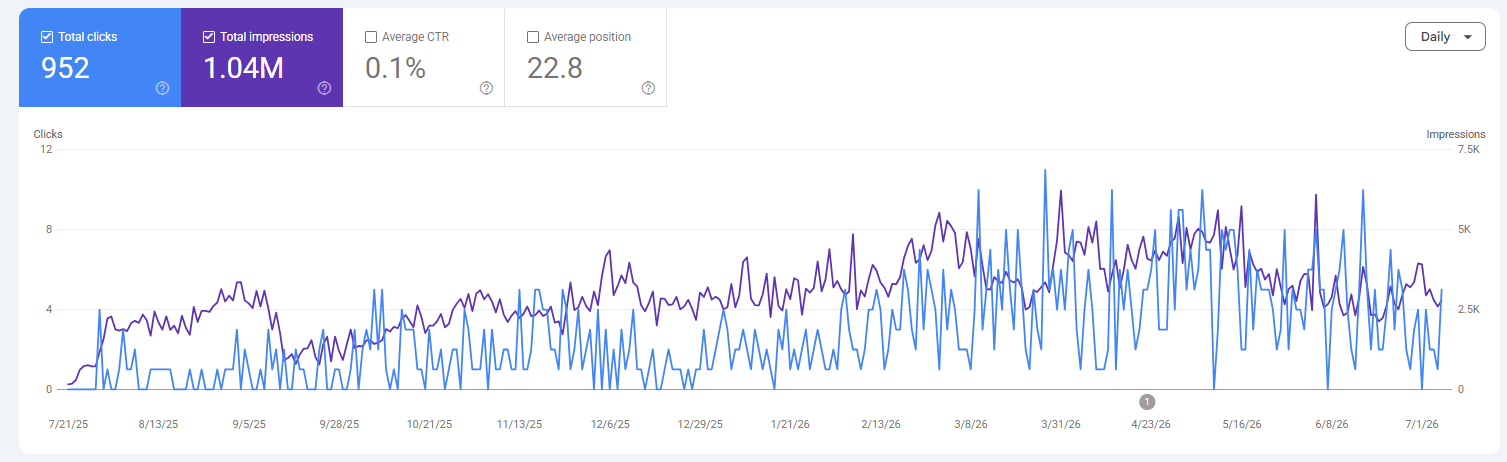
Good SEO copy shows up in three places: rankings, the right traffic, and — the one that actually pays the bills — enquiries. If you’re not tracking those, you’re guessing.
One of the sharpest points I’ve seen made about this whole field is that nobody talks about testing. Everyone teaches SEO copywriting like received wisdom, and almost nobody shows “we changed this, and the number moved.” So here’s what to watch:
- Rankings — is the page climbing for its target keyword? Use Google Search Console (free) to see the exact terms you’re showing up for and where you sit.
- The right traffic — not just more visitors, but visitors who match the intent. A service page should pull people ready to enquire, not tyre-kickers.
- Enquiries and conversions — the only metric that matters in the end. Rankings and traffic are means; a full inbox is the end.
Ignore bounce rate as a quality signal, by the way — it’s not the smoking gun people think, and Google has said repeatedly it doesn’t use it as a ranking factor.
On timing: don’t panic in week two. SEO copy is a slow burn — expect a few months for a new page to find its feet, three to six before you can really read the results in a competitive NZ market. If a page has been live six months and moved nothing, that’s your signal to dig in. That’s exactly the kind of thing a proper SEO audit is for: working out whether the copy, the keyword choice, or the competition is the problem.
SEO Copywriting Mistakes to Avoid
The fastest way to write better SEO copy is to stop doing the stuff that quietly stopped working years ago — some of which is still being taught by pages ranking for this exact keyword right now.
Keyword stuffing. Covered above, but worth repeating: cramming your keyword in twenty times doesn’t help and can actively hurt. Write naturally; mention the term where it genuinely fits.
“LSI keywords.” You’ll see guides tell you to sprinkle in “LSI keywords.” There’s no such thing. Google’s own John Mueller said it flat out: “there’s no such thing as LSI keywords.” Cover your topic properly and the related terms show up on their own — you don’t need a magic list. (We wrote a whole piece on why LSI keywords are a myth if you want the detail.)
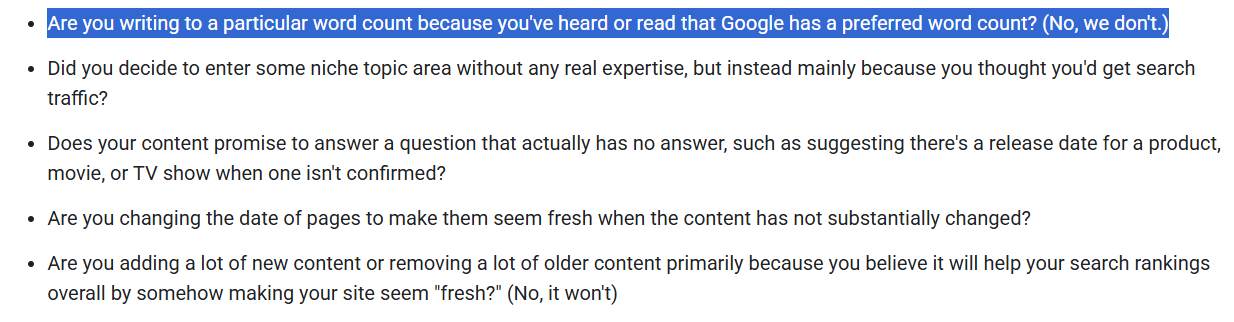
Writing to hit a word count. “Make it 2,000 words” is advice built on a correlation, not a rule — and honestly, it usually correlates with writers being paid by the word. Google has openly said it has no preferred word count. Write until the topic’s genuinely covered, then stop. A tight 800-word page that fully answers the search beats a padded 2,500-word one every time.
Optimising for “dwell time” and bounce rate. Another myth. Write for the reader, not for a metric Google isn’t even using.
Writing for robots at the reader’s expense. The classic. If your page reads like it was assembled for a crawler, a human will feel it in the first sentence and leave — and these days, so will the AI deciding whether to cite you.
What SEO Copywriting Costs in New Zealand
Here’s the number nobody else in the search results will give you. In New Zealand, SEO copywriting runs roughly $350–$395+GST per page from a freelancer, $150–$250 an hour at an agency, or from about $1,995 a month bundled into an ongoing SEO programme.
What moves the price is the work behind the words, not the words themselves:
- Research depth — keyword research and competitor analysis take time; a page built on them costs more than one banged out cold.
- Page type — a homepage or a money-making service page is worth more than a quick blog post, because it does more.
- Who’s actually writing it — a senior writer who understands search will cost more than a junior or an offshore content mill. You usually get what you pay for here.
When’s it worth paying? When the page matters and copy isn’t your strength. A blog post you can learn to write yourself. A service page that has to rank in a competitive city and convert a high-value client — that’s where bringing in an SEO consultant tends to pay for itself many times over. If you’d rather learn the whole process first, most of it is published free across this site.
Final Thoughts
If you remember one thing, make it this: the web is about to drown in average AI-written copy, and that’s the best news working writers have had in years.
When everyone can generate a competent, forgettable page in ten seconds, competent and forgettable becomes worthless. The pages that win — in Google and in AI answers — will be the ones with a real point of view, real proof, and a human who actually knows the subject behind them.
That’s not a threat to SEO copywriting. It’s the whole reason it’s about to matter more. Write the thing only you could write, structure it so the machines can read it, and you’ll be fine.
SEO Copywriting: FAQ
Is SEO hard to learn?
No — the basics are very learnable. You can grasp keyword research, search intent and on-page structure in a weekend. Getting genuinely good takes practice, but nothing here needs a technical background.
How long does it take to learn SEO copywriting?
You can write a decent SEO page after a few weeks of practice. Fluency — where it feels natural and the pages consistently rank — usually takes a few months of actually doing it, not just reading about it.
Is copywriting still worth it in 2026?
More than ever. AI has flooded the web with average content, which makes genuinely good, persuasive, well-researched copy stand out further than it used to. The bar rose; the reward for clearing it rose with it.
Will AI replace SEO copywriting?
No. AI is a useful assistant for drafts, titles and outlines, but it can't bring first-hand experience, a real point of view, or genuine proof — and those are exactly what ranks and gets cited now. Use it as a tool, not a replacement.
Can ChatGPT do SEO copywriting?
It can help — brainstorming keywords, drafting titles, structuring an outline. But left to write the whole page unsupervised, it produces the generic content everyone else is producing. The strategy, the proof and the voice still have to come from you.
What are the 4 types of SEO?
On-page (your content and page structure), off-page (links and reputation), technical (how well your site can be crawled and indexed), and local (ranking in map results for your area). SEO copywriting sits mainly in on-page.
How much do SEO copywriters make?
It varies widely — freelancers might charge $350–$395+GST a page in NZ, while in-house and agency salaries range from entry-level to six figures for senior specialists. Skill, niche and proof of results drive the number.
What are some SEO copywriting examples?
A service page targeting "mortgage broker Auckland" that ranks and books consultations; a blog post answering "how does refinancing work" that feeds that service page; a product page written around "trail running shoes NZ." Each matches a real search to the right page type.