

You did the keyword research. You found the term people are actually searching for. You dropped it into your page, hit publish, and waited.
Then nothing. The page just sat there.
That gap — between finding the keyword and actually getting the page to rank — is keyword optimisation. It’s the step most people either skip or quietly get wrong.
This guide walks through exactly what keyword optimisation is, how to check a keyword’s even worth the effort, where your keyword actually goes on the page, how much is too much, and whether any of this still matters now that AI is answering half the questions before anyone clicks.
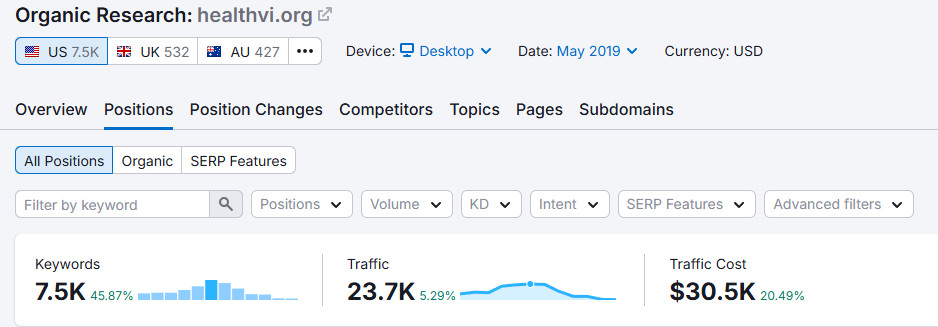
I’ll use real numbers from sites I’ve grown — including one I took from zero to over 20,000 monthly visitors — and keep every example local to New Zealand.
What Is Keyword Optimisation?
Keyword optimisation is the process of making a page more relevant to the search term it’s targeting — using the right words in the right places so Google, and now AI, can tell exactly what the page is about.
Relevance is the whole game here. Google’s entire job is to serve the most relevant result for a query. Keyword optimisation is you making it obvious that your page is that result.
That’s the distinction worth holding onto: you’re not trying to trick a search engine, you’re trying to be clearly understood by one.
(Quick spelling note: if you typed “keyword optimization” with a z, same thing — that’s the American spelling. We’ll stick with the s.)
Keyword Optimisation vs Keyword Research
Research finds the keyword. Optimisation is what you do with it once you’ve got it. Two different jobs, and this guide is about the second one.
Think of it like building a house. Finding the right keywords is choosing the section — deciding where you’re going to build and whether the location’s any good. Keyword optimisation is the actual construction: putting the right things in the right places so the thing stands up.

One detail that trips people up: a single page doesn’t target a single keyword. It targets a cluster of closely related terms that all mean the same thing.
“Keyword optimisation,” “seo keyword optimisation,” “optimising keywords” — same intent, same page.
You’re not writing a new page for each; you’re optimising one page for the lot.
First, Make Sure the Keyword’s Worth Optimising For
Before you touch the page, check the keyword is actually winnable and worth winning. The best optimisation in the world won’t rank you for a term that’s out of reach.
This is the step nearly everyone skips, and it’s the one that saves the most wasted effort.
Here’s the sobering backdrop: Ahrefs studied around 14 billion pages and found 96.55% of them get no traffic from Google at all.
A big slice of that is pages optimised for keywords that were never winnable, or never worth winning. Don’t add yours to the pile.

Run three quick checks.
Can you realistically rank? Read the live search results, not just the difficulty score. A keyword can flash a scary difficulty number and still be soft once you see who’s actually ranking.
A law firm chasing “family lawyer Christchurch” might find the first page is full of thin directory listings rather than strong competitors — which is exactly how SEO for lawyers gets won, on local relevance rather than raw domain power. The number says hard; the SERP says go for it.
Is the traffic worth winning? Volume isn’t the same as value. A keyword with 30 searches a month that brings ready-to-buy customers beats a 5,000-search term that brings tyre-kickers.
For SEO for Auckland businesses — the most contested market in the country — that distinction matters even more, because the competitive terms cost real effort to win and you want that effort pointed at money, not vanity.
Is it the right keyword for this page? One clear intent per page. If the keyword pulls in two different kinds of searcher, it belongs on two different pages.
Match the Search Intent Before You Touch the Page
Google ranks the type of page that matches what searchers actually want. If the results are all blog posts and you’re optimising a product page, no amount of keyword placement will rescue you.
There are four intents behind any search: informational (learning something), commercial (comparing before buying), transactional (ready to buy), and navigational (looking for a specific site). Your page has to match the dominant one.
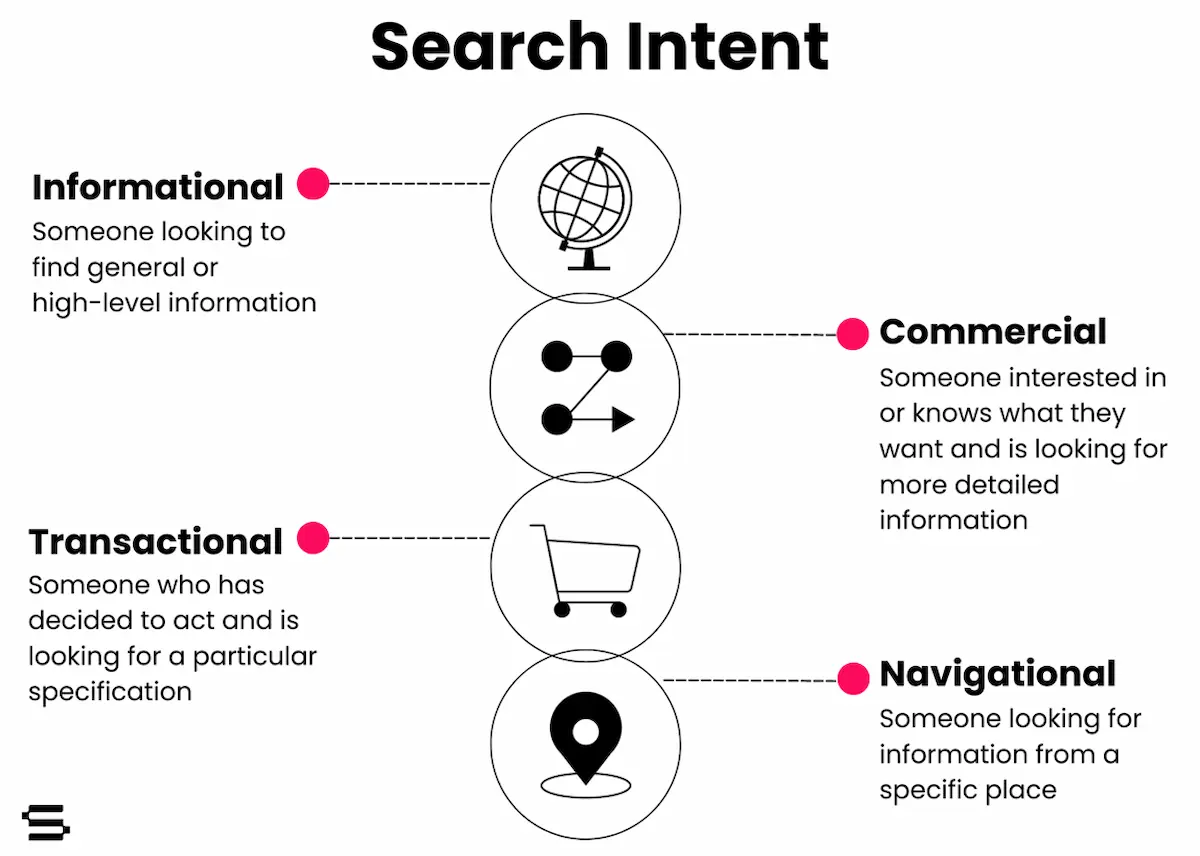
Here’s how that plays out for a real business. Say you run an accountancy firm. “How do I do my own tax return” is an informational search — someone learning, not hiring. That’s blog content, the kind you use to build authority and feed your money pages.

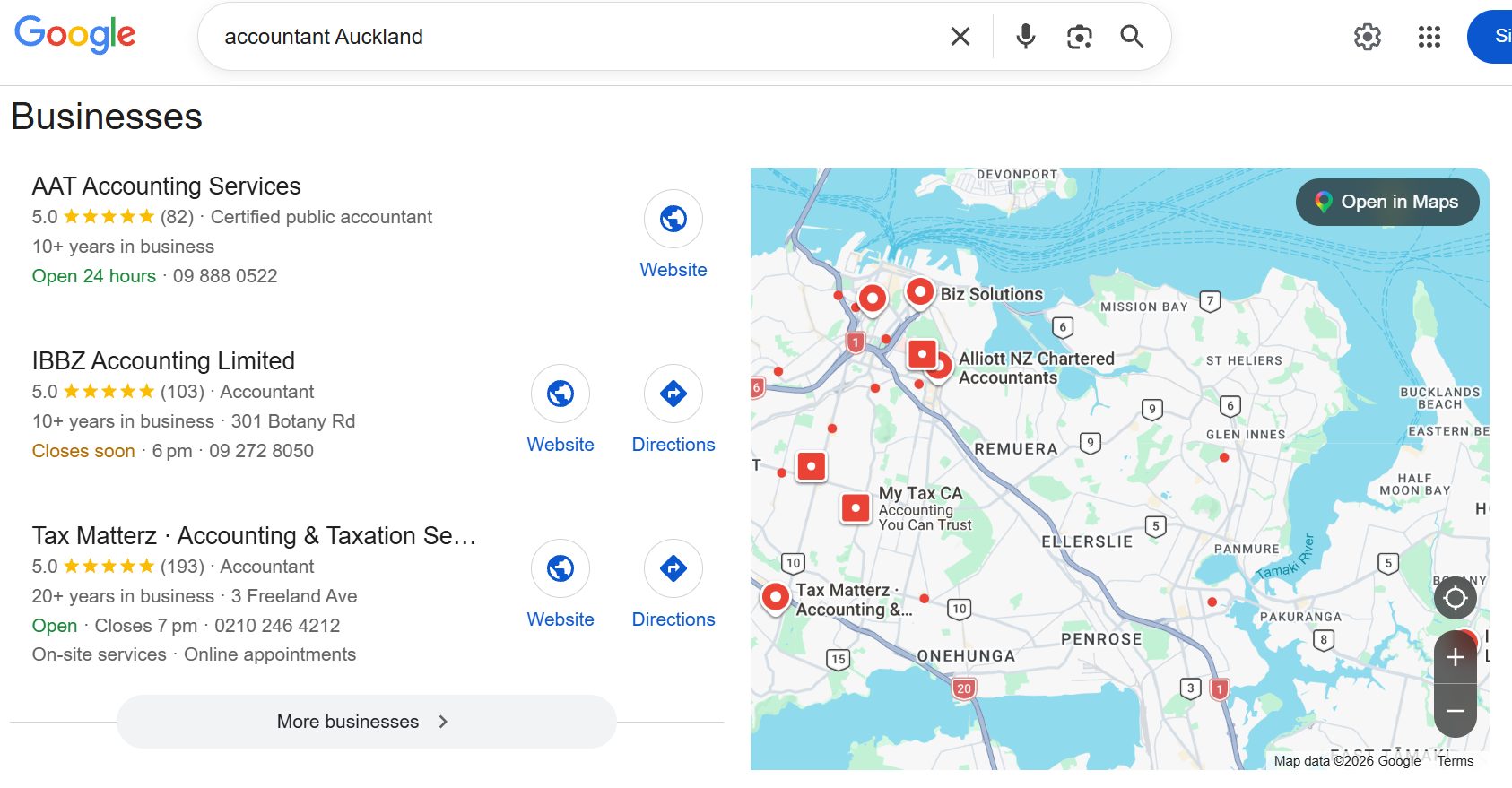
“Accountant Hamilton”, though, is commercial — someone with a tax headache and the budget to fix it. That’s a service page.
Same profession, two completely different searchers, two completely different pages. Getting SEO in Hamilton right comes down to reading that difference before you write a word.
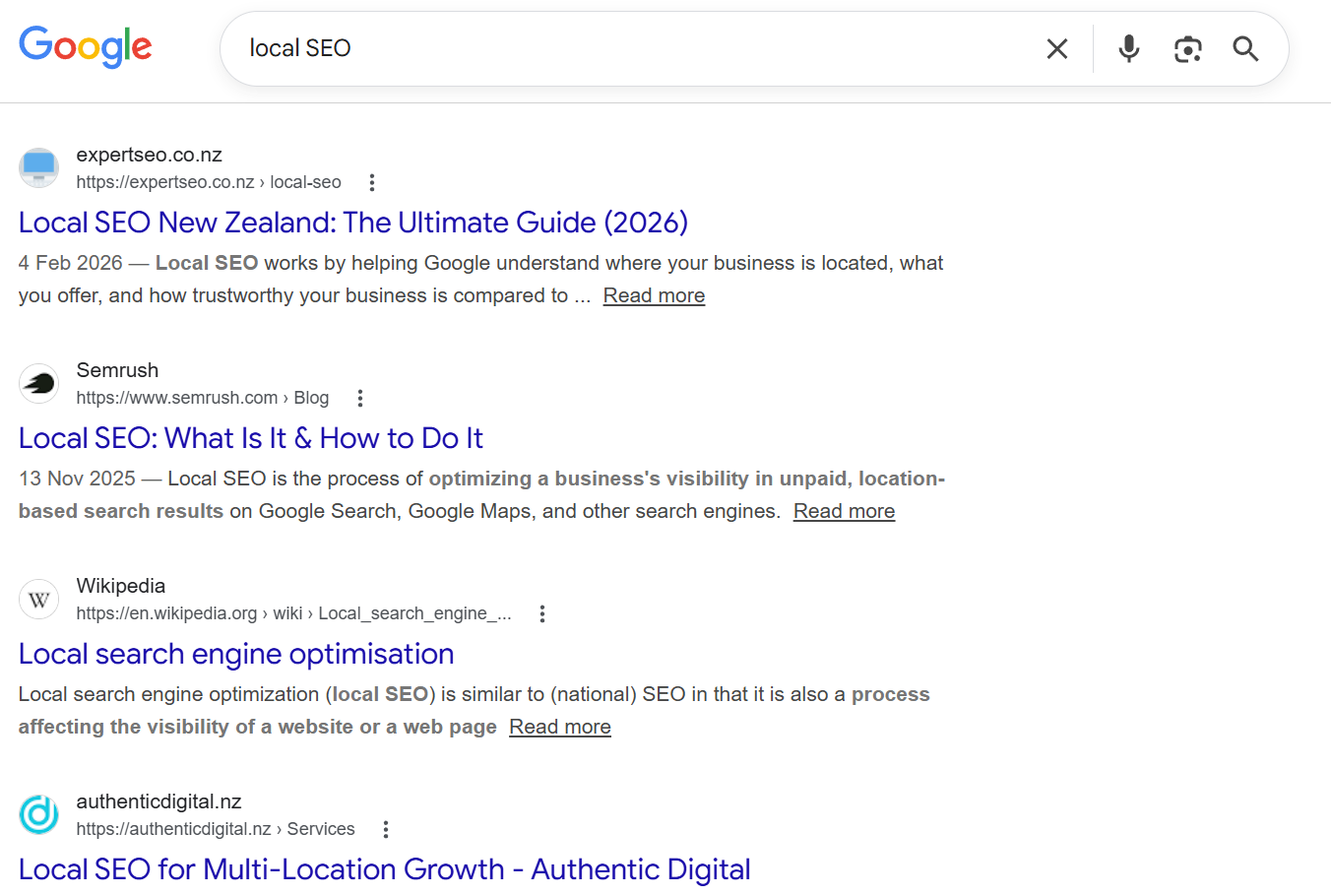
How do you know which intent wins? Type the keyword into Google and look at what’s already ranking.
If a dentist searches their target term and the whole first page is informational guides, a glossy booking page won’t crack it — and that’s the single biggest thing SEO for dentists hinges on: matching the page to what Google’s already rewarding.
Where to Put Your Keyword: The Placement Checklist
Your keyword has a home in a specific handful of places, and each one does a particular job. Get these right and you’ve done 90% of on-page optimisation.
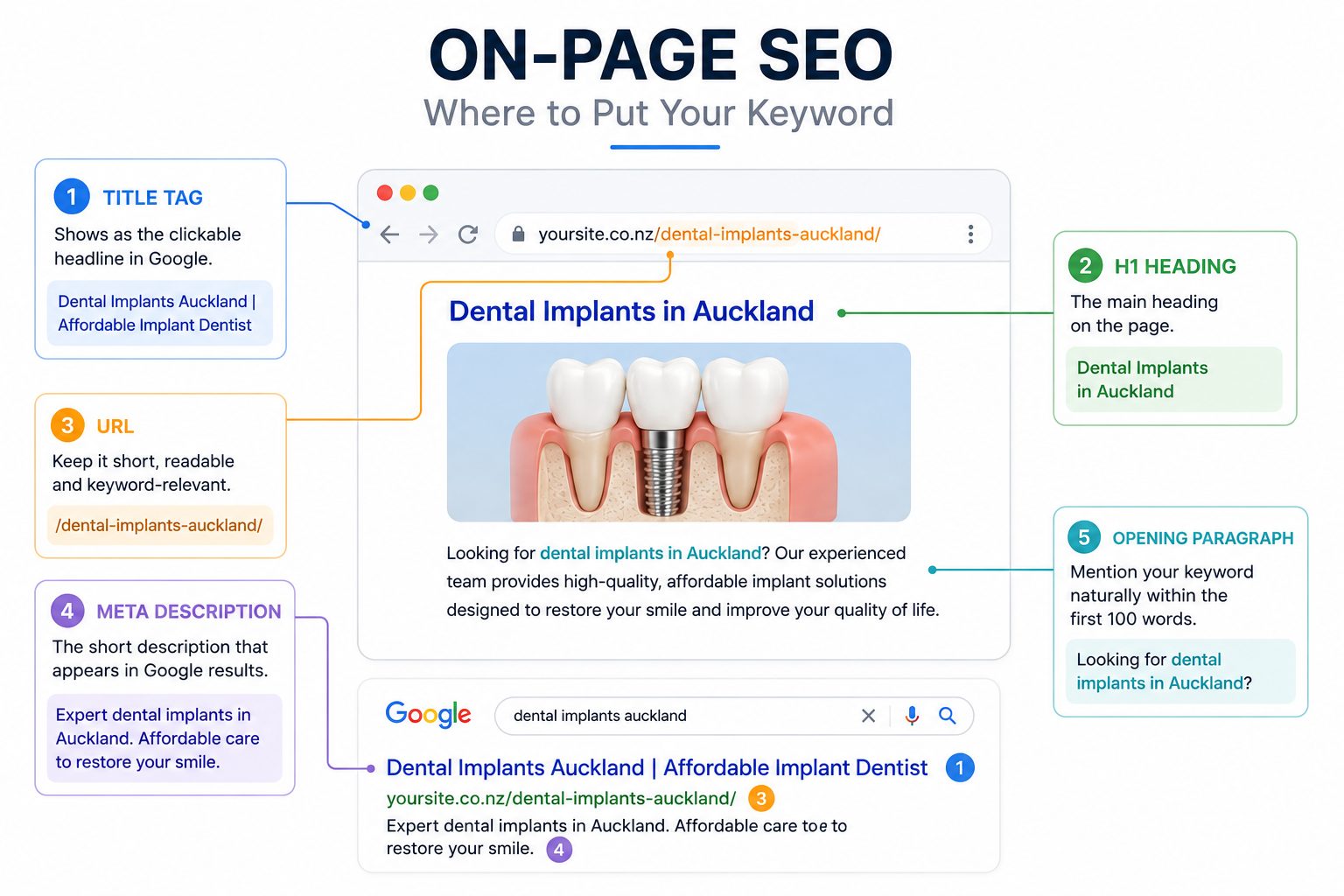
URL slug. Keep it short and put the keyword in it. /keyword-optimisation/ beats /post?id=4471. Use hyphens, drop the filler words.
Title tag. This is the single strongest on-page signal. Lead with the keyword — get it in the first few words, because both readers and search engines weight the front of the title heaviest.
H1 and a couple of subheadings. Your H1 is the on-page headline. The keyword (or a close variant) belongs there, and naturally in one or two of your H2s where it genuinely fits.
The first 100 words or so. Mention the keyword early in the body. It confirms to Google straight away that the page is about what the title promised.
The body — naturally. Use the keyword and its variations through the content where they actually read well. No forcing.
Meta description. Honest truth: this one does nothing for your ranking. Its only job is to win the click — your keyword shows up bolded in the results, which pulls the eye, so write it to sell the click.
Image alt text. Describe the image and work the keyword in where it fits. It helps image search, and it’s the right thing to do for accessibility anyway.
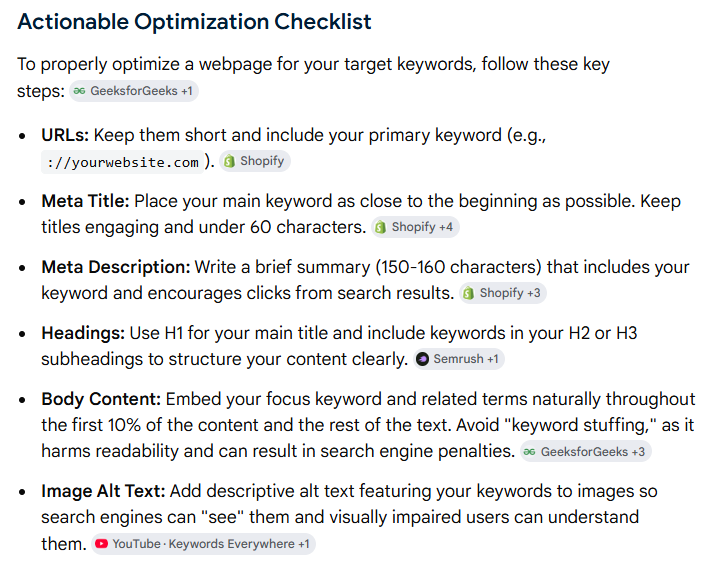
Want proof these are the right spots? Google’s own AI Overview for “keyword optimisation” lists almost exactly this set — URL slug, title tags, header tags, body text near the top, image alt text.
When the algorithm that decides rankings hands you the checklist, you take it.
How Much Is Too Much? The Keyword Density Myth
There’s no magic keyword density. Stuffing your phrase in twenty times won’t help, and it can actively hurt.
This is the bit that’s stuck in 2010. People still ask “what percentage of my content should be the keyword,” as if there’s a dial. There isn’t. Google’s own spam policies list keyword stuffing as a tactic that can push a page down the rankings or drop it from results entirely.
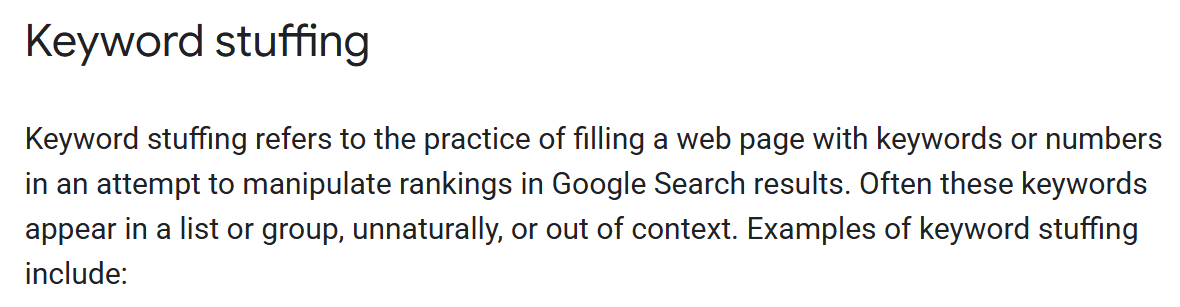
And Google is specific about what counts. One of the examples it gives is blocks of text that list out the cities and regions a page is trying to rank for.
So the builder who pads a page with every suburb in the Waikato isn’t optimising — they’re triggering a spam signal. That’s why SEO for builders done properly leans on genuinely useful local content, not a wall of place names.
Here’s the shift that matters: Google reads topics now, not repetition. It understands the entities, the related terms, and the questions around your subject.
So the real move is to cover the topic completely — answer the related questions, use the natural language a real expert would — and let the relevance take care of itself.
That’s how Stopping Scams grew.
The Stopping Scams results came from thorough, genuinely useful pages — individual articles that regularly pull hundreds of visits a day on their own — not from counting how many times a keyword appeared. Density never came into it. Coverage did.

If you write for the reader first and place the keyword sensibly, you’ve already beaten the stuffers. Nine times out of ten, that’s the whole battle.
Optimise an Existing Page or Build a New One?
If a page already ranks anywhere on page two or three for your keyword, re-optimise it. That’s the fastest win in SEO. Build a new page only when the intent genuinely doesn’t match what you’ve already got.
A page sitting at position 14 has already earned Google’s trust — it just needs a nudge. Sharpen the title, tighten the intent match, fill the gaps your competitors cover and you don’t, and that’s often the difference between page two and page one.
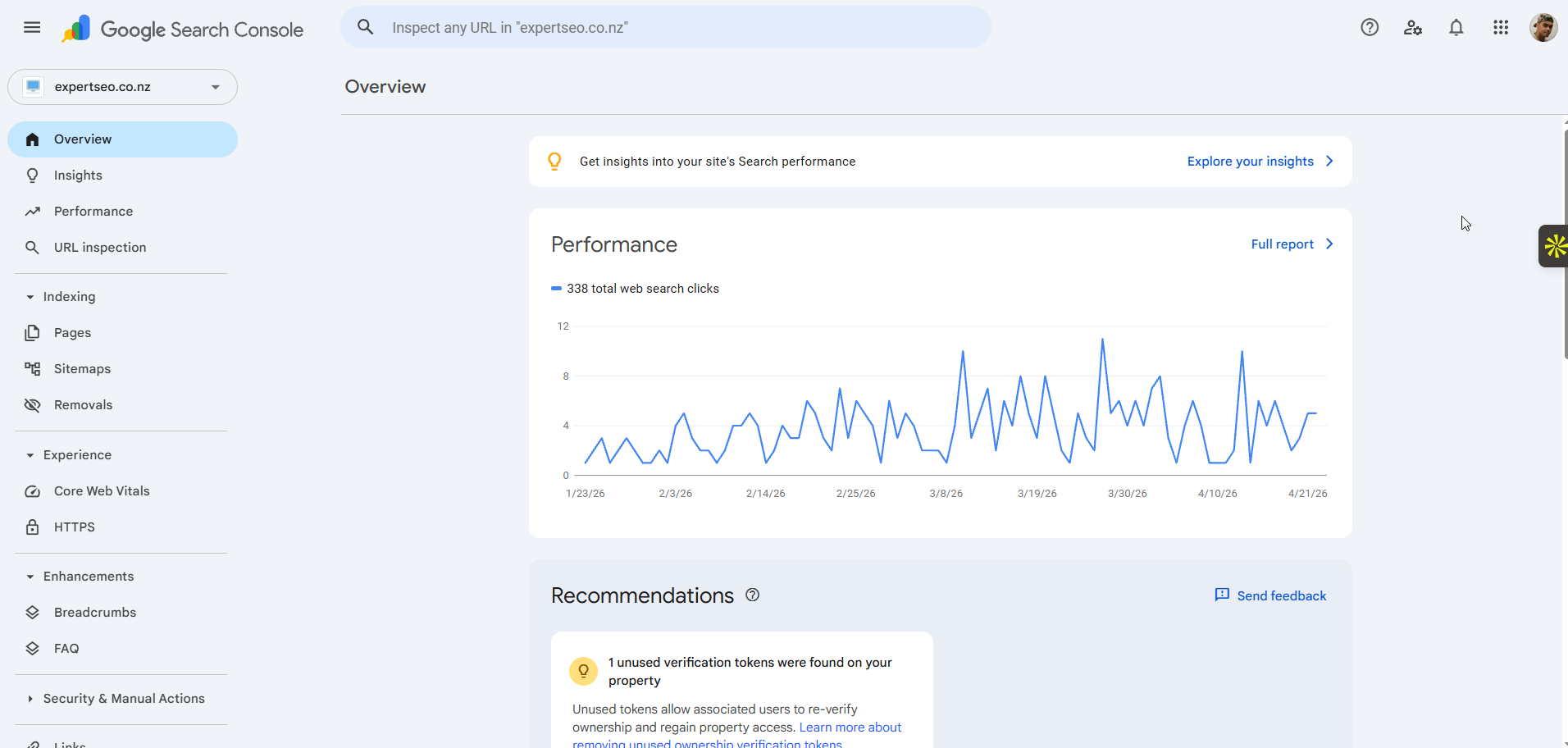
You don’t need a paid tool to find these. Google Search Console shows you every keyword a page already gets impressions for, free.
Sort by position, look for anything ranking 8–20, and you’ve got your re-optimisation list. If a page is underperforming in ways you can’t quite diagnose, an SEO audit will surface the technical issues holding it back.
Build a fresh page only when the keyword carries a different intent — when the existing page can’t serve the new searcher without becoming two pages crammed into one.
Track Results and Re-Optimise
Keyword optimisation is a loop, not a one-off. Check a few metrics monthly and re-optimise the pages that are close but not quite there.
Four numbers tell you almost everything, and all four are free in Search Console: average position (are you climbing?), impressions (is Google showing the page more?), clicks (are people coming?), and click-through rate (is your title earning the click?).
If impressions are up but clicks are flat, your title needs work, not your content.
One honest expectation to set: this takes time. Re-optimising a page that’s already close can move in a few weeks. A newer page in a competitive NZ market can take months to settle.
If you want the realistic version of how long SEO takes in this country, it’s longer than the gurus promise and shorter than the sceptics fear — and patience here is a competitive advantage, because most people quit early.
Does Keyword Optimisation Still Matter in the AI Era?
It matters more, not less. Relevance is exactly what AI search runs on — and the same optimisation that ranks you is what gets you cited.
Here’s the lay of the land. Around one in five Google searches now serves up an AI summary, and Pew Research found people click a normal result just 8% of the time when that summary appears, versus 15% when it doesn’t. Fewer clicks to go around. The instinct is to panic.
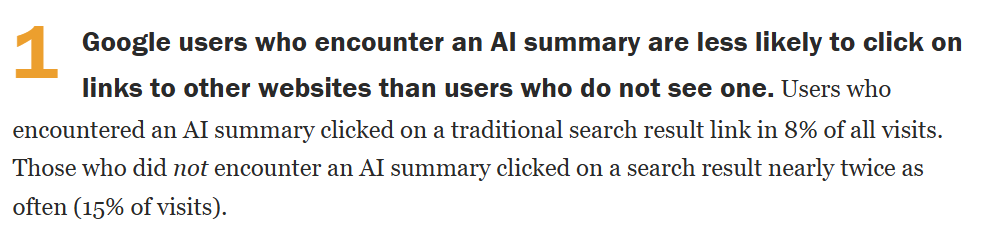
But look at what those AI summaries are built from. In that same Pew study, the typical summary cited three or more sources — it’s pulling from pages it judges relevant and clearly structured.
The page that gets cited is the one that answers the question directly, near the top, in plain language. Which is… keyword optimisation. The mechanics shifted slightly; the principle didn’t move an inch.
There’s a format trick that helps: answer the question in a clean sentence or two right after the heading, then expand.
That direct-answer structure is what AI systems lift. It’s the same move that wins featured snippets, and it’s central to ranking in AI search.
I’ll put my own money where my mouth is.
Our SEO company is just over six months old, competing against NZ agencies with a decade’s head start — and it’s already being cited in Google AI Overviews and pulled into ChatGPT answers. Not because of tricks. Because the pages are relevant, well-structured, and optimised for the exact questions people ask.
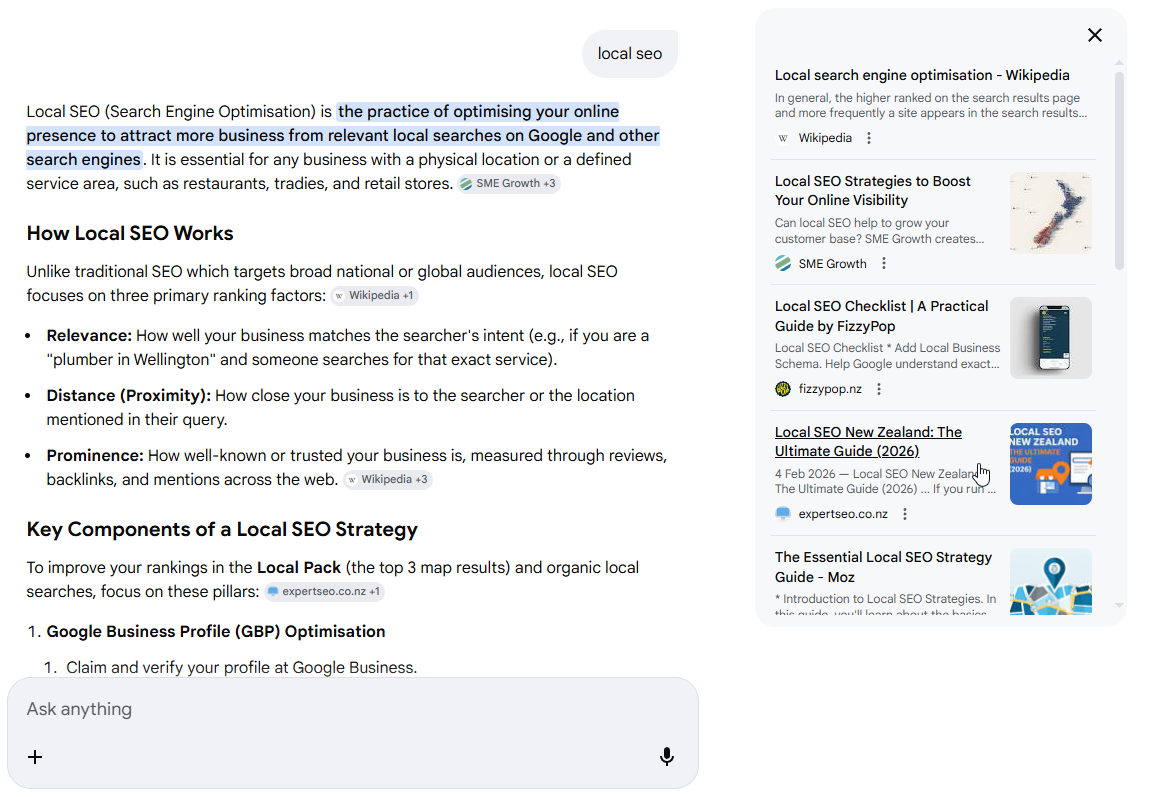
So no, SEO isn’t dead and keyword optimisation isn’t dead with it. The game just rewards relevance harder than ever.
When to Optimise Yourself vs Hire an Expert
You can absolutely optimise a page or two yourself with this guide. It’s not rocket science, and the checklist above covers most of what matters.
The point to hand it over is when the maths changes. When you’ve got dozens of pages to optimise and no hours to do it.
Or when you’ve done everything right — clean titles, matched intent, no stuffing — and the page still won’t budge, which usually means the issue is deeper than the page itself.
That’s where professional SEO help earns its keep — when the work outgrows the hours you’ve got.
We’ve spent years doing this across competitive NZ markets, and most of the businesses we take on had already tried it themselves and simply run out of road.
If it’s the strategy you’re unsure about rather than the page-level work, it can be worth sitting down to work with an SEO consultant instead.
Either way, the principle stays the same. Make the page genuinely relevant, place the keyword sensibly, and serve the searcher. Do that and you’re most of the way there.
Keyword Optimisation: FAQ
How do I start SEO as a beginner?
Start with one page and one keyword. Research a term your customers actually search, check it's winnable by reading the live results, then optimise the page using the placement checklist above — title, URL, headings, first 100 words, body, alt text. Get one page ranking, then repeat. SEO is just that loop, run over and over.
What are the best keyword optimisation tools?
You don't need much. Google Search Console (free) shows what you already rank for. Google Keyword Planner (free) gives search volumes. Paid tools like SEMrush, Ahrefs or Mangools make research faster and show competitor strength, but they're an accelerator, not a requirement. A full rundown of the best SEO tools covers what's worth paying for.
What's a good keyword density?
There isn't one. Chasing a percentage is an outdated habit that can tip into spam territory. Use your keyword and its variations where they read naturally, cover the topic thoroughly, and ignore density entirely.
Can I optimise one page for multiple keywords?
Yes — as long as they share the same search intent. Closely related terms that mean the same thing belong on one page. Keywords with different intent need different pages.
Recommended Reading

How to find the lower-competition terms that are far easier to optimise for and rank.
How to write pages that cover a topic properly and rank because of it.
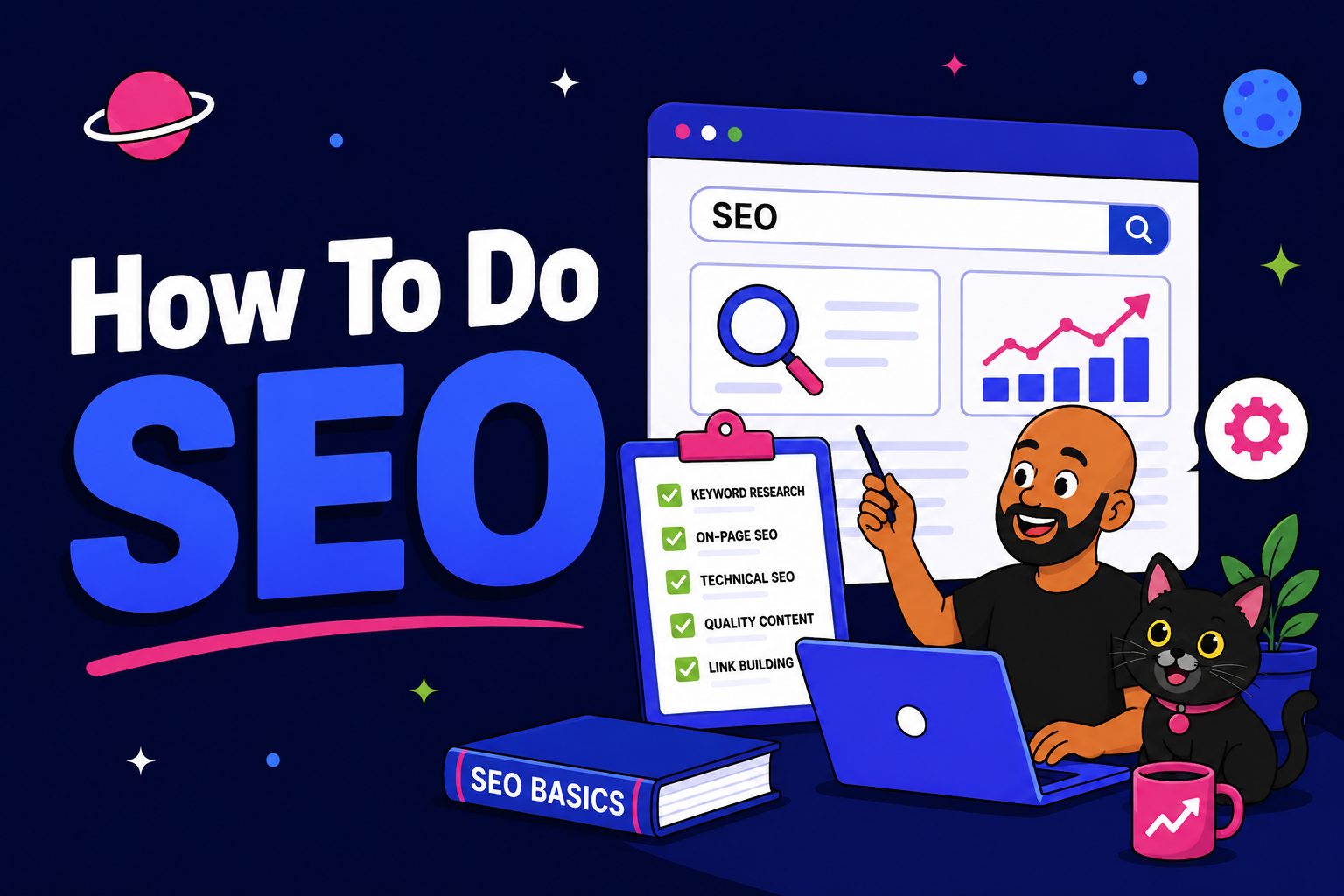
The full step-by-step process from keyword to ranking.