
Long-Tail Keywords: How to Find & Use Them in NZ (2026)

The keywords with the least searches are often the ones that make the most money.
That sounds backwards. But it’s true.
If you’re a dentist in Hamilton trying to rank for “dentist Hamilton,” you’re competing against every other dental practice in the city — including ones that have been building their websites and authority for years.
But “affordable dental implants Hamilton NZ”? That’s a different story. Fewer people search it, but the ones who do are ready to book. And there’s almost no competition standing in your way.
That’s the power of long-tail keywords.
This guide shows you exactly how they work, how to find them, and how to use them to build real rankings and traffic for your New Zealand business. If you’re new to SEO, this is one of the best places to start.
What Are Long-Tail Keywords?
Long-tail keywords are longer, more specific search phrases that fewer people search for but that are easier to rank for and more likely to convert into customers.
Instead of targeting a broad term like “running shoes” (high competition, vague intent), a long-tail keyword gets specific: “running shoes women nz:”
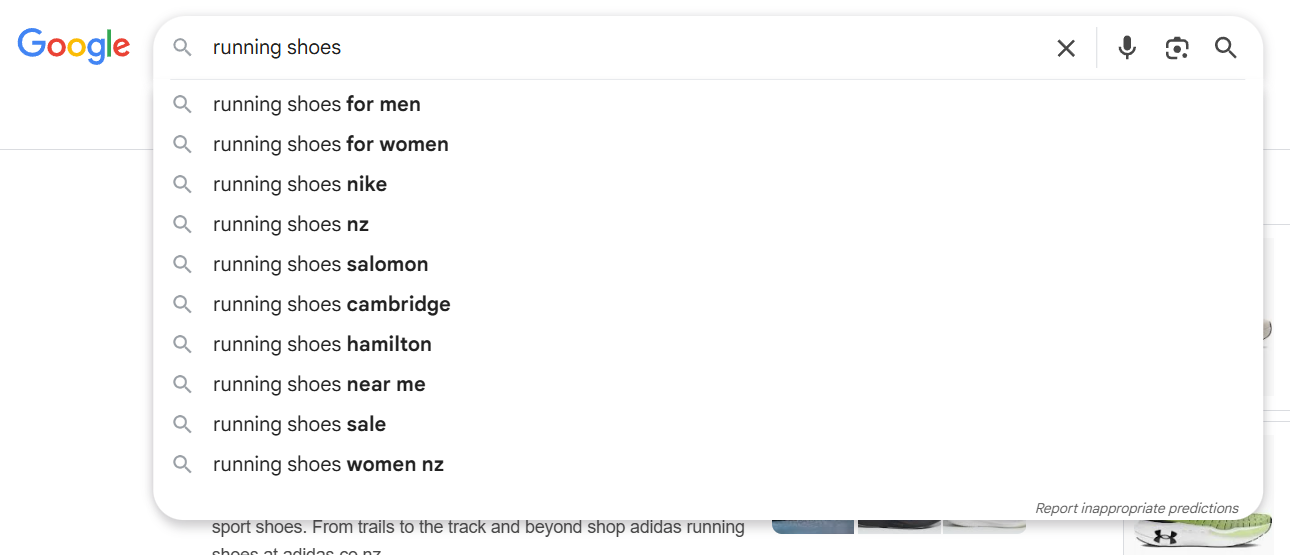
The person searching that phrase knows exactly what they need. And because fewer websites are competing for that exact phrase, you have a much better chance of showing up.
Here’s what this looks like in practice for NZ businesses:
| Short-tail keyword | Long-tail keyword |
|---|---|
| plumber Auckland | emergency plumber West Auckland open weekends |
| dentist Hamilton | affordable dental implants Hamilton NZ |
| café Wellington | best brunch café Wellington CBD dog friendly |
| lawyer Christchurch | how much does a divorce lawyer cost in Christchurch |
Around 70% of all web searches are long-tail keywords.
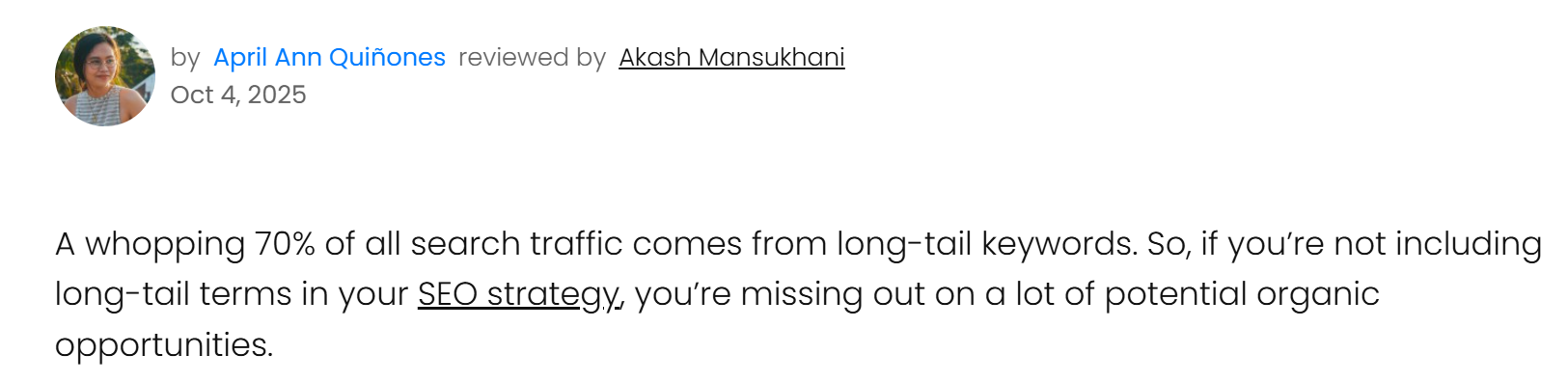
The majority of real search traffic happens in these specific, detailed queries — not in the broad terms everyone fights over.
Long-Tail vs Short-Tail Keywords
The difference comes down to three things: specificity, competition, and conversion.
Short-tail keywords are broad. One or two words. They get a lot of searches, but the intent is vague. When someone searches “accountant,” are they looking to hire one? Studying to become one? Looking for a definition? You don’t know.
Long-tail keywords are specific. Three or more words, usually. They get fewer searches, but the person knows what they want. “Small business accountant Hamilton GST returns” tells you exactly who they are and what they need.
Here’s the trade-off:
| Short-tail | Long-tail | |
|---|---|---|
| Search volume | High | Lower |
| Competition | Very high | Much lower |
| Intent clarity | Vague | Specific |
| Conversion rate | Lower | Higher |
| Time to rank | Months to years | Weeks to months |
Long-tail keywords convert at 2.5 times the rate of short-tail terms on average.
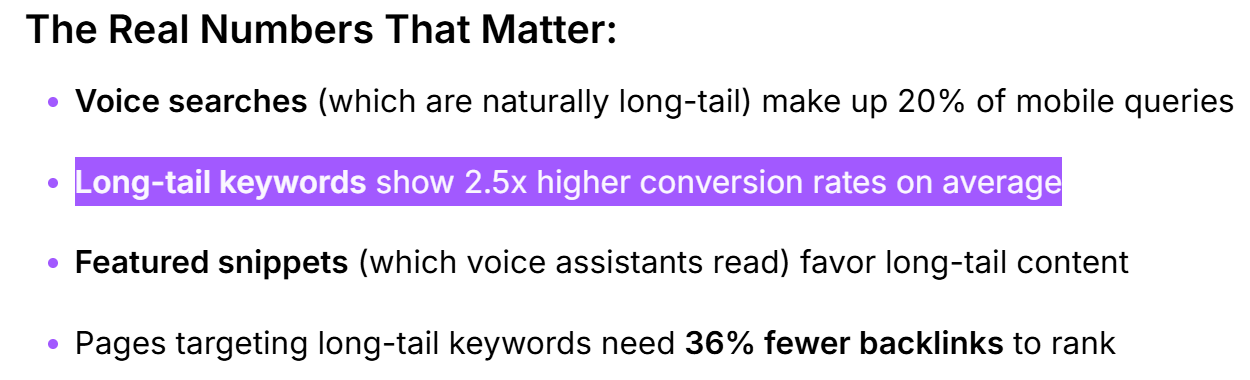
That makes sense. Someone searching “best brunch café Wellington CBD dog friendly” is ready to visit. Someone searching “café” could be doing anything.
The key insight: short-tail keywords are your long-term goal. Long-tail keywords are where you start.
And as you’ll see, targeting long-tail keywords strategically is actually how you build enough authority to rank for the short-tail terms later.
Why Long-Tail Keywords Matter for NZ Businesses
In a small market like New Zealand, long-tail keywords aren’t just a nice tactic — they’re often the fastest way to get real traction and a core part of our SEO packages.
Less Competition, Faster Rankings
New Zealand has a smaller search market than the US, UK, or Australia. That means even broad keywords have lower volumes — but competition for them can still be fierce because every business in the same city is targeting the same terms.
Long-tail keywords sidestep that problem. Instead of fighting ten other Hamilton accountants for “accountant Hamilton,” you can rank for “small business accountant Hamilton for tradies” where there might be zero competition.
For newer websites or small businesses without much domain authority, this is the fastest path to page one.
Higher-Quality Traffic That Converts
Not all traffic is equal.
A thousand visitors who don’t know what they want are worth less than fifty visitors who are ready to act. Long-tail keywords bring in the second type.
When someone searches “how much does a roof replacement cost in Tauranga,” they’re not casually browsing. They’ve got a leaky roof and they want answers. If your content answers that question properly, you’re the business they call.
For NZ service businesses where every lead matters, that distinction is everything. You don’t need massive traffic. You need the right traffic.
They Match How People Actually Search Now
Search behaviour has changed.
People don’t type two-word queries into Google the way they used to. They ask full questions. They talk to their phones. They type conversational queries into ChatGPT.
Over 20% of mobile searches are now voice searches, and voice queries are naturally long-tail.

People don’t say “plumber Auckland” to their phone. They say “who’s a good emergency plumber near me that’s open right now?”
AI search platforms like ChatGPT and Google AI Overviews are built to answer these specific, conversational queries. 46% of AI Overviews are triggered by long-tail queries of seven words or more.
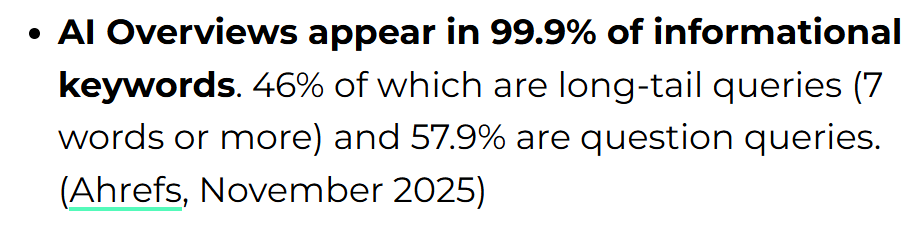
If your content answers those specific questions clearly, you’re far more likely to be cited.
They Build Authority for Bigger Keywords Over Time
This is the part most articles about long-tail keywords miss — and it’s the most important.
Long-tail keywords aren’t just about picking up easy traffic. When you target them strategically, they build the topical authority your site needs to rank for the competitive short-tail terms.
Think of it like a ladder.
If you’re a plumber in Auckland and you want to rank for “plumber Auckland” (the big, competitive term), you don’t start by going after it directly. You start by creating content around specific long-tail keywords:
- “how to fix a dripping tap Auckland”
- “hot water cylinder replacement cost NZ”
- “best plumber for bathroom renovation West Auckland”
- “emergency blocked drain Auckland after hours”
Each of these pages targets a long-tail keyword that’s easier to rank for. But together, they tell Google something important: this website knows a lot about plumbing in Auckland.
That’s topical authority.
And once you’ve built enough of it, your main “plumber Auckland” service page starts climbing too — because Google sees your site as a genuine authority on the topic, not just a single page competing against established players.

This is how smaller NZ businesses compete with larger ones. You don’t outspend them. You out-cover them.
How to Find Long-Tail Keywords (Step by Step)
You don’t need expensive tools to find long-tail keywords. Keyword research doesn’t have to be complicated — here are five methods that work, starting with the ones that cost nothing.
Method 1: Google Autocomplete and People Also Ask
The simplest method, and completely free.
Go to Google and start typing your core keyword. Before you even finish, Google will suggest completions. These are real searches that real people are making.
For example, type “dentist Hamilton” and you might see:
- dentist Hamilton nz
- dentist Hamilton east
- dentist Hamilton central
- dentist Hamilton afterpay
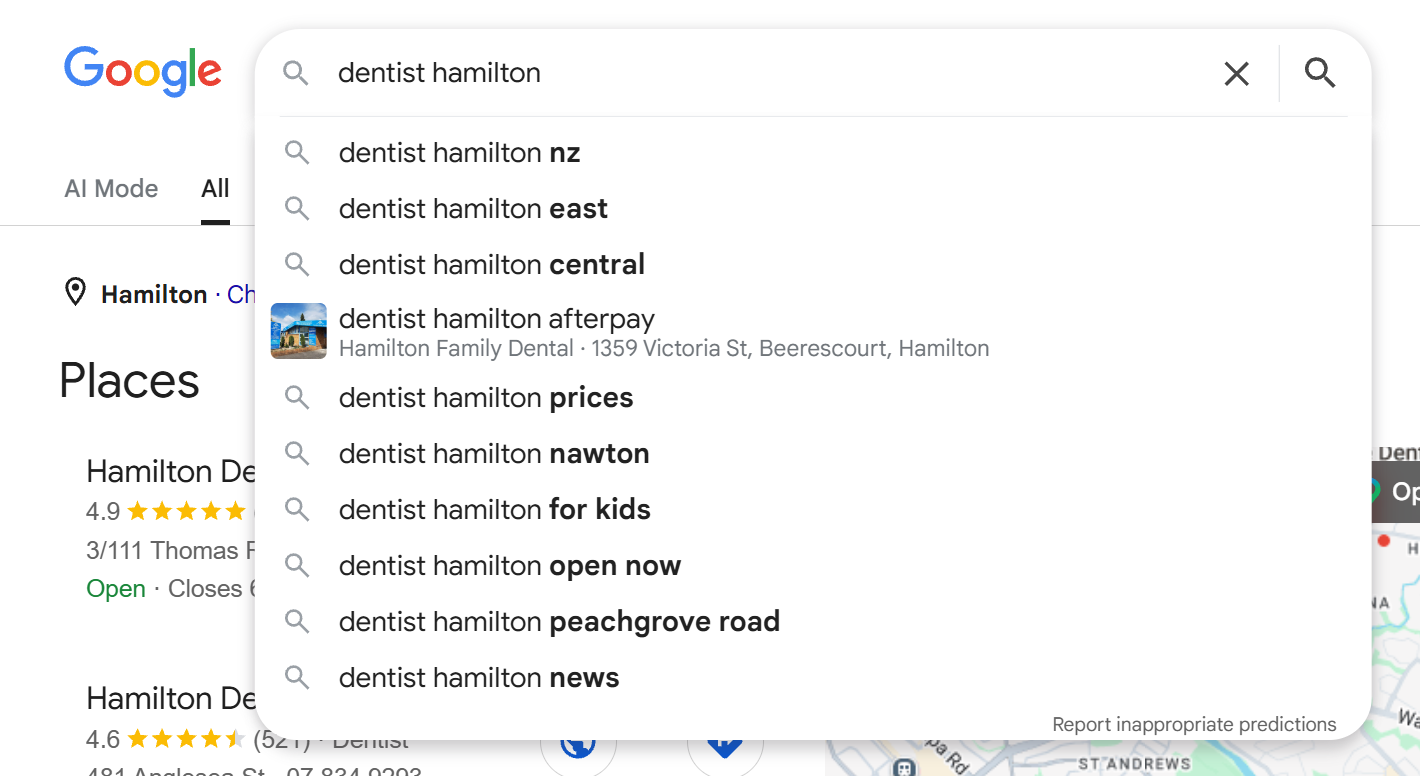
Each of these is a long-tail keyword you could target.
Then search your keyword and scroll down to the “People Also Ask” section. These are questions Google knows people are asking about your topic. Copy all of them.
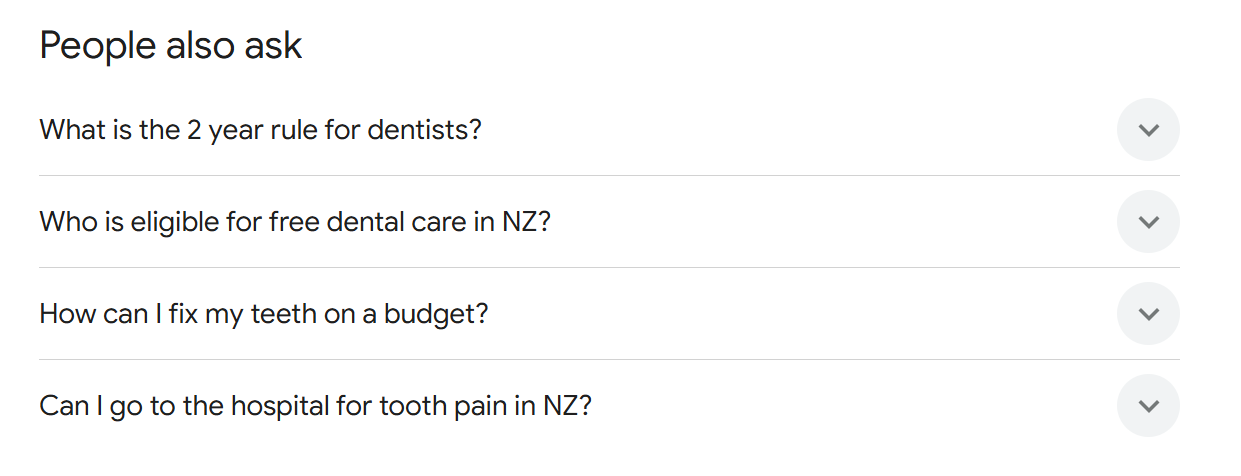
Also check the “People Also Search For” at the bottom of the page. More free keyword ideas.

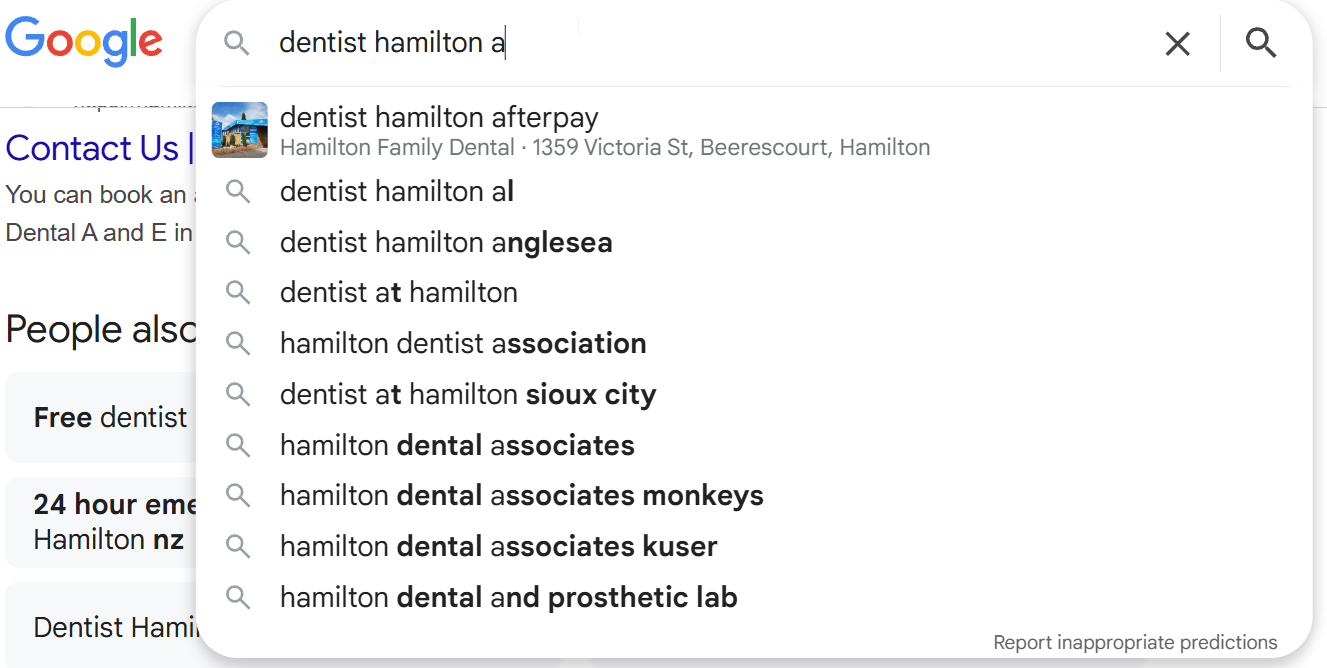
Pro tip: Go through the alphabet. Type “dentist Hamilton a,” then “dentist Hamilton b,” then “dentist Hamilton c,” and so on. Google will suggest different completions for each letter. This gives you dozens of long-tail variations in minutes.
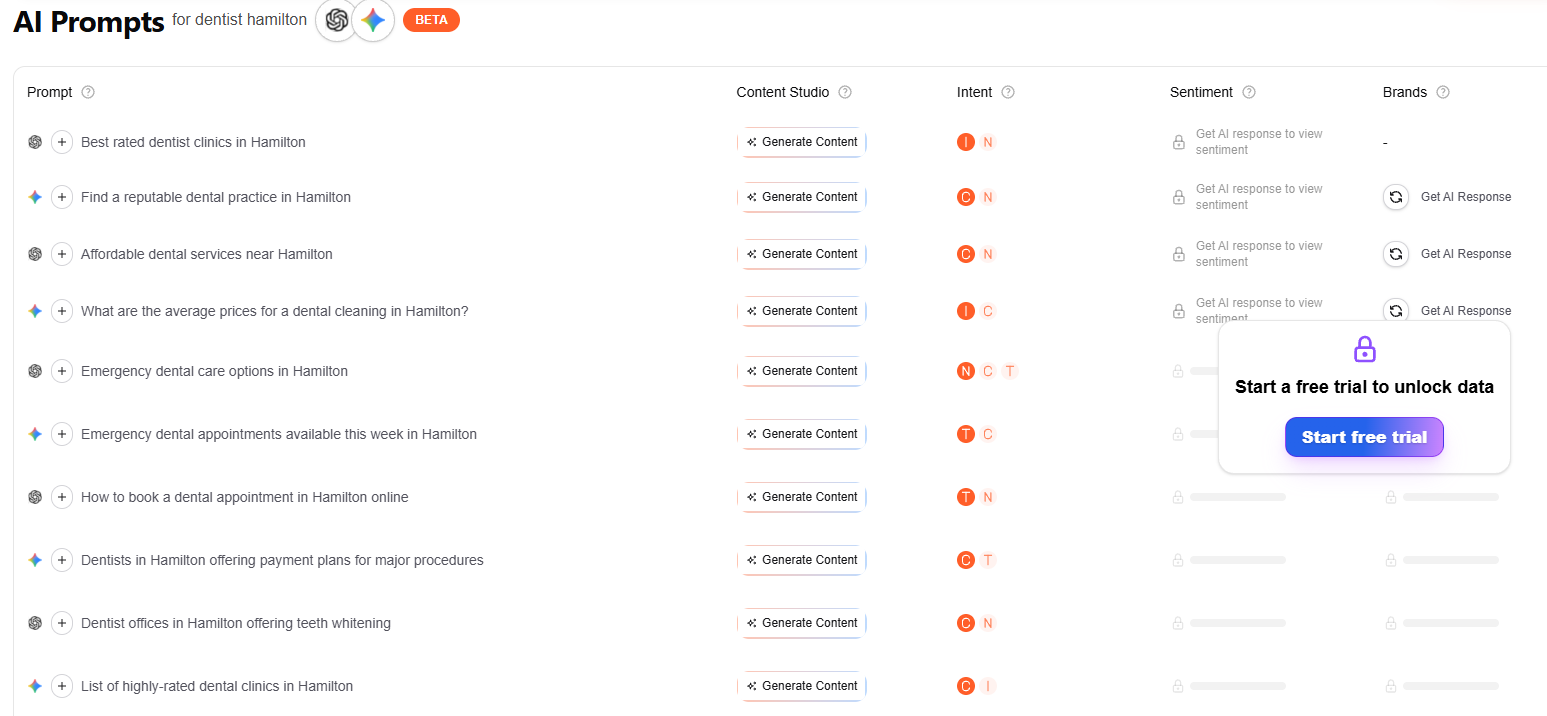
Method 2: Use ChatGPT to Generate Variations
Take your core keyword and ask ChatGPT to expand it.
A simple prompt like this works well:
“I’m a dentist in Hamilton, New Zealand. Generate a list of specific long-tail keywords people would search for when looking for dental services in Hamilton. Include questions, location variations, and service-specific terms.”
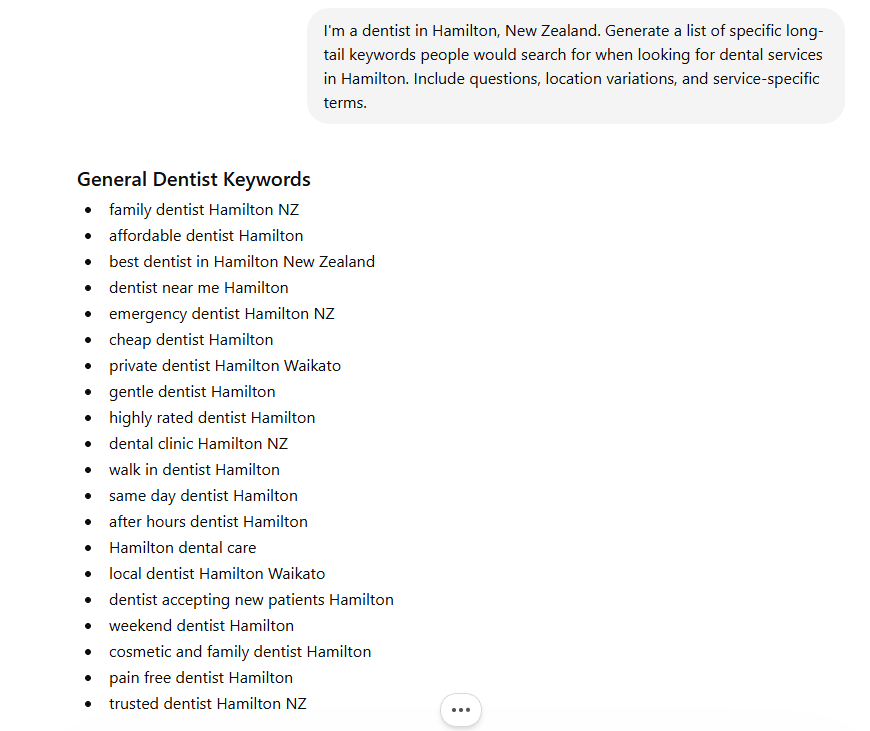
ChatGPT will give you a broad list of ideas you might not have thought of. It’s especially useful for surfacing question-based keywords and niche variations.
You’ll still want to validate these with real search data (see Method 4), but it’s a fast way to build out your initial list.
Method 3: AnswerThePublic
AnswerThePublic is a free tool that generates question-based keywords from any seed term.
Enter your core keyword and it maps out every question variation: who, what, where, when, why, how. It also shows prepositions (for, with, near, without) and comparisons (vs, or, like).
It’s especially good for finding long-tail keywords that work well for blog content. Questions like “how much does a dentist cost in Hamilton” or “what’s the best age for braces NZ” make excellent article topics that attract people early in their decision-making process.
Method 4: Google Keyword Planner
Google Keyword Planner is free (you just need a Google Ads account) and it gives you actual search volume data from Google.
Take the keywords you’ve gathered from Methods 1–3 and plug them into the Keyword Planner. Set the location to New Zealand.
What you’re looking for:
- Which keywords have real search volume (even 10–50 searches per month is enough in NZ)
- Related keyword suggestions you hadn’t thought of
- Competition level (low competition = easier to rank for)
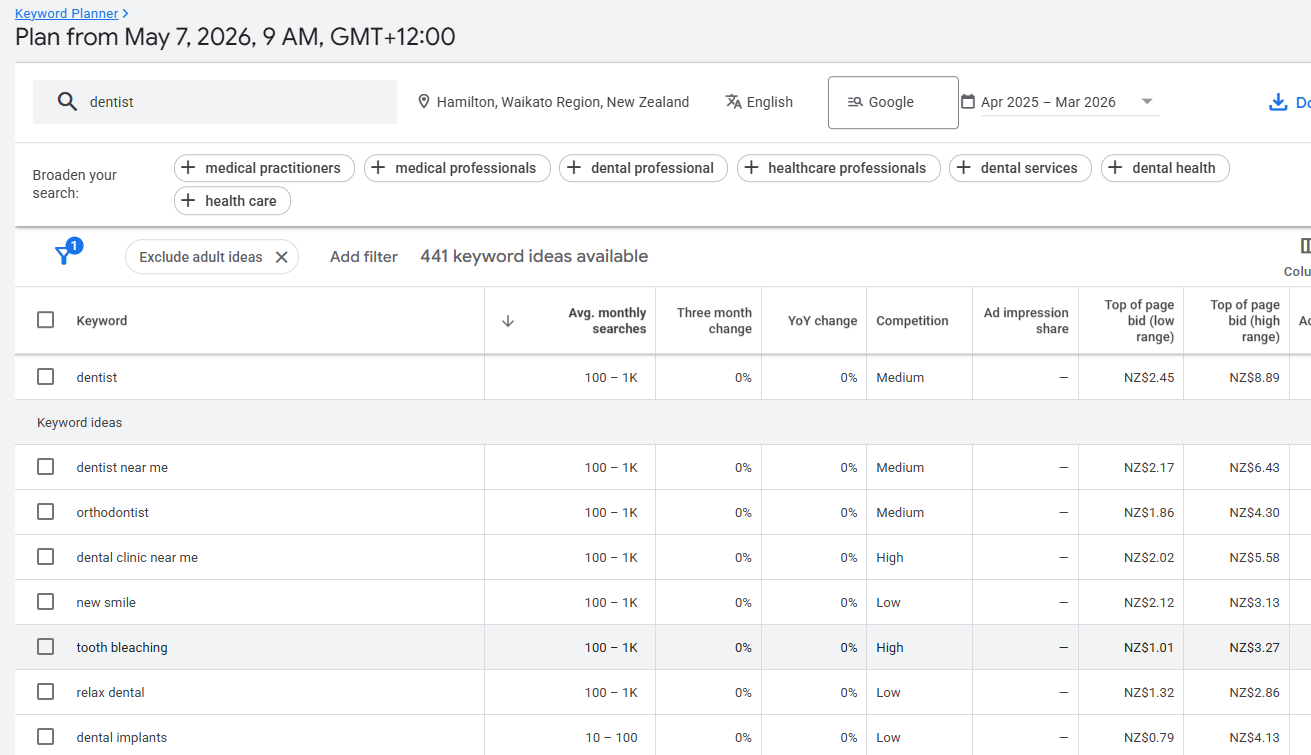
Now you’re validating ideas with real data instead of guessing.
Method 5: SEMrush or Ahrefs (For Deeper Research)
If you have access to SEMrush or Ahrefs, you can go much deeper.
Use the Keyword Magic Tool (SEMrush) or Keywords Explorer (Ahrefs) to find:
- Keyword difficulty scores (how hard it is to rank)
- All variations and related terms
- Question-based keywords
- What’s actually ranking for each keyword
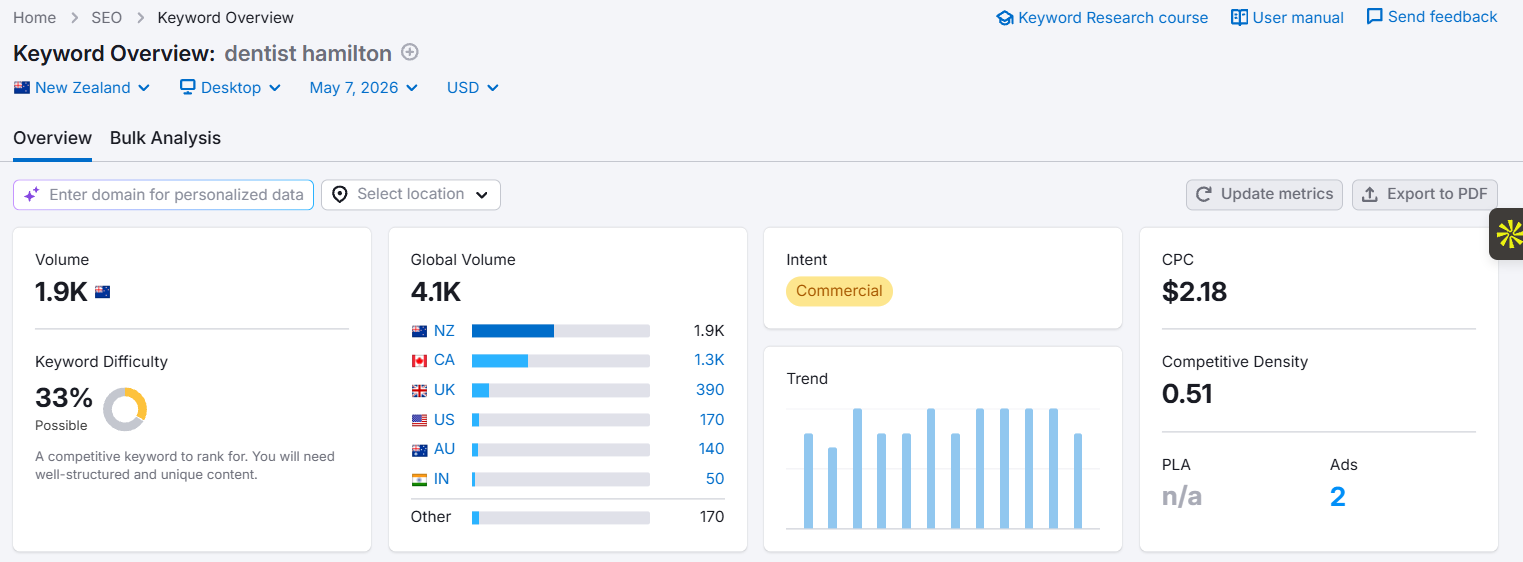
These tools also show you the SERP — meaning you can see exactly who you’d be competing against and how strong their pages are.
This is the most thorough method, but Methods 1–4 will get you 80% of the way there for free.
How to Use Long-Tail Keywords Once You’ve Found Them
Finding long-tail keywords is only half the job. Knowing what to do with them is what actually gets results.
Match the Search Intent First
Before you create any page, ask one question: what does the person searching this keyword actually want? That’s search intent — and getting it right is everything.
If someone searches “how much does a roof replacement cost in Tauranga,” they want information. That’s a blog post.
If someone searches “roof replacement Tauranga,” they want a service. That’s a service page.

Get this wrong and your page won’t rank — no matter how well it’s written. Google already knows what type of content matches each keyword. Search the keyword yourself and look at what’s ranking. If the top results are blog posts, write a blog post. If they’re service pages, create a service page.
Map Keywords to Pages
Every page on your site should target one primary keyword. Group close variations under it.
For example, if you’re a Hamilton accountant:
| Primary keyword | Page type | Supporting variations |
|---|---|---|
| small business accountant Hamilton | Service page | accountant for small business Hamilton, Hamilton accountant for tradies |
| how much does an accountant cost NZ | Blog post | accountant fees NZ, small business accountant prices NZ |
| GST return help Hamilton | Blog post | how to file GST return NZ, GST return accountant Hamilton |
This stops pages competing with each other and makes it clear to Google what each page is about.
Where to Place Your Long-Tail Keyword
Once you’ve matched a keyword to a page, include it naturally in the on-page SEO spots that matter most:
- Title tag (what shows in Google search results)
- H1 heading (main heading on the page)
- URL (e.g., /small-business-accountant-hamilton/)
- Opening paragraph (first 100 words)
- Naturally throughout the content

Don’t force it. Use it where it reads naturally. Google is smart enough to understand variations and context. If the keyword is “affordable dental implants Hamilton NZ,” you don’t need to repeat that exact phrase ten times. Use natural variations like “dental implant costs in Hamilton” or “getting implants at a Hamilton dental clinic.”
Build Content Clusters
Content clusters are where the real power of long-tail keywords shows up.
Instead of creating isolated blog posts on random topics, group your long-tail keywords around a core topic and build a cluster. This is what effective SEO content looks like in practice.
For example, if your core topic is “dental implants” and that’s your main service page, your supporting long-tail content might include:
- “how much do dental implants cost in Hamilton”
- “dental implants vs dentures NZ”
- “how long do dental implants last”
- “am I a good candidate for dental implants”

Each of these targets a different long-tail keyword. But they all link back to your main dental implants page and to each other.
That depth builds topical authority. Google sees your site covers dental implants from every angle, and it rewards that with stronger rankings across the board.
How to Build a Long-Tail Keyword Strategy That Actually Works
The biggest mistake NZ businesses make with long-tail keywords is picking them at random.
They hear “target long-tail keywords” and start writing blog posts about whatever comes to mind. A post about this, a post about that, no connection between them.
That doesn’t work. Random content doesn’t compound.
The businesses that get real results from long-tail keywords do it with a system.
Cluster, Don’t Scatter
Every long-tail keyword you target should connect back to one of your core services or topics.
Take a plumber in Auckland as an example.
The wrong approach: Writing random blog posts about “how to unclog a sink,” “best bathroom tiles NZ,” “what is a heat pump,” and “garden irrigation Auckland.” These topics are all over the place. They don’t build authority around anything specific.
The right approach: Picking “hot water cylinders” as a core topic and building long-tail content around it:
- “hot water cylinder replacement cost Auckland”
- “best hot water cylinder brands NZ”
- “how long does a hot water cylinder last”
- “electric vs gas hot water cylinder NZ”
- “signs your hot water cylinder needs replacing”

All of these link back to the main hot water cylinder service page. Together, they make the plumber’s site the most comprehensive resource on that topic in Auckland. That’s topical authority — and it’s what Google rewards.
How Many Long-Tail Keywords Do You Need?
Start with 10–20 long-tail keywords grouped around your top two or three services.
That’s enough to build real traction without overwhelming yourself.
For a Hamilton accountant, that might look like:
- 5–7 long-tail keywords around “small business accounting”
- 5–7 around “tax returns and GST”
- 3–5 around “business advisory”
You don’t need hundreds. You need the right ones, targeted properly, with content that’s actually useful.
How to Prioritise
Not all long-tail keywords are equal. When deciding which to target first, weigh three things:
- Relevance to your business — Does this keyword match a service you actually offer? Will ranking for it bring you customers? If not, skip it.
- Competition level — How strong are the pages currently ranking? If they’re thin or outdated, that’s an easy win.
- Search volume — Even in NZ, some long-tail keywords get decent volume. All else being equal, target the ones with more searches first.
Relevance always comes first. A keyword with zero search volume but perfect business alignment is worth more than a high-volume keyword that attracts the wrong audience.
Long-Tail Keywords and AI Search
More people are getting answers from AI tools like ChatGPT and Google AI Overviews instead of clicking through traditional search results.
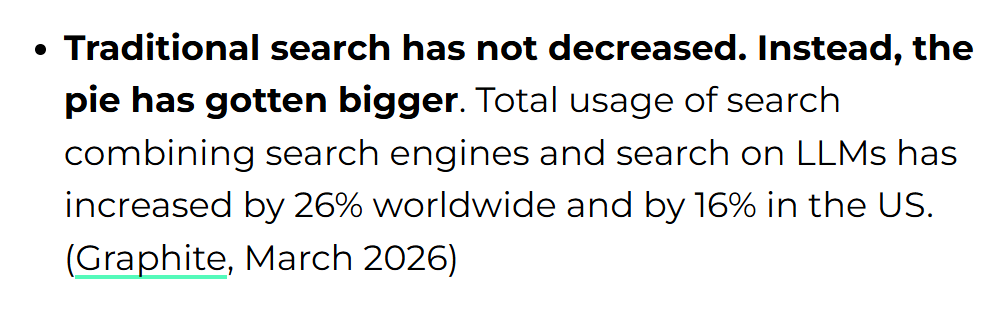
That shift makes long-tail keywords even more valuable.
AI queries are naturally conversational. People don’t type “plumber Auckland” into ChatGPT. They type “who’s the best plumber in West Auckland for fixing a leaking hot water cylinder?” That’s a long-tail query.
The average search query triggering AI Overviews has increased from 3.1 words to 4.2 words in the past year.
Queries are getting longer and more specific — which is exactly what long-tail keywords are built for.
If your content directly answers these specific questions in a clear, structured way, you’re far more likely to be cited in ChatGPT responses, Google AI Overviews, and other AI-generated answers.
The format that works best: start each section with a direct answer to the question, then expand with detail. This gives AI systems exactly what they need to extract and cite your content.
When to Do It Yourself vs Work With an SEO Expert
Everything in this guide is something you can do yourself. The methods are simple, the tools are mostly free, and the process is straightforward.
If you’ve got the time and you’re happy to learn as you go, work through it step by step. Start with your most important service, find your long-tail keywords, and build content around them. You’ll see results — it just takes consistent effort and patience.
If you’d rather have it done properly from the start, that’s where we come in. We handle keyword research, content strategy, and the full SEO process for businesses across New Zealand — including building out long-tail keyword strategies that compound into real rankings and revenue.
We currently help businesses with SEO in:
Either way, the important thing is that you start. Long-tail keywords are the fastest path to traction for most NZ businesses, and the sooner you begin, the sooner results start compounding.
Long-Tail Keywords: FAQ
What is a long-tail keyword example?
A long-tail keyword is a specific search phrase like “best café in Wellington CBD for brunch with kids.” Compare that to the short-tail version, “café Wellington,” which is broad and highly competitive. The long-tail version targets a very specific type of searcher.
How many words is a long-tail keyword?
There’s no fixed word count. Long-tail keywords are defined by their specificity, not their length. “Buy Honda Civic 2024” is only four words but it’s highly specific and long-tail. “Best web developer” is three words but behaves like a competitive head term. Focus on specificity and intent, not counting words.
Do long-tail keywords still work in 2026?
More than ever. With the rise of AI search, voice queries, and conversational search, people are searching in more specific and natural ways. Long-tail keywords align perfectly with this shift. They’re also the most practical starting point for any NZ business that wants to build organic visibility without a massive budget.
Are long-tail keywords good for local SEO?
Extremely. Local searches are naturally long-tail. “Affordable dentist Hamilton open Saturdays” is a long-tail keyword with strong local intent. Targeting these kinds of phrases helps you rank in both Google’s regular results and the local map pack. For NZ businesses serving specific areas, long-tail local keywords are some of the easiest wins available.
What's the difference between long-tail and short-tail keywords?
Short-tail keywords are broad terms (one to two words) with high search volume and heavy competition. Long-tail keywords are specific phrases (three or more words) with lower volume but higher conversion rates and less competition. Short-tail keywords are the long-term goal. Long-tail keywords are where you start.