

A couple of months ago I gave an SEO masterclass at Wintec.
Afterwards, one of the attendees told me about a masterclass she’d been to previously, where a big chunk of the session was spent on image alt text.
Respectfully, that told me all I needed to know about that “SEO expert.” Keyword intent would have been a far better use of that half hour.
That’s the trap most SEO advice in this country walks you straight into: obsessing over the small, safe, tick-a-box stuff — alt text, keyword density, a plugin turning green — while ignoring the one thing that actually decides whether you rank.
In this article, I’m going to teach you what keyword intent actually is, why it matters more than almost anything else in SEO, the four types you need to know, and exactly how to find and use it on your own keywords — all on real NZ examples, not theory.
What Is Keyword Intent?
Keyword intent is the reason behind a search — the problem someone is trying to solve when they type a query into Google, not just the words they used.
The words are only a clue. The intent is the thing underneath them.
Here’s the shift that changes everything. Most people look at a keyword and ask “what does this mean?” The better question is “why did this person search it, and what would make them stop searching?”
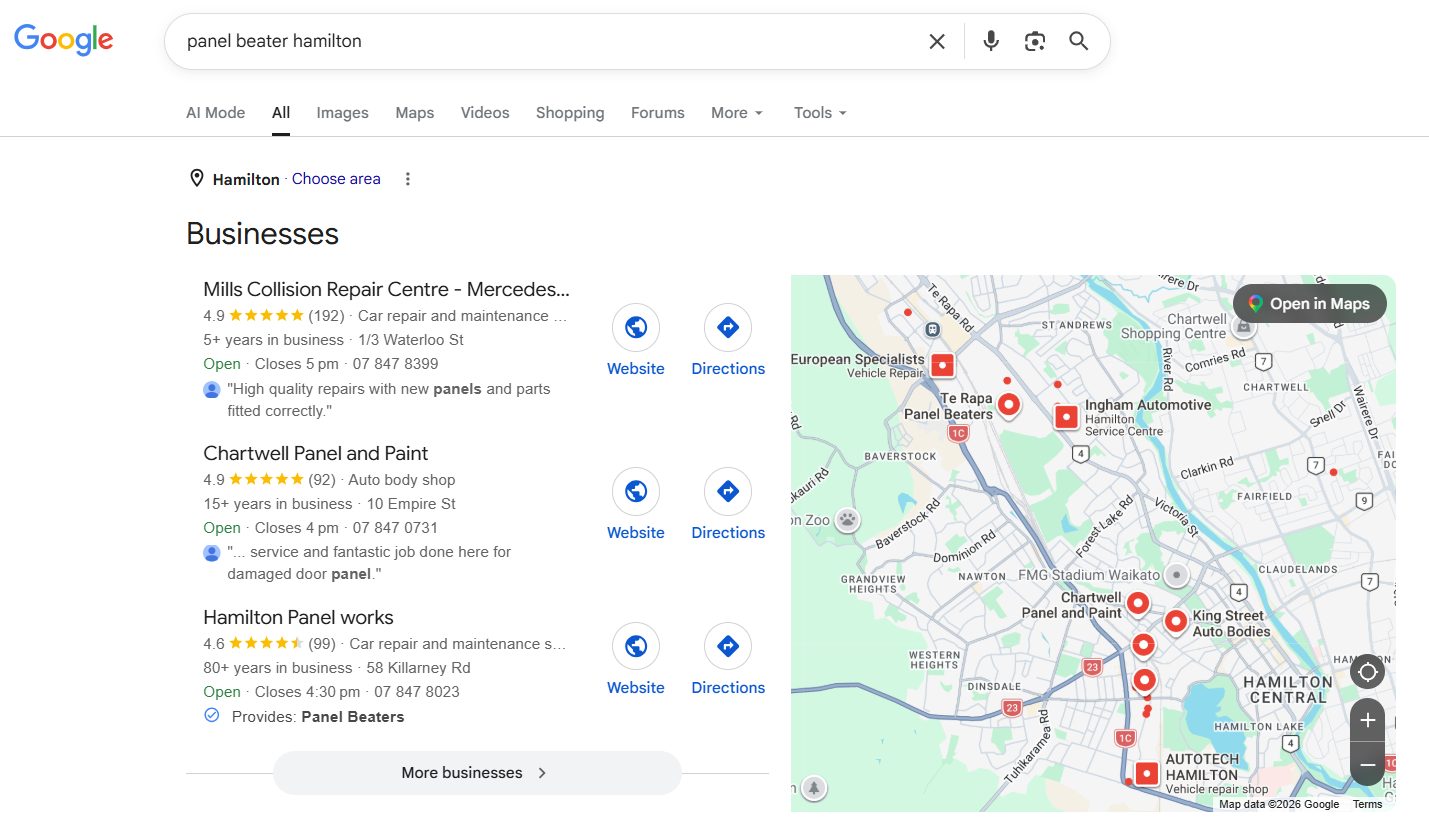
Say someone types “panel beater Hamilton.” The words tell you they want a panel beater. The intent tells you the real story: they’ve probably just had a prang, they’re stressed, they want someone nearby who can fix their car fast and won’t rip them off.
Answer that — the stress, the speed, the trust — and you’ve understood the intent.
Match the words and miss the worry, and you’ve written a page that technically mentions Hamilton and helps nobody.
You’ll also hear the term search intent used almost interchangeably, and honestly, they point at the same idea.
If there’s a practical difference worth drawing, it’s timing: search intent is about matching your content to what the results already reward; keyword intent is that same idea one step earlier — the filter you run every keyword through during research to decide whether it even belongs in your strategy.
Get in the habit of asking it early, before you’ve written a word, and you save yourself from the most expensive mistake in SEO: writing a brilliant page for a keyword you were never going to convert.
Why Keyword Intent Is Important
Nail the intent and you get a genuinely good user experience — and a good user experience is something search engines can see, measure, and reward.
Here’s the mechanism nobody in the top results bothers to prove:
When you match intent, the visitor lands on your page and immediately gets what they came for. They stick around. They read. They don’t bounce back to Google and click the next result.
That behaviour — long time on page, no pogo-sticking back to the search results — is a signal. Search engines read a satisfied searcher as a vote that your page was the right answer, and over time that pushes you up.
I’ve watched this play out with my own money.
Back in 2017 I started a health site called HealthVI with my former business partner and SEO mentor, Ian Pribyl (we got along so well even peanut-butter-and-jam sandwiches would’ve been jealous). We grew it from nothing to over 20,000 organic visitors a month.
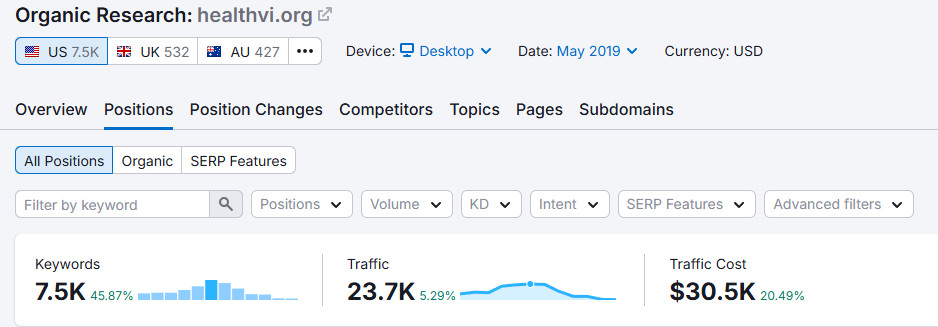
The whole thing ran on one intent insight. We targeted product-review keywords — the specific keyword was always the product name plus the word “review.” On paper, that looks like an informational search.
But the real intent was a single, sharper question: should I actually buy this thing or not?
So every review answered that. Not a wishy-washy summary — a verdict. Buy it, or don’t, and here’s exactly why.
That’s it. That’s the whole trick. We matched the real intent, the experience was genuinely useful, people stayed and read the whole thing, and Google rewarded the pages that kept sending searchers away happy.
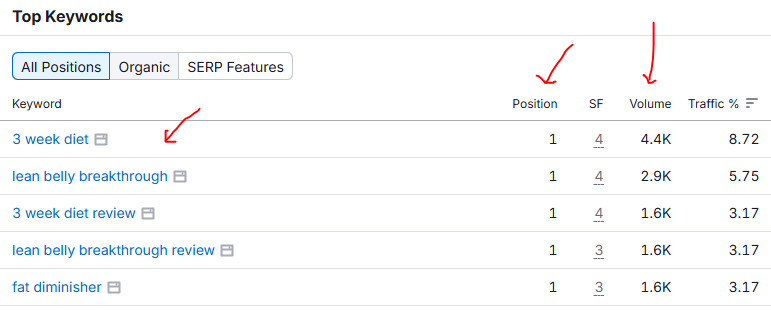
The stakes are higher than most people realise, because ranking real estate is brutal to win. Ahrefs looked at a million pages and found only 1.74% of newly published pages crack the top 10 within a year. You don’t get many swings.
Spending one of them on a page built for the wrong intent is how good businesses waste six months and conclude “SEO doesn’t work.”

This is why intent beats the on-page trivia every time. Alt text and meta tweaks are a checklist — you do them once and you’re done.
Intent compounds, because it works through real human behaviour, and human behaviour is the thing the whole system is built to measure.
The Four Types of Keyword Intent
Every keyword falls into one of four intent types — informational, commercial, transactional, or navigational — and each one wants a completely different kind of page.
Get the type right and you’re matching the page to the person. Get it wrong and you’re bringing a knife to a bake sale — technically a tool, wrong job entirely.
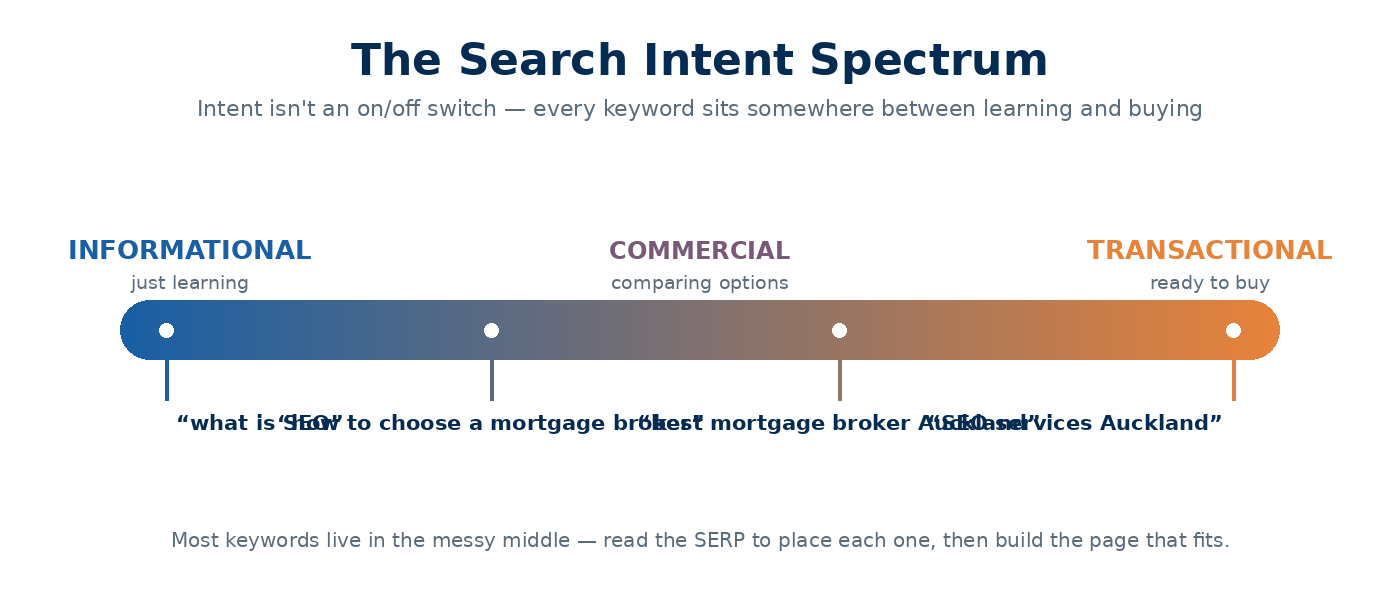
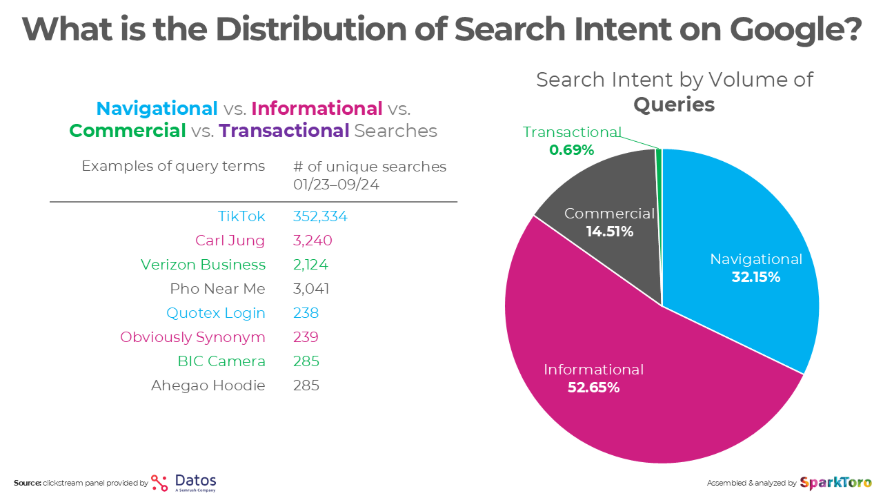
One thing to know before the breakdown: the four aren’t evenly split. When SparkToro analysed 332 million searches, about 52% were informational, 33% navigational, 14.5% commercial, and under 1% purely transactional.
Most people online are learning, not buying — which is exactly why informational content is how you build an audience before you ever ask for the sale.
Informational intent
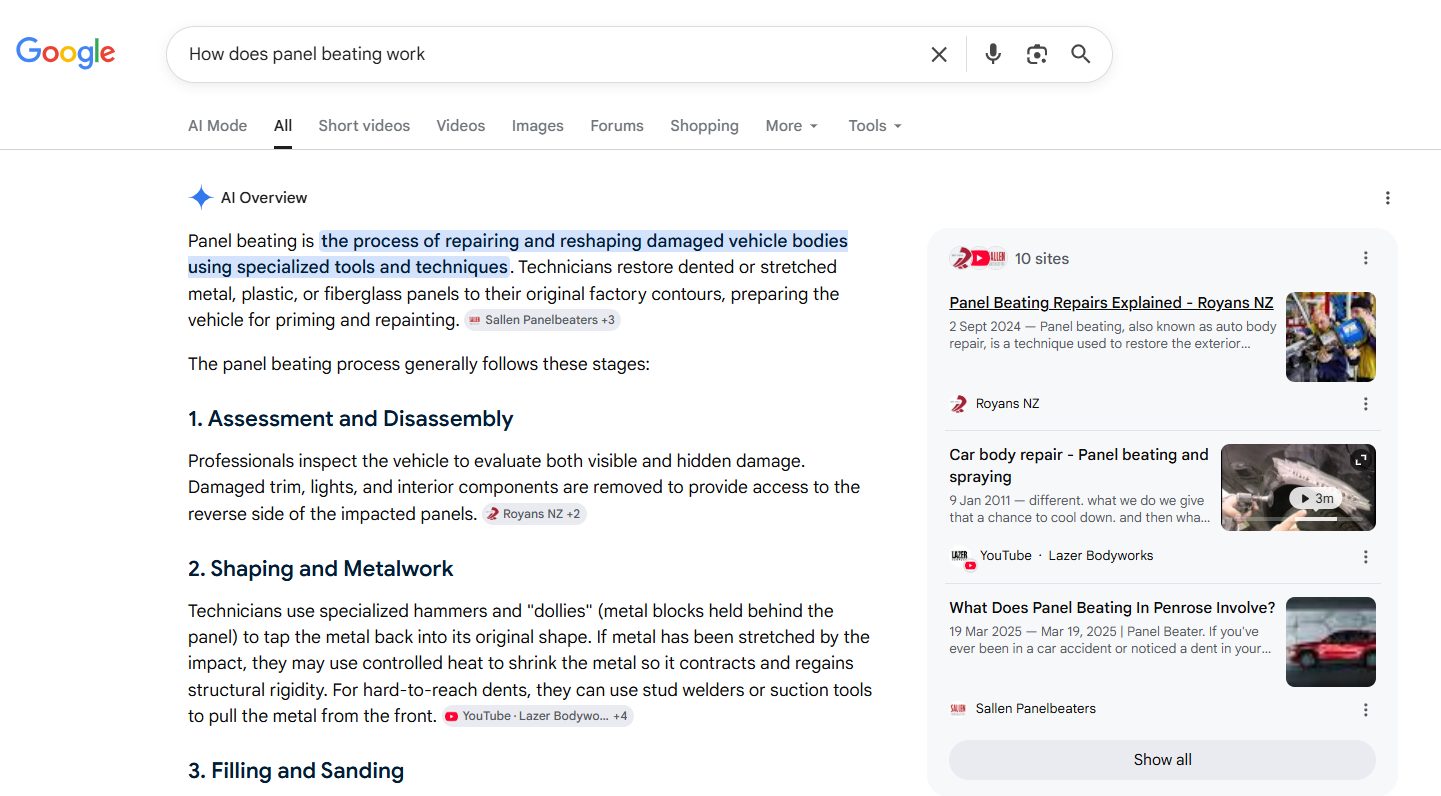
The searcher wants to learn something. They’ve got a question and they want an answer.
“How does panel beating work,” “what is a conveyancing lawyer,” “why won’t my car start” — these are people gathering information, not reaching for their wallet.
For a Hamilton panel beater, “how does panel beating work” is informational.
The right page is a blog post or guide that actually teaches it — the kind of content you use to build authority and catch people early, long before they need a quote.
Commercial intent
The searcher is comparing before they commit. They’re close to buying, but they want to weigh their options first.
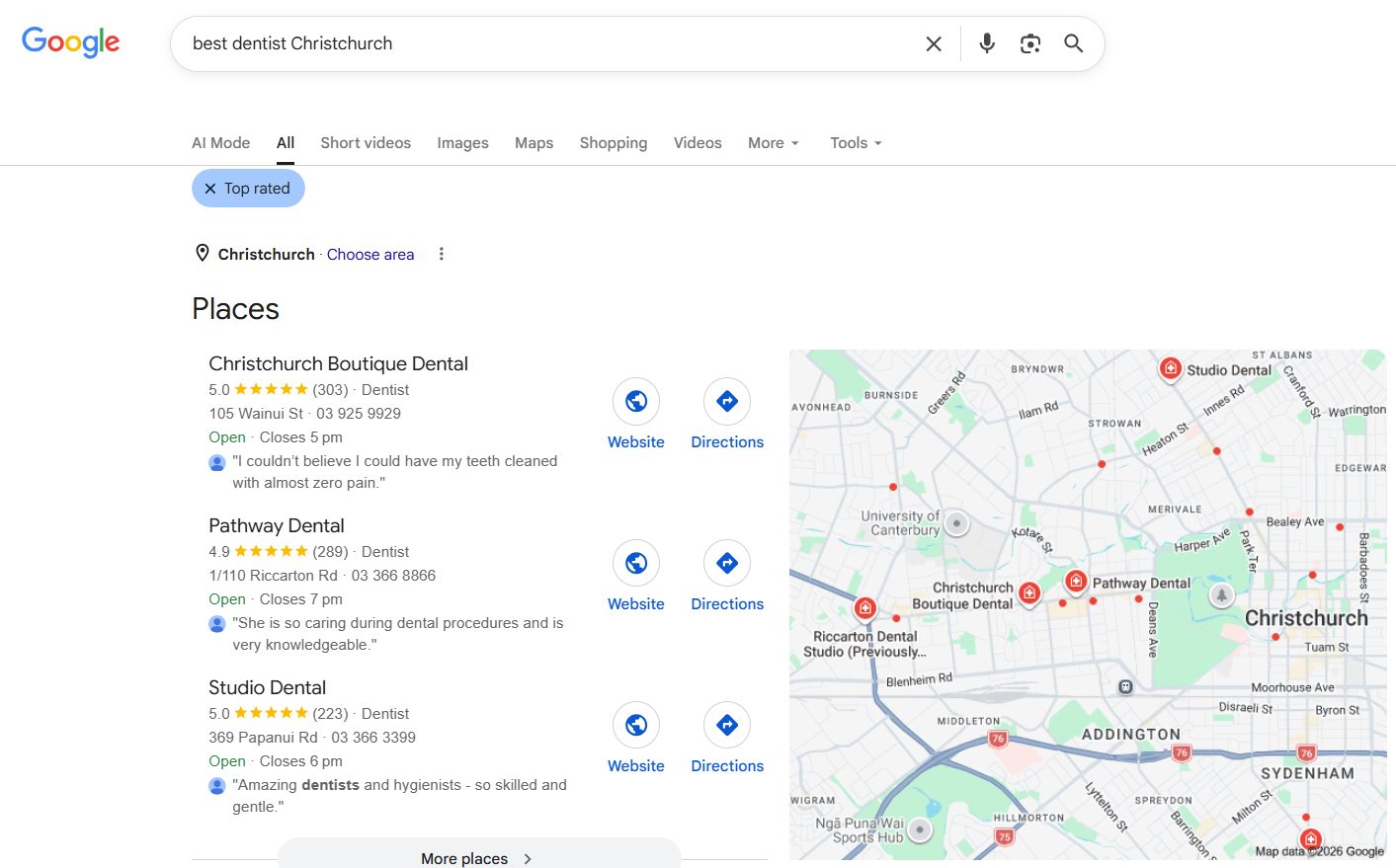
Words like “best,” “top,” “reviews,” and “vs” give it away. Someone searching “best dentist Christchurch” isn’t ready to book yet — they’re building a shortlist.
The page that wins here isn’t a hard-sell landing page; it’s something that helps them compare and quietly makes the case that you’re the obvious pick.
A Christchurch dentist who shows up for that search with real reviews and a clear reason to choose them catches the customer at the exact moment the decision is being made.
Transactional intent
The searcher is ready. They want to act — book, buy, call — right now.
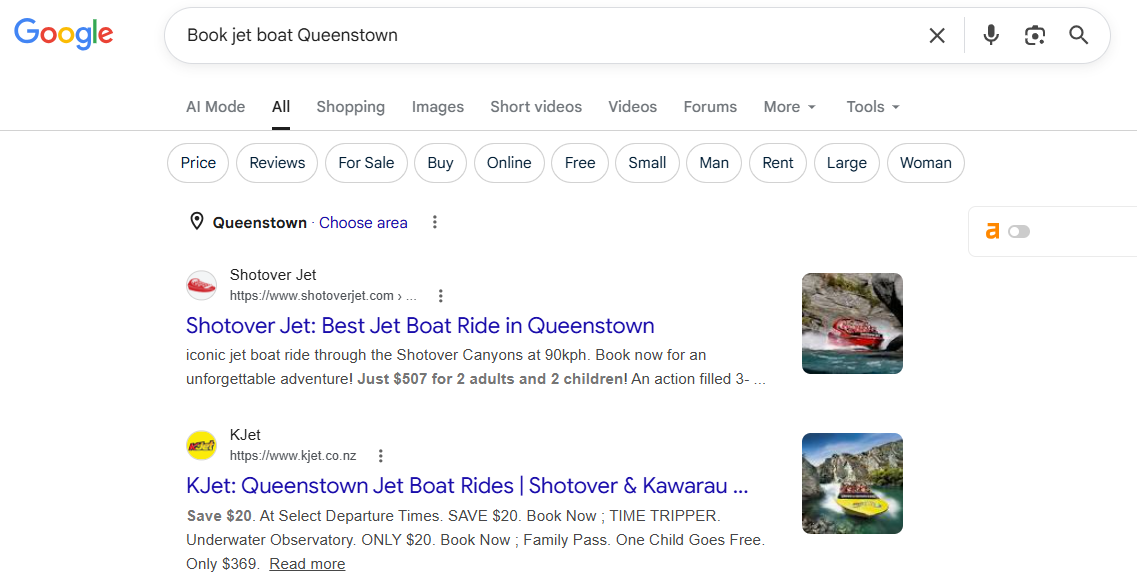
“Book jet boat Queenstown.” There’s no ambiguity there. That person has their card out and wants a booking page, a price, and a big obvious button.
Send them a blog post about the history of jet boating and you’ve lost them. In a small, competitive market like Queenstown, where a handful of operators are all fighting for the same ready-to-book tourist, the business with the clean transactional page — fast, priced, one tap to book — takes the money.
Navigational intent
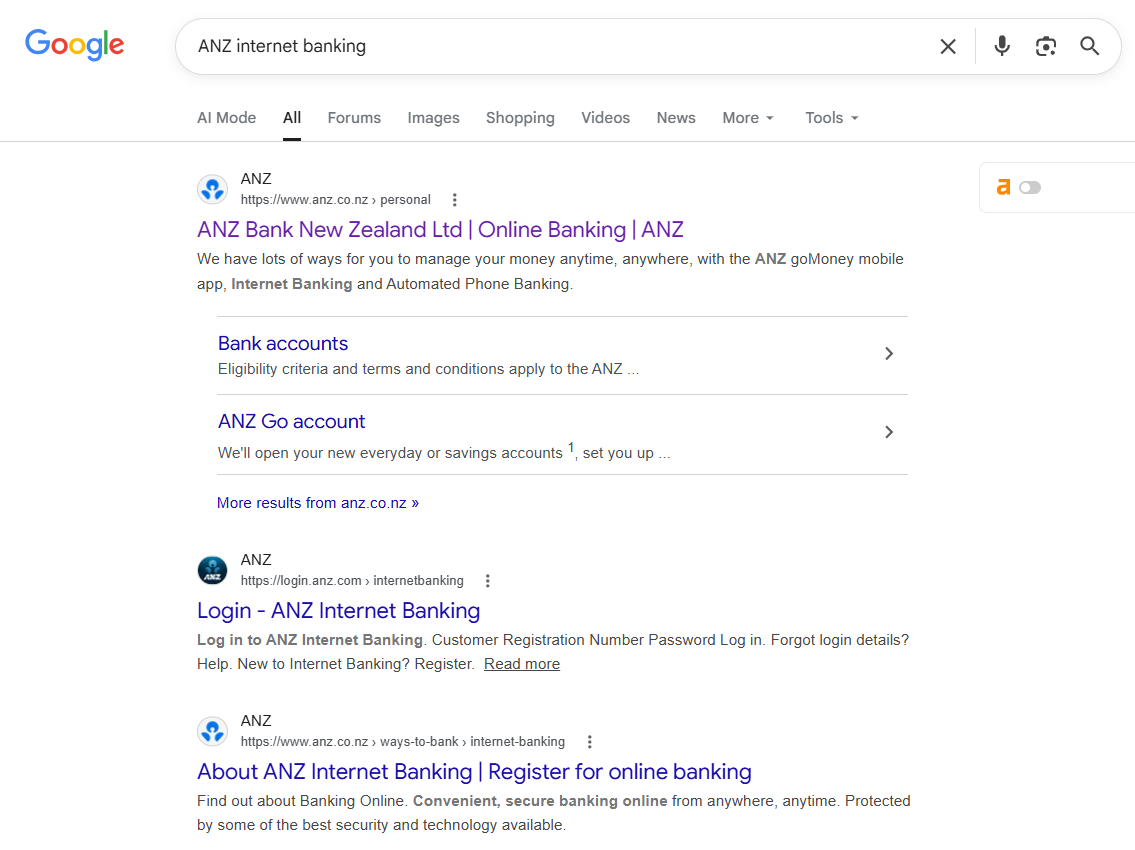
The searcher already knows where they’re going. They’re using Google as a shortcut to a specific site or page — “Xero login,” “ANZ internet banking,” your business name plus “contact.”
You mostly can’t win someone else’s navigational searches, but you’d better own your own. If people search your brand name, the path to your site should be effortless.
Two honourable mentions the textbook lists skip: local intent (a geographic pull, like “electrician near me” — huge for NZ businesses, and usually a job for your Google Business Profile, not a blog) and branded intent (a specific brand in the query).
Worth knowing, because most Kiwi businesses reading this live and die by local searches.
Here’s the whole thing on one page:
| Intent type | What the searcher wants | The page that wins | NZ example |
|---|---|---|---|
| Informational | To learn or understand | Blog post, guide, how-to | “how does panel beating work” |
| Commercial | To compare before buying | Comparison, reviews, “best of” | “best dentist Christchurch” |
| Transactional | To act now | Product / booking / service page | “book jet boat Queenstown” |
| Navigational | To reach a specific site | Homepage, login, contact page | “Xero login” |
How to Find the Intent Behind a Keyword
The fastest way to work out a keyword’s intent is to type it into Google and read what’s already ranking. Google has spent decades and billions figuring out what searchers want — the answer is sitting right there on the results page.
You don’t guess intent. You read it off the SERP. Here’s the exact process I run, walked through on a real Auckland example.
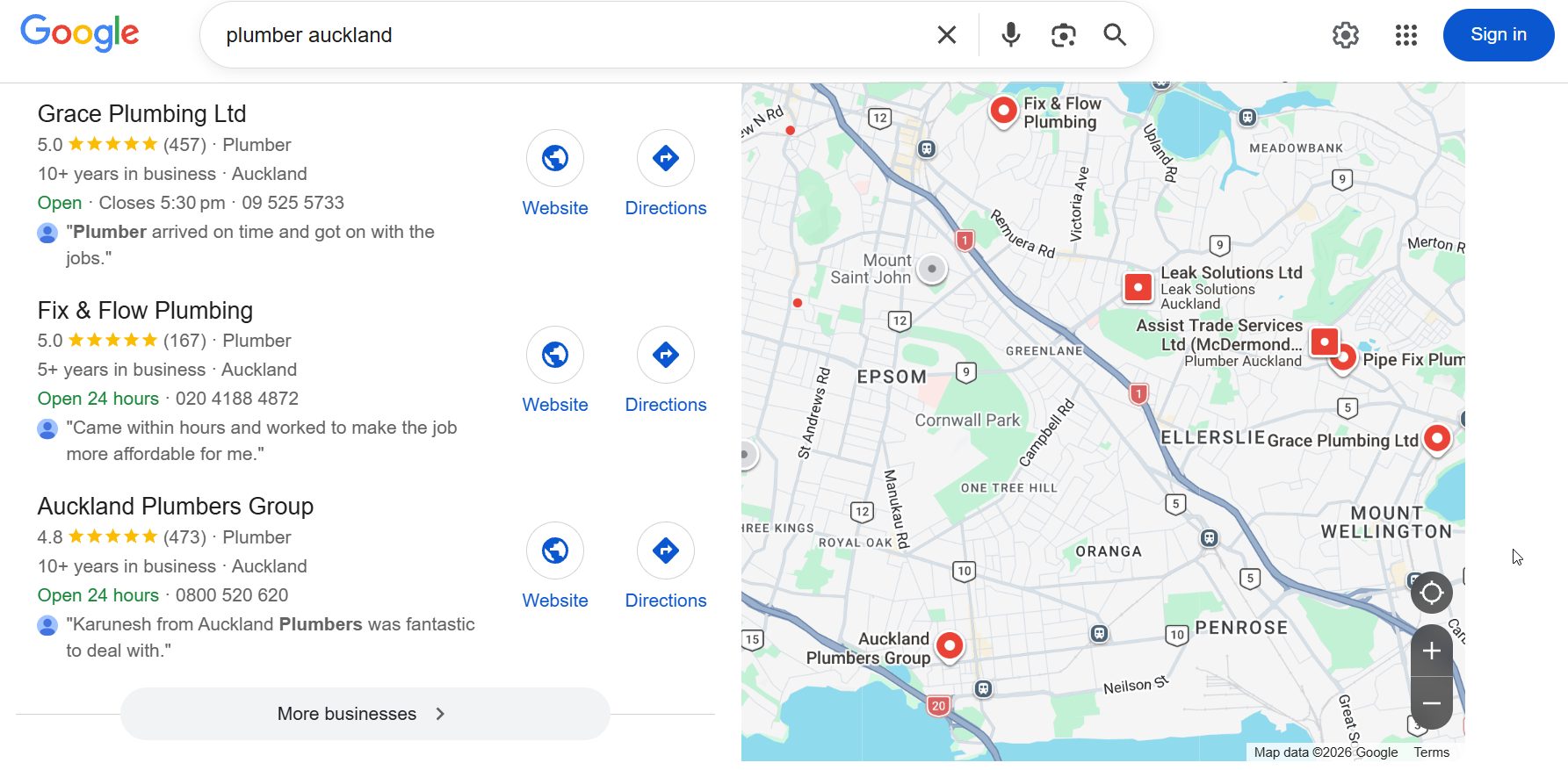
Let’s say you run a plumbing business and you’re eyeing the keyword “plumber Auckland.”
Step one — type it into Google and read the three C’s. Look at what’s actually ranking and ask three questions:
- Content type — are the results blog posts, product pages, service pages, or tools? For “plumber Auckland” you’ll see service pages and a map pack. That’s a commercial/local signal, not an informational one.
- Content format — how-to guides, listicles, comparisons? Here it’s mostly “Auckland plumbers, available now” service pages.
- Content angle — what hook keeps repeating? Words like “fast,” “24/7,” “same day.” That tells you the searcher is stressed and wants someone now.
Read those three and the intent is obvious: this person has a plumbing problem, they want a local plumber fast, and they’re ready to call.
A blog post titled “10 Common Plumbing Problems” will never rank here, because that’s not what the searcher wants.
Step two — read the SERP features as signals. Google decorates the page with clues:
- A featured snippet or People Also Ask box → informational.
- Shopping ads, a local map pack, or lots of ads → commercial or transactional.
If the map pack is sitting there for “plumber Auckland,” Google is screaming local, ready-to-hire.
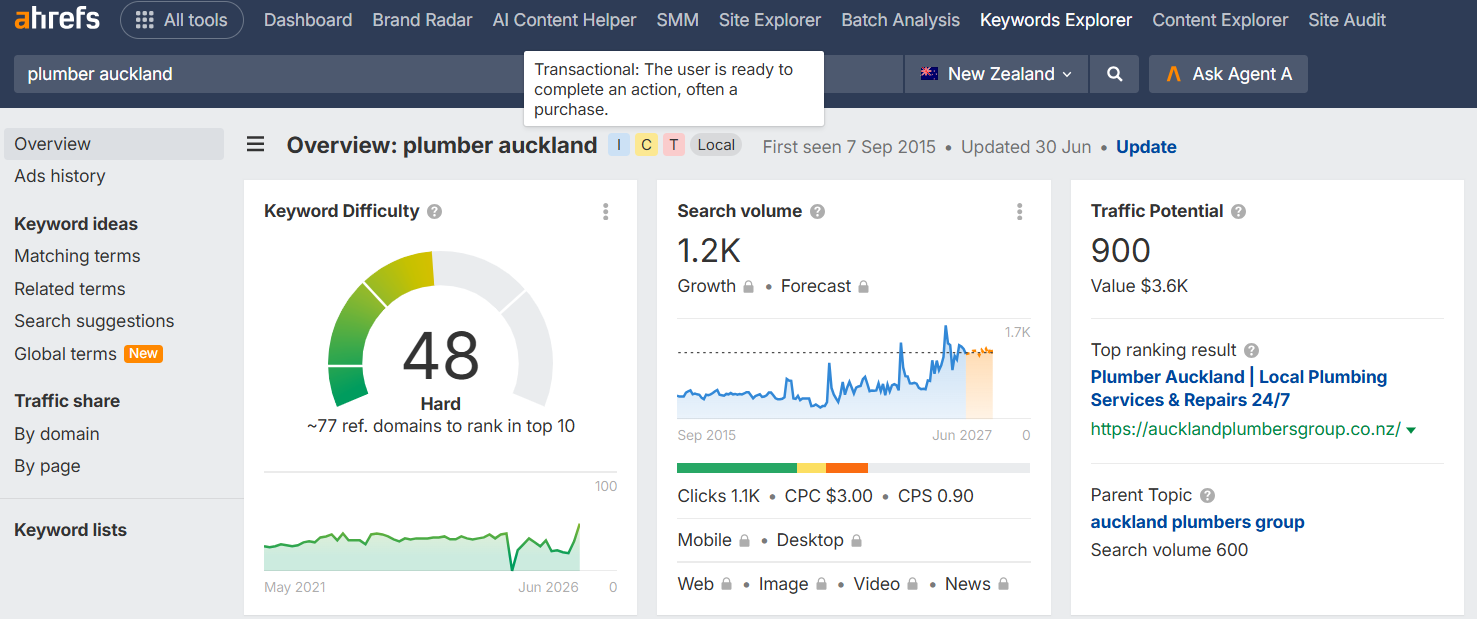
Step three — use a tool to confirm at scale. Once you’re checking dozens of keywords, do it by hand and you’ll lose a day. Semrush labels every keyword’s intent right in the Keyword Overview — informational, navigational, commercial, or transactional — so you can filter a whole list in seconds.
Ahrefs has an Identify intents button in Keywords Explorer that reads the top results with AI and gives you a percentage breakdown of what’s ranking.
Use the tools to move fast, but never skip reading the actual SERP on your money keywords. The tool gives you a label; the live results give you the why.
How to Match Keyword Intent to the Right Page
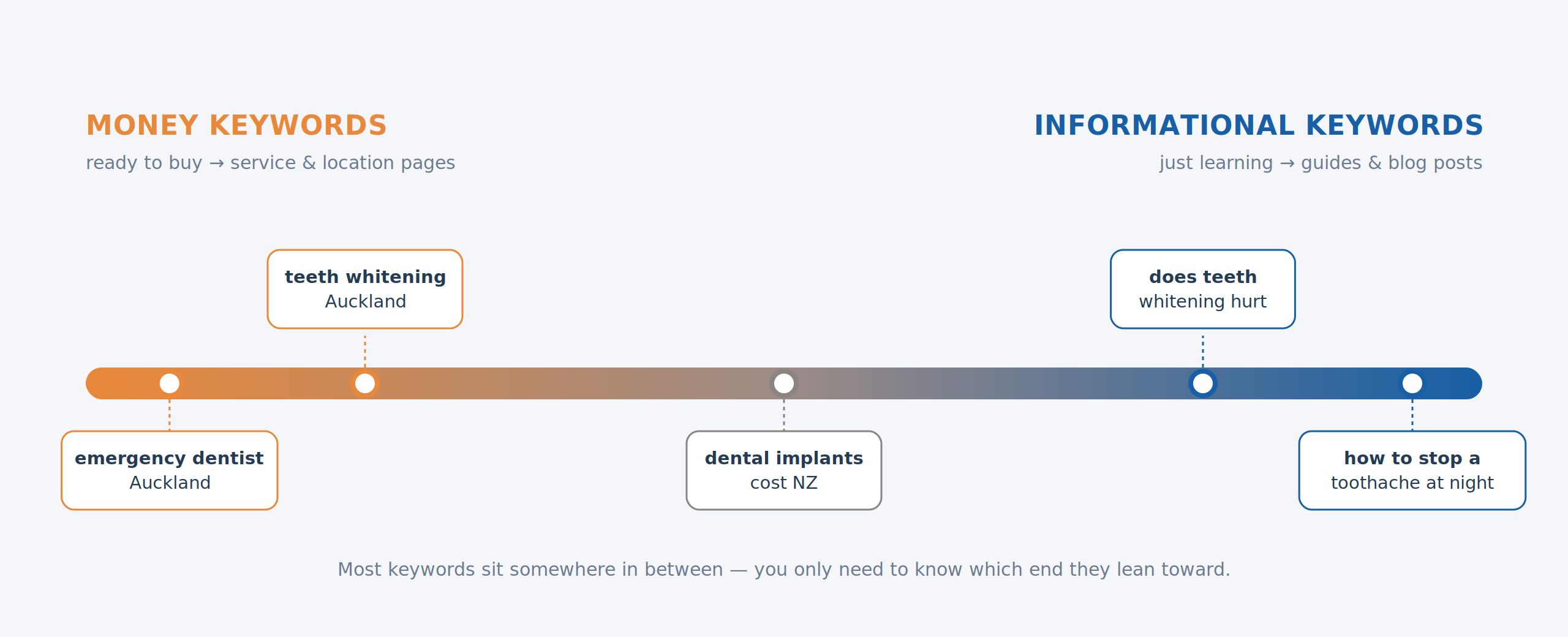
Once you know the intent, you send it to the page built to satisfy it: informational keywords build authority, so they go to blog content; commercial and transactional keywords build revenue, so they go to your money pages.
That single split is the backbone of a smart site structure.
Think about a Wellington conveyancing lawyer. Two searches, two completely different jobs:
- “What does a conveyancing lawyer do” — informational. This person is learning. Send them a blog post that explains it clearly and builds trust. They’re not a client yet, but you’re now the firm that taught them.
- “Conveyancing lawyer Wellington” — commercial, edging into transactional. This person is ready to hire. Send them a service page with your credentials, your reviews, and an easy way to get in touch.
Point both at the same page and you satisfy neither. The learner feels sold to; the buyer has to wade through a lesson they didn’t want.
Done right, the two work together. The blog post catches people early, builds a bit of trust, and feeds them toward the service page when they’re ready to act.
That’s the awareness-to-decision journey mapped onto your actual site — informational content at the top, money pages at the bottom, everything pointing the right way.
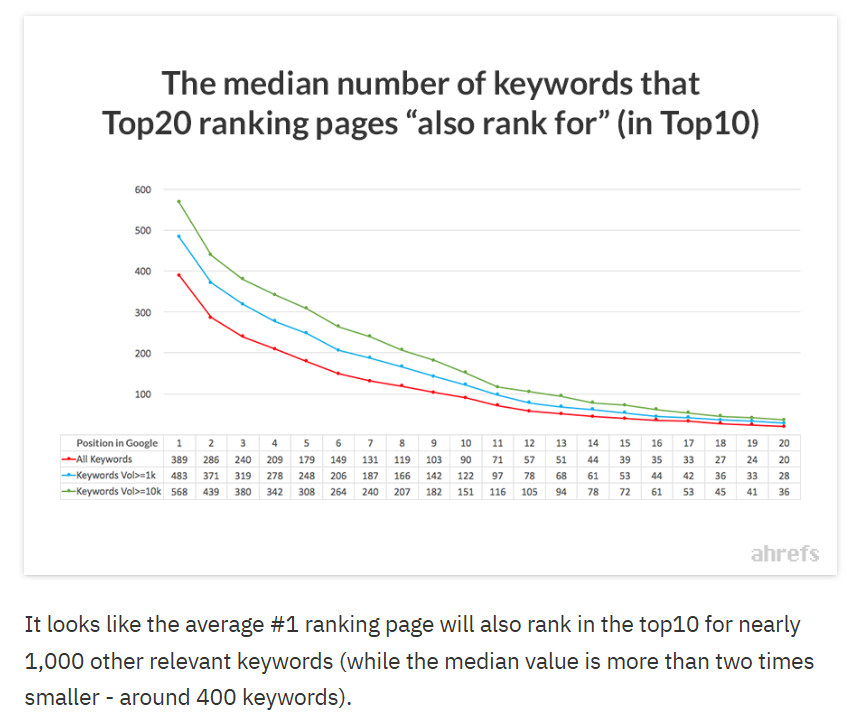
And here’s the quiet bonus of getting one page’s intent spot-on. Ahrefs studied 3 million searches and found the average #1-ranking page also ranks in the top 10 for nearly 1,000 other relevant keywords.
Nail the intent for one core term and you don’t win one keyword — you win the whole cluster of ways people phrase the same need.
The Keyword Intent Mistakes That Hurt Your Rankings
The most common intent mistake isn’t ignoring intent altogether — it’s targeting a keyword with the wrong page type and then wondering why the page never ranks.
Three versions of this trip up NZ businesses constantly.
Wrong page for the intent. A blog post aimed at a transactional keyword, or a service page aimed at an informational one.
You write a lovely 2,000-word guide and point it at “emergency electrician Auckland” — a search where every ranking result is a service page with a phone number. Google looks at your guide, sees it doesn’t match what searchers want, and leaves you on page four.
One page trying to serve two intents. Cramming the “what is it” explainer and the “hire us now” pitch onto a single page feels efficient. It isn’t. You end up doing both jobs at half strength and ranking for neither. Split them.
Chasing volume over intent. A keyword with 5,000 searches a month looks tempting until you realise it’s pure informational traffic that will never buy from you.
Volume is meaningless if the intent doesn’t line up with what you sell. A quieter keyword with buyer intent beats a busy one full of tyre-kickers every time.
How to Spot When Keyword Intent Shifts
Intent isn’t fixed. A keyword that once rewarded blog posts can later reward tools or product pages, so it pays to re-read the SERP before you assume you already know what a term wants.
Intent drifts for real reasons — a new product category appears, a season turns, or an AI feature muscles into the results and changes what a click is even worth.
Ahrefs reports that AI Overviews now show up on around one in five searches, and when they appear for a keyword, the whole intent picture around it can move.

The habit that keeps you safe is simple: every few months, re-run your priority keywords through Google and read the live results again.
If the content type ranking has changed, your page probably needs to change with it. The searchers moved; you move too.
It’s also why the pages that win tend to be the ones that got intent right and kept it right. Ahrefs found 72.9% of top-10 pages are more than three years old, with the average #1 result sitting at around five years.
Rankings reward the page that keeps answering the question better than anyone else — not the one that nailed it once and stopped paying attention.

This is also where a lot of Kiwi businesses get quietly overtaken — by a competitor who noticed the SERP shift first and rebuilt their page for the new intent while everyone else was still admiring their old rankings.
Final Thoughts
The mistake I watch NZ operators make, over and over, is polishing the parts of SEO that feel productive — the alt text, the plugin score, the meta description — while a competitor with a scrappier-looking site simply answers the question better and quietly climbs past them.
Intent is the least glamorous lever and the most powerful one.
It doesn’t turn a dashboard green. It just decides whether the person who lands on your page found what they came for — and search engines are getting better at spotting that, not worse, as AI reshapes how results work.
So before your next page, ask the boring question first: why is this person really searching, and what would make them stop? Build for that answer and most of the on-page stuff sorts itself out.
If you’d rather hand the whole thing to someone who reads SERPs for a living — working out intent, matching it to the right pages, and building the site structure around it — that’s what our SEO services do for New Zealand businesses every day.
Keyword Intent: FAQ
What is keyword intent?
Keyword intent is the reason behind a search — the problem someone is trying to solve when they type a query into Google, not just the literal words they used. It's the filter you run every keyword through before deciding it belongs in your strategy.
What are the four types of keyword intent?
Every keyword falls into one of four types: informational (the searcher wants to learn), commercial (they're comparing options before buying), transactional (they're ready to act now), and navigational (they already know which site they want). Local and branded intent are two useful additions worth knowing on top of these.
How do you find the intent behind a keyword?
The fastest way is to type the keyword into Google and read what's already ranking — the content type, format and angle of the top results tell you exactly what searchers want. Tools like Semrush and Ahrefs can label intent at scale once you're checking dozens of keywords.
Why does keyword intent matter for SEO?
Matching intent gives visitors a genuinely useful experience, so they stay on the page instead of bouncing back to Google — and search engines read that satisfied behaviour as a signal to rank the page higher. Get the intent wrong and you're gambling with a scarce resource, since Ahrefs found only 1.74% of newly published pages crack the top 10 within a year.
Can keyword intent change over time?
Yes — intent isn't fixed. A new product category, a seasonal shift, or an AI Overview appearing in the results can change what a keyword's top results reward, so it pays to re-run your priority keywords through Google every few months and check the SERP hasn't moved on you.
Recommended Reading
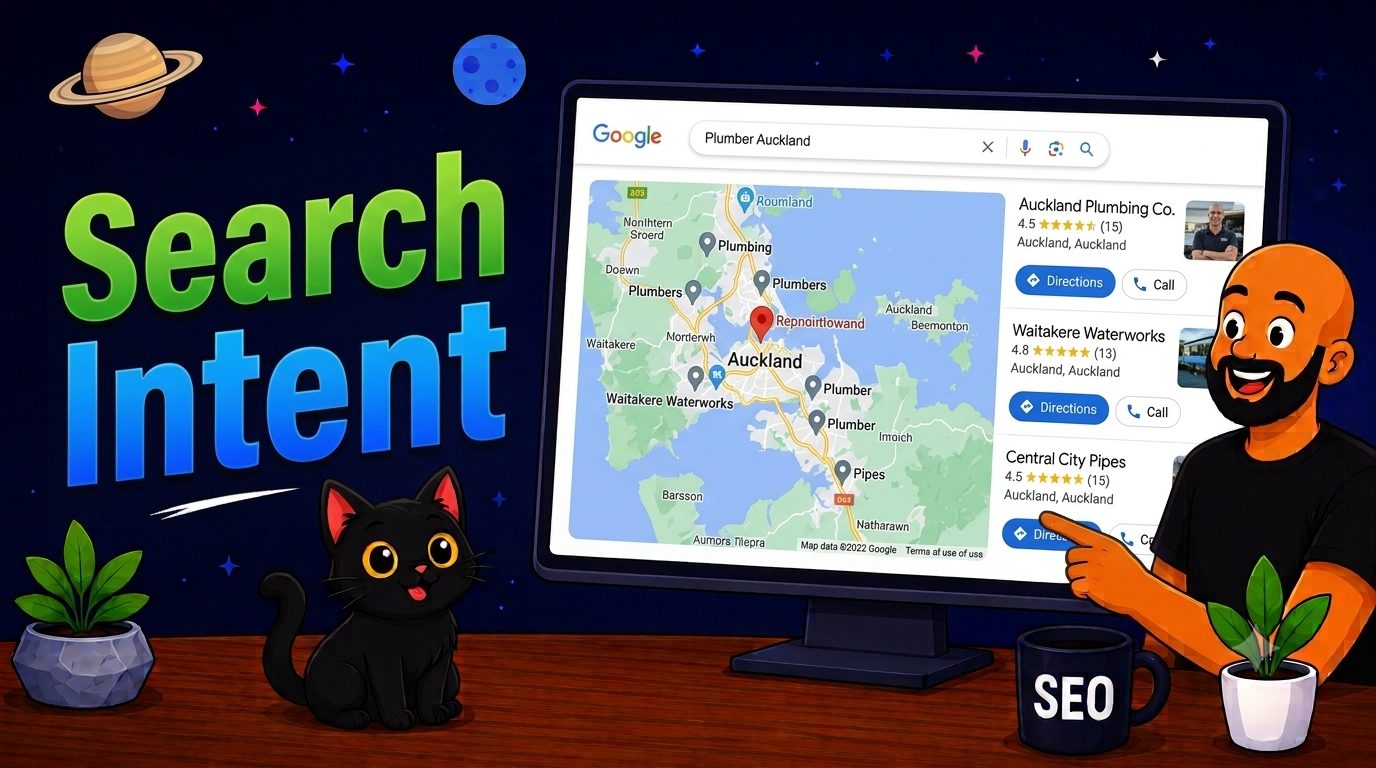 What Is Search Intent? The 4 Types Explained
The deeper dive into all four intent types and how to match each one to the right page.
 Types of Keywords: The Only Breakdown You Need
The full keyword breakdown by intent, length and location, with a real NZ example for each.
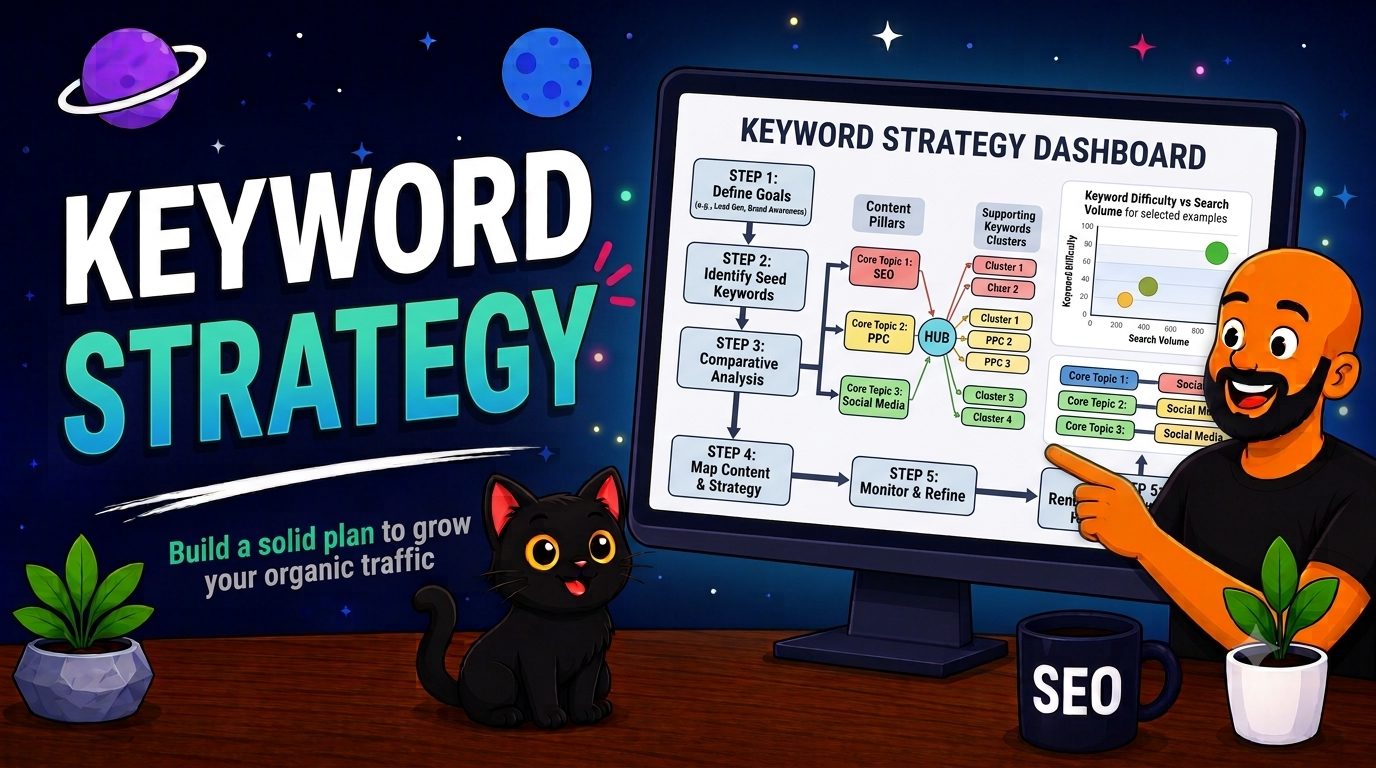 Keyword Strategy: The Ultimate NZ Guide
How to turn keyword intent into a full site structure that sends authority to your money pages.