
I’ve got a link from Content Marketing Institute pointing at my website.
If you do SEO, you already know what that means.
If you don’t: Content Marketing Institute is arguably the kingpin of content marketing on the internet — the publication the whole industry treats as the authority, pulling hundreds of thousands of visitors a month.
It’s the kind of site you can’t buy your way onto, can’t email your way onto, and definitely can’t charm your way onto. Editors there delete cold pitches before their coffee’s gone cold.
I didn’t pay for it. I didn’t know anyone on the inside. I earned it, with digital PR, in about thirty minutes of actual work.
That’s what this guide is about — the version where digital PR is a habit you run yourself, not a six-figure campaign with a creative team and a champagne budget.
I’ll show you what it is, why it’s the best link building tactic going around that we use everyday with out SEO services, and the exact daily process I use to land links from sites most businesses can only dream about.
Fair warning: it can feel like homework. But the payoff is the kind of thing that quietly rearranges your whole search presence.
What Is Digital PR?
Digital PR is the practice of earning links, mentions and coverage from trusted online publications by giving journalists and editors something genuinely worth writing about.
That’s the whole thing. Instead of buying a link or manually placing one on some forgotten blog, you give a real journalist a real quote, a real bit of data, or a real story — and they link back to you because you helped them do their job.
Let’s make it concrete. Here’s a real one.
A researcher named Ketian reached out to me from Harvard University’s digital marketing department, asking if I’d share some comments on how AI is being built into the workflows of small businesses.
Harvard — reaching out to a Kiwi SEO for expert input.

I didn’t pitch her. It came from digital PR: from consistently putting my expertise out where the people writing about this stuff could find it. Do that long enough and you stop chasing coverage — it starts coming to you.
That’s the bit most people underrate. Digital PR earns you links, yes. But it also turns you into the person others seek out — the quote, the comment, the expert — and that positioning compounds every time.
There are four main ways digital PR earns those placements:
- Expert commentary: answering journalist requests with a quotable insight (this is the daily bread-and-butter, and where I spend most of my time).
- Data-driven pitching: running a survey or pulling original numbers journalists want to cite.
- Newsjacking: adding expert perspective to a breaking story while it’s still hot.
- Guest articles and thought leadership: writing genuinely useful pieces for publications your audience already reads.
You’ll hear people call digital PR “where PR meets SEO.” That’s fair. It takes the relationship-building of old-school public relations and points it at the one thing that moves search rankings hardest: links from sites Google already trusts.
Why Digital PR Matters
Digital PR matters because editorial links from high-trust publications are among the strongest ranking signals there are — and now, increasingly, the signals AI search leans on too.
Here’s the mechanism, because the “why” matters before the “how.”
Google treats a link from another site as a vote of confidence. Not all votes count the same. A link from a random directory is a whisper; a link from a major publication is a shout.
The more of those shouts you gather, the more Google reads your site as credible and worth ranking.
The data backs this up hard. Backlinko analysed 11.8 million search results and found the #1 result in Google has an average of 3.8x more backlinks than the pages sitting in positions two through ten. Links aren’t a nice-to-have. They’re often the gap between page one and page two.
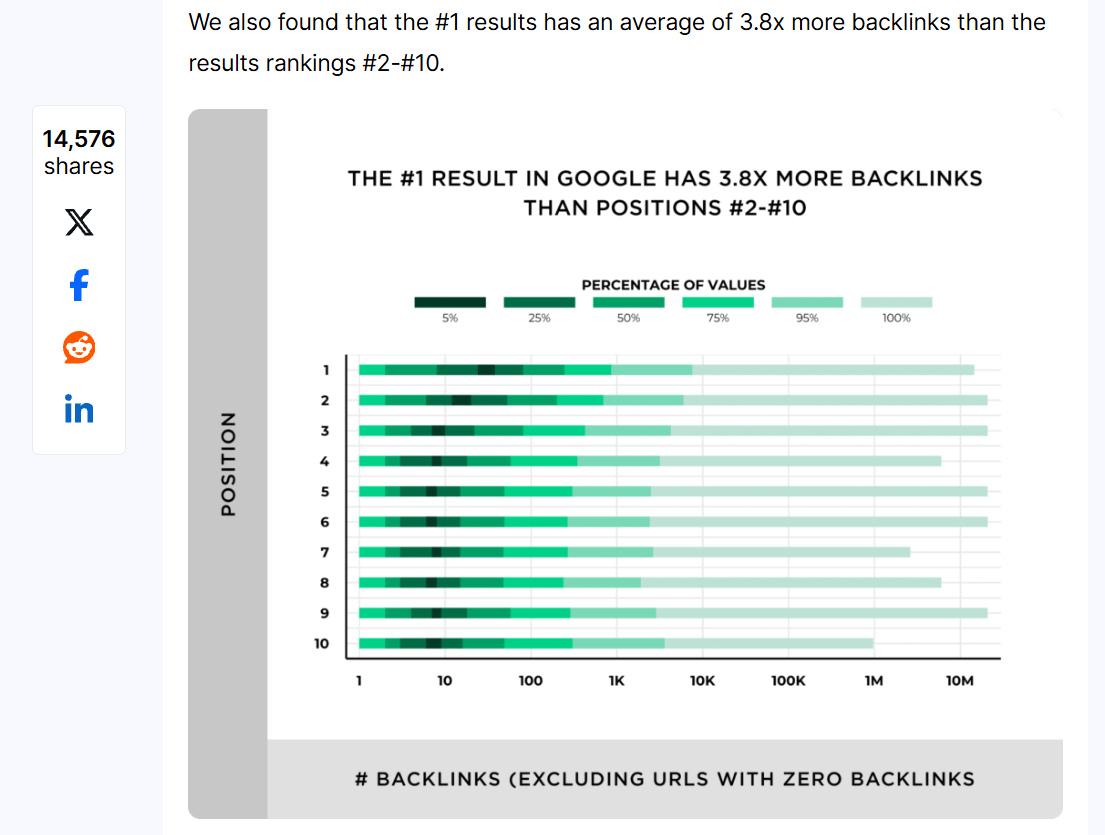
Digital PR is how you earn the shouts. Most link building scrapes the bottom of the barrel — low-quality sites, spammy directories, links you’d be embarrassed to show Google. Digital PR does the opposite: it earns editorial links from the sites at the very top of the trust pile.
And it’s not just classic search anymore.
AI answers — Google’s AI Overviews, ChatGPT, Perplexity — pull their responses from well-linked, high-authority sources.
Build a habit of earning coverage on trusted publications, and you’re not just climbing the blue links; you’re becoming a source the AI quotes.
I know this one first-hand. My own SEO company is barely over a year old, competing against NZ agencies that have been around for a decade, and it’s already being cited in Google’s AI Mode.
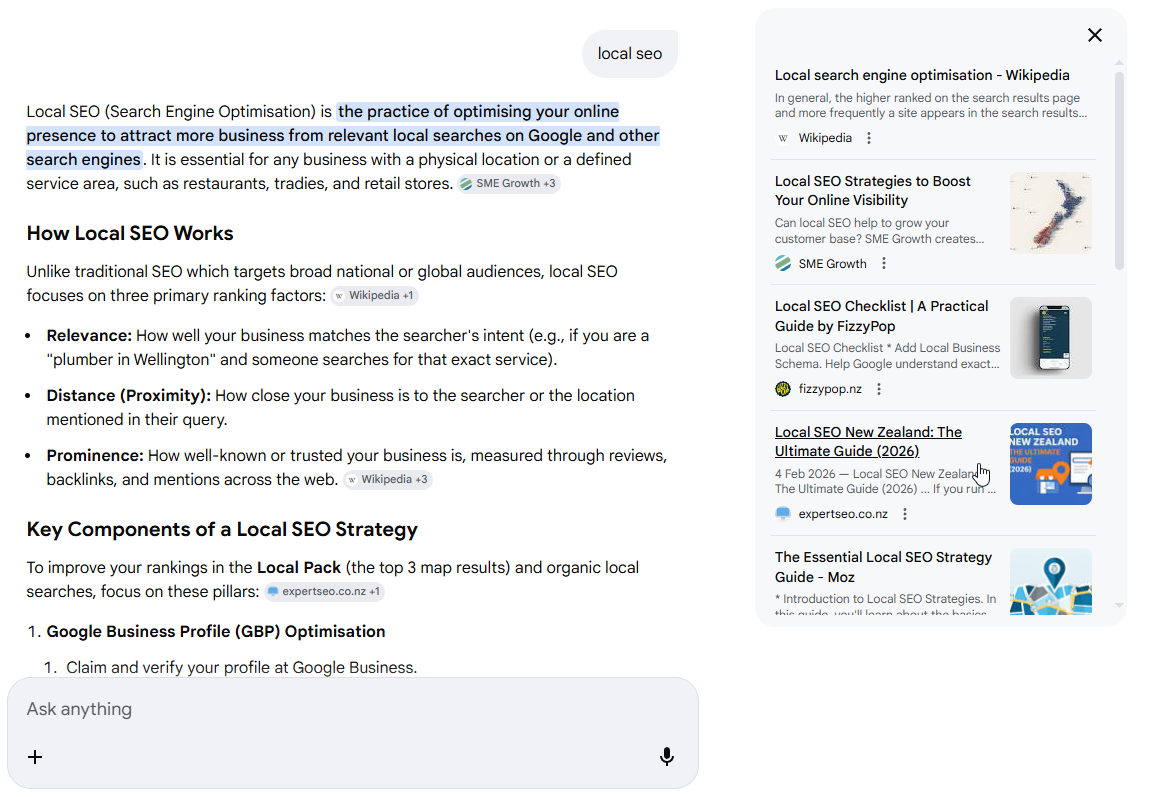
That’s the compounding bit. One good placement builds authority. That authority ranks your pages, feeds the AI, and makes the next journalist more likely to say yes — because now you’re the business that gets quoted.
A Wellington accounting firm that lands three solid features becomes the obvious local expert, and every future pitch gets easier off the back of it.

Links. Referral traffic. Brand authority. AI visibility. Digital PR is one of the few tactics that hits all four at once.
Digital PR vs Traditional PR
Traditional PR chases print, TV and radio. Digital PR earns online coverage you can measure — and that passes SEO value back to your site.
They share the same goal (shape how people see your brand), but they play in different arenas.
| Traditional PR | Digital PR | |
|---|---|---|
| Where | Newspapers, magazines, TV, radio | Online publications, blogs, podcasts |
| Goal | Awareness | Awareness plus links, traffic and rankings |
| Measurable? | Hard to pin down | Trackable to the exact link and visit |
| SEO value | None directly | The whole point |
The killer difference is that last row. A glowing mention on the six o’clock news is lovely, but Google never sees it. A mention in an online publication comes with a link — and that link works for your rankings around the clock, long after the story’s been forgotten.
That’s why digital PR gets called the most effective form of off-site SEO. It takes the credibility of PR and hands it straight to the algorithm.
How Digital PR Differs From Other Link Building
The difference between digital PR and most link building is the quality of the source. Guest posts and niche edits get you decent links; digital PR gets you the ones journalists give away, from sites you couldn’t pay your way onto.
This is the bit I care about most, because it’s where people get link building wrong.
Most link building lives in the mid-tier. You write a guest post for a moderate blog. You pay for a niche edit — a link dropped into someone’s existing article.
These work, and I use them. But they’re links from the sort of sites plenty of people can access if they’ve got a bit of budget and patience.
Digital PR plays a level up. You’re earning links from news sites, industry publications, and the outlets that broke the story — sites with editorial standards, real audiences, and domain authority that makes Google sit up.
Here’s why that matters more than raw numbers.
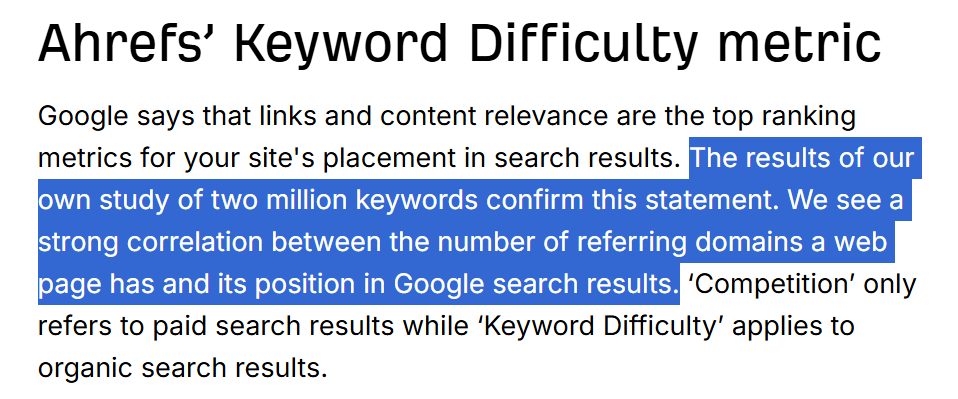
Ahrefs studied around 920 million pages and found the number of referring domains is the strongest correlating backlink factor for rankings.
It’s not about stacking up links — it’s about how many genuinely different, trusted websites vouch for you. Digital PR is how you add the trusted ones.
Picture a Christchurch builder. He could pay for ten guest posts on middling construction blogs — a decent afternoon’s work, some links, fine.
Or he could earn one mention in a national home-and-lifestyle publication running a piece on renovation trends, quoting him as the expert.
That single earned link outweighs the ten guest posts, and it comes with something the guest posts never will: readers seeing him as the authority, not just another builder with a website.
That’s the dual benefit nobody talks about enough. Digital PR builds links and positions you as an expert in the same move. Guest posting builds links. The positioning is the free upgrade — and it’s the reason digital PR can’t really be replaced.
The trade-off is honest: it’s harder, and it’s slower. You can’t force a journalist to quote you the way you can force a guest post live. Which brings us to how you actually do it.
How to Do Digital PR
You don’t need a PR agency. You need thirty minutes a day, a few platforms, and something worth saying.
This is the core of the whole thing. Get this rhythm right and the links start turning up. Let me walk you through it exactly as I do it.
Find where journalists are asking
Journalists put out requests for expert sources every single day. There are platforms built entirely to connect them with people like you — the modern versions of the old HARO service (which shut down in late 2024 and has since been revived as a free newsletter).
The ones worth your time right now:
- Featured — curated expert requests, feeds roundups for big publications. Free tier to start, paid from there. A good first platform.
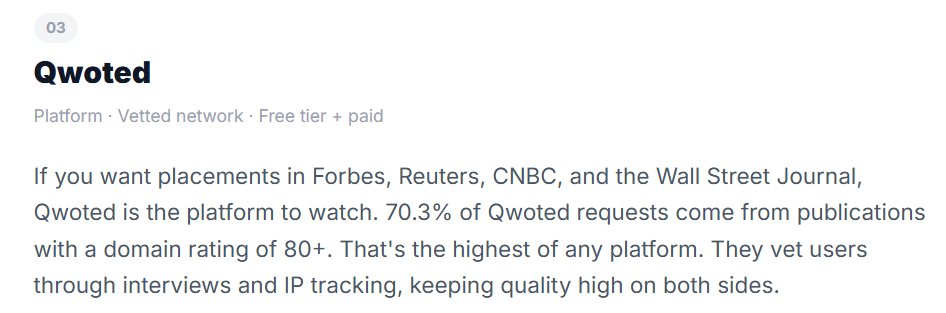
- Qwoted — the premium end. Journalists here are vetted, and 70.3% of Qwoted’s requests come from publications with a domain rating of 80+ — the highest quality of any platform. Free tier gets you two pitches a month to test it.
- Source of Sources — free, run by Peter Shankman (the bloke who invented HARO in the first place). Low noise, high signal.
- Help a B2B Writer — free, and the pick if you’re in a business-to-business niche.
- SourceBottle — the one that matters most for us down here. It covers Australia and New Zealand specifically, which means far less competition than the US-flooded platforms.
One thing to know going in: no single platform has enough volume on its own. The pros check four or five platforms every day, because the overlap between any two of them is tiny. Miss the morning, and the good queries are gone by lunch.
Build your angle
A journalist doesn’t want your marketing waffle. They want a quotable line, a surprising number, or a genuinely useful take they can drop straight into their article.
You’ve got three lanes:
- Expert commentary — the fastest. A journalist asks a question in your field, you answer it sharply, from real experience. No prep needed beyond knowing your stuff.
- Original data — run a quick survey of your customers or pull numbers from your own work, and package the finding. Journalists love a stat they can cite.
- Newsjacking — something breaks in your industry, and you’re first with an expert angle while the story’s still moving.
The rule underneath all three: be specific, be genuinely useful, and sound like a human who’s actually done the thing.
The daily thirty-minute loop
Here’s the part the glossy guides skip. Digital PR isn’t a campaign you run once. It’s a habit you run daily.
My digital PR time is 9:30 every morning. It’s logged in my calendar as a recurring block so I don’t “forget” (read: so I don’t quietly avoid it, because some mornings it feels like homework).
Thirty minutes: open the platforms, scan the new requests, pitch the two or three I can genuinely answer, close the laptop.

The daily bit isn’t me being precious. Speed is the whole game. Most journalist requests have a shelf life measured in hours — by the time you see a request in an afternoon digest, three other people have already replied and the journalist’s moved on.
Reply first, reply well, and you’re in front.
Consistency is what makes it work, and it’s also what makes it hard. Most people who try digital PR pitch for two weeks, see nothing, and quit.
The ones who stick it out for a few months are the ones who wake up one day with links from sites their competitors will never touch.
Pitch like a journalist wants to read
Keep it short. Lead with the quote — the exact line they could paste into their article — then your credentials underneath. Don’t make them dig.
Something like:
“Happy to help on this one. Here’s a usable quote:
‘[Your sharp, specific, quotable insight in one or two sentences.]’
— [Your name], [your role] at [your business]. I’ve spent [X years / done Y] in this space, and [one line of proof you’re worth quoting].
Happy to expand on any of this or jump on a quick call if useful.”
One more thing, and it’s not optional in 2026: don’t send AI-generated slop. Every platform is drowning in ChatGPT answers, and journalists have gotten ruthless about binning them. A specific, human, been-there reply is now your biggest edge.
An Auckland café owner pitching on a hospitality trends story doesn’t need a fancy campaign. She needs one honest line about what actually changed foot traffic in her CBD spot last winter — specific, real, hers. That’s what gets picked up while the generic pitches get deleted.
Measure what landed
Track it, or you’re flying blind. Watch for the links landing, the new referring domains showing up, and the referral traffic clicking through from the coverage.
A tool like Ahrefs will show you new backlinks as they appear; your analytics will show you the visits.
A Tauranga tourism operator running this properly might land four solid placements in a quarter — and watch both their rankings for competitive terms and their direct enquiries tick up together. That’s the loop closing.
A Real Example — The Link I Earned From Content Marketing Institute
Here’s the proof this works: a link from Content Marketing Institute — a publication cold outreach never cracks — earned through nothing but digital PR.
Content Marketing Institute isn’t some link farm. It pulls over 600,000 visitors a month and gets pitched hundreds of times a day — the kind of site that says no to nearly all of it.
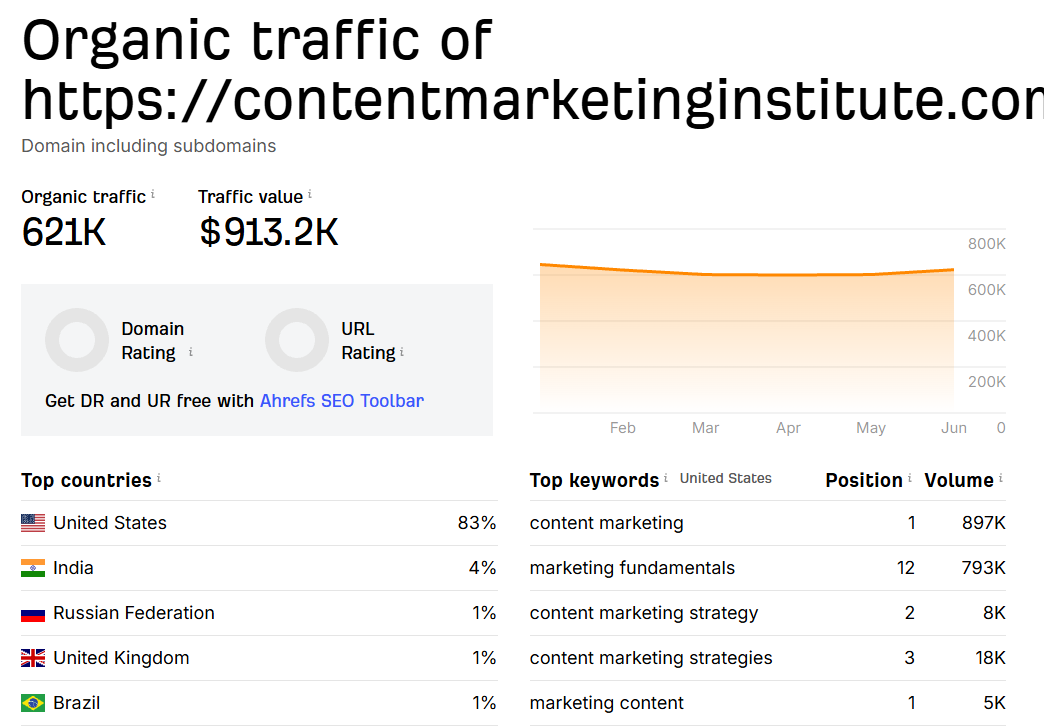
I earned the placement the boring way: a journalist needed an expert perspective, I gave them a specific, useful answer drawn from real work I’d actually done, and it was good enough to run. No favours. No budget. Just a sharp reply, sent fast, to the right request.

That one link did three jobs at once. It handed my site a genuinely powerful backlink. It put my name, as an expert, in front of Content Marketing Institute’s audience.
And it made every pitch after it easier, because now I could point to it — the same way I’m pointing to it with you right now.
That’s digital PR in one placement: a link, a credential, and a bit more leverage for next time. Try buying that.
Digital PR for New Zealand Businesses
Almost nobody in New Zealand is doing digital PR properly — which is exactly why it’s an unfair advantage here.
Digital PR is huge overseas. In the US and UK, it’s a standard line item, and the competition for every journalist request is fierce.
Down here, it’s a different picture. Most NZ businesses still lean on traditional PR or haven’t touched PR at all. The market’s small, people are cautious, and the tactic just hasn’t caught on the way it has abroad. Even NZ’s own agencies admit adoption has been slow.
For you, that gap is the opportunity. When your competitors aren’t pitching, the field is wide open.
It gets better. Journalist request volumes globally have dropped by 50 to 64% since 2024 as platforms shook out — which sounds bad until you realise it thins the herd of people pitching, right when a platform like SourceBottle is quietly serving the Australia–New Zealand market with far less competition than the US giants.

So the play for an NZ business is twofold. Target the local and Australian angles through SourceBottle, where you’re competing against a handful of people instead of a thousand.
And go after the big global publications too — a good quote from a New Zealand expert is just as usable to a US journalist as anyone else’s, and there’s no rule saying a Kiwi business can’t land Forbes.
There’s a small-market edge here that a huge market never gets. A Queenstown tourism business isn’t fighting fifty other operators for the same journalist’s attention — it might be the only one in the country bothering to pitch.
In a quiet market, showing up consistently isn’t just an advantage. It’s most of the battle won.
Start now, while nobody’s looking, and you build authority your competitors can’t catch for years.
Is Digital PR Worth It?
Digital PR feels like homework and takes real daily discipline — and it’s still one of the highest-leverage things you can do for your SEO.
Let me be straight with you, because the honesty is the point.
It’s a grind. You check platforms every day. Plenty of your pitches get ignored. Some mornings you scan the requests and there’s nothing you can genuinely answer, so you close the laptop with nothing to show for it.
One team that tracked this properly sent over 1,000 pitches to land 143 brand mentions in a year — most attempts win far less, because most people quit before the compounding kicks in.

So why do I still block out 9:30 every morning for it?
Because the links you earn this way can’t be earned any other way. You cannot buy your way onto Content Marketing Institute.
You cannot guest-post your way into a national news feature. The only door in is the one digital PR opens, and once you’re through it, the authority sticks.
It’s not for everyone. If your business runs entirely offline and Google traffic doesn’t matter to you, skip it. But if you’re trying to dominate a market through search — and you’ve got real expertise to share — digital PR’s benefits genuinely can’t be replaced.
Homework that pays you back for years. I’ll take that trade every time.
Final Thoughts
If you take one thing from all this: digital PR is one of the easiest ways to build links in 2026, and one of the most overlooked.
Thirty minutes a day checking the requests. A sharp, human reply. The discipline to keep showing up when it feels like homework.
Do that, and you earn links from the exact publications that build authority fastest — the ones almost no New Zealand business is competing for yet.
For any Kiwi business with real expertise to share, that half hour a day is well worth it. Barely anyone here is doing it, and that’s the whole opportunity.
Digital PR: FAQ
What is digital PR?
Digital PR is the practice of earning links, mentions and coverage from trusted online publications by giving journalists and editors something genuinely worth writing about. It's not a paid placement — it's a real quote, stat or story good enough that an editor runs it and links back.
How is digital PR different from traditional PR?
Traditional PR chases print, TV and radio coverage that Google never sees. Digital PR earns online coverage that comes with a link, and that link works for your rankings around the clock, long after the story's been forgotten.
How is digital PR different from other link building, like guest posts?
Guest posts and niche edits get you links from mid-tier sites that plenty of people can access with a bit of budget and patience. Digital PR earns links from news sites and industry publications you couldn't pay your way onto, and it builds your personal authority in the same move.
How much time does digital PR actually take?
About thirty minutes a day. The daily habit is checking journalist request platforms, pitching the two or three requests you can genuinely answer well, and closing the laptop — not a six-figure campaign with a creative team.
Is digital PR worth it for a small NZ business?
Yes, if you're trying to grow through search and have real expertise to share. Adoption is still low in New Zealand, so a business that starts pitching now builds authority its competitors won't be able to catch for years.
Recommended Reading
 Link Building Strategies That Actually Work for NZ Businesses
The full playbook of link building tactics for NZ businesses, ranked by what actually moves rankings.
 How to Improve Domain Authority in NZ: 8 Proven Strategies
Eight strategies for building real authority — earning links is strategy one, digital PR fits straight in.
 AI SEO: How to Rank in ChatGPT, AI Overviews & More
How the same earned-link authority digital PR builds also gets you cited in AI answers.