

Ask an agency what local SEO does and you’ll get a wall of adjectives: more visibility, more traffic, more growth.
Nice words. But you’re a business owner. You want to know what you actually get for your money — and whether it’s still worth doing in 2026, or just another thing you’ll be sold and forget about.
So let’s do it properly.
Below are the eight real benefits of local SEO, and I’m not going to just list them.
I’m going to show you each one landing — with real NZ businesses, real numbers, and results from my own work.
By the end you’ll know exactly what local SEO gets you, whether it’s worth it, and whether your business is the type that benefits most.
1. You Show Up the Moment Someone’s Ready to Buy
The biggest benefit of local SEO comes down to one word: timing.
You appear right when someone’s already looking to buy — not a week later, not “brand awareness,” but the exact second they’ve decided they need you.
Think about how a local search actually happens. Someone’s tooth starts throbbing on a Tuesday night. They grab their phone and type “emergency dentist Auckland.”
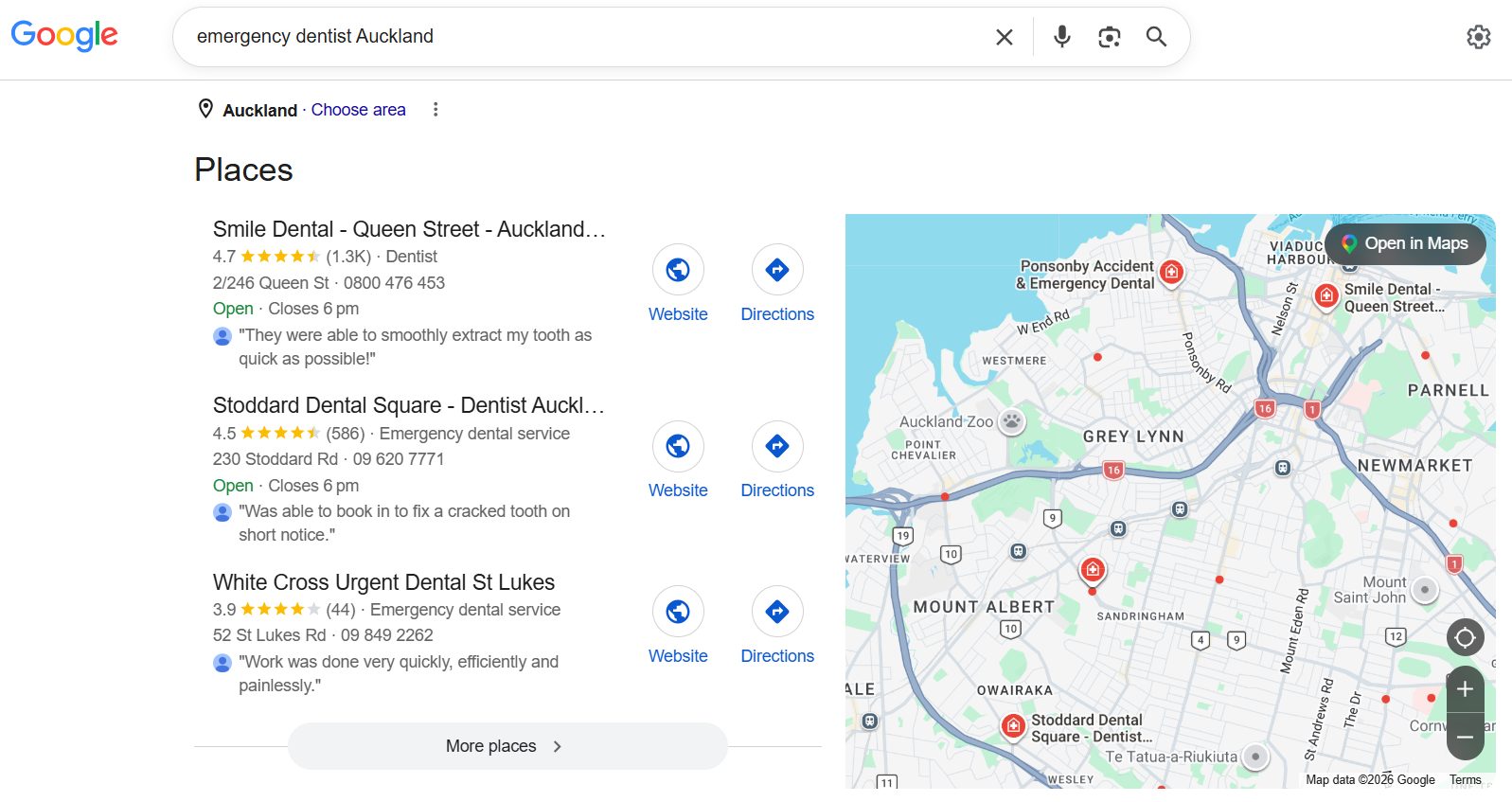
Up comes a little map with three businesses — the local 3-pack — each with a star rating, a phone number, and a “call” button. Smile Dental sits at the top with 1,300 reviews. Stoddard Dental Square has 586. White Cross has 44.
Those three are collecting the tooth-throbbing-on-a-Tuesday patients. Everyone else is invisible at the exact moment it matters.
They’re not researching. They’re not browsing. They want it sorted tonight.
That’s the moment local SEO wins for you. And the numbers back how ready these people are: 76% of people who run a “near me” search visit a business within a day. Within a day.

This is also why local search is such a big deal in the first place — 46% of all Google searches have local intent. Nearly half of everything typed into Google is someone looking for something near them.
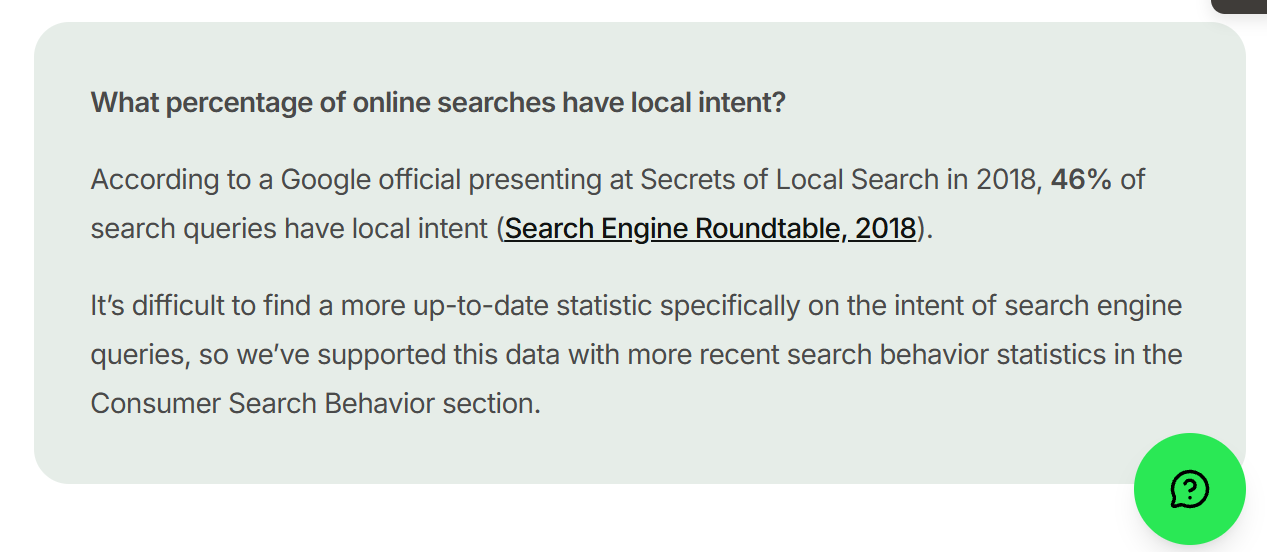
Local SEO is how you become one of the three.
2. Local Search Closes Higher Than Almost Anything You Can Run
Here’s the part most people miss: the people local search sends you are ready to spend.
Someone searching “plumber Hamilton” at 9pm isn’t killing time. They’ve got water where water shouldn’t be, and they want it fixed.
There’s a problem in their hand and they’re actively hunting for the person to solve it.
That’s the difference between inbound and outbound marketing — and it changes everything about how well it converts.
With a flyer, a cold call, or a Facebook ad, you’re interrupting someone who wasn’t thinking about you. You’re chasing them. With local search, they came looking for you. You just have to be there.
The gap in the numbers is enormous: SEO leads close at 14.6%, while outbound leads close at just 1.7%. That’s more than eight times the close rate — not because SEO is magic, but because the person on the other end already wants what you’ve got.
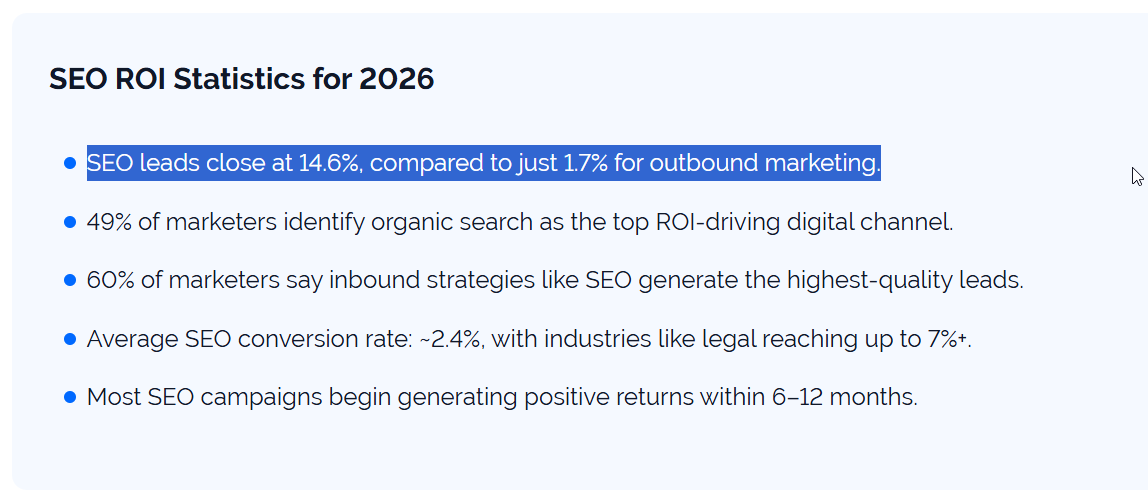
You’re not convincing a stranger you’re worth their time. You’re answering someone who raised their hand and asked.
3. It Turns “Near Me” Searches Into Foot Traffic and Real Calls
For a business with a shopfront or a service van, the real prize isn’t website clicks. It’s the phone ringing and people walking through the door.
Local SEO drives both, because the map pack does something an ad can’t: it puts your phone number, your directions, and a tap-to-call button right in front of someone the second they’re looking.
They don’t even need to visit your website. They tap “call,” or they tap “directions,” and they’re on their way to you.
The behaviour backs it up. The local pack pulls around 42% of the clicks on a local search, and 60% of people who search locally on their phone contact a business straight from the results — no website visit in between.

Picture a café three streets back from Ponsonby Road. Someone searches “coffee near me,” sees it at the top of the map on a 4.8 rating, and walks in five minutes later. That customer never touched the website. Local SEO delivered them anyway.
4. It Keeps Bringing Leads for Years — Not Just While You’re Paying
This is the one that separates SEO from every other channel, and it’s the reason I’ll always back it.
Turn off Google Ads and the leads stop that afternoon. The tap runs exactly as long as your card keeps getting charged, and not a second longer.
Rank in local search and it works completely differently. Once you’re up there, you keep pulling in customers long after the work that got you there is done.
One well-optimised page can keep generating leads for years without you spending another cent on it.
It’s the difference between renting and owning. Ads are rent — miss a payment and you’re out on the street. A ranking is an asset you own; it sits there working while you sleep, while you’re on holiday, while you’re busy running the actual business.
I’ll give you a live example from my own site. We rank #2 in New Zealand for “SEO Hamilton” — a term real businesses type when they’re shopping for an SEO provider.

I didn’t pay for that placement, and I’m not paying to keep it. It brings qualified enquiries in day in, day out — people already looking to hire, landing on my page instead of a competitor’s. That’s a lead engine I built once and now own.
5. It’s One of the Cheapest Customers You’ll Ever Buy
Local SEO spends nothing on the wrong people. That’s what makes the maths so good.
A billboard on the motorway gets seen by thousands of people who’ll never use you — tourists, out-of-towners, folks who already have a plumber. You pay for every one of those eyeballs anyway.
Local SEO only puts you in front of people in your area, searching for your service, right now. No waste. Every bit of visibility is aimed at someone who could actually become a customer.
And the cost per lead reflects it. Organic search leads cost around $31 each, compared to $181 for a paid ad lead — roughly a sixth of the price.
Then stack that on top of the compounding effect from the last section: the ad lead costs you $181 every single time, forever. The SEO lead gets cheaper the longer your page ranks, because the work’s already paid for.

That’s why local SEO regularly delivers around a 700% return — the combination of low competition and buyers with high intent. If you want to see how that return is actually calculated for a real business, we walk through the real ROI of SEO with the formula.

6. You Can Outrank Bigger, Better-Known Competitors
Here’s what makes local SEO fairer than almost any marketing going: the map pack doesn’t care how big you are.
In regular search, a national brand with a twenty-year-old domain and thousands of backlinks usually buries a small business.
Local search flips that. Google leans far harder on proximity, relevance, and reviews than on raw brand size — so a single-location business can sit above a nationwide chain in its own city.
Look back at that emergency dentist result. The three practices at the top aren’t a big franchise — they’re independent Auckland clinics that did their local SEO properly. The household names never even make the pack.
That’s the opening for a smaller business. You don’t need the biggest brand or the deepest pockets. You just need to show up better than the competitor next to you — and nine times out of ten, that’s winnable.
7. You Build Trust Before They Even Say Hello
By the time someone taps your listing, a chunk of the selling is already done — and reviews are why.
When your Google Business Profile shows a 4.8 rating from 150 happy customers, you’ve been vouched for by 150 strangers before you’ve said a word.
That carries enormous weight: 67% of consumers read reviews after a local search, and 54% go on to click through to the business. Your review count is doing the convincing while you sleep.

That’s why reviews carry so much weight, and why a well-kept Google Business Profile is the foundation the whole thing sits on.
8. You Borrow the Trust of Google and AI
This is the benefit almost nobody talks about, and it might be the biggest one of the lot.
When Google — or ChatGPT — recommends your business, you inherit the trust the searcher already has in the platform.
Think about what that means. People trust Google. They’ve trusted it for twenty years to answer their questions.
So when Google drops you into the map pack, or ChatGPT names you as the business to call, that trust transfers straight to you. The platform has already vouched for you.
You skip the hardest part of marketing. No “who are these guys?” hurdle to clear, no cold audience to warm up. The work of earning a stranger’s trust — the part that usually takes months — has been done for you before they’ve even landed on your website.
That’s borrowed credibility, and once you’ve got it, it compounds.
So Is Local SEO Actually Worth It in 2026?
Short answer: yes. And I’m not going to ask you to take that on faith — I’ll show you.
There’s a fear floating around that AI search has killed SEO. That ChatGPT and Google’s AI answers mean nobody clicks anything anymore, so why bother.
It’s the opposite. AI search is a new front door — and being the business the AI recommends is the whole game now.
Someone still has to be the answer ChatGPT gives, and that someone is chosen the same way it always was: relevance, authority, and trust signals. Local SEO builds all three.
Here’s my proof, and it’s my own business on the line.
Expert SEO is under a year old. It’s competing against NZ agencies with ten years of authority behind them. On paper, no chance.
Despite that, it ranks #1 in New Zealand for “local SEO” — above Ahrefs and Semrush, two of the biggest names in the entire industry.

And it’s already being pulled into Google’s AI answers — cited as a source in AI Mode, the exact thing everyone’s worried about being shut out of.
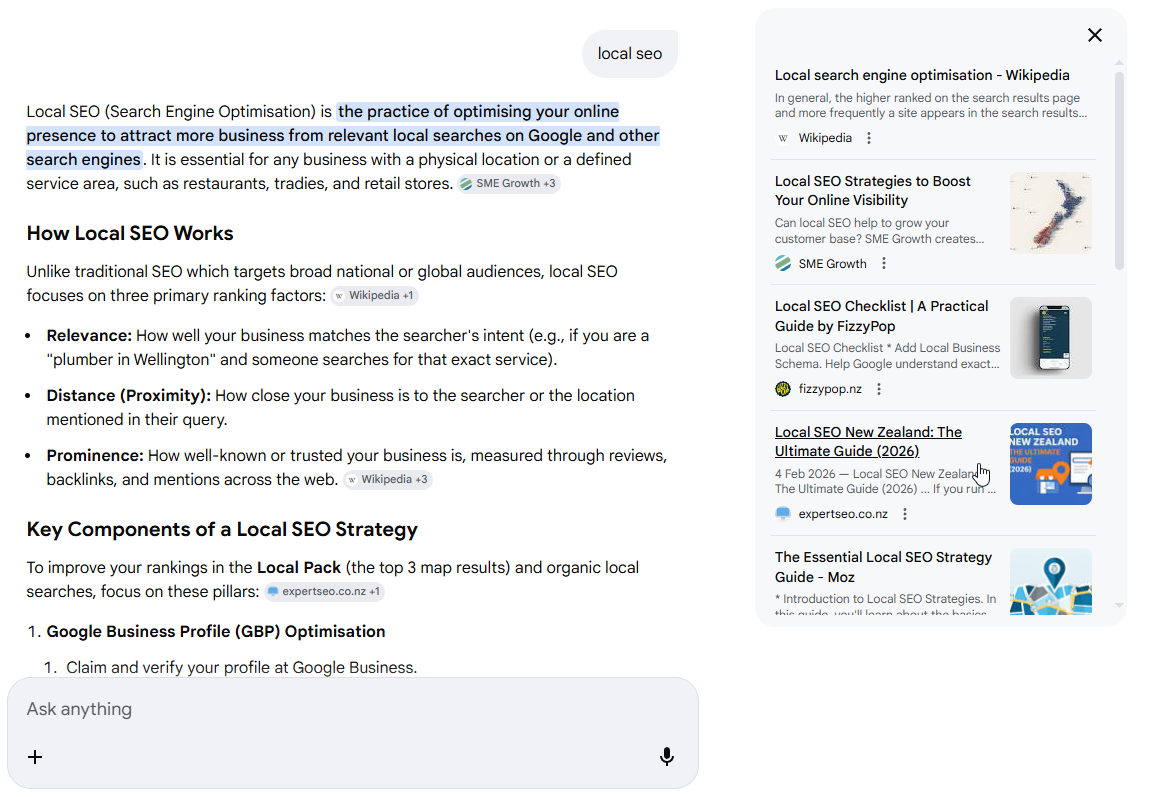
In under twelve months that young site ranks for 233 NZ keywords and pulls organic traffic worth around $3,453 a month — every visitor from non-branded search, zero ad spend.
If SEO is worth it on a brand-new domain in a competitive market, it’s worth it for an established local business with a real reputation to build on.
Now the scale question — because “does it actually move revenue” is the real thing you’re asking.
Before New Zealand, I ran SEO in the United States. We took a health site, HealthVI, from zero to over 23,000 monthly visitors.
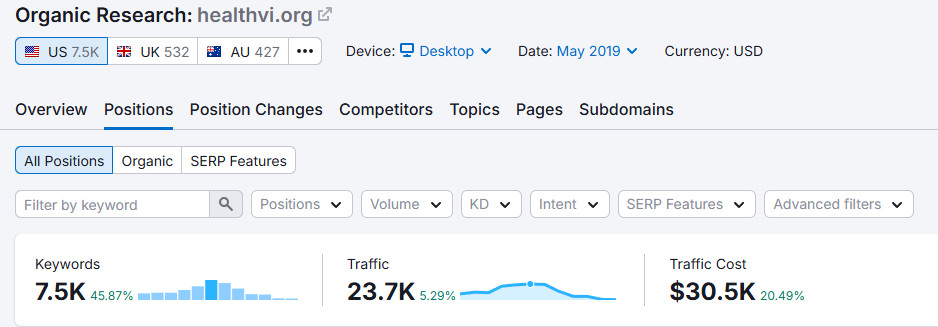
On that same site we ranked #1 for keywords pulling thousands of searches a month — one of them with over 4,400 searches on its own. That meant people landing on the site every single day, ready to buy.
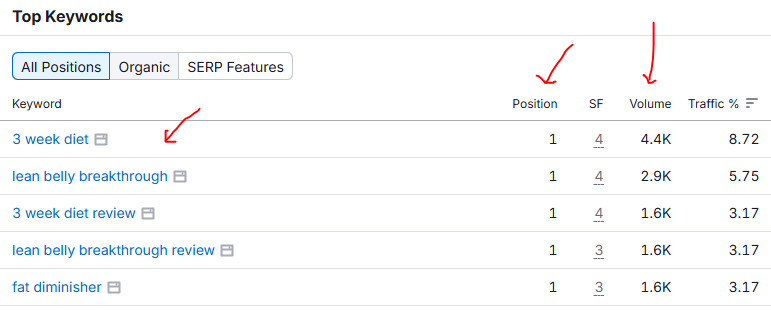
That was general SEO in the US, not local — I want to be straight about that. But it’s the same engine.
Ranking is ranking. Point that engine at the buyers on your doorstep instead of a national audience, and that’s local SEO. The daily flow of ready-to-buy visitors is exactly what it can do for a New Zealand business.
Which NZ Businesses Get the Biggest Return?
Local SEO works for almost any business people find by area. But it pays off hardest for two kinds: businesses where customers search locally, and businesses where one customer is worth serious money.
Get both and it’s close to a cheat code.
Take dentists. New Zealand’s dental industry is worth around $2 billion, with over 2,600 practices fighting for patients.
A single implant patient can be worth $10,000 or more. Rank a practice for “dental implants Auckland” and one new patient a month can cover the entire cost of the SEO several times over — which is exactly why SEO for dentists delivers such an outsized return.
Same story with mortgage brokers. Borrowers search “mortgage broker Auckland” or “first home buyer help NZ,” and one settled loan is worth thousands in commission.
When SEO for mortgage brokers puts an adviser in front of those searches, the return per client is enormous.
Lawyers, builders, and accountants sit in the same bracket — high-value, locally searched, and perfect for it.
The pattern’s simple: the higher the value of one customer, and the more your customers find you by location, the more local SEO is worth to you. An Auckland law firm or a builder in a growing suburb has more to gain here than almost anyone.
Someone’s Going to Rank for Your Keywords. Why Not You?
Here’s the thing that should actually get you moving.
Every keyword you’d want to rank for already has someone sitting on it. Right now, today, a business is in that map pack collecting the calls, the leads, and the sales that come with it.
That doesn’t change on its own. Do nothing, and next year it’s the same competitor up there, banking the same customers who could’ve been yours.
So the real question isn’t “does local SEO work.” You’ve seen that it does. The question is who gets the benefit — and someone’s getting it either way.
Why shouldn’t it be your business?
You can absolutely do this yourself. Everything I’ve covered is learnable, and the full local SEO guide is on this site for free. It just takes time, consistency, and a fair bit of trial and error before it clicks.
Or you skip the learning curve and get it handled.
That’s what SEO services is — the strategy, the content, and the ongoing work, run for you by someone who’s done it at the highest level.
If you’d rather have one expert on it directly, that’s where working with an SEO consultant comes in. Either way, the honest first step is a look at where you actually stand, which is exactly what a free SEO audit is for.
The leads are out there. The only thing left to decide is whose business collects them.
Benefits of Local SEO: FAQ
Is local SEO worth it?
Yes — for any business that serves a local area, it's one of the highest-return channels going, with local SEO averaging around a 700% ROI. Because it puts you in front of people actively searching for what you sell nearby, the leads convert far better than paid ads or outbound, and once you rank, the visibility keeps paying for years.
Does local SEO still work in 2026?
Yes, and arguably more than ever. AI answers and the map pack haven't removed the need to rank — they've raised the stakes, because being the business Google or ChatGPT recommends is now the whole game. Local SEO is how you become that recommended business.
What's the difference between local SEO and regular SEO?
Regular SEO aims to rank your pages in the standard blue-link results, nationally or globally. Local SEO focuses on location-based searches and the Google map pack — the three businesses shown with a map, reviews, and a call button — so nearby customers find you first.
How do you know if you need local SEO?
If your customers find you by area — searching things like "plumber Hamilton" or "dentist near me" — you need it. If you have a shopfront, a service area, or a business where being close matters, local SEO is how those searchers find you instead of a competitor.
How long does local SEO take to work?
Most NZ businesses see early movement within three to six months, with stronger, compounding results building over six to twelve. Less competitive suburbs and services can move faster. It's slower to start than paid ads, but the results keep growing rather than stopping the moment you stop paying.
Recommended Reading
Local SEO Ranking Factors
The signals that actually move you up the map pack in New Zealand.
How to Improve Local SEO
Twelve practical ways to climb higher in local search.
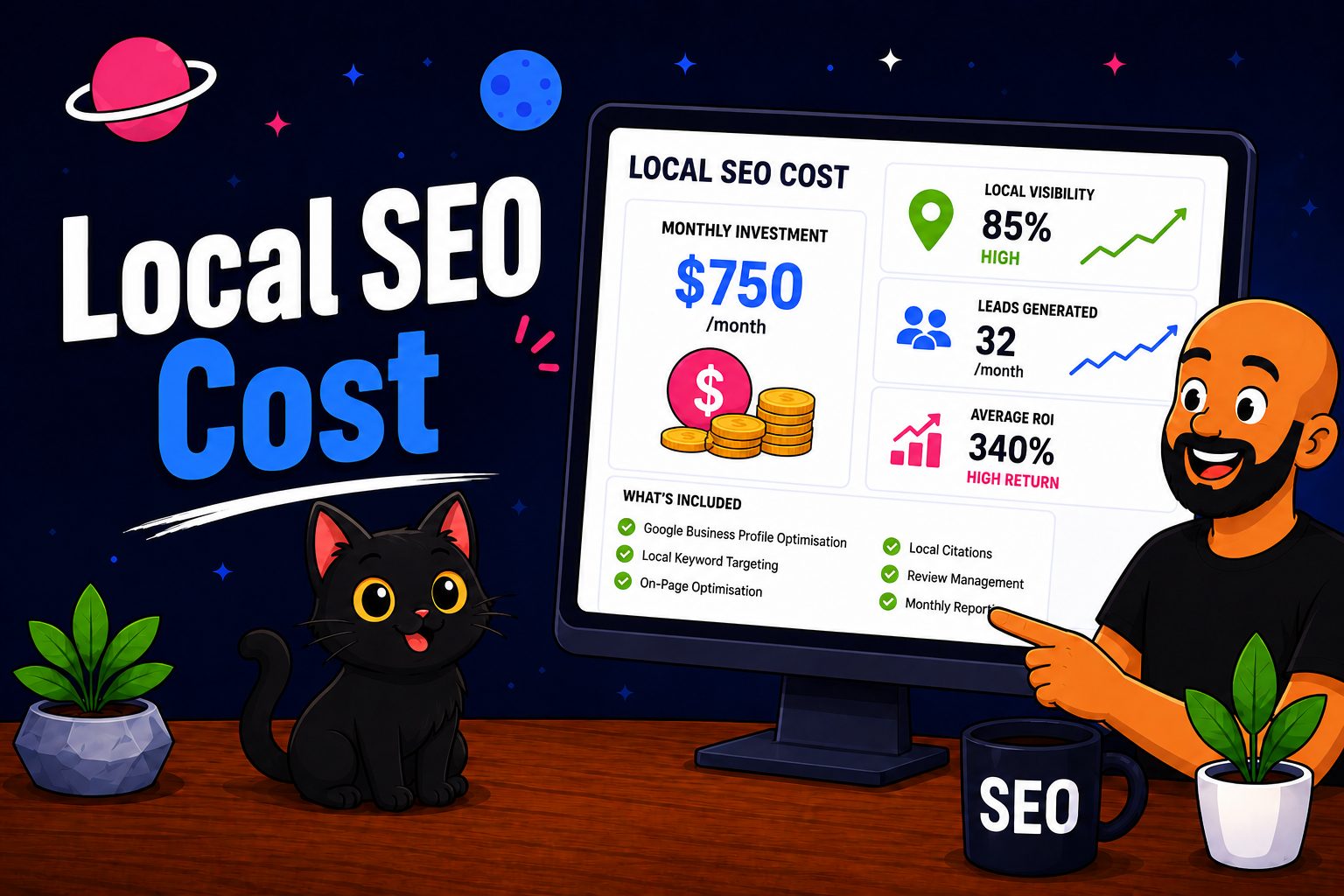
Local SEO Cost
What local SEO actually costs a NZ business in 2026.