

You’ve claimed your Google Business Profile. Built a website. Asked a handful of customers for reviews.
And you’re still parked on page three of the map pack, watching a competitor with an uglier website sit pretty in the top three.
It’s one of the most common things I hear from NZ business owners, and the frustration is fair.
The effort’s usually there. It’s just aimed at the wrong factors, in the wrong order.
Local ranking comes down to a specific set of signals Google weighs — and not all of them carry the same weight. Some you can’t touch. Some you’re probably ignoring. And a few that everyone obsesses over do almost nothing.
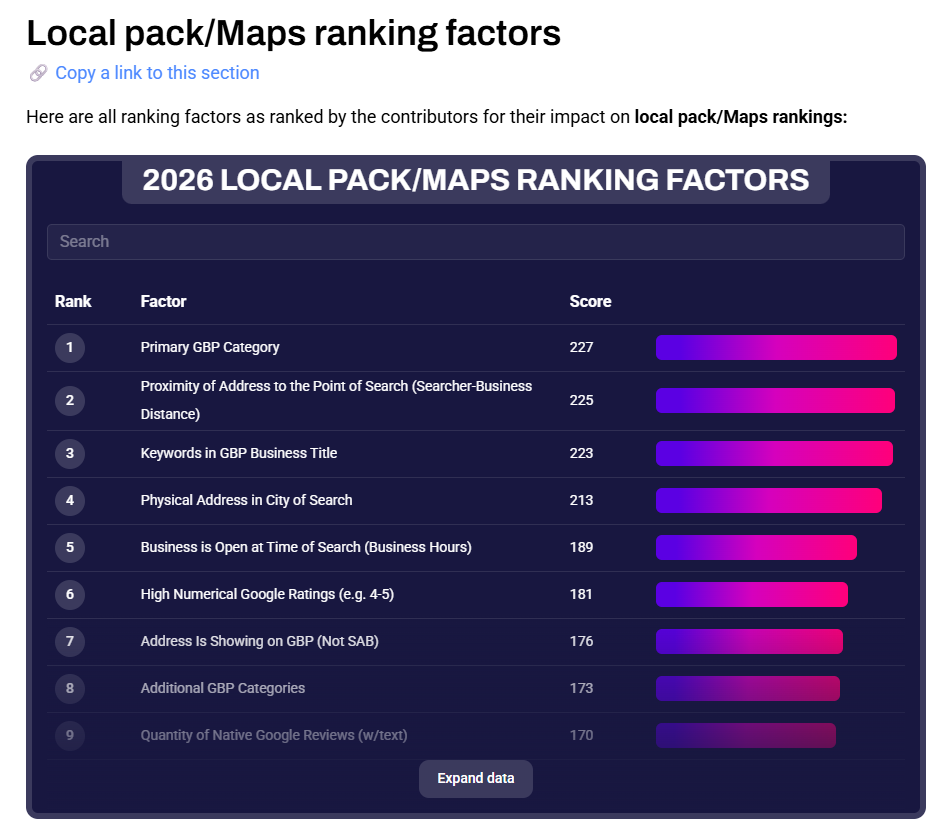
This guide breaks down every local SEO ranking factor that matters for a New Zealand business: how much each one actually counts, what to fix first, and the moves that move the needle — with real Kiwi businesses showing you what it looks like in practice.
The three things Google weighs: relevance, distance, prominence
Google ranks local results on three core signals: relevance, distance, and prominence.
Relevance is how well your business matches what someone searched. Distance is how close you are to the searcher. Prominence is how well-known and trusted your business is, online and off.
Every other factor in this guide feeds one of those three.
Get your category right, you’re feeding relevance. Pile up genuine reviews, you’re feeding prominence. So the long list of “factors” collapses into a handful of levers, all pulling on those three pillars.
Here’s the catch with distance: you can’t move your shopfront.
A plumber in Pukekohe will never rank for a search made in Ponsonby just by trying harder. That’s the algorithm doing its job, not a flaw in your SEO.
So you focus your energy on the two pillars you can control — relevance and prominence — and let distance be what it is.
If you want the full step-by-step process behind all of this, the local SEO guide walks the whole thing end to end. This page is about the factors themselves.
The three places you can show up: map pack, organic, and AI
A local business can rank in three different spots, and they don’t all run on the same signals.
The map pack — those three businesses under the map — leans heavily on your Google Business Profile, your reviews, and how close you are.
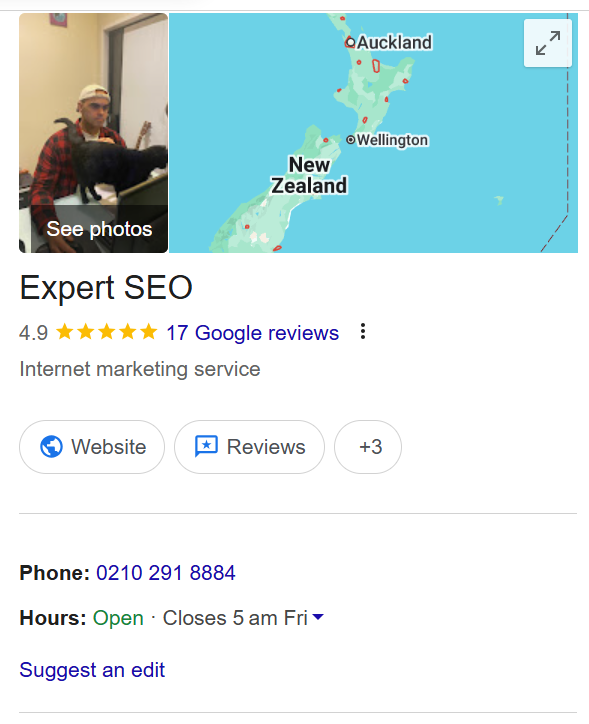
The local organic results — the standard blue-link listings below the map — lean on your website: your pages, your content, your links.

And the newest one: AI answers. ChatGPT, Perplexity and Google’s AI Overviews now recommend local businesses too, pulling from the same underlying data.
This is why you’ll see a business sitting #1 on the map and nowhere in the organic results, or the reverse. They’ve optimised one system and neglected the others.
It matters because it tells you where to spend your time. Chasing the map pack? Pour into your profile and reviews. Want the organic listings too? The website has to pull its weight.
The good news is that the factors feed all three at once — get them right and you show up on the map, in the blue links, and increasingly inside the AI answers as well. More on the AI side further down.
Google Business Profile signals
Your Google Business Profile is the single biggest lever you’ve got in the map pack.
Industry data from Whitespark’s 2026 ranking factors survey puts Business Profile signals at roughly a third of local pack weight — more than any other category.
Primary category sits at the very top of the entire factor list.
The why is simple: the profile is your listing in the map pack.
If it’s thin or half-filled, Google quietly filters you out before the race even starts.
Start with your primary category, because it’s the strongest relevance signal on the whole profile. Get this wrong and nothing else you do matters much.
The move here: open Google, search your main keyword, and look at who’s already in the top three.
Then read the exact category they’re using — a free tool like GMB Everywhere shows you a competitor’s primary category in two clicks.
Match it, or out-specify it. A “personal injury lawyer” listed under the generic “Lawyer” category is telling Google it’s less relevant for the exact searches it wants.
After category, work through the rest like a checklist: your exact business name (no stuffing keywords in — that’s a guideline violation and Google’s cracking down on it), accurate NAP, full attributes, services, hours, holiday hours, photos.
Completeness isn’t a nice-to-have. An incomplete profile gets outranked by a complete one every time, even when the incomplete business is genuinely better.
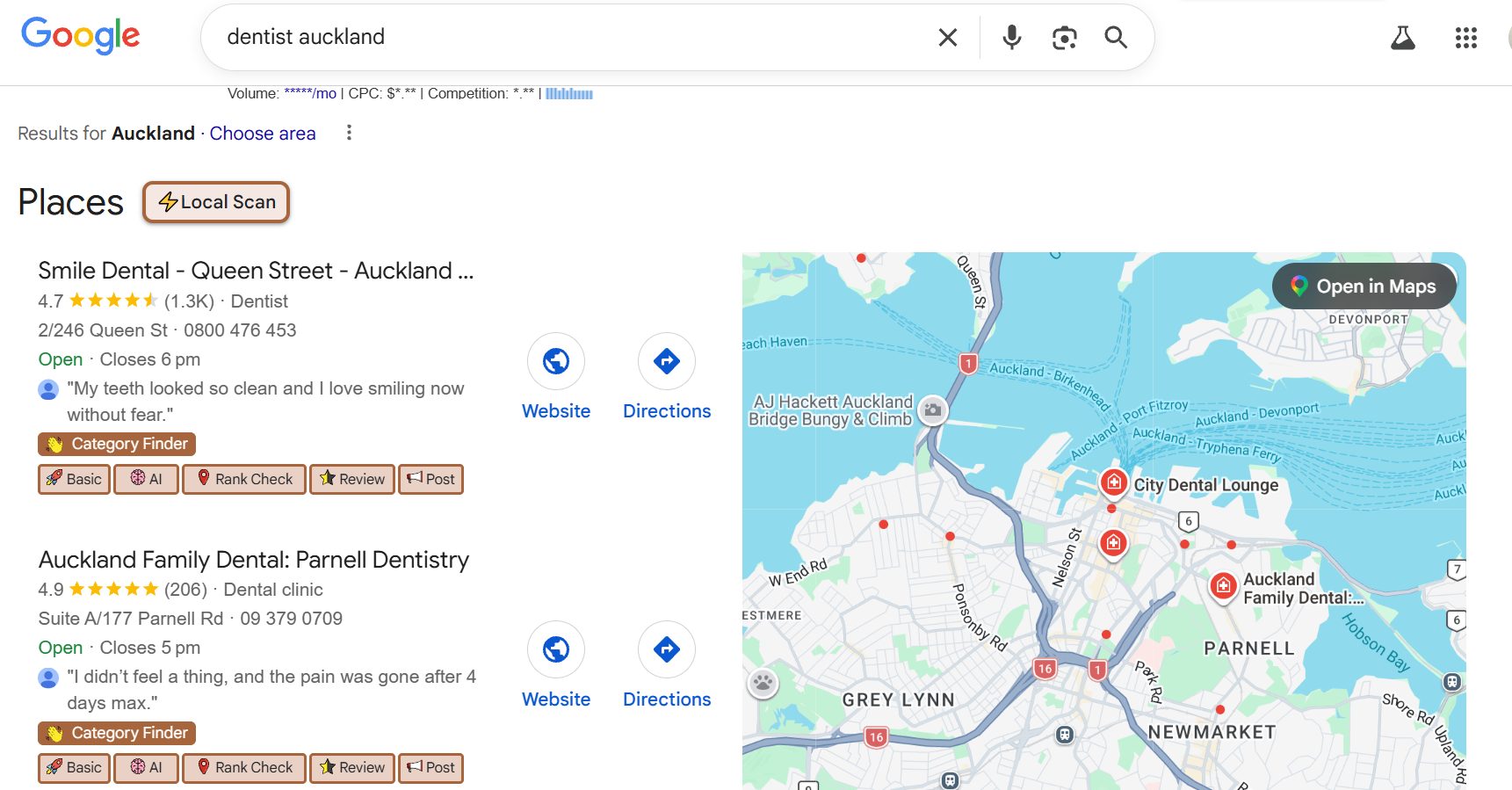
Here’s what that looks like in the wild. Search “lawyer Auckland” and you’ll find firms sitting on page three of the map with profiles that are half-done — no proper category, barely any photos, a thin description.
Meanwhile the top three have clearly had the work done.
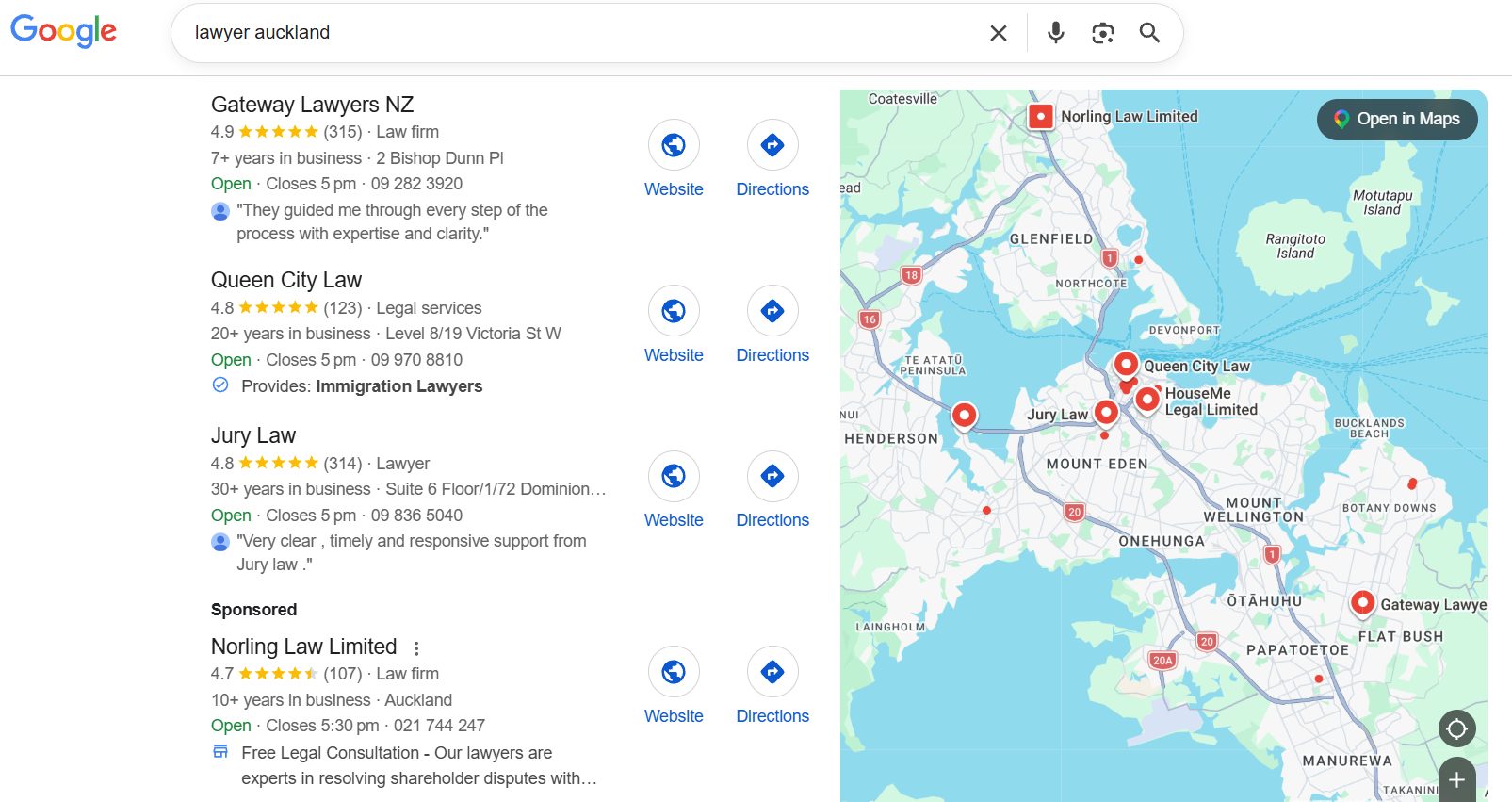
Same city, same service, wildly different visibility. Their legal work might be excellent. The profile is what’s holding them back.
I’ve watched this play out on my own listings — get the profile tight and the category right, and the map-pack movement follows.
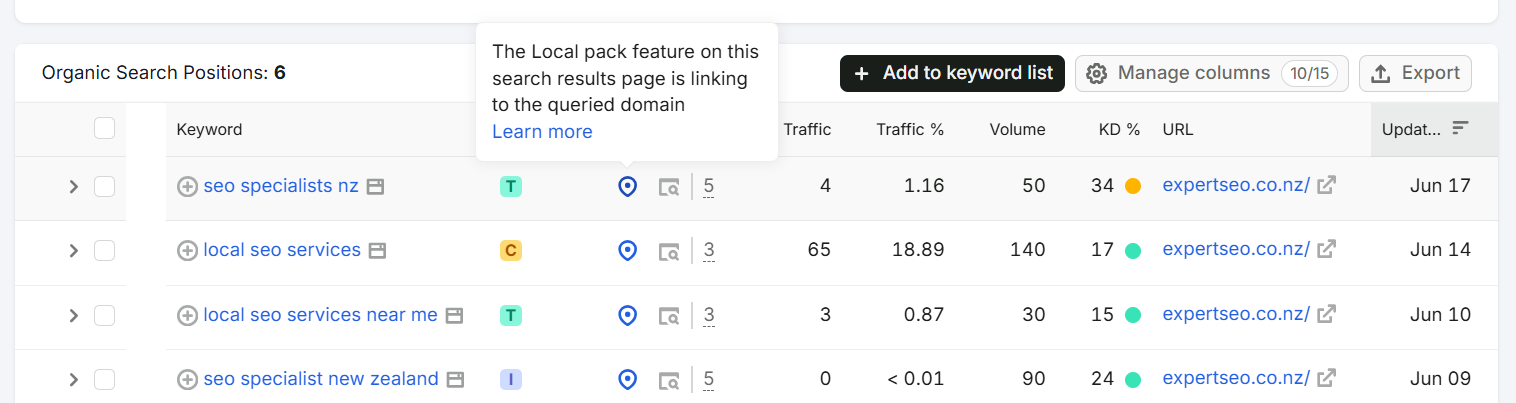
The full click-by-click on optimising the profile lives in the Google Maps SEO guide. Here, just know this: the profile is where the bulk of your map-pack ranking is won or lost.
Reviews and reputation signals
Reviews are one of the strongest prominence signals you can actually control — and their weight is climbing.
In recent surveys, review velocity (getting fresh reviews steadily) leapt from somewhere near the bottom of the list up into the top dozen factors.
Why does Google care so much? Same reason you do.
Would you trust a business with 100 reviews or 10?
Reviews tell Google a business is real, active, and worth putting in front of people.
And customers lean on them just as hard. In BrightLocal’s 2026 review survey, 41% of consumers said they always read reviews when weighing up a business — up from 29% the year before.
Three things matter most: how many you’ve got, how fresh they are, and whether you reply.
Volume builds prominence. Recency signals you’re still alive and trading. And responding to reviews has been tied to a ranking lift — your replies get indexed too, so mentioning the service and the suburb in a response quietly adds another relevance signal.
The system to actually get them, step by step:
- Grab your Google review link straight from your profile.
- Turn it into a QR code (any free generator does it) and stick it on invoices and the side of the van.
- Send the link by text or email right after a job’s gone well — while the customer’s still happy.
- If they don’t bite, one follow-up.
- Reply to every review that lands, good or bad.
The mechanics are simple. The discipline of asking every single time is the part most businesses skip.
You can see this yourself. Search “plumber Auckland” and look at the review counts on the top of the map pack.
You’ll see businesses sitting on 470, 480-plus reviews — I’ve looked at two top performers running 475 and 486.
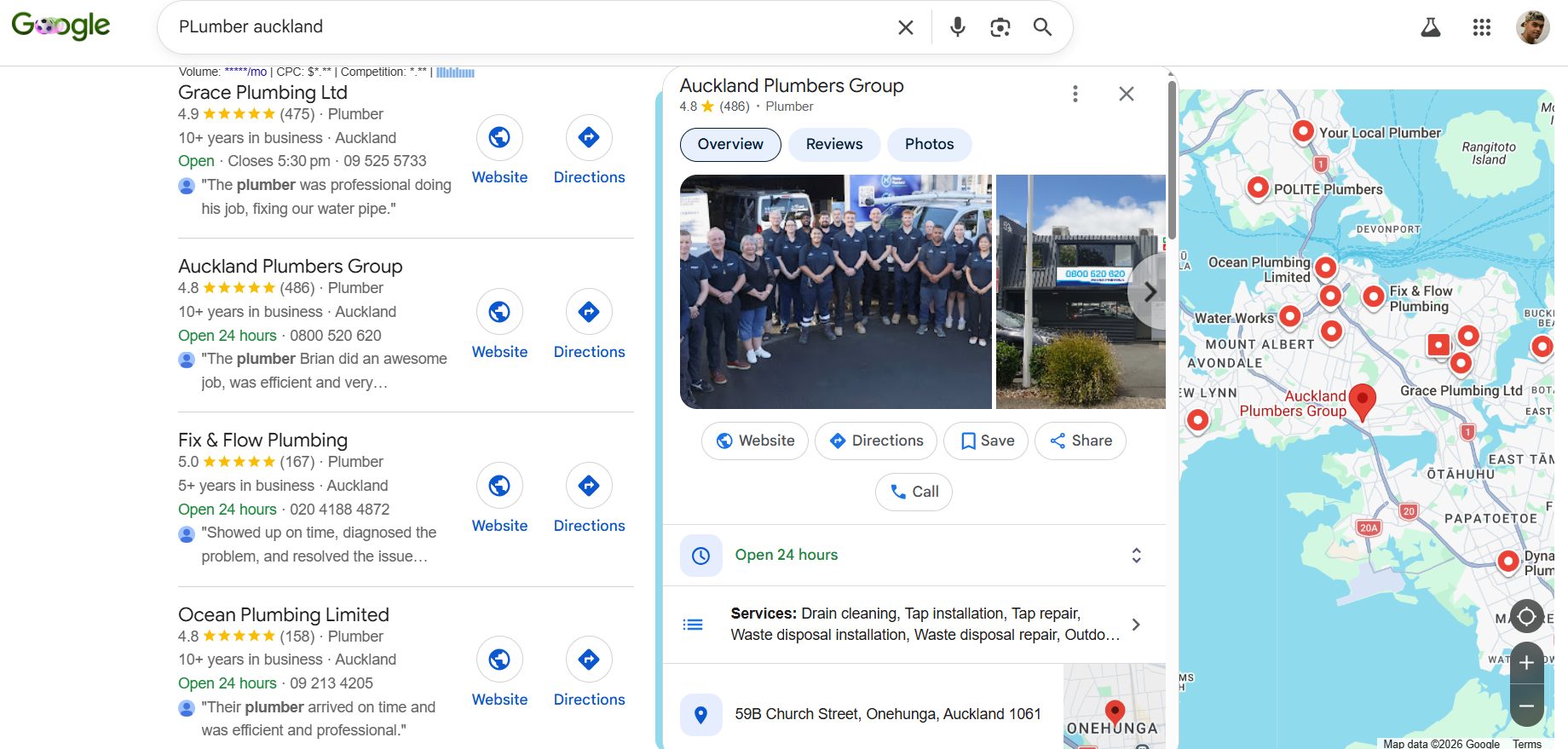
Now scroll down past the top few and watch the average collapse toward 100 or below. That gap between the top and the rest is one of the clearest patterns in local search.
Getting that review system humming is one of the highest-leverage moves in SEO for Auckland businesses — or anywhere reviews decide the map pack.
It’s the difference between a plumber, sparky or builder who’s flat-out booked and one staring at a quiet phone.
On-page and website signals
The map pack is one half of local. The other half — the organic listings — is won on your website, and that’s where on-page signals do the heavy lifting.
Google still reads your site to judge relevance even for the map pack, so the website isn’t optional.
The signals that matter: dedicated pages for each service and location you actually serve, your service-and-location keywords sitting naturally in your titles and headings, genuinely local content, and Local Business schema telling Google your address, hours and services in a language it can’t misread.
The trap to avoid is the suburb-swap.
Spinning up ten near-identical pages where only the suburb name changes (“plumber Newmarket”, “plumber Takapuna”, “plumber Henderson”, all the same words) doesn’t build relevance. It just stacks up thin content Google ignores.
Each page needs a real reason to exist: the actual service, why someone in that area should pick you, something local and true.
Finding which location terms are even worth a page is its own job. That’s local keyword research, and it’s the difference between building pages people search for and building pages nobody wants.
The on-page mechanics — titles, headings, internal links, the lot — are covered in the on-page SEO guide.
A tradie who builds one proper page per core service, mapped to real local keywords, will quietly outrank a competitor with one bloated “services” page and ten thin suburb clones. That structural edge compounds.
Citations and NAP consistency
A citation is any online mention of your business name, address and phone number — those three details together are your NAP.
They show up on directories like Yellow, Finda, Localist and Neighbourly, plus the data aggregators that feed information to other platforms.
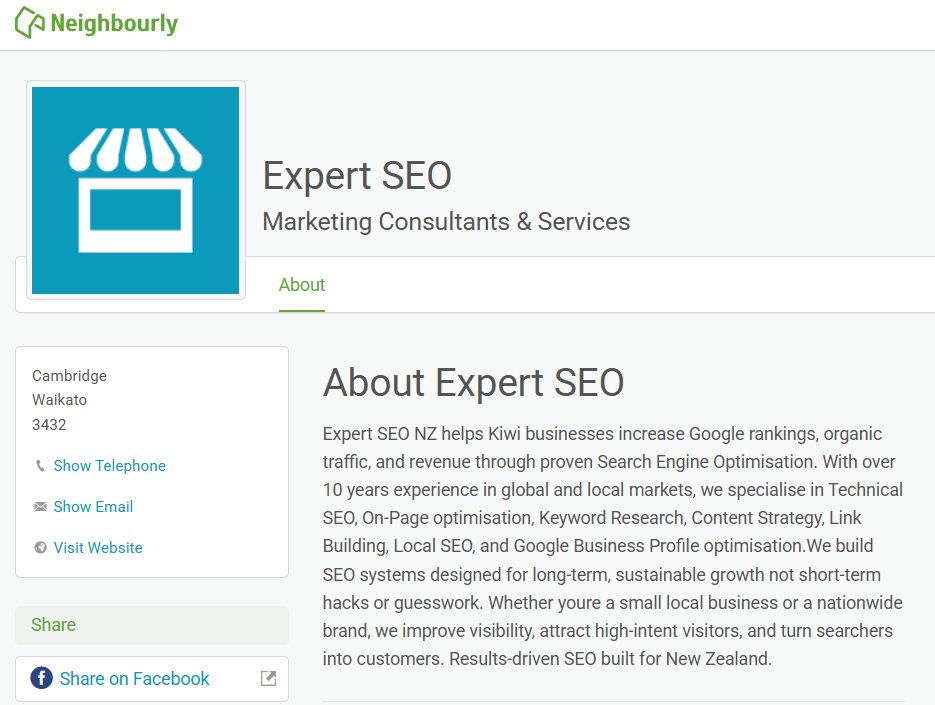
They matter because they verify you. When your details match everywhere Google looks, it trusts the information. When they don’t, it starts to doubt you — and a doubtful Google ranks you lower.
The move: lock one exact format for your name, address and phone — down to whether you write “Street” or “St” — and use it everywhere.
To get listed across the main NZ directories without doing it by hand, a tool like BrightLocal’s Citation Builder pushes a consistent listing out for you.
Here’s consistency going wrong in real life. A Hamilton dental practice, Dental Holistix, has its business details listed slightly differently across its citations — a small mismatch between Google and Facebook.

Tiny on paper. But Google relies on those details lining up to confirm you’re legit, and the inconsistency is exactly the kind of thing that quietly holds a good business back.
Cleaning up NAP across the web is one of the least glamorous, highest-leverage jobs in dental SEO — and local SEO generally.
Links and local authority
Links from other websites are still a prominence signal — and in local, the local ones matter most.
A backlink from a relevant NZ site tells Google you’re an established part of the community, not a fly-by-night.
The thing to understand: a few strong, relevant links beat a pile of weak ones.
According to Backlinko’s analysis of 11.8 million search results, pages at the top of Google carry far more backlinks than the ones below — but in local, relevance and locality outweigh raw volume.
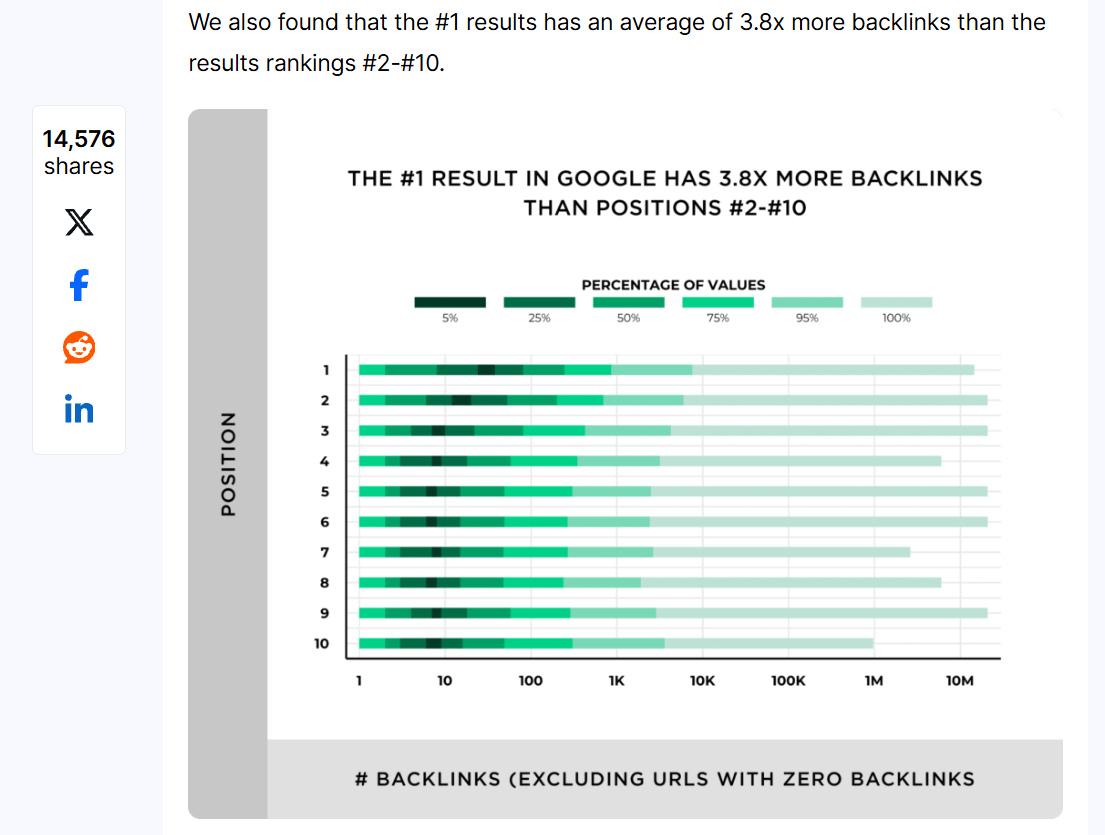
Where to find them: your local Chamber of Commerce (joining usually gets you a listing on their site), sponsoring a community event or junior sports team, partnering with nearby businesses, and analysing where your competitors already get their links so you can chase the same sources.
Earning local press with genuinely useful market-report content is the backbone of strong SEO for real estate agents — and the same move works in any industry.
The full how-to on earning links sits in the backlinks guide.
Behavioural and engagement signals
Google watches how people interact with your listing: clicks through to your site, calls, requests for directions, and how active your profile is with photos, posts and answered questions.
The principle is that Google rewards profiles that look alive.
A business that’s clearly engaging with customers — fresh photos, prompt replies, real activity — reads as a healthy, trading business worth recommending.
One that set up a profile in 2021 and walked away reads as half-abandoned.
This is where you have to be careful, though, because “stay active” gets twisted into tactics that feel productive but don’t actually rank you. Which brings us to the stuff you can safely stop stressing about.
Factors that feel like they matter but don’t
Some of the most popular local SEO tactics have been put under controlled tests — and moved nothing.
Knowing what to ignore is as valuable as knowing what to chase, because every hour spent on a dead factor is an hour stolen from one that counts.
Google Business Profile posts don’t directly lift your ranking.
A controlled Sterling Sky study tracking 441 keywords over nine weeks found posting made zero difference to map-pack position.
Posts still help — they keep your profile looking active and can nudge click-through — but treat them as engagement, not a ranking lever.
Your service-area settings don’t widen your reach. Adding twenty suburbs to your profile’s service area won’t make you rank across twenty suburbs; Google ranks you off your verified address, not the radius you wish you had.
Your GBP business description isn’t a ranking input. Google has confirmed it doesn’t use the description to rank you, so write it for the human reading it, not stuffed with keywords for an algorithm that’s ignoring it.
And keyword-stuffing your business name — “Auckland Best Cheap Emergency Plumber Ltd” — is a flat-out guideline violation. It can work until a competitor reports you and your listing gets suspended.
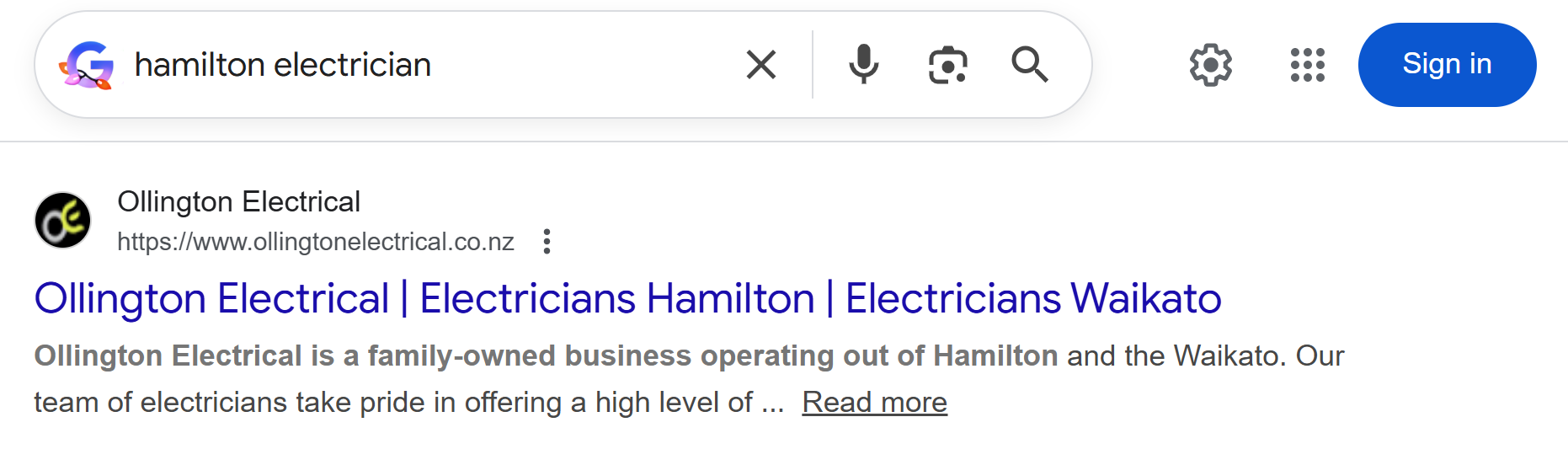
I can say “focus on what actually works” with a straight face because it’s exactly what we’ve done at Expert SEO.
Our own local SEO guide now ranks #1 in New Zealand — above Ahrefs and Semrush — on a domain less than a year old.

No tricks. Just the factors that count, done properly.
You’re doing everything and still not ranking
If you’ve ticked every box above and you’re still stuck, it’s almost always one of a handful of culprits — and a quick diagnosis beats blindly redoing work that was already fine.
Run down this list:
- Distance. Are you simply too far from where your customers search? Distance has a ceiling no amount of optimising clears.
- Category. Is your primary category wrong or too generic? That single setting can cap your relevance.
- Review velocity. Plenty of reviews, but none in the last six months? Stale looks dead to Google.
- NAP drift. Has your name, address and phone slipped out of sync across directories as you’ve updated things over the years?
- A thin website. Is there a slow, shallow site hiding behind a good profile, dragging down everything the profile earns?
Nine times out of ten the problem is sitting in that list.
If you’d rather have someone find it for you, a free website audit will surface the exact factor that’s holding you back instead of leaving you guessing.
Where local ranking factors are heading: AI search
Local search and AI search are merging fast.
The same signals that rank you in the map pack — a tidy profile, consistent data, genuine reviews, real local content — are now what get you recommended inside ChatGPT, Perplexity and Google’s AI answers.
The reason is mechanical: those AI tools pull from the same underlying data Google does.
And people are genuinely using them. In the same BrightLocal survey, use of ChatGPT and similar tools for local recommendations jumped from 6% to 45% in a year — making AI the third most popular way people now find a business.
So tight local SEO isn’t just ranking you in the map pack anymore. It’s getting you cited by the AI tools your customers are increasingly asking instead of searching.
We know it works because it’s happening to us. This site’s local SEO guide is already being pulled into Google’s AI Mode answers — the practical side of ranking in AI search is just doing the fundamentals at a level most NZ businesses haven’t bothered to.
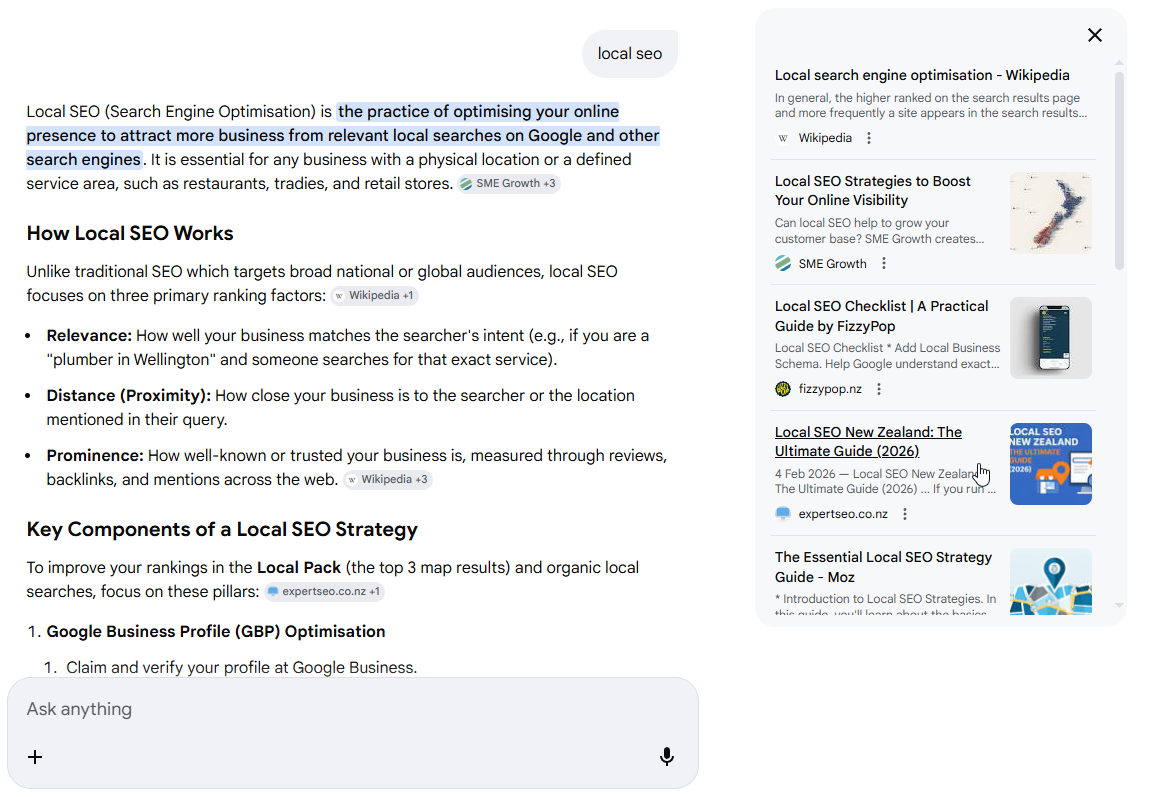
The businesses writing off local SEO because “AI is taking over” are handing the door to the ones who keep going. AI search is an argument for getting the factors right, not against it.
Doing it yourself vs getting help
Everything in this guide is doable on your own.
The factors aren’t secret, the tools are mostly free, and a determined owner can absolutely move their own rankings. Expect a learning curve and some trial and error, but it’s real.
The honest trade-off is time and precision. Doing it yourself is slower, and it’s easy to spend three months pouring effort into a factor that was never your problem.
If you’d rather skip the guesswork and have it done right the first time, that’s the case for done-for-you SEO services.
For owners who want to learn the ropes with someone in their corner rather than hand it off entirely, you can also work with an SEO consultant and keep your hands on the wheel.
Whichever way you go, the factors are the same.
Get the profile tight, the reviews flowing, the website pulling its weight, and the data consistent — and you stop wondering why the competitor with the worse website keeps beating you. That’s where we come in.
Local SEO Ranking Factors: FAQ
What are the three main local SEO ranking factors?
The three core factors are relevance (how well your business matches the search), distance (how close you are to the searcher), and prominence (how well-known and trusted your business is). Everything else — your Google Business Profile, reviews, citations and links — feeds one of those three.
Can you pay Google to rank higher in local results?
No. You can't pay for a higher position in the map pack or organic listings — that's earned through your Google Business Profile, reviews, website and citations. The only paid slots are Google Ads, which sit separately. You can pay an agency to do the optimisation work faster, but not Google itself.
How many Google reviews do I need to rank?
There's no fixed number. The goal is to match or beat the top competitors in your area. If the top three businesses in your map pack each have 400-plus reviews and you have 50, that gap is costing you — so focus on a steady flow rather than a single target.
Do Google Business Profile posts help rankings?
Not directly. A controlled Sterling Sky study found GBP posts made no difference to map-pack position. They still help by keeping your profile active and nudging click-through, so treat them as engagement, not a ranking lever.
What's the difference between the local pack and local organic?
The local pack is the three businesses shown under the map, ranked mainly on your Google Business Profile, reviews and proximity. Local organic is the standard blue-link listings below it, ranked mainly on your website. They run on different signals, so you can rank in one and not the other.
How long until ranking-factor changes show movement?
Profile and review changes can show within weeks. Website and authority changes usually take a few months. Local SEO compounds — the businesses that keep at it steadily are the ones that pull ahead over time.
Recommended Reading

Off-Page SEO
Citations, links and brand mentions — the off-site trust signals that lift your local rankings.
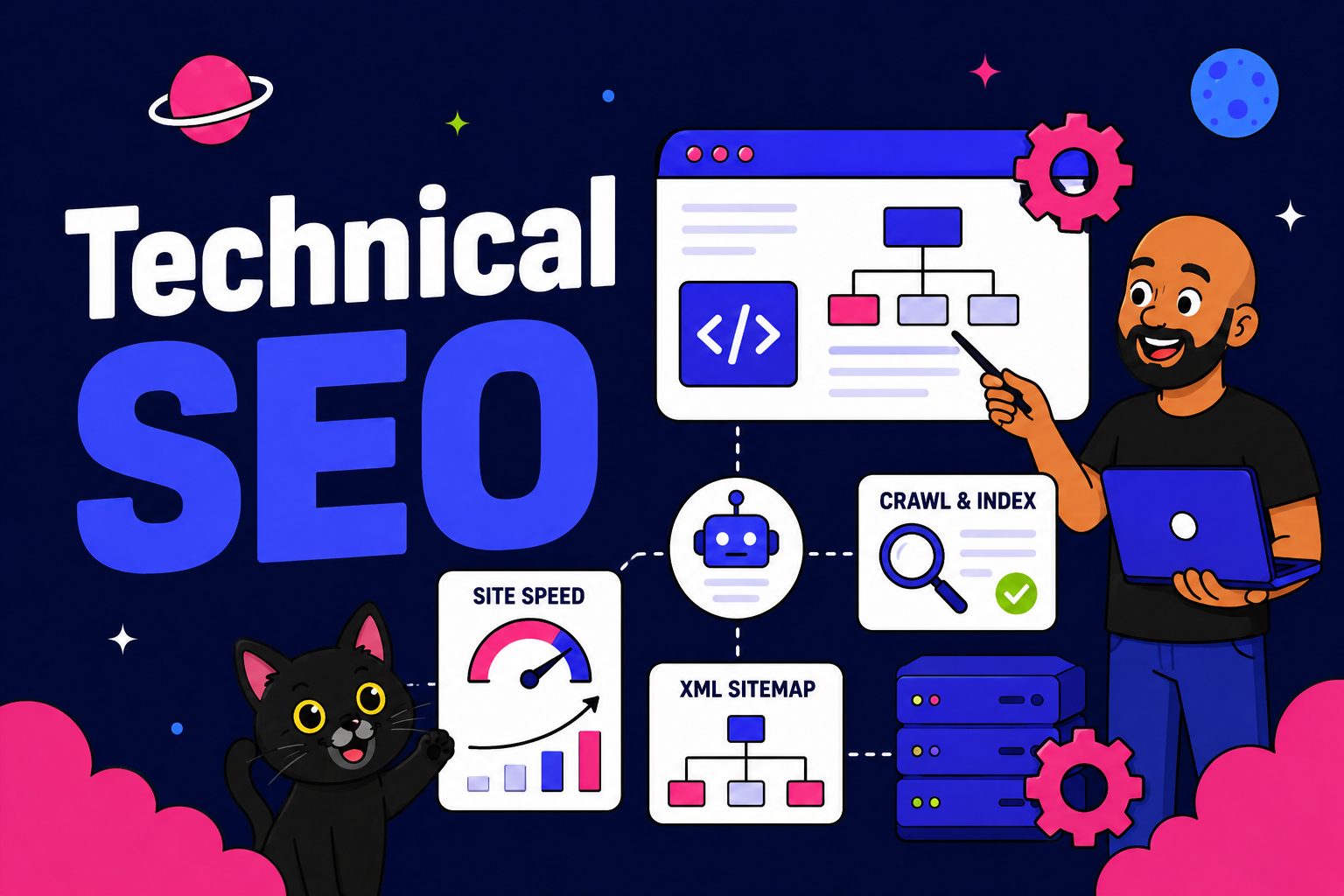
Technical SEO
Local Business schema, NAP and site speed — the foundations Google reads before anything else.

20 SEO Tips
Practical, high-impact moves NZ businesses can apply today — including the local quick wins.