

Get local SEO right once and it pays you back for years.
A Google Business Profile sitting in the map pack doesn’t sleep, doesn’t take a cut of every sale, and doesn’t stop sending you calls the second you stop paying — unlike the paid ads that stop the second your budget does.
It’s the closest thing to a lead engine you’ll ever build for your business.
And the numbers back it up: SEO returns a median 748% — $7.48 back for every dollar in — which is why nearly half of marketers rate organic search as their single best channel for return.

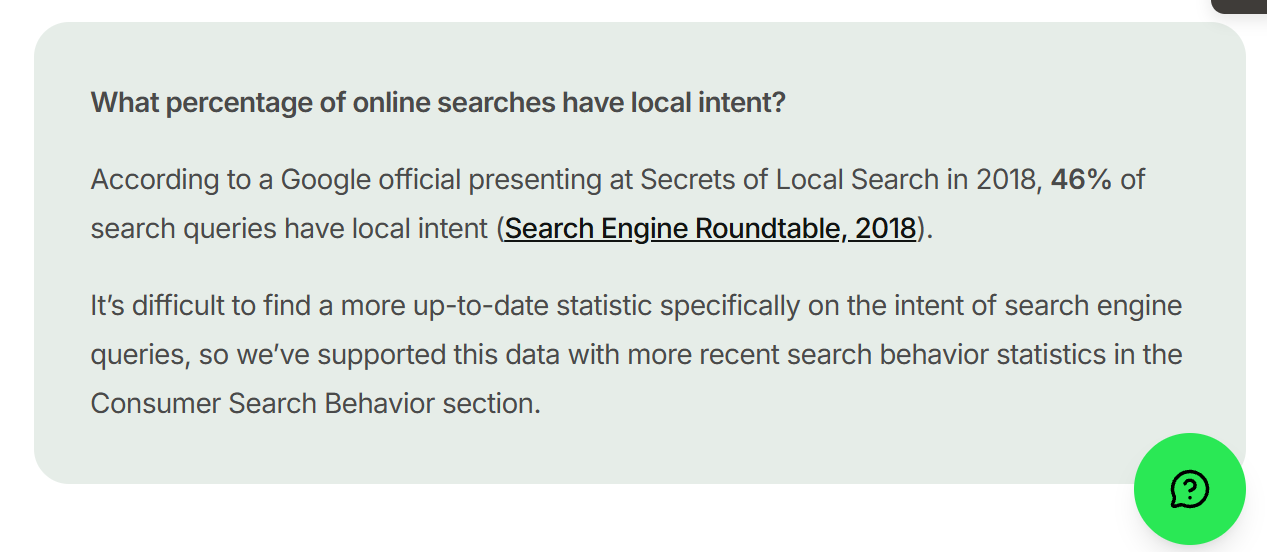
Local makes that sharper still. Around 46% of all Google searches have local intent, and most of those people aren’t browsing — they’re ready to call, visit, or buy.
So the upside is real. The catch is just as real.
None of it lands in your lap unless you’re actually ranking — actually showing up for the searches your customers are typing into Google right now.
Stuck on page two, or floating at position eight in the map pack where nobody scrolls, and all that lead potential goes straight to the three businesses sitting above you — the local pack alone pulls around 42% of the clicks on a local search.

This guide fixes that.
Below are 12 ways to improve your local SEO — the exact things I use on my own sites and my clients’. And they work.
Expert SEO is under a year old. It’s already ranking #1 in New Zealand for local SEO above Ahrefs and SEMrush — two of the biggest names in the industry — and getting cited in Google’s AI Mode.
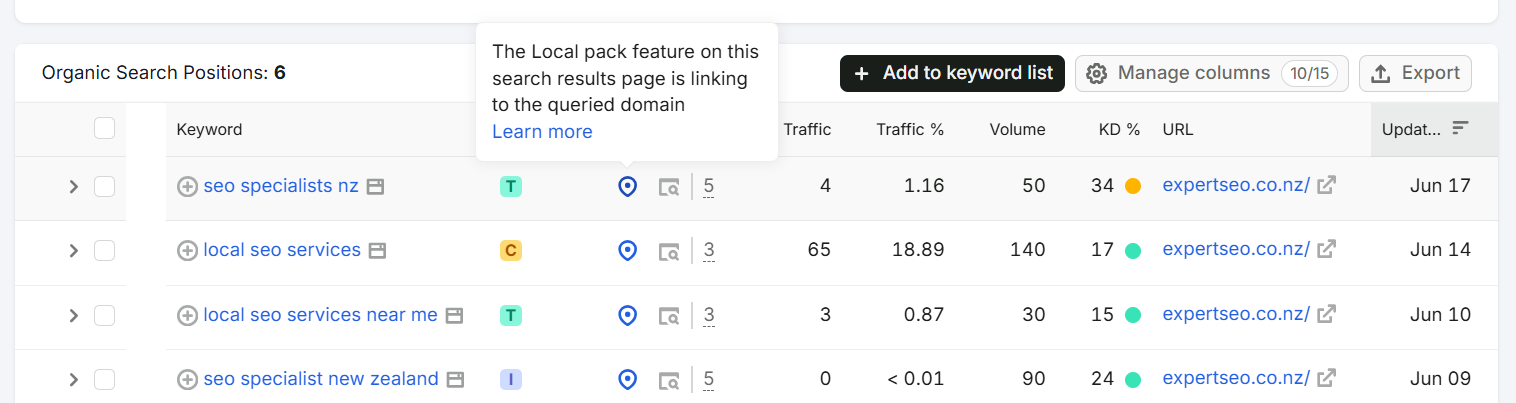
That’s the same playbook, in the same order, you’re about to read.
One thing before we start.
This list is ranked by leverage — biggest needle-movers first. If you only ever do three things, do the first three: your Google Business Profile, your reviews, and your NAP consistency. Everything after that compounds on top.
Right — let’s climb.
1. Optimise Your Google Business Profile
Your Google Business Profile is the single biggest lever in local SEO, and a fully completed one beats a half-filled one nearly every time.
Your profile is what gets you into the map pack — the three businesses Google shows above the regular results, with the little map beside them. It’s free, it’s the first thing Google reads about you, and Google has openly said businesses with complete, accurate info are more likely to show up.
The data’s not subtle: customers are 70% more likely to visit a business with a complete profile, and 2.7 times more likely to see it as reputable.

Here’s the click-by-click:
Claim and verify your listing through the Google Business Manager. Then fill every field — not most of them, every one: hours, phone, website, service area, opening date, attributes.
Your primary category is the big one. Pick the most specific category that matches your core service — “Plumber,” not “Contractor” — then add secondary categories for everything else you do.
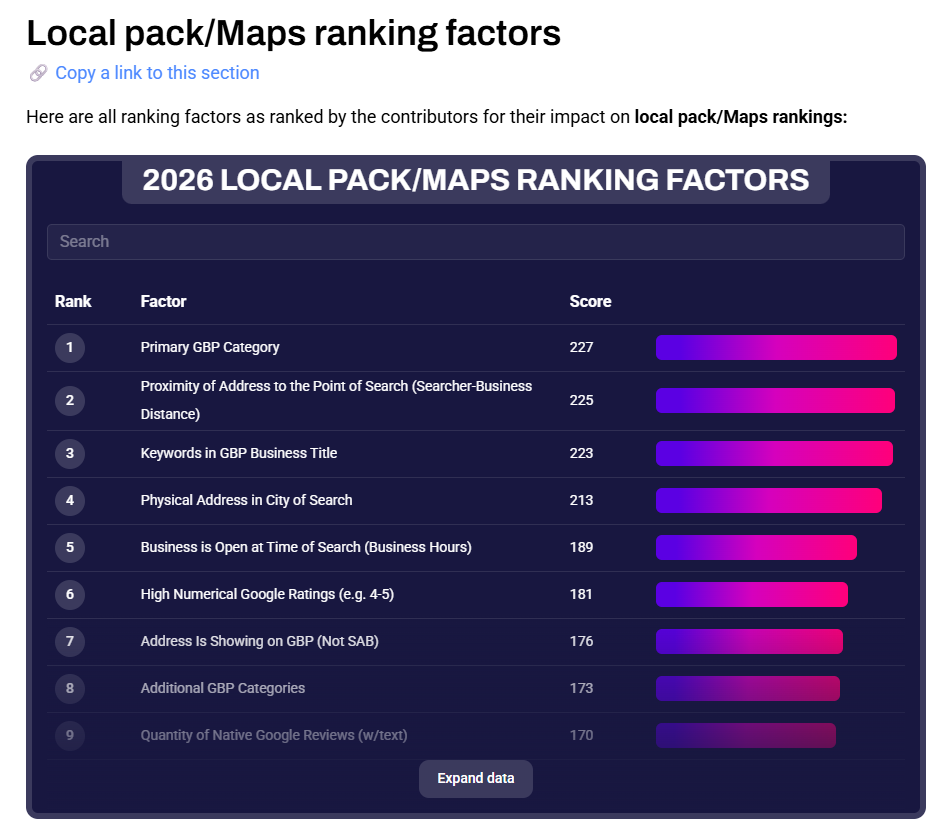
Add your services and products with proper descriptions. Write a business description that works your city or suburb in naturally. And load it with real photos (more on that in tip 8).
The tool that makes this easy: GMB Everywhere or PlePer — free Chrome extensions that show you the exact primary category your competitors are using. Read what’s working for whoever’s ranking #1, and match it.
Say you’re a Hamilton plumber stuck just below the map pack. You install GMB Everywhere, check the top three, and find they’re all set to primary category “Plumber,” with secondaries like “Drainage service” and “Hot water system supplier.” You’re sitting on “Contractor.”
That one fix — the primary category — can be the difference between showing up and not.
2. Get More Google Reviews — and Reply to Every One
Reviews are one of the strongest local ranking signals there is, and the businesses at the top of the map pack almost always have the most of them.
Google treats reviews as a trust vote. The volume, how recent they are, your star rating, even the words inside them — all of it feeds your ranking. The top three local results carry an average of 561 reviews; that’s not a coincidence, that’s the bar. And reviews sell for you too: 67% of people read them after a local search, and 54% click through to the business they land on.

Go and look at your own map pack right now. Search your service plus your city, and count the reviews on the top three.
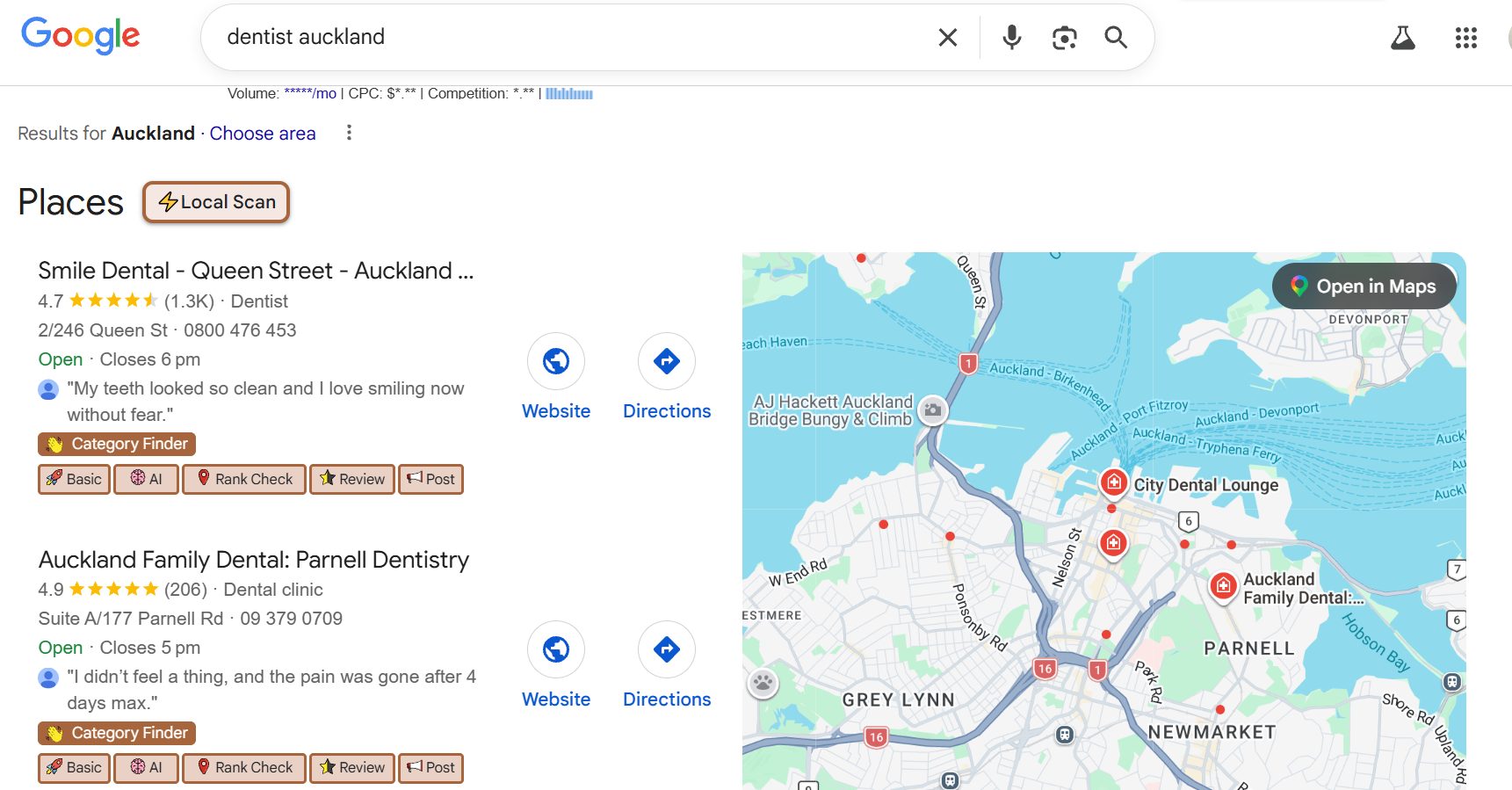
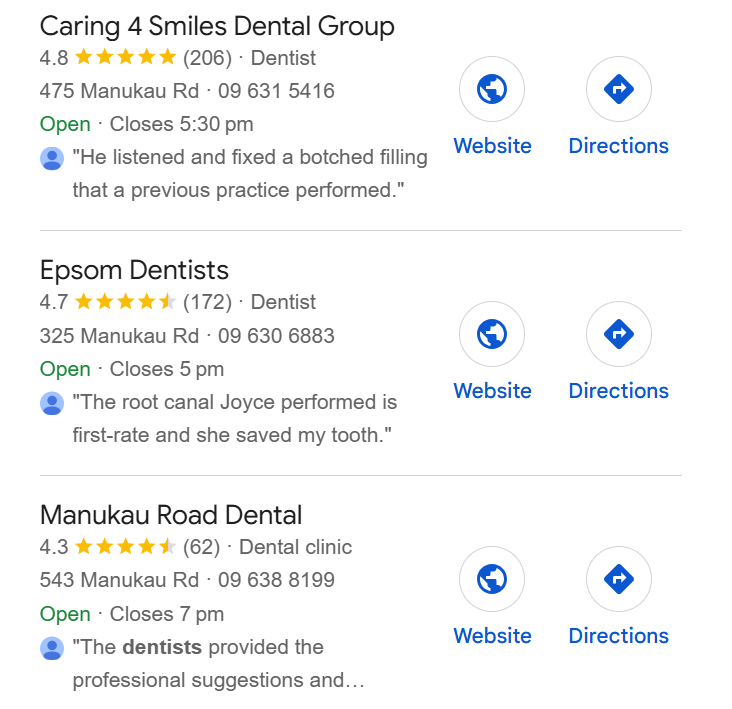
Search “dentist Auckland” and you’ll see it in action: the top of the pack sits on 206 reviews, the next on 172, the third on 62. If you’re a newer practice sitting on 15, there’s your gap — and there’s your plan.
The system that actually works:
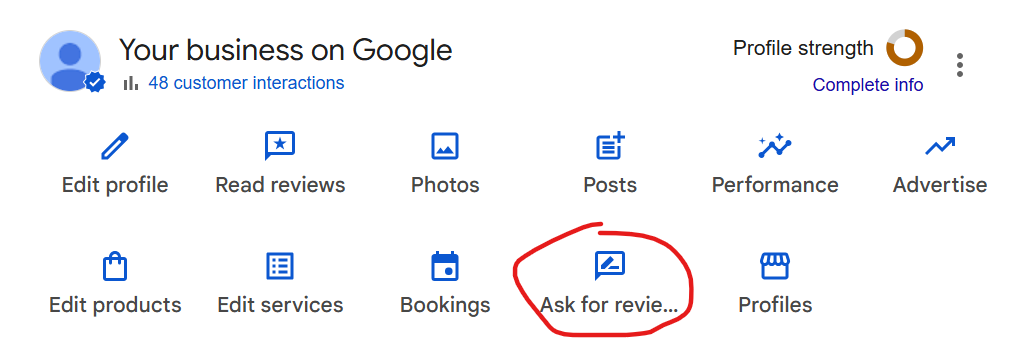
Grab your review link from inside your profile (Read reviews → Get more reviews → copy the short link). Turn it into a QR code with a free generator, and stick it on your invoices, the counter, the back of the van.
Then send it the moment a job goes well — while they’re still happy. That timing is everything; the same request a week later gets ignored. One polite follow-up if they don’t bite.
And reply to every single one. Yes, even the five-star “great job, thanks” ones. Work your service and city into the replies where it reads naturally — Google reads those too.

Get a bad one? Reply calm, professional, fix-focused, because the next customer is reading how you handle it more than the complaint itself.
You don’t need fancy software here — a free QR generator and a saved text template to fire the request off fast will do it.
Picture a sparky in Tauranga. After every job he texts: “Cheers for having us today — if you’ve got 20 seconds, a quick Google review really helps a small local business: [link].”
One line, sent at the high point. He went from the odd trickle to a steady few a week, and climbed the pack as the count grew.
3. Make Your NAP Consistent and Build Local Citations
Your name, address and phone number need to be identical everywhere they appear online, because Google uses that consistency to decide whether your business is real.
NAP stands for Name, Address, Phone. Every directory you’re listed on is another vote that your business exists and sits where you say it does.
But when half of them read “Suite 2, 14 High St” and the rest say “14 High Street, Unit 2,” Google sees mixed signals and quietly trusts you less.
The average small business has citations across 37 directories feeding its local visibility — so one wrong format, repeated across all of them, drags you down without you ever noticing.

Start with an audit. Google your business name and your phone number, and note every listing and exactly how your details appear on each. Then fix the mismatches — pick one exact format and make every listing match it, down to the suite number.
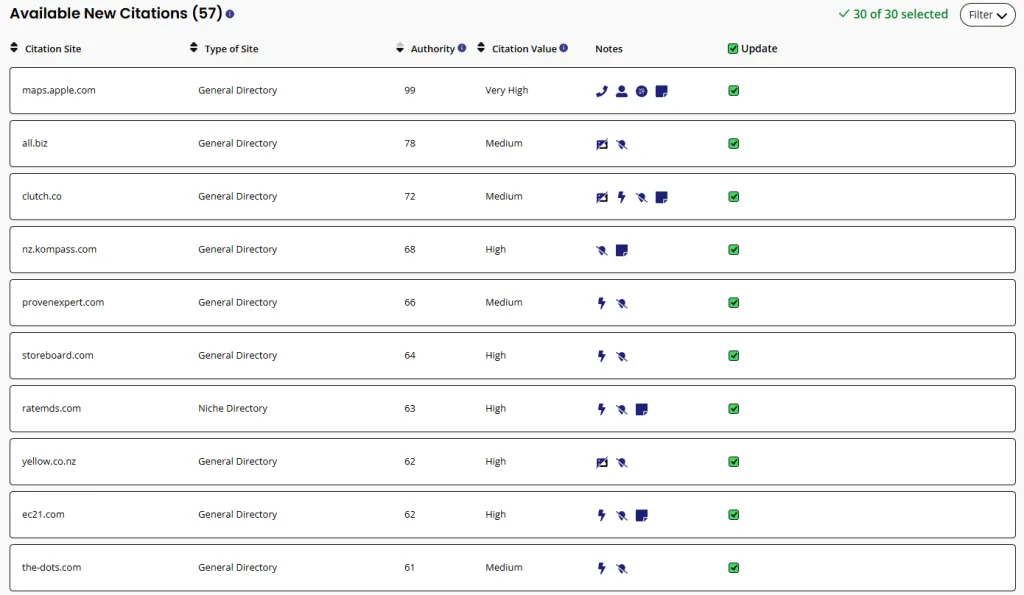
From there, get into the core NZ directories: Yellow, Localist, Neighbourly, your regional Chamber of Commerce, and any industry-specific ones (NZ Master Plumbers, the Law Society register, and so on). New listing down the track? Same NAP, every time.
BrightLocal’s Citation Builder pushes a consistent listing out to the main directories for you and flags inconsistencies it finds. Doing it by hand is free but slower — your call on time versus money.
One NZ-specific warning: ignore the US-directory advice every overseas guide gives you. Yelp, Foursquare and DoorDash are near-useless here. Localist, Neighbourly and Yellow NZ are where Kiwi customers — and Google — actually look.
4. Build a Dedicated Page for Every Area You Serve
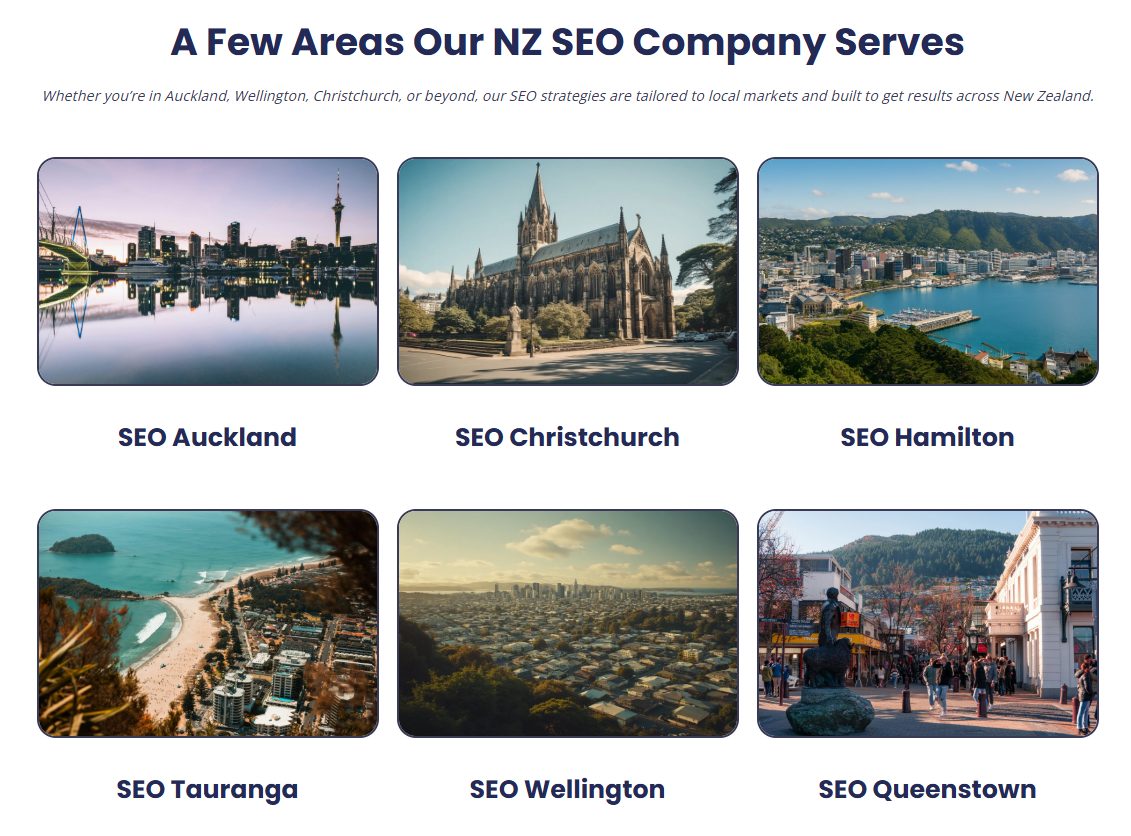
If you serve more than one town or suburb, build a dedicated page for each — a single “areas we serve” list won’t rank for any of them.
Google can’t rank a page for “plumber Cambridge” when “Cambridge” appears once, buried in a comma-separated list at the bottom of your homepage.
A real, dedicated page tells Google you genuinely serve that area and hands it something to actually rank. The local SEO crowd on Reddit say it plainly: build an excellent location page with a big, clear call-to-action.
One page per real service area you want to rank in — not 40 ghost-town suburbs you’ve never set foot in.
And make each one genuinely unique. Find-and-replacing the suburb name across the same 400 words is the fastest way to get the whole lot ignored as thin, duplicate content.
On each page, put the services you offer there, a real local job or two you’ve done, a Google Map embed, testimonials from that area, and one clear call-to-action. Then link them sensibly — service pages through to location pages, and location pages back to your main service page.
Take an Auckland builder working across the North Shore, West Auckland and the central suburbs. That’s three pages — one per patch — each carrying real projects from that area, not the same paragraph with the place name swapped out.
5. Optimise Your Pages for Local Search
Your service pages need to say what you do and where you do it — in the title, the H1 and the copy — so Google can match you to local searches.
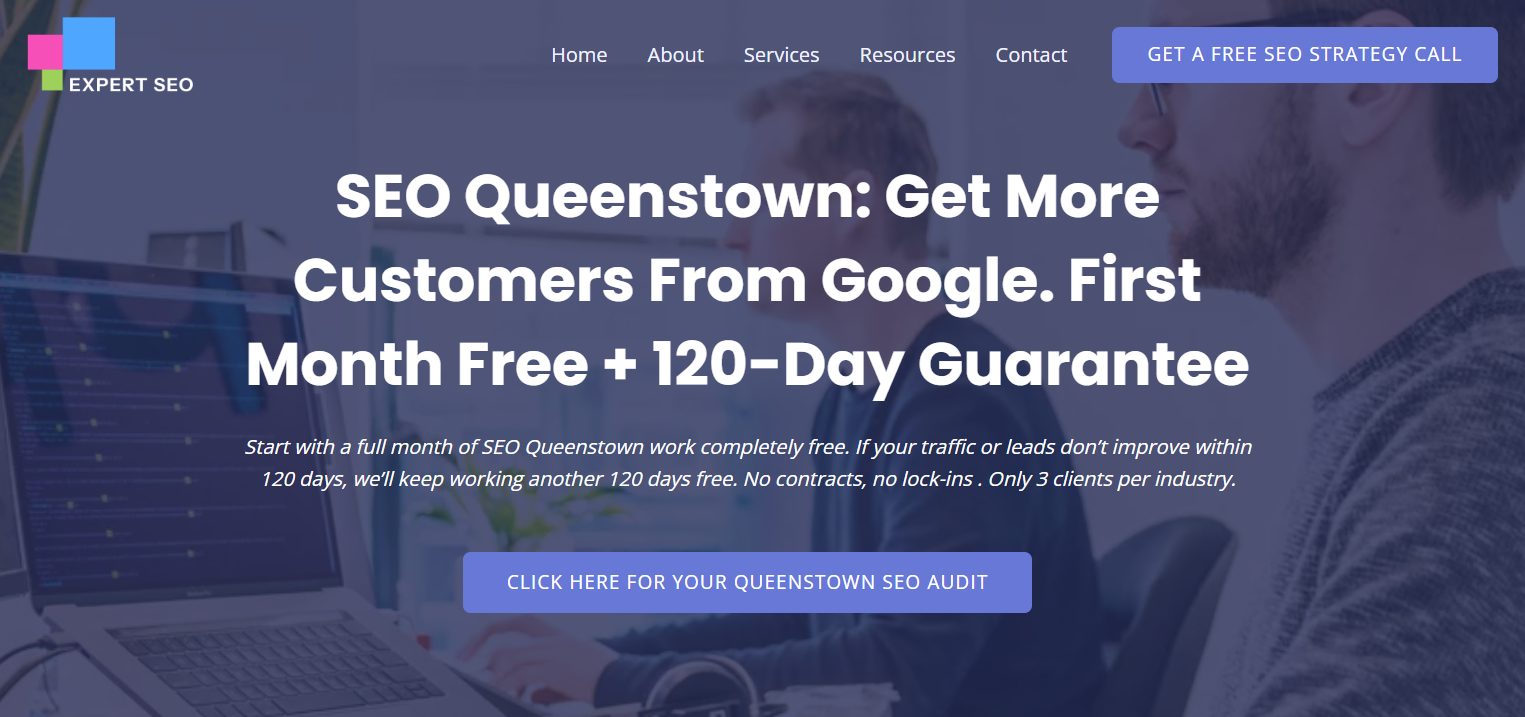
This is on-page local SEO. Your profile gets you into the map pack; your on-page work is what ranks you in the regular results below it, where a big chunk of local clicks still go.
On-page factors have the strongest influence on those local organic rankings. If your page just says “Quality Plumbing Services” with no city anywhere on it, you’re invisible for “plumber Hamilton.”
Start by finding your local keywords — they’re almost always service plus place: “emergency plumber Hamilton,” “Hamilton blocked drains.”
Put the main one in your title tag and H1, near the front. Work it into the meta description and naturally through the copy (no stuffing — Google’s well past that). Then cross-link your service and location pages.
Pull those terms from Google Keyword Planner or Ahrefs. Stuck for ideas? Ask ChatGPT what someone in your area would type if they needed your service — it surfaces phrasings you’d never think of.
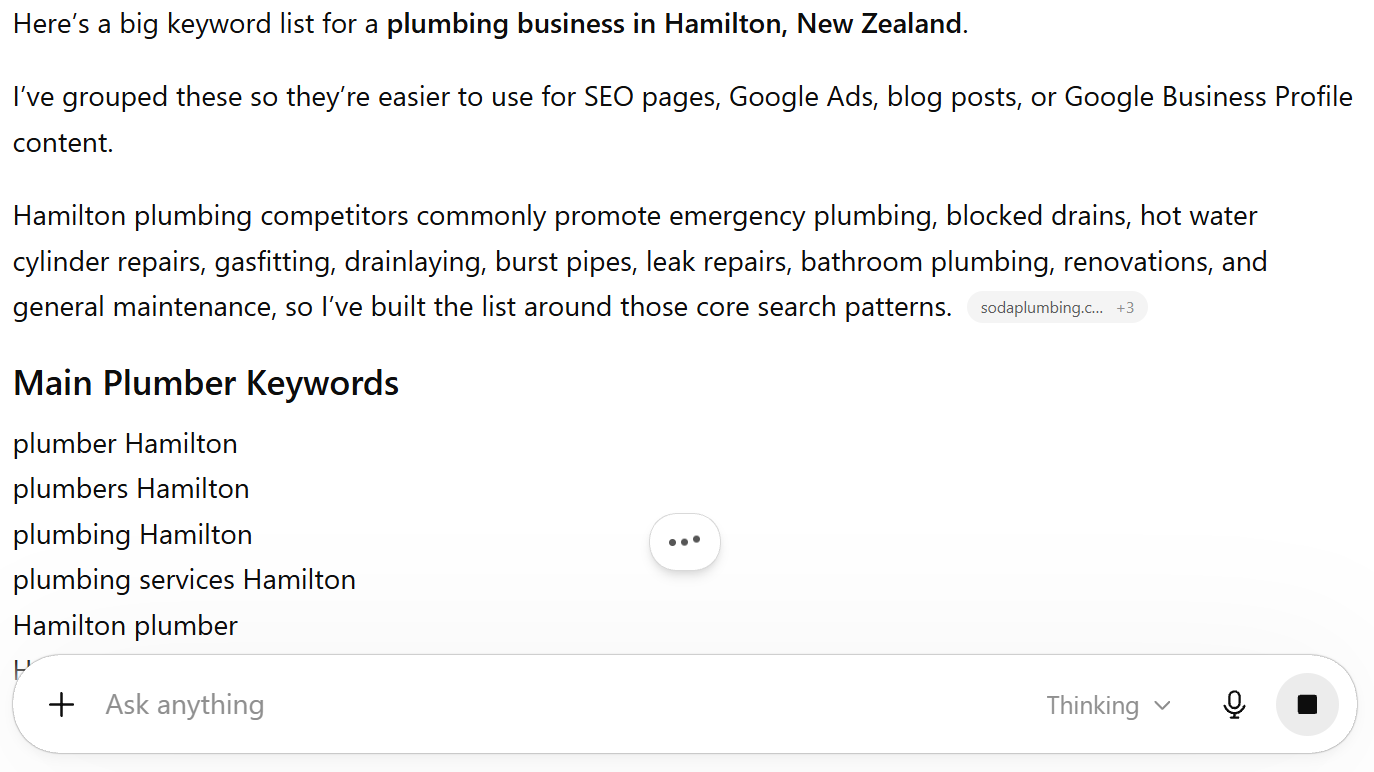
Worth knowing: “emergency plumber Hamilton” and “Hamilton plumbing services” are the same business but two completely different intents. One’s the panicked 11pm search; one’s the planned weekday job. Each one earns its own page.
6. Earn Local Backlinks
Links from other local NZ websites tell Google your business is an established part of the community — and they’re one of the hardest signals for a competitor to fake.
A backlink is just another site linking to yours. Local ones — from a regional news site, the rugby club you sponsor, a nearby supplier — carry extra weight for local rankings because they tie you to a place geographically. It’s a real ranking factor, too: businesses sitting in the local map pack average 993 backlinks, according to Semrush. Anyone can chase a generic link; a genuine local one takes actually being part of the community.

Get listed by your regional Chamber of Commerce. Sponsor a local club, school gala or event — most list their sponsors with a link. Ask the brands you install or stock to list you as an approved local installer on their site.
And keep an eye out for local news angles and “best of [city]” lists, because those round-ups now feed AI recommendations too.
To find the opportunities, run the competitor sitting above you through Ahrefs and see who’s linking to them — then go after the same local sources.
A Tauranga café sponsors a junior football team for $300 a season. The club site lists them with a link. Small spend, a real local backlink, and a hundred local families who now know the café exists.
7. Publish Locally Relevant Content
Content that answers local questions builds your authority and gives you more ways to get found than your service pages alone.
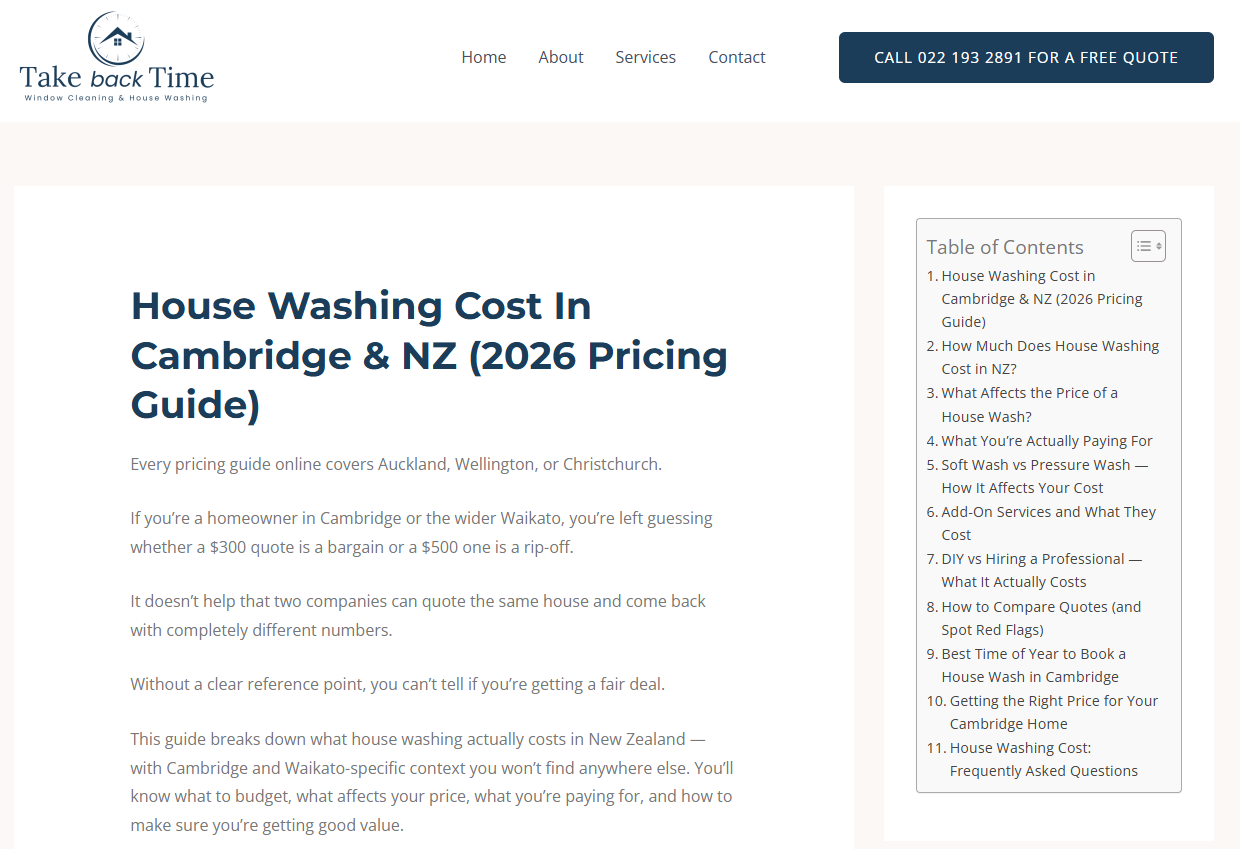
A post like “What does it cost to rewire a villa in Auckland?” pulls in people searching that exact question — and every useful local piece tells Google you genuinely know your patch.
Content like that builds authority, and it quietly feeds your money pages, because the reader who trusts your guide is the one who books the job.
Answer the real questions locals ask: cost, how-to, “best X in [city].” Keep it genuinely useful rather than a sales pitch. Then link from the post through to the relevant service page.
A Wellington electrician writing “Switchboard upgrade cost in Wellington (2026)” ranks for a real search, builds trust on the way through, and points the reader straight at the booking page.
8. Keep Your Profile Active with Posts and Photos
An active profile beats a dormant one — regular posts and fresh photos tell Google your business is alive and trading.
A profile that hasn’t moved in eight months looks half-abandoned, to Google and to customers. Fresh, real photos and the odd post — an offer, an update, a finished job — signal you’re open and working, which is exactly what Google’s own guidance pushes you to do.

Post every week or two. Upload real photos of your work, your team and your premises (not stock — customers can smell stock). Geotag them where you can.
If you know you’ll forget — and you will — schedule the posts with a GBP scheduler.
A Christchurch landscaper posting one real before-and-after photo a week costs nothing, takes five minutes, and keeps the profile warm enough that Google keeps showing it.
9. Add Local Business Schema Markup
Local business schema is code that spells out your details in a language Google reads perfectly, making you eligible for richer results.
Schema (structured data) hands Google your NAP, hours, geo-coordinates and reviews in a format it can’t misread.
It won’t rocket you up the rankings on its own, but it removes all ambiguity about who and where you are — and most NZ small-business sites skip it entirely, which makes it easy ground to take.
Add LocalBusiness schema covering your NAP, geo-coordinates and hours. On WordPress, Rank Math sets this up for you under Titles & Meta → Local SEO — no code needed. Then validate it through Google’s Rich Results Test to make sure it’s reading cleanly.
If you’re not on WordPress, a schema generator will spit out the code for you to paste in.
10. Make Sure Your Site Is Fast and Mobile-Friendly
Most local searches happen on a phone, so a slow or clunky mobile site quietly costs you rankings and customers before they ever call.
57% of local searches are done on mobile — someone standing on a footpath who needs a plumber now. If your site takes six seconds to load, or the tap-to-call button is a fiddle, they’re gone, and Google clocks the bounce.
Run your site through Google PageSpeed Insights and fix the obvious wins — compress your images, lazy-load below the fold.

Make sure your phone number is a proper tap-to-call link, not just text. And test the whole thing on an actual phone, not your desktop pretending to be one.
PageSpeed Insights is free and tells you exactly what’s slowing you down.
11. Track Your Map Pack Rankings and Reviews
You can’t improve what you can’t see — tracking your map-pack position from your customers’ actual locations tells you whether any of this is working.
Your map-pack rank shifts depending on where the searcher is standing. You might be #1 outside your shop and #9 three suburbs over. Checking from your own desk just lies to you. A proper tracker shows your real position across a grid of locations, so you know where you genuinely stand.
Pick the keywords that matter (service plus city), then track your map-pack rank, your review count and your calls each month. Watch the trend, not the daily wobble.
Local Falcon gives you grid-based map rank tracking, BrightLocal handles tracking and citations together, and your GBP dashboard — free — shows you calls, clicks and direction requests.
12. Stay Consistent — Local SEO Compounds
Local SEO compounds — the businesses that win are the ones still doing the basics six months after everyone else gave up.
This is the one nobody wants to hear. Local SEO isn’t a switch you flick; it’s a flywheel.
Positive returns usually land in 6–12 months, with the real gains arriving in years two and three. The reviews, the citations, the content — they stack on each other. And too many give up at month two because “nothing’s happening,” right before it starts to.
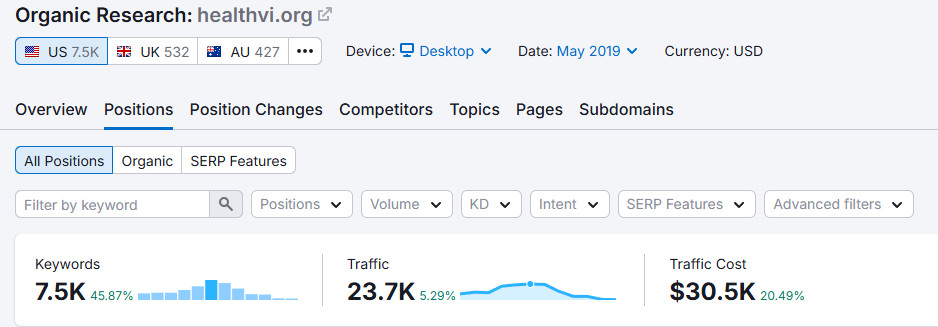
I grew a health site, HealthVI, from 0 to over 20,000 monthly visitors in under a year (a project I built with my SEO mentor, Ian Pribyl) doing exactly this — showing up, consistently, while everyone else lost interest.
Here’s what it actually looks like in NZ. Month one, you’re laying the foundation and seeing next to nothing. Month three, the map pack starts to shift. Month six, if you’ve kept at it, you’re in the pack and the calls are landing.
The curve is slow, then steep — like a kettle that does nothing, does nothing, then boils all at once.
When to Do It Yourself vs Hire Someone
Most of this list you can do yourself — the real question is whether you’ve got the time.
The first three (your profile, your reviews, your NAP) are absolutely DIY-able, and if you do nothing else, do those.
On-page work, location pages, schema and link building get more technical and far more time-hungry — and that’s usually where business owners stall, because the actual day job keeps getting in the way.
There’s no shame in either path. If you’ve got a quiet stretch and like a project, work down this list in order and you’ll move.
If you’d rather the phone just rang while you got on with the work you’re actually good at, that’s where our local SEO service comes in — we do this every day, in this exact order, for SEO for Auckland businesses and small-town operators alike, (and yeah, I cut my teeth competing in the US, where the SEO runs a few weight classes heavier than the average Kiwi agency is used to).
Not sure whether to hand it over? A quick chat with an SEO consultant will tell you where your easy wins are.
Either way, start at the top. Do the first three before anything else, and let the rest compound on top.
That’s the playbook I use — and it’s the same one that’s got a sub-one-year-old site sitting above Ahrefs and SEMrush in New Zealand.
Now go climb.