

You typed “local seo cost” into Google and got a mess.
One page says $300 a month. Another says $3,000. The AI Overview throws out a range so wide it’s basically useless, and half the results are American sites quoting US dollars for a market that looks nothing like yours.
So you’re no closer to an answer than when you started.
Here’s why the numbers are all over the place: “local SEO” means a completely different amount of actual work depending on who’s selling it to you.
One provider is writing real content and building real links. Another is running an automated tool, sending you a PDF, and calling it a service. Same two words on the invoice — wildly different work behind them.
This guide fixes that. I’m going to break down what local SEO costs in New Zealand, part by part, in real NZD. Which bits eat the budget, which bits are a twenty-minute job someone might be charging you a fortune for, and why the same campaign costs more in Auckland than it does in a small Waikato town.
By the end, you’ll be able to look at any quote and know exactly what you’re paying for.
How Much Does Local SEO Cost in New Zealand?
Proper, ongoing local SEO in New Zealand typically costs between $1,000 and $2,500 per month for most small businesses. In competitive cities and industries, it climbs to $2,500–$4,000+. A one-off setup or audit runs $500–$2,000.
Here’s the practical version:
| What you need | Typical NZD cost | Who it suits |
|---|---|---|
| Once-off setup / audit | $500 – $2,000 | Getting the foundations right before ongoing work |
| Ongoing — small business | $1,000 – $2,500 / month | Single-location service businesses in low-to-medium competition markets |
| Ongoing — competitive niche | $2,500 – $4,000+ / month | Dentists, lawyers, trades in saturated cities like Auckland |
Those are the numbers for local SEO specifically — ranking in the map pack and local searches in your area. National, ecommerce, and multi-region SEO sit higher, and our SEO pricing guide covers those.
One thing to flag straight up: if you’re being quoted well under $1,000 a month, there’s a reason, and it’s not a good one. More on that further down.
Local SEO is worth getting right because the intent behind it runs hot.
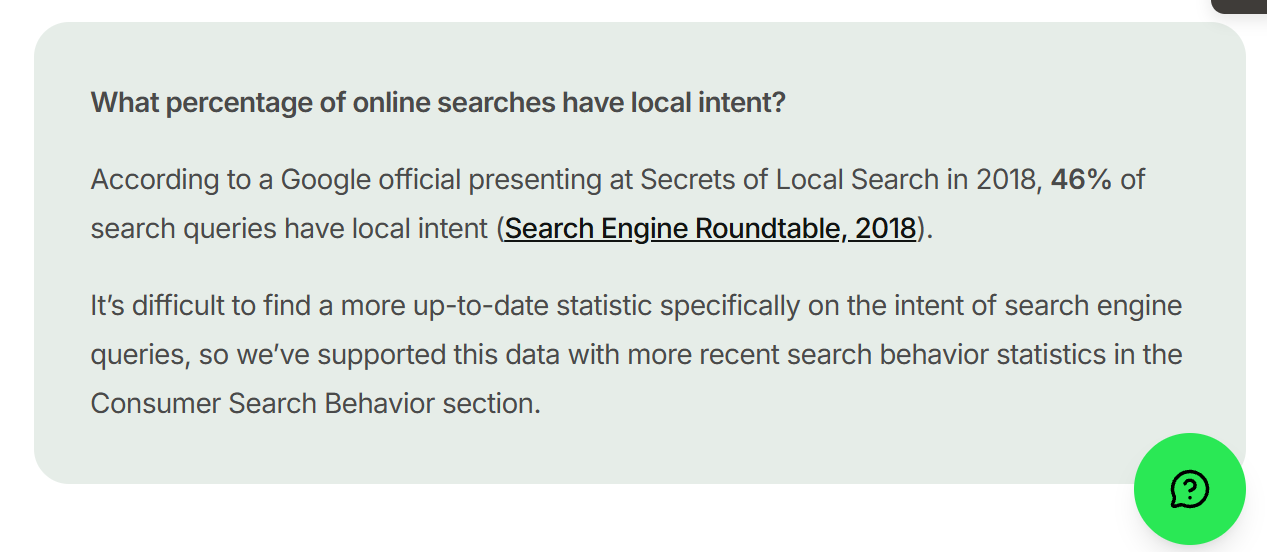
Around 46% of all Google searches have local intent, and 76% of people who run a “near me” search visit a business within 24 hours. That’s about as hot as buyer intent gets — someone ready to walk in or pick up the phone today.
What You’re Actually Paying For: The Local SEO Cost Breakdown
This is the part every other pricing guide skips. They give you a monthly range and leave it there, as if local SEO is one lump fee.
In reality it’s six or seven separate moving parts, and they cost wildly different amounts. Once you can see the parts, you can see exactly where your money goes — and where someone might be padding the bill.
Here’s how it breaks down, cheapest to most expensive.
Google Business Profile setup — basically free
Your Google Business Profile is the listing that shows up in the map pack with your name, reviews, and hours. Setting it up well is the single highest-leverage thing in local SEO.
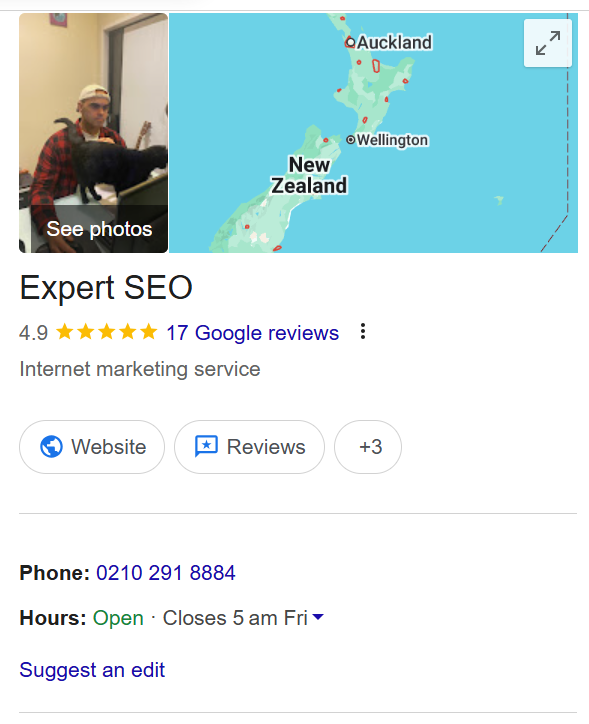
It’s also a twenty-minute job.
You go to Google Business Profile, claim or create your listing, and fill it in properly: exact business name, address, phone, website, hours, and the right primary category (this one matters — it tells Google what you do).
Add your services, a proper description, and a handful of real photos, and the setup’s complete.
So if someone’s charging you a meaningful chunk of a monthly retainer just to “set up your Google listing,” that should raise an eyebrow. The setup is free; the ongoing value comes from what you build around it.
Local citations — low cost, mostly automated
Citations are mentions of your business name, address, and phone number on directories like Yellow, Localist, and Neighbourly.
Google uses the consistency of those listings as a trust signal.
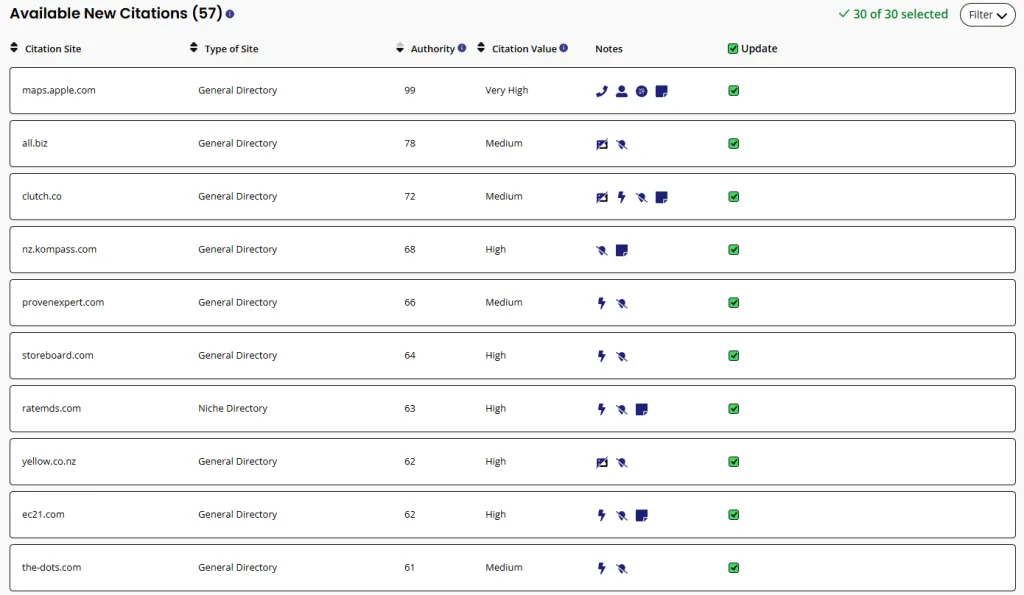
The good news: this is largely a solved problem. A tool like BrightLocal’s Citation Builder lets you enter your details once and it pushes a consistent listing out across the main NZ directories for you. It’s a low, mostly one-off cost with light maintenance.
Real work, but cheap work.
Reviews — cheap to set up, the rest is operational
Reviews are one of the strongest local ranking signals there is. The businesses sitting in the top three map pack spots average around 561 Google reviews — that’s the bar in a competitive market.
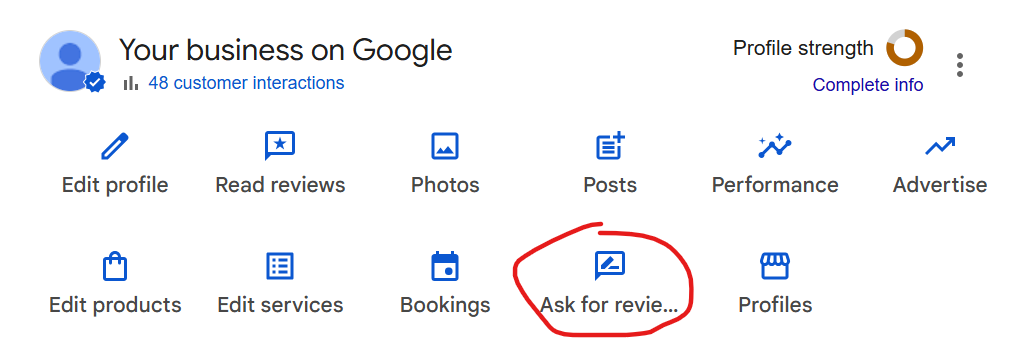
But setting up a review system is cheap. You grab your Google review link from your profile, turn it into a QR code with a free generator, stick it on your invoices and your van, and send it by text or email right after a good job while the customer’s still happy.
The system costs almost nothing to build. Earning the reviews is on you and your team over time — not a line item an honest provider should be inflating.
On-page and location pages — moderate
This is where it starts costing real money. On-page SEO means optimising your actual pages — service pages, location pages, titles, headings, internal links — so Google understands what you offer and where.
For a single-location business it’s a moderate, mostly upfront job. For a business targeting several suburbs or towns, it grows, because each area often needs its own properly built page.
High-quality local content — expensive, ongoing
Now we’re into the heavy end.
Content is the stuff that earns you authority and pulls in searches beyond just your business name — the guides, the answers, the location pages that rank.
Writing it well, for your market, by someone who understands your industry, is not cheap and it never stops.
This is one of the two biggest line items in any real local SEO budget. Generic content written by someone overseas who’s never heard of your suburb won’t move you. Good content will, and good content costs.
Local link building — expensive, ongoing
The other heavy hitter. Link building is getting other websites to link to yours, which is one of the most powerful ranking signals Google has.
Powerful enough that businesses sitting in the local map pack have an average of 993 backlinks pointing at them, according to Semrush data.
You don’t close a gap like that with a tool. You close it with manual outreach, digital PR, and genuine relationships — slow, skilled, ongoing work.

Content and links together are where roughly 60–70% of a real local SEO budget goes. The cheap stuff everyone leads with — the Google profile, the citations, the review QR code — is table stakes. Necessary, but not where the cost lives.
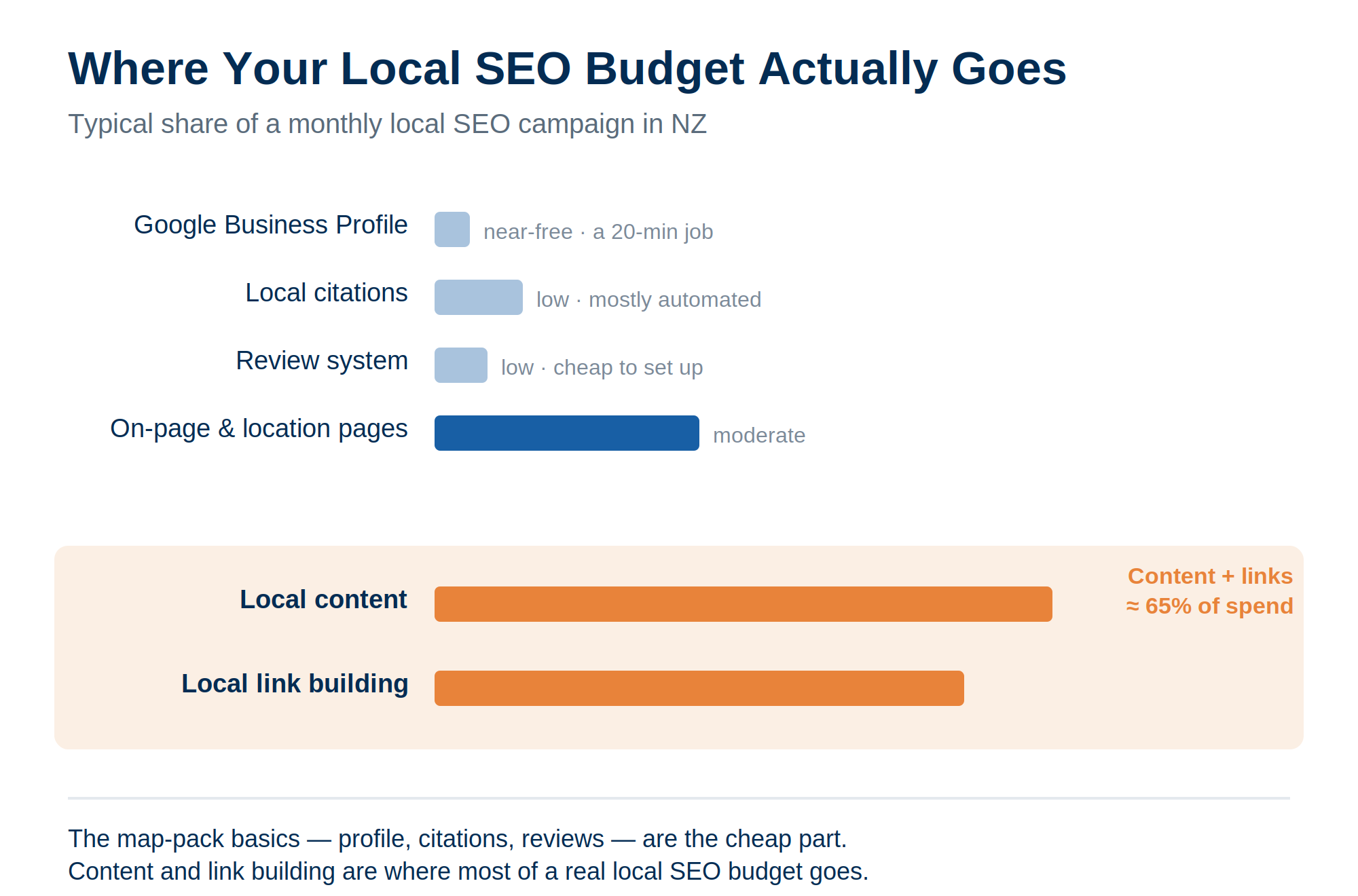
That’s the map nobody hands you. When you read a quote now, you can ask the right question: how much of this is the cheap, one-off stuff, and how much is the content and links that grow my rankings?
Why the Price Changes Depending on Your Market
The biggest thing that moves your local SEO price is your competition — not the provider you pick.
Ranking in the map pack is relative. You’re not hitting some fixed score — you’re trying to out-signal the businesses already winning the spots you want.
The stronger they are, the more content and links it takes to overtake them, and the more it costs.
Picture two NZ businesses.
A plumber in a smaller Waikato town might be up against three or four competitors with twenty or thirty reviews each and thin little websites.
The map pack there is soft. A modest budget — solid GBP, some citations, a steady trickle of reviews, a couple of decent local pages — can genuinely win it.
Now take a dentist in Auckland CBD. The top three are sitting on hundreds of reviews each, websites that have been built up for years, and link profiles that match those 993-backlink averages.
To crack that, you need real content depth and sustained link building. That’s a $2,500–$4,000+ campaign, not a $1,200 one — and it’s exactly why SEO in Auckland costs more than the same work in a quieter market.
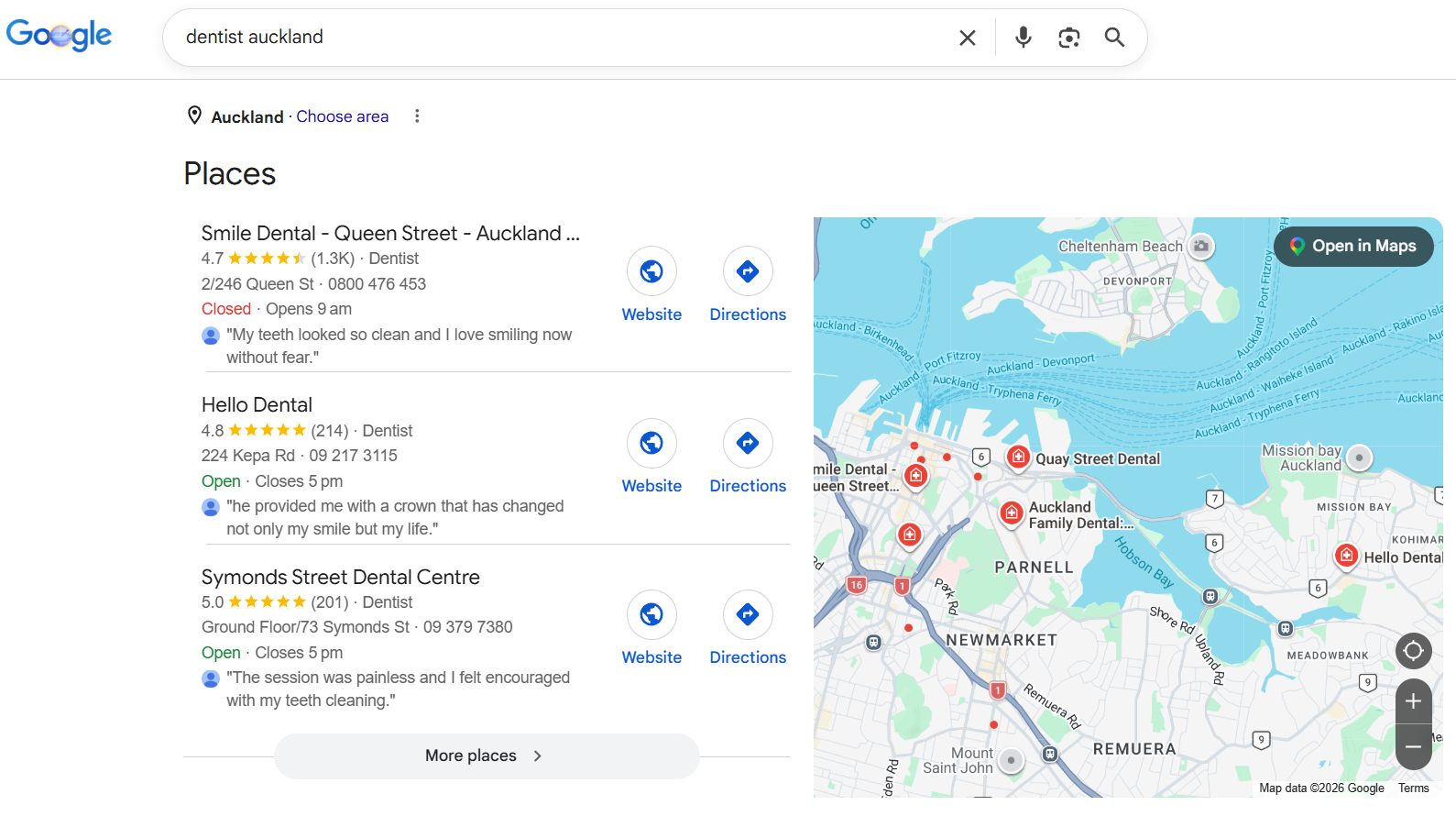
Same service. Same provider. The price gap is the competition gap. So when a quote feels high, the honest question is “how tough is my market?” — because that’s what you’re really paying to beat.
Here’s the bit international guides miss, and it works in your favour: New Zealand is a small market. For a lot of local keywords, the competition here is far lighter than it is in the US, UK, or Australia.
That means many NZ businesses can win local search for less than the global pricing pages suggest — especially outside the main centres.
Why More Locations Costs More
If you run more than one location, expect to pay more — and here’s the why, because it’s not just “double the work.”
Each location is its own mini-campaign. Its own Google Business Profile to manage. Its own location page on the site. Its own citations tied to that address. Its own reviews from that branch’s customers.
Google treats each one as a separate local entity, so each one needs its own signals.
A single-location café targeting one suburb is one clean campaign. A trades business with branches in Hamilton, Tauranga, and Rotorua is effectively three local campaigns running in parallel — three profiles, three sets of location content, three review streams.
It doesn’t scale in a perfectly straight line; there’s shared strategy and some efficiency across them. But the cost climbs with every location you add, because the work genuinely multiplies.
Why a Good Local SEO Agency Won’t Charge You $500 a Month
If a provider offers you proper local SEO for $500 a month, do the maths with me, because it doesn’t add up.
The tools alone — Ahrefs, Semrush, rank tracking, citation software, reporting — run a provider $300 to $500 a month before they’ve done a single thing for you. Add GST, overheads, and the smallest sliver of margin, and there’s basically nothing left for the work that matters.
So what are you getting for $500?
Usually an automated report, a couple of token tweaks, and maybe a blog post written by someone overseas who’s never set foot in your market. No real content. No real link building. No experienced person looking at your site and thinking about how to grow it.
I’ll give you a real example.
Last year a dentist got in touch about our local SEO, took one look at the price, and told me it was too expensive. They were already paying someone $750 a month.
I’ll be honest — for a second I second-guessed myself. Maybe they were right; maybe I was the expensive one.
Then I pulled up their rankings. Page three. For every keyword that mattered to their business, every single one — and page three is where rankings go to die, because almost nobody scrolls past page one.
That $750 a month was buying them essentially zero traffic from search. A direct debit going out every month for rankings no customer would ever see.
That’s the danger with cheap local SEO. You spend just enough to feel like you’re doing something, while getting results that round to zero — and every month that passes lets your competitors pull further ahead.
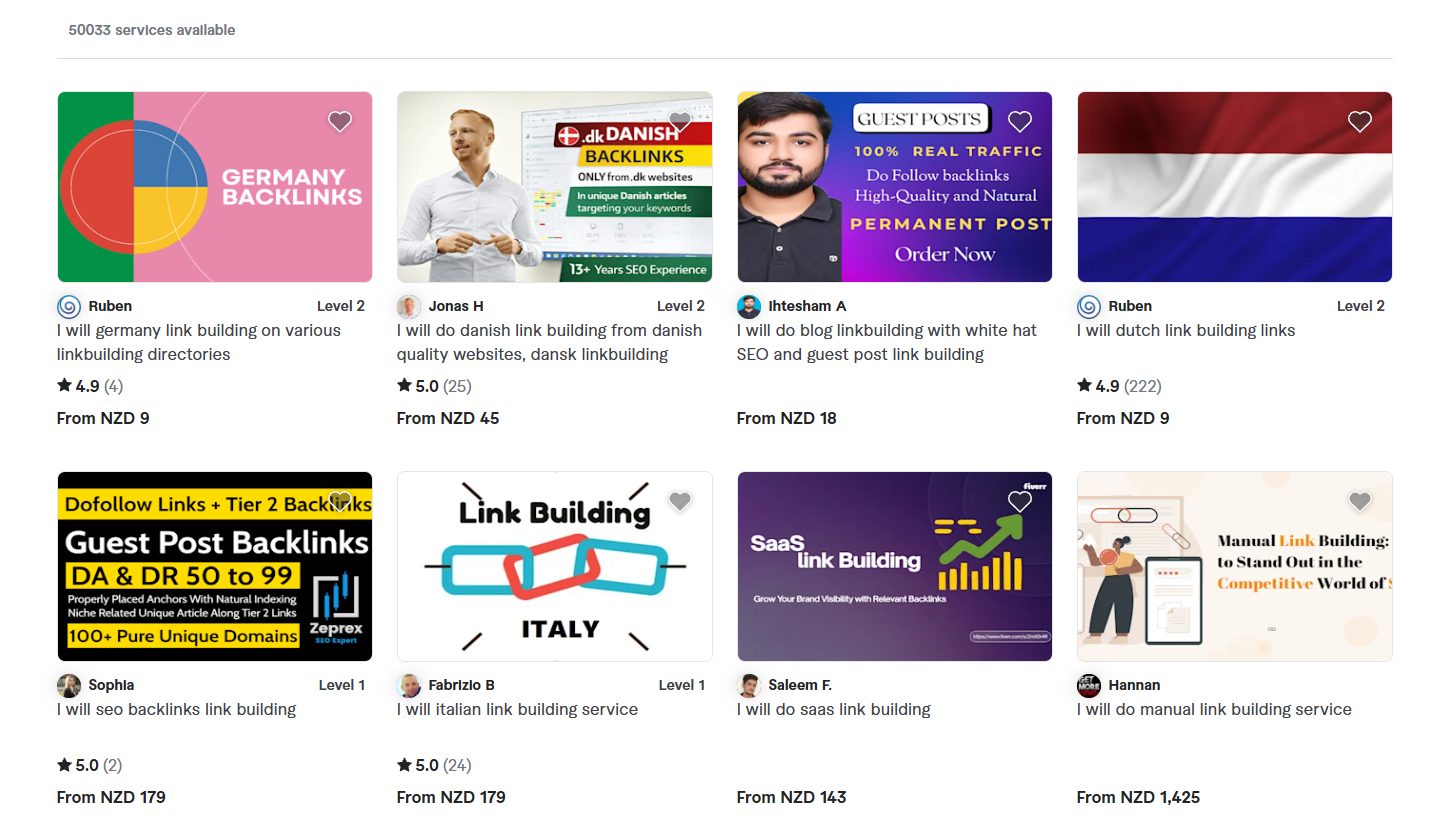
Proper local SEO — with all the bells and whistles, the content, the links, the strategy — sits at around $2,000 a month and up. Anyone doing it properly can’t really go much lower; that’s simply what the work costs.
So a $500 quote shouldn’t excite you. It should make you suspicious. Either the work is automated, it’s outsourced offshore to someone churning out filler, or it’s barely happening at all — and you won’t notice for a few months, which is exactly long enough for the direct debit to do some damage.
Why Our Local SEO Costs More (and Why It’s Worth It)
I’ll be straight with you: we’re not the cheapest, and that’s on purpose.
When you work with us, you’re paying for more than content and links. You’re paying for experience the average New Zealand agency simply doesn’t have — because they’ve never played the game at the level we have.
A quick sense of what that means.
I built the SEO strategy for a brand that’s been featured in Oprah’s magazine and had its own documentary on the History Channel.
I can’t name them — that’s at their request — but it’s the kind of account most agencies never get within arm’s reach of.
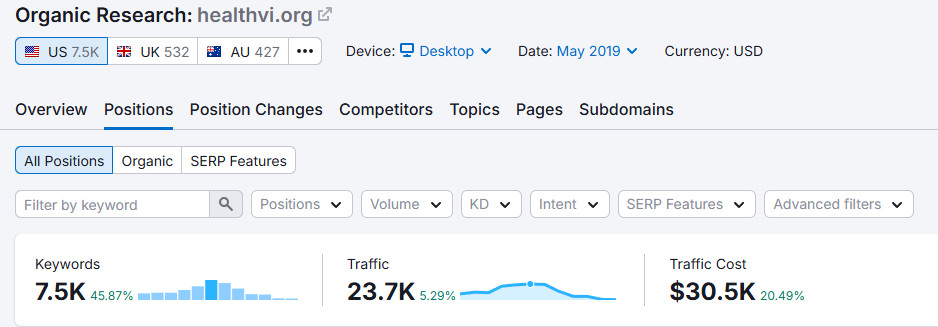
I co-built a health website, HealthVI, from zero to over 23,000 organic visitors a month inside a year, generating more than $30,000 a month in organic traffic value (a project that, fair warning, even got us into a bitta legal trouble along the way — a story for another day).
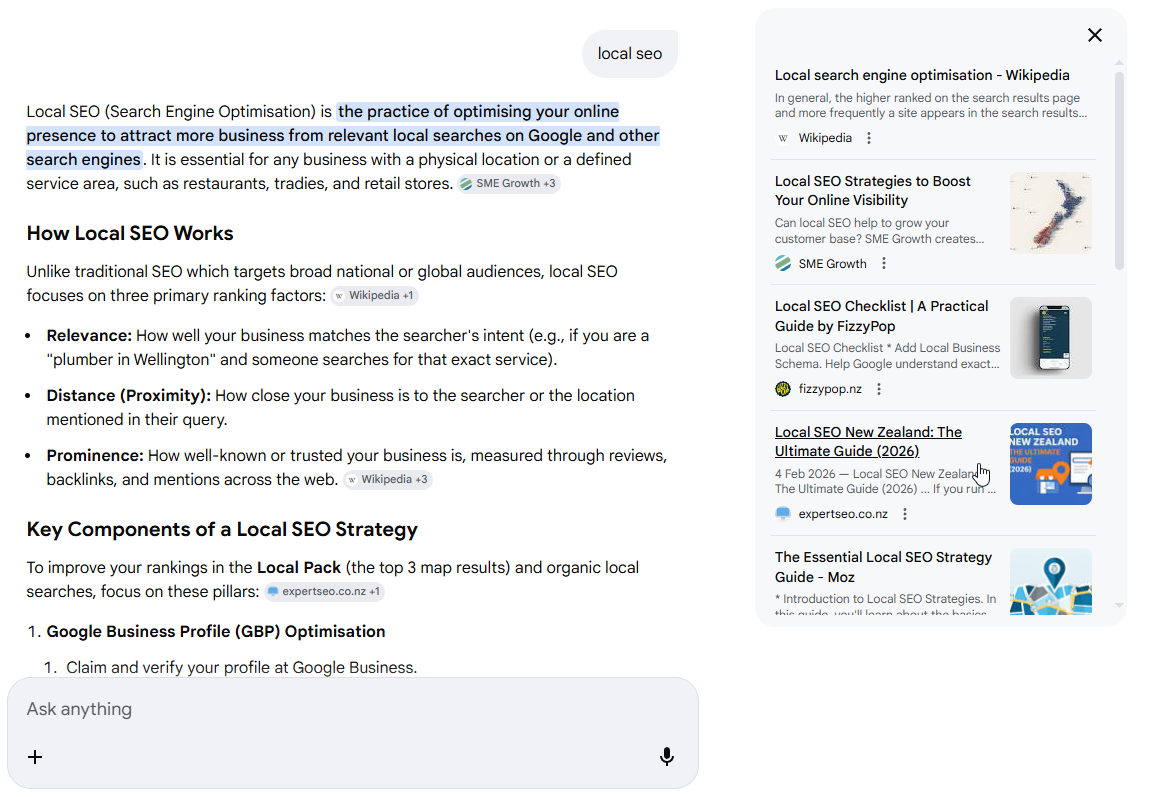
And Expert SEO itself is the proof that’s hardest to argue with. It’s a sub-one-year-old website that’s already ranking above decade-old NZ agencies, getting cited in Google’s AI Overviews and AI Mode, and outranking Ahrefs and Semrush for competitive local SEO terms.
Here’s the honest version of the pitch: most SEO agencies in New Zealand have nowhere near the experience that — humbly — I’ve gathered competing in some of the toughest international markets, from health to finance.
When we go up against a local agency for the same keywords, we dominate.
Not because we’re cleverer people; because we’re carrying more SEO weapons — the experience we earned winning and dominating in the US, now used to crush it in NZ markets.
That’s what the higher investment buys.
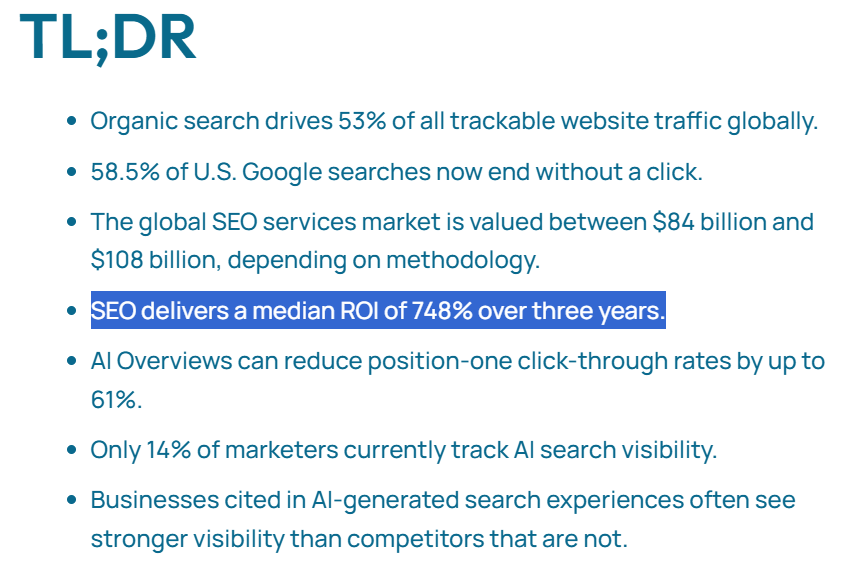
More expertise, more firepower, and a better chance of beating the competitors standing between you and the top of the map pack. SEO delivers a median ROI of around 748% when it’s done properly.
Paying a bit more for someone who can deliver is rarely the risk — paying a little for someone who can’t is.
You can see the full picture of how we work, and where we work across New Zealand, on our SEO services page.
DIY vs Hiring a Local SEO Expert
If you’re in a low-competition niche, you’ve got a bit of time, and you’re willing to learn, you can absolutely do local SEO yourself. Set up the profile, get the citations sorted, build a review habit, write some honest local content.
Plenty of NZ businesses have built solid map-pack rankings doing exactly that.
DIY stops making sense at the point competition climbs or your time runs out.
If you’re in a saturated market, if you’re in a high-value industry where a single new client is worth thousands, or if you simply don’t have the hours to learn and execute this properly, the right provider will out-perform DIY every time — and free you up to run your actual business.
That’s the trade: do it yourself and save the fee, or bring in an expert and buy back the time plus the experience.
The key word is right — not cheapest, not the one with the slickest website, but the one who can show you real results and explain exactly what they’ll do with your money.
If you’d like to know where your local SEO stands before you spend a dollar, start with a free SEO audit — it’ll show you the gap between where you are and where the top of your map pack is.
And if you decide you’d rather have it handled by someone who’s competed and won at the highest level, that’s where we come in.
Local SEO Cost: FAQ
How much does local SEO cost per month in NZ?
Proper ongoing local SEO in New Zealand runs about $1,000–$2,500 per month for most small businesses, and $2,500–$4,000+ in competitive cities and industries. A one-off setup or audit sits at roughly $500–$2,000.
What's the average cost of local SEO for a small business?
Most NZ small businesses pay between $1,000 and $2,500 a month. Where you land depends on how competitive your market is and how much content and link building it takes to outrank the businesses already sitting in your map pack.
What's a reasonable local SEO budget for a new business?
Around $1,500–$2,000 a month for proper, full-service work. Anything advertised well under that usually means automated reports or offshore filler rather than the real content and links that actually grow rankings.
Is local SEO worth it in 2026?
Yes, for any business that relies on nearby customers. Around 46% of Google searches have local intent, and 76% of people who run a "near me" search visit a business within 24 hours — high-intent traffic that's ready to buy.
Can I do local SEO myself?
You can, especially in a low-competition market — set up your Google Business Profile, build citations, gather reviews, and write honest local content. It stops making sense once competition climbs or your time runs short, where an experienced provider will outperform DIY.
Recommended Reading

Google Business Profile: The Complete NZ Guide
The full setup-and-optimise walkthrough for the listing that drives the map pack.
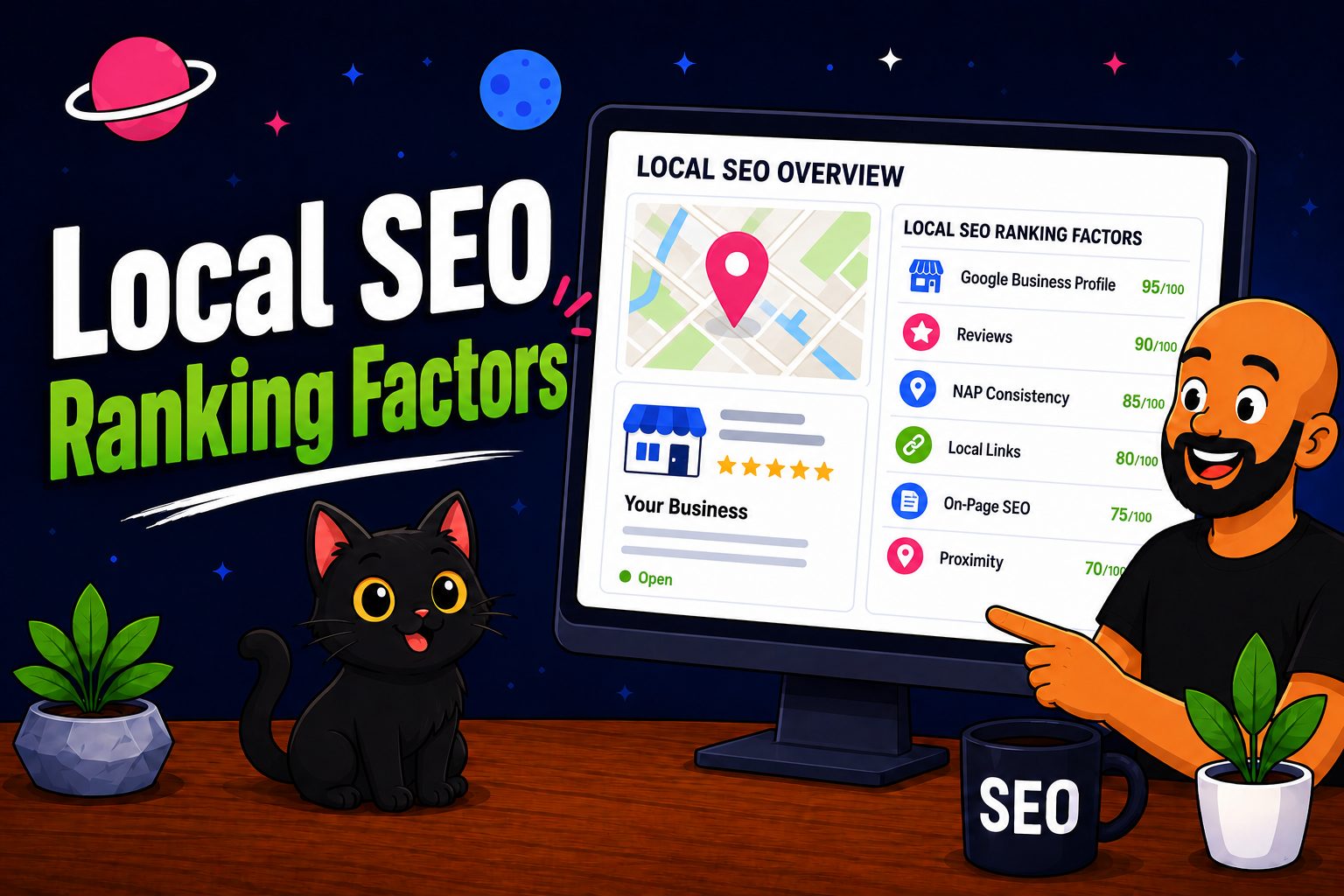
Local SEO Ranking Factors: What Moves You Up in NZ
What actually moves you up the local rankings — the work your budget pays for.

Google Map Pack: How to Get Into the Local 3-Pack
How to land in the local 3-pack, where the lion's share of local clicks go.