

Picture someone standing on a footpath in Cambridge, phone out, deciding where to eat.
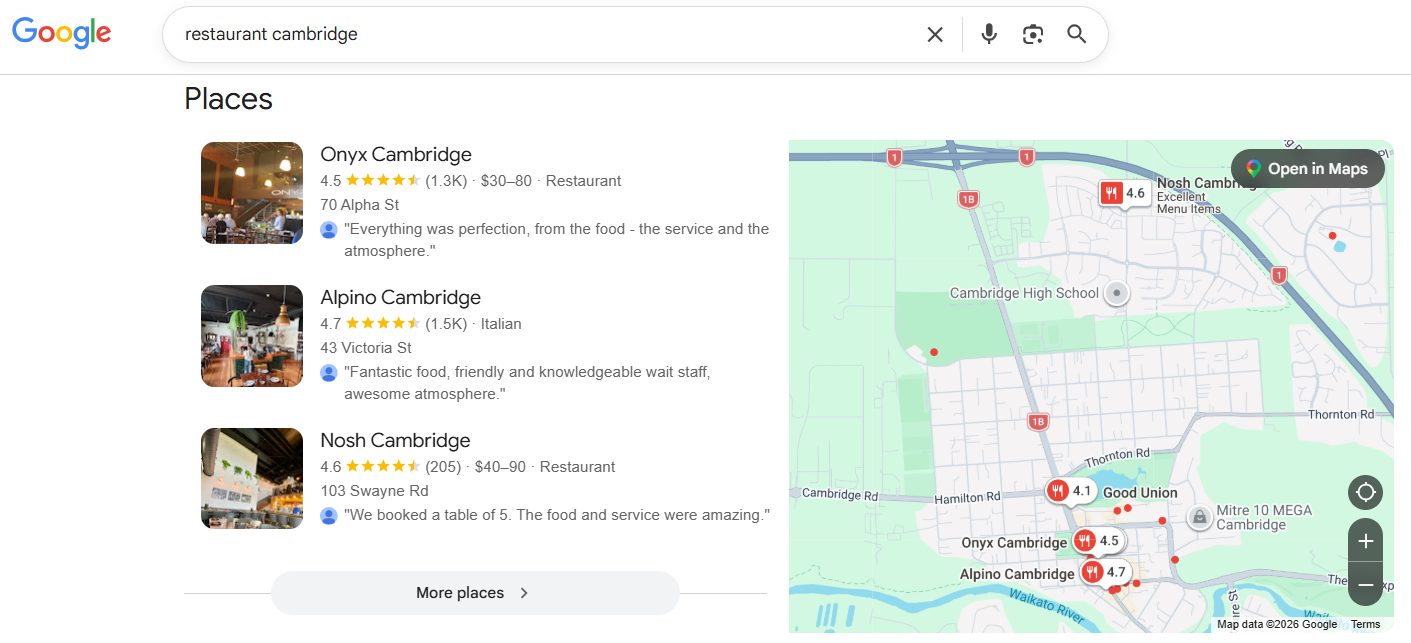
They type “restaurant Cambridge,” and Google hands them three options before they’ve even scrolled: Onyx at 4.5 stars from 1,300 reviews, Alpino at 4.7 from 1,500, Nosh at 4.6 from 205.
They’ve already chosen. No website visited, no menu read, nobody spoken to. The reviews did the deciding — they ranked the whole town and handed over a shortlist.
A restaurant sitting on a 3.9 and eleven reviews? Not on that list. It’s page two, and page two may as well be the moon.
That’s the thing most guides on this topic miss — they only ever talk about the upside. But Google reviews matter from both ends. A good review can win you a customer before you’ve said a word. A bad one, handled badly, can lose you a customer you never even knew was looking.
I’ve lived both sides of this (one of them recently, and I’ve got the receipts). So here are the specific, evidenced reasons Google reviews are important — the good, the bad, and the part nobody tells you.
If you want the how-to side — actually getting more of them — that’s a separate job, and I’ve covered it in the full guide to getting Google reviews. This piece is about why they’re worth the effort in the first place.
Reason 1: They’re the first impression, made before you get one
Before a customer calls, emails, or walks through your door, they’ve already read your reviews and half made up their mind.
Reviews are social proof — digital word-of-mouth. It’s other people vouching for you in public, and we trust it because it isn’t coming from you. And people aren’t reading one and moving on. They read a handful, weigh the pattern, and decide.
The numbers back this up hard. Only 4% of consumers say they never read online reviews, and in 2026, 68% won’t use a business rated under four stars — up from 55% just a year earlier. The bar is rising fast.

There’s a Reddit thread on this that stuck with me. A bloke wrote, in plain English: “I exclusively go to things based on their google maps rating. I literally sort and exclude things that aren’t top rated.”
That’s not a marketer talking. That’s a customer describing exactly how the filter in their head works.

Your reviews are the audition — and most people never tell you they walked out before it started.
Reason 2: They decide where you rank in the map pack
Google treats reviews as a direct local ranking signal, so more good, recent reviews literally push you up the map.
Local ranking runs on three things: relevance, distance, and prominence. Reviews feed prominence — Google reads your review count, your average rating, and how fresh and steady the flow is as a sign that real people rate you.
It’s core local SEO, and it’s one of the heaviest levers in the local pack.
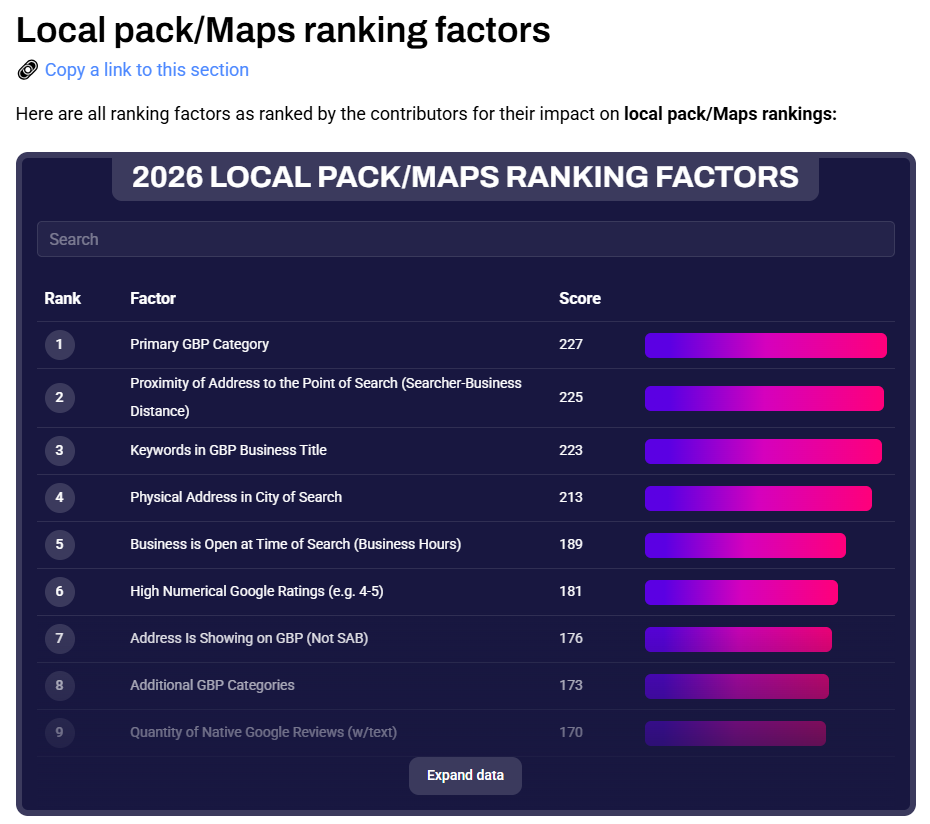
Here’s what that looks like in the wild. Search “dentist Auckland” and look at who owns the top three.
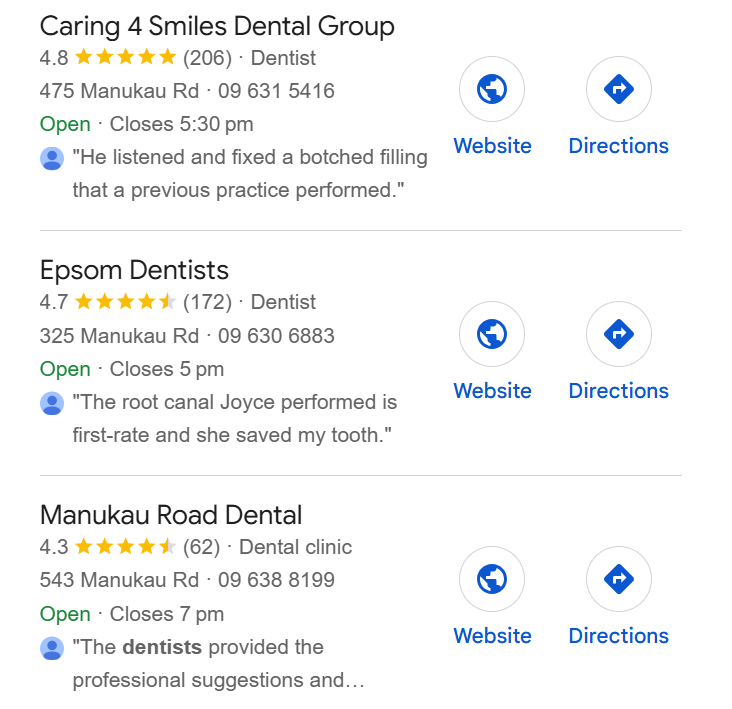
Caring 4 Smiles sits up top with 206 reviews. The Epsom practice behind them has 172. Third spot has 62.
Now imagine a brand-new dental clinic chasing SEO in Auckland with a beautiful website and four reviews trying to break into that. On paper, no chance — not because the website’s worse, but because the trust gap is a canyon.
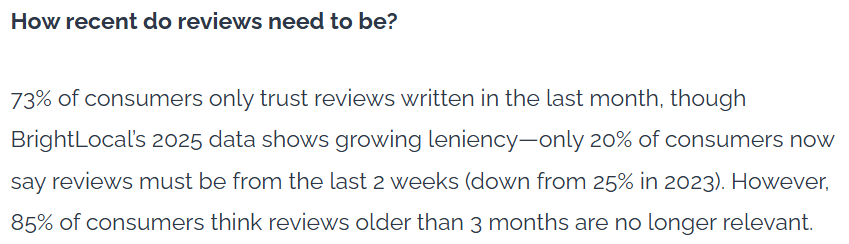
Recency matters as much as the count. 73% of consumers only trust reviews from the last month, and Google reads a steady trickle of fresh reviews as a sign your business is alive and active.
Ten reviews from this year beat forty from 2021. A business that stopped collecting reviews looks, to both Google and the customer, like a business that stopped caring.
Reason 3: The words inside your reviews get you found for searches you never targeted
When customers describe what you actually did in a review, Google reads it — and starts showing you for those exact terms.
This one flies under the radar. Everyone knows the star rating matters. Fewer people realise the text is working for you too.
A review that says “best emergency callout in West Auckland” or “sorted my Invisalign in a week” quietly tells Google what you do and where — and that language becomes part of why you surface for those searches.
Say you’re a dentist. You never built a page for “Invisalign Hamilton,” but three happy patients mention Invisalign by name in their reviews.
Google connects the dots. Suddenly you’re showing up for a search you didn’t even chase. It’s the same relevance principle behind SEO for dentists generally — you’re feeding Google the vocabulary of what you’re good at, except your customers are writing it for you.
You can’t fully control what people write, and that’s fine. Do good work worth describing, and the descriptions do the ranking.
Reason 4: A higher rating wins the click
Two businesses, same search, side by side. The higher rating gets the tap — the stars are doing the selling before anyone reaches your website.
Your average rating shows up right there in the results, under your name, in the map pack.
It’s the first filter, and the local pack is where the clicks live: the top three local results pull around 42% of all clicks on a local search. Miss the pack and you’re fighting over scraps.

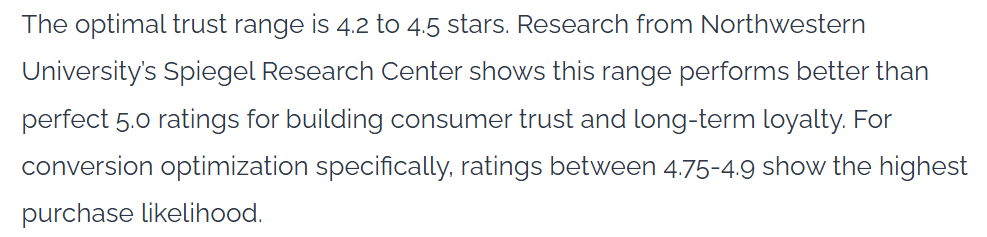
Here’s the counterintuitive bit, though: perfect isn’t the goal. Research from Northwestern University’s Spiegel Research Center found the sweet spot for winning trust sits between 4.2 and 4.5 stars — not a flawless 5.0.
A perfect score reads as suspicious, like the reviews were curated by someone’s mum. A 4.6 with a couple of imperfect-but-fair reviews looks like what it is: a real business that real people rate highly.
Reason 5: More reviews, more revenue
Every reason above compounds into the same thing — reviews don’t just bring lookers, they convert them into paying customers.
Follow the chain. Reviews get you found (ranking), get you trusted (social proof), and get you clicked (rating).
The end of that chain is money. A better-reviewed business closes a higher share of the exact same lookers, because every step of their decision has been nudged in your favour before they’ve spoken to a soul.
There’s real data on the compounding effect.
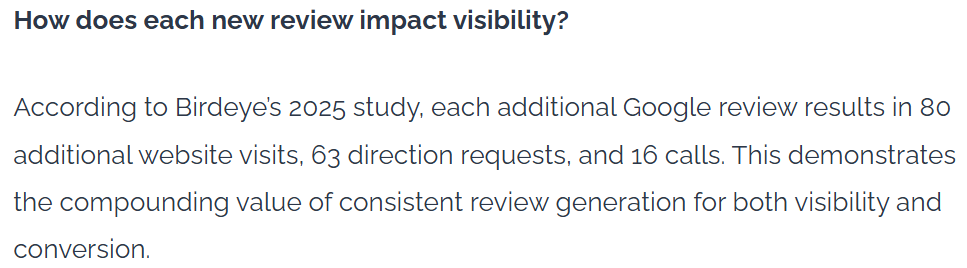
Birdeye’s analysis found that each additional Google review drives, on average, 80 more website visits, 63 more direction requests, and 16 more calls over its life.
One review. Now think about a builder who quietly banks two a week for a year — that’s a hundred-odd reviews, each one a small pump of visits, directions, and phone calls into the business. It snowballs.
That’s the part the “reviews build trust” line undersells. Trust is the mechanism. Revenue is the result.
Reason 6: They’re the cheapest market research you’ll ever get
Your reviews tell you, in your customers’ own words, exactly what’s working and what’s quietly costing you.
Businesses pay consultants good money for this. You get it free.
Three reviews mention slow email replies? That’s not an insult — that’s a fix with a neon sign pointing at it.
Everyone raving about one particular staff member? Now you know who to clone. Read the pattern across your reviews and customers will hand you your own to-do list, sorted by what actually bothers them.
Reason 7: The flip side — a bad review, and a worse response, costs you
Reviews cut both ways. And how you respond to a negative one is, on its own, one of the biggest reasons reviews matter so much — because the public isn’t just watching what happened, they’re watching how you handle it.
Let me tell you about the time this happened to me.
We booked a First Table at a restaurant in Cambridge called Saint Kilda.
If you don’t know First Table, the deal is you get 50% off the dinner bill, and there are rules — pay for a drink at full price, certain menu items excluded, that sort of thing.
All of it laid out clearly before you book. I’ve used First Table plenty of times; I know how it works.
We get to Saint Kilda, and they start adding rules on the spot.
Rules that were nowhere on the list. The big one: they told us we could only order one main per person for the discount to apply — anything beyond that, full price.
That’s not a First Table rule.
In all the times I’ve used it, I’d never heard it once. So I pushed back. I pulled up the confirmation email and showed them the actual rules, right there.
And the waiter — to his credit — was honest. He admitted he knew it wasn’t on the list; he was just doing what he’d been told to do.
We left. Then I left an honest review explaining exactly what happened.

And here’s where it got instructive.
The owner replied, publicly, saying I’d lied and that nothing had been made up on the spot. So I replied back — with the receipts. I’ve got the confirmation email showing the real rules.
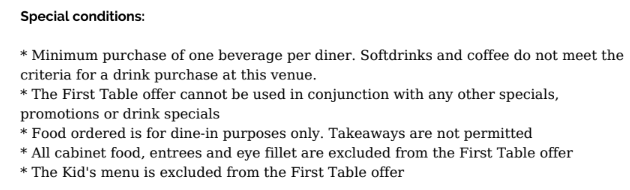
Your own waiter admitted the rule wasn’t on the list. That’s not lying; that’s a screenshot.
Here’s the lesson, and it’s the whole point of this section: if that owner had simply taken ownership — “sorry, that shouldn’t have happened, that rule isn’t part of the deal” — I’d never have left the review at all.
The defensive, dishonest reply did more damage than the original problem ever would have. Because now every future customer reading that thread doesn’t just see a mix-up; they see how the business treats someone when things go wrong.
The data agrees. 89% of consumers expect business owners to respond to both positive and negative reviews — and they’re reading those responses as closely as the reviews themselves.
A calm, honest reply to a bad review can win people over. A combative one hands them the exit.

That’s why reviews are powerful. The stakes run in both directions, and the response is the part you fully control.
Reason 8: Reviews now feed AI search, not just Google’s blue links
In 2026, reviews don’t only influence where you rank on Google — they help decide whether an AI recommends you at all.
When someone asks ChatGPT or Google’s AI for “a good dentist in Hamilton,” the AI is reading the same signals a human would, at speed: who’s got the reviews, the ratings, the recent activity.
Reviews are part of the raw material these systems pull from. And this isn’t a fringe behaviour anymore — use of ChatGPT and other AI tools for local recommendations jumped from 6% to 45% in a single year, making it the third most popular way people find businesses.

I pay close attention to this because Expert SEO lives it — our own local SEO guide already gets cited in Google’s AI Mode, on a domain under a year old, against agencies a decade deep.
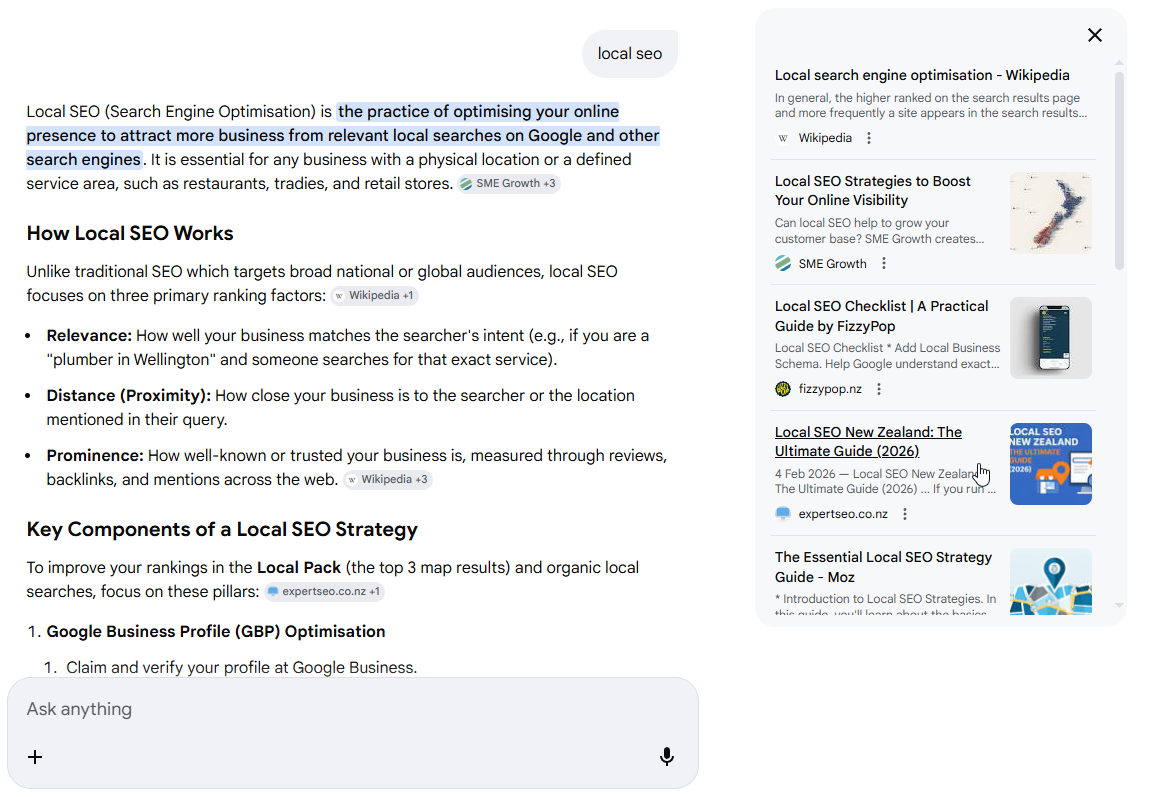
The takeaway raises the stakes on everything above: reviews used to win you the click. Now they help win you the recommendation — from a machine that’s summarising the whole market for your customer in one answer.
Getting this right is fast becoming its own discipline, part of ranking in AI search.
How many reviews — and what rating — do you actually need?
You don’t need a perfect 5.0. You need enough recent reviews, and a rating that clears the trust threshold for your market.
A few honest benchmarks:
Rating: aim for the 4.2–4.5 sweet spot and up. Above four stars clears the bar for most people; a suspiciously perfect 5.0 across only a handful of reviews reads as fake.
Volume: enough that you look established next to your local competitors — not a national record.
If the top dentist in your suburb has 200 and the rest have 60, you want to be climbing toward that pack, not obsessing over hitting 1,000.
The one-star maths: people ask how many five-stars it takes to cancel a one-star.
Roughly, a single one-star drags a 5.0 average down noticeably until you’ve got a decent base — which is the real argument for volume. A big, steady bank of genuine reviews absorbs the occasional bad one without flinching. A thin profile can’t.
And no, you can’t cheat it. Google removed over 170 million policy-violating reviews in 2023 alone, 45% more than the year before. Fake reviews get caught, removed, and can get your profile penalised. Earn them properly or not at all.

The bottom line
Google reviews are one of the highest-leverage, lowest-cost assets a local New Zealand business has — and the only one your customers build for you, for free, whether you’re paying attention or not.
They decide who finds you, who trusts you, who clicks you, and now, who gets recommended by the AI answering the question.
Positive reviews compound quietly in your favour. Negative ones — especially a defensive reply to one — compound just as quietly against you.
The businesses winning locally aren’t the ones with the flashiest websites. They’re the ones who took their reviews seriously, on both ends.
If you’d rather have someone handle the whole local SEO picture — reviews included — that’s where our done-for-you SEO services comes in.
Why Are Google Reviews Important: FAQ
Do Google reviews actually matter?
Yes — significantly. Reviews influence your Google Maps ranking, your click-through rate, and whether a customer trusts you before they ever make contact. In 2026, 68% of consumers won't use a business rated under four stars, so reviews often decide the sale before you're even in the conversation.
Is 3.9 out of 5 stars good?
It's borderline. A 3.9 sits just under the four-star line most consumers treat as a cut-off, so you'll lose clicks to higher-rated competitors. The trust sweet spot is roughly 4.2 to 4.5 stars — high enough to look excellent without looking suspiciously perfect.
How many 5-star reviews does it take to cancel out a 1-star review?
It depends on your current total, but the honest answer is to build volume, not do the maths. On a thin profile a single one-star tanks your average; on a large, steady bank of genuine reviews the same one-star barely moves it. Volume is the buffer.
What percentage of customers actually leave reviews?
Only a small slice — usually a low single-digit to low-teens percentage of customers — which is exactly why you have to ask. Most happy customers simply never think to, so reviews flow to the businesses that make requesting them a habit.
Does Google detect fake reviews?
Yes. Google removed over 170 million policy-violating reviews in 2023 alone, 45% more than the year before. Buying or faking reviews risks removal and profile penalties, so the only safe strategy is earning them from real customers.
Are people more likely to leave a bad review than a good one?
Historically, yes — a bad experience motivates people more than a good one, so unhappy customers often review unprompted while happy ones stay quiet. The fix is to make leaving a positive review easy and to ask at the moment a customer is happiest.
Recommended Reading
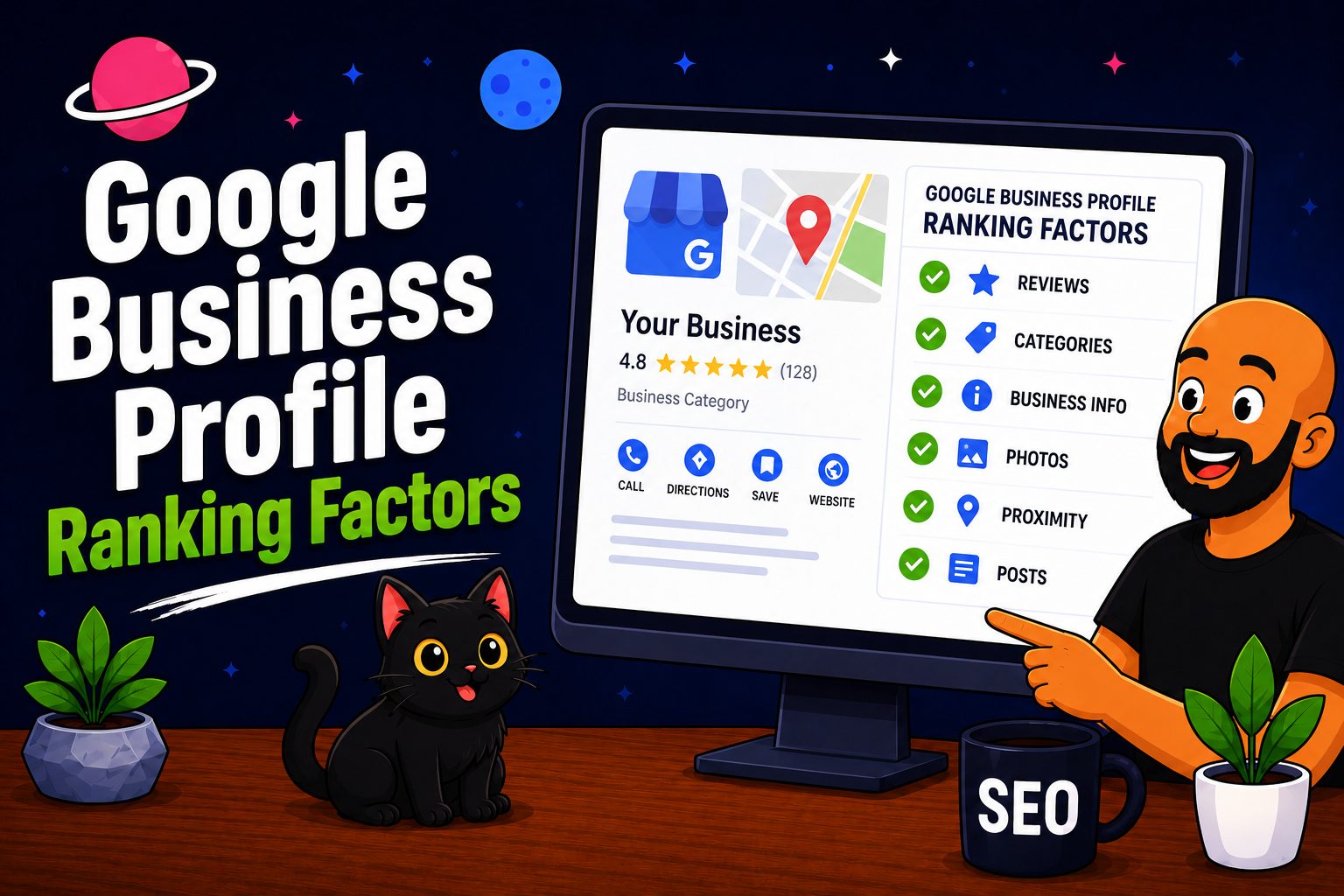
Google Business Profile Ranking Factors
The signals — reviews included — that decide where your business lands in the map pack.
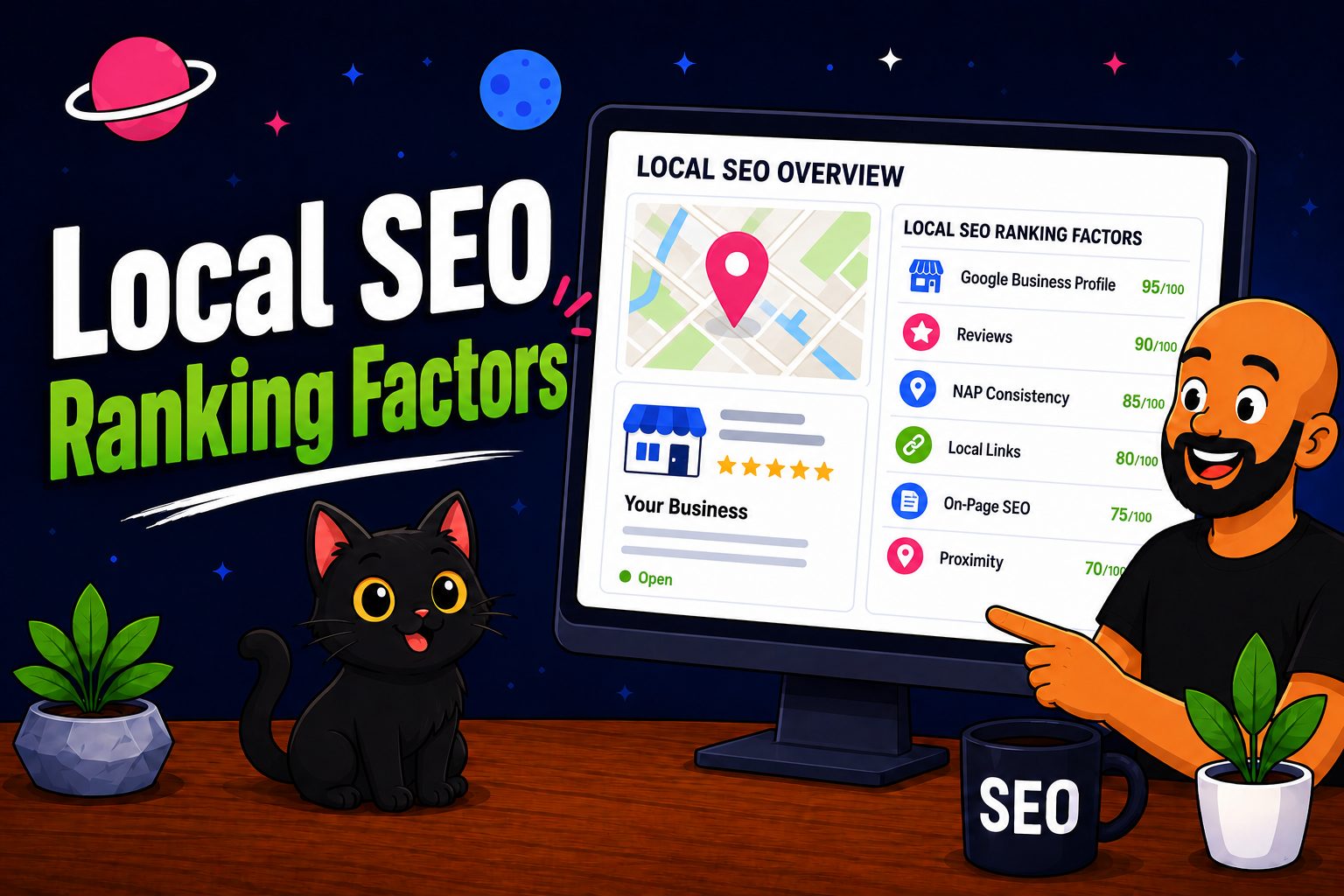
Local SEO Ranking Factors
What actually moves you up local search in NZ, and where reviews sit in the mix.

Google Business Profile: The Complete Guide
Set up and optimise the profile your reviews and map-pack ranking live on.