

Local citations can give your local SEO the boost it needs to climb past competitors in your area.
They’re one of the building blocks of ranking locally — but also one of the more misunderstood parts of the job, buried under advice that’s either outdated or overhyped.
So let’s cut through it: what local citations actually are, whether they still matter in 2026, the New Zealand sites that count, and how to build them properly.
What Is a Local Citation?
A local citation is any online mention of your business’s name, address and phone number — your NAP — whether that’s a directory listing, a review site, a social profile, or a mention in a local blog.
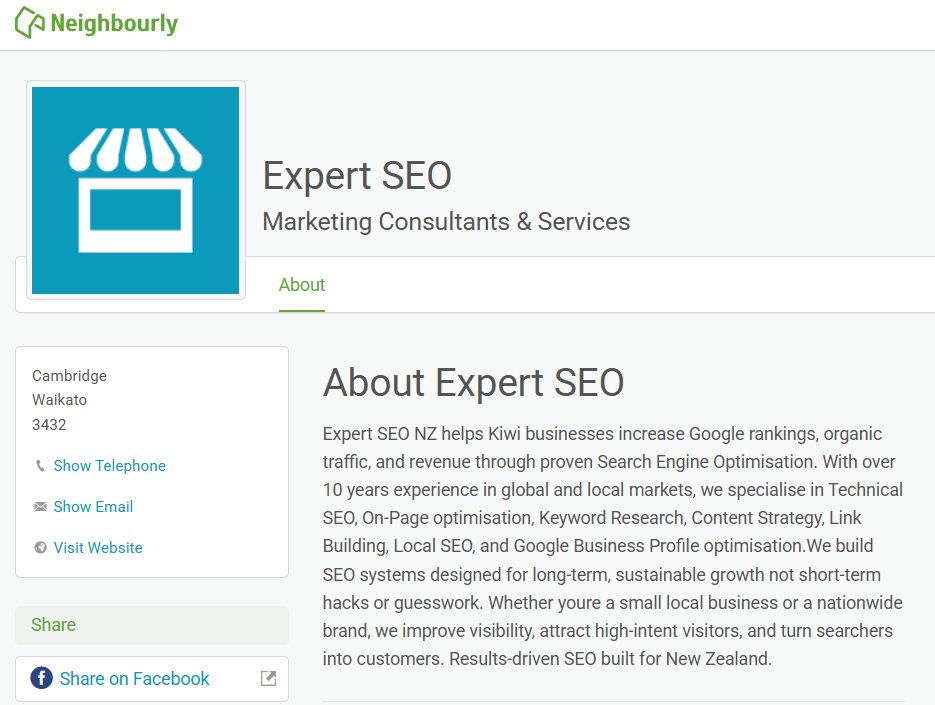
At its simplest: your NAP, out on the web, on a page that isn’t your own.
Google uses those mentions like a background check. If fifty trusted sites all say “Joe’s Plumbing, 12 Queen St, 09 123 4567,” Google gets more confident that Joe’s Plumbing is real, legitimate, and exactly where it says it is.
Citations sit on the off-page SEO side of the ledger — signals that come from other sites, not your own. They come in two flavours:
| Type | What it is | Examples |
|---|---|---|
| Structured | A formal listing with proper fields for your name, address, phone, hours and category | Google Business Profile, Yellow, Yelp, Facebook |
| Unstructured | A casual mention in the wild, no tidy fields | A local news article naming your café, a blog review, a sponsor logo on the footy club site |
Structured citations build your baseline. Unstructured ones build the sense that people actually talk about you.
Both count. And both are part of the wider local SEO picture — the work that gets you found by people searching in your area.
Why Local Citations Matter for Ranking
Citations feed the prominence signal behind local rankings — the part of Google’s algorithm that decides how established and trusted your business looks.
Google ranks local results on three things: relevance (do you match the search), distance (how close you are), and prominence (how well-known you look).
Citations are a prominence play. Every consistent mention is another vote that you’re a real, settled business — not a fly-by-night with one dodgy listing.
I’ll be straight with you here, because the data’s moved. Citations aren’t the muscle they were a decade ago. On Whitespark’s 2026 Local Search Ranking Factors survey — the most trusted read on this stuff — citation signals land at roughly 6% of local pack weight, well behind Google Business Profile signals (~32%) and reviews.
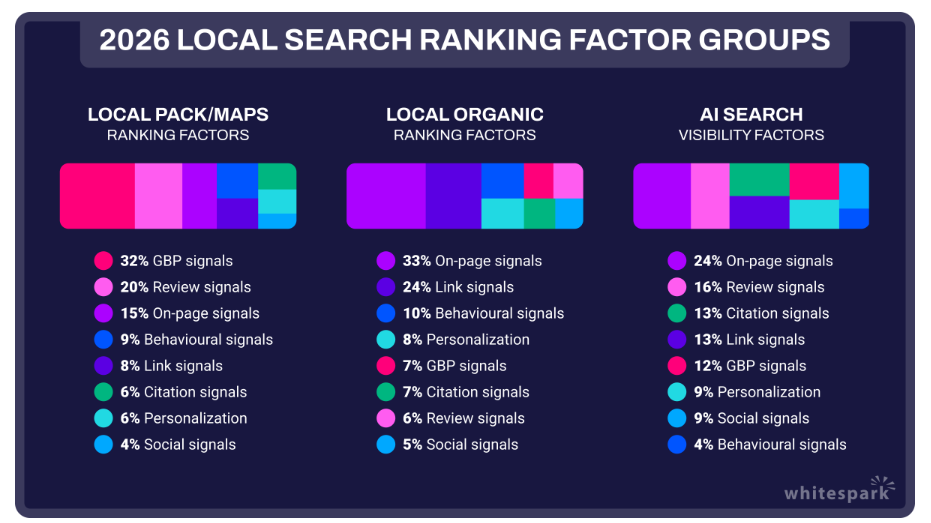
So they won’t rocket you to number one on their own. What they do is set the floor.
Get them wrong and you cap your ceiling. A business with contradictory NAP data all over the web is one Google quietly doesn’t trust, no matter how sharp the website is.
And in a market like New Zealand, that floor matters more than it does in a bloodbath like Los Angeles.
Lower competition means the fundamentals — a complete profile, clean citations, real reviews — are often enough to pull clear. (Having spent years competing in the United States, I don’t say that lightly.)
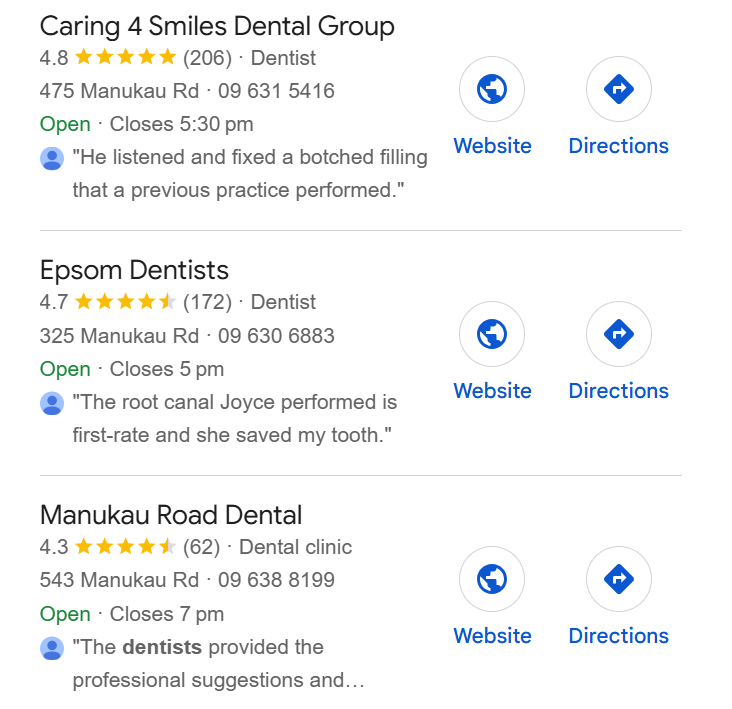
Type “dentist Auckland” into Google and look at the three in the local map pack. They’re not there by luck.
They’ve got the reviews, the complete profiles, and the consistent citations behind them. That’s prominence — and it’s the whole game in SEO for dentists and every other local trade.
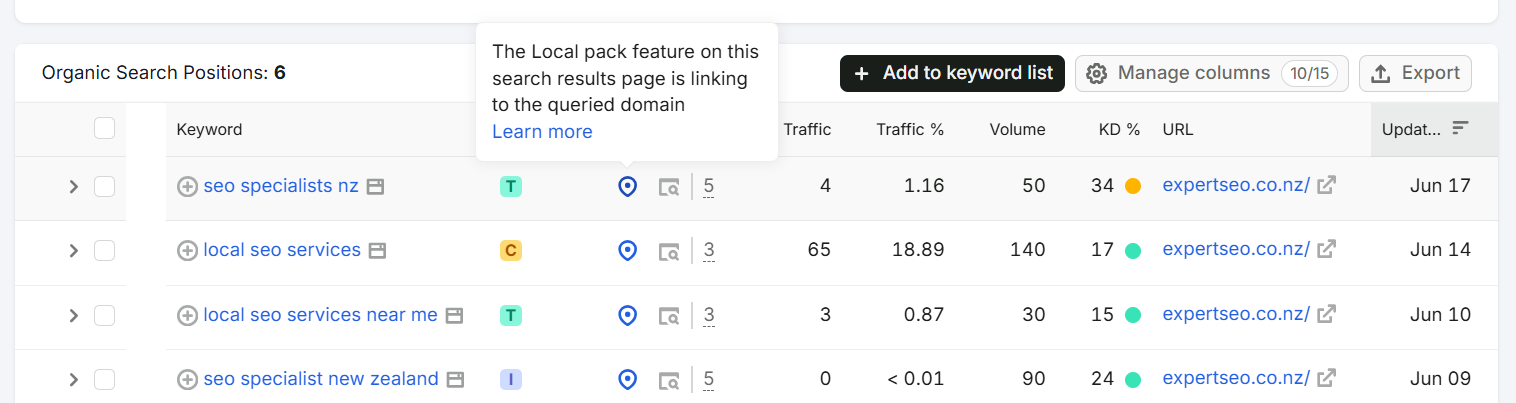
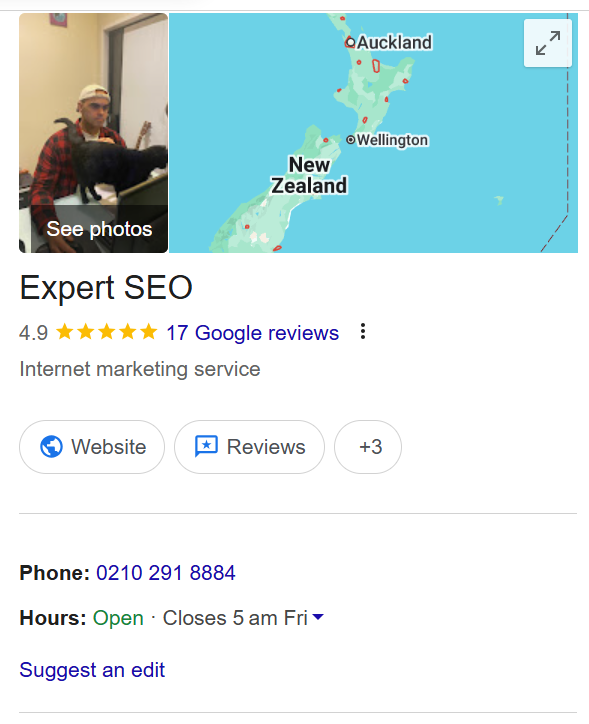
Case in point closer to home: my own company, Expert SEO, ranks in the local pack for competitive New Zealand search terms — and clean, consistent citations were part of the groundwork that got us there, alongside a fully built-out Google Business Profile.
There’s a second job here too, and it’s the human one. Your citations are how customers find you and sanity-check you before they call.
Google’s own data says people are 70% more likely to visit a business with a complete, consistent profile.

Do Local Citations Still Work in 2026?
Yes — but not the way the old guides tell you. They’re table stakes now, not a growth lever, and their real comeback is happening somewhere most people aren’t looking: AI search.
A while back I was reading a thread on r/localseo. Someone asking, dead honest, whether citations were “still worth it or just old-school busywork.” Forty-odd replies, no clear answer.
I get why. For years, “build 200 citations” was the default advice, and half of it was rubbish — cheap directory blasts that did nothing but pad a report.
Here’s the honest version. As a direct ranking push, citations have been sliding down the list of local ranking factors for years. But two things keep them firmly in the “do it” column.
One: consistency. An out-of-date listing doesn’t just sit there quietly — it sends a real customer to a dead phone number or an old address. That’s a lost job, not a lost ranking point.
Two, and this is the bigger one: AI. The same NAP consistency Google uses is now what ChatGPT, Gemini and Perplexity cross-reference before they’ll recommend you.
Citations didn’t die. They changed jobs.
How many local citations do you actually need?
Fewer than you’d think. Whitespark found ten citations from authoritative, relevant sources beat fifty from low-quality directories.
Quality over count, every time. Nail the big anchors and a focused set of real NZ directories, and you’ve done 90% of the work that matters.
The NZ Citation Sites That Matter Most
Start with the four anchors every business needs, then work a focused list of New Zealand directories that actually carry weight here — most of which the international guides won’t tell you about.
The Tier 1 anchors (everyone, no exceptions):
- Google Business Profile — first, always. It’s the single most important listing you own, and the one every other platform gets checked against.
- Bing Places — quick to set up, and it feeds Microsoft and a chunk of AI tooling.
- Apple Business Connect — powers Apple Maps, and it matters more every year as Apple and AI assistants lean on it.
- Facebook — a structured listing Google indexes and customers actually visit.
These four are non-negotiable. They’re the listings search engines, Apple, and increasingly AI tools treat as source-of-truth.
The NZ directories worth your time:
- Yellow (yellow.co.nz) — the old phone book, still the biggest general NZ directory.
- Finda — a long-standing Kiwi business directory.
- NZS.com — one of the oldest New Zealand web directories.
- Localist — NZ-focused local business listings.
- Neighbourly — genuinely powerful here. It’s where suburbs actually talk, so a listing puts you in front of locals by area.
- Zenbu — a community-built NZ business directory.
The NZ trust play — NoCowboys:
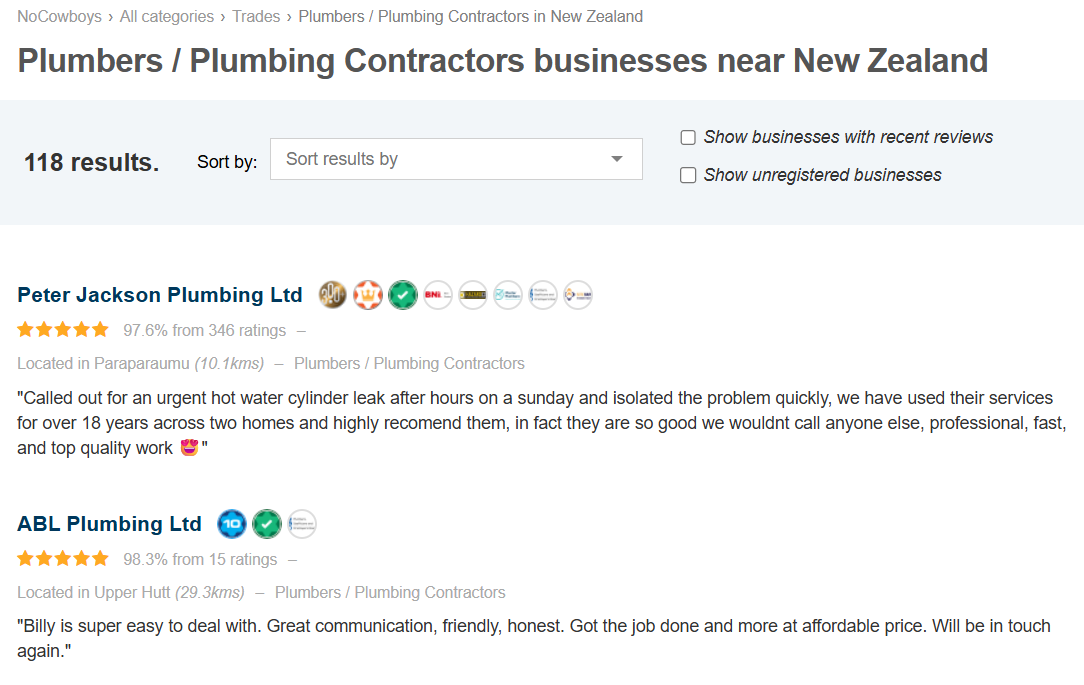
If you’re a tradie or any service business, NoCowboys is gold. It’s a Kiwi reviews-and-ratings directory people actually check before hiring a builder or a sparky — a structured citation and a trust signal rolled into one.
No international guide will ever mention it, because it’s ours. For anyone chasing serious SEO for builders, it’s one of the highest-value listings in the country.
Regional and industry:
Round it off with your local Chamber of Commerce and any industry-specific NZ directory — Healthpoint if you’re in health, registered-trade directories if you’re in the trades.
A handful of relevant, high-authority listings beats a hundred generic ones.
How to Build Local Citations Step by Step
The whole game is consistency, so you start by writing down one master version of your NAP — then every single listing matches it, character for character.
- Write your master NAP record. Decide the exact spelling and format once: full business name (with or without “Ltd”), “Street” vs “St”, the phone format, the address down to the unit number. Put it in a doc. This is your source of truth — every listing copies from it.
- Claim the four anchors first. Google Business Profile, then Bing Places, Apple Business Connect, and Facebook. Fill each one completely — category, description, hours, photos, website — and start gathering Google reviews while you’re in there. A complete listing beats a half-finished one every time.
- Work the NZ directory list. Yellow, Finda, NZS, Localist, Neighbourly, Zenbu — most authoritative first, same NAP every time.
- Add your niche and regional ones. Chamber of Commerce, industry directories, NoCowboys if you’re a trade.
- Log everything in a spreadsheet. Every site, login, and URL. Sounds tedious. It’s the difference between a five-minute update in two years and a full weekend of detective work.
Let’s run a real one. Say you’re Kauri Build, a builder in Auckland. Your master NAP is:
Kauri Build Ltd
14 Rosedale Rd, Albany, Auckland 0632
09 123 4567
First, Google Business Profile — claim it, set “Home builder” as the primary category, load photos of real jobs.
Then Bing and Apple with the identical details. Then Yellow, Finda, Localist, Neighbourly. Then, because you’re a builder, NoCowboys — where the reviews double as a ranking-and-trust signal.
Do that, and Kauri Build’s NAP now says the same thing everywhere Google, Apple and the AI tools look.
That’s the citation foundation under real local visibility — the same groundwork we lay under every business we help with SEO in Auckland.
What if you don’t have a shopfront?
Plenty of Kiwi businesses run without a public address — mobile sparkies, cleaners, tradies working out of the ute.
You can still build citations. In your Google Business Profile, set yourself up as a service-area business and hide the street address. Keep the name and phone identical everywhere, and lean on directories that don’t demand a public address (NoCowboys is fine with this).
The consistency rule still holds. You just drop the “A” in NAP on the public-facing listings.
How to Keep Your Citations Consistent
Building citations is only half the job. The other half is stopping them drifting out of sync after a move, a rebrand, or a new phone number.
Citations rot. You change your number, shift premises, tweak the business name — and suddenly forty listings are wrong and you’ve forgotten half of them exist.
Before you build a single new one, audit what’s already out there.
You’ll almost always find duplicates, old addresses, and listings you never made (data aggregators create them automatically). It’s the same principle as a proper SEO audit: you can’t fix what you haven’t found.

The citation mistakes that quietly hurt NZ rankings
- NAP drift after moving premises — the number-one cause of a slow, unexplained local slide.
- $5 Fiverr citation blasts — a hundred listings on spammy directories nobody visits. Useless at best, a trust problem at worst.
- Duplicate GBP listings — two profiles for one business split your signals and confuse Google. Merge or remove them.
- Sloppy name formatting — “Kauri Build”, “Kauri Build Ltd” and “Kauri Builders” across three sites reads as three different businesses to an algorithm.
Fix them the way you’d fix anything: find them, claim them, correct them to your master NAP, kill the duplicates, and re-check every six months.
The Best Local Citation Tools
You can build citations by hand, but a citation tool does the submitting, tracking and cleanup for you — turning a weekend of copy-paste into a single job.
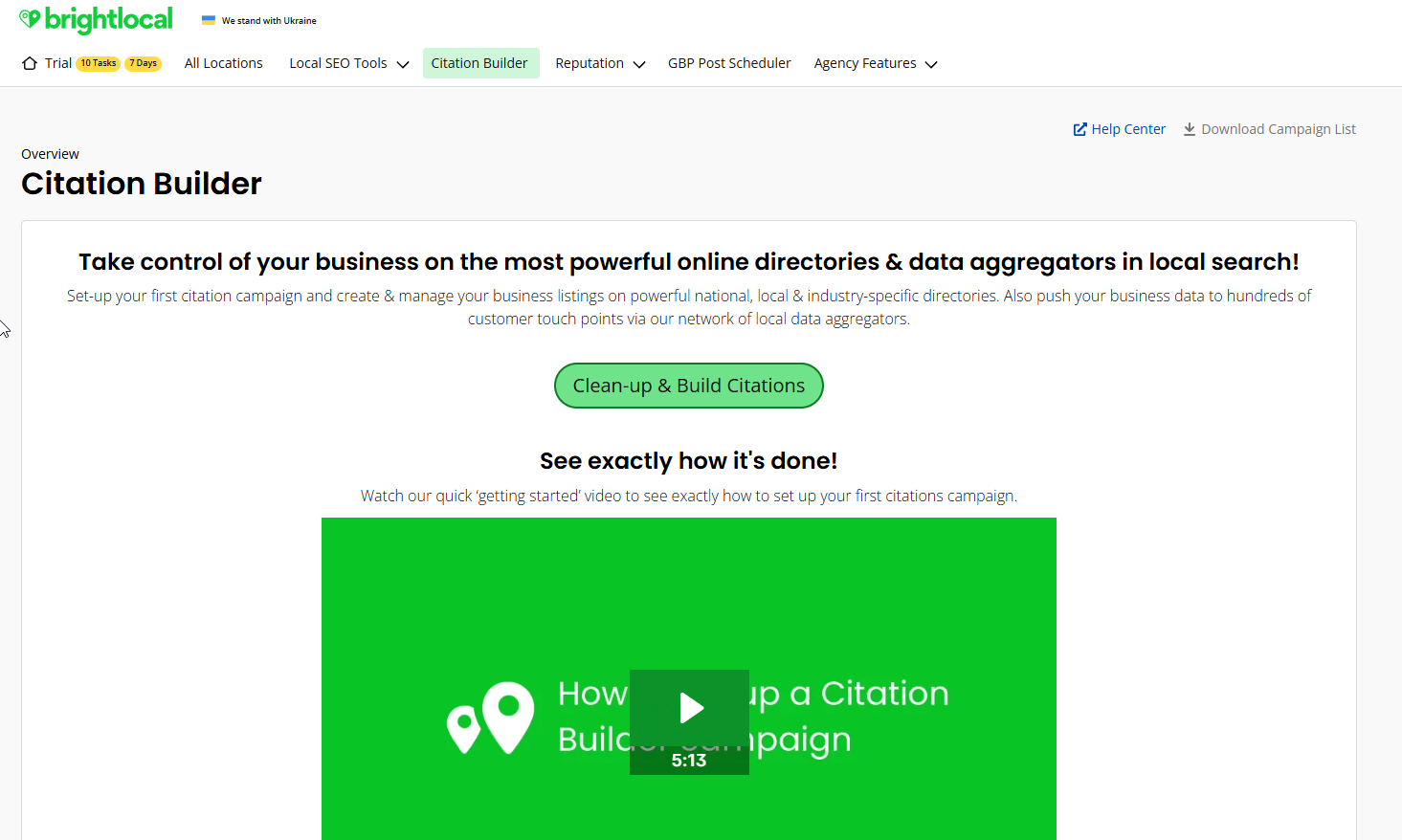
BrightLocal Citation Builder is the one I’d point most NZ businesses to first.
You enter your details once and its team pushes a consistent listing out across the main New Zealand directories, while its Citation Tracker audits what you’ve already got. It genuinely covers New Zealand, which is more than most can say.
Whitespark Local Citation Finder is the original, and it’s brilliant for one job: finding the citations you’re missing.
It reverse-engineers where your competitors are listed so you can go claim the same spots. Best answer to “where should I be that I’m not?”
Local Citations and AI Search
The same NAP consistency that keeps Google happy is now what AI tools cross-reference before they’ll recommend you — which is exactly why citations are having a quiet comeback.
This is the part almost no citations guide has caught up to.
In the last year, the way people find local businesses cracked wide open. BrightLocal’s 2026 survey found 45% of consumers now use AI tools like ChatGPT, Gemini and Perplexity to find local businesses — up from just 6% a year earlier. A sevenfold jump in twelve months.

And here’s the kicker for citations. Whitespark’s 2026 data found citation signals matter more for AI search than they do for the traditional map pack.
The thing everyone was ready to bury turns out to be one of the things AI leans on hardest.
The reason’s simple. An AI model recommending a plumber is running the same background check Google does — cross-referencing your NAP across the web to decide it can trust you enough to say your name out loud.
Consistent citations plus LocalBusiness schema are the machine-readable version of “this business is real, and it’s here.”
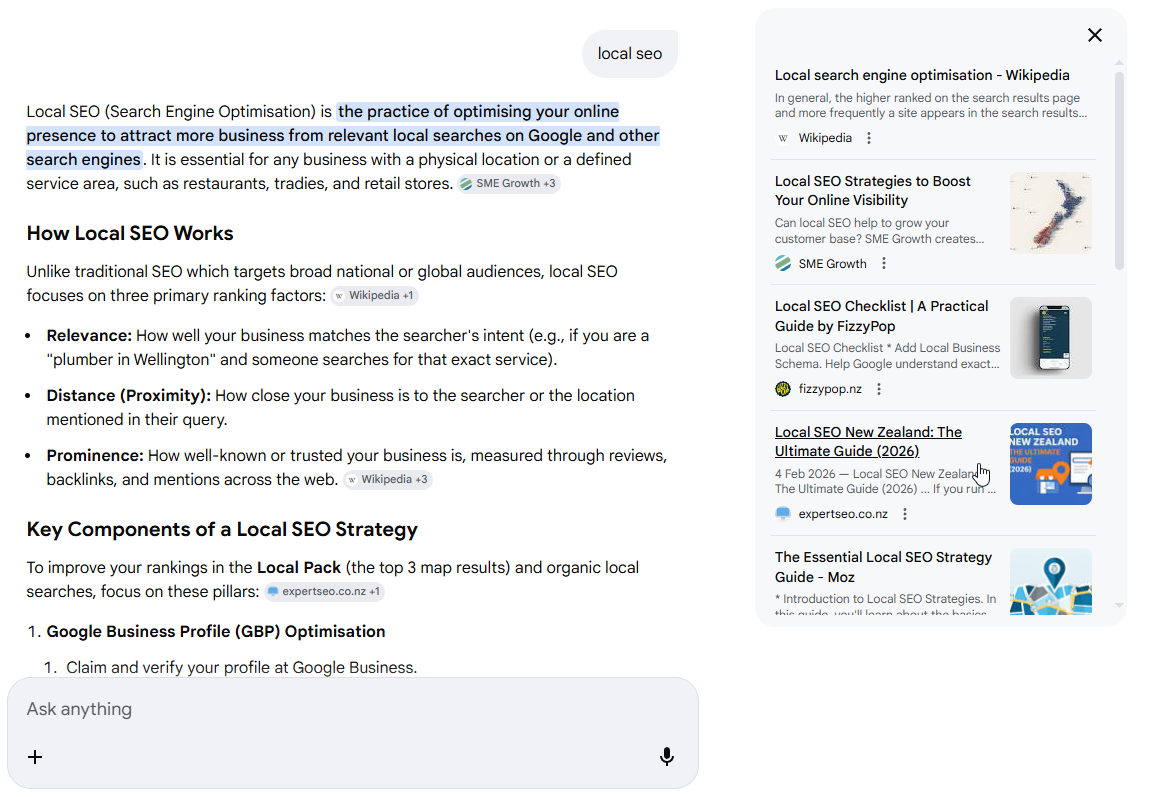
That’s the heart of getting cited by AI: being the business the data agrees on. Our own local SEO content already gets picked up in Google’s AI Mode, and the consistency groundwork is a real part of how you earn that.
Should You Build Citations Yourself or Hire Someone?
Citations are one of the few local SEO jobs you can genuinely do yourself. The honest question is whether your time’s better spent elsewhere.
If you’ve got a single location, a spare afternoon, and the patience for repetitive forms, do it yourself.
The master-NAP method plus BrightLocal’s builder gets you 90% of the way — and there’s real value in knowing your own listings inside out.
Where it’s worth handing off: multiple locations, an existing mess of duplicates and wrong info, or you simply don’t have the hours.
Cleanup especially is fiddly, thankless work that a tool-and-a-specialist combo just does faster.
That’s the call we make for clients every week. Citations are rarely the whole job — they’re the foundation the rest of the local SEO strategy stands on.
If you’d rather have someone build that foundation properly while you run the business, that’s where our local SEO services come in.
And if you just want a second set of eyes before you commit, an SEO consultant can audit where you stand first.
Local Citations: FAQ
What are local citations?
A local citation is any online mention of your business’s name, address and phone number (NAP) — on a directory, review site, social profile or local blog. Search engines use them to confirm your business is real and located where you say it is.
What are the four types of citations in SEO?
In local SEO, citations fall into a few buckets: major search engines and maps (Google, Bing, Apple), data aggregators that syndicate your details, structured directory listings (Yellow, Yelp, NoCowboys), and unstructured mentions in blogs or news. That’s different from academic citation styles like APA or MLA.
How do you build a local citation?
Write one master version of your NAP, then submit it — identically — to each platform. Start with Google Business Profile, Bing Places, Apple Business Connect and Facebook, then work through the main NZ directories. Consistency is the whole game.
What are the best local citation sites in New Zealand?
Google Business Profile first, then Bing Places, Apple Business Connect and Facebook. For NZ directories, focus on Yellow, Finda, NZS.com, Localist, Neighbourly and Zenbu — plus NoCowboys if you’re a tradie or service business.
Do local citations affect Google Maps ranking?
Indirectly, yes. Citations feed the prominence signal Google uses to rank the local map pack. They won’t lift you on their own, but inconsistent NAP data can quietly cap how high you rank.
Are there local citation services for NZ businesses?
Yes. Tools like BrightLocal’s Citation Builder submit and track your listings across NZ directories for you, and SEO agencies (including ours) handle the build and cleanup as part of a wider local SEO service.
Recommended Reading
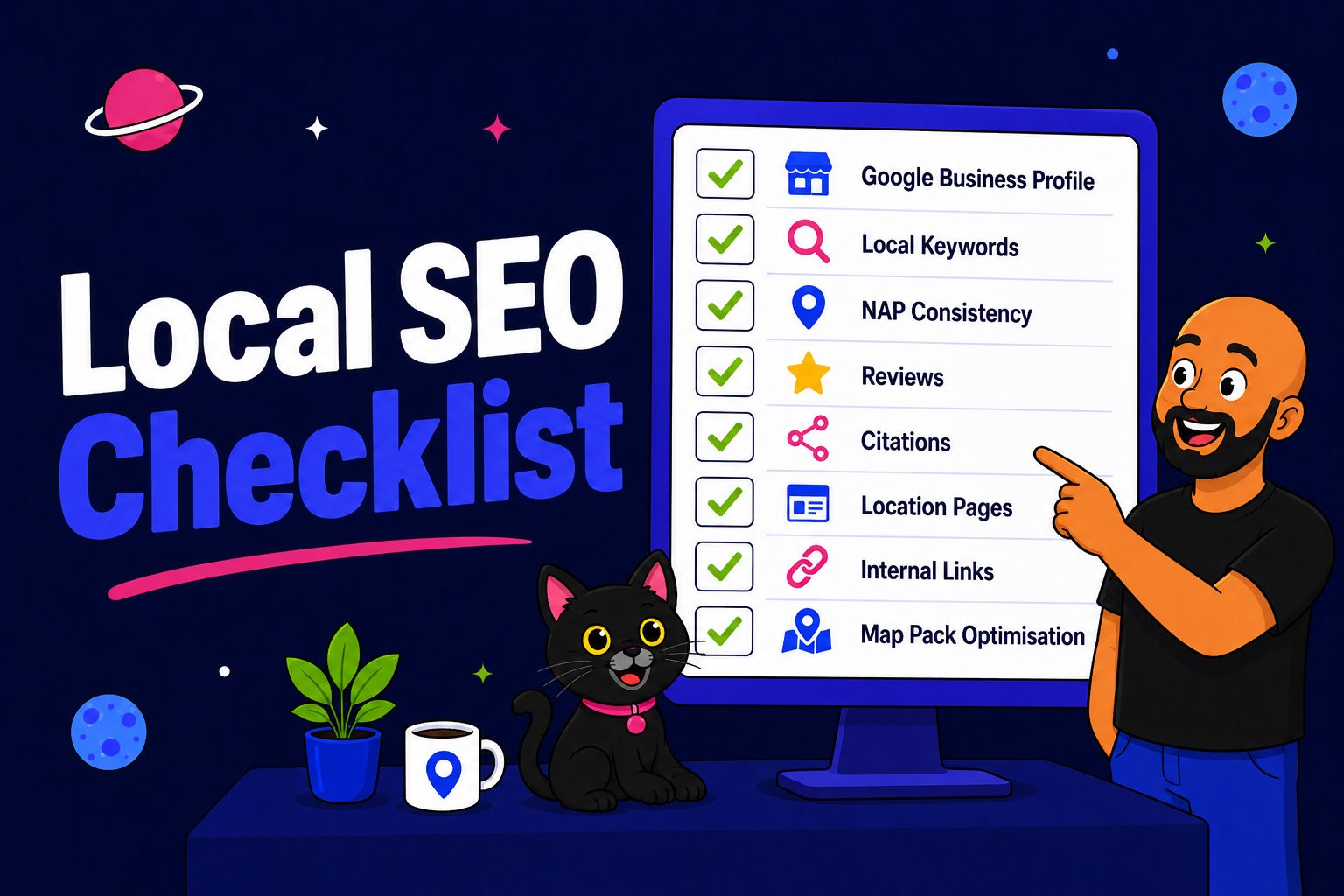
Local SEO Checklist
The step-by-step companion — every local ranking task in order, citations included.
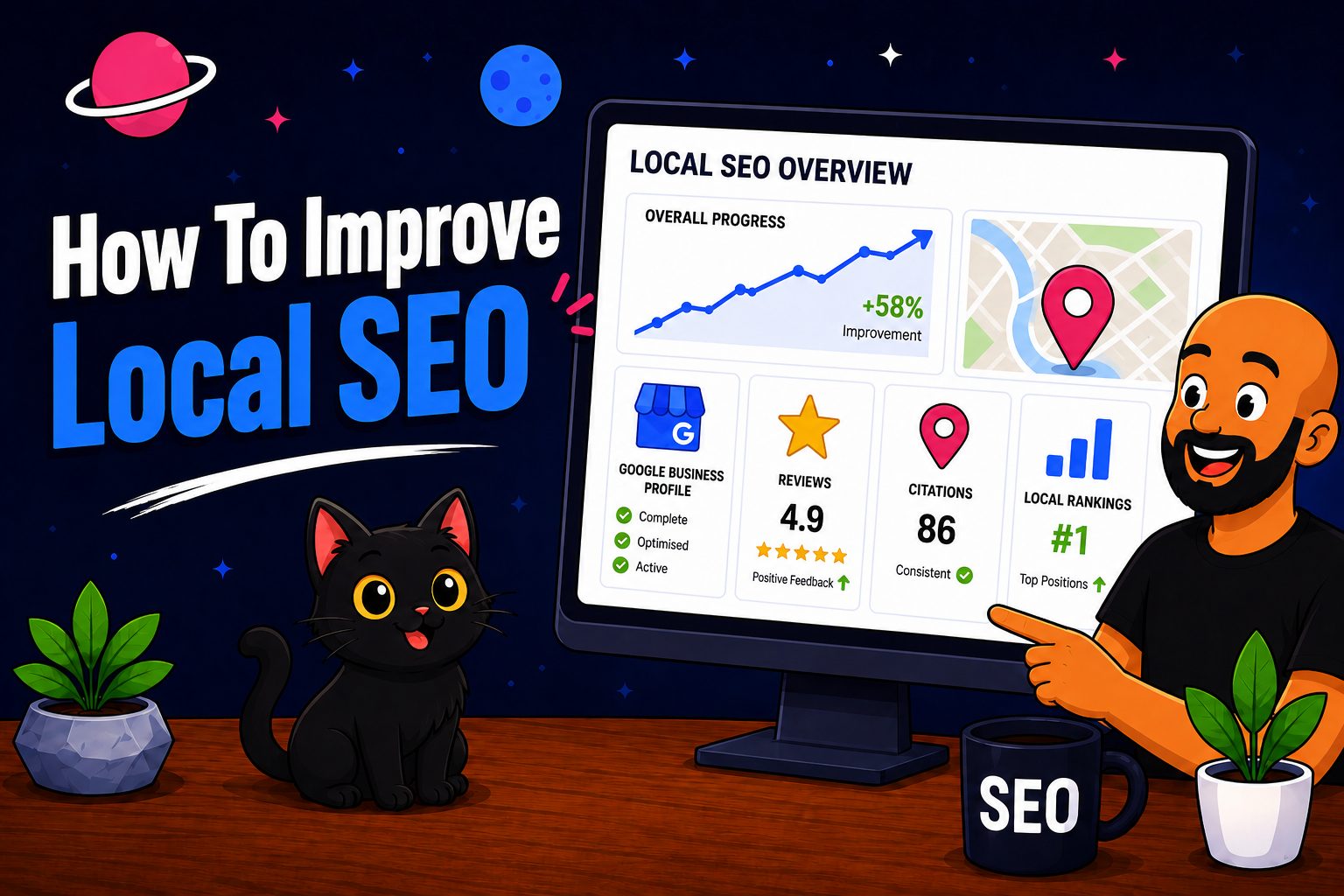
How to Improve Local SEO
12 practical ways to climb the local rankings once your citations are clean.
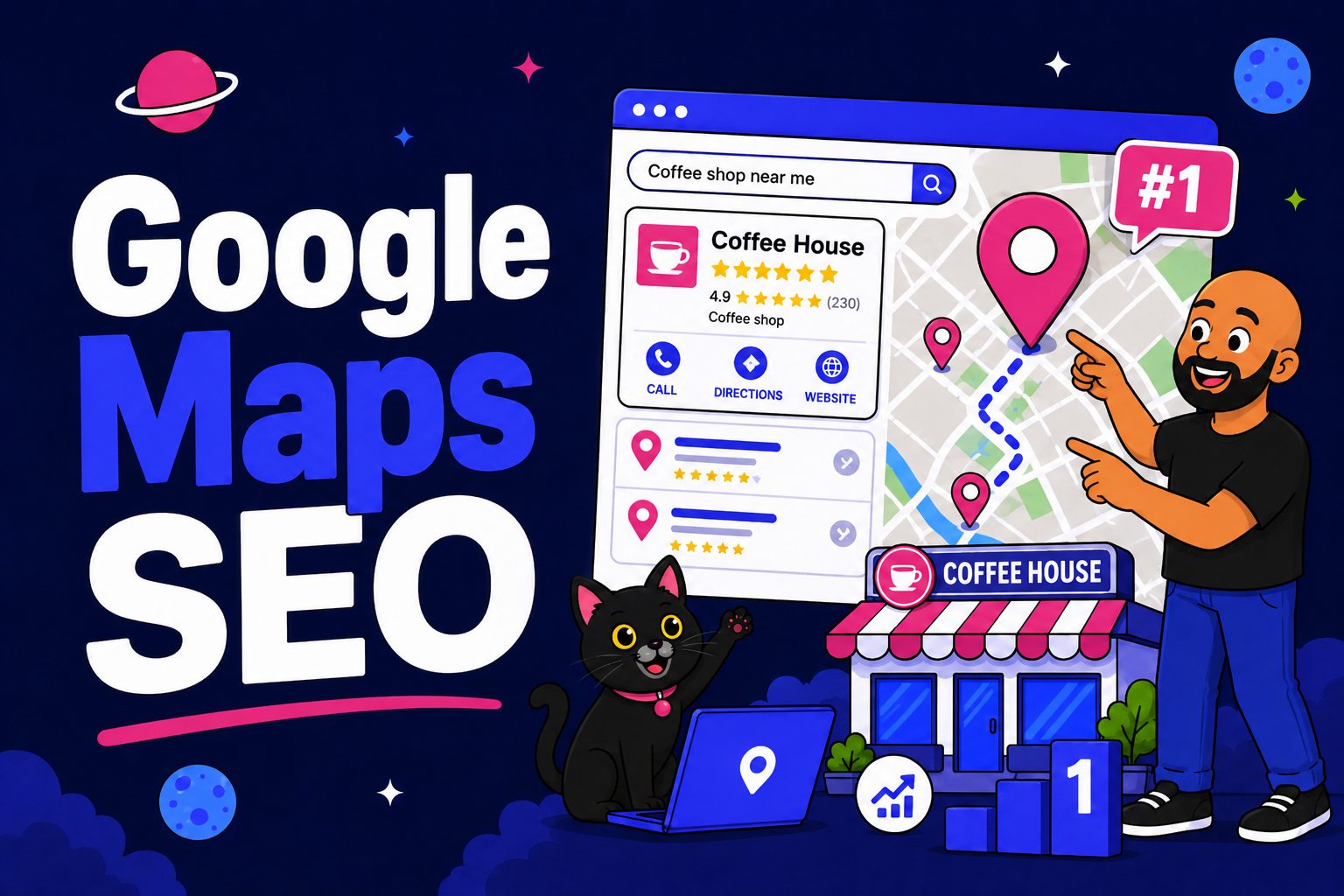
Google Maps SEO
How to rank in the map pack — where consistent citations do their real work.