

The page you’re reading right now is part of a topic cluster.
It links out to a handful of related SEO guides. They link back. Together they cover the subject from every angle — and Google’s AI has already started citing them as a source.
That’s not luck. It’s the exact strategy I’m about to walk you through.
Plenty of Kiwi sites publish blog posts that go nowhere. One here, one there, nothing tying them together. Google looks at the mess and can’t work out what you’re actually good at.
A topic cluster fixes that. It tells Google one clear thing: this site knows this subject inside out.
In this guide I’ll break down what a topic cluster is, why it works, and how to build one from scratch — using the real clusters I’ve built, including the one this very page sits in.
What Is a Topic Cluster?
A topic cluster is a group of related pages built around one central “pillar” page, all tied together with internal links.
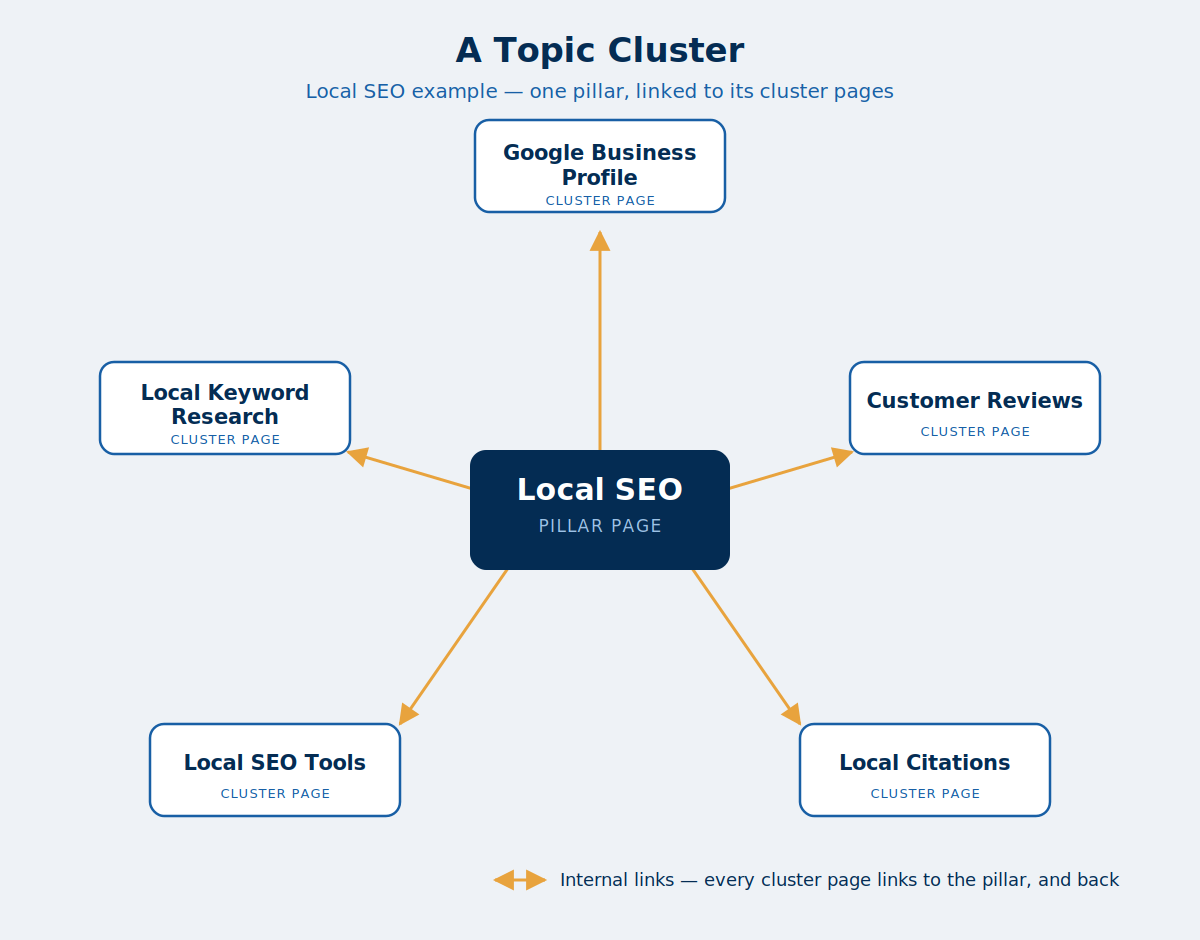
Picture a wheel:
- The pillar page is the hub in the middle.
- The cluster pages are the spokes.
- The internal links are what hold the whole thing together.
The pillar covers a broad topic at a high level. Each cluster page takes one slice of that topic and goes deep. Every spoke links to the hub, and the hub links back out to every spoke.
Think of it like a bookstore.
Walk into a good one and the books are grouped by section: cooking over here, travel over there. You find what you want fast, and you can tell at a glance the shop knows its stuff.
A site without clusters is the same books dumped in a pile by the door. Technically it’s all there. But nobody — not a customer, not Google — can tell what it’s about.
That grouping is the whole game. Random posts say nothing. A cluster says “we own this topic.”
The Three Parts: Pillar, Cluster Pages, and Internal Links
Every topic cluster is made of three parts. Drop any one of them and the whole thing falls over.
Let me use a real cluster to show you — our own local SEO one. The pillar is our local SEO guide. The spokes are pages on Google Business Profile, customer reviews, local citations, and local SEO tools. Real pages, not a hypothetical.
The pillar page
The pillar page is the broad overview. It covers the whole topic at a high level and targets the big, competitive head term — in our case, “local SEO.”
It doesn’t try to explain everything in full. It introduces each subtopic, then hands off to the cluster page that covers it properly.
The cluster pages
Each cluster page takes one subtopic and goes deep. One page on Google Business Profile. One on getting reviews. One on citations. Each targets a more specific, long-tail search.
The rule of thumb: if a subtopic needs more than a couple of paragraphs to do it justice, it deserves its own cluster page.
The internal links
This is the part people skip, and it’s the part that makes it a cluster instead of a folder.
Every cluster page links back to the pillar. The pillar links out to every cluster page. Where it genuinely helps the reader, cluster pages link to each other too.
Those links are how Google reads the relationship between the pages — how it understands that all this content belongs together, and that you cover the topic properly.
Pillar Page vs Topic Cluster: What’s the Difference?
People mix these two up constantly, so let’s clear it up.
A pillar page is one page. A topic cluster is the whole structure — the pillar, all its cluster pages, and the links between them. The pillar is one brick. The cluster is the wall.
Here’s the split:
| Pillar page | Cluster page | |
|---|---|---|
| Role | The hub — a broad overview of the whole topic | A spoke — a deep dive on one subtopic |
| Keyword | Broad, competitive head term (“local SEO”) | Specific, long-tail (“how to get more Google reviews”) |
| Length | Long and comprehensive | Focused — one subtopic done properly |
| Links | Links out to every cluster page | Links back to the pillar, and to siblings where it fits |
So when someone says “I’m building a pillar page,” they mean one page.
When they say “I’m building a topic cluster,” they mean the pillar plus everything orbiting it.
You need both. A pillar with no cluster pages is a lonely page. Cluster pages with no pillar are spokes with no wheel.
Why Topic Clusters Work
Topic clusters work because they prove to Google that you cover a whole subject — not one stray page — and that’s what modern rankings run on.
Here’s what’s actually happening under the hood.
They build topical authority. When you cover every angle of a subject, Google stops seeing you as “a site with a post about X” and starts seeing you as “the site that knows X.”
For example, when creating our “SEO in Auckland” page, we made sure to cover everything necessary including pricing, reviews, our unique process, and more.
That authority is what lifts your rankings across the whole topic, not just one page.
They give Google a clean map of your site. Internal links let search engines crawl from pillar to cluster and back, understanding how everything connects. No orphan pages floating around with nothing pointing at them.
They pass authority around. When your pillar earns a backlink, those internal links spread some of that strength to the cluster pages. One strong page lifts the rest.
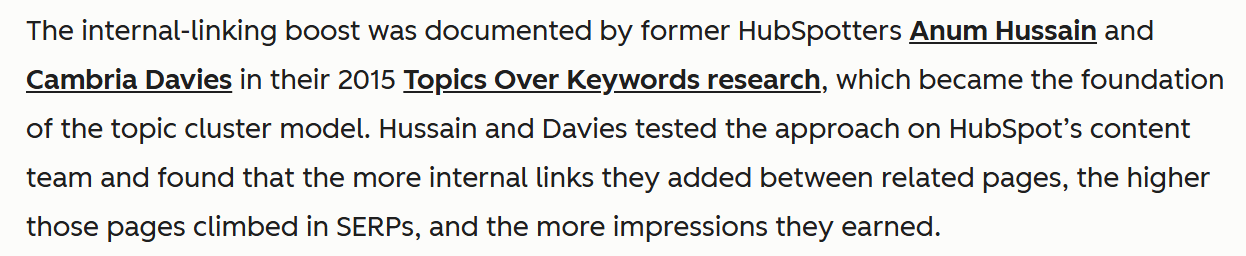
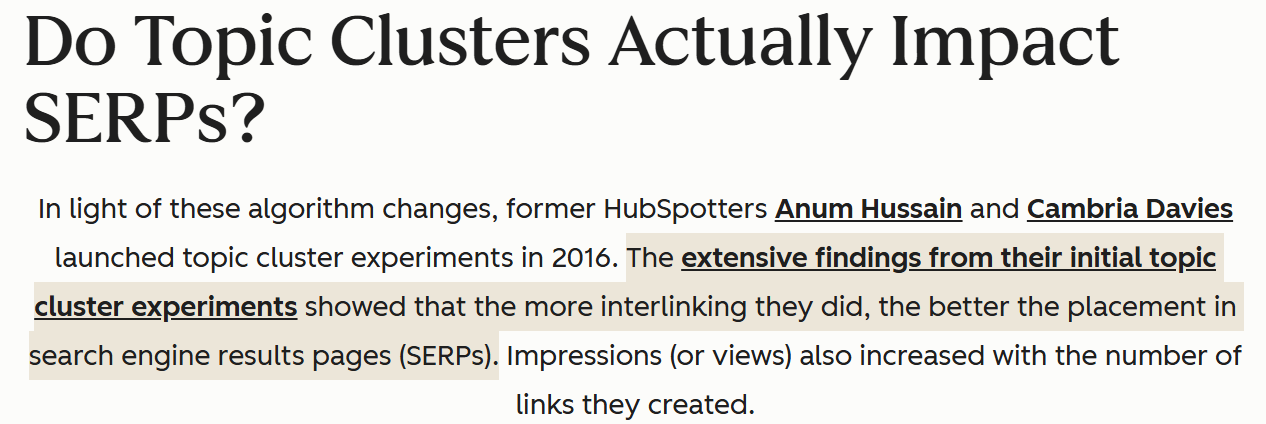
This isn’t theory. HubSpot ran this on their own blog years ago and found a direct pattern: the more internal links they built between related pages, the higher those pages placed in search results. Weaving content together beat leaving it scattered, every time.
There’s one more quiet benefit: clusters stop you competing with yourself.
Without a structure, you can end up with three thin posts all chasing the same keyword, splitting your own rankings. A cluster forces each page onto its own subtopic, so your pages work together instead of cannibalising each other.
Depth Is the Moat: How Going Deeper Beats Bigger Competitors
Building the cluster is half of it. Here’s the half nobody talks about:
Go deeper and more comprehensively than everyone else in that cluster, and search engines start trusting you over sites with far more authority. The structure gets you in the game. Depth is how you actually win.
Think about it from Google’s side:
When you genuinely cover everything on a topic — every question, every edge case, better than the competition — the reader never needs another source. Google notices that. So does the AI. Comprehensiveness is one of the clearest trust signals there is.
That’s how a small site beats a giant.
For the decade I’ve been doing SEO, I’ve watched this play out over and over. Our own site is barely a year old. On paper it shouldn’t be anywhere near the big tool companies with domain ratings in the 80s and 90s and millions of backlinks.
And yet our local SEO guide ranks number one in New Zealand for “local SEO” — sitting above Ahrefs and Semrush.

We didn’t beat them on authority. We can’t.
We beat them on depth — by building a tighter, more complete local SEO cluster aimed squarely at New Zealand, and covering the topic harder than they bothered to.
That’s the whole move. Pick a topic, then out-cover everyone on it. (Humbly, having spent years competing in the United States, I’ll say most NZ sites simply don’t go deep enough to be hard to beat.)
Are Topic Clusters Still Relevant in the Age of AI Search?
Topic clusters aren’t dying with AI search. They’re how you get picked by it.
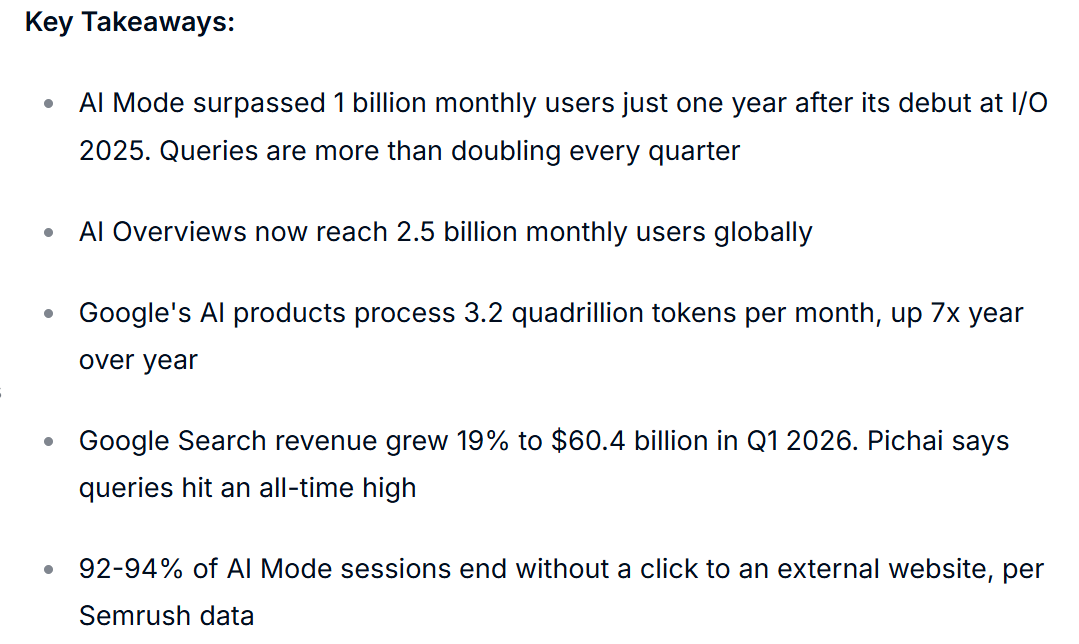
Google’s AI Overviews now reach over 2.5 billion users a month. ChatGPT, Gemini and Perplexity are answering questions that used to be plain blue links. The way people find you is changing fast.
Here’s why clusters matter more now, not less.
AI answer engines don’t just grab the page ranking number one. They pull from sources that cover a subject thoroughly and authoritatively — exactly what a deep cluster signals. Scattered one-off posts get skipped. Comprehensive, well-linked clusters get cited.
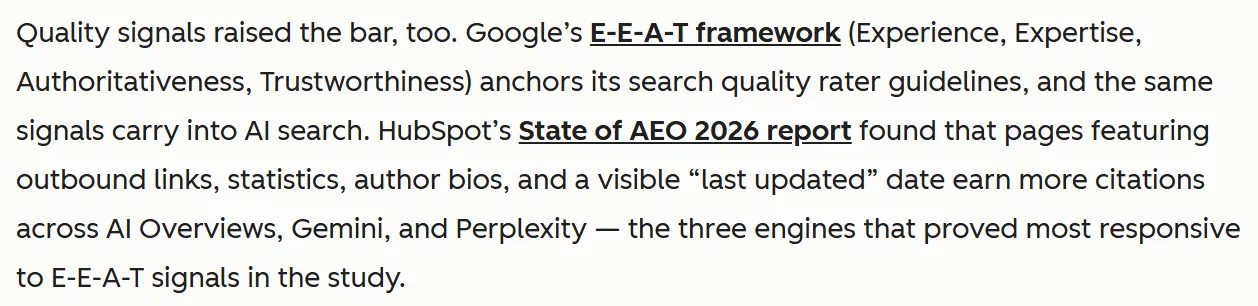
HubSpot’s own research backs this up: pages with outbound links, real statistics, author bios and a visible last-updated date earn more citations across AI Overviews, Gemini and Perplexity.
A cluster gives every page the room to carry all of that.
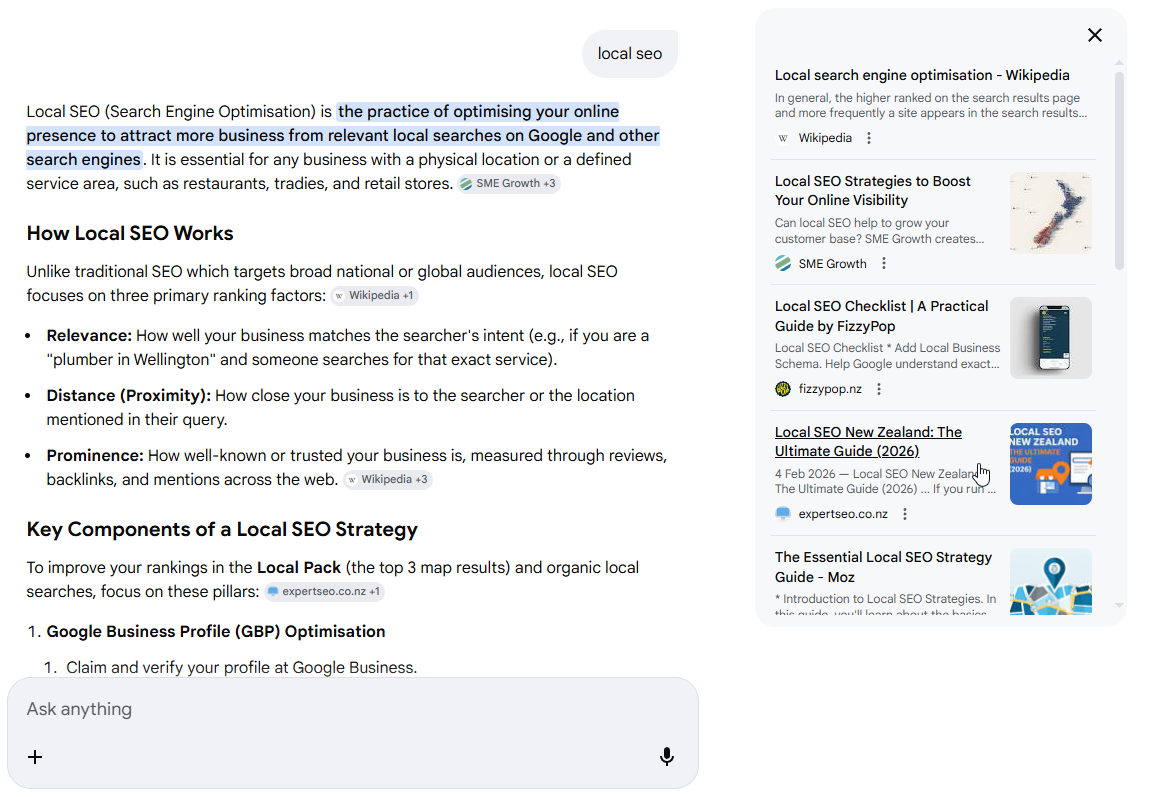
We’ve seen it first-hand. That same local SEO guide doesn’t just rank — it gets cited as a source inside Google’s AI Mode.
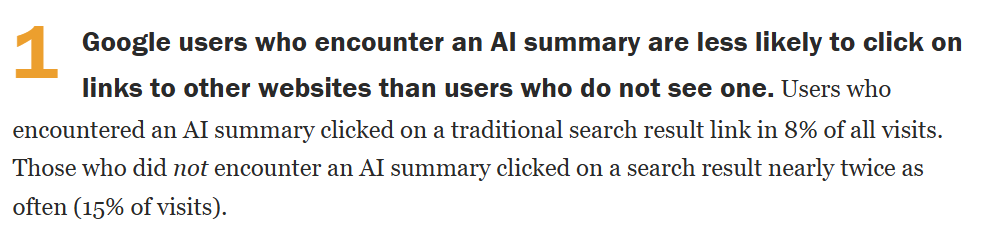
The catch for everyone chasing AI visibility: ranking number one no longer guarantees you get cited.
When an AI Overview appears, only around 8% of searches end in a click, versus 15% without one. The fight has moved from “rank first” to “be the source the AI trusts enough to quote.”
Deep topic clusters are how you become that source. Same strategy, higher stakes.
How to Build a Topic Cluster
Building a cluster comes down to six steps. I’ll walk through each one on a real example — a local SEO cluster for a New Zealand business.
Step 1: Pick your core topic (the pillar)
Start with one broad topic that’s central to what you sell, and big enough to spawn a dozen-plus subtopics.
For an SEO agency like ours, “local SEO” works perfectly. It’s broad, it’s central to what we do, and it branches into loads of subtopics. For a builder it might be “home renovations.” For a law firm, “choosing the right lawyer.”
If you can only think of two or three things to write underneath it, it’s too narrow. Go broader.
Step 2: Map the subtopics (your cluster pages)
Now break the pillar into subtopics. Each one becomes a cluster page.
This is where ChatGPT earns its keep. Open it up and ask something like:
“I’m building a pillar page on local SEO for a New Zealand business. List the subtopics that should each become their own cluster page.”
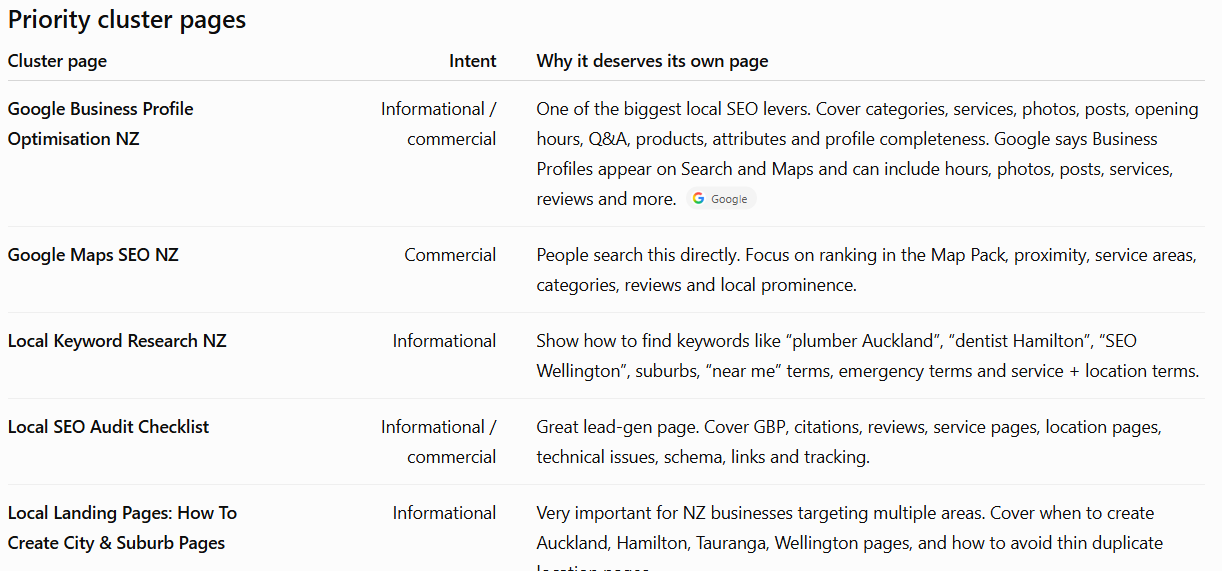
It’ll hand you a list in seconds — Google Business Profile, customer reviews, local citations, local keyword research, ranking in the map pack, and more. That’s your cluster mapped before your coffee’s cold.
Then sanity-check the list against real keyword research. ChatGPT gives you the ideas fast, but you still confirm there’s genuine search demand behind each subtopic before you commit to writing it.
This works for any niche. When we built HealthVI, the pillar was weight loss, and the subtopics were individual product reviews — one cluster page per product. Same model, completely different topic.
Step 3: Write the pillar page
Write your pillar as a broad, complete overview of the whole topic. It covers the fundamentals of the subject — but it doesn’t go deep on any single part.
The pillar’s job is to touch every major subtopic enough to be genuinely useful, then hand off to the cluster page that covers it in full. Breadth here, depth there.
A format that works almost every time: run the topic through What, Why, and How, adding sections where the subject needs them.
- What it is.
- Why it matters.
- How it works.
Then a high-level run through each major piece of the topic.
For a local SEO pillar, that’s: what local SEO is, why it matters for an NZ business, how it works — then a quick pass over Google Business Profile, reviews, citations, and the rest. A few paragraphs each, no more.
Each of those high-level sections becomes an H2. And each H2 is a cluster page waiting to be written — that’s where you go deep.
The discipline is knowing when to stop. The moment you’re three paragraphs into how to get more Google reviews, you’ve left the pillar’s job behind. That depth belongs on the reviews cluster page. Pull back, link out, move on.
Think of the pillar as the table of contents the rest of the cluster hangs off.
Step 4: Write the cluster pages — and go deep
Now write each cluster page, one subtopic at a time. This is where you win or lose.
Going deep doesn’t mean padding word count. It means answering every question a reader could have on that subtopic — and a few they didn’t know to ask.
Here’s how to do it:
- Google the subtopic and look at what’s already ranking.
- List every point the top pages cover.
- Then list what they skip, gloss over, or get wrong.
- Pull the questions out of the People Also Ask box.
Your job is to cover all of it — the table stakes everyone has, plus the gaps nobody filled — and back it with real examples, steps, and data.
Picture a cluster page on getting Google reviews.
The thin version says “ask your customers for reviews” and stops. The deep version shows you how to actually ask, hands you a message template to copy, explains how to grab your direct review link, how to reply to reviews good and bad, what to do about a fake one-star, and how reviews feed your ranking in the map pack.
Same subtopic. One of them the reader bookmarks.
That’s the whole difference. The thin page repeats what’s already out there. The deep page becomes the last one they need to read.
Remember the moat from earlier: depth is the thing that lets a small NZ site beat a giant. Every cluster page is another chance to out-cover the competition.
Step 5: Build the internal links
Wire it all together. Every cluster page links back to the pillar. The pillar links out to every cluster page.
Use natural, descriptive anchor text on the link — the phrase that tells Google what’s on the other end. A page on getting reviews gets linked on “Google reviews,” not “click here.”
Step 6: Track and expand
Once it’s live, watch how it performs in Google Search Console — impressions, clicks, the keywords each page is picking up.
Then keep feeding the cluster. New questions surface, new subtopics appear in your search data, competitors publish something you can beat. Add a cluster page, strengthen the links, and the wheel keeps getting stronger.
How Long Do Topic Clusters Take to Work?
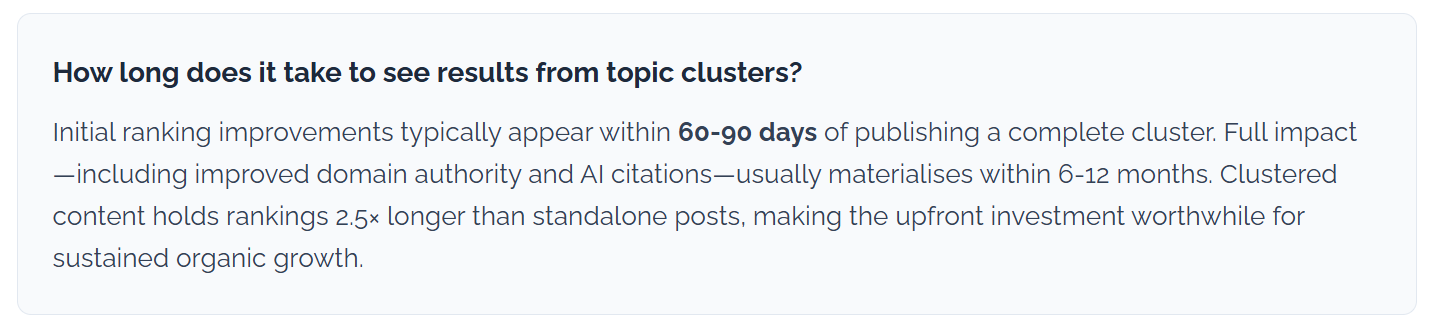
A cluster doesn’t pop overnight. Expect early movement around the three-month mark, and serious results from six months onward — then it compounds.
The slow start is normal. Google needs time to crawl the new pages, read the structure, and decide it trusts you on the topic. For the first stretch it can feel like nothing’s happening.
Then it snowballs. As pages start ranking, they pass authority to each other, the pillar climbs, and the whole cluster lifts together. Sites running a clean cluster structure often see ranking gains inside 60 to 90 days, building from there.
Our HealthVI weight loss cluster is the clearest proof I’ve got. We started from zero. By following this exact model — pillar topic, deep cluster pages, tight internal links — it grew to over 20,000 organic visitors a month.
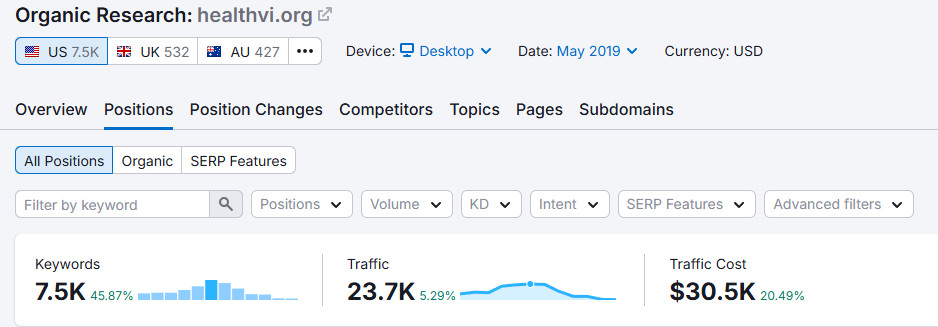
That didn’t happen in week three. It happened because we kept building the cluster and let it compound. Topic clusters reward patience and punish dabbling.
Should You Build Topic Clusters Yourself or Get Help?
You can absolutely build a cluster yourself. The six steps above are the whole method — there’s no secret tenth step.
The hard part isn’t the steps. It’s producing deep, genuinely-better-than-the-competition content, consistently, across an entire cluster. One great pillar and two cluster pages won’t move the needle. You need the full set, all properly done, and that takes real time and writing chops.
That’s where most businesses stall. They map the cluster, publish three pages, lose momentum, and wonder why nothing ranked.
If you’ve got the time and the writing ability, follow the process and go for it. If you’d rather have a team that builds clusters like this every day — the kind that takes a sub-one-year site past decade-old competitors — that’s exactly what we do at Expert SEO.
Our done-for-you SEO builds clusters that rank number one and get cited by Google’s AI. We can build one for your business too.
Topic Clusters: FAQ
How many cluster pages do you need?
What's the difference between a pillar page and a cluster page?
Are topic clusters still worth it with AI search?
How long do topic clusters take to rank?
Do I need paid tools to build a topic cluster?
Recommended Reading
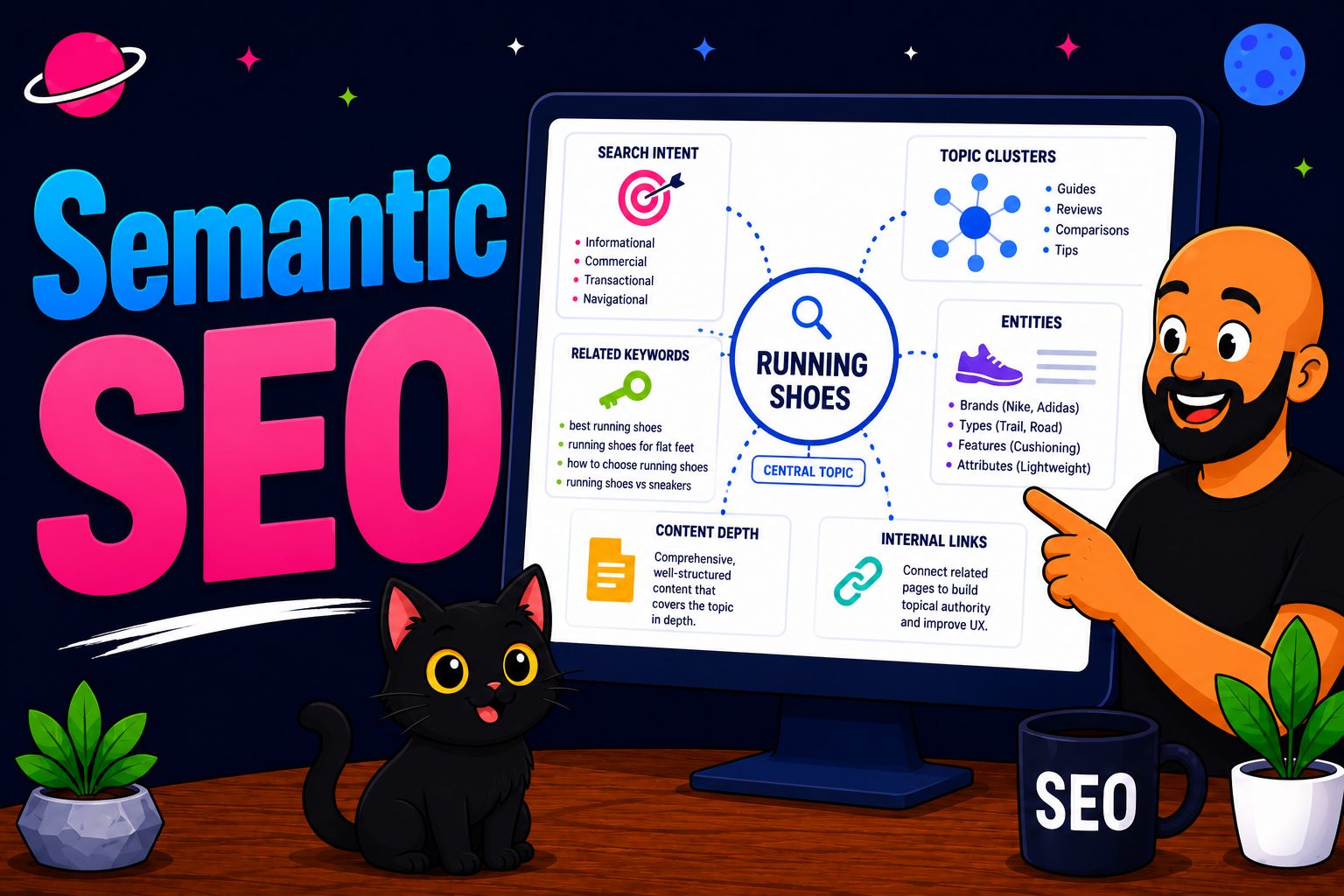
How Google reads topics and entities, not just keywords.

The full process from keyword to ranking.

Writing the cluster pages that actually rank.