

Search “silo structure” and you’ll find two camps shouting past each other.
One says it’s the secret to ranking. Build strict silos or you’re losing.
The other says silos are dead. A relic. Something that actively hurts you now.
Both are half right. And both skip the part that actually matters.
I’ve built my own site on a silo structure. Two silos, a domain that’s under a year old, already outranking New Zealand agencies that have been at this for a decade. So I’m not theorising here. I’m telling you what works because I’m watching it work every day.

Here’s what an SEO silo structure actually is, whether it’s worth your time, and how to set one up without tying yourself in knots over rules that stopped mattering years ago.
What Is an SEO Silo Structure?
An SEO silo structure is a way of organising your website so related content is grouped together by topic, with a main hub page and a set of supporting pages all linked tightly within each group.
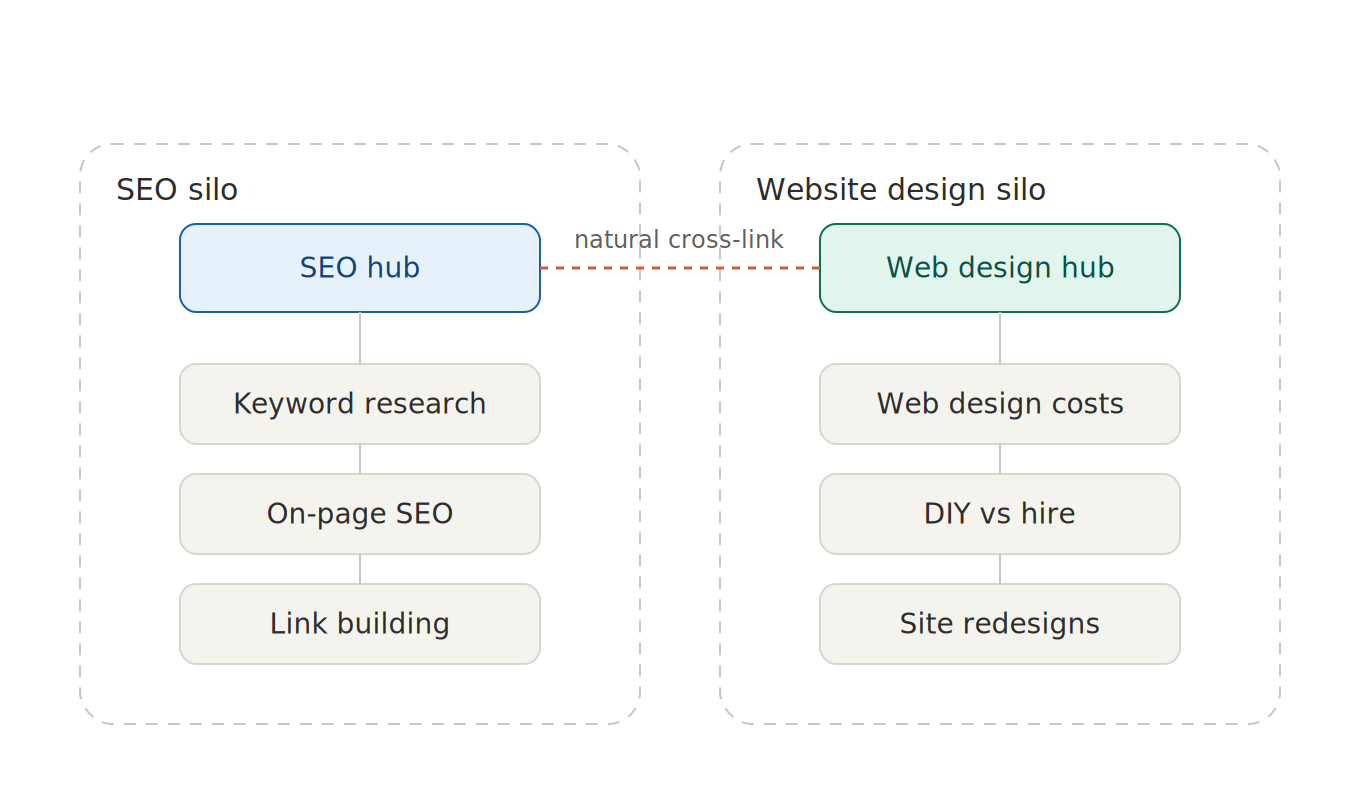
Picture my site. I do two things: SEO and websites. So I’ve got two silos.
The SEO silo has a main hub, then supporting content underneath it: keyword research, on-page, technical, local, link building. Each piece links up to the hub and across to its siblings.
The web design silo works the same way. A hub page, then supporting pages and guides sitting under it, all linked together.
One bucket per major topic, everything inside that bucket connected, so Google can look at the cluster and go “right, this site knows websites, and it knows SEO.”
Physical vs Virtual Silos
There are two ways to build a silo, and only one of them does the real work.
A physical silo groups content through your URL folders. Something like /website-design/auckland/ — the structure is baked into the address.
A virtual silo groups content through internal links and a hub page, no matter what the URLs look like. The pages know they belong together because they link to each other, not because they share a folder.
The folders are tidy. The links are what build authority.
This matters for a practical reason: you don’t need to rebuild your URLs to get the benefit. Changing URLs is slow and risky — you can break links, lose rankings, and create a mess of redirects. Adding internal links is cheap, reversible, and you can do it this afternoon. So if your site already exists, you build virtual silos and leave the URLs alone.
Why a Silo Structure Helps Your SEO
A silo structure helps because it does four things at once: it builds topical authority, it flows authority to your important pages, it makes your site easier to crawl, and it makes it easier to use.
Take topical authority first. When you’ve got a hub on a topic plus ten supporting pages covering every angle of it, Google can see you’ve gone deep.
That depth is how you earn topical authority. It’s a big part of how a small site beats a big one on a specific subject.

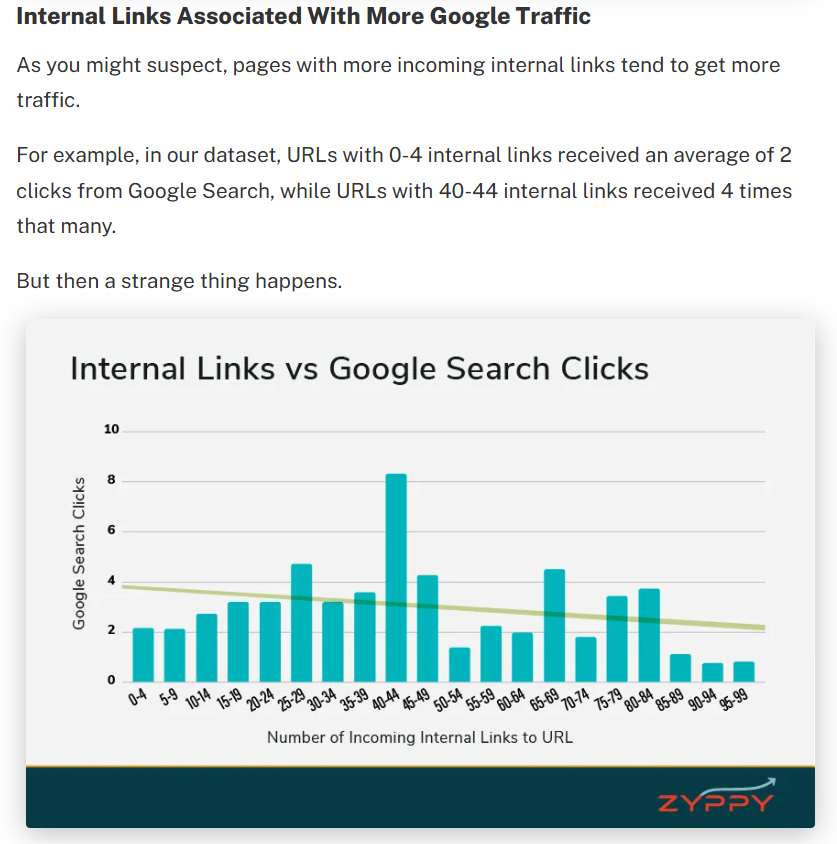
Then there’s authority flow. Every internal link passes a bit of ranking power to the page it points at.
Group and link your content well, and that power pools around your hub and money pages instead of leaking out to nowhere. Studies of millions of internal links keep landing on the same conclusion: pages with strong internal linking rank better.
Crawlability is the quiet one. Google finds your pages by following links.
Pages sitting close to your homepage get crawled and indexed faster; pages buried five clicks deep get crawled less and rank worse. A silo keeps related content connected and close, so nothing gets stranded.
And the human side: land someone on your renovation guide with every related answer one click away, and they stick around. Good for them, good for your rankings.
The “Never Link Between Silos” Myth
Here’s the rule that ruined silos for everyone: never link between them. Keep the “link juice” sealed inside each silo or you’ll leak authority.
Ignore it.
It’s the one part of the old silo playbook that’s genuinely wrong, and it’s why half the internet now calls silos dead. Ahrefs wrote a whole piece on exactly this — their point being that the moment you start linking sensibly between sections, you’re not really siloing anymore, you’re just structuring a site properly. They’re right.
Look at my own setup. I run two silos: SEO and website design.
On paper, separate topics. Separate hubs. Separate content.
But they overlap like mad. They’re both services I offer. They’re both digital marketing. And they go hand in hand — half the people who need a new website need it built to rank, and half the people chasing rankings need a better website to do it on.

So when it helps the reader, I link between them. A page about structuring a site for SEO points across to the web design service, because the two genuinely connect. There’s nothing clever about it. The topics connect, so the pages connect — that’s just sensible internal linking.
The test is dead simple. If a link helps the reader, use it. If you’re only adding it to tick a box, leave it out.
Set your silos up so you know what content goes where. That’s the useful bit. Then link wherever it genuinely makes sense, and don’t get religious about silo “purity.” Nobody good ever really did.
My Own Site Runs on a Silo Structure
This isn’t theory I read in a blog post. Expert SEO is built on a silo structure, and it’s the proof I trust most.
Two silos, SEO and web design. The domain is under a year old. It’s up against NZ businesses that have been building authority for ten years — and on paper, that’s no contest.
Except it’s already outranking a lot of them.
Our local SEO guide sits at #1 in New Zealand, above Ahrefs and Semrush — two of the biggest names in the entire industry.
It’s also getting pulled into AI answers. The same guide is cited as a source inside Google’s AI results — the kind of placement that’s quickly becoming where a lot of clicks actually start.
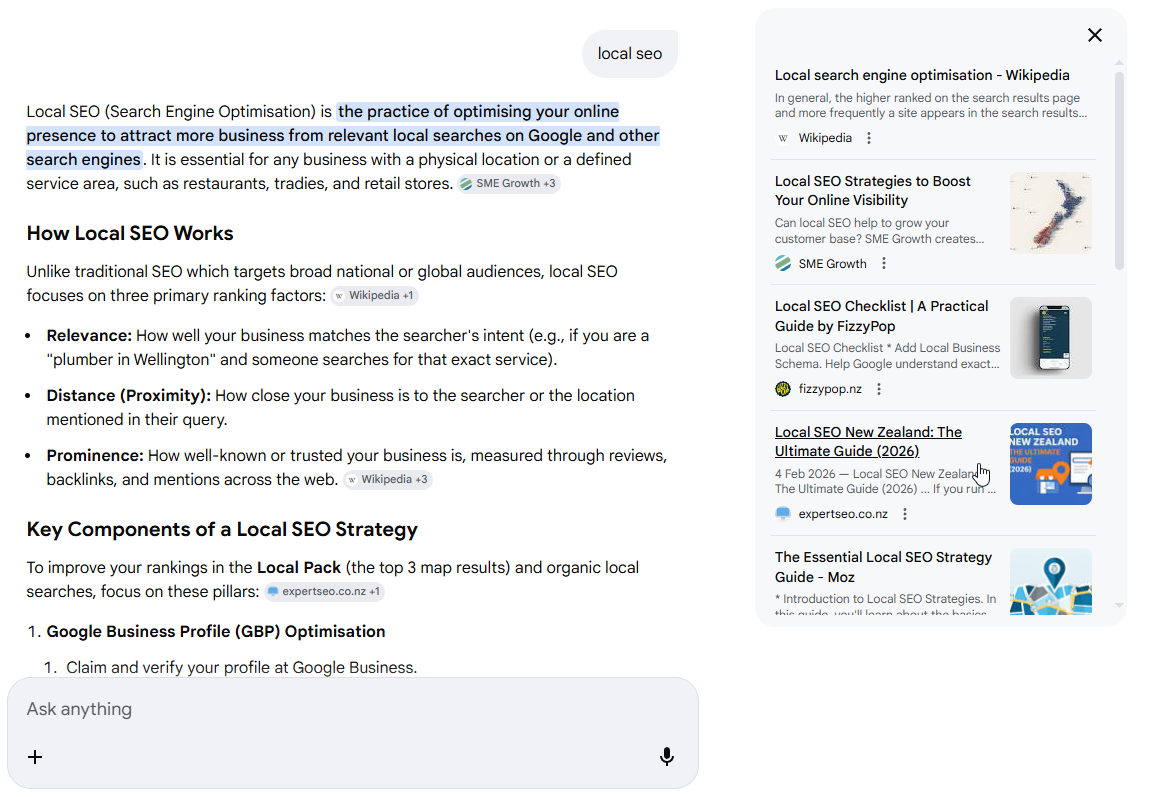
None of that is luck. It’s organised, deep, tightly linked content doing what organised, deep, tightly linked content does.
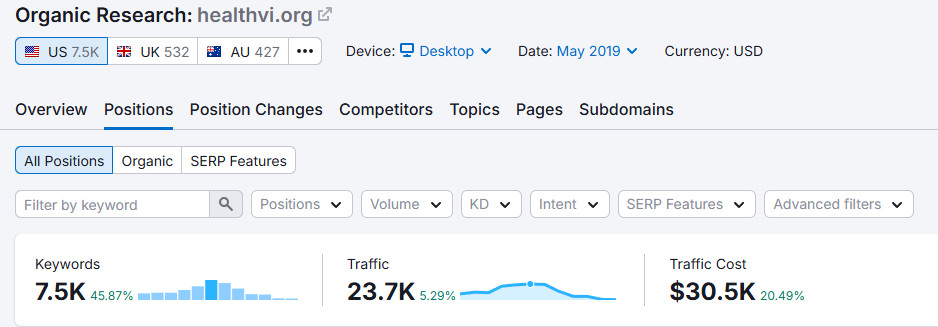
I’ve seen it before, too. Back in 2017 I started a project with my mentor and former business partner Ian Pribyl — a health site called HealthVI. Same principle: pick the topics, build them out properly, link them together. It went from zero to over 20,000 monthly visitors.
For what it’s worth, most SEO agencies in NZ haven’t spent years scrapping it out in the United States the way I have (humbly) — and structure is one of those foundations that’s far better understood once you’ve competed where the water’s deepest.
How to Build an SEO Silo Structure
Building a silo structure comes down to six moves. Here’s the process I’d run on any site.
- List your core topics. These become your silos. For me it’s SEO and web design. For an Auckland building company it might be new builds, renovations, and outdoor work. Keep it to the genuinely distinct things you do — don’t invent silos you can’t fill.
- Cluster your keywords under each topic. Every silo needs a group of searches sitting beneath it. This is where you map your keywords into topics so each silo has enough to cover. A rough rule: if you can’t write at least five to ten solid pages on a topic, it’s probably not its own silo yet.
- Build a hub page for each silo. This is the main page for the topic — broad, definitive, the page you most want ranking. Everything else in the silo points up to it.
- Create the supporting pages. These are the deeper, more specific pieces sitting under the hub. The hub covers “renovations”; the supporting pages cover bathroom renovations, renovation costs, renovation timelines, and so on.
- Interlink tightly inside the silo. Every supporting page links up to the hub and across to its relevant siblings. This is the part that does the heavy lifting — it’s on-page SEO working quietly in the background, and it’s where most sites fall short.
- Cross-link between silos where it genuinely helps. This is the step the old rule got wrong. When a page in one silo naturally connects to a page in another, link them. The reader wins, and so do you.
On WordPress it’s straightforward. Use categories to define your silos, give each post one clear category (not five), turn on breadcrumbs, and keep your URLs clean. Google reads the structure right off the back of that.

Silo Structure Mistakes That Cost You Rankings
Most silo failures come down to a handful of mistakes. Avoid these and you’re most of the way there.
Over-siloing. Too many categories and subcategories, and you’ve built a maze instead of a map. Keep it simple. A handful of clear silos beats twenty fiddly ones.
Thin silos. A silo with two pages in it is just a couple of orphans wearing a label. If you can’t build real depth on a topic, fold it into a broader one until you can.
Naming categories after yourself instead of your customers. “Our Process” and “Solutions” mean nothing to Google or a searcher. Name your silos after what people actually type — the topics, the services, the searches. Internal logic loses; search logic wins.
Burying content too deep. If your best guide is five clicks from the homepage, it’s in trouble. Crawl frequency drops sharply the deeper a page sits, so a genuinely great page nobody can reach quickly will quietly never rank. Keep important pages within about three clicks.
Obsessing over silo purity. We covered this one. Refusing to link between silos because a 2005 blog post told you not to is the one mistake that’s purely self-inflicted.
What Matters More Than Silo Structure
Time for the honest bit, because nobody else will say it: silo structure is kinda important, not lose-sleep important.
Set it up properly at the start, get the foundation roughly right, and then go spend your real energy on the things that actually move NZ rankings.
Like content. A perfectly siloed site full of thin, generic pages ranks nowhere. Genuinely useful content that’s properly optimised will out-rank a beautifully structured site of fluff every single time. Structure organises good content. It can’t rescue bad content.
Like authority. Link building — earning links from other sites — is still one of the biggest levers in the game, and it’ll do more for a competitive keyword than any amount of internal tidying.
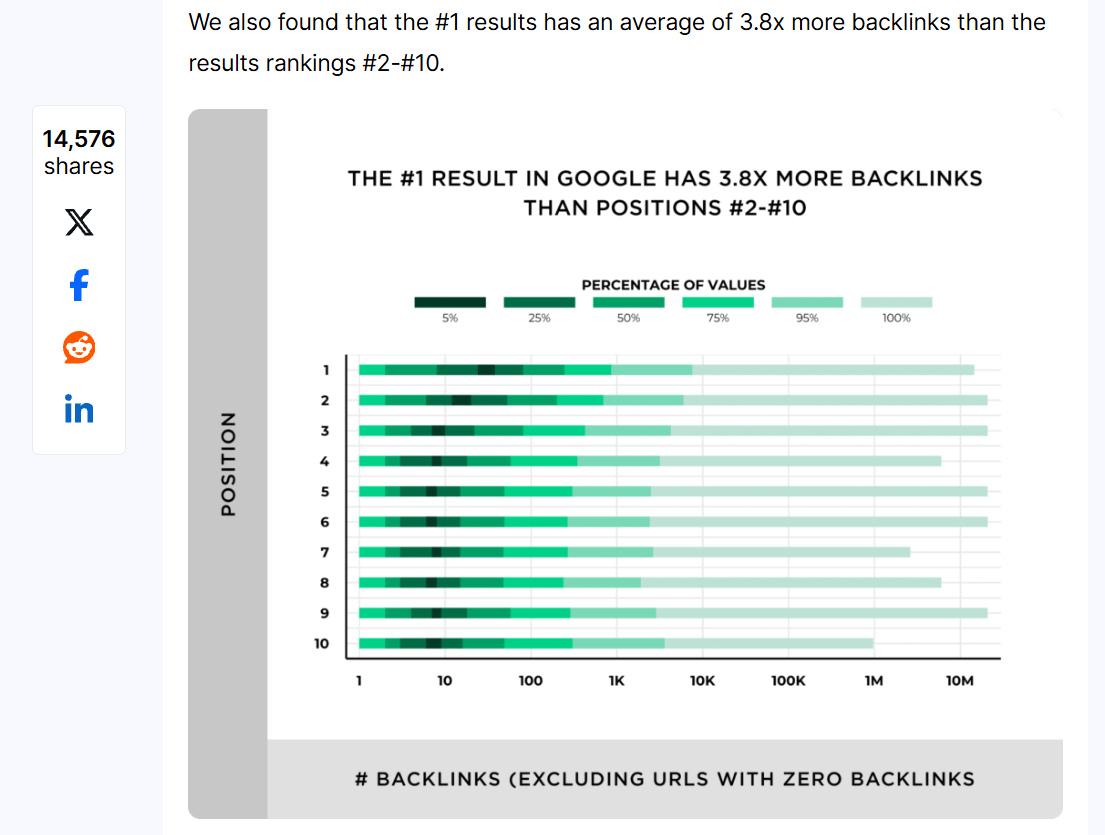
And like search intent. Matching what you publish to what people actually want when they search beats clever architecture nine times out of ten.
This also answers the “do I even need a silo structure” question. If you cover several distinct topics or run a bigger site, yes — silo it, it’ll pay off. If you’re a single-service operator with a handful of pages, you don’t need a complex silo build. You need clean organisation, good internal links, and great content. The principle still applies; the elaborate version doesn’t.
How Long Before a Silo Structure Works?
A silo structure isn’t magic. It runs on the same clock as everything else in SEO.
That means the same realistic timeline as how long SEO takes generally. In a niche that isn’t especially competitive, you’ll usually see real movement somewhere between three and six months.
In a competitive niche, it takes longer — often over a year. Go after something like SEO in Auckland and you’re up against established sites with years of authority, so structure alone won’t get you there fast. It helps. It doesn’t shortcut the queue.
The other thing to know: it compounds rather than spikes. The first stretch can look like nothing’s happening — a few rankings creeping up, not much traffic. Then it snowballs.
HealthVI looked slow for months before it took off, and Expert SEO’s been the same. That early quiet is just the structure doing its slow work before the payoff arrives.
Doing It Yourself vs Hiring an Expert
You can absolutely build a silo structure yourself. The six steps above are the whole process, and if you’ve got a smaller site and a bit of time, there’s nothing here you can’t do.
Where it’s worth bringing in help is when the site gets bigger, when you’re migrating or rebuilding, or when you’d rather it was done right the first time than fixed later. Untangling a badly siloed site is a lot more work than building a good one from the start.
That’s where we come in. Done-for-you SEO means the structure, the content, and the authority building all get handled together, by people who do this for a living — so your foundation is right and your energy goes back into running your business.
SEO Silo Structure: FAQ
Is a silo structure still worth it in 2026?
Yes, as a foundation. Organising your content by topic and linking it well still helps Google understand your site and helps you rank. What's outdated is the strict version that bans linking between silos — drop that part and keep the rest.
What's the difference between a silo and a topic cluster?
Almost nothing. Both group content by topic around a hub page and link it together. The only real difference is that topic clusters happily link between topics where it helps, while strict silos tried not to. In practice, build a topic cluster and call it whatever you like.
Do I need to change my URLs to build a silo structure?
No. URL folders make a "physical" silo, but the real work is done by internal links and hub pages — a "virtual" silo. Since changing URLs is risky and slow, most sites are better off leaving them alone and building the structure through linking.
How many pages do I need in a silo?
Enough to show real depth — roughly five to ten solid pages as a rule of thumb. If a topic can only support two or three pages, fold it into a broader silo until it's earned its own.
Can I link between silos?
Yes, and you should where it helps the reader. Linking related pages across silos is good for users and good for SEO. The old "never link between silos" rule is the one part of siloing worth ignoring.
Does a small NZ business website need a silo structure?
Not a complex one. If you've only got a handful of pages, you need clean organisation, good internal links, and strong content — the same principle, minus the elaborate build. Silos pay off most once you're covering several distinct topics or services.
Recommended Reading

How to Do Keyword Research in New Zealand
Find the searches that fill out each silo.

Website Navigation Best Practices
Structure your menus and links so people and Google find everything.

How To Do SEO: Step By Step for NZ Websites
The full step-by-step process your silo structure plugs into.