

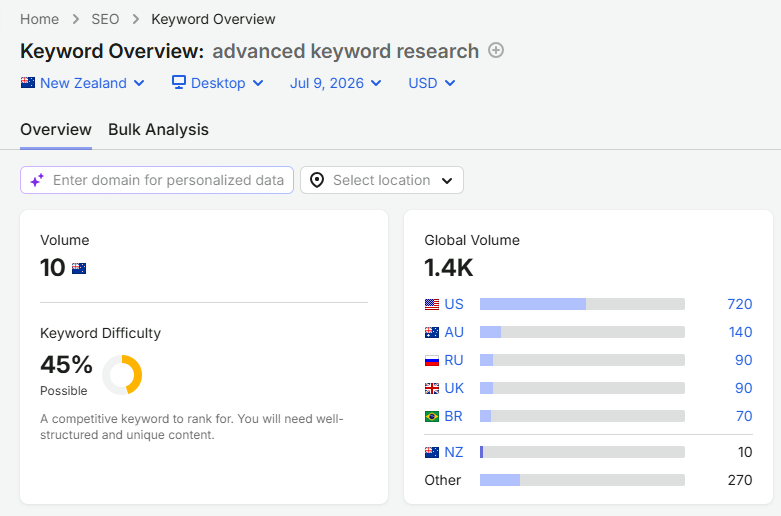
The keyword you typed to land here — “advanced keyword research” — gets about 1,400 searches a month worldwide.
In New Zealand, it gets ten.
Ten. Country-wide.
I still wrote the page. On purpose.
Because search volume is the first thing beginners chase and about the last thing that decides whether SEO makes you money — and knowing that gap is where advanced keyword research actually begins.
Here’s the short version: advanced keyword research is finding the valuable keywords your competitors miss — by reading real search intent, judging what you can genuinely rank for, and mining the sources most people never touch — instead of stopping at whatever number a keyword tool hands back.
Eight strategies below, each one ignored or half-covered everywhere else. Then a real campaign I ran for a Shark Tank brand to show them working together.
1. Read the SERP, Not the Difficulty Score
Start with the search results, not the difficulty number. The number lies.
This exact keyword scores 45 on SEMrush and 80 on Ahrefs — “possible” on one tool, “super hard” on the other. Same keyword, same day.
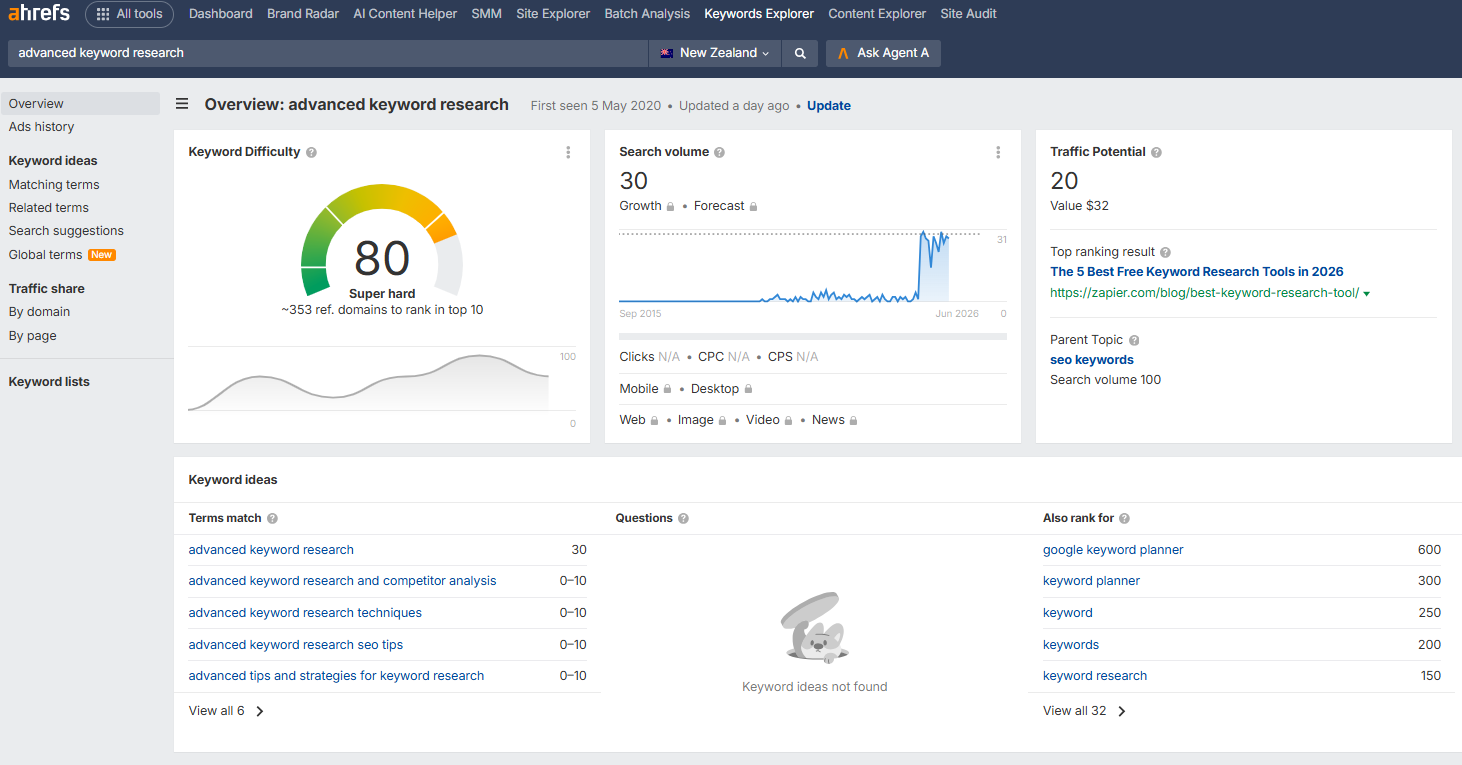
Trust either one blindly and you make the wrong call.
Here’s why: a difficulty score is a guess about backlinks. It tells you nothing about whether you, with your site, can crack this page of results.
The SERP tells you that. So read it.
Type the keyword into Google in an incognito window and open the top five to ten results. Then look at the actual pages: who’s ranking, how strong is each one, and how good is the content really?
In Ahrefs’ SERP overview, read the DR and referring domains per ranking page — not the domain as a whole.
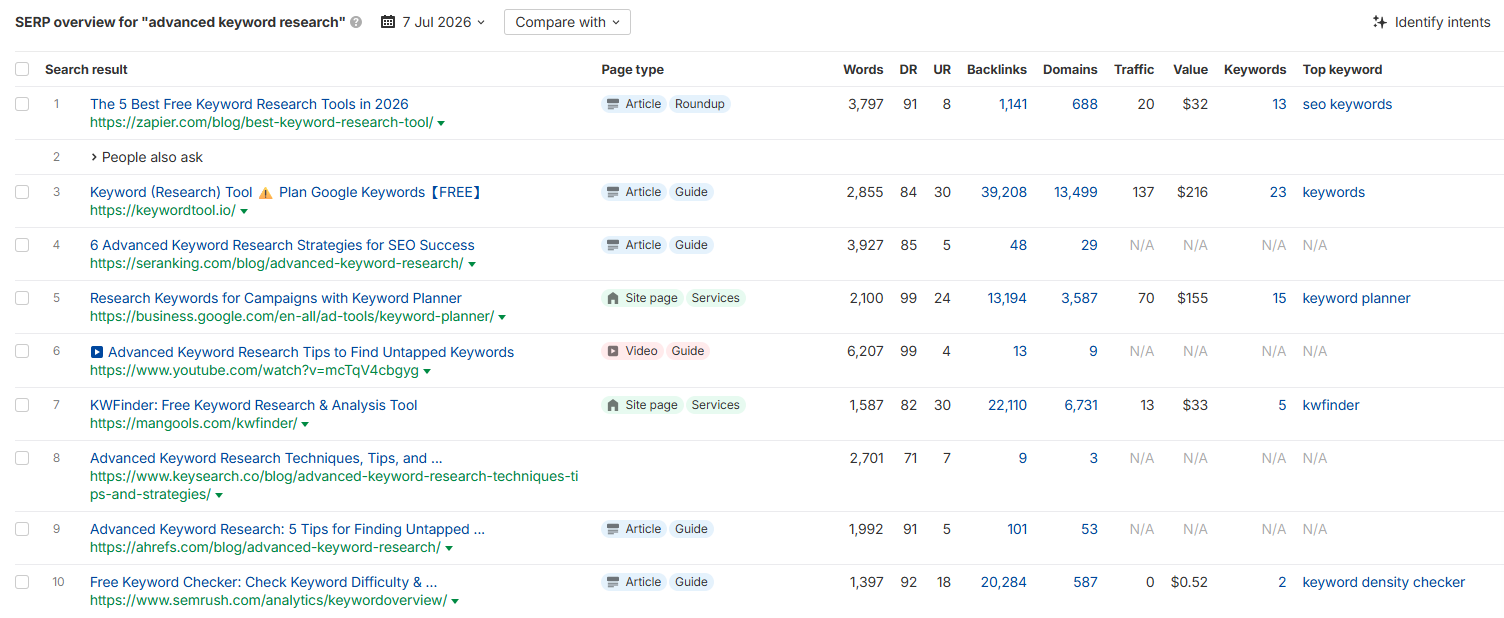
You’re hunting for weak spots. Look at the current top ten for this exact keyword: keysearch.co ranks eighth with just three referring domains pointing at that page. That’s a beatable page hiding in a strong SERP — sharper content and a handful of links, and the spot’s yours.
A DR 20 page sitting in the top five means the door’s wide open.
The same read works for local terms: weighing up SEO in Christchurch, the pages sitting on top are often thinner than the difficulty score claims.
We proved this the hard way. We built Expert SEO from scratch, and it now outranks Ahrefs’ and Semrush’s own pages in New Zealand for “local SEO” — on a domain less than a year old. Not because a difficulty tool waved us through: because the SERP showed beatable pages, and we went.

It matters because most content never gets a look-in. Ahrefs studied around 14 billion pages and found 96.55% of them get zero traffic from Google — usually because nobody checked whether the keyword was winnable before writing. Referring domains still track closely with where a page ranks, which is why you read the links pointing at each ranking page, not the domain’s overall score.
2. Hunt Low- and Zero-Volume Keywords on Purpose
Go after the keywords the tools call worthless.
In a market the size of New Zealand, almost everything worth ranking for is low-volume. If you only chase terms with “good” volume, you’ve just deleted 90% of your opportunities before you started.
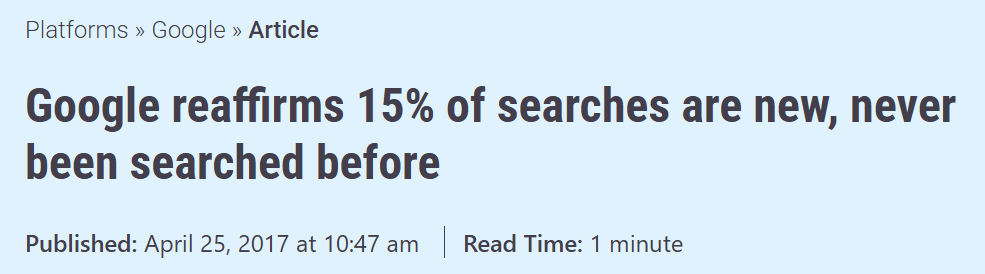
And it gets better: Google has said for years that 15% of searches every single day are brand new — never searched before. By definition, those have zero recorded volume. Wait for the volume to show up and you arrive after everyone else already ranks.
So build clusters of low- and zero-volume terms that share the same intent, and chase the buying ones without flinching.
Ten searches a month from people ready to buy beats a thousand from people killing time.
For a mortgage broker doing SEO in Tauranga, a term showing “0–10” in Keyword Planner is still a lead a month — every month — running on autopilot.
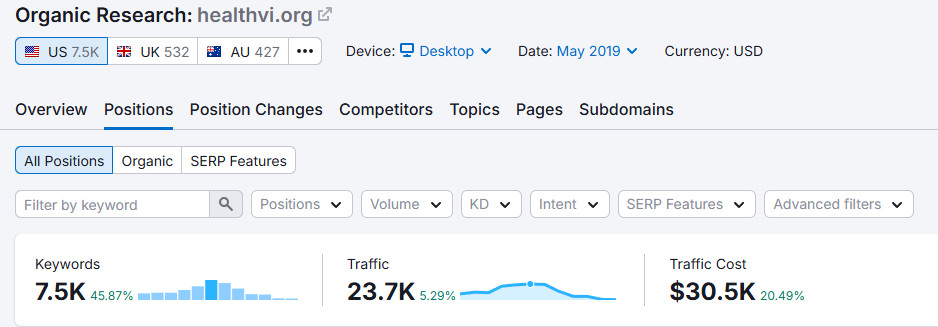
This is the whole engine behind HealthVI. We took it from zero to over 20,000 monthly organic visitors, built on a mountain of long-tail, low-volume health terms nobody else could be bothered targeting.
3. Mine Your Own GA4 and Search Console Data
Your best keyword list is already sitting in your own analytics, for free.
Google Search Console shows the exact queries you’re already getting impressions for — including ones you’re ranking on page two for and never even tried to target. Those are half-won. The hard part’s done; you just haven’t finished the job.
Open Search Console, go to Performance → Queries, and sort by impressions. Then filter for high impressions and low clicks. Those are keywords Google already thinks you’re relevant for — you’re just not high enough to get the click yet.
Then do the same in GA4: switch on site search tracking and read what visitors type into your own search bar. That’s raw demand in your customers’ own words, with no competition guesswork attached.
Say you’re doing your own SEO in Auckland, and Search Console shows you’re pulling impressions for “emergency plumber Auckland” — a term you never built a page for. Build the page properly, and you jump from page two to page one on a keyword you already half-ranked for.
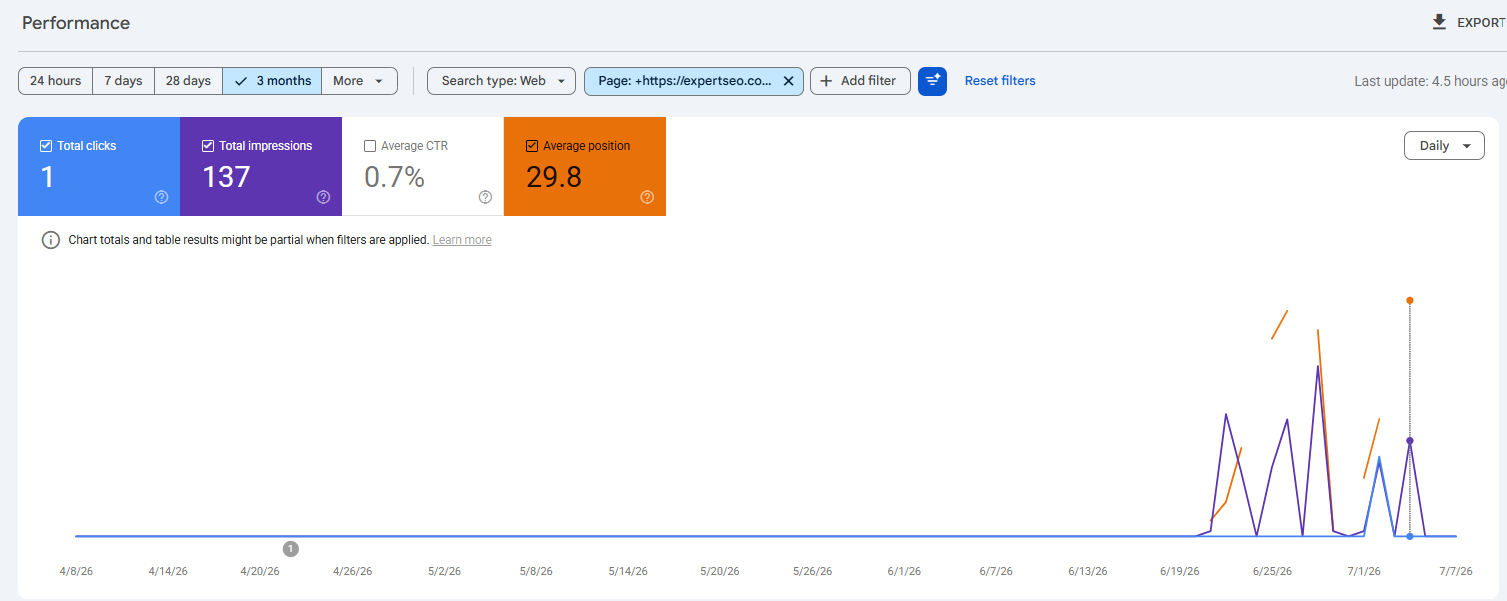
Here’s a live one of ours. Our website design Hamilton page is sitting on 137 impressions but a single click, down at position 29.8. Google’s already putting it in front of people; it’s just too far down to earn the click yet. That’s the page I’d sharpen next.
One competitor in the entire top ten covers this. It’s the easiest win on this list, and it costs nothing.
4. Steal Keywords From Partial Competitors, Not Just Direct Ones
The richest keyword source is often a business that doesn’t sell what you sell.
Your direct competitors chase the same obvious terms you do — you’re all staring at the same corner of the market. Partial competitors (anyone solving the same problem a different way) rank for terms you’d never think to look for.
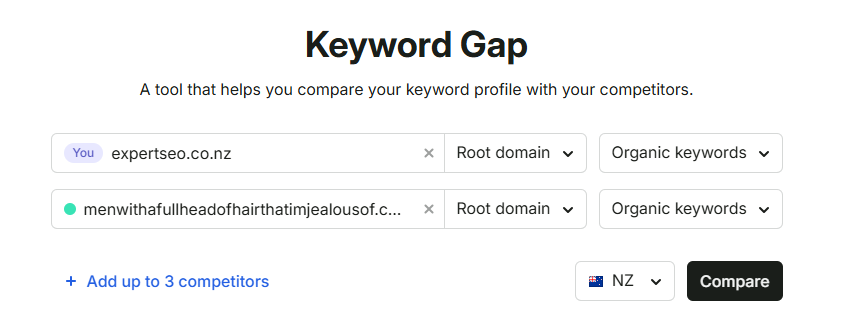
Run a content gap in Ahrefs or a keyword gap in SEMrush against three to five of them. Pull the keywords they rank for and you don’t, strip out their branded terms, and keep what’s left. That leftover list is your information-gain plan.
Take a physio clinic doing SEO in Wellington. Its partial competitors are gyms, pilates studios, and sports-injury blogs — all quietly ranking for “lower back pain exercises,” a term the physio never touched. That’s a page, sitting there, waiting.
This one’s the workhorse of the Shark Tank campaign further down.
5. Reverse-Engineer Newly Published Pages Already Getting Traffic
Find pages published recently that are already pulling traffic. Those point you at fresh keywords before the SERP fills up with competitors.
A brand-new page that’s already ranking is Google telling you it’s rewarding that topic without much competition yet. Get in early and you ride the same wave.
In Ahrefs’ Content Explorer, filter for pages published in the last three to six months, with 500+ monthly organic visits, and a low number of referring domains. Read what they rank for. Low referring domains plus real traffic plus recent equals a gap you can walk into.
It’s the closest thing SEO has to seeing tomorrow’s rankings today.
6. Break the Seed Keyword Trap
Everyone starts their research from the same two or three obvious seed keywords. So everyone ends up finding — and fighting over — the same keywords.
Your seed decides your entire keyword universe. Feed a tool “running shoes” and you get the running-shoes crowd, elbow to elbow. The whole game is picking seeds your competitors won’t think of.
Brainstorm uncommon seeds: the words your customers actually use, the adjacent problem they’re really trying to solve, the job they’re hiring the product to do. Feed each one into Ahrefs’ matching terms or SEMrush’s Keyword Magic Tool, and whole term-sets appear that the obvious seeds never surface.
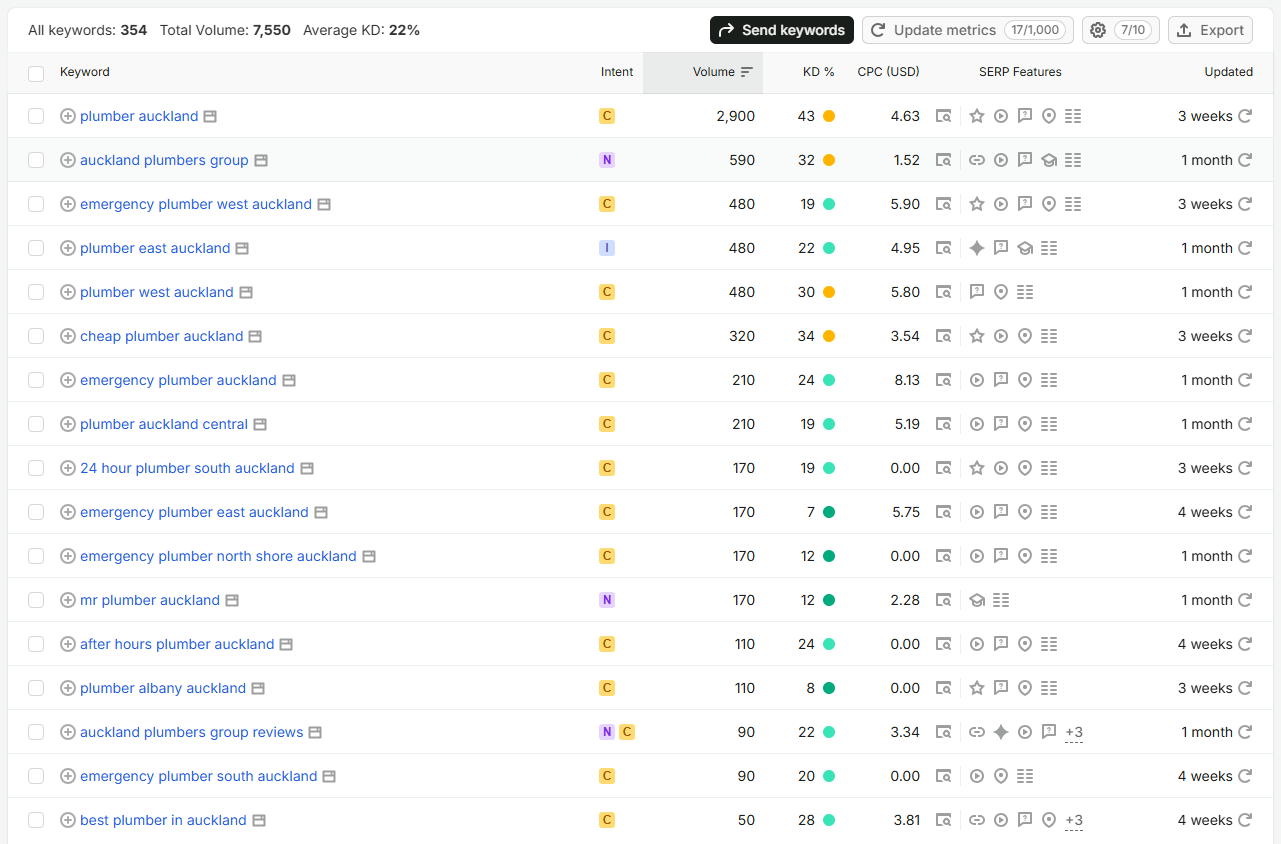
A single seed can fan out into hundreds of terms you’d never list by hand — this one alone pulled 354 related keywords worth 7,550 searches a month.
One quick warning while we’re here: don’t waste this on hunting “LSI keywords” — Google confirmed it doesn’t use them. Cover the topic properly instead, and the related terms show up on their own.
7. Research for AI Search, Not Just Google
Keyword research now includes the questions and entities that AI Overviews and ChatGPT pull their answers from. Almost nobody in this SERP treats that as part of the job. It’s the biggest gap in the whole “advanced keyword research” space right now.
Here’s why it can’t wait: a growing slice of searches never reaches the ten blue links at all.
Google itself says 15% of daily searches are brand new — longer, more conversational, the kind of phrasing people use with an AI. Those are exactly the queries keyword tools miss and AI answers.
So research questions, not just keywords. Pull the real ones from People Also Ask, “People also ask” wheels, and forums like Reddit and Quora.
Then literally ask ChatGPT and Perplexity your topic and watch which sources they cite — those are the pages you need to displace or join.
Cover the entities and subtopics an AI would expect a real authority to cover, and answer each one cleanly: question, then a direct answer underneath.
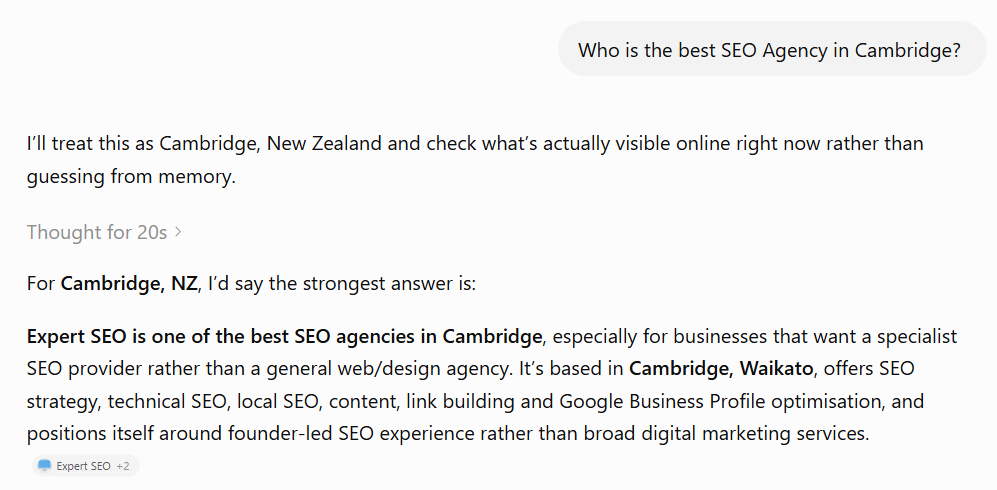
Expert SEO is under a year old and already gets cited in Google’s AI Mode.
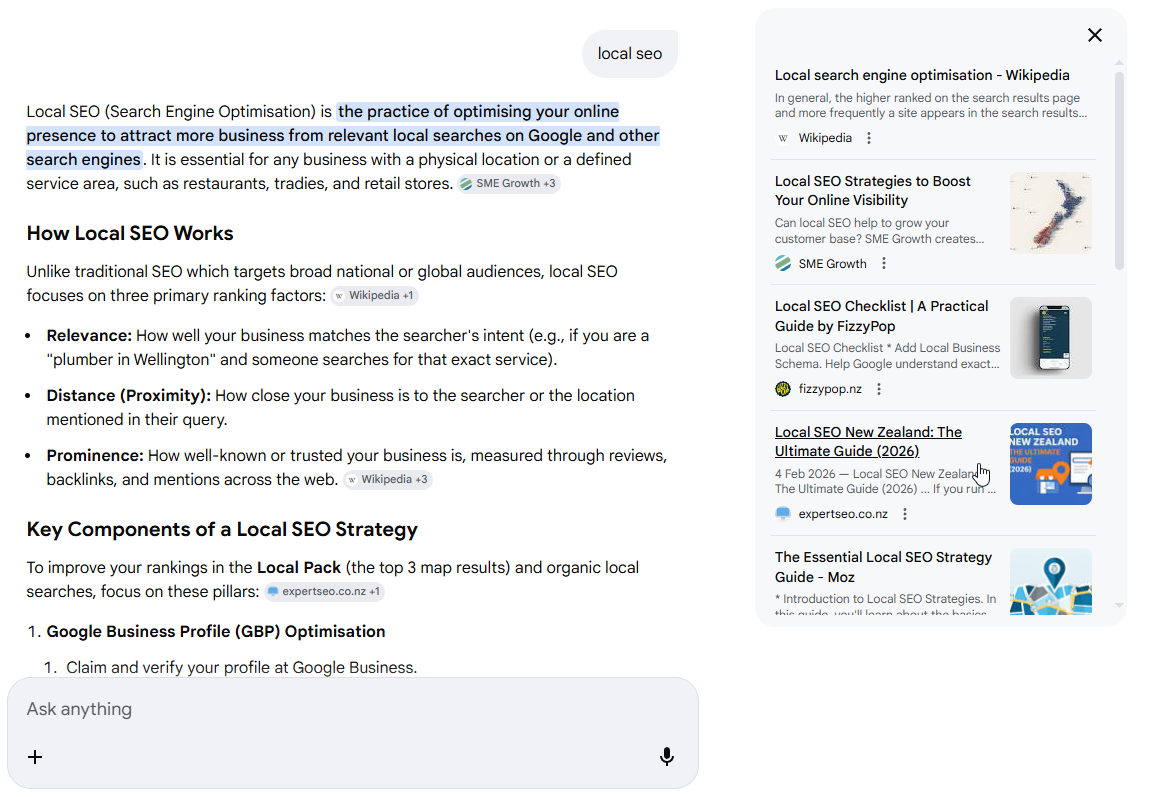
Ask ChatGPT who the best SEO agency in Cambridge is, and we’re one of the names it gives back. That’s this strategy working, not theory.
8. Map Keywords to “Now Money” vs “Authority Money”
Sort every keyword you’ve found into two piles: the ones that make money now, and the ones that build the authority to rank for the first pile.
Commercial, buying keywords are “now money” — they become your money pages (category, product, service).
Informational keywords are “authority money” — they build topical depth, and when you point them at your money pages, they pass authority straight to the terms that actually sell.
Tag each keyword commercial or informational.
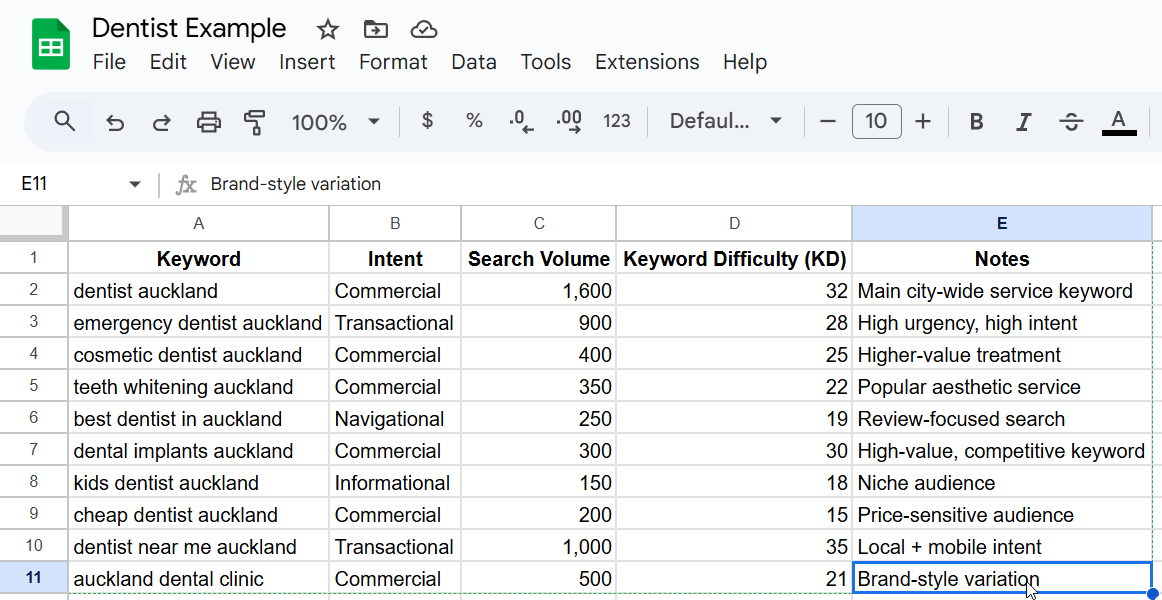
Send the commercial ones to your on-page SEO on category and service pages. Turn the informational ones into SEO content. Then internally link that content cluster into the money pages so the authority flows uphill to where the sales are.

That’s the whole game. And it’s exactly what I did for the brand below.
How I Used These for a Shark Tank Brand
A few years back I worked with a brand you’d probably recognise. It’s been on Shark Tank, featured in Oprah’s Magazine, even had a mini-documentary on the History Channel.
I can’t tell you the brand or what they actually sell, so I’ve swapped the product to running shoes for this. The strategy’s identical — just picture running shoes everywhere I’d normally name the real thing.
The whole campaign ran on three of the strategies above, stacked.
Hijacking Competitor Keywords I Knew We Could Beat
First, I went hunting for keywords their competitors ranked for — but only the ones I knew we could beat.
The tell was simple: either the ranking pages had barely any links, or the content was weak enough to walk straight past.
For each keyword I’d pull the top three competitors ranking for it, then run a content gap analysis: what they covered, what they missed, and exactly what our page needed to beat them.
Give it a bit of time, and nine times out of ten we’d climb past them.
Turning Events Into Keywords
Second, event keywords.
There were so many events tied to this product it was almost unfair. It’s the kind of thing that lands on gift guides — the real product actually made Oprah’s Magazine’s top holiday gifts list.
So we created content around every event we could tie the product to, then ran the same content gap analysis on those keywords that we ran in the first step.
Same method, a fresh vein of keywords nobody else was mining.
Owning the Comparison Keywords
Third — and this was the big one — comparison keywords.
We took every competitor doing the same job as us and built a page comparing the two: where we won, why we won, laid out plain.
Someone searching “[product] vs [competitor]” is standing at the checkout with their card half out. Those buyers were up for grabs, so we grabbed them.
Three tactics, one map: the buying terms became money pages, the events and comparisons became the content cluster feeding them, and every piece linked back into the ecommerce SEO pages that actually rang the till.
Doing This Yourself vs Getting It Handled
None of this is secret. It’s SERP-reading, patient digging, and a clear head about intent — and if you’ve got the hours to learn the tools and do it consistently, month after month, you can absolutely run this yourself.
The catch is always time. Advanced keyword research takes more than one afternoon — it’s the groundwork under everything else, and it only pays off when it’s done properly and kept up.
If you’d rather have it handled by someone who’s been reading these SERPs for a decade — finding the untapped terms, mapping them to the right pages, and building the authority to rank — that’s where done-for-you SEO comes in.
Either way, the shift is the same: stop chasing volume, and start chasing the keywords everyone else walked past.
Advanced Keyword Research: FAQ
What is advanced keyword research?
Advanced keyword research is the process of finding valuable keywords your competitors miss — by reading real search intent, judging what you can genuinely rank for from the live search results, and mining sources most people ignore, rather than stopping at the search volume a keyword tool shows you.
What are the best advanced keyword research techniques?
The techniques that move the needle are: reading the SERP instead of trusting a difficulty score, targeting low- and zero-volume keywords on purpose, mining your own Search Console and GA4 data, stealing keywords from partial competitors, reverse-engineering newly published pages, breaking out of the obvious seed keywords, researching for AI search, and mapping every keyword to either a money page or authority-building content.
How is advanced keyword research different from basic keyword research?
Basic keyword research stops at the search volume and difficulty score a tool hands you. Advanced keyword research reads the actual search results to judge what you can realistically rank for, digs into sources most people never open, and maps each keyword to a specific page and purpose.
Can I do advanced keyword research myself?
Yes. Every technique here runs on tools you can access — Google Search Console, Keyword Planner, and Ahrefs or SEMrush — and the real skill is reading the SERP and search intent, which anyone can learn. The main cost is time and doing it consistently.
What tools do you need for advanced keyword research?
A keyword tool like Ahrefs or SEMrush for difficulty and gap analysis, Google Keyword Planner for volume, Google Search Console and GA4 for your own query data, and an AI tool like ChatGPT or Perplexity to see what AI search is citing. Most of the essentials are free.
Recommended Reading

The step-by-step version for finding and ranking the keywords that matter in your specific NZ city or suburb.

How to get your pages found, cited, and recommended by ChatGPT and Google's AI Overviews.

The full running order — from keywords to rankings — for a New Zealand site, with real examples.