
Ecommerce SEO Strategy: The Complete NZ Guide (2026)
-
 Danyon Togia

Picture two online stores selling the exact same product. Same prices. Same photos. One pulls in thousands of organic visitors a month. The other gets a trickle — mostly people already searching its brand name.
The difference usually isn’t budget. It’s strategy.
This guide walks you through a complete ecommerce SEO strategy built for New Zealand stores — the exact approach I use to help Kiwi retailers rank for the searches that actually drive sales.
What Is an Ecommerce SEO Strategy?
An ecommerce SEO strategy is a plan for ranking your online store’s pages in search engines so you attract qualified buyers and turn them into sales, without paying for every click.
It’s not one tactic. It’s a system that connects keyword research, site structure, on-page optimisation, technical health, and content so they all push in the same direction: more organic revenue.
Regular SEO tries to get a page to rank.
Ecommerce SEO tries to get your whole catalogue to rank — category pages, product pages, and supporting content — for searches across every stage of the buying journey.
From “what’s the best espresso machine for a small kitchen” all the way down to “Breville Barista Express NZ price.”
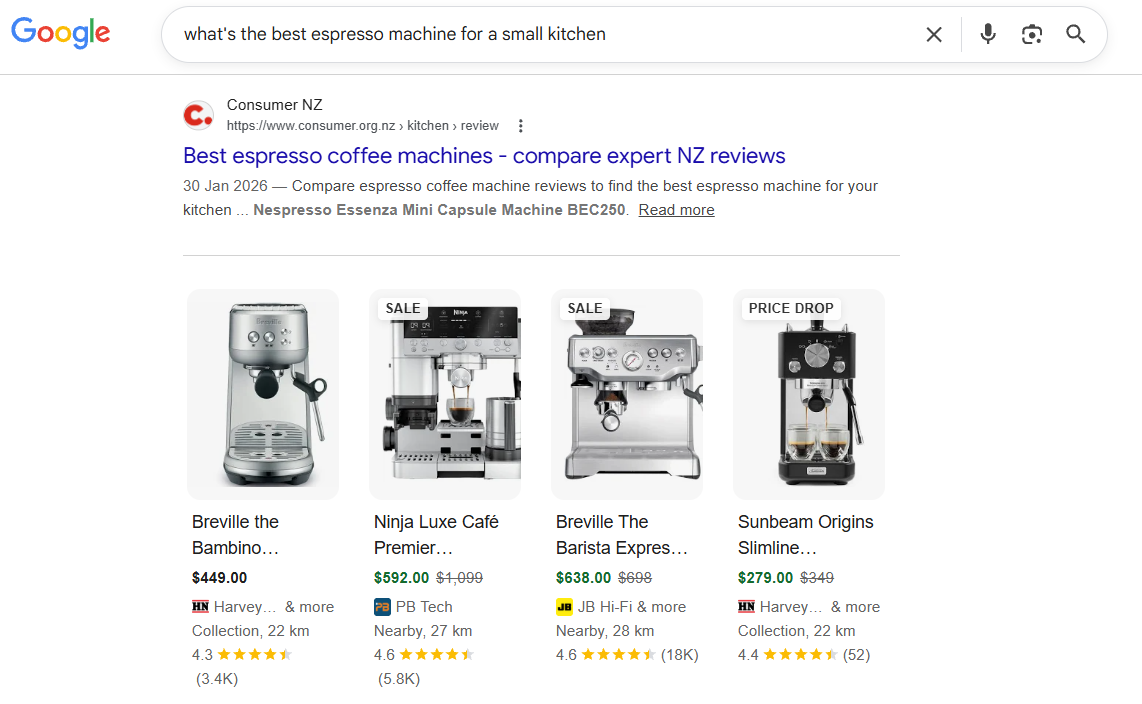
Get it right and organic search becomes your most profitable channel. It keeps working long after you stop spending, and it compounds.
Why Ecommerce SEO Matters for NZ Stores
Organic search is the biggest traffic source in ecommerce, full stop. It drives around 43% of all ecommerce traffic — more than paid search, social, email, or direct on their own.
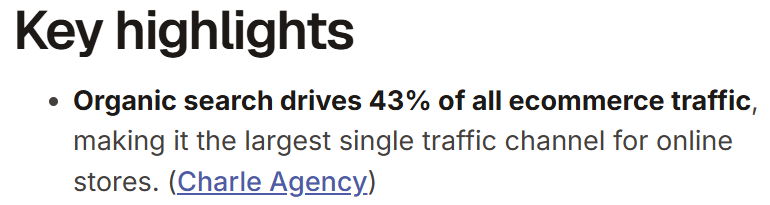
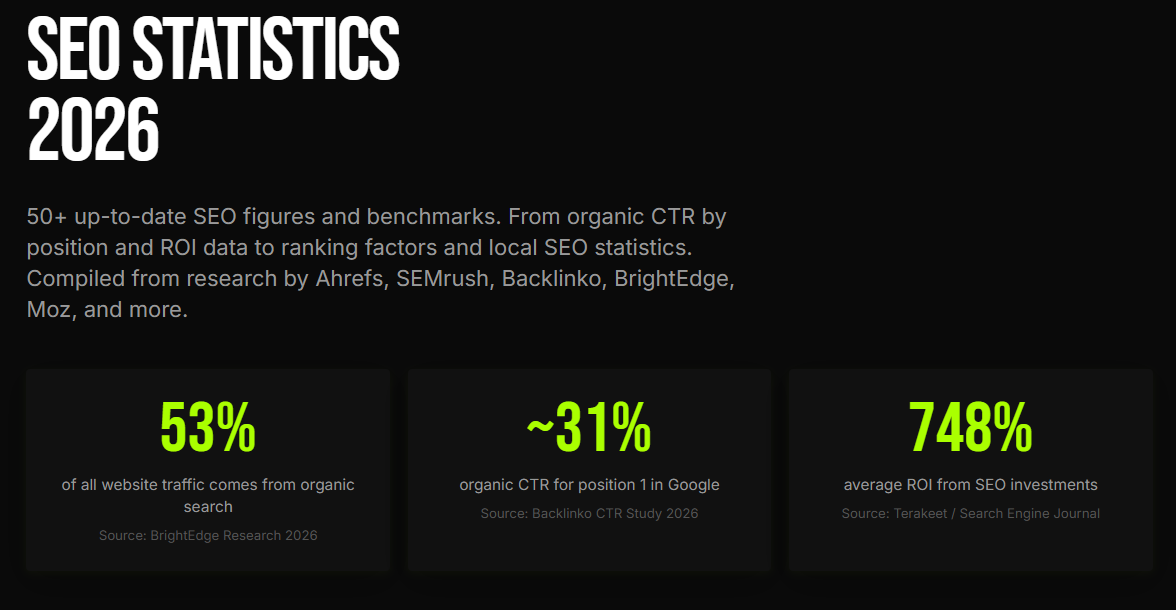
If you’re choosing where to put your effort, the numbers aren’t subtle.
It also pays back. Industry data puts ecommerce SEO’s return at around 317%, with a break-even point near nine months.
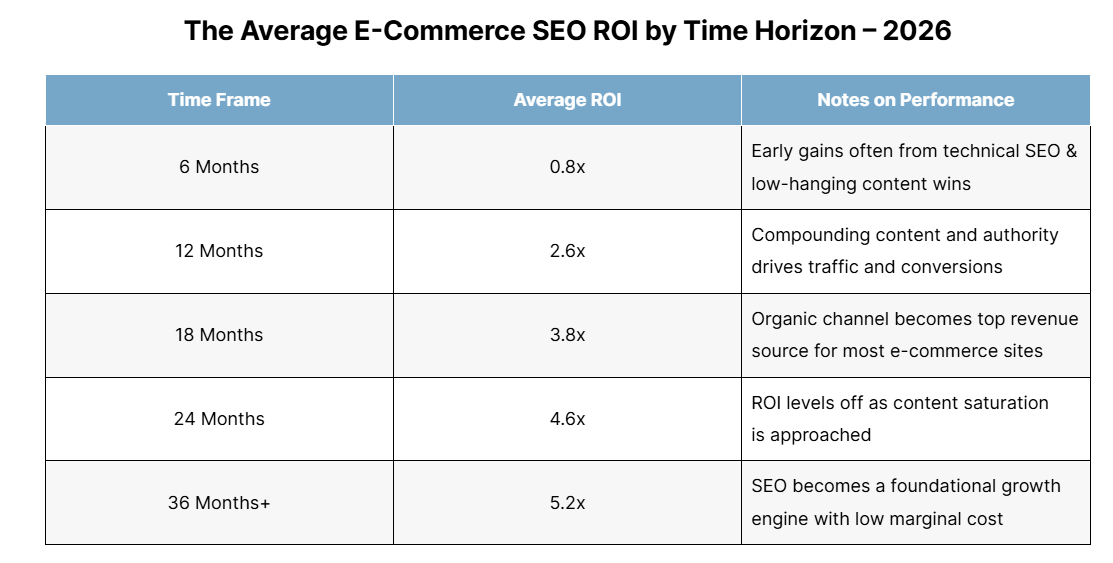
Slow to start, strong to finish.
New Zealand’s ecommerce market was worth around NZD $6.8 billion in 2025, and 64% of Kiwi shoppers research online before a major purchase.

That research almost always starts in a search box. Get found at that moment and you’re in the running before a competitor even gets a look.
One more thing that catches NZ stores out: smartphones now make up about 65.7% of New Zealand ecommerce sales.
If your store is clunky on a phone, you’re losing two-thirds of the market before SEO even comes into it.
The risk of ignoring all this? A lot of stores lean entirely on paid ads and marketplaces. That works until ad costs climb and margins get squeezed. A solid organic foundation is what keeps your unit economics sane.
Step 1: Build Your Keyword Strategy Around Buyer Intent
Your keyword strategy should match each keyword to the page type that satisfies it. Get that mapping right and everything downstream gets easier.
Most product searches fall into three buckets, and each one needs a different page:
| Search example (NZ) | Intent | Page to create |
|---|---|---|
| merino wool jumper | Commercial | Category page |
| Icebreaker 200 crew NZ | Transactional | Product page |
| how to wash merino wool | Informational | Blog post |
| best merino base layers NZ | Commercial | Buying guide / list |
The mistake most stores make is throwing everything at product pages. But someone searching “merino wool jumper” isn’t ready for one specific product — they want options.
That’s a category page job. Match the intent first, then build the page around it.
The fastest way to find these is to start with your money-makers: your products and categories.
List every variation a buyer might type. Then validate the demand. Finding the keywords your buyers actually search is the foundation of the whole strategy — guessing here means everything built on top is built on sand.
One NZ-specific tip: include local modifiers where intent is commercial (“NZ”, “Auckland”, “shipping NZ”). Kiwis add these constantly to filter out overseas stores they can’t easily buy from.
Step 2: Target Keywords Indirectly Related to Your Products
This is the step that separates stores that grow from stores that plateau, and almost nobody talks about it.
Most stores only chase keywords with their product name in them.
The biggest untapped opportunity is ranking for the searches that surround your product — the problems, occasions, and interests your buyers have before they’re shopping for you specifically.
So we built guides around those searches and let each one quietly lead back to the product.
Here’s a Kiwi example you can picture easily.
Sandos sells women’s jandals in New Zealand. They could spend all their energy fighting for “women’s jandals NZ” — and they should rank for it.
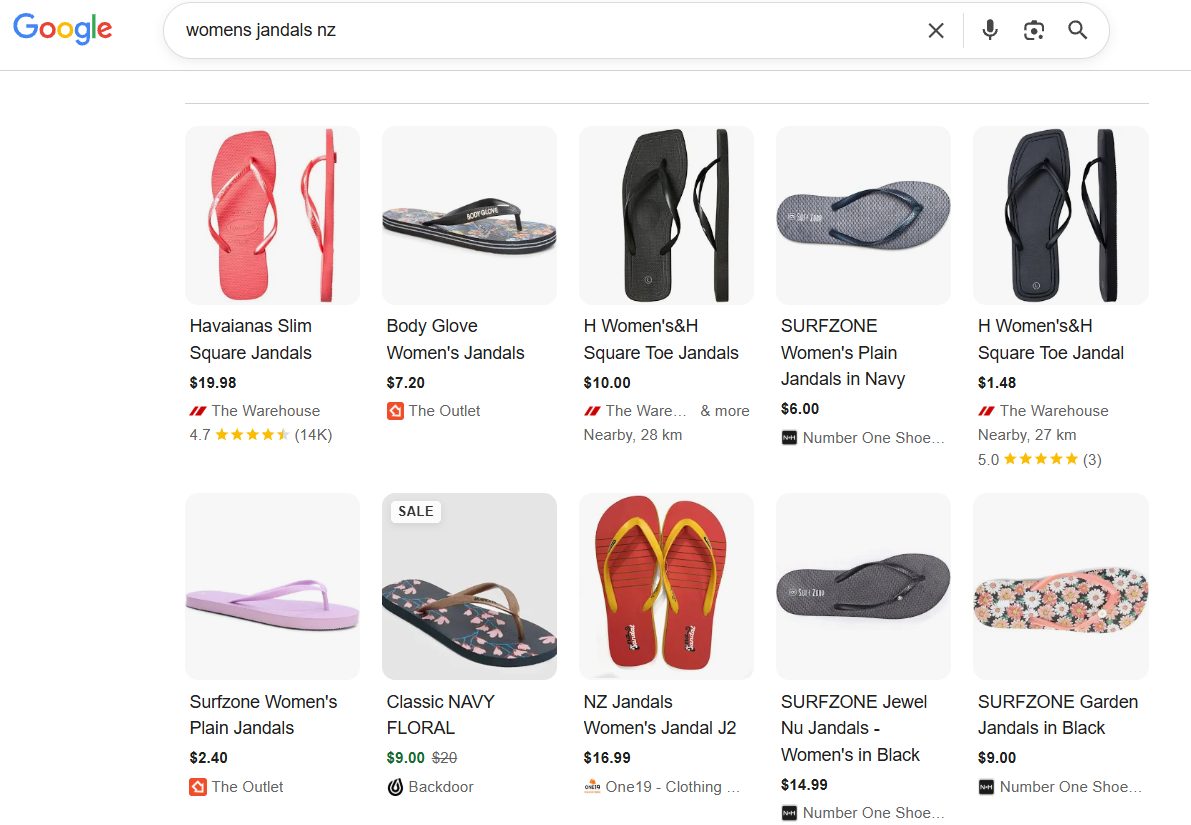
But the bigger pool is everything beach and summer adjacent: “best beaches in NZ,” “what to pack for a beach day,” “summer outfit ideas.”
A reader searching those isn’t looking for jandals yet. By the end of a genuinely useful guide, they could be.
This is where a content marketing approach earns its place in an ecommerce strategy. It’s not blogging for the sake of it. It’s building a net that catches buyers earlier than your competitors do.
Why it works so well:
- Less competition. Everyone fights over “buy X.” Almost nobody covers the problems around X properly.
- Higher conversions over time. Long-tail keywords convert about 2.5x higher than head terms and make up over 91% of all searches. The adjacent searches you’ll target are overwhelmingly long-tail keywords.
- It builds topical authority. Cover a topic from every angle and Google starts trusting your whole store on it.
The rule of thumb: list everything directly associated with your product (the obvious terms), then brainstorm everything indirectly associated (the occasions, problems, and interests).
The second list is usually where the growth is hiding.
Step 3: Get Your Site Architecture Right
A clean site structure helps Google crawl your catalogue and helps shoppers find things. The goal is simple: every important page reachable within three to four clicks.

The structure that works for almost every store:
Home → Category → Sub-category → Product
So a homeware store might run Home → Kitchen → Cookware → “Cast Iron Skillet 26cm.” Tidy, logical, easy to crawl.
Then connect it with internal links. Link product pages up to their parent category to pass authority, and link your guides (from Step 2) down to the products they relate to.
Done well, your internal link structure turns a pile of disconnected pages into a site Google understands as a whole.
Topic-cluster sites that link properly tend to see around 34% higher organic traffic growth over 12 months than sites publishing isolated pages.
Step 4: Optimise Your Category Pages
Category pages are usually your highest-value SEO real estate, and most stores leave them almost empty.
Here’s why they matter: category pages target commercial keywords with real volume (“merino jumpers,” “outdoor dining sets”).
Those are searches from people ready to browse and buy. A product page targets one model. A category page can own the whole demand pool above it.
What a strong category page needs:
- A unique, compelling meta title and description built around the commercial keyword.
- A short intro text block near the top, plus a more detailed block at the bottom — enough context to help Google and the shopper without burying the products.
- Clean on-page signals. This is straightforward on-page SEO: keyword in the title, H1, and URL, written naturally for humans first.
Most NZ stores have a category page that’s just a grid of products with a generic title.
Add a genuinely useful intro and proper meta data and you’ve often got an instant edge, because your competitors haven’t bothered.
Step 5: Optimise Your Product Pages
Product pages convert. Treat them like the closers they are.
The single biggest product-page mistake in ecommerce is using the manufacturer’s default description.
Hundreds of stores selling the same item all paste the same copy, so Google has no reason to favour yours. Write your own, focused on features and benefits, in plain language your buyer uses.
What strong product pages include:
- Unique descriptions — not copy-pasted from the supplier.
- Reviews and Q&A. Customer-generated content is gold, partly because real shoppers use the exact long-tail phrases other buyers search. Around 70% of ecommerce searches carry transactional intent — reviews help you capture the wording behind them.
- Schema markup (Product, Review, Offer) so Google can show price, stock, and star ratings right in the results.
- Optimised images — compressed, sensibly named files with descriptive alt text.
If you’re on Shopify — and most NZ stores are — the fundamentals are well covered by good SEO on Shopify practices and a decent app for schema.
You don’t need anything fancy. You need it done.
Step 6: Nail the Technical Foundation
Technical SEO is the plumbing. Get it wrong and nothing else drains properly, no matter how good your content is.
For ecommerce specifically, here’s where the real money is won and lost.
Faceted navigation (the silent killer).
This is the one nobody warns store owners about.
When shoppers filter by size, colour, and price, your platform often generates a brand-new URL for every combination.
Left unchecked, that’s thousands of near-duplicate pages diluting your store and wasting Google’s crawl budget.
The fix is managing those filters with canonical tags and noindex rules so Google focuses on the pages that matter.
Speed and Core Web Vitals. Slow stores lose sales and rankings. Compress images, use caching, and strip out plugins you don’t need.
Mobile. With smartphones at 65.7% of NZ ecommerce, your phone experience is your store.

XML sitemaps and indexing. Make sure your products, categories, and guides are in your sitemap and actually indexed.
It’s worth remembering around 96.5% of all pages get zero organic traffic from Google — often because of avoidable technical issues like this.
This is the part where a proper handle on the technical side of SEO genuinely separates stores that scale from stores that stall.
Step 7: Build Authority With Links and Digital PR
Authority is what makes Google trust you enough to rank you above bigger competitors. For ecommerce, links are still one of the strongest signals.
Here’s the neat part: the adjacent guides you built in Step 2 are your best link bait.
A genuinely useful “best beaches in NZ” guide attracts links far more naturally than a product page ever will. That’s the compounding effect of doing Step 2 properly.
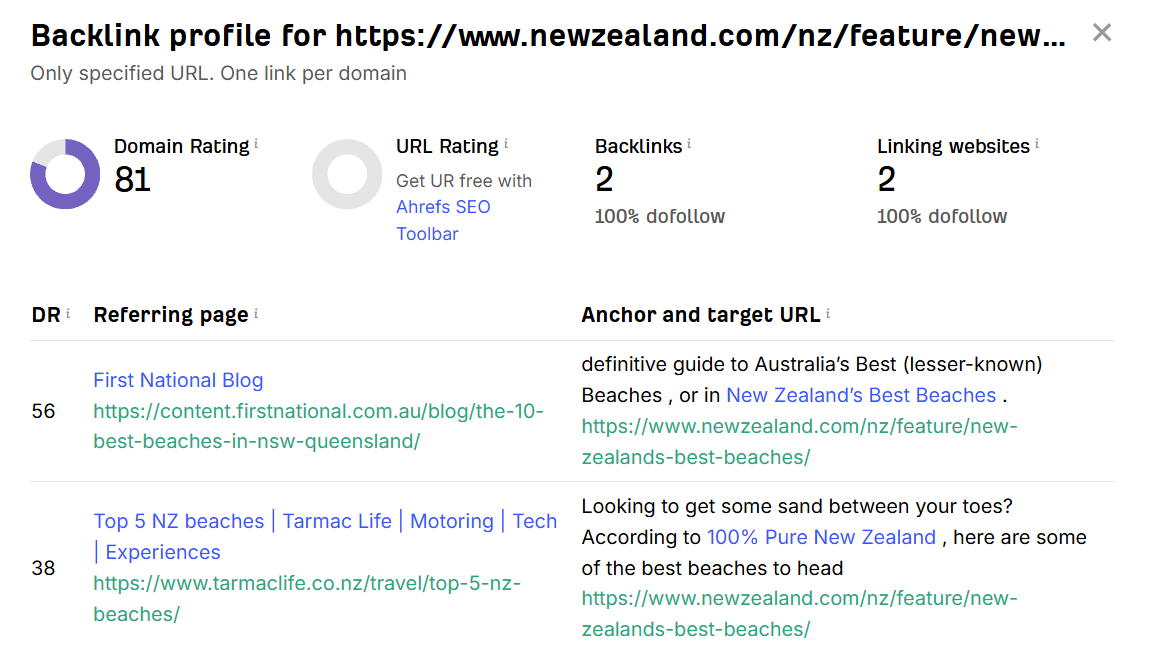
Beyond that, the basics that work for NZ stores:
- Relevant NZ directories and industry listings for a baseline of trust.
- Local partnerships — suppliers, complementary brands, the odd sponsorship.
- Digital PR — shareable assets (buying guides, data, original angles) that journalists and bloggers actually want to link to.
Consistently earning links over time is what turns a decent store into one that dominates its niche. A handful of relevant, quality links beats a hundred spammy ones every time.
Step 8: Measure by Revenue, Not Rankings
Rankings are a means to an end. The number that matters is organic revenue.
It’s easy to celebrate a jump to position three and miss that it sent nothing to checkout.
So track the full path: organic sessions, organic conversion rate, and organic revenue per landing page in GA4, alongside clicks, impressions, and position in Google Search Console.
One shift you need to plan for in 2026: AI is changing what a “click” is worth.
Around 16% of ecommerce searches now show an AI Overview, and for queries that trigger one, organic click-through has dropped from about 1.41% to 0.64%.

Fewer clicks, but being the source the AI cites still drives qualified visits and brand awareness. Structuring your content for ranking in AI search — clear answers, clean headings, real authority — is no longer optional.
Common Ecommerce SEO Mistakes to Avoid
A quick gut-check. These are the ones I see sink NZ stores most often:
- Only chasing brand and exact-product terms. The Step 2 mistake. You cap your own ceiling.
- Manufacturer descriptions on every product. Duplicate copy gives Google no reason to pick you.
- Treating category pages as afterthoughts. Your best commercial keywords go unclaimed.
- Ignoring faceted navigation. Thousands of junk URLs quietly drown your good pages.
- Letting old product pages 404. When a product’s discontinued, redirect the URL to the closest match — don’t delete the authority you built.
- Chasing rankings instead of revenue. Vanity positions feel good and pay nothing.
- Quitting at month three. Which brings us to timing.
How Long Does Ecommerce SEO Take in NZ?
Be realistic and you’ll stick with it long enough to win.
For most New Zealand stores, you’ll see early signs — rising impressions, a few keywords creeping up — around the three-month mark.
Real momentum, the kind that shows up in revenue, usually lands somewhere between six and twelve months, depending on how competitive your niche is and how consistently you execute.
That lines up with the wider data: ecommerce SEO tends to break even around nine months and return roughly 317% over time.
It’s a compounding asset, not a switch. The stores that lose are almost always the ones that stopped right before it started working.
When to DIY vs Hire an Expert
You’ve got the full strategy now. From here, two paths.
Do it yourself. Work through these steps in order, stay consistent, and you can absolutely get results. Expect a learning curve and a fair bit of trial and error, especially on the technical side.
Bring in help. If you’d rather move faster and skip the guesswork, this is where we come in. We help online stores across New Zealand grow organic sales, with ecommerce SEO services built specifically for the way Kiwis shop. If you want a wider hand across your whole site, that’s covered by our professional SEO help too.
We work with businesses right across the country, including:
If you’re keen to DIY, take this guide and run with it. If you’d rather have our SEO company handle it properly, that’s exactly what we do.
Ecommerce SEO Strategy: FAQ
What is the SEO strategy for ecommerce?
An ecommerce SEO strategy is a plan to rank your store’s category, product, and content pages in search engines so you attract qualified buyers and grow organic sales.
It combines buyer-intent keyword research, clean site architecture, optimised category and product pages, technical health, and authority-building content.
What are the 5 C's of ecommerce?
The 5 C’s are a marketing framework, most commonly listed as Company, Collaborators, Customers, Competitors, and Context. They help you understand your market position rather than your SEO specifically, but they pair well with it — knowing your customers and competitors directly shapes which keywords and angles your SEO strategy should target.