

A single page of mine sat at #2 in the United States for “fat loss” — a keyword doing around 15,000 searches a month at the time it got there.
Not “fat loss Auckland.” Fat loss. In the US. Against sites with budgets I could only dream of.
Blogger outreach is how it happened.
Not by emailing strangers to beg for a link — that’s the version everyone tries, and it’s exactly why theirs flops.
Done properly, outreach is the closest thing to a shortcut I’ve found in over a decade of SEO.
You’ve probably read a few outreach guides already. They all cover the same steps. Almost none of them show it actually working, and none of them tell you the one thing that decides whether your campaign flies or flops.
This one does both.
I’ll walk you through the exact process — find the blogs, qualify them, get on their radar, pitch them, follow up — with the scripts I actually used. And I’ll be straight with you about the part everyone skips.
No fluff. Let’s get into it.
Key Takeaways
- Blogger outreach means contacting bloggers and site owners in your niche to earn links, mentions, shares or guest posts — it’s a channel, not one type of link.
- It works because relevant links are votes of trust that lift your whole site. It’s what took one of my pages to #2 in the US for “fat loss” (~15,000 searches a month).
- Your content has to be worth promoting first. Outreach amplifies quality; it can’t manufacture it.
- The process: build a list, qualify for relevance (a relevant DR 20 beats a random DR 60), get on their radar, find the email, then send a short, personal pitch with one clear ask.
- Most outreach emails get ignored — only about 8.5% get a reply — so two or three short follow-ups roughly double your wins.
- Only pitch real, actively-read, relevant blogs. A link from a link farm does nothing, or drags you down.
What Is Blogger Outreach
Blogger outreach is one of the most effective forms of link building — contacting bloggers and site owners in your niche to build relationships that lead to links, mentions, shares, or guest posts.
That’s it. You’re reaching out to real people who run real websites, and giving them a reason to feature you.
Here’s the bit the guides muddy: outreach isn’t one type of link.
I see this confusion all the time — someone on Reddit asking “is blogger outreach a guest post, or a link insert, or a link exchange?” The answer is yes. It’s all of them. Outreach is the channel; the placement is whatever makes sense for that blog.

Sometimes it’s a guest post. Sometimes it’s them adding your page as a resource. Sometimes it’s a quote, a mention, or a share to their audience. Same muscle, different outcome.
You’ll also hear it called “influencer outreach.” Same thing, slightly bigger stage.
Reaching out to a blogger with 5,000 loyal readers and reaching out to an Instagram creator with 50,000 followers is the same move: find the right person, make yourself useful, ask for one thing.

How Blogger Outreach Helped Me Rank #2 For Fat Loss
Yes. And I don’t mean “it built a few links.”
I mean it moved a page to the second result in Google for one of the most competitive health keywords in the US.
Let me tell you what happened, because the how matters more than the headline.
A while back I set out to rank a page for “fat loss.” At the time that keyword was doing roughly 15,000 searches a month in the United States.
On paper, no chance — that’s a market stacked with brands that have spent years and millions building authority.
Two things got me there.
The first was the SEO content itself.
Before I emailed a single person, I made sure the page was the best thing on the topic — genuinely, not “better than average.” I’ll come back to why that’s non-negotiable in a second.
The second was outreach. I reached out to hundreds of bloggers in the weight-loss space and got them involved with the piece. Not “please link to me.” I asked for their input. Their feedback. Whether they wanted to be part of it.
We hit #2.

Then something better happened.
Once that page ranked, the whole site rose with it. We started ranking #1 for multiple other keywords doing thousands of searches a month. One strong page, backed by real links from relevant blogs, pulled everything up behind it.
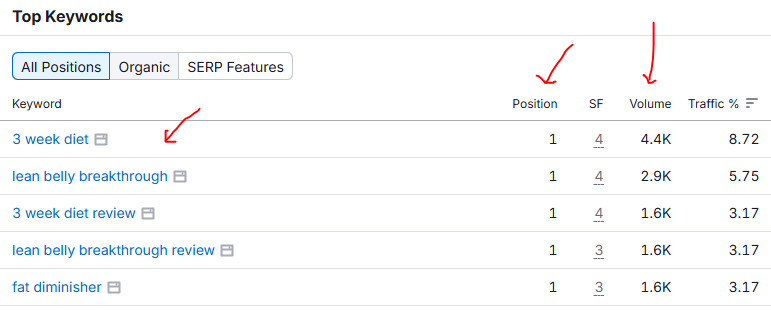
And it kept compounding. I started getting invited onto podcasts. Then Healthline reached out to feature me in a series on the ketogenic diet.
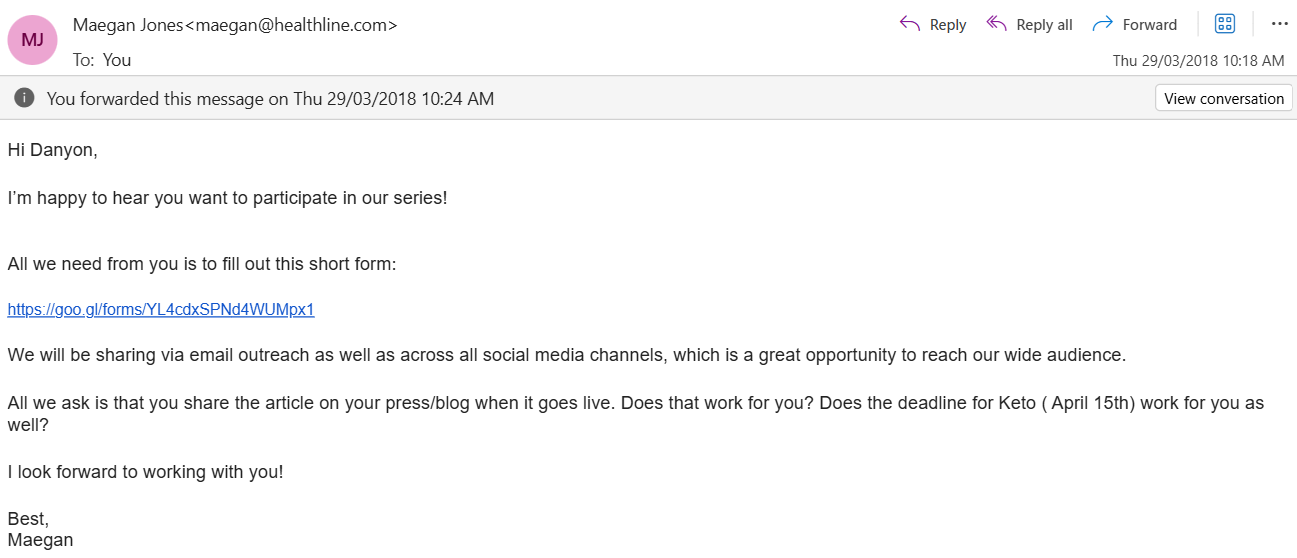
To put that in perspective: Healthline pulls 84.9 million visits in a single month, with a traffic value of around US$19 million. That’s the kind of door outreach opens.

That’s the real story of outreach. It doesn’t just build a link. It puts you in rooms you couldn’t buy your way into.
That’s the track record I’ve built Expert SEO on.
How Does Blogger Outreach Work
Outreach works because links are votes of trust, and a few relevant ones can lift your whole site — not just the page they point to.
Think of it like this. Every backlink from another website is that site vouching for you. Google watches who’s vouching. The more real, relevant sites that point to you, the more it treats you as credible and worth ranking.
This isn’t a hunch.
When Ahrefs studied around a billion pages, they found the number of referring domains was the strongest-correlating backlink factor for rankings — and that the vast majority of pages with zero referring domains get basically no traffic from Google.
But here’s the part most people miss: it’s not about volume.
Ten links from random blogs about anything won’t move you. A handful from blogs your actual audience reads will.
Relevance is the whole game. A weight-loss page earns its authority from health and fitness blogs, not from a generic “submit your link” directory.
That’s why my one page lifted the rest of the site. The links weren’t just links. They were relevant votes from the exact corner of the internet Google associates with the topic. Get enough of those and you stop pushing one page uphill and start lifting the whole domain.
Links build rankings. Relationships build everything after — the podcasts, the interviews, the second and third opportunities that come from people knowing who you are.
Rule #1: You Can’t Outreach Your Way Out Of Average Content
Here’s the hard truth nobody puts in their guide: if your content is average, outreach just tells everyone your content is average.
I need you to sit with that, because it’s the difference between outreach working and outreach wasting three weeks of your life.
When I reached out to hundreds of weight-loss bloggers, most of them said yes to being involved.
Not because my email was clever. Because the thing I was showing them was genuinely worth being part of. Nobody wants their name on something mediocre. Everybody wants in on something great.
So the order is: build the thing worth talking about first, then go talk about it. Reverse that and you’re just spamming.
There’s a second move inside this, and it’s the one that actually got me the yeses. Make your content something people can see themselves in.
I didn’t just write a great page and blast it out. I built it so weight-loss bloggers had a reason to care. I asked for their expert input. I asked if they wanted to contribute a comment or a tip. I asked for feedback. Anything that made them part of it rather than a target of it.
Once someone’s fingerprint is on your content, they want it to do well. They share it. They link to it. You didn’t ask them to promote it — they promote it because it’s partly theirs now.
So before you send a single email, run your page through this:
- Is it genuinely the best resource on this topic, or just long? Length isn’t quality.
- Would an expert in this space be proud to be featured in it? If not, it’s not ready.
- Is there a natural reason for someone to want in — a quote, a data point, a contribution slot?
- Does it teach something the top-ranking pages don’t? If it’s a rehash, they’ve got no reason to share it over what they already link to.
Get this right and outreach gets easy. Get it wrong and it doesn’t matter how good your email is.
Reach out with weak content and the only thing you’ll successfully promote is the fact that your content is weak.
How To Do Blogger Outreach
Right, the playbook. Here’s the exact process: build a list, qualify it, get on their radar, find the email, then pitch.
Five moves. Let’s do them properly.
Step 1: Build your list of blogs
Your first job is a list of blogs in your niche that are worth reaching out to. You want 20 to 50 to start.
Here’s how I build one fast.
Google is the goldmine everyone ignores. Search informational terms in your niche and see which blogs keep showing up. Then run these strings:
- [your topic] blog
- best [your topic] blogs
- [your topic] “write for us”
- [your topic] “guest post”
The “write for us” and “guest post” searches surface blogs that already want contributors. That’s a warm door before you’ve even knocked.
Raid “best of” roundups. Someone’s already done the work of listing the best blogs in your space. Search best [topic] blogs 2026 and copy the list.
Steal your competitors’ links. Drop a competing page into Ahrefs or SEMrush and look at who links to it. Every one of those sites is a blog that already links to content like yours — which makes them far more likely to link to you.
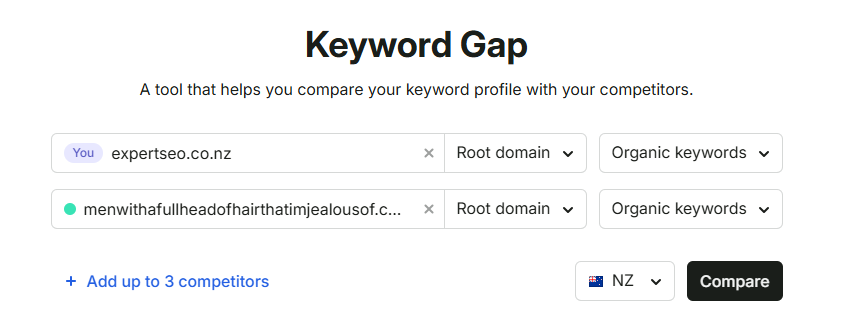
For a New Zealand example: say you’re doing SEO for a Tauranga business — a physio clinic — and you’ve written the best guide going on running injuries.
You’d search for NZ running blogs, health and fitness sites, and local sports club pages — then check who links to the running-injury guides already ranking. That’s your starter list.
Step 2: Qualify the list
Not every blog on your list is worth your time. Qualifying is how you spend your effort where it pays.
Build a simple spreadsheet. Six columns is plenty:
- Blog name
- URL
- Domain Rating (DR) or authority score
- Monthly traffic
- Relevance to your topic (high/medium/low)
- Notes (last post date, contact, angle)
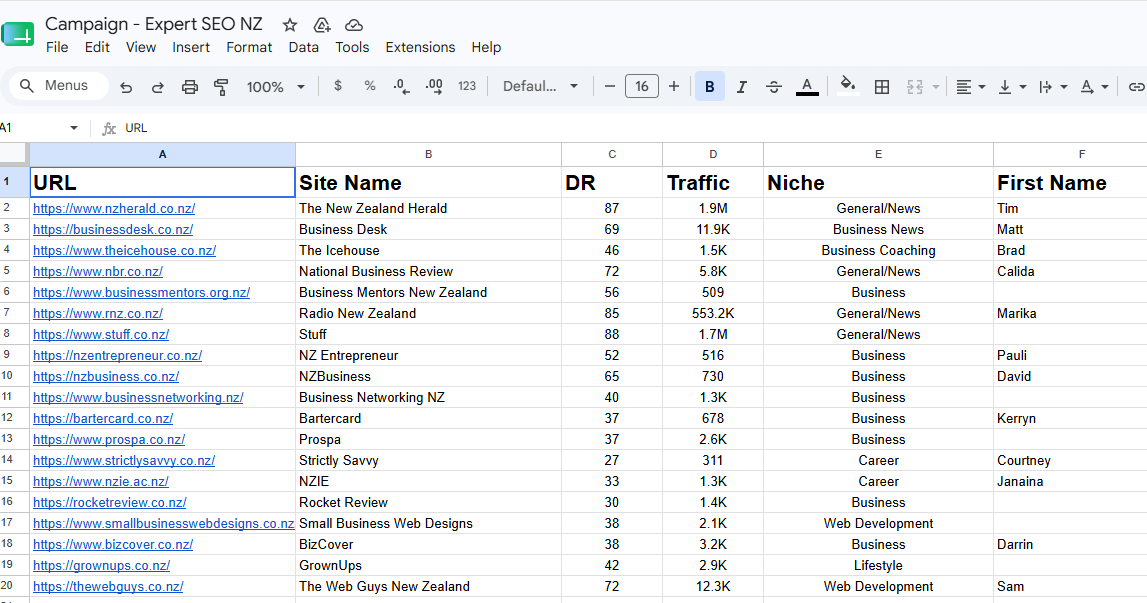
Then rank by relevance first, authority second. I’d take a tightly relevant blog with a DR of 20 over a random DR 60 site any day. A relevant link is a vote from the right crowd; an irrelevant one barely registers.
Step 3: Get on their radar before you ask for anything
People reply to names they recognise. So show up before you pitch.
It’s simple. Follow them. Read a couple of their posts. Leave a comment that actually adds something — not “great post,” but a real thought. Share one of their articles and tag them, and say what you liked about it.
Do this for a week or two and your name stops being a cold stranger in their inbox. It becomes “oh, that person.”
You can even send a no-ask note: “Hey, just wanted to say your piece on X helped me — thanks for writing it.” No pitch. No link. Just goodwill in the bank for later.
Step 4: Find their contact details
Now you need an email address.
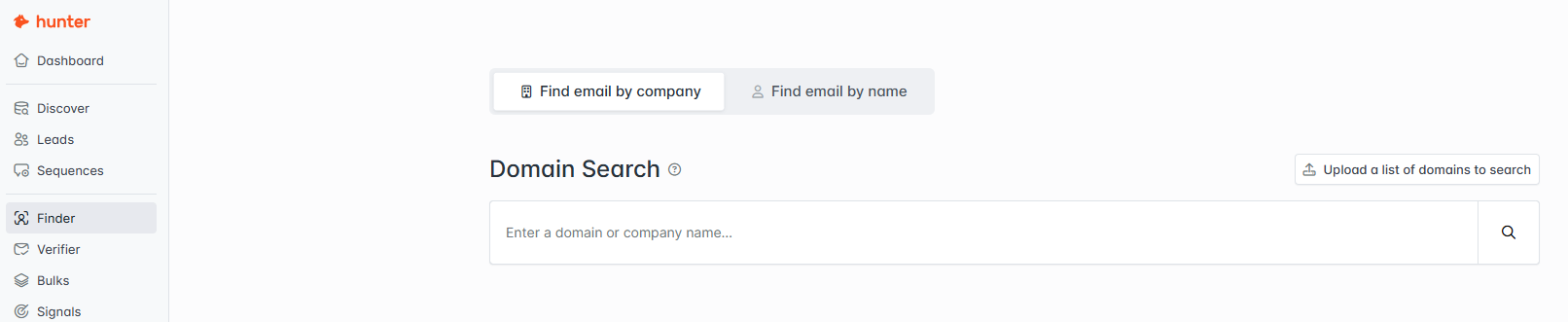
Hunter is my go-to — pop in the domain and it finds the likely address, with a Chrome extension that does it while you browse. If that fails, check the blog’s contact or about page, or find the author on LinkedIn.
And if you genuinely can’t find an email, the contact form works. It’s not glamorous, but it lands in the same inbox.
Once you’ve got the list, the qualifying, and the contacts — you’re ready to pitch. That’s next.
How To Tell A Blog Worth Pitching From A Link Farm
A link is only worth chasing if the blog is real: actively maintained, genuinely read, and relevant to you. Here’s how to tell in about 60 seconds.
This matters more than people think. There’s a whole industry of fake “blogs” that exist purely to sell links, and a link from one of those does nothing — or worse, drags you into a neighbourhood Google doesn’t trust.
As one frustrated marketer put it on Reddit, plenty of agencies “claim they vet blogs but don’t dig deep enough.” Don’t be that agency to yourself.
Green lights — this is a real blog:
- Recent posts. Something in the last month or two, not a graveyard since 2022.
- Real engagement. Comments from actual humans, shares, a newsletter.
- Organic traffic. Drop it into Ahrefs — a real blog pulls steady search traffic from lots of keywords.
- Topical fit. It’s about your world, not “general lifestyle, tech, casino, and loans.”
Red flags — walk away:
- A “write for us” page shouting about “do-follow links” and pricing tiers.
- Outbound links to casinos, loans, and crypto sitting next to gardening posts.
- Traffic that’s flat zero, or a DR that looks inflated with spammy links pointing at it.
- Posts that read like they were churned out by a robot with no editor.
Drop the two into a traffic tool side by side and the difference is obvious: one has real, growing search traffic; the other flatlines on zero.

The 60-second check: is it updated, is it read, and is it about my topic? Three yeses and it’s worth a pitch. Any no and you move on.
The Outreach Emails (With Scripts You Can Steal)
Winning outreach emails are short, personalised, and ask for exactly one thing.
That’s the whole formula. Most people get it wrong by writing a 400-word essay, making it obviously templated, or burying three different asks in one message.
Here’s the anatomy that works:
- A personal opener — reference something specific of theirs. Proof you’re a real reader, not a mail merge.
- Why them — one line on why this is relevant to their audience.
- The one ask — a single, clear thing you want.
- An easy next step — make saying yes take five seconds.
Keep it that tight. And personalisation isn’t optional fluff — Backlinko’s analysis of 12 million outreach emails found a personalised subject line alone lifted response rates by 30.5%.

These are the three asks I actually use.
The contribution ask (my favourite — it’s how I got the “fat loss” results):
Hi [Name],
Your piece on [specific topic] was one of the clearest I’ve read — the bit about [specific detail] especially.
I’m putting together a big guide on [topic] and I’d love a line of input from someone who actually knows the space. One quick question: [your question]?
Happy to credit you and link back. No worries if you’re flat out.
Cheers, [Your name]
This one works because you’re not asking for a link. You’re asking for their expertise — and once they’ve given it, they’re invested. The link and the share tend to follow on their own.
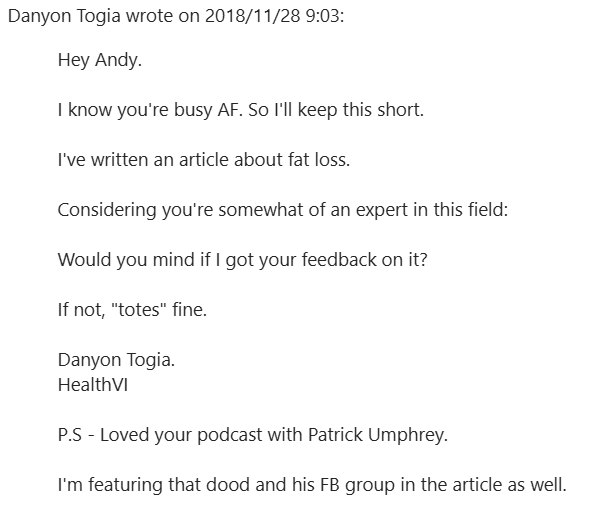
Here’s one of the actual emails I sent during the “fat loss” campaign. Short, personal, one ask — and a PS that proves I’d genuinely engaged with their work.
The share ask:
Hi [Name],
I just published [one line on what it is]. Given you write about [their topic], thought it might be up your alley: [URL]
Either way, keep up the great work.
[Your name]
Notice I don’t ask them to share it. If it’s good, they will. People aren’t daft — telling them to share it just puts their back up.
The link-insert ask:
Hi [Name],
Reading your post on [topic] — really useful. Quick one: under the section on [X], you mention [thing]. I recently published [resource] that goes deeper on exactly that: [URL]. Might be a handy addition for readers.
Totally your call. Thanks for the great content.
[Your name]
You’re telling them exactly where it fits, so saying yes takes no thinking.

Guest-post pitches follow the same rules: reference their blog, pitch one specific topic that fits what already does well there, and offer to send an outline rather than the whole post.
Small ask, easy yes.
Follow-Ups: Where Most Of The Wins Actually Come From
Most people won’t reply to your first email. That’s not rejection — it’s just inboxes. Send two or three short follow-ups, spaced out, then let it go.
I can’t stress this enough, because it’s where the results hide.
That same study of 12 million emails found the overall reply rate was just 8.5% — meaning more than nine in ten outreach emails get ignored. If you send once and give up, you’re leaving nearly all your wins on the table.
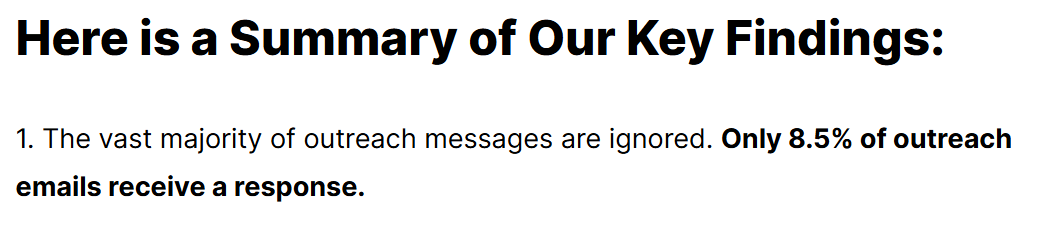
The same study found that following up two or three times can roughly double your responses. It matches what I saw: a big chunk of my “fat loss” yeses came on the second or third nudge, not the first.
Here’s the cadence I use:
- Email 1 — the pitch.
- Follow-up 1 — three or four days later. One line: “Hi [Name], just floating this back to the top of your inbox in case it got buried.”
- Follow-up 2 — a week after that. Short and friendly. Maybe add one new angle or bit of value.
Then stop.
Two or three nudges is persistence. Eight is harassment — and these are people you want a relationship with, not people you want blocking you.
Send your two or three, keep it warm and human, and move on to the next name. There’s always a next name.
The Tools That Make Outreach Faster
You don’t need 20 tools. You need four jobs covered: find blogs, find emails, send and track, and check quality.
- Finding blogs and their links: Ahrefs or SEMrush for competitor backlinks, BuzzSumo for finding who’s shared similar content.
- Finding emails: Hunter, or Voila Norbert.
- Sending and tracking at scale: BuzzStream or Pitchbox once you’re running real volume. Starting out? A Gmail account and a spreadsheet is completely fine — don’t let tool-shopping become procrastination.
- Checking blog quality: Ahrefs again, for the traffic and referring-domain check from the section above.
That’s the whole stack. Add tools when a real bottleneck appears, not before.
Doing It Without Getting Burned
Google penalises paid and manipulative links, so keep your outreach editorial: earn the placement, disclose anything paid, and stay away from link schemes.
The rules are simple to follow once you know them:
- If money or free product changes hands for a link, it should be tagged
rel="sponsored"orrel="nofollow". That keeps you compliant with both Google and, if you’re advertising, the Fair Trading Act disclosure expectations. - No private blog networks (PBNs), no bulk link exchanges, no buying packages of “100 do-follow links.”
- Don’t stuff exact-match anchor text. If every link pointing to your page says “fat loss,” that’s a footprint, not a coincidence — and Google reads footprints.
The good news: if you’re following Rule #1 and only chasing relevant blogs with real audiences, you’re already safe. Manipulative links come from chasing shortcuts. Do the real thing and there’s nothing to hide.
Final Thoughts
Outreach isn’t a link hack. It’s a byproduct of being worth talking about.
For the decade I’ve spent doing SEO — a fair bit of it competing in the US, where the average operator is a level above what you find back home — the one thing that’s stayed true is this: the campaigns that win are the ones where the content earned the outreach, not the other way round.
Build the thing people want to be part of. Then go tell the right people it exists.
Do it in that order and, nine times out of ten, you’ll get further than the person with a bigger budget and a worse page.
Blogger Outreach: FAQ
What is blogger outreach in simple terms?
It's contacting bloggers and site owners in your niche to build relationships that lead to links, mentions, shares, or guest posts. You're giving real people a reason to feature you.
How do I find bloggers to reach out to?
Search Google for [your topic] blog and [your topic] "write for us", raid "best of" roundup lists, and check who links to your competitors' pages using a tool like Ahrefs. Aim for 20–50 relevant blogs to start.
How many bloggers should I contact?
Quality beats quantity. Ten to twenty well-researched, personalised emails will beat a hundred generic ones. That said, expect most not to reply — so build a list big enough that a small response rate still gives you wins.
Does blogger outreach still work in 2026?
Yes. Relevant links from real blogs remain one of the strongest ranking signals, and relationships with the right people open doors — podcasts, interviews, partnerships — that no algorithm change touches.
Is blogger outreach the same as influencer outreach?
Nearly. It's the same move — find the right person, make yourself useful, ask for one thing — just aimed at people with an audience, whether that's a blog, a podcast, or a social following.
Do you have to pay bloggers?
No. Plenty of placements — guest posts, expert quotes, resource links — are earned for free when your content is genuinely useful. If you do pay, that link must be disclosed and tagged rel="sponsored".
Recommended Reading
 How To Do SEO: Step By Step for NZ Websites
The full process, from keyword research to a page that actually ranks.
 Digital PR: What It Is & How to Do It In NZ
Outreach at a bigger scale — earning coverage, not just links.