

You’re already on Google. You’re just not where anyone can see you.
Being on page five is the same as not being there at all. Almost nobody clicks past the first few results — the top of page one takes the overwhelming majority of the clicks, and everything below it fights over scraps. So “get on Google” was never the goal. Ranking higher is.
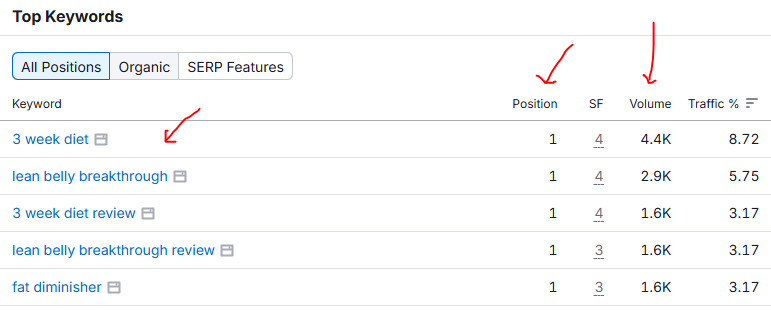
I’ve spent years doing this for real. I took a health site, HealthVI, from zero to over 20,000 organic visitors a month, and ranked it number one for keywords thousands of people search every single month — one of them with 4,400 searches on its own.
So I’m not handing you theory here. This is what moves the needle.
Let me show you the three places you can rank, how Google decides who wins, and the exact order of moves to climb each one.
Key Takeaways
- There are three places to rank, not one: the organic (blue-link) results, the map pack (local businesses), and the new AI Overviews / AI Mode at the top. Which one matters most depends on your business.
- How Google ranks, simply: think of it like a race. Technical SEO and on-page SEO get you into the race. Authority — great content plus links — is what gets you to the front.
- To rank organically, do four things in order: fix your technical foundations, build the best page on the internet for that keyword, get your on-page SEO right, then build authority with links and consistency.
- AI Overviews are the same game as organic. Rank well organically and you’re most of the way to being the source the AI quotes. Same work, bigger reward.
- The map pack is simpler than it looks: optimise your Google Business Profile, build citations, and run a review system. That covers nearly all of it.
- You can’t pay Google to rank higher in the organic or map results. You can pay for ads, but the moment you stop, they vanish. Rankings are earned.
- It takes months, not days — and the businesses that win are the ones that don’t quit early.
The 3 Places You Can Rank on Google
Before you try to rank higher, you need to know where you’re trying to rank. There are three different spots on a Google results page, and they’re not the same job.
The organic results. The classic blue links down the page. This is what most people mean by “ranking on Google,” and it’s the game for anyone with a website who wants traffic.
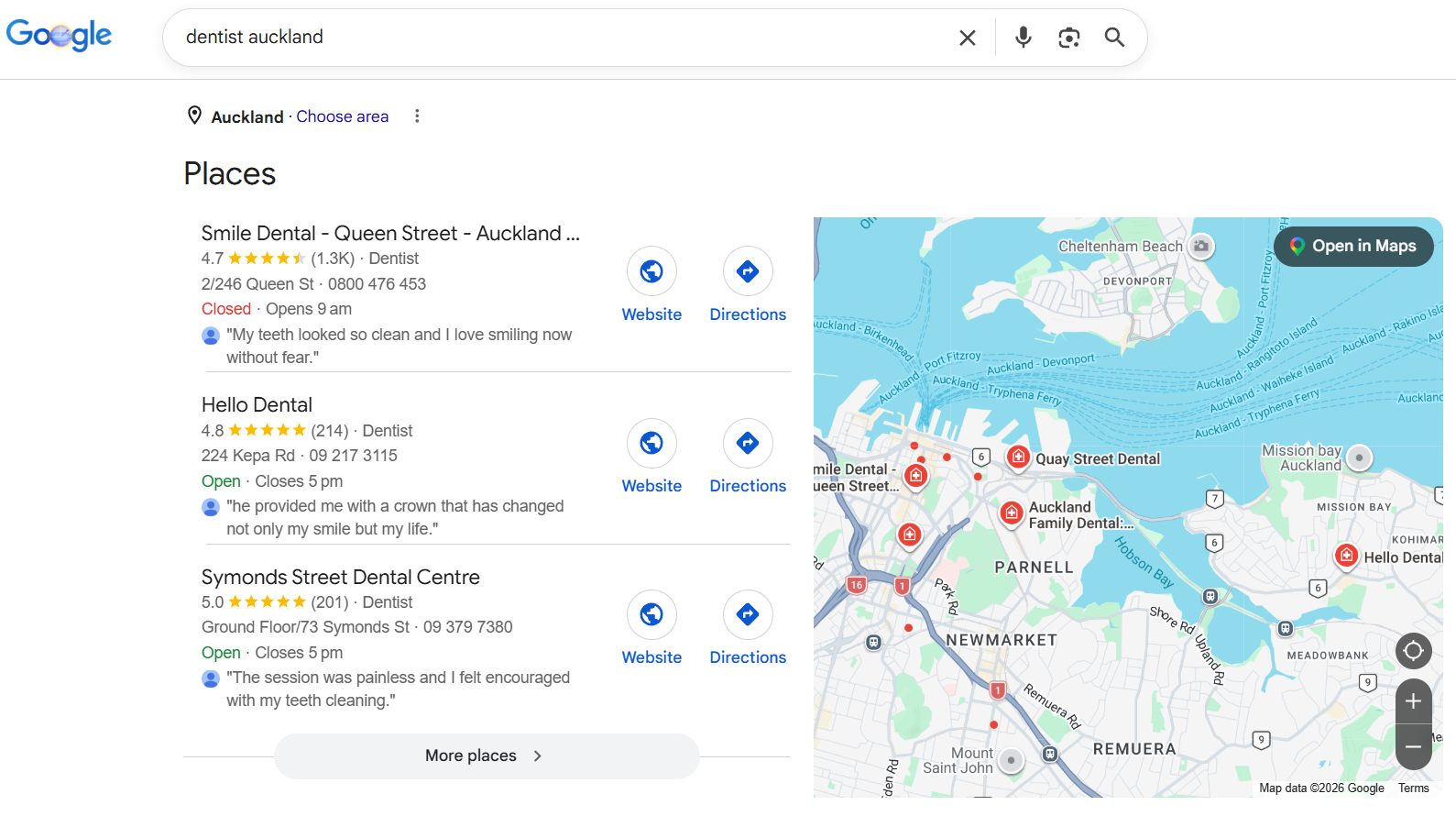
The map pack. The little block of three local businesses with the map next to it. This is where local searches get decided — “plumber near me,” “dentist Sydney,” “cafe in Fitzroy.” If you serve a local area, this is often where the money is.
AI Overviews and AI Mode. The AI-generated answer that now sits at the very top for a lot of searches. It’s increasingly the first thing people read, and being the source it quotes is the newest way to get seen.
Here’s the quick way to sort yourself: are you trying to rank a website, or get your business found locally? You can absolutely do both — but start with the one that pays your bills. A national online store lives and dies by organic.
A local clinic lives and dies by the map pack. Get clear on that before you spend a dollar or an hour, because the moves are different for each. If you’re a local business, most of your attention belongs on local SEO from the start.
How Google Decides Who Ranks
Forget the “200 ranking factors” you’ve read about. You don’t need them. Here’s the whole thing as a picture you’ll actually remember.
Think of ranking like a race.
Your technical SEO and on-page SEO are the entry requirements. Technical SEO means Google can crawl your site, understand it, and load it fast on a phone. On-page SEO means your page clearly matches what the person searched.
Get those right and you’re allowed to line up on the start line. Get them wrong and you’re not even in the race — which is why so many sites sit invisible no matter what else they do.
But being in the race doesn’t mean you win it. Everyone on the start line has the basics covered. What gets you to the front is authority: having the best, most useful page on the topic, and having other websites vouch for you with links.
That’s the part that separates position three from page five.
So if you’re not ranking, it’s almost always one of two things. Either you’re not in the race — your foundations are broken — or you’re in it but not building authority, so faster runners keep passing you. Nearly everyone stuck on Google is one of those two cases.
That’s also what Google’s own guidance keeps pointing at: it rewards pages that clearly know their subject and can be trusted. Authority and genuinely helpful content are how you signal both. Everything below is just how you do it, surface by surface.
How to Rank Higher in Google’s Organic Results
Ranking a website higher isn’t complicated. It’s just done in the wrong order by most people. They chase links before their site even works, or tweak title tags on a page nobody wants to read.
Here’s the order that works — and exactly how to do each step.
Step 1 — Get Your Technical Foundations Right
This is your entry ticket. Your site needs to load fast, work on a phone, and be easy for Google to crawl and index. If Google can’t reach a page, or it takes eight seconds to load, nothing else you do matters.
Here’s how to check yours in an afternoon:
- Run a full site audit. Point a crawler at your domain and it’ll hand you a prioritised list of what’s broken. Screaming Frog (the SEO Spider — free for up to 500 URLs) crawls your site the way Google does and flags broken links, redirect chains, duplicate or missing title tags, and pages with no internal links pointing to them.
SEMrush Site Audit does the same thing with a friendlier, colour-coded report that sorts issues into “errors, warnings, notices” so you know what to fix first.

- Check your pages are actually indexed. If a page isn’t in Google’s index, it can’t rank — full stop. Open Google Search Console, go to the Pages report, and look at what’s indexed versus excluded. Or just Google
site:yourdomain.comto see roughly what’s in there. - Check your speed. Paste any page into Google PageSpeed Insights and fix what it flags — usually oversized images and a few scripts loading too early. Prioritise the mobile score, because that’s the one Google leans on.
Fix indexing, speed, mobile, and broken links first. It’s a one-time clean-up that makes everything after it count. Here’s the full technical SEO checklist if you want to go deeper.
Step 2 — Create the Best Page on the Internet for That Keyword
Not “good content.” The best answer that exists for that exact search. This is the step that does the heavy lifting, and it’s the one people rush.
Here’s a shortcut that makes it almost mechanical:
- Google your keyword and open the top five ranking pages.
- Copy them into ChatGPT and ask it to run a competitor analysis: “Here are the top-ranking articles for [keyword]. Tell me every subtopic they all cover, what they’re each missing, and exactly what I’d need to include to make mine the most complete and useful page on this topic.”
- It hands you a gap list. Build a page that covers everything they cover, plus the gaps they missed — with better examples, clearer explanations, and up-to-date information.
That’s the whole game: be the most useful result for that search, not just another one of them. ChatGPT is brilliant for the planning and the first draft — you bring the real experience and examples that make it better.
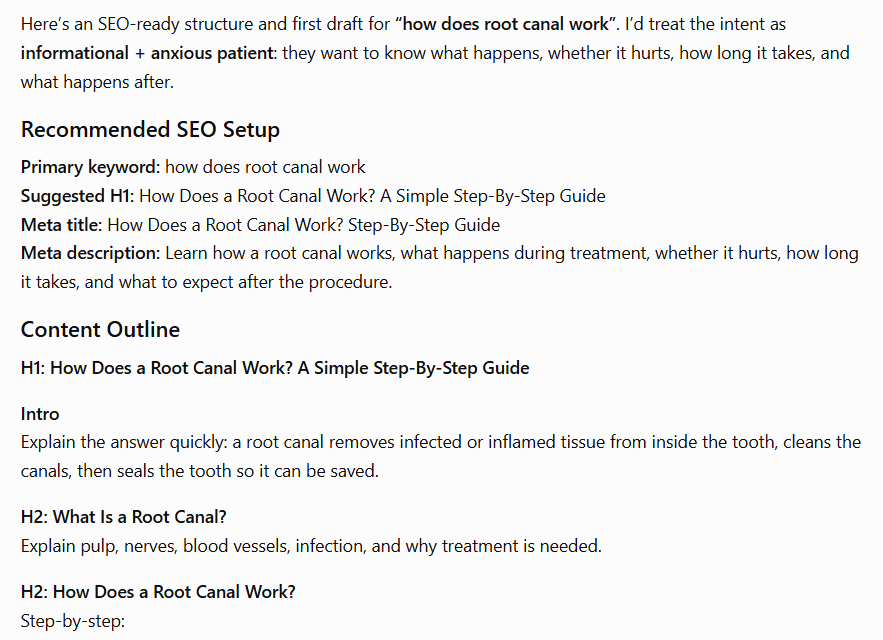
One rule: match the intent. If the top results are how-to guides, don’t publish a sales page. Give Google the format it’s already rewarding, then make it better.
Step 3 — Nail Your On-Page SEO
Now make it dead obvious to Google what the page is about. On-page SEO is just placing your keyword in the spots that signal relevance. Here’s exactly where it goes:
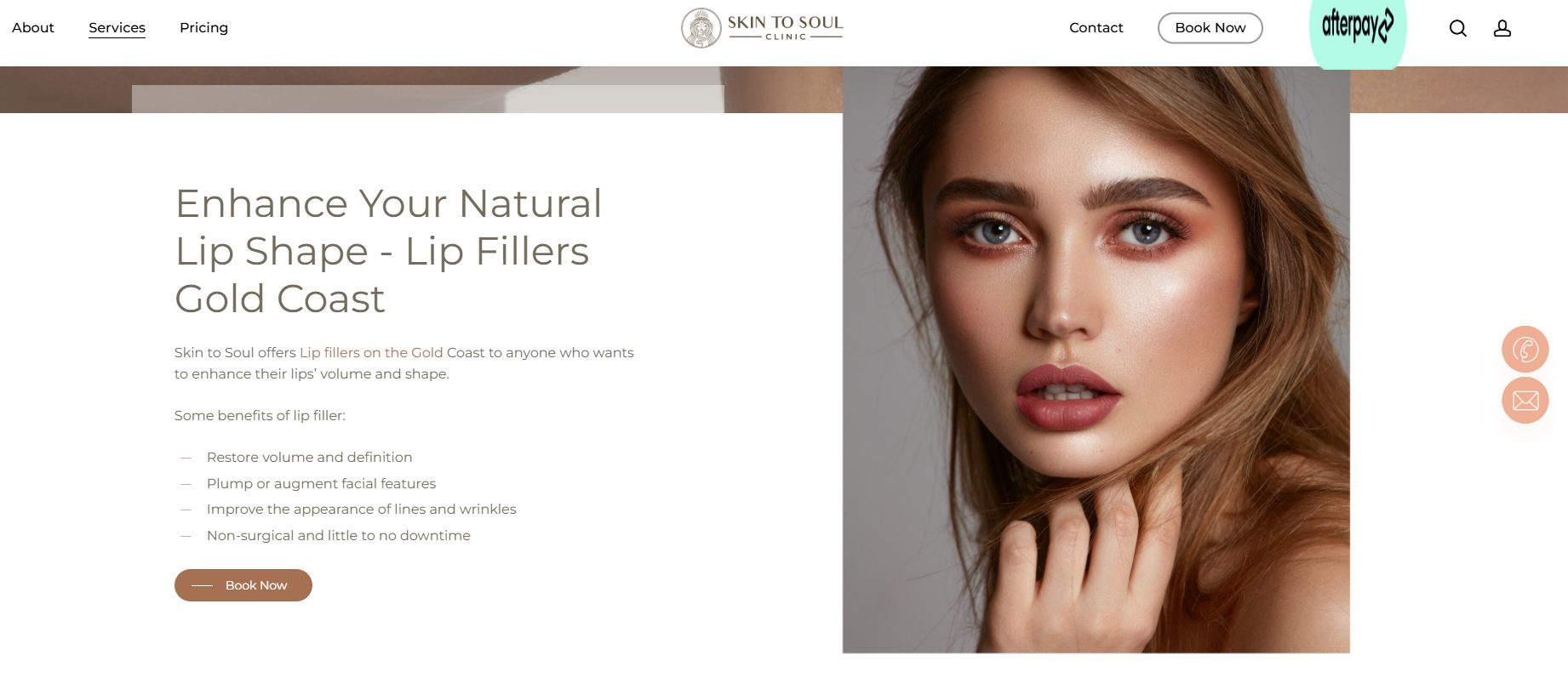
- Title tag — your main keyword near the front (e.g. “Lip Fillers Gold Coast | [Clinic Name]”).
- URL slug — short, with the keyword in it (
yoursite.com.au/lip-fillers-gold-coast). - H1 — one per page, and include the keyword.
- First 100 words — use the keyword naturally, early.
- H2 subheadings — work in variations and related terms.
- Image alt text — describe the image, include the keyword where it fits.
- Meta description — a compelling ~155-character summary with the keyword. It doesn’t directly rank you, but it wins the click.
Here’s what that looks like done right on a real Australian page — a Gold Coast clinic’s “Lip Fillers Gold Coast” page, with the keyword worked cleanly through the title, headings, and copy:
Don’t write your titles and meta descriptions from scratch, either. Paste your page into ChatGPT and ask: “Write five SEO title tags under 60 characters and a meta description under 155 characters for this page, targeting the keyword [keyword].” Pick the best, tweak it, done.
If you’re on WordPress, install Rank Math — it grades your on-page SEO live as you write and gives you a green-light checklist for each page.
One warning: don’t stuff the keyword in everywhere. It’s about clarity, not repetition. Here’s the full on-page SEO breakdown.
Step 4 — Build Authority: Links and Consistency
This is what wins the race. Great content and clean on-page get you to the start line with everyone else. Links — other websites vouching for you — are what push you to the front.
The best way to earn them for most businesses is the guest post. You write a genuinely good article for a respected site in your space, and the link back to your site comes with it. Free, and from a page Google already trusts.
That’s exactly how I earned a link from marketing.com.au, one of Australia’s established marketing publications.
I wrote them a proper guest article, it got published, and it came with a high-authority backlink pointing straight back to my site. No payment, no dodgy link scheme — just a good piece of writing traded for a link that moves the needle.

A few other tactics worth knowing:
- Digital PR / reactive PR — respond to journalist requests (services like SourceBottle and Featured connect you with reporters who need a quote) and earn links from news sites.
- Broken-link building — find a dead link on a relevant site, and offer your page as the replacement.
- Be the best resource — genuinely useful pages, tools, and original data earn links on their own over time.
Use Ahrefs or SEMrush to see exactly where your competitors are getting their links, then go and earn the same ones.
Then comes the part nobody wants to hear: consistency. Keep publishing, keep earning links, month after month.
Most people do a burst of work, see nothing in month one, and quit — which is precisely why they don’t rank. The ones who keep going get to the top.
This is the entire method behind that health site. Foundations, the best content on the page, clean on-page, then links and consistency.
Doing exactly that, I ranked one of its articles number two in the US for “fat loss” — one of the most brutally competitive keywords there is. No tricks. Just the four steps, repeated.

The catch is Step 4. Content and links, over and over, for months. It’s the grind most business owners can’t sustain around running a business — which is exactly the part people hand to an SEO team.
How to Show Up in AI Overviews and AI Mode
Here’s the good news: you don’t need a separate playbook for AI Overviews and AI Mode. They pull from the same well as organic search.
Do the organic work well — the best content, clean on-page, real authority — and you’re most of the way to being the source the AI quotes.
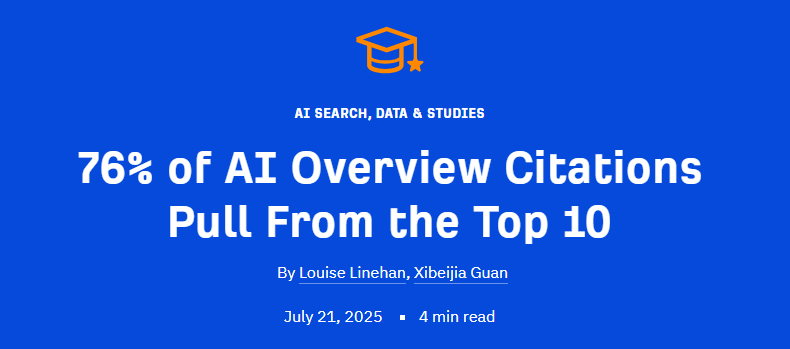
Ahrefs studied this and found roughly 76% of AI Overview citations come from pages already ranking in the top 10. In other words, ranking organically and getting cited by AI are basically the same job. Win the first and you’re set up for the second.
There are a few extras that tip it in your favour:
- Answer questions directly and clearly. AI systems lift clean, self-contained answers. If your page states the answer plainly near the top, it’s far easier to quote.
- Structure content so it’s easy to extract. Clear headings, short direct paragraphs, and lists where they fit. Make a machine’s job easy.
- Build brand mentions and recognition. The more your business name shows up across the web in the right context, the more AI systems treat you as a real, trusted source.
I know this works because my own site does it. Expert SEO is a brand-new domain, under a year old, and it’s already being cited as a source inside Google’s AI Mode.
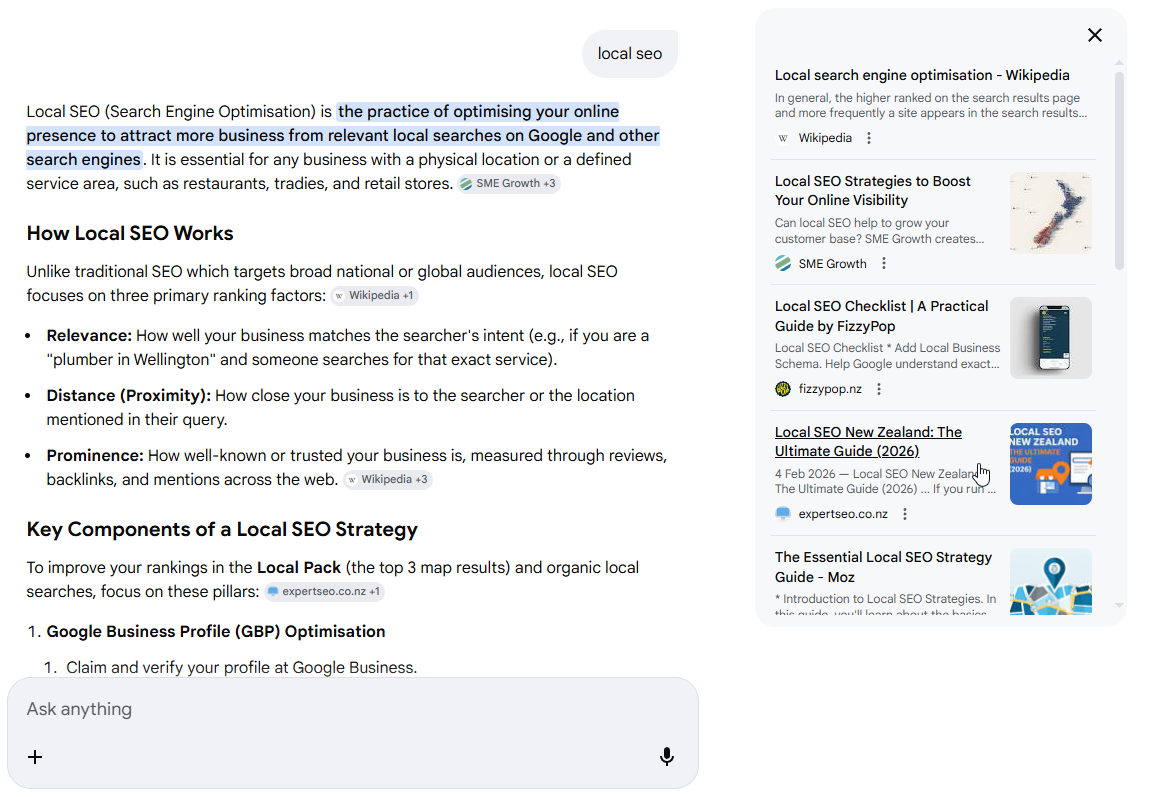
And if you’re worried AI has killed SEO — it hasn’t. It’s the opposite. Strong SEO is exactly what gets you into the AI answers. The work didn’t change. The reward got bigger.
How to Rank Higher in the Map Pack
If you’re a local business, the map pack is where the money is — and it’s a different game to organic. The good news: three moves cover nearly everything.
Optimise your Google Business Profile. This is the single biggest lever in the map pack. Fill it out completely, pick the right categories, add photos, keep it active with posts and updates.
Google’s own guidance on local ranking makes clear how much your profile drives where you show up. If you do nothing else, do this — here’s how to optimise your Google Business Profile properly.
Build your citations. A citation is any mention of your business name, address, and phone number across the web — directories, listings, local sites.
Google uses the consistency of those to trust that you’re a real, established business. You can build them efficiently with a service like BrightLocal rather than doing it by hand.
Get reviews — with a system. Reviews are rocket fuel for map rankings, and they win the click once you’re showing. But the businesses that stack up reviews don’t ask randomly.
They have a system that asks every happy customer, every time — a text, an email, a card, whatever fits. Consistent, recent, genuine reviews beat a one-off pile. Here’s how to get more Google reviews on repeat.
Nail those three and you’ve handled the bulk of what the map pack rewards. It’s the whole engine behind ranking a local business, whether that’s SEO for dentists chasing “near me” searches or high-value clinics doing SEO for cosmetic surgeons.
Reviews and a strong profile are also exactly why a well-run local push works so well for a Brisbane business or a clinic doing SEO in Melbourne — local demand, captured. For the full picture, start with our full local SEO guide.
Can You Pay Google to Rank Higher?
Short answer: no.
You can’t pay Google to rank higher in the organic results or the map pack. Those spots are earned.
What you can pay for is ads — but ads are labelled “Sponsored,” they sit in their own slots, and the second you stop paying, they disappear completely. They’re rented attention. Fast, but you never stop paying rent.
“So can I rank for free?” Yes — organic and map rankings cost you nothing to appear in. But free doesn’t mean effortless.
You pay in time and work instead of dollars: the content, the links, the profile, the reviews, the consistency. That’s the trade.
And that trade is exactly why earned rankings are worth so much more than ads. An ad stops the day your budget does. A ranking you’ve earned keeps sending you customers month after month, at no extra cost per click.
One is an expense. The other is an asset. If you want to weigh the two properly, here’s a realistic look at how much SEO costs and what you get for it.
How Long It Takes to Rank Higher in Australia
Nobody wants to hear this, but ranking higher takes months, not days. And how long depends on how competitive your keyword is.
Low-competition local terms can move in six to ten weeks. Competitive national terms are more like four to twelve months. Anyone promising you page one in a fortnight is either lucky or lying.
Here’s why it lags. Authority and trust build over time — Google isn’t going to hand a brand-new page the top spot overnight, and links and reputation take a while to accumulate.
You’re paying the effort up front, and the return shows up later.
Which brings it back to Step 4: consistency. The businesses that win are the ones still publishing and still building links when everyone else got bored and stopped.
That health site didn’t hit 20,000+ monthly visitors overnight — it was slow at first, then a steep climb once the content compounded.
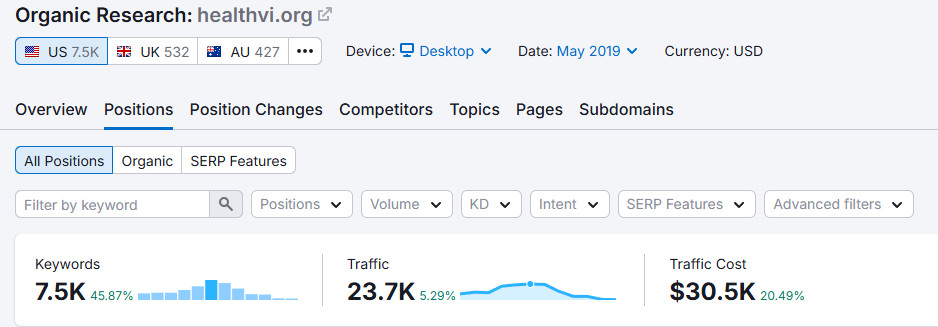
That’s the shape of it every time. Flat, flat, flat — then up and to the right. Most people quit during the flat part, right before it pays off. Don’t be one of them.
Whether you’re doing SEO in Sydney or building visibility for a business in Perth, the timeline is the same: patience up front, compounding on the other side.
Final Thoughts
If you forget everything else, remember this: foundations get you into the race, but authority wins it.
Anyone can tick the technical boxes. Any decent developer can make your site fast and crawlable. That just gets you to the start line with everyone else.
The businesses that reach the top are the ones that keep building better content and earning links long after the rest lost interest. It’s not the smartest operator who wins. It’s the most consistent one.
That’s the honest catch, too. The strategy in this guide isn’t hard to understand — it’s hard to keep doing, week after week, while you’re busy running a business.
If that’s the part you’d rather hand off, that’s what our SEO services are for. Either way, now you know exactly what ranking higher takes on all three fronts.