

There’s a Reddit thread titled “What the heck is holistic SEO?” It’s from 2018. It still sits on page one of Google today.

Seven years on, people are still asking the same question: and it’s not their fault.
The term gets thrown around by agencies, podcasters, and course sellers, and half of them mean something slightly different by it.
Funnily enough, the top reply in that very thread nailed it years ago: content that’s all coordinated internally, where the whole site pulls in one direction. That’s the heart of it.
This guide covers what holistic SEO is, why it works when piecemeal SEO stalls, the pillars it’s built on, and the exact step-by-step to run it: proven on a real New Zealand website that went from nothing to #1 in the country in under a year.
What Is Holistic SEO?
Holistic SEO is the practice of optimising your entire website as one connected system, instead of chasing individual keywords one page at a time.
Content, technical health, user experience, and authority all get improved together, so each one strengthens the others.
Fix your site speed and your content ranks better. Build your authority and your whole site lifts, not just one page.
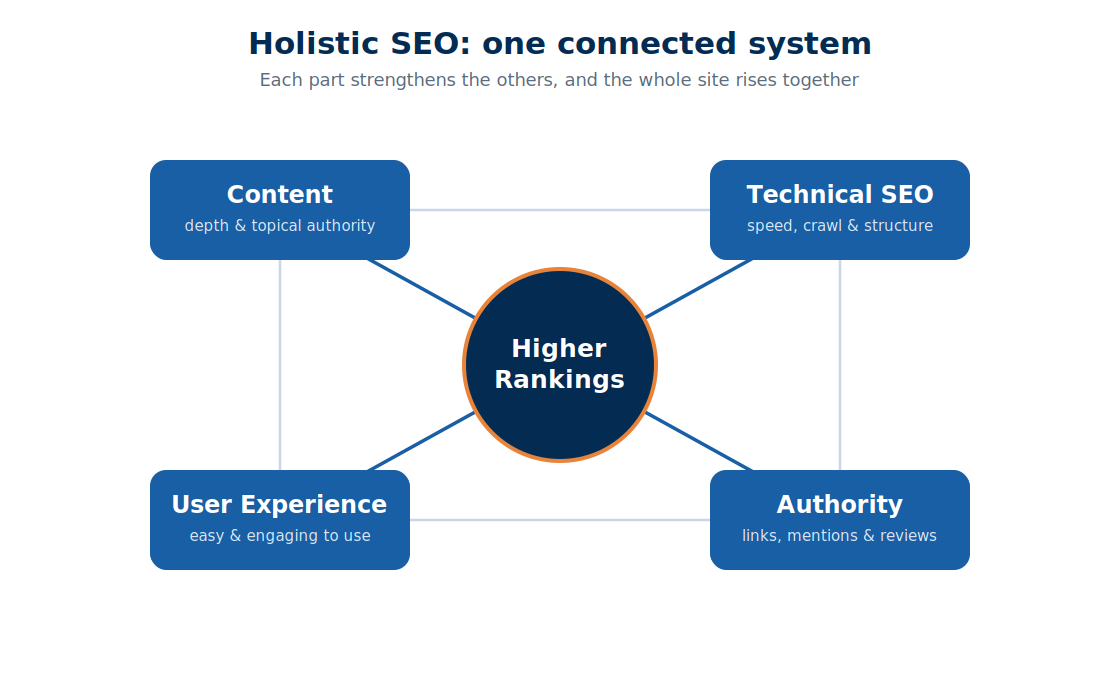
Think of your website as one connected system rather than a pile of separate pages.
When every part supports the others, Google sees a site worth trusting on the topic, not a lucky page that happened to rank.
Holistic SEO vs Traditional SEO
Traditional SEO treats optimisation as a checklist of separate jobs. Holistic SEO runs those same jobs as one connected strategy where every improvement reinforces the others.
The difference sounds subtle. In practice it’s the gap between a site that plateaus and one that compounds.
Picture a builder’s website. The traditional approach: the tech person fixes the site speed, a writer publishes a few blog posts, someone buys a couple of backlinks.
Three separate efforts, none of them talking to each other. The blog posts sit on a slow page with no internal links pointing to them, so they never gain traction.
The holistic approach: the fast site, the content, the links, and the structure are all built to feed the same goal.
The blog posts link to the money pages, the money pages load fast, the authority flows through the whole thing. Same ingredients, completely different result.
Here’s the split laid out:
| Traditional SEO | Holistic SEO | |
|---|---|---|
| Focus | Rank one page for one keyword | Rank the whole site as a topic authority |
| Unit of work | Isolated tasks (tech, content, links) | One connected strategy |
| How Google reads it | A page in a vacuum | A site where signals reinforce each other |
| Result over time | Spikes, then plateaus | Compounds and holds |
| Risk from updates | High: one weak area drags you | Low: strength is spread across the site |
The four classic types of SEO are the same on-page, off-page, technical, and local tasks you’d tackle to do SEO the normal way.
Holistic just stops treating them as separate silos and starts running them as parts of one machine.
Why Is Holistic SEO Important?
Holistic SEO matters because Google no longer judges pages in isolation: it judges your whole site.
You can write the best blog post in your industry, but if it lives on a slow site with thin content everywhere else and no authority behind it, that post still won’t rank.
The weak parts drag down the strong ones. Google sees the whole website, not the one page you worked hard on.
This is the trap I’ve watched play out dozens of times: different efforts that never reinforce each other. The web developer nails the site speed. The content person publishes solid articles. Maybe a marketing agency earns a few links.
Each job gets done in its own lane, and the rankings barely move, because nothing is pulling in the same direction.
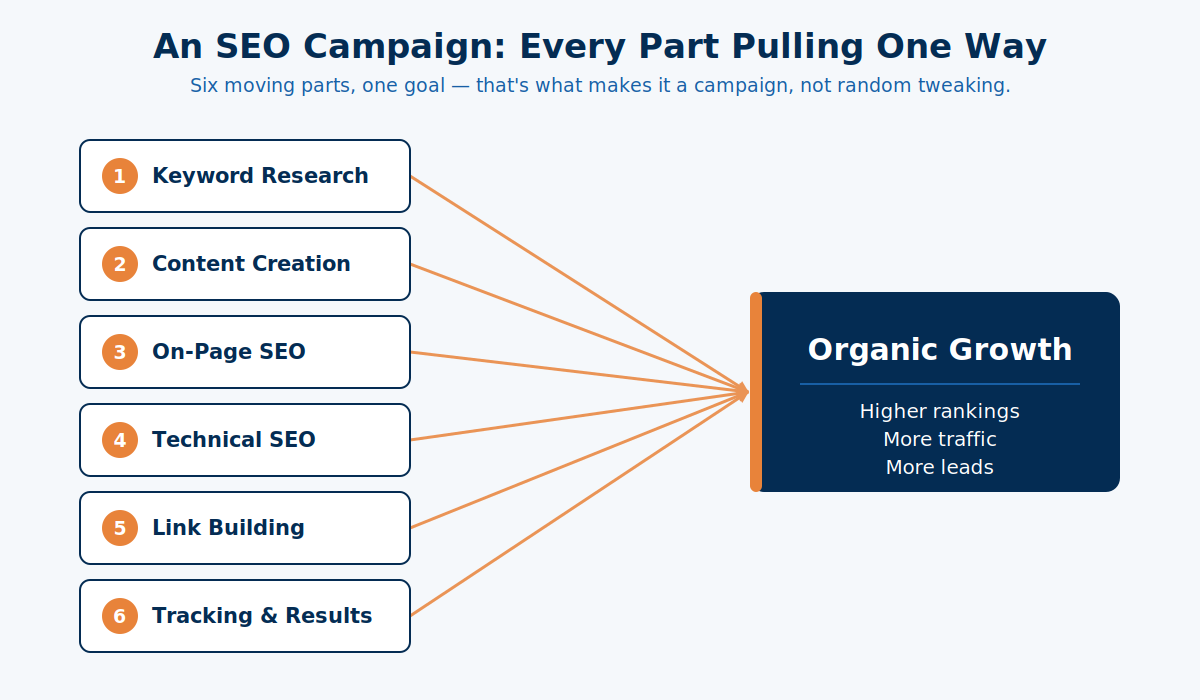
When the parts do pull together, the payoff is the part business owners actually care about: leads and revenue that compound instead of flatlining.
The numbers back this up. SEO delivers a median ROI of around 748% over three years, according to First Page Sage’s analysis of hundreds of client campaigns.

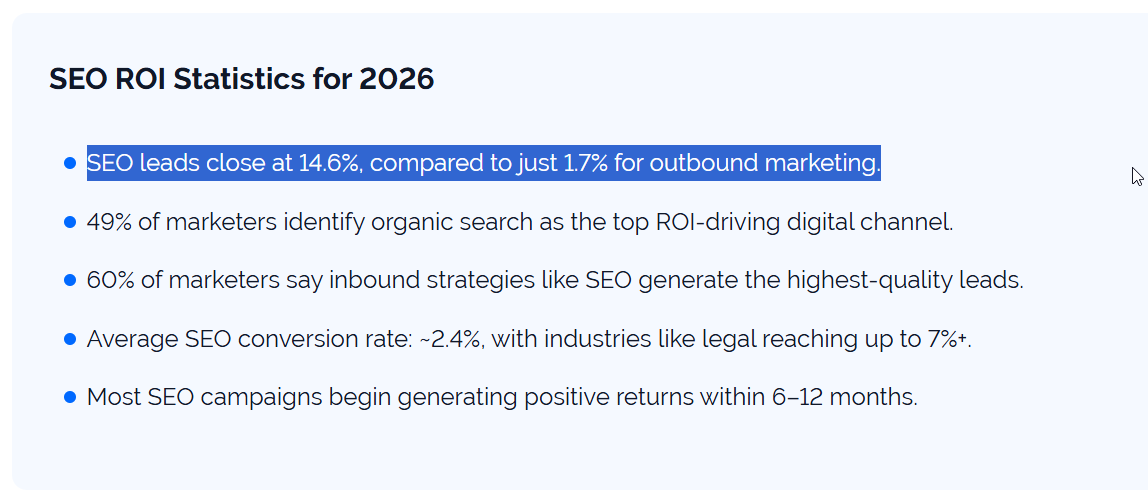
And organic leads don’t just cost less: SEO leads close at 14.6% versus 1.7% for outbound. That return only shows up when the whole site earns trust, not when one page gets lucky.
There’s a second reason it matters, and it’s gotten bigger every year: algorithm updates. A site that’s strong across the board rides out core updates that flatten one-trick sites.
When your rankings rest on content and speed and authority and structure, no single change can wipe you out.
The Pillars of Holistic SEO
Holistic SEO is built on six pillars. On their own, each is just a normal SEO task. Working together is what makes the approach holistic.
Here’s what each one is, why it matters, and how it connects to the rest.
Technical foundation
This is the plumbing: crawlability, indexing, site speed, mobile-friendliness, HTTPS, and clean structure.
It matters because none of your other work counts if Google can’t crawl the page or a visitor bounces before it loads.
Think of it like the foundation of a house. You can hang beautiful content on the walls, but if the foundation is cracked, the whole thing is unstable.
A slow, broken site undermines every other pillar. This is why a site that’s built to rank from the start has a head start: the foundation is baked in, not bolted on later.

Content and topical authority
This is where you cover a topic completely, not just target one keyword. Instead of a single page on “SEO,” you build a pillar page plus a cluster of supporting articles that answer everything around it.
This is semantic SEO in practice: ranking for a whole topic and its meaning, not one string of words.
Why it works: Google rewards sites that demonstrate depth on a subject. Cover a topic thoroughly and you build topical authority, becoming the source Google reaches for when someone searches anything in that space.

On-page SEO
Every page needs to match search intent and give Google clear signals: the right title, headings, keyword placement, and internal links.
This is the pillar that connects the others. Good internal links pass authority from your strong pages to your weaker ones, so the whole site lifts together instead of a few pages carrying it.
User experience
This covers how people actually interact with your site: layout, load speed, ease of navigation, and whether they find what they came for.
It matters because Google watches behaviour. If people land, get frustrated, and bounce straight back to the search results, that’s a signal your page didn’t deliver.
A site that’s easy and pleasant to use keeps people around, and that feeds your rankings.
Off-page authority
This is everything that builds trust from outside your site: link building, brand mentions, and reviews. Backlinks are still one of the strongest ranking signals there is, because each one acts like a vote of confidence from another site.
The holistic angle: authority you earn to one page flows across your whole site. A strong link to your homepage lifts the pages linked from it, too.
AI search visibility (GEO)
This is the newest pillar, and the one most guides are still catching up to: getting cited by AI search like Google’s AI Overviews, ChatGPT, and Perplexity.
It matters because AI engines pull from sites that are trustworthy across the board, not from keyword-stuffed pages.
Pages cited inside Google’s AI Overviews earn around 120% more organic clicks per impression than pages that aren’t cited, according to Seer Interactive’s tracking.
Building holistically is what makes AI trust you enough to cite you: which is the whole point of the next section’s proof.

The pillars only work as a set. Strong content on a slow site fails. Fast site with thin content fails. Get all six pulling together and the results start to snowball.
Holistic SEO Examples
Theory is cheap. Here’s holistic SEO working on real sites, with real numbers: mine.
Expert SEO ranking #1 in New Zealand for “local SEO.” This site is under a year old and it outranks Ahrefs and Semrush, two of the biggest names in the industry, for a competitive term.
That #1 spot is worth chasing, too: the top organic result alone takes 27.6% of all clicks.
And it didn’t come from one clever page. It came from building content, technical, authority, and topical depth together, holistically, from day one.

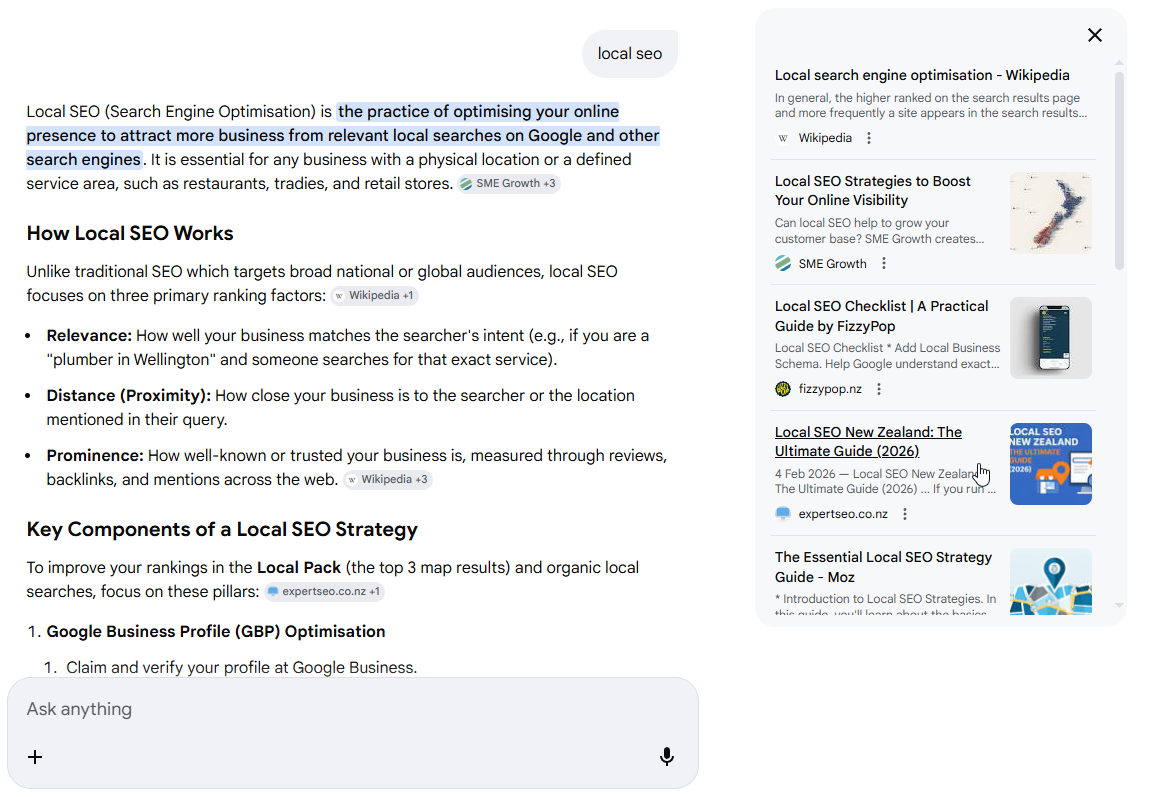
Cited by Google’s AI Mode. Because the site is built to be trustworthy across the board, AI search picks it up: our local SEO guide gets cited directly inside Google’s AI Mode.
That’s the GEO pillar paying off in real time.
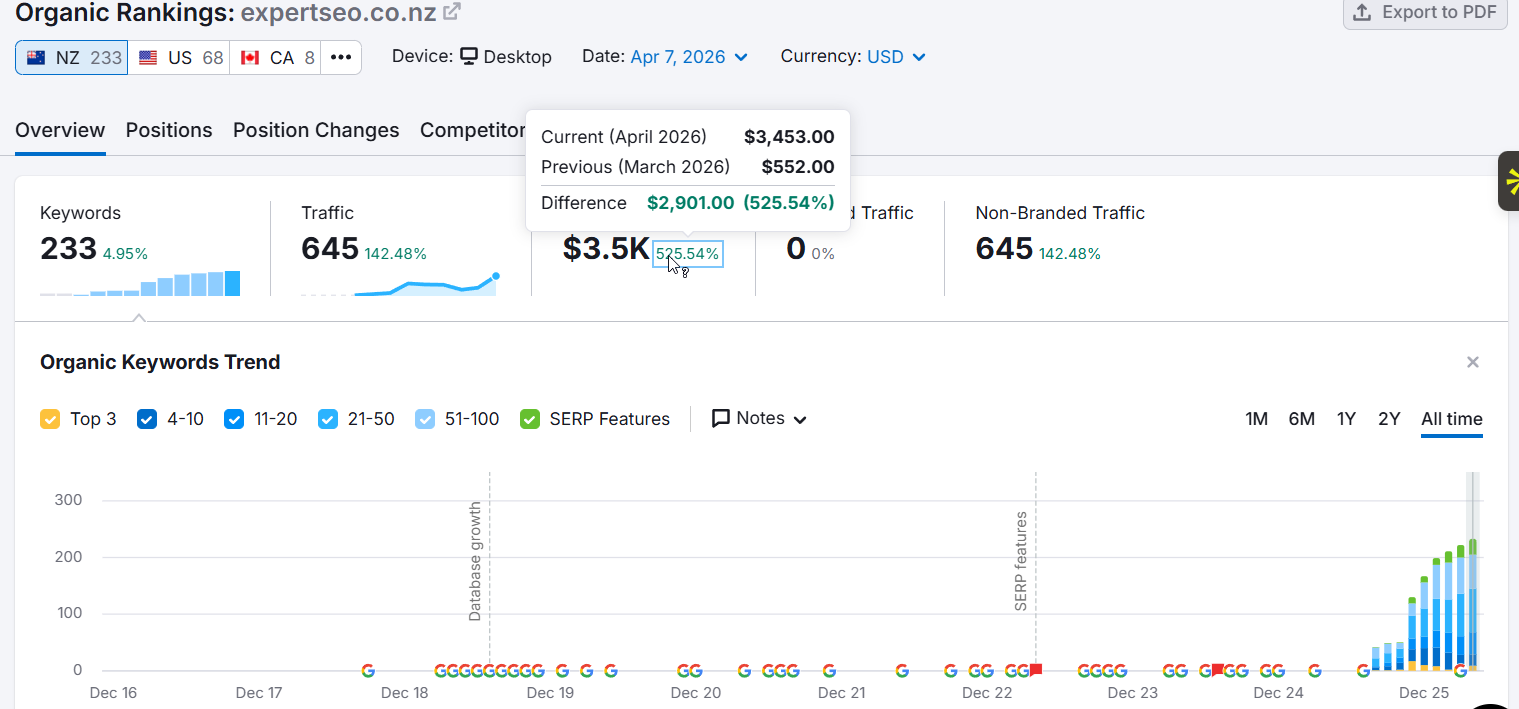
233 keywords and ~$3,500/month in traffic value in about 8 months. On a brand-new domain, in the so-called AI era where everyone claims SEO is dying.
On paper, a fresh site shouldn’t be able to do that against established competitors. Holistic building is how.
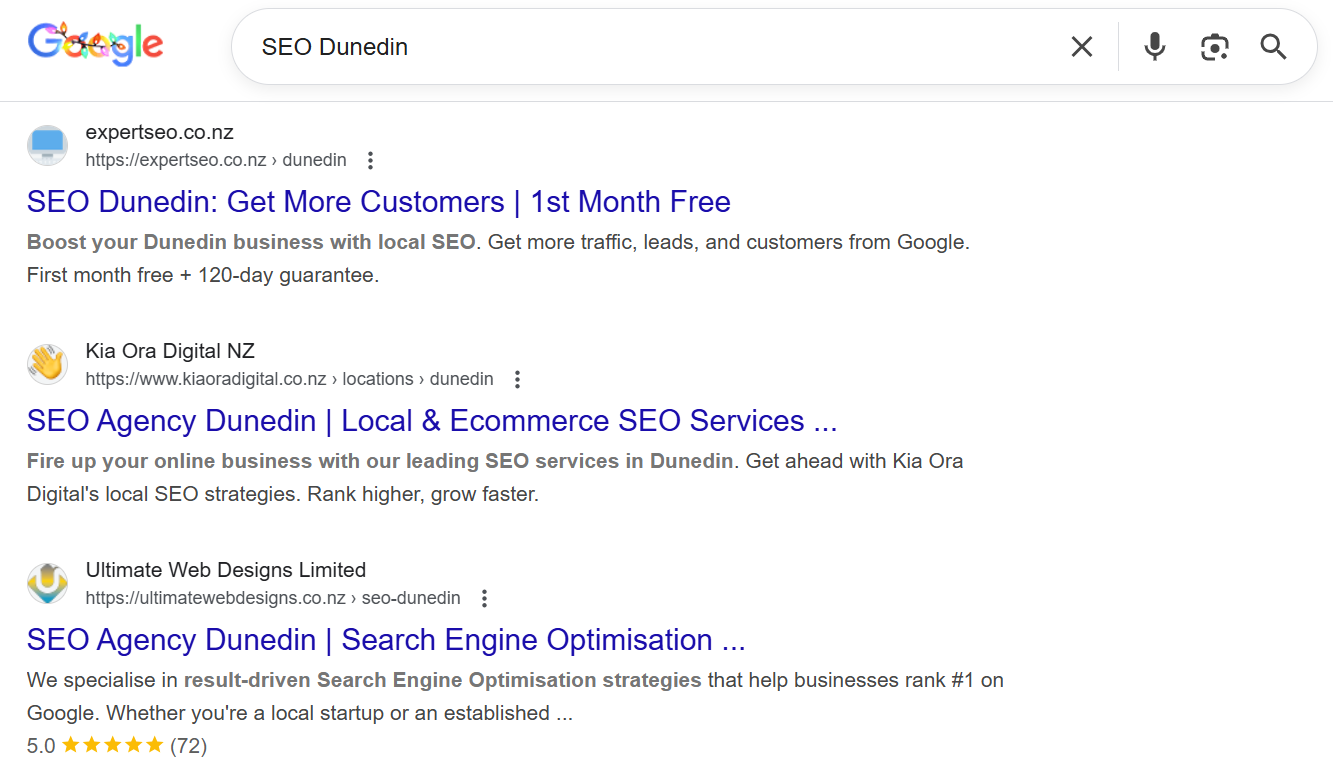
Ranking #1 for “SEO Dunedin.” I’ve never set foot in Dunedin as a business base. But the site’s overall authority is strong enough that a single city page ranks #1 there.
That’s the compounding effect: build the whole site up, and individual pages punch above their weight.
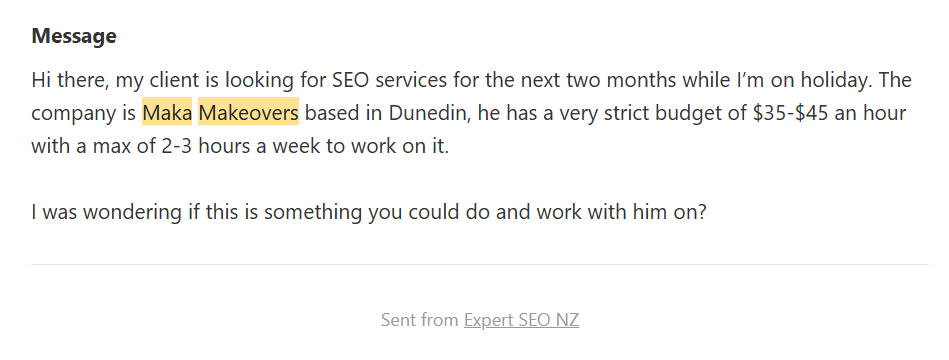
And that ranking turned into real business. An agency messaged me to hand over their SEO Dunedin client, Maka Makeovers, purely off the back of that #1 spot.
Then there’s The Smoke Shed, who found the site through search, filled out the audit form, and became a consulting client. Rankings to leads to clients: that’s the full chain working.
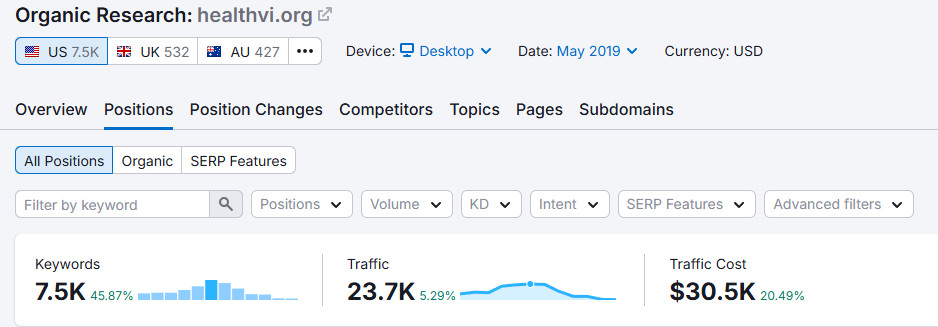
This isn’t a fluke of one new site, either. Back in 2017 I started a health website, HealthVI, with my former business partner and SEO mentor Ian Pribyl.
We took it from 0 to over 20,000 organic visitors a month using this exact whole-site approach.
I did the same with StoppingScams, a site reviewing internet marketing products, which regularly pulls over 5,000 visitors a day. Different niche, same holistic system.

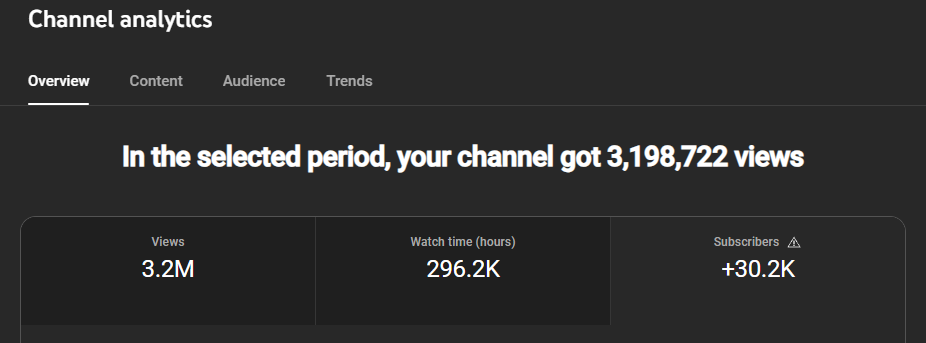
Even my YouTube channel runs on the same thinking: cover a topic properly, build trust, let it compound. It’s grown to over 30,000 subscribers and 3.2 million views.
SEO isn’t just a Google game anymore, and holistic thinking works wherever discovery happens.
Most SEO articles can’t show you a single real result. That’s the difference between reading about holistic SEO and watching it work.
How To Do Holistic SEO In New Zealand
Here’s the exact order to build the pillars. Order matters: doing this out of sequence wastes money, because there’s no point pouring content onto a broken foundation.
Step 1: Audit where you stand
Before you fix anything, you need to know what’s broken. Run your whole site through an audit tool to surface the technical and on-page issues dragging you down.
Go to Semrush, open Site Audit, enter your domain, and let it crawl.
It’ll hand you a prioritised list: broken links, slow pages, missing titles, indexing problems. (With most New Zealand sites I audit, there’s a long list of errors nobody knew were there.)
Free alternatives: Google Search Console for indexing issues and SEOptimer for a quick score.
This is also the natural moment for a proper SEO audit if you’d rather have someone read the results for you.

Step 2: Fix the technical foundation
Now work through what the audit found, foundation first. Get your indexing clean (Google can actually find your pages), your speed up (aim for a decent PageSpeed score), your site mobile-friendly, and HTTPS in place.
Use Google Search Console to check indexing and PageSpeed Insights to check load times.
Fix the highest-impact issues first: a page that isn’t indexed can’t rank at all, so that’s more urgent than shaving half a second off load time.
Step 3: Map your topic and build content clusters
This is the topical authority pillar in action. Don’t write one page and hope: map out the full topic, then build a pillar page plus a cluster of supporting articles around it.
Start with keyword research to find what people search, then group those keywords by intent so each one gets its own page. One page per intent, no cannibalising.
A quick way in: ask ChatGPT to generate a keyword and subtopic list for your niche, then validate the volumes in a real keyword tool.
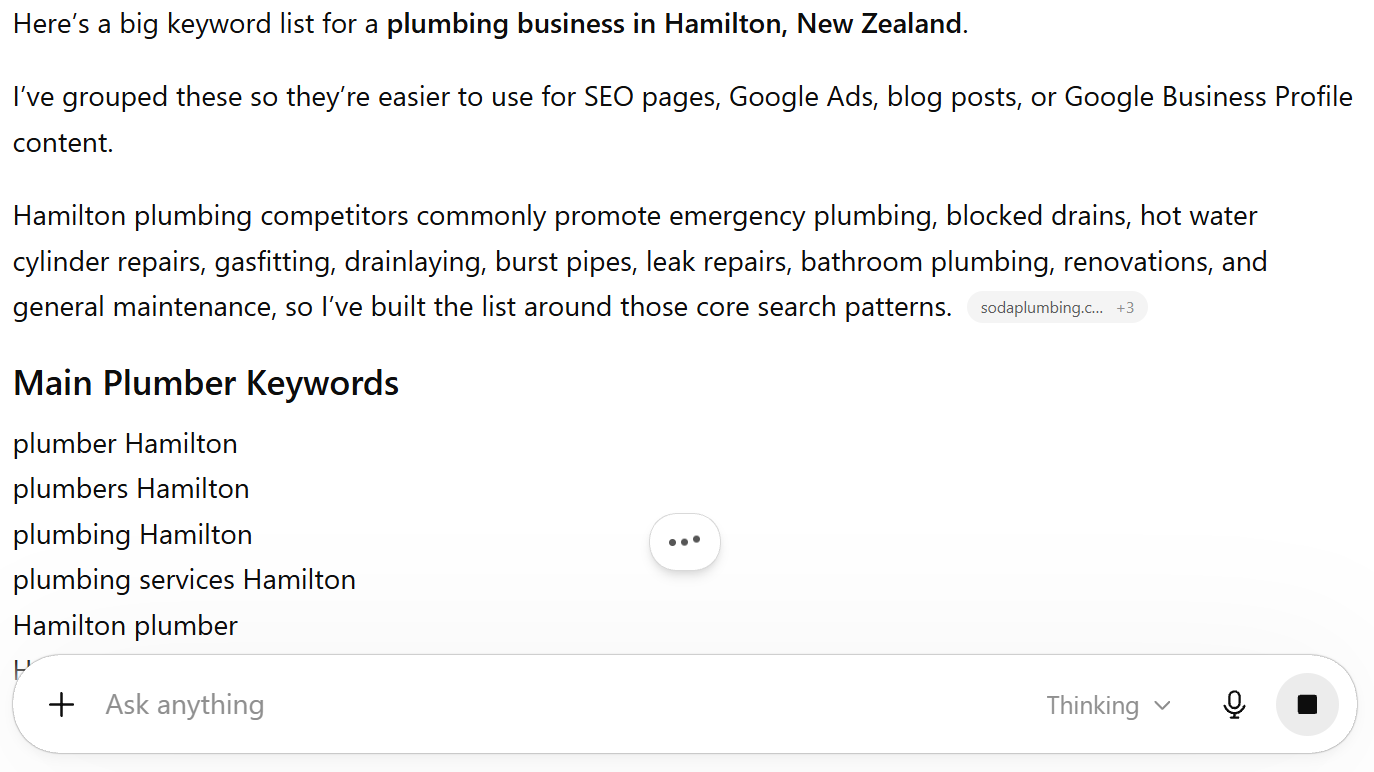
Take a plumber doing SEO in Auckland: that means a main service page plus supporting posts like “how much does it cost to fix a burst pipe” and “signs your hot water cylinder is failing”, each answering a real search, all linking back to the money page.
One tip that separates the sites that rank from the ones that don’t: before you write anything, do a proper competitor check.
For every keyword you want to own, Google it, look at what’s already ranking, and build something more useful than the best result on the page.
More depth, better examples, clearer steps. Don’t half-arse it and publish a thinner version of what’s already there: you’ll never outrank it. Out-value it, and you will.
Step 4: Optimise every page on-page
With content mapped, optimise each page so Google reads it clearly.
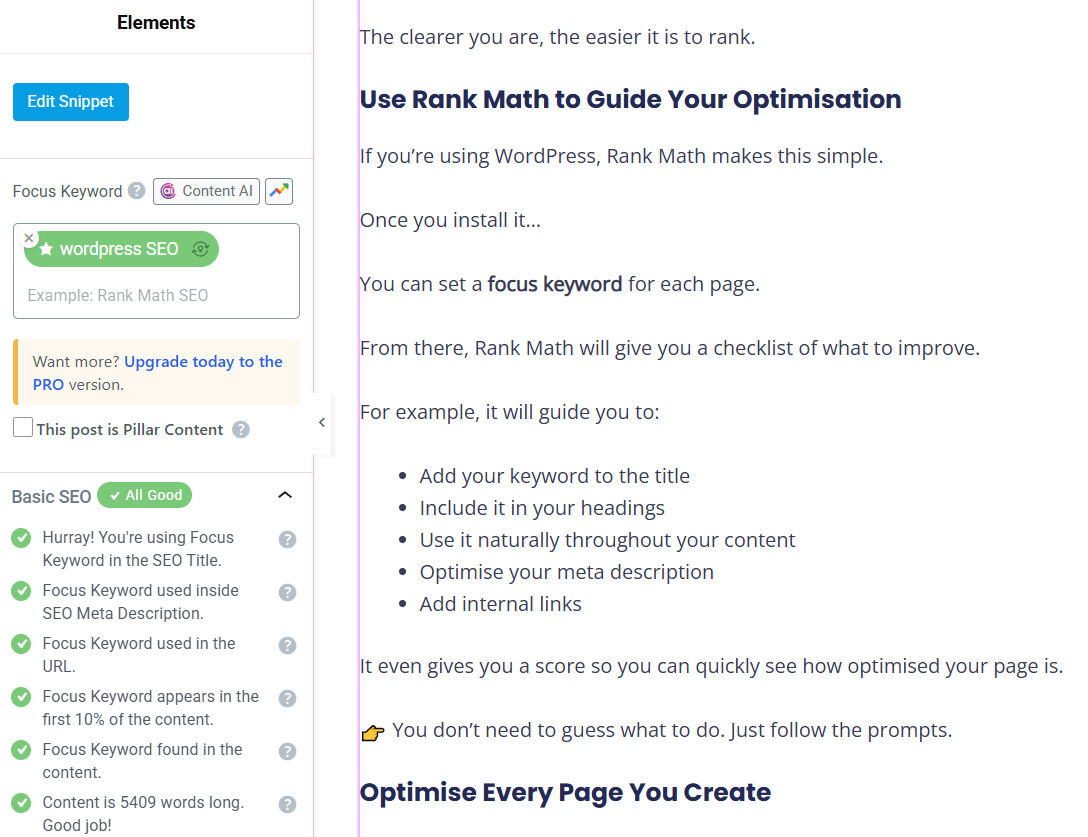
Set a keyword-first title, structure your headings logically (one H1, then H2s), place your keyword naturally, and add internal links between related pages.
Rank Math (free) grades each page as you edit in WordPress and tells you exactly what’s missing. Work the checklist until it’s green, but don’t obsess over a perfect score: write for the reader first.
Step 5: Tighten user experience
Now make the page genuinely good to use. Clean layout, fast-feeling load, clear navigation, obvious next steps.
Read your own page on a phone: if you’re pinching to zoom or hunting for the point, so is everyone else.
This one’s hard to measure with a single tool, so use common sense plus your bounce and engagement data in Search Console and Analytics. If people leave fast, something’s off.
Speed is the biggest UX lever, and you don’t need to be a developer to fix it. If you’re on WordPress and not tech-savvy (like me), install a caching plugin like WP Rocket: it handles caching, file compression, and lazy loading in a few clicks and usually takes a sluggish site to a respectable load time without you touching a line of code.
Step 6: Build authority and reviews
Time to earn trust from outside. Authority comes from three places working together: the links pointing at your site, the depth of what you publish, and the reviews your customers leave.
Start with the links you can realistically earn: local directories, industry associations, partners, and genuinely useful content other people want to reference.
Quality beats volume every time, so one link from a respected NZ site beats fifty from directories nobody visits.
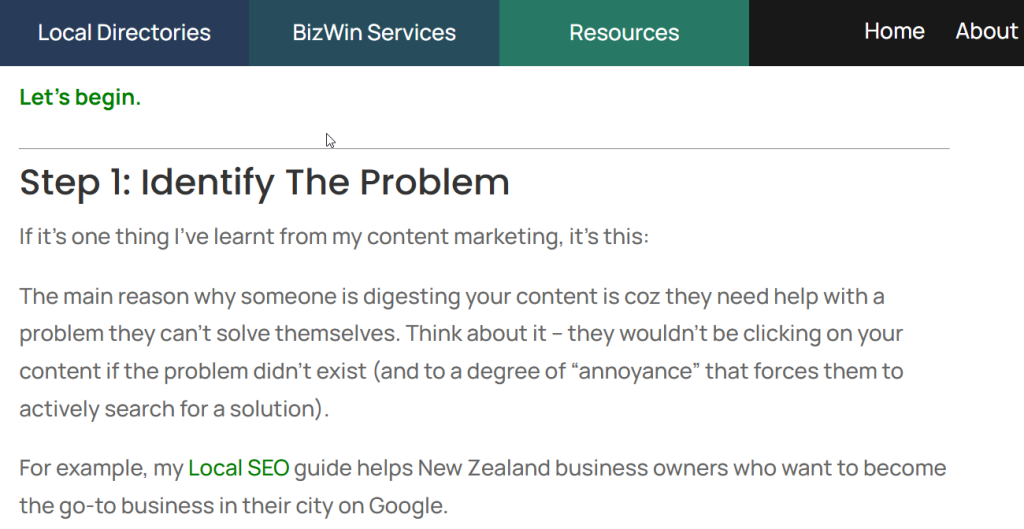
For example, our local SEO guide earned a link from BizWin, a Tauranga agency run by Leo Zeldenrust: one relevant link like that pulls more weight than a hundred cheap ones ever could.
Here’s the part most people miss: authority also comes from content, and consistency is the lever. Every in-depth piece you publish adds to the case that you’re the expert in your space.
Picture Google choosing which SEO company to trust between two sites, all else equal: Expert SEO, with a hundred detailed articles on SEO behind it, and a competitor with none.
It’s an easy call for the search engine. The site that’s built the content library has built the authority to match, so keep publishing, consistently. It compounds.
Then reviews. For a service business, actively ask happy customers for Google reviews: they feed both your local rankings and the trust that turns a click into a booking.

Step 7: Optimise for AI search (GEO)
Now make your content easy for AI to cite. Answer questions directly in the first sentence or two, use clear headings, and add structured data so machines understand your page.
Schema markup matters more than people realise here: structured data appears on 61% of ChatGPT-cited pages versus just 25% of standard Google results, according to AirOps.
Add it, write direct answers, and become the source AI reaches for.

Step 8: Measure and iterate
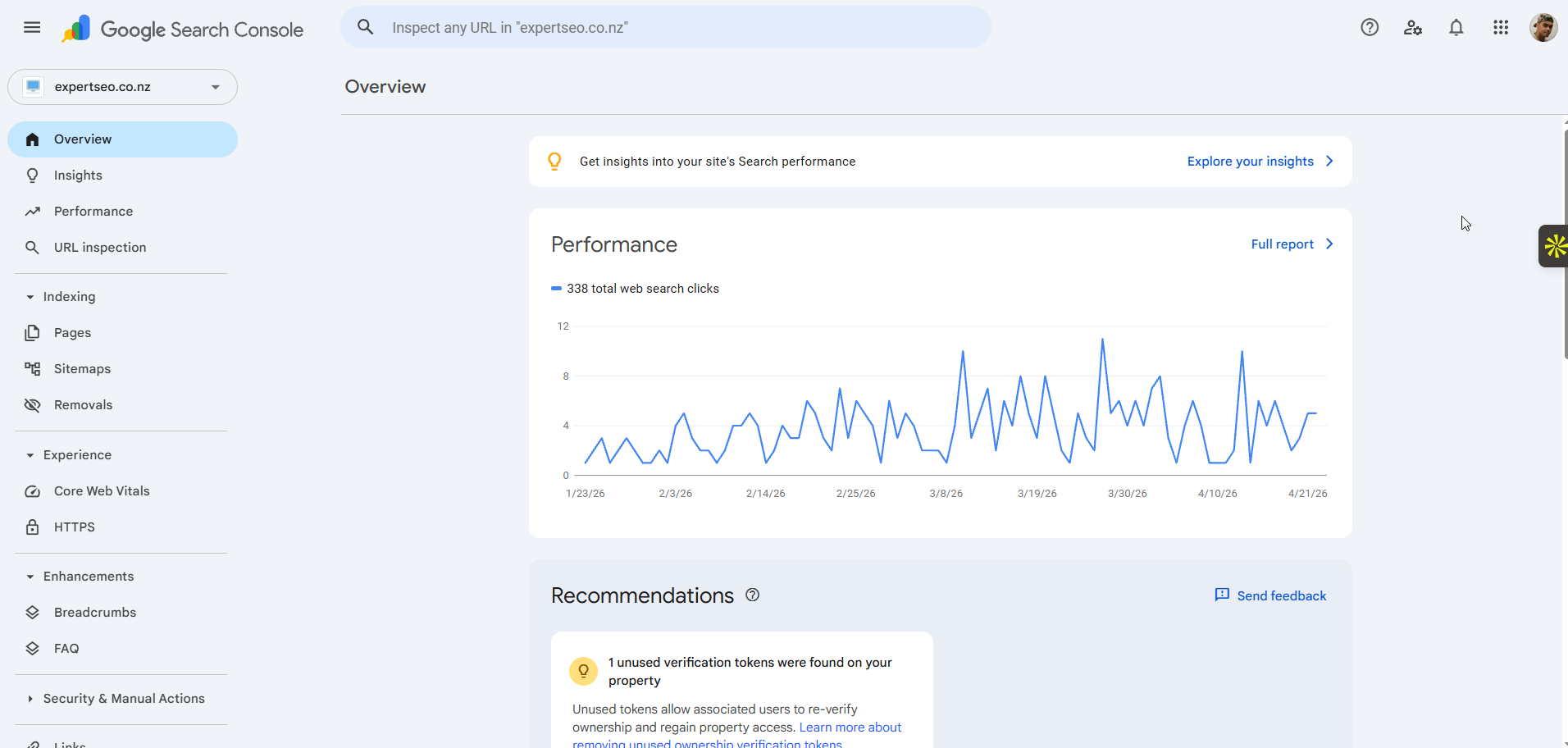
Finally, track what’s working and keep going. Watch your clicks and impressions in Google Search Console, your rankings in a tracker, and your traffic in Analytics.
Holistic SEO isn’t a one-and-done job: it’s a system you keep feeding. Publish more cluster content, earn more links, tighten more pages, and the whole thing compounds.
The screenshot below is the Expert SEO domain’s own Search Console, climbing over time.
One expectation to set before you start: give it time. Plan for a minimum of three to six months of consistent effort before you see real movement.
How long it takes depends on your market, and the more competitive it is, the longer the runway. SEO isn’t PPC: you can’t click your fingers, pay, and sit at the top tomorrow.
It’s a compounding asset, and the businesses that win are the ones still feeding the system while their competitors quit at month two.
Does Holistic SEO Still Work in 2026?
Yes, and AI search has made it more important, not less.
Every few months someone declares SEO dead. Then AI Overviews arrive, and the panic doubles. But the data tells a calmer story.
SEO isn’t dead. What’s happening is a consolidation around whole-site trust: the exact thing holistic SEO builds.
Here’s the thing about AI search: it doesn’t reward keyword tricks.
Google’s AI Overviews and tools like ChatGPT pull from sites that demonstrate authority, structure, and trust across the board. A site optimised holistically is precisely what they want to cite.
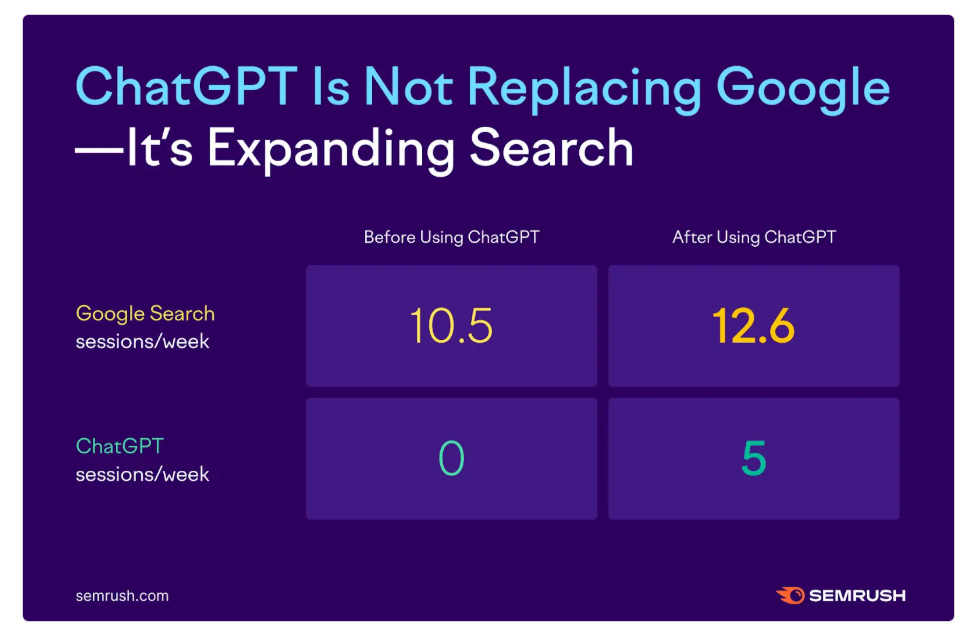
And ChatGPT isn’t replacing Google the way the headlines suggest. Semrush’s data shows people’s Google sessions actually rose after they started using ChatGPT: the two expand search together rather than one killing the other.
The proof is in the section above: a sub-one-year-old site getting cited by Google’s AI Mode isn’t a site fighting a dying channel.
It’s a site built for where search is going. That’s what holistic SEO does: it future-proofs you by making every part of your site genuinely good, which is the one strategy no algorithm update can punish.
DIY Holistic SEO vs Hiring an Expert
You can absolutely do holistic SEO yourself. The eight steps above are the real process, not a watered-down version, and a motivated business owner can work through the foundation, the content, and the early authority building.
Where it gets hard is coordination. Holistic SEO means keeping six pillars moving at once, indefinitely, while running your actual business.
The technical fixes, the content calendar, the link building, the AI optimisation, the tracking: each is manageable alone, but together they become a full-time job.
That’s usually the point people hand it off.
If you’re at that point, this is what our done-for-you SEO services is built for: running all six pillars as one system so you don’t have to.
And if you’d rather keep your hands on the wheel and just want a second brain, working with an SEO consultant gets you the strategy without giving up control.
Either way, the approach is the same one that took a brand-new site to #1 in the country. Do it yourself or bring us in, but do it holistically: that’s the part that actually works.
Holistic SEO: FAQ
What is holistic SEO in simple terms?
Holistic SEO means improving your whole website as one connected system — content, technical health, user experience, and authority together — instead of optimising one page for one keyword at a time. When every part supports the others, the whole site earns Google's trust and rises together.
What are the pillars of holistic SEO?
Holistic SEO rests on six pillars: technical foundation, content and topical authority, on-page SEO, user experience, off-page authority, and AI search visibility (GEO). Each is an ordinary SEO task on its own; the holistic part is running them together so they reinforce each other instead of pulling in different directions.
What's the difference between holistic SEO and traditional SEO?
Traditional SEO optimises one page for one keyword as a set of separate tasks. Holistic SEO runs those same tasks as one connected strategy aimed at making the whole site the most trustworthy result on a topic, so rankings compound over time instead of spiking and plateauing.
What is the 80/20 rule of SEO?
The 80/20 rule of SEO says roughly 80% of your results come from about 20% of the work — usually genuinely useful content and a solid technical foundation. Holistic SEO doesn't argue with that; it makes sure the other pillars actually support that core 20%, rather than leaving your best content stranded on a weak site.
What tools do you need for holistic SEO?
A practical stack covers each pillar: Semrush or Google Search Console for auditing and tracking, Rank Math for on-page optimisation in WordPress, PageSpeed Insights for speed, WP Rocket for caching, and a keyword tool for research. None are strictly required — they just make each pillar faster to work through.
Is holistic SEO worth it for a small NZ business?
Yes. Because most New Zealand keywords have low search volume, competing on whole-site trust and topical depth is often the only realistic way a smaller site out-ranks bigger competitors. It's exactly how a sub-one-year-old NZ site reached #1 nationally for "local SEO", above Ahrefs and Semrush.
Recommended Reading

How to Improve Your Website's SEO
A practical, whole-site walkthrough for lifting your rankings across the board.

What Is an SEO Silo Structure?
How to organise your pages into themed silos so authority flows where it should.

Off-Page SEO: What It Is and How to Do It
The authority pillar in depth: earning the links, mentions and trust that move rankings.