

If you’re spending $1,500 a month on SEO, you should be able to answer one question: what is it actually returning?
Most people can’t. Their agency sends a report full of rankings, impressions, and traffic graphs, and somewhere in the back of their mind they’re thinking “okay, but how much money is this making me?”
This guide answers that properly.
You’ll get the SEO ROI formula, a complete worked example using realistic NZ numbers, real results from my own projects, and something almost no article on this topic covers: how to tell if your SEO is quietly losing you money every month.
What Is SEO ROI?
SEO ROI measures how much revenue your SEO generates compared to what it costs you. If you spend $18,000 a year on SEO and it produces $90,000 in revenue, your ROI is 400%.
Rankings, traffic, and impressions are inputs. ROI is the result.
Your accountant doesn’t care that you rank #3 for “plumber Hamilton” — they care whether the money going out is smaller than the money coming back in.
One thing that trips people up: marketing ROI and investment ROI use different scales.
If you’ve seen the question “is a 3% ROI good?”, that’s share-market framing, where 3% annually on a passive investment is meaningful.
Marketing channels are measured in hundreds of percent. A 100% SEO ROI means you doubled your money. A 3% marketing ROI means your campaign barely covered its own costs.
The SEO ROI Formula
The formula is simple:
SEO ROI = (Revenue from SEO − Cost of SEO) ÷ Cost of SEO × 100
Say you spend $1,500 a month on SEO and it generates $4,000 a month in revenue:
($4,000 − $1,500) ÷ $1,500 × 100 = 167% ROI
For every dollar in, you’re getting $2.67 back.
Here’s how that scales at different levels:
| Monthly SEO spend | Monthly revenue from SEO | ROI |
|---|---|---|
| $1,000 | $2,500 | 150% |
| $1,500 | $4,000 | 167% |
| $3,000 | $12,000 | 300% |
The formula is the easy part. The hard part is getting the two inputs right — your true cost and your true revenue. That’s where the rest of this guide earns its keep.
Step 1: Work Out What SEO Actually Costs You
Your SEO cost is everything you spend to make it happen, not just the invoice from your provider.
Add up:
- Agency, consultant, or freelancer fees. For most NZ small businesses this lands somewhere between $1,000 and $3,000 a month. Globally, businesses spend anywhere from $500 to $7,500 per month on SEO services depending on scope. I’ve broken down how much SEO costs in NZ in detail if you want the full picture.
- Tools. If you’re doing it yourself: Ahrefs, SEMrush, or Mangools subscriptions, rank trackers, and so on. Anywhere from $0 to $300+ a month.
- Content production. Writers, photography, design — anything created specifically for SEO.
- Your own time. The one everyone forgets. If you spend five hours a month reviewing reports, approving content, and answering your SEO provider’s questions, that time has a cost. Price it at whatever your hour is worth.
A quick note on the benchmarks you’ll find when researching this topic: most of the big studies are American, built on enterprise campaigns costing US$10,000+ per month.
Those numbers aren’t wrong, but they describe a different game.
A Hamilton trades business on a $1,500 retainer shouldn’t be measuring itself against a Silicon Valley SaaS company’s growth curve. The formula is the same — the scale is not.
Step 2: Track the Revenue SEO Generates
Revenue tracking works differently depending on whether customers buy on your site or contact you first.
If you sell online (ecommerce)
This is the straightforward case.
In Google Analytics 4, go to Reports → Monetization → Ecommerce purchases, then filter or compare by session source/medium and isolate google / organic. That shows you exactly how much revenue came from people who found you through unpaid search.
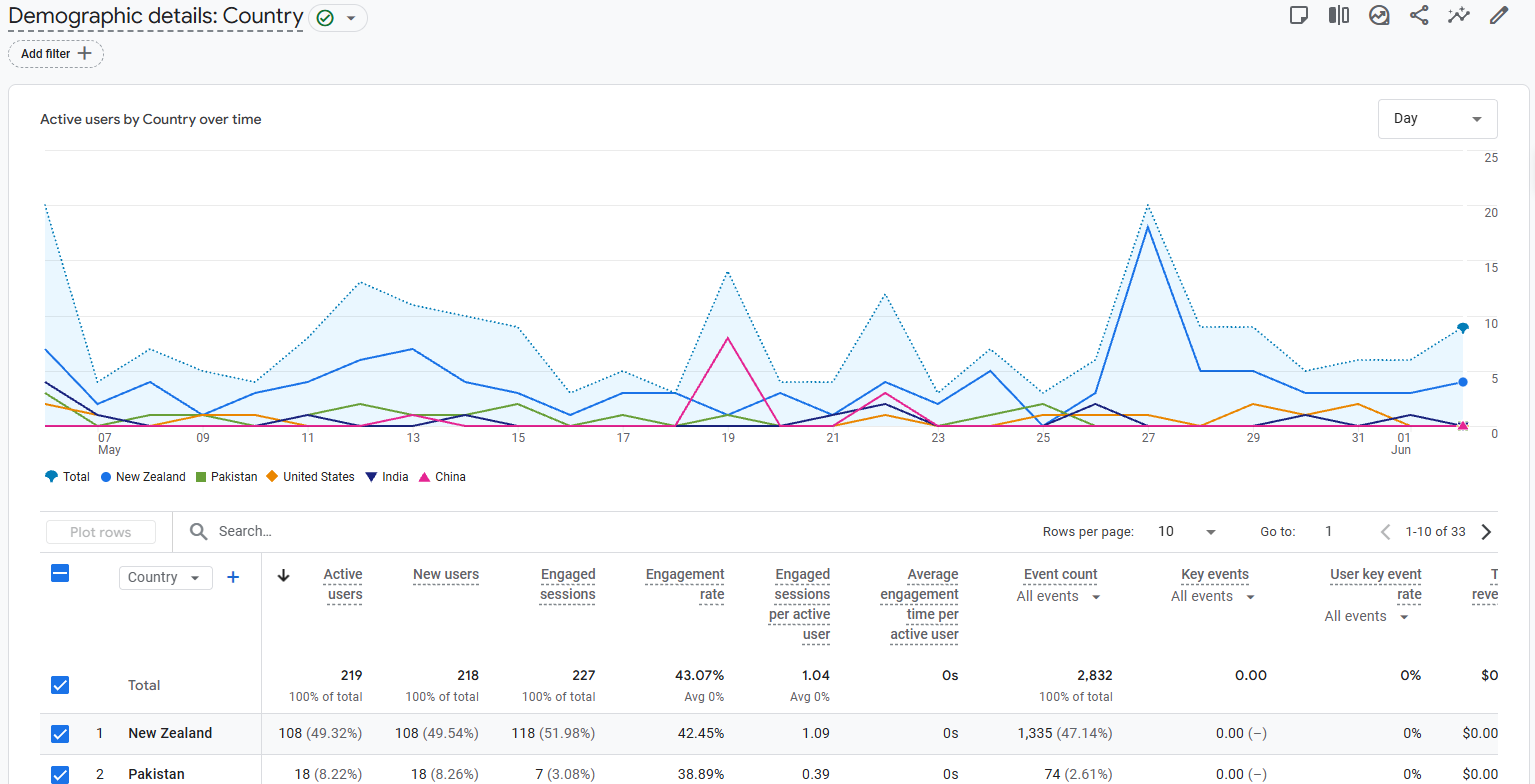
One warning: some guides ranking on page one for this topic still walk you through Universal Analytics goal setup. Universal Analytics was switched off in 2023. If the instructions mention “Admin → View → Goals”, they’re years out of date.
If you generate leads (most common in NZ)
You’re a plumber, dentist, lawyer, builder, or consultant. People don’t pay on your website — they ring you or fill in a quote form.
So you track key events instead:
- In GA4, mark your conversion actions as key events: contact form submissions, quote requests, phone number clicks, booking confirmations.
- Segment by organic traffic to see how many leads came from search each month.
- Ask every caller how they found you, and record it. Low-tech, but it catches the leads GA4 can’t see.
Now you know how many leads SEO produced. But a lead count still doesn’t equal revenue — which brings us to the step that makes or breaks the whole calculation.
How to Value a Lead (The Step Everyone Skips)
A lead is worth your average job value multiplied by the percentage of leads you close.
Lead value = average job value × close rate
Skip this step and your ROI number is fiction. Do it properly and the whole equation snaps into focus. Here’s a complete worked example.
Say you’re a plumber doing SEO in Hamilton, paying $1,500 a month for it.
Eight months in, you’re getting 12 leads a month from organic search. You close around 40% of enquiries, and your average job is worth $850.
| Input | Value |
|---|---|
| Organic leads per month | 12 |
| Close rate | 40% |
| Jobs won per month | 4.8 |
| Average job value | $850 |
| Monthly revenue from SEO | $4,080 |
| Monthly SEO cost | $1,500 |
| Monthly ROI | 172% |
That plumber is making $2.72 for every dollar spent — and that’s before counting repeat customers or referrals.
Organic leads also close unusually well.
SEO leads close at around 14.6%, compared to 1.7% for outbound leads like cold calls.
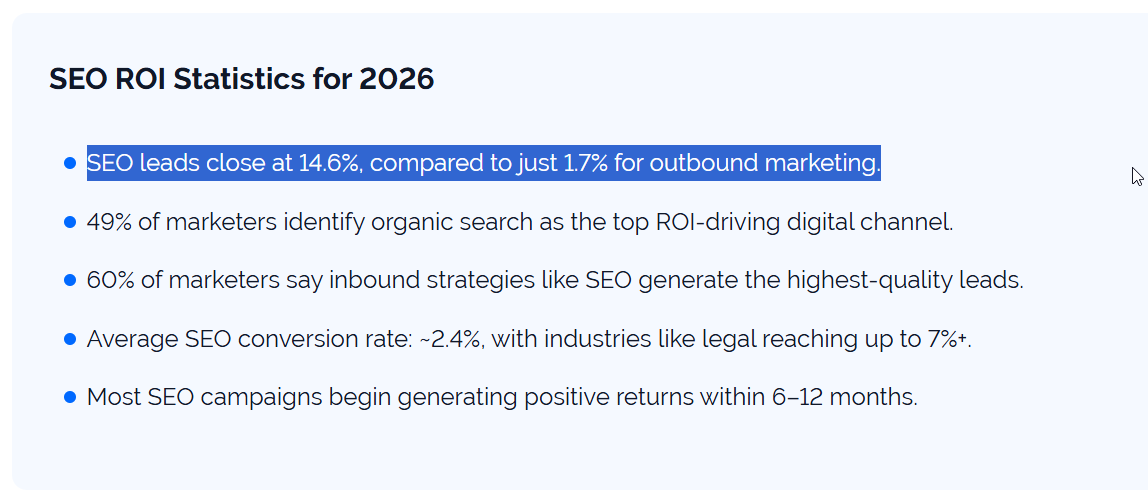
Someone who searched “emergency plumber Hamilton” and rang you already wants what you sell. That intent is why the close rates in your calculation will usually be far higher than anything cold outreach produces.
High-Ticket Services: Where SEO ROI Compounds Fastest
For high-value services, a single new customer from Google can cover your entire SEO investment for the month — sometimes for several months.
Take dental implants.
Picture a clinic doing SEO in Queenstown, where a single implant patient is typically worth $4,000 to $6,000.
If that practice pays $1,500 a month for SEO, one implant patient from organic search covers three to four months of the entire investment.
And that’s only the first transaction. The compounding kicks in after:
- Repeat work. A patient who needs one implant often needs more later.
- Adjacent services. The same patient books whitening, hygiene visits, and check-ups.
- Referrals. Happy patients send family and friends — none of whom cost you a cent to acquire.
Most ROI articles calculate first-transaction value only and quietly understate the real return.
If your average customer is worth thousands rather than hundreds, your true SEO ROI is the lifetime number, and it’s usually a multiple of the first-job figure.
This is exactly why industries like dental, legal, and professional services consistently top the SEO ROI benchmarks by industry — high job values make the maths compound fast.
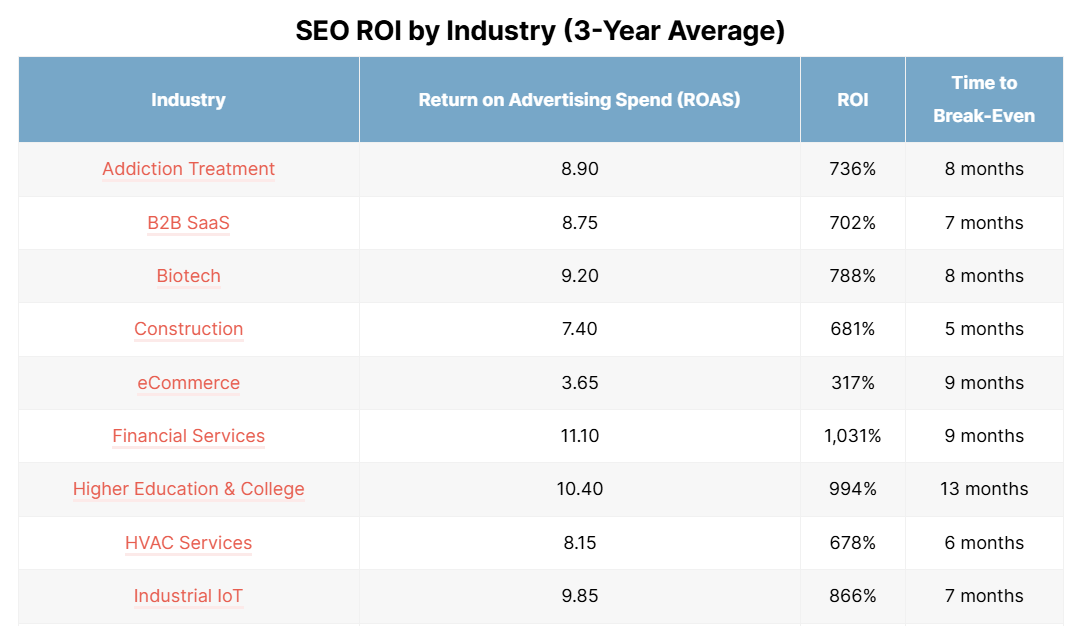
It’s also why SEO for dental practices tends to pay back faster than almost any other sector.
The Traffic Value Method (A Faster Sanity Check)
Traffic value estimates what you’d have to pay in Google Ads to buy the organic traffic you’re currently getting free.
It’s a proxy rather than actual revenue, but it’s brilliant for a quick sanity check — especially when your attribution is murky or your site is young.
Tools like Ahrefs and SEMrush calculate it automatically: take every keyword a site ranks for, multiply the traffic by the cost-per-click an advertiser would pay for it, and add it up.
To check yours, drop your domain into Ahrefs Site Explorer (or SEMrush Domain Overview) and look for the traffic value figure.
Here’s a real example.
Our SEO company is under a year old, and its organic traffic is already valued at roughly $3,500 per month — meaning a competitor would need to spend around $42,000 a year on Google Ads to buy the visibility we’re getting organically.
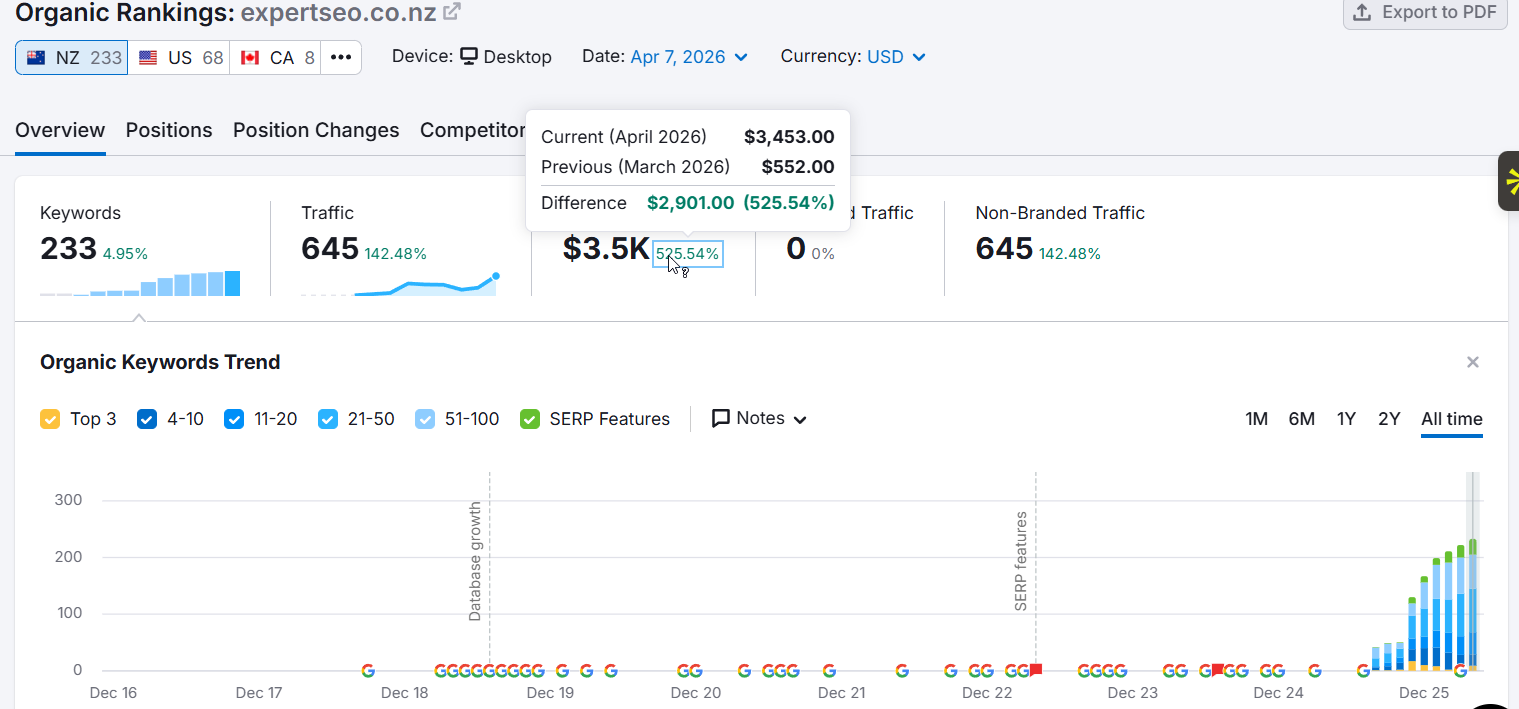
And to show what this looks like at full maturity.
Content Marketing Institute is a publication that recently featured Expert SEO in its roundup of blogs favoured by marketers:

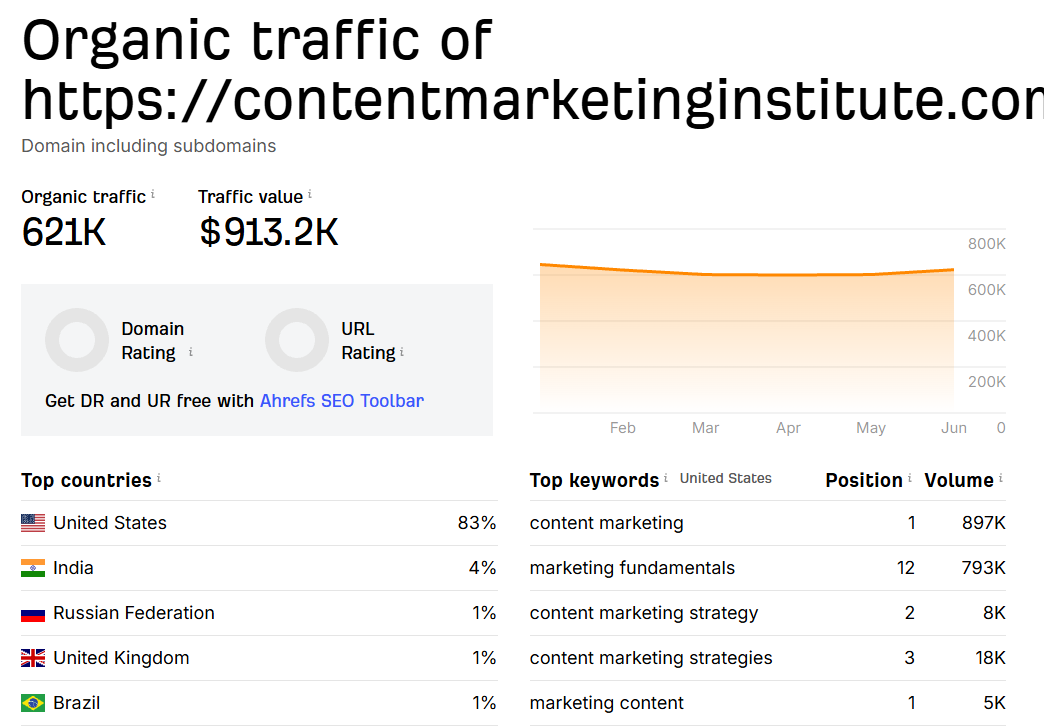
They pull 621,000 organic visits a month with a traffic value of $913,200 USD per month.
That’s over $17 million NZD a year in Google Ads equivalent — earned, not bought.
The caveat: traffic value measures visibility, not revenue. A site can have impressive traffic value from keywords that never convert. Use it as a directional signal alongside your revenue calculation, never instead of it.
What’s a Good SEO ROI? (Benchmarks)
Well-executed SEO typically returns several dollars for every dollar spent once the campaign matures. The most-cited industry research puts the median SEO ROI at 748% over a three-year window, with positive ROI usually arriving within 6 to 12 months.
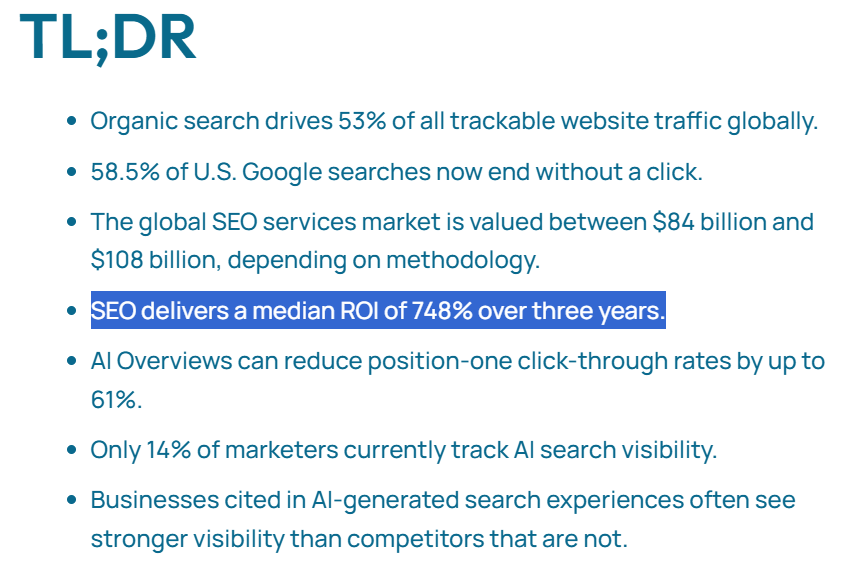
Separate research found SEO returns an average of $22 for every $1 invested across long-term campaigns.

Treat those as ceilings to aim at rather than guarantees. Your actual number depends on:
- Your industry and job values. An Auckland law firm billing $5,000 per client hits positive ROI far faster than a café selling $6 coffees — which is why law firm SEO is one of the highest-return niches going.
- Competition. Ranking for “builder Tauranga” takes less time and money than “insurance NZ”.
- Execution quality. More on this shortly, because it cuts both ways.
It’s worth knowing that marketers consistently rate this channel above the alternatives — 49% say organic search delivers the best ROI of any marketing channel, ahead of paid ads, social, and email.

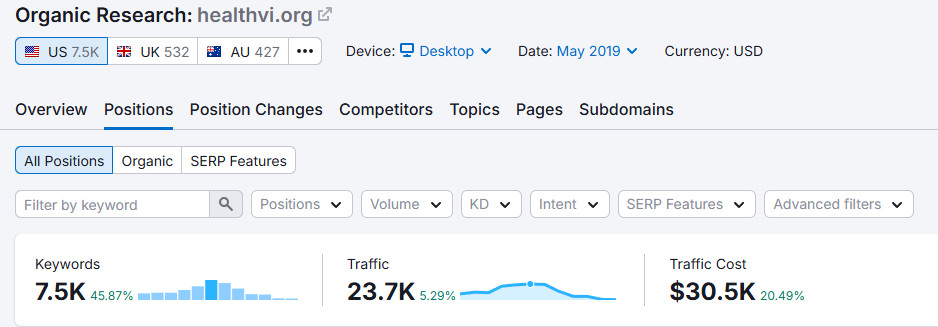
For a real top-end example: HealthVI, a health website I grew from zero to over 20,000 monthly visitors, multiplied its revenue tenfold in 12 months.
Results like that aren’t typical, but they show what the upper bound looks like when everything compounds.
Why Your First Six Months Will Probably Show Negative ROI
Almost every SEO campaign loses money in the first three months. Losing money early is built into how compounding channels work.
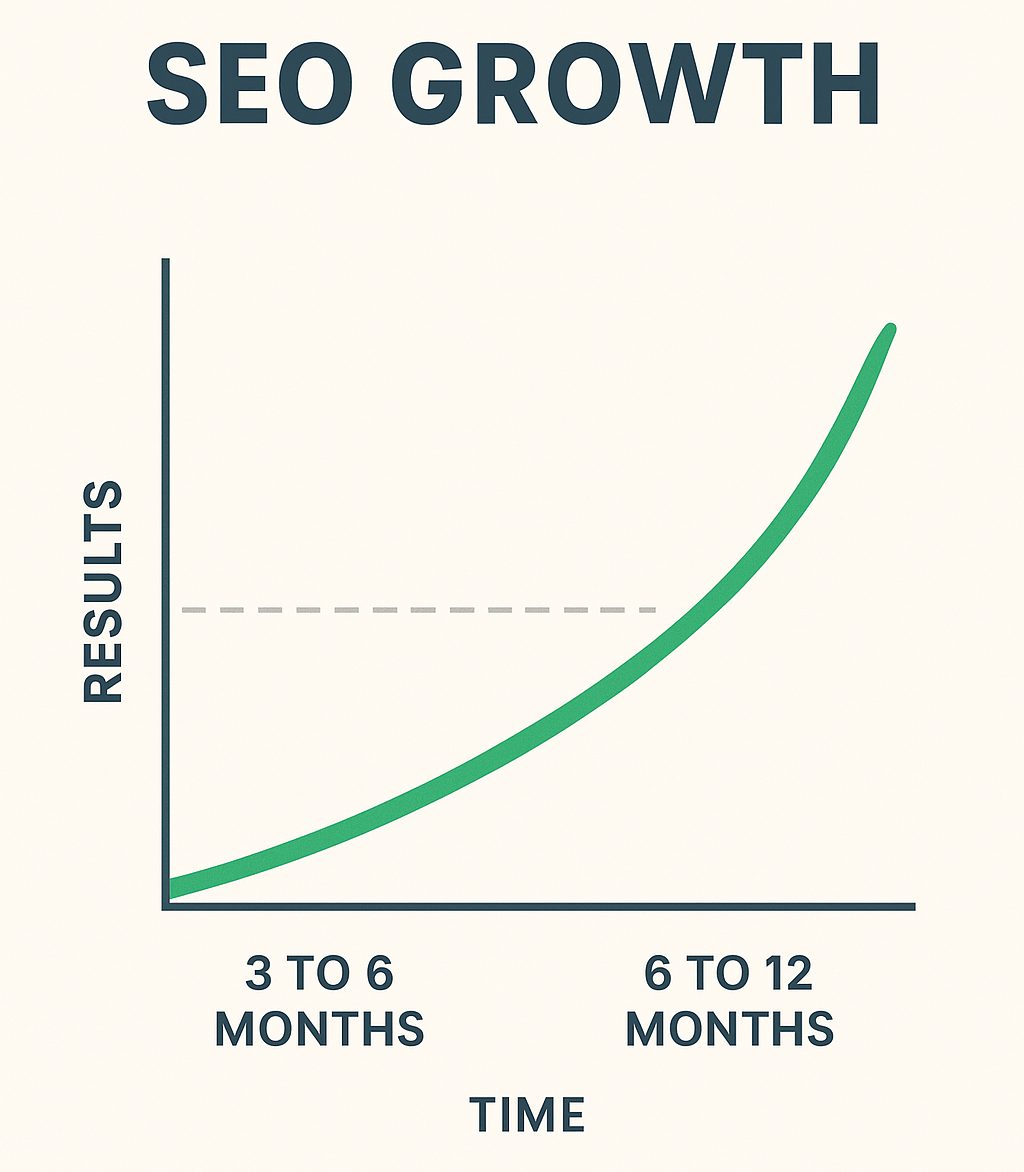
The typical NZ timeline looks like this:
- Months 1–3: Foundations. Technical fixes, keyword research, first content published. Traffic barely moves. ROI is negative.
- Months 4–6: Early traction. Rankings climb, impressions grow, the first leads trickle in. ROI approaches break-even.
- Months 6–12: The curve bends. Content compounds, authority builds, leads arrive consistently. Most campaigns cross into positive ROI in this window.
- Year 2 onward: The same monthly spend now sits on top of everything already ranking, so each dollar works harder than the one before it.
This is the opposite shape to paid advertising. With SEO vs PPC, ads deliver instantly but linearly — stop paying and the leads stop the same day. SEO starts slow and compounds.
If you want the full breakdown of timelines, I’ve covered how long SEO takes separately.
The practical takeaway: judge SEO ROI over 12 months, never over 6 weeks. Quitting at month four is the single most expensive mistake in this channel, because you pay for the entire unprofitable phase and walk away right before the profitable one.
When SEO ROI Is Negative (And You Don’t Even Know It)
The biggest SEO ROI risk is paying every month for work that produces nothing — and not realising it.
Bad SEO produces a negative return month after month, on autopilot, with a tidy invoice attached.
A real example: last year I spoke with a dental practice that wasn’t interested in changing providers because they already had someone doing their SEO for $800 a month.
Fair enough. Then I spent five minutes checking their actual rankings. Every single keyword they cared about was sitting on page three of Google.
Page three might as well be invisible. Nobody scrolls there. That practice was paying $9,600 a year for rankings that generated no traffic, no leads, and no revenue — and they had no idea, because the monthly report looked busy.
Here’s the five-minute check you can run on your own SEO right now:
- Open Google Search Console and look at the clicks trend over the last 12 months. Flat or declining after 6+ months of paid SEO work is a red flag.
- Search your money keywords in an incognito window. If you’re consistently beyond page one for the terms that matter, you’re not getting found.
- Count your organic leads. If you can’t name a single customer who found you through Google last month, your ROI is negative regardless of what the report says.
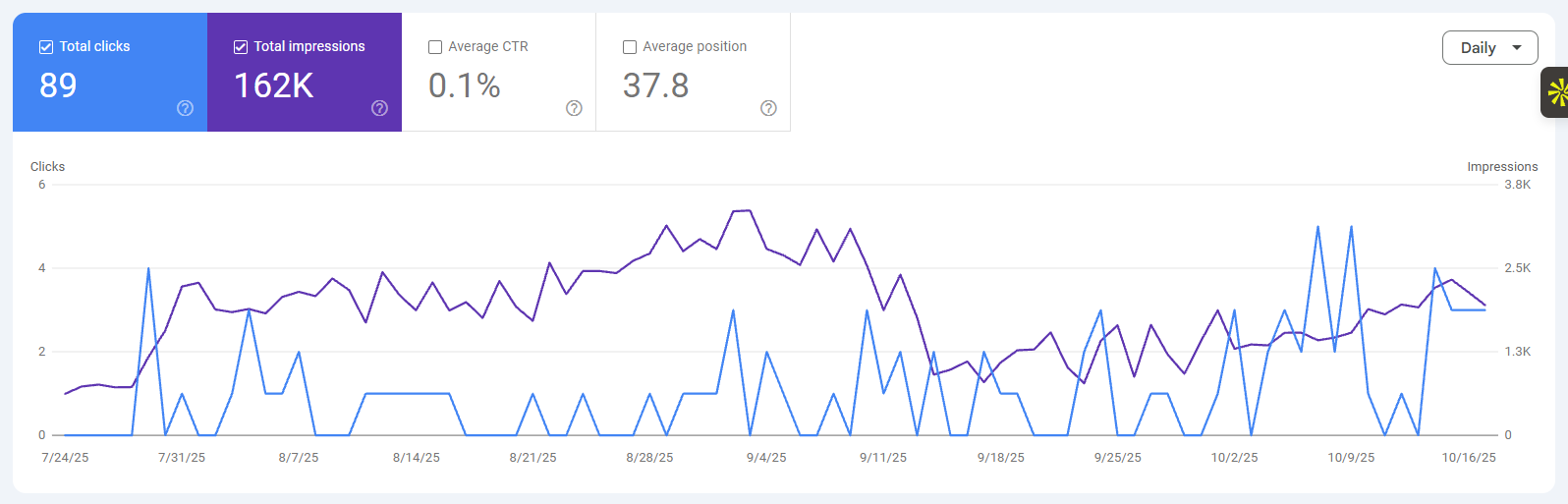
Watch for these reporting red flags too: reports full of impressions and “visibility scores” with no mention of leads or revenue, rankings reported only for obscure long-tail keywords nobody searches, and a provider who never asks about your close rate or job values.
Anyone measuring your ROI properly needs those numbers.
If you’ve run the check and can’t tell whether your SEO is working, a proper SEO audit will show you exactly where you stand — what’s ranking, what’s broken, and whether your current spend is producing anything.
This is the part of the ROI conversation the industry skips: the return is heavily dependent on the experience of the operator.
The same $1,500 a month can produce 300% ROI with someone who knows what they’re doing, or −100% with someone who doesn’t.
How to Improve Your SEO ROI
You improve SEO ROI by pushing both sides of the equation — revenue up, waste down.
- Target buying-intent keywords first. “Emergency plumber Hamilton” makes money this month. “History of plumbing” never will. Commercial keywords convert at multiples of informational ones, so weight your effort accordingly.
- Convert more of the traffic you already have. Doubling your conversion rate doubles your ROI without a single new ranking. Clear calls to action, visible reviews, fast pages, and a phone number that’s impossible to miss.
- Update what’s nearly ranking. Pages sitting at positions 5–15 in Search Console are your cheapest wins. Improving an existing page costs a fraction of creating a new one.
- Match the spend to the operator. A cheap retainer that produces nothing is infinitely more expensive than a dearer one that produces customers — the dental practice above proved it.
How to Forecast SEO ROI Before You Invest
You can estimate future SEO ROI by working out how many searches your target keywords get, what share of them you’d realistically capture, and what those visitors are worth.
The quick method:
- Add up the monthly search volume of your target keywords (Google Keyword Planner is free).
- Assume you capture 15–25% of that volume as clicks if you reach the top three — a realistic range, not a best case.
- Apply your website conversion rate (2–5% is typical for service businesses) to estimate leads.
- Multiply by your close rate and average job value.
- Compare against 12 months of SEO costs.
Run it with conservative numbers. If the forecast only works when every assumption is optimistic, the investment is marginal. If it works on cautious assumptions, you’ve found a strong opportunity.
And a blunt note: a forecast is an estimate, never a promise. Anyone guaranteeing you a specific ROI before doing any work is selling something other than SEO.
Does AI Search Change How You Measure SEO ROI?
AI Overviews and ChatGPT have reduced clicks on some informational searches, but the businesses being cited in those answers are capturing demand earlier — and the ROI formula itself doesn’t change.
What changes is what you track alongside it:
- Brand searches. When AI tools recommend your business, people search your name directly. A rising branded search trend in Search Console is AI visibility showing up in your data.
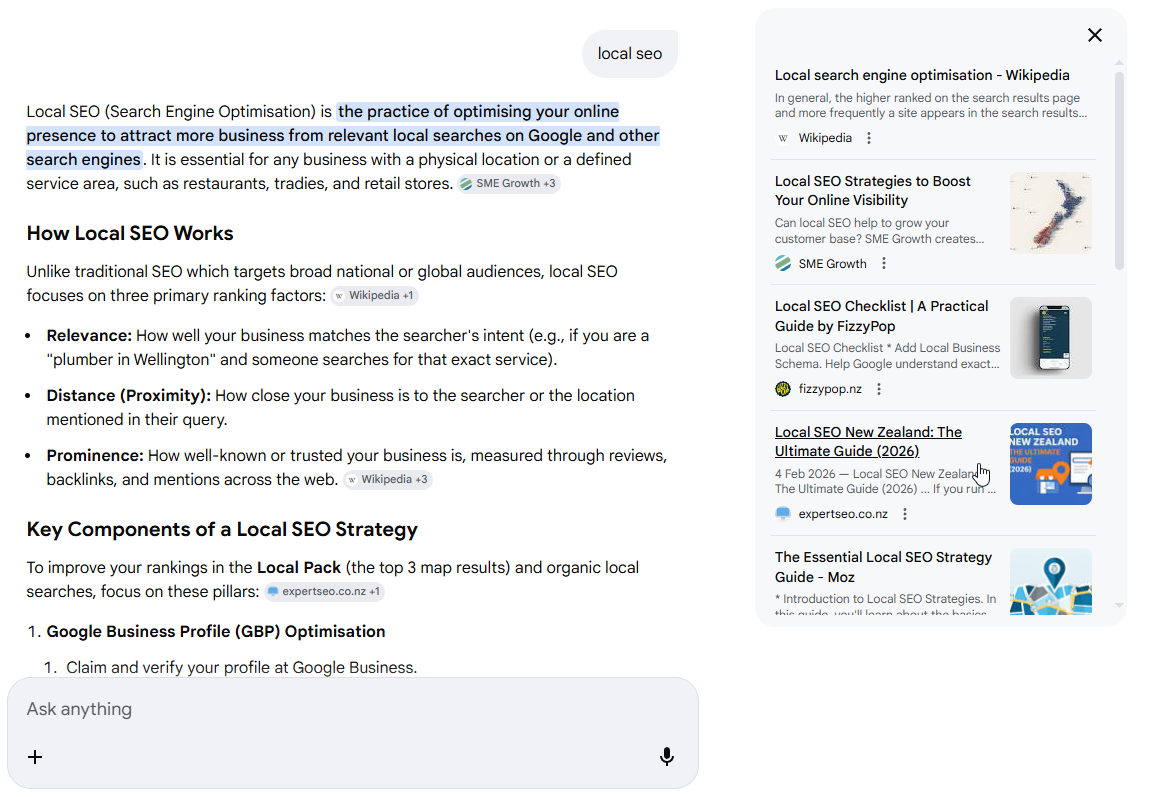
- AI citations. Ask ChatGPT and Google’s AI tools the questions your customers ask. If your business appears in the answers, you’re capturing demand your competitors can’t see in any rank tracker.
- Lead source answers. “I asked ChatGPT” is now a real response to “how did you find us?” Record it.
The commercial searches that drive revenue — “dentist near me”, “builder Tauranga”, and the kind of SEO Wellington law firms compete for on “family lawyer Wellington” — still send people to websites and phone lines.
And ranking in AI search is genuinely winnable for small NZ sites: Expert SEO was earning Google AI Overview citations within six months of launch, against competitors with a decade’s head start.
The measurement toolkit grows. The fundamental equation — revenue out versus cost in — stays exactly the same.
When to DIY vs Get Expert Help
If you’ve read this far, you can absolutely set up your own ROI tracking. GA4 key events, a lead value calculation, and the five-minute Search Console check are all within reach of any business owner — and even DIY SEO can produce a strong return if you’re willing to put in the hours and learn as you go.
The case for expert help comes back to the theme running through this whole guide: SEO ROI is operator-dependent.
The difference between page one and page three is the difference between 300% ROI and lighting $800 a month on fire.
If you’d rather have an experienced SEO consultant accountable for the revenue side of the equation, or you want professional SEO help with ROI measured properly from day one, that’s exactly what we do for businesses across New Zealand.
Run the numbers yourself first. If the maths looks good and you want it executed properly, that’s where we come in.