
Picture a builder in Hamilton who finally sorted out a website.
He paid a designer a few grand, it looks tidy, the photos are sharp, his logo sits nice in the top corner.
Six months on, the phone’s ringing no more than it was before. He’s starting to think the whole thing was a waste of money.
Here’s what nobody told him: a website looking good and a website actually working are two completely different things.
Web design is important because good design does a job.
It guides a visitor, step by step, toward the one thing you want them to do — call you, buy, book, enquire — and it does it so smoothly the visitor barely notices they’re being led anywhere.
A pretty website that doesn’t do that is just an expensive business card.
For the decade I’ve been doing SEO, I’ve watched business owners pour money into the look of a site and almost nothing into how it works.
So let’s go through what web design actually is, why it matters so much more than most people realise, and how to tell whether yours is pulling its weight.
What Web Design Actually Is
Web design is the process of planning, structuring, and styling a website so people can use it and act on it — not just so it looks nice.
It covers the layout, the navigation, the loading speed, the words, and the path a visitor takes from landing on your page to doing something about it.
Most people hear “web design” and picture colours and fonts. That’s part of it, sure. But that’s the paint job, not the engine.
Think of it like building a shop. The colour of the walls matters a little. What matters far more is where you put the front door, how the aisles flow, whether people can find the till, and whether the thing they came in for is sitting right where they expect it.
A beautiful shop where nobody can find anything still goes broke.
Web design is the architecture. The visuals just sit on top of it.
The Real Reason Why Is Web Design Important: Flow, Not Decoration
The single most important thing good web design does is create a flow — every section of the page deliberately guiding the visitor toward the one action that matters most to your business.
This is the bit almost every web designer skips.
Most designers come from a visual background. They’re brilliant at making something look modern and clean, and that’s a real skill.
But making something look good and engineering it to convert are different jobs, and the second one needs experience in sales and search that most designers have never had.
Here’s how the flow works in practice. Before you design a single page, you answer two questions: what does this business actually want a visitor to do, and what does the visitor actually want?
Then you build every section to serve both at once, in a natural order, so by the time someone reaches your call-to-action they’re already nodding.
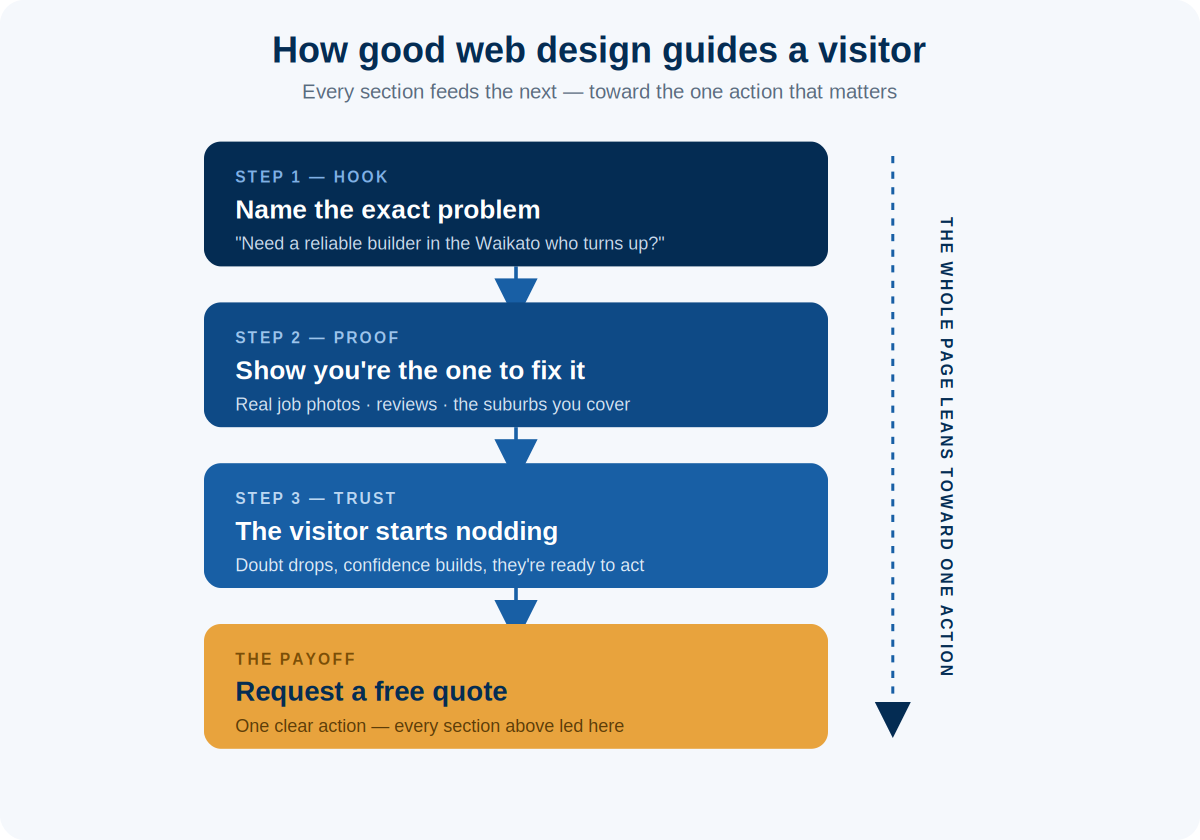
Take that Hamilton builder. His original site opened with a big photo and the words “Quality Craftsmanship Since 2008.” Nice. Means nothing. A visitor lands, feels mildly impressed, and leaves.
Rebuild it around the flow and it changes completely. The top of the page names the exact problem his customers have — “Need a reliable builder in the Waikato who actually turns up?”
Underneath, proof he’s that builder: real photos of finished jobs, a couple of reviews, the suburbs he covers.
Then, the moment trust is high, one clear action: Request a free quote. Every section feeds the next, and the whole page leans toward that one button.
That’s the difference good web design in Hamilton makes — and it’s why the same business can get a new site built and suddenly start getting enquiries off the exact same traffic.
A beautiful website can still fail. I’ve seen gorgeous sites that win design awards and generate nothing, because the designer fell in love with how it looked and forgot it had a job to do. Flow is the job.
Your Website’s First Few Seconds Decide Everything
People judge your business in a fraction of a second, and almost all of that judgement is based on design. Get the first impression wrong and you lose the visitor before you’ve said a word.
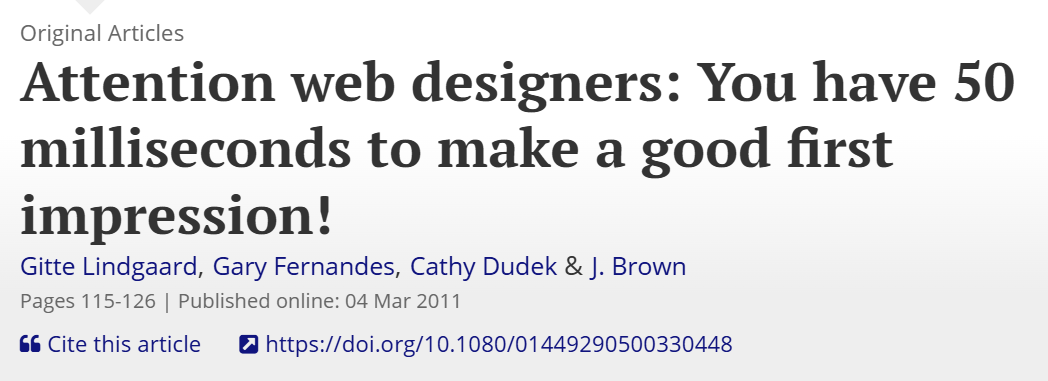
This isn’t a figure of speech. A landmark study found it takes about 50 milliseconds — a twentieth of a second for someone to form an opinion of a web page. They’ve decided whether you look credible before they’ve read anything.
And that snap judgement sticks.
When Stanford studied what makes people trust a website, a site’s overall visual design — its layout, typography, and colours — turned out to be one of the biggest reasons people decided a business was credible or not.
For finance and e-commerce sites especially, design was the number one trust signal people mentioned.

Sit with that for a second. A visitor who’s never met you, never spoken to you, knows nothing about your work — and they’ve already decided whether you seem trustworthy, based purely on how your site looks and feels.
A clean layout, a clear offer, real photos of your team, easy-to-find contact details — these aren’t decoration.
They’re the signals that tell a stranger you’re the real deal. A cluttered, dated, confusing site sends the opposite signal, no matter how good your actual work is.
Good Web Design and SEO Are the Same Job
Web design directly decides whether Google and AI search can find you at all. Your site’s structure, speed, mobile-friendliness, and how its content is laid out are all design choices — and they’re the same things search engines use to rank you.
This is where my background changes how I look at a website, and it’s the gap I see in nearly every designer’s work.
They build something that looks great, hand it over, and it sinks to page five of Google because nobody thought about search while they were designing it.
Search and design are not two separate stages. They’re the same decisions, made together.
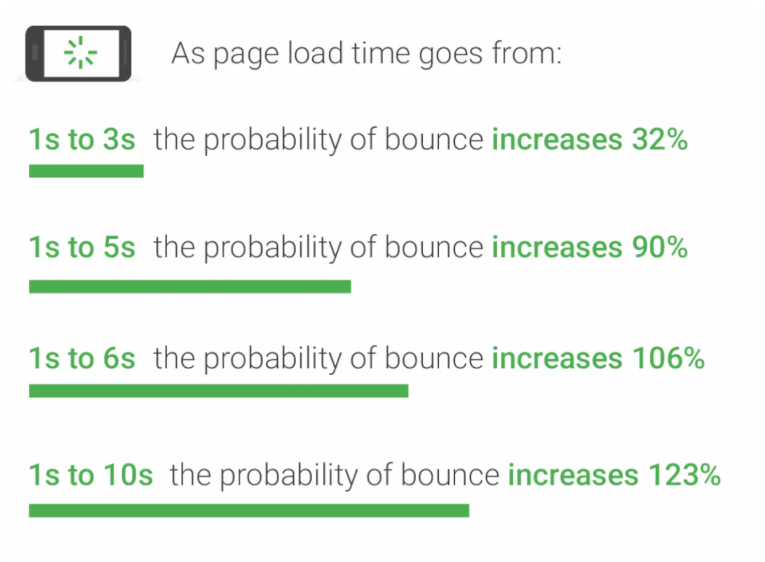
Take speed. A fast site keeps people around; a slow one bleeds them. Google found that as a page’s load time climbs from one second to ten, the chance of a visitor bouncing jumps by 123%.
Speed is a design decision — how heavy your images are, how the page is built, what’s loading in the background. It’s also a ranking factor. One choice, two payoffs.
Or take structure. The way you lay out headings, sections, and content for a human to scan is the exact same structure that helps Google understand your page and helps AI tools pull a clean answer out of it.
Good on-page optimisation and good design are the same instinct: make the important thing obvious and easy to reach.
I’ll give you proof this works. My own business, Expert SEO, is on a domain less than a year old, and it’s outranking NZ agencies that have been building their sites for ten years or more.
Not because the site is fancy — because it was designed and built for search from the first day.

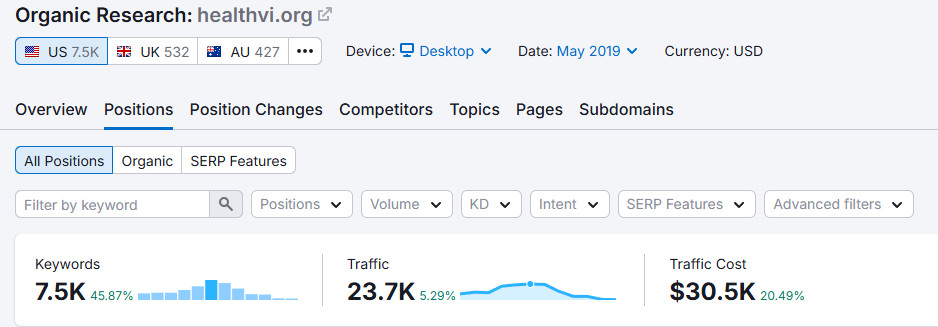
Same story with HealthVI, a health site I grew from nothing to more than 20,000 visitors a month with my old business partner and mentor Ian Pribyl.
The growth wasn’t an accident of good content; it came from how the whole thing was structured. That’s the same approach we run at our SEO company for clients now.
A designer who ignores the technical side of SEO can build you the prettiest site in the country and leave you invisible. Design and search belong in the same brief.
Most of Your Visitors Are on a Phone
If your website doesn’t work properly on a phone, you’re losing the majority of your visitors. Responsive design — a site that reshapes itself to fit any screen — isn’t a nice extra anymore. It’s the baseline.
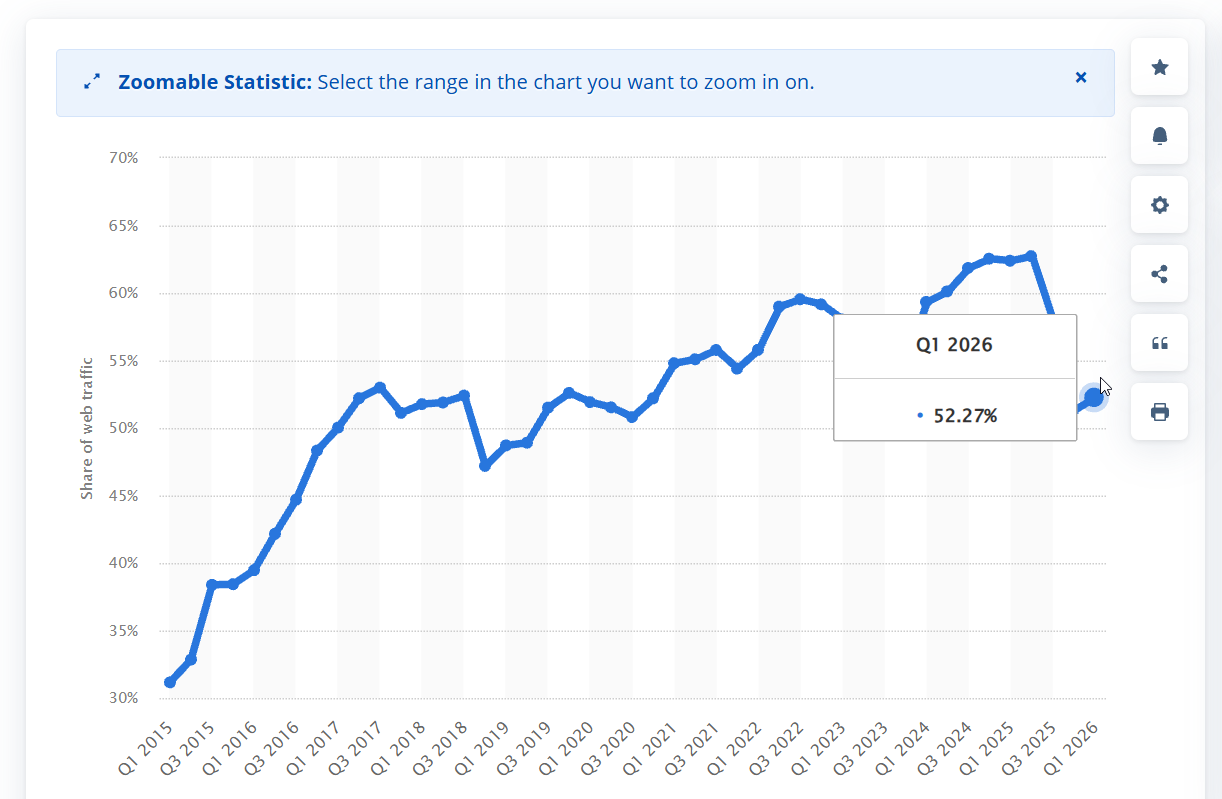
More than half of all web traffic now comes from mobile devices, and for a lot of local NZ businesses it’s well over that. Someone standing in their kitchen googling “plumber near me,” a customer checking your hours from the car park — they’re on a phone, every time.
A site that was only ever designed for a desktop screen falls apart on mobile: text too small to read, buttons too fiddly to tap, a menu that won’t open. And people don’t persevere.
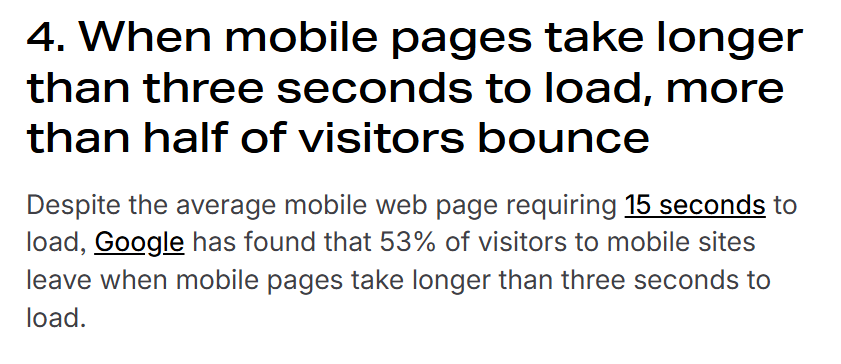
Google found that 53% of mobile visitors leave a page that takes longer than three seconds to load. They’re gone, off to the next result, which is probably your competitor.
There’s a search angle here too. Google judges your site mainly on its mobile version, so a poor mobile experience doesn’t just annoy visitors — it quietly drags your rankings down.
For an Auckland online store in a crowded market, nailing web design in Auckland for mobile is often the whole ballgame. Mobile design is where user experience and SEO meet, and getting it right pays off twice.
How Great Design Beats Your Competitors
Good web design gives you a genuine edge over your competition — not just by looking sharper, but by answering the visitor’s question faster, guiding them more clearly, and being built to outrank the other lot.
Most of your competitors have a website that just exists. That’s the bar, and it’s low. They got a template, dropped their details in, and never touched it again. That’s your opening.
There are two ways to be better, and you want both. Aesthetically: yours looks more professional, more current, more like a business worth trusting.
Structurally: yours loads faster, flows better, says the right thing sooner, and is built so Google favours it. The first one wins the glance. The second one wins the customer and the ranking.
Here’s a habit worth stealing. Before building anything, go and actually look at the top three competitors ranking for what your customers search.
Type your version — “website design” plus your town — into Google and study who’s winning. What do they say first? How fast do their pages load? Where do they make it hard to take the next step?
Then build something that beats them on every one of those points, on purpose. Nine times out of ten the bar is lower than you’d think, and a fresh website design in Christchurch can leapfrog businesses that have been around for years.
Standing out comes down to clarity, not noise. The business that answers the question fastest and makes the next step easiest is the one that gets the work.
Should You Build It Yourself or Hire a Designer?
A DIY website builder is fine for something simple; hiring a designer who understands sales and search is worth it when your website actually needs to bring in business. The honest answer depends on what you need the site to do.
If you’re a side hustle, a brand-new venture testing an idea, or you just need a basic online presence, a tool like Wix or Squarespace will get you a clean, working site for very little.
There’s no shame in that. For a lot of people starting out, it’s the right call.
But templates hit a ceiling, and it arrives faster than you’d expect. You get limited control over speed, over structure, over the finer SEO settings that decide whether you rank.
You get a site that looks like a thousand others using the same template. And critically, you get design with no flow built in — because the template doesn’t know or care what action matters to your business.
That’s where a designer earns their fee — specifically one who’s done sales and SEO, not just visuals.
The benefit isn’t a prettier site. It’s a site engineered around your goal, built to be found, and shaped to beat your competition.
Professional website design pays for itself the first time it turns a visitor into a paying customer the old site would have lost.
The “a cheap template is fine” belief costs more NZ businesses than almost anything else. It’s fine right up until you realise your website has been quietly losing you work for two years, and you have no way of knowing how much.
Looking good is the easy part. Building a site that earns enquiries, ranks, and converts takes real experience in how websites actually make money — and that’s where we come in.