
You’ve decided your business needs a website, so you go looking for a web designer. Then it hits you: you’re not entirely sure what that person actually does all day.
It’s a fair question. “Web designer” gets used to describe everyone from someone who picks fonts to someone who codes a full online store. The truth sits somewhere in the middle.
Here’s the plain version. A web designer plans and creates how a website looks, how it’s laid out, and how easy it is to use.
This guide breaks down exactly what that involves — the day-to-day work, the skills, the tools, and how the job differs from a web developer.
What Is a Web Designer?
A web designer creates the look, layout, and feel of a website — how it’s structured, how it appears, and how easy it is to use.
There are two halves to the job. One is visual: colours, fonts, images, spacing — the things that make a page look like it belongs to your brand.
The other is experience: where the menu sits, how someone gets from the homepage to a product, how obvious the “get a quote” button is.
A web designer works in the gap between a graphic designer, who handles visuals, and a web developer, who writes the code. They borrow from both.

Picture a café with an ageing website — tiny menu buried three clicks deep, no phone number visible on mobile.
A web designer’s job is to fix both the look and the path: clean layout, menu front and centre, tap-to-call right where a hungry customer expects it.
What Does A Web Designer Do? (Day-to-Day)
Day to day, a web designer plans the structure of a site, designs how it looks, and makes sure it works well on any device.
The role breaks into a handful of recurring jobs:
- Layout and wireframing — mapping where everything goes before any design happens. It’s the blueprint stage.
- Visual design — typography, colour, imagery, all matched to the brand.
- User experience (UX) — making sure visitors can find what they need and do the thing you want them to do, whether that’s enquire, buy, or book.
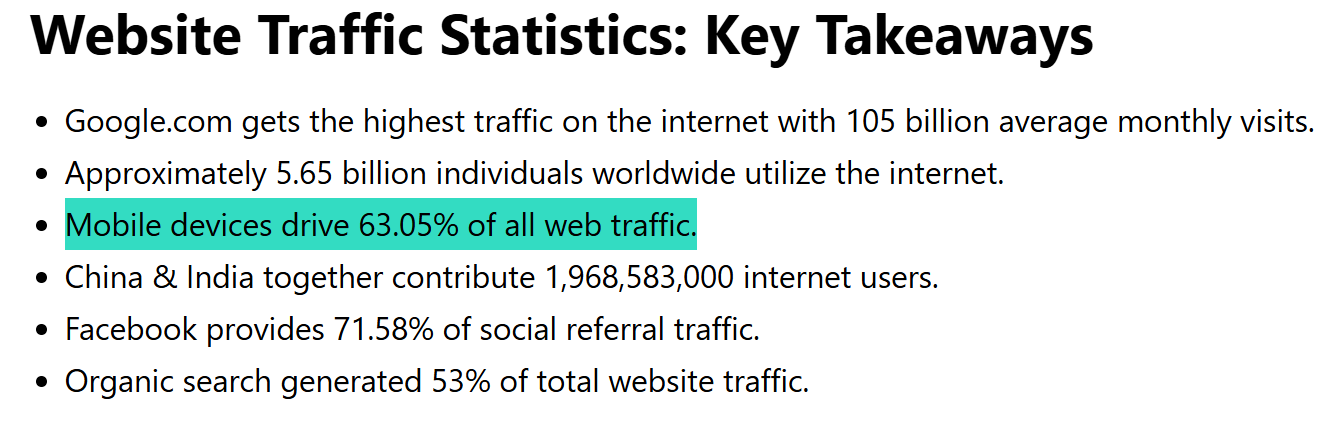
- Responsive design — making the site work properly on phones, not just desktops. With over half of all web traffic now coming from mobile, this matters as much as the desktop view. More than half of mobile visitors will abandon a page that takes longer than three seconds to load, so speed and mobile layout are part of the designer’s brief too.
- Accessibility — making the site usable for people relying on screen readers or other assistive technology.
- Collaboration — working with copywriters, developers, and marketers to pull the whole thing together.
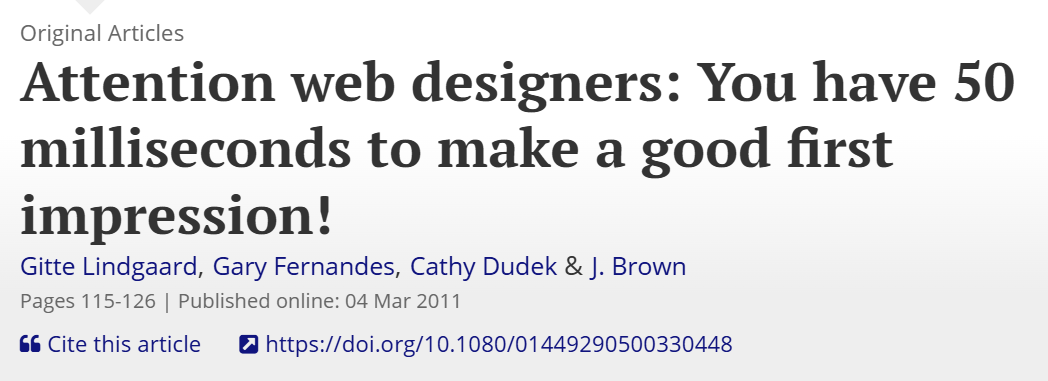
First impressions happen frighteningly fast. People form an opinion of a site’s visual appeal in about 50 milliseconds — less than the blink of an eye.
Winning that split second is a big part of what a designer is paid to do.
What the Job Looks Like on a Real Project
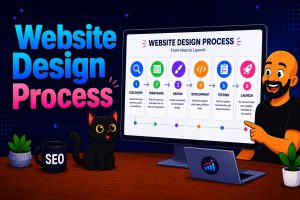
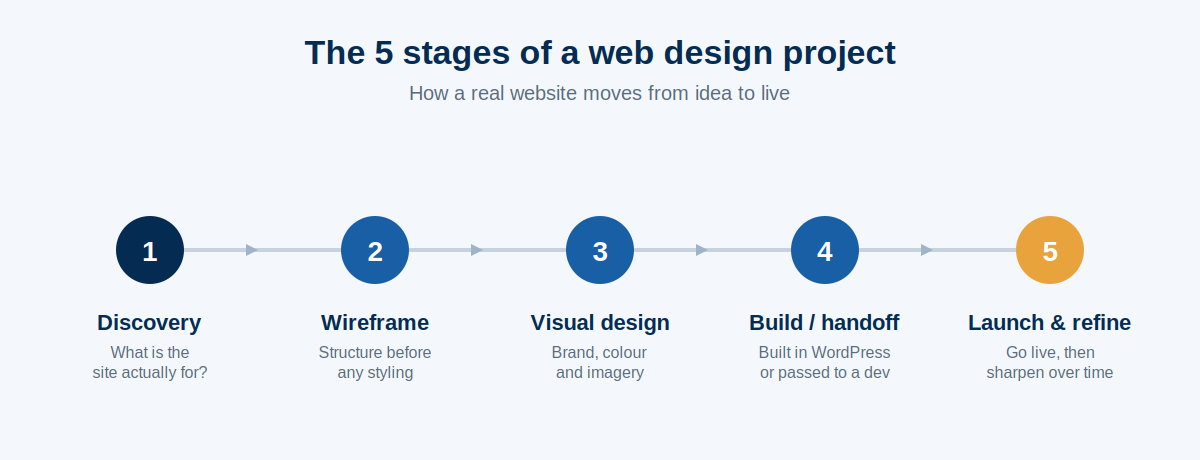
On a real website project, the work runs in stages — understanding the goal, mapping the structure, designing the pages, then building or handing off, and refining after launch.
Some businesses hire a designer for a single page; others want a full web design service that takes the whole site from idea to launch. Either way, the work moves through the same steps.
Take a builder who needs a new site. A solid project — the kind that comes out of proper website design in Hamilton or anywhere else — runs through the same steps every time:
- Discovery — the designer asks what the site is actually for. More leads? Online bookings? The answer shapes every decision after it.
- Wireframe — a rough skeleton of each page. No colours yet, just structure and where things sit.
- Visual design — the skeleton gets the brand: colours, photos, fonts, the lot.
- Build or handoff — the designer either builds it themselves, often in a platform like WordPress, or hands the design to a developer to construct.
- Launch and refine — once it’s live, they tweak based on how real visitors actually behave.
That last step matters more than people think. A website is rarely “finished” on launch day — the good ones get sharpened over time.
Skills a Web Designer Needs
A web designer needs an eye for design, a working grasp of how websites are built, and enough communication skill to turn a business goal into a layout.
- Design fundamentals — layout, colour theory, typography, spacing.
- UX thinking — understanding how people move through a page and removing friction.
- Basic HTML and CSS — most designers understand code well enough to bridge the gap to a developer, even if they don’t build the back end themselves.
- Communication — the underrated one. A designer has to listen to what a business is trying to achieve and translate it into something visual.
The Tools Web Designers Use
Most web designers work in a small, standard set of tools for designing, prototyping, and building.
- Design and prototyping: Figma and Adobe XD.
- Graphics: Adobe Photoshop and Illustrator.
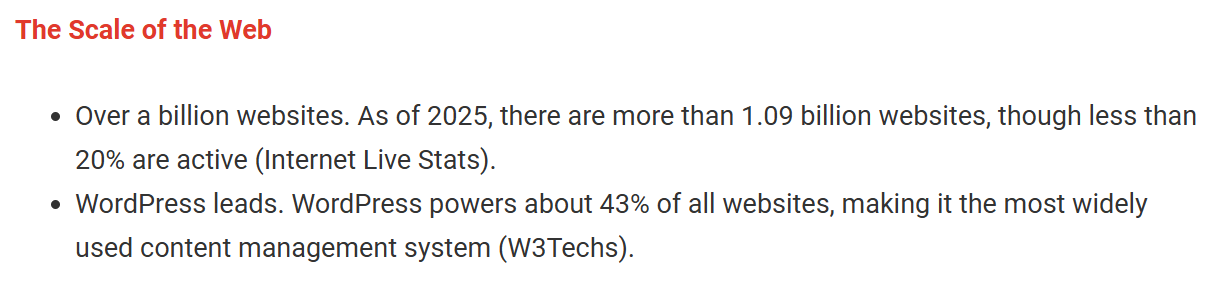
- Build platforms: WordPress, Webflow, Shopify, and Wix. WordPress alone powers around 42% of all websites, so most designers know their way around it.
- Basic code: HTML and CSS, enough to take a design from a mockup to a working page.
You don’t need to memorise this list. The point is that web design is a craft with real tools behind it, not just dragging boxes around a screen.
Web Designer vs Web Developer — What’s the Difference?
A web designer decides how a site looks and feels; a web developer writes the code that makes it function. They’re different jobs, though one person can do both.
Think of it like building a house.
The designer is the architect — they decide the layout, the look, and how you move through the space.
The developer is the builder — they construct the working parts: the functionality, the databases, the integrations that make complex features run.
| Web designer | Web developer | |
|---|---|---|
| Focus | How the site looks, feels and flows | How the site functions under the hood |
| Main output | Layout, visual design, UX | Code, functionality, integrations |
| Typical tools | Figma, Adobe XD, Photoshop | HTML, CSS, JavaScript, back-end languages |
| House analogy | The architect | The builder |
| You hire them for | A brochure or lead-generation site | Custom features: complex stores, bookings, logins |
Plenty of people do both. These “designer-developers” are common in smaller NZ shops, where one person handles the whole site.
Which one does a small business need? Usually a designer for a standard brochure or lead-generation site.
You bring in a developer as well once you need custom functionality — a complex online store, a booking system, member logins, that kind of thing.
What a Web Designer Doesn’t Do
A web designer builds the look and structure of your site — but the role usually stops short of a few things people assume come bundled in.
- Writing your content. Copywriting is its own skill. Some designers offer it; many don’t.
- Deep back-end development. Custom features beyond standard pages are a developer’s territory.
- Hosting and ongoing maintenance. Sometimes included, often not. Always ask.
- SEO. This is the big one. A designer building your site does not mean the site is optimised to rank in Google. Knowing what SEO actually is — and doing it properly — is a separate discipline.
An honest note from working in the New Zealand market: a lot of web designers will tell you SEO is “built in.” In my experience that’s rarely true in any meaningful sense, and it’s often charged for at a premium.
A handful of meta tags is not SEO. If ranking actually matters to your business, treat it as its own job — handled by the designer only if they genuinely know it, or by professional SEO help separately.
Good Web Designer vs Great Web Designer
A good web designer builds a site that looks great. A great one builds a site that looks great and does its job — turning visitors into enquiries or sales.
The difference is mindset. A good designer asks, “What should this look like?” A great one asks, “What is this site meant to achieve, and how do we design for that?”
In practice, that means designing around the single most important action you want a visitor to take.
Take a retailer investing in website design in Auckland: the great designer works out what the page is for before choosing a single colour, then builds the whole path toward checkout around it.
It also means caring whether the site actually performs. A beautiful page that loads slowly still bleeds visitors — bounce probability jumps 32% as load time climbs from one to three seconds.
And a stunning site that nobody can find doesn’t help anyone, which is why the best designers carry at least a working understanding of SEO and marketing.
Our own site is the proof: our SEO company is barely a year old and already outranks NZ agencies a decade older — because it was built to be found, not just to look tidy.

That’s the gap between a site that decorates your business and one that grows it.
When to Hire a Web Designer (and When to DIY)
You can build a website yourself. Wix, Squarespace, even ChatGPT will get something online in a weekend, and for a hobby or a placeholder that’s fine.
But a DIY template gets you a website — not a website that ranks, converts, and grows with you.
The moment getting found actually matters to your revenue, you want someone who builds for that from the first wireframe.
That’s the standard worth holding out for, and it’s exactly what our website design service is built around.
A pretty website is nice. A pretty website that brings in customers is the whole point — and building sites that get found is what we do every single day.