

Nearly half of everything typed into Google is someone looking for a business near them.
That one number — 46% — is the reason local SEO exists. And it’s the tip of a very deep pile of data.
This page pulls together the local SEO statistics worth knowing in 2026: how people search, Google Business Profiles, reviews, ranking factors, AI, and what it all returns.
But a number on its own doesn’t help you. So next to each one, you get the part most stat lists skip: what it actually means for a business here, and what to do about it.
A quick honesty note first: most of this data is international.
There’s no big New Zealand-specific local search survey — the companies running these studies are mostly American, and they have the numbers.
That’s fine. How someone hunts down a plumber, picks a dentist, and acts on it doesn’t change much crossing the Pacific. Where the NZ read matters, I’ll give it to you. And at the end, I’ll show you what this looks like in our own Map Pack rankings.
The Local SEO Stats That Actually Matter
Most lists throw 50 numbers at you and let you drown. If you only take five away, take these — because each one should change what you do next.
- 46% of all Google searches have local intent. You’re not competing with the whole internet. Just your suburb. (BrightLocal)
- Google Business Profile signals make up around 32% of what decides your Map Pack ranking — the single biggest factor. Your profile matters more than your website here. (Whitespark)
- 76% of people who search “near me” visit a business within 24 hours. Being invisible today costs you today’s customer, not next quarter’s. (Think with Google)
- 45% of consumers now use ChatGPT or another AI tool for local recommendations, up from 6% a year ago. A whole new front just opened, and almost nobody’s on it yet. (BrightLocal)
- Customers are 70% more likely to visit and 50% more likely to buy from a business with a complete Google Business Profile. The cheapest win in local SEO is filling out a free profile properly. (BrightLocal)
Everything below expands on these. Read on for the full set.
Local Search Behaviour Statistics
Start with how often, and how, people actually search locally. The volume is the whole argument for bothering.
- 46% of all Google searches have local intent. (BrightLocal)
- 80% of consumers search for a local business online at least once a week, and 32% do so every single day. (SOCi)
- “Near me” searches have grown by more than 900% in recent years. (Think with Google)
- Around 57% of local searches happen on a mobile phone. (Semrush)
- 84% of searches are discovery searches — people finding a new business rather than looking one up by name. (Think with Google)
- 99% of people have used the internet to find information about a local business in the past year. (BrightLocal)
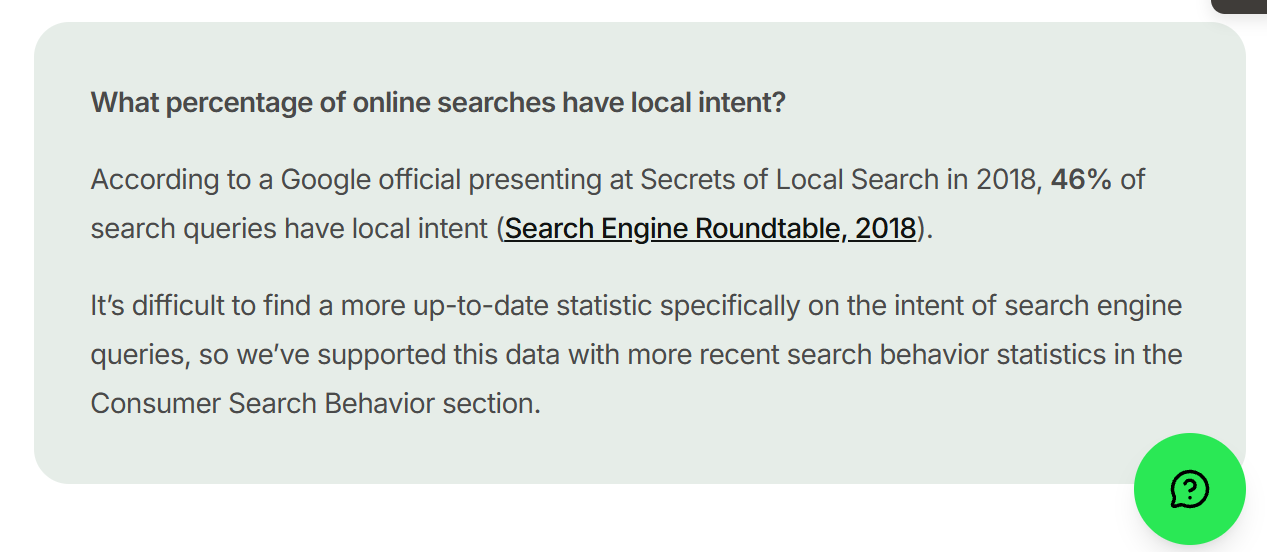
Here’s the takeaway for a business here: you don’t need to be famous across New Zealand. You need to be the obvious choice in your patch.
A café in Ponsonby isn’t fighting every café in the country. It’s fighting the other cafés a hungry local can walk to. That’s a much smaller, much more winnable fight — and it’s exactly what local SEO is built to win.
I can tell you from experience it’s a far easier fight than the alternative. I’ve competed in international markets and ranked number one in the US for keywords pulling thousands of searches a month — brutal, crowded, and slow going.
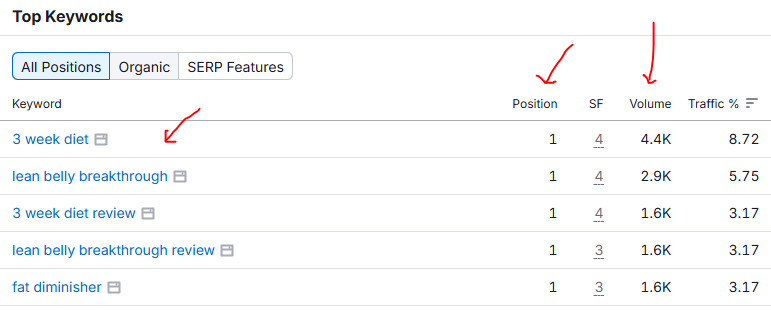
Local is a different game. It comes down to authority within your region — not authority everywhere, just here. Build more of it in the patch you’re targeting than the businesses around you, and you win.
That’s the whole idea behind SEO in Auckland or anywhere else: own the searches happening in your area, right now.
How Fast Local Searches Convert
Local intent isn’t casual browsing. When someone searches locally, they’re usually about to do something about it.
- 76% of people who search “near me” visit a business within 24 hours. (Think with Google)
- 88% of people who do a local search on their phone visit or call a business within a week. (Think with Google)
- 28% of local searches lead to a purchase within a day. (Think with Google)
- 72% of people who do a local search visit a store within five miles of where they are. (Think with Google)
- 60% of mobile users contact a business directly from the search results — a tap-to-call or a tap for directions. (Think with Google)
This is the stat set that should light a fire under you.
Think about what it means in practice: a Wellington local searches “emergency electrician near me” at 7pm, and three out of four of those people hire someone within the day. If you’re not showing up, you didn’t lose a website visit.
You lost a paying job to the sparky one suburb over.
That immediacy is the whole case for SEO in Wellington and every other local market.
This is the real edge local search has over almost every other kind of marketing. With ads or cold outreach, you’re interrupting someone and trying to convince them they’ve got a problem worth solving.
Here, they’ve already convinced themselves. They have the problem, they want it fixed now, and they’re actively hunting for someone to do it.
You don’t have to sell anyone on anything. You just have to show up at the moment they look.
That’s what makes it a different game to slow-burn marketing. The demand is immediate, the customer is ready, and the whole job is being there when it counts.
Google Business Profile Statistics
Your Google Business Profile is the highest-leverage asset in local SEO. The data shows why — and shows how few businesses actually bother to finish theirs.
- Customers are 2.7 times more likely to see a business as reputable when it has a complete profile on Google Search and Maps. (BrightLocal)
- A complete Business Profile makes customers 70% more likely to visit and 50% more likely to buy. (BrightLocal)
- Only 35% of small businesses actually have a Google Business Profile. (BrightLocal)
- The average local business gets about 943 profile views from Search versus 317 from Maps. (BrightLocal)
- 62% of consumers would avoid a business entirely if they found incorrect information about it online. (BrightLocal)

Now put those two numbers side by side: a complete profile drives 70% more visits, and only 35% of businesses have one at all.
That gap is the opportunity. In most New Zealand local markets, your competitors have a profile that’s claimed and then abandoned — no proper categories, three photos from 2021, half the services missing.
Turning up with a fully built, active profile puts you ahead of most of the field before you’ve touched your website.
If you’re a plumber, a dentist, an electrician — any business that lives or dies in the Google Map pack — this is where you start.
Get the profile right first. Our full guide to Google Business Profile optimisation walks through every field, category, and photo that moves the needle.
Local Review Statistics
Reviews pull double duty. They’re a ranking signal that helps you show up, and a trust signal that decides whether the customer picks you once you do.
- 67% of people read reviews after searching for a local business, and 54% then click through to the business. (BrightLocal)
- 75% of consumers say they “always” or “regularly” read online reviews when researching a local business. (BrightLocal)
- 86% of people consult Google when reading reviews for a local business. (BrightLocal)
- There’s roughly a 3% lift in profile conversions for every 10 new reviews a business gets. (SOCi)
- Businesses ranking in the top three local results have 561 Google reviews on average. (Semrush)
- 89% of consumers expect a business owner to respond to reviews. (BrightLocal)

Here’s the read for a New Zealand business, and it’s good news: the review bar in most local markets here is low.
That 561-review average is a big-city, big-competition figure. Look at your actual local rivals and you’ll often find a fistful of reviews each — sometimes single digits.
For a trade business doing SEO in Christchurch, or any smaller NZ market, a steady stream of genuine reviews doesn’t just help. It clears the field.
The trick is making it systematic, not sporadic. Grab your review link from your profile, turn it into a quick SMS you fire off the moment a job’s done and the customer’s happy, and reply to every review that comes back.
That’s the whole system, and it’s laid out in our Google reviews guide.
Local SEO Ranking Factor Statistics
Google’s local ranking isn’t a black box. Studies measure roughly how much each factor counts — which tells you exactly where to spend your effort first.
- In the Map Pack, the rough weighting is: Google Business Profile signals ~32%, on-page signals ~19%, review signals ~16%, link signals ~15%, behavioural signals ~8%, citation signals ~7%. (Whitespark)
- Businesses in Google’s Local Map Pack have an average of 993 backlinks pointing to them. (Semrush)
- 42% of people who do a local search click on a result inside the Google Map Pack. (Backlinko)
- Google Business Profile factors have the biggest impact on Map Pack rankings, while on-page factors matter most for the organic results below it. (Whitespark)
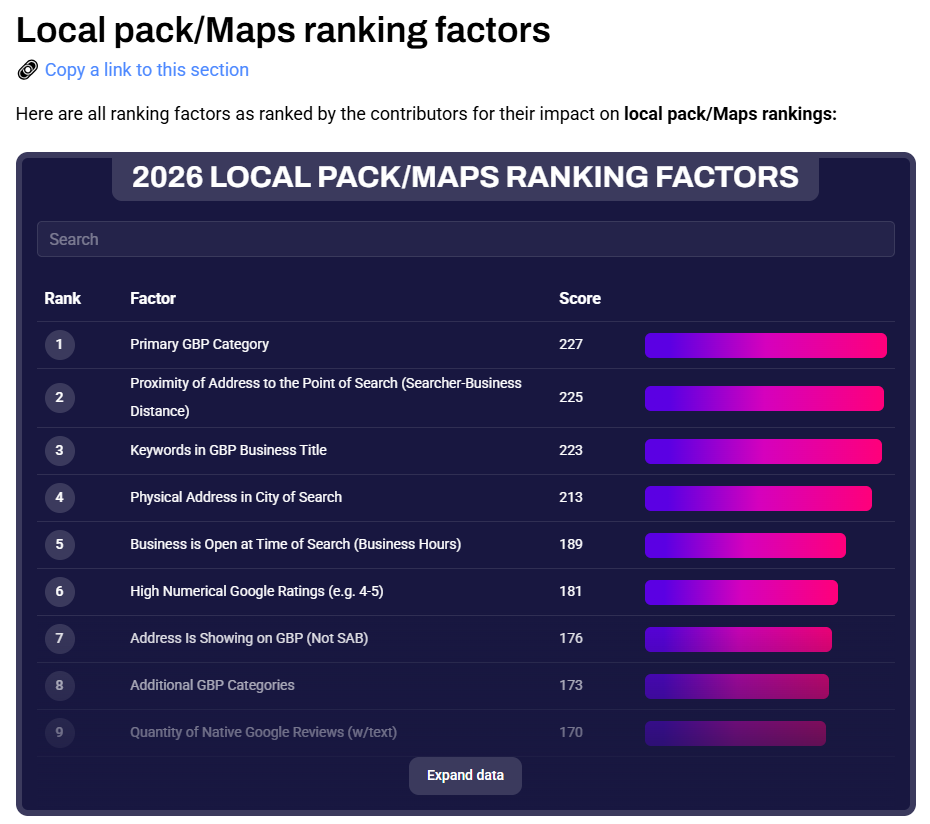
Read that weighting again, because it’s a spending plan in disguise.
Your profile and your reviews together make up close to half of what decides your Map Pack position. Backlinks — the thing everyone stresses about — are 15%.
So the order is obvious: nail the profile, build the reviews, sort your on-page, and worry about links last.
Most businesses do it backwards. They chase links and neglect the free profile that carries twice the weight. Get the order right and you’re ahead. The full breakdown of what counts, and by how much, is in our guide to local SEO ranking factors.

AI and Local Search Statistics
This is the fastest-moving part of local SEO right now, and the early data points to a wide-open gap.
- Roughly 40% of consumers now actively use AI tools like ChatGPT or Google’s AI Overviews within their local search journey. (BrightLocal)
- 45% of consumers use ChatGPT or other generative AI for local business recommendations, up from just 6% a year earlier. (BrightLocal)
- Getting recommended by ChatGPT for local searches is around 30 times harder than ranking in Google’s local results. (SOCi)
- Fewer than half the businesses leading Google’s local results also show up in AI recommendations. (SOCi)
- Only 68% of business contact details shown by ChatGPT and Perplexity match what’s on the business’s Google profile. (SOCi)
Two rails now run at once: Google, and AI. And almost nobody is visible on the second one yet.
For whoever moves first, that’s a head start. The businesses that get cited by AI now — while the field is empty — will own that visibility as it grows.
We know this works because it’s already happening to us. Our own local SEO content gets pulled into Google’s AI Mode as a cited source, here in New Zealand:
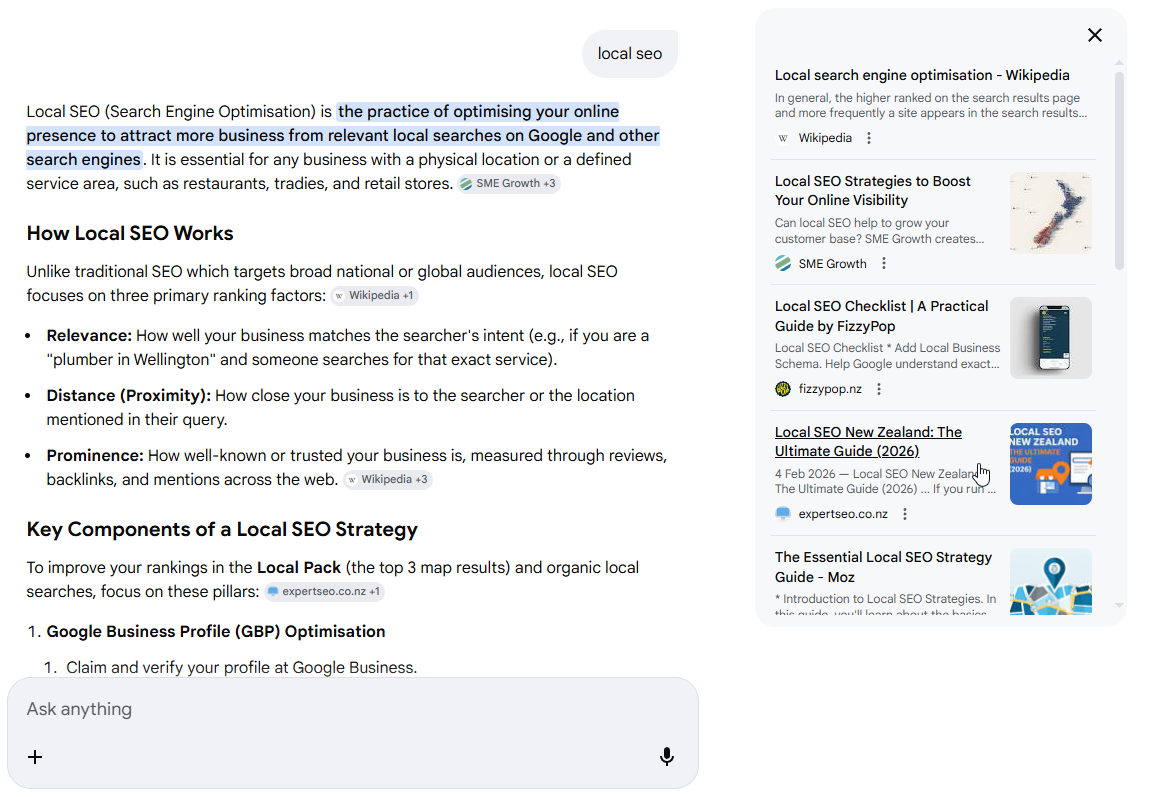
The same fundamentals that win the Map Pack — an accurate profile, consistent details everywhere, genuine authority — are what get you surfaced by AI too. Do the basics properly and you’re building for both at once.
Local SEO ROI and Cost Statistics
The numbers behind the money question: what local SEO costs, and what it gives back.
- The global SEO services market is worth around US$84 billion in 2026 and is forecast to hit US$149 billion by 2031. (Mordor Intelligence)
- Local SEO produces a cost-per-lead about 61% lower than traditional outbound marketing. (HubSpot)
- The average small business spends between US$500 and US$1,000 a month on local SEO. (Backlinko)
- The local SEO services marketers rate most valuable are Google Business Profile management (76%), content creation (53%), and citation building (43%). (BrightLocal)
The dollar figures are American, so translate them loosely for here — but the shape holds.
I’ve lived this maths. Years back I helped build a health website to the point where matching its organic traffic through Google Ads would have cost at least US$30,000 a month.
That wasn’t idle traffic either: it was high-intent people coming to us, already looking for what we had. That traffic is the entire reason the business worked.
We’ve done the same thing with Expert SEO. Buying our current traffic through Google Ads would run at least US$3,000 a month.
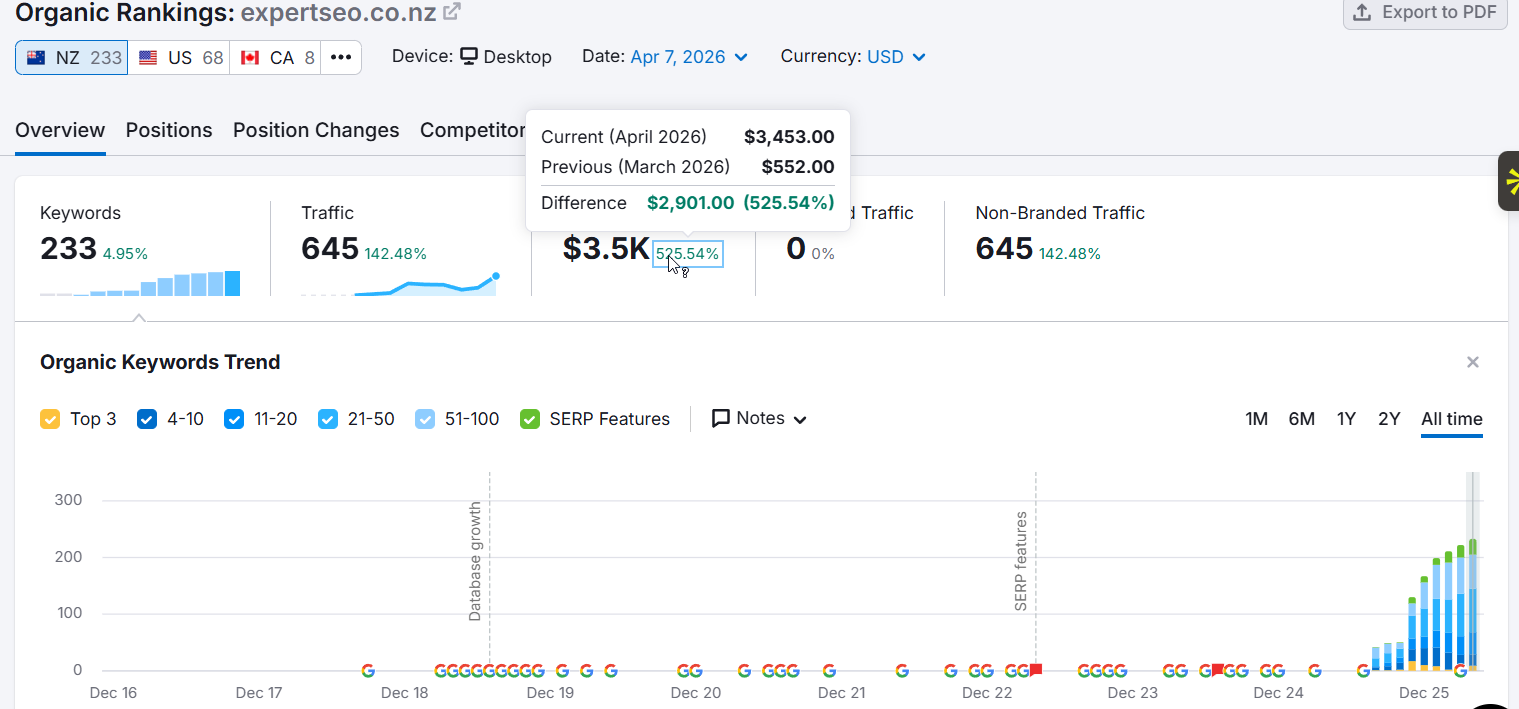
That reframes the cost question entirely. The traffic you build through SEO would cost thousands a month to rent through ads — except you own it outright, and it keeps working long after you stop paying for the work.
That’s the compounding no paid channel matches. A paid ad stops the second you stop paying.
The profile, the reviews, and the authority you build this month keep working next month, and the month after. It’s slow to start, and then it snowballs.
What This Looks Like in the Map Pack
No survey covers New Zealand local SEO, so here’s the next best thing: our own results, doing exactly what these stats describe.
Expert SEO ranks in the Google Map pack for competitive local search terms — the same three-listing block 42% of local searchers click. Not national organic rankings. The actual local pack, where the customers are.
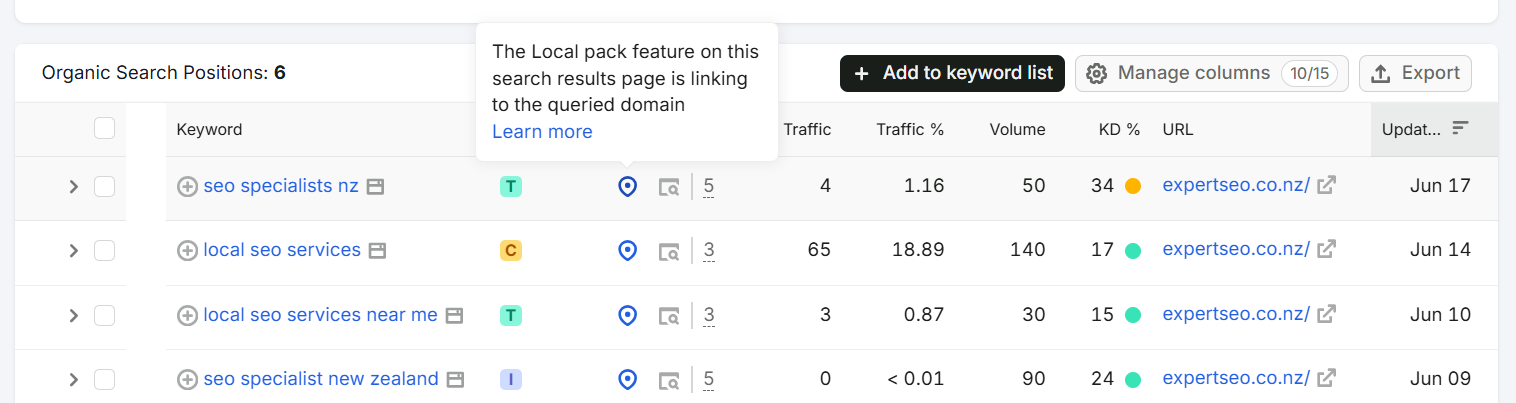
We got there by doing the boring, unglamorous things every stat above points to: a complete, active profile, a steady flow of genuine reviews, consistent business details everywhere, and content that actually answers what local searchers ask.
No tricks. Just the fundamentals, done properly and kept up.
That’s the honest translation of all this data. The numbers aren’t there to impress you. They’re a map of where to put your effort — and we’ve walked it ourselves.
Do It Yourself, or Bring in Help
You can absolutely act on these stats yourself. Claim the profile, build the reviews, keep your details consistent — none of it requires an agency, and a motivated owner can get real results.
Where it gets worth handing over is time and competition. If you’re in a crowded market, or you’d rather spend those hours running the business than learning the ranking factors, that’s the point to bring in someone who does this every day.
Our done-for-you SEO services covers the profile, the reviews, the content, and the tracking, so you can get on with the work.
Either way, the data all points the same direction. Local search is where your customers already are, they act fast when they find you, and the businesses that show up properly are the ones that win the work.
Local SEO Statistics: FAQ
Are there any New Zealand-specific local SEO statistics?
Not really — there’s no large NZ-specific local search survey yet. The major datasets are American, with some UK and Australian data. The search behaviour they measure still applies to New Zealand businesses, which is why every stat on this page is read for what it means in the local market.
What percentage of Google searches are local?
Around 46% of all Google searches have local intent. Close to half of everything people type into Google is tied to a location or a nearby business.
Do online reviews affect local SEO rankings?
Yes. Reviews are a confirmed local ranking signal — roughly 16% of Map Pack ranking weight — and a trust signal that drives clicks. More genuine, recent reviews improve both your visibility and your conversion rate.
Is local SEO worth it for a small New Zealand business?
For most local NZ businesses, yes. Local search is high-intent and fast-converting, most searchers act within a day, and the fundamentals that win — a complete profile, steady reviews, and consistent business details — are cheap to get right.
Where do these local SEO statistics come from?
Primary sources including BrightLocal, SOCi, Whitespark, Think with Google, Semrush, and Backlinko. Every statistic on this page links to its source so you can verify it before you use it.
Recommended Reading

The case for local SEO, and the eight ways it actually pays off for a New Zealand business.
Twelve practical ways to climb the local rankings, walked through step by step.
Real New Zealand pricing, and what your monthly budget actually buys you.