

Everyone in SEO tells you the same thing: “go check your competitors’ keywords.”
Almost nobody tells you the two things that actually matter — whose keywords to copy, and what on earth to do with them once you’ve got the list.
So you end up with a spreadsheet of 400 keywords, no idea which ones are gold and which ones are landmines, and a vague plan to “target them.” That’s not a strategy. That’s a to-do list you inherited from a stranger.
I’ve been doing SEO for over a decade, a fair chunk of it competing in the United States where the water’s a lot deeper than it is here.
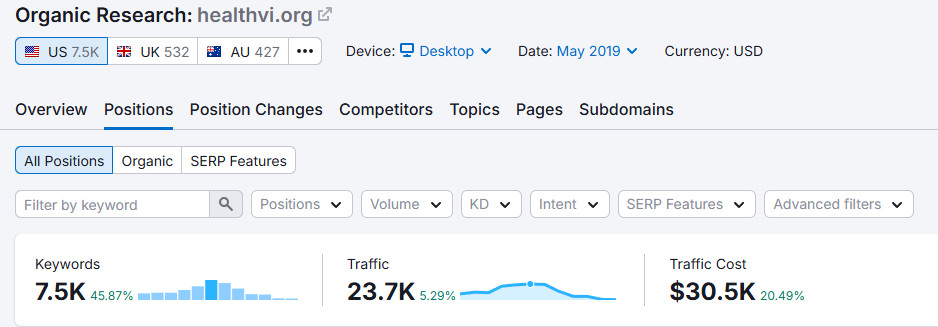
I built a health site — HealthVI — from zero to over 20,000 organic visitors a month with my former business partner Ian Pribyl, largely off the back of getting keyword research right.
And my own SEO agency, Expert SEO, is ranking against decade-old New Zealand firms inside its first year — and getting described by Google’s own AI along the way.
This guide is the method behind that.
How to find your competitors’ keywords properly, how to judge which are worth a damn, and how to fold them into your own campaign — instead of blindly copying the kid next to you and hoping he got the answers right.
What Are Competitor Keywords?
Competitor keywords are the search terms and phrases your rivals rank for in Google — the queries bringing traffic to their website that could be bringing it to yours.
Simple enough. But there’s one distinction that trips up nearly everyone, and getting it wrong sends you chasing the wrong sites from the start.
Your business competitor and your SEO competitor are often two different animals.
Let’s say you run a family law firm in Wellington. Your business competitor is the firm down the road fighting you for the same clients.
But when someone Googles “how does separation work in NZ,” the page ranking might be a government site or a legal-info blog with no clients, no office, nothing to sell — just a big pile of content.
That’s your SEO competitor. It’s eating the visibility you want, even though you’d never bump into it at a networking event.
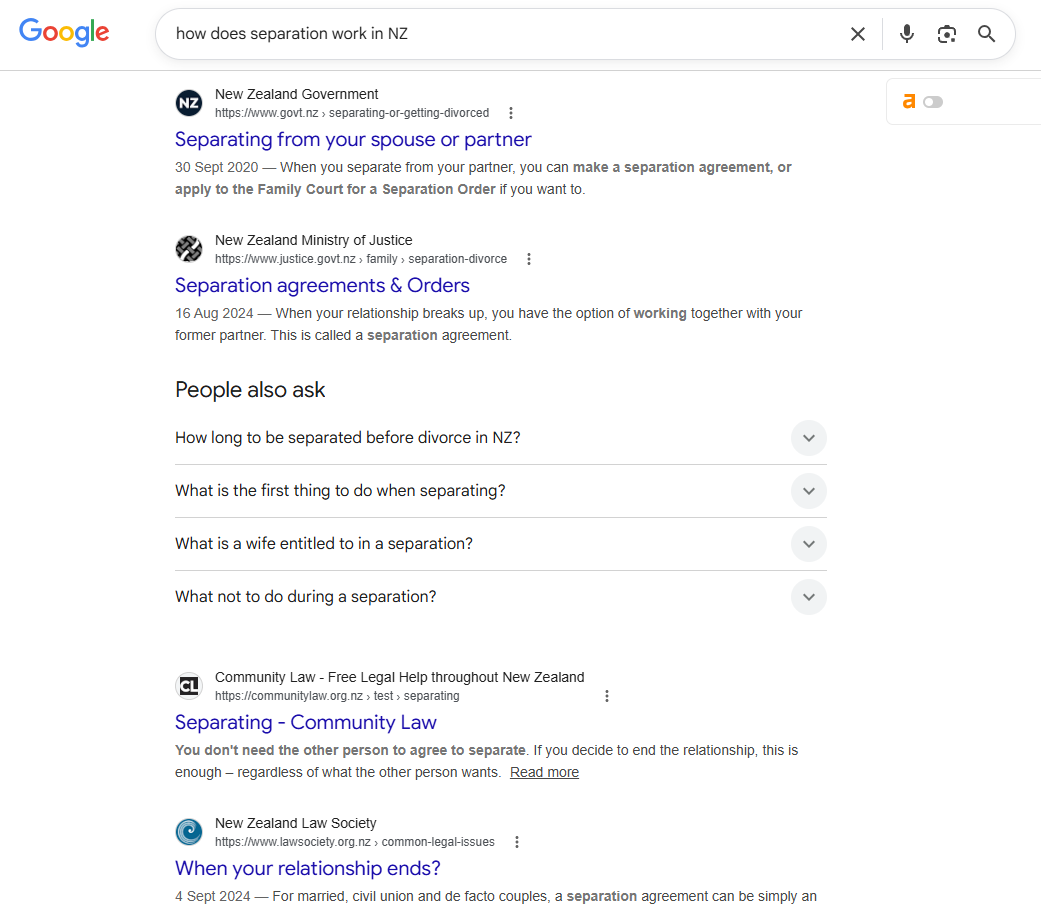
So when you do keyword research on your competitors, build your list around who’s ranking, not who’s in your industry.
Search your core terms, see who keeps showing up, and start there.
One more split worth knowing: branded versus non-branded keywords. Your competitor ranks for their own brand name — “Smith & Co Lawyers” — and you’re never going to outrank them for that, nor should you try.
Strip the branded terms out. What’s left is the good stuff: the non-branded, topic-based keywords anyone in the market can compete for.
Why Is Competitor Keyword Research Important?
Competitor keyword research matters because your competitors have already paid for expensive research you get to read for free — but it only works if you copy the right competitor and keep your own strategy in charge.
Here’s the upside, plain and simple.
You’re in the same marketplace. The keywords sending your competitors traffic are, more often than not, keywords that could send you traffic too.
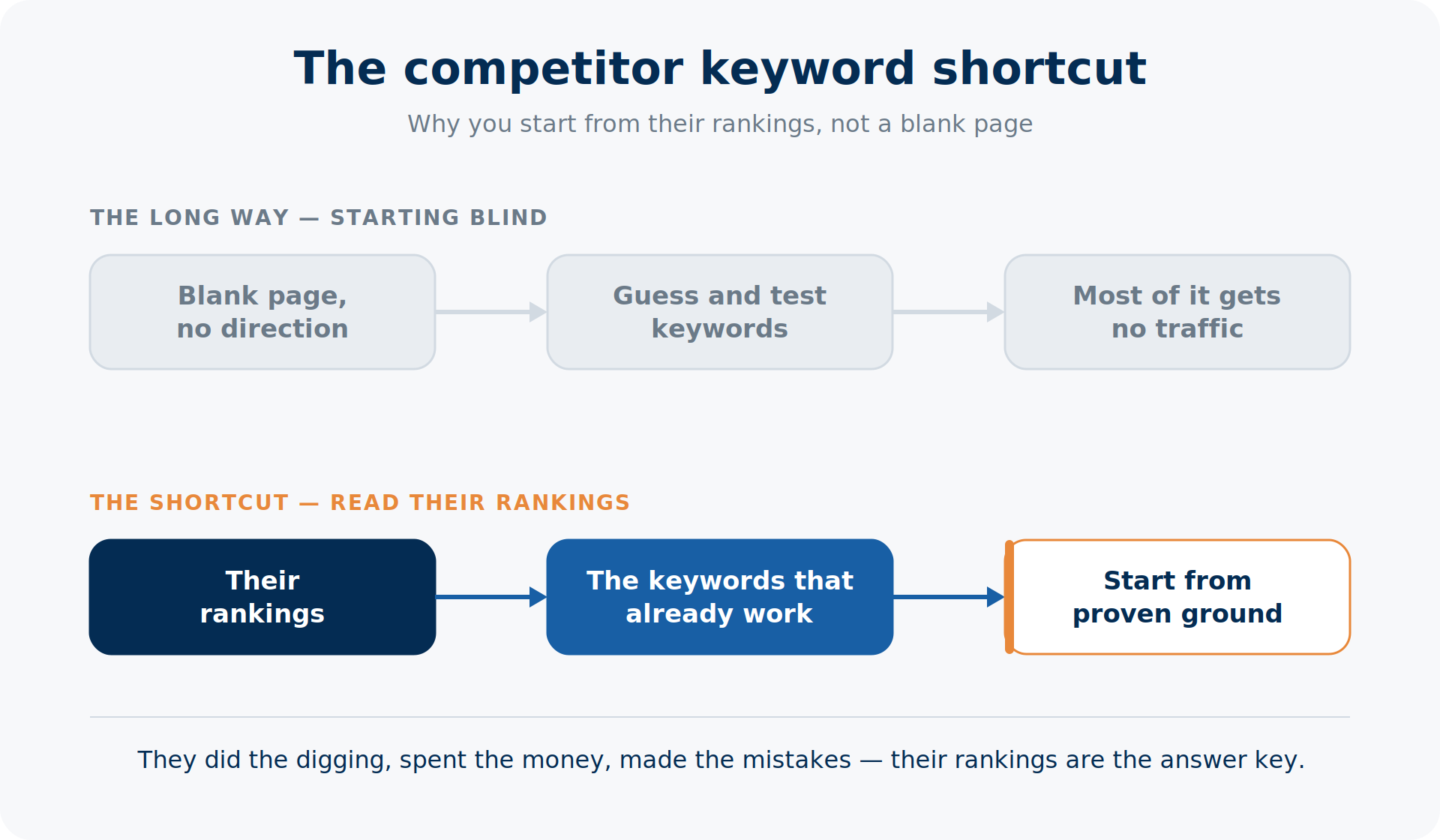
They’ve done the digging, spent the money, made the mistakes — and the results are sitting right there in their rankings for you to study. It’s the fastest shortcut in keyword research: skip the blank page, start from what’s already working.
But this is exactly where people get themselves in trouble.
Copying a competitor’s keywords is like copying the kid next to you at school.
If he’s got the answer wrong, you copy his wrong answer straight onto your own paper — and now you’re both wrong, except he’s had a head start being wrong for longer.
So the rule writes itself: copy the kid who’s actually topping the class.
The competitor dominating the market usually has the most accurate keyword strategy, because the market has already voted for it with clicks and rankings.
The struggling site three pages deep? Their keywords might be a mess of terms nobody searches or nobody buys from. Copy them and you inherit their bad homework.
And even when you copy the right one, competitor keywords are a compass, not a map. They point you roughly in the right direction.
They don’t walk the route for you. You still need your own separate keyword campaign — your own research, your own angle, your own reasons for targeting a term — with competitor data as one input, not the whole plan.
This matters more than it sounds, because most content that gets published never sees the light of day.
According to Ahrefs, over 90% of pages get zero organic traffic from Google. A huge slice of that is people who copied a keyword list they didn’t understand, aimed at terms they were never going to rank for.
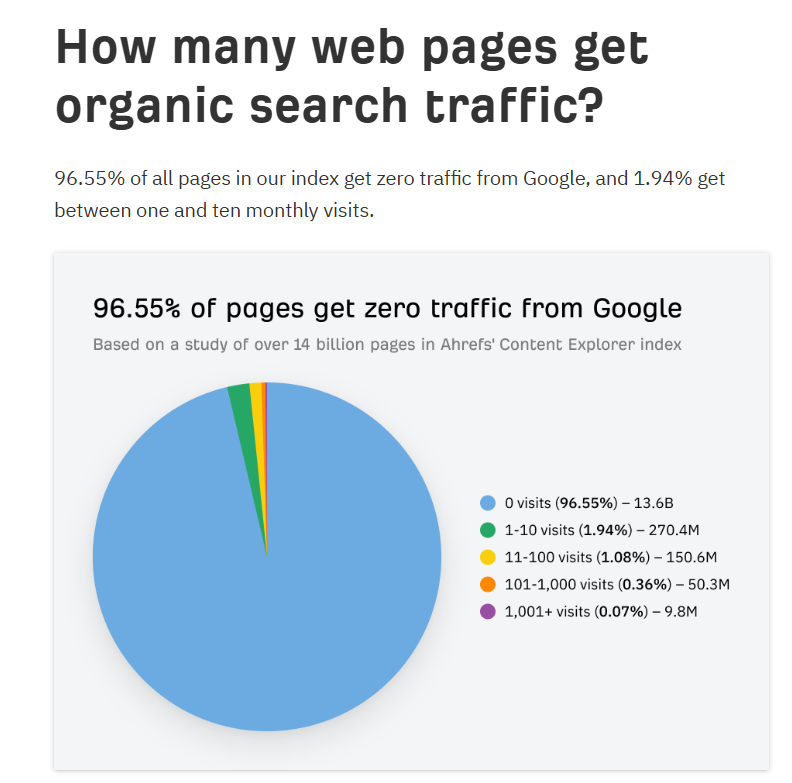
Competitor keywords help you avoid that — but only if you treat them as a starting point, not gospel. This is the difference between doing SEO with a plan and doing it by imitation.
How to Find Your Competitors’ Keywords
To find your competitors’ keywords, first work out who your real SEO competitors actually are, then pull their ranking keywords with a tool or a manual method, and filter down to the terms genuinely worth targeting.
This is the heart of it, so I’m going to walk you through it the way I’d actually do it — start to finish.
Find Your Real SEO Competitors First
Before you pull a single keyword, you need the right list of competitors. Get this wrong and everything downstream is wrong too.
The fastest way is also the most old-school: go to Google and search the terms you want to rank for.
Say you run a café in Auckland CBD and you want to own “brunch Auckland CBD.” Type it in. Note every site that shows up in the top results — not just the other cafés, but the food blogs, the “best brunch in Auckland” listicles, the directory pages, the Reddit threads.
Do it for five or six of your most important terms. The domains that keep reappearing across all of them? Those are your real SEO competitors.
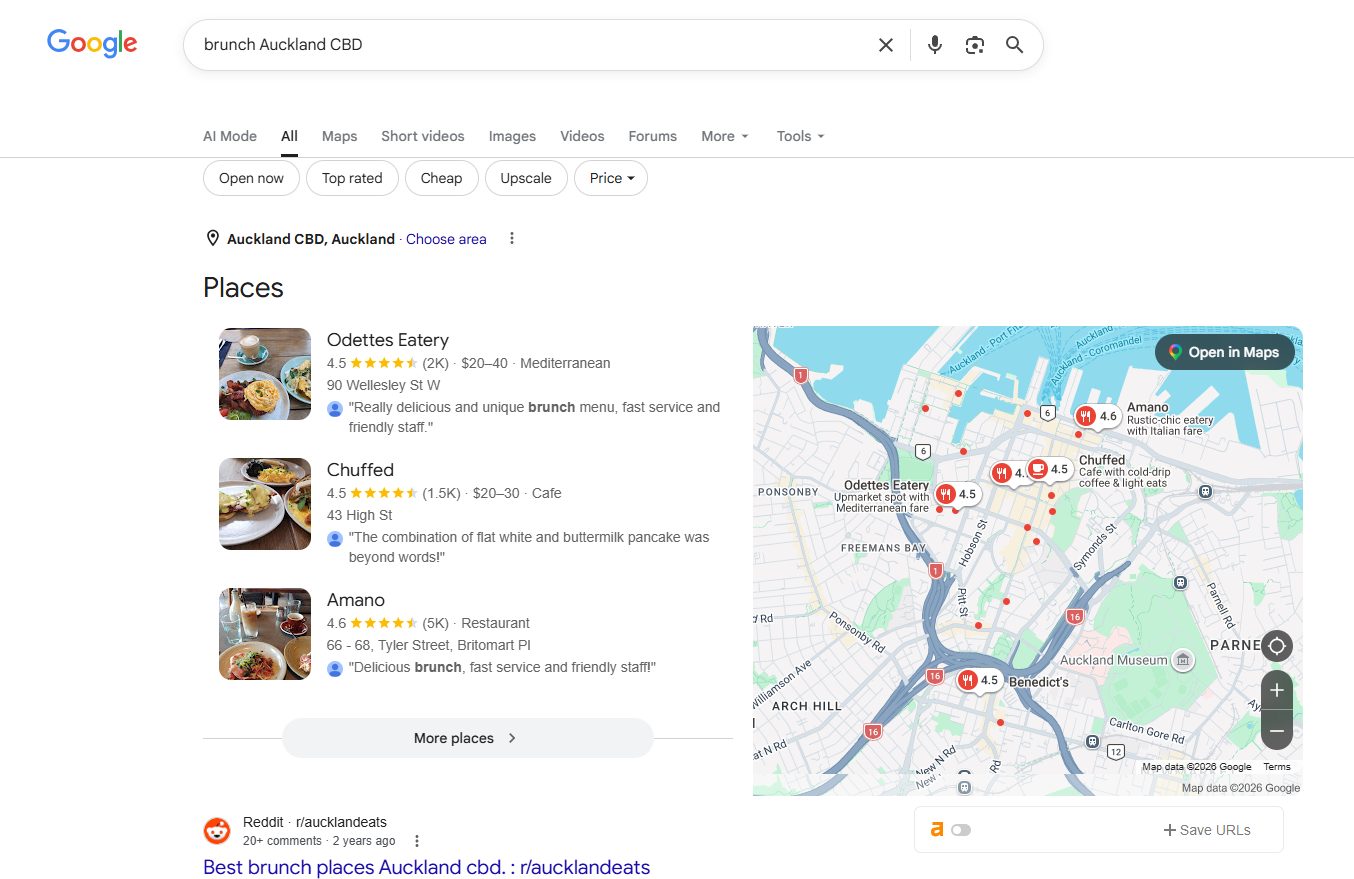
This manual method is exactly what experienced SEOs quietly recommend on forums when someone asks how to do this — because it works, and it costs nothing.
It’s the foundation of SEO for Auckland businesses trying to break into a crowded local market.
If you’ve got a paid tool, you can speed this up. Ahrefs has a “Competing Domains” report; SEMrush has an “Organic Competitors” view.
Both take your domain and show you the sites overlapping with you on keywords. Handy — but only once your own site actually ranks for a decent spread of terms.
A brand-new site won’t have enough overlap for it to work, which is why the Google-first method never goes out of style.
Pull Their Organic Keywords With a Tool
Once you know who you’re up against, it’s time to see what they rank for.
In Ahrefs or SEMrush, drop the competitor’s domain into Site Explorer (Ahrefs) or Organic Rankings (SEMrush), then open their organic keywords report.
You’ll get every term they rank for, with the search volume, the position, and the estimated traffic each one pulls.
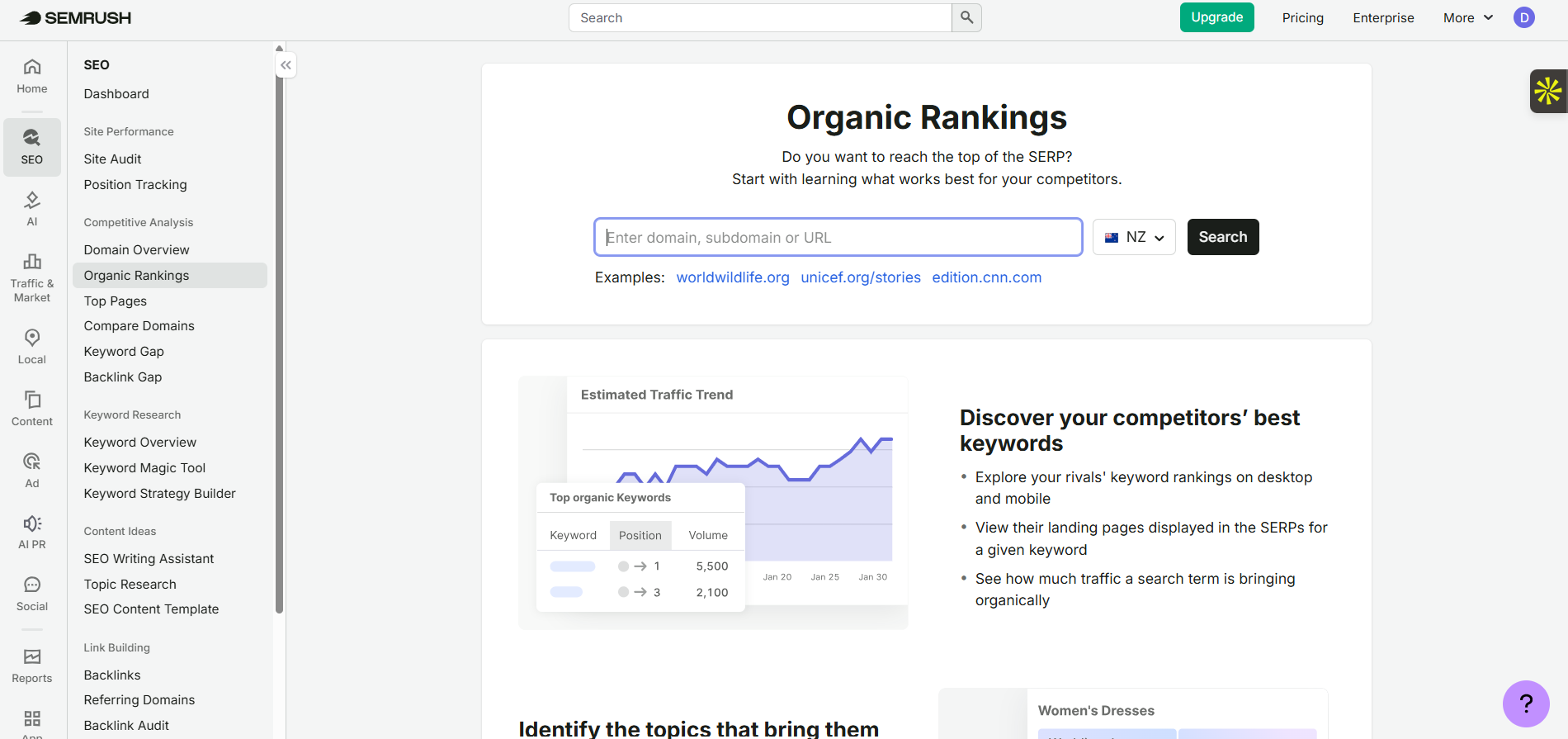
Sort by traffic, high to low. That’s the move most people skip. The top of that list is where your competitor gets the bulk of their visitors — the keywords actually doing the work, not the 800 long-tail terms they rank #74 for and get nothing from.
Start at the top and work down.
Then strip out anything branded (their company name, product names) and anything wildly irrelevant to what you sell. What survives is a real, prioritised list of keywords worth a proper look.
Run a Keyword Gap Analysis
This is the technique the tools are built around, and the one Google’s own AI Overview points people to first.
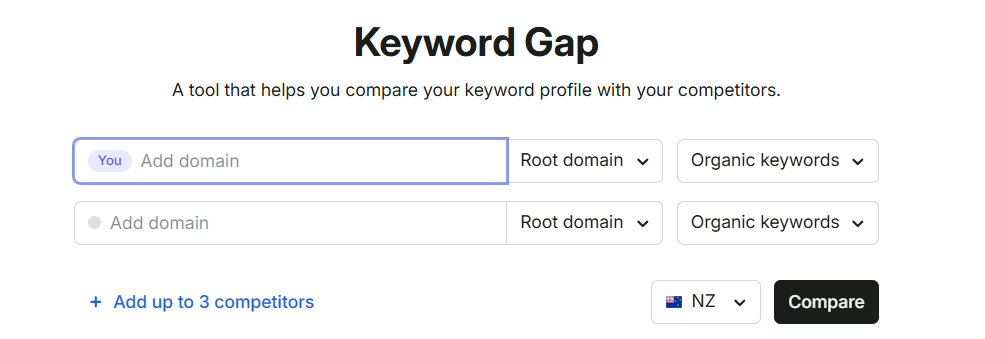
A keyword gap analysis (Ahrefs calls it Content Gap; SEMrush calls it the Keyword Gap tool) does one clever thing: it takes all the keywords your competitors rank for, subtracts the ones you already rank for, and hands you the difference.
Those are the keywords your competitors are winning and you’re not even in the race for.
You plug in your domain plus two or three competitors, hit go, and filter the results. For a newer site, set the keyword difficulty filter low — under 10 or so — and the volume filter to something meaningful. Now you’re looking at winnable gaps, not fantasy terms.
Here’s it in action. Doing SEO in Christchurch, I might find a builder invisible for renovation keywords while the established firms across town rank for dozens of them — “villa renovation Christchurch,” “home extensions cost NZ,” “builder quote Christchurch.”
Run the gap analysis and every one of those surfaces as a target.
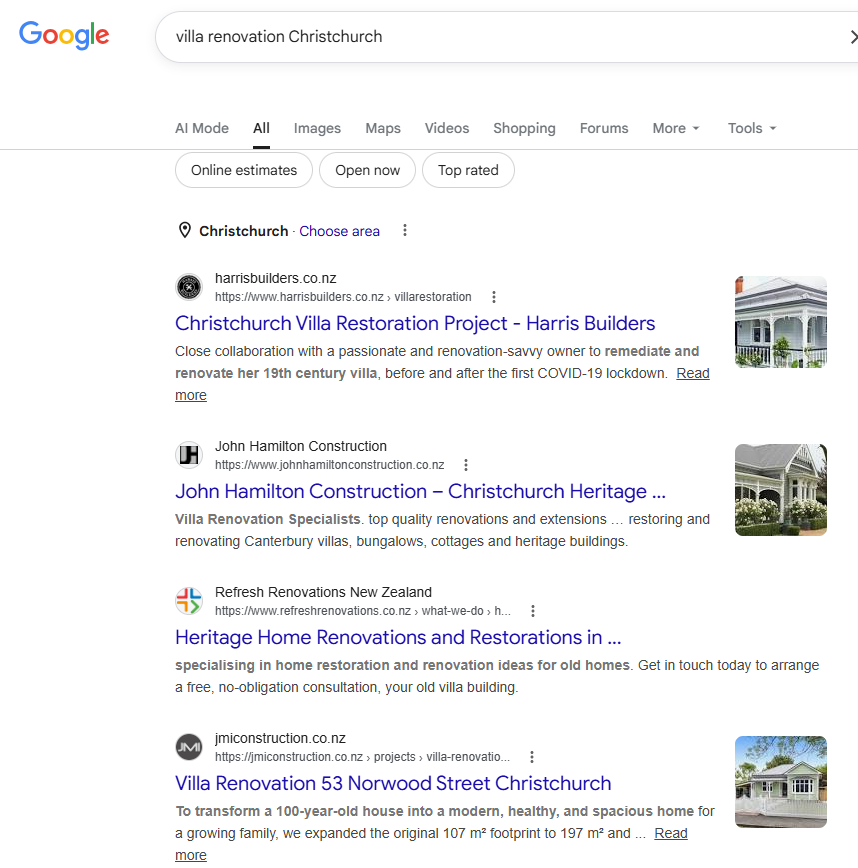
The builder didn’t have to guess what content to make. The gap report wrote the content plan for them.
Check Their Paid Google Ads Keywords
Organic keywords tell you what your competitor ranks for. Their paid keywords tell you what they’re willing to spend money on — and that’s a different, sharper signal.
If a competitor’s been bidding on a keyword in Google Ads for months, it’s usually because that keyword makes them money. Nobody keeps paying for clicks that don’t convert.
So their paid keyword list is basically a leaked document of their most profitable terms.
You can see these two ways: the Google Ads Keyword Planner has a “Start with a website” option that pulls the terms a domain is associated with, and both Ahrefs and SEMrush have paid-keyword reports that show a competitor’s ad history.
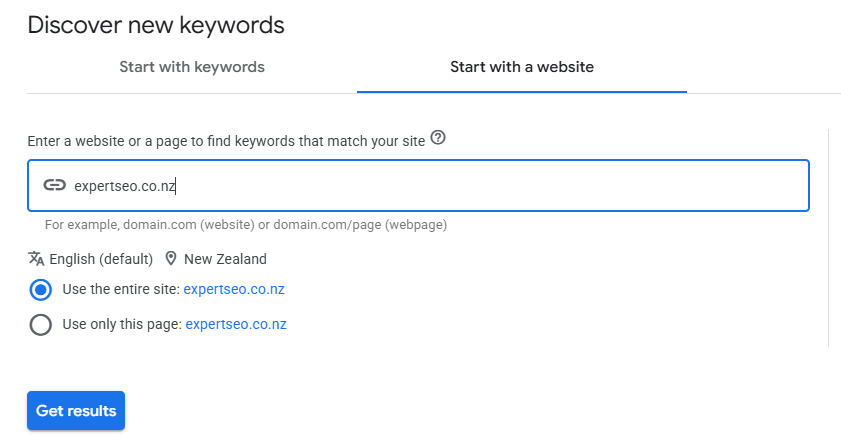
Commercial and transactional terms — the ones with buying intent (e.g. SEO Services) — are what you’re hunting for here. Those are the keywords worth building a proper service page around.
The Free, No-Tool Methods
Not everyone’s got a $200-a-month Ahrefs subscription, and you don’t need one to start.
There’s a genuine amount you can do for nothing:
Google autocomplete — start typing your competitor’s main service and see what Google suggests. Those suggestions are real searches people make.
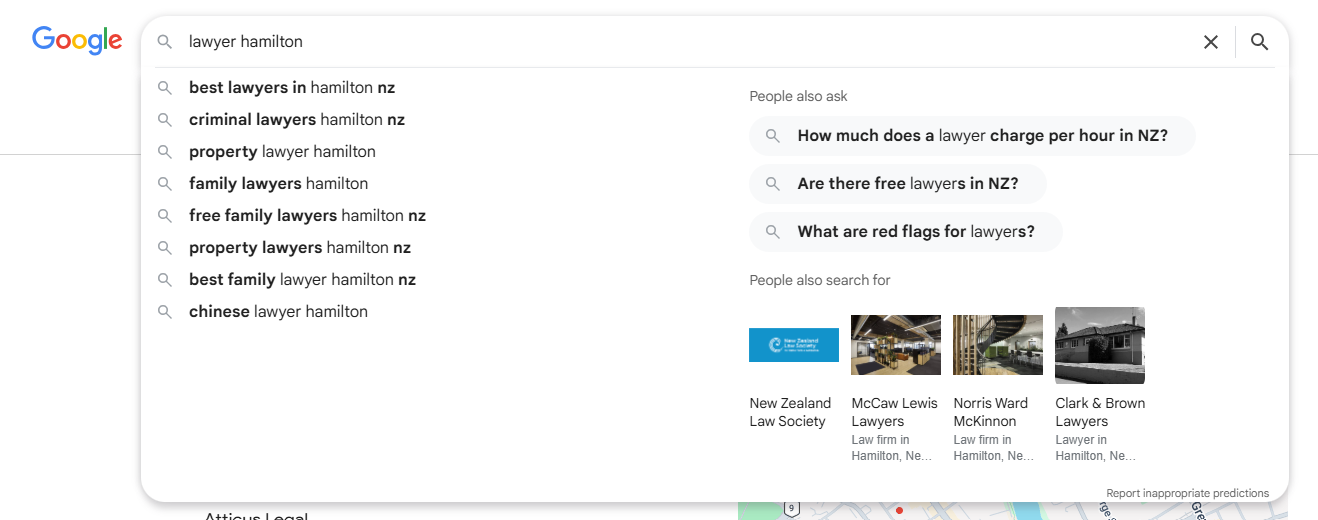
People Also Ask and Related Searches — the boxes in the middle and bottom of the results page are Google literally handing you the questions your market is asking.
Read their site — open your competitor’s homepage, service pages and recent blog posts, and look at the page titles, the headings, the URLs.
The keywords they’re targeting are usually sitting right there in the H1s and title tags.
Free tiers — tools like Mangools and SpyFu let you run a limited number of competitor searches for free, which is plenty when you’re just starting out.
A trade business doing its own Tauranga SEO on zero budget could do all of this in an afternoon and walk away with a solid keyword list.
It’s slower than a paid tool, but the same logic applies: find who ranks, see what they rank for, take the relevant bits.
How to Use Competitor Keywords the Right Way
Use competitor keywords by filtering for relevance and intent, prioritising the terms the market leader is winning with, and building them into your own campaign — not copying a competitor’s list wholesale.
Having the list is the easy part. Judging it is the skill.
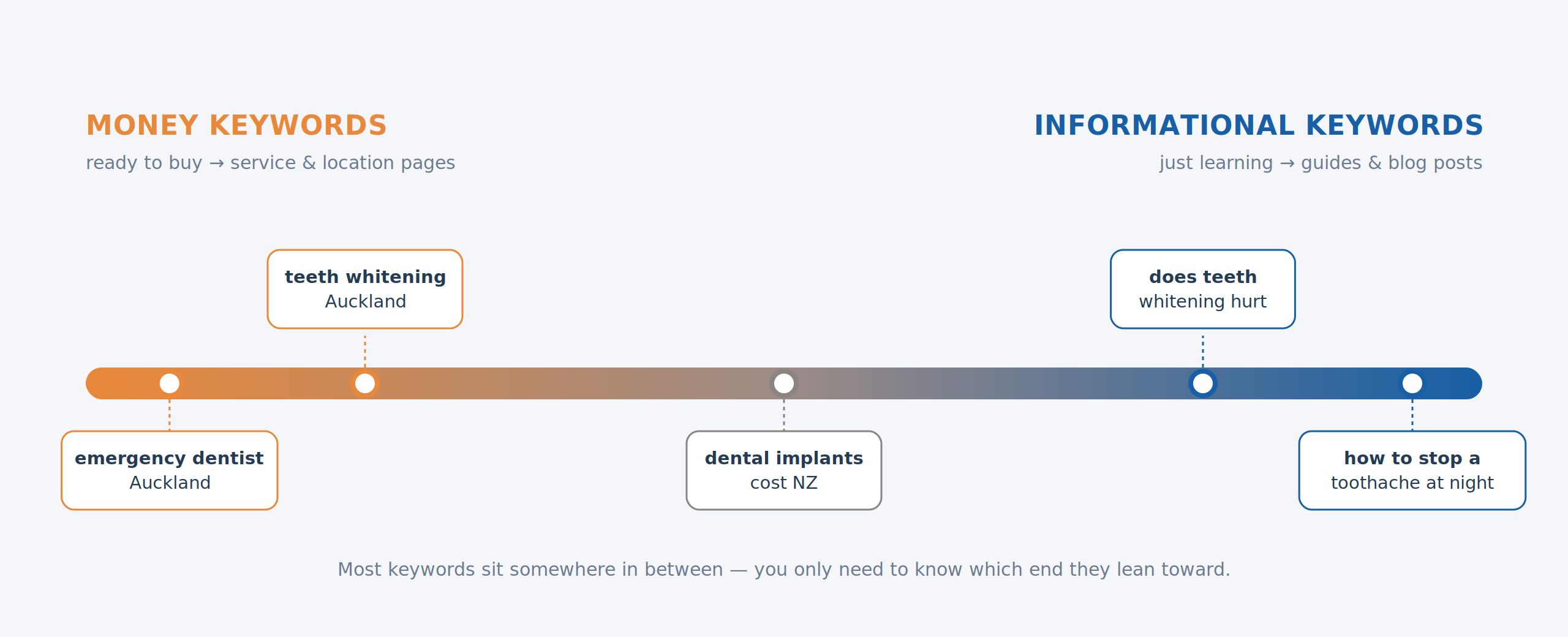
First, filter by intent. Every keyword falls into a rough category, and the category decides what you do with it.
“How does panel beating work” is informational — someone learning, not buying yet — which makes it perfect for a blog post that builds authority and feeds your money pages.
“Panel beater Hamilton quote” is commercial — someone with their wallet half-out — which needs a service page built to convert.
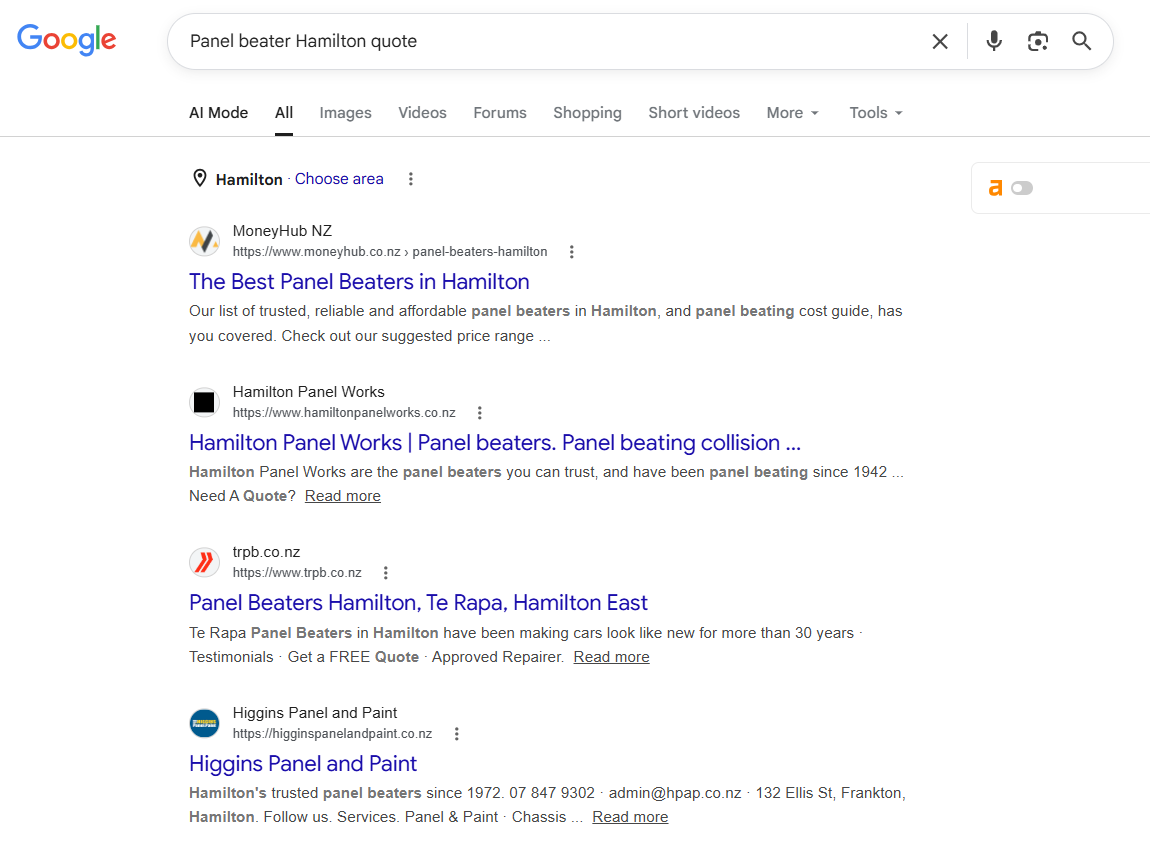
Informational keywords build your authority. Commercial keywords build your revenue. Sort your competitor’s list into those buckets before you do anything else.
Second, copy the leader, not the laggard (this is my first step in SEO consulting). I said it earlier and it’s worth repeating because it’s the single most common mistake: a weak site ranking for a keyword is not proof the keyword is any good.
Weight your list toward the terms the dominant competitor is winning with. They’ve earned their position; their keyword choices have been stress-tested by the market.
Third, prioritise winnable terms if your site is young.
Doing SEO in Queenstown or any smaller market, you don’t need to fight the biggest national players for the hardest keyword on day one.
Low difficulty, high relevance, clear intent — that’s where a newer site scores its early wins and builds the momentum to chase the harder terms later.
And fourth — the one everyone forgets — build your own campaign on top. Competitor keywords seed your plan. They don’t finish it.
A Wellington law firm I could picture working with would take the borrowed direction from their competitor research, then layer on their own on-page SEO, their own real client stories, their own angle on why they’re different.
That’s the kind of Wellington SEO that makes a page win instead of reading like a photocopy — because the principle holds whether you do it yourself or not: competitor keywords are the compass, your campaign is the journey.
Competitor Keywords in the AI-Search Era
In 2026, competitor keyword research goes beyond Google rankings — you also want to see where rivals get cited by AI, because those citations are the new visibility battleground.
For years, “competitor keywords” meant one thing: what your rivals rank for in blue-link Google results.
That’s still important. But the ground has shifted under everyone’s feet, and if you’re only looking at rankings you’re now missing half the picture.
Google’s AI Overviews — those AI-generated summaries at the top of the results — reached over 2.5 billion monthly users as of Google’s I/O 2026 announcement, and they now appear on roughly half of all searches.
Meanwhile, 37% of consumers say they now start their search with an AI tool rather than a traditional search engine.
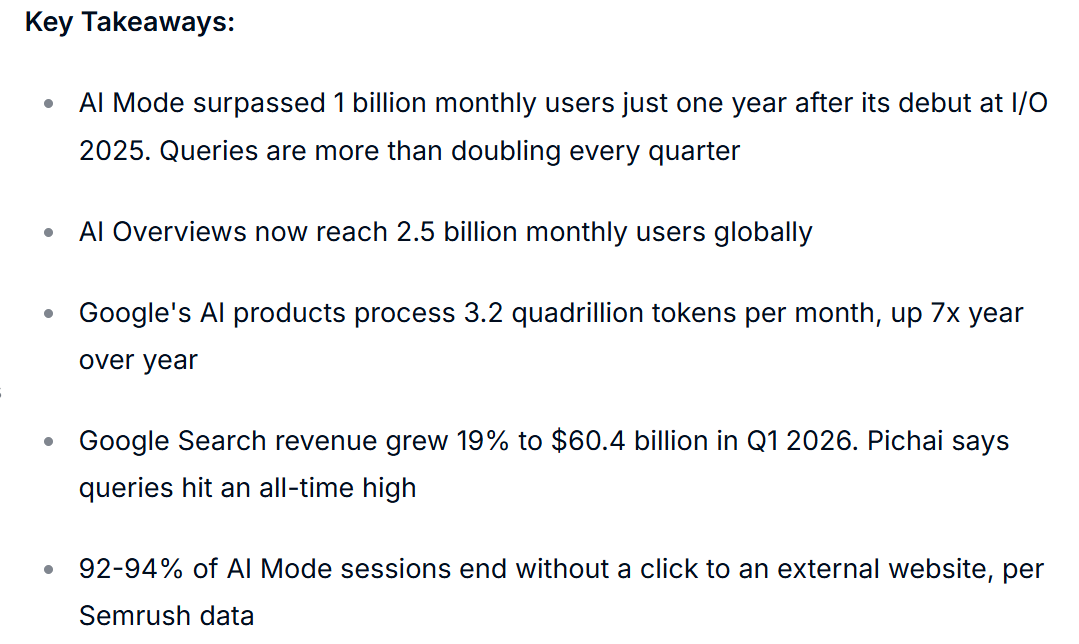
So there’s a new question to ask about your competitors: not just “what do they rank for,” but “where do they get cited by AI, and I don’t?”
Search a term you care about and look at who the AI Overview pulls from — if your rivals are in there and you’re not, that’s a gap with your name on it.
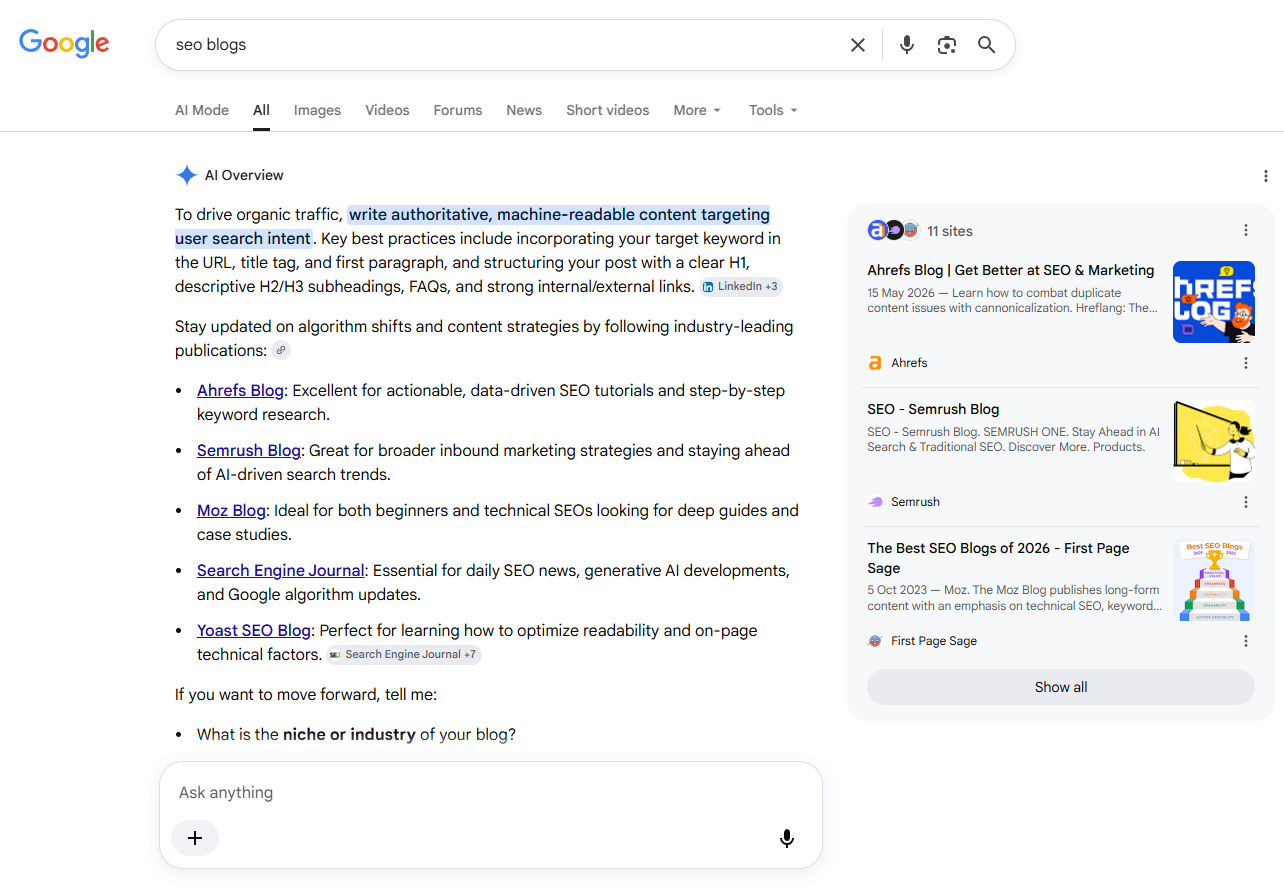
That’s an AI-citation gap, and it’s the same game as a keyword gap, one level up. If ChatGPT keeps recommending your competitor and never mentions you, or Google’s AI Overview keeps pulling from their page instead of yours, that’s a gap worth closing.
And here’s a detail most people miss: AI Overviews and Google’s AI Mode cite the same URLs only 13.7% of the time, according to Ahrefs — so ranking well in one doesn’t guarantee you show up in the other. You have to track and target them separately.

This is exactly the terrain my own agency plays on.
Expert SEO is barely a year old, competing against firms that have been building authority for a decade — and it’s already being cited in Google’s AI Mode.
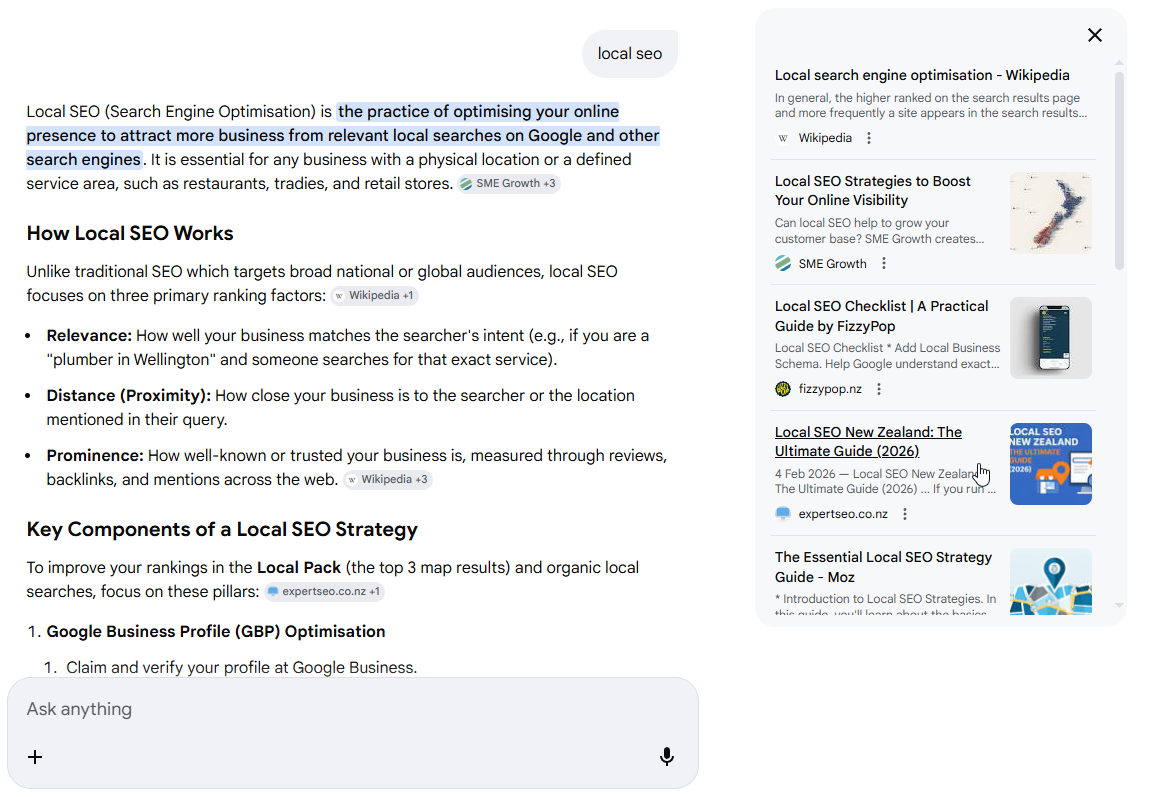
The point isn’t the brag. It’s that watching where competitors get cited by AI — and going after those gaps deliberately — is now part of proper competitor research.
This is the whole discipline of generative engine optimisation, and it’s where the smart money is heading.
Common Competitor Keyword Research Mistakes
The biggest mistakes are copying a weak competitor, chasing branded terms, ignoring search intent, and having no keyword strategy of your own.
I see the same handful of errors over and over, and they all come back to treating the compass like a map.
Copying the wrong site. Back to the schoolyard — if you copy the competitor who’s ranking on page three, you copy their wrong answers. Always weight toward the market leader.
Chasing their branded keywords. You will not outrank “Nike” for the word “Nike.” Their brand terms inflate their keyword count and mean nothing for you. Strip them out before you analyse anything.
Ignoring intent. Targeting a commercial keyword with a blog post, or an informational one with a hard sell, wastes the whole effort. Sort by intent first, every time.
Copying wholesale with no campaign of your own. A list of competitor keywords is raw material, not a finished strategy. If your entire plan is “rank for what they rank for,” you’ll always be a step behind, by definition.
Treating the compass as the map. The recurring theme. Competitor data points the direction. Your own research, proof and angle actually get you there.
Tools for Competitor Keyword Research
The core paid tools are Ahrefs and SEMrush for depth, with free options like Google Keyword Planner, autocomplete and SpyFu’s free search for anyone starting out.
You don’t need all of these. You need one that fits your budget and the discipline to use it properly.
Ahrefs — the deepest keyword database of the lot. Its Content Gap and Organic Keywords reports are the workhorses for competitor research. Best if you’re serious and want one tool that does everything.
SEMrush — Ahrefs’ main rival, with a strong Keyword Gap tool and excellent paid-keyword and advertising data. If you care about your competitors’ Google Ads strategy, SEMrush is superb.
Google Keyword Planner — free, straight from Google, with the “Start with a website” feature that pulls a domain’s associated keywords. Volume data is bucketed rather than exact, but it’s free and it’s Google’s own numbers.
Mangools and SpyFu — both offer limited free competitor searches, which is genuinely enough to get a beginner off the ground before committing to a paid plan.
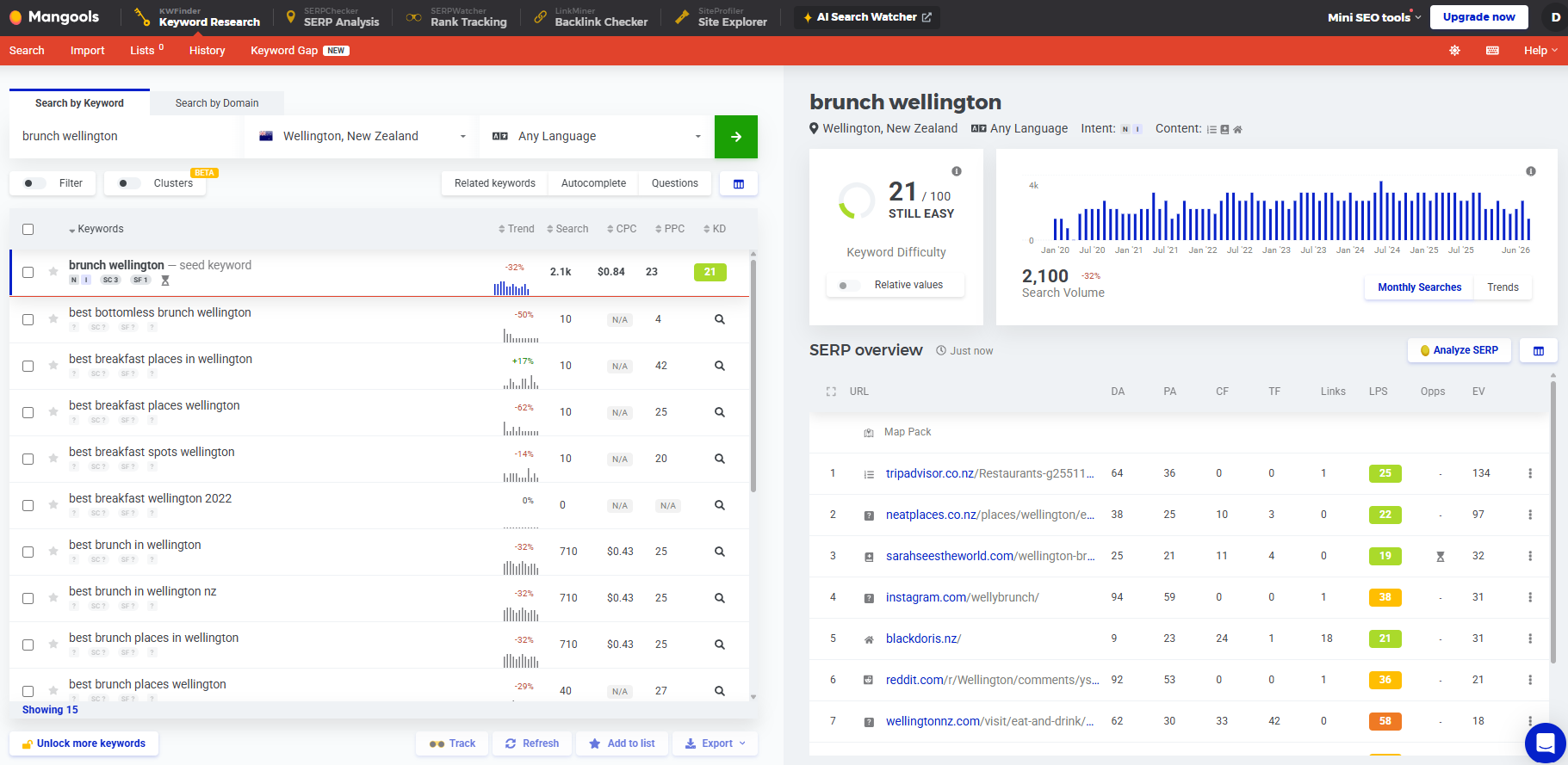
Pick one, learn it well, and remember the tool only surfaces the data. The judgement — whose keywords to trust and what to do with them — is still on you.
Final Thoughts
Here’s the one I’d leave you with, and it trips up even people who run this whole process perfectly: don’t lean on your competitors’ keywords too hard.
Use them as a guide. Not a rulebook.
Two things are true at once.
You have to put your own spin on those keywords anyway — your own angle, your own proof, your own reason for targeting them — or your pages read like a tribute act.
And standing out means doing something different from your competitors, not the same thing in the same jersey. Copy only what they rank for and the ceiling on your results is “slightly worse than them,” by definition.
The businesses that win don’t mirror the market leader.
They take the useful direction from competitor research, then go and do something better — a sharper angle, a deeper page, a real local example the competitor can’t match.
That’s why I keep calling it a compass. A compass points you the right way; it doesn’t tell you what to build when you get there. That part’s on you, and it’s the part that actually wins.
You can run this whole process yourself — the method above is exactly what I’d do for a client.
Competitor Keyword Research: FAQ
What keywords are my competitors using?
Put a competitor's domain into a tool like Ahrefs or SEMrush and open its organic keywords report — it lists every term they rank for, with search volume and position. No tool? Google your core terms, note which sites keep appearing, then read their page titles, headings and URLs. The keywords they're targeting are usually sitting right there.
How do I find my competitors' keywords for free?
Use Google itself. Autocomplete, People Also Ask and Related Searches hand you the real queries people type, and reading a competitor's titles and headings shows what they're targeting. Free tiers of Mangools, SpyFu, and Google Keyword Planner's "Start with a website" feature fill in volume and extra ideas at no cost.
Can I use my competitor's brand keywords in Google Ads?
You can legally bid on a competitor's brand name as a keyword in Google Ads, and plenty of businesses do. What you can't do is put their trademarked name in your ad copy — Google will usually disallow that. For organic SEO, chasing a rival's brand terms is wasted effort: you won't outrank them for their own name, so strip branded terms out of your list.
What are the 4 types of keywords?
By search intent, keywords fall into four types: informational (learning — "how does panel beating work"), navigational (finding a specific brand), commercial (comparing before buying — "best panel beater Hamilton"), and transactional (ready to act — "panel beater Hamilton quote"). Sorting a competitor's keywords into these tells you whether each one needs a blog post or a service page.
What is a keyword gap analysis?
A keyword gap analysis takes the keywords your competitors rank for, subtracts the ones you already rank for, and shows you the difference — the terms they're winning that you're not even in the race for. Ahrefs calls it Content Gap; SEMrush calls it the Keyword Gap tool. Filter by low difficulty and real volume to surface winnable targets.
What's an example of competitor keywords?
If you run an Auckland café, a rival café ranking for "brunch Auckland CBD," "best breakfast Ponsonby" and "bottomless brunch Auckland" — those are competitor keywords. They're the non-branded, topic-based terms sending that competitor traffic that could just as easily be sending it to you.
Recommended Reading
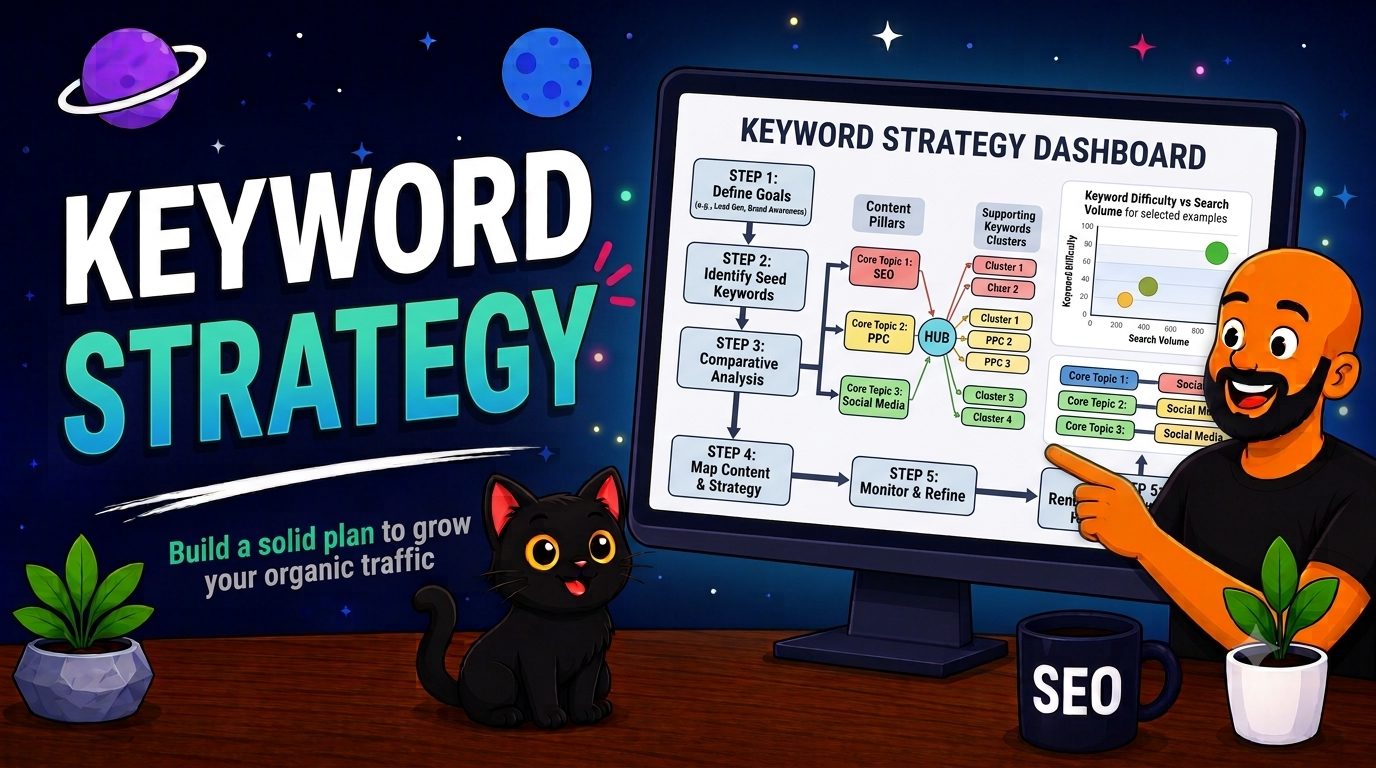 Keyword Strategy
Turn a raw keyword list into a plan that actually ranks — mapping, intent, and priority order.
 Advanced Keyword Research
Go deeper: seed expansion, gap analysis, and the techniques for cracking competitive NZ niches.
 Best Keyword Research Tools
The paid and free keyword tools worth using in New Zealand, compared and ranked.