
Guest Posting: What It Is & How To Do It In NZ (2026)

If you’ve ever checked your inbox and seen a generic “I’d love to write for your blog” email from a stranger, you already know what bad guest posting looks like.
Those emails get deleted instantly. Every editor gets dozens of them. They’re vague, self-serving, and completely forgettable.
But guest posting itself is still one of the most reliable ways for New Zealand businesses to earn high-quality backlinks, build authority, and get your brand in front of new audiences.
The difference between success and wasted effort comes down to approach.
I’ve used guest posting to earn backlinks from real websites like Story Chief which gets 50,000+ monthly visitors:
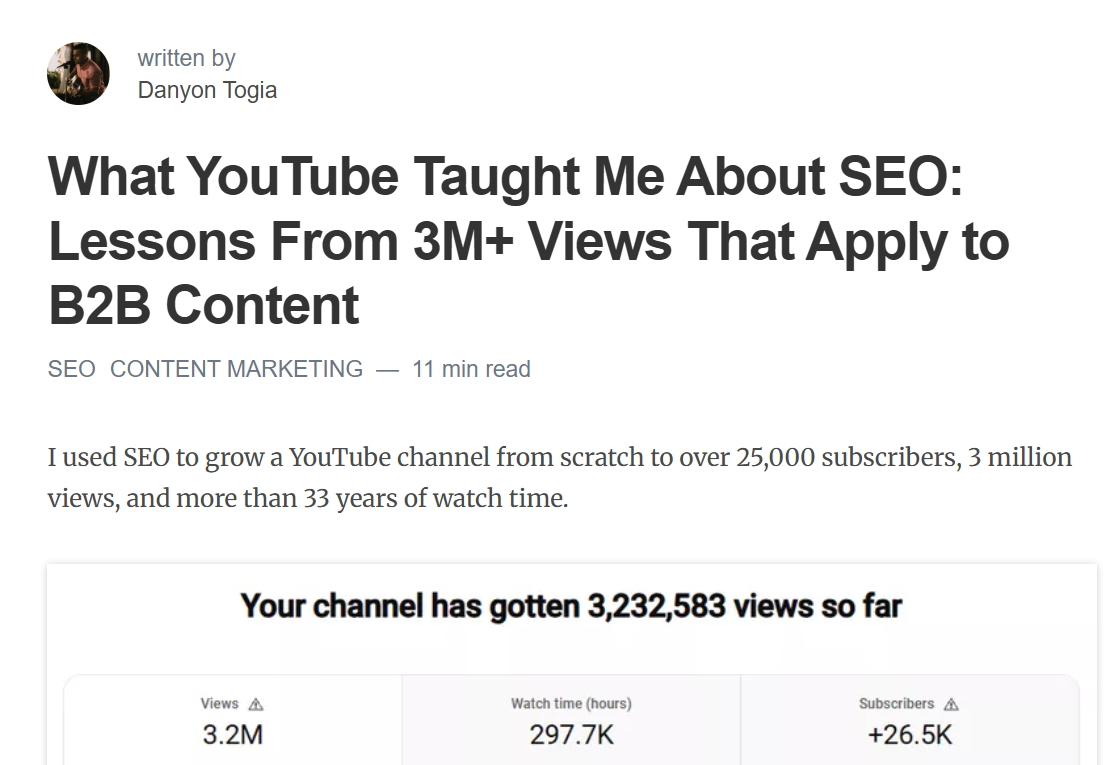
Not by sending mass emails. By researching the site, pitching something genuinely useful, and delivering content that made the editor’s job easy.
This guide walks you through exactly how to do the same thing.
From finding the right sites to writing pitches that actually get accepted, with real examples and a clear process you can follow.
What Is Guest Posting?
Guest posting is when you write an article and get it published on someone else’s website, usually with a link back to your own site.
It’s a simple exchange. You provide valuable content for their audience. In return, you get a backlink, exposure, and credibility from being associated with their brand.
Here’s a real-life example from our own SEO services:
I wrote a guest article for a New Zealand business website called BizWin, run by Leo Zeldenrust.
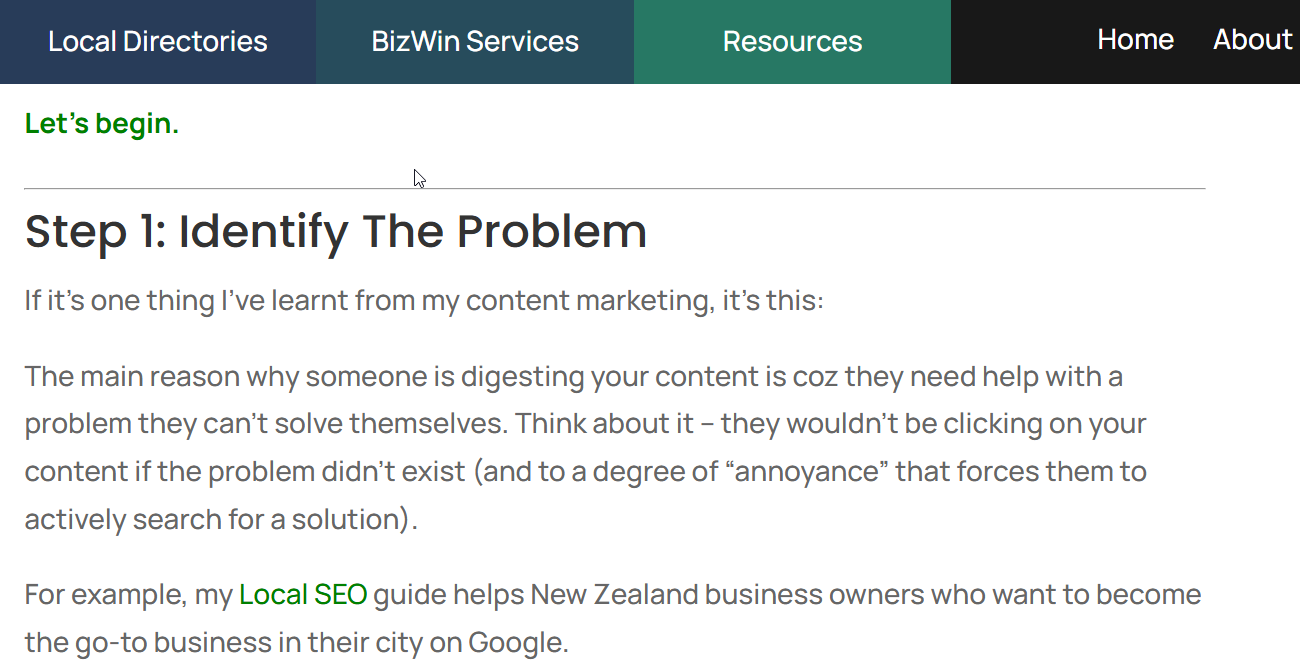
The article was genuinely useful for their readers, and within the content, I naturally linked back to my own Local SEO guide as a supporting resource.
That link is relevant, placed naturally within the content, and comes from a real NZ business website. That’s what a good guest post looks like.
Don’t confuse guest posting with sponsored content. Guest posting is contributing value. Sponsored content is paid advertising. Google treats them very differently, and so should you.
Why Guest Posting Still Works in 2026
Guest posting builds backlinks, authority, and brand mentions. Those three things directly improve how you rank higher on Google and in AI search.
It Builds High-Quality Backlinks
Backlinks are still one of the strongest ranking factors in SEO. Pages ranking number one on Google have 3.8x more backlinks than pages sitting in positions two through ten.
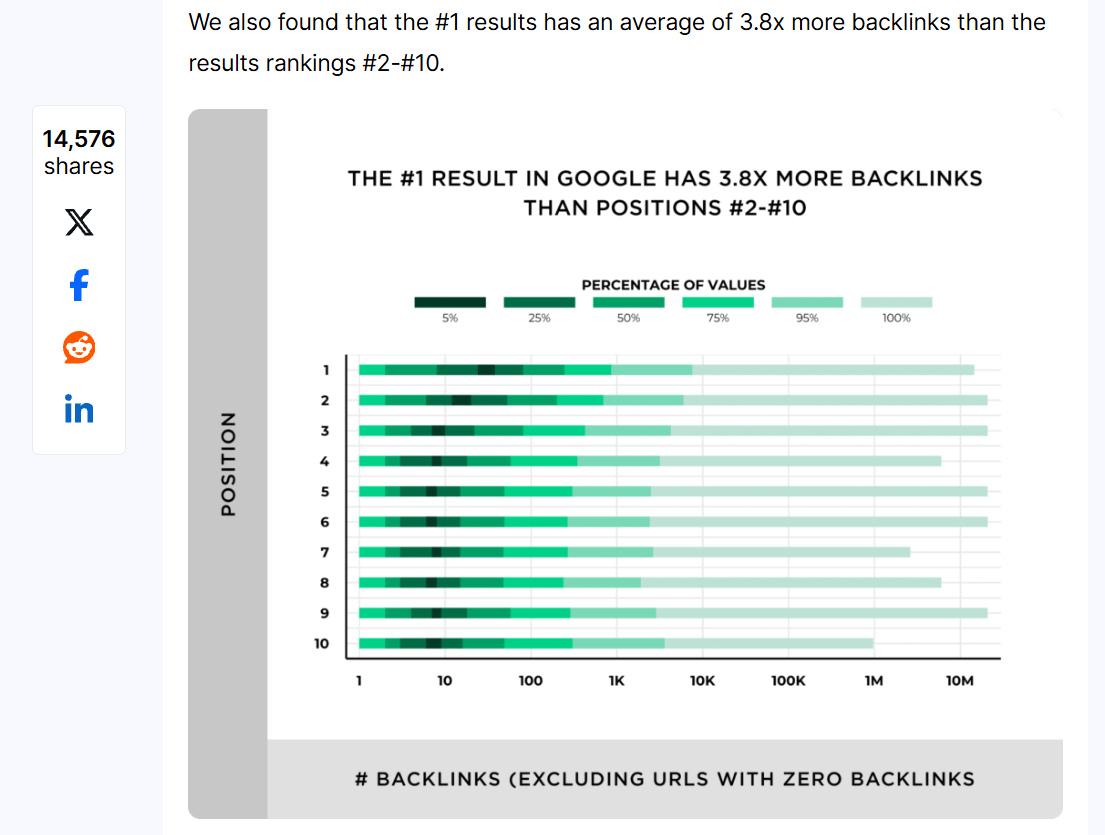
A single backlink from a relevant, authoritative website tells Google that your site is credible and worth ranking. Guest posting is one of the most direct ways to earn those links.
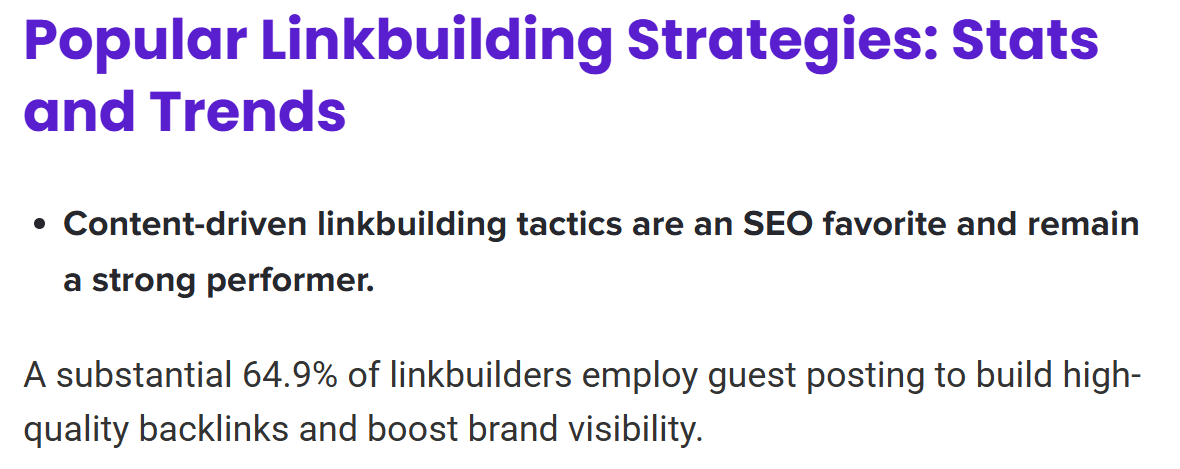
In fact, 64.9% of link builders use guest posting as a core part of their strategy, making it one of the most widely used link building tactics in the industry.
It Positions You as an Authority
When you get published on a reputable site, you’re borrowing their credibility. Readers see your name on a trusted platform and immediately associate you with that level of quality.
Over time, this compounds. Other websites become more willing to feature you. Google starts seeing your brand as a legitimate player. And future pitches get easier because you can point to where you’ve already been published.
It Exposes Your Brand to New Audiences
Every guest post puts your name in front of an audience you wouldn’t otherwise reach. That can lead to referral traffic, email subscribers, and direct enquiries.
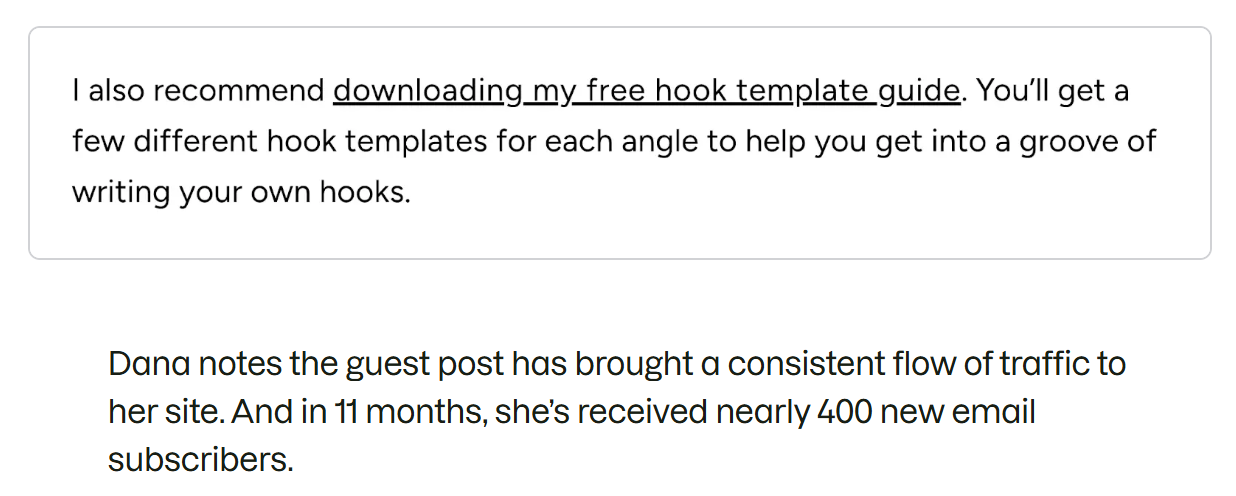
One marketer who published a guest post on Buffer’s blog reported receiving nearly 400 new email subscribers from that single post over 11 months.
That’s the kind of sustained return you don’t get from most marketing tactics.
It Increases Your Visibility in AI Platforms
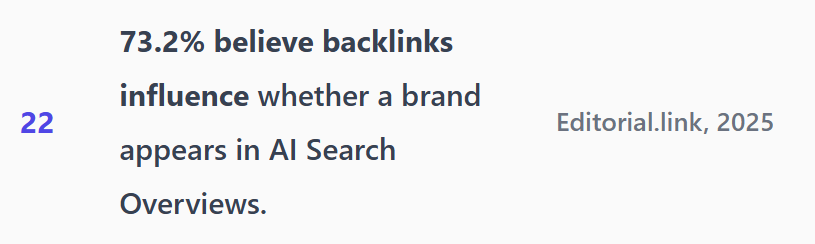
AI platforms like ChatGPT and Google AI Overviews are increasingly referencing brands that have strong online mentions. 73.2% of SEO professionals believe that backlinks influence whether your brand appears in AI search results.
Guest posting gives you both the link and the brand mention. Even if the link is nofollowed, the mention itself helps AI systems recognise your brand as relevant and trustworthy.
Paid vs Earned Guest Posts: Know the Difference Before You Start
Before you start looking for opportunities, understand the difference between paid and earned placements. Getting this wrong can waste your budget or actively damage your rankings.
Earned Guest Posts
This is the approach that actually works long term. You research a relevant site, pitch a genuinely useful topic, write high-quality content, and earn the placement on merit.
The link is natural. The content is editorial. Google sees it as a legitimate signal of trust.
Paid Guest Posts
There’s a whole industry of websites that exist purely to sell guest post placements. You pay a fee, they publish your article with a link, and you move on.
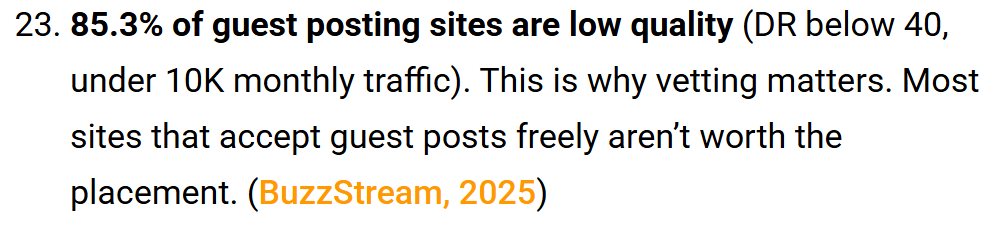
The problem is that Google knows about these sites. 85.3% of guest posting sites are low quality, with domain ratings below 40 and less than 10,000 monthly visitors.
Many of them have been hit hard by Google’s Helpful Content and spam updates, with their traffic decimated as a result.
The average cost of a guest post link through these marketplaces sits around $364 before vendor markup.

With agency fees, that can push well above $1,000. And you’re often getting a link from a site that Google barely trusts.
The Rule of Thumb
If a site’s primary business model is selling guest posts, avoid it.
If a site has a real audience, publishes quality content, and happens to accept guest contributors, that’s a legitimate opportunity.
Earned placements build lasting authority. Paid placements on link farms carry real risk and deliver diminishing returns.
How to Find Guest Posting Opportunities
Start with the methods that work, then expand. In New Zealand, the best opportunities often don’t advertise themselves, so you need to look beyond the obvious “write for us” pages.
Use Google Search Operators
The simplest way to start is by searching Google with specific queries that surface sites looking for contributors.
Try combinations like:
- [your niche] + “write for us”
- [your niche] + “guest post”
- [your niche] + “contribute”
- [your niche] + “guest author”
For example, if you run a SEO company or digital marketing agency, you’d search something like “digital marketing NZ write for us” or “marketing blog guest post.”
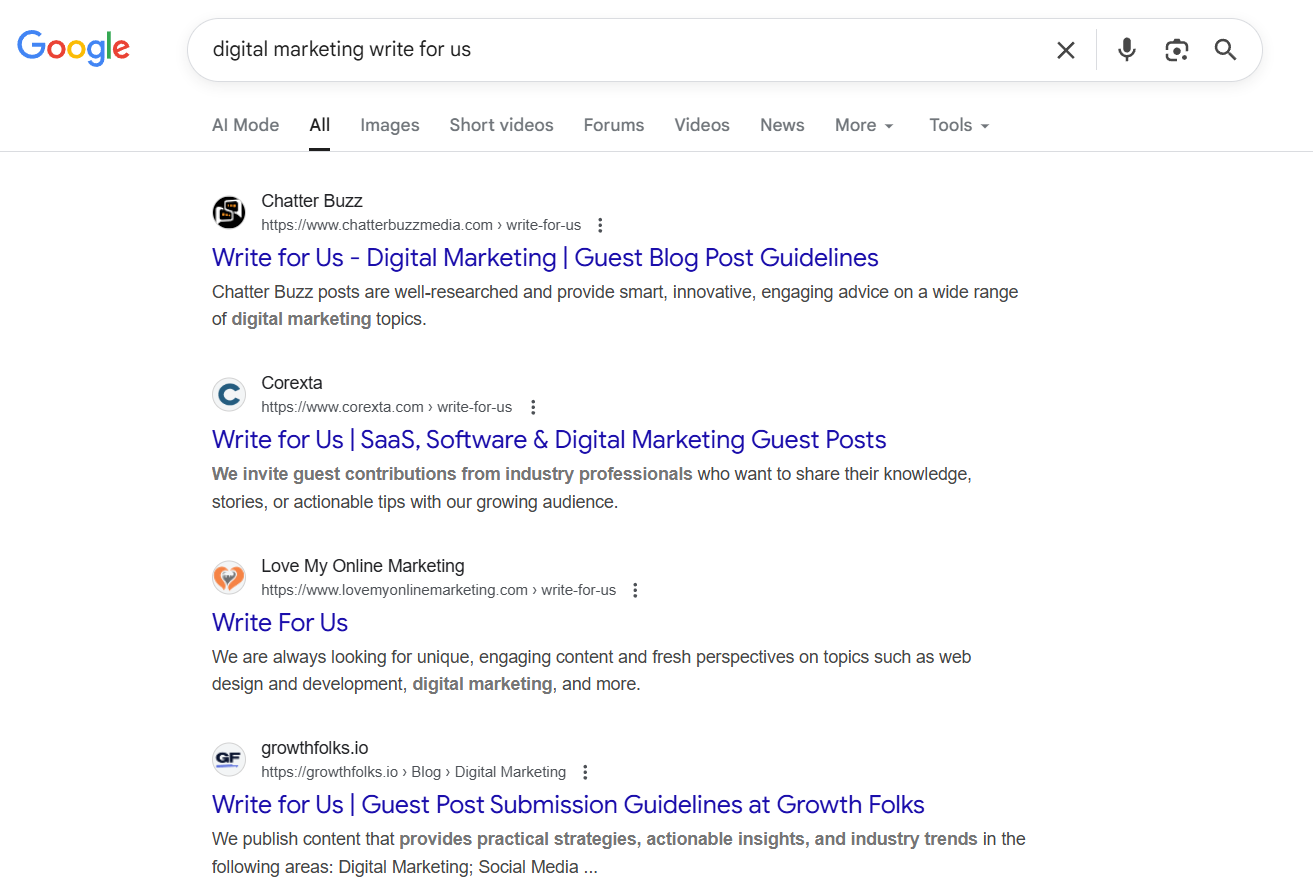
This gives you a starting list. The next step is evaluating which sites are actually worth pitching.
Reverse-Engineer Competitor Backlinks
This is one of the most underrated methods and it’s how I found some of my best guest posting opportunities.
Open Ahrefs or SEMrush, enter a competitor’s domain, and look at their backlink profile. Filter for links that look like guest posts. You can often spot them by the author bio, the “guest post” tag, or the style of the content.

If a competitor got published on a site, there’s a good chance that site would be open to publishing your content too, especially if you can pitch something better.
Find NZ-Specific Opportunities
In a smaller market like New Zealand, the best guest posting opportunities aren’t always the ones advertising themselves. Look for:
- .co.nz blogs in your niche that publish regular content
- NZ industry associations and member organisations with blogs or resource sections
- NZ business publications and local media sites
- Other NZ businesses in complementary (not competing) industries
My guest post on BizWin came from this kind of thinking. It’s a real NZ business website with a real audience. Not a guest post marketplace. Not a link farm. A genuine site where contributing useful content made sense for both sides.
Look for Sites That Don’t Advertise Guest Posting
Some of the cleanest, most valuable links come from sites that don’t openly offer guest posting. They simply have a blog.
Instead of looking for “write for us” pages, look for relevant sites that publish content regularly. Then pitch them directly with a specific, useful topic idea.
This approach takes more effort. But because fewer people are pitching these sites, your chances of standing out are significantly higher.
How to Evaluate a Guest Posting Site Before You Pitch
Not every site that accepts guest posts is worth your time. Before you invest hours writing a pitch and an article, check three things.
Check Relevance First
The site’s audience should overlap with yours. A relevant site with a modest domain rating is more valuable than a high-authority site in a completely unrelated niche.
Ask yourself: would the people reading this site genuinely benefit from what I have to say? If the answer is no, move on.
Check Authority and Traffic
Use Ahrefs (Domain Rating) or SEMrush (Authority Score) to get a quick read on the site’s strength.
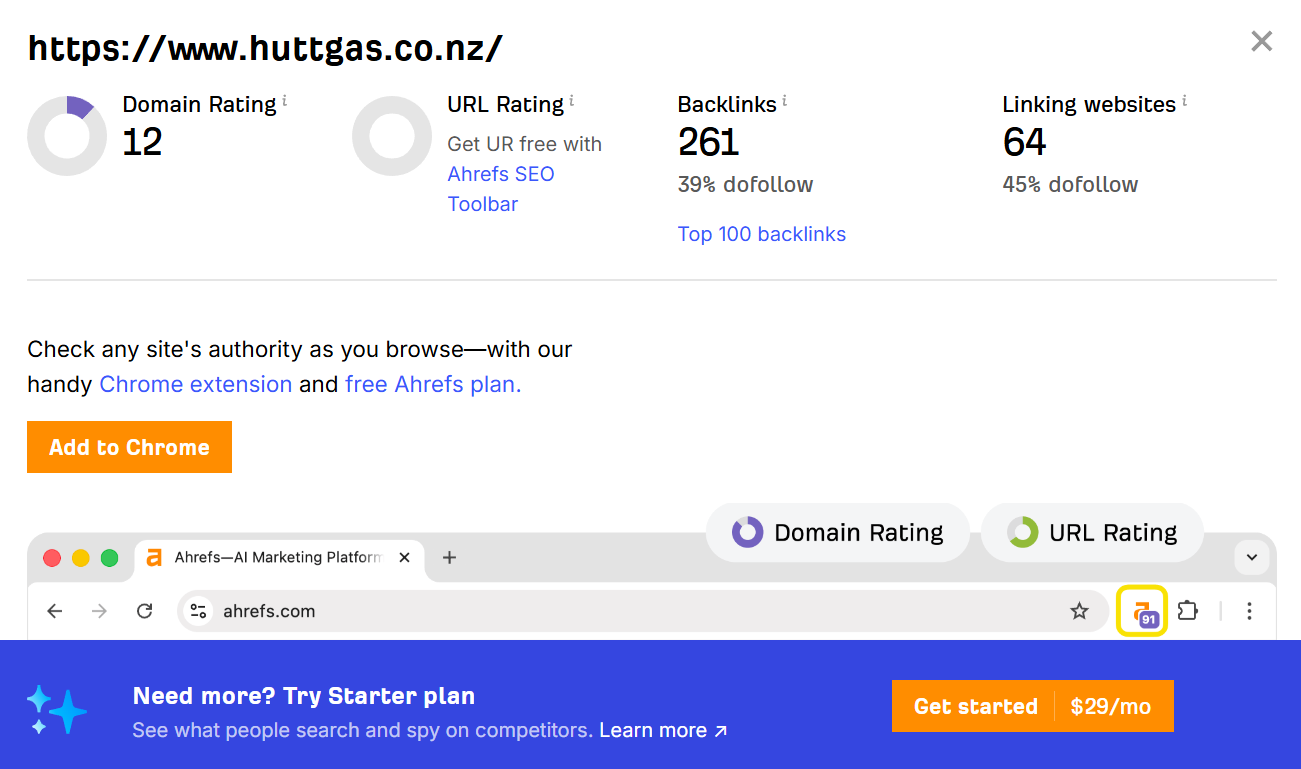
But don’t stop at the number. Check whether the site has real organic traffic. A high DR with zero visitors is a red flag. You want sites that real people actually read.

Tools like Ahrefs’ Site Explorer or SEMrush’s Traffic Analytics can give you a rough idea of how much organic traffic a site gets. If the traffic has been declining sharply, that could mean Google has already devalued the site.
Spot the Red Flags
Avoid sites that:
- Exist primarily to sell guest post placements
- Have “write for us” links plastered across every page
- Publish dozens of guest posts from random, unrelated authors with no editorial quality
- Have no real engagement (no comments, no social shares, no evidence of a real audience)
- Charge a fee for “editorial review” or “publishing costs” with no real editorial standards
79% of editors say guest content is too promotional. If a site publishes that kind of content without filtering it, the site itself is probably not worth your time.
How to Write a Guest Post Pitch That Gets Accepted
The pitch is everything.
Here’s the reality most people don’t think about: high-authority sites accept only 5–10% of guest post pitches.
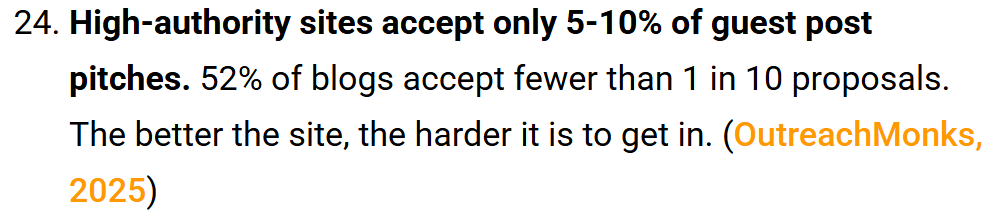
Hundreds of people are pitching the same sites you are. If your email doesn’t stand out in the first 30 seconds, it gets deleted.
This is where most guest posting efforts die. Not because the person can’t write. Because their pitch looks like everyone else’s.
Research the Site Before You Pitch
Before you write a single word, spend time on the site. Read their recent posts. Understand their audience. Notice what topics they’ve covered and what they haven’t.
Then reference something specific in your pitch. Mention a recent article. Explain how your proposed topic fills a gap in their existing content. This immediately separates you from the 90% of pitchers who clearly haven’t read a single page on the site.
Propose a Topic They Need
Don’t pitch what you want to write about. Pitch what their audience needs.
Use Ahrefs’ Content Gap tool or simply browse their blog to identify topics they haven’t covered well. Then frame your pitch around filling that gap.
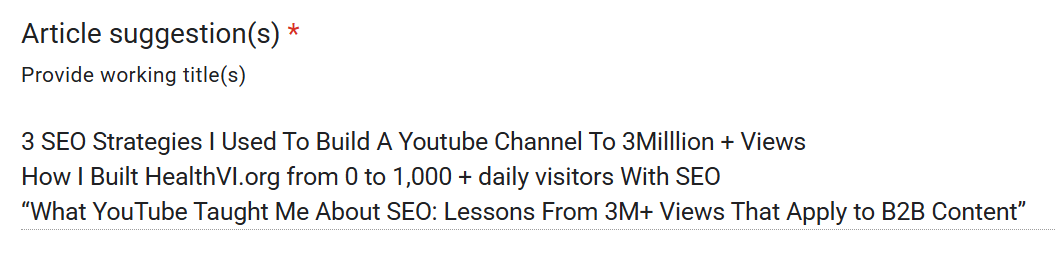
For example, instead of pitching “I’d like to write about SEO” to Story Chief, I pitched an article about how I grew a Youtube Channel to over 3 million video views with SEO:
Keep the Email Short
Your pitch email should be short, specific, and easy to say yes to. Here’s what to include:
- Who you are (one sentence — not your life story)
- What you want to write (specific topic and angle)
- Why it fits their site (reference their content, show you’ve done your homework)
- A brief outline (2–3 bullet points so they can see the structure)
- A link to your previous work (proof you can actually write)
Keep it under 150 words. If the editor has to scroll, you’ve already lost them.
What a Good Pitch vs a Bad Pitch Looks Like
Bad pitch:
“Hi, I’m a marketing expert and I’d love to write a guest post for your blog. I can write about SEO, content marketing, or social media. Let me know if you’re interested!”
This is vague, generic, and gives the editor nothing to work with. It screams mass email.
Good pitch:
“Hi [Name], I read your recent article on content strategy for small businesses.
I noticed you haven’t covered how NZ service businesses can use case studies to build trust and generate enquiries.
I’d like to write a practical guide on that topic, covering how to structure a case study, where to publish it, and how to use it in your sales process.
Here’s a recent article I wrote on a similar topic: [link].
Would this be a good fit for your blog?”
This is specific, researched, and clearly useful. It shows the editor exactly what they’d be getting.
Follow Up Once
Editors are busy. If you don’t hear back within five to seven days, send one follow-up.
Keep it short: “Just checking if my pitch landed in your inbox. Happy to adjust the topic if something else would be a better fit.”
One follow-up is fine. Two is pushy. Three is spam.
How to Write a Guest Post That Gets Published
Once your pitch is accepted, deliver content that exceeds expectations. That’s how a one-off placement turns into an ongoing relationship.
Follow Their Guidelines Exactly
If the site has editorial guidelines, follow them to the letter. Word count, formatting, image requirements, linking rules, tone. Every detail matters.

Editors receive content from guest contributors all the time. The ones who follow the guidelines make their job easy. The ones who don’t create extra work and rarely get invited back.
Write for Their Audience, Not Yours
Most guest posts fail because they read like a sales pitch. The editor can see it. The readers can see it. And it almost never gets published again.
Your guest post should help the reader solve a problem.
If you do that well, the reader will naturally want to learn more about you. The backlink in your bio or within the content takes care of the rest.
Place Your Link Naturally
Your link should fit naturally within the content. It should reference something genuinely relevant, not be forced in for the sake of SEO.
When I wrote my guest post for BizWin, I linked to my Local SEO guide because it directly supported the point I was making.
The editor didn’t have to question it because it made sense in context.
Avoid exact-match anchor text like “best SEO company NZ.” Use natural phrasing that flows with the sentence. Google’s algorithms are more than sophisticated enough to flag unnatural link placement.
Deliver On Time
Deliver your draft on time or early. Proofread it twice. Make it publication-ready so the editor doesn’t have to clean up your work.
The easier you make the editor’s job, the more likely they are to publish it quickly and invite you to contribute again.
What to Do After Your Guest Post Is Published
Publishing isn’t the finish line. There are specific steps you should take to maximise the value of every guest post.
Promote the Post
Share the published guest post on your own social media channels.
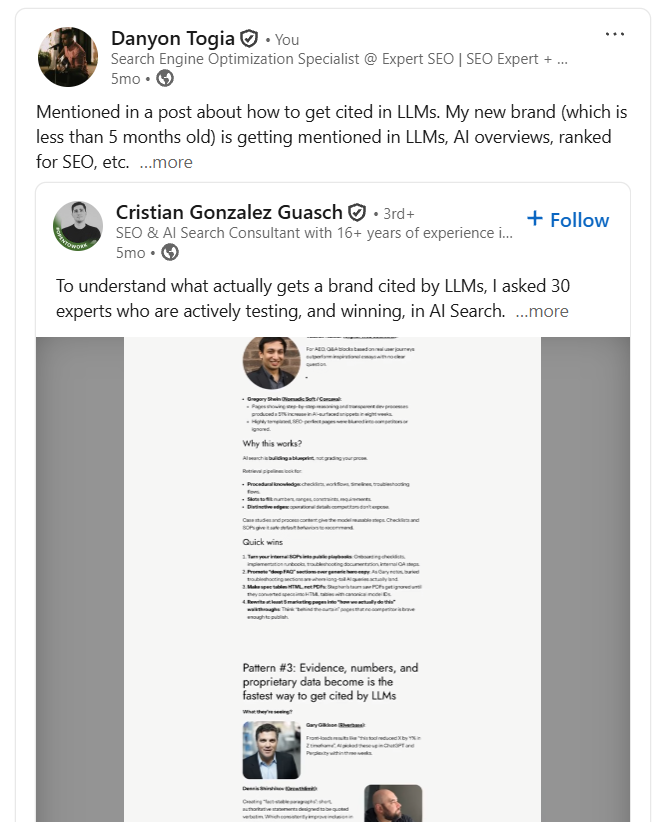
Link to it in your email newsletter if you have one. The more engagement the post gets, the happier the editor is, and the more likely they are to work with you again.
Track the Backlink
Once the post is live, check the link. Is it dofollow or nofollow? Is it pointing to the right page? Is it still live a month later?
Use Ahrefs or Google Search Console to monitor incoming backlinks.
Sometimes links get removed during site redesigns or content updates. If that happens, a polite email to the editor can usually get it restored.
Nurture the Relationship
Thank the editor. Engage with the post if it has comments. Share their other content occasionally.
Guest posting is a relationship game, especially in New Zealand’s smaller market.
One good relationship can open the door to multiple placements over time. The people who treat it as a transactional one-off miss the biggest benefit.
Link Back From Your Own Site
Where it makes sense, link to your guest post from your own website.
This sends authority to the guest post, which can improve its rankings and drive more referral traffic back to you.
It’s a simple move that most people forget, and it makes your guest post work harder for longer.
Guest Posting Mistakes That Waste Your Time (or Hurt Your SEO)
These are the mistakes that either waste your effort or actively damage your rankings.
Sending generic mass emails. If your pitch could be sent to any site without changing a word, it’s not good enough. Personalisation isn’t optional.
Pitching topics the site has already covered. This tells the editor you haven’t even looked at their blog. Two minutes of research prevents this.
Writing self-promotional content. The majority of editors say guest content is too promotional. Write to help the reader, not to sell your service.
Targeting sites based on authority score alone. A high DR means nothing if the site has no real traffic, no real audience, and publishes anything from anyone. Relevance and legitimacy matter more.
Using exact-match anchor text. Linking with phrases like “best SEO agency Hamilton” looks unnatural and can trigger spam signals. Use natural phrasing instead.
Buying cheap guest posts from link farms. These sites are known to Google. The links carry minimal value and can create long-term risk.
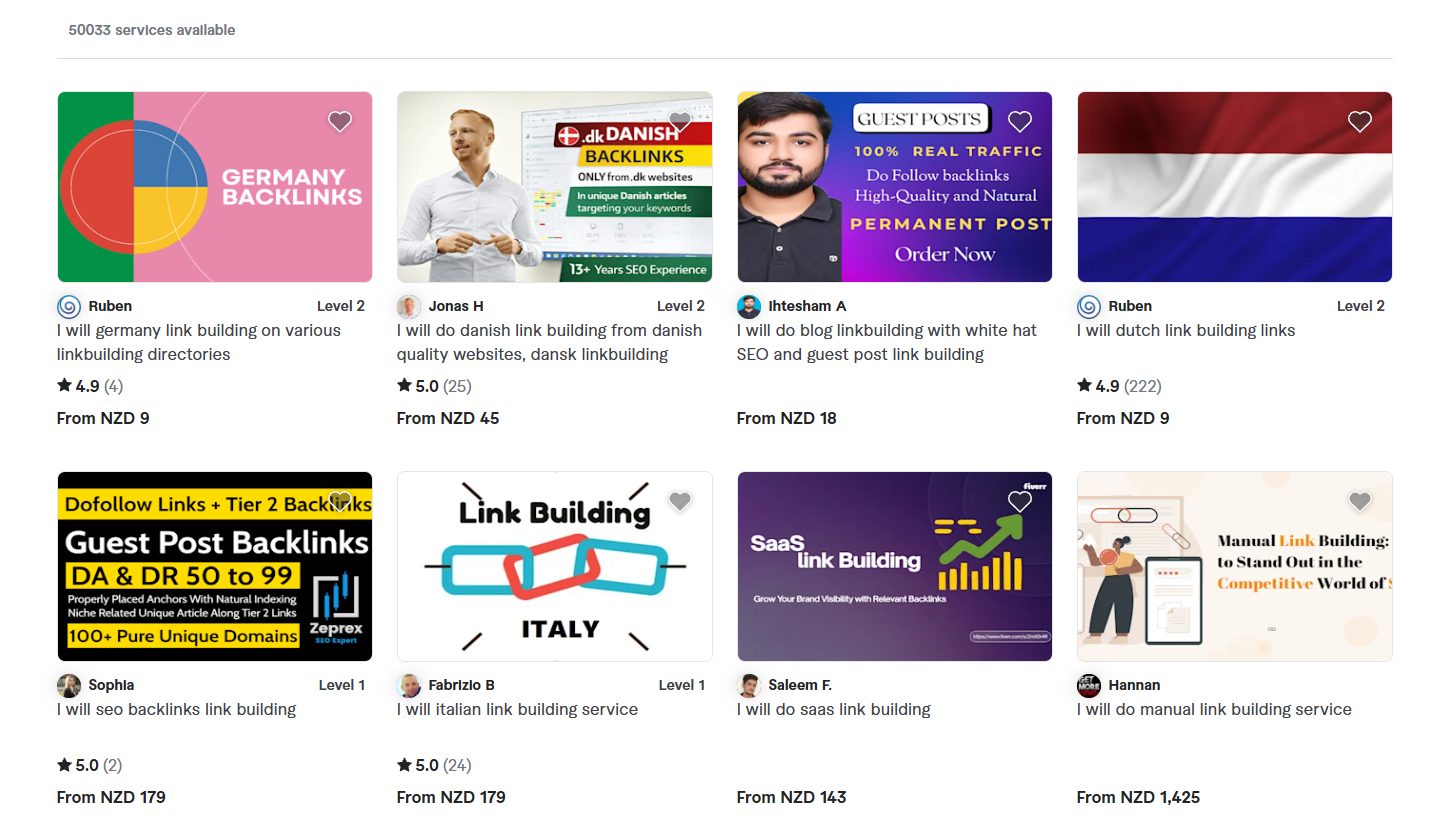
A few earned placements from relevant sites will always outperform dozens of purchased links from low-quality directories.
Giving up after a few rejections. Rejection is normal. Even strong pitches get turned down. It doesn’t mean your approach is wrong. It means you need to keep going.
Is Guest Posting Worth It in 2026?
Yes. But only if you go in with realistic expectations about time, effort, and results.
The Time Investment Is Real
Guest posting is not quick. Between researching sites, crafting pitches, writing the content, and handling revisions, a single guest post can take 10 to 15 hours from start to finish.
Most of that time goes into research and pitching, not writing. This is the 80/20 reality of guest posting. 80% of the work happens before you write a single word of the article.
The Acceptance Rate Is Low
You may need to send 10 to 20 quality pitches to land two or three placements. High-authority sites accept only a few pitches they get. That’s normal.
The key word there is “quality.” Twenty well-researched, personalised pitches will outperform a hundred generic ones every time.
The Payoff Compounds
A few high-quality guest posts from relevant sites are worth more than dozens of low-quality placements.
Each one builds your backlink profile, strengthens your authority, and makes the next pitch easier because you now have proof of published work on reputable sites.
In New Zealand’s smaller market, the relationship aspect is even more important. One good connection can lead to multiple placements over time. Networks overlap. Editors talk to each other. A strong reputation opens doors that cold outreach never will.
When It Makes Sense
Guest posting makes sense when you have a solid website with content worth linking to, you can commit the time to do it properly, and you’re willing to play the long game.
When It Doesn’t
If you have nothing worth linking to on your own site, guest posting won’t help much. Build your content marketing foundation first. Then start earning links to it.
If you’re looking for instant results, guest posting isn’t the answer either.
The SEO impact typically takes three to six months to show up in rankings. Referral traffic can be immediate, but the real value builds over months, not days.
When to Do It Yourself vs Work With an SEO Expert
You’ve got the full process now. From here, you’ve got two clear paths.
Option 1: Do it yourself. Follow the steps in this guide, invest the time in research and outreach, and start building relationships with relevant publishers. It works. Just expect a learning curve and a significant time commitment.
Option 2: Work with an SEO expert. If you want faster results and a proven system, you can outsource your link building and guest posting to someone who does this every day. You get strategy, execution, and ongoing results without having to figure everything out yourself.
We help businesses across New Zealand build high-quality backlinks through guest posting and other link building strategies, including:
- SEO Agency Auckland
- SEO Agency Hamilton
- SEO Agency Tauranga
- SEO Agency Wellington
- SEO Agency Christchurch
- SEO Agency Queenstown
If you’re happy to DIY, use this guide and work through it properly. If you want it done right and done faster, that’s where we come in.
Guest Posting in NZ: FAQ
What is guest posting in simple terms?
Guest posting is writing an article for someone else’s website. You provide useful content for their audience, and in return, you usually get a link back to your own site and exposure to their readers.
Is guest posting real or fake?
It’s real and effective when done properly. The bad reputation comes from a large industry of low-quality marketplaces that sell links to anyone willing to pay. Earned guest posts on real sites are a completely different thing.
Do you pay for guest posts?
Some sites charge a publishing fee, but the best guest posting opportunities are earned, not bought. Paid placements on low-quality sites carry SEO risk and deliver diminishing returns. Focus on earning placements on sites with real audiences and real editorial standards.
How many guest posts do you need?
Quality matters far more than quantity. Even three to five strong placements on relevant, authoritative sites can make a meaningful difference to your rankings and authority. Don’t chase volume. Chase relevance.
How long does it take to see results from guest posting?
Referral traffic can start immediately. SEO impact typically takes three to six months to show up in rankings, as Google processes the new backlinks and reassesses your site’s authority.
What are guest posting mistakes to avoid?
The biggest mistakes are sending generic pitches, writing promotional content, targeting irrelevant sites, and buying links from guest post marketplaces. Focus on relevance, quality, and genuine value.