

The phrase “google seo” gets about 150 searches a month in New Zealand.
Type it in yourself and almost everything on the first page is written for a market two hundred times that size — American guides, built for American numbers, telling you to chase keywords that don’t exist here.
You’ve been told you need SEO. Fair enough. But nobody’s told you what it actually costs in Aotearoa, how long it really takes, or whether it’s even worth doing now that Google answers half its own questions with AI.
That’s what this guide is for.
Plain English, no jargon, put through a New Zealand lens — and honest about the one thing that’s quietly changed the whole game: SEO used to be about ranking #1. Now it’s about being the business the AI recommends.
Key Takeaways
- What it is: Google SEO is the practice of improving your website so Google shows it higher in unpaid (“organic”) search results — earning free, targeted traffic from people already looking for what you sell.
- It isn’t one thing. There are three Google surfaces to rank in: the blue links, Google Maps (your Business Profile), and the new AI Overviews. Different rules for each.
- You can’t pay Google to rank organically. That’s Google Ads — a different product that stops the second you stop paying.
- In NZ, expect roughly NZ$1,200–$5,000/month for done-for-you SEO, or $0 if you do it yourself with Google’s free tools. It usually takes three to six months to see real movement.
- SEO isn’t dead — the target moved. With AI answering more queries directly, the win is being the source those answers cite, not just the tenth blue link.
- The fundamentals that rank you are the same ones that get you cited: genuinely helpful, well-structured, trustworthy content.
What Is Google SEO
Google SEO is the practice of improving your website so Google ranks it higher in organic search results — the free listings, not the ads.
The goal is simple: pull in targeted visitors who are already searching for what you do, without paying for every click.
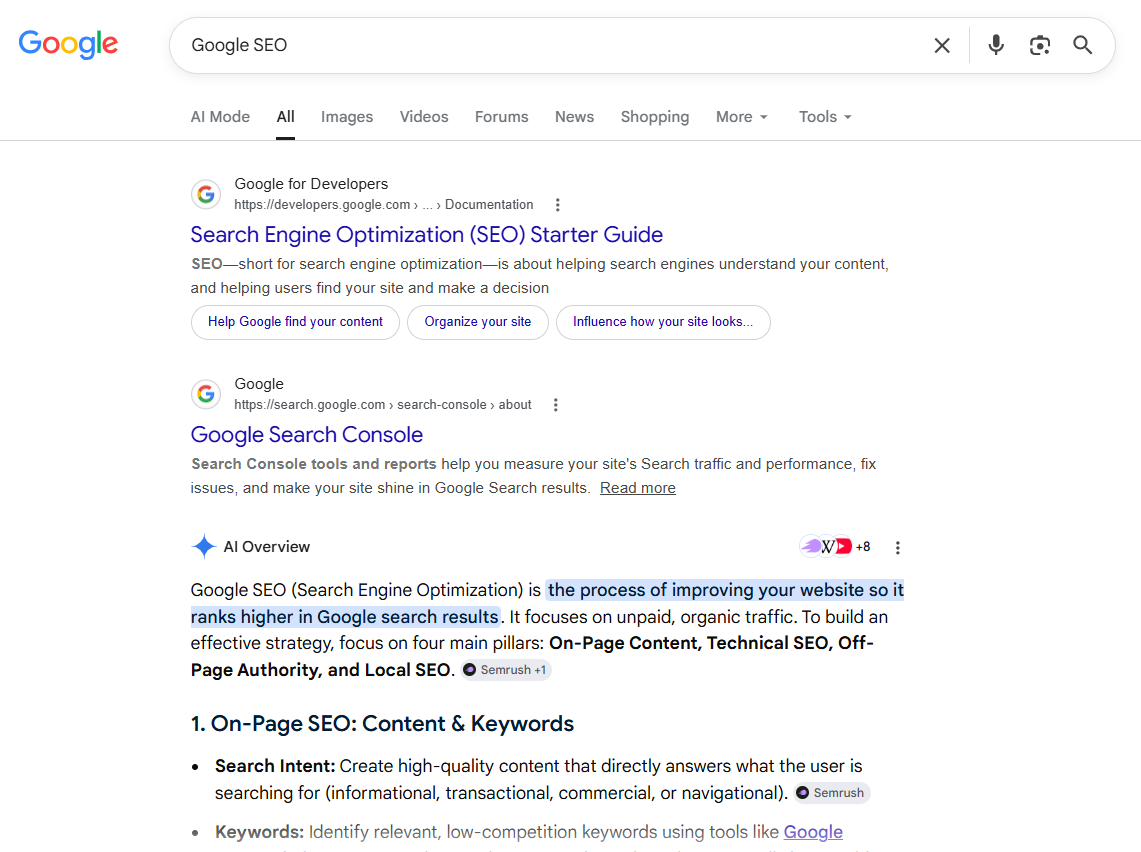
Google’s own AI Overview says the same thing back — “the process of improving your website so it ranks higher in Google search results” — and lists the four pillars it runs on.
Here’s the part the other guides skip.
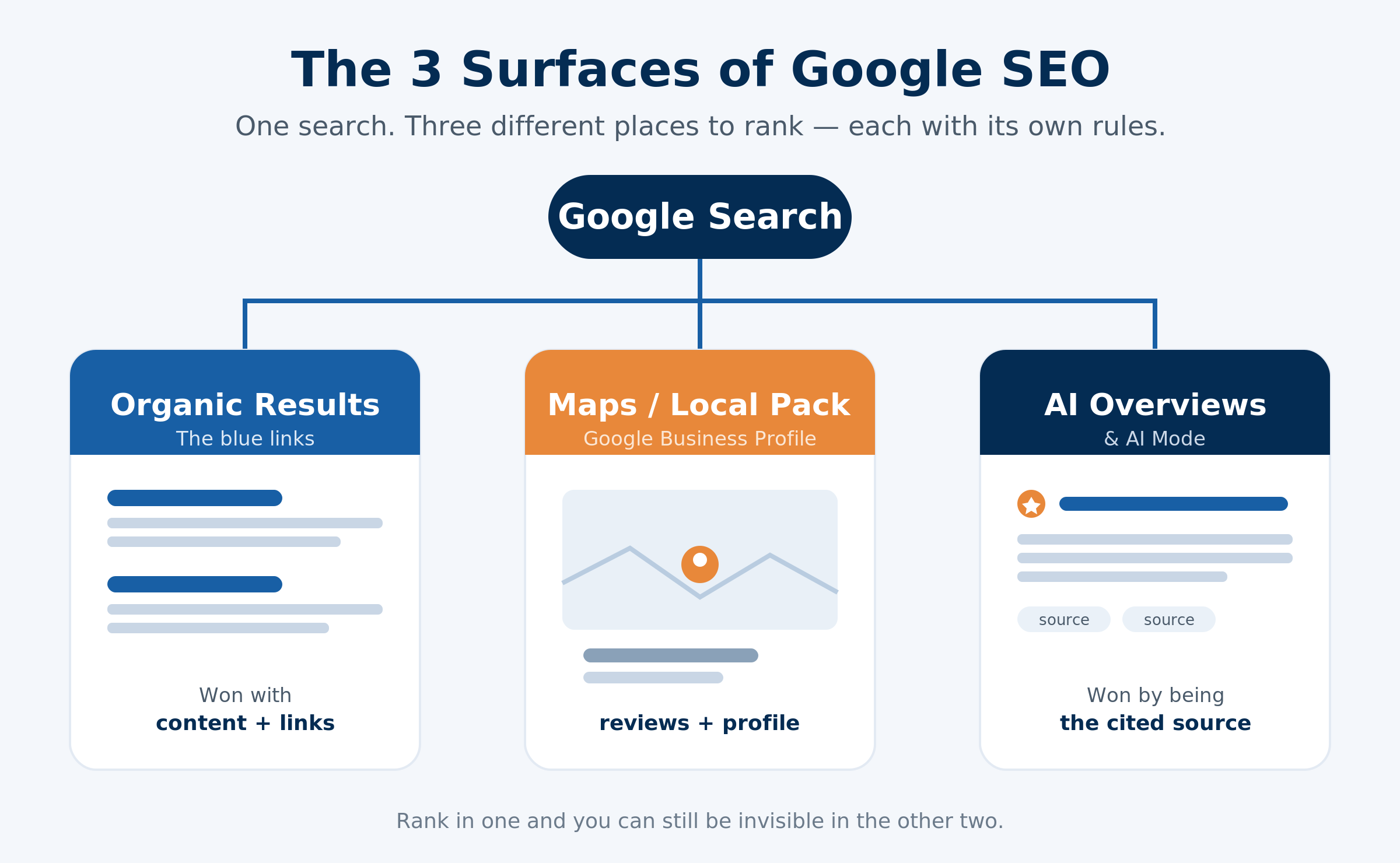
“Google SEO” isn’t one thing. It’s three different surfaces, each with its own rulebook, all sold to you under one word.
The blue links — the classic organic results. This is what SEO actually is to most people.
Google Maps and the local pack — the little box of three businesses with the map, powered by your Google Business Profile. Different signals entirely.
AI Overviews and AI Mode — the AI-written answer sitting above everything else, pulling from sources it decides to trust.
Rank in one and you might be invisible in the other two. A plumber can own the Maps pack and never appear in an AI answer.
A blog can get cited by the AI and never crack the top three blue links. When someone says “I want to do SEO,” the first real question is: which surface?
How Google SEO Works
Google works in four moves: it crawls the web to find pages, indexes them in a giant database, ranks them against your search, then serves the results — now often with an AI answer stapled on top.
Crawling. Google sends out bots that follow links across the web, discovering pages the way you’d wander a city by walking every street that connects to the last one.
Indexing. Pages it finds get filed away in a massive database — Google’s index. If you’re not in the index, you can’t rank. Full stop.
Ranking. When someone searches, Google sifts the index for the pages it reckons best answer that exact query, and orders them.
Serving. It shows you the results. And increasingly, it reads those results for you — the AI Overview summarises the top sources before you’ve clicked a thing.
That fourth step is the new one. The older guides on this topic still stop at “rank,” because they were written before Google started answering questions itself. Getting the first three steps right gets you into the running. The fourth is where the game has moved.

Why Google SEO Matters for a New Zealand Business
Google SEO matters for an NZ business — but not the way the American guides frame it.
Here’s the maths nobody on that first page will show you.
“Google seo” does around 150 searches a month here. Globally it’s over 40,000. The advice you’re reading was built for the 40,000 — chase the head term, out-write everyone, win the big keyword. Run that playbook in a market this size and you’ll spend months fighting over scraps.

Low volume isn’t the problem people think it is. NZ numbers just look tiny — plenty of genuinely valuable, ready-to-buy keywords here sit at 10 to 100 searches a month.
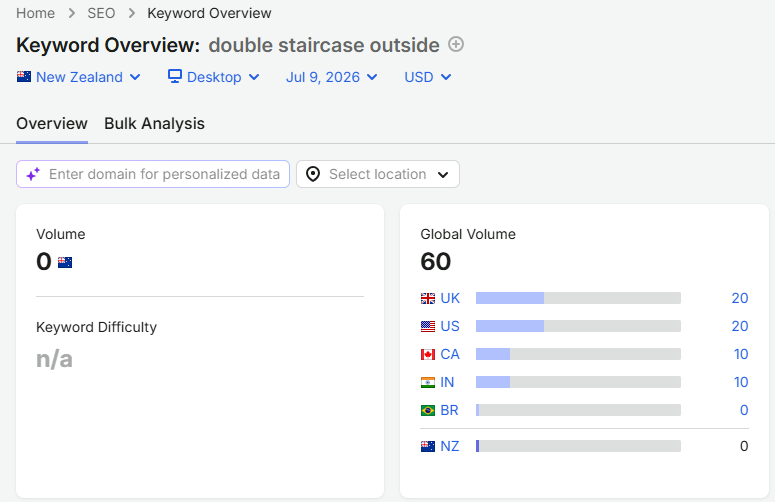
So the real game here isn’t the head term. It’s owning the whole cluster around it and being the name that gets recommended — in the blue links, in the map pack, and in the AI answers.
And it works fast in this market. Our SEO company is under a year old, on a brand-new domain, and it already ranks for 233 keywords worth about $3,500 a month in traffic — competing against agencies that have been at it for a decade.
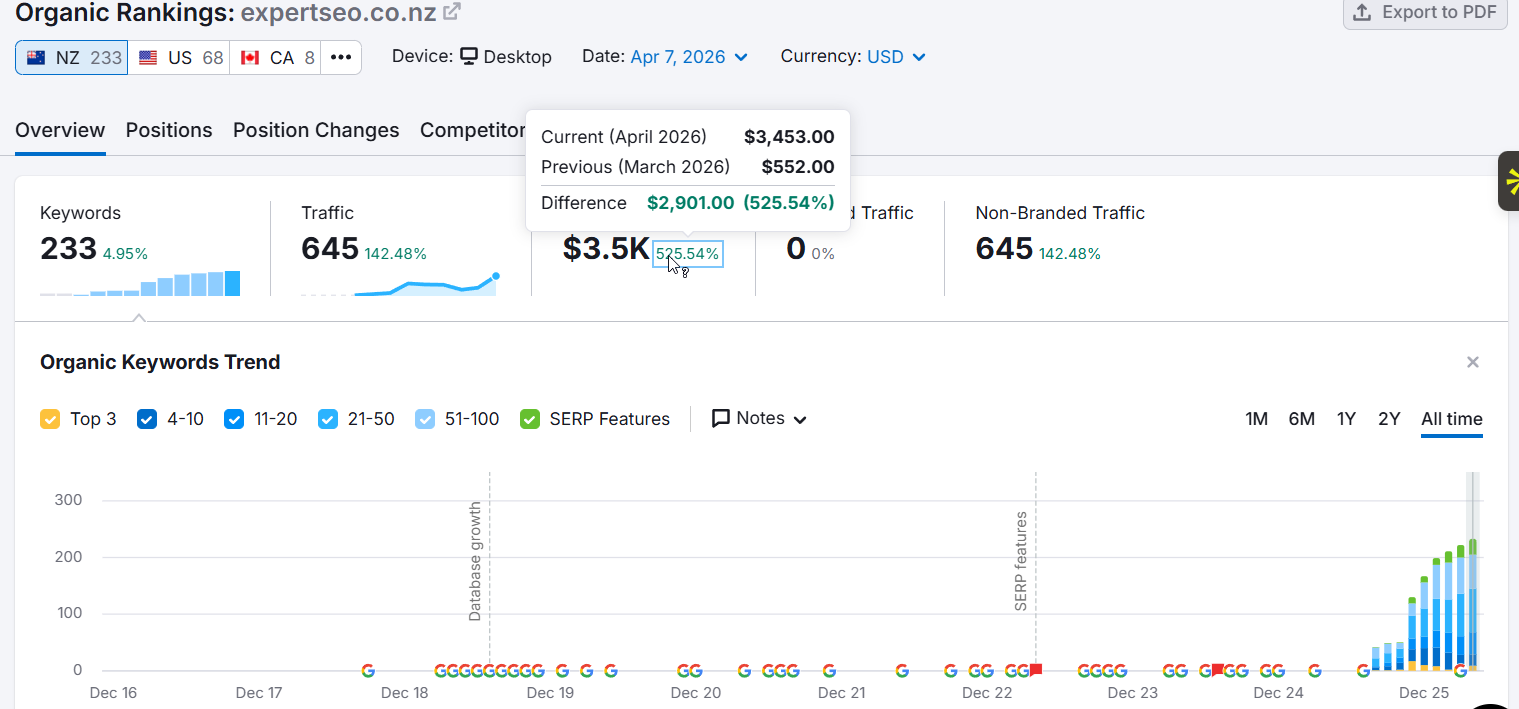
Most NZ agencies can’t show you that about their own site. That’s the whole point of doing this properly.
The 4 Types of Google SEO
Every SEO task fits into one of four buckets. Learn these and the rest of the jargon stops being scary.
On-page SEO — your content and how it’s put together. The words on the page, the titles, the headings, whether the page actually answers the question.
Off-page SEO — your authority. Mostly backlinks: other websites vouching for you by linking to you.
Technical SEO — your foundations. Can Google crawl the site, does it load fast, does it work on a phone.
Local SEO — your map presence. Your Google Business Profile, your reviews, showing up for “near me” searches. For a lot of NZ small businesses this is the highest-return surface of the lot — a dentist chasing the Auckland map pack lives or dies on it, which is exactly why SEO for Auckland businesses leans so heavily on local. And yes, you can do SEO on your Google Business Profile directly.
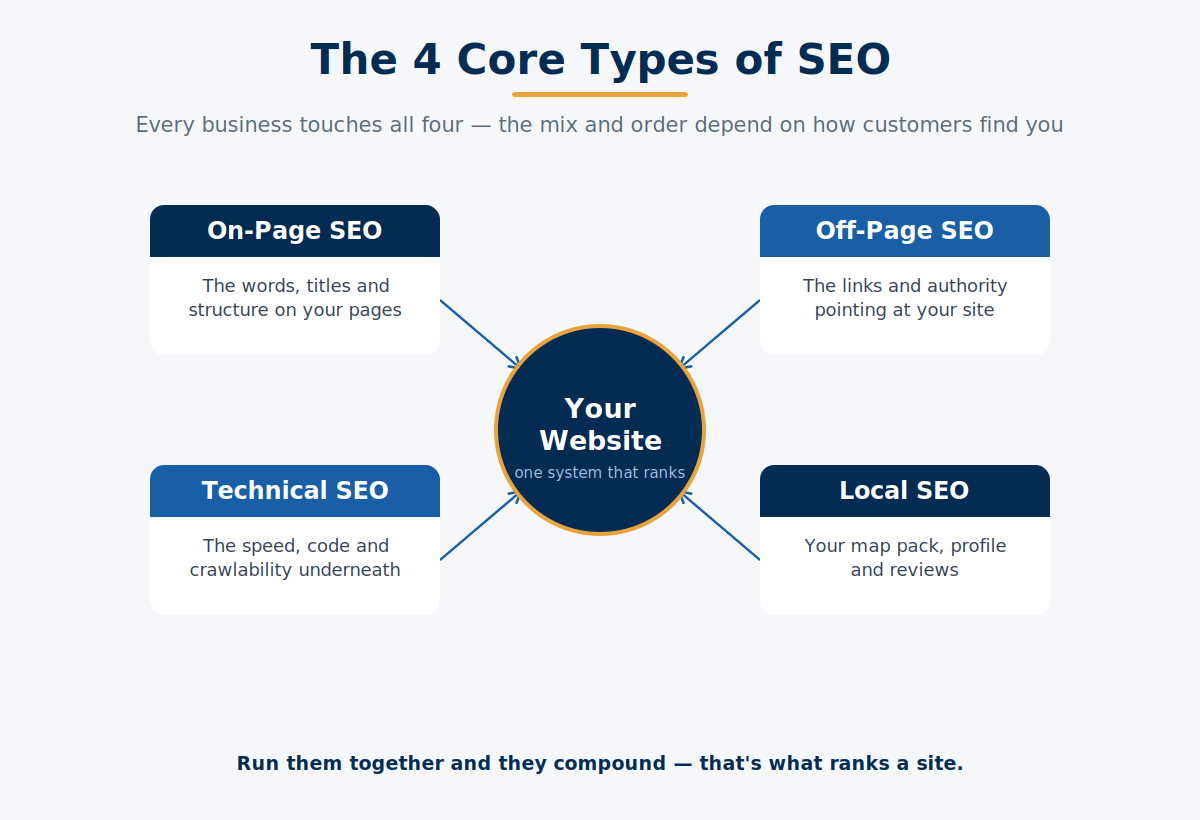
You’ll notice guides can’t even agree on how many “types” there are — some say four, some say fourteen. Don’t get bogged down. Four buckets covers everything that matters.

How to Do Google SEO
Doing Google SEO comes down to five repeatable moves: find what people search, write the best answer to it, put it where Google can read it, earn some trust, and cover the technical basics.
Let’s walk each one.
1. Find the keywords people actually type
You can’t rank for a search nobody makes. So the first job is finding the real phrases your customers use — and checking how many actually search them.
Open Google’s free Keyword Planner (inside Google Ads), type in a seed like “plumber Hamilton,” set the location to New Zealand, and it hands you a list of related terms with rough volumes. That’s your raw demand.
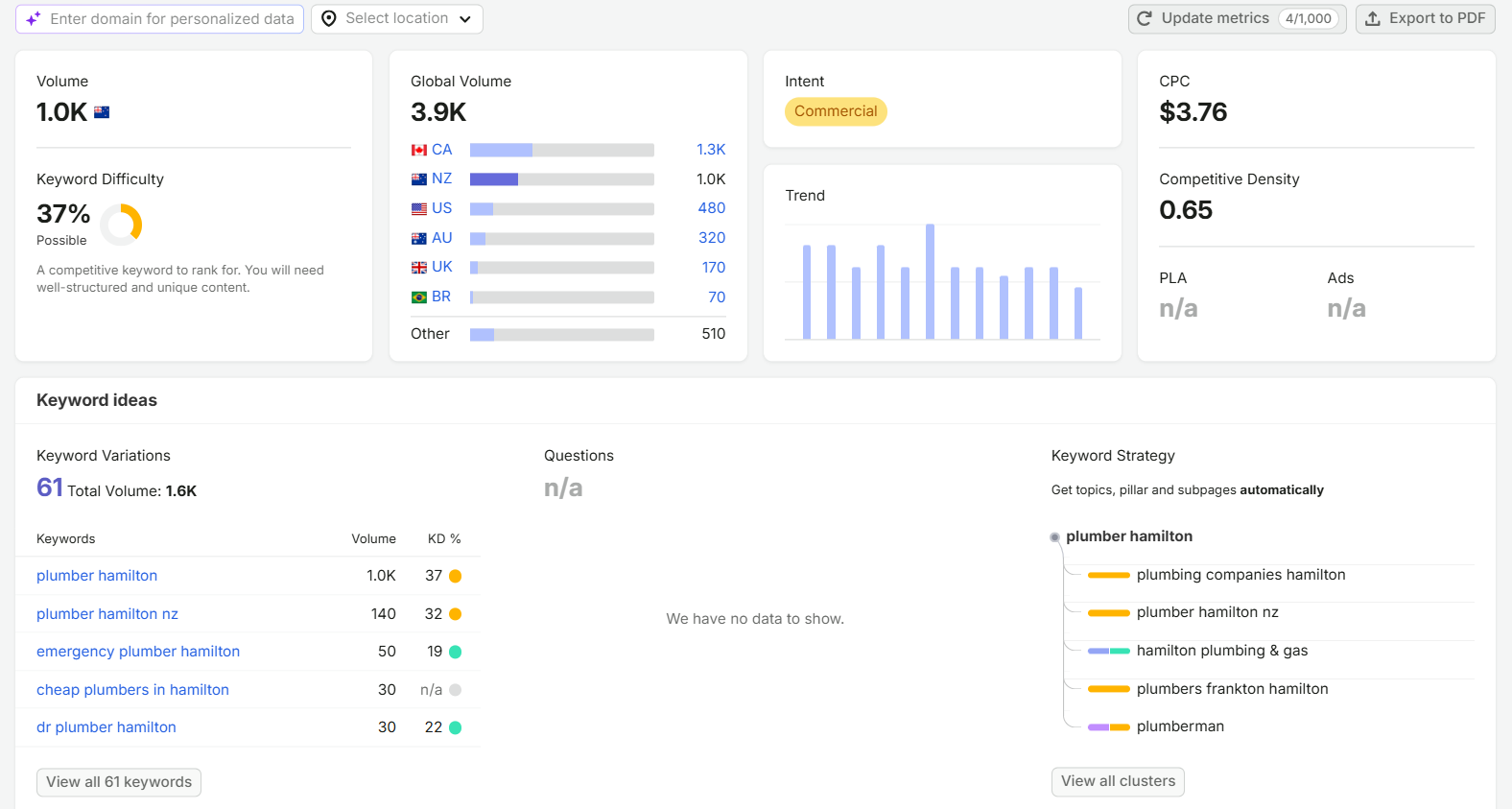
The move here is to write down what you actually sell, in the areas you serve, then let the tool show you the exact wording people use.
Good keyword research is just matching what you offer to what people are already searching.
2. Write genuinely helpful content that matches intent
Once you know the keyword, write the best possible answer to it — better than anything already ranking.
Google’s own quality guidelines lean hard on E-E-A-T: Experience, Expertise, Authoritativeness, Trustworthiness. In plain terms, Google wants content from someone who’s actually done the thing, not spun it up from nothing.

This is also why “just get ChatGPT to write it” doesn’t quietly work in the background. Google’s guidance explicitly warns against low-quality, generic AI content. Use AI to help, sure — but the experience, the real examples, the actual answer has to be yours.
3. Get the on-page basics right
On-page is the fastest win in SEO, and it takes minutes. This is on-page SEO: telling Google clearly what the page is about.
The basics that matter most:
- One H1 (the main heading), with your keyword in it.
- A title tag of 50–60 characters, keyword near the front.
- A short, descriptive URL —
/plumber-hamilton/, not/page-id-4471/. - Headings (H2, H3) that break the page into a clear hierarchy.
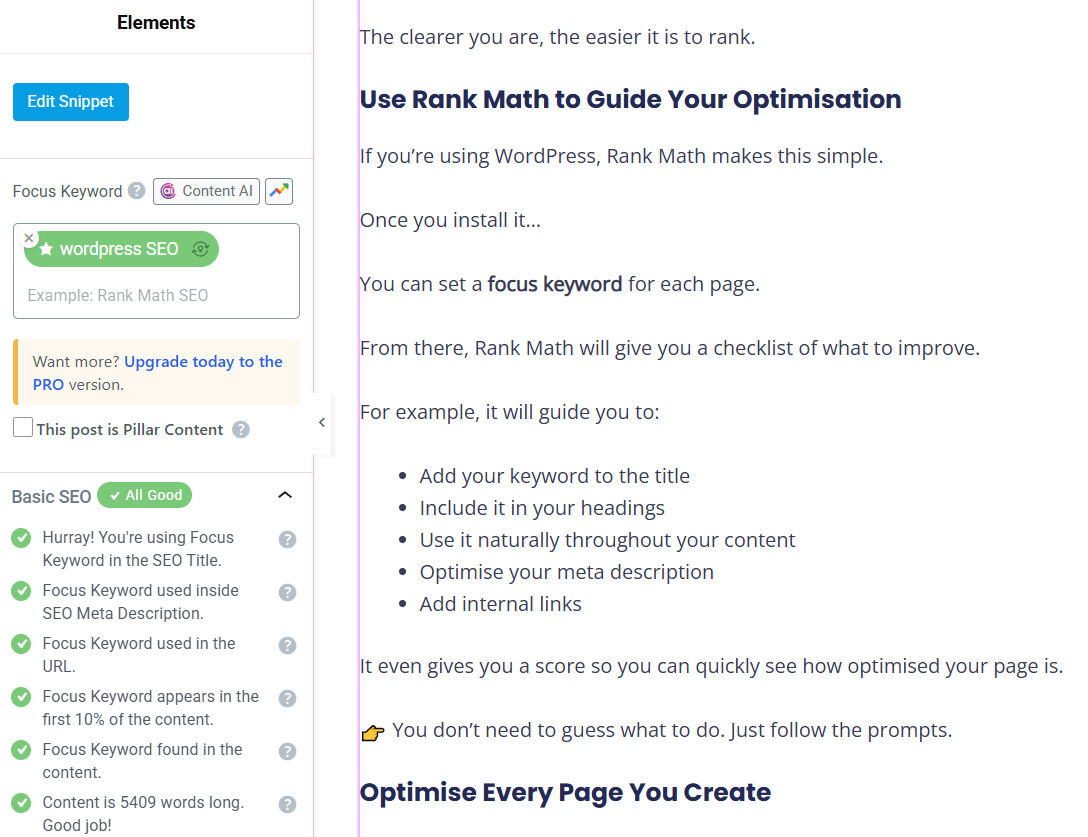
You don’t have to eyeball any of this. A free plugin like Rank Math grades your on-page SEO live as you write in WordPress — it checks your title length, whether the keyword’s in the right spots, your headings and more, then flags what’s missing before you hit publish.
4. Earn a few quality backlinks
A backlink is another website linking to yours. Google treats each one like a vote of confidence — the more good sites vouch for you, the more it trusts you.
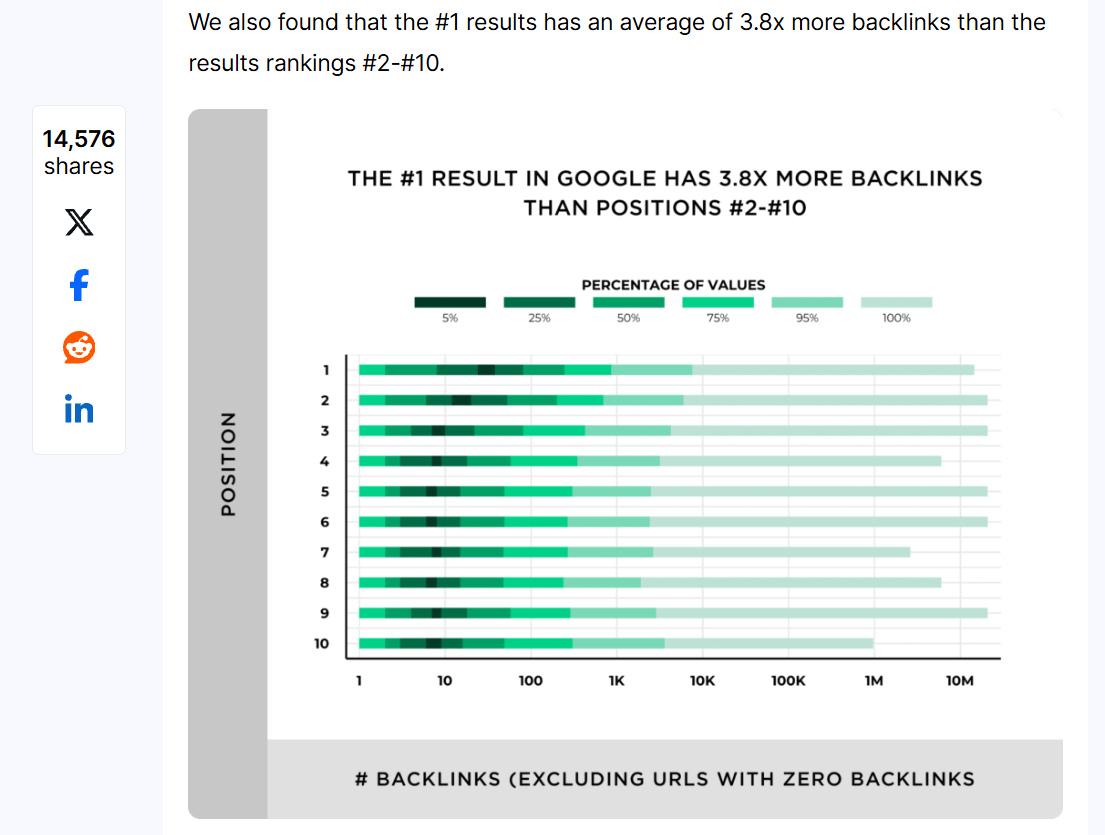
Quality beats quantity, hard. One link from a respected NZ site does more than fifty from junk directories.
One reliable way to earn them is a guest post — you write a genuinely useful article for another site in your world, and it links back to you.
Here’s a real one: a guest post earned this link back to our local SEO guide from another NZ marketer, Leo Zeldenrust at BizWin.
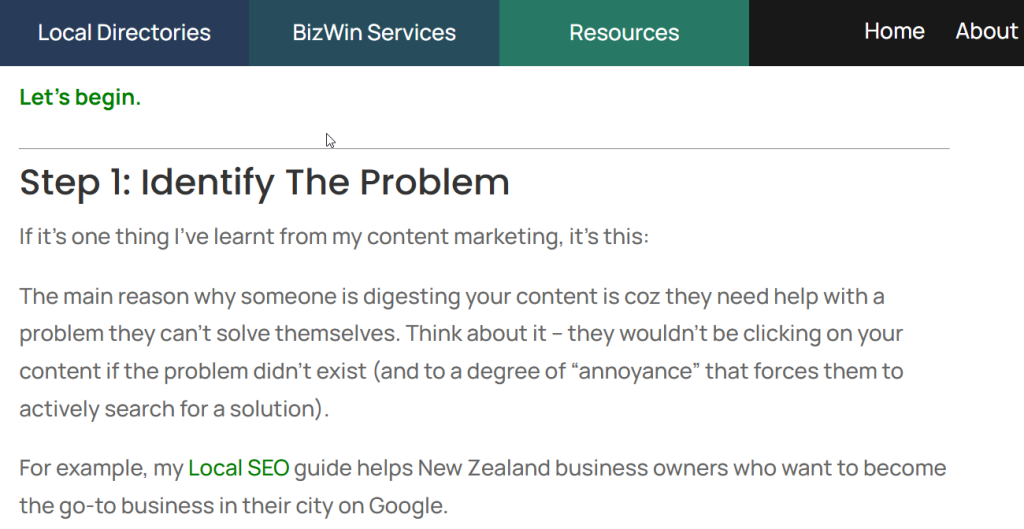
That’s the honest version of earning links: be useful, then get in front of people who’d want to share it.
5. Cover the technical foundations
Technical SEO is checking under the hood. The car can look great and still run rough if the engine’s off — same with a website.
The three that matter most for a small NZ site: it loads fast (especially on mobile), it works properly on a phone, and Google can crawl every page you care about. This is the technical side, and for most sites it’s a handful of fixes, not a rebuild.
Google’s free PageSpeed Insights scores any page and tells you exactly what’s slowing it down — here’s a Wellington dentist’s site run through it.

If you’d rather someone just handle the technical audit and fixes, that’s what an SEO audit is for — but plenty of NZ businesses get the basics sorted themselves.
These are real, learnable moves, not dark magic — the kind of thing behind getting found in Wellington without a big marketing budget.
The Free Google Tools You Actually Need
You don’t need a single paid tool to start. Google gives you the core stack for free.
Google Search Console — the most important one. It shows which searches bring people to your site, which pages are indexed, and any errors Google’s hitting. It’s the closest thing you get to seeing your site through Google’s eyes.

Google Keyword Planner — free keyword volumes and ideas. And no, you don’t need to spend a cent on ads to use it — it works fine with an inactive account, you just see volume ranges instead of exact numbers.

PageSpeed Insights — free page-speed scoring, covered above.
Google Business Profile — free, and for a local business it’s the single biggest lever you’ve got. Claim it, fill it in fully, collect reviews.
So when the People Also Ask box asks “is Google SEO free?” — the honest answer is the tools are free. Your time isn’t.
How to Read a Google Search Results Page
The fastest way to understand Google SEO is to read a real results page. It shows you what Google actually rewards — which is rarely the “200 ranking factors” the blogs love to list.
Pull up any search and you’ll see the layout: ads up top, sometimes an AI Overview, maybe a Maps pack, the People Also Ask box, then the organic results, then related searches.
Knowing which SERP features are showing tells you what Google wants for that query before you write a word.
Now here’s the eye-opener. Take a competitive-looking NZ search like “plumber Auckland.” The tools scream difficulty — Ahrefs rates it Hard and reckons you’d need backlinks from around 77 different sites to crack the top ten.
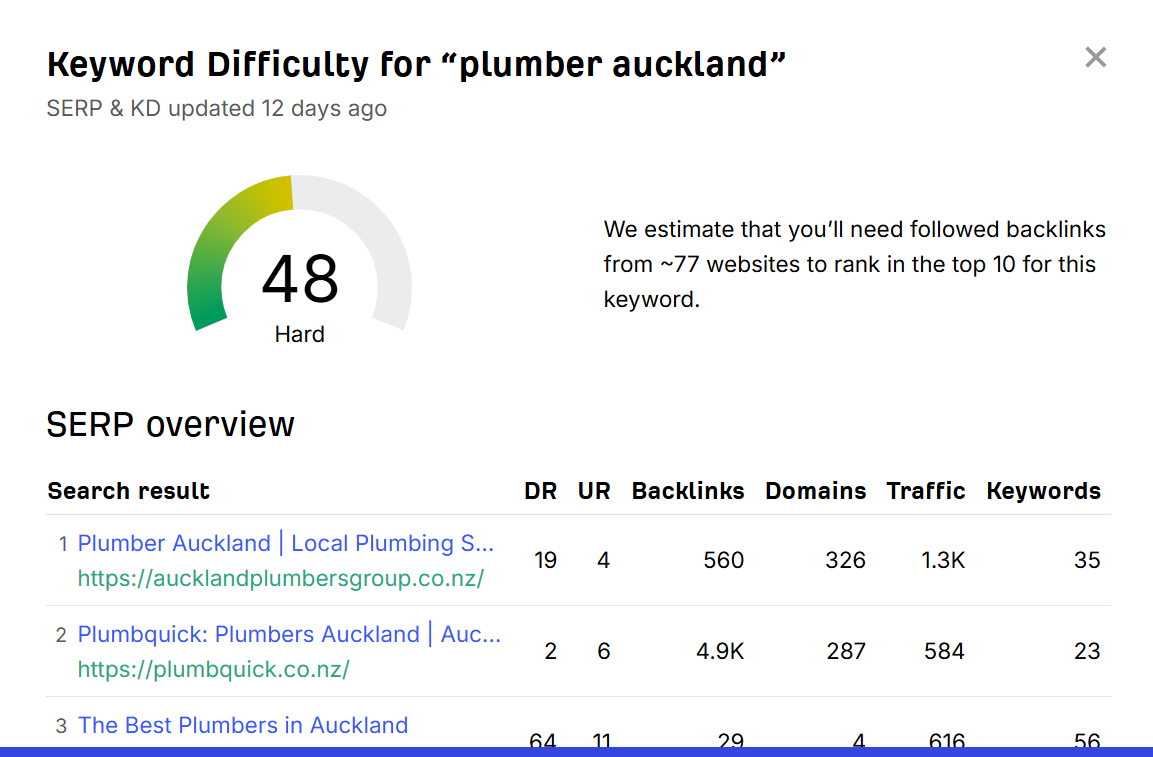
Then you look at who’s actually ranking, and a chunk of them are small local outfits with tiny websites.
The difficulty score was measuring the market’s biggest players, not the businesses you’d really be up against.
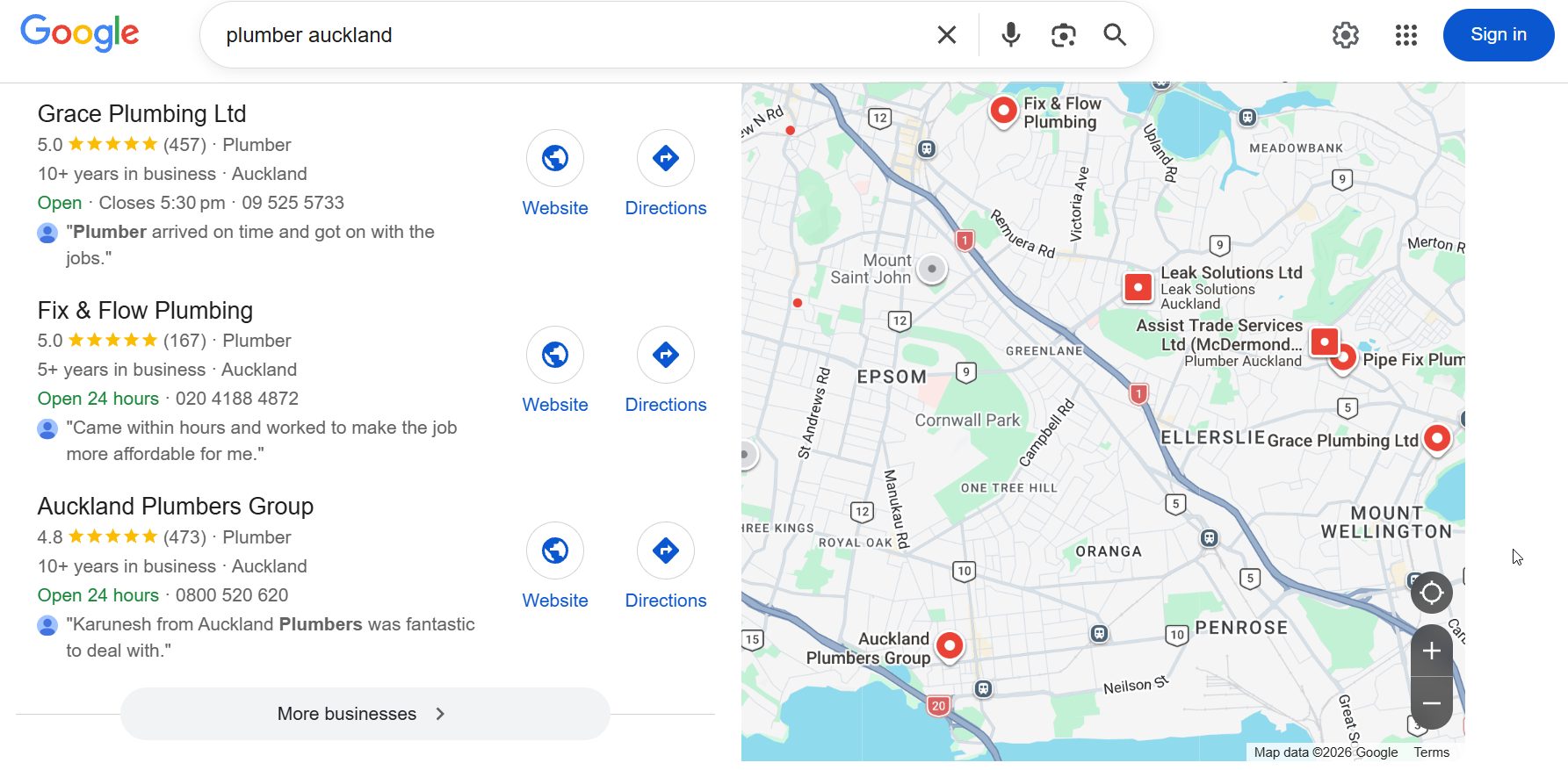
The lesson: you usually need far less authority than the score suggests. The #1 organic result still takes the lion’s share of clicks — around 27.6% — so the top few spots are worth fighting for.
But “Hard” often means “hard to beat the national brands,” not “hard to beat the actual businesses next to you.”

Read the SERP before you write. It’s the highest-value ten minutes in SEO.
Google SEO vs Google Ads
No, you can’t pay Google to rank higher in the organic results. That’s the single most common mix-up in the whole topic.
SEO earns free rankings over time. Google Ads buys instant placement at the top, marked “Sponsored” — and the moment you stop paying, you vanish. Different products, different jobs.
The trade-off is real, though. Ads give you traffic today but cost every click. SEO is a slow burn that keeps paying once it lands — organic leads run about NZ$31 each versus $181 for paid, but you wait months for them.

The answer for a lot of NZ businesses is both, in order: Ads to get leads while you wait, SEO to build the asset that eventually makes the Ads optional. A new business might run ads for the first six months and lean on organic once it’s ranking — that’s exactly how getting found in Christchurch tends to play out.
How Much Google SEO Costs in New Zealand
Nobody ranking for this keyword will tell you the price. So here it is.
- DIY: $0 in tools, plus your time. Google’s free stack does the job if you’re willing to learn.
- Freelancer or consultant: roughly NZ$500–$2,000/month depending on scope.
- Agency retainer: roughly NZ$1,200–$5,000/month for done-for-you work.
Google’s own AI Overview puts the NZ range at about $1,200–$5,000 a month, which lines up with what real agencies here charge.
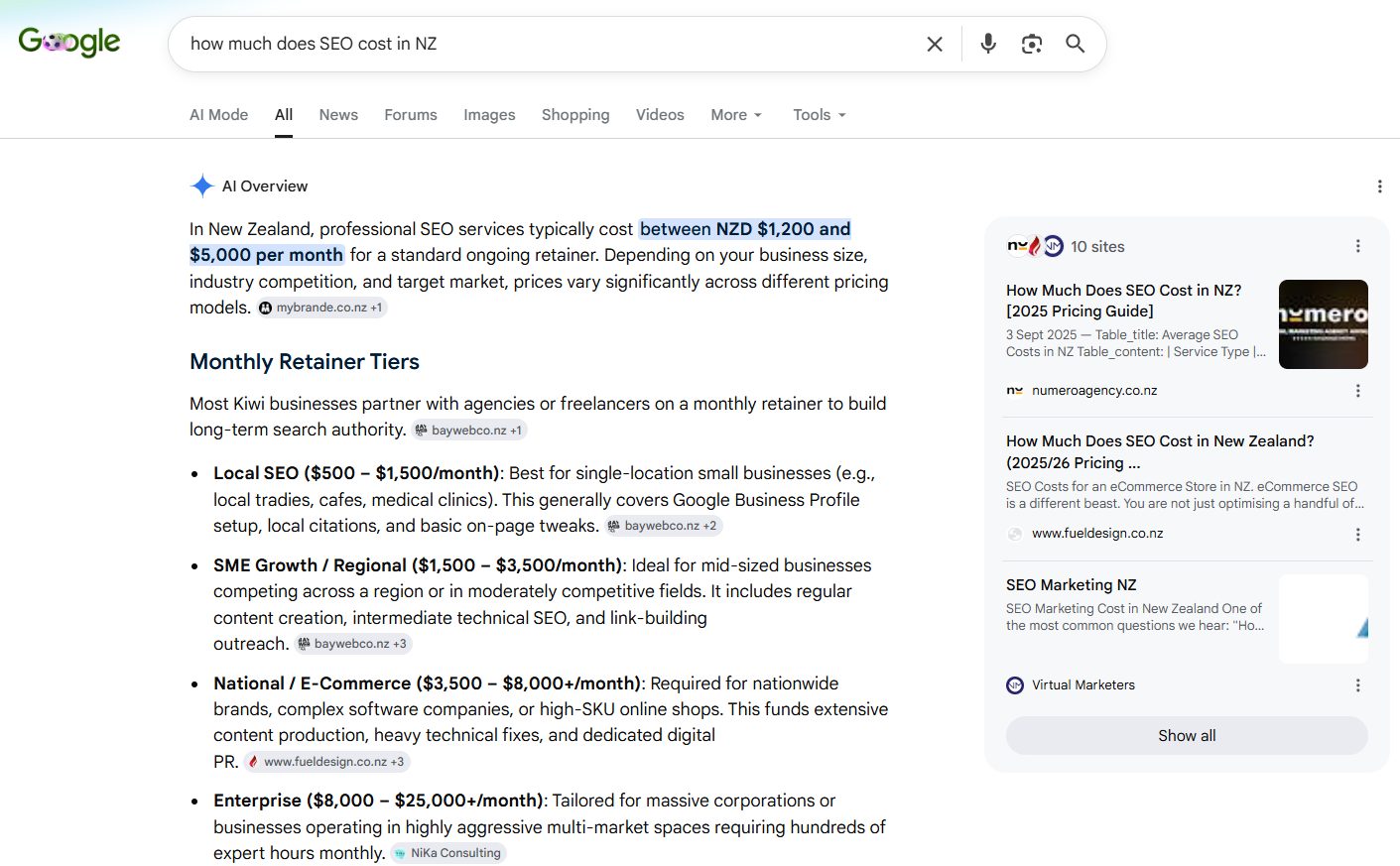
What changes the number: how competitive your market is, how much content and link work it needs, and whether you’re paying for local SEO or a national campaign.
If you’d rather hand the lot over, that’s what done-for-you SEO covers — but there’s no shame in starting DIY and bringing in an SEO consultant once it’s earning.
How Long Google SEO Takes
Google SEO usually shows early movement in about three months and real results in six to twelve. The first stretch feels like nothing’s happening — right up until it does.
That flat patch at the start is normal. Google needs time to crawl, index and trust new content, and trust doesn’t arrive overnight.
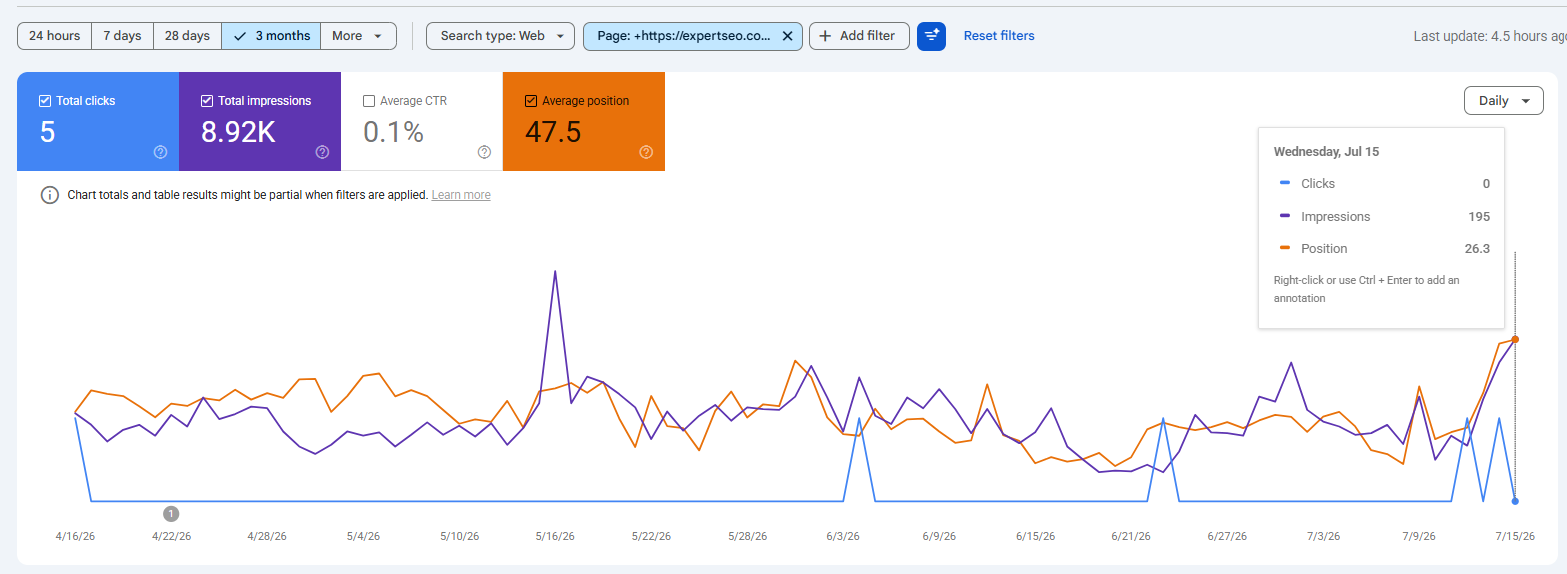
Pages can also jump surprisingly fast once they catch — here’s one of ours climbing from position 52 to 26 in three days.
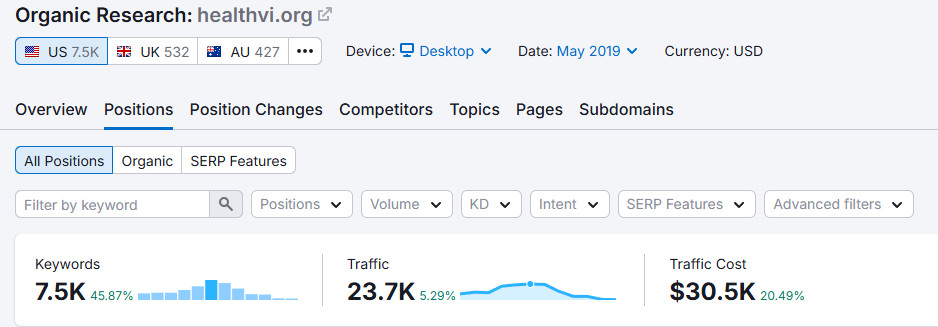
Give it real time and the compounding is the whole reward. I grew a health site, HealthVI, from zero to over 20,000 organic visitors a month by doing exactly this — patiently, over a year.
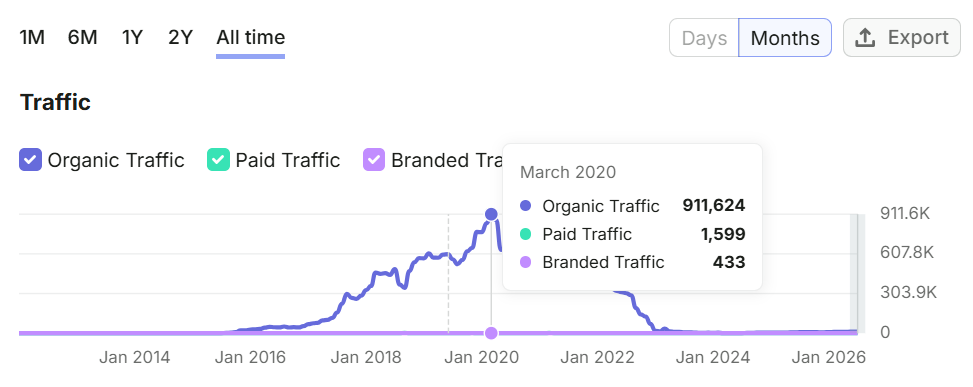
At the far end of the curve, it turns into a serious asset. I handled the content and SEO for one of the most popular sleep sites on the internet — at its peak it pulled 911,624 organic visits a month, ranking for 433,000+ keywords, with 14,000+ sitting in the top three.
That’s the top 0.01% of all websites. Same boring playbook, run for years.
What Google Says You Shouldn’t Focus On
Google literally publishes a list of things not to bother with — and almost no guide passes it on.
Straight from Google’s own SEO documentation, here’s what it says you can stop worrying about:
- Meta keywords tags — dead for over a decade. Google ignores them.
- Keyword stuffing — cramming the same phrase in over and over hurts more than it helps.
- A perfect word count — there’s no magic number. Answer the question fully, then stop.
- Chasing a flawless PageSpeed score — fix the big issues, don’t obsess over the last few points.
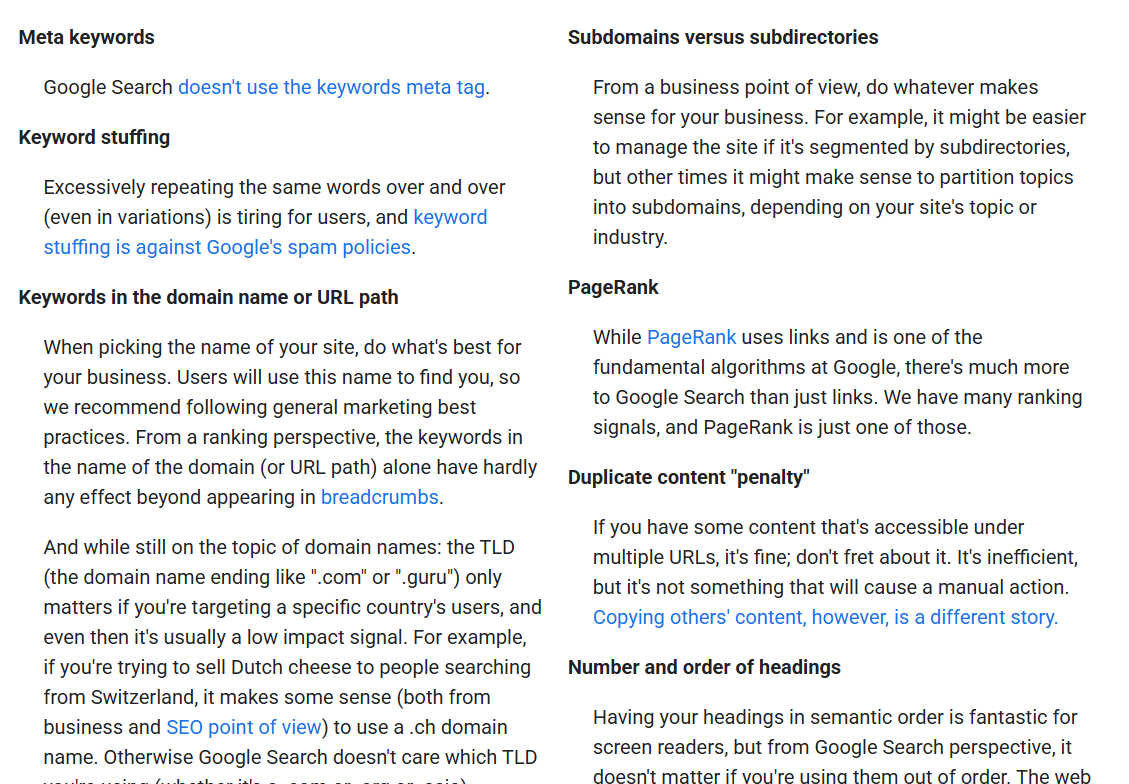
The pattern is clear: Google keeps telling people to stop gaming it and just make the genuinely useful thing. The businesses that listen save themselves a lot of wasted effort.
Is Google SEO Dead in 2026?
Google SEO isn’t dead. The target moved.
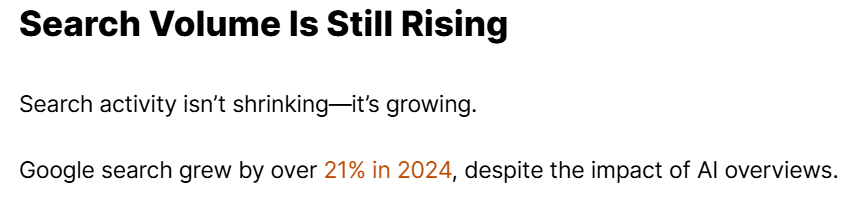
With AI Overviews and AI Mode answering more questions directly, ranking #1 isn’t the whole prize anymore. The new prize is being the source those AI answers quote. And search itself is still growing — Google’s search volume rose over 21% in 2024, AI Overviews and all.
Over half of US adults now use AI tools like ChatGPT, and Google’s AI Overviews reach over two billion people a month. That’s not a reason to quit SEO — it’s the reason to do it, because those answers have to pull their information from somewhere, and that somewhere is ranking pages.
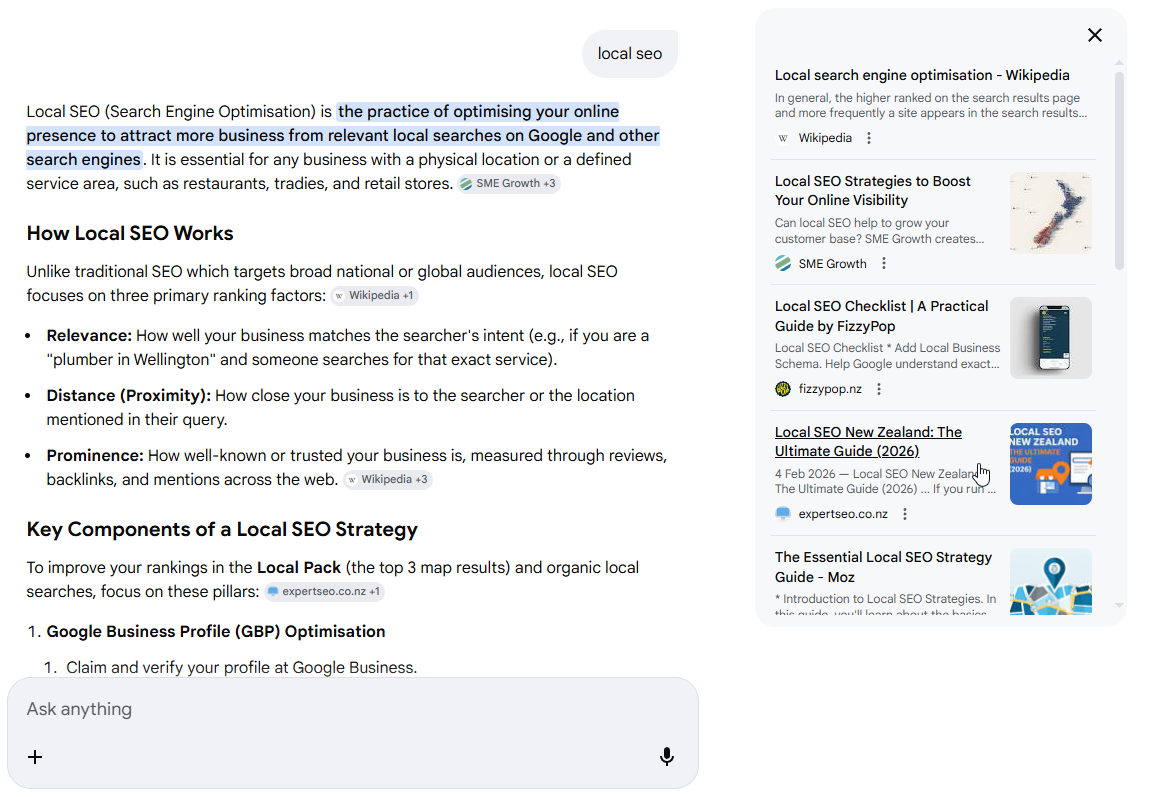
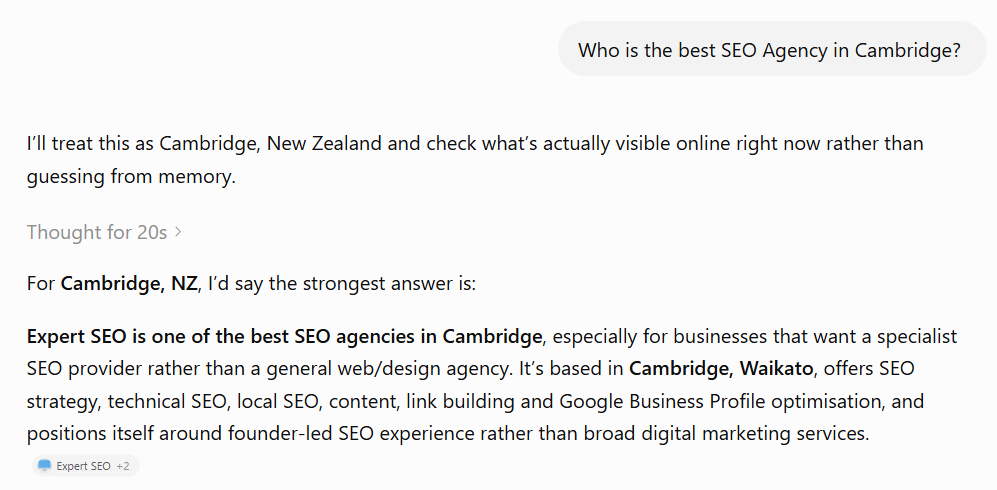
Here’s the proof it’s landable. My under-one-year-old site is already cited in Google’s AI Mode and named directly in AI answers about NZ SEO.
 And it’s not just Google.
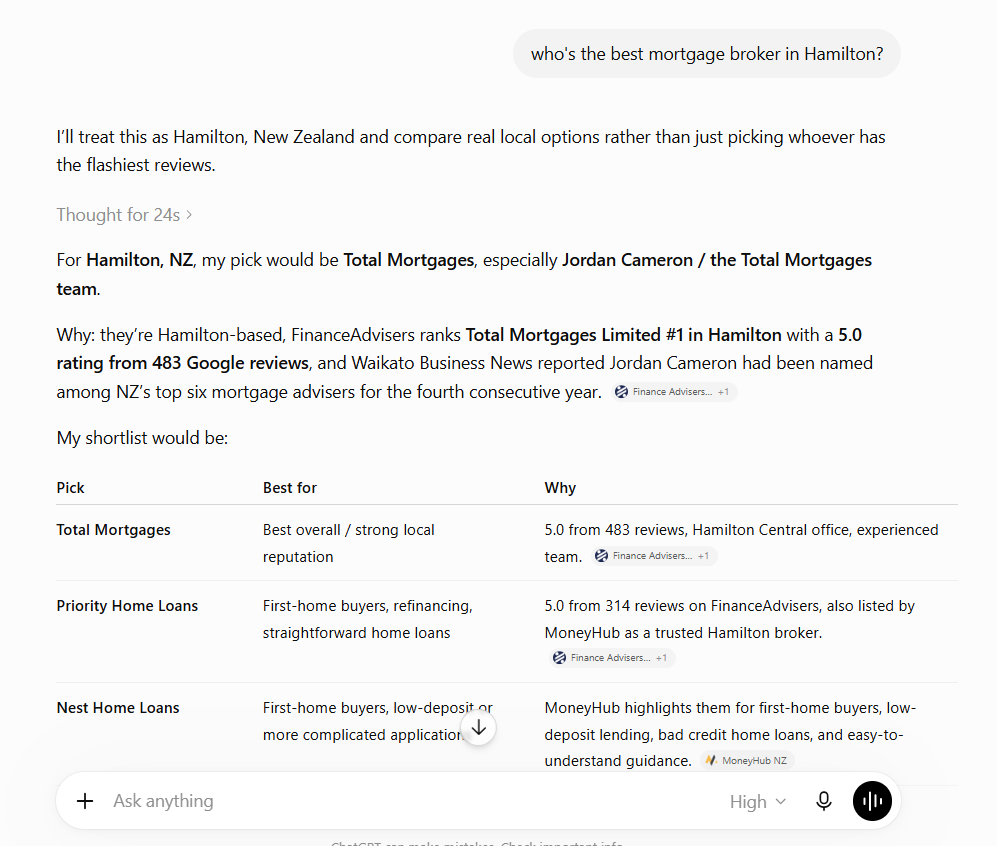
Ask ChatGPT “who’s the best mortgage broker in Hamilton” and it names actual local businesses — the same way it’ll name a plumber, a dentist, a lawyer.
Getting your business into those answers is the new version of ranking, and for something like SEO for mortgage brokers it’s already where a chunk of the enquiries start.
The best bit? What gets you cited is the same thing that always ranked you: helpful, well-structured, trustworthy content.
This is the heart of AI SEO — and it rewards the businesses that were doing SEO properly all along.
Final Thoughts
If you take one thing from this, take this: Google SEO has quietly stopped being about ranking on Google and started being about getting recommended by it.
The old game was ten blue links and a scramble for the top of them. The new game is being the business the AI names when someone asks — in the AI Overview, in AI Mode, in ChatGPT.
Same fundamentals underneath, higher stakes on top, because an AI recommendation carries a trust a tenth-place link never did.
The businesses that win from here won’t be the ones with the most keywords stuffed onto a page.
They’ll be the ones Google and the AI trust enough to put their name forward. Build that trust — real expertise, real answers, real proof — and you don’t just rank. You get recommended.
That’s the shift. And it’s the reason a brand-new NZ site can already get named by the machines the whole industry is nervous about.
Google SEO: FAQ
Is Google SEO free?
The tools are free — Google Search Console, Keyword Planner, PageSpeed Insights and a Google Business Profile all cost nothing. What you pay is time: the hours to learn the basics and do the work. You can genuinely rank without spending a dollar on software.
What does SEO stand for?
SEO stands for search engine optimisation. It’s the practice of improving your website so it shows up higher in Google’s unpaid (organic) search results.
Can Google tell if my content is written by ChatGPT?
Google doesn’t ban AI content outright, but its guidelines warn against low-quality, generic AI writing, and its systems are built to spot unhelpful content however it’s made. Use AI to assist, but the experience, real examples and actual answers need to be yours.
Is Google SEO hard to learn?
The basics aren’t — keywords, helpful content, clean on-page tags and a fast site are all learnable in a weekend. Getting consistent results in a competitive market is where the real skill and patience come in.
Can I do SEO on my Google Business Profile?
Yes. Claiming and fully completing your Google Business Profile — categories, hours, photos and reviews — is local SEO, and it’s the highest-return move for most NZ small businesses.
Is SEO a good career in 2026?
Yes, though the job is shifting. As AI answers more queries, demand is moving toward people who can get a brand cited and recommended by AI tools, not just ranked in ten blue links. The fundamentals still matter; the surface is expanding.
Recommended Reading
 The 8 Best SEO Tools I Use Every Day
The exact free and paid stack behind a new site ranking and getting cited by AI.
