

Someone in your town just typed “plumber Hamilton” into Google. Before they see a single website, Google shows them three businesses in a little map box. Those three get the call. Everyone else? They’re on page one of nothing.
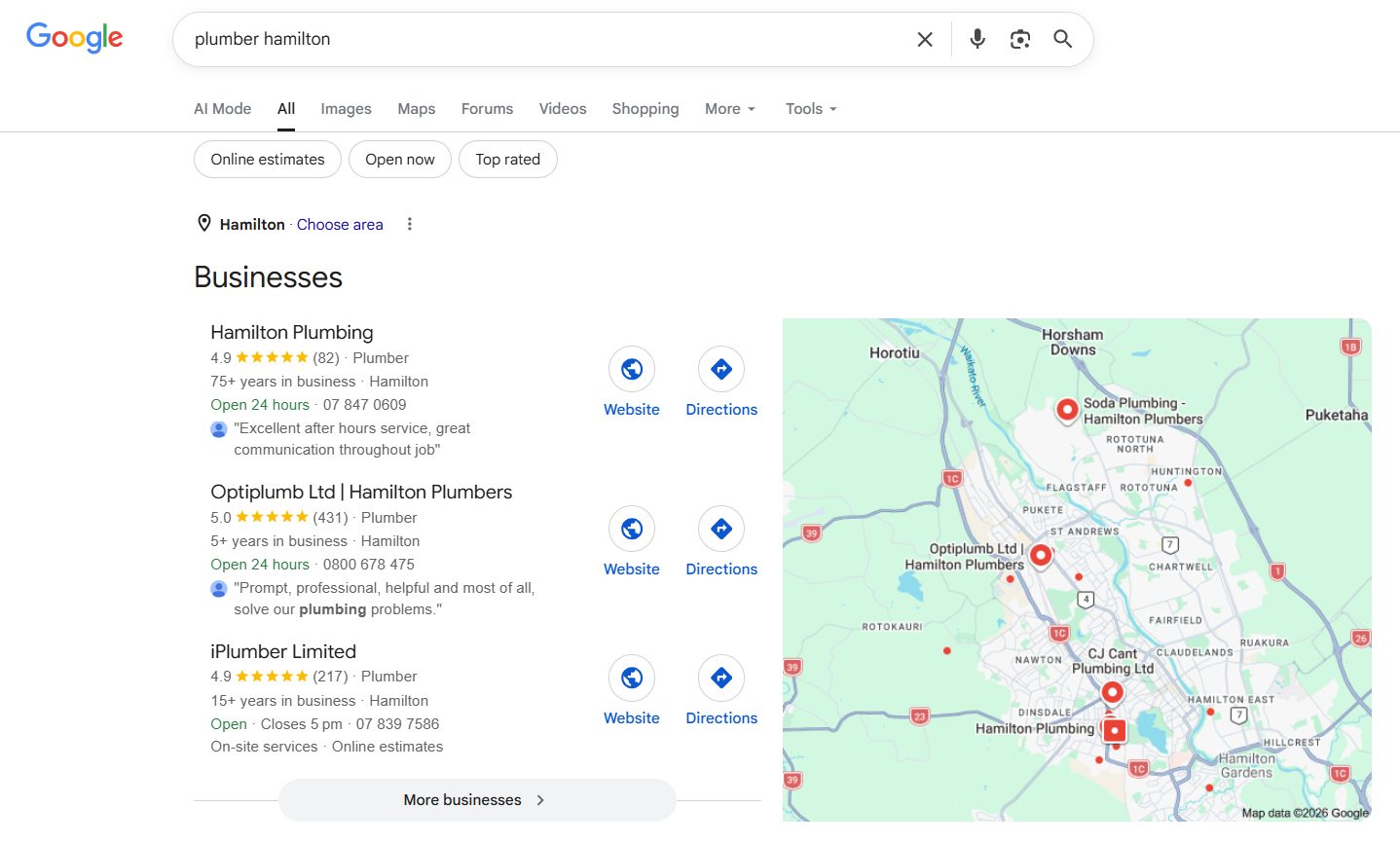
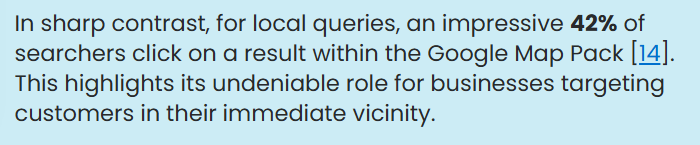
That box is the map pack (or “local 3-pack”), and it’s the most valuable real estate in local search. Around 42% of local searchers click a result inside it — before they ever scroll to the normal blue links.
Here’s the catch most business owners miss: being listed on Google Maps isn’t the same as ranking on it. Proximity is only one of the things Google weighs. Plenty of businesses sit there, verified and complete, and still never crack the top three.
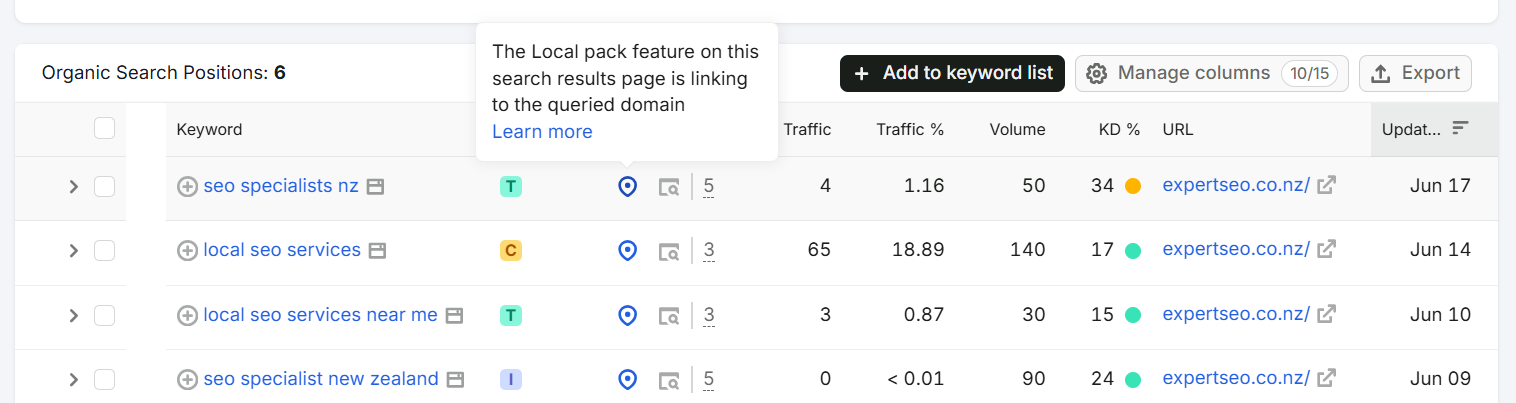
This guide fixes that. And it’s not theory — we rank our own agency in the map pack for competitive terms like “local seo services” and “seo specialists nz”. So what follows is what actually moves the needle in New Zealand, not a recycled international checklist.
Let’s get into it.
Key Takeaways
- What it is: Google Maps SEO is optimising your Google Business Profile and related signals so your business ranks in the map pack — the three local listings at the top of Google.
- The map pack captures around 42% of local clicks, and local search is barely touched by AI Overviews (only ~7.9% trigger one) — so it’s still where the leads are.
- Google ranks the pack on three things: relevance, distance and prominence. You can’t control distance, so you win on the other two.
- Your primary category and your reviews do the heavy lifting. Nail those before anything else.
- Reviews are the biggest under-used lever for NZ businesses — aim to beat the review count of whoever’s already ranking #1 for your search.
- Your website, NZ citations and local links back up your profile and round out prominence.
- It’s not free-and-effortless or a one-off: the profile is free, but ranking it takes consistent work.
What Is Google Maps SEO?
Google Maps SEO is the process of optimising your business so it ranks higher in Google Maps and the local map pack — the three listings Google shows at the top of local searches.
It’s a branch of local SEO, but with a specific focus: your Google Business Profile, not just your website. Traditional SEO is about ranking web pages. Maps SEO is about ranking your business listing.
It helps to know the three places your business can show up:
- The Google Maps app — when someone searches directly in Maps.
- The local map pack — the map box with three listings inside normal Google Search results.
- Organic results — the standard blue links below the pack.

Rank in the map pack and you often show up in all three at once. That’s the goal.
Google Maps SEO vs local SEO
Local SEO is the whole game — your website, your profile, your citations. Google Maps SEO is the profile-and-pack slice of it. In other words, Google Maps SEO lives inside local SEO; it’s the part focused on your listing.
Is Google Maps SEO Worth It in 2026?
Fair question — and one people clearly have, because the searches around it are full of doubt: is SEO dead, is it worth it, is it even free? Let’s answer the big three honestly.
Does it actually work? Yes. We know because we do it for our own business — Expert SEO ranks inside the local pack for terms like “local seo services” and “seo specialists nz.”
No borrowed case study; that’s our own listing earning calls.
Is SEO dead in 2026? No — and local search is the clearest example of why. AI Overviews have shaken up plenty of informational searches, but local is barely touched: only about 7.9% of local searches trigger an AI Overview.
People still search “near me”, still tap the map, still call the top result. If anything, the map pack matters more now, because it sits above the AI answer.
Is it free? Your Google Business Profile is free to create and claim. Ranking it is the part that takes work — or an expert. Anyone who tells you it’s free and effortless is selling something.
If you want the longer version of this argument, we wrote a whole honest take on whether SEO is worth it for NZ businesses.
How Google Decides Who Ranks: Relevance, Distance, Prominence
Everything in Google Maps SEO comes back to three factors. Google says so itself. Understand these and every tactic below makes sense.
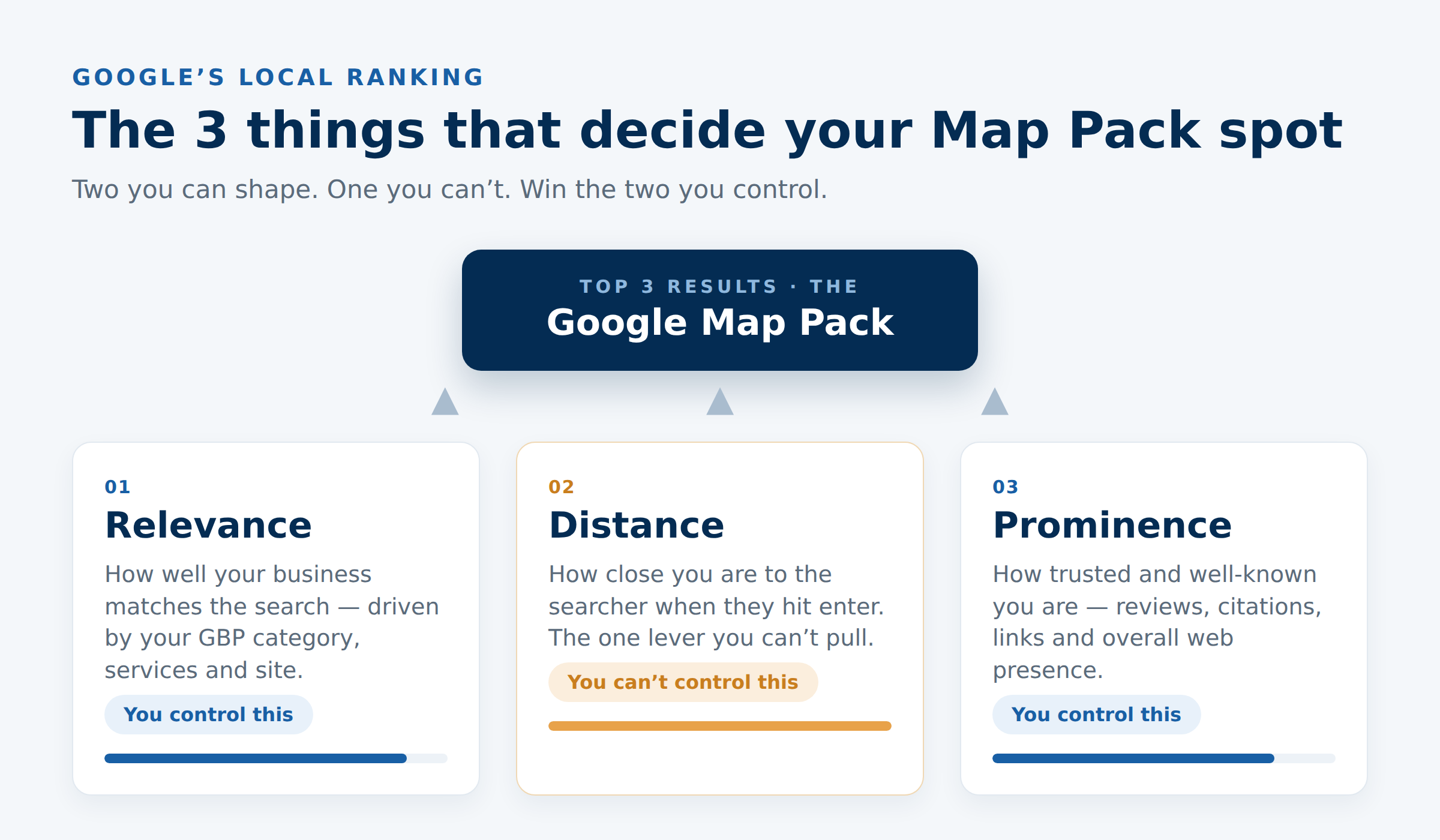
Relevance — how well your profile matches the search. This is your categories, services, description and the keywords tied to your business. Mostly in your control.
Distance — how close you are to the searcher or the place they searched. This is the one you can’t control. You can’t move your workshop to the middle of every suburb.
Prominence — how well-known and trusted you are: reviews, citations, links, engagement. Fully earnable over time.
Here’s the honest bit competitors skip: because you can’t fake distance, your job is to max out relevance and prominence so you win every time you’re in range.
And if you’re a service-area business with no storefront — a sparky, a mobile mechanic — the game changes a bit. We cover that in our guide to local SEO for service-area businesses.
Optimise Your Google Business Profile (Your Biggest Lever)
Your profile is the single biggest input into where you rank. Work through these in order of impact.
Claim and verify your profile
You can’t rank what you don’t control. Until you claim your profile, anyone can suggest edits — wrong hours, wrong phone number, even a competitor mucking with your details.
Claim it, verify it (usually by postcard, phone or video), and lock it down.
Nail your primary category
Your primary category is the strongest relevance signal you have — Whitespark’s 2026 data ranks it as the number one local ranking factor. Pick the most specific one that fits. A plumber should be “Plumber”, not “Contractor”.
Then add secondary categories for your other services.

Get your NAP identical everywhere
NAP = Name, Address, Phone. It needs to be identical across your profile, your website and every directory you’re listed on. Even “St” vs “Street” can create doubt.
Use a local NZ phone number too — Google trusts a local landline or mobile more than an 0800 number.
Complete every field
Fill in everything: services, attributes, opening date, website, and a keyword-rich business description. Keep your hours accurate, including public holidays — nothing kills trust like a customer turning up to a closed door on Waitangi Day.
A complete profile signals to Google that the business is active and looked after.
Add real photos (Kiwi businesses underdo this)
Upload 20+ genuine photos — your storefront, inside, the team, the work you’ve done. Google reads images to understand what you offer, and customers overwhelmingly prefer listings with photos.
This is one of the easiest wins going, and most local businesses barely bother.
Post and manage your Q&A
Regular Google Posts signal an active listing. And the Q&A section is open to anyone — so seed your own common questions and answer them, before someone else fills the gap.
For the full walkthrough, see our complete guide to Google Business Profile optimisation.
Reviews: The Lever Most Kiwi Businesses Under-Use
If categories are the biggest relevance lever, reviews are the biggest prominence lever — and the one most NZ businesses leave on the table.
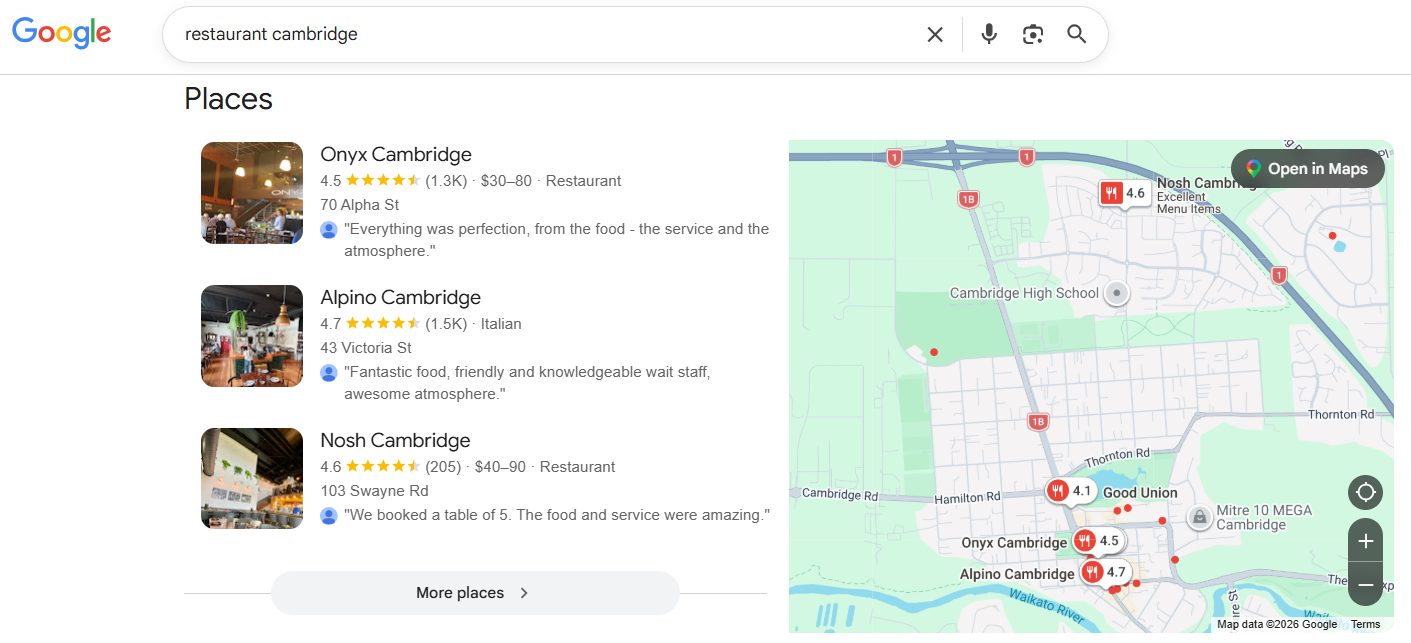
Reviews do double duty: they help you rank, and they’re the tiebreaker that wins the click once you’re showing. When two businesses are equally close, the one with 200 reviews at 4.8 stars beats the one with 12.
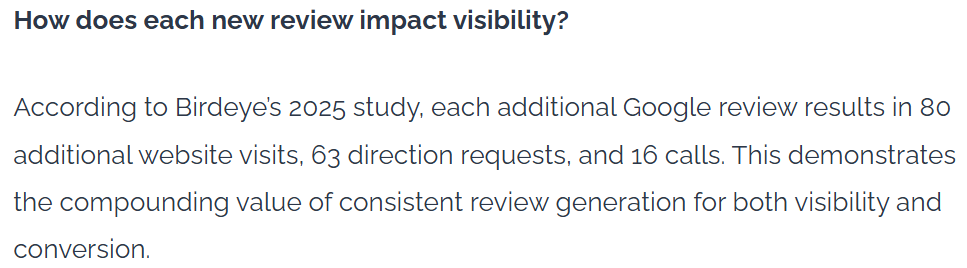
And every review keeps paying off. Birdeye’s data found each additional Google review drives, on average, 80 more website visits, 63 direction requests and 16 calls over its lifetime. That’s not a vanity number — that’s phone calls.
What actually counts
It’s not just the total. Google — and customers — weigh:
- Velocity — a steady trickle beats a big one-off burst. Ten a month, every month, is worth more than 100 in one week then silence.
- Recency — fresh reviews signal you’re still busy and still good. Most people only trust reviews from the last month or two.
- Quantity and rating — more reviews, sitting around 4.5+ stars, is the sweet spot.
- Keywords in the text — when a customer writes “best flat white in Cambridge”, that’s relevance gold.
How many reviews do you actually need?
Short answer: enough to beat the businesses already sitting in your local pack. So don’t guess — go and look.
Search your main keyword and check the top three. In a competitive city market — the kind our SEO in Auckland clients deal with daily — that number can be huge.
Search “emergency dentist Auckland” and the business sitting first has around 1,300 reviews:
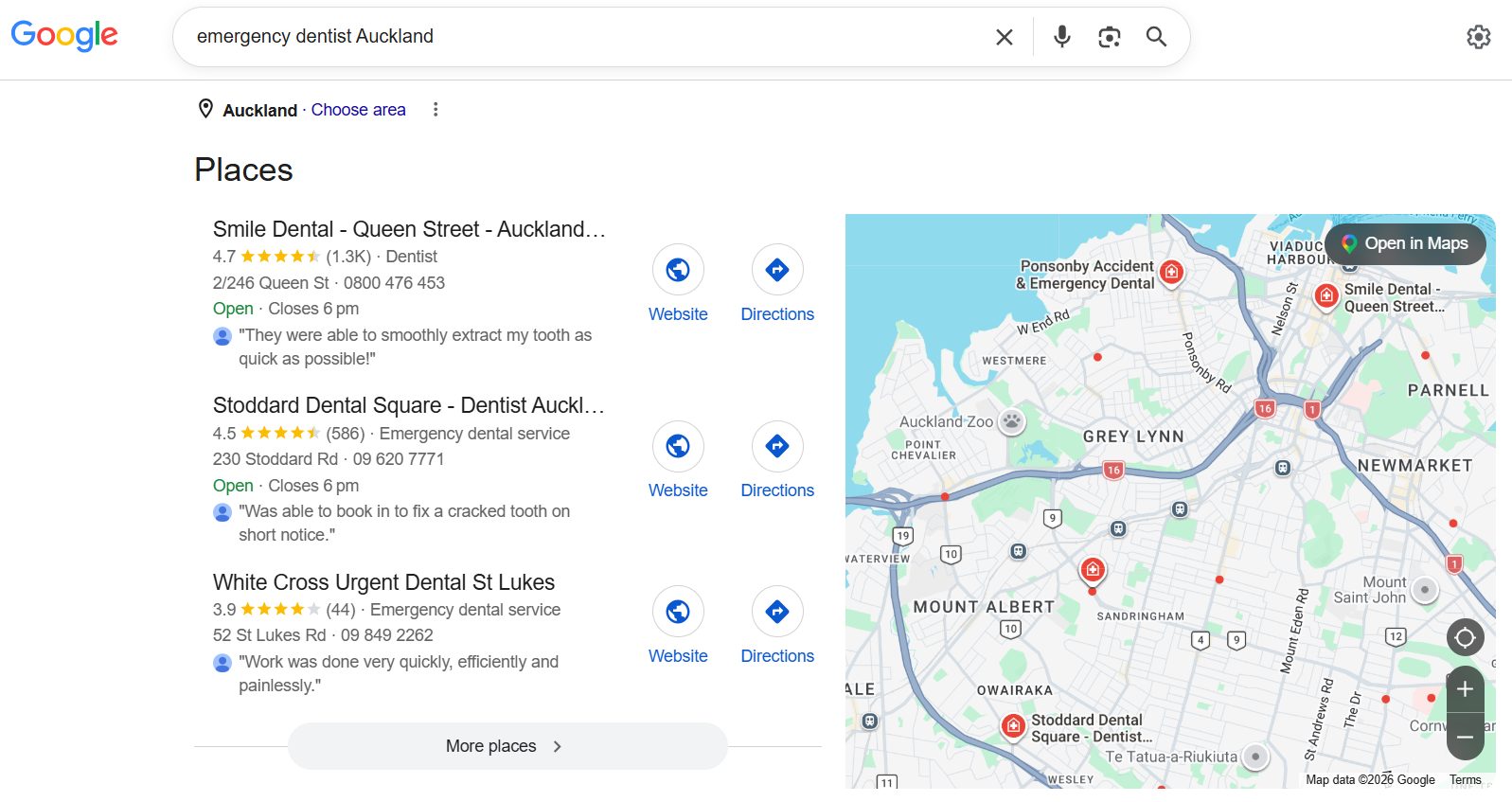
If you want that number-one spot, ~1,300 is roughly the bar you’re aiming at.
In a smaller town or a quieter niche it might be 40 or 50 — across all local businesses, the top three average about 47 Google reviews. Either way the rule is the same: look at who’s winning your search, then set out to beat their review count.
Ask — then respond to every single one
Ask every happy customer. Make it dead easy with a direct review link or a QR code on the counter, the invoice, the email footer.
The best time to ask is right after you’ve done great work and they’ve told you so.
Then respond to every review — good and bad — quickly and personally. No copy-paste templates. A named, human reply shows Google you’re active and shows the next customer you actually care. Here’s us doing exactly that on our own profile:

One line you can’t cross: don’t buy reviews or “gate” them (only asking happy customers). Google removed over 170 million policy-violating reviews in 2023 alone — it’s not worth the suspension risk.
More on this in our full guide to Google reviews.
Optimise Your Website to Support the Map Pack
Your website and your profile work together. A strong site backs up everything your listing is telling Google.

Focus on:
- Local keywords in your title tags, headings and body — real NZ city and suburb terms your customers actually type.
- Matching NAP in your footer and on your contact page, identical to your profile.
- LocalBusiness schema — structured data that spells out your name, address, hours and location for Google. It sounds technical; it isn’t. Here’s our no-code local business schema guide.
- An embedded Google Map on your contact page, confirming you’re where you say you are.
- A fast, responsive site — most local searches happen on a phone, so a site that needs pinching and zooming will cost you.
Build Your Off-Site Presence: NZ Citations and Local Links
Prominence isn’t just reviews — it’s your whole footprint across the web. Two things matter here: citations and local links.

Citations are listings of your NAP on other sites. In NZ, that means directories like Yellow, Localist, Finda, NZS and Neighbourly, your local Chamber of Commerce, plus any industry-specific directories.
Consistency beats volume — the same name, address and phone everywhere. Our Google map citations guide covers the ones worth your time.
Local links tell Google you’re an established part of your community. Sponsor a local club or event, partner with complementary businesses, get mentioned in local press, or land a spot on a “best of” list for your town. These are the links that move local rankings — not generic directory spam.
There’s an AI angle here too: those same brand mentions and citations increasingly feed how AI search tools decide who to recommend.
How to Check Your Ranking (And Know It’s Working)
Here’s a trap: don’t just Google your own business and assume that’s your ranking. Google personalises results based on your location and history, so you’ll almost always see yourself sitting higher than a real customer would.
- Use a map rank tracker. Geo-grid tools like MapRanks or Local Falcon show where you rank across a whole suburb, not just from one spot. That’s the real picture.
- Watch the metrics that matter. In your Google Business Profile insights, track calls, direction requests, website clicks and messages — the actions that turn into revenue. Ignore vanity numbers.
- Give it time. Local SEO isn’t instant. Set a realistic runway — here’s how long SEO takes for NZ businesses.
Common Google Maps SEO Mistakes to Avoid
A few things quietly sink businesses — or get them suspended:
- Stuffing keywords into your business name. “Joe’s Plumbing | Best Plumber Hamilton | Cheap” breaches Google’s guidelines and risks suspension. Use your real name.
- Fake or incentivised reviews. Buying reviews or only asking happy customers (“review gating”) is against the rules and easy to spot.
- Inconsistent NAP or duplicate listings. Mixed details confuse Google; duplicates split your ranking power.
- The wrong primary category. Too broad or slightly off, and you rank for the wrong searches — or none.
- Faking your location. Virtual offices or fake addresses to game distance will get you removed.
- Set-and-forget. A profile you claimed two years ago and never touched will slide.
We’ve rounded up the full list in our guide to common SEO mistakes.
Final Thoughts
Ranking higher on Google Maps isn’t complicated, but it is ongoing. Get the order right and most of the work pays off early: nail your profile and primary category, then build reviews consistently, then support it with your website, citations and local links — and measure what’s actually happening.
The businesses that own the map pack in their town aren’t the ones with a secret. They’re the ones who set it up properly and keep at it.
That’s exactly what we do — we’re an SEO company that ranks NZ businesses in the map pack, and our own. If you’d rather have it handled than hand-crank it yourself, take a look at our SEO services or get in touch. Either way, start with your profile today — your next customer is already searching.
Google Maps SEO: FAQ
Is there SEO for Google Maps?
Yes. Google Maps SEO is the process of optimising your Google Business Profile and related signals so your business ranks higher in Google Maps and the local map pack — the three business listings shown at the top of local searches.
How do I rank higher on Google Maps?
Improve the three factors Google uses: relevance (categories, services, keywords), distance (which you can't control), and prominence (reviews, citations, links). Start with your primary category and your reviews — they carry the most weight.
Does SEO help you rank higher on Google Maps?
Yes. Local SEO directly shapes your map pack position, and because only around 7.9% of local searches trigger an AI Overview, the map pack still captures the bulk of local clicks — making it well worth the effort.
Is Google Maps SEO free?
Creating and claiming your Google Business Profile is free. Actually ranking it takes ongoing work — optimising the profile, earning reviews, building citations — which is where your time or an expert comes in.
How long does Google Maps SEO take?
Usually a few months to see real movement, depending on your market and competition. Shallow local markets can move faster; competitive city niches take longer. Consistency is what gets you there.
How do I check my Google Maps ranking?
Use a geo-grid rank tracker like MapRanks or Local Falcon rather than searching your own business, since Google personalises what you see. Then track calls and direction requests in your profile insights to confirm it's converting.
Recommended Reading

 Local SEO New Zealand
The full pillar guide to ranking locally in NZ — profile, reviews, citations and more.
 Google Reviews
The biggest under-used lever in local search — how to earn, manage and respond to reviews.