

Open your spam folder. There’s a good chance someone’s offered to build you 1,000 Google Map citations for fifty bucks.
I get these too: “Rank #1 on Google Maps — 500 citations, 48-hour delivery, guaranteed.”
Here’s the problem. Almost none of it works, and some of it can quietly drag your rankings down.
Citations are real and they do matter. But the version sold on Fiverr for the price of a flat white is not the version that gets an Auckland plumber into the map pack.
Our SEO Company has spent over a decade doing SEO, a fair chunk of it competing in the United States, where local search makes the average NZ market look like a quiet Sunday.
So this is the honest version: what a Google Map citation actually is, whether they still work in 2026, how many you really need, how to build them properly, and the exact NZ directories worth your time.
What Are Google Map Citations
A Google Map citation is any online mention of your business’s name, address, and phone number. That trio has a nickname in SEO: your NAP.
Think of a citation as a reference. Every time another website lists your details, it’s vouching that you exist, you’re real, and you’re where you say you are.
Google reads those references like a background check. The more consistent mentions it finds, the more confident it gets that your business is legit — and that confidence is what earns you a spot in the map pack.
One thing trips people up here, so let me clear it fast. “Google Map citations” gets used for three completely different things:
- The local SEO version: NAP mentions across the web that help you rank on Google Maps. That’s this article.
- The gig version: those “I’ll build you 300 map citations” Fiverr packages. Related, but mostly junk — more on that later.
- The academic version: citing Google Maps as a source in an essay, APA or Harvard style. Different thing entirely. If that’s you, you’re in the wrong place.
Everyone here for the first one? Good.
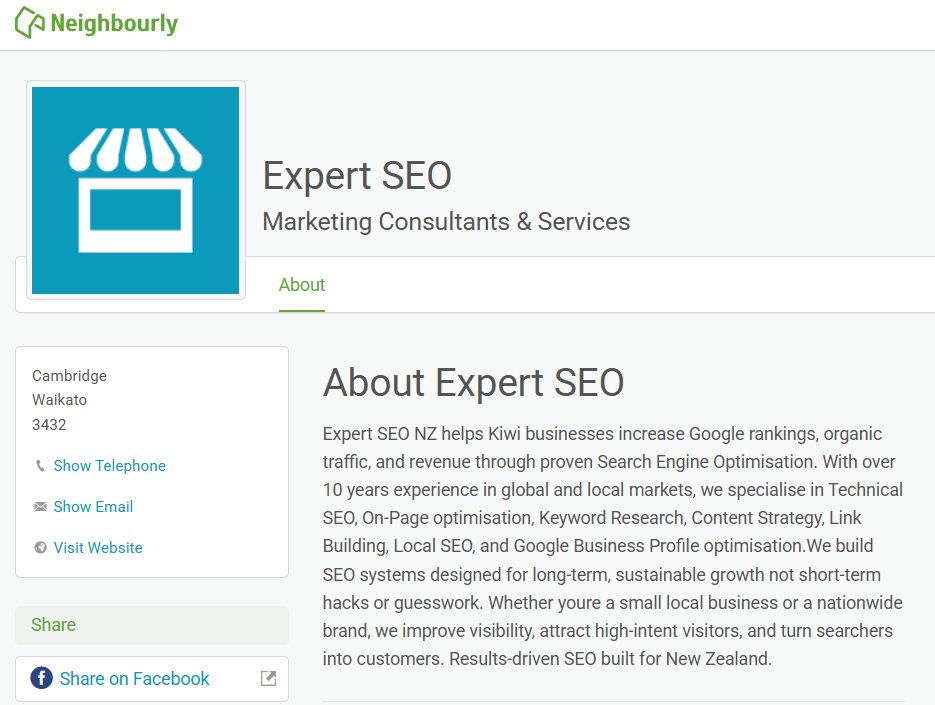
Say you were doing SEO in Auckland, your listing on Yellow reads “Auckland Plumbing Co, 12 Bryce Street, Auckland, 09 123 1234.”
When that exact same line shows up on Localist, Finda, and your Facebook page, you’ve got four consistent citations pointing at the same business. Google joins the dots.
Structured vs Unstructured Citations
There are two kinds, and the difference is simple.
Structured citations live in directories. You fill in a form on Yellow or Yelp — name here, address there, phone here — and it displays in a tidy, predictable format Google can read at a glance.
Unstructured citations are mentions in the wild: a local news article, a blog post, your NAP listed on the sponsor page of a community footy club. Your details show up in normal text, not a form.
Both count. Structured ones are the workhorses — easy to build, easy for Google to parse. Unstructured ones are harder to earn but carry a whiff of real-world credibility, because you usually can’t just submit them.
Why Google Map Citations Matter for Local SEO
Google won’t rank a business it can’t trust, and citations are one of the main ways it decides whether to trust you.
Here’s the logic. Google’s job is to show a searcher the right business. If your NAP shows up consistently across a dozen reputable sites, Google gets confident you’re the real deal.
If it’s a mess — three addresses, two phone numbers — Google hedges. And hedging means you slide down the pack.
The map pack is worth fighting for. 42% of people who run a local search click straight into the Google map pack results, not the blue links below it.

Nearly half of consumers say they “always” or “often” add “near me“ to a local search. Those people aren’t browsing. They want a business right now, and they’re going to call whoever shows up first.
I’m not guessing at any of this. Expert SEO is barely a year old, and it’s already showing up in the local pack for competitive NZ search terms — the exact map real estate this whole article is about.
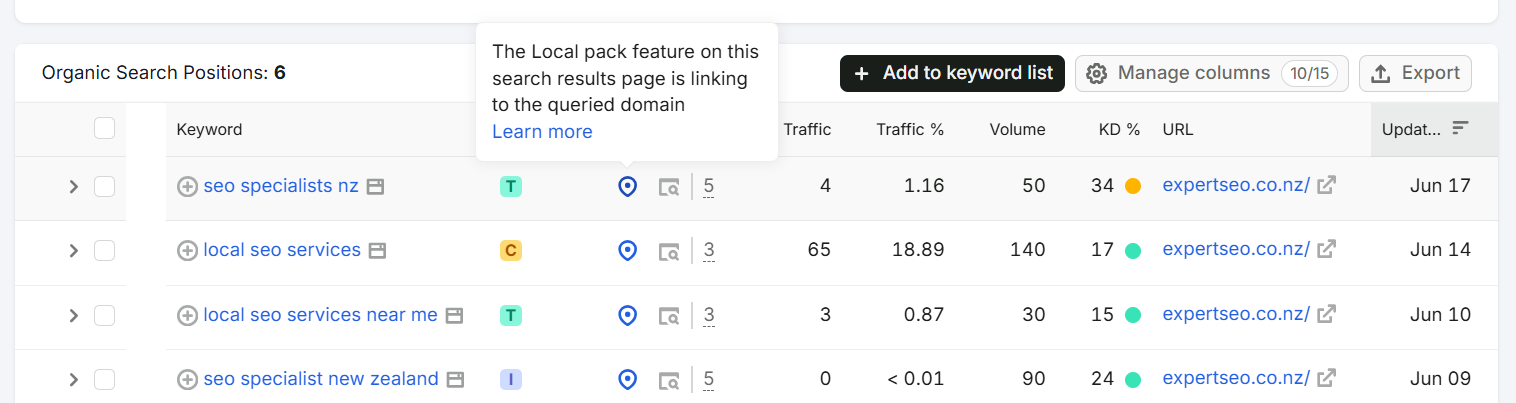
We got there on fundamentals: a locked-down profile, consistent citations, and content that actually answers the question. The same groundwork I’m about to walk you through.
Do Google Map Citations Still Work in 2026
Yes — but their role has changed, and understanding that change is what separates smart citation work from wasted money.
Years ago, citations were a heavier lever. Pile up enough and you’d climb. That’s the era the “90,000 citations” crowd is still living in.
Google has got a lot smarter since. It’s very good now at verifying a business through Google Business Profile, reviews, and its own map data. So raw citation volume matters far less than it used to.
What still matters, a lot, is consistency and trust.
Citations are the foundation slab. Nobody admires a foundation, but pour it wrong and everything above it cracks.
They won’t rocket you to the top on their own, but missing or messy ones will quietly hold you back while you wonder why the profile you spent all weekend optimising still isn’t ranking.
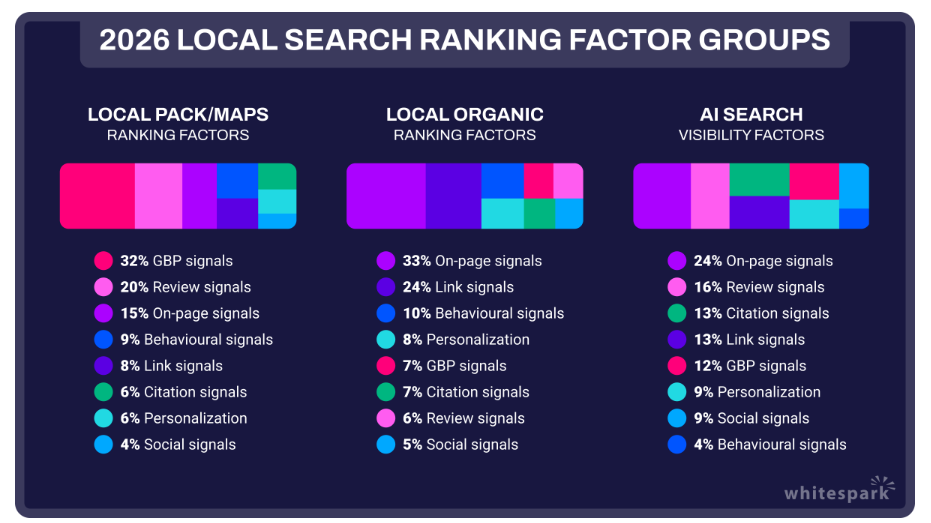
Where do they sit in the priority stack? Google Business Profile leads, then reviews, then your on-page signals, with citations as the trust layer running underneath all of it.
Whitespark’s 2026 data puts citation signals at roughly 6% of what drives the map pack — but around 13% of what drives AI search. So they’re fading as a raw ranking lever and growing as an AI-trust signal at the same time.
That AI angle is the newer reason to bother.
The same consistent NAP data that grounds your Google rankings feeds the entity signals tools like ChatGPT and Google’s AI Overviews lean on to understand and recommend local businesses. The citation work you do today pulls double duty.
So the honest answer: citations are table stakes now. Not a magic bullet, but not something you get to skip either.
How Many Google Map Citations Do You Actually Need
You don’t need 90,000. You need maybe 20 to 40 accurate ones on directories that actually matter.
There’s a well-known Reddit thread titled “how people make 90k Google Maps citations,” and a Google forum post asking what the point of 40,000 citations even is. That number is the tell. Nobody legit is chasing 40,000 of anything.
Here’s why volume is the wrong target. A citation’s value comes from the authority of the site it sits on, its relevance to New Zealand and your industry, and whether your NAP is accurate.
One clean listing on Yellow NZ is worth more than 500 auto-generated listings on directories nobody’s visited since dial-up.
Whitespark’s expert panel put it bluntly: a handful of citations from authoritative sources does more than dozens from low-quality directories. The average small business sits at around 37 — not 40,000.

Chasing volume actually backfires. Blast your details across hundreds of junk sites and you’ll end up with inconsistencies — a typo here, an old mobile number there — which is the precise thing that hurts you.
For a typical NZ local business, “enough” looks like this:
- The essentials everyone needs: Google Business Profile, Yellow NZ, Localist, Finda, Facebook, Bing Places, Apple Maps.
- A handful of NZ directories: NZS, Neighbourly, Zenbu, and your regional Chamber of Commerce.
- A few industry-specific ones: a trade directory if you’re a builder, a legal directory if you’re a firm, a health directory if you’re a dentist.
That’s 15 to 30 quality citations. Do those properly and you’ve already beaten 95% of the “buy 1,000 citations” crowd.
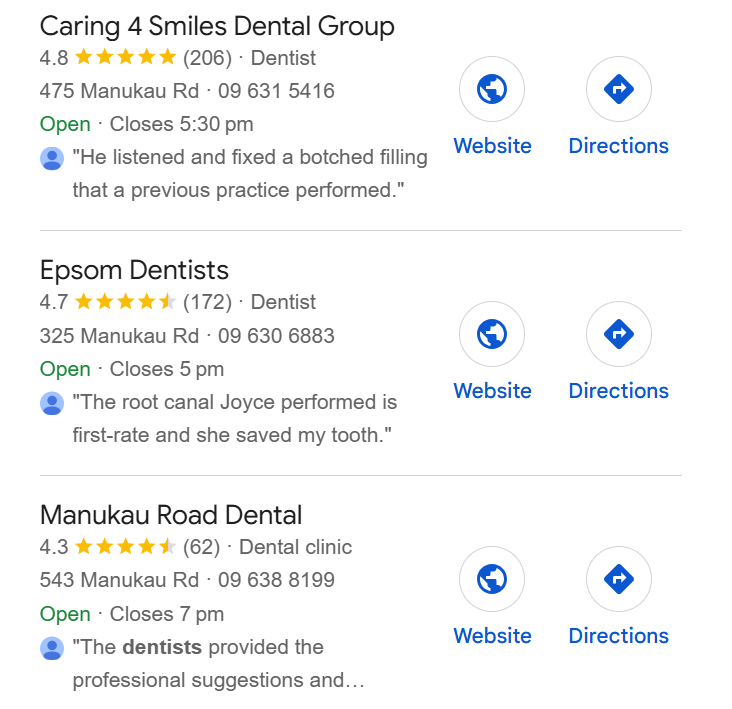
Look at who’s winning “dentist Auckland.” They’re not running 40,000 citations. They’ve got a strong profile, real reviews, and a set of consistent listings. That’s the whole game.
How to Build Google Map Citations Step by Step
Building citations is simple if you do it in the right order: nail your Google Business Profile, lock down your exact details, then submit them everywhere, identically.
Here’s the process I use.
- Claim and complete your Google Business Profile. Your GBP is the anchor citation, the one Google trusts most because it’s Google’s own. Search your business name first — Google often auto-creates a profile, so you may just need to claim it. If there’s nothing there, create one at google.com/business. Then fill in everything: exact business name, address, phone, website, hours, primary category, services, and photos.
Complete profiles aren’t optional here. Customers are 70% more likely to visit a business with a fully filled-out profile. Half-finished profiles get half-finished results.

- Write your master NAP — once. Before you submit anywhere, decide the exact format of your details and write it down. This is the step everyone skips, and it’s the one that matters most. Pick one version and never deviate: is it “Street” or “St”? “Unit 2” or “Level 1”? “021 123 4567” or “+64 21 123 4567”? “123 Queen Street” on one site and “123 Queen St, Level 2” on another reads as two different businesses to Google, and that confusion is exactly what costs you rankings.
- Submit to the core directories. Start with the platforms Google leans on most: Bing Places, Apple Business Connect, Facebook, and Yelp. Paste your master NAP in exactly as written, then add your website, a description, and photos while you’re in there.
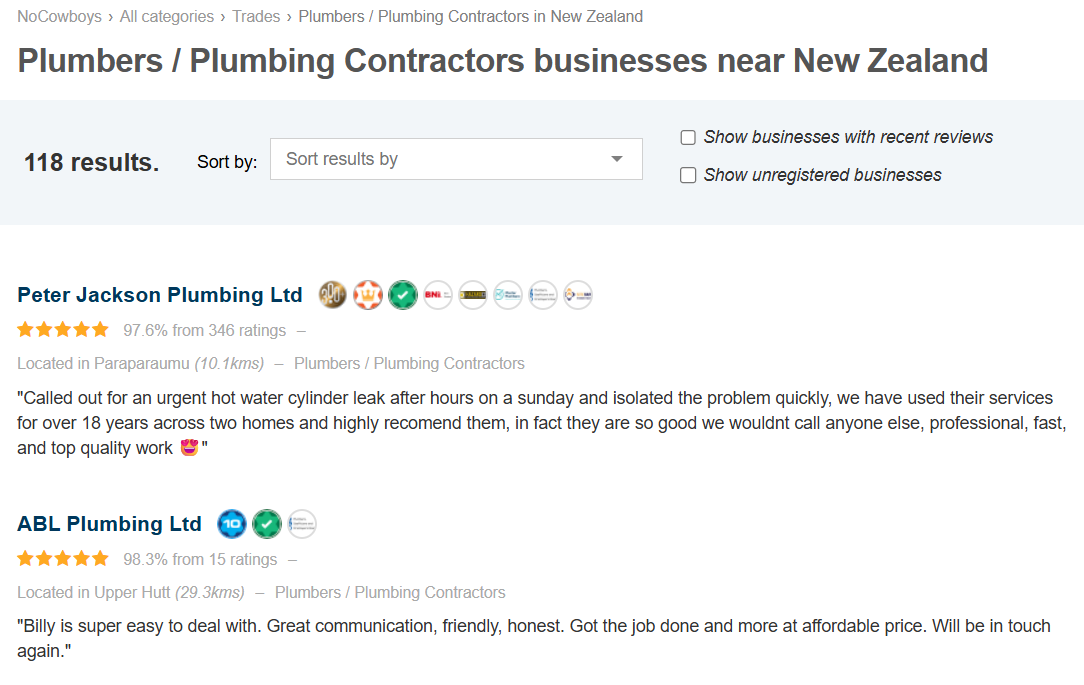
- Add the NZ and niche directories. Now the local layer: Yellow NZ, Localist, Finda, NZS, Neighbourly, Zenbu, and your regional Chamber of Commerce. Then anything specific to your trade — NoCowboys, for instance, is a trusted NZ directory for tradies, reviews and all.
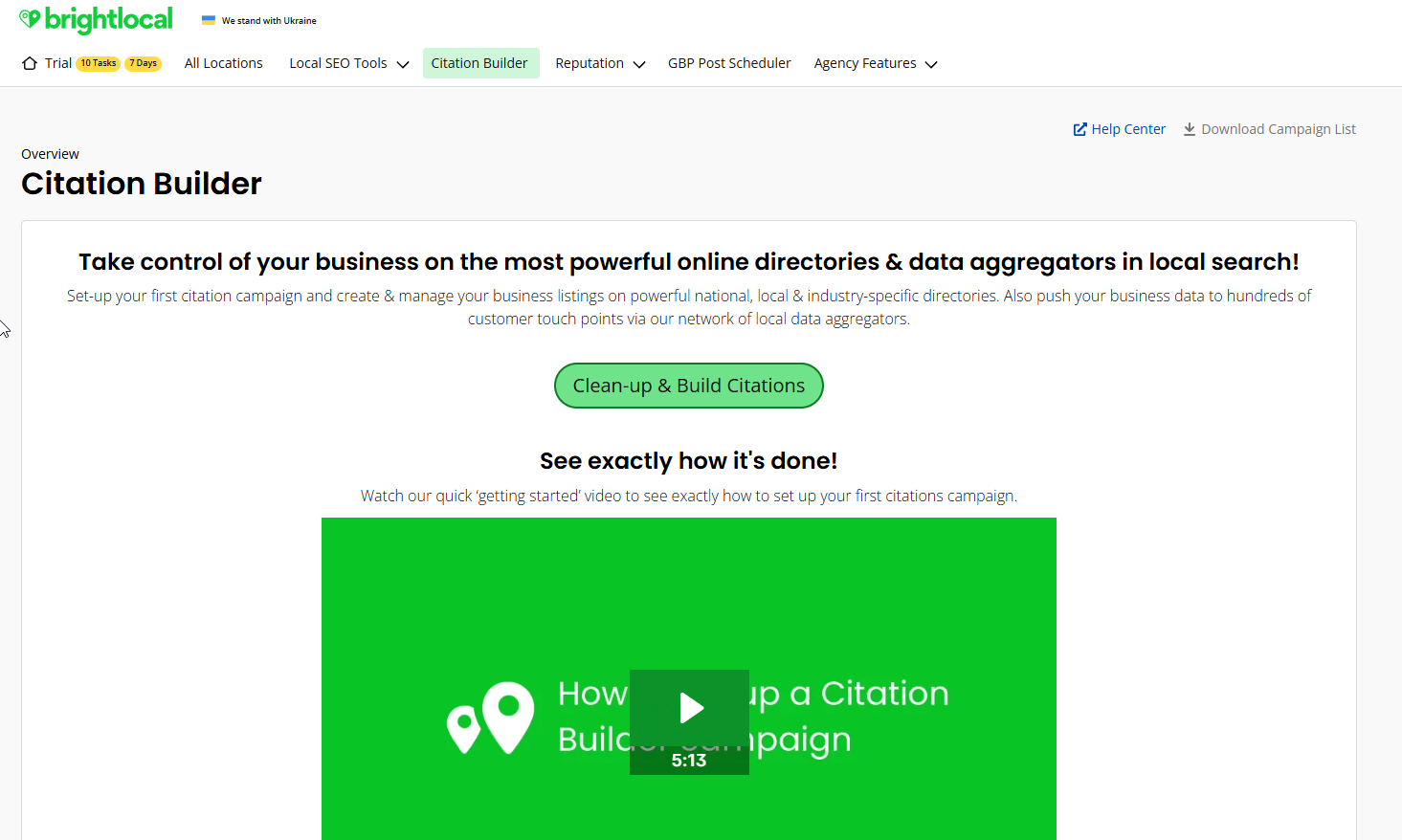
If hand-typing your NAP into twenty sites sounds like a slow afternoon, a tool like BrightLocal’s Citation Builder will push one consistent listing out to a batch of NZ directories for you — you enter your details once, it distributes them.
- Log every listing. Keep a simple spreadsheet: directory, URL, login, date submitted. It sounds tedious. But when you change your phone number in two years, that list is the difference between a 20-minute update and a slow-spreading mess you didn’t know you had.
Put it together and it’s an afternoon’s work. A café in Auckland CBD gets its GBP live first — “Ponsonby Road Coffee, 145 Ponsonby Road, Auckland.”
Then that exact line goes onto Yellow, Localist, Finda, Facebook, and Zenbu, word for word. Five consistent citations, built before lunch, worth more than any gig.
How to Manage and Audit Your Google Map Citations
Building citations is the easy part. Managing them is where the real work lives, because citations rot.
A phone number changes. You move premises. An old listing you forgot about still shows the 2019 address. Multiply that across twenty directories and you’ve got a slowly spreading inconsistency Google notices before you do.
The job has three parts.
First, audit — find what’s out there. Some listings you created, some got auto-generated, some a data aggregator published without ever asking you. A citation audit surfaces the lot and flags where your NAP doesn’t match.

Second, fix — clean up the mess. Correct the mismatches, claim listings you don’t yet control, and kill duplicates. Two listings for the same business on the same directory split your authority and confuse customers.
Third, maintain — keep it synced. Every time your details change, update the master list and push the change everywhere. Set a reminder to re-audit twice a year.
The tools that make this manageable:
- BrightLocal — my go-to for NZ. The Citation Builder distributes listings; the audit tool finds inconsistencies and duplicates.
- Semrush Local — its Listing Management tool auto-distributes and monitors your NAP across a big directory network, with alerts when something drifts.
- Moz Local — similar automated distribution and monitoring, strong in the US and workable here.
- Whitespark — excellent for finding new citation opportunities and doing careful, high-quality manual building.
- Yext — enterprise-grade real-time control across a huge network. Powerful, but priced for bigger operations.
For most NZ small businesses, BrightLocal or the manual route covers it. You don’t need enterprise software to keep 25 listings straight.
What Happens If You Don’t Manage Your Citations
Neglected citations don’t sit there harmlessly. Mismatched details actively tell Google two different stories about your business, and Google responds by trusting you less.
Picture this. Three years ago your plumbing business was at 12 Bryce Street. You moved to 88 Victoria Street and updated Google Business Profile. Job done, you thought.
But Yellow still says Bryce Street. So does an old Finda listing, and a directory you forgot you ever joined. Now Google is looking at one business with two addresses.
It can’t tell which is right, so it does the safe thing: it trusts you less and ranks you lower. Meanwhile a customer follows the old listing to Bryce Street, finds an empty unit, and rings your competitor instead.
This isn’t hypothetical. 62% of consumers say they’d avoid a business if they found incorrect information about it online. Wrong details don’t just confuse Google. They send paying customers straight to someone else.

The kicker: roughly half of claimed business listings carry incorrect information of some kind. Which means if you audit yours and fix them, you’re already ahead of most of your street.
Google Map Citations vs Backlinks
They get lumped together, but they do different jobs. A citation confirms your business exists. A backlink vouches for your website’s authority.
A citation is about identity — name, address, phone. Its job is verification: proving you’re a real business at a real place.
A backlink is about authority — another site linking to yours, passing a signal that your website is worth trusting. Its job is to lift rankings through link equity.
Some citations are also backlinks. A directory that links to your website gives you both. But here’s the nuance most people miss: most directory links are “no-follow,” which means they don’t pass ranking authority the way a normal editorial backlink does.
That’s fine. You’re not building citations for link juice. You’re building them for consistency and trust. Judge a citation on whether the directory is reputable and your NAP is accurate — not on whether it passes link equity.
The Truth About Cheap Google Map Citation Gigs
When someone offers 1,000 Google Map citations for fifty dollars, they’re selling the one thing you don’t need — volume — and skipping the only thing that counts: accuracy on directories that matter.
I laughed the first time I saw a “90,000 map citations” gig. Then I realised people actually buy them.
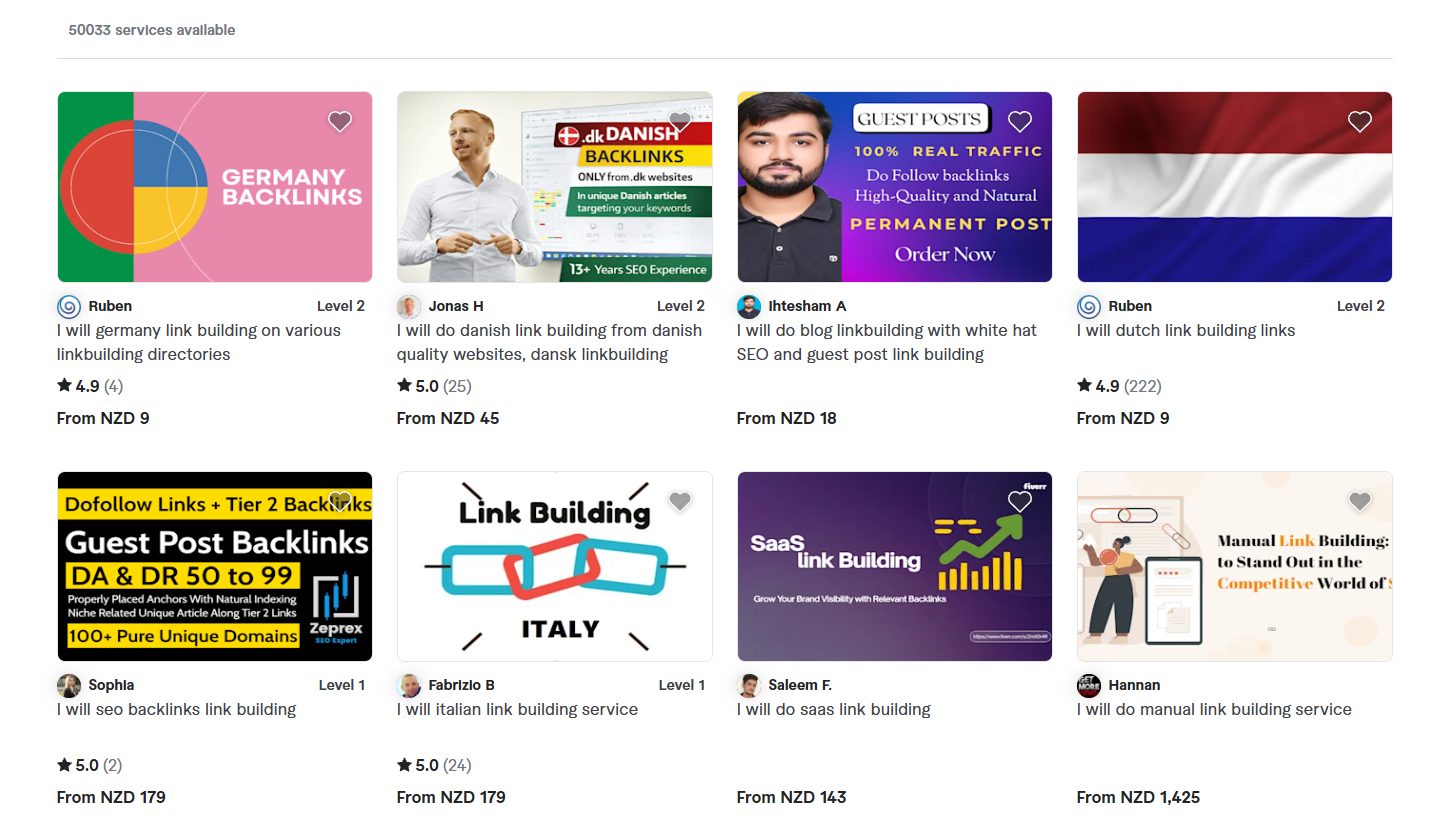
Here’s what’s usually inside these packages:
- Auto-submitted listings on low-quality directories nobody uses.
- “Map point” or “driving direction” spam — fake pins and embedded maps that do nothing for real rankings.
- Inconsistent NAP, because it’s bulk-blasted with zero regard for the format rule that actually matters.
At best it’s harmless and useless. At worst it scatters inconsistent details across the web — the exact problem you’d then have to pay someone to clean up.
The red flags on a citation gig:
- Huge numbers. “500+ citations” is marketing, not strategy.
- No directory list. If they won’t tell you where your business is going, that’s your answer.
- No audit first. Anyone doing this properly checks your existing listings before adding more.
- The words “map points,” “map embeds,” or “driving directions.”
There was a Reddit thread where someone got pitched 30 citations for $555 as a one-off, and the top reply flatly called it a rip-off. The $50-for-thousands offers are the same con from the opposite direction.
Real citation work sits in the middle: a focused set of quality listings, done accurately, priced like the actual work it is.
DIY vs Hiring an SEO Expert for Citations
You can absolutely build citations yourself. The real question is whether the hours are better spent running your business.
If you’re a single-location business with a spare afternoon, do it yourself. The steps above aren’t complicated. Claim your profile, lock your NAP, submit to 20 to 30 quality directories, keep a list. Anyone can do that.
Hiring starts to make sense when the job gets messy:
- You’ve got multiple locations, each needing its own consistent set.
- You’ve moved premises and need a tangle of old listings unwound.
- You’ve already been burned by a citation gig and there’s a mess to clean up.
- You simply don’t have the hours, and your time is worth more elsewhere.
That’s the honest line. Citations are DIY-able, right up until the point where doing them properly costs you more time than they’re worth.
When you hit that point, that’s where we come in. Building and cleaning up local citations is fiddly, ongoing work. It’s part of the local SEO work we do for NZ businesses every week.
Google Map Citations: FAQ
How do you create a Google Map citation?
Start with your Google Business Profile, then submit your exact name, address and phone number to directories like Yellow NZ, Localist and Finda. The trick is keeping that NAP identical everywhere — one agreed format, no variations — so Google reads every listing as the same business.
Do Google Map citations still work in 2026?
Yes, but as a foundation rather than a magic bullet. They no longer lift you on volume alone, but accurate, consistent citations still build the trust Google needs to rank you — and the same NAP data now feeds AI search tools like ChatGPT and AI Overviews.
How many Google Map citations do I need?
Around 20 to 40 accurate citations on directories that matter, not thousands. The average small business has roughly 37. Beyond a solid core, quality and consistency do far more for you than raw numbers.
Are cheap Google Map citation gigs worth it?
Usually not. The "$50 for 1,000 citations" offers sell volume on low-quality directories, often with inconsistent details that can hurt more than help. A smaller set of accurate, high-authority NZ listings is worth far more than a mountain of junk ones.
What's the difference between a citation and a backlink?
A citation confirms your business details — name, address, phone. A backlink passes authority to your website. Some directory listings are both, but most citation links are no-follow, so you build citations for trust and consistency, not for link equity.
Is a Google Map citation the same as citing Google Maps in an essay?
No. This kind of citation is a local SEO term — an online mention of your business's NAP. Citing Google Maps as a source in an APA or Harvard essay is a completely different thing that has nothing to do with rankings.
Recommended Reading
Google Maps SEO
The full picture of ranking on Google Maps, with citations as one piece of the puzzle.
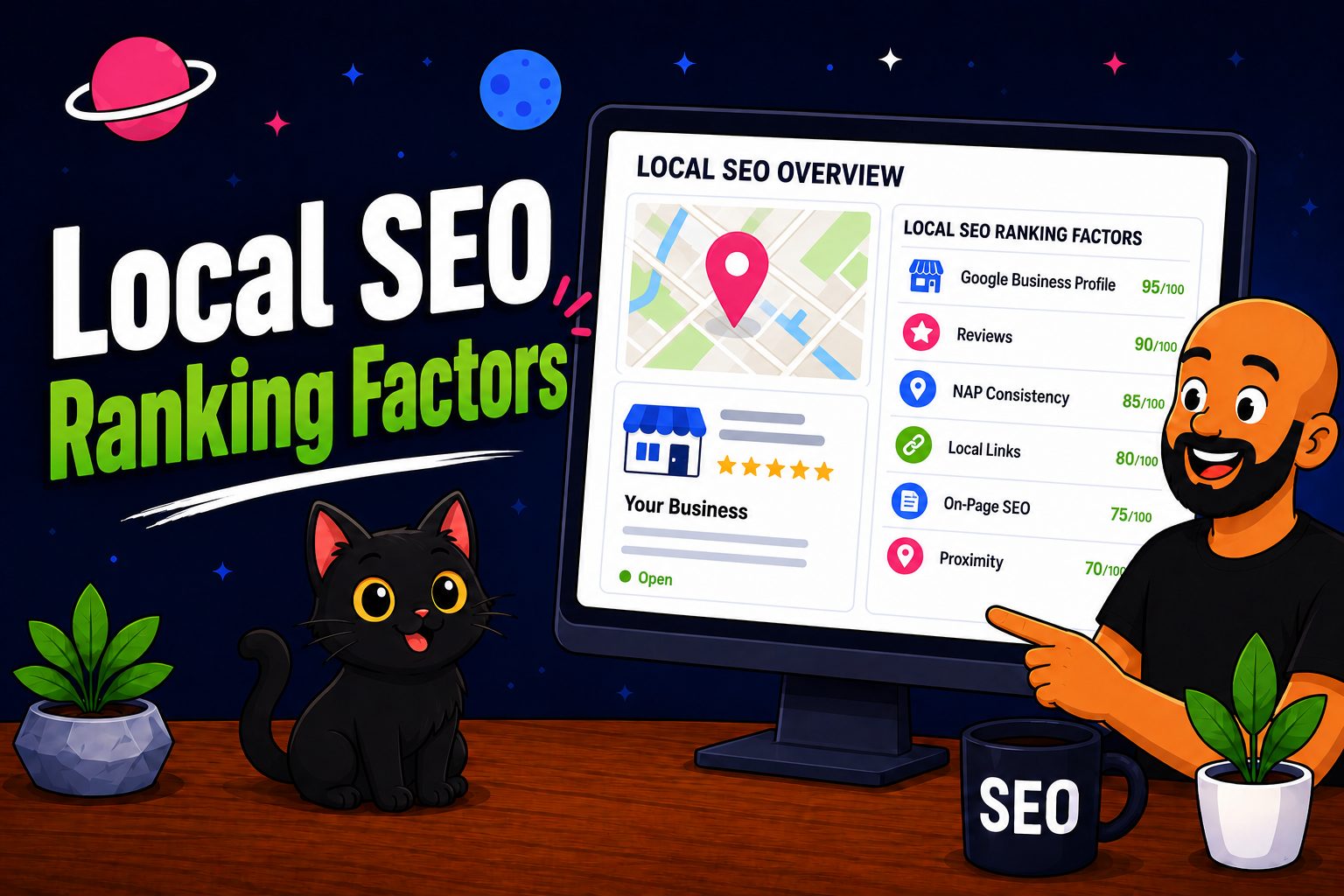
Local SEO Ranking Factors
What actually moves you up the local rankings in NZ — and exactly where citations sit.

Local Business Schema
The on-site markup that helps Google verify your business details — no code required.