
Everyone’s talking about NLP SEO like it’s rocket science. It isn’t.
Strip away the jargon and it comes down to one idea: write your content so people and search engines — and now AI — can clearly understand what you’re saying.
That’s it. The industry has wrapped that simple idea in tokenization diagrams and Python tutorials until it sounds like something only a data scientist could pull off.
You don’t need any of that.
By the end of this guide you’ll know exactly what NLP SEO is, why it matters more in 2026 than it ever has, and a dead-simple method to do it well — one that works whether you’re writing about dental implants or home loans. No nerdifying required.
Let’s get into it.
Key Takeaways
- What it is: NLP SEO (natural language processing SEO) means writing so search engines understand the meaning of your content, not just the keywords.
- Google has shifted from matching words to understanding meaning — entities, context and search intent now decide what ranks.
- The industry overcomplicates it. If you’re a genuine expert covering your topic completely and clearly, you’re already doing most of NLP SEO.
- The method: be the expert, cover everything a reader would ask, answer questions directly, then tidy it up with clear headings and structure.
- The same clarity that wins NLP SEO wins AI search — AI Overviews, ChatGPT and Gemini all read and cite content the same way.
- NZ opportunity: most local competitors publish thin, keyword-stuffed content, so the clearest expert voice wins — a very winnable game in a small market.
What Is NLP SEO?
NLP SEO is the practice of writing and structuring your content so search engines understand its meaning, not just its keywords.
NLP stands for natural language processing. It’s the technology search engines use to read human language the way a person would — picking up context, relationships between words, and what you’re really trying to say.
NLP SEO is simply optimising your content for that technology.
Here’s the shift in one sentence: Google used to match the exact words you typed. Now it understands the meaning behind them.
Say someone searches “best flat white near me.” Old Google looked for pages containing those exact words.
Modern Google understands the person wants a nearby café that makes good coffee, and it reads your page to work out whether you’re genuinely that place — even if you never used the phrase “flat white near me” once.
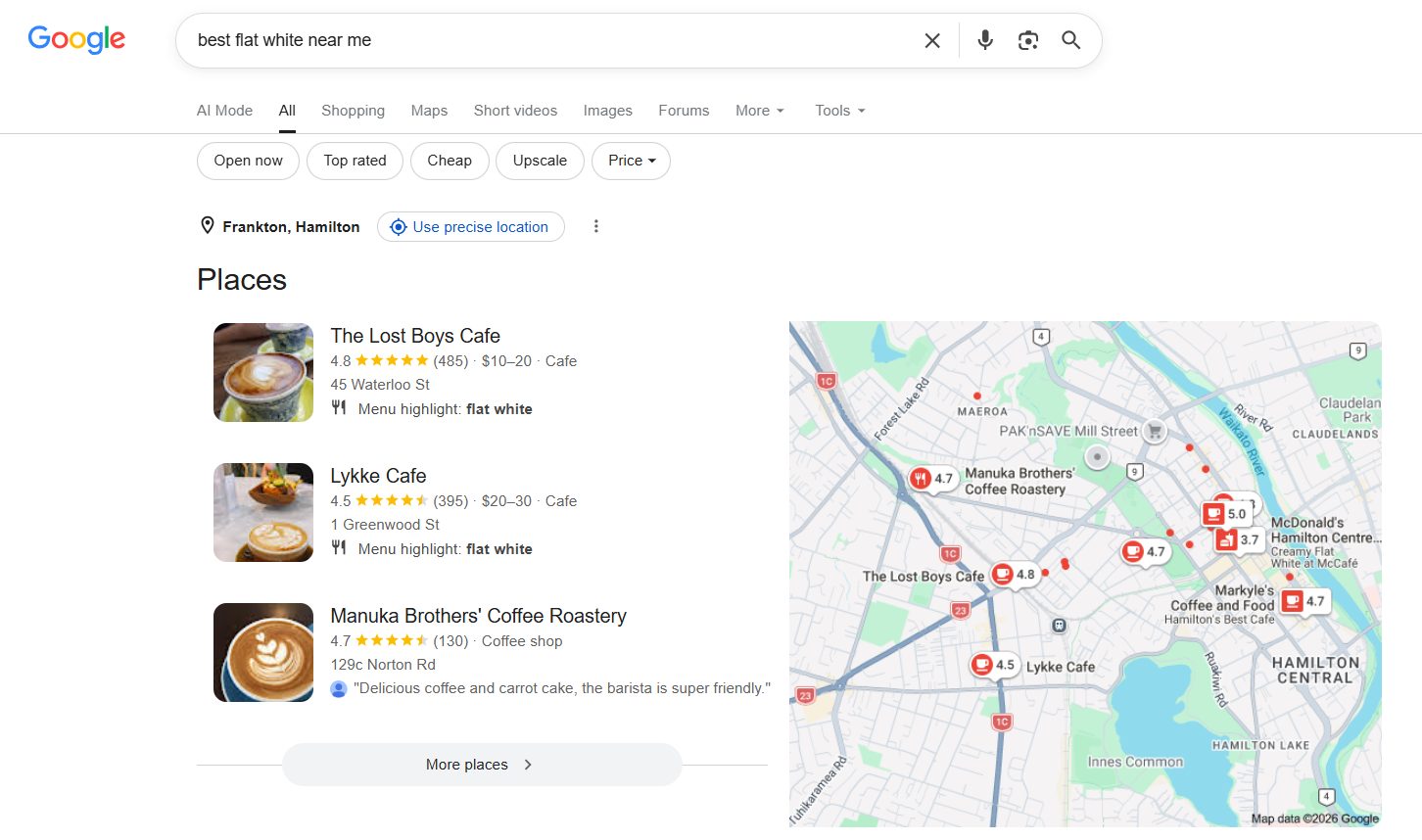
That’s NLP at work. And optimising for it is NLP SEO.
Why NLP SEO Matters More in 2026
For most of SEO’s history, you could rank by repeating a keyword enough times and building enough links. That era is over.
Google’s shift started years ago with updates like BERT and MUM — systems built to understand language, not just index it. But the real turning point is what’s happening on the results page right now.
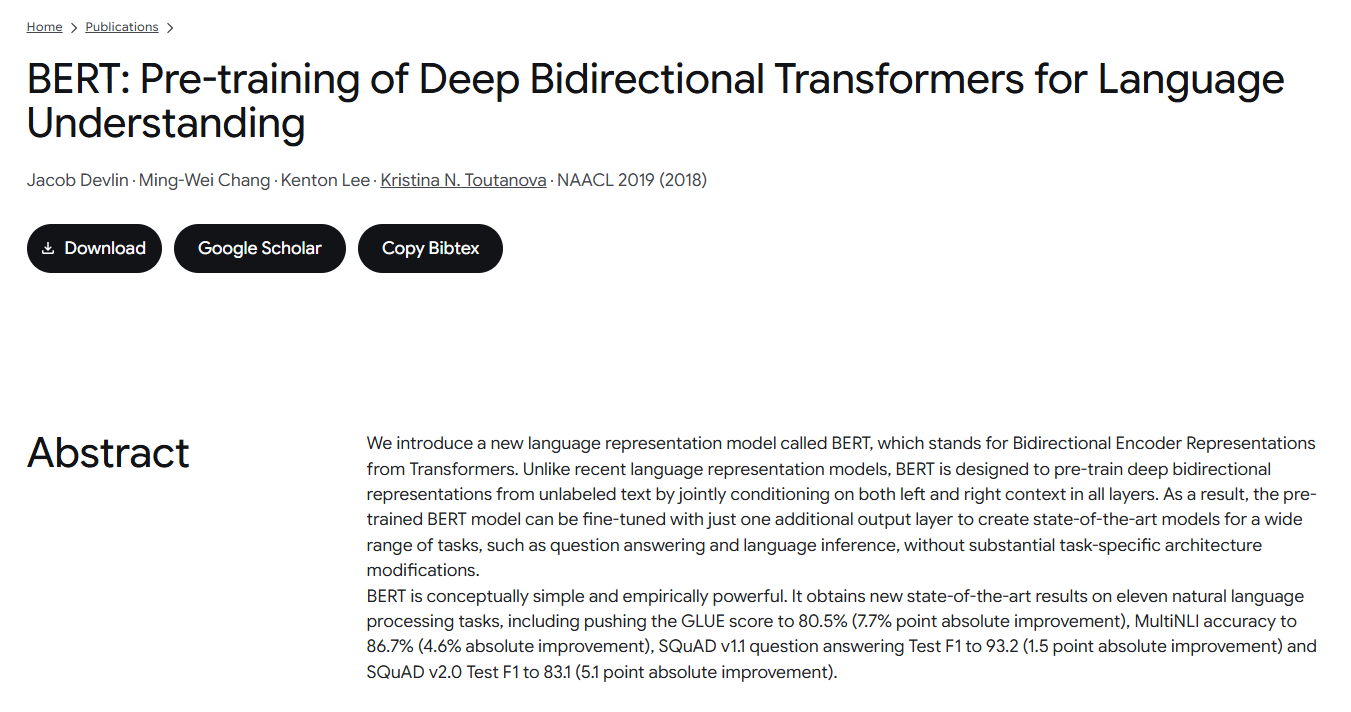
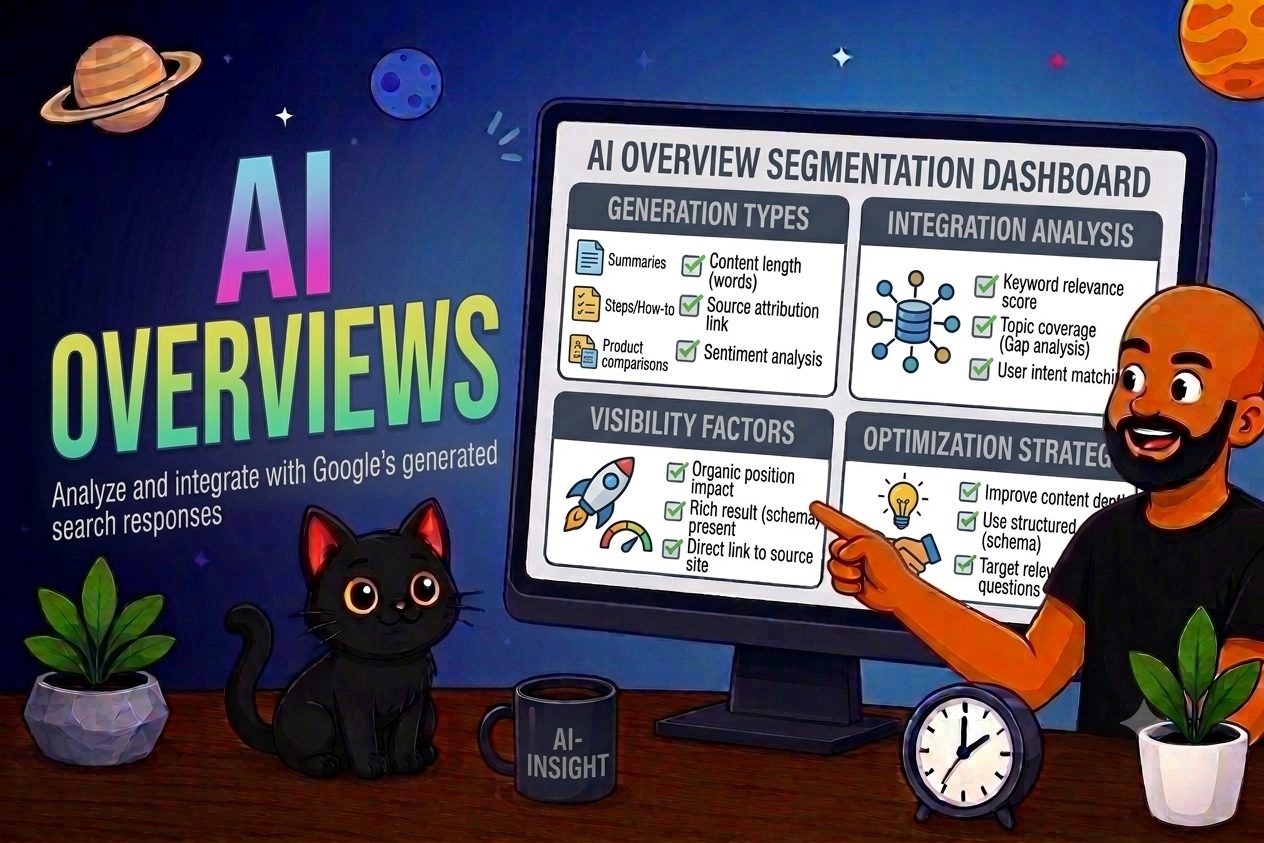
Search is increasingly answered by AI. AI Overviews sit at the top of Google results, summarising answers before anyone scrolls. And a huge chunk of searching has moved off Google entirely — people now ask ChatGPT, Gemini and Claude their questions directly.
Here’s the thing all of these have in common: they’re built on natural language processing. Is Google search NLP? Yes — modern Google runs on it. Is ChatGPT NLP? Also yes.
Every one of these systems reads your content by trying to understand its meaning.
Which means the content that gets understood is the content that gets surfaced.
In an AI Overview. In a ChatGPT answer. In a Gemini response. The clearer and more genuinely useful your writing, the more likely an AI is to read it, trust it, and cite it.
For NZ businesses, this is good news. Our market is small. Most of your competitors are still stuffing keywords and publishing thin, waffly content. Being the clearest, most genuinely expert voice in your niche is a winnable game here — far more winnable than it is in the US.
How Google Uses NLP
You don’t need a computer science degree for this. But understanding roughly how Google reads a page makes everything else click into place. Here are the four ideas that matter.
Entities, Not Just Keywords
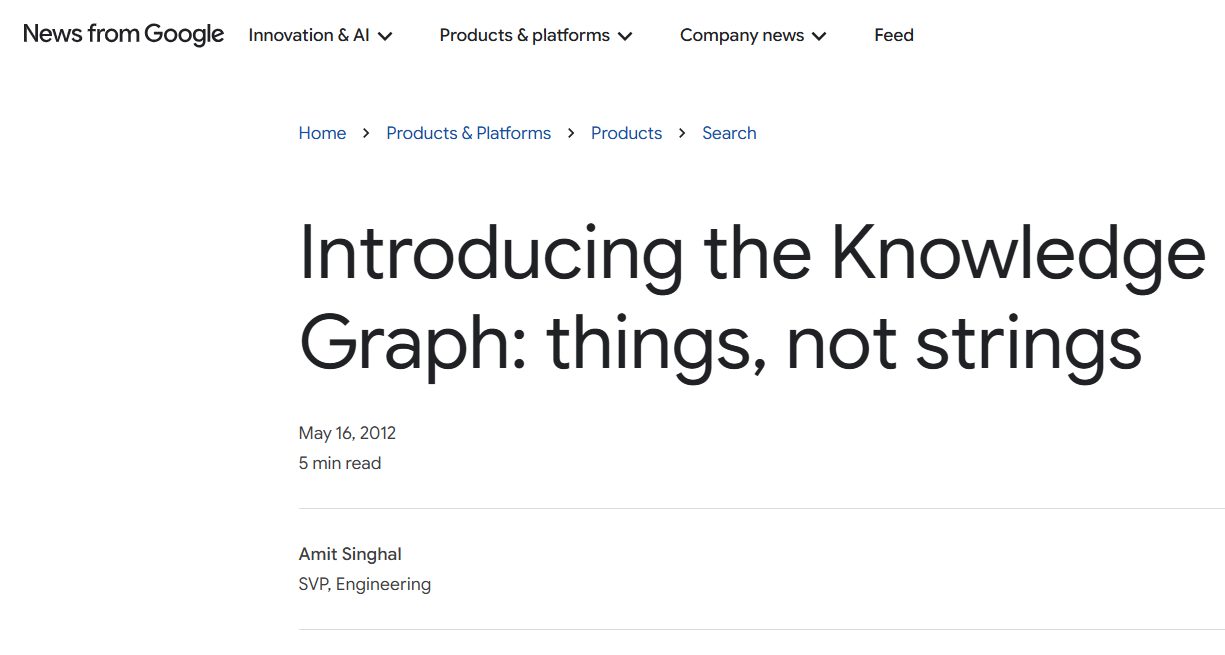
An entity is a “thing” Google recognises — a person, place, product, or concept it knows about.
Google doesn’t just count keywords anymore. It looks for the related entities it expects to see when you write about a topic.
Write a genuine article about flat whites and Google expects to see words like espresso, milk, café, barista, and roast. Those related terms prove you actually know the subject.
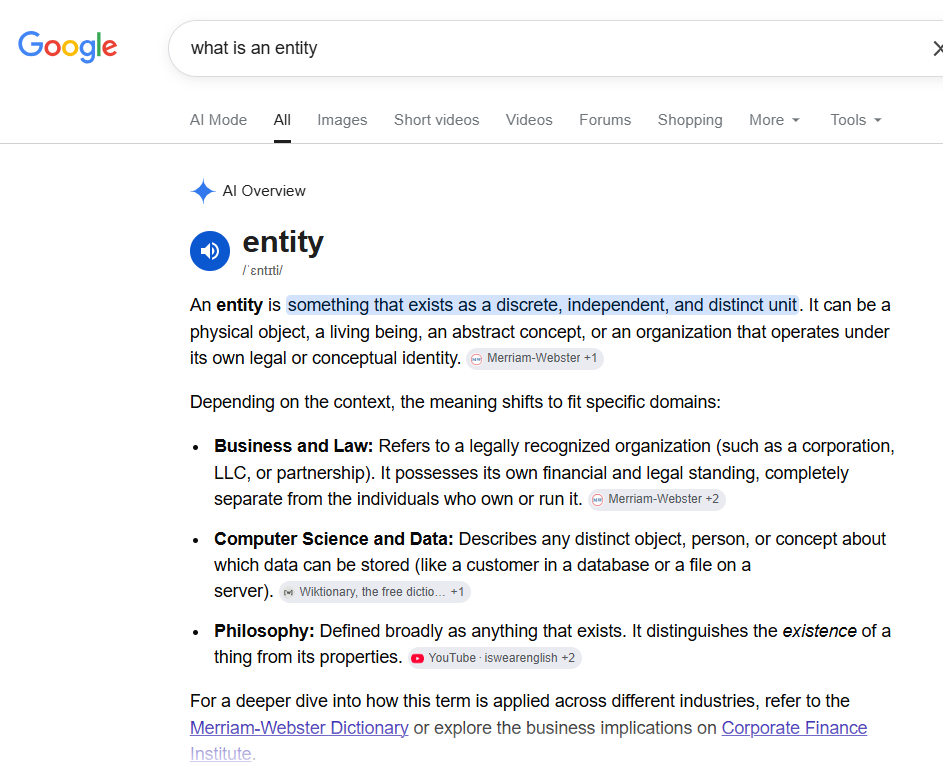
Miss them, and your page looks shallow — no matter how many times you say “flat white.” (More on the keyword-versus-entity shift below, because it changes how you should think about writing entirely.)
Salience — or “Aboutness”
Salience is how strongly Google thinks a page is about a particular topic.
If your article mentions flat whites once but spends most of its time on interior design, Google decides the page is mostly about interior design. The topic you cover most thoroughly and specifically is the topic you’ll rank for. Salience is why half-hearted, keyword-sprinkled content doesn’t work anymore — Google can tell the difference between a page that’s genuinely about something and one that just name-drops it.
Context and Intent
Google reads a query and works out what the person actually wants — not just what they typed.
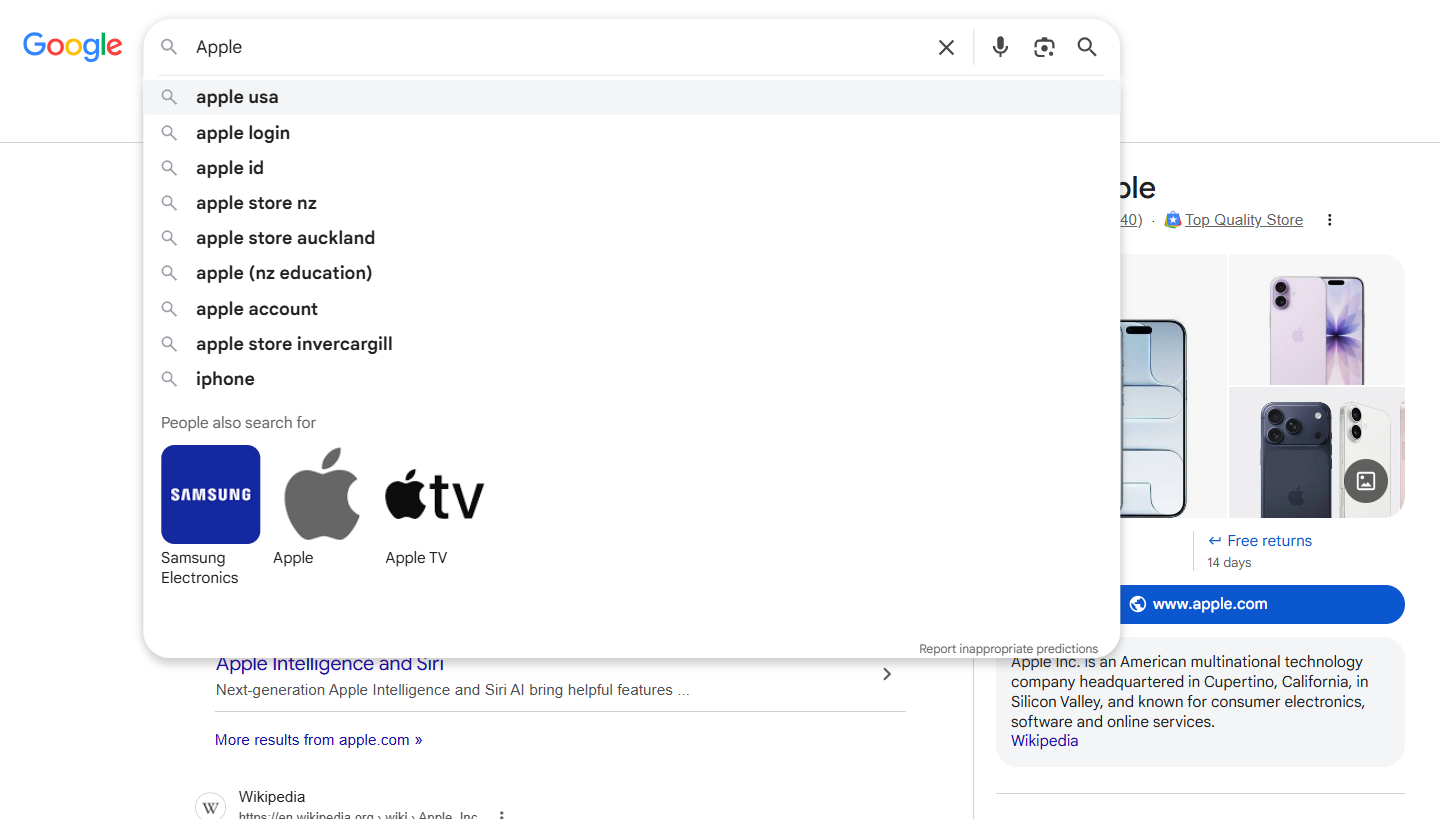
“Apple” could mean the fruit or the company. Google uses context to decide. The same applies to your content: it reads the surrounding words to understand your meaning.
This is why search intent is everything. Match what the searcher actually wants, and you’re already ahead.
Structure and Meaning
How you lay a page out tells Google what’s what.
Headings, lists, tables and the order of your content all carry meaning. A numbered list signals a process or a ranking.
A clear heading tells Google exactly what the section below it is about. Structure isn’t decoration — it’s part of how a machine reads your page. We’ll come back to this in the practical section.
The Big Misconception About NLP SEO
Here’s where I’ll probably annoy a few SEOs.
The industry has taken a simple idea and turned it into a technical fetish. Read most guides on NLP SEO and you’ll come away thinking you need to run every sentence through Google’s Cloud NLP API, count “dependency hops,” and reverse-engineer a parser.
You don’t. That’s over-engineering.
The truth is much simpler:
If you’re a genuine expert writing naturally and thoroughly about your topic, you’re already doing most of NLP SEO without trying.
Think about it. If you actually understand your subject, you naturally use the right vocabulary.
You naturally mention the related concepts. You naturally answer the questions people have, because you’ve heard those questions a hundred times.
That’s salience. That’s entity coverage. That’s intent-matching. You’re doing it by default.
The problem isn’t that people write too naturally. It’s that too many people write about things they don’t really understand — and that’s what NLP SEO is supposed to fix. Not with technical tricks, but with genuine expertise expressed clearly.
So here’s the method I use.
The Expert-Conversation Method
Here’s the whole thing in one image: imagine you’re sitting down for a coffee with a mate who knows nothing about your topic, and they’ve asked you to explain it.
You wouldn’t talk in keywords. You wouldn’t stuff phrases. You’d just… explain it. Properly. Covering everything they’d need to know, in plain language, until they got it.
That conversation — cleaned up and structured — is NLP SEO. Here’s how to do it in four steps.
Step 1: Be the Expert
This is the part nobody wants to hear. If you don’t genuinely understand your topic, that’s mistake number one, and no tool will save you.
You can’t fake genuine expertise, and increasingly you can’t fake it past Google either — this is the whole point of E-E-A-T (experience, expertise, authoritativeness, trust).
So before you write, make sure the knowledge is real. If it’s not yours, get it from someone whose it is.

Step 2: Cover Everything They’d Naturally Ask
Now explain the topic the way you would to that friend — completely.
Say you’re a dentist writing about dental implants — a bread-and-butter topic in SEO for dentists.
You wouldn’t just define them. You’d naturally cover what they are, the benefits, how much they cost, what the procedure involves, how long they last, and whether they hurt. You’d answer everything, because you know that’s what someone actually wants to know.
Do that, and watch what happens: you’ve naturally used every relevant entity, matched every version of the searcher’s intent, and built enormous salience — all without thinking about NLP once. Full topic coverage is the single most powerful NLP SEO move there is.
Step 3: Answer Questions Directly
When you answer something, answer it. Don’t beat around the bush.
Google — and AI — reward a clear, direct answer. If the question is “how much do dental implants cost in NZ,” the best possible sentence is something like:
“Dental implants in New Zealand typically cost between $3,000 and $6,500 per tooth.” Straight to it. That clarity is exactly what gets pulled into featured snippets and AI Overviews.
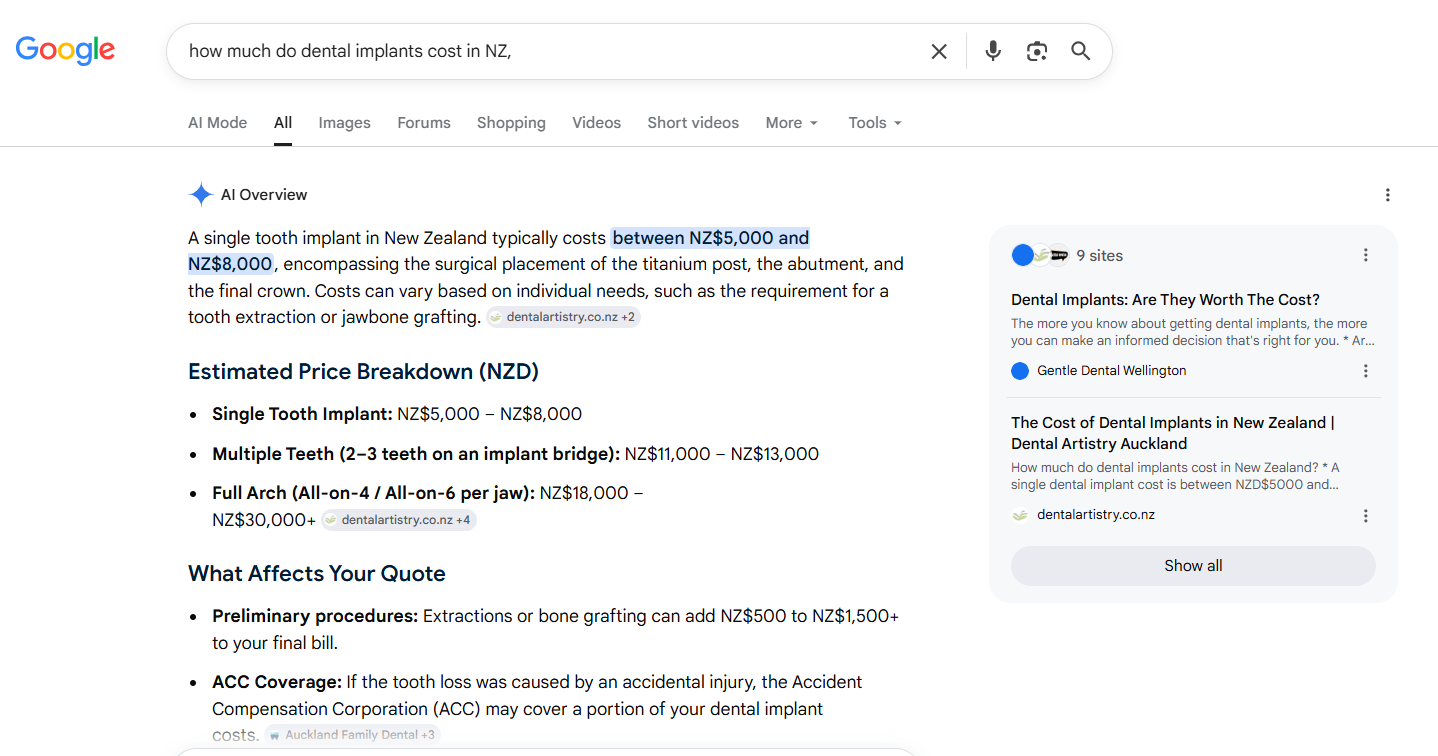
Waffling for three paragraphs before you get to the point isn’t just bad writing — it makes a machine less confident you actually answered the question.
Step 4: Then Tidy It Up
This is the only “technical” step, and it’s the easy one.
Take that natural, complete, expert explanation and clean it up. Add clear headings. Put your keyword in the H1, the intro, and a few headings where it fits naturally. Break long chunks into short paragraphs and lists. Structure it so both a human and a machine can scan it.
That’s it. A great conversation, tidied into an optimised page. That’s NLP SEO, start to finish.
The Clean-Up Layer: Practical On-Page Techniques
Step 4 deserves a proper checklist. Once you’ve written your expert explanation, run it through these. None of them are hard.
Answer the question in the first sentence of each section. Lead with the answer, then explain. Don’t build up to it.
Use clear headings that match how people ask. If people search “how much do implants cost,” a heading that says “How much do dental implants cost?” beats a clever one that says “The price question.”
Keep sentences simple — one idea each. Short sentences are easier for humans and machines to parse. If a sentence has three commas and a “however,” break it up. The free Hemingway app is brilliant for this — paste your text in and it flags anything too complex.
Cover the whole journey, not just the keyword. Someone reading about implants might next wonder about alternatives, aftercare, or finance options. Cover those and you keep them on the page — and pick up more entities and long-tail rankings while you’re at it.
Link related topics together. Internal links help Google understand how your content connects and builds topical authority. If you’ve written about a related subject, link to it.
Isolate your key terms so Google can extract them. In headings and list items, keep the important term clean and on its own. “Dental Implant Cost” is easier for Google to pull than “Everything About What You Might Pay (2026 Edition).”
Entities vs Keywords, Explained Simply
This is worth its own section because it’s the mindset shift that makes NLP SEO click.
Old SEO thinking: pick a keyword, use it a bunch of times, rank for it.
New thinking: cover a topic so completely that Google has no doubt you’re an authority on it.
Think of it like a jigsaw puzzle. If you’re writing about bicycles, Google expects to see the related pieces — tyres, gears, pedals, brakes, frame.
Show up with all the pieces and you’ve proven you know bikes. Show up with just the word “bicycle” repeated forty times and you’ve proven nothing.
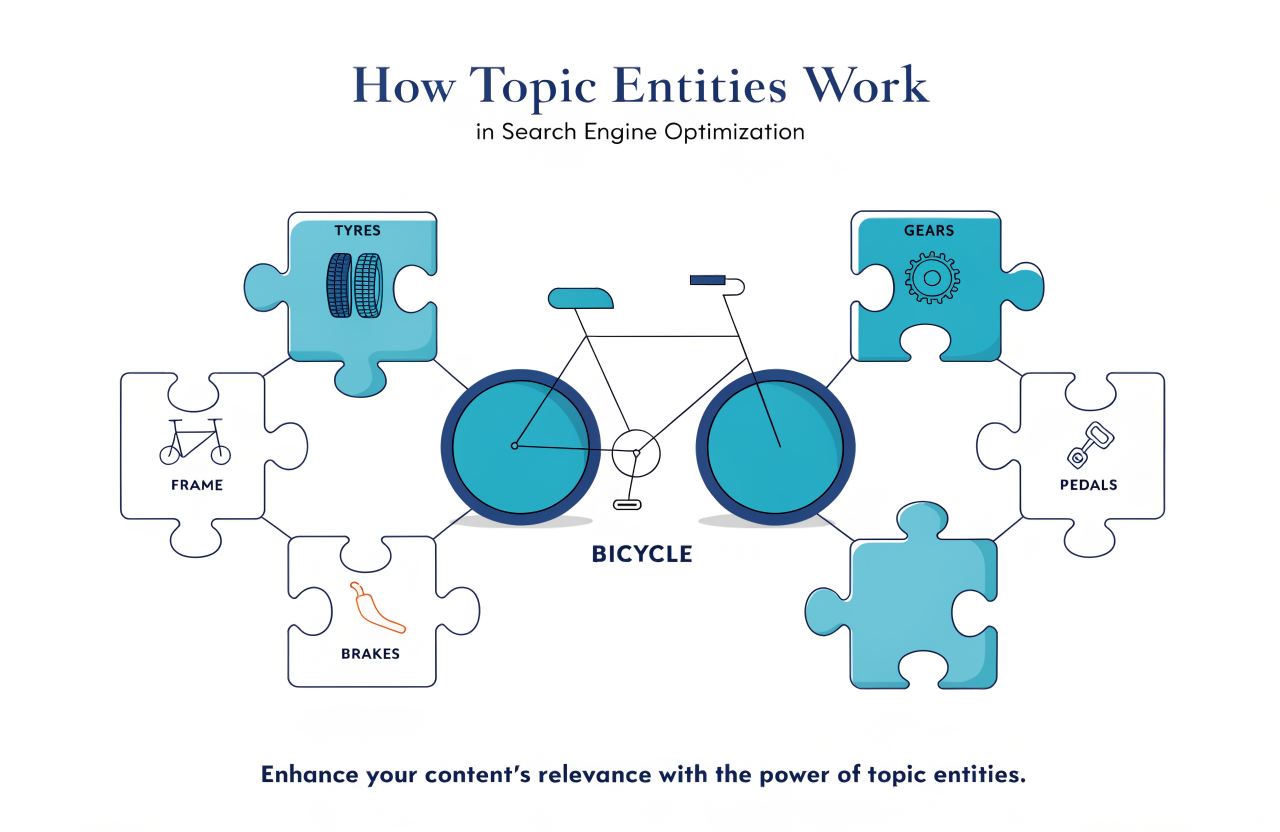
This is why chasing exact-match keywords is the old way, and why keyword research now feeds into topic coverage rather than replacing it. You still want to know what people search. But you win by answering the whole topic, not by hitting a keyword density target.
Do You Need NLP SEO Tools?
Short answer: they help, but they won’t do the hard part for you. Here’s the honest breakdown.
Free Tools Worth Using
Google Cloud Natural Language API demo. This is the closest thing to seeing your page through Google’s eyes. Paste in your text and it shows you which entities Google identifies and how salient (important) it thinks each one is.
If the entities it pulls out aren’t the ones you’re targeting, that’s a signal to tighten your writing. Free, and genuinely useful.
Hemingway app. Not an SEO tool, but a readability one. It flags overly complex sentences so you can simplify — which is exactly what NLP rewards.
Paid Tools
Surfer SEO is the one most people mean when they say “NLP SEO tool.” It scans the top-ranking pages and gives you a list of terms and entities to include.
Handy, but treat it as a checklist, not a script — blindly stuffing in Surfer’s suggested words produces robotic content that reads worse.
Semrush and Clearscope do similar content-optimisation work. All of them are fine. None of them replace knowing your topic.
The Honest Verdict
Tools are great for one thing: checking and tidying. They’ll catch an entity you forgot or a section that’s harder to read than you realised. What they can’t do is give you genuine expertise or a real point of view.
If you lean on them to generate your knowledge, you’ll produce the same thin, samey content everyone else does — and that’s exactly what NLP is designed to filter out.
Use tools to polish the expert conversation. Don’t use them to fake one.
Not sure where your own content currently stands? A free SEO audit will tell you faster than any single tool — it flags the gaps in coverage, structure and entities in one pass.
NLP SEO and AI Search (AI Overviews, ChatGPT, Gemini)
Here’s the part most older guides miss entirely, because they were written before AI search took off.
The exact same writing that wins NLP SEO also wins AI citations. It’s not two jobs — it’s one.
When ChatGPT, Gemini or Google’s AI Overview builds an answer, it’s scanning content for clear, trustworthy, well-structured information it can lift and attribute.
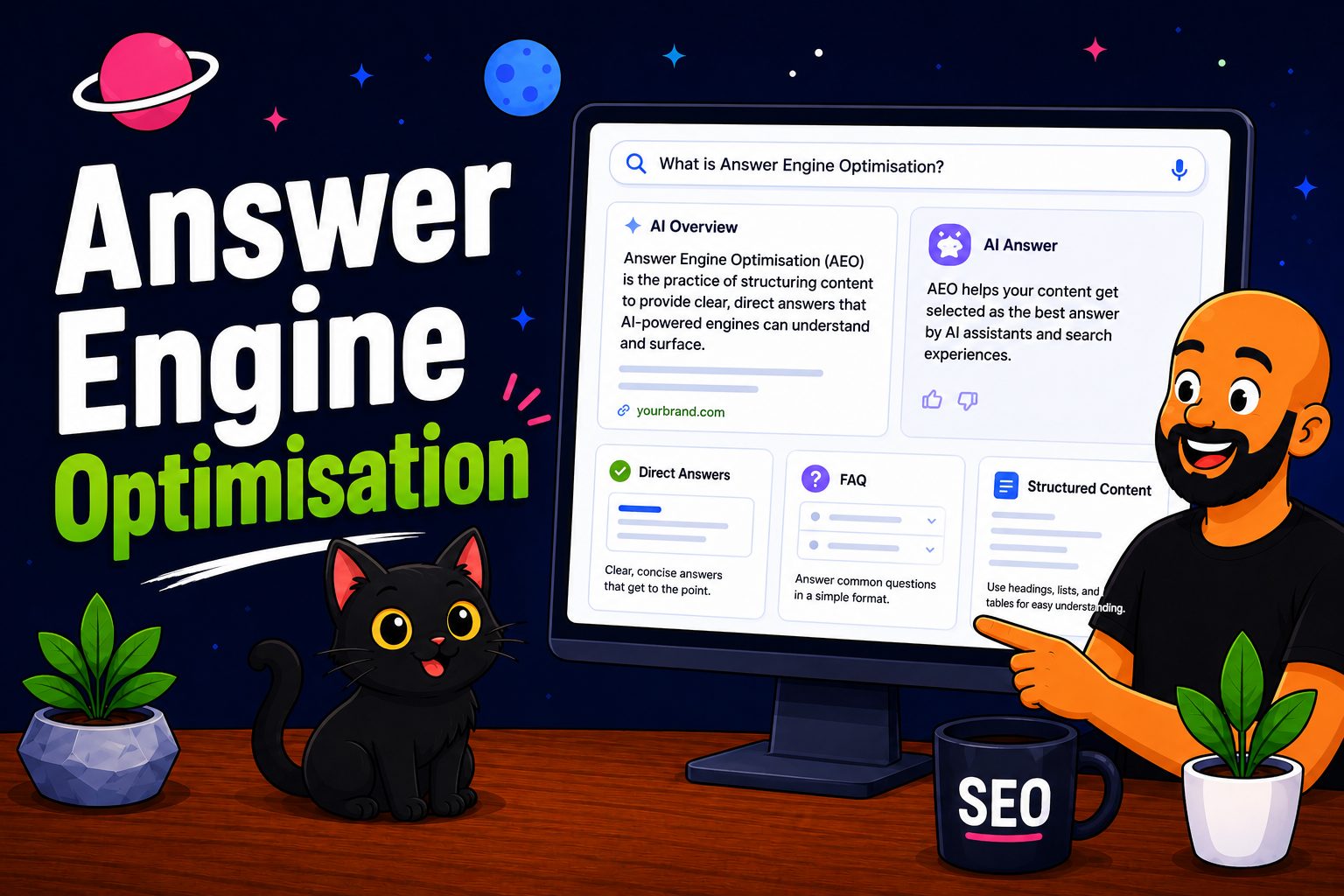
The clearer your answer, the easier you are to cite. This is the heart of newer disciplines like Answer Engine Optimisation and Generative Engine Optimisation — but the fundamentals are the same NLP fundamentals we’ve covered.
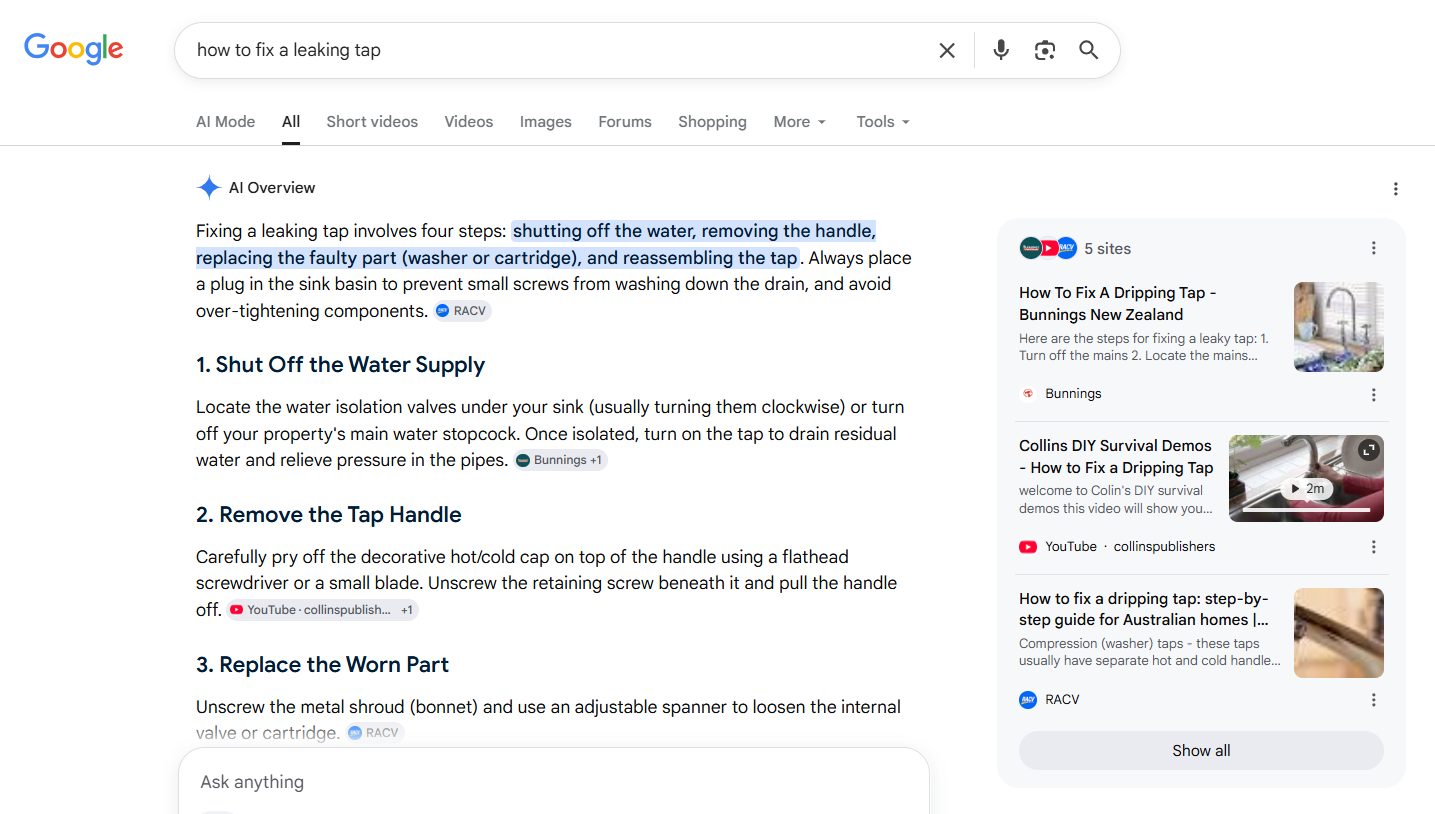
To get pulled into AI answers:
- Give direct, quotable answers. One clean sentence that fully answers a question is gold to an AI.
- Cover entities thoroughly. The same salience that ranks you helps an AI trust you as a source on the topic.
- Structure clearly. Headings, short paragraphs and lists make your content easy for a machine to extract.
- Build trust signals. Real expertise, author credibility and citations matter more to AI than ever.
Do the NLP work properly and you’re not just ranking on Google — you’re showing up wherever people ask their questions now.
Common NLP SEO Mistakes
A few traps I see constantly:
Keyword stuffing in a new disguise. Cramming in every “related term” a tool suggests is just keyword stuffing wearing an NLP costume. Google spots it. Write for the human first.
Writing about a topic you don’t understand. No amount of optimisation fixes a shallow article. If the expertise isn’t there, it shows.
Robotic writing that reads worse for humans. If you’re contorting sentences to fit “NLP best practices,” you’ve missed the point. Natural, clear writing is the best practice.
Ignoring structure. Great content buried in one giant wall of text is hard for humans and machines. Headings and formatting aren’t optional.
How to Use NLP SEO For Your NZ Business
Most NLP SEO advice is written for a US audience, which misses two things that matter here.
First, local context is an entity signal. Mentioning your city, region, suburbs, and NZ-specific terms genuinely helps Google understand who you serve and where.
A tradie chasing work in Auckland who naturally references local suburbs, council rules and NZ pricing builds relevance a generic international article never will — and the same goes for a clinic or café competing for customers in Wellington.
Second, and more importantly: the bar is low here, so the opportunity is high. In a small market where most competitors are still publishing thin, keyword-stuffed content, being the genuinely expert, clearly-written voice in your niche is absolutely within reach.
You don’t need to out-link a US giant. You need to out-explain your NZ competitors — and most of them aren’t even trying.
That’s the whole game: real expertise, explained clearly, structured well. It sounds simple because it is.
Doing it consistently, across a whole site, for the topics that actually bring in customers — that’s the part that takes work. It’s also exactly what our SEO services handle for NZ businesses.
Final Thoughts
Don’t overcomplicate NLP SEO.
Be a genuine expert. Explain your topic the way you’d explain it to a friend who wants to understand it — completely, clearly, answering everything they’d ask. Then tidy it up with good headings and structure.
Do that, and you’re doing NLP SEO. You’ll rank better, you’ll get cited in AI answers, and you’ll build real trust with the people reading. No tokenization diagrams required.
If you’d rather have this done properly — genuinely expert content, structured to rank and to get cited, built for NZ businesses — that’s exactly what our SEO agency does. Get in touch and let’s talk about your site.
NLP SEO: FAQ
What is NLP in SEO?
NLP in SEO means optimising your content so search engines can understand its meaning using natural language processing — the technology Google uses to read human language. In practice, it means covering a topic thoroughly, writing clearly, and structuring content well, so Google understands what your page is genuinely about.
Is Google search NLP?
Yes. Modern Google search relies heavily on natural language processing to understand both what users are searching for and what web pages actually mean. Updates like BERT and MUM, and features like AI Overviews, are all built on NLP.
What is NLP used for?
NLP (natural language processing) is used to help computers understand, interpret and generate human language. In SEO it powers how search engines read content and match it to queries. More broadly it powers translation, chatbots, voice assistants and AI tools like ChatGPT.
What are the 4 types of SEO?
The four core types are on-page SEO (your content and page optimisation), off-page SEO (links and reputation), technical SEO (how your site is built and crawled), and increasingly local or AI/generative SEO depending on how you slice it. We break this down fully in our guide to the types of SEO.
What is NLP in simple terms?
NLP is how computers read and understand human language. Instead of just matching exact words, it works out meaning, context and the relationships between words — much closer to how a person reads.
How do you use NLP in SEO?
Be a genuine expert on your topic, cover it completely (answering all the questions a reader would have), answer those questions directly and clearly, then structure the content with clear headings and formatting. That naturally covers the entities, salience and clarity that NLP rewards.
What are the 5 steps of NLP?
In technical terms, NLP typically involves tokenization (splitting text into words), part-of-speech tagging (identifying grammar), parsing (mapping relationships between words), named entity recognition (identifying key "things"), and semantic analysis (working out meaning). You don't need to manage these manually — writing clearly handles them for you.
Is ChatGPT NLP?
Yes. ChatGPT is built on natural language processing (and large language models). It reads and generates human language using the same broad field of NLP that powers modern search — which is why content written clearly for NLP SEO also performs well when AI tools cite sources.