

You can have the best-written, most helpful page in your industry and still rank nowhere.
You can also build a pile of backlinks and still get ignored by Google.
Both happen for the same reason: SEO has two halves, and doing one without the other gets you nothing.
Those two halves are on-page SEO and off-page SEO. Get them working together and you rank. Get the order wrong and you waste months.
This guide breaks down exactly what each one is, how they differ, how they feed each other, and which to focus on first for a New Zealand business.
On-Page vs Off-Page SEO: The Quick Answer
On-page SEO is everything you optimise on your own website to help it rank. Off-page SEO is everything you do off your website to build its authority and trust.

On-page is the work you control directly: your content, keywords, structure, and page experience. Off-page is the work you earn from elsewhere: backlinks, mentions, reviews, and citations.
Here’s how they compare side by side.
| On-Page SEO | Off-Page SEO | |
|---|---|---|
| Focus | Your content, structure, and page experience | Your reputation and authority across the web |
| Main goal | Help Google understand and value your page | Prove to Google that others trust your site |
| Who controls it | You — fully | You — partly (you can only influence it) |
| Key tactics | Keywords, content, title tags, headings, internal links, page speed | Backlinks, brand mentions, reviews, directory citations, guest posting |
| How fast it works | Changes can move rankings within weeks | Compounds slowly over months |
There’s actually a third pillar most people forget: technical SEO.
We’ll cover where that fits shortly. For now, hold the simple version in your head: on-page is what’s on your site, off-page is what points to it.
What Is On-Page SEO?
On-page SEO is the work you do directly on your web pages so Google can understand them and rank them.

This is the half you have total control over.
Nobody else decides your title tags or how clearly your content answers a question. You do. That makes it the logical place for any NZ business to start.
The main on-page elements are:
- Content quality — the page actually answers what the searcher wants
- Keywords and search intent — built around terms people are really typing
- Title tags and meta descriptions — what shows in the search results
- Headings (H1, H2, H3) — clear structure Google can read
- URL structure — short, clean, keyword-aligned
- Internal links — connecting related pages on your site
- Images — compressed, named properly, with alt text
- Page speed and mobile experience — fast and usable on a phone
Take an Auckland dentist targeting “dental implants Auckland”.
Good on-page optimisation means a page with that keyword in the title, H1, and URL, a clear explanation of the procedure and cost, real photos of the clinic, fast load times, and headings that answer the questions a patient actually asks.
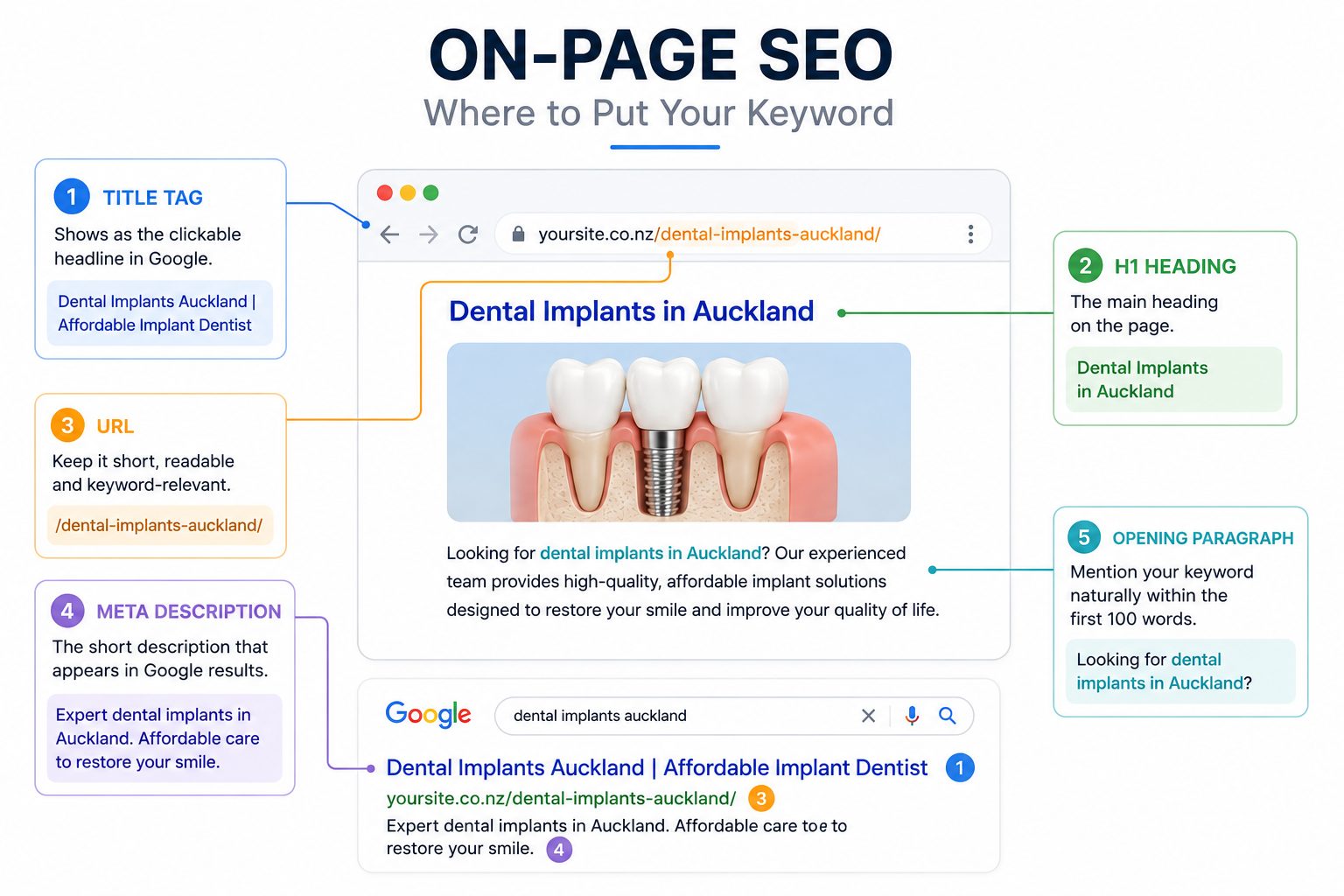
None of that needs another website’s permission. It’s all in the dentist’s hands.
This is why on-page is the foundation. It’s where you make a page deserve to rank before you ever ask anyone to link to it.
What Is Off-Page SEO?
Off-page SEO is everything you do away from your website to prove to Google it’s trustworthy and worth ranking.

The biggest part of off-page SEO is backlinks: links from other websites pointing to yours.
Google treats each one like a vote of confidence. The more quality sites that vouch for you, the more credible you look.
The main off-page elements are:
- Backlinks — links from other sites to yours
- Brand mentions — your business named online, even without a link
- Reviews — especially Google Business Profile reviews
- Local citations — consistent listings in NZ directories
- Social signals — your content shared and discussed
- Guest posting — writing for other sites to earn a link back
The catch with off-page SEO is control. You decide your own page titles, but you can’t decide who links to you.
You can only influence it by creating things worth linking to and doing the outreach. That’s the fundamental difference in mindset between the two halves.
This matters because backlinks remain one of Google’s strongest ranking signals.
A Backlinko study of 11.8 million search results found the #1 result has an average of 3.8x more backlinks than the pages ranking #2 to #10.
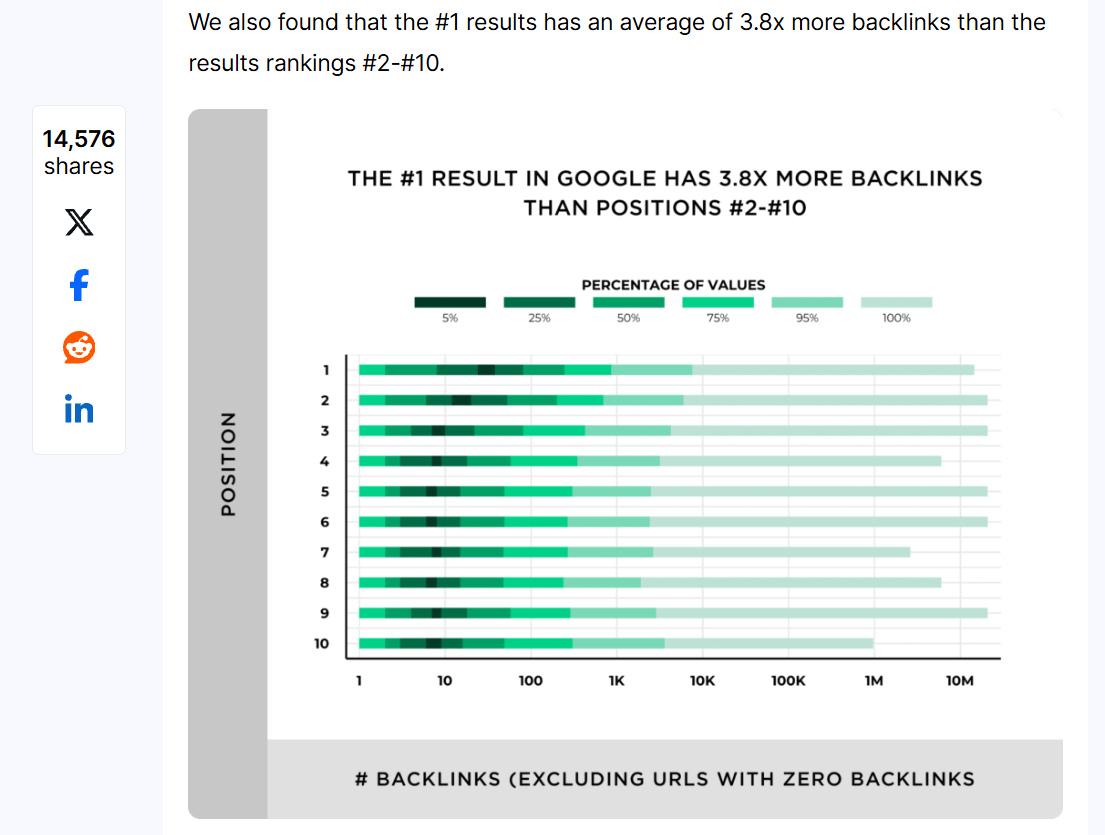
Links still move the needle.
The good news for NZ businesses is how little competition there often is. The same research found that 66% of pages have zero backlinks pointing to them.
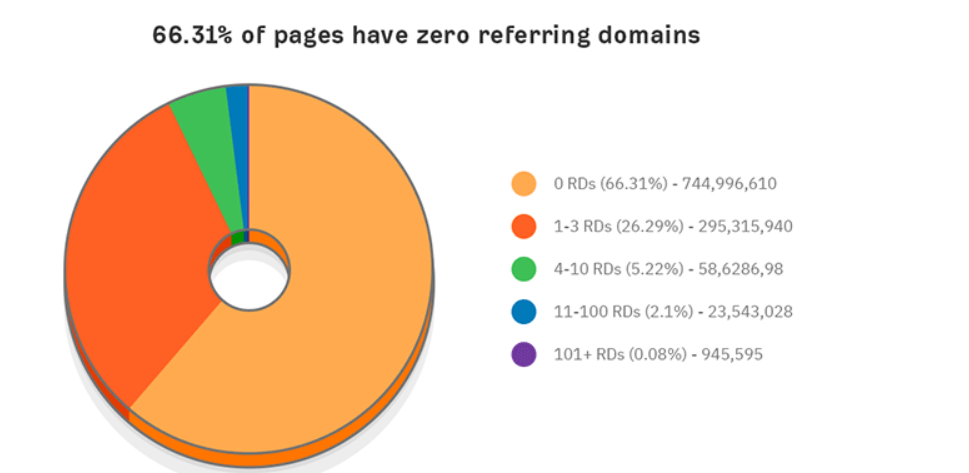
In a smaller market like ours, earning even a handful of relevant local links can put you ahead of competitors who’ve never bothered.
For a Lower Hutt plumber, off-page SEO looks practical, not technical. Steady Google reviews after each job. A listing on a few NZ trade directories with matching details. A link from a local supplier or a sponsored junior sports team.

That’s building those links and trust signals one real relationship at a time. Layer in guest posting on a relevant industry site and you’ve covered the basics.
For local businesses specifically, reviews and citations do a lot of the heavy lifting.
That overlap with ranking in your area is why off-page and local SEO are so closely tied for NZ service businesses.
Where Technical SEO Fits (The Third Pillar)
Technical SEO is the third pillar, and it sits underneath the other two. It makes sure Google can actually crawl, index, and load your site.
Get it wrong and your on-page and off-page work both stop counting.
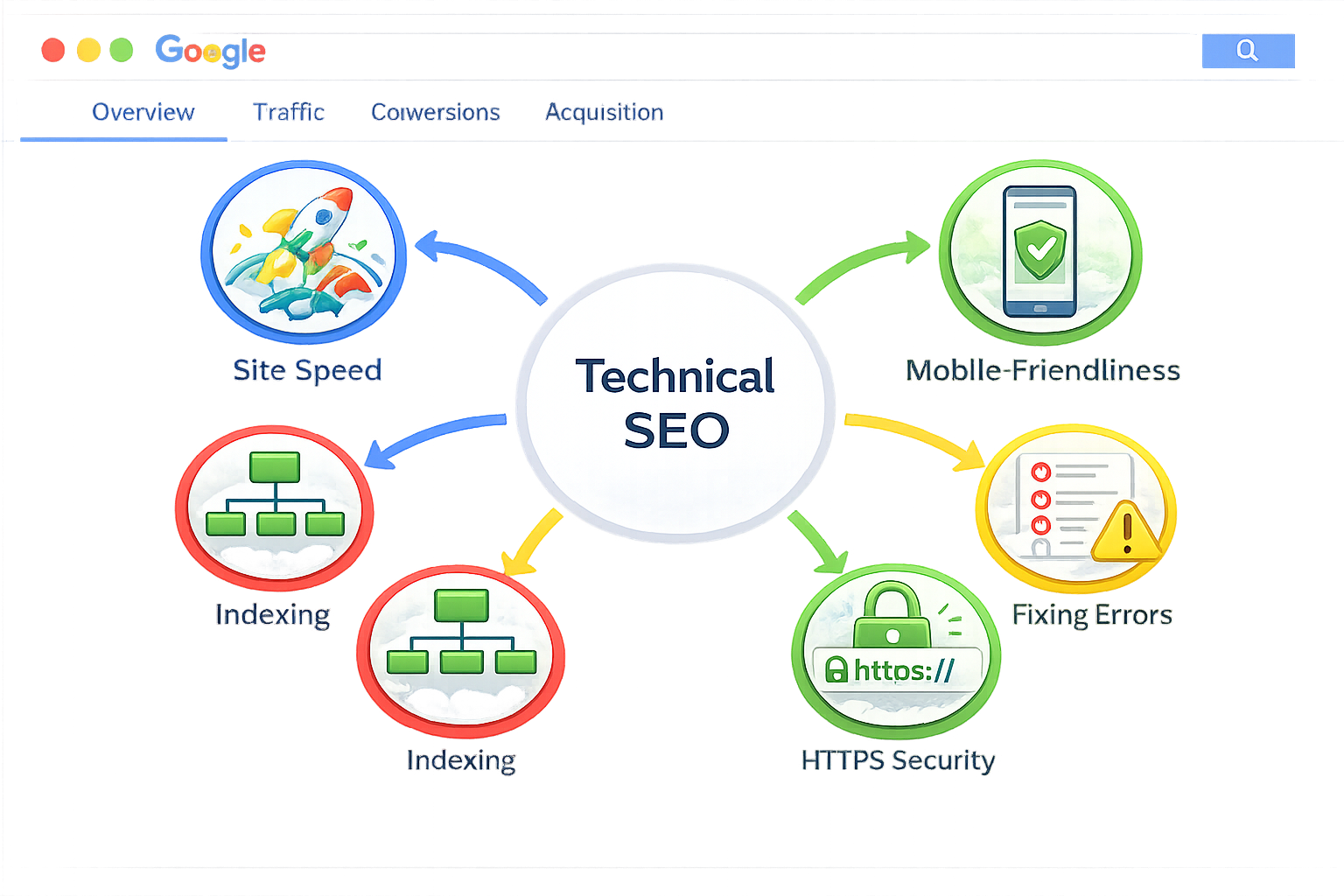
Think of a house. Technical SEO is the foundation. On-page SEO is the rooms you build on top. Off-page SEO is the reputation that brings people to the door. A beautiful house on a cracked foundation isn’t worth much.
The core technical checks are:
- Crawlability — Google can reach your pages
- Indexing — important pages aren’t accidentally blocked
- Page speed — fast loading, especially on mobile
- Mobile-friendliness — usable on a phone
- Site structure — logical, clean URLs and navigation
A surprising number of NZ websites quietly fail here.
Pages set to noindex by mistake. A blog buried so deep Google rarely crawls it. Broken links wasting crawl budget.
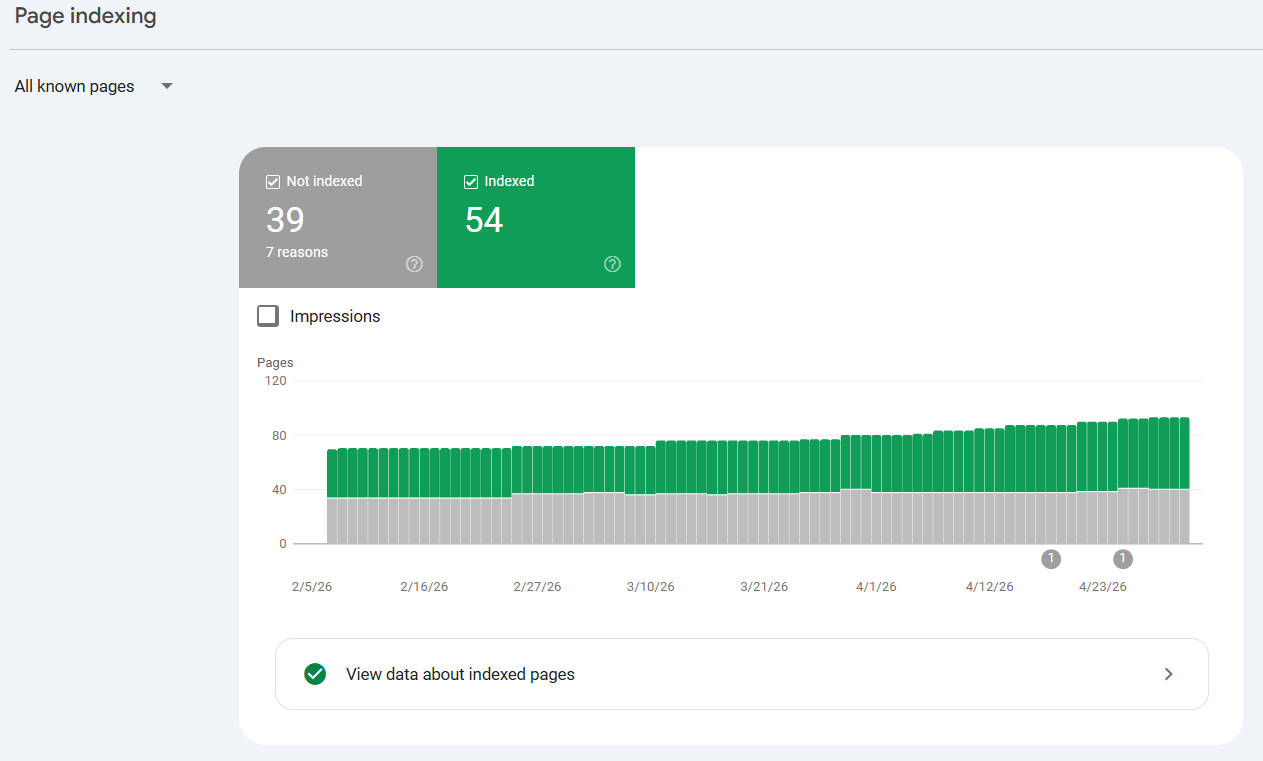
None of it shows on the surface, which is exactly why it gets missed.
If you’re not sure whether the technical side of SEO is holding you back, a proper site audit will surface the issues before they cost you rankings.
It’s usually the fastest way to find out whether the foundation is solid before you spend on anything else.
On-Page vs Off-Page SEO: The Key Differences
The textbook differences are obvious. The ones that actually affect your decisions come down to four things: control, speed, cost, and risk.
Control. On-page is fully yours. Off-page you can only influence. You can publish a better page this afternoon. You can’t make someone link to you this afternoon.
Speed. On-page changes can move rankings within weeks, sometimes faster. Fix a weak title, sharpen the content, and you can see movement quickly. Off-page is a slow burn. Links and authority build over months, and there’s no shortcut that doesn’t carry risk.
Cost and effort. On-page is mostly your time and clear thinking. Off-page often needs outreach, relationships, or content good enough to earn links on its own. That’s harder to manufacture.
Risk. This is the big one. Sloppy on-page work rarely hurts you; at worst the page just doesn’t rank. Sloppy off-page work can actively damage you. Buying cheap backlinks in bulk is the classic way NZ businesses tank their own rankings.
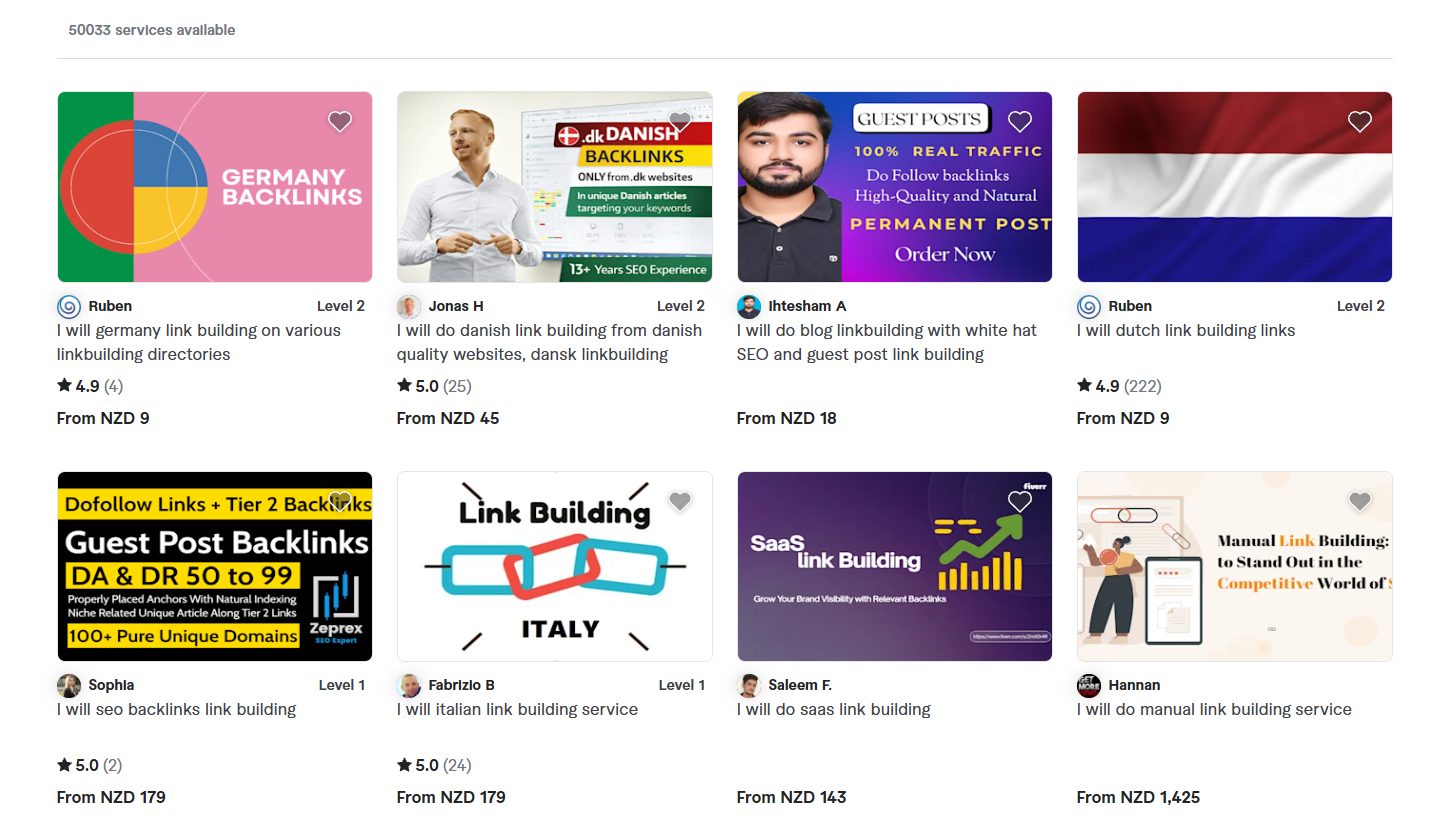
On-page is low-risk. Off-page done badly is high-risk.
Which Matters More, and What to Do First
“Which is better, on-page or off-page?” is the wrong question.
Neither ranks a site on its own. The better question is what to do first, and for most NZ businesses there’s a clear order.
Start with technical, then on-page, then off-page.
Here’s why off-page comes last. Backlinks point Google at your pages. If those pages are thin, slow, or don’t match what people are searching for, you’ve just sent Google to look at something that doesn’t deserve to rank.
You’ve spent the hardest, slowest currency in SEO pointing at a page that can’t convert it.
On-page first means your pages are worth ranking before you spend effort getting them seen.
It’s also the half you control, the half that works fastest, and the half that carries no risk.
The order shifts slightly depending on your site:
- Brand-new site: Almost all your early effort goes into technical setup and on-page content. You have no authority yet, and chasing links before you have pages worth linking to is wasted motion.
- Established site that’s stalled: You likely have the basics. The bottleneck is often authority, so off-page becomes a bigger share of the work, alongside sharpening existing pages.
The most common mistake is doing this backwards: buying backlinks for pages that were never good enough to rank. It’s like running ads for a shop that isn’t built yet. Fix the pages first.
If you want the complete sequence laid out, the full SEO process walks through every step in order, from keyword to ranking.
How On-Page and Off-Page SEO Work Together
On-page and off-page aren’t rivals fighting for your attention. They compound. Each one makes the other work harder.
The loop runs like this:
Strong on-page content earns links naturally, because people link to things that are genuinely useful.
Those links build your authority. That authority then lets your well-optimised pages actually rank. Better rankings get you more visibility, which earns more links. Round it goes.
That’s the difference between a one-off win and a site that keeps climbing. The first result on Google captures around 27.6% of all clicks, and barely anyone reaches page two. Getting there needs both halves pulling together.

This is exactly how we grew HealthVI from zero to over 20,000 monthly visitors in under a year.
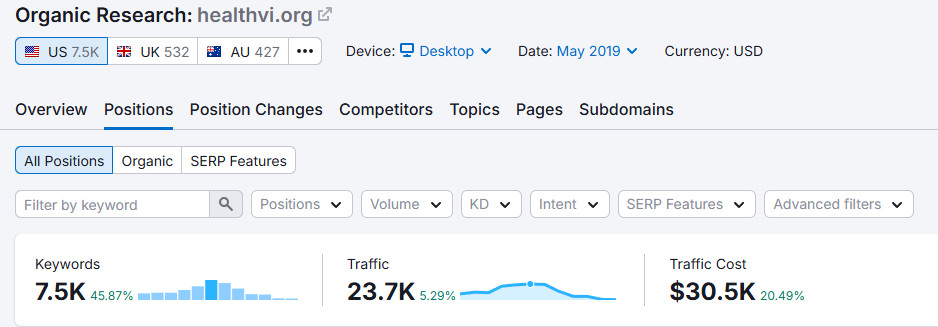
We didn’t pick one half. We built genuinely useful, properly structured pages first, then earned authority on top of that foundation.
The HealthVI results came from doing both, in the right order.
It’s the same approach our NZ SEO agency uses on every client site. On-page makes the page deserve to rank. Off-page gets it the trust to climb. Skip either and the whole thing stalls.
How This Changes for AI Search in 2026
AI search has changed where each half matters, but it hasn’t replaced either. If anything, it’s raised the stakes on both.
In ChatGPT and Google AI Overviews, your on-page work decides whether you’re extractable. Clean structure, direct answers, and clarity make it easy for an AI to pull your content into its response. Messy, bloated pages get skipped.
Your off-page work decides whether you’re trusted. AI systems lean on the same authority signals as traditional search to judge which sources are credible.
An Ahrefs study found that 38% of pages cited in AI Overviews also rank in Google’s top 10. 
Strong traditional rankings and AI citations go hand in hand, and you don’t get strong rankings without both on-page and off-page.
We’ve seen this first-hand.
Expert SEO is just over six months old and competing against NZ agencies that have been building authority for a decade. Despite that, it’s already getting cited in AI Overviews and ChatGPT.
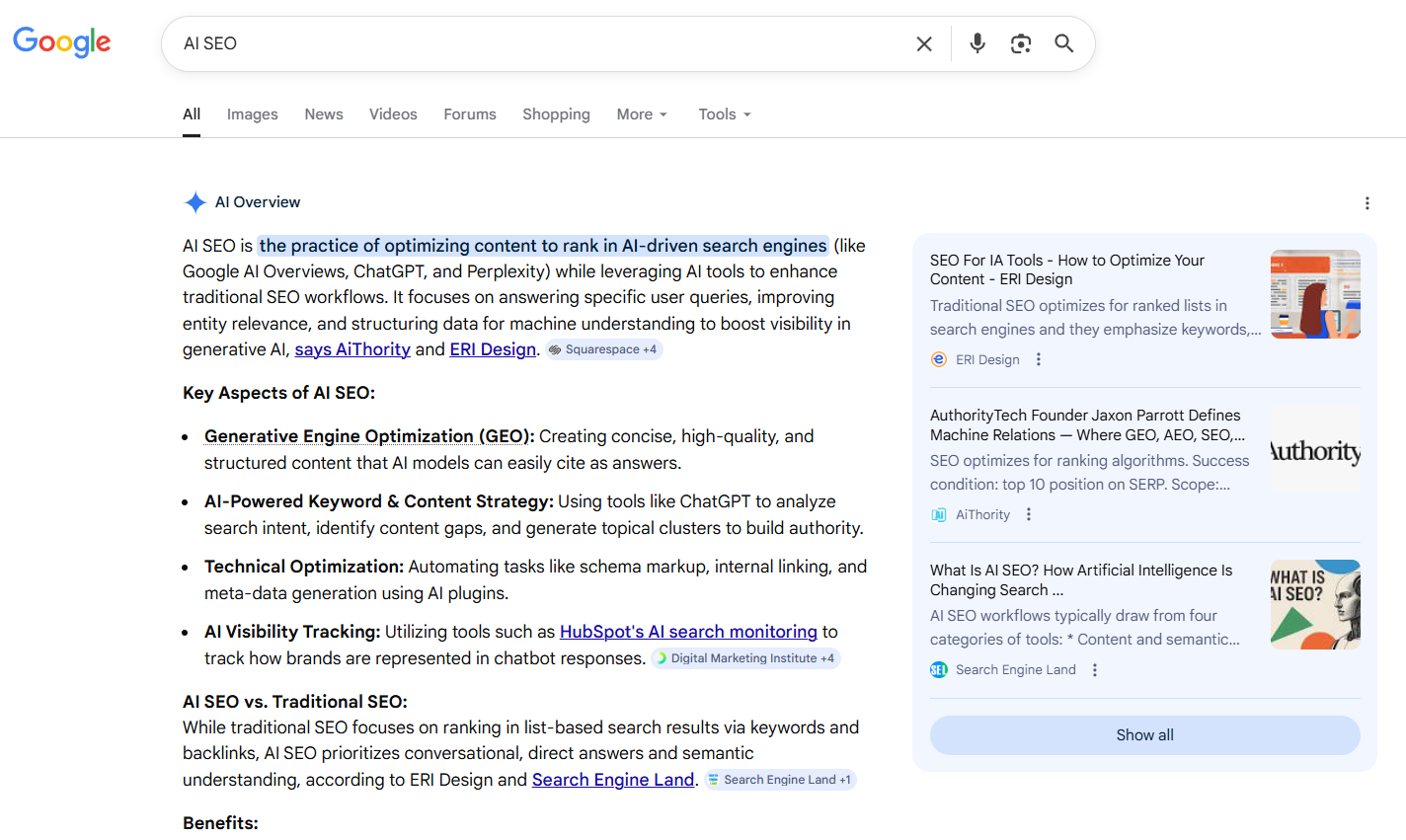
That came from clear on-page structure plus genuine authority, the same two halves, applied with AI extraction in mind.
If you want the deeper playbook, ranking in AI search covers exactly how to do it for an NZ business.
The takeaway is simple. AI search rewards the same fundamentals, done at a higher level. On-page for clarity. Off-page for trust.
DIY vs Hiring an SEO Expert
Everything in this guide is learnable. You can absolutely do it yourself with time and consistency. The honest catch is that doing all three pillars properly, week after week, is where most business owners run out of road. SEO competes with actually running the business.
So you’ve got two paths.
Do it yourself: follow the order, start with technical and on-page, build authority over time, and expect a learning curve.
Or get it done faster. We offer done-for-you SEO for businesses across New Zealand, plus standalone help from an SEO consultant if you’d rather get strategy and direction and keep execution in-house.
We work with businesses in:
- SEO Services in Auckland
- SEO Services in Hamilton
- SEO Services in Tauranga
- SEO Services in Wellington
- SEO Services in Christchurch
- SEO Services in Queenstown
If you’d rather spend your time running your business than learning SEO, that’s where we come in.