

Here’s a number that should stop you cold: 96.55% of all the pages on the internet get zero traffic from Google. Not “a little.” Zero. (Ahrefs)

Most stats roundups bury you in figures like that and leave you to work out what they mean.
This one’s different. Every number below is sourced, current for 2026, and where it matters, run through a New Zealand lens — because Google behaves a little differently here, and a stat from a US study doesn’t always land the same way in a market of five million people.
So you’ll get the big global numbers, the NZ search data you can’t find anywhere else, and a plain-English read on what each one actually means for your business.
Top SEO Statistics for 2026
If you read nothing else, read these. They’re the most quotable, most decision-relevant numbers in search right now.
- 96.55% of all pages get zero search traffic from Google. (Ahrefs)
- Google handles around 90% of all searches worldwide, and 89.78% of every search in New Zealand. (StatCounter)
- Roughly 60% of Google searches now end without a single click to another website. (SparkToro)
- The global SEO services market is worth an estimated US$84 billion. (Mordor Intelligence)
- Organic search drives over half of all website traffic across most industries. (BrightEdge)
- AI Overviews now appear on more than 30% of all Google queries, up from 6.49% in January 2025. (Ahrefs)
- 94.74% of keywords get 10 or fewer searches a month. The traffic lives in the long tail. (Ahrefs)
What this means for you: search is still where buying decisions start, but the rules changed. Ranking matters less than being the answer, the long tail beats head terms, and most content never gets seen at all. The rest of this page is the detail behind that shift.
SEO & Search Statistics for New Zealand
New Zealand’s search market in real numbers — the part no global roundup bothers with. A few of these should change how a Kiwi business approaches SEO.
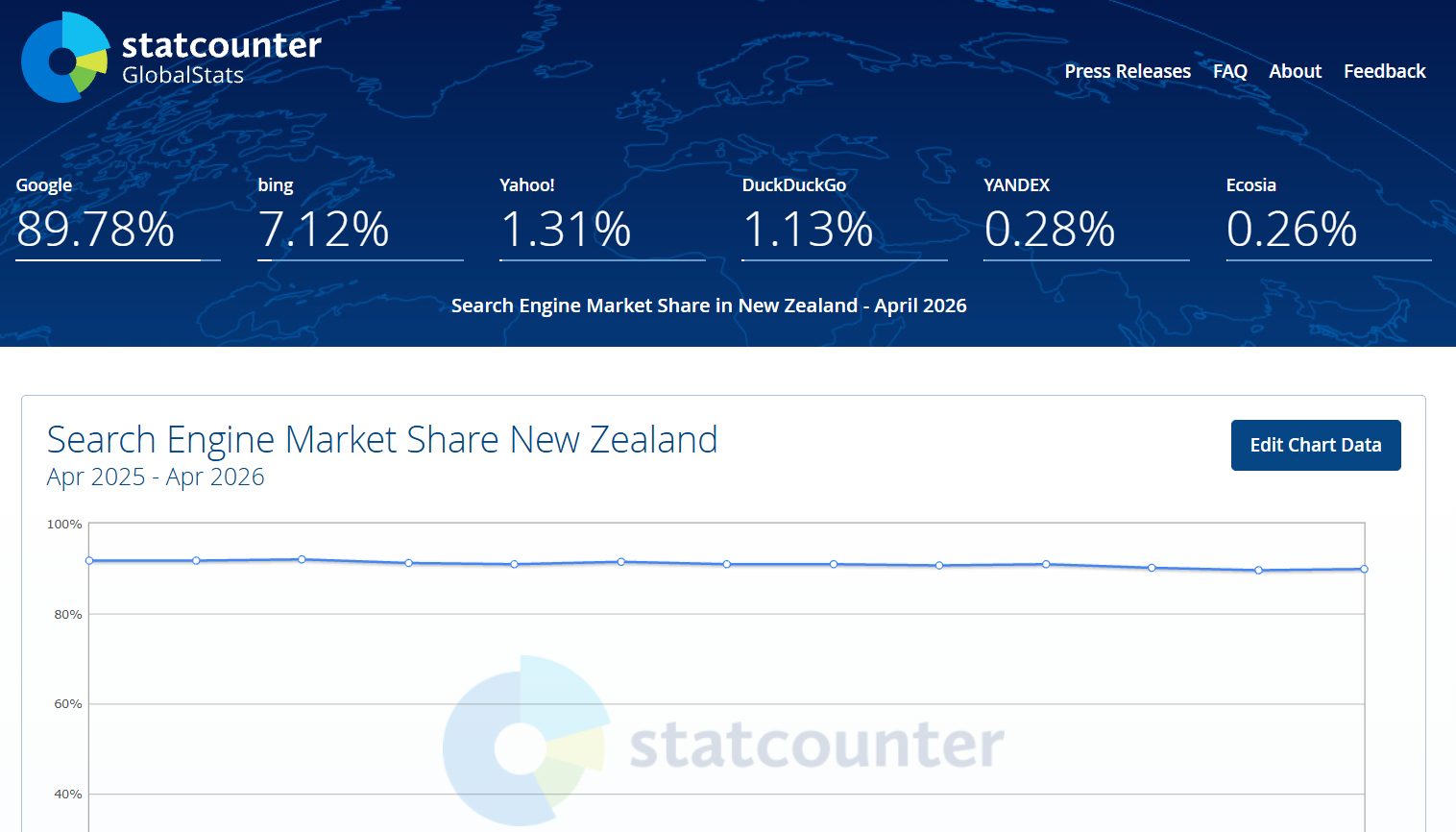
- Google holds 89.78% of New Zealand’s search market as of April 2026. (StatCounter)
- Bing sits at 7.17% in NZ — noticeably higher than its global share of around 4–5%. (StatCounter)
- Yahoo (1.31%) and DuckDuckGo (1.12%) make up most of the rest. (StatCounter)
- New Zealand had 5.06 million internet users at the end of 2025 — a 96.2% penetration rate, one of the highest in the world. (DataReportal)
- 94% of Kiwis access the internet via a smartphone, and the average New Zealander spends more than five hours a day online. (DataReportal)
- There were 6.22 million active mobile connections in NZ in late 2025 — about 118% of the population. (DataReportal)
- New Zealand had 4.24 million social media user identities, equal to 80.6% of the population. (DataReportal)
- NZ digital advertising revenue hit NZ$2.967 billion in 2025, up 12% year-on-year. (IAB New Zealand)
- Search is the single largest digital ad format in NZ at $1.44 billion. (IAB New Zealand)
- Video was the fastest-growing format at $653.8 million, up 27%. (IAB New Zealand)
What this means for you: two NZ-specific takeaways. First, that higher Bing share matters more than it looks — if you’re in B2B or enterprise where Microsoft tools dominate, ignoring Bing leaves real traffic on the table. Second, with 94% of people searching on a phone, a site that’s clunky on mobile isn’t just losing points, it’s losing the majority of your market. The dollars back this up: Kiwi businesses are spending $1.44 billion a year to show up in search. The demand is here. The question is whether you’re visible for it.
We see this play out constantly across the country. As our NZ SEO company works with businesses from Auckland to Invercargill, the same pattern holds — the global ranking data is real, and it shows up in local results just as hard.
Search Engine & Market Size Statistics
The scale of search and the size of the industry built on it.
- Google’s global market share sits at roughly 90% across all devices. (StatCounter)
- On mobile, Google’s share climbs to about 94.6%. On desktop it drops to around 79% — its lowest in over two decades. (StatCounter)
- Bing holds roughly 4–5% of global search, with stronger pockets on desktop and in enterprise markets. (StatCounter)
- The global SEO services market is valued at roughly US$84 billion and growing. (Mordor Intelligence)
What this means for you: Google is still the game in NZ — 89.78% of it. But “Google” increasingly means AI Overviews, map packs and featured snippets, not just ten blue links. Optimising for Google in 2026 means optimising for all of those surfaces, not one.
AI Search & AI Overview Statistics
This is the category moving fastest, and the one most likely to reshape your traffic. AI Overviews and chatbots are changing who gets the click — and whether there’s a click at all.
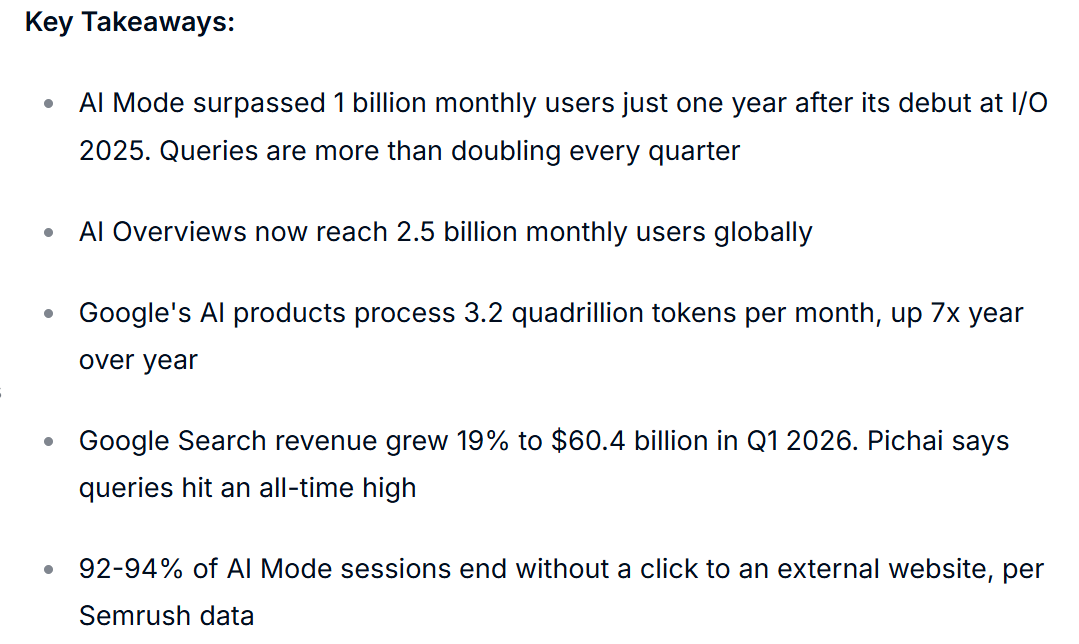
- AI Overviews now appear on more than 30% of all Google queries, up from just 6.49% in January 2025. (Ahrefs)
- Around 60% of searches end with no click — and SparkToro’s data puts it at 58.5% in the US and 59.7% in the EU. (SparkToro)
- When an AI Overview appears, the zero-click rate jumps to about 83%, compared to 60% without one. (Ahrefs)
- AI Overviews are linked to up to a 58% drop in click-through rate for the top organic result. (Ahrefs)
- The silver lining: pages cited inside an AI Overview get around 35% more clicks than those left out. Being the source still pays. (Seer Interactive)
- AI-written content now makes up about 17.3% of pages in Google’s top 20 results, up from 2.27% in 2019. (Semrush)
What this means for you: the goal has shifted from “rank number one” to “be the answer AI quotes.” The businesses winning here write clear, direct, well-structured content that’s easy to extract — and they build the kind of brand authority AI systems trust.
This is the heart of ranking in AI search, and it’s not theory for us. Expert SEO is barely over a year old, yet it’s already being cited in Google AI Overviews and ChatGPT responses while competing against firms with a decade’s head start. The playbook works.
Google Ranking & Click-Through Rate Statistics
Position decides traffic, and the drop-off below the top spots is brutal. Here’s where the clicks actually go.
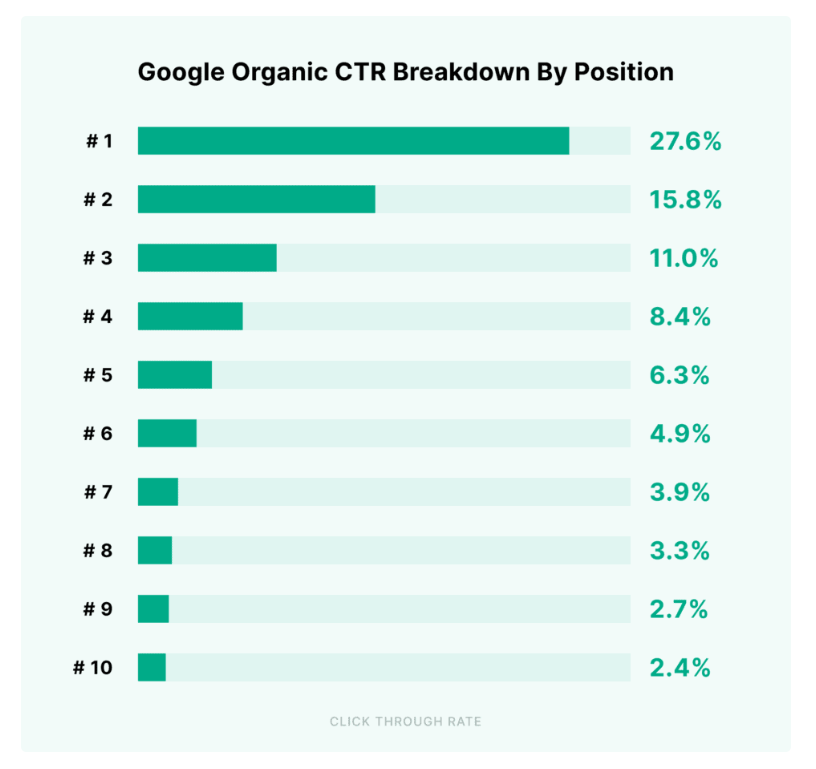
- Backlinko’s analysis of millions of results puts the average CTR for the #1 organic result at 27.6%, with the top three results capturing 54.4% of clicks. (Backlinko)
- On cleaner search pages without AI Overviews, First Page Sage’s 2026 model puts position one closer to 39.8%, with the top three taking 68.7%. (First Page Sage)
- Both studies agree on the shape: the #1 result alone gets more clicks than positions 3 through 10 combined. (First Page Sage)
- Page two is the graveyard — under 1% of searchers ever click through to it. (Backlinko)
- Only about 5.7% of newly published pages reach the top 10 within a year. (Ahrefs)
- The average page in the top 10 is more than two years old, and roughly 60% are older than three years. (Ahrefs)
- The top-ranking page only holds the most traffic about 49% of the time — being number one isn’t a guarantee. (Ahrefs)
What this means for you: notice the two CTR numbers don’t match. That’s not an error — it’s the reality of 2026.
CTR depends entirely on what else is on the page (AI Overview, map pack, snippets), so treat any single “CTR by position” figure as a guide, not gospel.
The bigger lesson is patience. Most pages take well over a year to crack the top 10. We grew a health site, HealthVI, from zero to over 20,000 monthly visitors in under a year — fast by these numbers, and only because the process was right from day one.
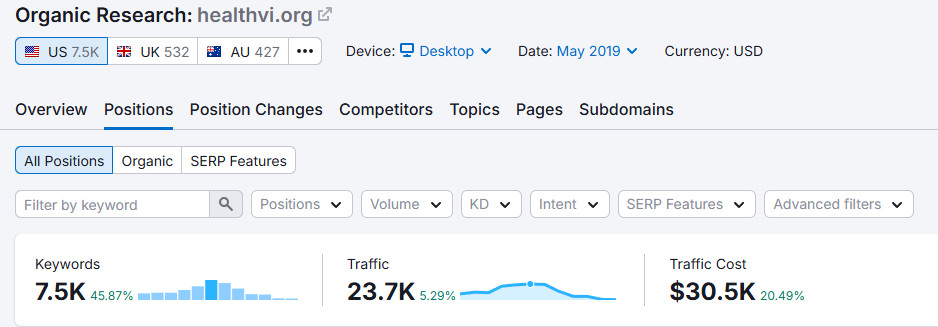
If you want to rank higher in search, the timeline is the first expectation to set honestly.
Backlink Statistics
Backlinks remain one of Google’s strongest ranking signals — and the data shows exactly what they cost and how long they take.
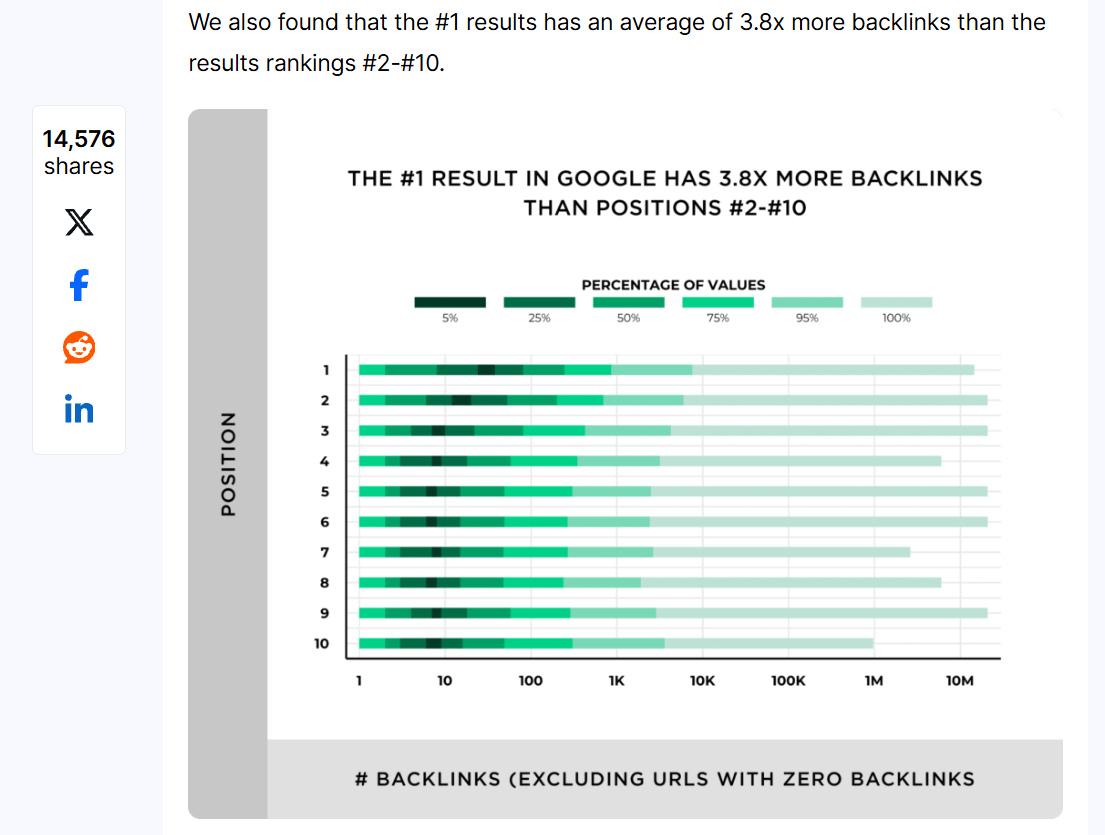
- There’s a clear positive correlation between the number of websites linking to a page and both its ranking and its search traffic. (Ahrefs)
- It takes an average of 3.1 months to see the ranking impact of a single link. (Authority Hacker)
- 74.3% of link builders pay for links, and the average cost of a paid link is US$83. (Authority Hacker)
- 41% of SEOs say link building is the hardest part of the job. (Authority Hacker)
- Long-form content over 3,000 words earns significantly more backlinks than short posts under 1,000 words. (Backlinko)
- 66.5% of links created in the last nine years are now dead — the web rots fast. (Ahrefs)
What this means for you: links are slow, expensive and hard — which is exactly why they still work as a signal. The shortcut is making something genuinely worth linking to.
The best links we’ve earned at Expert SEO came naturally: rival NZ agencies linking to our guides, and a guest post landing on a DR 70+ publication with 50,000+ monthly visitors.

That’s the long game of earning links — create the resource first, and the links follow.
On-Page & Technical SEO Statistics
The details under the hood that decide whether Google can understand and trust your page.
- Google rewrites title tags 33.4% of the time — so the title you wrote isn’t always the one searchers see. (Ahrefs)
- Google is 57% more likely to rewrite a title tag that’s too long. (Ahrefs)
- It rewrites meta descriptions even more often — 62.78% of the time. (Ahrefs)
- 25.02% of top-ranking pages don’t have a meta description at all. (Ahrefs)
- 7.4% of top-ranking pages don’t even have a title tag. (Ahrefs)
- There’s no measurable correlation between reading-ease scores and ranking position — write for clarity, not a readability gauge. (Ahrefs)
- Page speed and Core Web Vitals remain confirmed ranking factors, and matter more on mobile where most NZ searches happen.
What this means for you: nailing your on-page SEO basics — titles, descriptions, structure, speed — is still table stakes, even if Google sometimes overrides your choices.
If you’ve never checked how your site performs technically, a proper site audit is the fastest way to find what’s quietly holding your rankings back.

Keyword & Content Statistics
What the data says about the keywords worth chasing and the content that actually ranks.
- 94.74% of all keywords get 10 or fewer searches a month. The volume is in the long tail, not the head terms. (Ahrefs)
- 46.08% of clicks in Google Search Console go to “hidden” terms Google doesn’t even report. (Ahrefs)
- The average top-ranking page also ranks in the top 10 for nearly 1,000 other related keywords. One strong page does a lot of work. (Ahrefs)
- Longer, intent-specific keywords are far less likely to be swallowed by an AI Overview than broad head terms. (Backlinko)
What this means for you: stop obsessing over high-volume head terms.
The path to traffic — especially for a smaller NZ business — is finding the right keywords in the long tail, where competition is lower and intent is higher.
One well-targeted page can end up ranking for hundreds of related searches you never set out to target.
Local SEO Statistics
Local search drives real-world visits — and in a small, mobile-first market like New Zealand, it’s where most SME wins live.

- 42% of people who run a local search click straight into the Google Map Pack rather than the regular blue links. (Backlinko)
- Customers are 70% more likely to visit a business that has a complete, well-optimised Google Business Profile. (BrightLocal)
- Reviews and an optimised Google Business Profile are among the strongest factors in local map pack rankings. (BrightLocal)
What this means for you: with 94% of Kiwis searching on a phone and the map pack dominating local results, local SEO isn’t optional for a NZ business with a physical location or service area.
A solid Google Business Profile, a steady stream of reviews, and location-relevant content can outrank far bigger competitors in the map pack — fast.

Mobile & Voice Search Statistics
Search is mobile-first, full stop. Voice is real but smaller than the hype.
- The majority of global searches happen on mobile, and Google’s mobile share sits around 94.6%. (StatCounter)
- Google uses mobile-first indexing — it ranks your site based on the mobile version, not the desktop one.
- In New Zealand, 94% of internet users access the web via smartphone. (DataReportal)
- Voice search adoption keeps growing but still drives a small share of total search volume — useful to consider, not a priority to obsess over.
What this means for you: if your site isn’t fast and easy to use on a phone, you’re failing the majority of your NZ audience before they read a word. Mobile experience is the foundation everything else sits on.
SEO ROI & Business Value Statistics
What SEO actually returns compared to other channels.
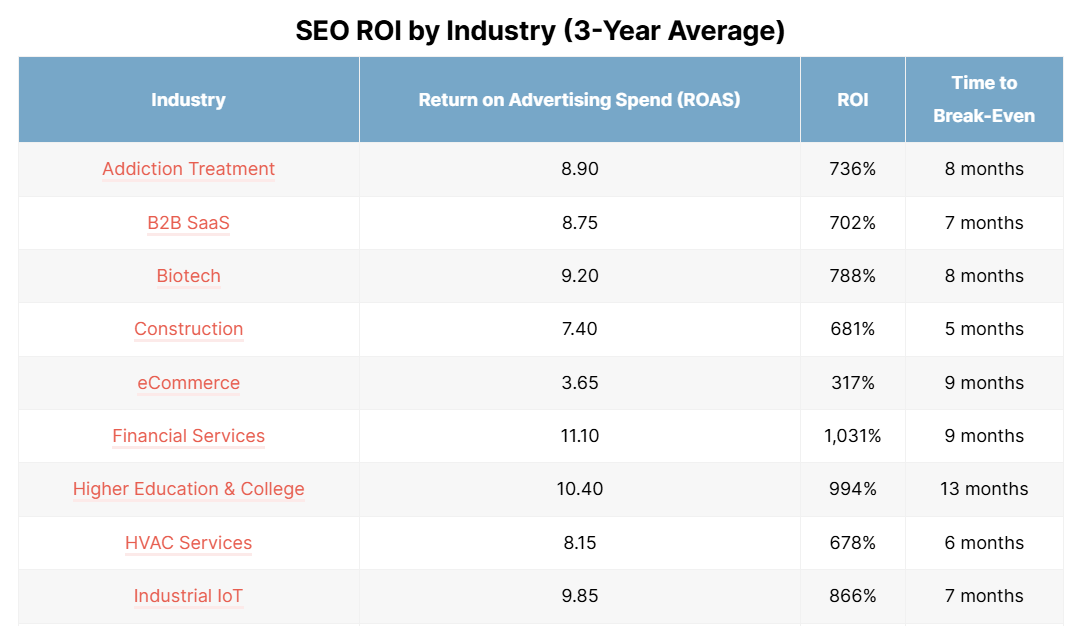
- Organic search accounts for over half of all website traffic across most industries. (BrightEdge)
- Unlike paid ads, organic traffic doesn’t stop the moment you stop paying — it compounds.
What this means for you: SEO is a slow burn that pays off long after the work is done. A page that ranks keeps bringing in leads month after month with no ongoing ad spend.
That compounding is exactly why HealthVI went from zero to 20,000 monthly visitors. If you’re weighing it up, the data on whether SEO is worth it is hard to argue with.
Is SEO Dead in 2026? What the Data Actually Says
SEO isn’t dead. It’s shifting from “rank a blue link” to “be visible across every search surface” — and the numbers back that up.
The “SEO is dying” headline gets louder every year, usually right after a big Google update or a new AI launch. Here’s the reality the data shows.
Yes, zero-click searches are up near 60%, and AI Overviews are cutting into top-spot clicks.
But search itself isn’t shrinking — people are searching more than ever, and Google still owns close to 90% of it. The $84 billion SEO industry isn’t collapsing; it’s growing. And organic search still drives over half of all website traffic. Hardly a dead channel.
What’s actually happening is a change in where visibility lives. Being cited in an AI Overview now drives 35% more clicks than being left out. Brand mentions and authority increasingly decide who AI quotes.
The businesses struggling are the ones still defining SEO as a single ranking position. The ones thriving have expanded it to include AI visibility, local presence and multi-surface coverage.
Which SEO Statistics Actually Matter for a NZ Business
Out of a hundred numbers, only a handful should change what you do. Here’s the short list for a New Zealand business — and what to ignore.
The ones that matter:
- 94% of Kiwis search on mobile. If your site struggles on a phone, fix that before anything else.
- Local search runs through the map pack. For most NZ SMEs, local SEO and your Google Business Profile move the needle faster than anything.
- 60% of top-10 pages are over three years old. SEO takes time. Budget for 6–12 months, not 6 weeks.
- Pages cited in AI Overviews get 35% more clicks. Structure content to be quotable, and build the authority that earns citations.
- Organic search drives over half of all website traffic. And unlike ads, it keeps working after you stop paying. That’s the number to take to your accountant.
The ones to ignore: exact CTR-by-position figures (they swing wildly by SERP), vanity keyword counts, and any “SEO is dead” hot take. They make for good headlines and bad decisions.
What this means for you: a stat is only useful if it changes an action. If it doesn’t, it’s trivia. Focus your energy on the five above and let the rest stay interesting reading.
The Bottom Line on SEO Statistics in 2026
The data tells one clear story: search is bigger than ever, the rules have shifted toward AI and multi-surface visibility, and the businesses that adapt early win disproportionately. For a New Zealand business, the opportunity is sharper still — most local competitors aren’t paying attention to any of this.
From here, you’ve got two paths.
Do it yourself. Use these numbers to guide your strategy, focus on the five stats that matter, and put in the consistent work. Expect a learning curve and a 6–12 month horizon.
Get expert help. If you’d rather have it done properly and faster, that’s our job. We help businesses right across New Zealand with their SEO, including:
Whether you want a second opinion from an SEO consultant or full professional SEO services, we’ll build you a strategy grounded in exactly the kind of data on this page. The numbers are on the side of businesses that act — that’s where we come in.