

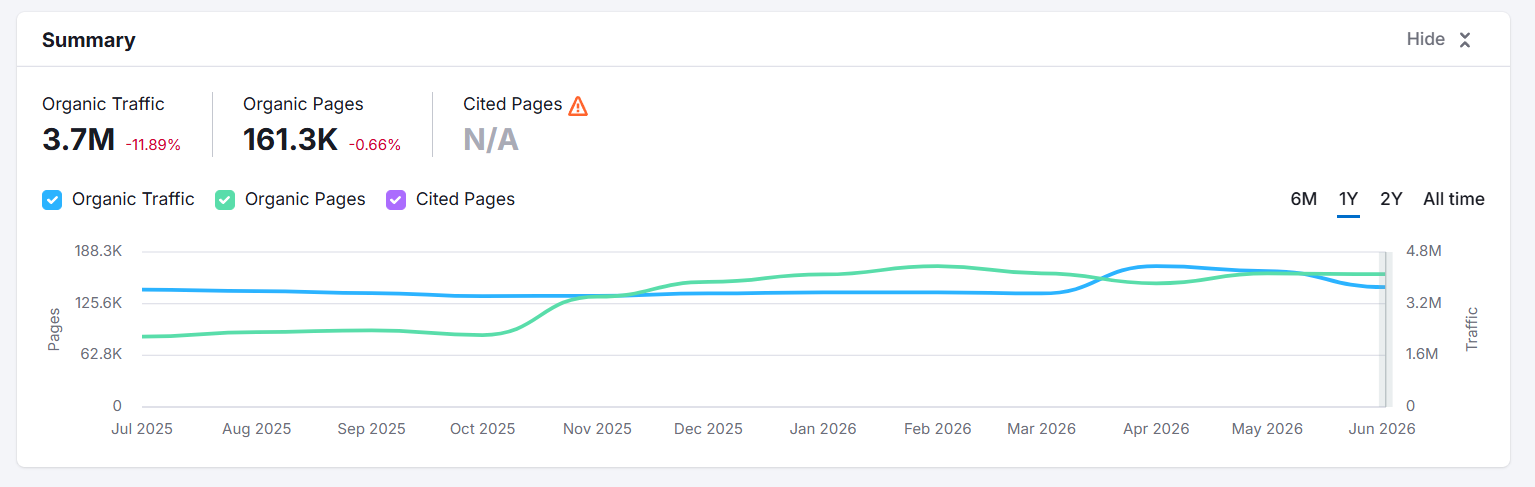
At that size, the SEO advice you read online stops working.
You can’t just “optimise the page” when there are tens of thousands of them. You can’t manually fix title tags one by one.
And the issues holding you back are usually invisible — crawl budget being wasted, pages competing with each other, authority trapped on the homepage.
That’s where enterprise SEO comes in.
This guide breaks down exactly what enterprise SEO is, how it’s different from the SEO most businesses do, the real challenges, and how to actually execute it at scale for New Zealand businesses.
What is Enterprise SEO?
Enterprise SEO is the practice of optimising large, complex websites — usually thousands to millions of pages — for search at scale.
The “enterprise” part isn’t about your company being huge. It’s about the size and complexity of your website, your team, and your competition.
A 12-page plumbing site is never enterprise SEO. A 15,000-page ecommerce store run by one marketing manager often is.

Three things define it:
- Scale. Too many pages to optimise by hand. You need systems, templates, and automation.
- Complexity. Multiple teams, legacy tech, approval processes, sometimes multiple sites or regions.
- Competition. You’re chasing the head terms — the high-value, high-difficulty keywords everyone wants.
So while the SEO process is the same at its core — keywords, content, technical health, links — enterprise SEO is about doing all of it across a site so big that the hard part becomes coordination and execution, not knowing what to do.
Enterprise SEO vs regular SEO: what actually changes
The fundamentals don’t change. The scale, stakes, and how you execute do.
With a small business site, one person can run the whole campaign by hand.
At enterprise level, the same task — say, updating title tags — might touch 30,000 pages and need sign-off from three departments. That single difference changes everything downstream.
Here’s the practical comparison:
| Regular SEO | Enterprise SEO | |
|---|---|---|
| Site size | 5–500 pages | Thousands to millions |
| How you make changes | Manually, page by page | Templates, rules, automation |
| Keywords | Mostly long-tail, lower competition | Competitive head terms + huge long-tail volume |
| Technical work | Light, occasional | Constant — crawl budget, log files, technical debt |
| People involved | 1–2 | Dev, content, legal, PR, brand, leadership |
| Biggest blocker | Knowing what to do | Getting it shipped across teams |
| Timeline to results | 3–6 months | 6–18 months+ |
Regular SEO is a knowledge problem.
Enterprise SEO is a systems-and-people problem. You already know you need good content — the challenge is producing and shipping it across 20,000 pages without the wheels falling off.
Does your NZ business actually need enterprise SEO?
Honest answer: most New Zealand businesses that get sold “enterprise SEO” don’t need it.
This is the part agencies won’t tell you, because “enterprise” sounds premium and justifies a bigger retainer. So before you spend a cent, run this check.
You probably do need an enterprise approach if:
- Your site has thousands of pages (large ecommerce, big publishers, directories, marketplaces).
- You operate across many locations, regions, or even multiple websites.
- You have separate dev, content, and marketing teams — and changes need approval.
- You’re competing for national head terms against well-resourced competitors.
You probably don’t if:
- You’re a local or single-location business, even a successful one. That’s standard or local search territory.
- Your site is under a few hundred pages.
- One person can realistically manage your SEO.
A real NZ example: a successful Auckland dental group with six clinics and 40 pages does not need enterprise SEO.
They need sharp local keyword research and solid location pages.
But a national NZ retailer with 25,000 SKUs, or a Trade Me-scale marketplace, genuinely does — because at that size the bottleneck stops being strategy and becomes execution at scale.
If you’re somewhere in the middle — a fast-growing site heading toward thousands of pages — the smart move is to build enterprise habits early so you’re not untangling a mess later.
Why enterprise SEO matters (the revenue case)
For a large site, organic search is usually the single biggest source of trackable traffic and revenue — and the cheapest at scale.
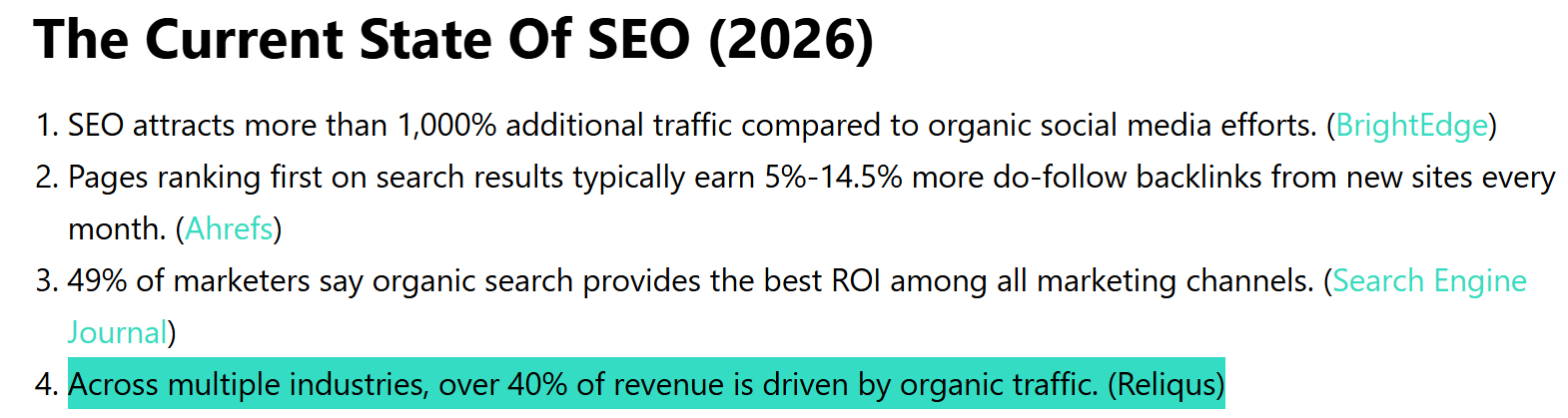
Across industries, over 40% of revenue is driven by organic traffic.
For enterprise ecommerce specifically, organic can account for 35–55% of total sessions. That’s not a marketing channel you treat casually.
The economics also get better as you scale. Paid ads cost more every time you want more traffic.
SEO is the opposite — once a 20,000-page site is structured and authoritative, adding the next thousand pages of organic visibility costs far less than the first.
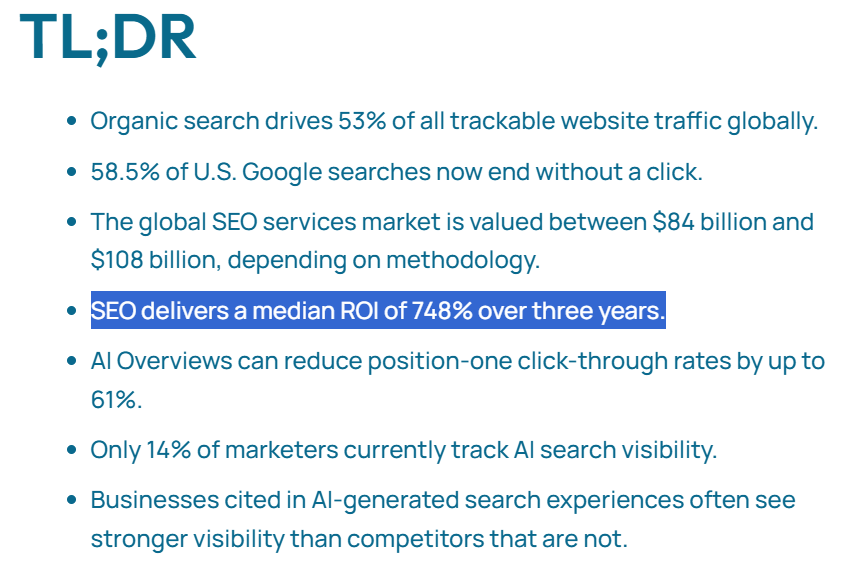
Done as a long-term play, SEO delivers a median ROI of around 748% over three years.
That’s why large organisations treat it as infrastructure, not a campaign.
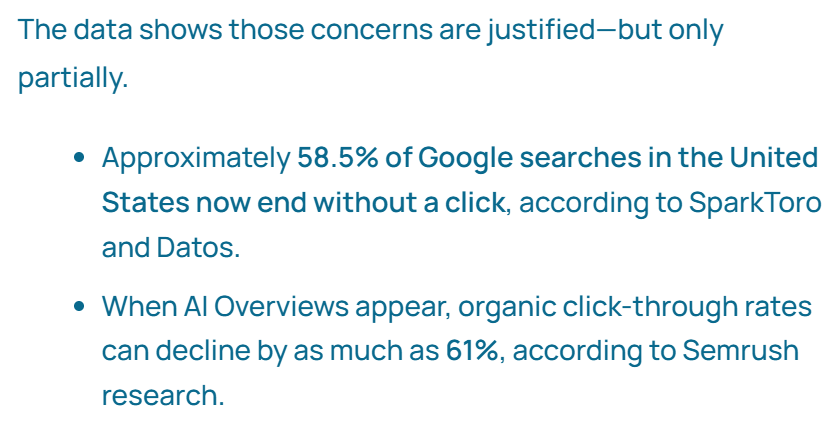
There’s a defensive angle too. With nearly 59% of US Google searches now ending without a click and AI Overviews absorbing the rest, the brands that get summarised and cited keep their visibility.
The ones that don’t quietly disappear. At enterprise scale, that gap is worth millions.
The 5 biggest enterprise SEO challenges
Most enterprise SEO failures aren’t strategy failures. They’re execution failures. Here are the five that trip up large NZ sites most.
1. Crawl budget and wasted crawling
Google only crawls so many pages on your site in a given window.
On a 50,000-page site, Google might be spending its budget on filtered URLs, old tag pages, and parameter junk — while your money pages get crawled once a month.
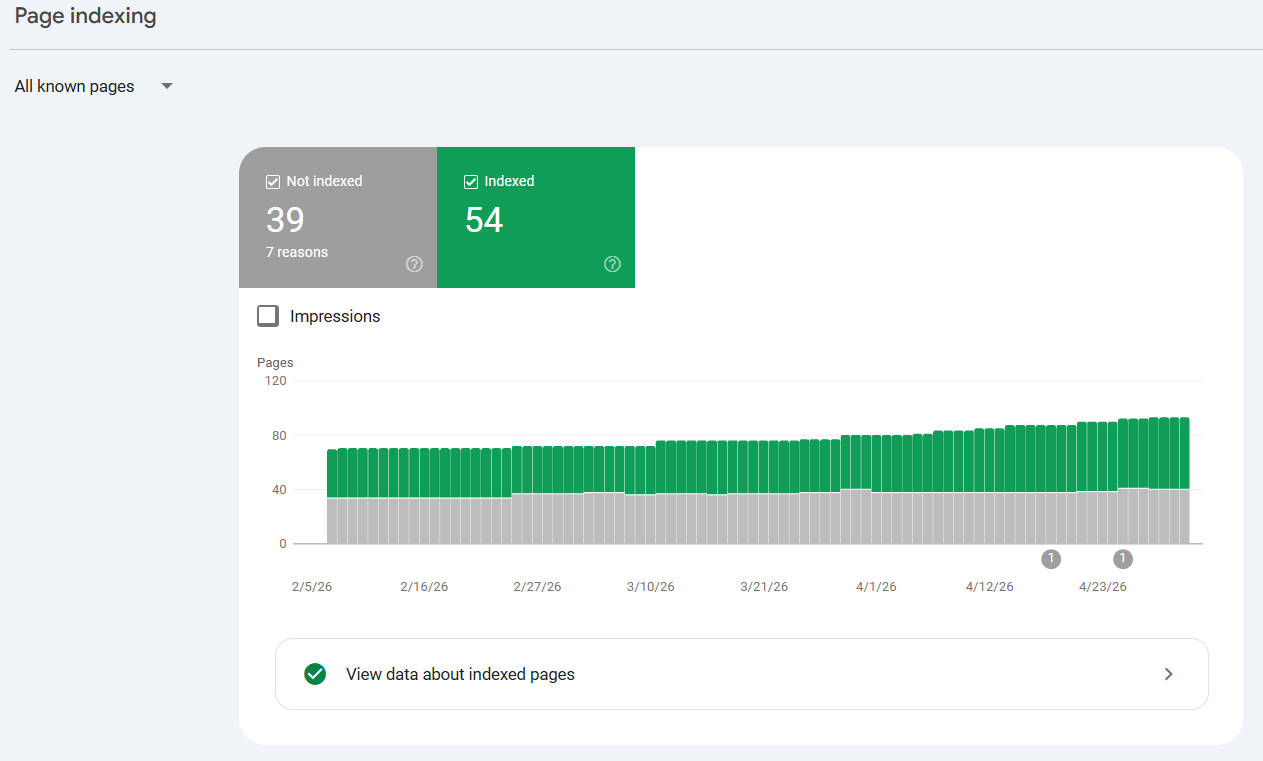
The fix is unglamorous: clean up what Google is allowed to crawl, kill or noindex low-value URLs, and point crawl budget at the pages that earn money.
2. Technical debt
Big NZ sites are usually built on years of decisions made by people who’ve left. Old platforms, messy redirects, duplicate templates, broken structured data.
This is the technical side of SEO at its hardest — because every fix has to survive a legacy system and a busy dev team.
3. Internal link equity stuck on the homepage
On large sites, authority tends to pool on the homepage and a few top pages, while thousands of deeper pages get almost none.
That’s why your category pages outrank your product pages even when the products are what convert.
4. Content at scale (without it turning into slop)
You can’t write 20,000 unique pages by hand. But you also can’t publish thin, duplicated junk — Google’s helpful content systems will bury it.
Producing genuinely useful content at scale is the hardest content problem there is.
5. People, politics, and sign-off
The biggest blocker is rarely technical. It’s getting the dev team, legal, brand, and leadership to agree and ship.
A recommendation that sits in a backlog for eight months delivers zero results. Enterprise SEO is as much stakeholder management as it is optimisation.
How to do enterprise SEO, step by step
Now the core of it. Here’s how to actually run enterprise SEO on a large NZ site, in the order that matters.
Step 1: Get the technical foundations right at scale
Start under the hood, because nothing else works if Google can’t crawl and understand the site.
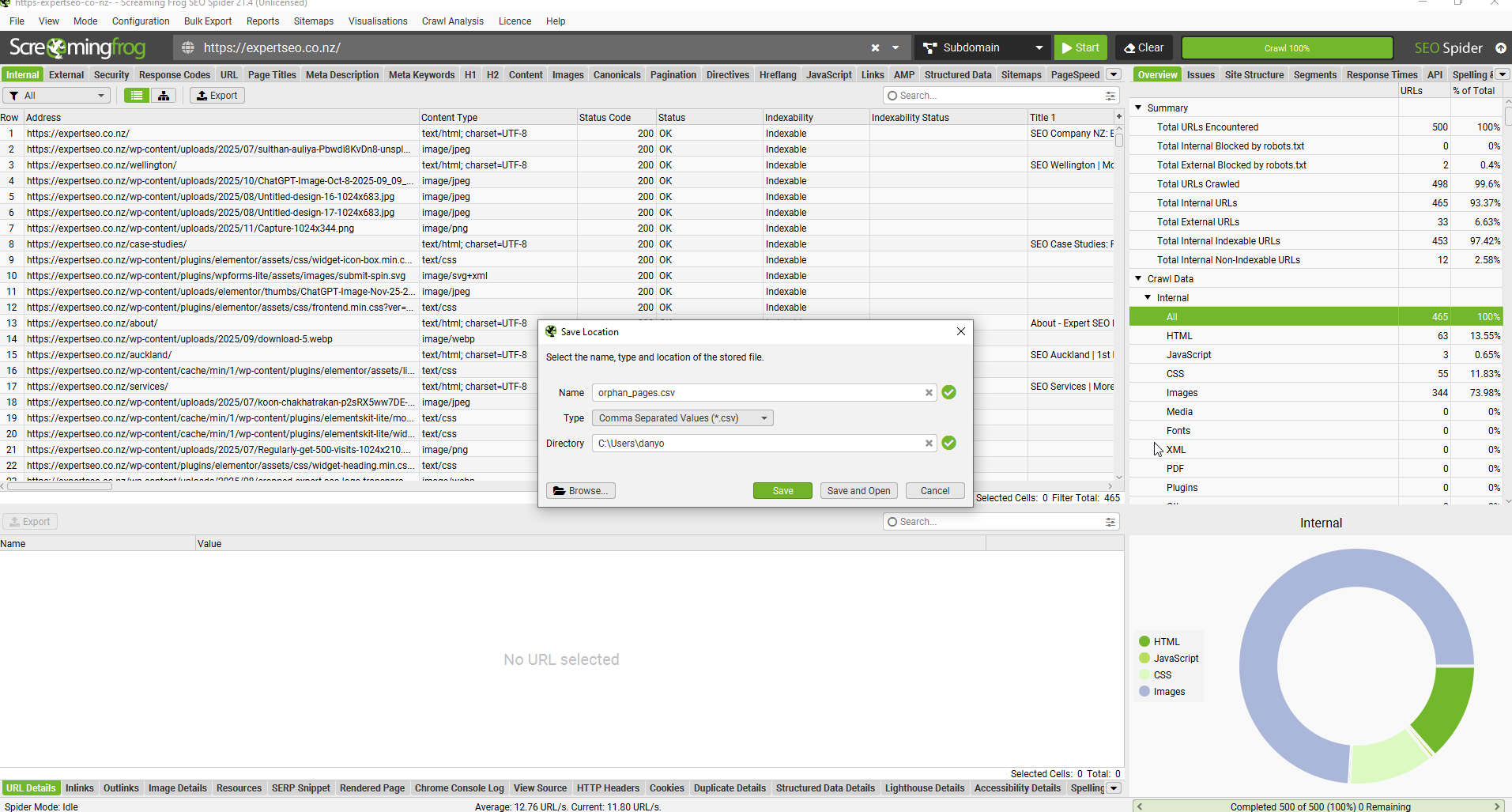
At a minimum: run a full crawl with Screaming Frog (or JetOctopus for very large sites), pull your server log files to see what Google is actually crawling, fix indexing waste, sort out your redirects, and get structured data templated across page types.
Enterprise sites with proper automated schema see 15–25% higher click-through from rich results — and the only way to do it across thousands of pages is through templates, not manual edits.
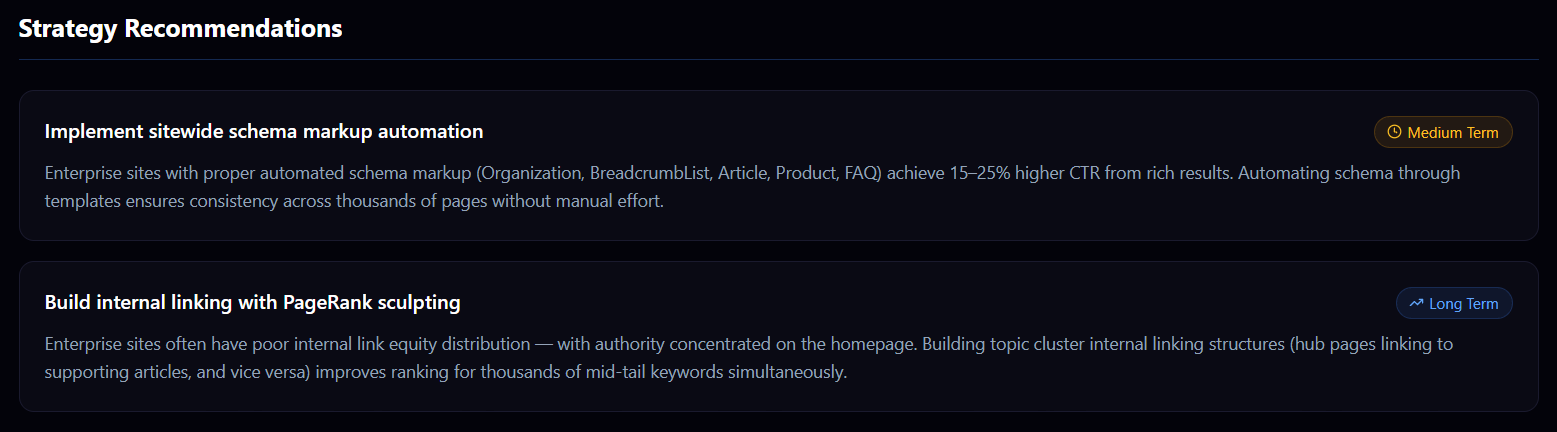
The principle: solve problems by page type, not by page. Fix the product-page template once and you’ve fixed 18,000 pages.
Step 2: Build scalable, templated content
You can’t hand-write everything, so you build smart templates and fill them with genuinely useful, differentiated content.
This is where programmatic and template-driven content comes in.
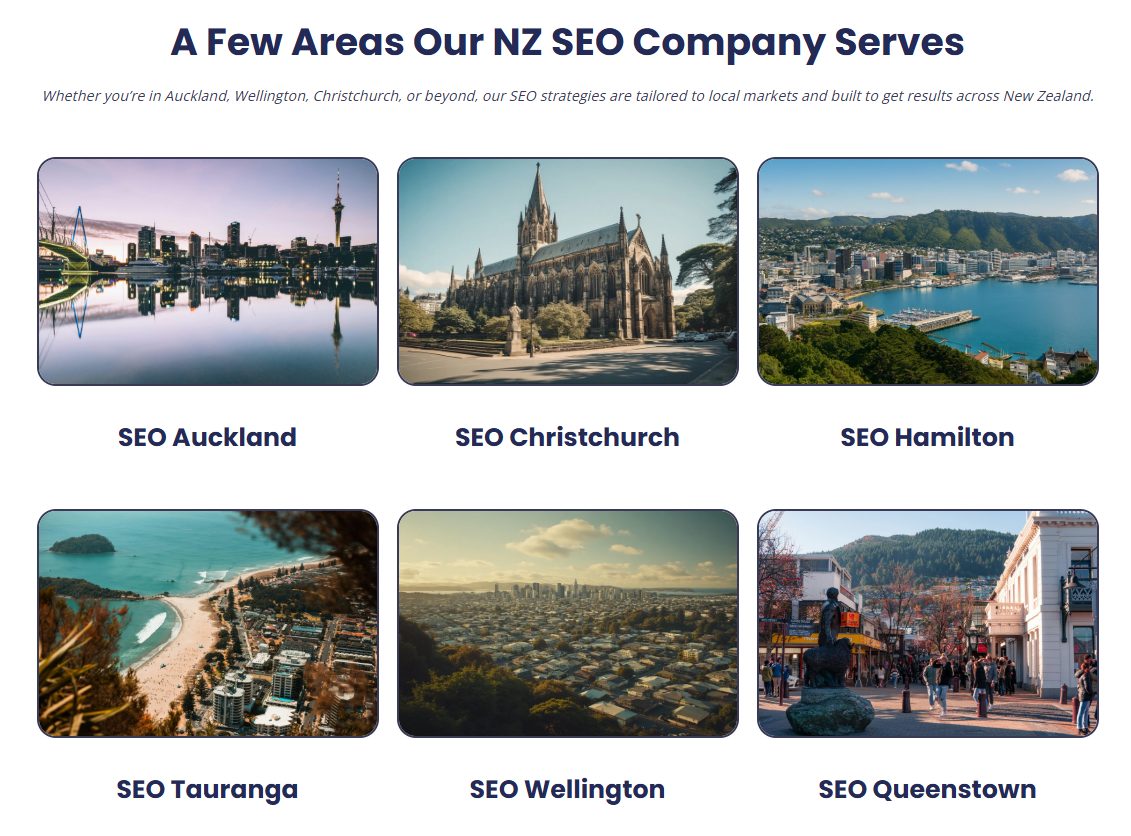
Think a national service business generating location pages, or a retailer generating category pages — each one built from a strong template but populated with real, specific, useful information (local detail, real specs, real answers), not spun filler.
The same content marketing principles that work on a small site still apply — match search intent, answer the question properly, be more useful than what ranks.
You’re just doing it through systems instead of by hand.
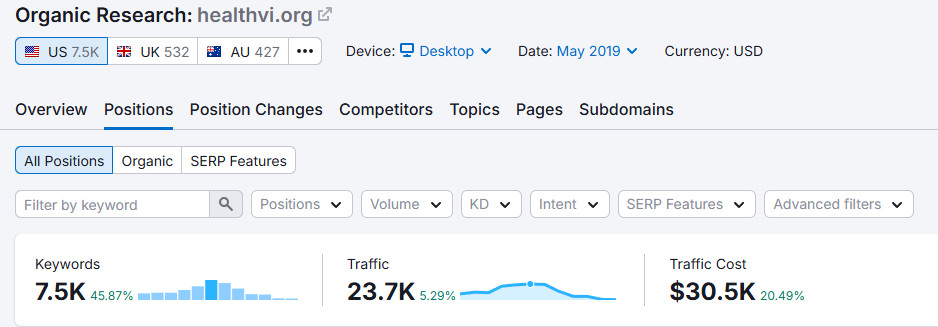
We grew a health site (HealthVI) from zero to over 1,000 daily visitors in under a year using exactly these fundamentals — and the bigger the site, the more that disciplined, repeatable process compounds.
Step 3: Fix your internal link structure
Internal links are how you move authority around a big site — and they’re the most underused lever in enterprise SEO.

Get your internal link structure right and you push authority from your strong hub pages down to the deep pages that need it.
On large sites this is usually template-driven too: related products, breadcrumb trails, contextual links from blog content to money pages. Done well, it can lift rankings across thousands of pages without a single new backlink.
Step 4: Set up content governance
On a large site, content rots. Old pages go stale, cannibalise each other, and drag the whole domain down.
Enterprise SEO needs a system for this: regular content audits, a process for refreshing or consolidating weak pages, and clear rules for who can publish what.
Updating existing content is one of the highest-ROI activities you can do — content updates deliver around 42% ROI — and on a big site there’s always a backlog of pages one tune-up away from page one.

Step 5: Build authority with links and digital PR
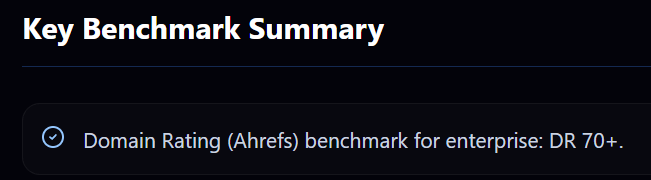
At the head-term level, content alone won’t get you there. You need authority — and the enterprise benchmark is steep, with strong sites sitting at Domain Rating 70+.
This is where earning links through digital PR, data-driven content, and genuine partnerships matters. For a NZ enterprise, that often means newsworthy data, sponsorships, and coverage in national media — links a competitor can’t easily replicate.
Step 6: Optimise for AI search
Search isn’t ten blue links anymore, and at enterprise scale being absent from AI answers is expensive.
Structuring content so it can be summarised and cited — clear questions, direct answers, clean formatting — is how you show up.
This overlaps heavily with getting cited by AI systems like ChatGPT and Google’s AI Overviews.
The good news: a well-structured, authoritative enterprise site is already most of the way there. AI search rewards exactly what good SEO has always rewarded — clarity, depth, and trust.
Enterprise SEO tools and platforms
Enterprise SEO runs on tooling, because no human can monitor thousands of pages manually.
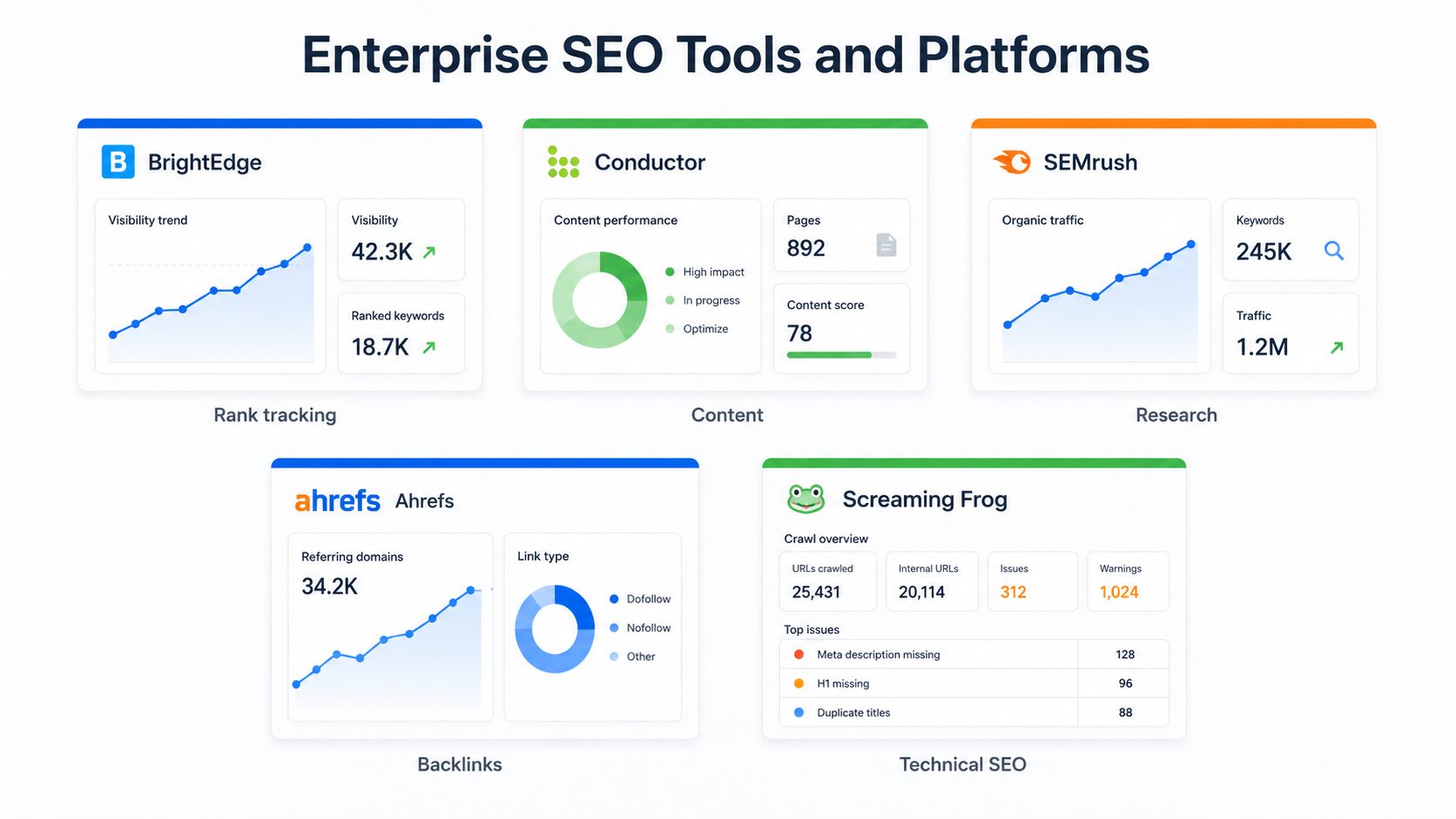
Here’s what large sites actually use, and what each is best at:
- BrightEdge / Conductor — purpose-built enterprise platforms for tracking, recommendations, and reporting across huge sites and multiple teams. Powerful, expensive.
- SEMrush / Ahrefs — research, competitor analysis, rank tracking, and site audits. Most NZ businesses can run a serious programme on these without enterprise-platform pricing.
- Screaming Frog / JetOctopus — crawling at scale. JetOctopus and log-file analysers come into their own past a few hundred thousand URLs.
- Google Search Console — still essential, and free. On a big site, the bulk export and indexing reports are gold.
Honest take for NZ: you almost never need a six-figure enterprise platform to compete in this market.
A well-run SEMrush or Ahrefs setup plus Screaming Frog and Search Console covers the vast majority of NZ “enterprise” sites. Spend the money on execution, not software.
How to measure enterprise SEO (and what to expect)
Measure enterprise SEO on revenue and pipeline first, rankings second.
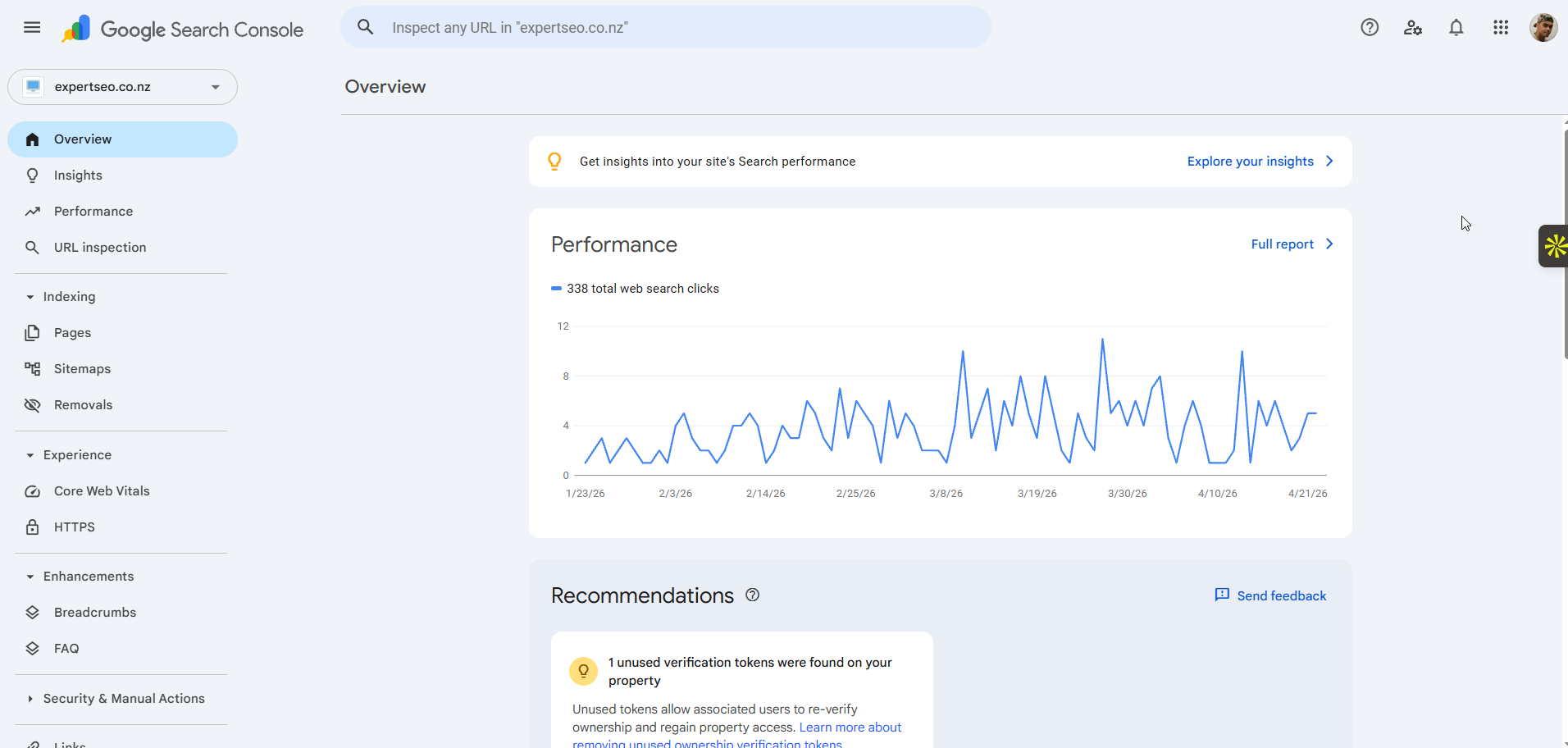
The metrics that matter:
- Organic revenue / leads — the only number leadership cares about. Track it.
- Organic sessions and impressions — your visibility trend. Impressions move first.
- Indexed vs published pages — on big sites, “are our pages even indexed?” is a real question.
- Crawl stats — is Google spending budget on the right pages?
- Share of voice — your visibility across a keyword set vs competitors.
On timeline, be realistic. A large site won’t turn around in a quarter. Expect early movement around 6 months and meaningful results from 6–18 months, with the full payback horizon for enterprise SEO sitting at 18–36 months.

The upside is that once it compounds on a big site, it’s very hard for competitors to catch you. If you want a fuller picture of how long SEO takes, the same rules apply — just slower to start and bigger at the end.
What enterprise SEO costs in NZ
Enterprise SEO costs more than standard SEO because there’s simply more work, more complexity, and more coordination.
Globally, enterprise organisations often spend NZ$160,000+ a year (US$100k+) on SEO programmes.

In New Zealand the numbers are smaller, but a serious enterprise programme still typically runs into the thousands per month rather than hundreds — because you’re paying for technical work, content production at scale, links, and project management across teams.
What changes the price most: site size, how much technical debt exists, how much content you need produced, and how competitive your keywords are.
A clean 5,000-page site is far cheaper to run than a messy 50,000-page legacy site.
For a full breakdown of how much SEO costs across different business sizes in NZ, that’s worth a read before you budget.
The thing to avoid: paying enterprise prices for a site that doesn’t need an enterprise approach. Re-read the “do you actually need it?” section before signing anything.
DIY vs hiring an enterprise SEO partner
You’ve got two realistic paths.
Do it in-house. If you have a capable marketing team, a responsive dev team, and time, you can run enterprise SEO yourself using this guide and the right tools.
Expect a real learning curve on the technical and governance side — that’s where most in-house programmes stall.
Bring in a partner. If you want faster, more predictable results without building the expertise from scratch, an experienced team handles strategy, technical execution, content systems, and links — and, just as importantly, navigates the stakeholder side so recommendations actually ship.
This is what SEO Agency does for larger and complex sites across the country.
We help businesses grow organic traffic and revenue with professional SEO services built around real results, not vanity metrics — including in:
If your site is big, complex, and underperforming in search, that’s exactly where we come in.