

There’s a question doing the rounds in every business owner’s head right now, usually around 11pm: is the money I’ve poured into SEO about to be worthless?
You’ve seen the headlines. AI is eating search. ChatGPT answers everything. Nobody clicks anymore. And now there’s a shiny new three-letter word — GEO — that a dozen agencies are suddenly very keen to sell you a package for.
So here’s the straight version, before we go deep.
SEO isn’t dead. GEO isn’t replacing it. And you almost certainly don’t need two separate strategies to handle both.
I run an SEO company here in New Zealand that’s under a year old.
In that time it’s hit #1 in the country for “local SEO” — sitting above Ahrefs and Semrush, two of the biggest names in the industry — and it’s being quoted by Google’s AI and ChatGPT.
Same site. Same fundamentals. Both wins.
This guide breaks down what SEO and GEO each are, why they both matter, proof they both work, and exactly how to run both for a New Zealand business without doubling your workload.
Let’s get into it.
What Is SEO?
SEO is the process of optimising your website so it ranks in traditional search engines like Google — so when someone types a query, your page shows up in the results.
That’s it. No jargon needed.
It comes down to three things working together: content that answers what people are searching for, on-page and technical setup so Google can read and trust your site, and links from other sites that vouch for you.
When SEO is working, you know it. You rank, people click, traffic comes in, and some of that traffic turns into paying customers.
Say you’re a family lawyer in Auckland. Someone searches “family lawyer Auckland,” your page is sitting at the top, they click, they call. That whole chain is SEO in Auckland doing its job — turning a search into a booked client.
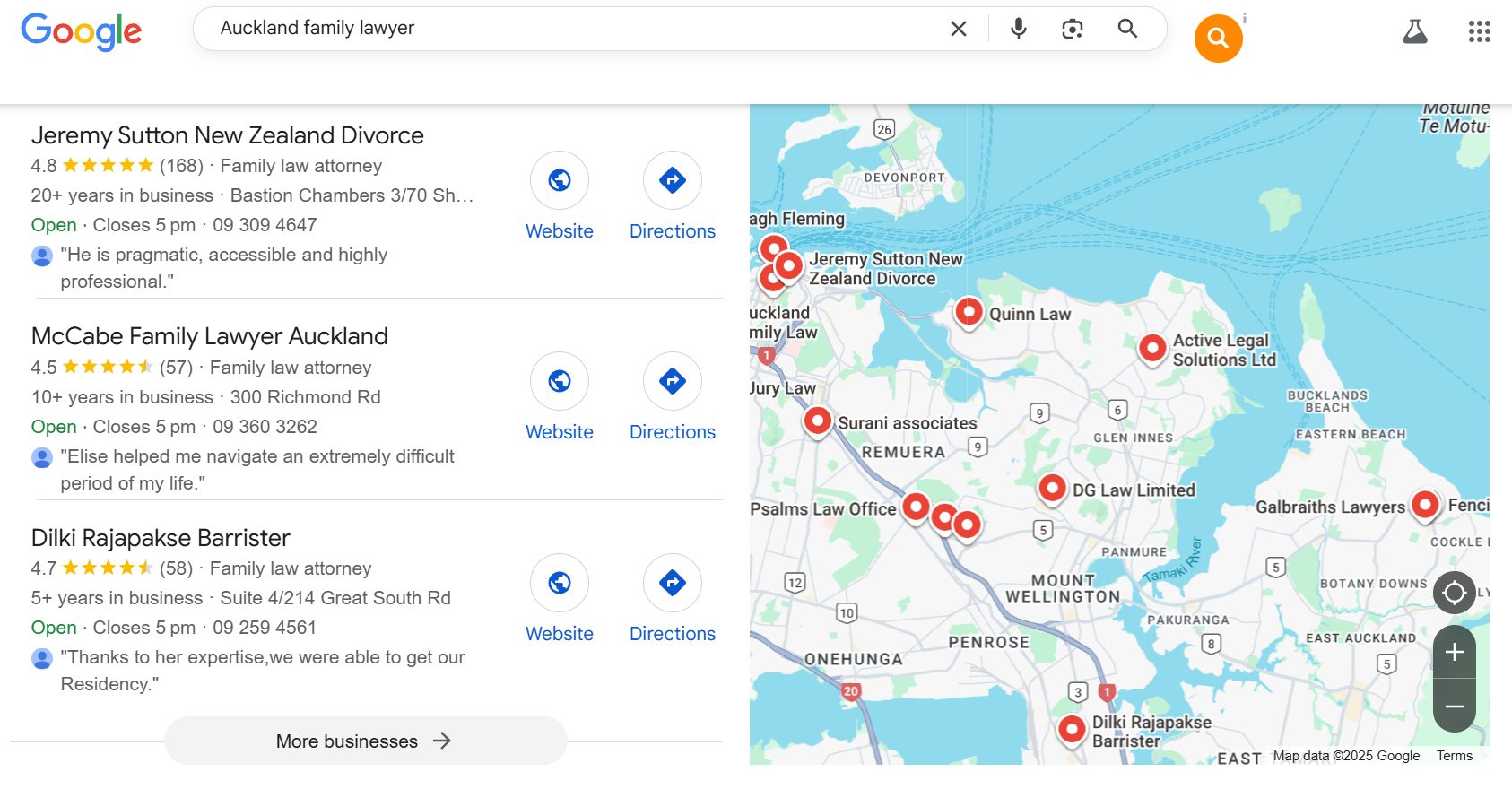
It’s the oldest game in digital marketing, and for good reason: it’s still the biggest source of website traffic on the planet.
What Is GEO (Generative Engine Optimisation)?
GEO is the process of optimising your content so AI tools — ChatGPT, Google’s AI Overviews, Perplexity, Gemini — cite you, quote you, and recommend you inside their answers.
Where SEO fights to rank a link, Generative Engine Optimisation fights to be part of the answer itself.
Here’s the difference in real life. Someone used to Google “best mortgage broker Hamilton,” scroll the results, and click a few.
Now a chunk of people just ask ChatGPT “who’s a good mortgage broker in Hamilton and why?” and read whatever it hands back.
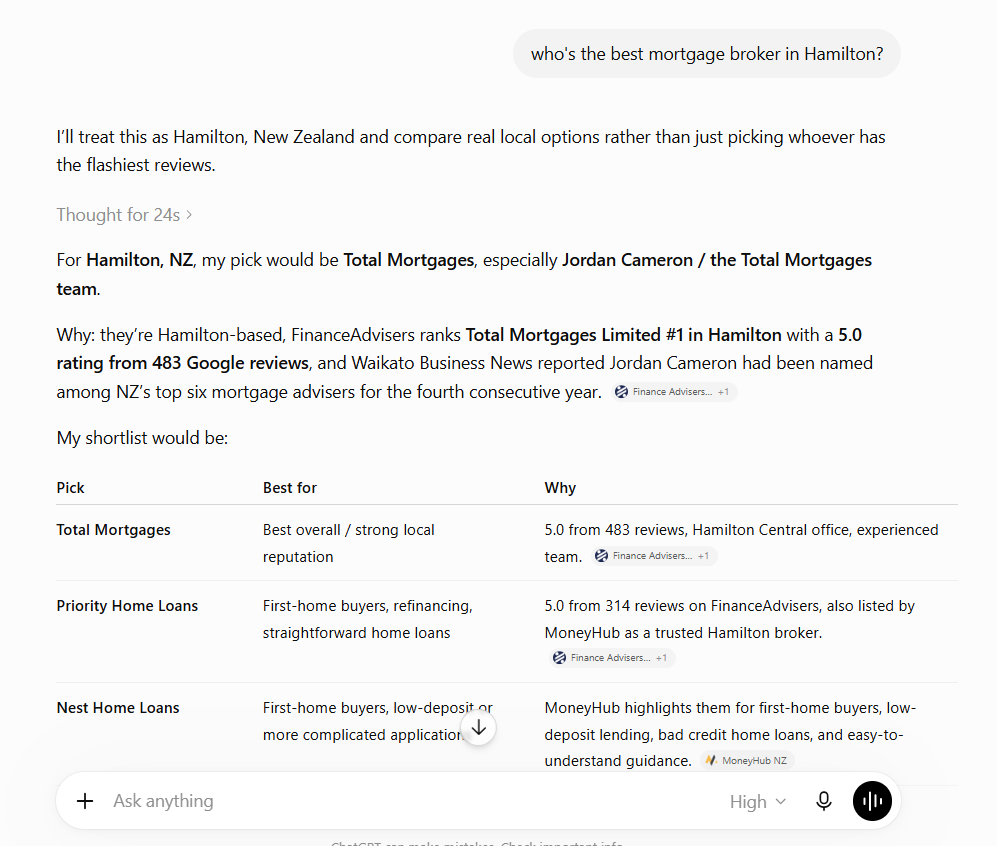
If your business is named in that answer, you’ve won something SEO can’t quite give you: you’re not one of ten blue links, you’re the recommendation.
That’s GEO. And it’s not theory for me — my own site gets pulled into these answers already.
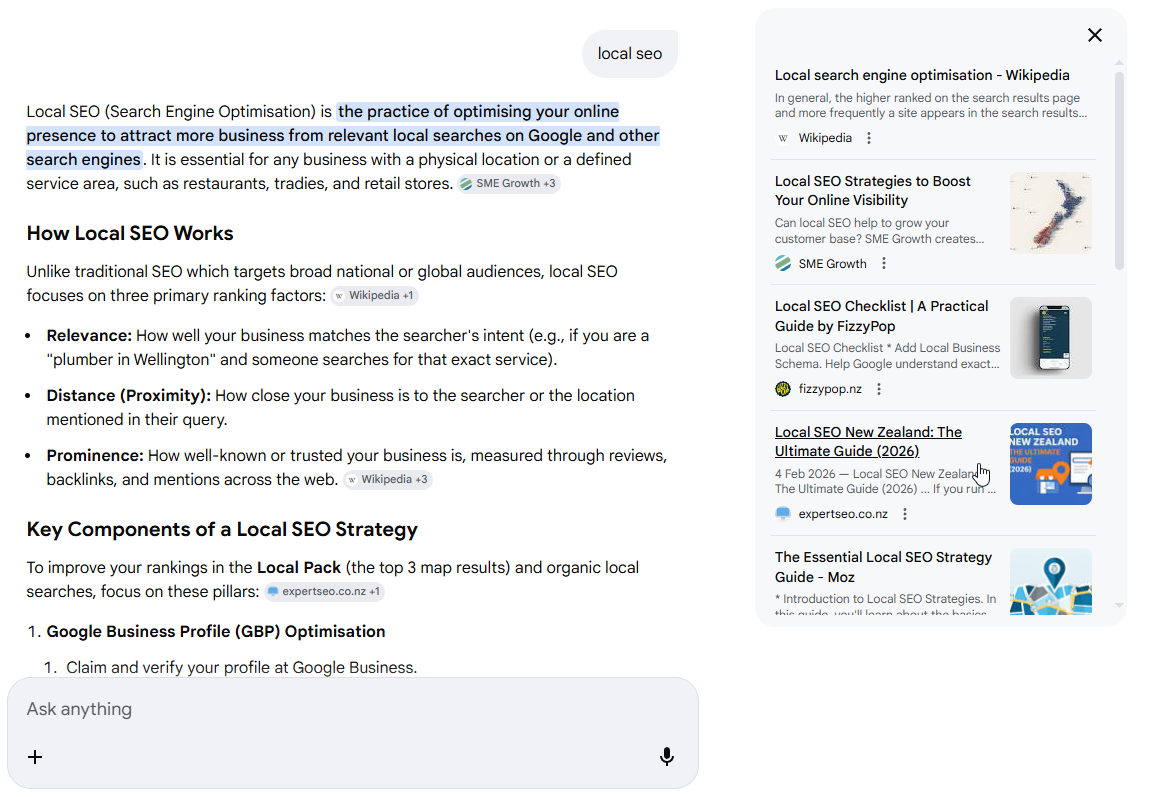
The reason GEO went from a curiosity to a real line item is simple: the audience moved.
Use of ChatGPT and AI tools for finding local businesses jumped from 6% to 45% in a single year — now the third most popular way people look for a local business, according to BrightLocal.

When that many people are getting answered before they ever reach a blue link, being inside the answer starts to matter.
SEO vs GEO: The Core Differences
Same goal — get seen. Different battlefield, different rules.
SEO competes to rank a link. GEO competes to be part of the answer. One optimises for the click; the other for the citation. Nail that distinction and everything else falls into place.
Here’s the full breakdown:
| SEO | GEO | |
|---|---|---|
| Primary target | Traditional search results (the blue links) | AI-generated answers (ChatGPT, AI Overviews, Perplexity) |
| The goal | Rankings, clicks, traffic, conversions | Citations, brand mentions, being the recommendation |
| Query style | Short and keyword-based (“plumber Christchurch”) | Long and conversational (“who’s the best plumber in Christchurch for a burst pipe?”) |
| What you optimise | Keywords, on-page, backlinks, technical health | Clear answers, structure, real facts, authority signals |
| How you measure | Rankings, organic traffic, click-through rate | Share of AI answers, citations, brand mentions |
The battlefield row is the big one. SEO plays out on the results page, where people scan and click. GEO plays out inside the AI’s reply, where there’s often no link to click at all — the answer just gets delivered and the search ends there.
Query style matters too. Google searches are short and clipped: “panel beater Christchurch.” AI queries are long and conversational, closer to how you’d actually talk.
One study found the average ChatGPT search runs about 5.4 words against Google’s typical three or four.
In fact, most of what people ask ChatGPT can’t be matched to any traditional search keyword at all — they’re asking it things they’d never type into a search bar.
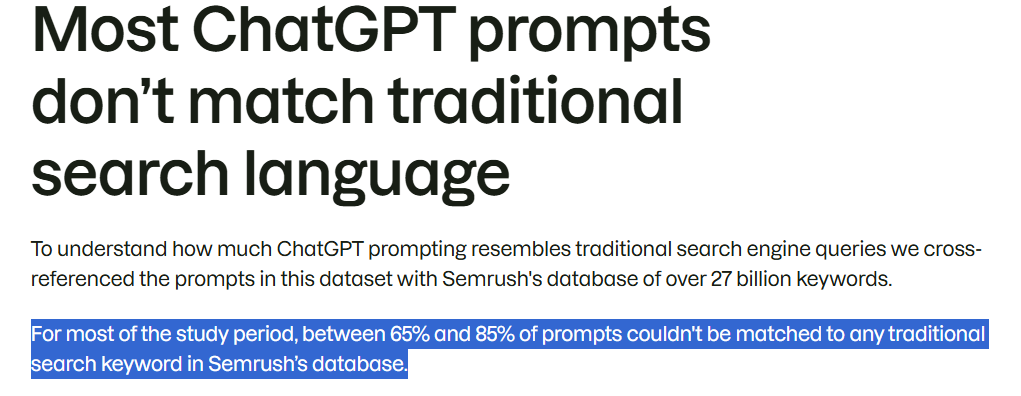
And then there’s the writing itself — a difference most guides skip.
With SEO, you can hold a little back. Tease the answer, make them click through to your page to get the full thing.
With GEO, you can’t. If the answer to “how much does a builder charge per square metre in Auckland?” isn’t sitting right there in a clean sentence on your page, the AI has nothing to lift, and you don’t get cited.
GEO forces you to give the answer up front.
SEO vs GEO vs AEO vs AIO: Untangling the Acronym Soup
Before we go further, let’s kill the confusion around all the letters getting thrown about. Because it’s putting people off doing anything at all.
They’re layers of the same job, not rival strategies you have to choose between.
- SEO — ranks you in traditional search results.
- AEO (answer engine optimisation) — gets you into answer boxes, featured snippets, the quick-answer stuff.
- GEO — gets you into AI-generated answers from tools like ChatGPT and Google’s AI Overviews.
- AIO — just another badge floating around for that same AI-answer layer. Same idea, different label.
You don’t pick one. They stack on the same foundation. Even Google’s own Danny Sullivan has put it plainly: good SEO is effectively good GEO.
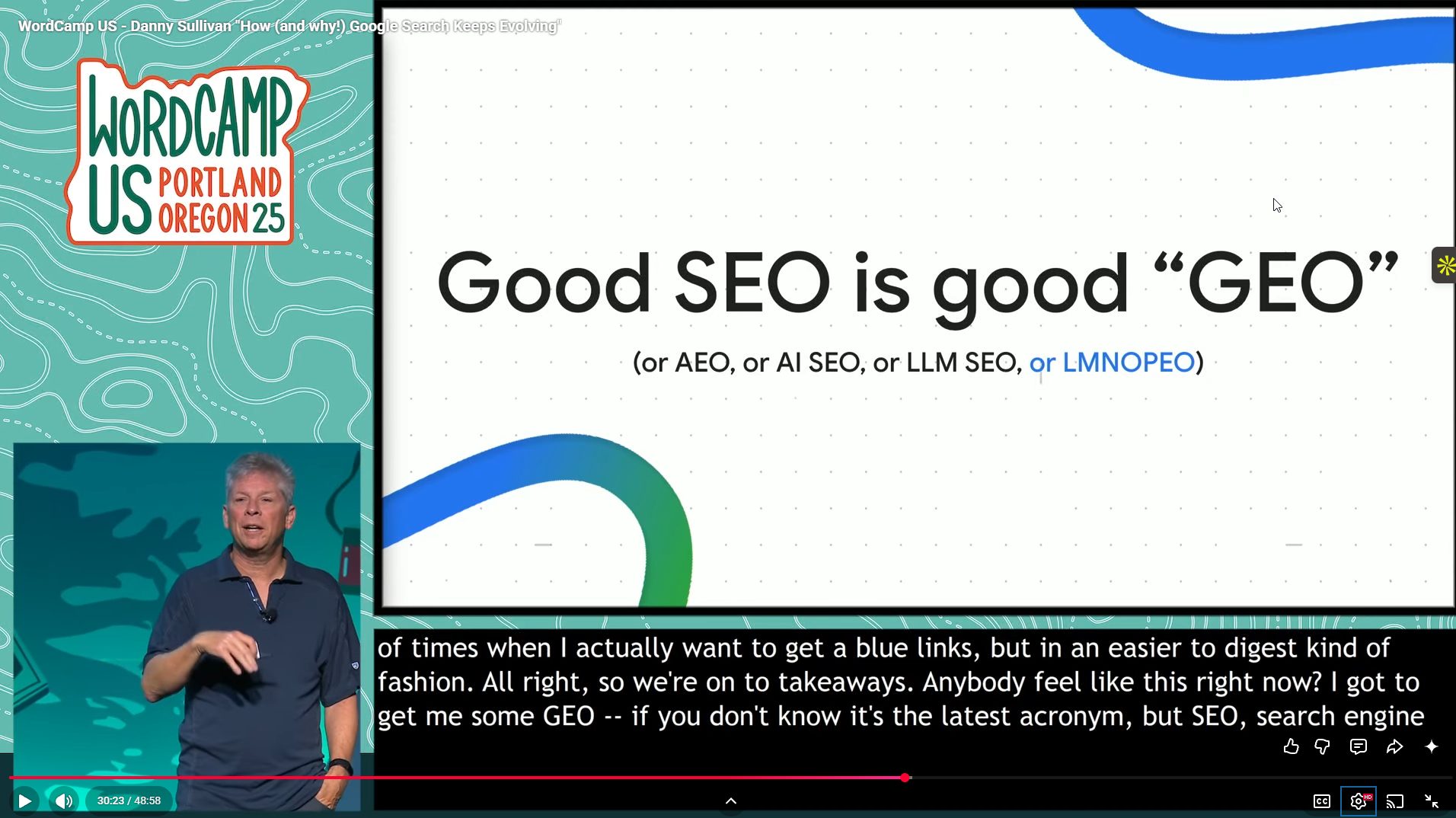
And here’s a tell worth remembering: Google itself, in its own documentation, tells site owners to be sceptical of third-party “GEO” or “AEO” services.
When the search engine you’re optimising for is quietly warning you about the people selling you a separate strategy, that’s a signal worth clocking.
Is SEO Dead? Is GEO Replacing It?
No. SEO isn’t dead, and GEO isn’t replacing it. They’re stacking on top of each other.
I’ll go further, because this is the part almost nobody connects: good SEO is what feeds GEO. AI tools don’t invent their answers from nothing — they pull from the web they crawl. Strong search visibility is a big part of how you end up being the thing they quote.
There was a thread on Reddit’s r/SEO with nearly a hundred replies asking whether AI had killed SEO. The top answer was blunt: “Short answer: no. Long answer: hell no.” The people actually doing this work every day aren’t panicking. They’re adapting.
But I’m not going to sugar-coat it either, because that’s not useful to you.
Clicks are dropping. When an AI answer appears, a lot of searches now end with zero clicks — around 68% of Google searches in early 2026 ended without anyone clicking through to a website (SparkToro and Similarweb data, reported by Search Engine Land).

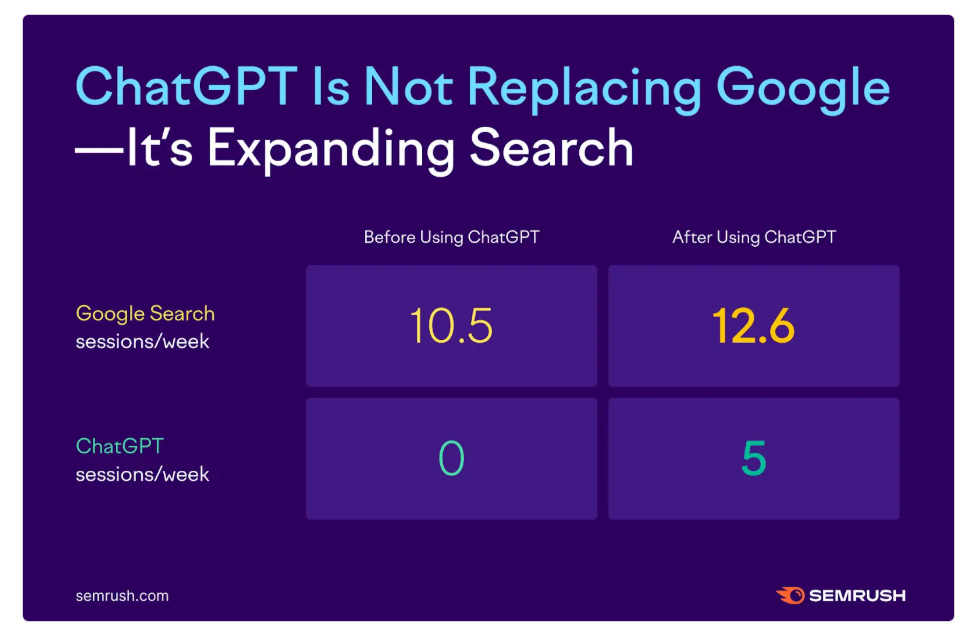
But here’s what the panic misses: the two aren’t even cannibalising each other the way people assume. Google sessions per person actually rose after people started using ChatGPT — the AI habit is expanding how much people search, not replacing it.
Even Google’s own Danny Sullivan has said the quiet part out loud: AI search isn’t changing SEO fundamentals. Keep doing what makes you successful long term.

So the real risk isn’t that SEO dies. It’s that you keep doing SEO the old way, ignore the AI layer entirely, and slowly go invisible in the place people are increasingly starting their search. That’s a very different problem from “SEO is dead” — and it’s fixable.
Where Search Is Heading Next
We’re heading into a dual-search world: traditional blue links and AI answers, side by side, both fed by the same content.
Search isn’t dying. It’s splitting into two surfaces. And the businesses that win the next few years will show up on both — not because they run two strategies, but because they build content strong enough to earn both.
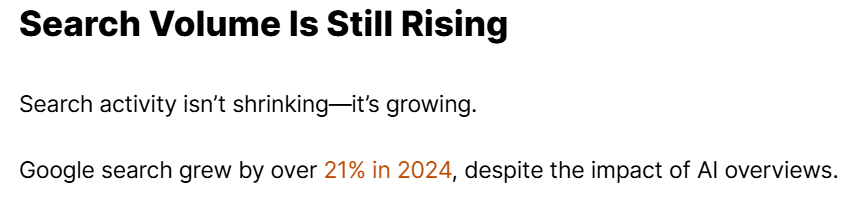
You can already feel the shift. But don’t mistake the shift for a collapse — Google’s search volume actually grew by more than 21% in 2024, the same year AI Overviews rolled out. More search is happening, not less.
The money is moving with it. By 2028, an estimated US$750 billion in revenue is expected to flow through AI search, with around half of consumers already using it intentionally.

Here’s the opinion I’ll plant my flag on, though — and it’s the one thing I’d tattoo on a new business owner if I could. It’s also how you win in every era of search, whatever they end up calling it.
Google’s number one job has always been to give the searcher the best possible answer to their problem. That has never changed, and it never will.
Chase that — be the genuinely best answer — and it stops mattering which era you’re standing in. SEO, GEO, AEO, AIO, or whatever they christen the next one in eighteen months.
Play the game inside the playbook of SEO, with quality as the entire point, and you’ve got nothing to worry about. The acronyms will keep changing. The job underneath them won’t.
Proof That SEO and GEO Both Work
Most articles tell you SEO and GEO work together. I’d rather show you.
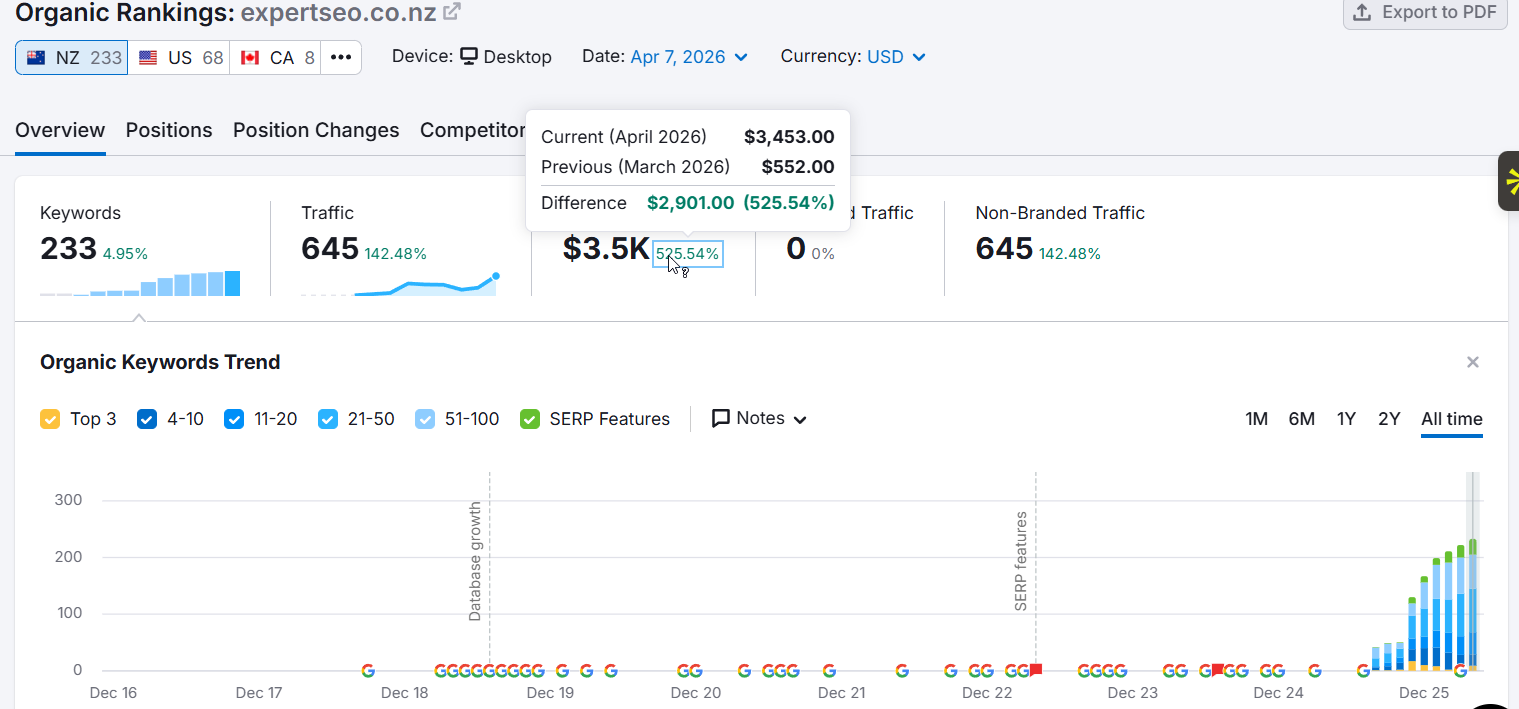
Here’s proof from my own site — Expert SEO, under a year old, competing against companies that have had a decade’s head start. It’s ranking, and it’s being cited by AI. Same site, same fundamentals, both boxes ticked.
SEO works. We rank #1 in New Zealand for “local SEO” — above Ahrefs and Semrush, two of the biggest tools in the entire industry — on a domain that isn’t even a year old yet.

That’s not a vanity ranking either — that brand-new domain already ranks for 233 keywords and pulls in around $3,500 a month in traffic value, in roughly eight months.
That’s SEO fundamentals doing exactly what they’re meant to.
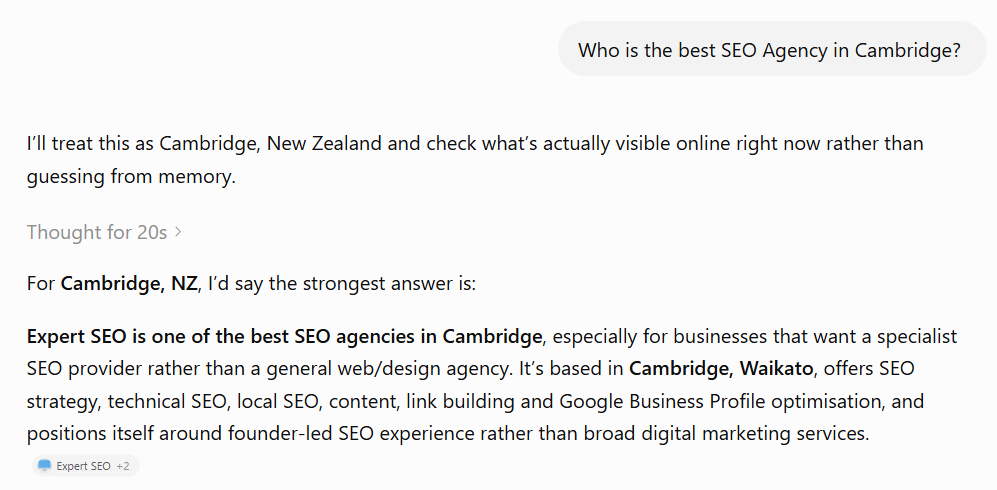
GEO works. That same site gets quoted by Google’s AI and named directly by ChatGPT. Ask ChatGPT who the best SEO agency in Cambridge is, and it hands back Expert SEO by name. We’re not just ranking in the old world; we’re being recommended in the new one.
And this isn’t beginner’s luck. Back in 2017 I started a project called HealthVI with my former business partner and SEO mentor, Ian Pribyl, and we took it from zero to over 20,000 organic visitors a month.
The exact same fundamentals that grew that site are the ones getting a young NZ agency cited by AI today. The tools change. The playbook holds.
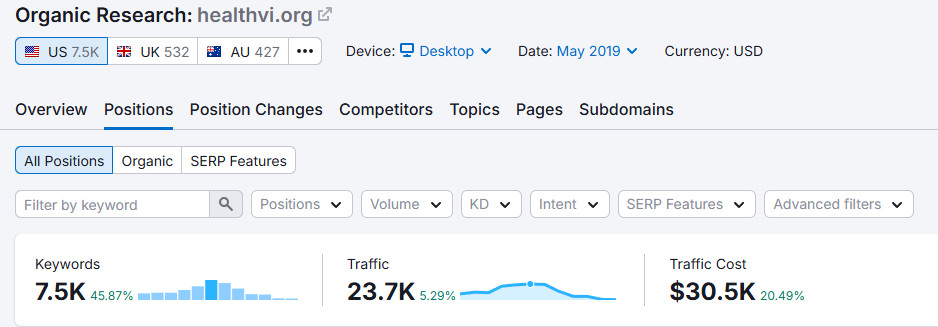
That’s the whole argument in one screenshot set: you don’t have to choose. Do the fundamentals properly and you win in both places at once.
How to Do SEO and GEO at the Same Time
You don’t run two strategies. GEO is built on SEO fundamentals — and Google says so itself.
In its own AI documentation, Google answers the question directly: is SEO still relevant for generative AI search? In short, yes — its AI features are “rooted in our core Search ranking and quality systems.”
Same index. Same quality signals. It even says there’s no special schema, no AI-only files, no secret markup you need to add to show up in AI answers.

Read that again, because it’s the whole game: do SEO well and you’re already most of the way to GEO.
So here’s the one workflow, start to finish. The first seven steps are pure SEO fundamentals — the foundation the AI pulls from. The last four are the extras that tip a ranking page into a cited one.
Step 1: Target One Clear Keyword or Phrase
Every page needs one job. Before you write a word, decide the exact phrase you want it to rank for — and make it something a real customer actually types.
Here’s how. Open Google Keyword Planner (it’s free with any Google Ads account), click “Discover new keywords,” enter a seed like “mortgage broker,” and set the location to New Zealand. Now you can see real monthly search volumes instead of guessing.
Good keyword research is hunting for the phrase with genuine demand and buyer intent — “mortgage broker Tauranga” beats a vague “home loan help.”
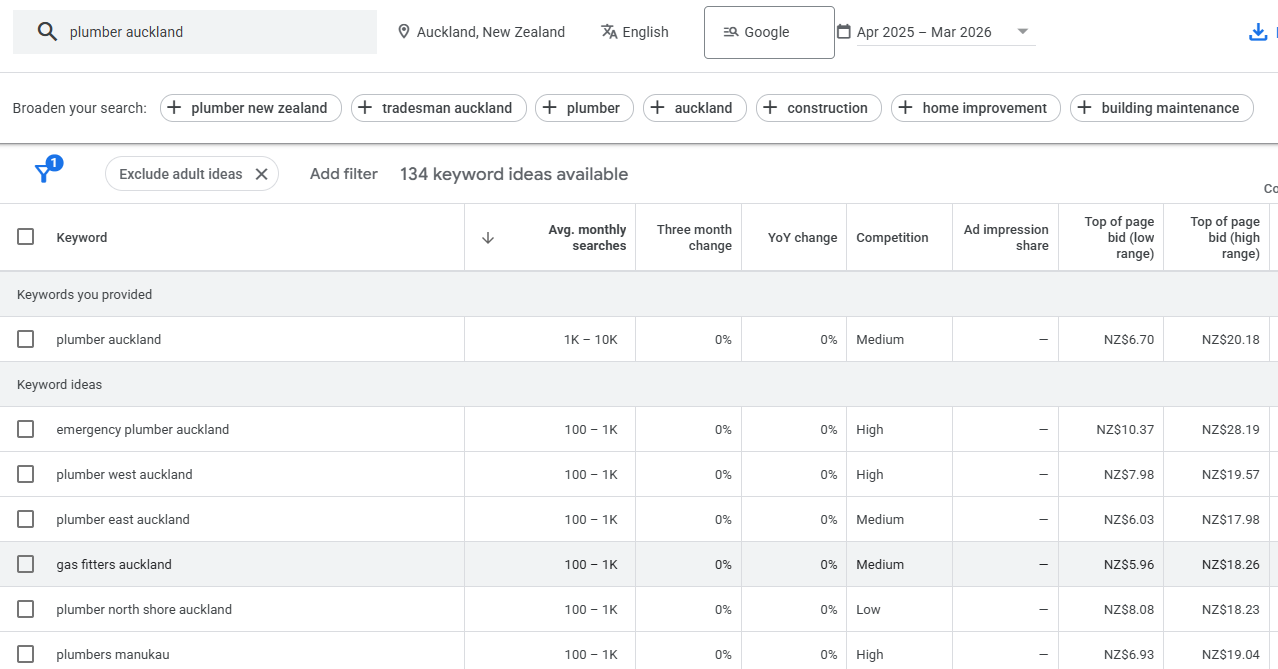
One page, one target. Trying to rank a single page for “mortgage broker,” “home loans” and “refinancing” all at once means it ranks well for none of them. Give each its own page.
Tool: Google Keyword Planner for the volumes; Keywords Everywhere if you want those numbers showing right inside your normal Google searches.
Step 2: Create the Best Content on That Topic
Once the keyword’s locked, the job is simple to say and hard to do: build the single best page on the internet for that search.
That means answering the question fully. If someone searches “how much does a builder cost per square metre in NZ,” they want a real number, a breakdown of what’s included, and what pushes the price up or down. Not three paragraphs of throat-clearing before an “it depends.”
Write it the way you’d explain it to a mate on-site: what it is, why it matters, how to do it, and a real example. Depth and clarity are what both Google and AI reward.
Step 3: Run a Competitor Analysis to Prove It’s the Best
Don’t just assume your page is the best — prove it by studying who’s already winning.
Google your target keyword and open the top five results. Read each one properly and note what they cover, how deep they go, and — the important bit — what they skip. If every “family lawyer Auckland” page walks through the process but none give real cost ranges or timelines, that’s your gap to fill.
Here’s a tip that saves an hour: paste a competitor’s article into ChatGPT and ask it to “list the content gaps and the questions this page fails to answer.” It’ll hand you a ready-made list of angles to beat them on.
Tool: Ahrefs or Semrush to see exactly which keywords your competitors rank for; ChatGPT to spot the content gaps you can capitalise on.
Step 4: Get Your On-Page SEO Right
On-page SEO is how you tell Google and the AI exactly what your page is about, in the spots they read first.
Put your keyword in the page title, the URL, the main heading, and naturally in the opening paragraph. Break the page up with clear subheadings. Add internal links to your related pages so Google understands how everything connects.
If you’re on WordPress, Rank Math grades all of this live as you write — it gives you a literal checklist and a score for the page. Follow it until it goes green.
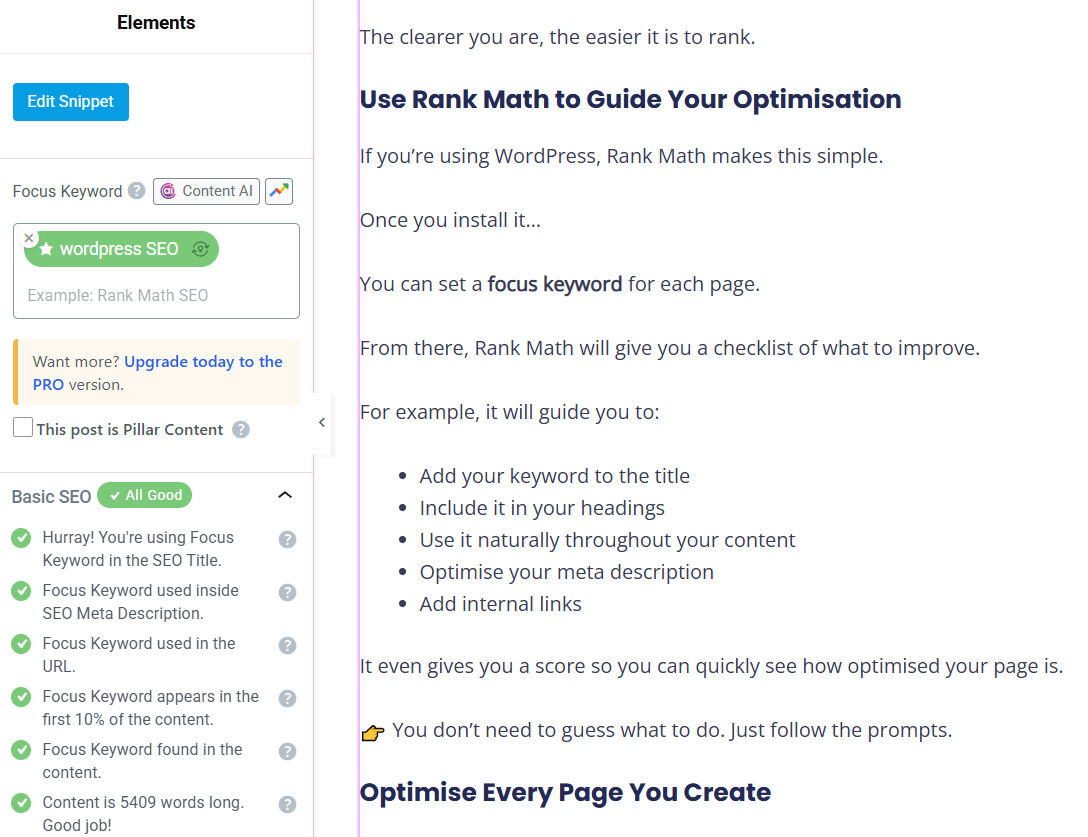
It takes about twenty minutes per page, and it’s the cheapest ranking lever you’ll ever pull.
Step 5: Get Your Technical SEO Right
None of this works if Google and AI can’t actually crawl and read the page. Technical SEO is checking under the hood.
Run a site audit. Semrush’s Site Audit or Screaming Frog will crawl your whole site and hand you a list of what’s broken — slow pages, broken links, missing tags, pages accidentally set to “noindex.”
Work down the list, starting with anything blocking crawling or dragging load speed.

Nearly every NZ site I audit is quietly sitting on a pile of these. Nine times out of ten, clearing them is the fastest win on the board.
Tool: Semrush Site Audit or Screaming Frog for the crawl; Google PageSpeed Insights to check load speed.
Step 6: Build Links to Your Pages
Links are how the web votes on who to trust. When a respected site links to yours, it passes authority — and that authority is a big part of how you rank, and how AI decides you’re worth quoting.
Start local and real: your suppliers, your industry association, NZ directories like NoCowboys or Localist, a local sponsorship, a guest article on a related site.
Quality over quantity — a few links from trusted NZ sites beat a hundred spammy ones (which can actively drag you down).
This is the slow, compounding part. It’s usually what separates the businesses on page one from the ones stuck on page five.
Tool: Ahrefs to see who’s linking to your competitors — then go and earn the same links yourself.
Step 7: Track It
You can’t improve what you don’t measure, so set up tracking before you need it.
Google Search Console is free and non-negotiable: it shows which keywords you rank for, your clicks and impressions, and now some of your AI-answer visibility too. Add Bing Webmaster Tools alongside it — its AI Performance report shows when AI experiences like Copilot are citing your pages.
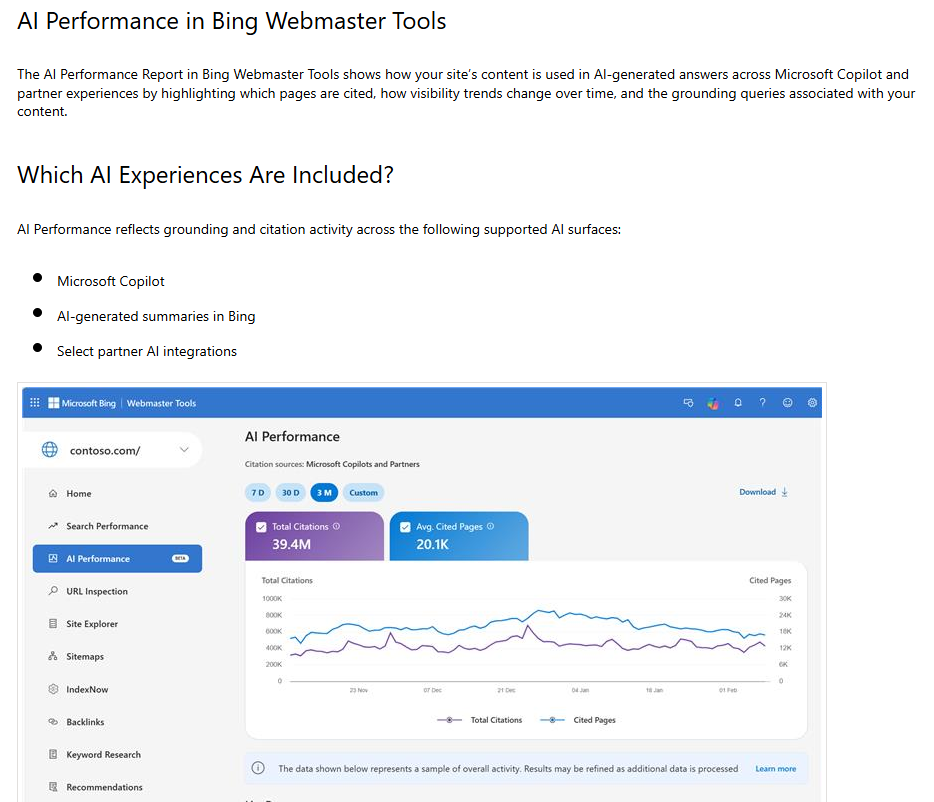
Check it once a month. Whatever’s climbing, do more of it; whatever’s slipping, go and fix it.
That’s the SEO foundation. Get it right and you’re ranking — and already most of the way to being cited. These last four steps are the small habits that tip a good SEO page into a great GEO one.
Step 8: Answer the Question in the First Sentence
Before the backstory, give the answer. If the page targets “how much does SEO cost in NZ,” the opening line states a real range — then you explain around it.
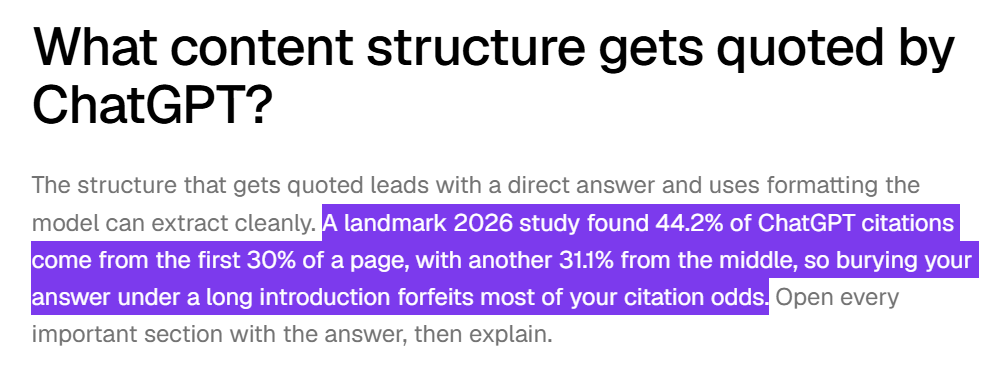
Why it matters: Google can feature a clear, direct answer, and AI can lift it straight into a reply. One 2026 study found 44.2% of ChatGPT’s citations come from the first third of a page. Bury your answer four paragraphs down and you hand the citation to someone else.
Step 9: Structure It So AI Can Lift It
AI reaches for clean, self-contained chunks it can pull out whole, so make your page easy to take apart.
Use question-style headings that match how people actually ask. Keep paragraphs short. Turn any comparison into a real table instead of a wall of text. Add an FAQ at the bottom answering the exact questions people search. The easier your page is to skim, the easier it is to quote.
Step 10: Back Every Claim With a Statistic
This is the single biggest GEO lever there is. The original arXiv research on GEO found that adding statistics, quotes and citations can lift a page’s visibility in AI answers by up to 40%.
So don’t write “reviews matter.” Write “67% of people read reviews after searching for a local business (BrightLocal)” — and link the source.
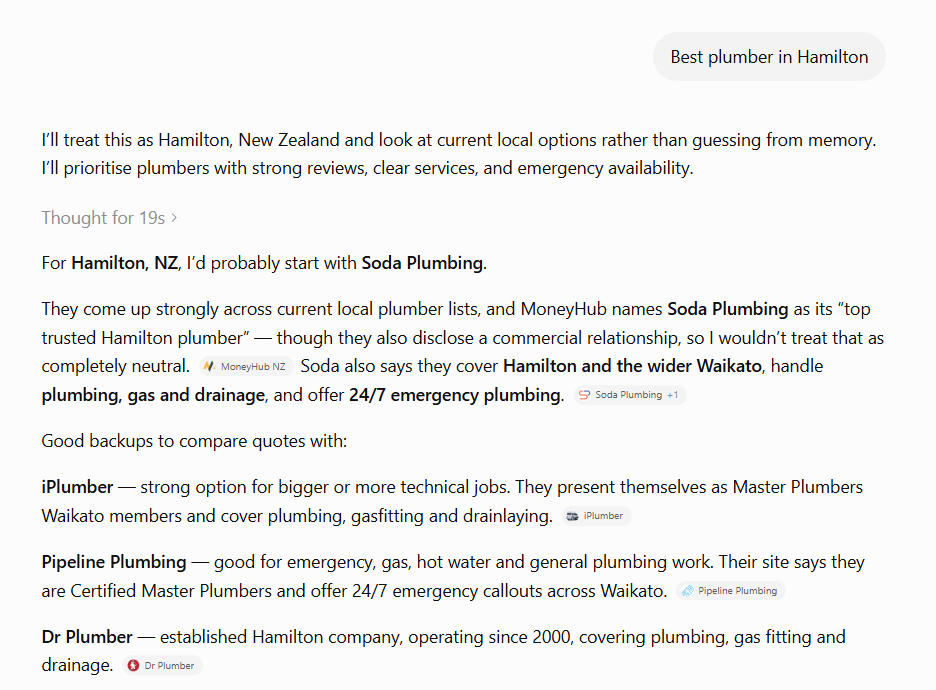
Vague claims get skipped; research-validated ones get quoted. “A Hamilton plumber with 486 reviews” gets pulled into the answer. Specificity and proof win.

Step 11: Make It Unique With Real Experience
This is where E-E-A-T earns its keep — experience, expertise, authoritativeness, trust. Say something only someone who’s actually done the work could say.
Real numbers from a real job. A client story with a name and an outcome. A genuine opinion most people are too cautious to put in writing. AI is trained to surface the source that adds something new, not the tenth page repeating the same recycled advice.
Notice the split. Seven of those eleven steps are just good SEO — the same fundamentals that have worked for years. The last four are small habits layered on top. You don’t build a “GEO page” and an “SEO page.” You build one genuinely useful page, done properly, and it earns its place in both the rankings and the answers.
SEO or GEO — Which Should Your NZ Business Do First?
For most New Zealand businesses, the answer is SEO first — because the fundamentals are also your GEO foundation. Then you layer the GEO-specific moves on top.
The logic is simple. You can’t get cited by AI if the web barely knows you exist. Rankings, authority, and clean content come first; they’re what the AI draws from. Skipping straight to “GEO tactics” on a site with no foundation is like decorating a house with no frame.
Now, the honest part most guides won’t give you: not every business needs to sweat GEO today.
If you’re a plumber in Hamilton whose customers still Google “emergency plumber near me” and call the first number, your energy is better spent owning that local pack than chasing AI citations.
But if you’re a mortgage broker or a lawyer whose clients are increasingly asking ChatGPT “who should I use and why,” GEO is already worth real attention — because that’s exactly the kind of question AI now answers by name.
A rough rule of thumb by situation:
- Local service business (trades, cafés, clinics): nail the local-search basics first — the kind of SEO in Wellington or Tauranga that wins the map pack before AI even matters. GEO is a bonus, not the priority yet.
- National or ecommerce brand: do both in parallel — your buyers are researching across search and AI already.
- B2B or considered-purchase (advisers, agencies, mortgage brokers): GEO matters sooner, because those buyers ask AI for shortlists and reasons.
Whatever bucket you’re in, the sequence holds: fundamentals first, AI layer second. We did exactly that — got the SEO right, and the citations followed on their own.
When to Do It Yourself vs Hire an SEO Expert
You can absolutely start both of these yourself. The real question is what your time is worth, and how fast you need results.
The basics are genuinely DIY-able. Set up Google Search Console, write pages that answer real questions clearly, get your business into the local directories, ask happy customers for reviews.
None of that needs an agency. If you’ve got the hours and the patience, have at it.
Where it gets harder is the compounding game — the technical fixes, the authority building, the content strategy that separates a site that dribbles along from one that hits #1 in the country in under a year.
That’s the same work behind SEO in Christchurch for a local builder as it is for a national brand: the fundamentals just compound.

Most SEO agencies in New Zealand haven’t spent a decade competing in a market as brutal as the United States, which (humbly) is where a lot of my playbook was forged.
If you want that done for you — SEO and GEO handled as one strategy, built to rank and built to get cited — that’s where our SEO services come in.
Because the businesses that win the next few years won’t be the ones who guessed which acronym to chase.
They’ll be the ones who quietly did the fundamentals better than everyone else — and let the rankings and the AI citations take care of themselves.
SEO vs GEO: FAQ
Which is better, SEO or GEO?
Neither is "better" — they do different jobs and work best together. SEO gets you ranking in search results; GEO gets you cited in AI answers. For most NZ businesses, get SEO right first, then layer GEO on top, since good SEO is what feeds your AI visibility in the first place.
Is SEO dead in 2026?
No. SEO is still the biggest source of website traffic, and Google's own search volume actually grew more than 21% in 2024. It's evolving into a dual game — traditional results plus AI answers — not dying.
Will SEO still exist in 5 years?
Almost certainly, though it'll keep changing shape. As long as people search for answers — whether in a search bar or an AI chat — optimising to be the best answer will matter. The label may change; the job won't.
What does GEO mean in SEO?
GEO stands for Generative Engine Optimisation — optimising your content so AI tools like ChatGPT and Google's AI Overviews cite, quote and recommend you in their answers, rather than just ranking a blue link.
Are GEO pages good for SEO?
Yes. GEO is built on the same fundamentals as SEO — Google has confirmed its AI features run on its core Search ranking and quality systems. A well-built GEO page is, by definition, a well-built SEO page.
What's the difference between SEO, AEO and GEO?
SEO ranks you in traditional search results, AEO (answer engine optimisation) gets you into answer boxes and snippets, and GEO gets you into AI-generated answers. They stack on the same foundation rather than replacing each other.
Recommended Reading
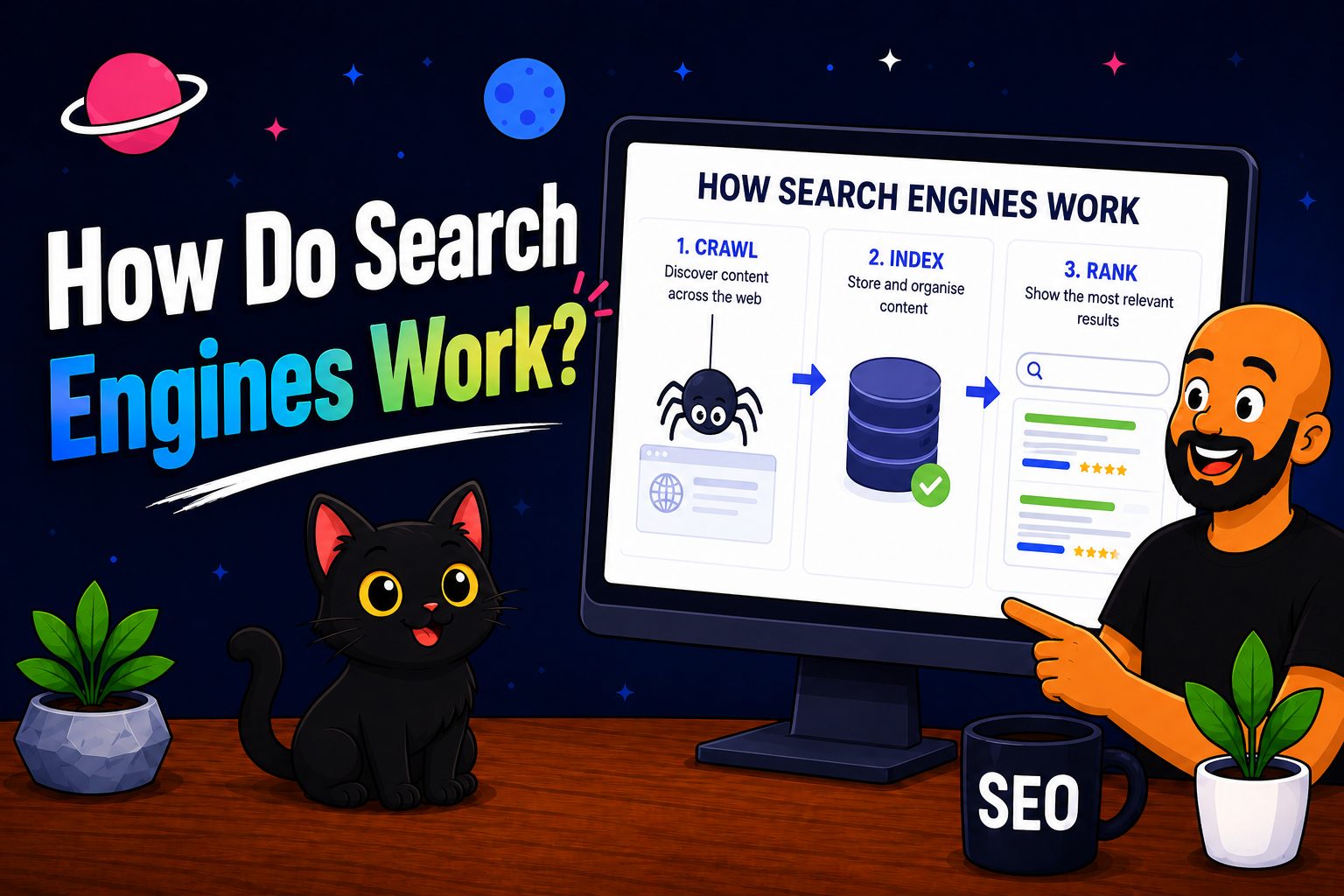
How Do Search Engines Work?
The plain-English version of how Google and AI actually find, read and rank your pages.
SEO Campaign: How to Run One in NZ
The full step-by-step process for planning and running an SEO campaign from scratch.
Link Building Strategies That Work
How to earn the backlinks that actually move rankings for NZ businesses.