
The YouTube videos will tell you it’s the easiest money you’ll ever make. “Scale it to thousands of dollars a month.” “The only affiliate marketing video you’ll ever need to watch.”
Then you go to Reddit, and the top thread is a guy who owns two affiliate sites and admits only one of them makes money. The most upvoted reply underneath? “Personally I hate SEO. It’s confusing for me and you compete against real pros right from the start.”
That gap — between the pitch and the person actually doing it — is what this guide is about.
Affiliate marketing is real. It’s one of the oldest, most legitimate ways to make money online, and plenty of New Zealanders earn a genuine income from it. But almost every article ranking for this topic was written by someone who has never built an affiliate site, and it shows.
I’ve built one from zero — it’s the kind of work I now do at my SEO agency. So this is the honest version — how it works, what it really earns, the programs that accept Kiwis, what IRD wants from you, and the one thing that decides whether you ever make a dollar.

Key Takeaways
- What it is: Affiliate marketing is earning a commission for referring a paying customer to someone else’s product through a unique tracked link — no product, no stock, no shipping.
- The model is completely legitimate. The scams aren’t the model; they’re the expensive “quit your job in 90 days” courses sold around it.
- You can absolutely do it from New Zealand, and most major programs accept NZ affiliates. The real constraint is audience size, not access.
- Nobody fails at the affiliate part. They fail at getting traffic — and they only find that out after the site is built.
- Earnings are wildly uneven: most people make little, a minority build a real income. The “$82,000 average salary” figures floating around are measuring the wrong thing.
- Affiliate income is taxable in New Zealand. Over $60,000 a year and you must register for GST, and you’re legally required to disclose affiliate links.
- The higher your price point, the less traffic you need — but the more trust you have to earn. Low price point, and it flips.
What Is Affiliate Marketing?
Affiliate marketing is a revenue-sharing model: you promote another company’s product with a unique tracked link, and you earn a commission every time someone buys or signs up through it.
No product to make, no stock to hold, no shipping. You’re paid for the referral.
That’s the whole idea. You send a customer, you get a cut.
There are three players in every affiliate deal:
- The merchant — the company that makes or sells the product (Amazon, Shopify, a SaaS tool, an NZ retailer).
- The affiliate — you, the person recommending it.
- The customer — the person who clicks your link and buys.
The merchant gets a sale they might never have made. You get paid for making the introduction. The customer usually pays the same price either way. Everyone’s incentives point the same direction, which is exactly why the model has lasted since the mid-90s.

How Affiliate Marketing Works
When someone clicks your link, a small file called a cookie tags them as yours. If they buy within the cookie window — often 24 hours to 30 days — the sale is credited to you and you get paid a set commission.
Here’s the chain, start to finish:
- You publish content with your affiliate link in it — a review, a comparison, a tutorial.
- Someone clicks the link. A cookie is placed on their device.
- They complete a qualifying action — usually a purchase, sometimes a signup or a free trial.
- The merchant’s system attributes it to you.
- You get paid.
How you get paid depends on the model. There are three:
| Model | You earn when… | Most common for |
|---|---|---|
| Pay-per-sale (PPS) | someone buys through your link | physical products, most retail programs |
| Pay-per-lead (PPL) | someone signs up, fills a form, starts a trial | software, finance, insurance |
| Pay-per-click (PPC) | someone clicks — no purchase needed | rare; some display/content deals |
Pay-per-sale is by far the most common, and it’s what you’ll deal with 90% of the time.
Now the part that decides whether any of this is worth your time: the maths.
Say you promote a $200 product at a 5% commission. That’s $10 a sale. To make $1,000 a month, you need 100 sales. And to get 100 people to buy, you might need 5,000 or 10,000 people to visit your content in the first place.
Hold that thought. It comes back later, and it’s the single most important number in this whole guide.
Is Affiliate Marketing Legit, or a Scam?
Affiliate marketing is completely legitimate. Amazon has run its affiliate program since 1996, and today around 81% of advertisers and 84% of publishers use affiliate marketing — in the US it drives roughly 16% of all online orders. It’s a standard, boring, everywhere part of how the internet sells things.

So why does it feel scammy?
Because of what’s sold around it. The model is clean. The industry that’s grown up teaching it is not.
For every honest guide, there are ten people selling a $2,000 course promising you’ll replace your salary in 90 days with “one weird system.” Those are the scams — not affiliate marketing itself, but the info-products flogged to people who want to skip the work.
Learn to spot the difference:
- Legitimate: a program that pays you a commission when you refer a real sale. Free to join. No catch.
- Dodgy: anyone charging you hundreds or thousands upfront to “unlock” affiliate marketing, or promising guaranteed income on a timeline. Real affiliate income is never guaranteed and never that fast.
And the question people keep asking — will AI kill affiliate marketing?
No. AI is changing how people find products, not whether they buy them. If anything, being the trusted source an AI tool quotes is the new version of ranking first. The channel shifts. The model stays.
The through-line here is trust. Google’s own AI Overview on this topic puts it plainly: the marketers who win “don’t just spam links; they build trust and focus on authenticity.” That’s the whole game, and it’s why the get-rich-quick crowd flames out.
Can You Do Affiliate Marketing in New Zealand?
Yes — and most major programs accept New Zealand affiliates. Joining is the easy part. The real question is who you build for.
Here’s the thing nobody tells a Kiwi starting out: “affiliate marketing” gets around 880 searches a month in New Zealand, and roughly 1.7 million globally.
New Zealand is a rounding error on the world’s audience. If you build a site aimed only at the NZ market, you’ve capped your traffic — and therefore your income — before you’ve written a word.
The smart play is usually to pick a niche and build for a global English-speaking audience, then let New Zealanders be a small slice of a much bigger pie.
When I helped build HealthVI, a health and fitness site, it ended up ranking second in the world for a term like “fat loss” — not second in New Zealand. That’s where the traffic is.

The practical NZ questions, answered:
- Can you join the big programs? Almost all of them — Amazon Associates, the major networks, most SaaS programs. A few restrict certain countries, but New Zealand is rarely on the excluded list.
- How do you get paid? Usually bank transfer or PayPal, often in USD. You’ll want an account that handles USD without gouging you on the conversion.
- Do you need a company? No. You can start as a sole trader. (Tax still applies — more on that below.)
New Zealand isn’t a disadvantage here. Our small local market just means you should aim wider from day one.
How Much Can You Earn From Affiliate Marketing?
Honestly? Most people earn close to nothing for the first several months, then a slow trickle, and a minority go on to build a real income.
Anyone quoting you a tidy “average affiliate salary” is measuring the wrong thing.
Let’s kill the bad numbers first, because they’re everywhere.
One of the top-ranking guides on this exact topic quotes affiliate marketer “salaries” of $56,000 to $82,000.
Those are figures from job sites — salaried people employed as affiliate marketers at companies. That has nothing to do with what you’ll make running your own affiliate site. Another leans on a table lifted straight from a hosting company’s blog. Neither reflects reality.
Here’s the reality:
- Months 0–6: likely nothing, or a few dollars. You’re building content and waiting for it to get found.
- Months 6–12: if you’ve done the traffic work, a trickle — enough to feel real, not enough to quit anything.
- Year 2+: this is where the people who stuck it out start seeing real money. Some reach a few hundred a month, some a few thousand, a few go much higher.
Can you make $10,000 a month? Yes — people do, and I know it firsthand because the person who taught me runs affiliate sites that clear well over ten grand a month. But that’s not a beginner number. It’s the top of a curve that most people quit long before they reach.
The honest summary: affiliate marketing pays like a business, not a wage. Uneven, slow to start, and entirely dependent on the one thing the next section is about.
Why Most People Fail at Affiliate Marketing
The affiliate part is easy. Signing up, grabbing a link, dropping it into a page — a teenager could do it in an afternoon. The hard part, the part that decides everything, is getting enough of the right people to actually see that link.
That’s a traffic problem wearing an affiliate marketing costume. And almost nobody warns you.
Remember that Reddit reply — “I hate SEO… you compete against real pros right from the start”? That’s a real person running straight into the wall.
And look at what it took them to get over it: four years of grinding to reach just under $9,000 in their best month ever, plus their own hard-won advice to “get someone trustworthy to teach you.” The affiliate mechanics were never the hard part. The traffic was.

Here’s how brutal the traffic reality is: Ahrefs studied billions of pages and found that around 90% get no traffic from Google at all. Not a little. None. Publishing a page and hoping it ranks is, statistically, publishing into a void.
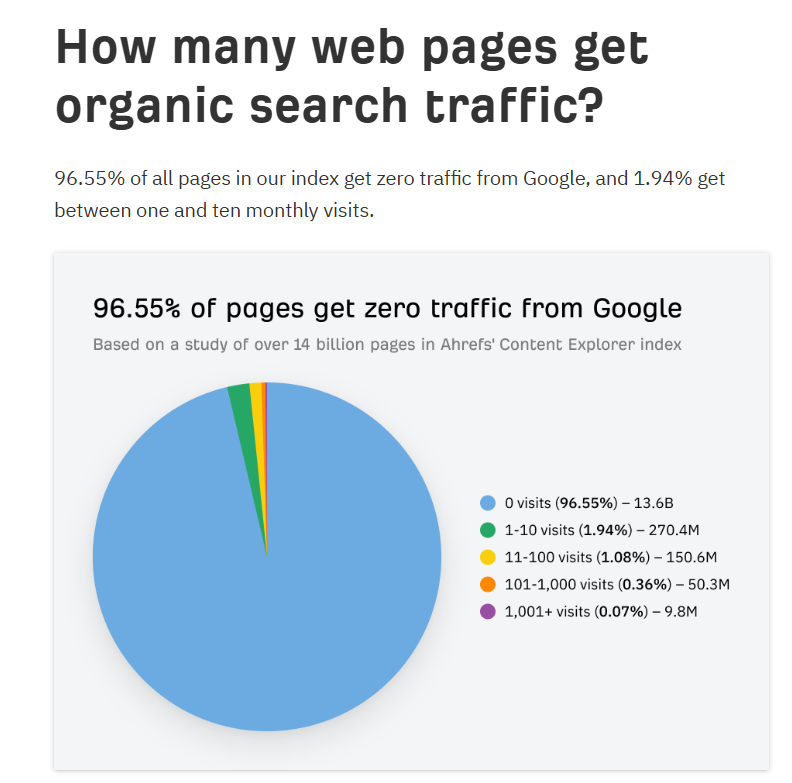
So the real job description reads more like publisher who has to win an audience — with the affiliate link as the last five percent, the bit that turns attention into money. You’re competing for eyeballs against people who’ve been doing this for years.
I know this because I’ve done it. HealthVI went from zero to more than 20,000 visitors a month — but every one of those visitors was earned through the traffic work, not the affiliate setup. Ranking for thousands of search terms, building content people actually wanted, month after month.
The affiliate links were the easy afternoon. The traffic was the mountain.
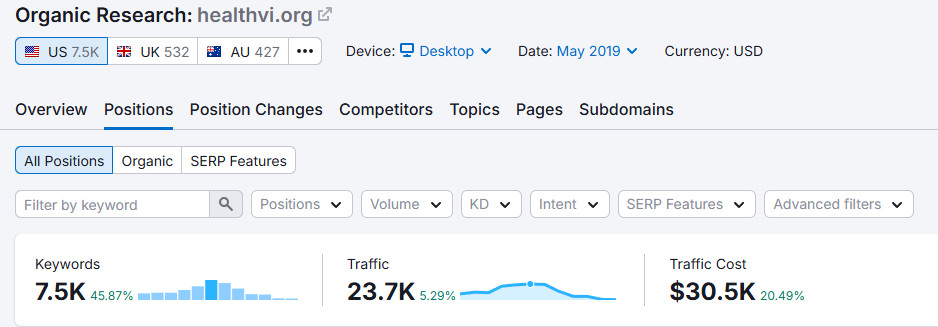
If you take one thing from this guide, take this: don’t ask “how do I do affiliate marketing?” Ask “how do I get traffic to a website?” Answer the second one and the first one takes care of itself.
How to Start Affiliate Marketing in New Zealand
Starting is genuinely simple and cheap — a niche, a platform, a couple of programs, and content. Succeeding hangs on one of those steps far more than the others, and I’ll flag it when we get there.
Step 1 — Pick a niche
Choose a topic you can happily write about for years, that has products worth promoting, and — this is the NZ-specific bit — that has a big enough global audience to matter. Don’t box yourself into a local-only niche.
Look for buyer intent too. “Best running shoes for flat feet” is a searcher halfway to buying. “What is running” is not. The closer your topic sits to a purchase decision, the better your links convert.
Step 2 — Choose your platform
You’ve got two broad options: something you own (a website or blog) or something you rent (a social channel). Own something.
Social platforms can change the rules or switch off your reach overnight; a website you control can’t be taken from you. Most serious affiliate income still runs through a blog plus email.
Step 3 — Join the right programs
Pick programs that match your niche and pay properly. (Full list for New Zealanders in the next section.) Start with two or three — don’t scatter yourself across twenty.
Step 4 — Create content that ranks
This is the step that matters more than all the others combined. Anyone can publish a page. Getting it to rank — to be one of the ~10% that gets traffic — is the whole game.
That means genuinely useful content marketing: reviews, comparisons and tutorials that are better than what’s already out there, built around what people are actually searching for.
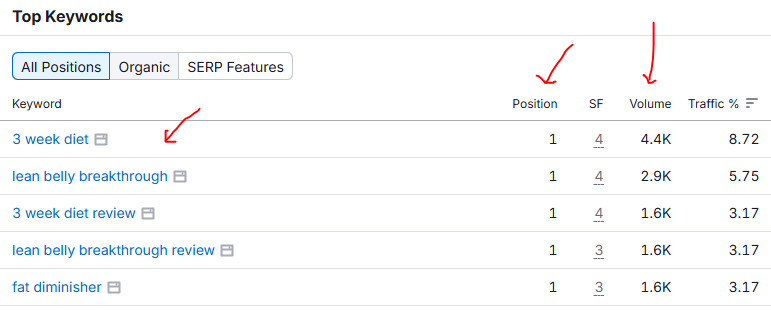
This is where I spent 95% of my effort on HealthVI, and it’s why it worked.
Step 5 — Get the traffic
Content that ranks needs help getting there: search engine optimisation, and often a second channel like YouTube or email feeding it. This is slow, and it’s the part the hype videos skip. Budget months, not days.
If two years of learning SEO yourself isn’t the plan, this is the point where handing the traffic work to an SEO services team starts to make sense.
Step 6 — Place and manage your links
Put links where they’re genuinely relevant, never forced. Disclose them (it’s the law — see below). And use a link tool like ThirstyAffiliates or Genius Link to manage them, so when a program changes a URL you’re not hunting through 200 posts.
Step 7 — Track what works
Use UTM tags and your program dashboards to see which pages and links actually earn. Then do more of what’s working and cut what isn’t.
What does it cost to start? Barely anything. A domain and hosting will run you well under $200 a year in NZD. You don’t need a course, expensive software, or a logo. You need a topic, patience, and the willingness to do the traffic work.
The Best Affiliate Programs and Networks for New Zealanders
New Zealanders can join almost every major program. The best one for you depends entirely on your niche — Amazon for breadth, high-ticket and recurring programs for real money, and NZ networks for local retailers.
Here’s the honest landscape:
| Program / network | Best for | Rough commission | Accepts NZ? |
|---|---|---|---|
| Commission Factory | NZ & AU retailers | Varies by brand | Yes (NZ-focused) |
| LinkShop | NZ brands | Varies | Yes (NZ) |
| Slice Digital | NZ brands | Varies | Yes (NZ) |
| Amazon Associates | Breadth, beginners | 1%–20% by category | Yes |
| Awin / ShareASale | Global brands, huge range | Varies widely | Yes |
| Impact | SaaS & big brands | Often generous | Yes |
| ClickBank | Digital products | High (often 30–50%+) | Yes |
| Shopify / SaaS programs | Recurring income | Recurring monthly | Yes |
A few things worth knowing:
- The NZ networks — Commission Factory, LinkShop and Slice Digital — connect you to local retailers you’ll actually recognise, which matters if your audience is Kiwi.
- The global networks (Awin, ShareASale, Impact) are where the range is. Nearly any brand you can think of runs a program through one of these.
- Which pays the most? Not Amazon. The real money is in high-ticket and recurring programs — SaaS tools that pay you every month a customer stays, or premium products with a big commission per sale. One recurring software referral can out-earn a hundred Amazon book sales.
Ignore any guide that hands a New Zealander a list of Australian networks (one of the top-ranking pages does exactly that). The programs above actually work from here.
Does Amazon Associates Work From New Zealand?
Yes, New Zealanders can join Amazon Associates. But there’s a catch worth understanding before you build your whole plan around it: which storefront you send people to, and how little you’ll actually earn per sale.

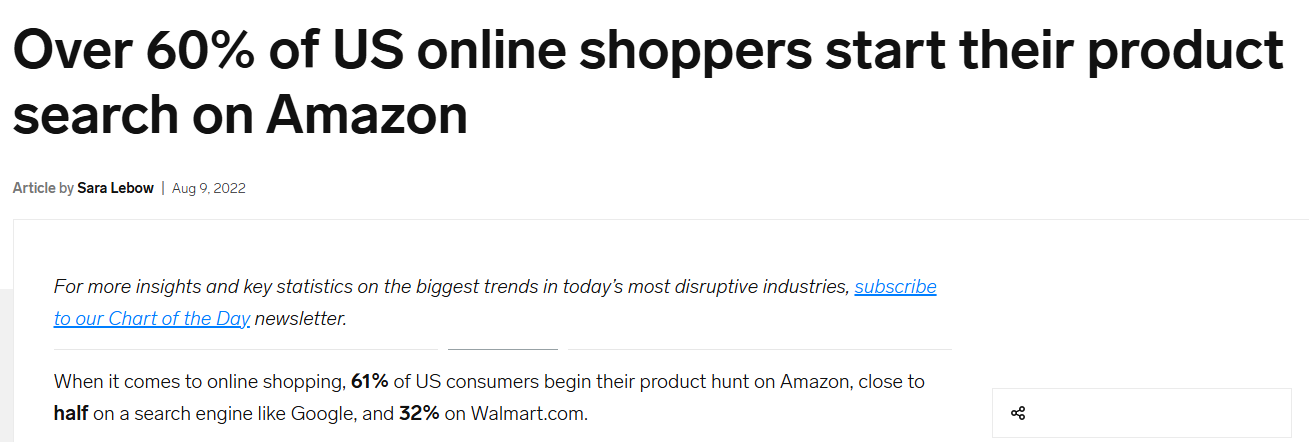
Amazon is the default first program for most beginners, and for good reason — about 61% of shoppers start their product searches on Amazon, so the trust and conversion are already there. People land, and they buy.
The catches:
- Storefront matters. If your audience is global, you’ll likely point them at Amazon US. If they’re Australian or Kiwi, Amazon AU may convert better. You can only earn from the storefront you’re signed up to, so know your audience.
- The commissions are low. Amazon Associate rates run from about 1% to 20% depending on category, but most physical products sit at the low end — 1% to 4%. A $50 sale might earn you fifty cents.
- The cookie window is short. Just 24 hours, versus 30+ days on many other programs.
The verdict: Amazon is brilliant for breadth and a good place to learn, because things sell easily.
But it’s a weak choice for real income on its own. Most serious affiliates use Amazon as one piece and put the weight on higher-paying programs.
Which Channels Work Best
A blog you own, paired with email, is the most durable combination in affiliate marketing. YouTube is powerful but slow. Social platforms are rented land. Here’s the honest verdict on each.
- Blog / SEO — the durable core. You own it, and it compounds. An article that ranks keeps earning for years with no extra work. This is where most lasting affiliate income lives, and where I’d tell any beginner to start.
- YouTube — high-converting, high-effort. Video builds trust fast, and it’s clearly working (look at how the search results for this very topic are stuffed with hour-long tutorials). But it’s a serious time commitment, and you’re renting reach from an algorithm.
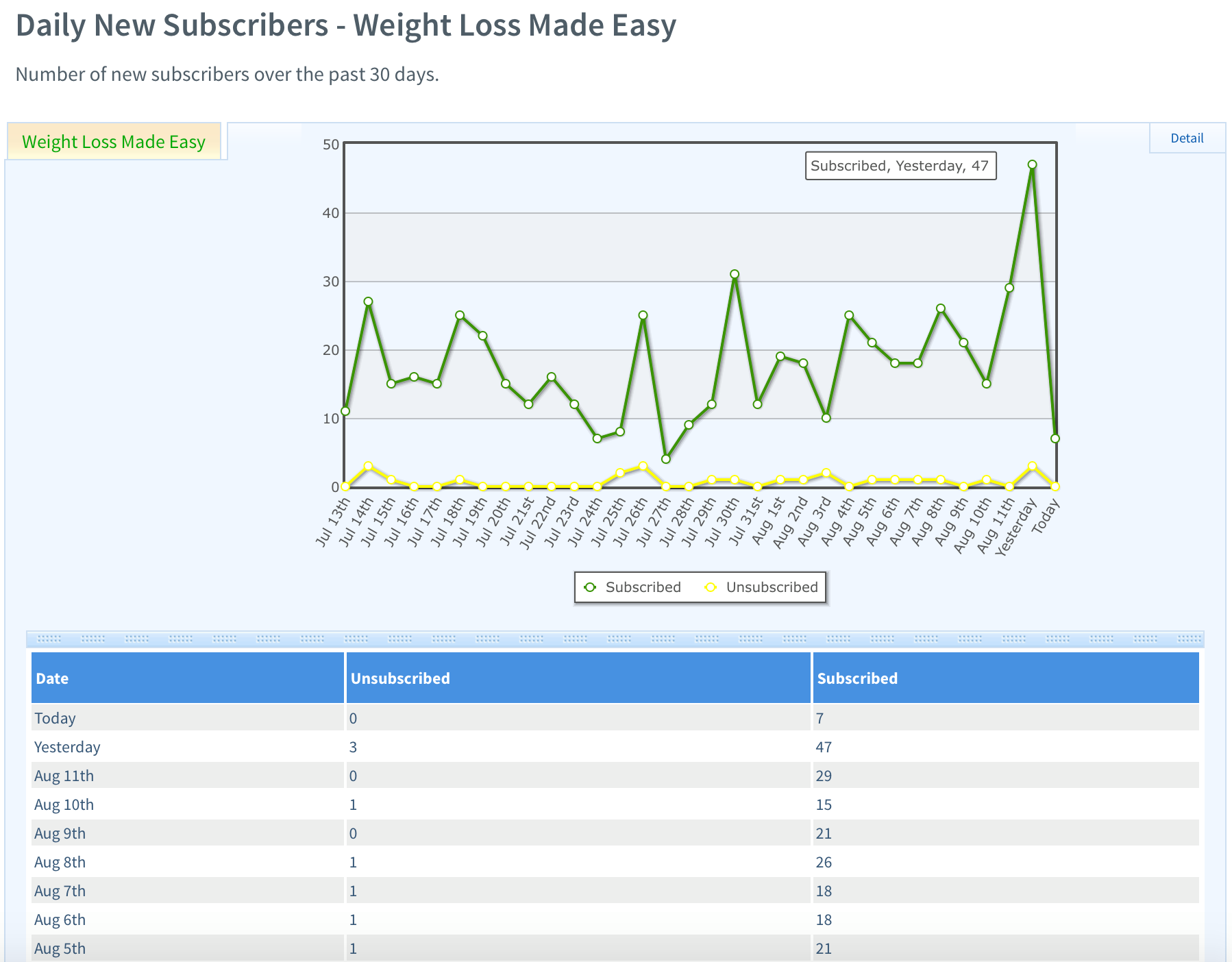
- Email — the channel you actually own. Google’s AI even singles this one out: an email list is a direct line to your audience that no algorithm can throttle. Build a list early. On HealthVI, email subscribers became one of the most reliable ways to bring people back.
- Pinterest — underrated for affiliates. Quietly good for visual, product-led niches, and far less crowded than people assume. Worth testing.
- Instagram / TikTok — reach, but friction. Huge audiences, but getting a clickable link in front of someone is clunky, and it’s rented land. Good for awareness, harder for direct affiliate sales.
If you want your work to still be earning in three years, weight it toward the two you own: your site and your list.
Tax, GST and Legal Disclosure Rules in New Zealand
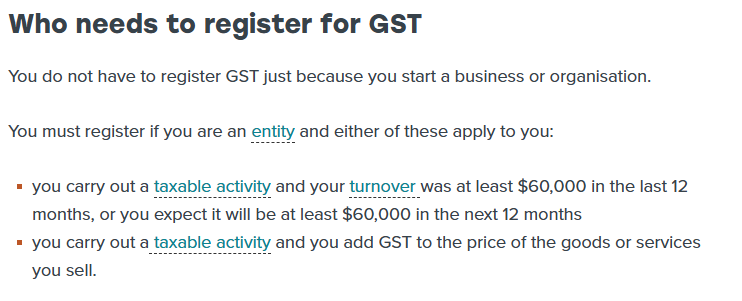
Affiliate earnings are taxable income in New Zealand — you declare them to IRD like any other self-employed income. If you earn over $60,000 a year you must register for GST, US programs will ask you to complete a W-8BEN form, and you’re legally required to disclose affiliate links.
Let’s take those one at a time, because getting this wrong is expensive.
- Income tax. Money you make from affiliate marketing is income. Whether you’re a sole trader or a company, you declare it and pay tax on it. Keep records from day one.
- GST. Once your total turnover passes NZ$60,000 in any 12-month period, you must register for GST. Miss it and IRD can backdate your registration and bill you the GST you never collected.
- US programs and the W-8BEN. Most US-based programs (Amazon included) will ask you to fill in a W-8BEN. It’s a simple form that tells the US you’re a New Zealand tax resident, so they don’t withhold US tax on your earnings. Do it — it saves you money.
- Disclosure. This isn’t optional. New Zealand’s Advertising Standards Authority requires clear, upfront disclosure when you have a “material connection” to a brand — and an affiliate commission counts. A simple, visible line like “This post contains affiliate links” does the job. Hiding it can also breach the Fair Trading Act 1986.
None of this is hard. It’s just the part the hype never mentions, and the part that turns a hobby into an actual business.
Affiliate Marketing for NZ Businesses: Should You Run a Programme?
If you sell online and have healthy margins, running your own affiliate programme is one of the lowest-risk ways to grow — you only pay when you get a sale. It’s not free money, though. Someone has to recruit and manage the affiliates.
It makes sense when:
- You sell online with margins that can absorb a commission.
- Your product is easy to explain and recommend.
- You’d rather pay for results than gamble on upfront ad spend.
The setup path in New Zealand is straightforward. You either join a network like Commission Factory (which handles tracking, reporting and payments and plugs you into a pool of ready affiliates) or you self-host a program with a plugin.
The network route is easier and how most NZ businesses start.
The catch is the same one affiliates face from the other side: your programme is only as good as the affiliates promoting it, and the good ones need managing.
An Auckland ecommerce store I’m familiar with treated its affiliate programme like a real channel — recruiting the right partners, giving them good creative — and it quietly became one of their best-value acquisition channels.
Run passively, it would have done nothing. This is exactly the kind of channel that pays off when it’s paired with proper SEO in Auckland and content, rather than run in isolation.
If you’re weighing it up as part of a bigger plan, it fits best inside a broader digital marketing strategy — not as a standalone silver bullet.
Final Thoughts
Affiliate marketing is a good business model. It’s also a real business — which means it’s hard, and you should walk in expecting that.
How hard depends on your niche. Promote high-price-point products and you need less traffic, but you have to earn real trust before someone spends big on your word. Promote cheap products and it flips — the trust bar is lower, but now you need serious volume to make the numbers work. Pick your side of that trade knowingly.
Would I recommend it? Yes — especially if you want to learn the fundamentals of digital marketing.
To make affiliate marketing work you end up learning all of it: SEO, content, email, analytics, the lot. It’s one of the best hands-on educations in running an online business there is.
And it can genuinely pay. I grew our site to the point where it was earning over $100 a day — including days we weren’t touching it.
The person who taught me runs his own sites that clear well over $10,000 a month. That’s the ceiling, and it’s real.

Just don’t mistake the ceiling for the starting line. It’s a good model, but it’s hard. Prepare yourself for that, do the traffic work, and it can absolutely be worth it.
If you’d rather have someone handle the hardest part — getting found — that’s where an SEO consultant earns their keep.
Affiliate Marketing: FAQ
Do you need a website to do affiliate marketing?
No, but a site you own is the most reliable base. You can also use YouTube, email or social media — just remember that rented platforms can change the rules or cut your reach at any time, while a website you control can't be taken from you.
How long does it take to make money from affiliate marketing?
Usually months, not weeks. Most people earn very little for the first six months while their content gets found, with meaningful income arriving in year one or two — but only if the traffic work is actually done.
Is affiliate marketing worth it in 2026?
Yes, if you treat it as a real business. AI is changing how people discover products, not whether they buy them, and the model still pays well for anyone who can build and keep an audience.
When did affiliate marketing start?
In the mid-1990s. Amazon launched its Associates program in 1996, and affiliate marketing has been a core part of how the internet sells things ever since.
How do affiliate marketers get paid in New Zealand?
Usually by bank transfer or PayPal, and often in USD. For US-based programs you complete a W-8BEN form so they don't withhold US tax, and you declare the income to IRD like any other self-employed earnings.
Can you start affiliate marketing with no money?
Almost. You need a domain and hosting — under $200 a year in NZD — and nothing else to begin. No paid course or expensive software is required to start.
Recommended Reading
 Ecommerce Keyword Research
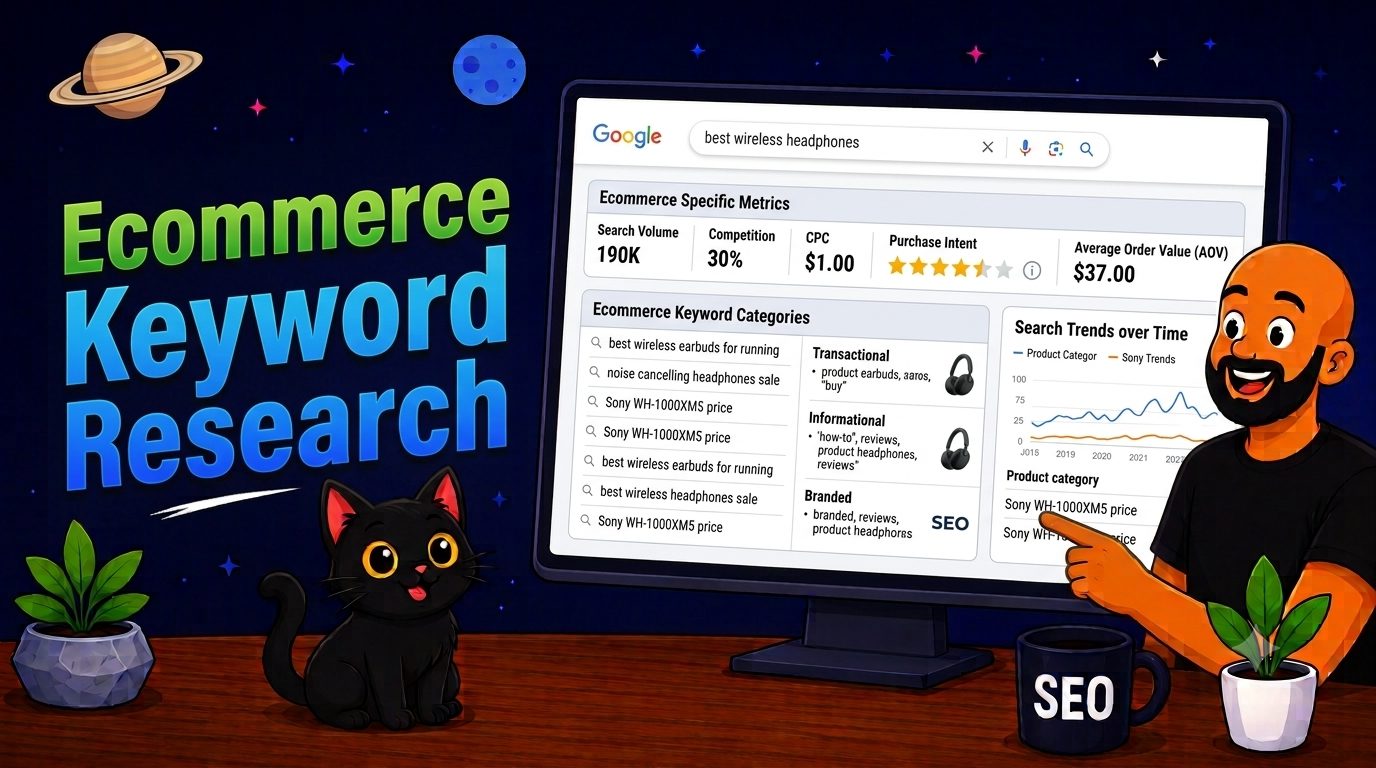
Find the buyer-intent keywords worth building affiliate content around for an NZ audience.
 SEO Copywriting
How to write reviews and comparisons that rank and actually turn readers into clicks.