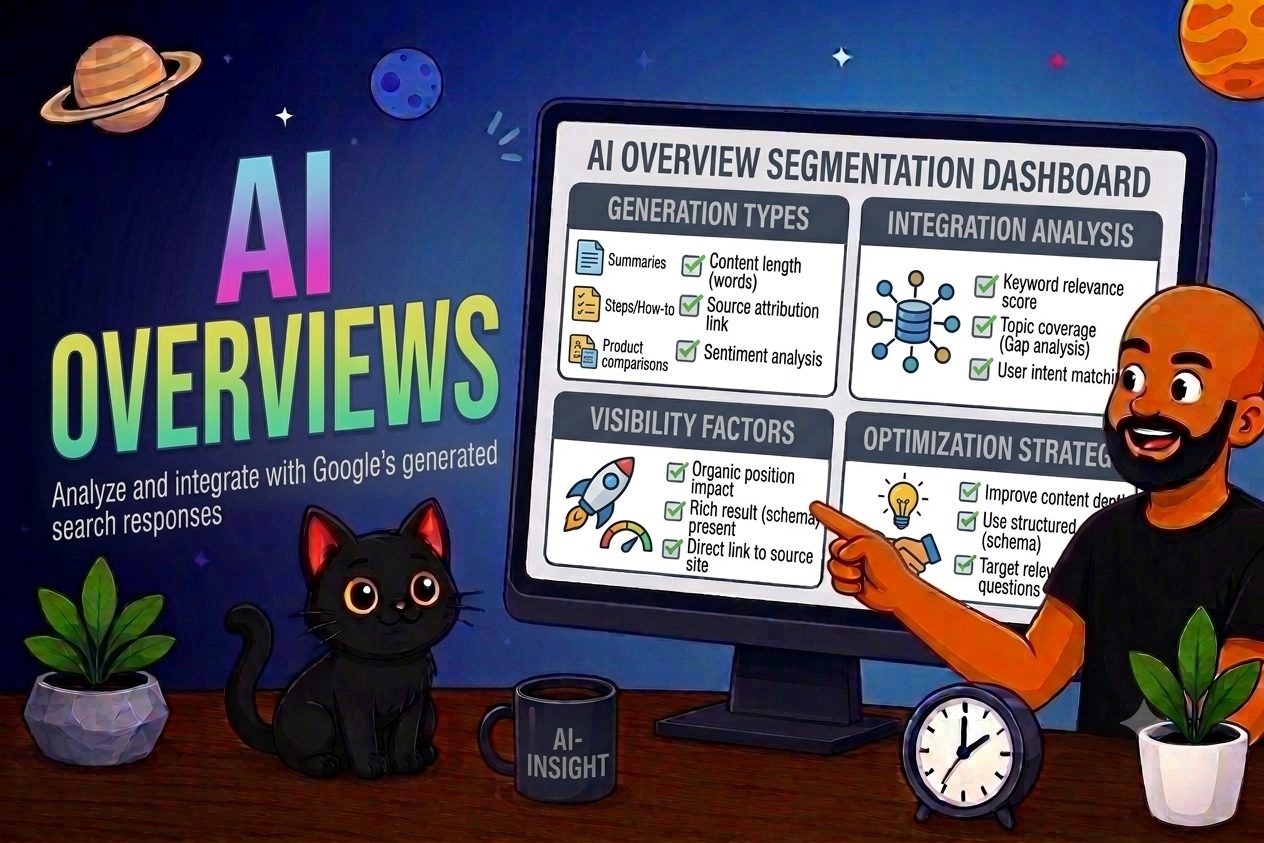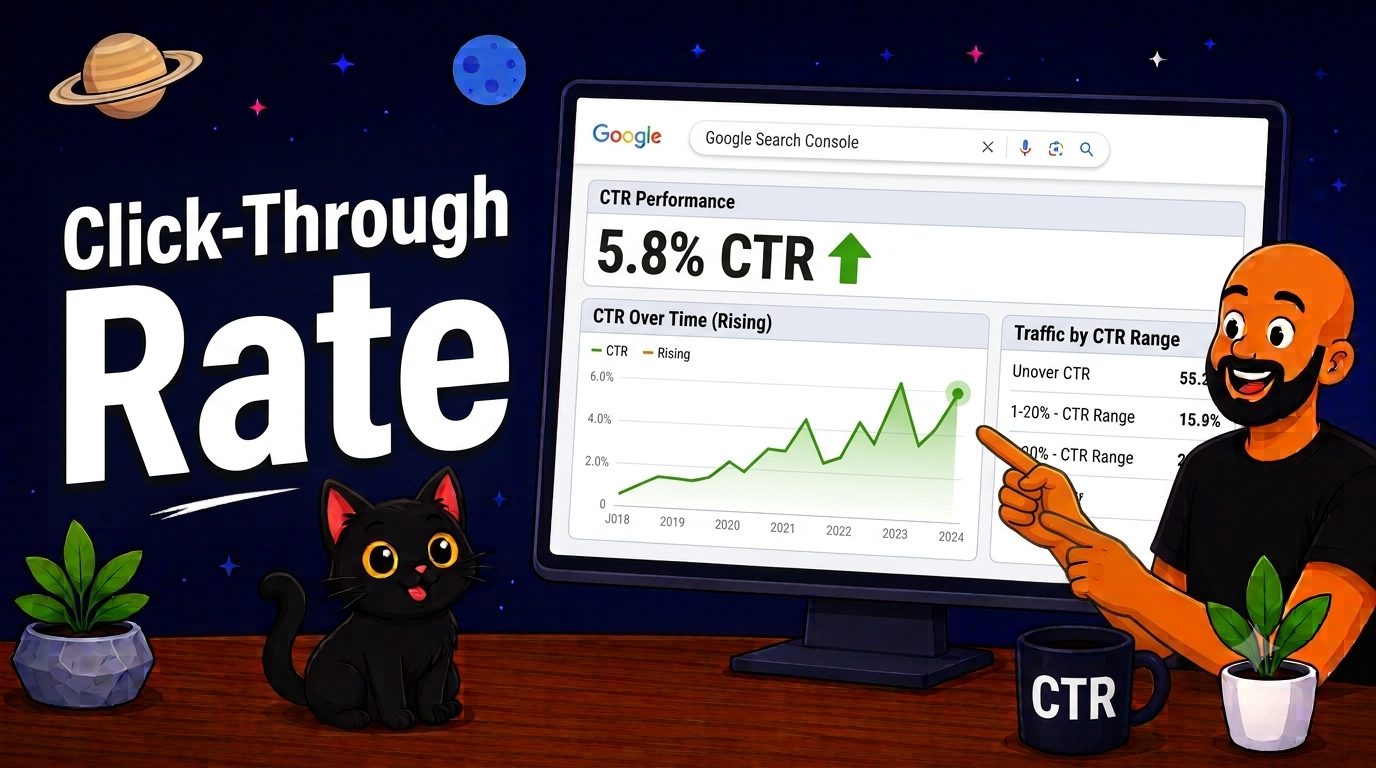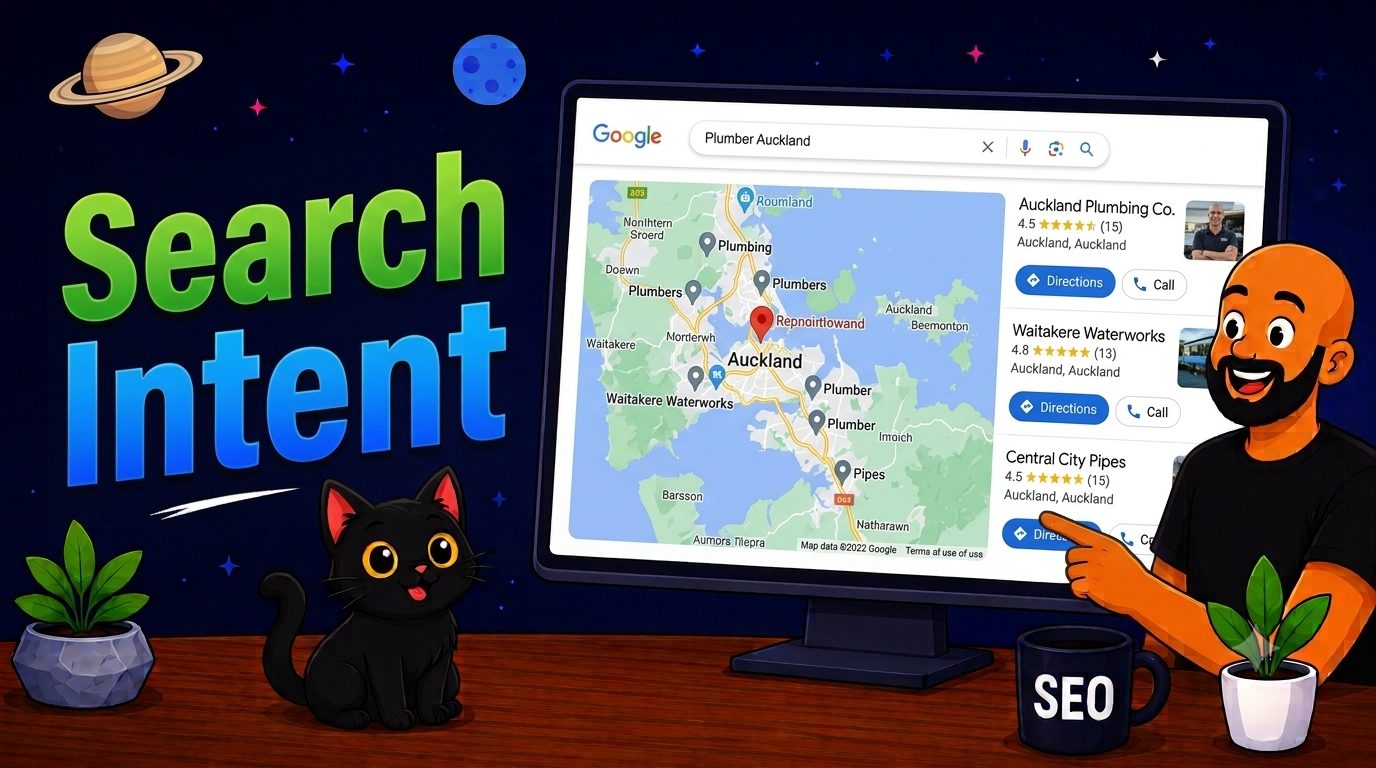

Ever since AI Overviews kicked its boot clean through the front door of search, the entire SEO industry has been losing its collective mind.
Clicks are dropping, everyone’s stressed, and every second headline is announcing the traffic apocalypse.
I want to talk you off that ledge.
I’ve been doing SEO for over a decade, competing in some of the hardest markets on earth (the United States, where the average Kiwi business owner has no idea how brutal it gets).
I’ve watched sites climb past 20,000 visitors a month. I’ve also watched clicks drop on pages that were making more money than ever.
Both things were true at the same time; that’s the part nobody explains.
So here’s what this guide does: I’ll show you exactly what a zero-click search is, why they’re happening, whether you should actually be worried (you shouldn’t), and what to do about it.
No panic. No fluff. Just what’s real.
Key Takeaways
- What it is: A zero-click search is when someone gets their answer straight off the Google results page — from an AI Overview, a featured snippet, or an info box — and never clicks through to a website.
- Around 58.5% of US Google searches now end without a click, and Bain found 80% of people rely on these zero-click answers for at least 40% of their searches.
- It’s happening because Google and AI tools like ChatGPT are built to answer you on the spot — it keeps you on their turf.
- The clicks you’re losing are mostly the low-value ones. The AI Overview is a filter: if someone didn’t click, they usually didn’t need you past the summary.
- You don’t need a new playbook. You need the SEO fundamentals done at a high level: answer-first content, real topical authority, links, reviews, and technical basics.
- The one thing AI can’t copy is your real, first-hand experience — which is exactly what you should be leaning into.
What Is a Zero-Click Search?
A zero-click search is a search that ends on the results page. The person types a question, Google shows the answer right there, and they never click through to a website.
That’s it. No visit. No session. Answer delivered, tab closed.
There are actually two flavours of this, and it’s worth knowing the difference because they affect your business differently.
The first is a no-click search: the answer gets handed over directly. Think AI Overviews, featured snippets, knowledge panels, and the “People Also Ask” boxes. Someone searches “what is a zero click search” and Google just tells them, up top, in a summary.
The second is a low-click search: the person still takes an action, but it happens inside Google. They tap your phone number from the map pack, get directions, or book straight from the listing. No website visit, but you still got the call.
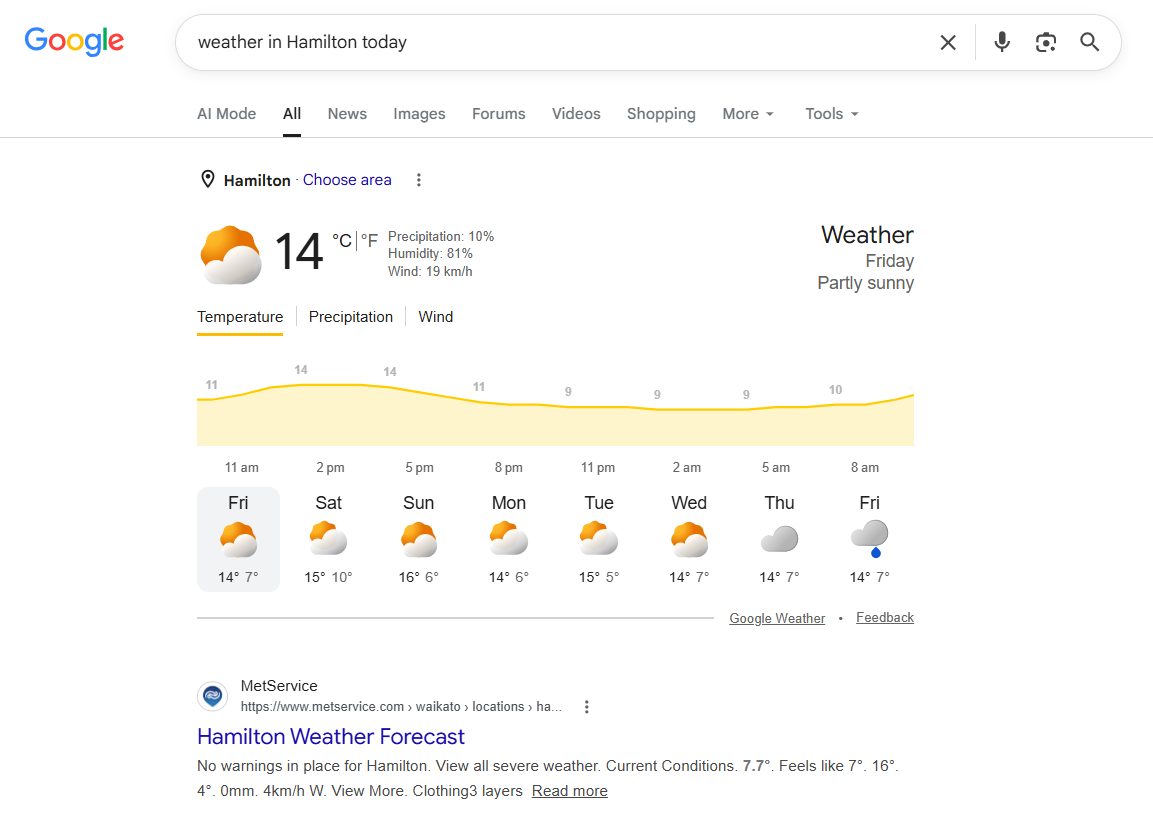
Here’s a real one. Search “weather in Hamilton today” and Google shows you the temperature instantly at the top of the screen. You don’t click a link. You don’t read a full forecast page. You got what you came for and you’re gone.
Multiply that across billions of searches and you’ve got the shift everyone’s panicking about.
Why Zero-Click Searches Are Happening
Zero-click searches are happening because search engines stopped being a directory and started being the destination.
For years, Google’s job was to send you somewhere. Now its job is to answer you. And AI has poured petrol on that fire.
A few things are driving it:
AI Overviews and featured snippets. Google now writes a summary at the top of the page, pulling from multiple sources, and answers the whole question before you scroll.
Semrush’s own study tracked AI Overviews appearing for 6.49% of keywords in January 2025, spiking to nearly 25% by July, then sliding to 15.69% in November. Volatile — but nowhere near going away.

Instant widgets and knowledge panels. Weather, currency conversions, business hours, definitions — Google pulls these from its own data and shows them instantly. No website required.
Local packs. For anything “near me,” the map pack answers with hours, reviews, and a call button. The searcher acts without ever leaving the results.
AI tools like ChatGPT and Perplexity. People are skipping Google entirely for some searches now, asking an AI assistant instead and getting a synthesised answer with no links to click at all.
Bain clocked ChatGPT up 44% in a single month and Perplexity at 15 million monthly users as this took off.
And it’s not a fringe thing. In 2024, 58.5% of US Google searches ended without a click, according to SparkToro’s research.
Bain went further and found 80% of people now rely on zero-click results for at least 40% of their searches — and estimated it’s cutting organic traffic by 15% to 25%.

Why does Google do this? Simple. The longer you stay on their page, the more ads you see and the more control they keep. Answering you instantly is a great experience for the user — and great business for Google.
So yes, the trend is real. The stats are real. Now here’s the part the doom-headlines leave out.
Is SEO Dead? The Truth About Zero-Click Search
No, SEO isn’t dead. You’re getting fewer clicks, but the clicks you do get are worth more.
Let me explain, because this reframe is the whole game.
Think of the AI Overview as a filter your market has to jump through. Someone searches a question, the summary answers the basic version of it, and the people who are satisfied close the tab.
Good. Those people were never going to buy from you. They wanted a quick fact, and they got it.
The people who click past the AI Overview onto your website? They needed more than a summary could give them.
They’ve got a real problem the AI couldn’t solve in three sentences. That’s a better-fit visitor. A warmer lead. Someone closer to actually needing what you sell.
So the quantity of clicks drops. The quality goes up. Your traffic gets leaner and more serious at the same time.
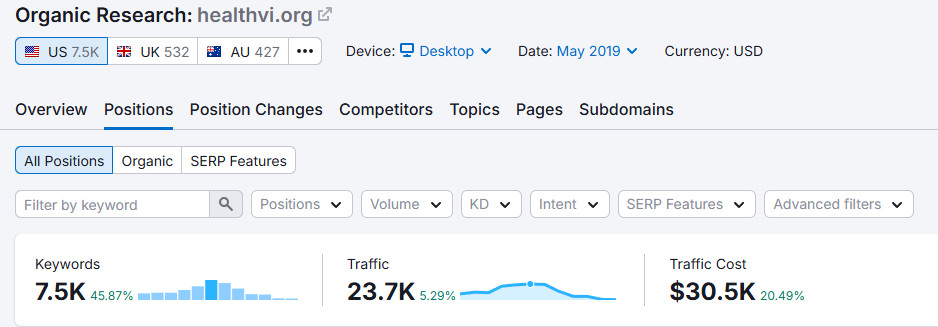
I’ve lived both sides of this. I helped grow a health website, HealthVI, from zero to over 20,000 organic visitors a month — I started that project back in 2017 with my SEO mentor Ian Pribyl, and we got so much traffic it caused a few headaches (the good kind, mostly).
I’ve also run pages where the clicks quietly dropped while the revenue climbed, because the visitors left were the ones who meant business.
Here’s the mistake I watch business owners make: they see clicks dip, panic, and gut their SEO budget.
They chase cheap vanity traffic to make the graph go up. That’s backwards. You’d be cutting the exact channel that’s still delivering your best-fit customers, over a metric that stopped telling the full story.
There’s also a hard truth in here for AI. These tools get things wrong. Constantly. They can’t give someone the ultimate guide, the one-stop-shop that walks them through a real process with truthful, tested information and actual experience behind it.
An AI Overview can define a backlink. It can’t tell you “this is how I ranked a page to number two for a competitive keyword in the United States, and here’s exactly what I did.”
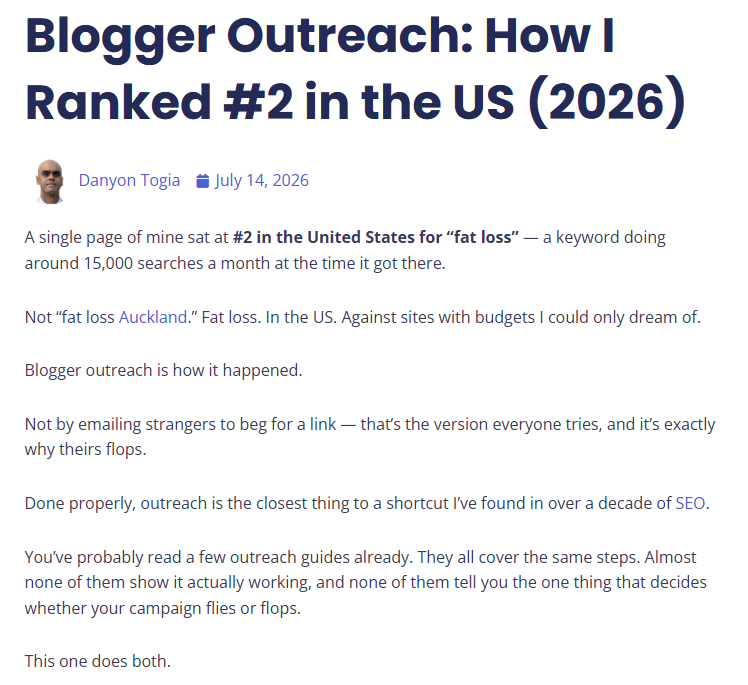
That unique, lived experience is the one thing no AI can replicate. Which makes it the smartest thing you can put on your website.
What Zero-Click Means for Your Type of Business
Zero-click doesn’t hit every business the same way. Before you worry, work out which kind you are.
If you’re a local service business — a mortgage broker, a law firm, a dentist — a lot of “zero-click” is actually good news. When someone searches “family lawyer Hamilton” and taps your number straight from the map pack, that’s a lead, not a lost click.
Your job is to own that local pack, not to mourn a website visit you never needed. Local intent is some of the highest-value search there is.

If you run an ecommerce store, your commercial pages are safer than your blog. Nobody buys running shoes from an AI Overview summary — they still click through, compare, and check out. Your product and category pages keep pulling their weight.
It’s the top-of-funnel informational content that feels the squeeze.
I saw this play out with an ecommerce client (I’ll call them a running shoes brand, since the real product needs to stay private — but the strategy’s identical). We split their keywords two ways.
The direct commercial terms went to money pages built to convert. The related informational terms — the “how do I choose,” “what’s the difference between” questions — became a content cluster, and we linked that cluster straight into the money pages.
The informational content built authority and fed buyers into the pages that made sales. Zero-click on the informational stuff didn’t hurt, because it was doing a different job.
If you run a purely informational or content site, you’re the most exposed. This is where thin “what is X” pages get eaten alive by AI Overviews. And it’s exactly where doing the fundamentals at a high level — real depth, real experience, real proof — becomes your moat.
How to Optimise for Zero-Click Search
You don’t need an exotic new strategy for zero-click. You need the SEO fundamentals done properly, plus a few tweaks that make your content easy to extract and cite.
Here’s the honest version of what to actually do.
Do your keyword and competitor research first
Before anything, know what you’re up against. Zero-click doesn’t change this step — it makes it more important.
Run your target keyword through a tool like SEMrush or Ahrefs and check two things: the difficulty, and who’s already ranking. Then go to Google yourself, in an incognito window, and read the actual results page.
Is there an AI Overview? What’s it pulling from? What’s in “People Also Ask”? Those questions are Google handing you the exact things your content needs to answer.
For competitor analysis, both SEMrush and Ahrefs put out genuinely excellent guides — I lean on their research all the time, and you should too.
Look at the top-ranking pages, see what they cover, and find the gap. Nine times out of ten there’s a hole nobody’s filled: no local angle, no real proof, no depth.
Write answer-first content that earns the snippet
The single biggest tweak for zero-click is structuring your content so Google (and the AI) can lift a clean answer out of it.
Here’s how. Use a question as your heading — the exact way a person would search it. Directly underneath, answer it in 40 to 60 words, plainly, before you elaborate. Then expand with the detail, the examples, the steps.
That short, direct answer up top is what gets pulled into featured snippets and AI Overviews.
Do it for every major question your article tackles. It’s the difference between being the source Google quotes and being the page nobody sees.
Add schema markup so Google understands you
Schema is code that tells Google what your content actually is, and it makes you eligible for more of those rich results.
Three worth adding: FAQPage schema on any question-and-answer content (helps you show up in “People Also Ask” and AI answers), HowTo schema on step-by-step guides, and LocalBusiness schema if you’re local, so your name, address, hours, and phone feed cleanly into the knowledge panel and map pack.
If you’re on WordPress, a plugin like Rank Math handles most of this without you touching code.
Build real topical authority with ultimate guides
This is the moat, and it’s where you beat the AI outright.
Topical authority means covering a subject so completely that Google sees you as the go-to source for it — not one page, but a cluster of deep, connected content. An AI Overview can answer the surface question.
It can’t replace a genuine ultimate guide that takes someone from zero to done with tested, first-hand information.
The play is straightforward: pick your core topic, map out every question a real customer asks around it, and build a page or cluster that answers all of them better than anyone. Link them together. This is content the AI feeds from rather than replaces — and it’s the stuff that keeps earning clicks because people need the full thing, not the summary.
Earn authority the old-fashioned way: links and reviews
None of the above matters if Google doesn’t trust your site. Trust comes from two things it can’t fake.
Links. When credible sites link to you, Google reads it as a vote of confidence, and it’s still one of the strongest ranking signals there is.
Focus on quality — a handful of genuinely relevant, authoritative links beats a hundred cheap ones (which can actively hurt you). Real relationships, guest contributions, and being genuinely worth citing are how you get them.
Reviews. For any local business, reviews are rocket fuel for the map pack and a massive trust signal for the humans deciding whether to call.
Grab your Google review link from your Business Profile, turn it into a QR code for your invoices, and text it to a happy customer right after you’ve done great work — while they’re still buzzing. Reply to every review that comes in.
Get cited by AI (this is the new frontier)
Getting mentioned inside AI Overviews and ChatGPT is the new “ranking number one,” and it’s very winnable.
The way you earn it is the same way you earn a featured snippet, plus authority: clear question-and-answer structure, original data or first-hand insight the AI can’t get elsewhere, and enough trust signals that the AI treats you as a credible source.
Publish things only you can say — real results, real numbers, real experience.
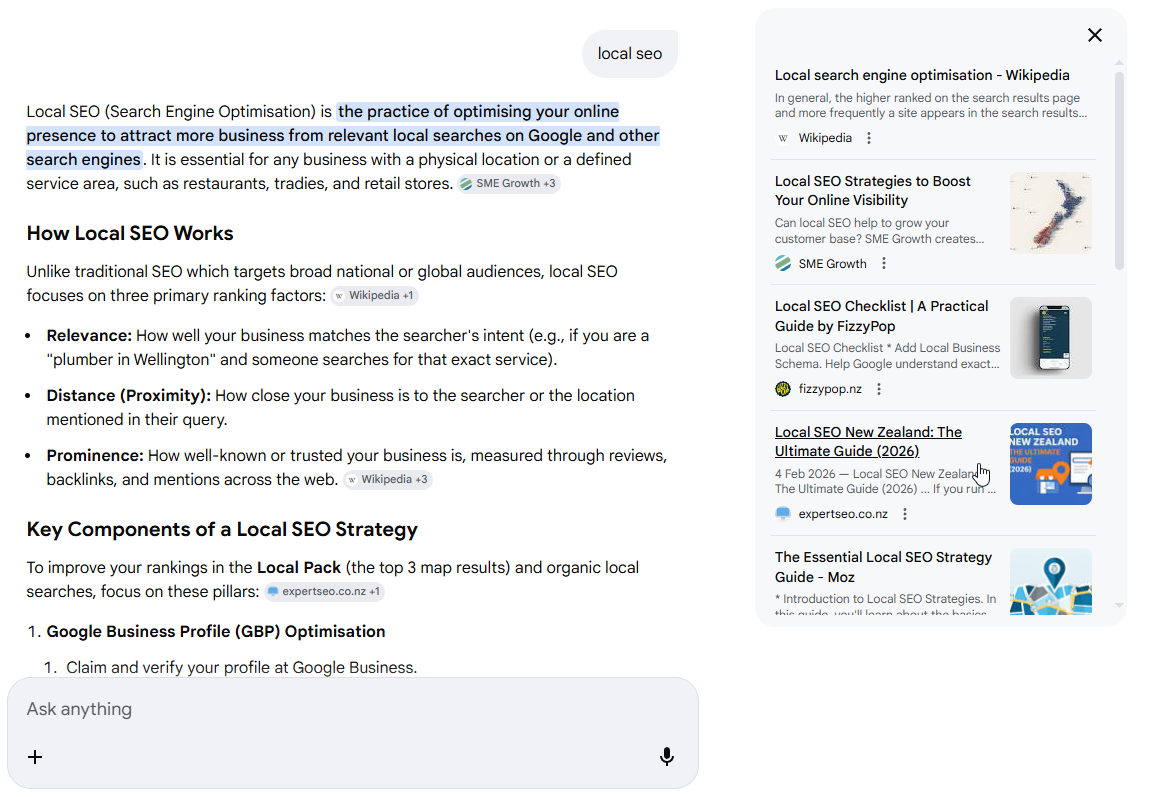
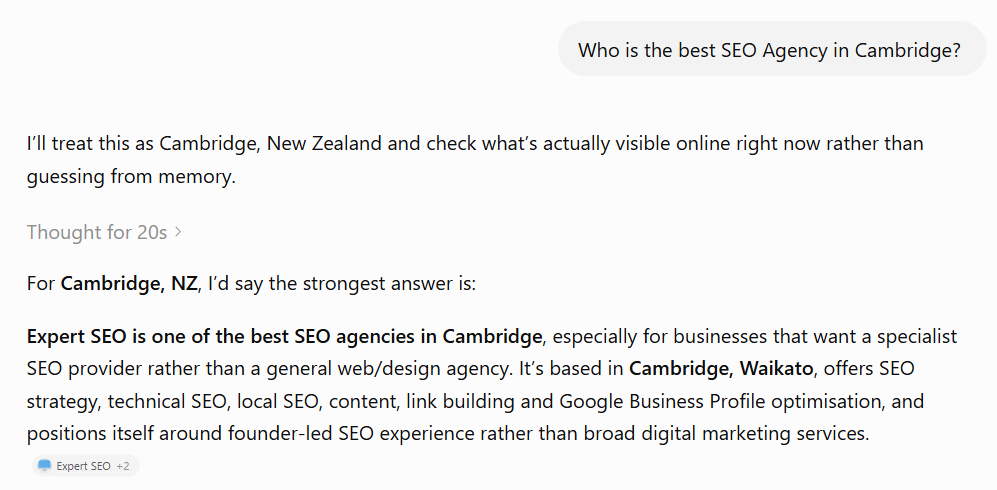
I know this works because my own business does it. Expert SEO is barely two years old, competing against agencies that have been building authority for a decade.
It’s already getting cited in Google’s AI Mode and mentioned in ChatGPT responses. If a young site can do it in a competitive market, so can yours.
Nail the technical and on-page basics
Last, don’t forget the boring stuff that quietly holds everything up.
A site that loads fast, works on mobile, gets crawled cleanly, and has proper titles and headings gives Google every reason to trust and surface you.
Run a site audit in SEMrush and iron out the errors — especially on New Zealand sites, which I find are often carrying a list of technical issues nobody’s ever fixed.
Do these seven things at a high level and zero-click search stops being a threat. It becomes a landscape you’re built for.

When to Chase the Click vs When to Chase Visibility
Not every zero-click search is worth fighting for. Knowing which to chase saves you a lot of wasted effort.
Chase the click when the query has money or depth behind it. Buyer-intent searches, comparisons, “how do I actually do this” problems — these are worth ranking for, because the person genuinely needs to come to your site to get the full answer or make a decision.
Your ultimate guides and money pages live here.
Chase the visibility when the query is a quick fact you’ll never monetise anyway. Basic definitions, one-line answers, trivia.
Being the source Google quotes still builds your brand and your authority, even without the click. You just don’t pour your energy into pages you can’t turn into customers.
And be honest about the ones you can’t win. If a keyword’s SERP is wall-to-wall Wikipedia and giant publishers with an AI Overview locked in, that’s not where a small NZ business plants its flag. Pick the battles where your real experience gives you an edge.
How to Measure Zero-Click in a World Without Clicks
If you only watch clicks, good SEO will look like it’s failing. So change what you measure.
The clicks number stopped telling the whole story the moment Google started answering on the page.
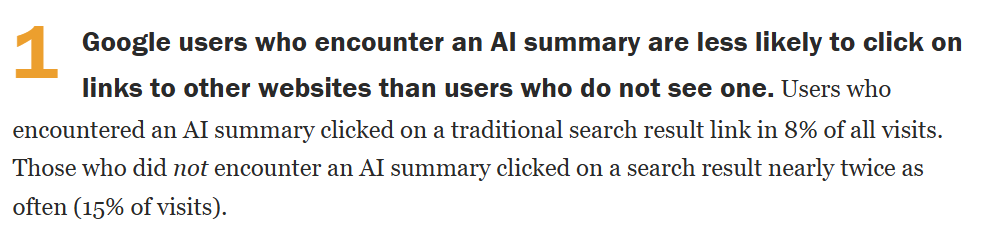
Pew Research found people click a result on only 8% of visits when an AI summary appears, versus 15% without one. If clicks are your only KPI, that looks like a disaster. It usually isn’t.
Track these instead: your impressions (are more people seeing you?), your share of SERP features (are you the one in the snippets and AI answers?), your branded search (are more people searching your name directly — the clearest sign your visibility is turning into demand?), and your assisted conversions (leads and sales that organic touched even when it didn’t get the last click).
Watch those together and the truth comes back into focus. Your visibility is growing. Your brand is landing. The clicks you kept are the ones that matter.
Final Thoughts
Don’t be scared.
Everything we touch in life goes through change and evolution. If it didn’t, we’d all still be putting along gravel roads in Fred Flintstone cars, taking ten hours to reach a supermarket that hadn’t even been built yet.
Search is no different. It’s changed before, it’s changing now, and it’ll change again.
But here’s the one thing you can bank on: the fundamentals don’t die. Real content, real authority, links, reviews, a technically sound site — that stuff has survived every era of search, and it’ll carry you from the Fred Flintstone age all the way to the rocket-ship era, whatever that ends up looking like.
The other thing AI can’t touch is your actual experience. Google can generate an answer; it can’t generate a decade in the trenches.
So don’t panic over a dip in clicks. Do the fundamentals better than everyone around you, and you’ll be fine — in this era of search, and every one that comes after it.
Zero Click Searches: FAQ
What is a zero-click search?
A zero-click search is when someone finds their answer directly on Google's results page — through an AI Overview, featured snippet, or info box — and never clicks through to a website.
What is an example of a zero-click search?
Searching "weather in Hamilton today" and reading the temperature at the top of the page is a zero-click search. So is a currency conversion, a definition, or a business's opening hours — you get the answer without visiting a site.
How many Google searches are zero-click?
Around 58.5% of US Google searches now end without a click, and Bain found 80% of people rely on zero-click answers for at least 40% of their searches. It's the majority of search today, and rising with AI Overviews.
Is SEO dead or being replaced by AI in 2026?
No. Clicks are down, but their quality is up — the AI Overview filters out casual searchers, so the people who do click need you more. Do the fundamentals at a high level and SEO still works.
What does zero-click search mean for my business?
It depends on your type. Local service businesses often win, because calls and directions come straight from the map pack. Thin content sites are the most exposed. Either way, visibility now matters more than raw clicks.