

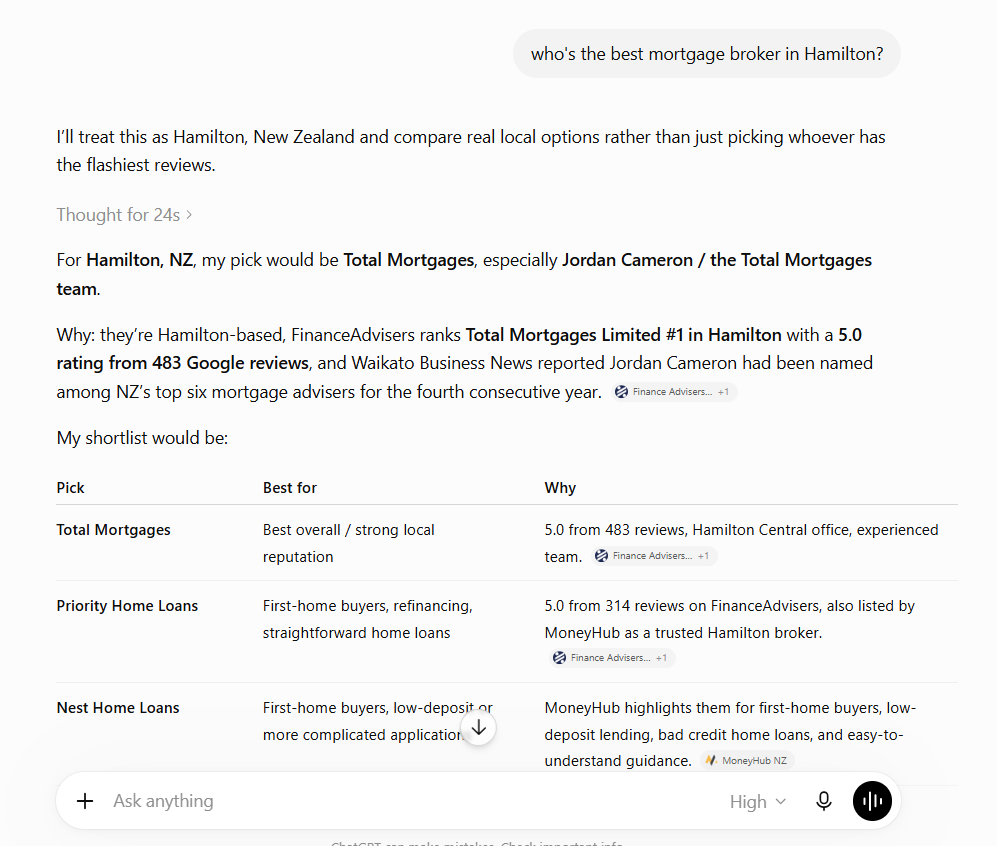
A few weeks ago I typed a question into ChatGPT that a customer might actually ask: “who’s the best dentist in Auckland?”
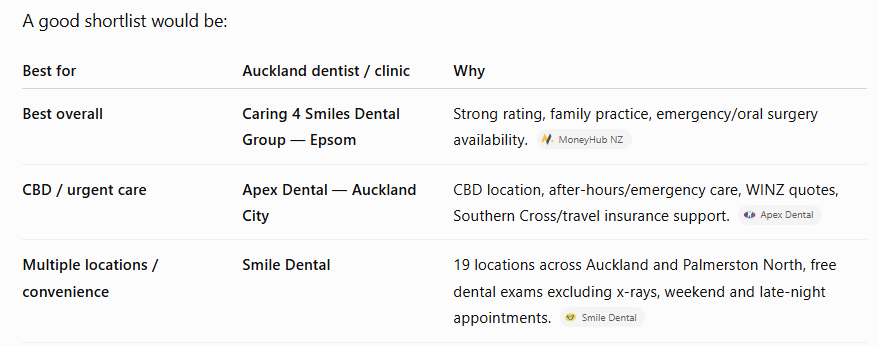
It named three businesses, no hesitation — like it was reading off a list it had already made up its mind about.
That’s the new shelf your business either sits on or doesn’t. And most Kiwi companies have no idea whether they’re on it.
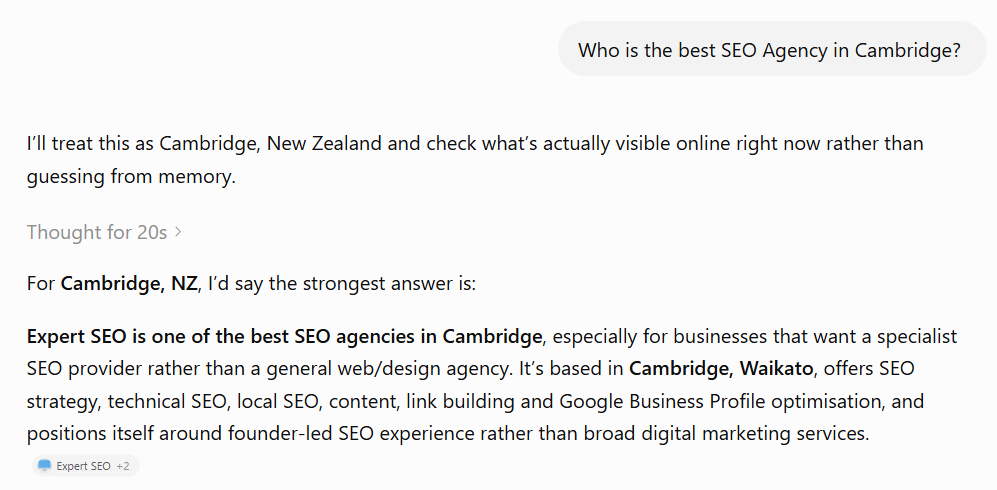
This guide breaks down generative engine optimisation: what it is, why it matters, and exactly how to do it. I’ll also show you proof it works — like ChatGPT here naming my own agency, Expert SEO, as one of the best in Cambridge, on a site that’s under a year old.
No fluff. Just what’s actually working right now.
What is generative engine optimisation?
Generative engine optimisation (GEO) is the practice of structuring your content and online presence so AI tools — ChatGPT, Google’s AI Overviews, Gemini, Perplexity — pull you into their answers and name you as the source.
Traditional SEO gets you a blue link on a results page. The searcher still has to click.
GEO plays a different game: you’re trying to be inside the answer the AI reads back, not a link sitting underneath it.
You’ll hear it called a few things — GEO, AEO (answer engine optimisation), AI SEO, LLMO. Same idea, different badge. Don’t let the alphabet soup throw you.
The term comes from a 2023 research paper whose authors found the right GEO tweaks could lift a source’s visibility in AI answers by up to 40%.

Say a mum in Hamilton asks ChatGPT, “what should teeth whitening cost in NZ?” If the AI answers with a price range and names a specific dental clinic as its source, that clinic just won GEO. It got named at the exact second someone was deciding who to trust.
GEO sits under the wider banner of AI SEO — everything you do to stay visible as search shifts from links to answers.
Why is GEO important?
Because people are getting their answer without clicking anyone’s website — and if the AI doesn’t name you, you may as well not exist.
This is the “zero-click” shift, and it’s already here. Research from Bain found that 80% of people get an answer to 40% of their searches without clicking a single link.

Google’s AI Overviews now appear on around 16% of all searches — and far more on the high-intent, “who should I hire” queries that actually bring you money.
And it’s not just Google. In a single year, the share of people using ChatGPT and other AI tools to find local businesses jumped from 6% to 45% — now the third most popular way people search (BrightLocal 2026).

Here’s the part that should get you excited rather than scared: AI search is still a wide-open paddock.
The blue-link results are a bloodbath — DR 90 giants scrapping over every keyword. But AI platforms are citation-hungry and nowhere near as crowded yet.
Visitors who arrive from AI tools even convert around 4.4 times better than regular organic traffic, because by the time the AI hands them over, they’re already sold.

A smaller, newer business — whether you’re doing SEO in Auckland or running a shop in a small town down south — can get named in AI answers far faster than it could ever muscle onto page one of Google.
I know, because that’s exactly what happened with my own site (more on that shortly).
How do AI search engines decide what to cite?
AI engines don’t read your page top to bottom like a person does. They break the web into chunks, grab the passages that best answer the question, and stitch those into one reply.
Think of it less like a librarian handing you a book, and more like a mate skim-reading twenty tabs at once, ripping the single cleanest sentence out of each, and reading those back to you. Your job is to be the tab with the clean sentence.
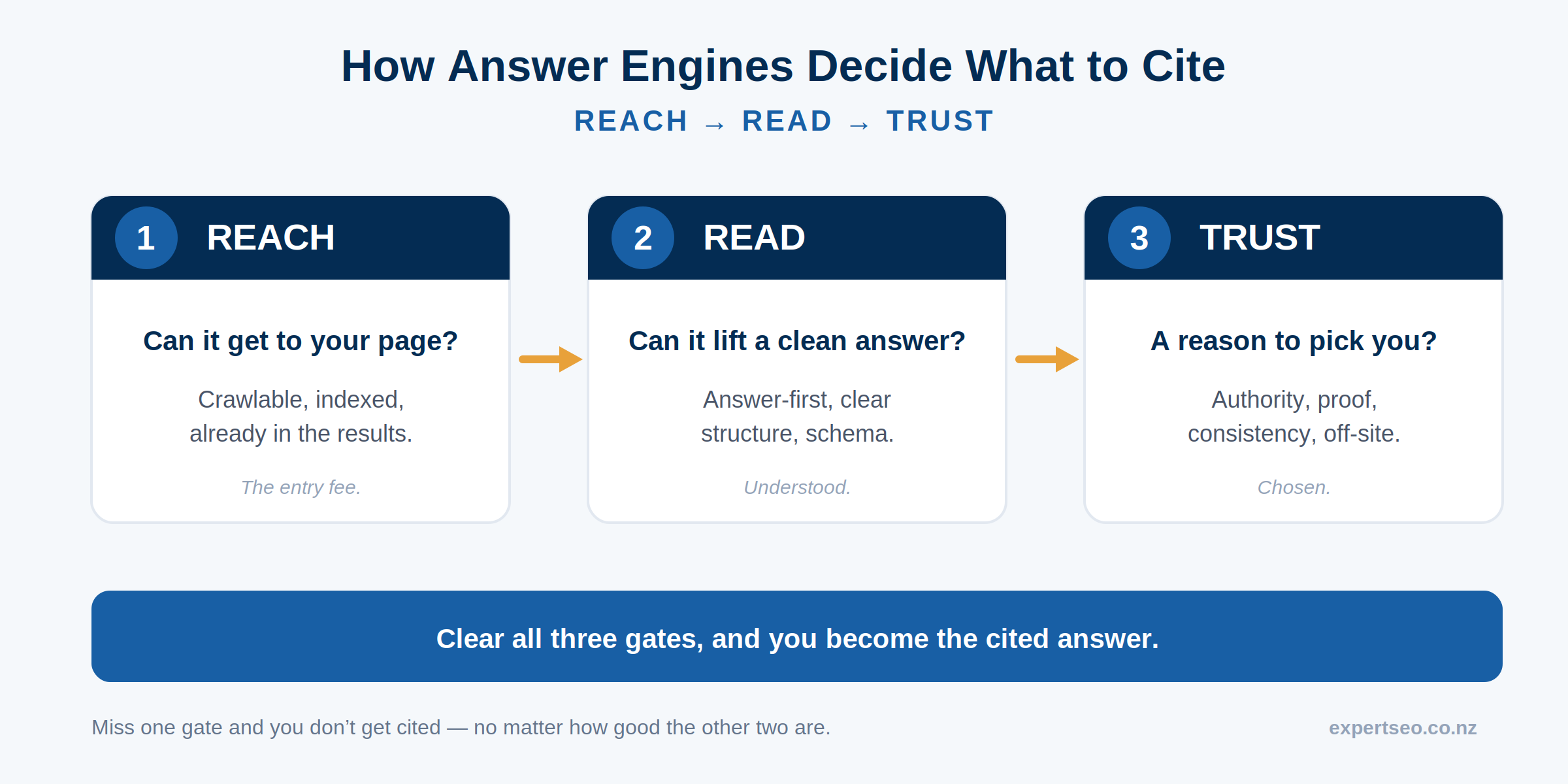
Your content has to clear three gates to get cited — reach, read, and trust:
- Reach — can it find you. If the crawler feeding the AI can’t reach the page, nothing else matters.
- Read — can it make sense of you. The engine has to parse your content cleanly and be clear on who you are as an entity — your name, what you do, where you operate. That clarity is the heart of semantic SEO.
- Trust — does anyone back you up. AI models hate being wrong, so they lean toward claims that other credible sources confirm.
One honest warning: this moves around. Semrush tracked thousands of prompts and found 40–60% of cited sources change from one month to the next.
GEO isn’t set-and-forget. It’s a garden, not a statue.
Notice how much of that overlaps with how Google already ranks pages. That’s not a coincidence — and it’s the whole point of the next section.
How to do generative engine optimisation
Here’s the good news most GEO “experts” won’t tell you: the bulk of this is just solid SEO. Get the fundamentals right, layer on a few specific tweaks, and your GEO is largely handled.
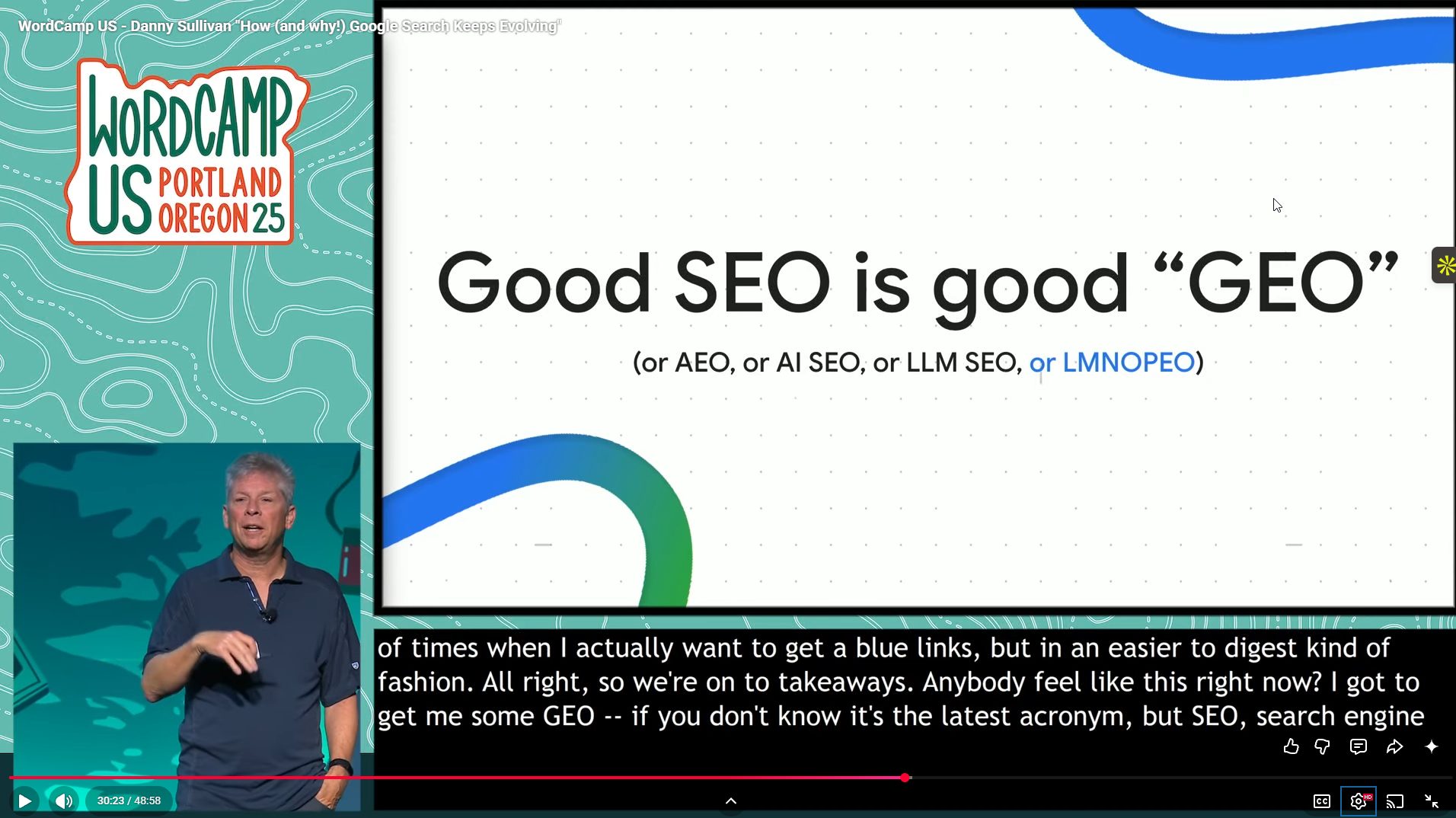
The fundamentals do about 90% of the work. The tweaks — page structure, extractable answers, stats, and brand mentions — are what tip good SEO over the line into GEO.
Let me split it exactly like that.
Start with the SEO fundamentals
You can’t tweak your way into AI answers if the foundations are broken. Before any clever GEO move, these have to be in place, because they’re doing most of the lifting:
- Make sure AI can actually reach your pages. Crawlable, indexed, not accidentally blocked. If a crawler can’t load it, no AI will ever quote it.
- Publish genuinely useful content on the topics you want to be known for. Depth beats volume. One page that fully answers a question beats ten thin ones that half-answer it.
- Build real authority. Get mentioned and linked by other credible sites — the same link building that’s always mattered.
- Keep the technical side healthy. Fast, clean, nothing broken behind the scenes.
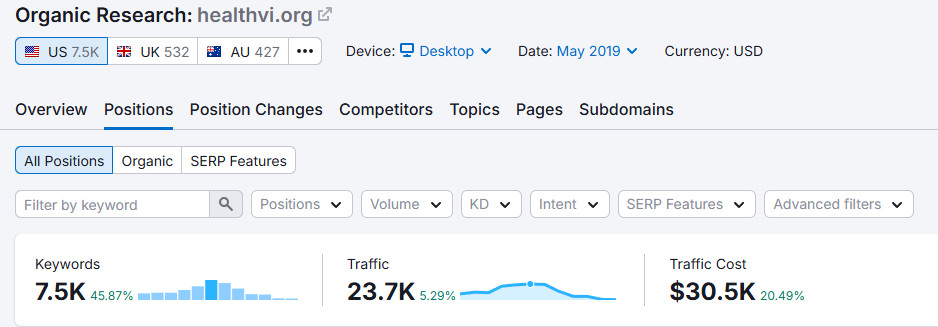
None of that is new, and none of it is exotic. It’s the same process I used to grow a health website, HealthVI, from 0 to over 20,000 organic visitors a month — years before “GEO” was a word anyone used.
The fundamentals compound. They always have.
Not sure where you stand? Run your site through a proper SEO audit first — it surfaces the exact crawl, indexing and authority gaps that quietly keep you out of both Google and the AI answers.
Fix your page structure and headings
The AI grabs answers in chunks, so clear structure hands it clean chunks to grab.
Go through your page and turn every H2 and H3 into the actual question a customer would ask, then answer it in the first line or two underneath.
Weak heading: “Our Approach.”
Strong heading: “How much does a kitchen renovation cost in Auckland?” — followed straight away by “A full kitchen renovation in Auckland typically runs $25,000–$45,000.”
That second version is liftable. The AI can take that one line and read it straight back, credit and all.
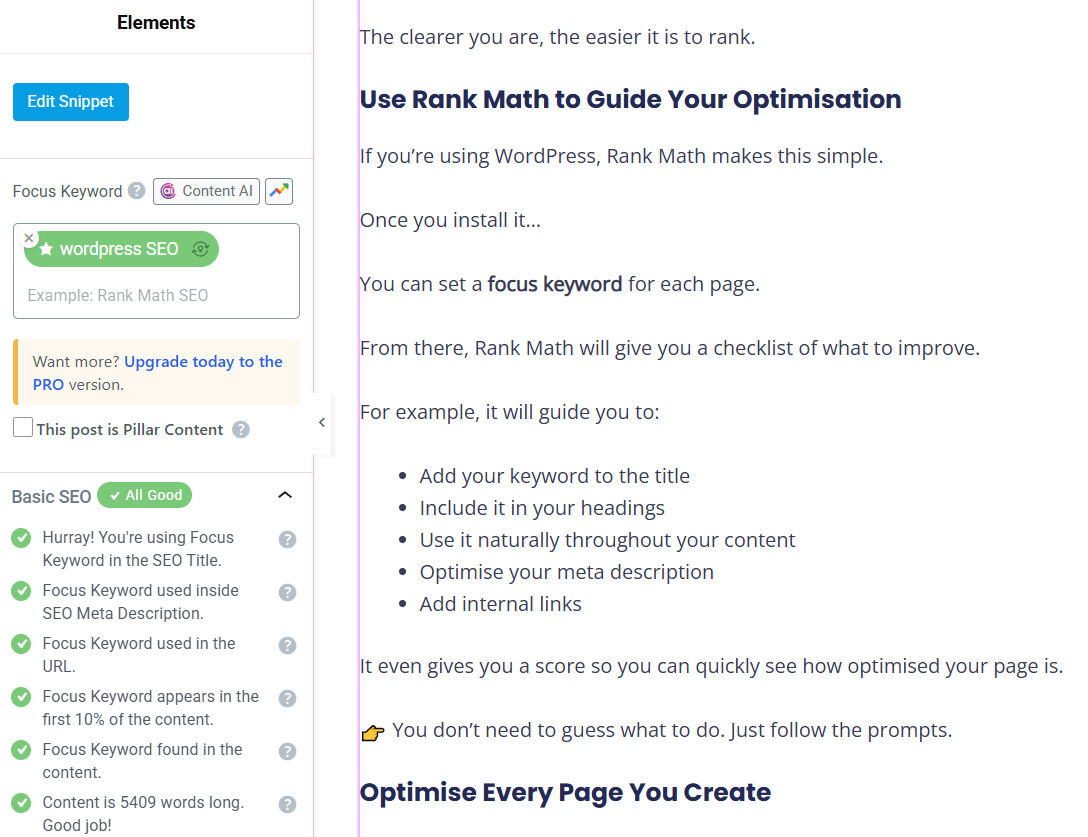
Rank Math (free, in WordPress) flags a messy heading structure while you edit — open the page, check the Rank Math sidebar, and its heading test tells you if your hierarchy is a tangle. This is just on-page SEO doing double duty.
Cut the fluff so AI can extract your answers
If your answer is buried under three paragraphs of throat-clearing, the AI gives up and grabs a competitor’s cleaner one.
Lead with the answer, every time: question, then a direct one-or-two-sentence reply, then the detail. Bin the intros that say nothing (“In today’s fast-paced world…” — gone). Make each answer stand on its own, even when it’s yanked out of context.
A page that opens “What is conveyancing? Conveyancing is the legal process of transferring property ownership from one person to another” gets cited all day.
A page that opens “Buying a home is one of life’s biggest moments…” doesn’t.
This clear, answer-first writing is the core of good content optimisation.
Back your claims with facts and stats
AI models are trained to avoid making things up, so they favour content carrying hard numbers and named sources. Pages with real statistics get cited more often.
Wherever you make a claim, attach a number and a source. “Most people research online before buying” is weak tea. “X% of Kiwis check reviews before choosing a tradie” — with a link — is quotable. Add an expert line where you’ve got one. Original data you’ve collected yourself is pure gold, because nobody else has it to cite.
It’s the same reason this very guide is stuffed with linked stats: I’m not just telling you it works, I’m handing the AI something clean to quote (humbly, I’ve been doing this a while).
Build brand mentions and stay consistent
AI leans on consensus. The more the wider web mentions your business — even without a link — the more confident the engine is that you’re real and worth naming.
Get named in the places AI actually reads: Reddit threads in your niche, YouTube, industry directories, local news, partner sites.
Keep your name, address and phone identical everywhere, because mismatched details make you look like two different businesses to a machine.
And tie your identity together — link your site to your LinkedIn, your Google Business Profile, your Crunchbase.
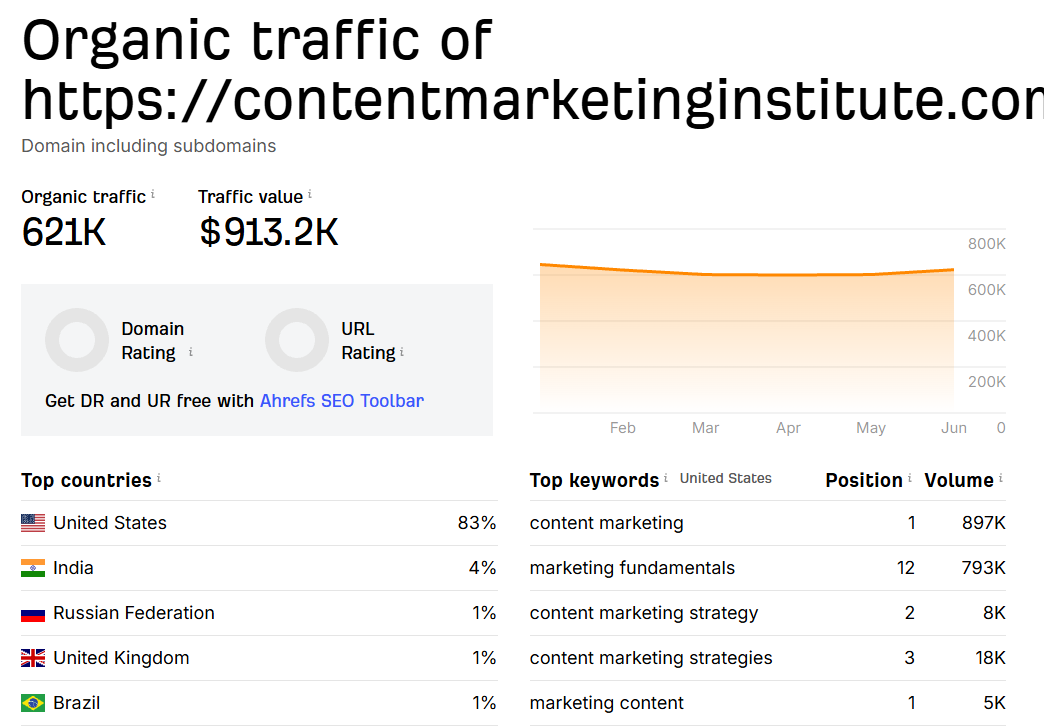
Not all mentions carry the same weight, though. A nod from a high-authority site is worth a hundred forgettable directory listings. My content’s been featured on the Content Marketing Institute, for one:

That one matters because of who they are: Ahrefs puts the Content Marketing Institute at over 600,000 visitors a month, so a mention there carries real weight with an AI that already trusts the source.
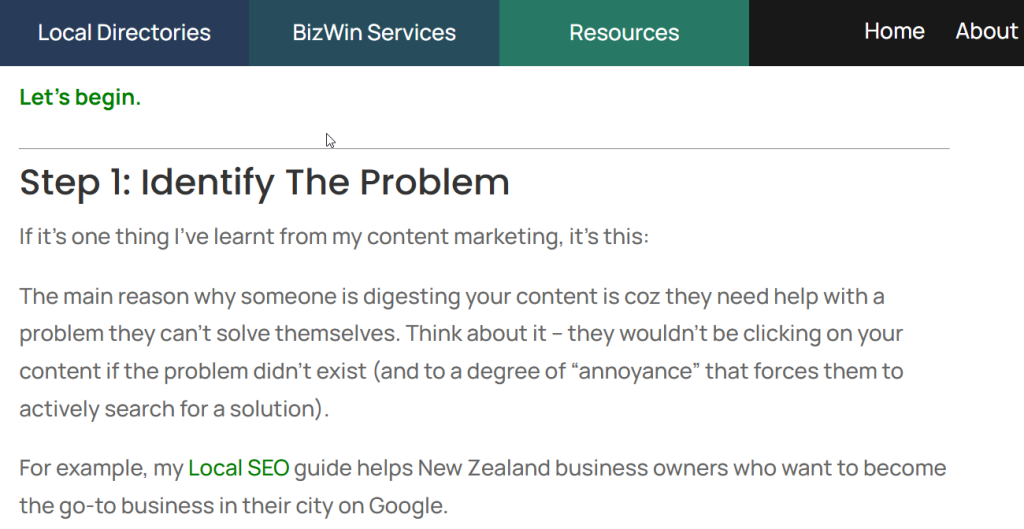
Even a single earned link from a respected industry site does more for your citability than a month of chasing cheap ones — like this one to our local SEO guide from BizWin:
Do this consistently across your topics and you build the kind of authority that makes an engine reach for you by default.
Is GEO just SEO with a new name?
Mostly, yes. And I’ll go further: even Google says so.
Google’s own guide on optimising for its AI features doesn’t hand you a secret new playbook. It tells you to do the things good SEOs have done for years — make your pages crawlable, structure your content clearly, answer real questions, keep your technical house in order. You can read it straight from Google. It’s SEO with the lights on.

So why does half the industry talk about GEO like it’s a brand-new discipline that needs a brand-new (and conveniently priced) service line?
Because “we’ll optimise your fundamentals properly” doesn’t sell as well as “there’s a scary new frontier and only we can guide you through it.”
I’ve watched agencies rebrand the exact same work — content, structure, schema, mentions — slap “AI” on the invoice, and charge a premium.
I’ll be blunt: it’s the same soup, reheated.
If your SEO fundamentals are genuinely strong, your GEO is most of the way there already. Do the fundamentals right, add the few tweaks above, and you’ve done GEO — good SEO and GEO are the same job, just pointed at a new surface.
The folks on Reddit asking “is anyone actually doing GEO, or is it just SEO with a fancy name?” are onto something. It’s SEO, done properly, for a world where a machine reads your page before a human ever does.
Do you need GEO yet?
Not every NZ business needs to lose sleep over this tomorrow. But the honest answer makes the call easy: the work pays off either way.
If you’re in a competitive service industry where people research hard before they buy — law, mortgage broking, dental, anything B2B — your customers are already asking AI who to trust. You want in on that conversation now.
Take mortgage broking, where we do a lot of SEO for mortgage brokers: a broker whose name surfaces when someone asks ChatGPT “who’s the best mortgage broker in Hamilton” is getting handed warm leads while the competition stays invisible.
If you’re a very local, word-of-mouth business — the kind where most work comes from the neighbourhood and referrals — you’ve got a bit more runway before AI search reshapes your world.
But here’s why it barely matters which bucket you’re in: because GEO is just good SEO, doing it is never wasted.
Every tweak that helps an AI cite you also helps you rank in normal search, convert better, and read clearer to actual humans.
You’re not making a bet on the future — you’re improving the present and getting the future thrown in.
How we got cited in Google’s AI Mode and ChatGPT
This isn’t theory for me. My own SEO company’s website — Expert SEO — is under a year old. It’s up against NZ agencies that have been building their sites and authority for a decade. And it’s already being cited in Google’s AI Mode and mentioned by ChatGPT.
Here’s Google’s AI Mode pulling from our local SEO guide as a source:
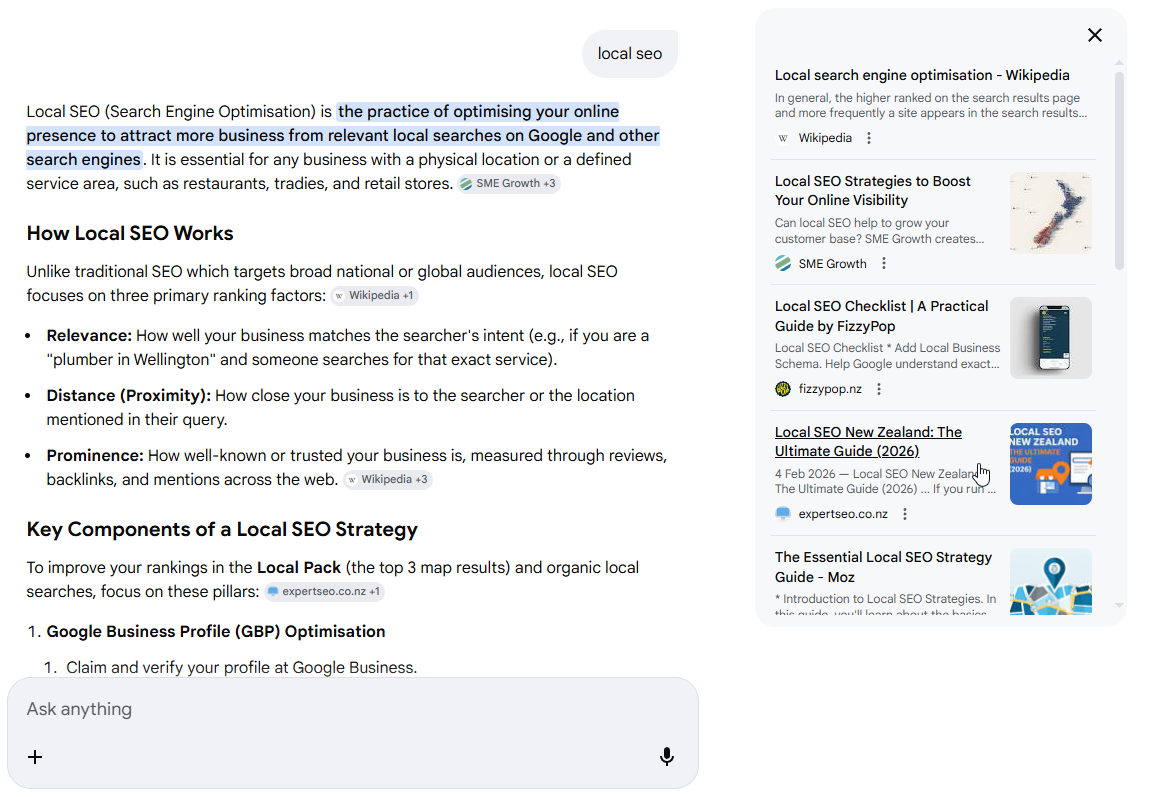
And here’s that same guide ranking #1 in NZ for “local SEO” — above Ahrefs and Semrush, two of the biggest tools in the industry:

I want to be clear about what got us there, because it’s the whole point of this guide: nothing exotic.
We got the fundamentals right, structured the content so the answer was easy to lift, backed our claims with data, and earned real mentions. The exact stuff in the section above.
In about eight months from a standing start, that approach had the site ranking for 233 keywords and pulling roughly $3,500 a month in traffic value:
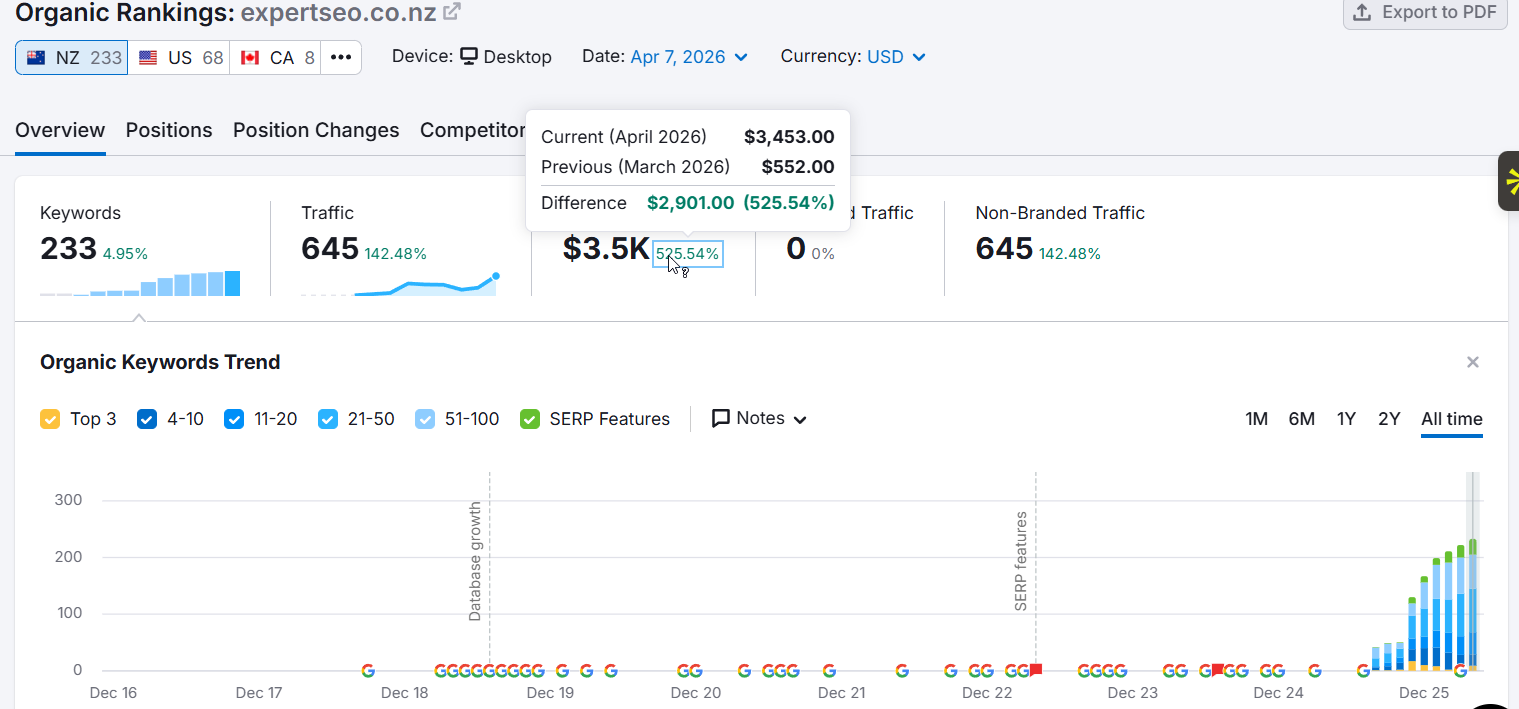
You don’t need a decade of domain age or a DR 90 to get cited by AI. You need the fundamentals done well and a page a machine can quote cleanly.
GEO tools (free and paid)
You don’t need to spend a cent to start. The best first tool is the AI itself.
Open ChatGPT, Perplexity and Google’s AI Mode, and ask them the exact questions your customers would — “best [your service] in [your city]”, “who should I use for X in NZ”. Note who gets named. Do it again next month. That’s your GEO scoreboard, free.
When you’re ready to track it properly at scale, the paid tools watch dozens of prompts for you and log every mention:
- Semrush AI visibility / Enterprise AIO — tracks mentions, sentiment and share of voice across ChatGPT, Gemini and Perplexity.
- Otterly — prompt-level tracking, good for smaller teams.
- Profound and Conductor — enterprise-grade AI visibility monitoring.
For most NZ small businesses, the free ask-the-AI method is plenty for the first six months. Don’t pay for a dashboard to tell you what two minutes in ChatGPT already will.
How to tell if your GEO is working
You’re not measuring clicks anymore. You’re measuring whether the machine names you.
Track three things:
- Citations and mentions — how often you show up in AI answers for your key questions (that free monthly check above).
- Share of voice — how often it’s you, versus a competitor, getting named.
- Accuracy — whether the AI gets your facts right when it does mention you.
Expect it to bounce around month to month — remember, a big chunk of cited sources reshuffle constantly. Watch the trend across a few months, not any single day.
When to do GEO yourself vs hire an expert
Most of this you can genuinely do yourself. It’s the SEO fundamentals plus a few honest tweaks — no secret sauce, no magic tool. If you’ve got the time and a bit of technical confidence, roll your sleeves up.
Where it gets fiddly is the technical layer: schema that actually validates, crawl and indexing issues, keeping everything consistent across the web, and staying on top of it month after month while you’re also, you know, running a business.
That consistency is usually where DIY quietly falls over.
If you’d rather hand it to someone who does this every day — and who’s already got a sub-one-year-old site being cited by the AI engines — that’s where our SEO services come in.
You can also work with an SEO consultant directly if you just want the strategy and a second set of eyes.
Either way, don’t overthink it: get the fundamentals right, make your answers easy to lift, and let the machines do the introductions.
Generative Engine Optimisation: FAQ
What is generative engine optimisation?
Generative engine optimisation (GEO) is the practice of structuring your content and online presence so AI tools like ChatGPT, Google's AI Overviews, Gemini and Perplexity pull you into their answers and name you as the source. Instead of ranking a blue link people have to click, GEO gets your business quoted inside the answer itself.
Is GEO replacing SEO?
No. GEO isn't replacing SEO — it's an extension of it. AI answers are built on the same crawling, indexing and ranking systems that power normal search, so strong SEO fundamentals are what get you cited in the first place. You're adding a few tweaks on top, not throwing out the playbook.
What's the difference between SEO and GEO?
SEO aims to rank your page as a clickable link on the results page. GEO aims to get your business named inside the AI-generated answer, so you're the source the model reads back — even when nobody clicks through. The underlying work overlaps heavily; the surface you're optimising for is what differs.
How do you do GEO?
Get the SEO fundamentals right first — crawlable pages, genuinely useful content, real authority and clean technical health. Then add four tweaks: structure your headings as the questions customers actually ask with the answer directly underneath, lead with a clean extractable answer, back your claims with linked stats, and build consistent brand mentions across the web.
How long does GEO take to work?
There's no fixed timeline, but because AI platforms are far less crowded than Google's blue links, a newer site can start getting named in AI answers faster than it could rank on page one. Expect results to move around month to month — cited sources reshuffle constantly — so watch the trend over a few months rather than any single day.
Can you do GEO yourself?
Yes, for the most part. GEO is SEO fundamentals plus a few honest tweaks, so with the time and a bit of technical confidence you can do it yourself. The parts that trip people up are the technical layer — schema that validates, crawl and indexing issues — and staying consistent month after month, which is usually when businesses bring in help.
Recommended reading
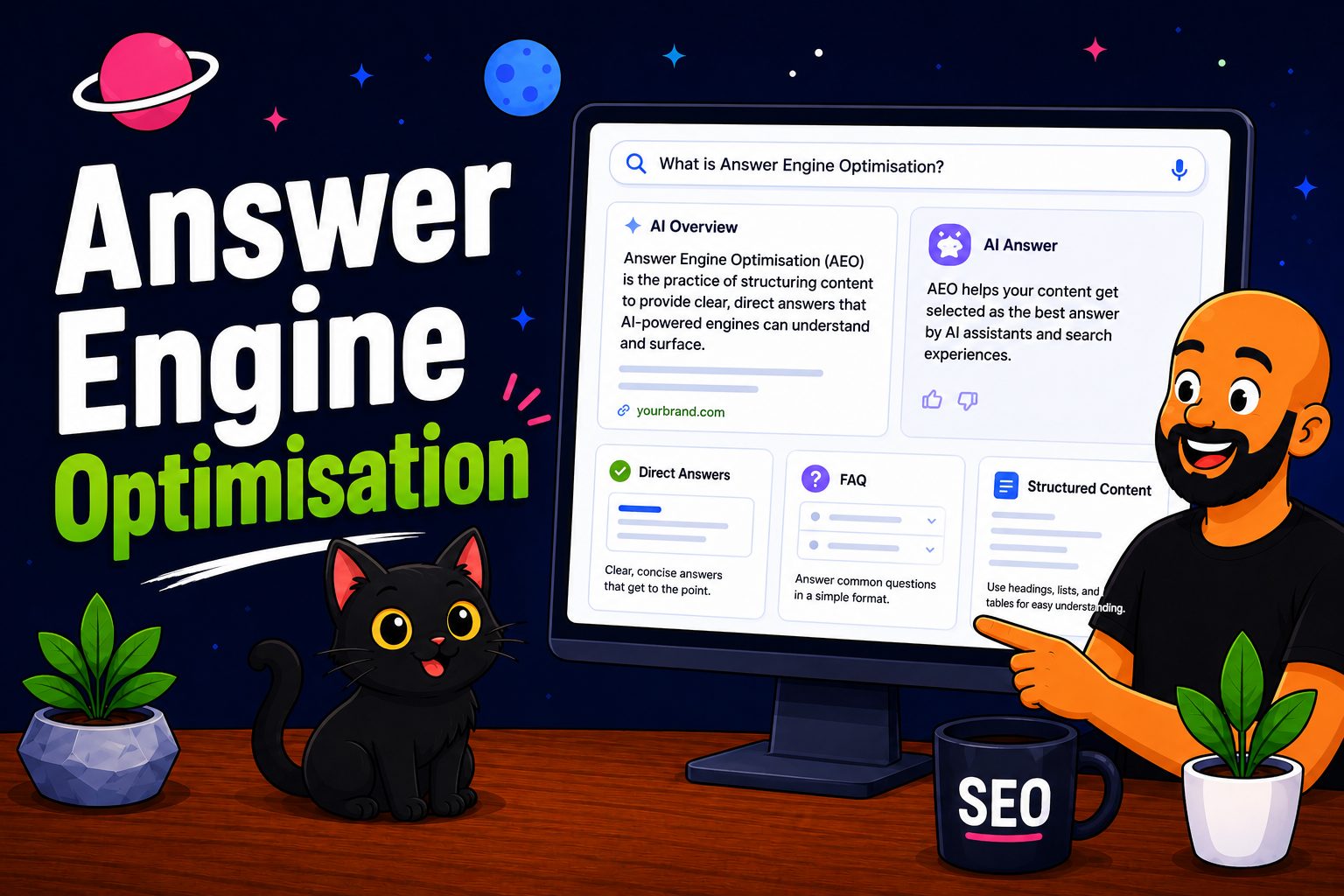
The sister discipline to GEO — how to get picked as the answer across every AI engine.
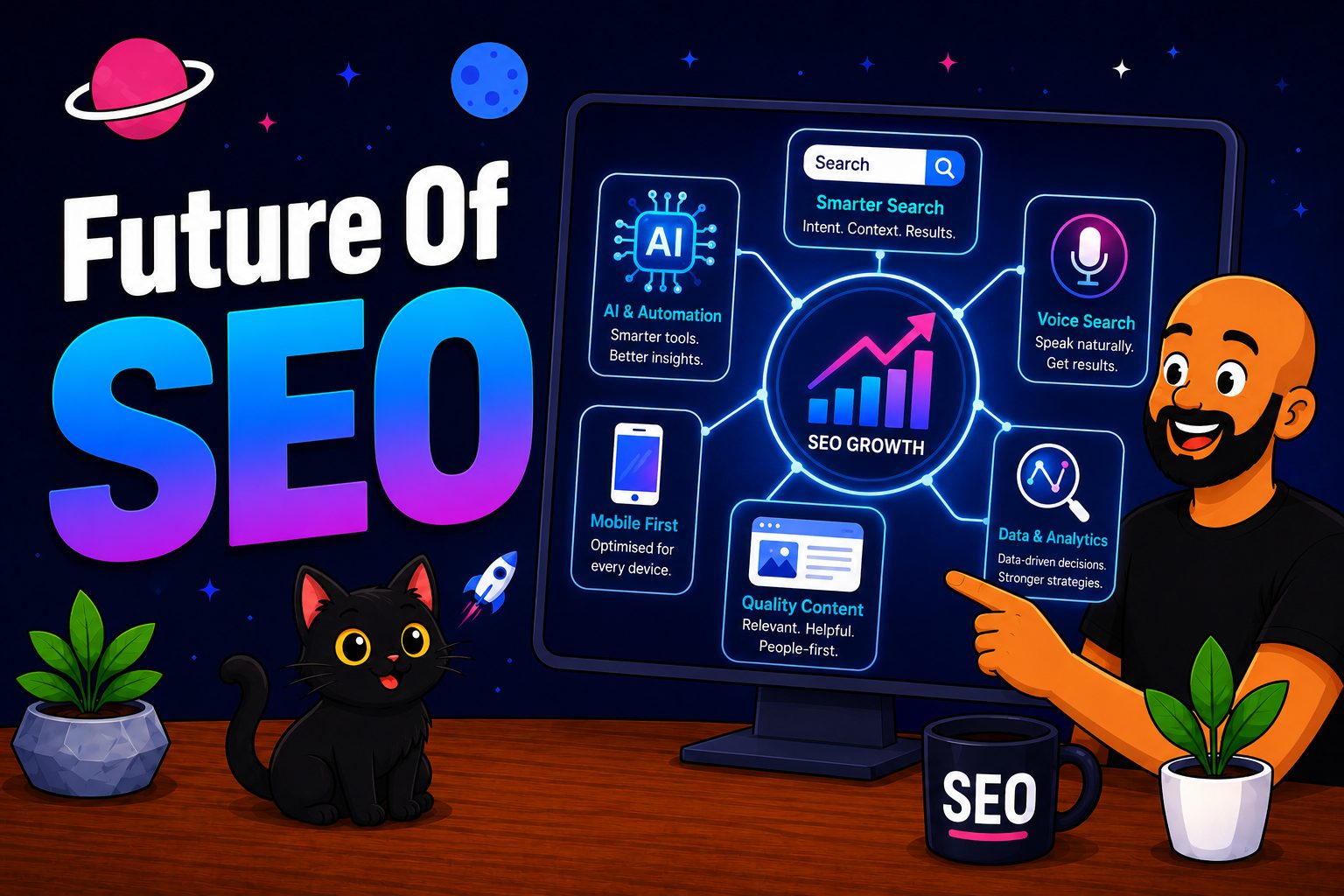
Where search is heading as AI reshapes it — and how to stay visible through every shift.
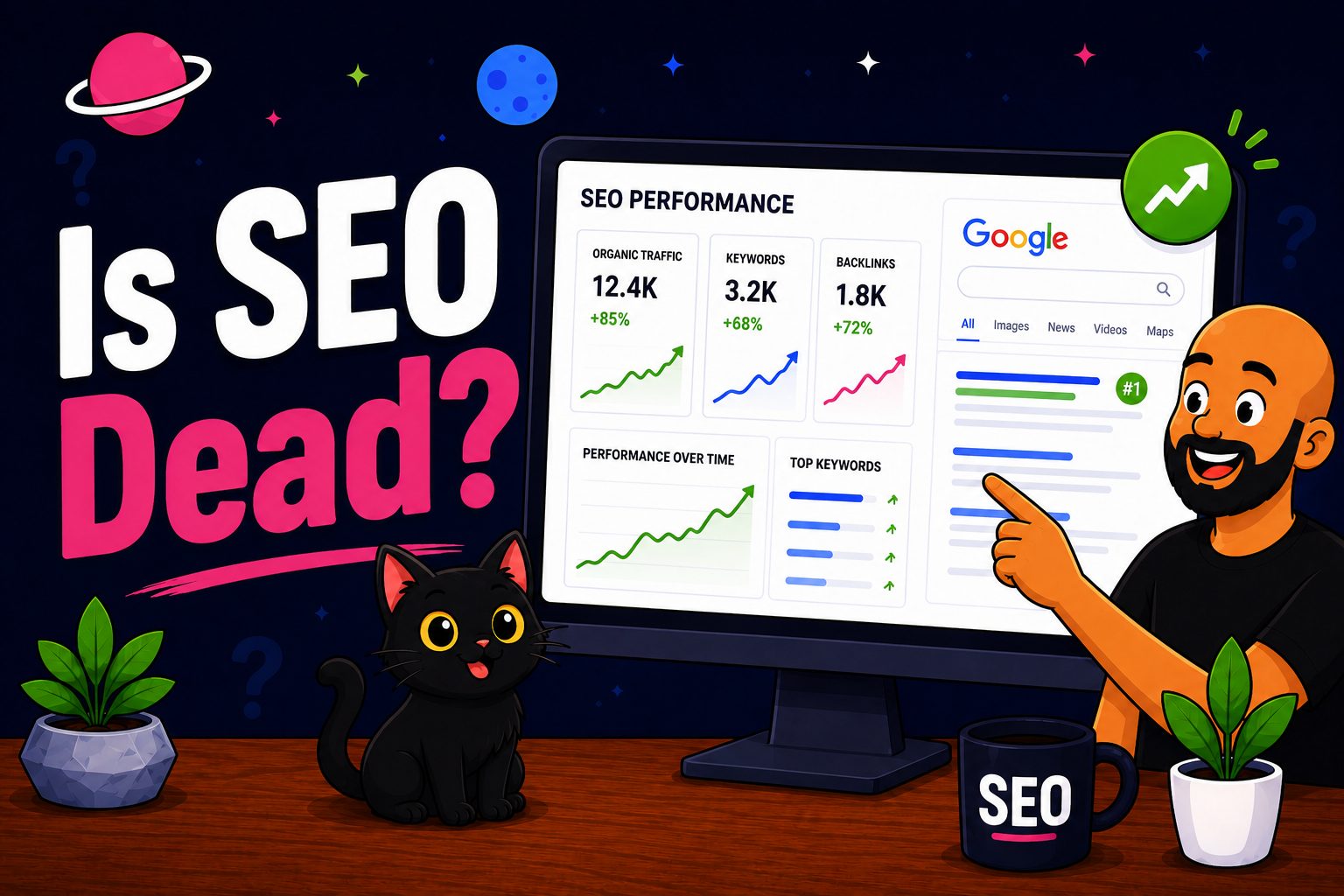
An honest answer, with real proof, on whether SEO still works in the AI era.