Everything you need to get your business found on Google — and now the AI tools your customers are asking too — without needing to be a tech wizard.
You’ve probably had the thought yourself: is SEO even worth it anymore?
AI answers half the questions before anyone clicks. ChatGPT spits out a recommendation in seconds. So why would a small business in New Zealand still bother trying to rank on Google?
Here’s my honest answer, and I’ll back it up in a second: it’s worth it more than ever — the game just changed shape.
My own SEO company is under a year old. It’s already being cited in Google’s AI Mode and in ChatGPT, ranking for hundreds of keywords, and growing every month — competing against agencies that have been at it for a decade.
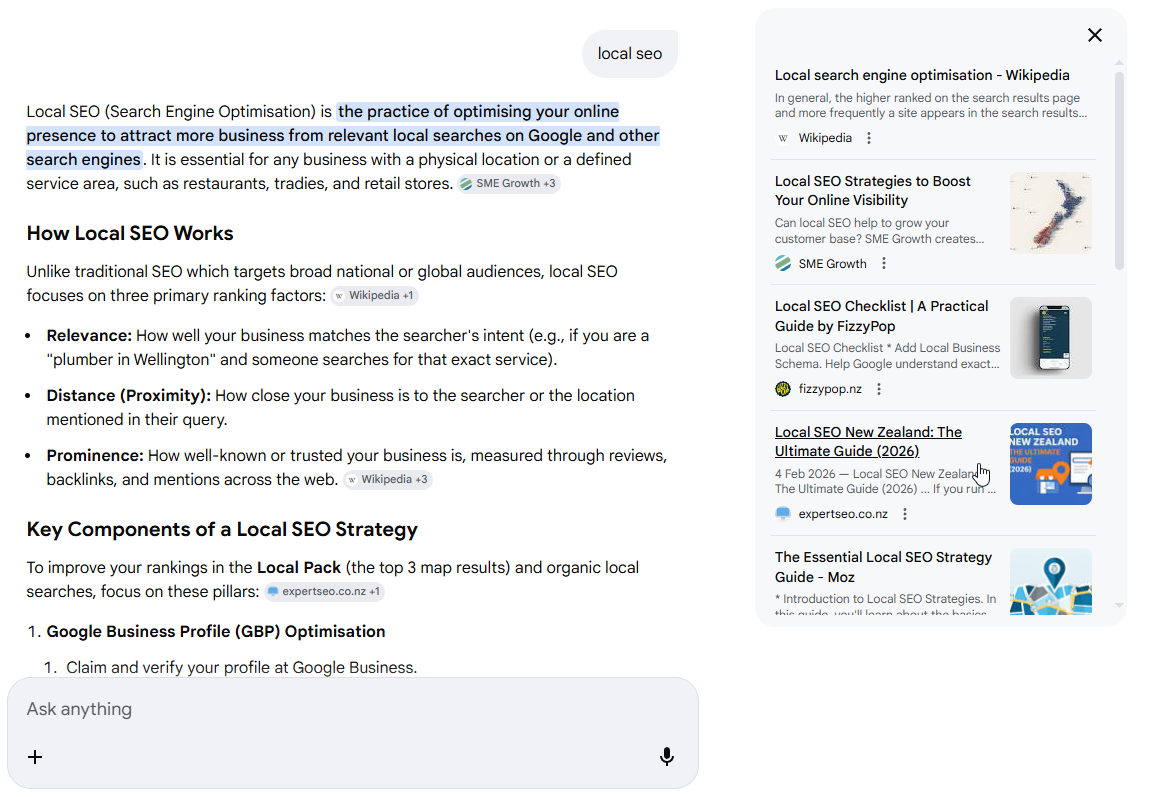
So no — SEO isn’t dead. If anything, the businesses that get this right now get found in two places instead of one.
This guide walks you through the whole thing, step by step, for a New Zealand business:
- What small business SEO actually is
- Why it matters (with the real numbers)
- How to do it — competitor research, keywords, on-page, technical, local, content, links
- How to show up in AI search, not just Google
- What it costs, and whether to do it yourself or hire someone
Let’s crack into it.
What Is Small Business SEO?
Small business SEO is the process of improving your website and online presence so you show up higher on Google when nearby customers search for what you sell.
It’s making sure that when someone types “plumber near me” or “best café in Ponsonby,” your business is the one sitting at the top — ideally above your competitors.
That’s the whole game: be the answer at the exact moment someone’s looking to buy.
For a small business, it usually comes down to a handful of moving parts:
- Local presence — claiming and optimising your Google Business Profile so you show up in Google Maps and the local pack.
- Clear, targeted content — pages that answer exactly what your customer typed, with the right keywords in the right spots.
- A fast, mobile-friendly website — because a slow, clunky site loses both customers and rankings.
- Trust signals — reviews, consistent business details, and links from other sites that tell Google you’re legit.
Get those four working together and you’ve covered most of what actually moves the needle for a local business.
Why SEO Is Important for Small Businesses
In New Zealand, search is where buying intent shows up first — and SEO is how you catch it without paying for every click.
When a Kiwi needs something, they don’t wander down the high street anymore. They pull out their phone and Google it.
There are 5.03 million internet users in New Zealand — 96.2% of the population, and the vast majority of them reach for the same search engine. Google runs well over 90% of all searches in New Zealand.
So if you’re not showing up when they search, you’re not in the running. Simple as that.
Here’s why it’s worth your time.
More Local Customers
Most of those searches carry local intent — someone wants a business near them, ready to help now.
Rank well for “hairdresser in Tauranga” and you’re right there when a customer’s deciding who to call — that’s what getting found in Tauranga looks like. SEO turns those searches into phone calls, bookings, and walk-ins.
And that intent is immediate. Around 76% of people who search for something nearby visit a business within a day — so the moment you’re visible, you’re in the running for a sale that day.

It Builds Trust Before You Ever Speak
Kiwis research before they buy. They read reviews, compare a few options, and quietly rule people out.
Showing up near the top — especially with a wall of good reviews — does something paid ads can’t: it signals you’re the safe, obvious choice. People trust Google’s top results, and being there borrows that trust.
It’s Cost-Effective in a Way Ads Aren’t
Paid ads stop the second you stop paying. It’s a tap you leave running.
SEO is the opposite — it builds an asset. Do the work once, keep it maintained, and it keeps pulling in customers long after. For a business watching its budget, that compounding is the whole point.
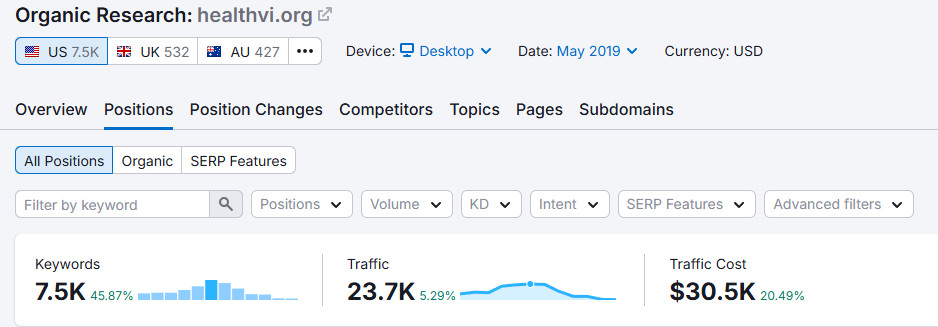
I’ve seen it first-hand. A health site I built with my former business partner and SEO mentor, Ian Pribyl, went from zero to over 20,000 organic visitors a month — all from search, no ad spend keeping it alive.
You Can Beat Bigger Competitors Locally
This is the part small business owners underrate.
I’ve done SEO consulting for companies featured on Oprah, Forbes and Shark Tank. And I’ll tell you plainly: you don’t need a national ad budget to beat a chain locally.
A well-optimised site aimed at your suburb can leapfrog franchises that treat local SEO as an afterthought.
They’re playing the whole country; you only have to win your patch.
My own site’s a decent example — under a year old, and it’s already built a Domain Rating of 36 off nearly a thousand backlinks. That’s the kind of authority that lets a small, focused player punch well above its weight.

It Works While You Sleep
Your website doesn’t clock off at 5pm or take a long weekend.
A solid SEO foundation quietly brings in new customers around the clock — while you’re closed, on the tools, or asleep.
That’s leverage most small businesses never switch on.
If you’d rather hand the whole thing off, that’s exactly what our SEO services are for — but this guide will get you a long way on your own.
Is Small Business SEO Still Worth It in 2026?
Yes — SEO is still worth it in 2026. What’s changed is where you need to show up: not just Google’s blue links, but AI Overviews and answers from ChatGPT and Gemini too.
Let’s deal with the elephant in the room, because it’s the question everyone’s quietly asking.
Go to Google right now and search around “small business SEO.” Look at what people also ask: Is SEO dead or evolving in 2026? Can ChatGPT do SEO? Will AI replace SEO? The whole conversation has shifted to whether this is even a thing anymore.
There’s a Reddit thread that pretty much sums up the mood in New Zealand: “small business SEO — do they all suck?” People are sceptical, and honestly, fair enough — plenty of agencies earned that.
But here’s the thing. The top-voted reply on one of those threads nails it: don’t let anyone tell you SEO is dying — that’s insane. And the data agrees.
AI didn’t delete search — it added a second front.
Semrush even found that weekly Google searches went up, not down, after people started using ChatGPT — the two are stacking, not cannibalising each other.
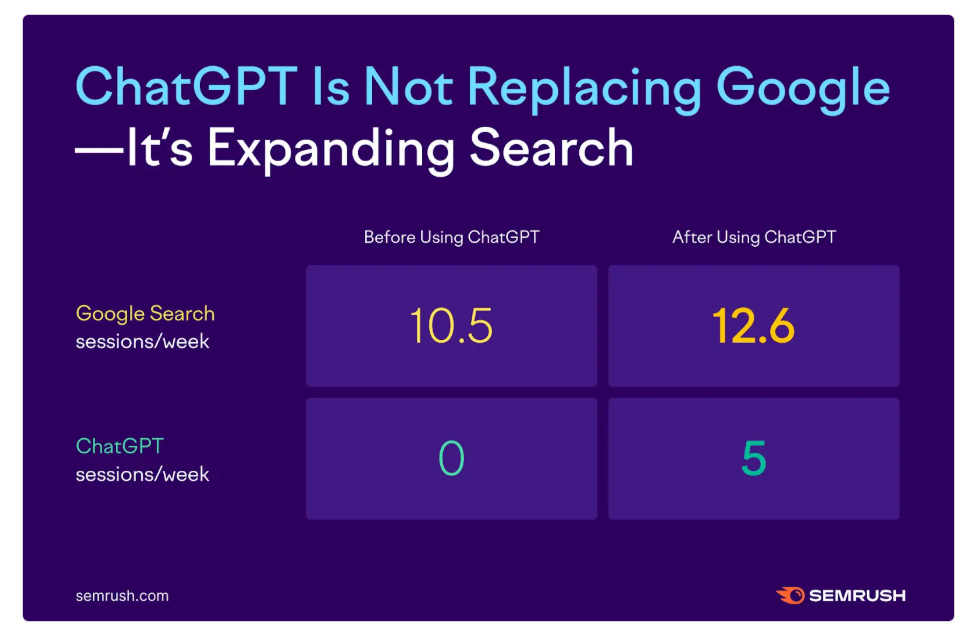
Think about what AI tools actually do. ChatGPT, Gemini and the rest now pull in 2.42 billion active users a month worldwide — and when someone asks them “who’s the best dentist in Wellington,” those tools go read the web to answer. The same web SEO has always optimised.
And Kiwis are already doing exactly that. Use of ChatGPT and AI tools for local recommendations jumped from 6% to 45% in a single year — now the third most popular way people find local businesses.

So the businesses winning now aren’t the ones who quit. They’re the ones who rank on Google and get cited by the AI.
That’s not a theory for me. My own site — under a year old — already gets pulled into Google’s AI Mode and quoted in ChatGPT. If a brand-new NZ site can crack that, a real local business with actual customers and reviews absolutely can.

Is it slower than ads? Yes. It’s a garden, not a vending machine. But it’s the only channel that keeps paying you back after you stop feeding it — and now it feeds two search worlds at once.
Right, enough theory. Here’s how you actually do it.
How to Do SEO for Small Businesses in New Zealand
The rest of this guide is the process — the exact order I’d work through it for a New Zealand business.
Seven steps, start to finish: study your competitors, find your keywords, sort your on-page and technical basics, win local, build content, earn links. Then we’ll cover the AI layer on top.
Work through them in order. Each one sets up the next.
Step 1: Competitor Analysis
Before you touch your own website, study your competitors — because knowing exactly where they’re weak makes everything after this cheaper and faster.
I always start here. Skip it and you’re swinging in the dark.
Picture a boss fight in a video game. You could run around whacking the thing all over its body — total waste of energy. Or you find the weak spot (the glowing leg, say), focus your hits there, and drop it in a fraction of the time.
Competitor analysis is finding the glowing leg. Instead of randomly trying stuff and hoping, you zero in on where a competitor’s actually vulnerable.
Here’s what to size up on each competitor ranking above you:
- Page speed — how fast their site loads.
- On-page SEO — their titles, headings, and keyword use.
- Content quality — how genuinely useful their pages are versus yours.
- Backlink profile — how many quality sites link to them.
- Domain rating — their overall authority.
- Their site experience — how easy it is to actually use and take action on.
Record it all in a spreadsheet so you can see, at a glance, who you’re really up against.
Let’s rank a café in Auckland. Say there’s a spot called Salta Espresso sitting on page two for “café in Ponsonby.”
Straight away, that’s a signal — page two means there’s room to move.

Click into their site and the design’s actually lovely — beautiful food photos, a trust badge, a clear “book a table” call to action. From a customer’s point of view, they’ve nailed the experience.

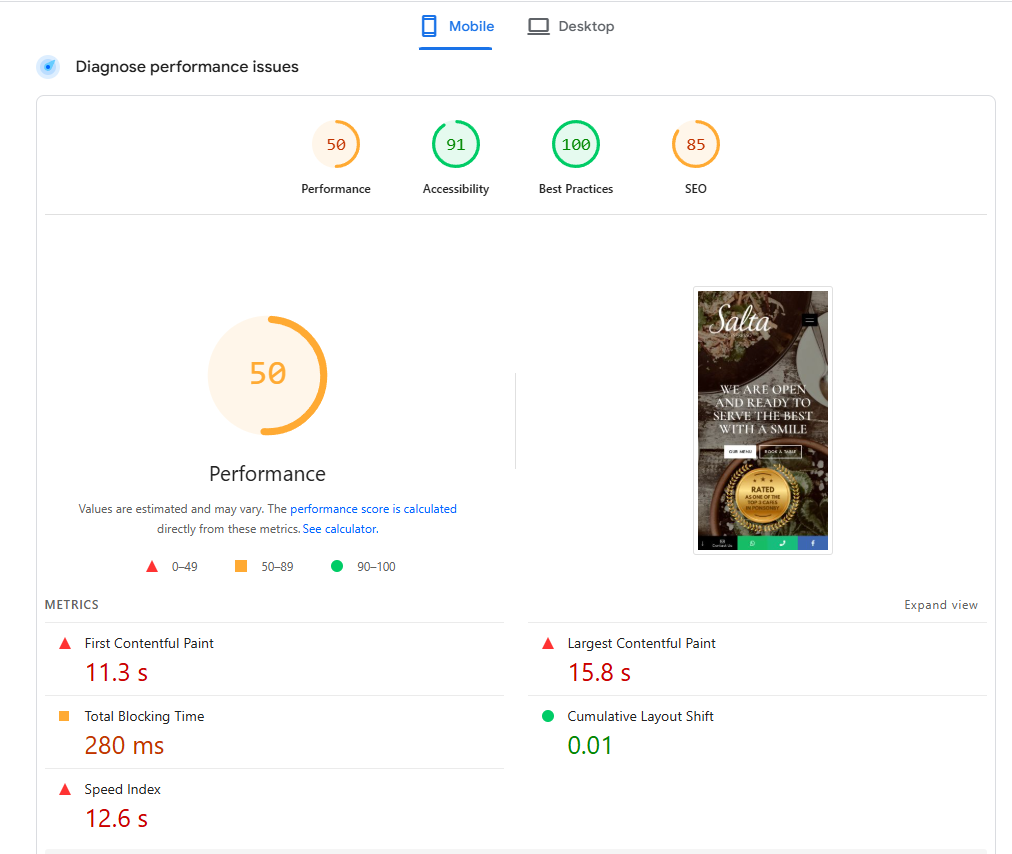
But run a page-speed test and it falls over — almost certainly those big unoptimised photos, no caching plugin in sight.
Then drop them into Ahrefs and the real story shows up: a domain rating near zero, and the few links they have look low quality. Their titles are missing the keyword in the spots that matter most.
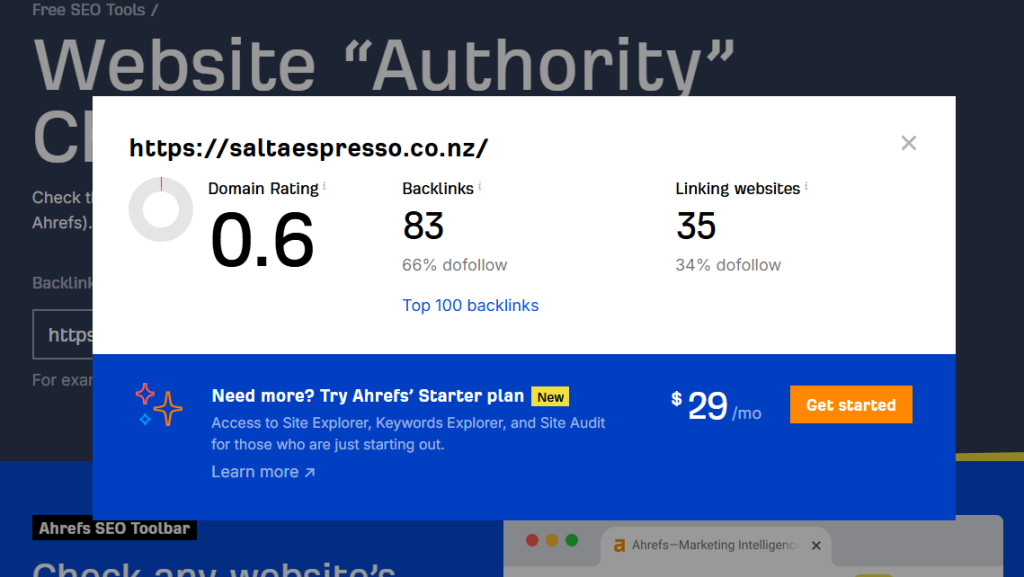
If that were your competition, you’d note every one of those gaps. Weak titles, weak speed, weak links — that’s your map to overtaking them.
Step 2: Keyword Research
Keyword research is finding the exact phrases your customers type into Google, so your pages can match them word for word.
If you want people finding your business, you’ve got to speak their language — literally.
And the trick is to think like your customer, not like an industry insider. If you run a dental practice you might reach for “dental implants.” Your customer’s actually typing “replace missing tooth.” That gap is where the money leaks out.
The goal at this stage isn’t to write anything yet. It’s to build a list of real, high-value phrases your market uses — then map each one to the page it belongs on.
Start with your own brain. Write down every phrase you think a customer would use. Then bring in the tools to expand it.
Use ChatGPT for ideas
You can shortcut the brainstorm. Tell it what you do and where, and ask for keyword ideas.

Something like: “I own a café in Ponsonby that does breakfast, coffee and vegan options. Give me local, commercial and long-tail keywords my customers would search to find a business like mine.”
You’ll get 50+ ideas in a minute. It won’t be perfect — you still need to check volume and competition — but it’s a fast start.
Use Google Autocomplete
Start typing your keyword into Google and watch what it suggests. Those come from real searches.
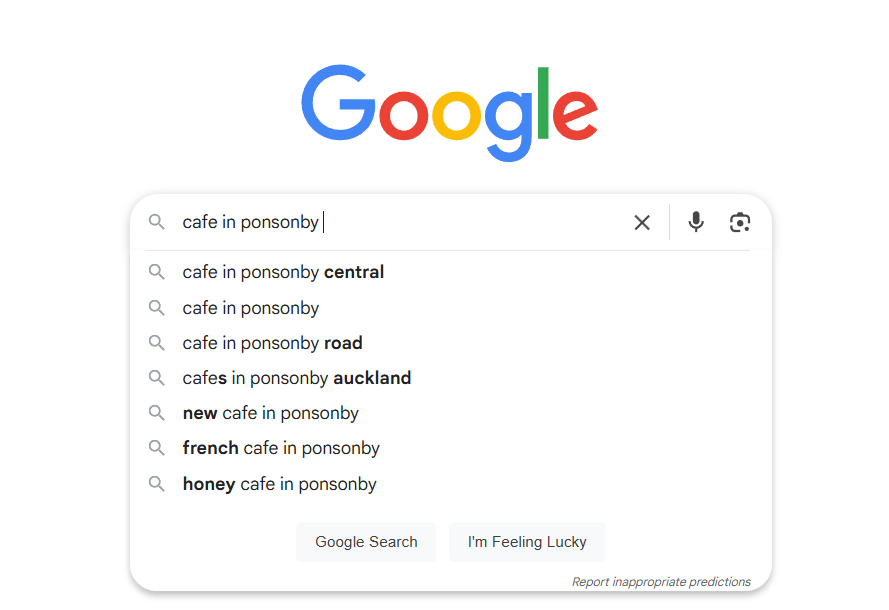
Type “café in Ponsonby” and you might see “café in Ponsonby with free wifi” or “café in Ponsonby breakfast.” Free, and straight from the source.
Google Keyword Planner
This free tool lives inside Google Ads and shows real search volumes and related ideas.

You don’t even have to run ads — set up an account, head to “Discover new keywords,” and go. A word of warning for New Zealand, though: our volumes are small. Don’t panic when a solid local phrase shows 10–100 searches a month. Ten of the right buyers beats a thousand tyre-kickers.
Mangools KWFinder
Part of the Mangools suite — technically paid, but the free lookups are plenty to start.

It’s beginner-friendly and lets you filter to New Zealand, so you’re not wasting time on keywords that only matter overseas.
Then organise it all
Drop everything into a Google Sheet with columns for keyword, search volume, difficulty, intent, and the page you’ll target it on.
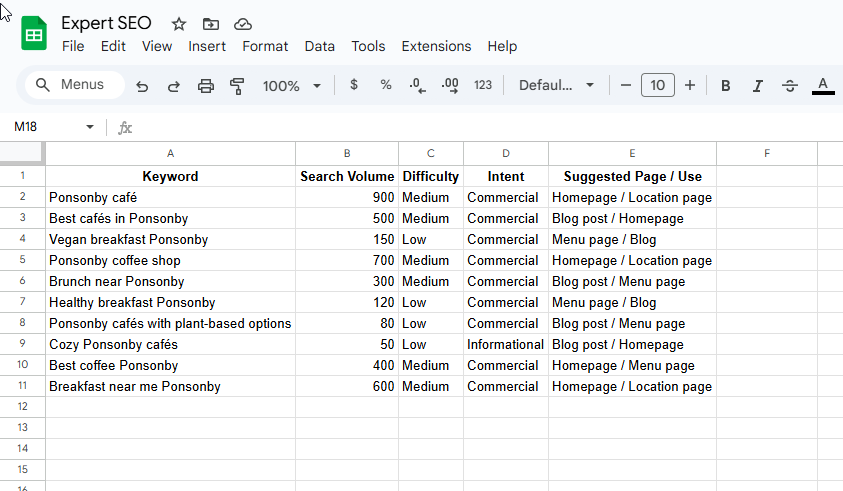
Now you’re not guessing. You know exactly what your customers search — and if your competitors haven’t done this, they’ve just handed you the head start. This is proper keyword research, and it’s the foundation everything else sits on.
Step 3: On-Page SEO
On-page SEO is putting your keywords in the spots Google weighs most, so it knows exactly what each page is about.
You’ve got your keywords. Now you put them to work.
Think of it as speaking Google’s language. You’re telling it, clearly: this page is the perfect match for someone searching this term. When Google’s sure of that, it’s far more likely to rank you.
The spots that carry the most weight:
- Page title
- Meta description
- Headings (H1, H2, H3)
- The first 100 words
- Image file names and alt text
- Naturally through the body content
Let’s look at the café ranking #2 for “café in Ponsonby.”

They’ve got the keyword in both their title tag and their URL — two of the most influential on-page elements. Smart.

But the keyword’s missing from their meta description — a free win they’ve left on the table. And the page content itself? On a scale of one to ten, maybe a six. The experience is thin.
Which is the lesson: they’re holding #2 mostly on strong on-page basics, not great content. Fix your on-page like they have and write a better page, and they’re beatable. That’s exactly the sort of thing a proper on-page SEO pass sorts out.
Step 4: Technical SEO
Technical SEO is the behind-the-scenes health of your site — fast, mobile-friendly, easy for Google to crawl — and it’s the foundation everything else stands on.
You can have perfect keywords and great content, but if the foundation’s shaky, none of it performs.
Think of it like checking under the bonnet. Oil, coolant, the engine running clean. The car might still start with problems under there — it just won’t run well. Same with your site.
The big pieces: site speed, mobile-friendliness, HTTPS security, XML sitemap, structured data, crawlability, and clean redirects.
That list looks overwhelming, so here’s the shortcut — the 80/20 of technical SEO. Focus on the 20% of fixes that solve 80% of the problems, and ignore the rest until later.
Start with a site audit
A tool like SEMrush Site Audit crawls your whole site and flags the issues automatically — broken links, missing meta tags, duplicate content. It hands you a to-do list instead of a guessing game.

Check speed and mobile
Run your site through Google PageSpeed Insights. It scores your load time and mobile experience and tells you what to fix.
This one matters more here than most places: 94% of Kiwis get online via a smartphone. If your site’s a mess on mobile, you’re losing most of your visitors before they read a word.
Let Rank Math handle the rest
If you’re on WordPress, Rank Math quietly takes care of a lot of the ongoing technical work — sitemaps, redirects, meta tags, basic schema — without touching code.

Pair it with SEMrush and PageSpeed Insights and you’ve covered the bulk of technical SEO — without needing a developer on retainer.
Step 5: Local SEO
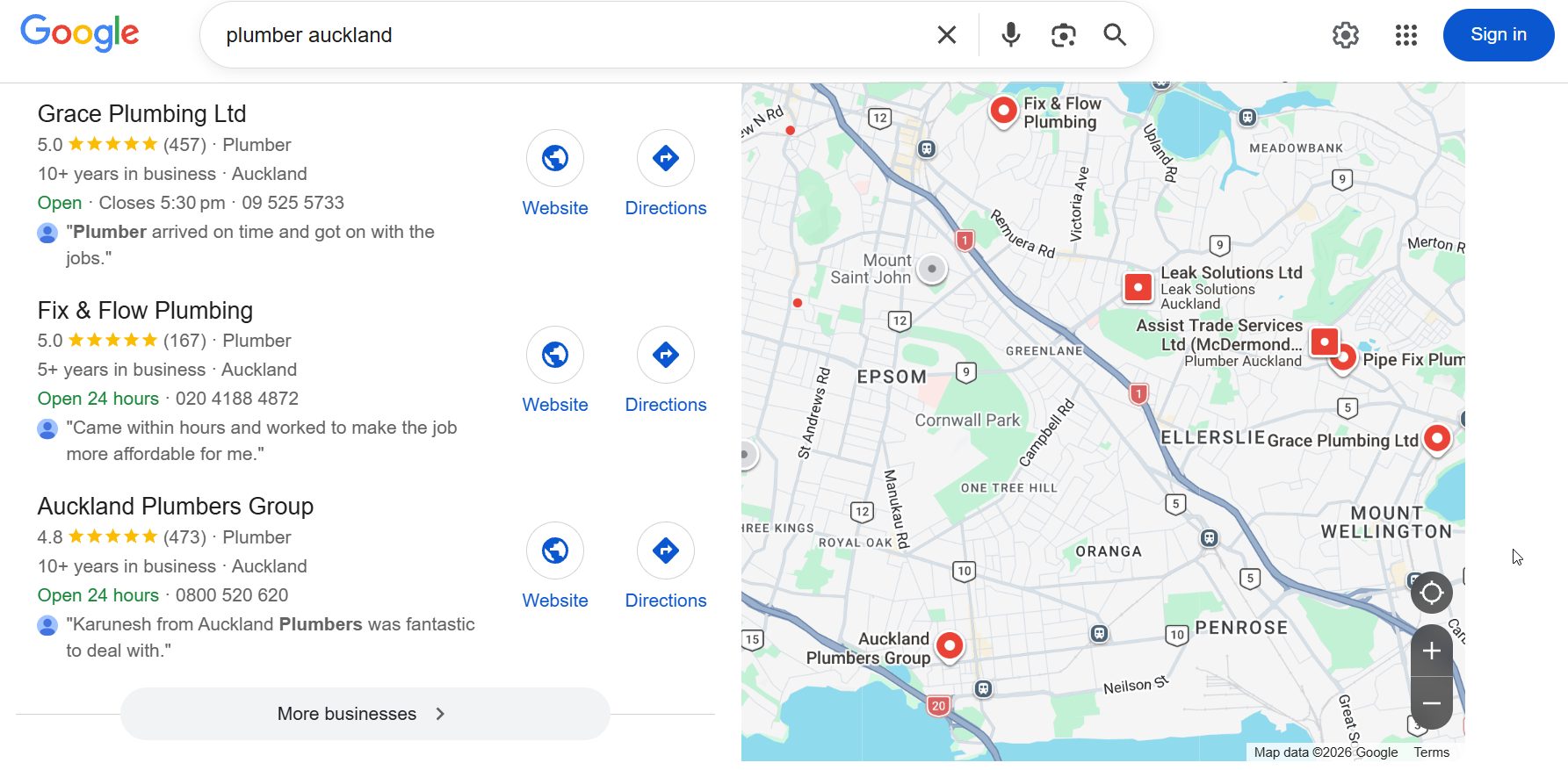
Local SEO is how you show up in Google Maps and the local pack when someone nearby searches — and for most small NZ businesses, it’s the single biggest lever you’ve got.
If someone’s after a café in Ponsonby, a plumber down the road, or an SEO agency in their city, local SEO is what puts you in front of them at the right moment.
It’s also where I’ve seen the fastest wins. My own site went from launch to ranking #1 in New Zealand for “local SEO” — above the likes of Ahrefs and Semrush — inside its first year. Local is winnable, fast, if you actually work it.
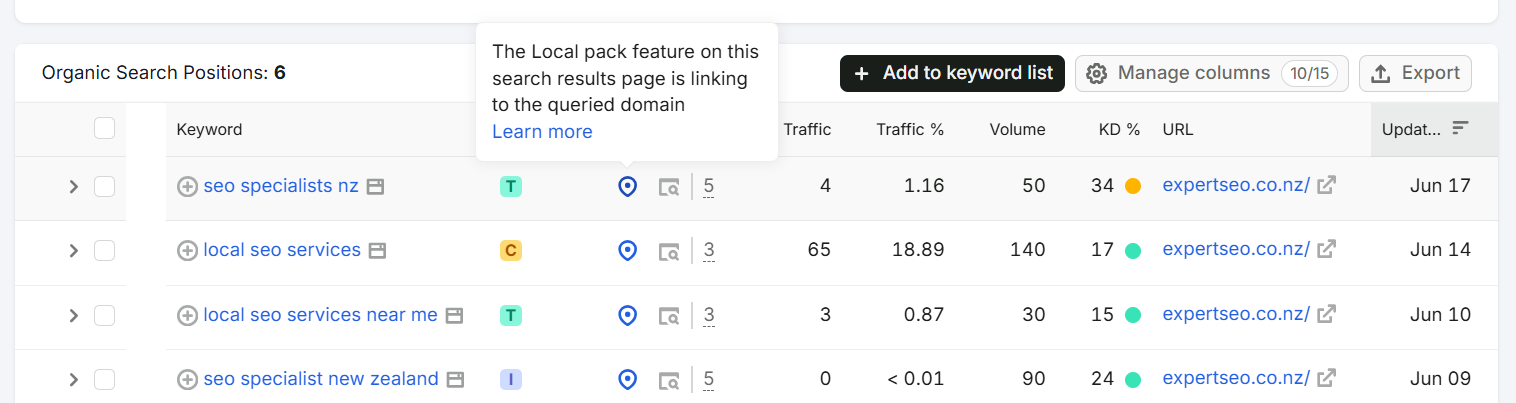
The main pieces:
- Google Business Profile — claim it, then fill it out properly: exact address, hours, the right categories, real photos. This is often the first thing a customer sees, and it controls your spot in the map pack.
- Reviews — encourage happy customers to leave them. They’re a genuine ranking signal and the thing that makes a stranger choose you. Grab your review link from your profile, turn it into a QR code for the counter or the invoice, and send it by text right after a good job while they’re still buzzing.
- Local citations — get your Name, Address and Phone number (NAP) listed consistently across NZ directories. Consistency is the whole point; mismatched details confuse Google.
- Location pages — if you serve more than one area, give each its own page.
Here’s the bit nobody tells you: this is why the business with the worse-looking website still outranks you.
They’ve usually just got more reviews and a tidier profile. Look at any “dentist Auckland” map pack and you’ll see it — the top spots are stacked with hundreds of reviews. Fix that and you close the gap fast.
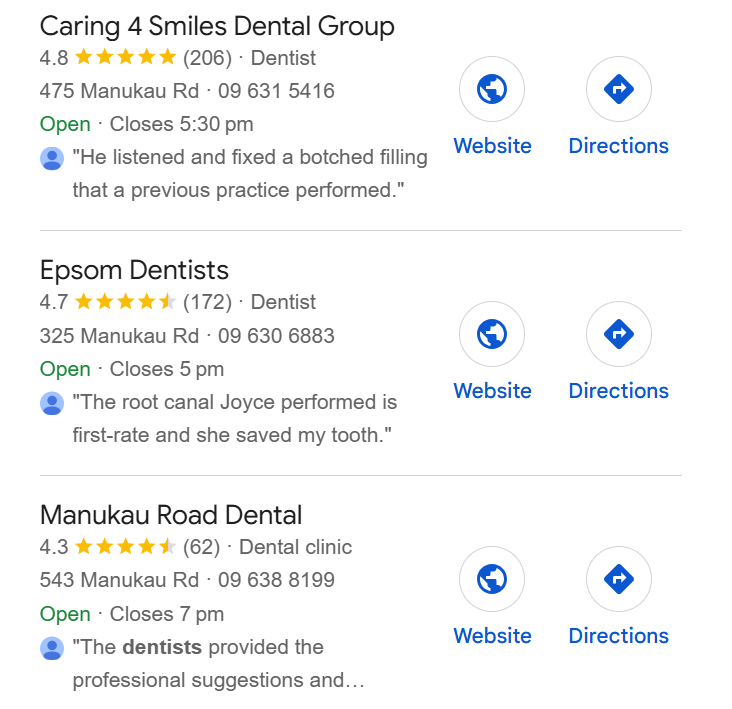
Even nailing two or three of these puts you ahead of every competitor who’s ignoring local search. For the full walkthrough, our local SEO guide breaks down every step.
It works everywhere, too — the same playbook that ranks a business in Christchurch works for a tiny operator ranking in a small market like Queenstown, where there’s even less competition to fight through.
Step 6: Content Marketing
Content marketing is using blog posts, guides and page copy to get found, build trust, and guide people toward buying — with each page matched to why someone’s searching.
Google doesn’t just rank websites. It ranks useful, relevant content. Answer your customers’ questions better than anyone else and you earn the ranking.
The trick is matching content to intent. Some people are ready to buy; some are just researching. Send the wrong content to the wrong stage and they bounce.
Three buckets:
- Money pages → commercial keywords. Service and product pages built to convert. If someone searches “buy custom furniture Auckland,” that’s a page designed to sell, not a blog post.
- Blog posts and guides → informational keywords. “How to care for dental implants,” “best cafés in Ponsonby for breakfast.” These build trust and pull people into your world before they’re ready to buy. For a dentist trying to get found in Wellington, a plain-English guide to implant options can bring readers in, then link them through to the booking page.
- Homepage and brand pages → broad, branded terms. Who you are, what you do, where you are — the front door that guides visitors deeper.
Map every keyword from your research to the right bucket. Now every page has a job — educate, convert, or introduce — and Google can see your site actually makes sense. That’s the backbone of a real SEO strategy.
Step 7: Link Building
Link building is getting other websites to link to yours — each quality link is a vote of confidence that tells Google you’re trustworthy.
Think word-of-mouth, but for search engines. When trusted sites point to your business, Google’s more likely to push you up.
You don’t need a PR budget. The realistic wins for a small NZ business:
- Local directories and citations — get listed on reputable NZ directories like Yellow, Finda and Neighbourly. Keep your NAP consistent.
- Partnerships — ask suppliers, partners, and local clubs to link to you.
- Sponsorships — back a local team, charity or event and you’ll often earn a link from their site.
- Guest posts — write something genuinely useful for a local blog or industry publication.
- Testimonials — give an honest testimonial for a tool you actually use; many businesses feature it with a link back.
- Link-worthy content — publish a checklist or local guide others want to reference.
One rule above all: quality over quantity. A single link from a reputable local site beats fifty scraped, low-quality ones — and chasing cheap links in bulk is exactly how businesses tank their own rankings.
How to Show Up in AI Search (ChatGPT, Google AI Overviews & Gemini)
AI tools pull their answers from the same web SEO already optimises — so ranking well and being clearly, factually structured is how a small business gets cited in AI search.
This is the part almost no NZ guide covers yet. And it’s where the next few years of customers are hiding.
Your buyers have started asking AI who to hire. Someone opens ChatGPT and types “best mortgage broker in Christchurch,” or Google shows an AI Overview before a single blue link loads. If the AI doesn’t mention you, you’re invisible — even if you technically “rank.”
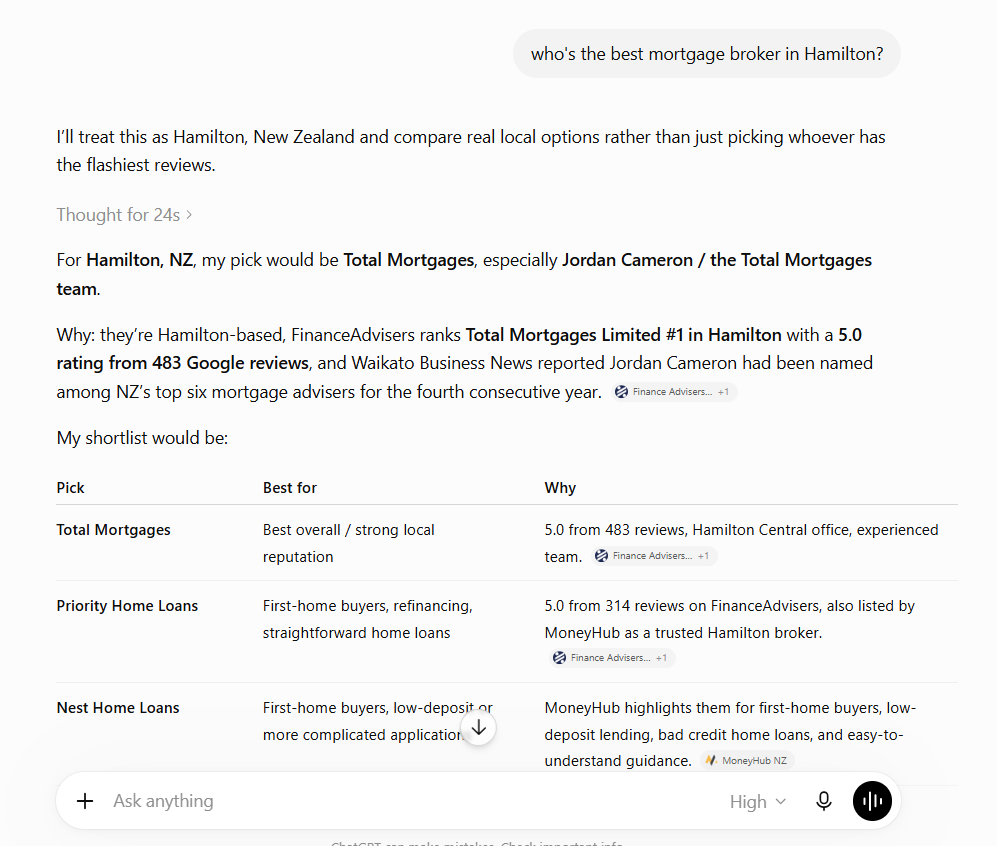
The good news: this isn’t a whole new discipline.
Getting picked by AI, sometimes called generative engine optimisation, runs on the foundations you’ve already built in this guide, plus a few extra moves. Even Google says so directly — SEO is still the thing that gets you into its AI features.

Here’s what AI tools lean on when they decide who to quote:
- Genuinely helpful content that answers the exact question, clearly.
- Direct answers up top — lead a section with a one- or two-sentence answer, then explain. AI lifts those clean answers straight out.
- Reviews and reputation — the same trust signals that win local SEO tell AI you’re the real deal.
- Being mentioned on other trusted sites — AI notices who the web already talks about.
- Consistent, factual business details — clear NAP, clear services, no contradictions for it to trip over.
So can ChatGPT do your SEO for you? It can help — brainstorming keywords, drafting outlines, spotting gaps.
But it can’t build your reputation, earn your reviews, or do the work that makes you worth citing. It’s a power tool, not a tradesman.
I keep coming back to my own proof because it’s the cleanest test I’ve got: a sub-one-year-old NZ site, already cited in Google’s AI Mode and named directly in ChatGPT when someone asks for the best in their city.
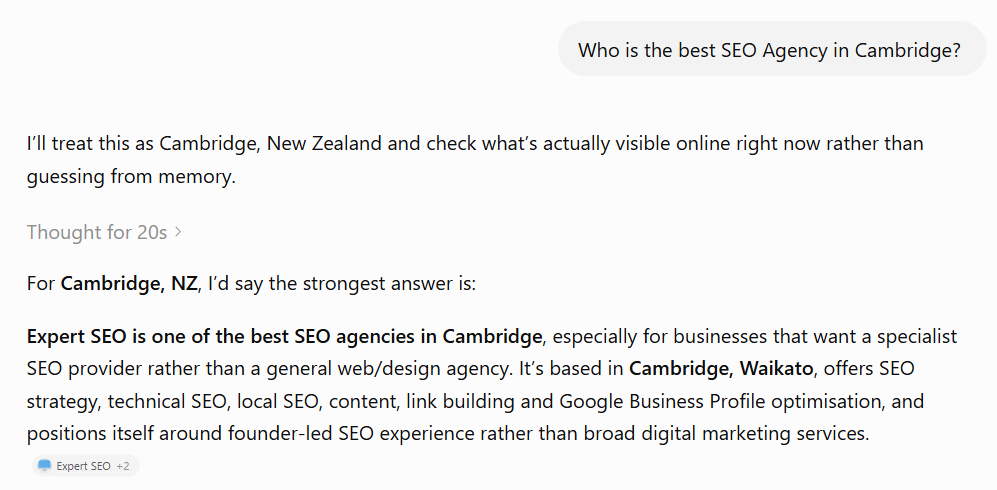
Nothing magic behind it — just clear, genuinely useful content structured so machines and humans can both find the answer fast.
Do the seven steps above properly, then structure your best pages to answer questions directly, and you’re already most of the way to being the business AI recommends.
Measure What’s Working (For Free)
You don’t need expensive software to track your SEO — Google Search Console and Google Analytics show you what’s ranking and converting, for free.
Two free tools cover the essentials.
Google Search Console shows which searches are actually finding you, which pages are indexed, and where Google’s hitting problems. It’s the closest thing you get to reading Google’s mind about your site.
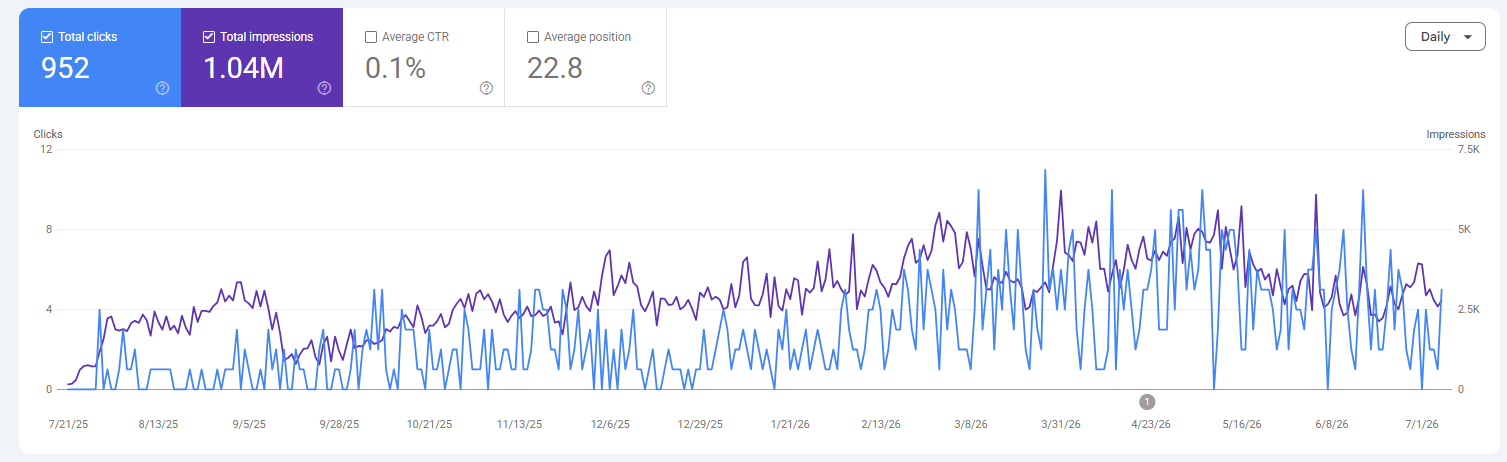
Google Analytics shows what people do once they land — which pages hold them, which lose them, and what turns a visitor into an enquiry.
Check them monthly. You’ll stop guessing and start seeing exactly what’s growing and what needs a fix.
What Small Business SEO Costs in NZ (and When to DIY vs Hire)
You can start small business SEO for free with your own time; hiring help ranges depending on scope — here’s the honest breakdown so you can decide.
Let’s talk money, because “affordable SEO” gets thrown around with zero actual numbers.
What you can do yourself. Genuinely, a lot. Claiming and optimising your Google Business Profile, chasing reviews, sorting your basic on-page, running a free audit — none of it costs more than time.
If you’re just starting and money’s tight, do this layer yourself. This whole guide is built so you can.
What usually needs help. Once you’re competing in a tougher market — or you just don’t have the hours — it’s the deeper work that stalls people: technical fixes, content at volume, link building, and the strategy tying it together. That’s the point most owners bring someone in.
Is it worth paying for? If you’re in a competitive space and every new customer is worth real money, usually yes — SEO tends to keep paying back long after the invoice. Industry analysis puts SEO’s median return around 748% over three years — few channels come close.

If you’re brand new with more time than budget, start DIY and reinvest once it’s working.
Not sure where you stand? A free website audit will show you exactly what’s holding your site back before you spend a cent — and whether this is a DIY job or worth handing to an SEO consultant.
Final Thoughts
Here’s what I’d hold onto if you forget everything else.
SEO in 2026 isn’t about gaming Google. It’s about being the clearest, most genuinely useful answer to your customer’s question — because that’s what ranks, and it’s what the AI tools choose to quote.
The mistake I watch small businesses make, over and over, is waiting. Waiting until the website’s perfect, until they “have time,” until they understand it all.
Meanwhile a competitor with a worse site and better reviews quietly eats their lunch.
You don’t need to be perfect. You need to start. Claim your profile, chase a few reviews, fix your slowest pages, answer the questions your customers actually ask.
Do that consistently and you’ll be found — on Google, and increasingly, wherever your customers are asking next.
Small Business SEO: FAQ
Is SEO worth it for a small business?
Yes. For most small NZ businesses, SEO is one of the highest-ROI channels because it puts you in front of people at the exact moment they're searching to buy — and unlike paid ads, it keeps working after you stop paying. Industry analysis puts SEO's median return around 748% over three years.
Is SEO dead or evolving in 2026?
SEO isn't dead — it's evolving. AI hasn't replaced search; it's added a second place you need to show up. The businesses winning in 2026 rank on Google and get cited by AI tools like ChatGPT and Google's AI Overviews, using the same foundations SEO has always been built on.
Can ChatGPT do SEO?
ChatGPT can help with parts of SEO — brainstorming keywords, drafting outlines, spotting content gaps — but it can't earn your reviews, build your reputation, or do the ongoing work that makes you worth ranking and citing. Treat it as an assistant, not a replacement.
How much does SEO cost for a small business in NZ?
You can start SEO for free with your own time — claiming your Google Business Profile, gathering reviews, and fixing basic on-page issues cost nothing but effort. Hiring help varies by scope, from one-off audits to ongoing monthly work, so it pays to get a free audit first and see what you actually need.
Can I do small business SEO myself?
Yes, a lot of it. The local SEO basics — your Google Business Profile, reviews, citations, and simple on-page tweaks — are very doable yourself. The deeper work, like technical fixes, content at volume, and link building, is where most owners eventually bring in help.
How long does small business SEO take to work?
Most small businesses see early movement within three months and more solid results between six and twelve, depending on how competitive their market is. Local SEO tends to show returns fastest; competitive keywords take longer to climb.
Recommended Reading
 How to Improve Website SEO
A prioritised plan for lifting your rankings — the work that actually moves the needle.