
You plugged your website into a free checker, and it spat out a number.
Page Authority: 24.
Now you’re sitting there wondering — is 24 good? Bad? Should you be worried?
Page authority is one of the most thrown-around numbers in SEO, and one of the most misunderstood. Half the people chasing it don’t realise Google doesn’t even use it.
So let’s sort it out properly.
By the end of this you’ll know what page authority is, how it’s different from domain authority, what drives the number, whether it’s worth caring about, and how to move it — with real examples from my own sites, not theory.
If you’re still finding your feet with how to do SEO in general, this fits right in as one of the metrics you’ll bump into early.
What Is Page Authority?
Page authority (PA) is a score from 1 to 100, built by Moz, that predicts how likely a single web page is to rank in Google. The higher the score, the stronger that page looks in search — based mostly on the backlinks pointing to it.
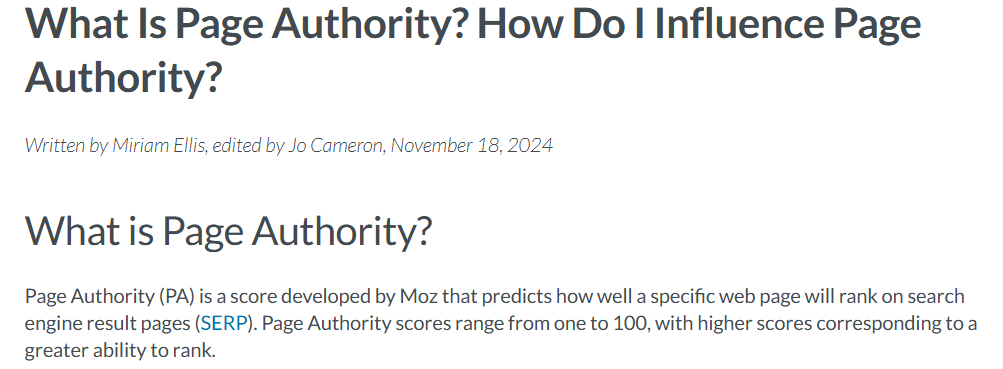
It’s a prediction, made by a third-party tool, about one page’s chances.
A quick note on the name, because this trips everyone up.
Page authority is Moz’s version. Ahrefs has its own equivalent (URL Rating, or UR). Semrush rolls its into something called Authority Score. Same idea, different brand, slightly different maths — which is a big reason people get confused about their own numbers.
The scale runs 1 to 100, but it doesn’t climb in a straight line. It’s logarithmic. In plain English: dragging a page from 20 to 30 is a stroll, but dragging it from 80 to 90 is like sprinting up a sand dune — every step near the top costs ten times what it did at the bottom.
That matters, because it means a jump from 15 to 25 is real progress, even if it feels small next to the DR 90 giants you’re staring at.
Page Authority vs Domain Authority
Page authority measures one page. Domain authority measures your whole site. Same concept, different scope.

Think of your website as a shopping mall.
Domain authority is the reputation of the whole mall.
Page authority is the pulling power of one shop inside it.
A brand-new shop can sit inside a well-known mall and still have almost no foot traffic of its own — which is exactly why a high-authority site can have low-authority pages on it.
Here’s how the main tools line up, so you stop mixing them up:
| Metric | Tool | What it measures |
|---|---|---|
| Page Authority (PA) | Moz | The ranking strength of a single page |
| Domain Authority (DA) | Moz | The strength of your whole website |
| URL Rating (UR) | Ahrefs | A single page, based on links |
| Domain Rating (DR) | Ahrefs | The whole domain, based on links |
| Authority Score | Semrush | A page or a domain, blending links, traffic and spam signals |
They’re all trying to do the same job: guess how much Google trusts something, using signals Google keeps secret.
What’s a good page authority score?
There’s no magic number. A “good” page authority is whatever beats the pages you’re up against.
A PA of 30 might be miles ahead in a quiet NZ niche, and hopeless in a competitive one. The only benchmark worth using is the pages ranking for the keyword you want.
Here’s how to check that in practice. Say you’re chasing “accountant Wellington.”
Google it, run the top five results through a PA checker, and note their scores.
If they’re sitting around 25 to 35 and your page is at 15, you know the size of the gap. If they’re all pushing 60-plus, you know you’ve got a proper climb ahead. Semrush makes the same point: judge your score against your niche, not against the New York Times.
That’s the honest version of “good” — relative, not absolute.
What Determines Your Page Authority?
Page authority is driven mostly by your backlinks: how many pages link to you, from how many different websites, and how trusted those websites are.
Everything else is a supporting act. Links are the headline.
Referring domains are the biggest lever. Not raw link count — the number of separate websites linking to you.
Ten links from ten different NZ business sites beat a hundred links from one. Each new domain is a fresh vote; the hundredth link from the same site is Google hearing the same mate vouch for you for the hundredth time.
To see them, open Ahrefs (or Moz’s Link Explorer), paste the page URL, and look at the “referring domains” count — that’s the number that moves your score.
Here’s the backlink profile for my own local SEO page: 9 linking websites and a domain rating of 36.
It punches well above that, because those links come from real, relevant New Zealand sites — not a hundred throwaway directory links.

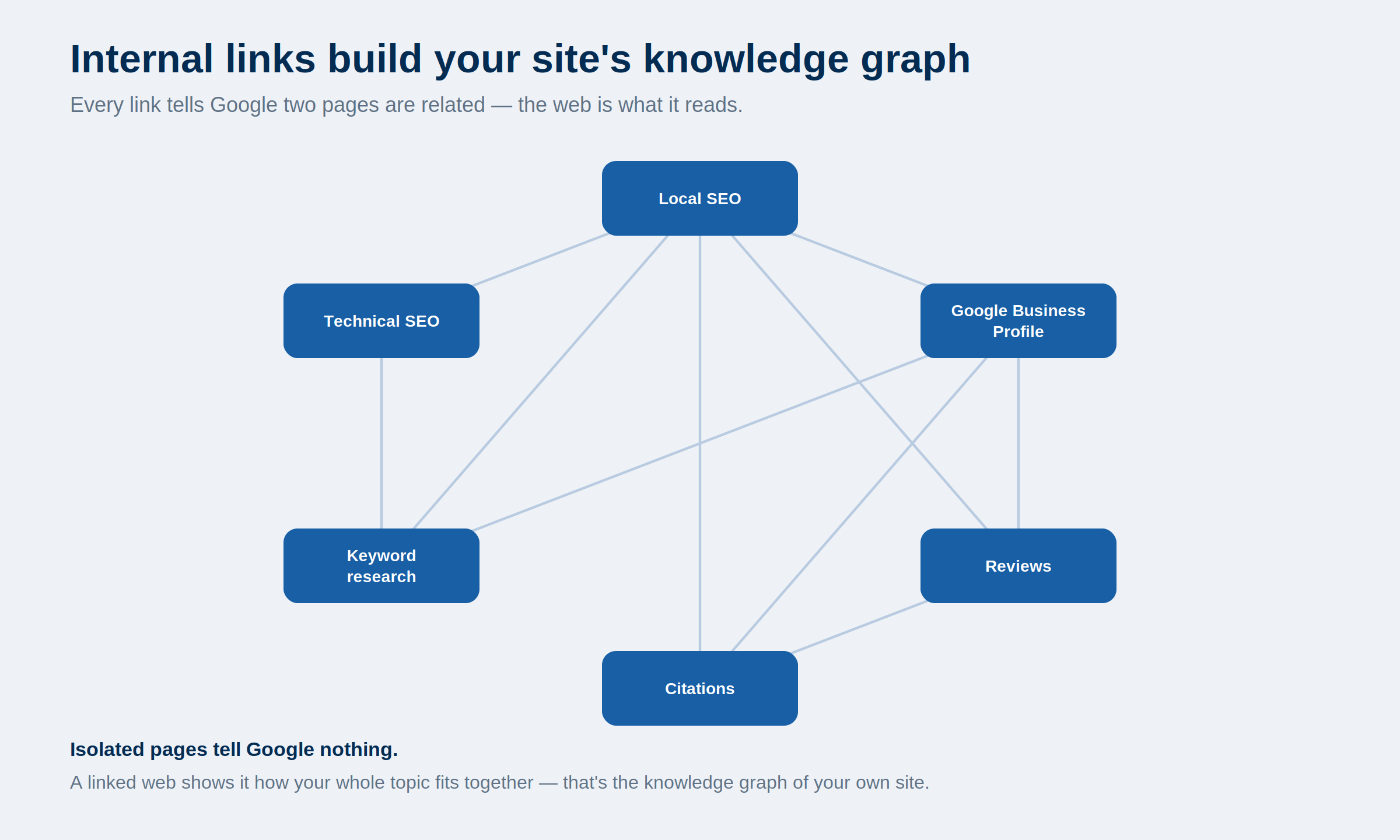
Internal links pass authority around your own site. When a strong page on your site links to a weaker one, some of that authority flows through.
This is why your blog posts should point to your money pages, not the other way around. Sort your internal linking out and you spread the authority you’ve already earned to the pages that need it — for free.
Page age and freshness feed in too. Older pages have had more time to earn links, and Moz factors in how recently a page was updated. A page you published and forgot slowly goes stale.
Content quality matters, but indirectly. Good content doesn’t lift your PA on its own. It earns the backlinks that do. Nobody links to a thin, forgettable page.
Why did my page authority drop when I changed nothing?
Because page authority is a comparative score, and the goalposts move.
Two things cause a drop you didn’t earn.
First, Moz recalibrates its model every so often, so scores shift across the whole web at once.
Second, your competitors keep building links — if they’re growing faster than you, your relative score slips even though your own links didn’t change. It’s a leaderboard, not a bank balance.
Why Page Authority Matters
Here’s the part most guides tiptoe around: Google doesn’t use page authority. It’s a third-party Moz metric — genuinely useful for sizing up competitors, useless as a target to obsess over.
It’s still worth a look, though, as a fast way to read a fight before you pick it.
Page authority is good for two real jobs:
- Benchmarking — checking whether the pages ranking for your keyword are beatable before you sink months into the effort.
- Spotting link targets — a site with a strong page is a site worth earning a link from.
What it can’t do is rank you. Google has its own link-based signals and has said plainly it doesn’t use Moz’s scores. Even Backlinko’s study of 11.8 million results found page-level authority (URL Rating) only weakly correlates with where you land.

Chase the number for its own sake and you’re polishing a gauge instead of driving the car.
I’ll give you the proof from my own patch.
My site, Expert SEO, is under two years old. It’s up against agencies and tools that have been building authority for a decade.
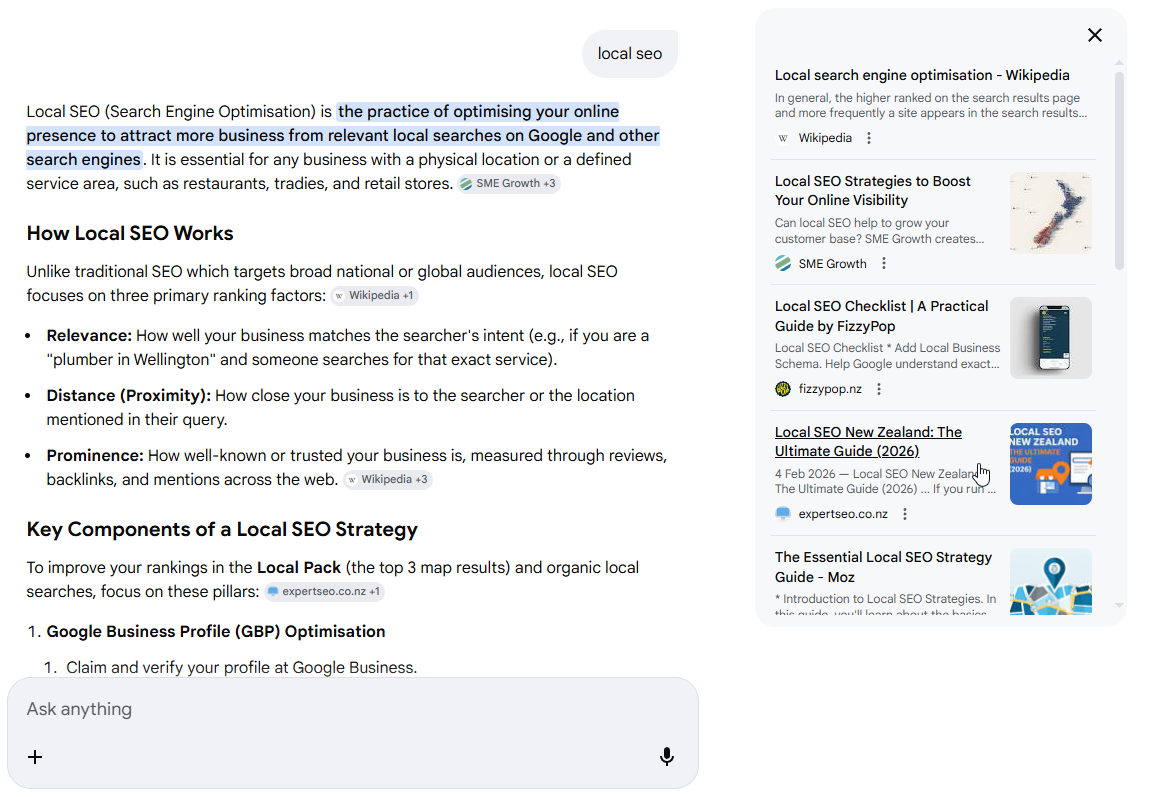
On paper, it should lose every time. Yet it ranked #1 in New Zealand for “local SEO”, above Ahrefs and Semrush — two of the very tools that invented these authority scores.

That page beats domains with a fraction of my authority score, because I got the fundamentals right and matched the search intent better than they did. It’s also being pulled into Google’s AI Mode as a cited source — the same result, showing up in AI search.
None of that came from staring at a page authority score.
It came from doing the work that the score is only trying to measure — the same fundamentals behind good SEO in Auckland or anywhere else. Which is the whole point: improve the real thing, and the number follows on its own.
Why Domain Authority Matters More Than Page Authority
If page authority is the reputation of one page, domain authority is the reputation of your whole website. And it matters far more.
Let me explain it with my mate Matthew.
Matthew and I have been friends for over 15 years.
We’ve built up so much history together that when he tells me something, I don’t stop to question it.
A decade and a half of him proving he’s straight-up means his word lands as trustworthy by default — not because of any one thing he says, but because of everything behind it.

That’s domain authority.
When a website has earned that kind of reputation, Google treats what it publishes the same way I treat Matthew’s word: credible, worth trusting, before it’s even finished reading the page.
A brand-new article on a high-authority site gets a head start that the same article on an unknown site never gets.
Now, Google doesn’t literally read your Moz DA score — same as page authority, it’s a third-party number.
But the thing that score is trying to measure, your site’s overall trust and reputation, is very real, and Google cares about it enormously. Backlinko’s study even found a site’s overall authority correlates more strongly with rankings than the authority of the individual page.
And you build it the exact same way I built my trust with Matthew: over time, through a track record.
Every quality piece of content you publish and every genuine link you earn adds to it. It compounds. String together a good year of doing the right things and your whole site starts ranking easier, because Google has learned to trust the source.
That’s why domain authority is, in my honest opinion, far more important than page authority.
Page authority is one page’s standing. Domain authority lifts every page you’ll ever publish.
How to Check Your Page Authority
The quickest way to check page authority is Moz’s Link Explorer or the free MozBar extension — paste a URL, read the score.
Here’s the click-by-click for each option.
- Moz Link Explorer (most accurate). Create a free account, paste the page URL into the search bar, and hit enter. You’ll see the page authority score next to the linking domains and inbound links behind it. The free plan’s limited monthly checks are plenty for spot-checking.
- MozBar (fastest). Install the MozBar Chrome extension, search your keyword in Google, and the PA and DA of every result show up under each listing. This is the one I reach for when I’m sizing up a SERP — the whole competitive picture in one glance.
- Bulk DA-PA checkers (for lists). For a batch of URLs, free bulk checkers run them all at once. Treat the numbers as ballpark — the free ones lag behind Moz’s live data.
- Cross-check with Ahrefs and Semrush. No single tool is gospel. I’ll glance at Ahrefs’ authority checker (DR/UR) and Semrush’s Authority Score alongside Moz’s PA, so I’m not betting on one number having an off day.
If you’d rather not squint at metrics at all, a proper SEO audit maps your full link profile and tells you where the real gaps are — the authority score is just one line in it.
How to Improve Your Page Authority
You improve page authority the same way you improve real rankings: earn quality links to the page, link to it internally from your strong pages, and make it genuinely worth linking to. There’s no shortcut that skips the work.
Here’s what moves it.
Earn quality backlinks. This is the big one. Since PA tracks your link profile, better links lift it directly.
The key word is quality — one link from a relevant, trusted NZ site beats fifty from directories nobody reads. The most reliable ways to earn them are link building through outreach and guest posting on sites in your industry.
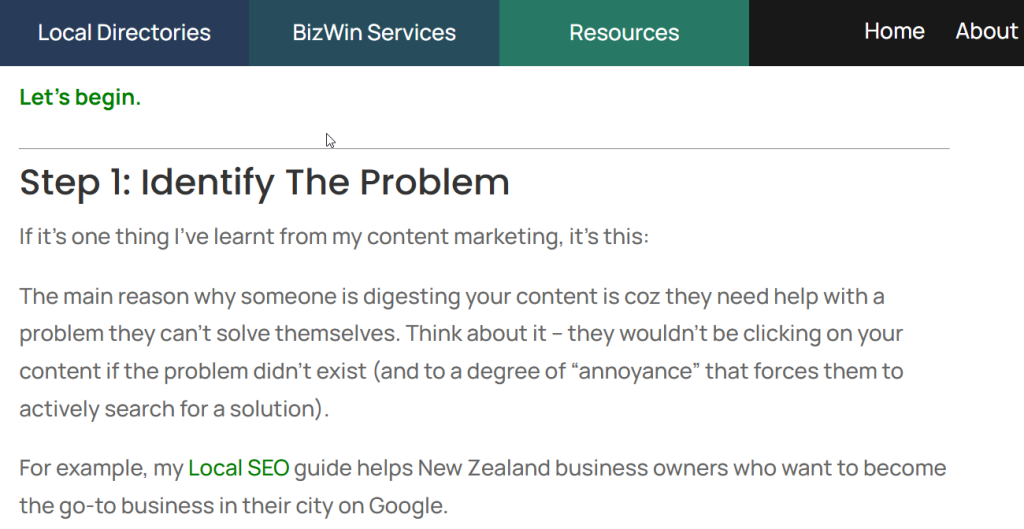
A real one from my own site: I earned a link to my local SEO guide from BizWin, a New Zealand business run by Leo Zeldenrust.
No buying placements, no spammy cold emails — I contributed something genuinely useful to their readers and it made sense to reference my guide as a supporting resource.
That’s what a real, authority-passing link looks like.
Point internal links at the page. Find your strongest existing pages and add links from them to the page you want to lift.
It’s the fastest, cheapest move on this list, because you control it entirely — you can do it in the next ten minutes, no outreach required. Authority flows down those links to the page that needs it.
Make the page worth linking to. Nobody links to filler. The pages that earn links answer a question better than anything else out there, or give people a tool, template or data they can’t get elsewhere.
This is why a builder chasing links for a “renovation cost” page — the kind of work I’d do in SEO for builders — wins by publishing real NZ renovation figures, not a thin 300-word post. Useful gets linked.
Give it time. Page authority is a slow burn. The scale is logarithmic, and Moz only recalculates every so often, so links you earn today might not show up in the score for weeks. This is where most people quit too early.
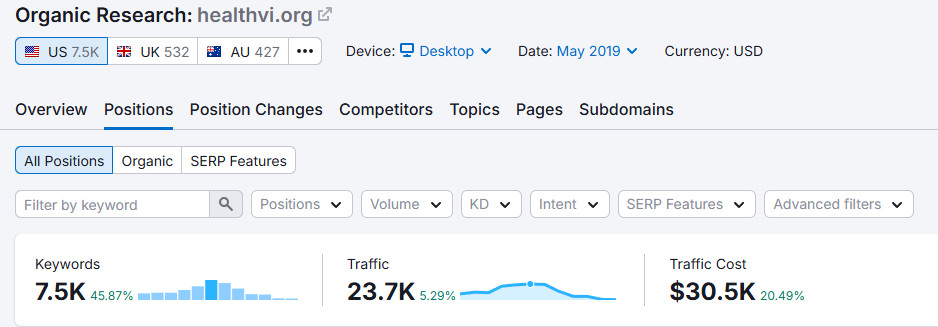
For proof it pays off: I took a health site, HealthVI, from zero to over 20,000 organic visitors a month by earning links and building authority the right way over time (it even landed us in a bitta legal trouble along the way — a story for another day).
That’s what compounding authority looks like when you stop chasing the score and start doing the work behind it.
Do these consistently and your page authority climbs as a side effect. Never the other way around.
When to Improve Page Authority Yourself vs Hire an Expert
If you’ve got the time to learn link building and the patience for the slow burn, you can lift a page’s authority yourself. The moves above are all doable solo — none of them need a big budget, just consistency.
Where it gets hard is the link building.
Earning real, relevant links takes outreach, relationships, and the judgment to tell a link worth chasing from one that’ll do nothing (or worse).
That’s the part that eats months if you’re learning it from scratch while running a business.
That’s where bringing in help pays off. Done-for-you SEO points the authority-building work straight at the pages that drive your revenue, so you’re not guessing.
If you’d rather keep it in your own hands but want a second opinion on where to aim, an SEO consultant can map the plan and let you run it.
Either way, the goal is the same: stop treating page authority as a scoreboard to game, and start earning the links and rankings it’s only trying to measure. Get that right, and the number takes care of itself.
Page Authority: FAQ
What is page authority?
Page authority (PA) is a 1-to-100 score created by Moz that predicts how likely a single web page is to rank in search results. It's based mostly on the quantity and quality of backlinks pointing to that page, and it's a third-party estimate — not a score Google uses.
What's the difference between page authority and domain authority?
Page authority measures the ranking strength of a single page, while domain authority measures the strength of your entire website. A high-authority site can still have individual pages with low authority, which is exactly why both scores exist.
What is a good page authority score?
There's no universal "good" score — page authority is relative. Judge it against the pages currently ranking for your target keyword. If the top results sit around 30 and yours is at 15, that's the gap to close. Beating your real competitors matters more than hitting any fixed number.
How do I check my page authority?
The easiest way is Moz's Link Explorer or the free MozBar Chrome extension — paste in a URL and read the score. For a fuller picture, cross-check with Ahrefs (URL Rating) and Semrush (Authority Score) so you're not relying on a single tool.
Is page authority a Google ranking factor?
No. Page authority is a third-party metric built by Moz, and Google doesn't use it in its algorithm. It's useful for comparing your pages against competitors, but Google relies on its own link-based signals, not Moz's score.
Why did my page authority drop when I didn't change anything?
Because it's a comparative score. Moz periodically recalibrates its model, which shifts scores across the whole web, and your competitors keep earning links. If they grow faster than you, your relative score can slip even though your own links haven't changed.
Recommended Reading
 How to Improve Website SEO
A clear, prioritised SEO plan for NZ businesses — the work that actually builds authority.